Outside magazine recently published a story about Cold Water Immersion Stages and Survival Tips. The article reminded me about an experience I had as a college student when I was working for the National Park Concessionaire on Isle Royale, an island in Lake Superior.
I was a waitress at Rock Harbor Lodge during the summers of 1983-84. The lodge is one of the only civilized spots on the wilderness island, which has no roads or other amenities. Instead, it’s filled with wolves, moose, loons, and fog. Lake trout swim in the depths, hikers tread the challenging trails, and boaters brave the waves.
I think it was during my first summer when I was working dinner service on a hot day. Hot on Isle Royale is a relative term. In Florida, eighty-five degrees would seem like nothing, but on “the Rock” as we called the island, it’s a heat wave. Add in a hot kitchen and the effort of serving a lot of hungry patrons, and you have a bunch of waiters, waitresses, and cooks who are sweating through their white polyester uniforms.
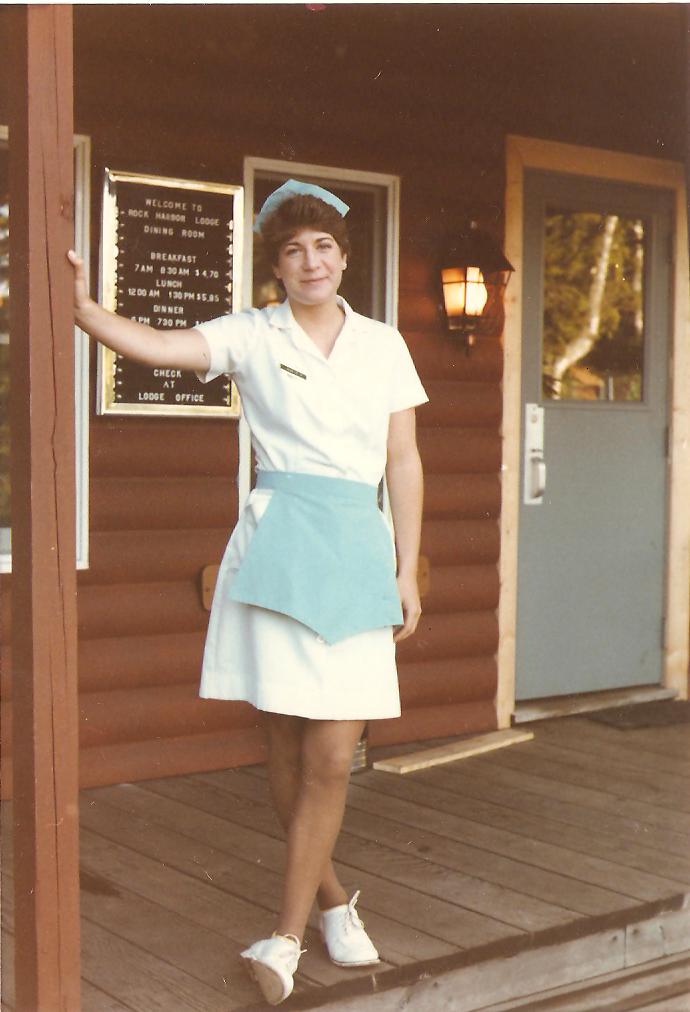
A much younger Marie in her 1980s waitress uniform on the steps of Rock Harbor Lodge, Isle Royale National Park. Image by Dorothy Pramann
Outside the dining room windows, a view of the marina, with docks, sailboats, and the allure of Lake Superior’s cool blue waters beckoned. Everyone working that evening made a pact to jump off the end of the nearest dock once our shift ended.
Normally, I liked to ease into the lake slowly. I’d swum in the lake many times in a different, more sheltered, harbor nearby (Tobin Harbor). But I was young, reckless, and hot, so I joined my coworkers in the plan. I expected the water temperature to be the same as during my previous swims.
Our shift over, we all marched down the dock, fully clothed. I was perhaps the second or third person to jump into the water. The people before me whooped and hollered but had no trouble. I didn’t want to get my hair wet, so I launched myself off the high dock with arms and legs splayed to keep my head above water.
My vanity is what saved me.
As the Outside magazine story outlines about the body’s response to cold water immersion shock, the moment I hit the water, I gasped, but because my head was still above water, I gasped air instead of water. Also, both of my legs immediately cramped up, turning into useless weights that began to drag me down.
The water was frigid, much colder than I’d experienced before. What I didn’t realize was that an offshore breeze had created upwelling conditions, bringing near-freezing water up from the depths of the lake and into the harbor.
My arms still worked, so I pumped them furiously to keep afloat and to swim toward the dock. When I could catch my breath, I pleaded for help and said my legs didn’t work.
Amid all the shouting and activity of other people jumping in the water, it took a while for anyone to notice my plight. Eventually, I was able to reach the dock where two coworkers pulled me out. I don’t recall how long it took before my cramps resolved as the blood that had fled to my body’s core returned to my legs while I lay on the dock.
Thankfully, nobody else cramped up. Why me? Maybe I was also dehydrated or something. Who knows! I’m just “lucky,” I guess.
As I walked off the dock, I recall feeling grateful that I survived my cold-water plunge–grateful that I didn’t drown. Best yet, my hair didn’t get wet!
I had no other lingering effects, but I did learn one important lesson: test the water first, stupid!
A ship passes through Duluth’s ship canal and under the Aerial Lift Bridge.
One beautiful summer evening about a decade ago when my goldendoodle Buddy was still alive, I took him on a walk in Canal Park, Duluth’s tourist spot. Sometimes it’s fun to be a tourist in your own town. People come from all over the country to watch the Lakers and Salties (Great Lakes and ocean-going ships) enter the harbor through the parallel concrete structures that form the shipping canal. The ships then pass under the famous Aerial Lift Bridge, which by now has lifted the roadway bottom span. The bridge operator greets the ship with a series of horn blasts. The ships answer, and any crowds gathered at the canal wave and cheer.
As I recall, we had walked under the lift bridge and were near the end of the canal on the harbor side. I thought it would be fun for Buddy to see the water over the wall. As it was, his view within the four-foot-high walls was just concrete and other people. I patted the foot-wide top of the canal wall with my hand in a gesture I THOUGHT would encourage Buddy to stand on his hind legs and put his front legs on the top of the wall so he could see over.
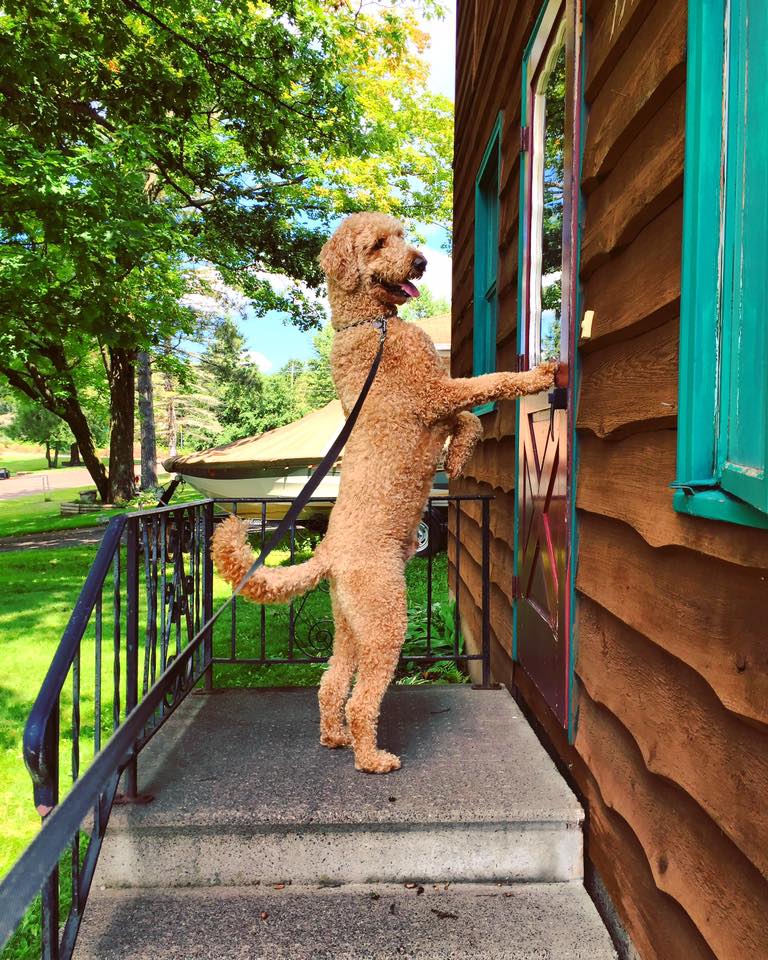
Buddy, the door-to-door salesman. Photo by Amanda Dahl-Sales.
But Buddy, 85 pounds of red goofy smartness, SPRUNG to the top of the wall! In total shock, I watched as he suddenly realized there was nothing but a deep drop into the water on the other side. Buddy’s toenails scratched the concrete in a mad scramble, and I probably pulled on his leash.
Thankfully, he fell backward onto the concrete instead of forward into the canal. In total shock, I comforted him and apologized over and over. Luckily, nobody else was nearby so I didn’t feel too much like a spectacle.
Never in my wildest dreams did I think he would jump atop the wall. I knew he was agile, but I didn’t know he was that agile! I shudder to think of what would have happened if he’d fallen into the canal. Although there are ladders placed periodically along the walls, there’s no way I could have lifted him back up.
A few weeks after our adventure, I saw a newspaper account of someone whose dog did end up in the canal. The person climbed down the ladder and held onto their dog until the Coast Guard could rescue them. That could have been us!
Although shaken, Buddy soon forgave me and forgot his close call. We walked back to the car on wobbly legs. You can bet that I never patted the tops of any other walls after that!
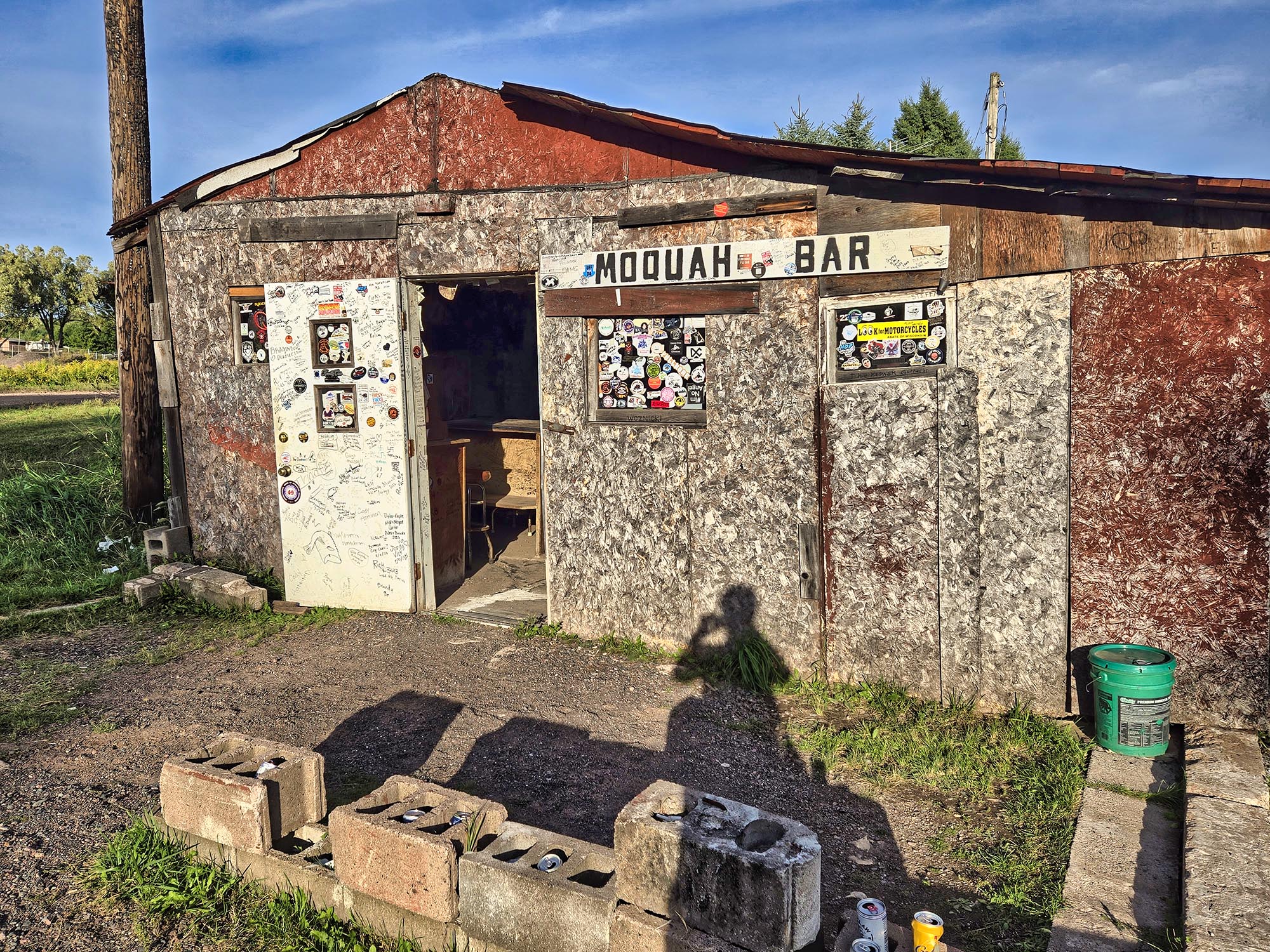
My shadow in front of the Moquah Bar. Proof that I really was there!
During a recent camping trip to the town of Brule in northern Wisconsin, Russ and I meandered to a place we’d noticed several times on a highway detour a few years ago. This establishment is in the tiny town of Moquah (pronounced Muck-wa, Algonquin for bear). Whenever we passed the small building, the door was always open, which looked inviting. Not so inviting was its ramshackle plywood construction. Through the open door, we could glimpse a low ceiling and bar stools. The homemade sign out front proclaimed this intriguing venue was the Moquah Bar.
At 5 p.m. on a Saturday, we girded our loins and decided to pay the bar a visit. We parked out back by the outhouse, also made of plywood. We walked past the outdoor seating area, which consisted of picnic tables on a cement slab surrounded by concrete blocks. Evidence of last night’s festivities (or maybe several nights’ worth) littered the tables. Apparently, if patrons don’t pick up after themselves, nobody else does, either.
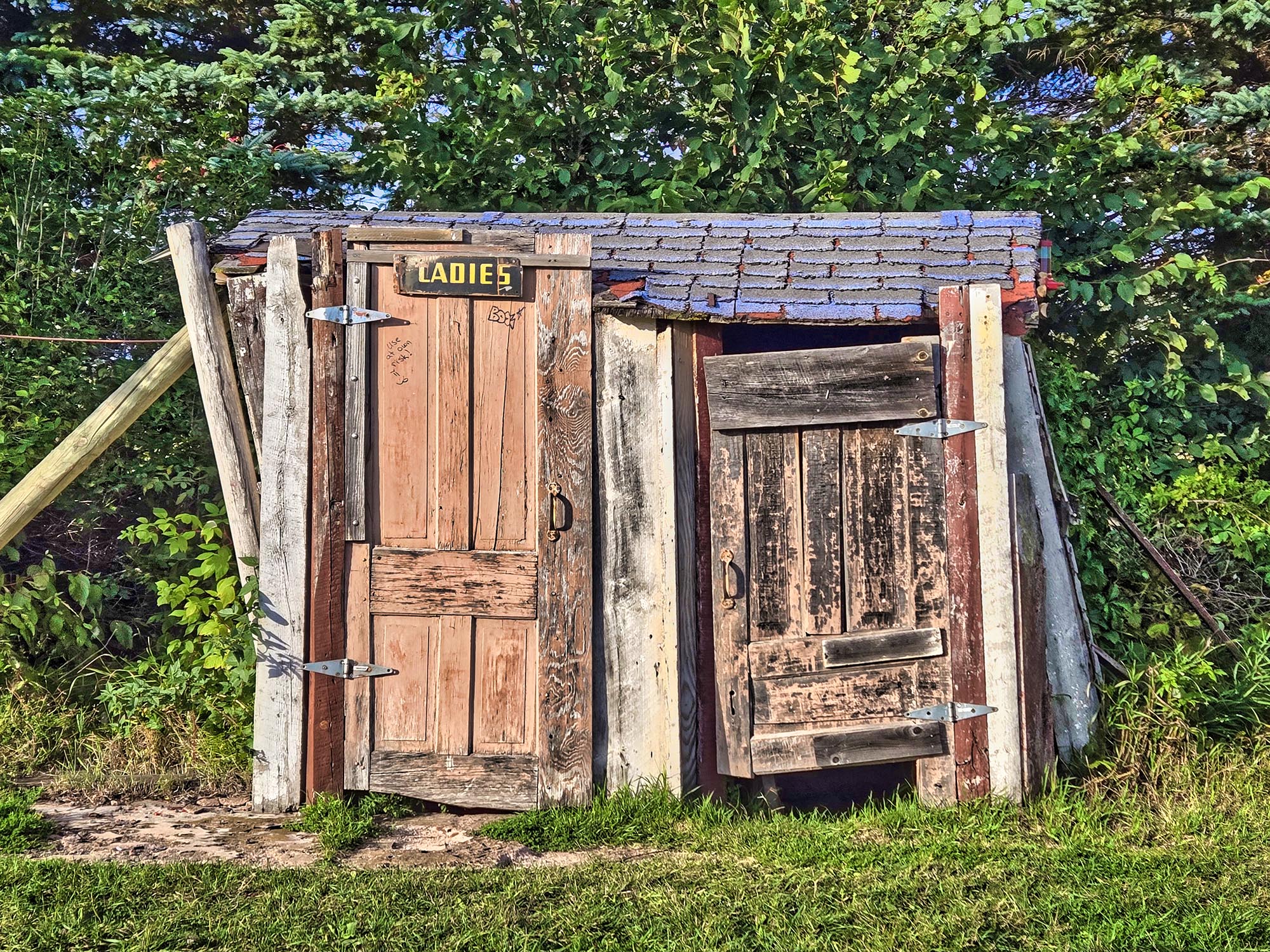
The outhouse
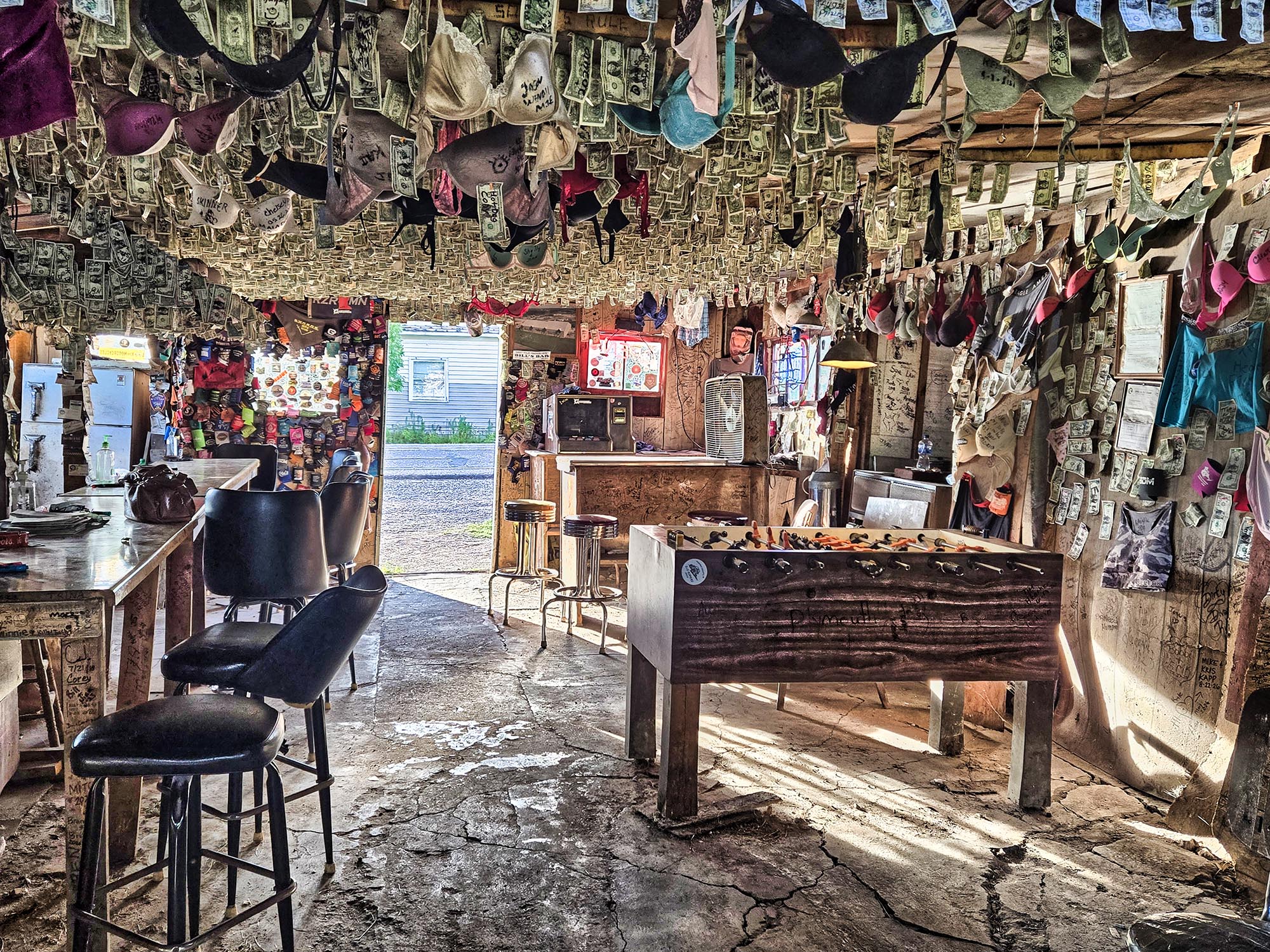
We peeked inside the open doorway. Dollar bills, graffiti, can cozies, bras, and underwear festooned the ceiling and walls. Nobody else was there except for a white-haired man behind the bar. He looked up from his book but didn’t offer a greeting. I got the feeling he’d rather keep reading. And I was okay with that. I’m an author, after all!
We later learned (thanks to social media) that the barkeep/owner’s name is Bud. He’s been running the bar since 1975. When it burned in the 1980s, Bud slapped together a new place out of plywood. The Moquah Bar is known as the Plywood Palace, and also as one of Wisconsin’s diviest dive bars.
We tried to engage Bud in conversation, but he’s hard of hearing, so that didn’t last long. Russ managed to ask him what the story was with all the ceiling decorations. Bud said it was something people “just decided to do.”
Russ was impressed that the bar refrigerator had an N/A beer he could drink. I made the mistake of ordering a shot of brandy. This was a mistake not because of the taste, but because it came in a glass. Word on the street is that Bud doesn’t wash the glassware. Maybe he thinks the alcohol kills the germs? Come to think of it, I’m not sure that the bar has running water. That could be the real reason! I was blissfully ignorant of the “don’t drink from a glass” unwritten rule at the time and enjoyed my shot.
We wandered around the bar, marveling at the sights, which included a broken jukebox, a foosball table, and a two-inch gap in the roof where the back bar structure joins the front. Russ signed a dollar bill with a sharpie and added it to a post with a thumbtack. A few minutes later, the dysfunction of the place weighed too heavily on me. “We’ve got to get out of here!” I hissed to Russ. He agreed. We said our goodbyes to Bud and left.
As we passed the outhouse on the way to our car, Russ helpfully suggested I use it before our drive back to the campground. You can guess the look I gave him! Once on the road, although we were relieved to be out of the bar, we were also proud that we were brave enough to visit it. This bar was quite the opposite experience of our visit to Ravenstone Abbey pub.
Another acquaintance of mine recently visited the bar. To see his account and more photos, visit the Perfect Duluth Day blog.
So, we visited the Plywood Palace and lived to tell the tale! But wait. Is that a fever I feel coming on…?
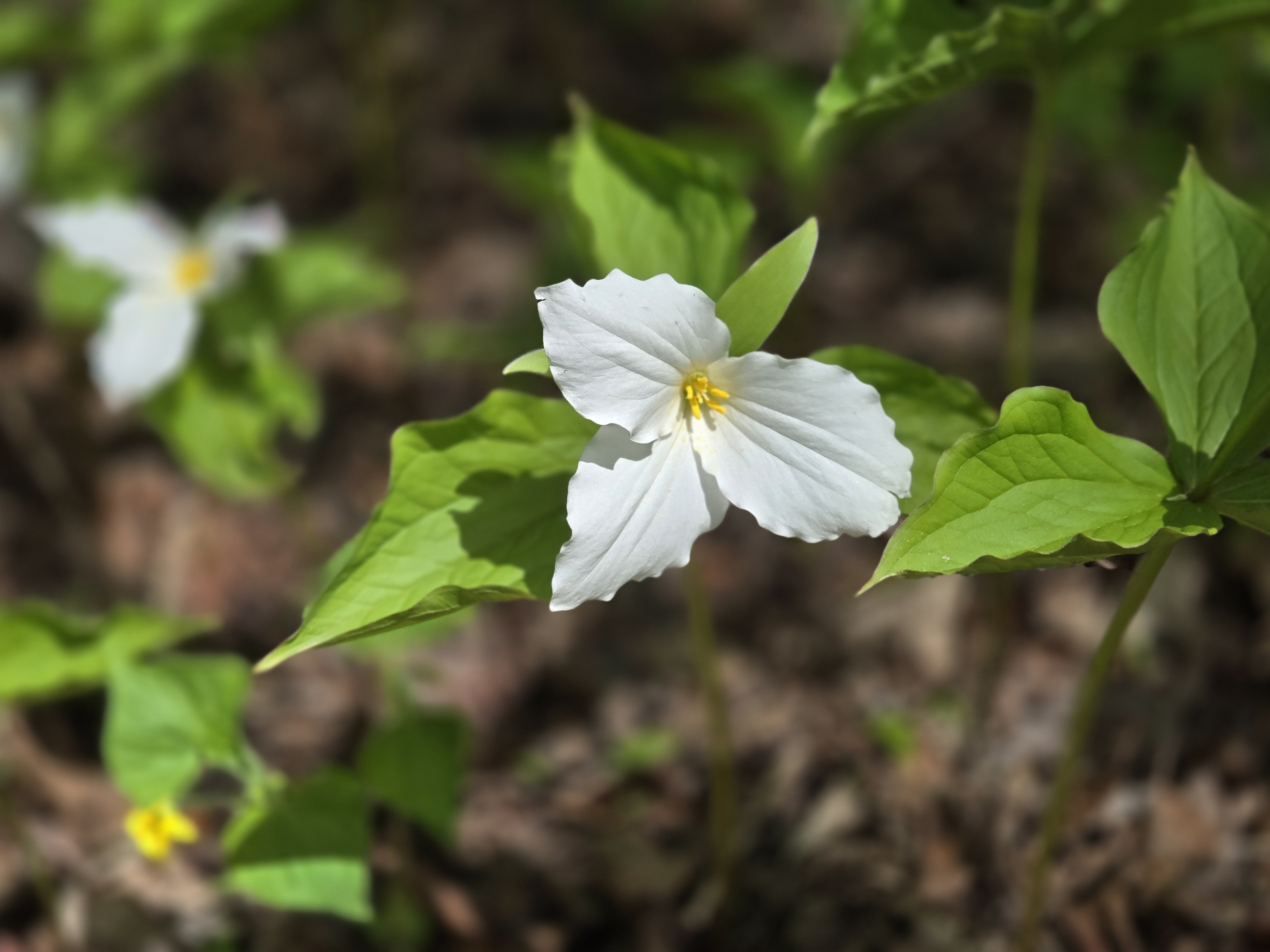
A trillium along the Munger Trail outside of Duluth, Minn.
First, I ‘d like to say hello and thank you to all the new subscribers to “Marie’s Meanderings.” Yesterday, I received an email from Word Press saying that my “Remarkably Bright Creatures” movie review was chosen to be freshly pressed. This increased exposure almost tripled my views, and I’ve been busy responding to comments and offering reciprocal views of visitor sites.
In my 13 years of blogging, this is a first. Although Word Press did post one of my stories on Pinterest years ago, and it continues to receive lots of views even today.
This (delightfully) unexpected work when I’d normally be languishing in retirement has (ironically) thrown off my blog posting plans. I was going to write about my maiden voyages on my new ebike. Perhaps I’ll go into more depth about that later, but the condensed version is that I have mixed feelings. In some ways, the ebike makes biking too easy. I wish it had a lower assist setting — something between 0 and 1 (it goes up to 5). But, in other ways, I love the new bike because it makes pedaling up steep hills (of which there are many in Duluth) a breeze.
Long-distance cycling maniac Russ likes it because he doesn’t have to worry about me keeping up with him. Now, if only there were electronic cross-country skis he could use, I wouldn’t need to wait for him and we’d be equal! 🙂
I’ve been testing the bike on the paved Munger Trail and the gravel DWP Trail outside of town. It’s performed well on both. It’s trillium season, and the white and pink flowers are blooming in huge swaths in the forests along both trails. I stopped long enough to snap this image with my phone.
It’s wonderful to be recognized for my blog, which is a labor of love. I think every blogger deserves this, and I hope your turn comes around soon.
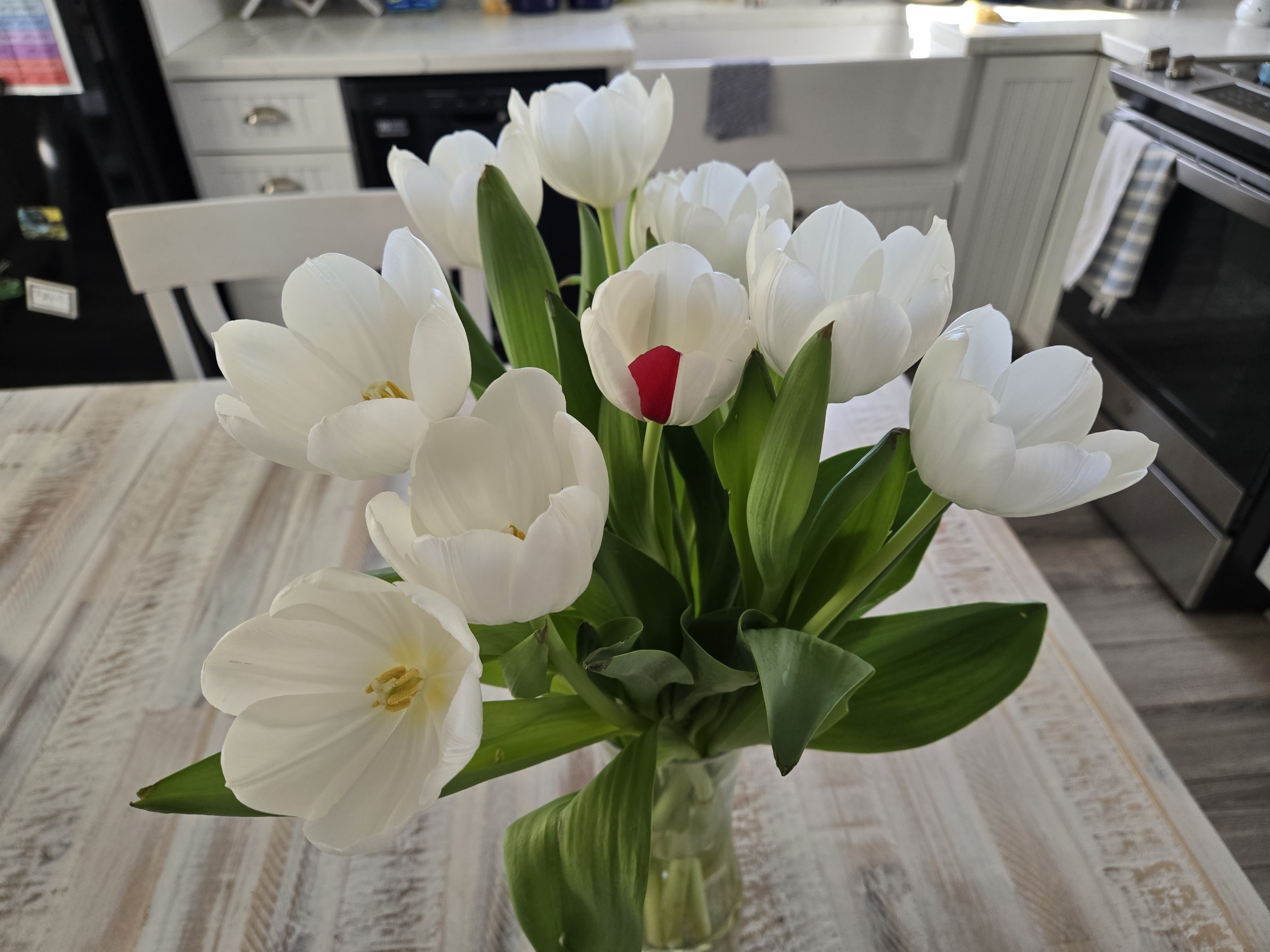
We bought nine white tulips last week to bring a bit of spring into the house. About a foot of snow still lies on the ground here in northern Minnesota, but the increasing sunshine has us impatient for winter to leave.
Once we brought them home and arranged them in a vase, I noticed that the tulip flowers were hiding inside their green leaf sheaths like the heads of shy turtles. But after a few days, they began to grow and emerge. One had a tinge of red to it, so I was curious to see what it would look like as the flower opened more. The fresh bouquet looked gorgeous as big white and fluffy snowflakes fell outside. Outdoors, spring had hidden its face once more.
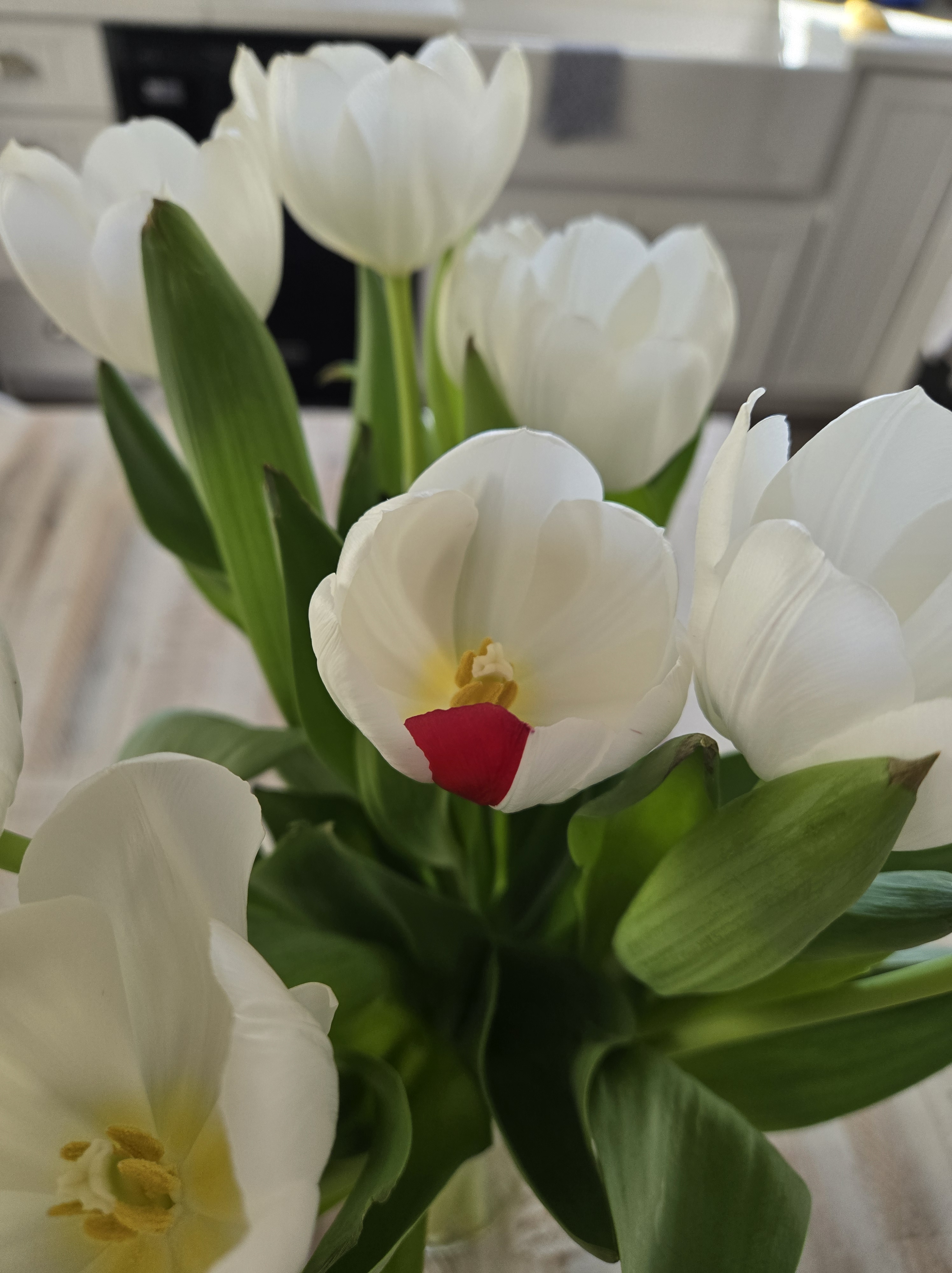
A few more days later, the flower fully opened, and I was surprised to see that half of one petal was a deep ruby red. I was expecting an inner ring of red or something—not this. I asked my friends if they’d ever seen anything like that. None had, but some said we must be lucky, that it was like finding a four-leaf clover.
I turned to the ever-useful internet and discovered that this phenomenon is called sectorial chimera. Sectorial means that only one section of the flower is affected. Chimera means changeable or mixed. In scientific terms, it means that the flower has a mix of genetic tissues. My tulip was a white tulip that also contained red tulip genes. For some reason, the redness was expressed in a single petal. In a way, my friend was correct. Like a four-leafed-clover, this tulip was a unique genetic mutation.
There’s some info also on the internet that symbolically, the white flower represents purity and peace, and the red petal, a streak of hidden passion. “Together, they convey a deep emotional connection and the beauty of love in all its forms.”
I just wanted a sense of spring but received so much more from a simple grocery store bouquet!
A friend of mine couldn’t believe it when a hotel clerk, with whom she thought she had a memorable encounter a few hours before, didn’t remember my friend when she saw her again. I shared a theory about this with my friend. I developed the theory from reading Going Gray by Anne Kreamer and I turned it into a speculative fiction short story titled “Invisible.” But you’ll have to read my story to find out what it is! No freebies here. Although the story itself is free.
“Invisible” was recently published in Creative Wisconsin magazine, which is published by the Wisconsin Writers Association. I joined them a few years ago when I had a Wisconsin-based publisher and job, even though I don’t live in Wisconsin. I’ve taken a few classes from them, and I’ve attended two of their writing conferences. They’re a great group!
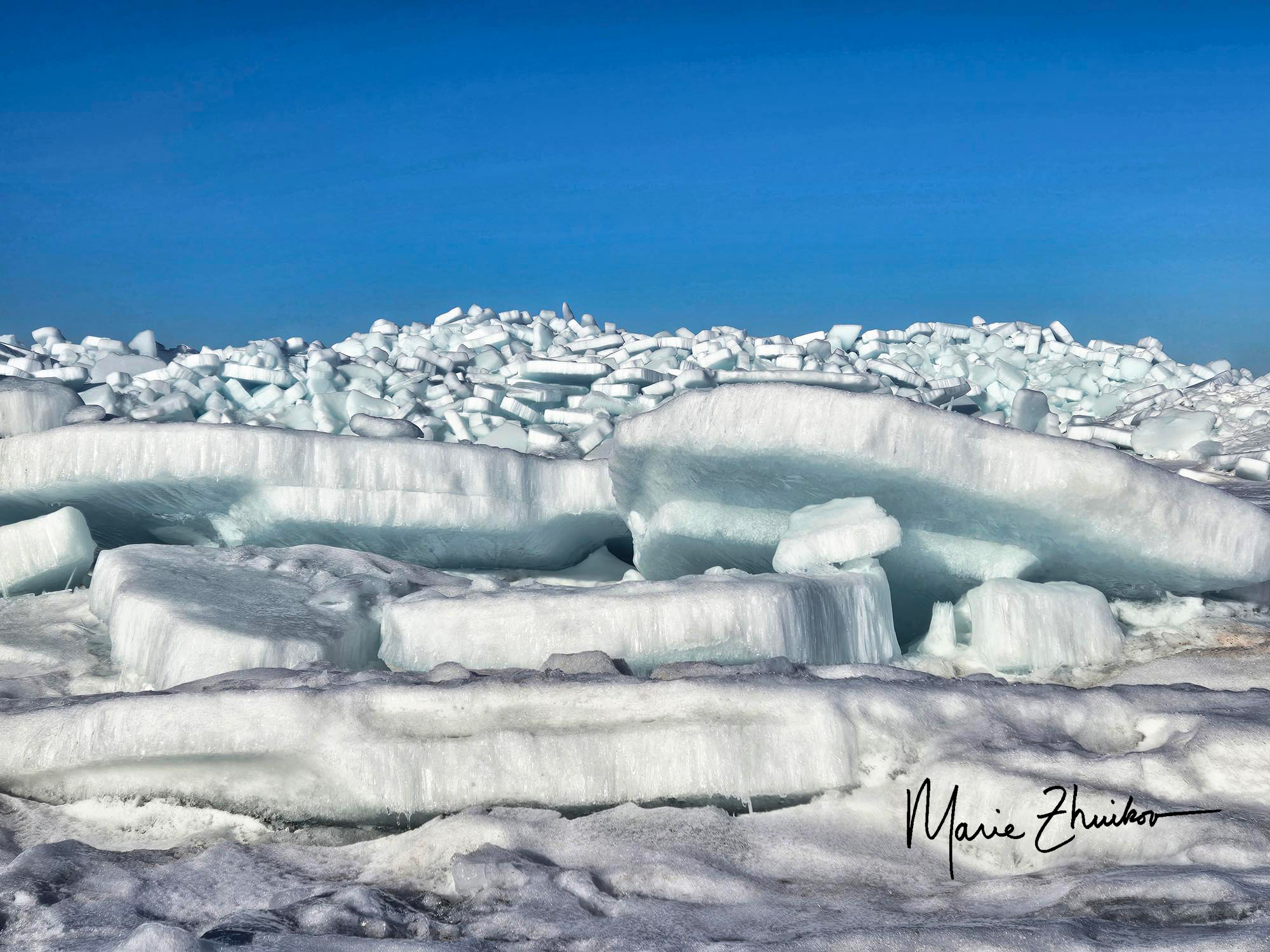
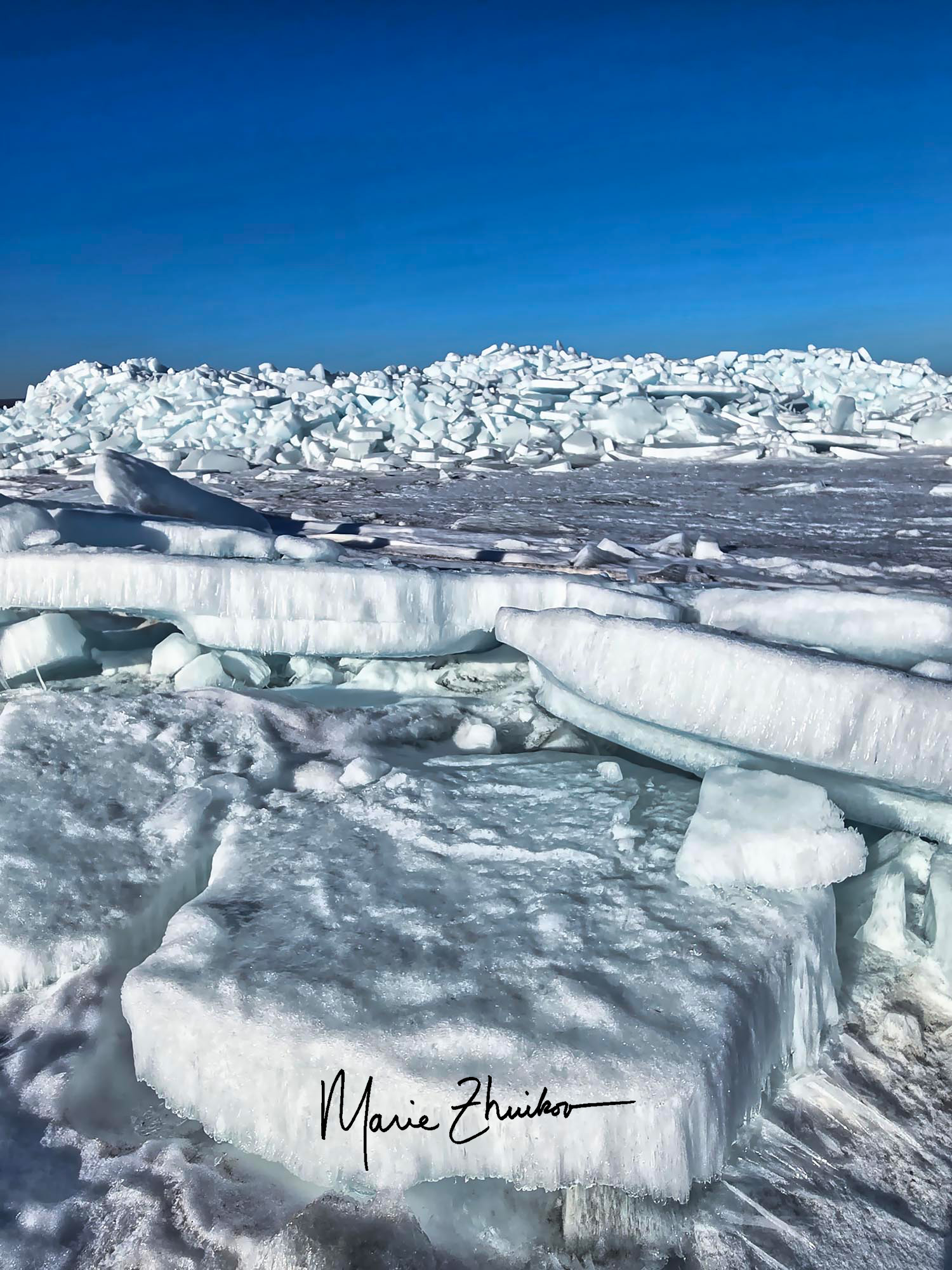
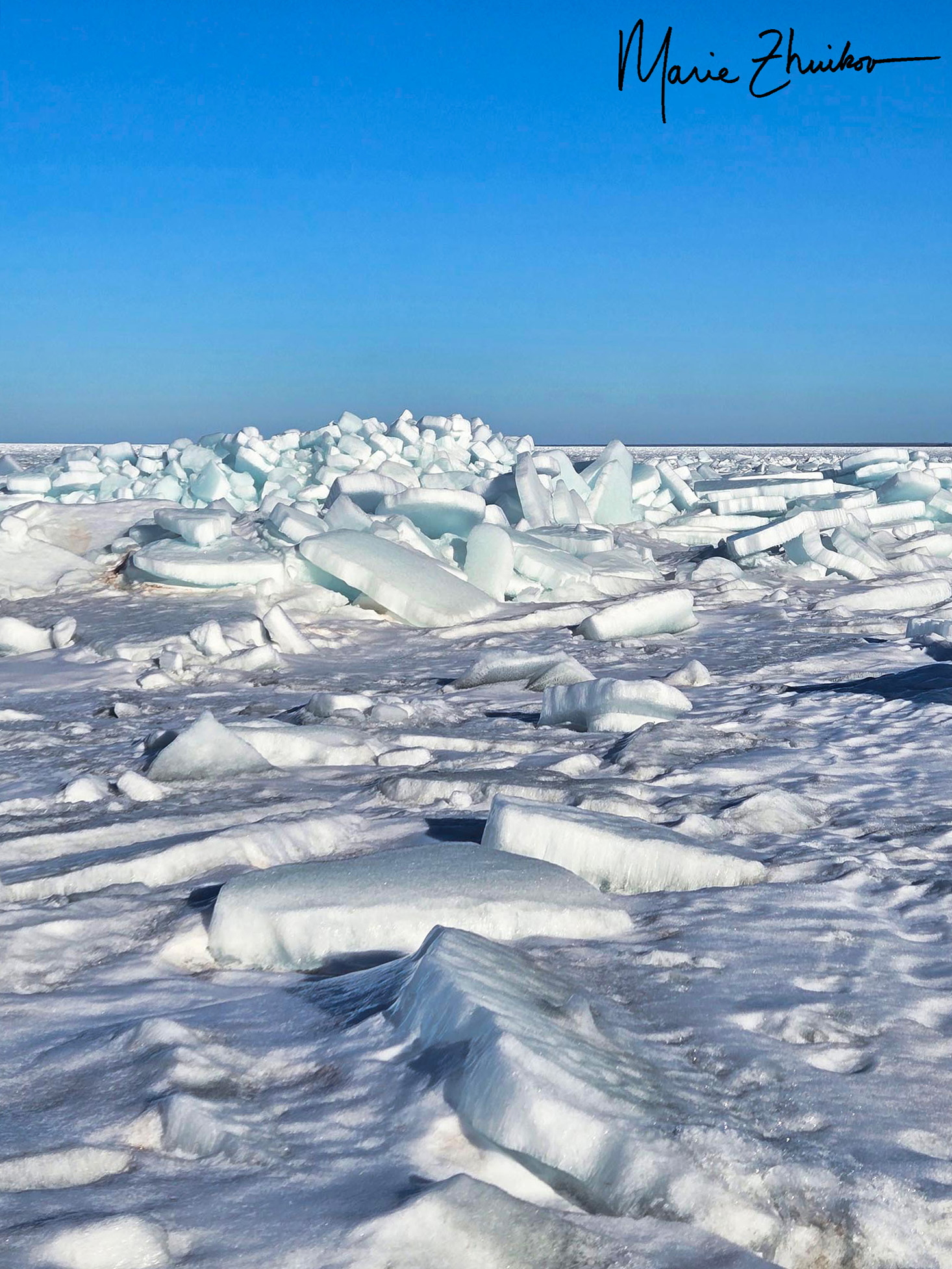
Ice off of Minnesota Point in Duluth. Each of those slabs in the foreground is the size of a person lying down. The ridge behind it is about fifteen feet tall.(I popped a squat to obtain this viewpoint.)
On the Dunes By Sara Teasdale
If there is any life when death is over, These tawny beaches will know much of me, I shall come back, as constant and changeful As the unchanging, many-colored sea.
If life was small, if it has made me scornful, Forgive me; I shall straighten like a flame In the great calm of death, and if you want me Stand on the sea-ward dunes and call my name.
I recently stumbled upon this poem while leafing through a stack of old, yellowed pages—poems I had once painstakingly typed on a clattering Underwood typewriter during my high school days. Back then, before the convenience of photocopiers, I’d wander the library aisles, selecting poetry books that called to me. I would borrow them, then sit for hours, as I copied lines that stirred my soul. I imagined that I’d refer to these pages often, though, they have gathered more dust than fingerprints. Now, rereading them, I’m flooded with nostalgia, peering through a window into what once moved my younger heart.
Poet Sara Teasdale lived from 1884 to 1933. She is characterized as “neurotically intense,” and it’s said she moved in the company of poets like a “recessive flame.” She had a tempestuous affair with poet Vachel Lindsay. Later, she married a businessman but then divorced him, retired to seclusion, and in the end, died from an overdose of sleeping pills.
Her poem struck me because I’d just meandered to the beach in Duluth with Russ. If you’re not familiar, we are blessed with a long sandbar at the mouth of Lake Superior. Of course, the beach was snow-covered. The lake’s power was on full display in the form of huge piles of ice piled high about ten yards offshore. I had my phone with me and was tempted to brave the ice to take some photos, but I hesitated, not knowing if the ice was safe. I am well acquainted with the vagaries and dangers of this Great Lake.
However, two other people walked out to an ice ridge in front of me. They survived, so I figured I’d be okay if I followed in their footsteps. I ventured out, and these photos are the result. I was glad I braved the ice to share them with you! Russ wisely remained onshore. I’m also glad that the little adventure didn’t hasten my death so that Russ would need to stand on the dunes and call my name when he wants me. 😊
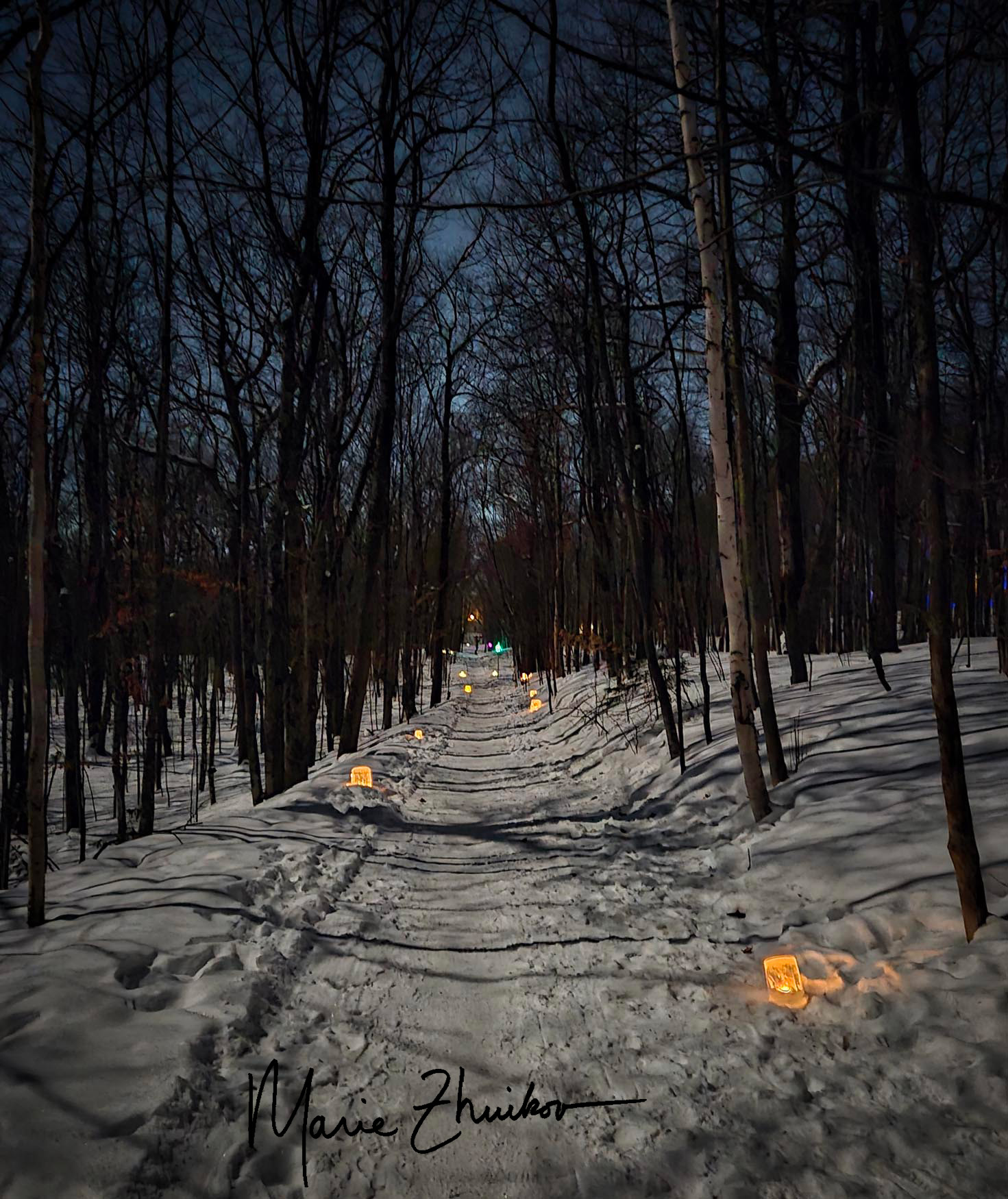
Inside our mailbox was an invitation on a slim, hand-cut piece of paper: Luminary Walk. It contained a date, time, and location, which was a short woodland trail in our neighborhood. On the bottom were the words: light, warmth, hope, welcome, neighbors.
How could we resist? We waited until dark and ventured out into the calm night. An almost-full moon watched our progress, casting shadows on the snow. That was all the light we needed. We didn’t even consider bringing a flashlight.
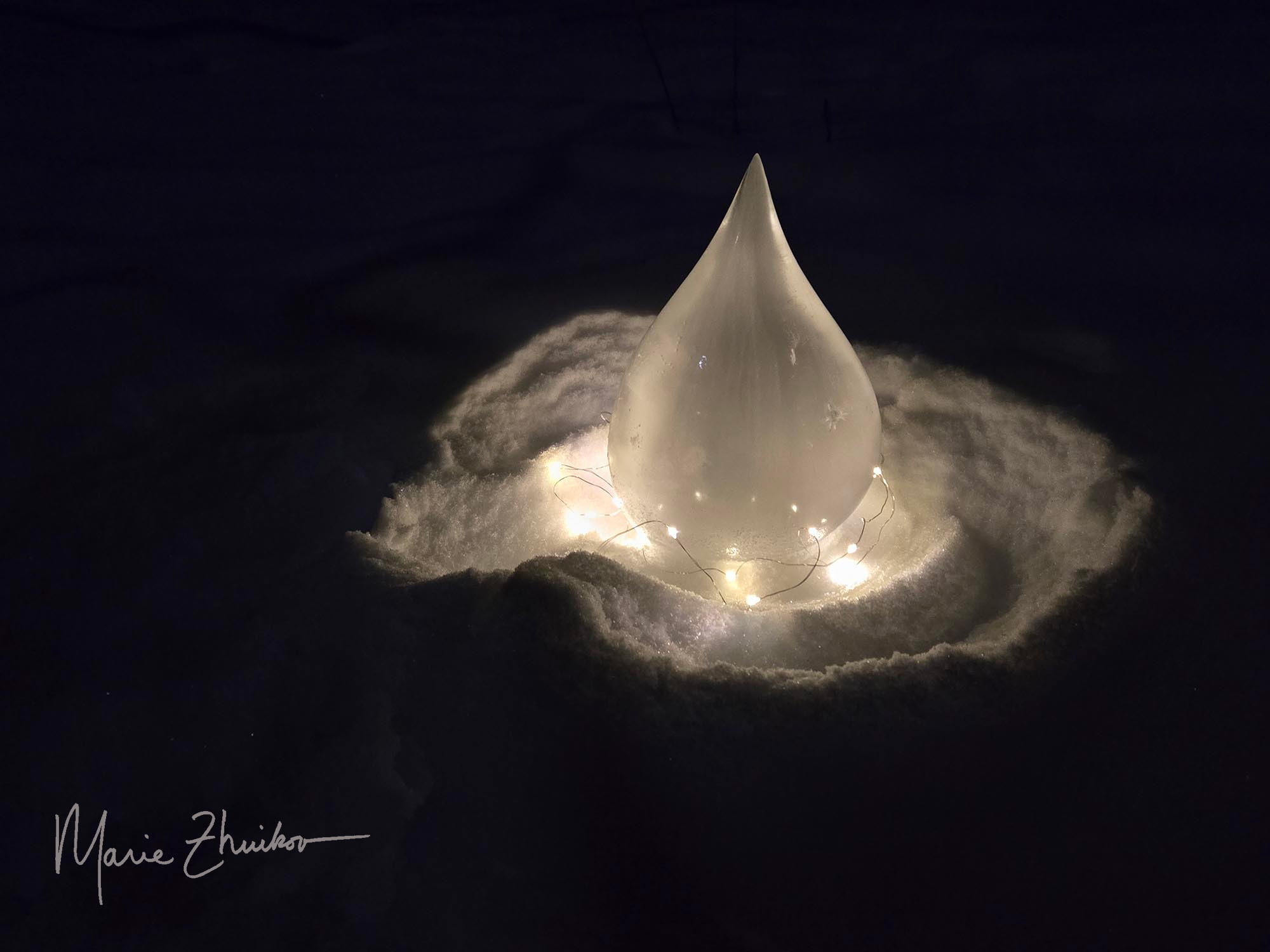
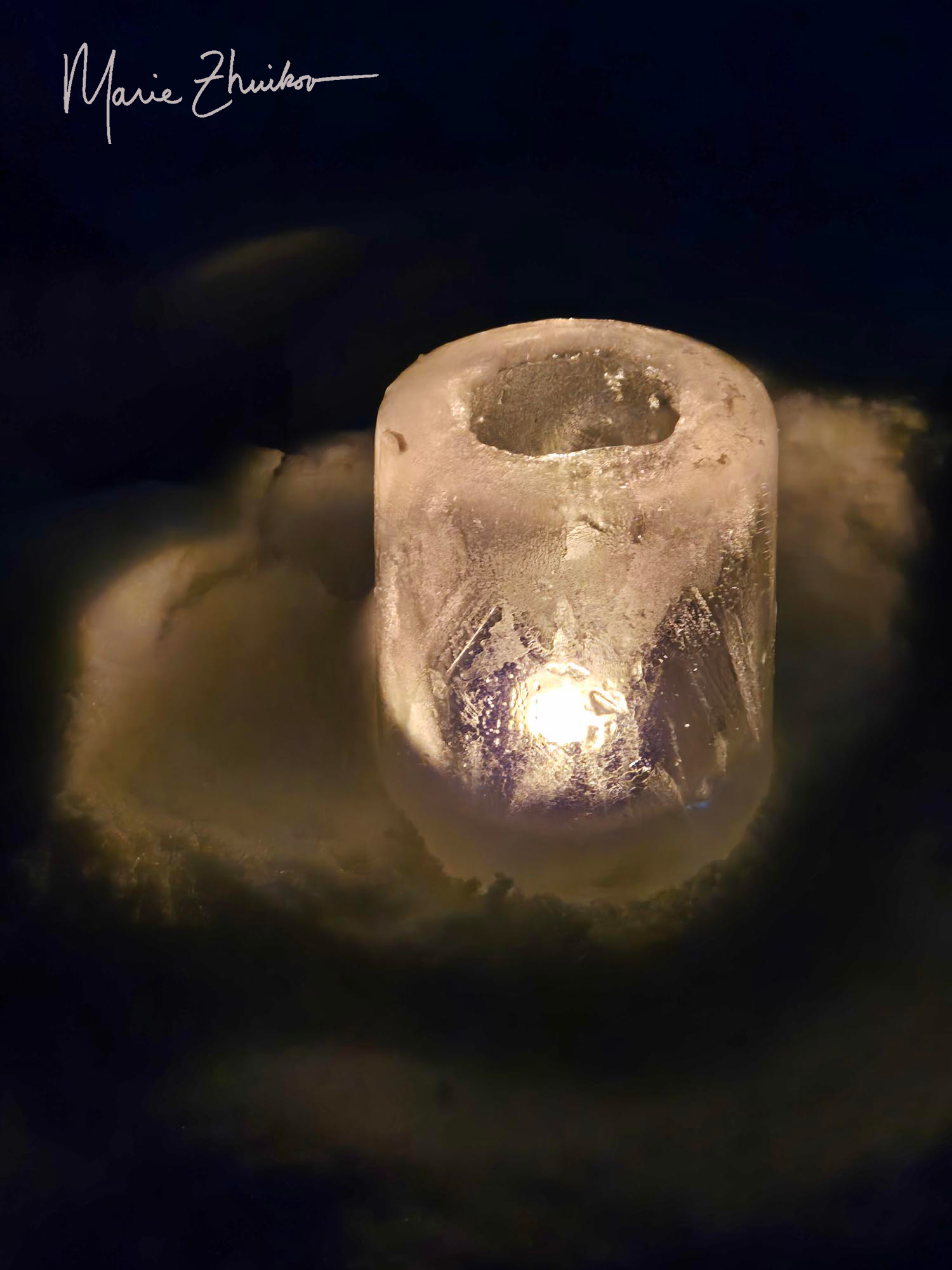
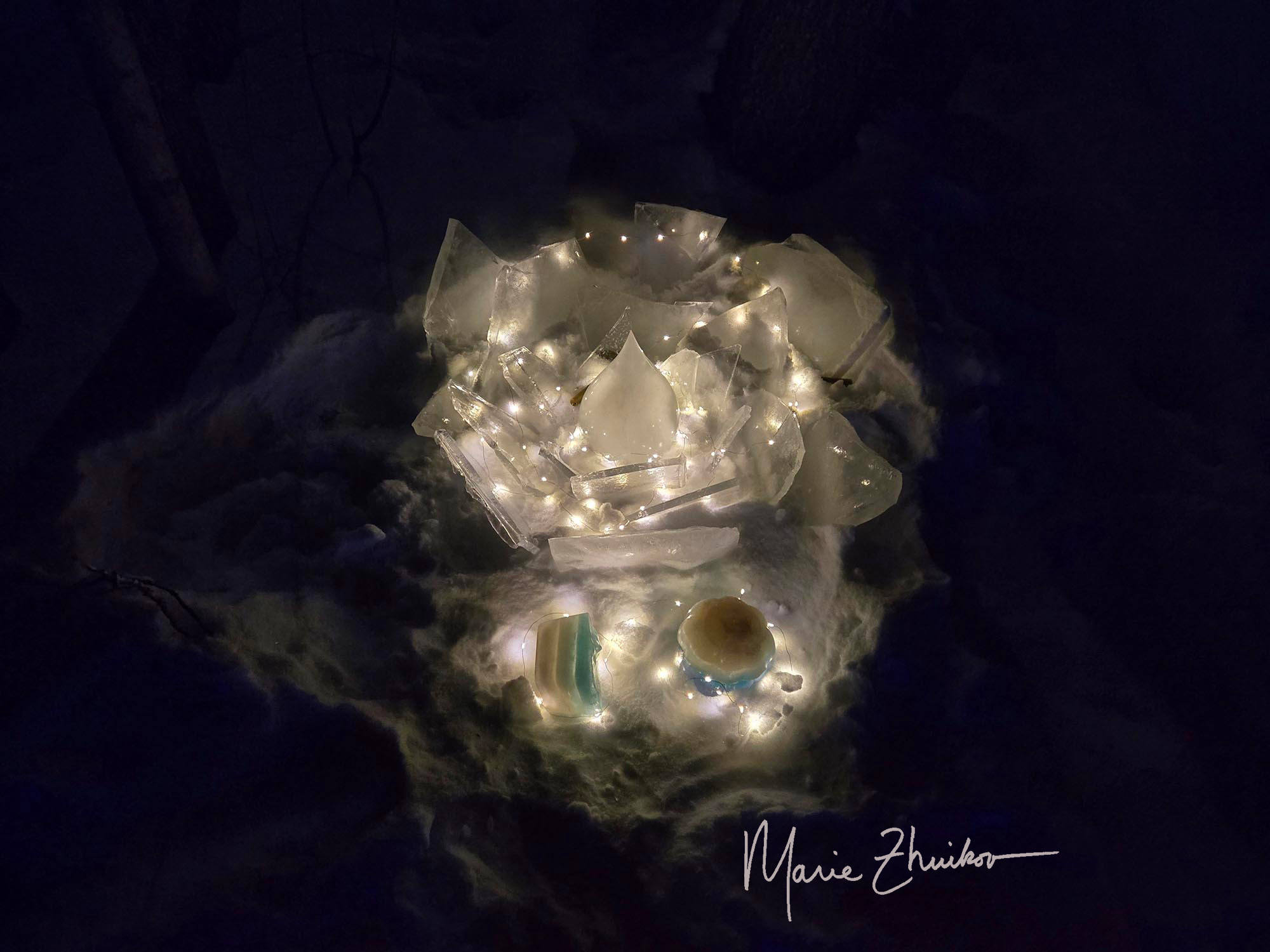
When we arrived at the trailhead, an alternating path of ice luminaries glowed softly down the length of the trail. As we walked, we noticed some were lit with candles and some with LED lights. Most glimmered with soft, natural light. Others swirled with a riot of color. There were round and rectangular clear ice luminaries, colored square ones, and huge raindrop-shaped ones.
We weren’t sure who was responsible for creating this magic, but it must have been several families, given all the work involved. Halfway down the trail, we met other neighbors enjoying the scene with their dogs. We greeted each other and marveled over the view.
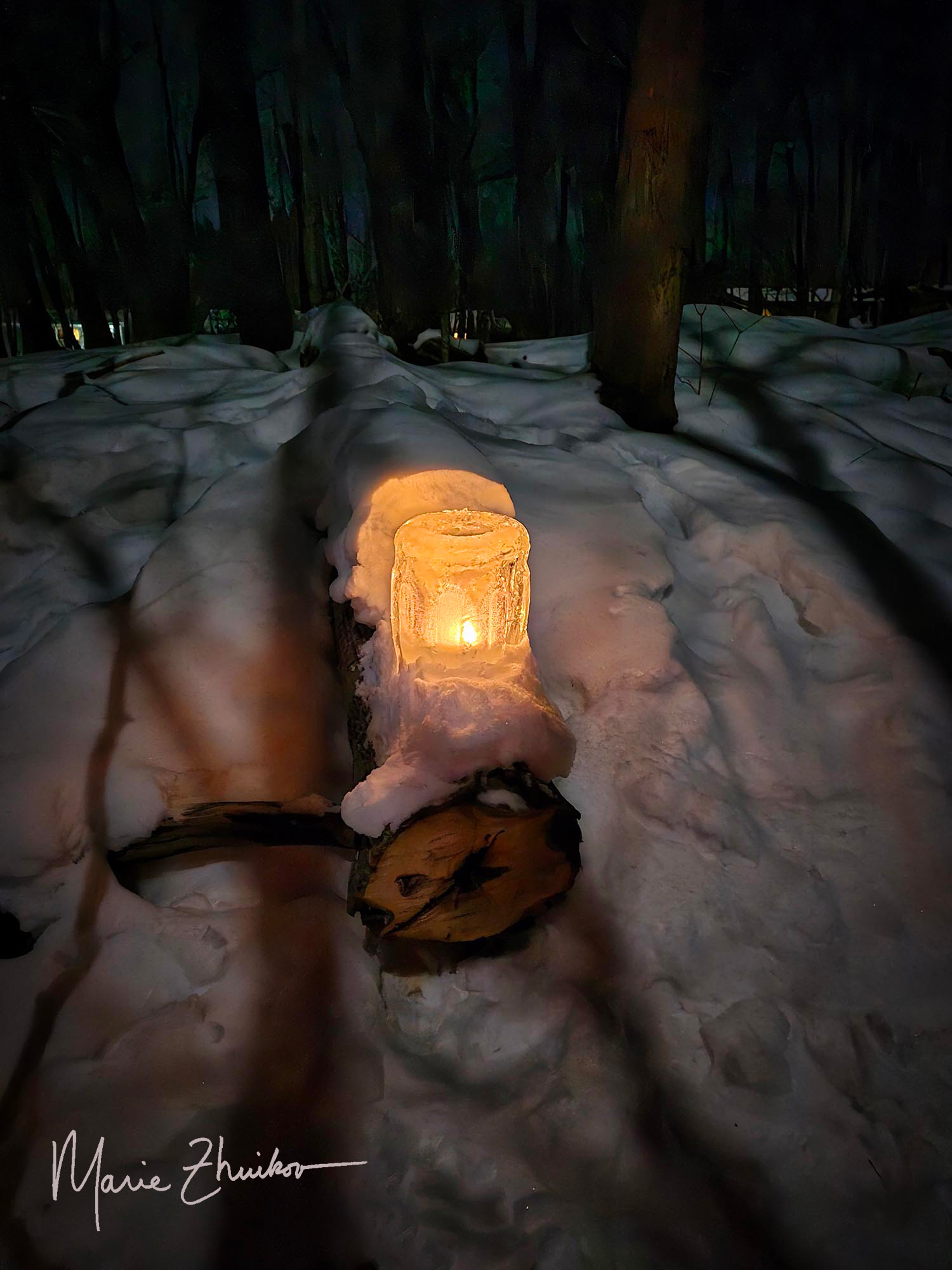
One display looked like a snowy rose: a raindrop luminary in the middle, surrounded with icy petals and lit with a string of white lights. Orange slices, cranberries, and pine needles were embedded in another. Most lay on the snow. One was perched on a log.
We left the trail and walked back home with these words echoing in our heads: light, warmth, hope, welcome, neighbors.
Just a few of the grocery bags we filled with food for victims of an apartment fire.
Background
I haven’t mentioned this, but one of the first things I did when I retired last spring was to sign up as a Red Cross volunteer. I’d long been familiar with the organization, ever since my first job as a lifeguard. (We had to take Red Cross classes for certification.)
Once Hurricane Katrina struck Louisiana in 2005, I felt the call to help, but I didn’t know how. I was working for the University of Minnesota at the time and ended up joining an emergency response group to help with communication. But it seemed the only type of communication assistance they required was telecommunications, not public/media communications. Sitting around when people were in dire need was frustrating.
In the years since, I noticed how the Red Cross helped local people who experienced house fires, and towns that were struck by wildfires, floods, and hurricanes. I also became acquainted with the director of the local Red Cross chapter and learned that the organization actively seeks volunteers.
So, I put volunteering for the Red Cross at the top of my “Things to do When I Retire” list. Immediately after I retired, I visited their website and signed up to help during a crisis. There are two volunteer categories for that: Disaster Services and Disaster Action Team.
Disaster Services helps with mass feeding and sheltering of people impacted by major disasters (fires, floods, hurricanes). Disaster Action Team members help with single-family disasters like housefires. I submitted my information online, and it wasn’t long before I was contacted. Eventually, I had a short phone interview with someone from the Twin Cities, and I was in!
The interviewer wanted to add me to the Red Cross’s public information team, but I wasn’t ready for that yet. I wanted to help more directly, and also to get a feel for the organization before I began representing it to the news media. It also felt too much like the work I just retired from, and I wanted a break. So, I put that opportunity on hold, but I can revisit it once I gain more experience.
I took a series of online courses, which required about a month to complete. I also attended an in-person (virtual) class that took up one afternoon. As of now, I’m certified in Disaster Services, but I still have a few more classes to take for the Disaster Action Team.
Calls to Action!
My first opportunity came the day we returned from our retirement celebration trip to Grand Cayman Island. A fire was burning north of Duluth (very near our cabin!), and the Red Cross was setting up a drinking water and info station in a community center.
Saying “no” frustrated me because I really wanted to help, but we had a small “disaster” on our hands ourselves with no food in the house and piles of laundry to do!
I missed that opportunity, but the next one came about a week before Thanksgiving. A fire at the end of October in a large apartment building in St. Paul displaced 1,200-1,500 people, many who were immigrants. Most were housed in hotels across the city. The Red Cross was feeding them lunches and dinners (breakfasts were provided by the hotels).
Due to the long timeline of the operation and the impending holiday, there was an urgent need for new volunteers. I raised my hand, so to speak, and was soon set up with a Red Cross credit card for my food and a hotel room. I expected to be gone from home for two weeks. We weren’t planning anything special for Thanksgiving, so this was okay by me.
The first day of my deployment, I fed people “virtually.” I was assigned to the Minneapolis Red Cross Office with several other volunteers to help fill hundreds of grocery bags with food for the disaster victims who had kitchenettes in their hotel rooms. We were instructed how many of each item to put into the bags (2 cans of peas, 3 granola bars, etc.) and formed an assembly line, each of us filling one bag at a time. Then we placed the bags on tables and the floor for other volunteers to cart out to trucks for transport.
We rocked that assembly line! The leader said we were the best group ever. But I bet she says that to all the groups. 😊
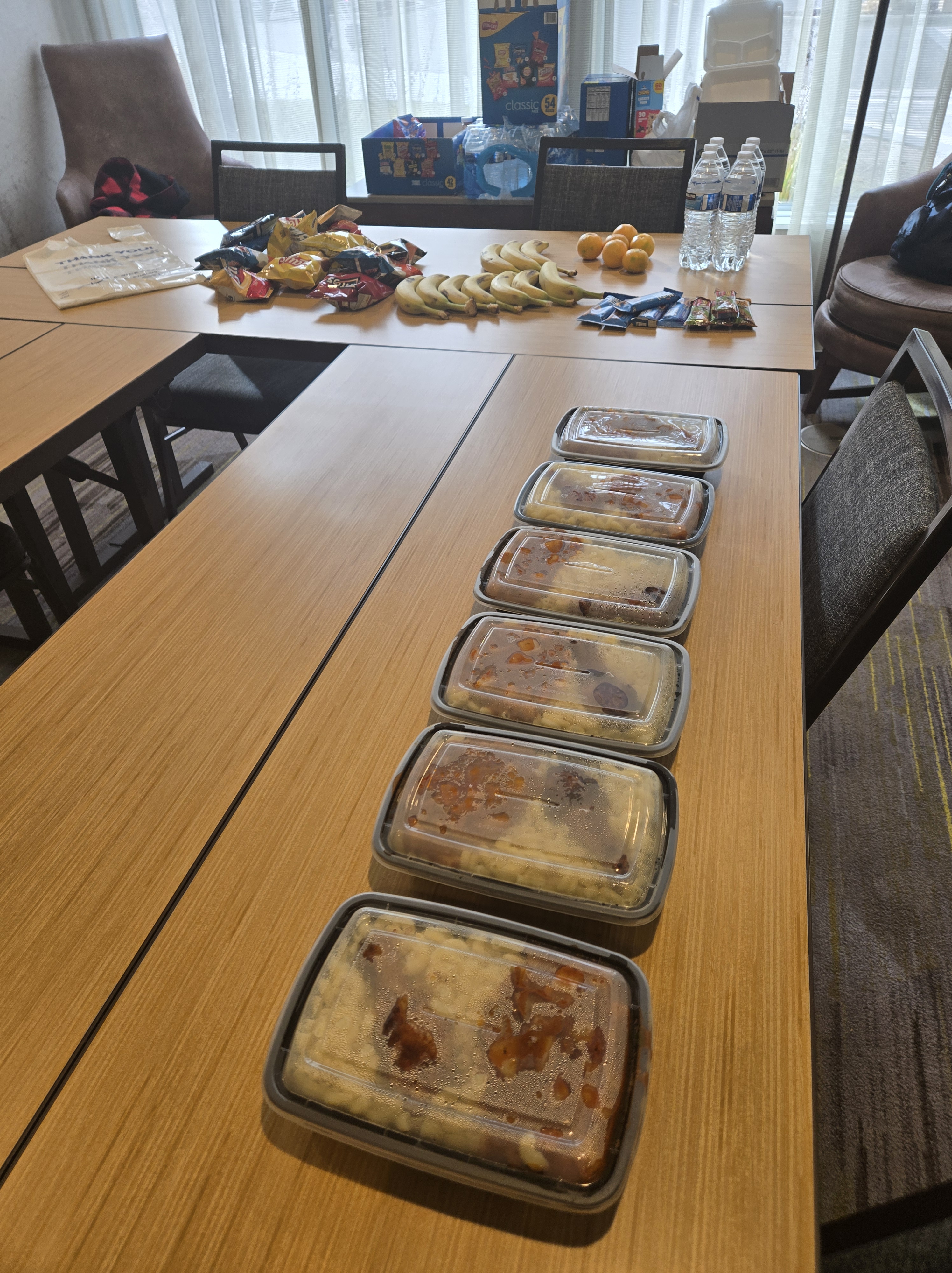
The next two days, I fed people in a hotel in a suburb about a half-hour away. I worked in a room off the lobby with another volunteer who was from the Twin Cities area. The Red Cross usually has people work in pairs for safety and to help with information exchange. My partner showed me the ropes. We arrived before lunch and got the room ready for the meal distribution by putting out supplies stored there (like fruit, water, granola bars). When the hot meals were delivered (in to-go containers), we’d set them out and open the room doors so that residents knew meals were available.
Many of the residents had found other food sources, so we only gave out about twenty meals each time. This was far fewer than I was expecting, but I suppose that’s a good thing. Between meals, we hung out in the room, read books, and chatted. I had my evenings free and was able to enjoy dinners with Twin Cities friends and relatives.
Some of the dinners we offered.
The next day was the last day feeding was scheduled. Many of the victims were able to move back into their apartments, or they were given food vouchers by the apartment managers. I worked at a different hotel with a different partner. As we served their last meals, many victims expressed their thanks. Most were Somali or Asian. I should mention that the Red Cross went to special lengths to provide culturally acceptable food (Halal dishes). I did not hear one complaint!
Wrap-Up
Because things were wrapping up by the time I arrived, my deployment only lasted five days instead of fourteen. I was able to spend Thanksgiving at home, which was good because my stepdaughter and our grand dogs came for an impromptu visit.
Overall, I felt the assignment was cushy. I was in a city that was intact and functional (versus a community ravaged by a hurricane or fire). I had my own hotel room versus sleeping on a cot in a shelter. The people we helped seemed comfortable with their surroundings. The volunteers I worked with were similar to me (retired do-gooders who like to read), and I had time to visit friends I wouldn’t have seen otherwise.
On the day I left, there were rumors of ICE agents present in the city. I was glad I was departing for Duluth. We all know how that turned out. ☹ The Red Cross has since issued guidance on how to react if agents arrive at a Red Cross operation.
It was a good introduction to how the Red Cross works. I’m looking forward to my next experience!
For the first nine months of 2025, my chapter alone (Northern and Central MN) helped 267 families affected by disaster. They trained 10,700 people in lifesaving skills, and were supported by 464 volunteers who gave over 32,000 hours of service. If you’re feeling the need to do something positive, consider volunteering.
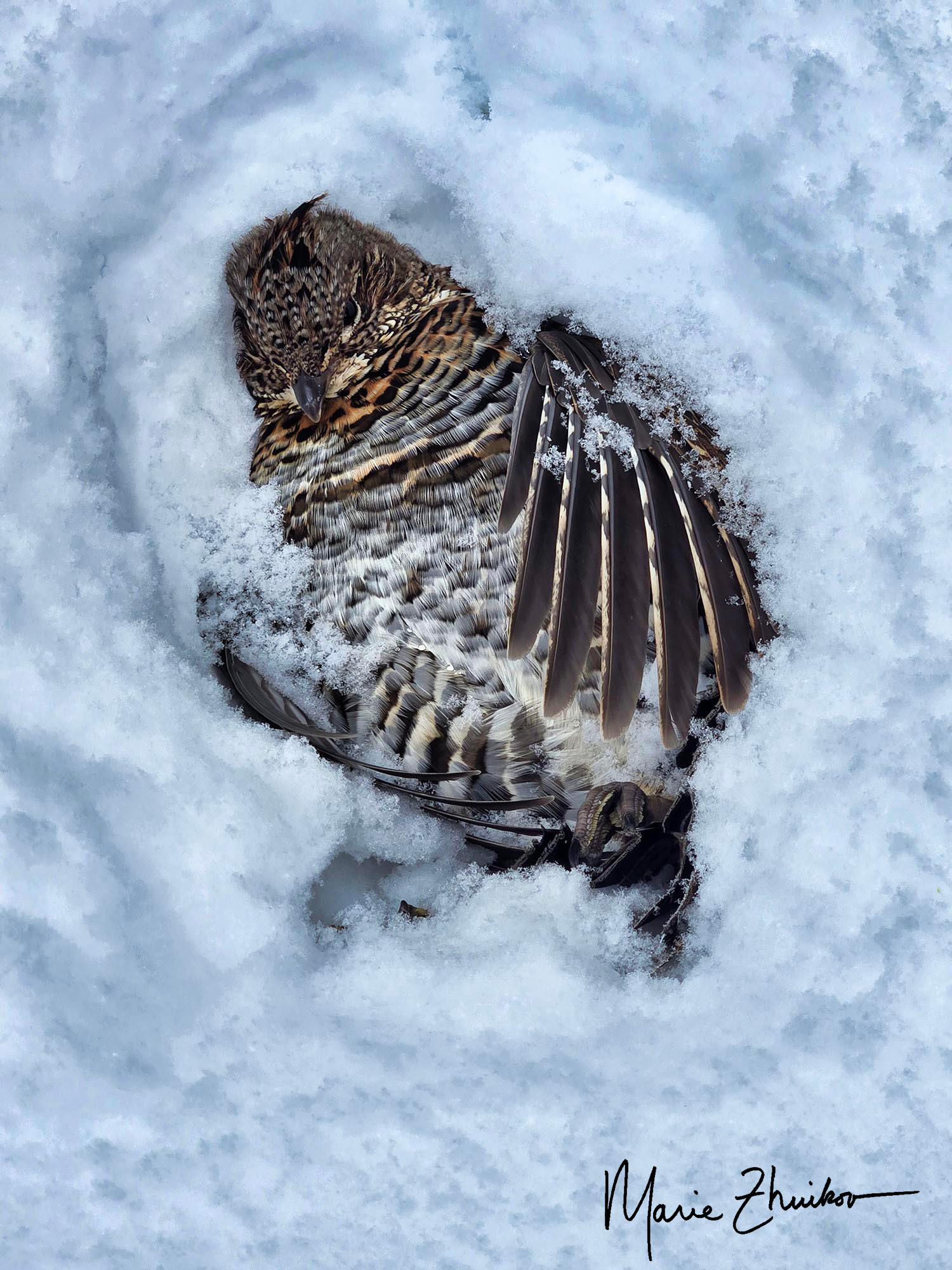
I came upon this scene at our cabin. The grouse must have hit the window on our garage, even though it’s on the second story. I’ll have to do something about that — close the curtain, perhaps? At least the bird had a soft landing in new snow. It looked so peaceful, I was moved to take a photo. We left it where it fell. Some fox has probably already made quick work of it — returning its energy to the world.