Dining in Dives

Dear readers, you may recall that Russ and I have a penchant for fine dining. When we travel, we try to hit at least one gourmet restaurant per trip. Featured on this blog in recent years have been The Rhubarb Restaurant in Edinburgh (with its rhubarb-themed drinks and a Châteaubriand Angus steak platter for two), The Wharf on Grand Cayman (with lobster, and you can feed the shells to awaiting tarpon fish off the dock), the Mariposa in Sedona (with juniper cocktails and mejillones con chorizo, a mussel and sausage appetizer), the Von Trapp Family Lodge in Stowe (with a lingonberry spritz and quail/venison dinner), and the Eiffel Tower Restaurant in Las Vegas (with its grand Marnier souffle), to name a few.

More recently, our dining experiences have literally taken a dive. We’ve been exploring the cheapest (but tastiest) places we can find. Whether this shift is because we’re both retired and on fixed incomes or simply inspired by the fun we had last year at the Czech Grill in Grand Cayman—where we wrote on the walls and enjoyed our sixth wedding anniversary with ribs, potato salad, a tabby cat, and a handsome rooster—the change is noticeable.

We’ve experienced several memorable meals this past year, dining in northern Minnesota/Wisconsin dives. Our definition of a dive is a place where we can buy dinner for two for $40 or less. Many times, this even includes adult beverages and the tip! We have friends who also love dives, and they’ve introduced us to a few.

With that in mind, here are six of our favorites, listed in no particular order. Each offers its own unique charm, and we’d happily return depending on our mood.

The Alborn Tavern is a family-owned, small-town restaurant and bar in northern Minnesota. If you like a place with crumbling vinyl seat covers, pool tables, dart boards, and meat raffles, this is the place for you! BTW, a meat raffle is a community fundraiser where people buy tickets for the chance to win packages of meat, usually steaks, roasts, and bacon.


Art on the door of the El Toro Lounge.

The El Toro Lounge and Wilbert Café is a historic stopping place and local watering hole along the highway that leads to Canada. It used to be THE place to stop when Greyhound bus routes ran between the Iron Range and the rest of Minnesota. Now, it mainly serves locals, anglers, and snowmobilers. Diners can get breakfast all day most days of the week. There are also bingo nights and Friday fish fries. We celebrated our fifth wedding anniversary in the lounge.

Near the El Toro is the Dawghouse in Canyon, Minnesota. The renovated restaurant has a more modern feel than the Wilbert Café, plus there’s a large and lovely event venue suitable for hosting a wedding reception or party. There are even customized racks so that snowmobilers can hang their helmets and gear while they eat, and an outdoor patio that’s dog-friendly.

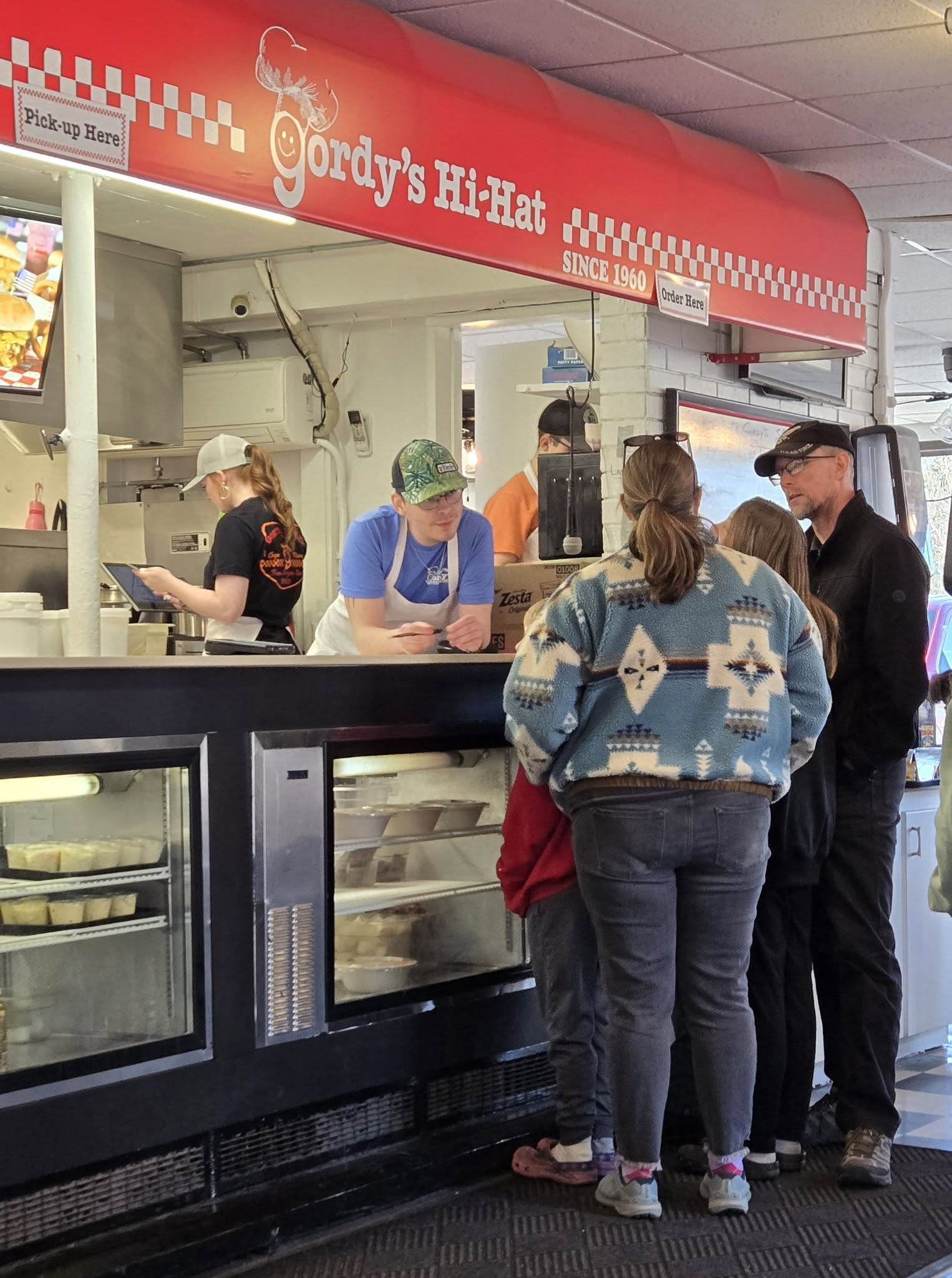
Diners order dinner at Gordy’s Hi-Hat.

Gordy’s Hi-Hat in Cloquet, Minnesota, is a family-owned burger joint that’s only a few years older than me. It’s well known for stellar customer service and a family atmosphere. Guy Fieri, with the Diners, Drive-Ins and Dives television show, has even dined there. If you’re more into salads and coffee, stop next door at their Warming House. We celebrated my recent birthday at the Hi-Hat with a Swiss-and-mushroom burger, fries, and a hot fudge malt. I highly recommend the malt!

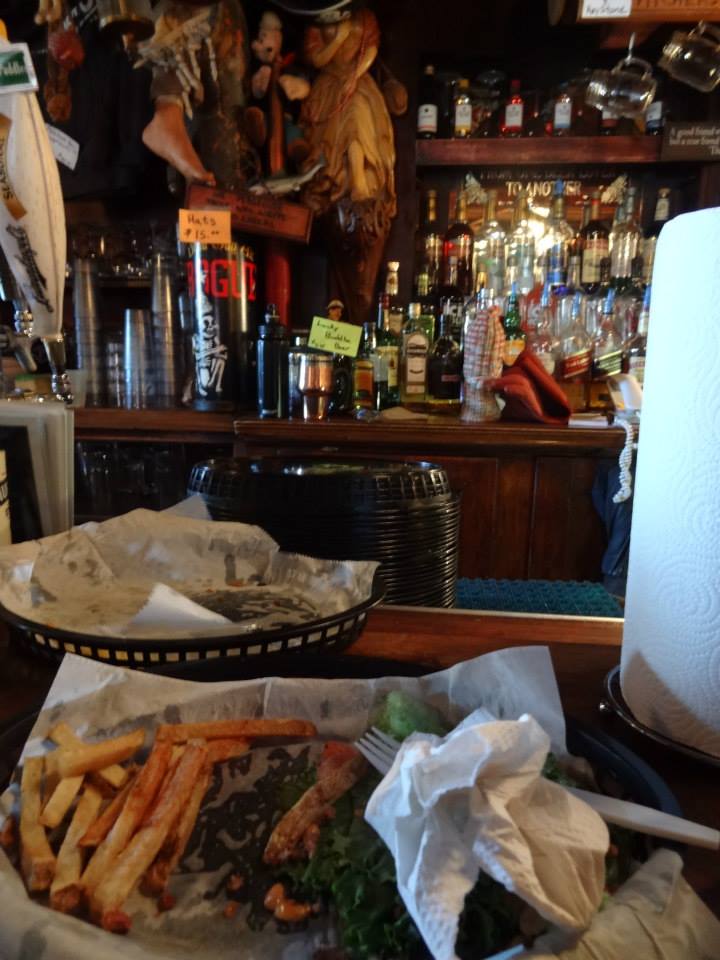
The Anchor Bar in Superior, Wisconsin, wins “best burger” almost every year in local competitions. Their burgers are homemade, cheap, and good. The fries are plentiful. But what’s most notable is the maritime décor. Ship ropes hang from the ceiling, sailing books line the shelves, ore boat photos grace the walls. It’s also been featured on Diners, Drive-Ins and Dives. The clientele is mixed, from doctors to longshoremen, from college students to truckers. The cashew burger is my fave. Look for the ship’s anchor outside the door.

The aftermath of a meal at the Anchor Bar.

Tired of burgers? Try the India Palace in downtown Duluth. It offers a plethora of Indian food options with levels of heat friendly to Minnesotan palates. There are also vegetarian options. It’s known for tandoori chicken and curry dishes. The service was very good.

True to this trend, we plan to spend our seventh anniversary this week at another local dive. If it’s any good, I’m sure you’ll be hearing about it!

Please feel free to share a link to your favorite dive in the comments and tell us where it’s located!

Sweet on Sourdough

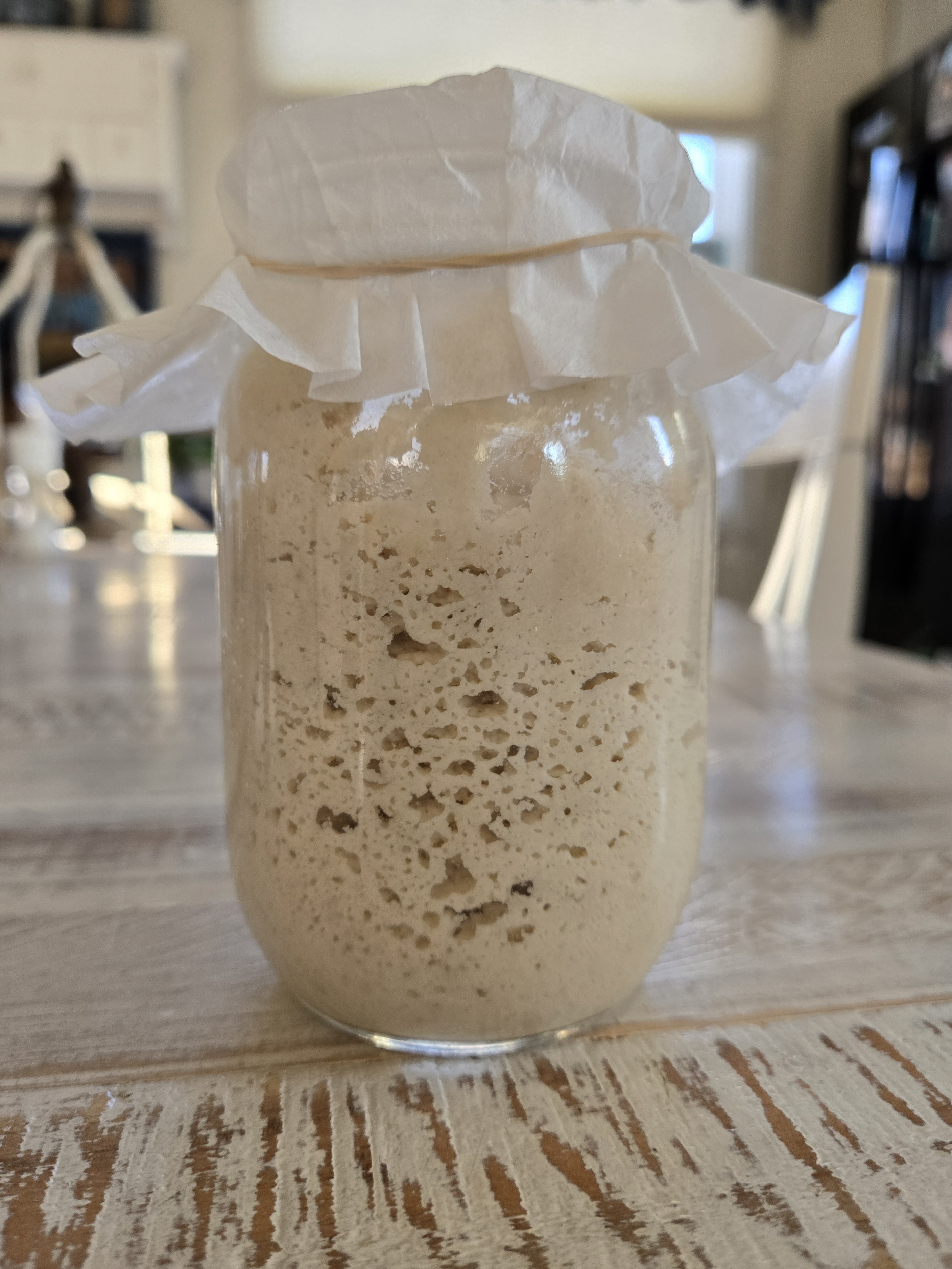
A bubbly sourdough starter is a happy starter.

Yet another project to fill my time in retirement was to explore the art of gluten-free sourdough baking. Some people think that regular sourdough bread is gluten-free, but it’s not. You need to have a special sourdough starter that contains some kind of gluten-free flour, like brown rice.

A few months before I retired, I happened upon just such a starter at a local mercantile. It was made by the Cultures for Health company (but you can get it via mail, also). Not long after my retirement last spring, I began to experiment with it.

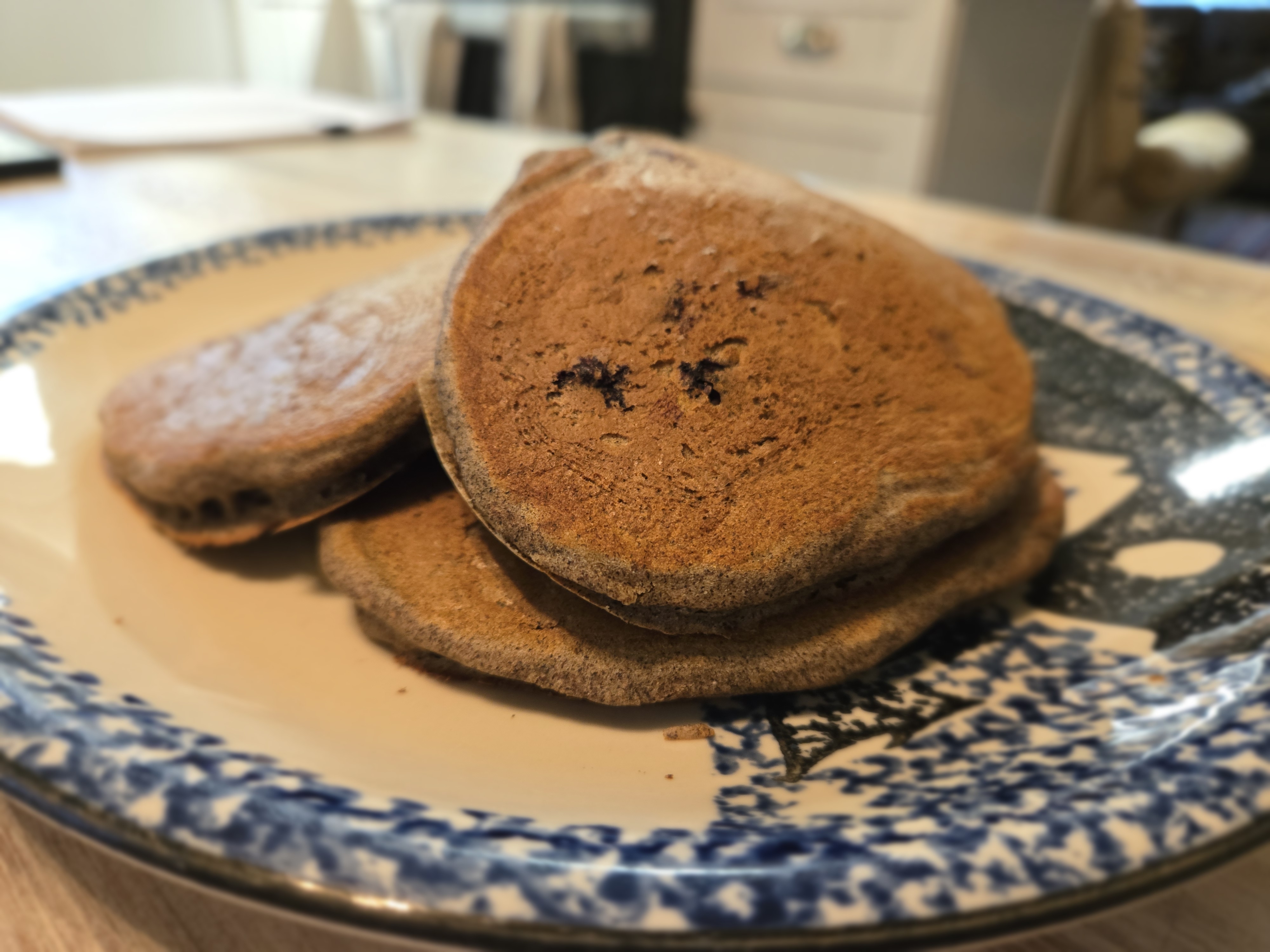
Buckwheat sourdough blueberry pancakes. These are fluffier and milder than regular buckwheat pancakes. A win!

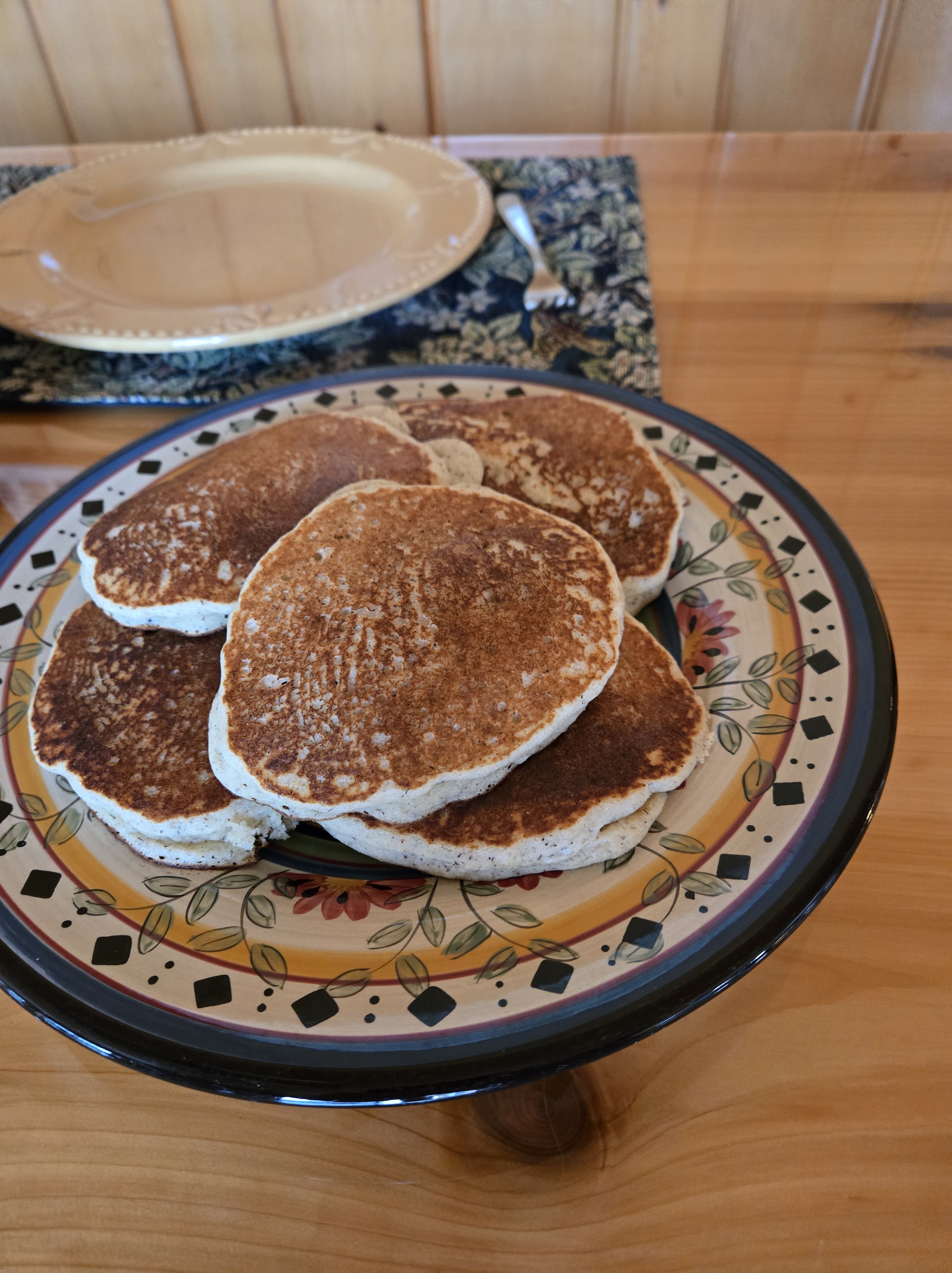
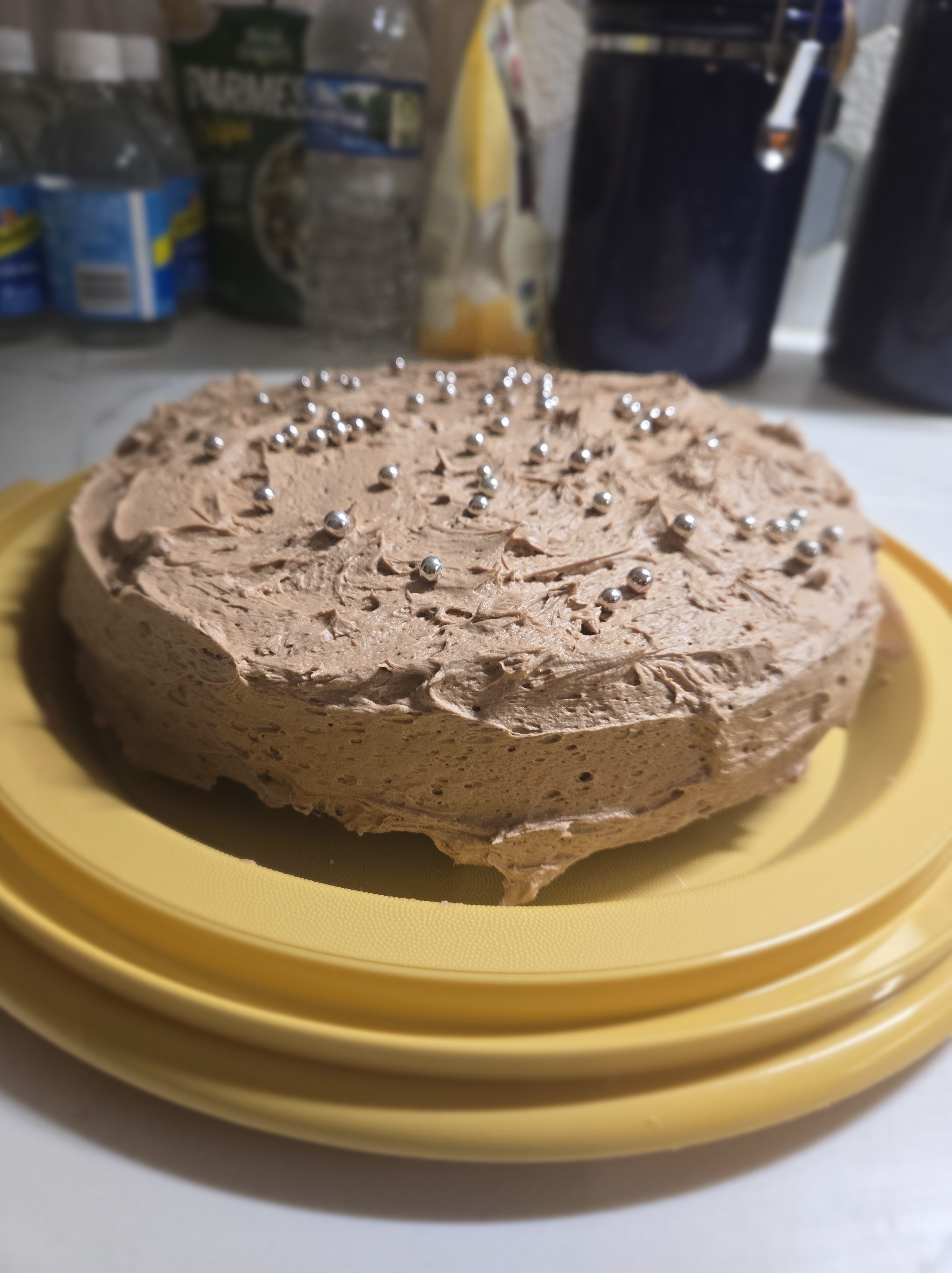
So far, I’ve made two kinds of gluten-free sourdough pancakes (one was buckwheat blueberry, the other whole grain), bread, and a chocolate-coffee cake with chocolate-coffee frosting.

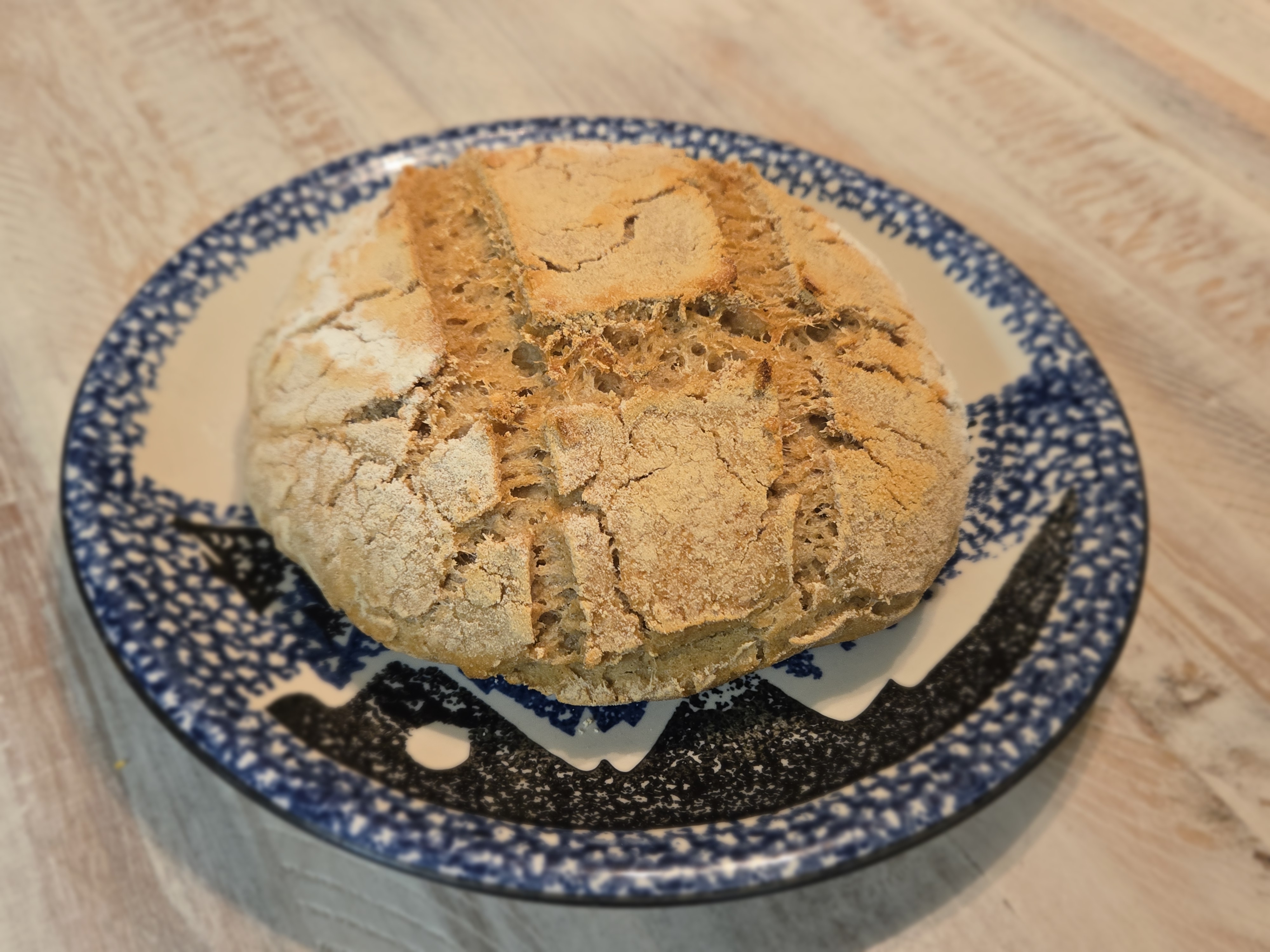
Of those, the pancakes and the cake were delectable winners! I’m still perfecting the bread recipe. I have a hard time getting the dough to rise enough before baking. I suspect the cold climate I live in is one reason for this. Sourdough bacteria like a nice, warm environment. I’ve begun adding some regular yeast to the bread dough, but I think I need to add even more. We’re not huge bread eaters in our household, so this could be a long process.

Whole grain gluten-free sourdough pancakes. Another win!

I’ve also learned how to refrigerate the starter and how to revive it from a frozen state. I freeze it when we’re gone on long trips, otherwise it wouldn’t survive not being fed with new brown rice flour and spring water every 3-4 days.

That’s another thing about sourdough starter, you can’t just use water from the tap. It has chlorine in it, so you need to use spring water, which can be found in most grocery stores. Another secret is to heat the water before adding it to the starter. I’ve had good luck heating it to 80-90 degrees F in the microwave, which makes the starter activate more quickly. You can tell your starter is activated when it gets a lot of bubbles and it almost doubles in size.

Gluten-free sourdough bread. Still needs work. It’s like eating a brick.

I got the pancake and bread recipes from the Cultures for Health website. The cake recipe came from the gluten-free cookbook, Cannelle et Vanille Bakes Simple by Aran Goyoaga that I bought at The Lost Kitchen store in Maine.

Learning a new cooking technique has been fun! Are you stretching your culinary skills in some way?

The chocolate-coffee sourdough cake, with sprinkles. Another winner!

The Lost Kitchen, Freedom, Maine

The Lost Kitchen

Russ and I left Waterbury and meandered through the rest of Vermont and New Hampshire on our way to Maine. Our goal was a small town north of Bangor named Guilford, which my ancestors founded. But on our six-hour road trip, we took a slight jog to Freedom, Maine, to visit The Lost Kitchen, a place featured in one of our favorite cooking shows.

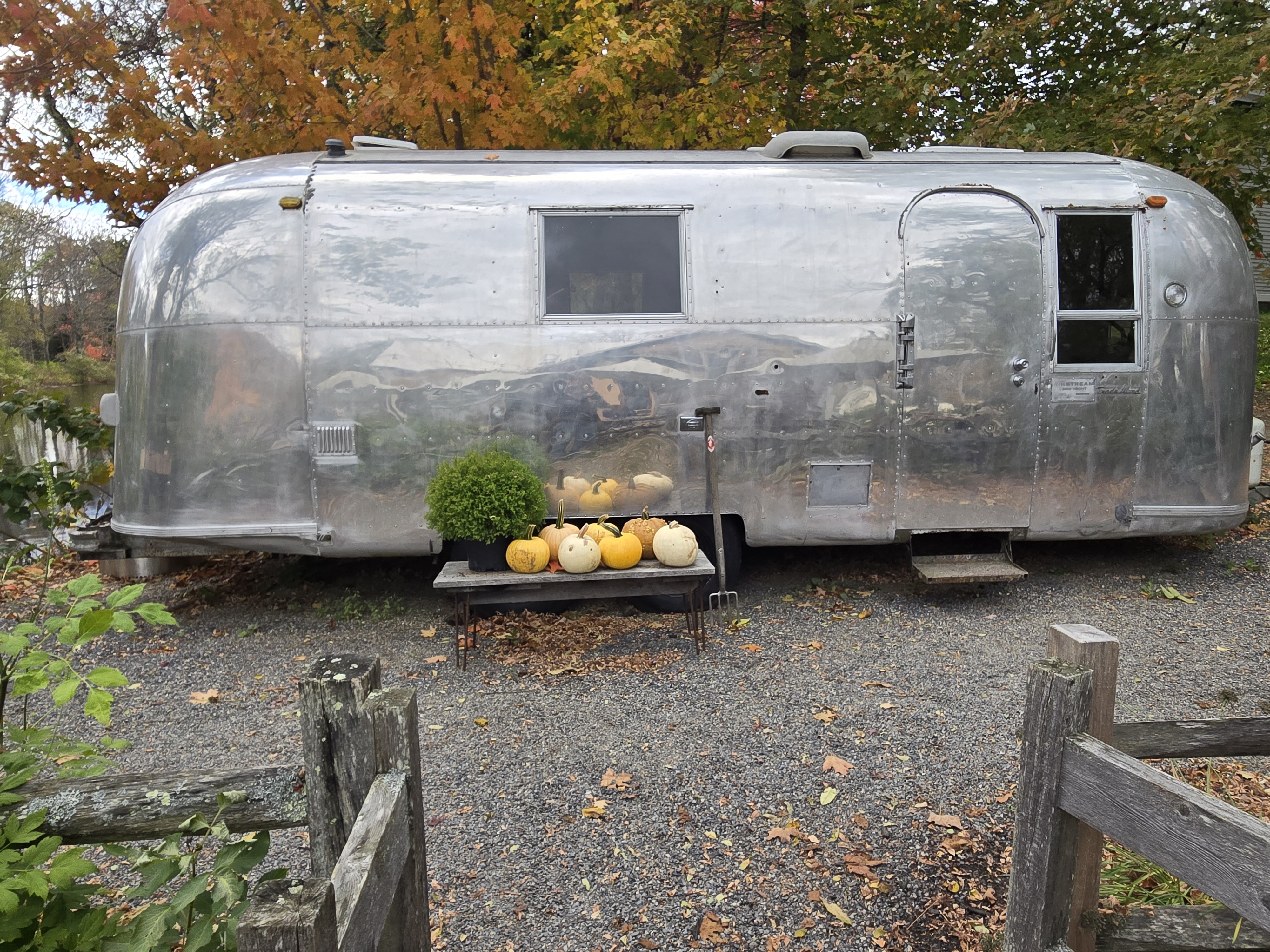
The Kitchen is run by Chef Erin French and her crew and is named after a restaurant she once owned in Belfast, Maine. She lost the restaurant because she had a really mean husband who closed it down and fired everyone while Erin went into treatment for substance abuse. (You can read all about it in her memoir, Finding Freedom.) She also lost custody of her son to the mean husband. But Erin got clean and slowly pulled herself up by her Maine rubber bootstraps. She ditched the husband, regained contact with her son, and began her own mini restaurant in a refurbished Airstream trailer.

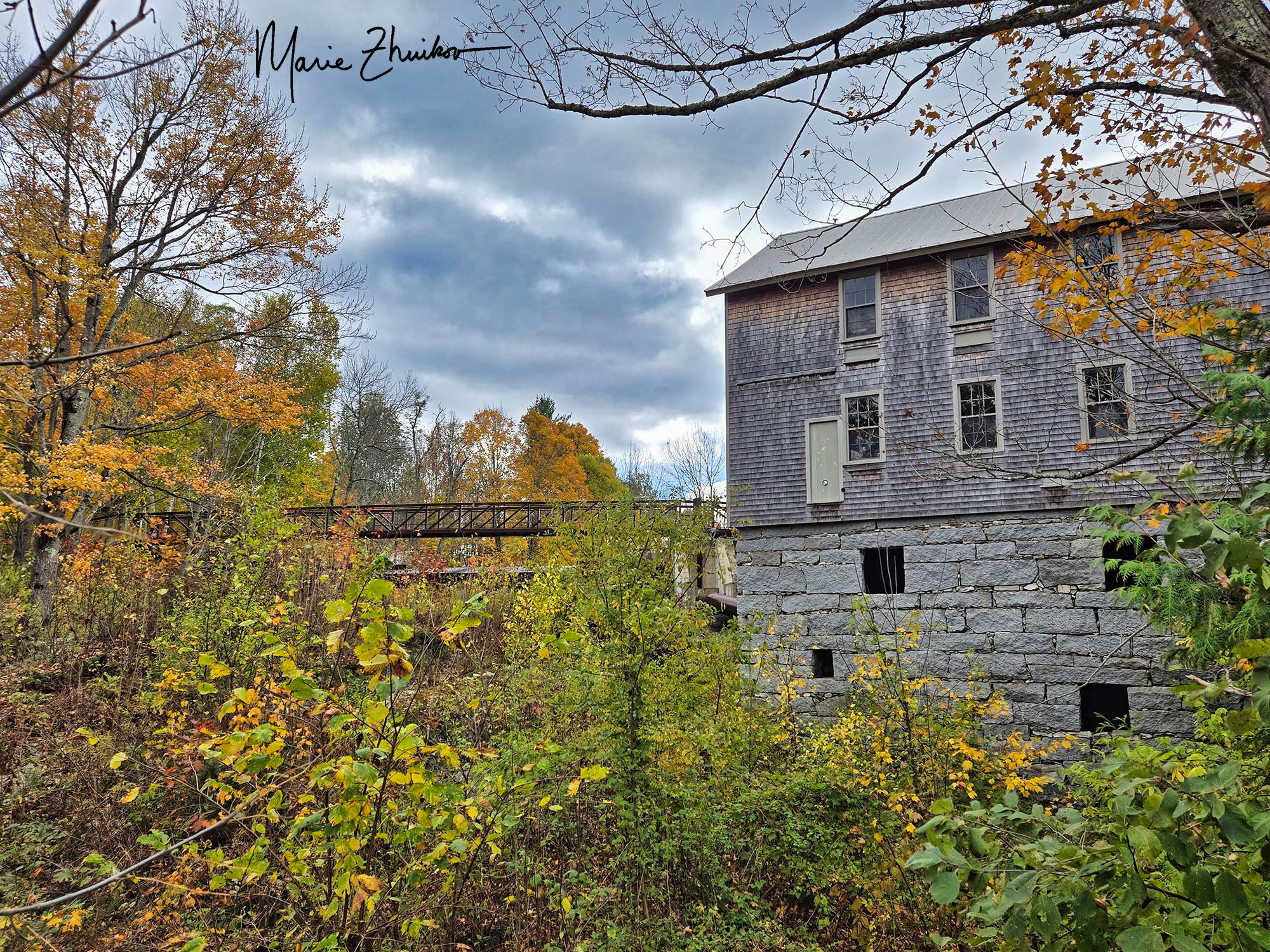
She still has her trailer, but along the way, she was able to buy an old mill in her hometown of Freedom. It’s situated on a pond in the middle of town. I’d been to Freedom in the past – once filled up at a gas station there and bought a red T-shirt that featured a moose filling his Model T with gas that said something about Beautiful Downtown Freedom, Maine. I swear, that T-shirt lasted twenty years! I wore it every time I worked out, and it served me well. It is long gone, however.

I was excited to return to the town and visit Erin’s Lost Kitchen site that we’d seen so often on TV. Her show is on the Magnolia Food Network, which is available via streaming through Discovery+. We’d watched all her episodes, which focus on her local farm-to-table foods that she feeds to guests (chosen by a lottery, which we entered last year but did not win). Her restaurant is open for dinner at all times of year, except for winter, when the staff hibernates.

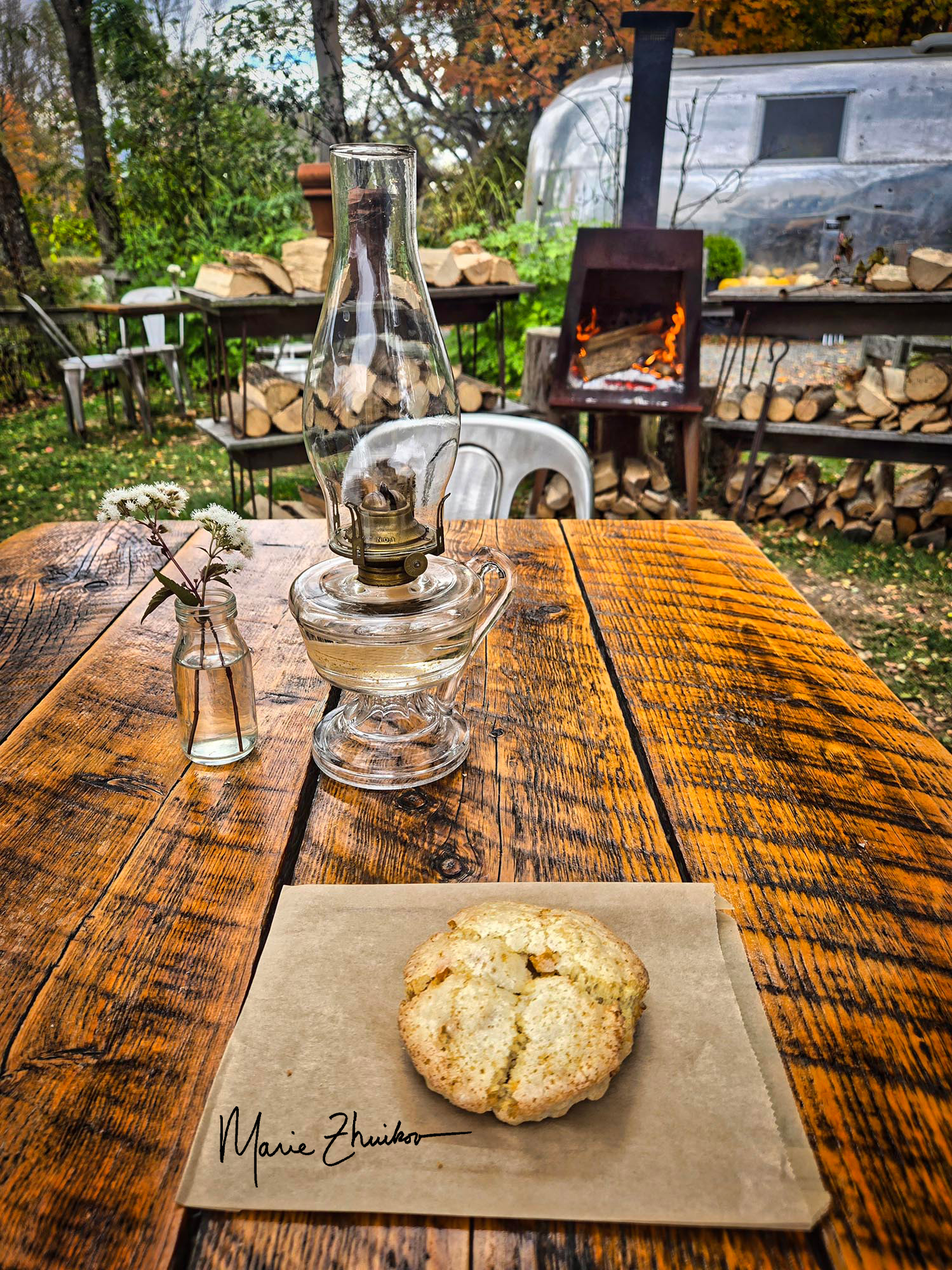
One of the memorable scones that we ate.

Our fall drive through New Hampshire would have been beautiful except for the leaf colors muted by drought and a viewshed clouded by rainy mist. When we arrived at The Lost Kitchen mill, we visited the kitchen’s café, which features fresh-baked goods and other light lunch fare. We ordered a candied apricot and ginger scone. It turned out to be fresh-from-the-oven warm. OMG, so flaky and good!

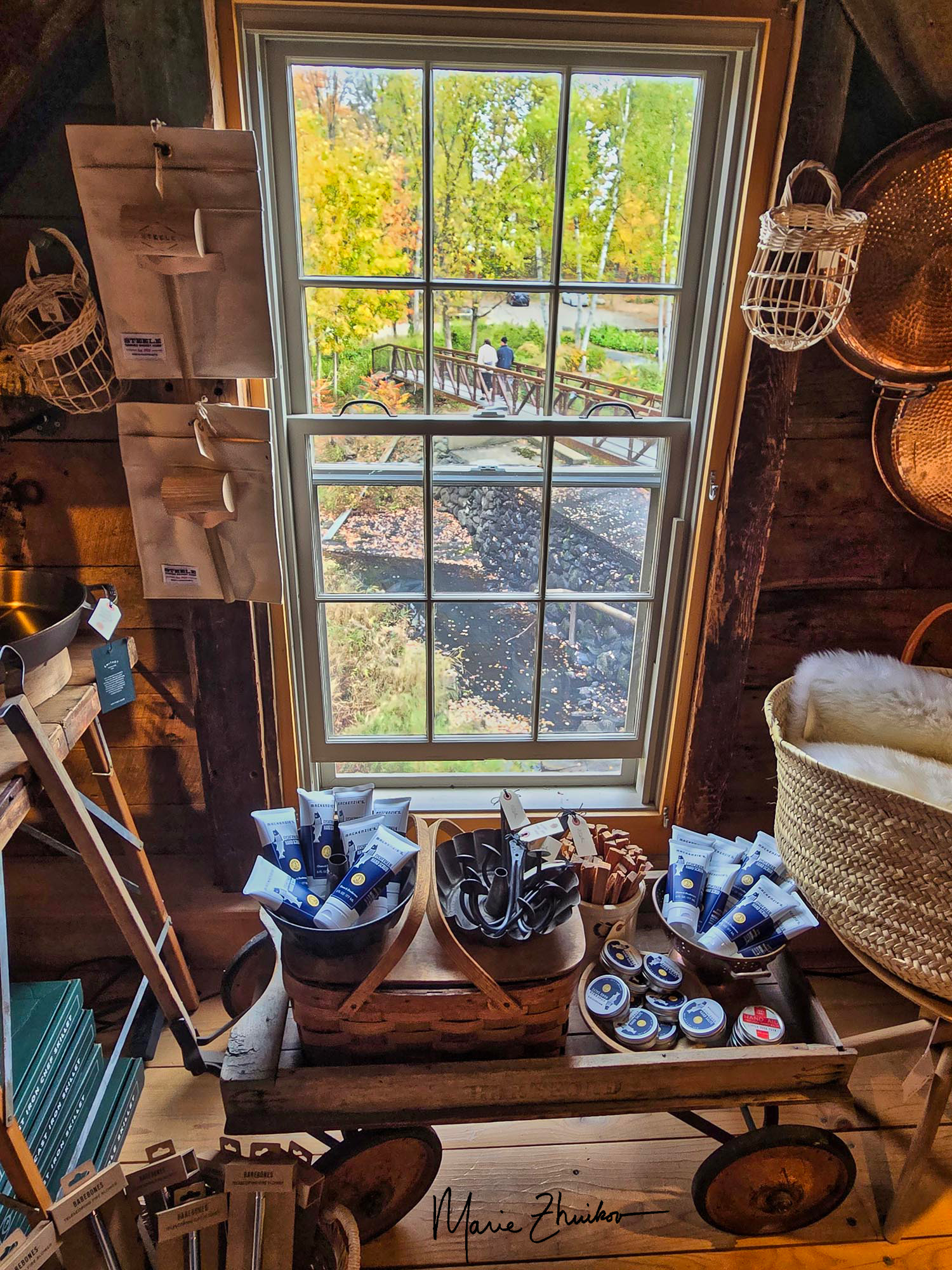
In addition to the café, Erin also has a cooking store on-site. I bought some candlestick stickum (to make taper candles stick in their holders despite the candles or the holders being off-kilter), a pastry brush (which we needed for our cabin), a sourdough bread-rising bowl, and a gluten-free cookbook that one of the staff members (who we saw on TV!) recommended.

Then we went back outside and wandered around the grounds. We crossed the famous bridge over the mill pond, which is featured in the TV show, and ended up buying yet another scone (not so warm this time) and eating it in the outdoor dining area near Erin’s Airstream.

The Lost Kitchen mill pond.

One thing that struck me is that the mill site looked smaller in real life than it does on TV. But it was still exciting to see it. Also, it’s surrounded by old Maine houses that could use paint jobs. (Which they would never show on TV.) That’s one thing that struck me about our drive through this state. I’ve been to Maine several times over the years, but I don’t recall so many houses that need attention. I fear that the state and its occupants are suffering financially.

We did not glimpse Erin or her new husband, Michael (a media executive who probably helped get her show on TV), but we were still so thankful to spend a bit of time in the reality of this place. Methinks that Erin’s ex is eating his heart out now. (Smile.)

Then we hit the road to Guilford. More on that, next!

Making Puffed Wild Rice (and Donuts)

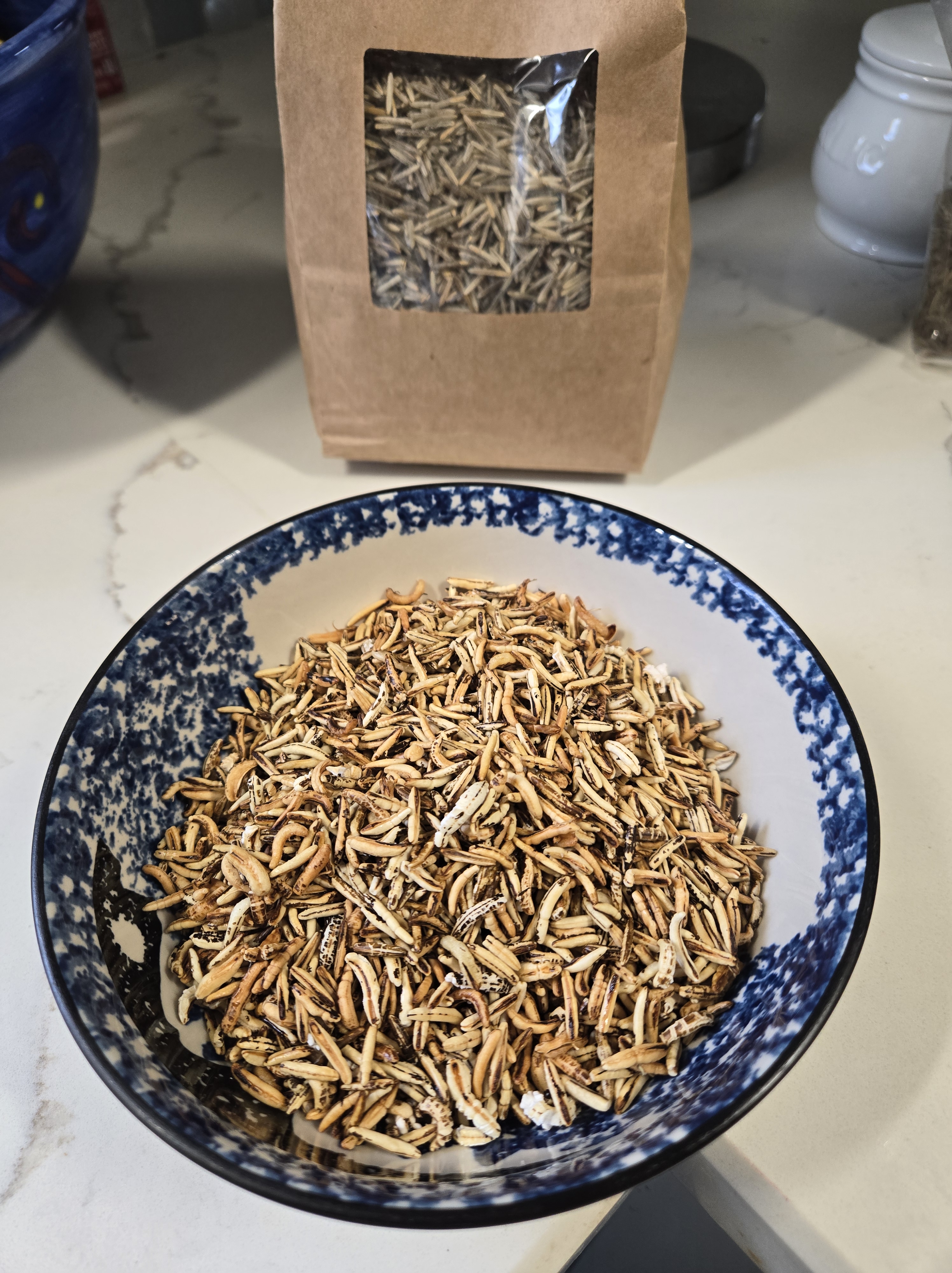
A hearty bowl of puffed wild rice.

Wild rice, the kind of rice native to the Great Lakes and other parts of North America, is not only delicious in soups and other dishes, it makes a great and healthy snack.

A few years ago, I was gifted a copy of The Good Berry Cookbook by Tashia Hart. The author is a member of the Red Lake Anishinaabe (northern Minnesota) and she’s a culinary ethnobotanist, artist, photographer, writer, and cook. The book is more than a cookbook. It’s everything you ever wanted to know about wild rice.

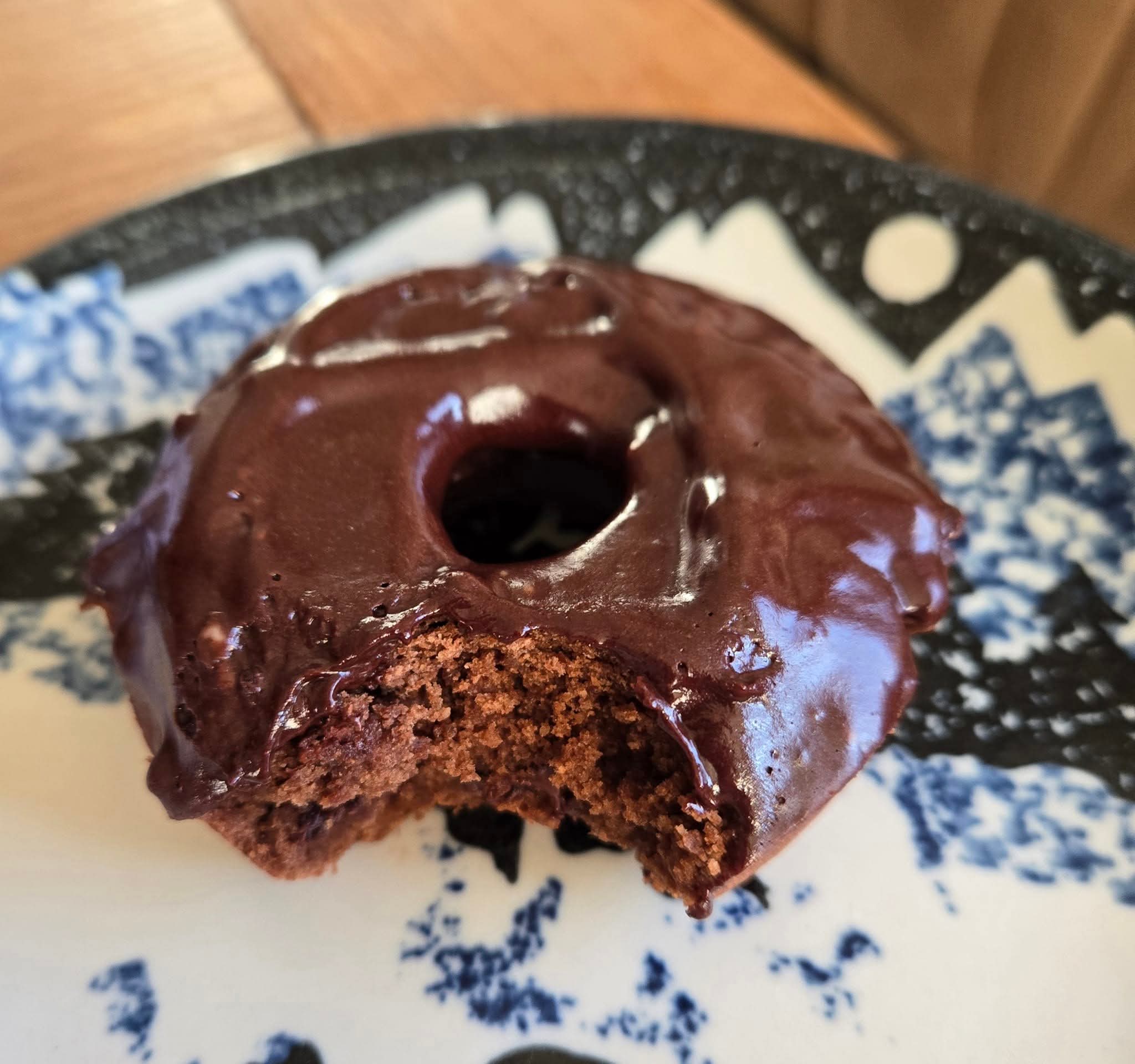
A wild rice triple chocolate donut. Doesn’t it look tasty?

I’ve made several recipes from the book, notably, one for wild rice chocolate donuts (Triple Chocolate Donuts). As someone who’s always on the lookout for alternatives to wheat and corn, I was attracted by this recipe. They turned out looking great but were a bit gritty. Maybe I didn’t grind the rice into flour as fine as I should have. Since then, I’ve found other wheat- and corn-free recipes I like better.

This weekend, I went to a Harvest Festival in Duluth, which features produce from local farmers and artisans. One booth offered puffed wild rice in several flavors (for instance, cheese pizza!) I tried a sample of salted rice puffs. They were very good. Done this way, the wild rice tastes almost like popcorn, but with a richer, nuttier flavor. I would have bought some, but the vendor used popcorn salt, which usually contains cornstarch, so I passed.

Seeing the puffed wild rice reminded me that the Good Berry cookbook had a recipe for it, so when I returned home, I made some. It requires wild rice that has been picked and parched in a traditional manner. This makes it a lighter color (dull brown) versus the paddy-grown wild rice, which is dark and shiny.

All you do is heat a few inches of oil (I used canola) in a pan at a high temperature. I used setting 7 out of 9 on my stovetop. Wait until the oil is good and hot, then place a small amount of wild rice in a sieve (2-3 tablespoons) and lower it into the oil. It should puff up quickly if the oil is hot enough. Then spread the rice on a plate lined with paper towels to drain. I seasoned mine with sea salt (which usually contains no cornstarch).

If you’ve ever had puffed wheat cereal, you’ll recognize puffed wild rice, although the rice kernels are smaller and skinnier. It tasted great!

Marie tries her hand at harvesting wild rice, St. Louis River, MN.

Russ has developed the habit of eating popcorn in the evenings, which is sort of torture for me because I can’t have it. (Do you think he’s doing this on purpose??) Now, I have an alternative.

Tashia also offers a recipe for wild rice chocolates. Basically, you take the puffed wild rice and pour melted chocolate chips over them. I have some leftover puffed wild rice. That’s next on my list!

For a story about my “immersive” experience harvesting wild rice, visit this link.

Update: 9/10/25

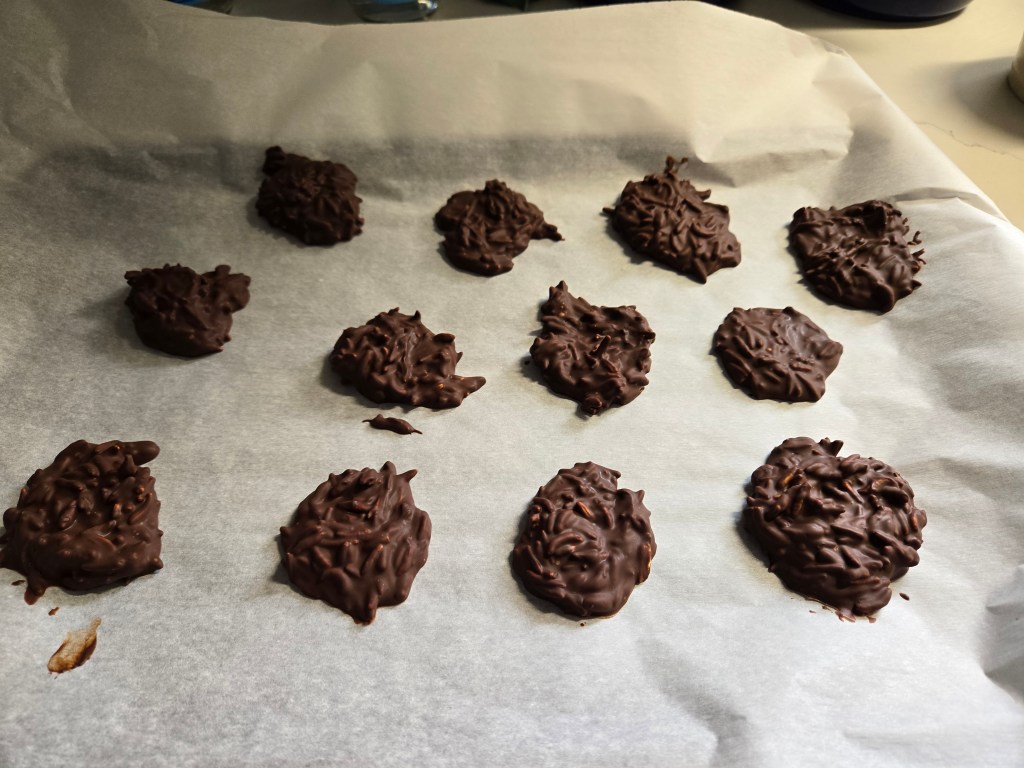
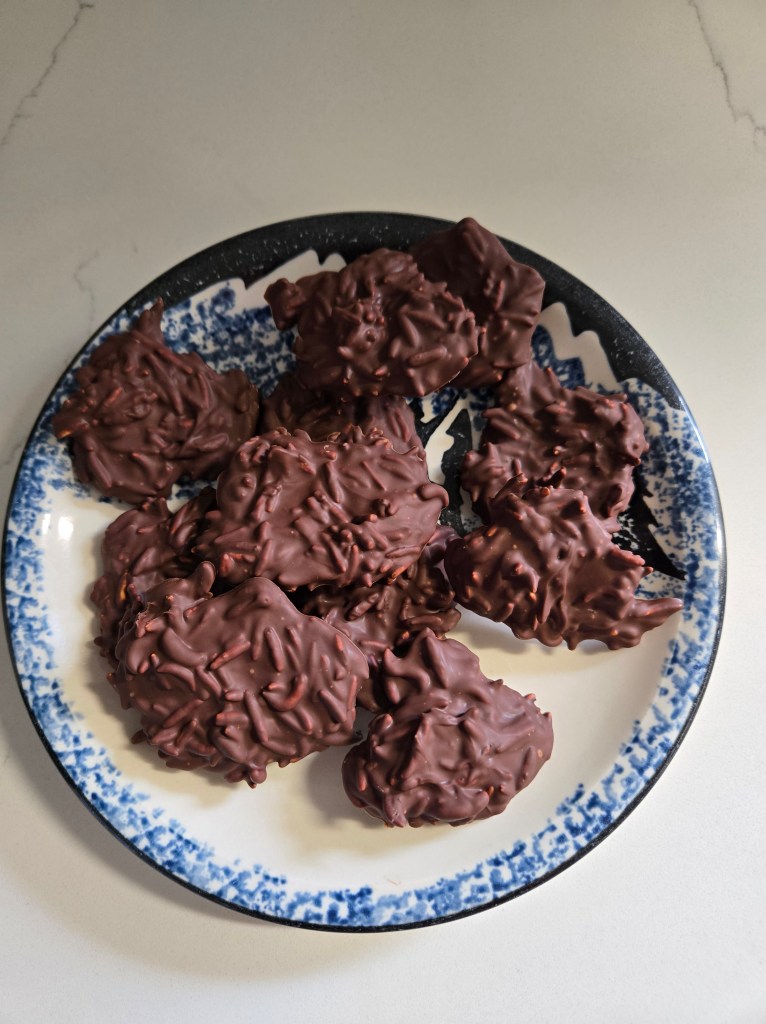
I made the puffed wild rice chocolates. Very good! The recipe calls for making them in a flat sheet, but I chose to clump them instead. They taste rather like a Nestle crunch bar.

Changing my Morning Routine

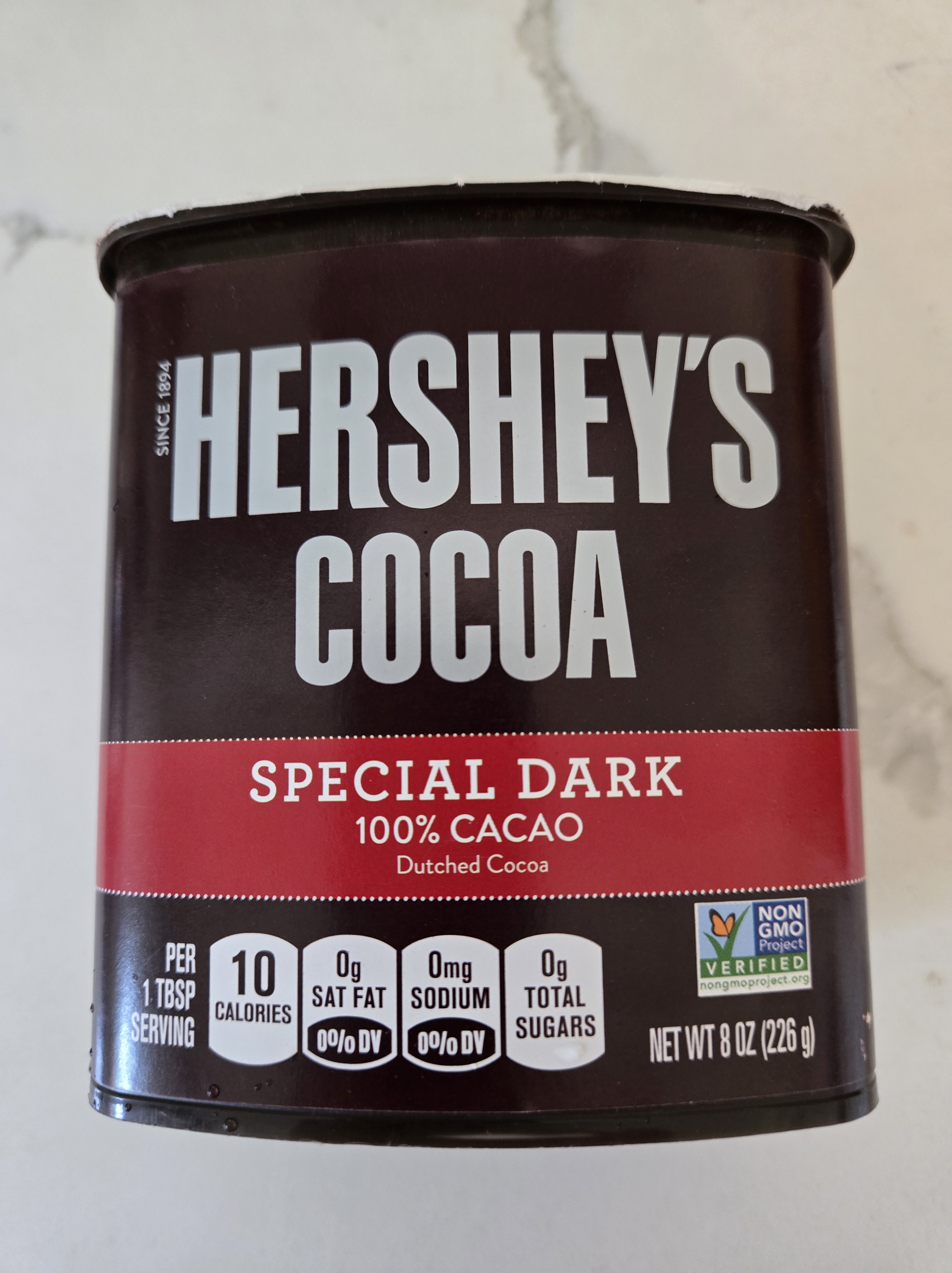
My last (and empty) box of dark cocoa.

I discovered recently that conditions half a world away have disrupted my morning routine. Instead of drinking coffee like many of you out in the blogosphere do, I drink cocoa. I make it myself because most of the commercial brands have ingredients I can’t tolerate. I use dark cocoa, pure cane sugar, milk, some decaf coffee crystals for extra flavor, plus cinnamon and nutmeg for zip. I drink it hot in winter and iced in summer.

However, for the past few months, I haven’t been able to find dark cocoa on the grocery shelves anywhere in my town. I can only find regular cocoa, but not much of that, either. I finally turned to the internet to discover why.

I learned there’s a global cocoa shortage that’s affecting the entire chocolate industry. I was aware there was a chocolate shortage, but I never thought of that affecting cocoa, for some strange reason. Cacao crops in Ghana and the Ivory Coast of Africa (which produces 60% of the world’s cocoa) are being destroyed by weather and an insect-borne disease with the worrisome name of Cacao Swollen Shoot Virus Disease (CCSVD). This and other factors are causing shortages of cocoa and chocolate, increases in prices, and supply chain issues. According to one blog, it’s even encouraged a cocoa smuggling business.

I began drinking dark cocoa because I thought it was “healthier” – containing more antioxidants than regular cocoa, just like dark chocolate contains more antioxidants than regular chocolate. Later, I discovered this is not true! Regular Hershey’s cocoa actually contains more antioxidants. But I kept drinking dark cocoa for the taste.

I guess that for now, I’m forced to drink regular cocoa and be “healthier.” I’m just glad I can find that on the shelves.

Here’s what AI suggests for finding Hershey’s dark cocoa if you just can’t live without it:

  • Check online retailers: While some stores may be out of stock, it might be available on websites like Amazon.
  • Consider other brands: If you can’t find Hershey’s, you might consider other brands of cocoa powder.
  • Use product locators: Some retailers may have online tools to help you find stores that have the product in stock. 

‘Murica!

The weather for Independence Day in northern Minnesota was perfect: hot and sunny. I thought I’d share some images from it.

I can’t believe that my phone camera caught this firework on its way into the sky, looking like a space rocket. An empty brandy bottle served as a fine launch pad.

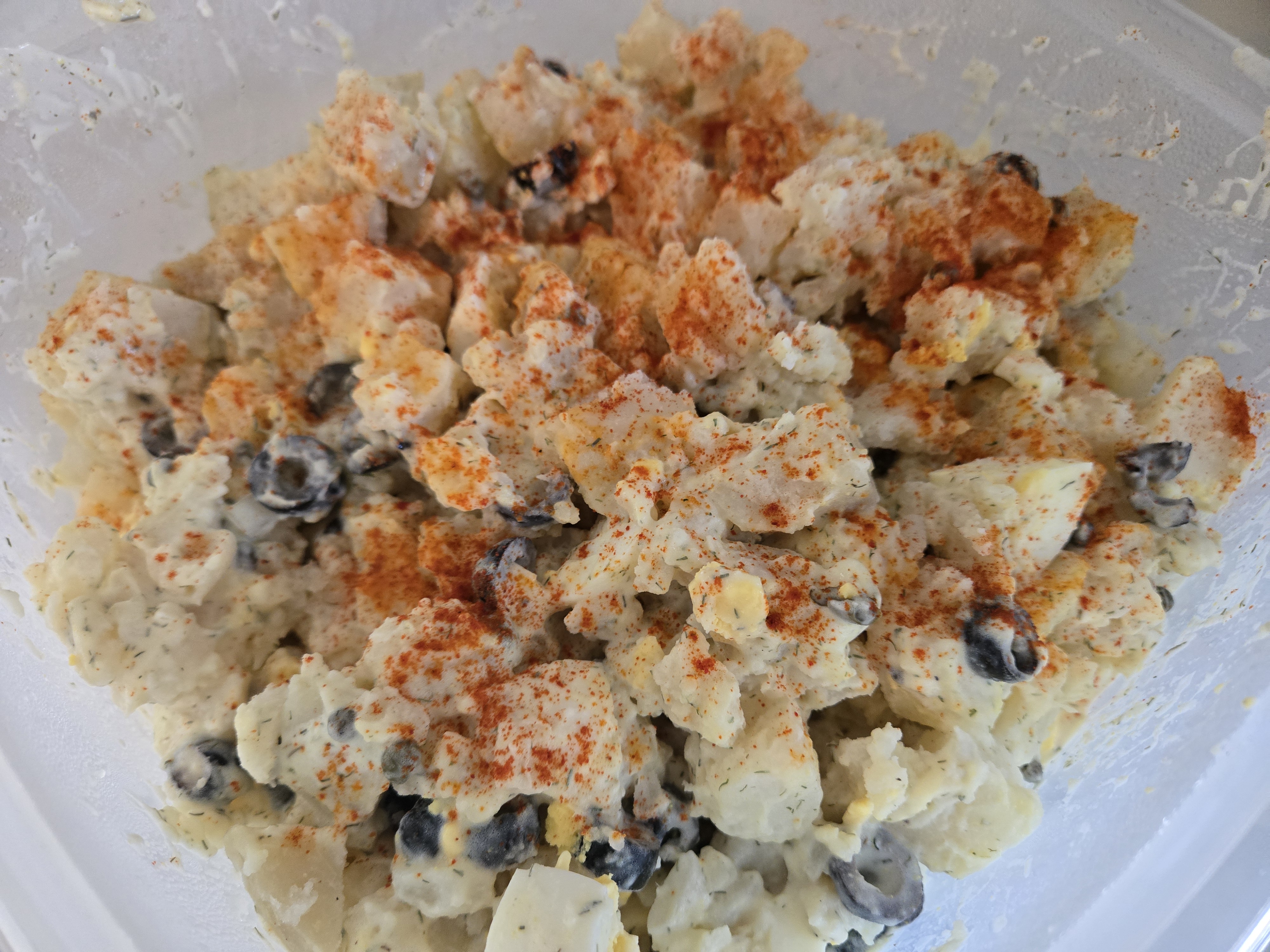
No 4th of July is complete without my mother’s potato salad recipe. It features extras like black olives, hard-boiled eggs, mustard, onion, dill, and paprika. I made enough to last our crew for several days!

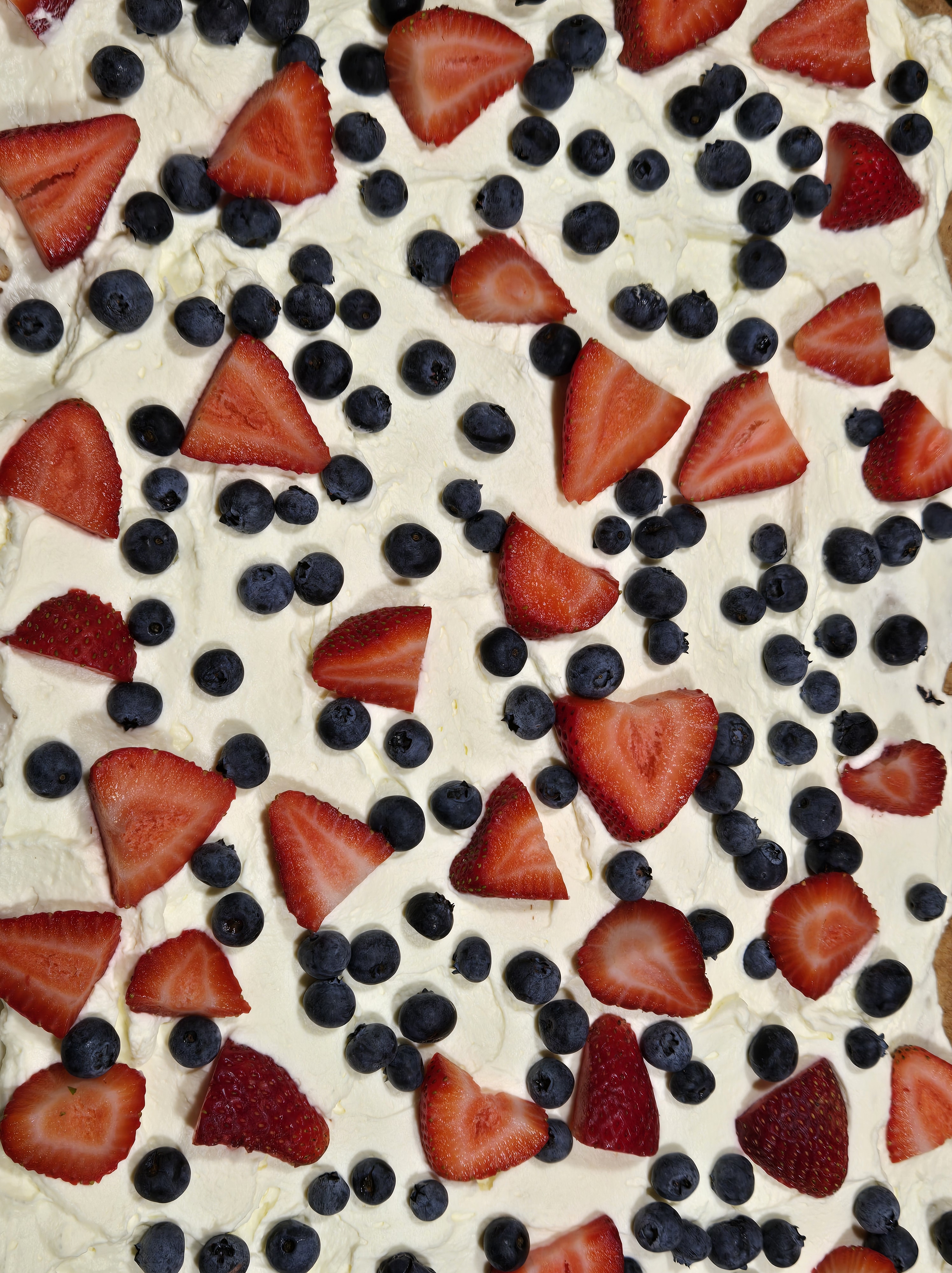
Back in Colonial days, cakes used to be a “thing” for Independence Day. As for us, we devoured a fruit pizza, which is basically a huge sugar cookie covered in cream cheese, whipped cream and fruit that matches the day’s color scheme (red, white and blue).

We ended the day at a community parade. I’d never been to it before and was surprised by the number of people who attended, especially since there aren’t that many people who live in the area. The parade was filled with ATVs, floats from local businesses, and people tossing candy to children. One guy was even handing out fireball whisky shots! There were also a few disturbing “Don’t Tread on Me” flags on the ATVs (a symbol for the alt-right) and much Trump paraphernalia in sight, but that’s the politics of this rural area, as it is in many small towns across the country.

This was the cutest float in the parade. While many of the ATVs were trailing beer cans, he chose pop cans. Note the patriotic dudes in the background.

We had a great time with family and friends. I hope your 4th was memorable, as well. What are your traditions?

Brussels Sprouts = Carrion?

Photo by Polina u2800 on Pexels.com

My husband’s nickname is Russell Brussel. He has a fondness, some might call it an obsession, with Brussels sprouts. We were cooking supper the other night: caramelized Brussels sprouts pasta with toasted chickpeas – a great vegetarian meal that we’ve cooked before – and I noticed a curious thing. The day was warm, so we had the kitchen windows open. Gradually, gobs of large black flies collected on the screens. They not only collected, they swarmed. In a spontaneous, miniature airshow, they divebombed the screens, as if trying to get inside.

Curious about whether this was happening elsewhere around the house, I checked other windows. No. The phenomenon was only happening at the kitchen windows. Thank god for the screens or we would have had an invasion on our hands!

We were busy cooking and then eating, so I didn’t think much more about it, although I noticed that the flies dispersed once the cooking was done.

The next morning, I did an internet search about whether flies are attracted to the smell of cooking Brussels sprouts. As you can probably guess, YES, they are!

Here’s why:

  • Odor Amplification:

Cooking can intensify the smells of food, making them more noticeable to flies, which have a highly developed sense of smell. 

  • Volatile Compounds:

When heated, Brussels sprouts release various volatile organic compounds, some of which might be similar to those produced during decomposition, a known fly attractant. 

  • Opportunistic Feeders:

Flies are attracted to a variety of food sources, including those that are decaying or decomposing. 

The process of cooking, especially when done with heat, can amplify the odors of food and make them more appealing to flies. Brussels sprouts, like other vegetables, can release volatile compounds when cooked that are similar to those found in decaying organic matter, which is a common attractant for flies. This is due to the presence of methyl eugenol, which is also found in other fruits and vegetables such as cherries, raspberries, and basil. When this compound is present in high concentrations, it can be intoxicating to flies and other insects.

Now you know! Plus the next time we have Brussels sprouts I can joke to Russ that he’s cooking carrion again.

Grand Cayman Island Day 5: Art, Turtles, Hell, and Leaving our Mark

An endangered green turtle glides through the lagoon at the Cayman Turtle Center.

I’ve been offline for a while. Russ and I meandered to Colorado. We were disconnected from internet reality for a few days in the wilderness. I’m trying to catch up with your blogs but may never be able to do that. Sorry if I missed anything important. I’ve got a couple more Grand Cayman posts to write before I can move onto Colorado.

Back on Grand Cayman, our next adventure took us to the more populated side of the island and the city of Georgetown. Our first visit was to the National Gallery of the Cayman Islands. Once again, we were the only ones at the venue. Is no one else on this island interested in art?? But it was nice not to feel rushed while perusing the interesting offerings there. Entry is free, so what’s not to like?

On the way inside, we passed a beautiful rooster strolling the grounds. I must say it was the most handsome rooster on the island, perhaps a work of art himself? We saw many pieces inside the gallery that inspired and provoked. Some of my favorites: Confluence, a mixed media sculpture made of painted paddles that were historically used by Caymanian turtle fishermen. The artist used washes of oil paint on the paddles to create an atmospheric depiction of light and water, transforming the paddles from utility into relics of a bygone era.

Another favorite was We Can Beat the Storm, an acrylic painting that depicts a father and son in a traditional catboat (Caymanian traditional fishing boat) set amid calm waters. It symbolizes the passing of knowledge from one generation to the next.

Then there was Fish Skeleton, a mixed-media sculpture made from recycled materials and used car parts, recalling the mountain of debris left by Hurricane Ivan on the island. The artist wants to draw attention to the islands’ longstanding reliance on the oceans for sustenance and the increasing environmental pressures that threaten this relationship today. All I can say is I’m glad we didn’t run into this creature while snorkeling!

Indulge me with two more artistic offerings. Bon Appetit! is a sculpture that shows a giant fork stuck into a fishing lure. It raises issues of unsustainable fishing habits and the depletion of global fishing stocks. But it does so with a touch of humor and hubris.

The last piece of art that struck me is a digital collage on paper called Osiris. It shows the melding of a conch shell and a human face. The blending of fiction and reality illustrates the continued influence of the marine environment on Caymanian identity.

After the gallery, we made our way to the Cayman Turtle Center, a sanctuary and breeding facility for the endangered green sea turtle. We opted for the Turtle Adventure, which allows visitors to snorkel with the turtles in a huge lagoon. I brought my GoPro Hero camera along and was glad I did! I’ve seen a few skittish wild turtles in the ocean, but these turtles are habituated to people. I had a few swim right underneath me! It was definitely worth the entry fee. The turtles eat algae, so you don’t need to worry about them biting you, although clumps of algae (sort of gross) float around the lagoon, dislodged from turtle feeding.

The facility also has a turtle breeding program. According to their website, “the turtle release programs have resulted in the growth of the local wild population in the Cayman Islands of the green sea turtle, going from zero nests in 1999 to over 200 nests. Recently, researchers in an independent genetic study using DNA discovered that 90% of all green female turtles nesting in Grand Cayman are genetically related to turtles from the Centre.”

Turtle feeding time!

Russ and I were able to witness turtle feeding time in the breeding bay. These turtles are of reproduction age – typically 16 years old. Some weigh more than 500 pounds! They’re fed pellets and the funny thing is, they squirt water out their nostrils as they inhale them. It’s a sight not to be missed. The Turtle Center was another highlight of our trip, on par with Stingray City.

This is Hell.

Not far away is a small town called Hell. It has its own post office and is the size of about half a soccer field. The black craggy rocks that make up Hell are millions of years old and are made of limestone that has been eaten away by algae and ravaged by the elements. It does not look like a place where one would want to spend much time, but you can send postcards to people from Hell and buy T-shirts there.

On our drive back to the eastern end of the island, we stopped at a restaurant in Savannah that we saw in a tourist newspaper and heard other resort-goers rave about. It is called the Czech Inn Grill and is operated by an accomplished 4-star chef from Czechoslovakia. It’s mostly an outdoor venue, with walls composed of surf boards. If you’ve ever been to Tom’s Burned Down Café on Madeline Island in Lake Superior, it’s a lot like that.

This was my FAVORITE meal of the trip. Every meal we ate on the island was good, but this had the added ambiance of a green-eyed tabby cat and a rooster. It’s not every venue where you can share your meal with two grateful animals. Russ and I both ordered ribs. Russ had Asian ribs, I had Hawaiian ribs with Czech potato salad. They were divine! We arrived early for dinner and once again, were almost the only people there.

The cat, whose name we later discovered was Prince Harry, sat politely by our table, squinting at me in a most appealing manner. How could I not share my bounty with him? He ate the first few offerings, but then deferred to the rooster for several others after the bird figured out what was going on. Later, Prince Harry became more demanding, standing on his hind legs and putting a paw on my thigh to get my attention for more tidbits. I didn’t mind complying.

The surf boards and wooden support posts were filled with graffiti – peoples’ names and where they were from. Under “Minnesota” written in large letters near the reception area, we added our names and date with a heart drawn around it in honor of our sixth anniversary. If you ever visit the grill, look for our mark. It was a truly memorable dinner!

Next up: Green parrots and starfish.

Grand Cayman Island Day 2: Crystal Caves and Lionfish

A soft focus image of Lake Cave at Crystal Caves.

After foraging for food at the grocery store, we spent the afternoon of our second day at one of the main attractions on the East End/North Side of Grand Cayman Island: Crystal Caves. Most of the island is limestone and the caves were formed over millions of years from water dripping through the rocks, creating stalactites and stalagmites. In the past, people used the caves for water and for shelter during hurricanes. They were also rumored pirate hangouts.

The guided tours last 1-1/2 hours and need to be prebooked. Ours began with the manager providing an orientation. Then we loaded into two vans for a short bumpy ride to the caves. Three caves are open for tours. Our first stop was Roots Cave, which features long tree roots draping from the ceiling. The roots have grown over the years as the trees above search for water in the cave.

Open Ceiling Cave. Note the ropes on the right that people used to use to enter the cave.

Our second cave was Open Ceiling Cave, which, as you’ve no doubt deduced, has a big hole in the ceiling. The third was my favorite from a photography standpoint. Lake Cave features a small, crystal-clear body of water (more like a pond) that has filtered through the rock.

One of the caves (I can’t recall which) had some fruit bats hanging from the ceiling. I felt bad that we disturbed their daily slumber, but it was cool to see them. During all the other cave tours I’ve been on in different locales the cave temperatures have been cool. These were hot, so be prepared. If you work up a thirst, there’s a small restaurant and gift shop at the cave site.

Russ and I were so hot and sweaty afterward that once we returned to the resort, we jumped into the pool. There’s nothing that a banana daquiri from a swim up bar can’t cure!

Lake Cave

For supper, we dined at a dive bar. An honest-to-goodness dive bar run by scuba divers. We chose Eagle Rays Dive Bar and Grill because they are known for featuring lionfish on their menu. We were also drawn by its casual atmosphere and relaxing ocean views.

Lionfish (and other invasive species) have popped up in my blog before. (See this guest post from 2020 by my friend Sharon.) These are a beautiful but venomous fish native to the Indian Ocean and west Pacific. It’s thought that people who no longer wanted lionfish in their aquariums, released them into the Caribbean Sea and the Atlantic, and now they have become invasive.

The good news is that, when prepared properly, lionfish are safe and good to eat! Island divers spear the fish, which are purchased by another restaurant and Eagle Rays. Rays claims to be the only place on Grand Cayman “that regularly serves everyone’s favorite marine pest.” Russ and I usually eat supper early, so we were able to get a table without a reservation. In fact, we were among the only people there, which ended up being a common and mysterious occurrence during this trip.

Lionfish tacos from Eagle Ray’s Dive Bar

Ray’s specializes in lionfish tacos, which Russ ordered. I can’t eat taco shells (wheat and corn), so they made me a special order of grilled lionfish and chips (which isn’t on the menu). Russ was very happy with his tacos and my dish was also delicious. Lionfish is a white meat, which to this Minnesotan, tastes a lot like our state delicacy of walleye.

Lionfish and chips (plus a margarita!)

As we enjoyed our meal in the sea breeze, I uttered our trip slogan once again: “Can’t do this in Duluth!”

Next up: GoPro, Snorkeling, and Stingrays

Roasted Chestnuts and Cranberry Curd Tart for Christmas

Cranberry curd tart with sugared cranberries and a hazelnut flour crust.

I’ve been trying some new foods this year to get into that Christmas spirit. One was roasted chestnuts. I happened to walk by some in the grocery story and picked them up on impulse. I once ate a roasted chestnut appetizer during a memorable meal at a restaurant in Michigan, and I wanted to see if I could recreate that dish at home.

As it turns out, I unknowingly bought one of the best kind of chestnuts for roasting. Apparently, shoppers can buy ones from Asia, Italy, and South Carolina. The package I bought was from Italy. I found a recipe online and waited until a weekend when I had time to try it. The process takes a while because the chestnuts need to soak to soften. The recipe on the package of chestnuts did not include that step, so I’m glad I looked online. I think it would have been harder to peel the chestnuts if they had not been soaked after being scored.

It also took me a while to score the pound of nuts that I had. I was being careful not to cut myself in the process and my fingers got tired about halfway through, so I took a break. It also takes a while to peel the nuts once they’re cooked. But the results were worth it! The naked nuts look like little tan brains and taste like a cross between a pecan and a walnut.

I was glad that they keep well in the refrigerator or freezer. Russ and I couldn’t eat all of them in one sitting. In fact, I think we still have a few left that we should probably eat today!

The chestnuts after roasting and peeling.

My other festive food was a cranberry curd tart with a hazelnut flour crust and sugared cranberries. I’d made the tart before a few times with a recipe from the New York Times. The recipe appealed to me because it is wheat-free. I cheat a bit—I don’t make my own hazelnut flour. I buy it from Bob’s Red Mill at my grocery store, which usually carries it during this time of year. I also made the recipe easier by not straining the cranberry mixture. I just blend it all up in a blender. That gives it a good color and extra flavor. But I do juice my own orange and grate fresh orange zest.

The sugared cranberries were my new thing for the season. I had some leftover cranberries from making the tart. I’d seen photos of tarts decorated with them and thought it looked fun to try. Like with the chestnuts, the sugaring process for the cranberries takes some time—mostly in waiting for things to dry.

I used this online recipe for the cranberries. I didn’t have any parchment paper, so I used aluminum foil, and that seemed to work just fine. The recipe also includes tips on how to sugar rosemary sprigs to make the pie look more Christmasy. I didn’t have any rosemary, so I simply went outside and clipped off a balsam sprig to decorate the pie. (Note: we did not eat the sprig, it was just for decoration!)

I would advise making the sugared cranberries the same day the pie will be eaten. If the decorated pie is stored overnight in the fridge, the sugar grains tend to “melt,” and you’ll need to take the berries off and re-sugar them. The cranberries can also be eaten by themselves as a snack. They’re great!

So, if you have some time this year and want to try something different, these are two foods to consider. I probably won’t roast chestnuts again, but I’ll for sure make the tart and cranberries during future holiday seasons.