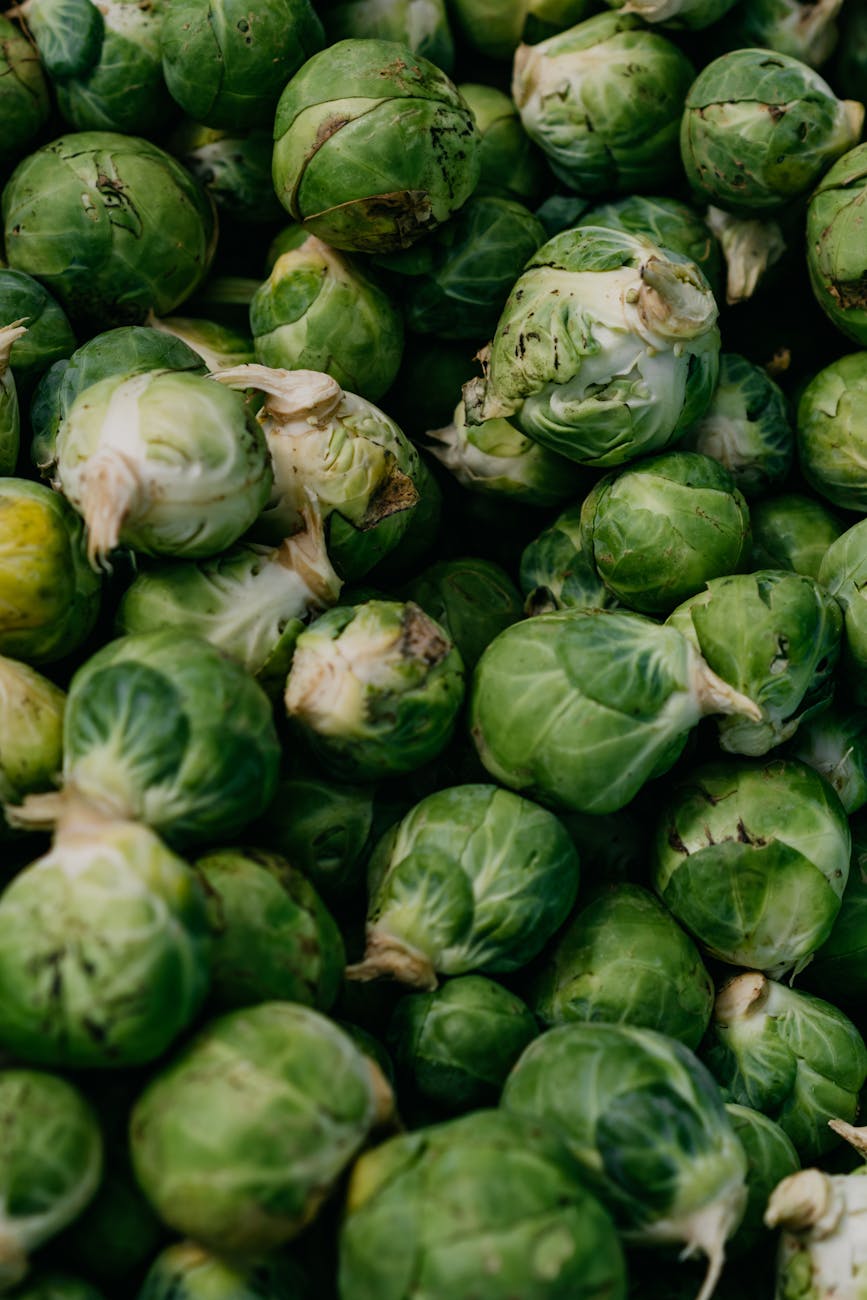
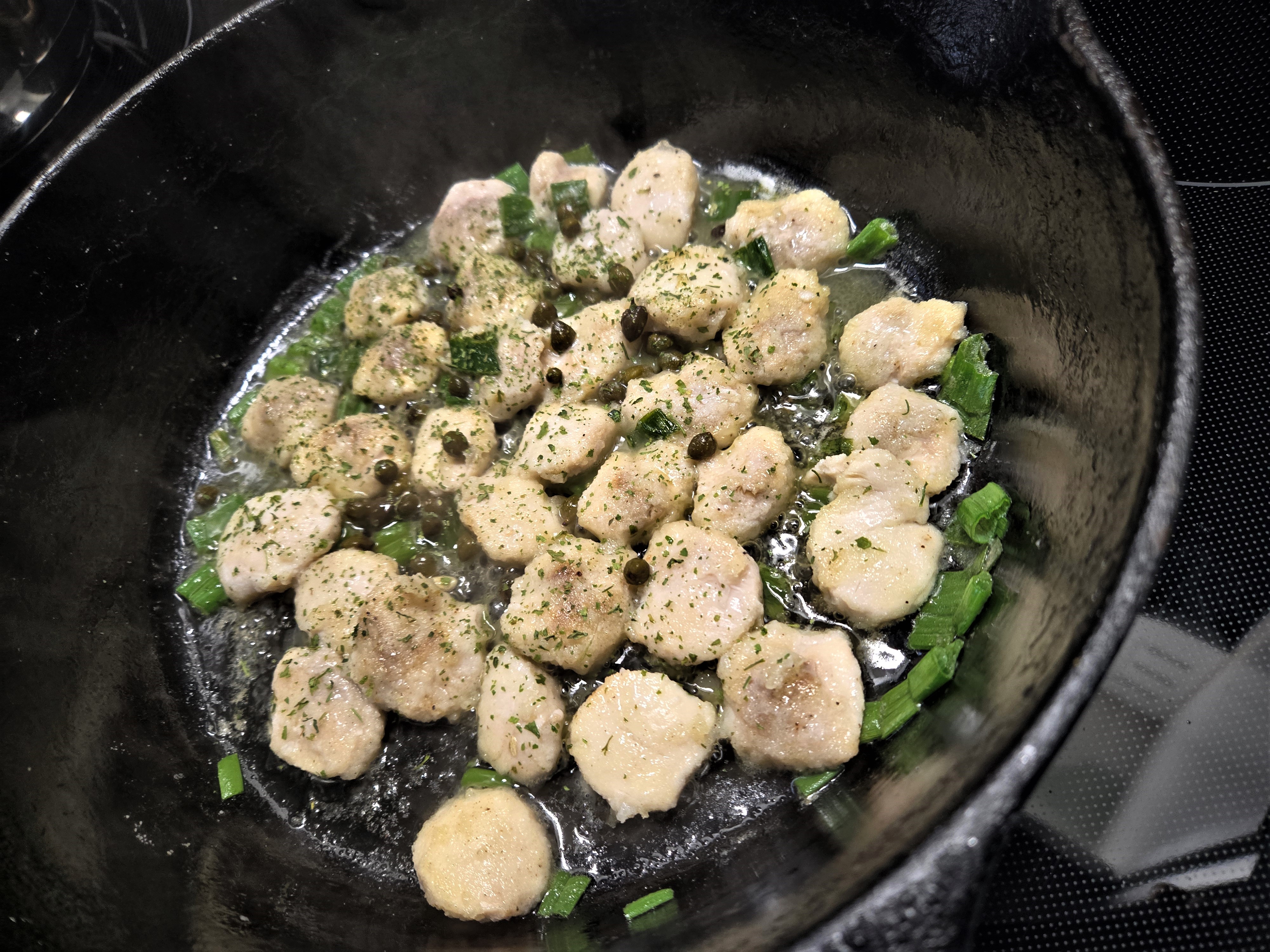
My husband’s nickname is Russell Brussel. He has a fondness, some might call it an obsession, with Brussels sprouts. We were cooking supper the other night: caramelized Brussels sprouts pasta with toasted chickpeas – a great vegetarian meal that we’ve cooked before – and I noticed a curious thing. The day was warm, so we had the kitchen windows open. Gradually, gobs of large black flies collected on the screens. They not only collected, they swarmed. In a spontaneous, miniature airshow, they divebombed the screens, as if trying to get inside.
Curious about whether this was happening elsewhere around the house, I checked other windows. No. The phenomenon was only happening at the kitchen windows. Thank god for the screens or we would have had an invasion on our hands!
We were busy cooking and then eating, so I didn’t think much more about it, although I noticed that the flies dispersed once the cooking was done.
The next morning, I did an internet search about whether flies are attracted to the smell of cooking Brussels sprouts. As you can probably guess, YES, they are!
Here’s why:
Odor Amplification:
Cooking can intensify the smells of food, making them more noticeable to flies, which have a highly developed sense of smell.
Volatile Compounds:
When heated, Brussels sprouts release various volatile organic compounds, some of which might be similar to those produced during decomposition, a known fly attractant.
Opportunistic Feeders:
Flies are attracted to a variety of food sources, including those that are decaying or decomposing.
The process of cooking, especially when done with heat, can amplify the odors of food and make them more appealing to flies. Brussels sprouts, like other vegetables, can release volatile compounds when cooked that are similar to those found in decaying organic matter, which is a common attractant for flies. This is due to the presence of methyl eugenol, which is also found in other fruits and vegetables such as cherries, raspberries, and basil. When this compound is present in high concentrations, it can be intoxicating to flies and other insects.
Now you know! Plus the next time we have Brussels sprouts I can joke to Russ that he’s cooking carrion again.
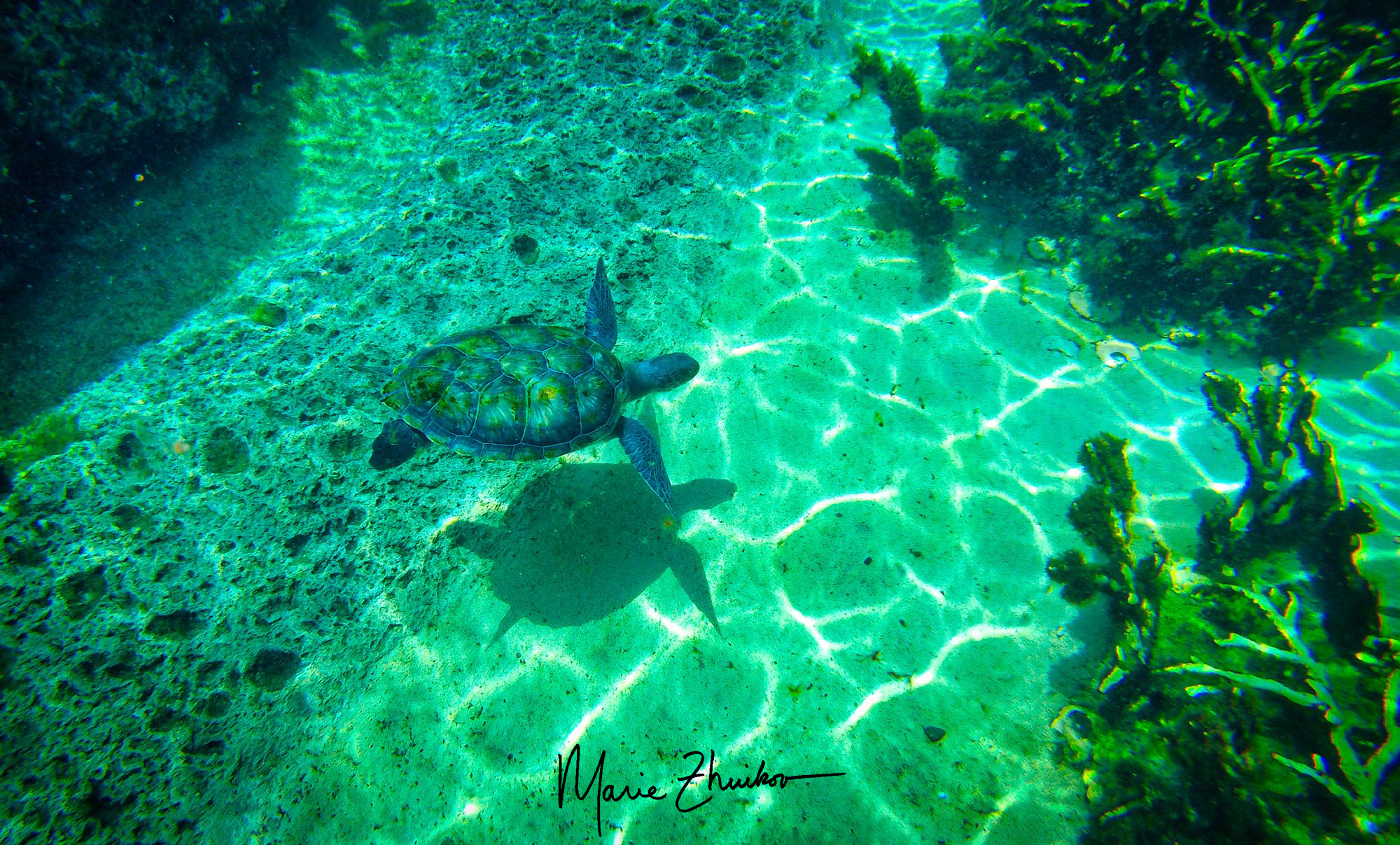
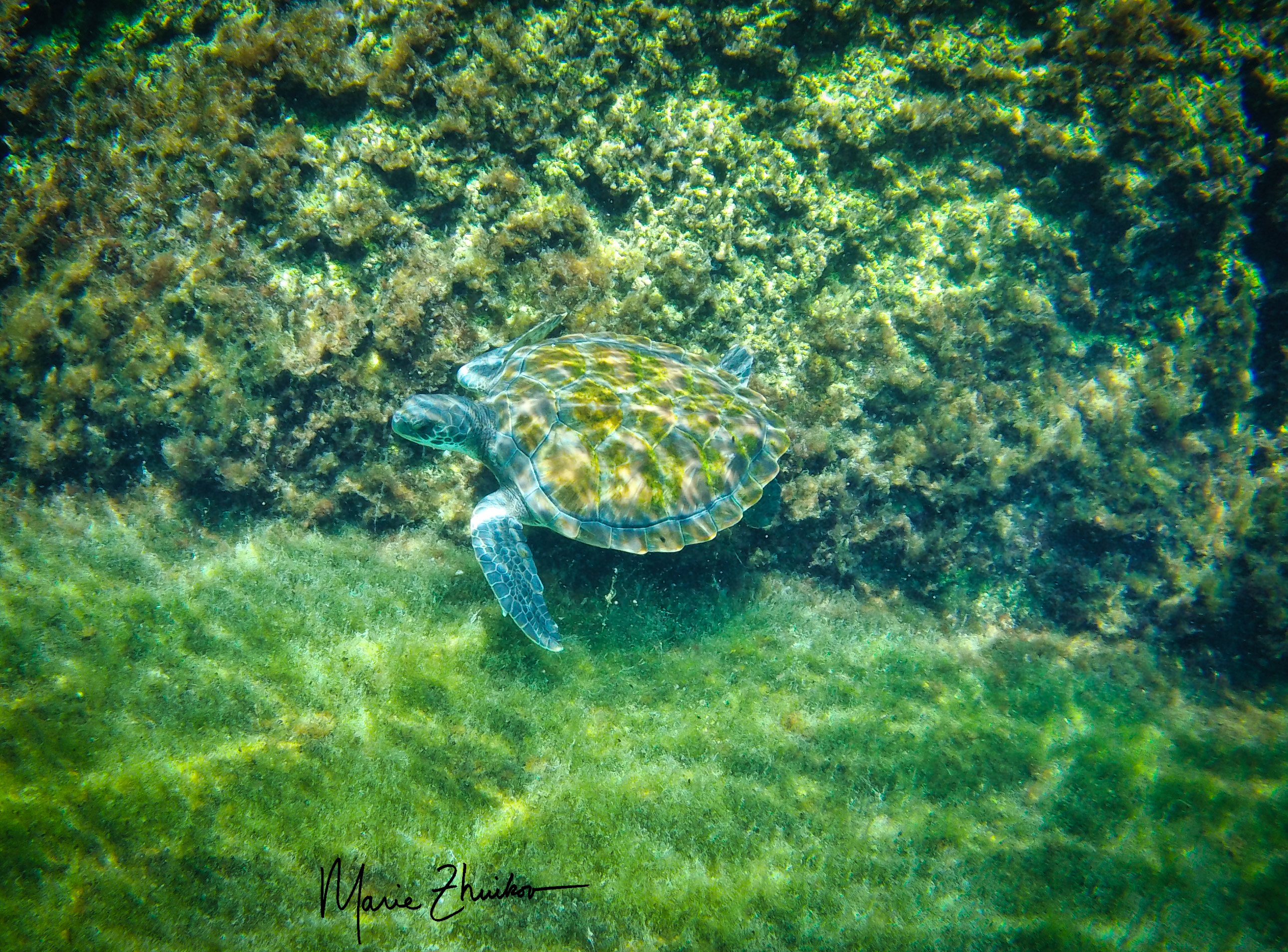
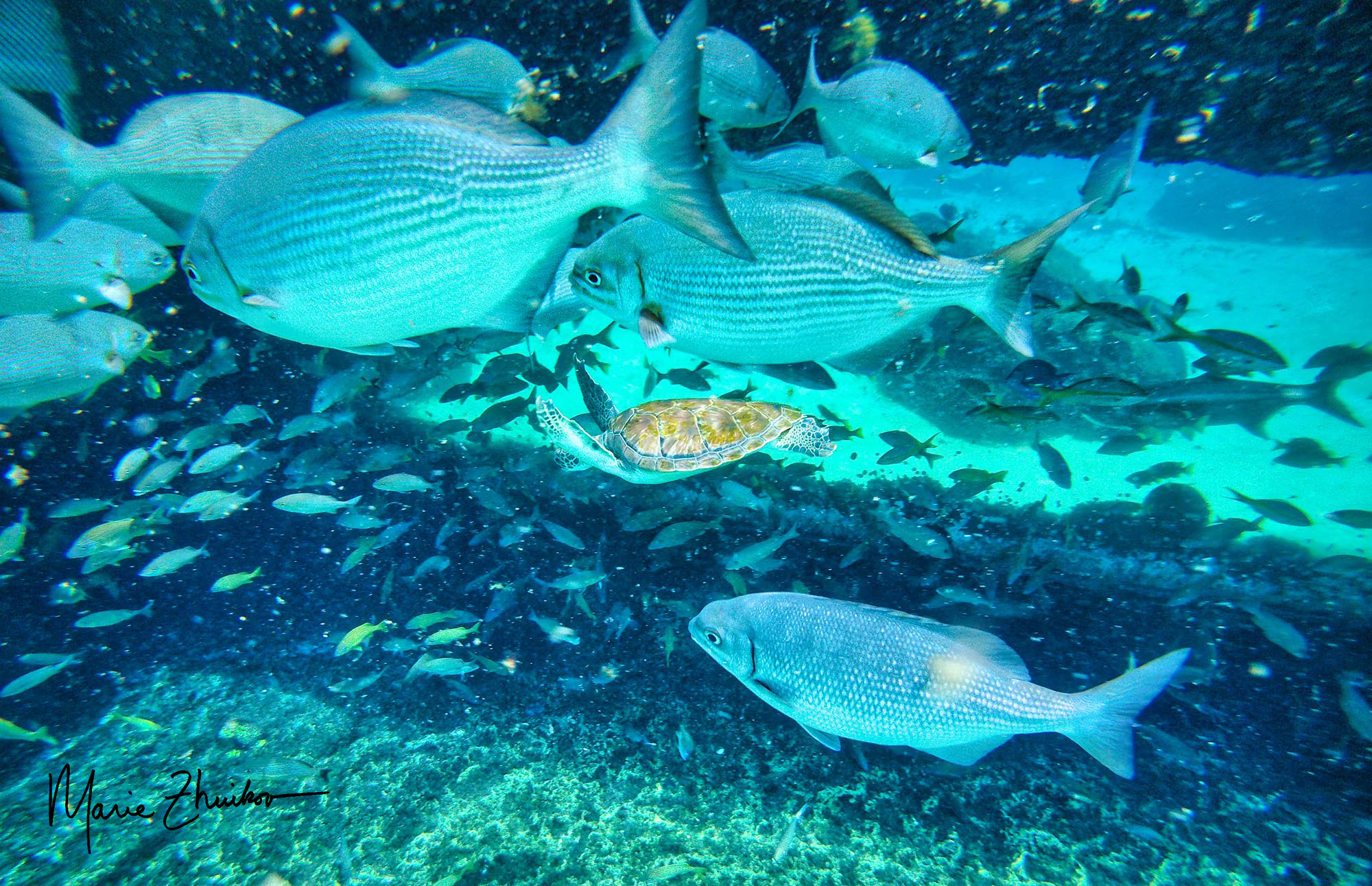
An endangered green turtle glides through the lagoon at the Cayman Turtle Center.
I’ve been offline for a while. Russ and I meandered to Colorado. We were disconnected from internet reality for a few days in the wilderness. I’m trying to catch up with your blogs but may never be able to do that. Sorry if I missed anything important. I’ve got a couple more Grand Cayman posts to write before I can move onto Colorado.
Back on Grand Cayman, our next adventure took us to the more populated side of the island and the city of Georgetown. Our first visit was to the National Gallery of the Cayman Islands. Once again, we were the only ones at the venue. Is no one else on this island interested in art?? But it was nice not to feel rushed while perusing the interesting offerings there. Entry is free, so what’s not to like?
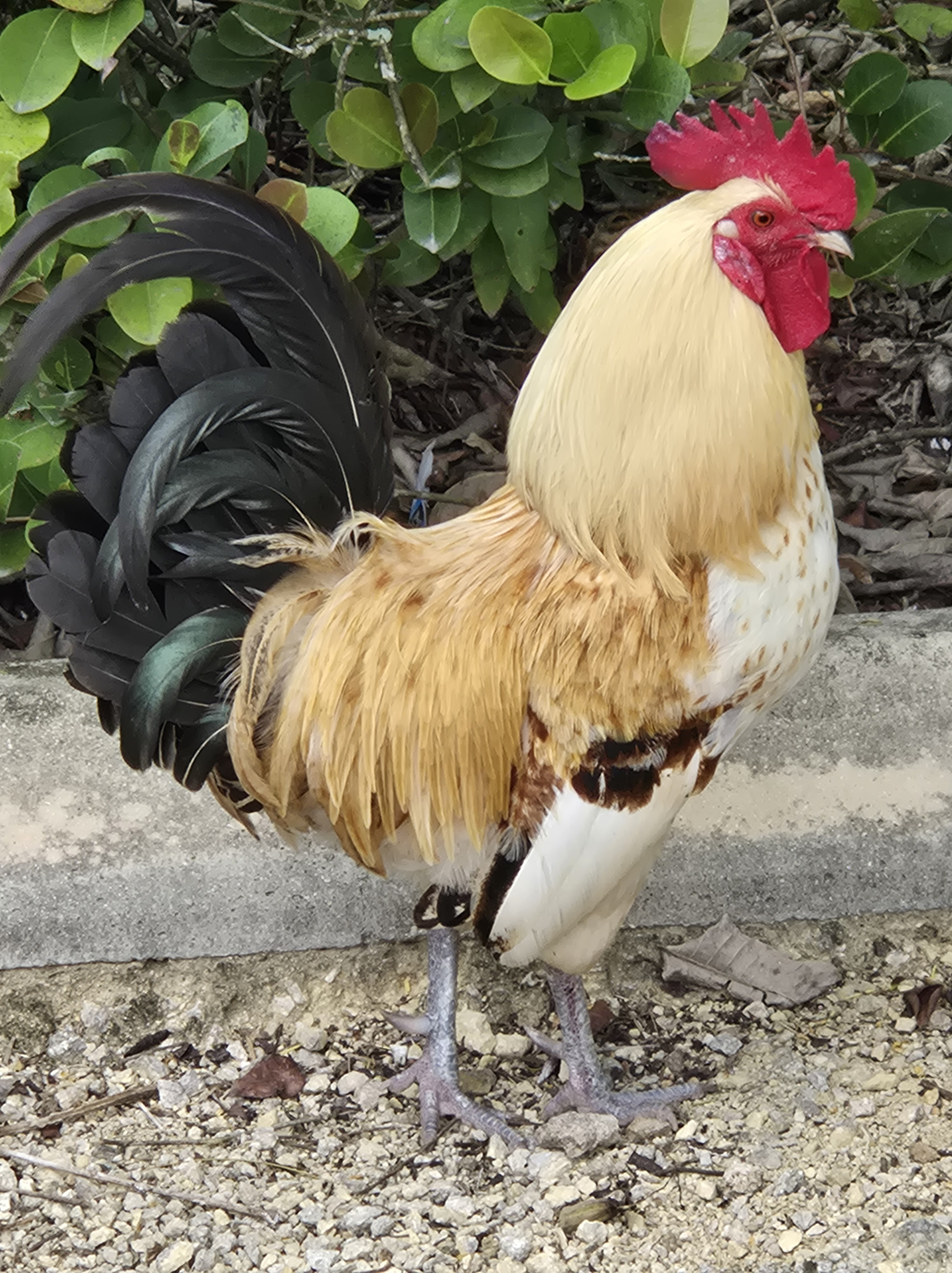
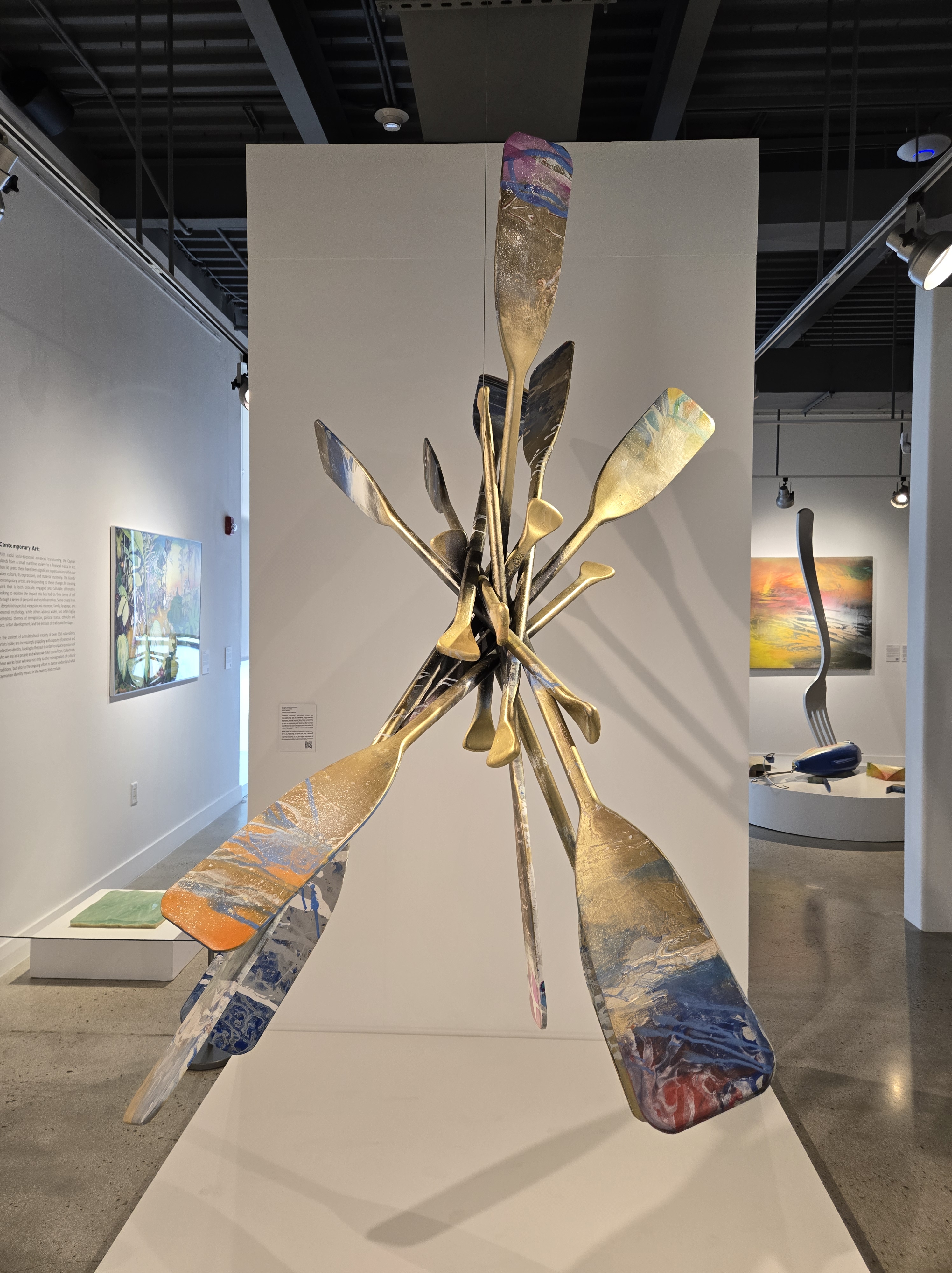
On the way inside, we passed a beautiful rooster strolling the grounds. I must say it was the most handsome rooster on the island, perhaps a work of art himself? We saw many pieces inside the gallery that inspired and provoked. Some of my favorites: Confluence, a mixed media sculpture made of painted paddles that were historically used by Caymanian turtle fishermen. The artist used washes of oil paint on the paddles to create an atmospheric depiction of light and water, transforming the paddles from utility into relics of a bygone era.
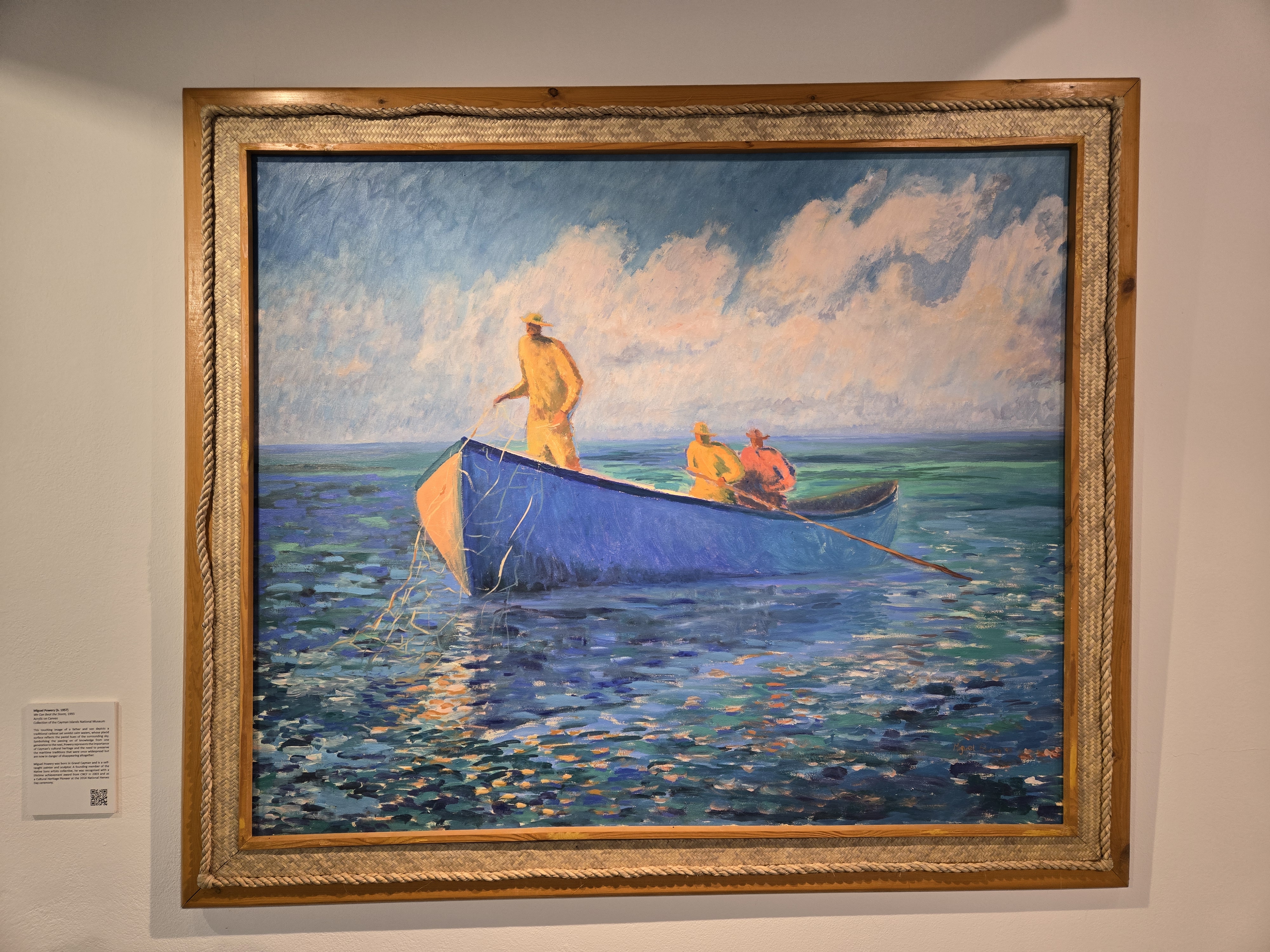
Another favorite was We Can Beat the Storm, an acrylic painting that depicts a father and son in a traditional catboat (Caymanian traditional fishing boat) set amid calm waters. It symbolizes the passing of knowledge from one generation to the next.
ConfluenceWe Can Beat the Storm
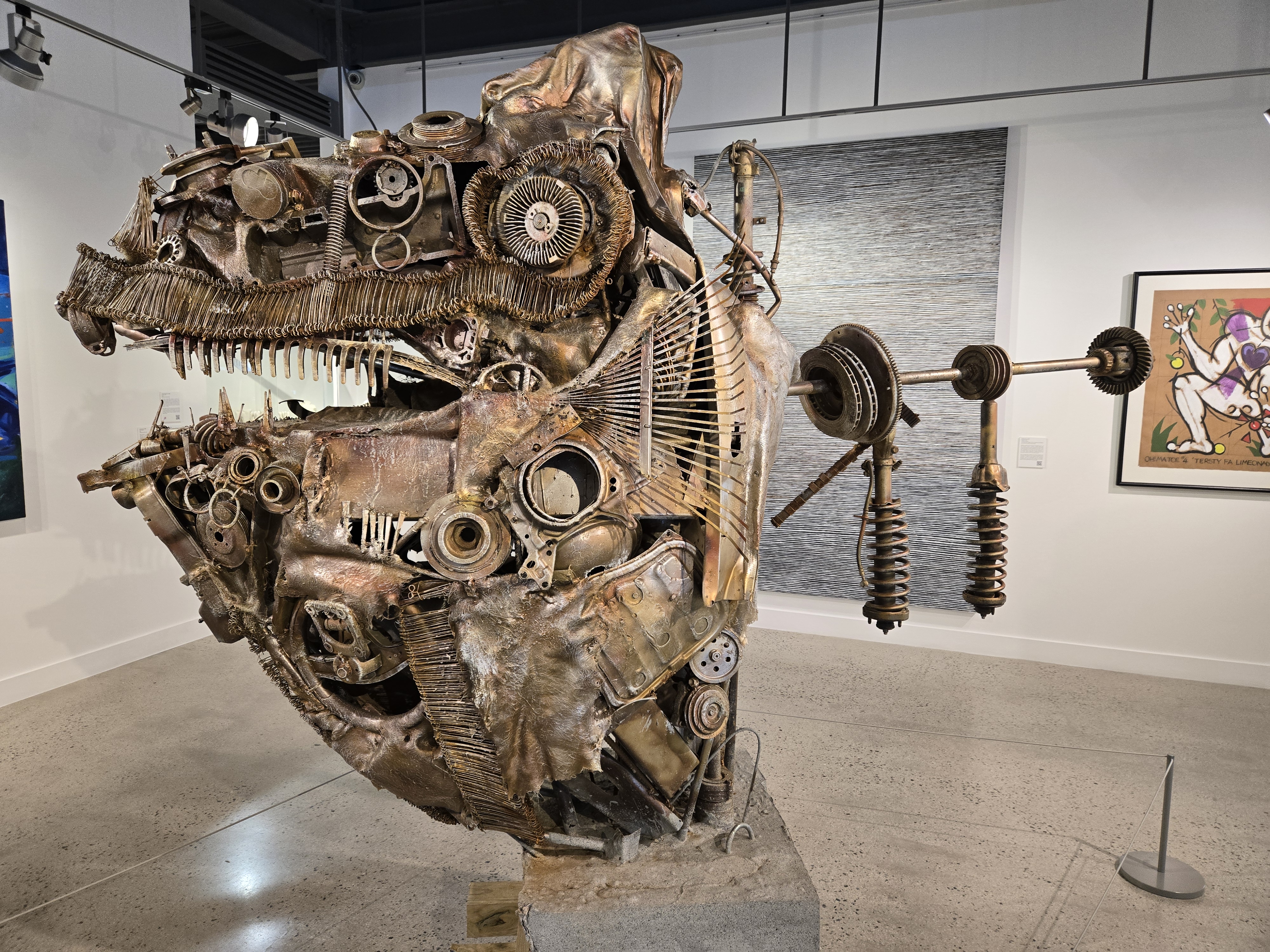
Then there was Fish Skeleton, a mixed-media sculpture made from recycled materials and used car parts, recalling the mountain of debris left by Hurricane Ivan on the island. The artist wants to draw attention to the islands’ longstanding reliance on the oceans for sustenance and the increasing environmental pressures that threaten this relationship today. All I can say is I’m glad we didn’t run into this creature while snorkeling!
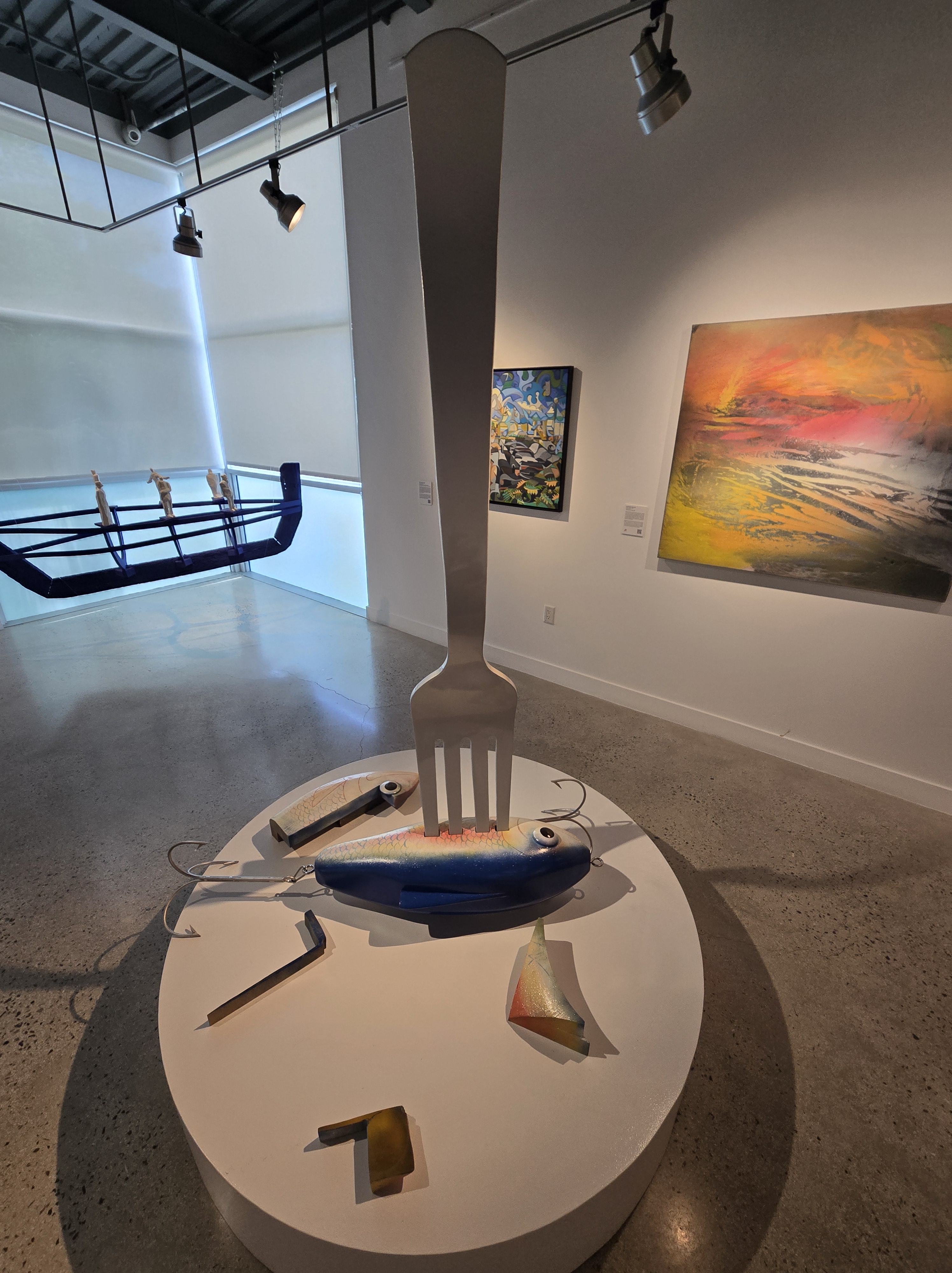
Indulge me with two more artistic offerings. Bon Appetit! is a sculpture that shows a giant fork stuck into a fishing lure. It raises issues of unsustainable fishing habits and the depletion of global fishing stocks. But it does so with a touch of humor and hubris.
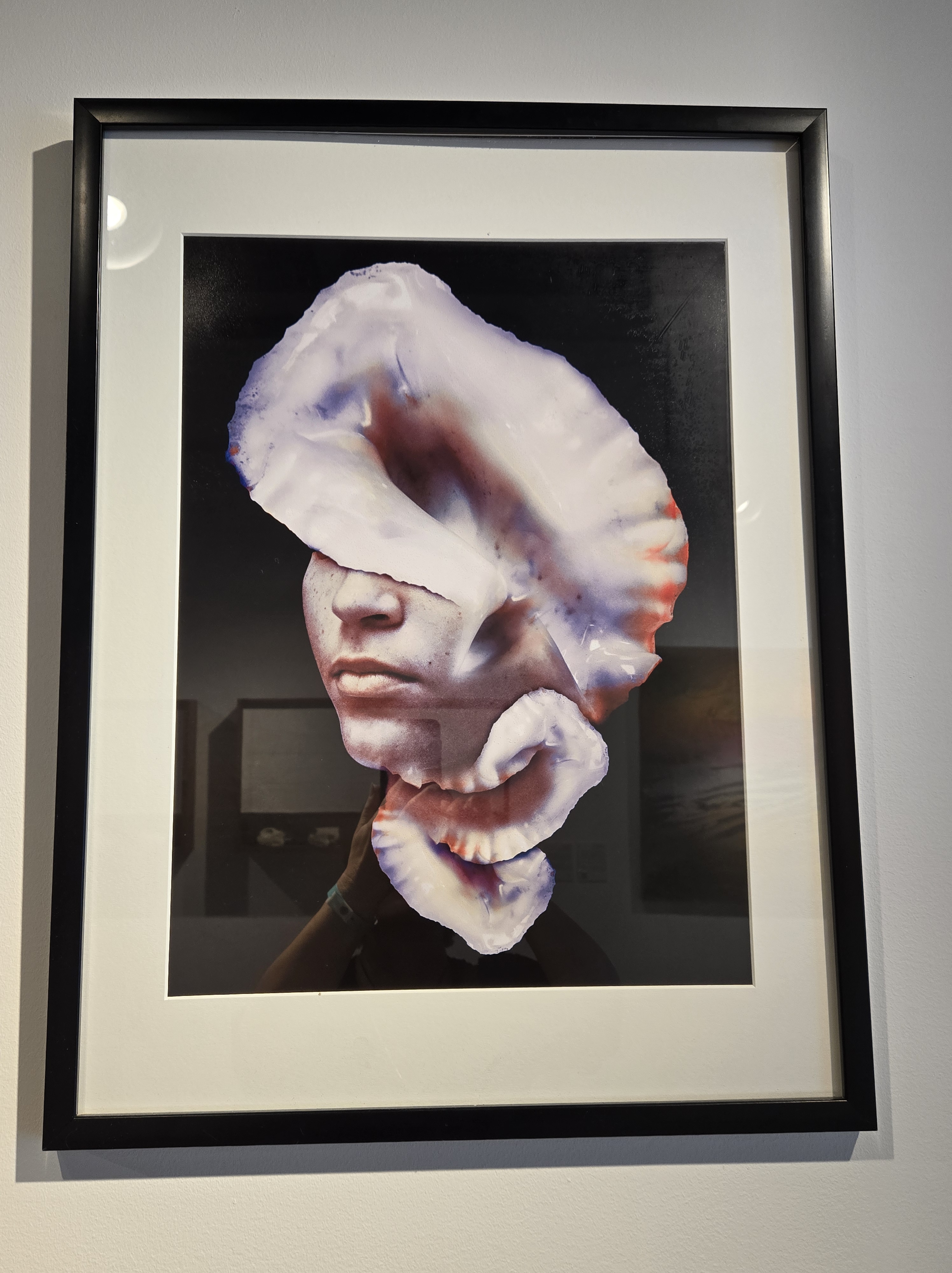
Fish SkeletonBon Appetit!Osiris
The last piece of art that struck me is a digital collage on paper called Osiris. It shows the melding of a conch shell and a human face. The blending of fiction and reality illustrates the continued influence of the marine environment on Caymanian identity.
After the gallery, we made our way to the Cayman Turtle Center, a sanctuary and breeding facility for the endangered green sea turtle. We opted for the Turtle Adventure, which allows visitors to snorkel with the turtles in a huge lagoon. I brought my GoPro Hero camera along and was glad I did! I’ve seen a few skittish wild turtles in the ocean, but these turtles are habituated to people. I had a few swim right underneath me! It was definitely worth the entry fee. The turtles eat algae, so you don’t need to worry about them biting you, although clumps of algae (sort of gross) float around the lagoon, dislodged from turtle feeding.
The facility also has a turtle breeding program. According to their website, “the turtle release programs have resulted in the growth of the local wild population in the Cayman Islands of the green sea turtle, going from zero nests in 1999 to over 200 nests. Recently, researchers in an independent genetic study using DNA discovered that 90% of all green female turtles nesting in Grand Cayman are genetically related to turtles from the Centre.”
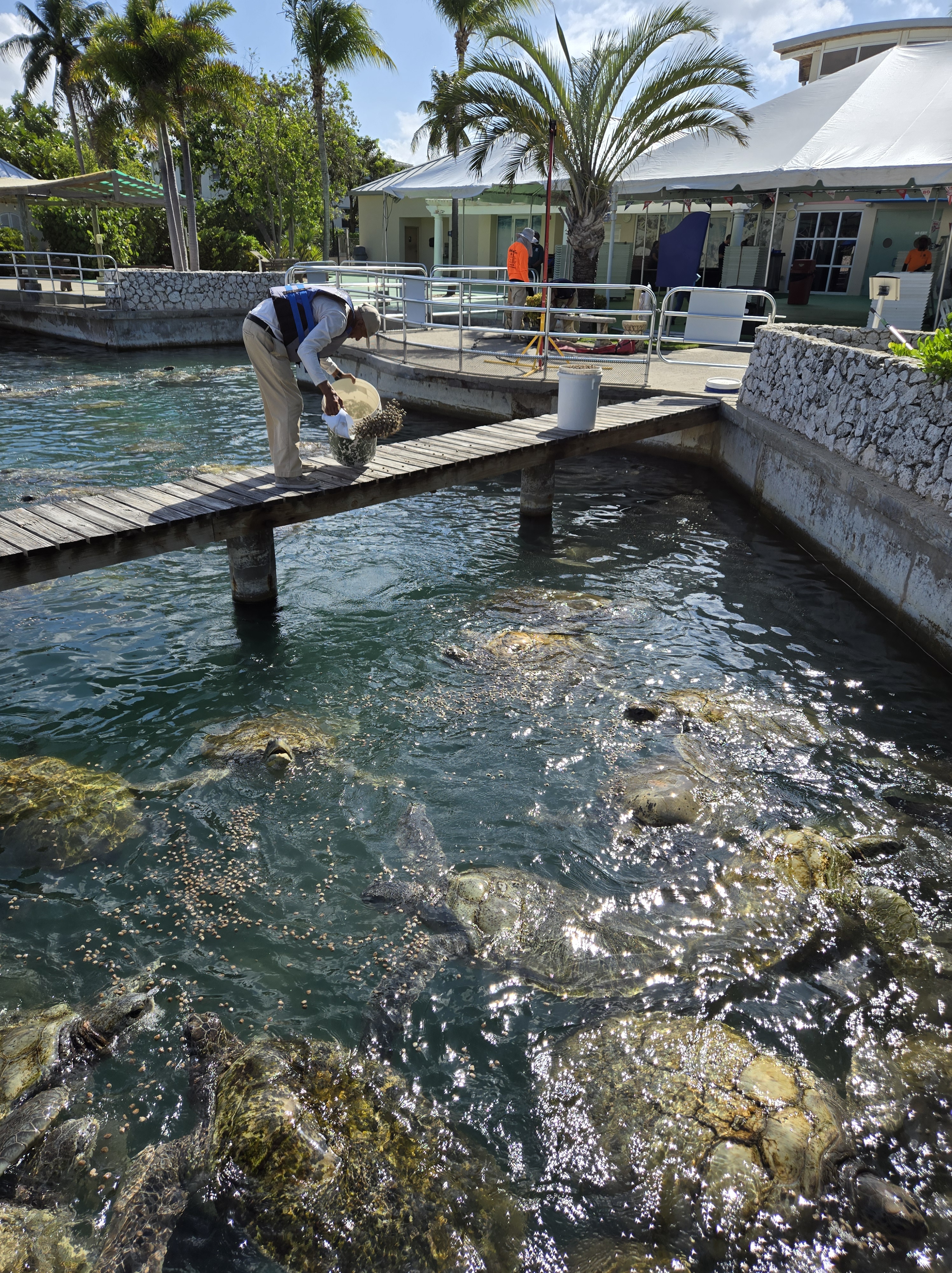
Turtle feeding time!
Russ and I were able to witness turtle feeding time in the breeding bay. These turtles are of reproduction age – typically 16 years old. Some weigh more than 500 pounds! They’re fed pellets and the funny thing is, they squirt water out their nostrils as they inhale them. It’s a sight not to be missed. The Turtle Center was another highlight of our trip, on par with Stingray City.
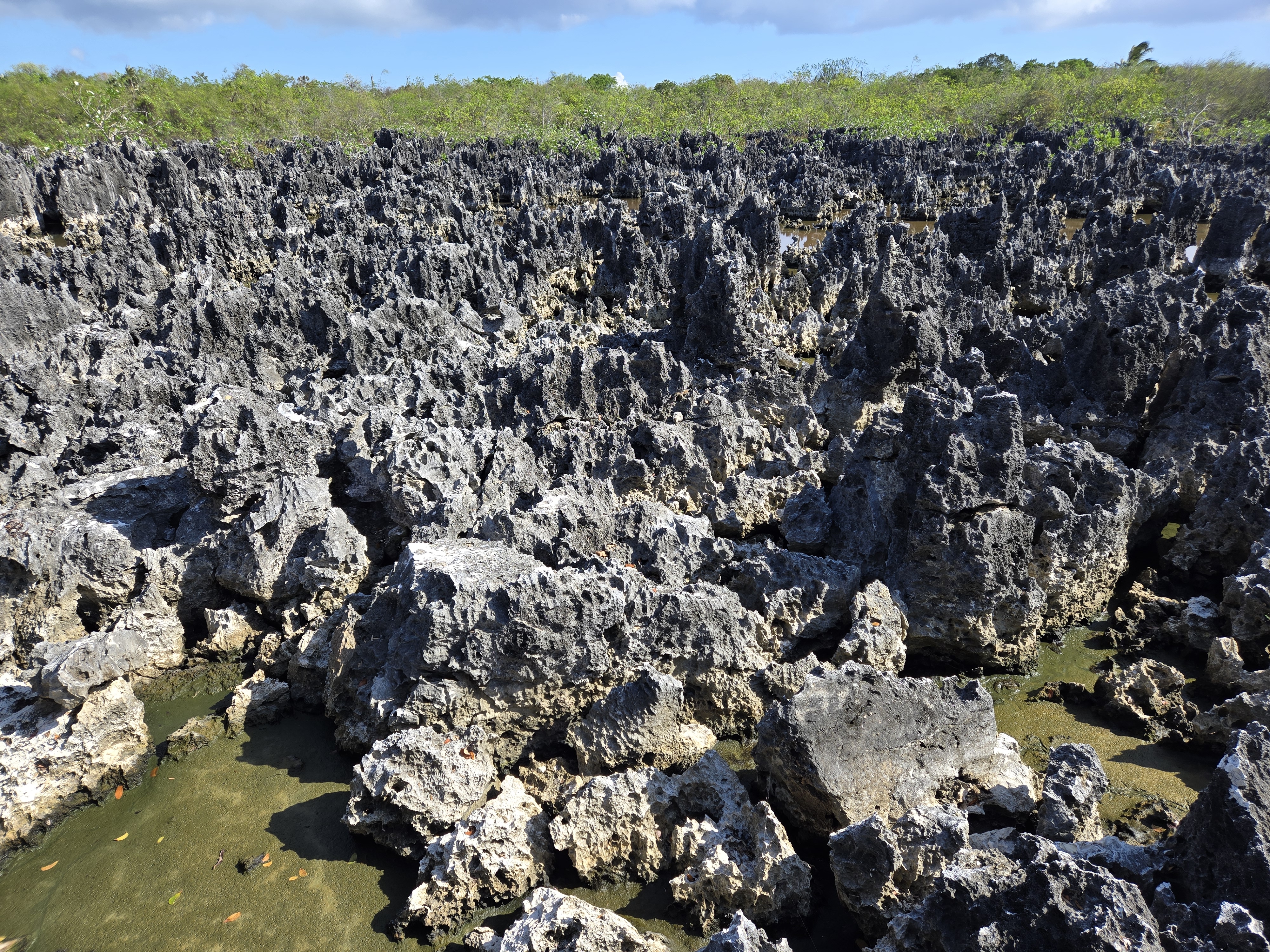
This is Hell.
Not far away is a small town called Hell. It has its own post office and is the size of about half a soccer field. The black craggy rocks that make up Hell are millions of years old and are made of limestone that has been eaten away by algae and ravaged by the elements. It does not look like a place where one would want to spend much time, but you can send postcards to people from Hell and buy T-shirts there.
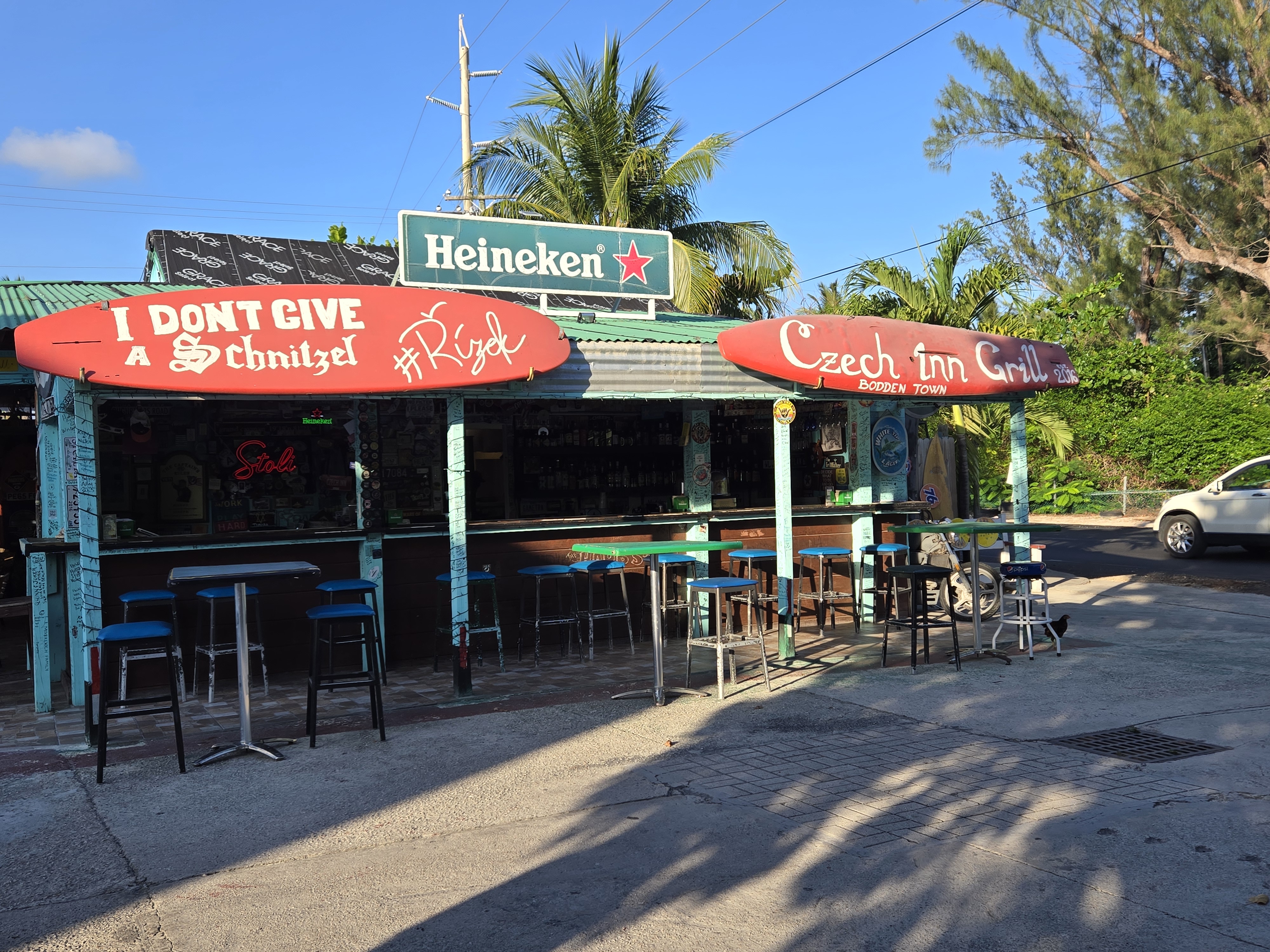
On our drive back to the eastern end of the island, we stopped at a restaurant in Savannah that we saw in a tourist newspaper and heard other resort-goers rave about. It is called the Czech Inn Grill and is operated by an accomplished 4-star chef from Czechoslovakia. It’s mostly an outdoor venue, with walls composed of surf boards. If you’ve ever been to Tom’s Burned Down Café on Madeline Island in Lake Superior, it’s a lot like that.
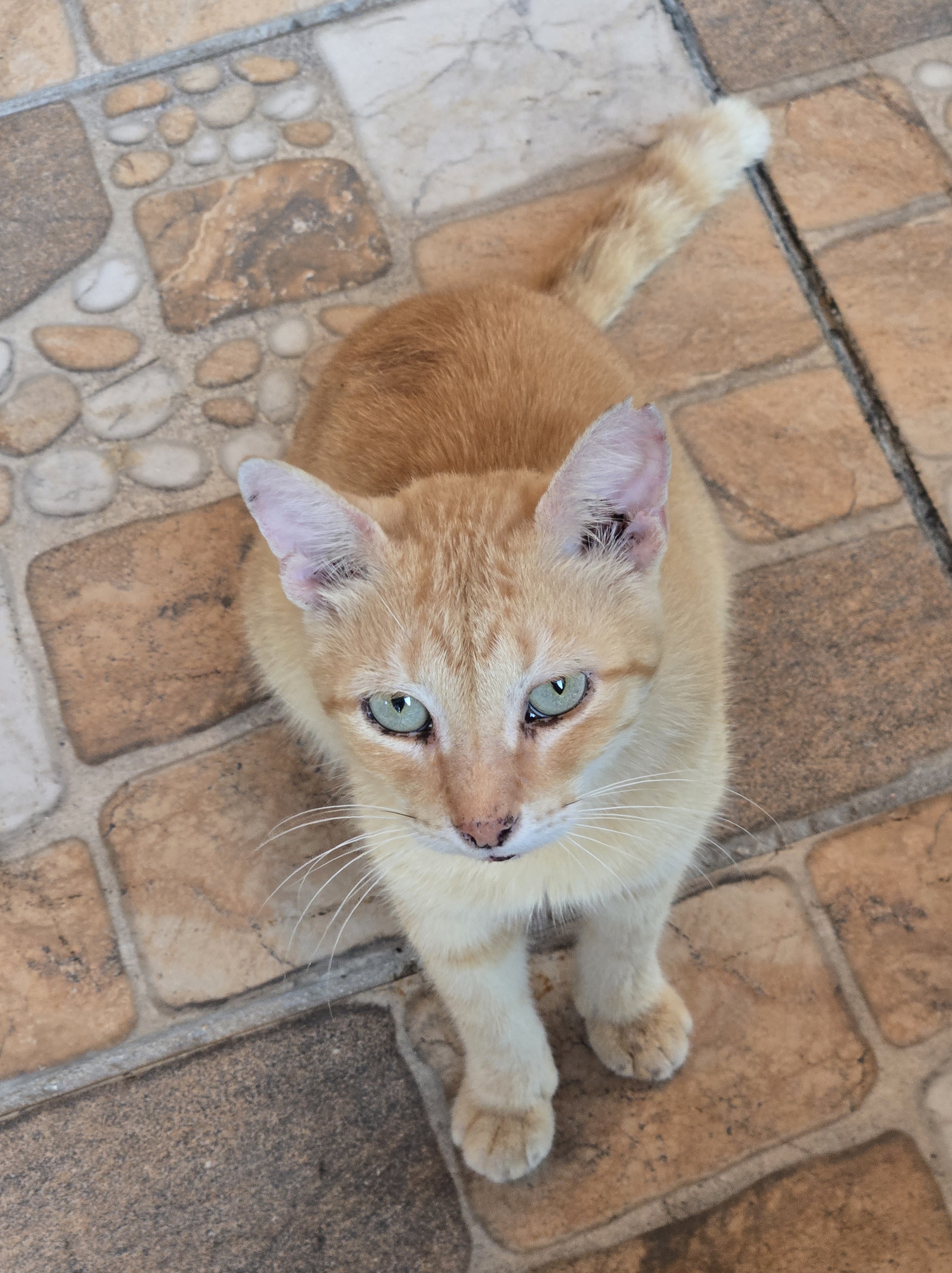
This was my FAVORITE meal of the trip. Every meal we ate on the island was good, but this had the added ambiance of a green-eyed tabby cat and a rooster. It’s not every venue where you can share your meal with two grateful animals. Russ and I both ordered ribs. Russ had Asian ribs, I had Hawaiian ribs with Czech potato salad. They were divine! We arrived early for dinner and once again, were almost the only people there.
The cat, whose name we later discovered was Prince Harry, sat politely by our table, squinting at me in a most appealing manner. How could I not share my bounty with him? He ate the first few offerings, but then deferred to the rooster for several others after the bird figured out what was going on. Later, Prince Harry became more demanding, standing on his hind legs and putting a paw on my thigh to get my attention for more tidbits. I didn’t mind complying.
Prince HarryOur Mark (the heart)
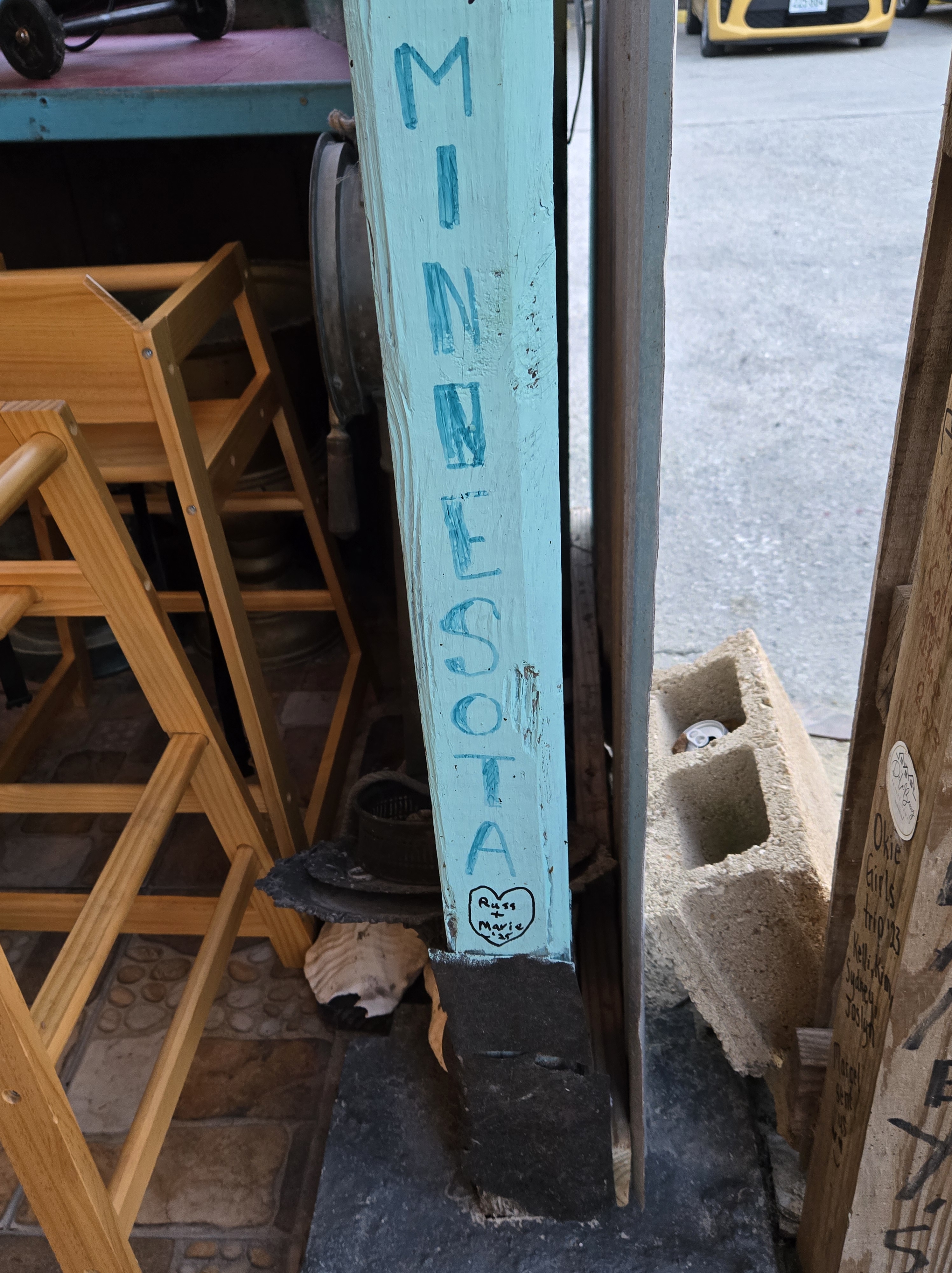
The surf boards and wooden support posts were filled with graffiti – peoples’ names and where they were from. Under “Minnesota” written in large letters near the reception area, we added our names and date with a heart drawn around it in honor of our sixth anniversary. If you ever visit the grill, look for our mark. It was a truly memorable dinner!
After foraging for food at the grocery store, we spent the afternoon of our second day at one of the main attractions on the East End/North Side of Grand Cayman Island: Crystal Caves. Most of the island is limestone and the caves were formed over millions of years from water dripping through the rocks, creating stalactites and stalagmites. In the past, people used the caves for water and for shelter during hurricanes. They were also rumored pirate hangouts.
The guided tours last 1-1/2 hours and need to be prebooked. Ours began with the manager providing an orientation. Then we loaded into two vans for a short bumpy ride to the caves. Three caves are open for tours. Our first stop was Roots Cave, which features long tree roots draping from the ceiling. The roots have grown over the years as the trees above search for water in the cave.
Open Ceiling Cave. Note the ropes on the right that people used to use to enter the cave.
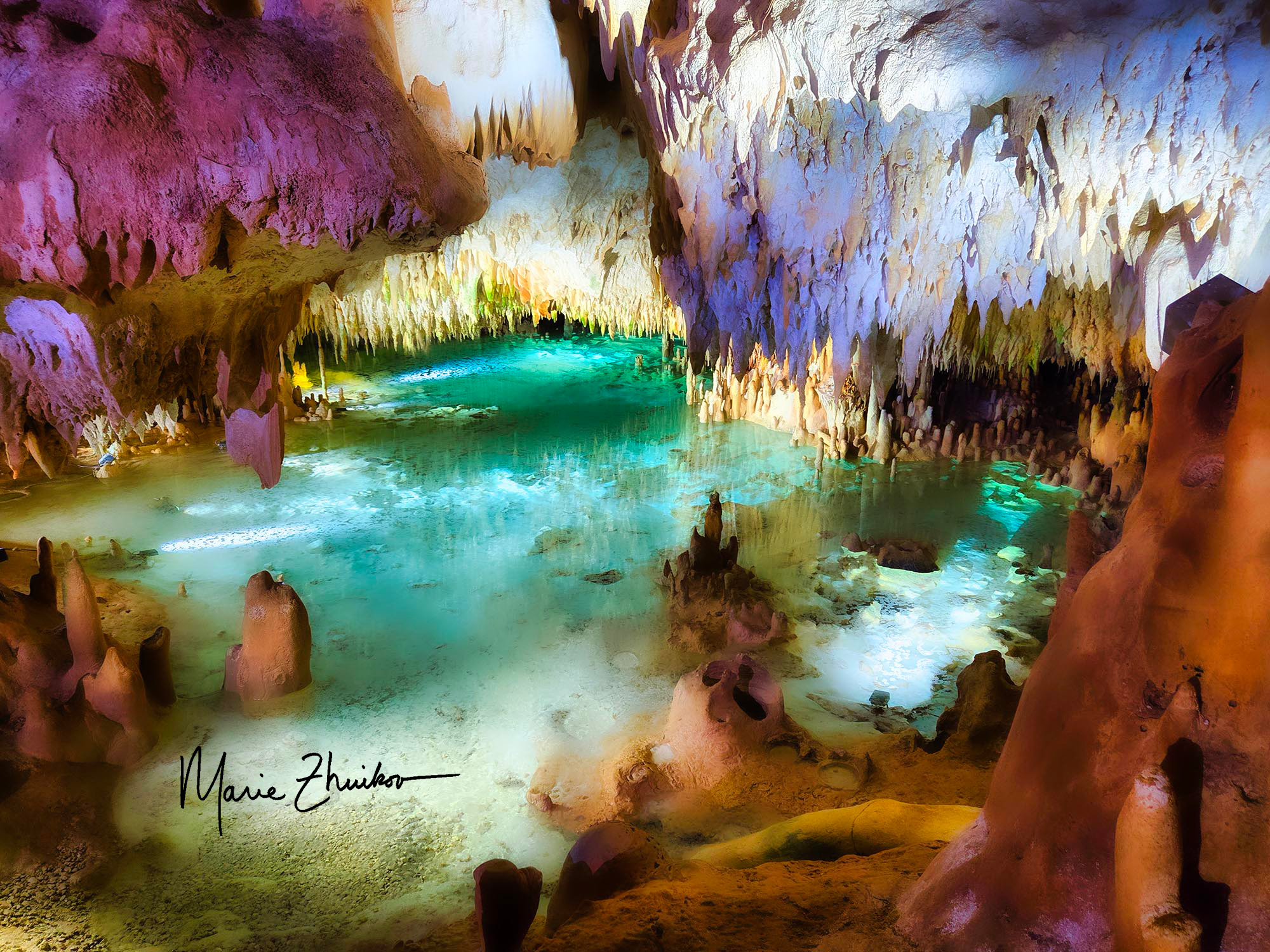
Our second cave was Open Ceiling Cave, which, as you’ve no doubt deduced, has a big hole in the ceiling. The third was my favorite from a photography standpoint. Lake Cave features a small, crystal-clear body of water (more like a pond) that has filtered through the rock.
One of the caves (I can’t recall which) had some fruit bats hanging from the ceiling. I felt bad that we disturbed their daily slumber, but it was cool to see them. During all the other cave tours I’ve been on in different locales the cave temperatures have been cool. These were hot, so be prepared. If you work up a thirst, there’s a small restaurant and gift shop at the cave site.
Russ and I were so hot and sweaty afterward that once we returned to the resort, we jumped into the pool. There’s nothing that a banana daquiri from a swim up bar can’t cure!
Lake Cave
For supper, we dined at a dive bar. An honest-to-goodness dive bar run by scuba divers. We chose Eagle Rays Dive Bar and Grill because they are known for featuring lionfish on their menu. We were also drawn by its casual atmosphere and relaxing ocean views.
Lionfish (and other invasive species) have popped up in my blog before. (See this guest post from 2020 by my friend Sharon.) These are a beautiful but venomous fish native to the Indian Ocean and west Pacific. It’s thought that people who no longer wanted lionfish in their aquariums, released them into the Caribbean Sea and the Atlantic, and now they have become invasive.
The good news is that, when prepared properly, lionfish are safe and good to eat! Island divers spear the fish, which are purchased by another restaurant and Eagle Rays. Rays claims to be the only place on Grand Cayman “that regularly serves everyone’s favorite marine pest.” Russ and I usually eat supper early, so we were able to get a table without a reservation. In fact, we were among the only people there, which ended up being a common and mysterious occurrence during this trip.
Lionfish tacosfrom Eagle Ray’s Dive Bar
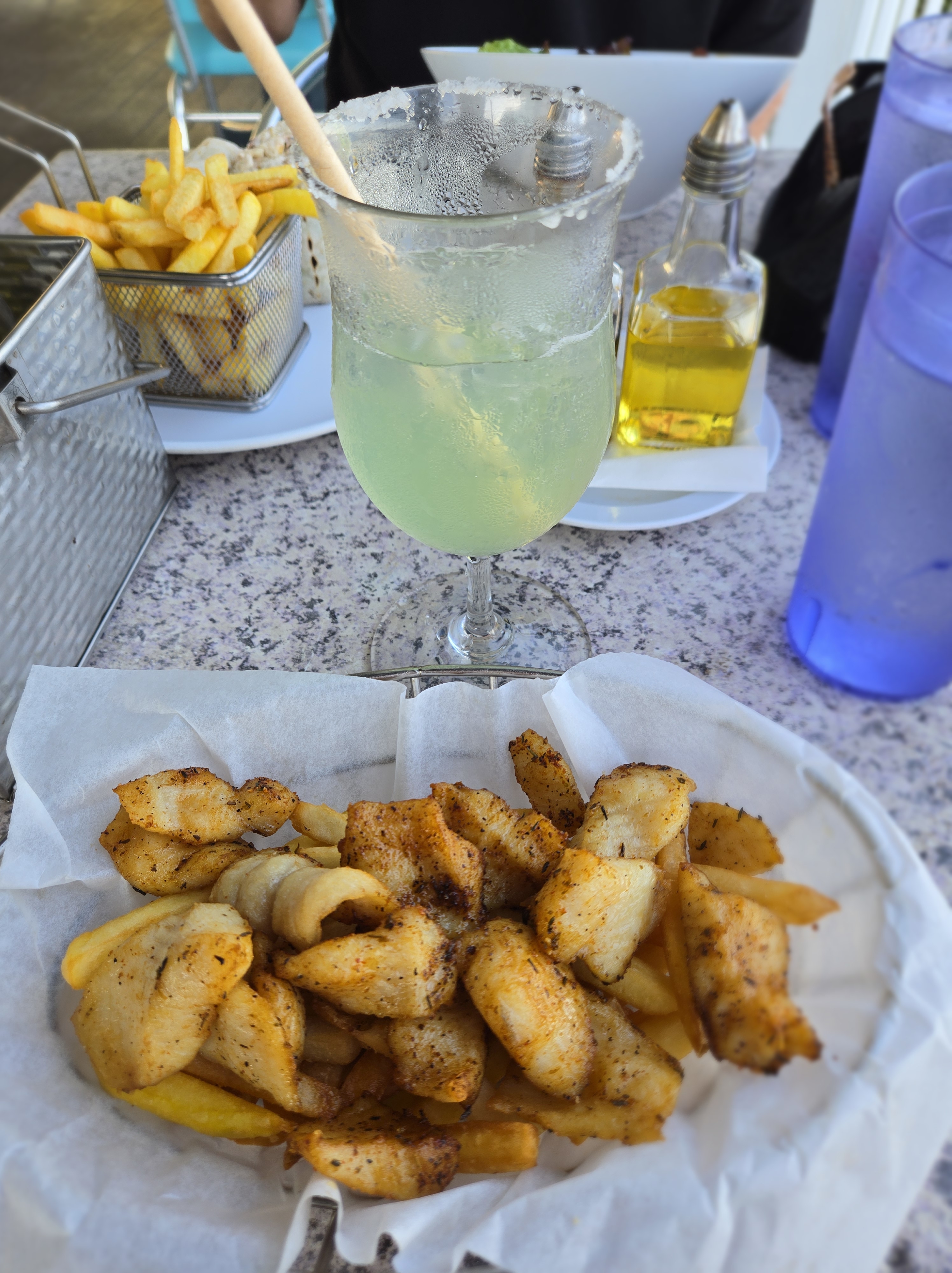
Ray’s specializes in lionfish tacos, which Russ ordered. I can’t eat taco shells (wheat and corn), so they made me a special order of grilled lionfish and chips (which isn’t on the menu). Russ was very happy with his tacos and my dish was also delicious. Lionfish is a white meat, which to this Minnesotan, tastes a lot like our state delicacy of walleye.
Lionfish and chips (plus a margarita!)
As we enjoyed our meal in the sea breeze, I uttered our trip slogan once again: “Can’t do this in Duluth!”
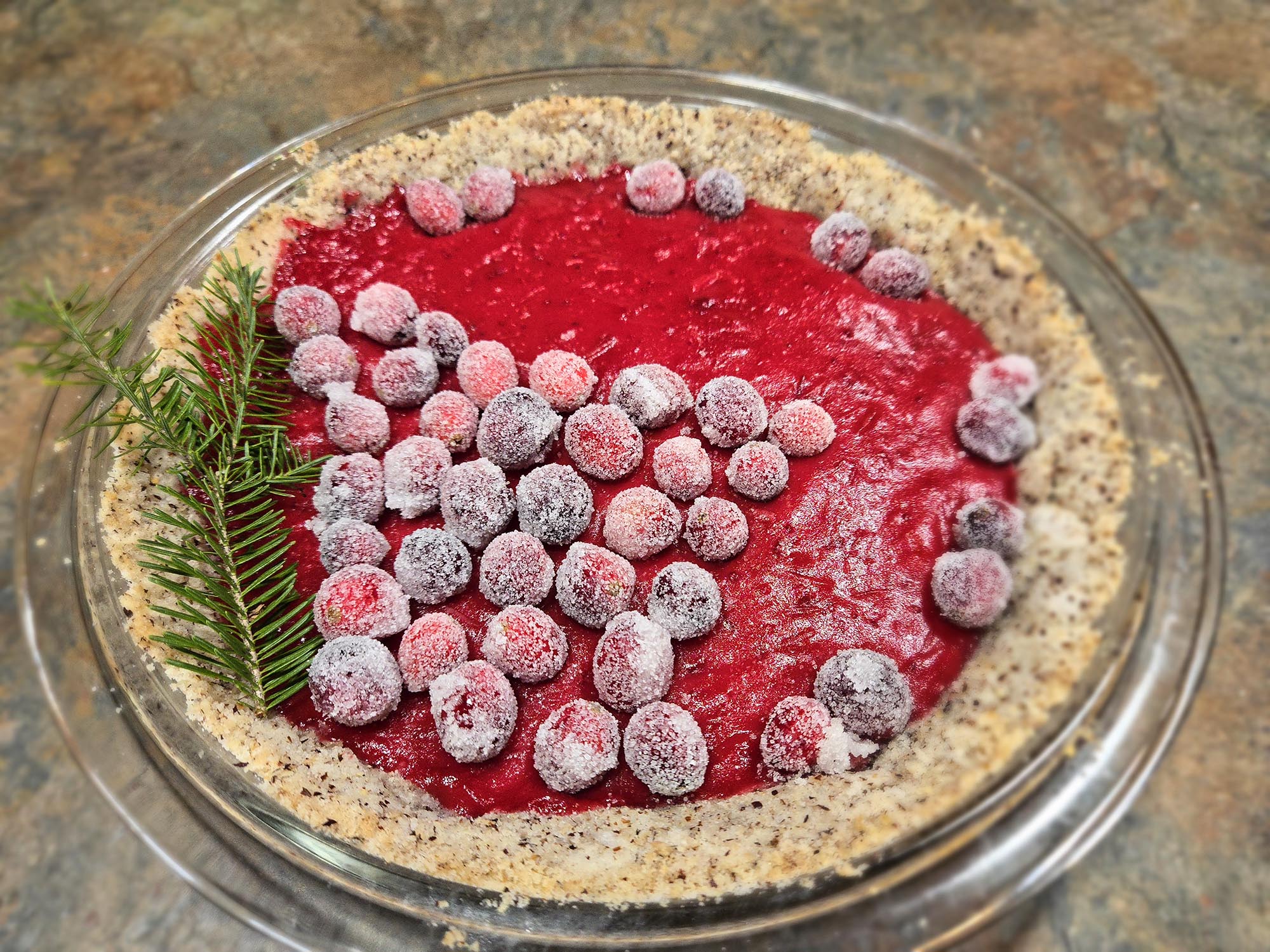
Cranberry curd tart with sugared cranberries and a hazelnut flour crust.
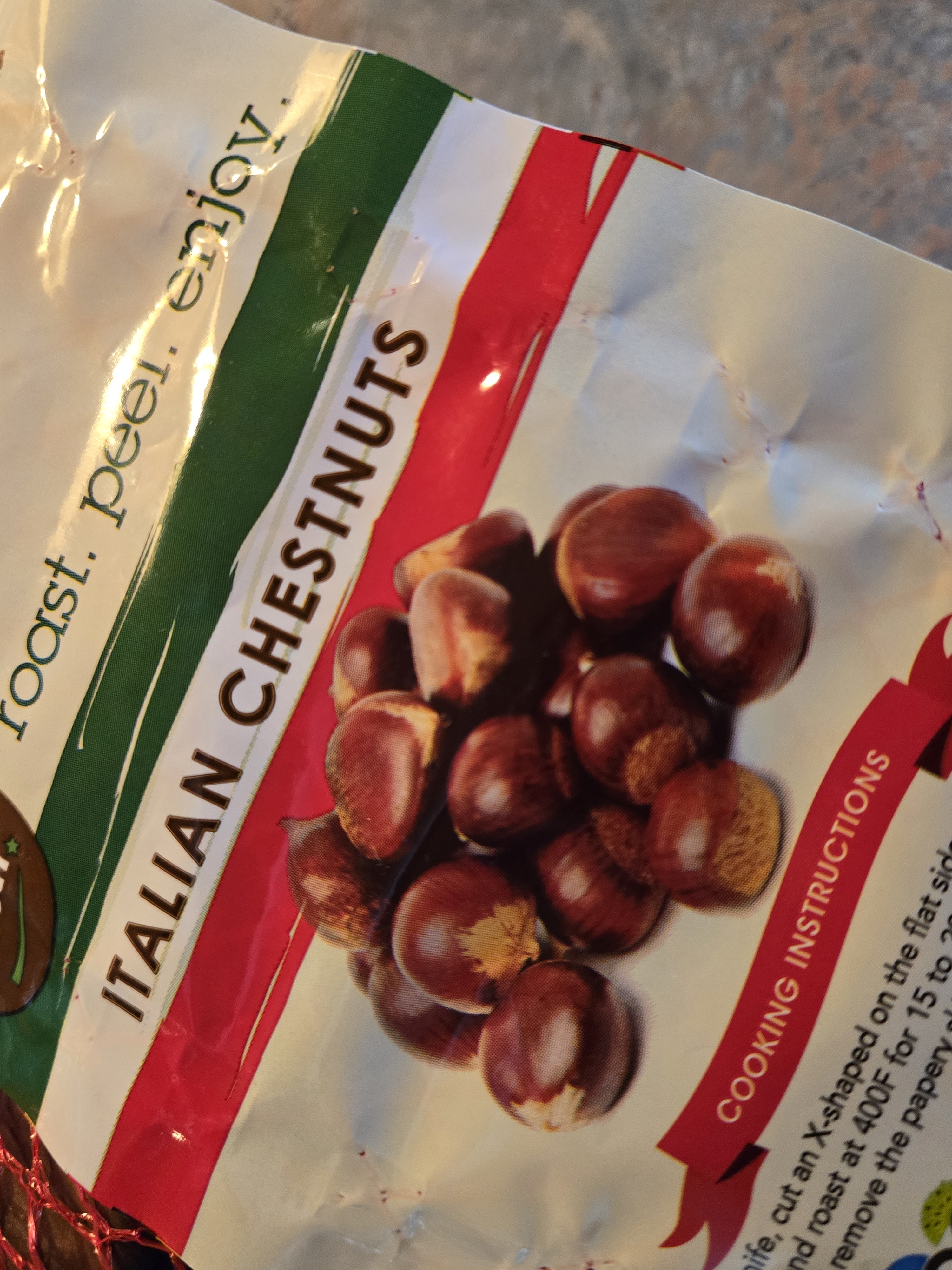
I’ve been trying some new foods this year to get into that Christmas spirit. One was roasted chestnuts. I happened to walk by some in the grocery story and picked them up on impulse. I once ate a roasted chestnut appetizer during a memorable meal at a restaurant in Michigan, and I wanted to see if I could recreate that dish at home.
As it turns out, I unknowingly bought one of the best kind of chestnuts for roasting. Apparently, shoppers can buy ones from Asia, Italy, and South Carolina. The package I bought was from Italy. I found a recipe online and waited until a weekend when I had time to try it. The process takes a while because the chestnuts need to soak to soften. The recipe on the package of chestnuts did not include that step, so I’m glad I looked online. I think it would have been harder to peel the chestnuts if they had not been soaked after being scored.
It also took me a while to score the pound of nuts that I had. I was being careful not to cut myself in the process and my fingers got tired about halfway through, so I took a break. It also takes a while to peel the nuts once they’re cooked. But the results were worth it! The naked nuts look like little tan brains and taste like a cross between a pecan and a walnut.
I was glad that they keep well in the refrigerator or freezer. Russ and I couldn’t eat all of them in one sitting. In fact, I think we still have a few left that we should probably eat today!
The chestnuts after roasting and peeling.
My other festive food was a cranberry curd tart with a hazelnut flour crust and sugared cranberries. I’d made the tart before a few times with a recipe from the New York Times. The recipe appealed to me because it is wheat-free. I cheat a bit—I don’t make my own hazelnut flour. I buy it from Bob’s Red Mill at my grocery store, which usually carries it during this time of year. I also made the recipe easier by not straining the cranberry mixture. I just blend it all up in a blender. That gives it a good color and extra flavor. But I do juice my own orange and grate fresh orange zest.
The sugared cranberries were my new thing for the season. I had some leftover cranberries from making the tart. I’d seen photos of tarts decorated with them and thought it looked fun to try. Like with the chestnuts, the sugaring process for the cranberries takes some time—mostly in waiting for things to dry.
I used this online recipe for the cranberries. I didn’t have any parchment paper, so I used aluminum foil, and that seemed to work just fine. The recipe also includes tips on how to sugar rosemary sprigs to make the pie look more Christmasy. I didn’t have any rosemary, so I simply went outside and clipped off a balsam sprig to decorate the pie. (Note: we did not eat the sprig, it was just for decoration!)
I would advise making the sugared cranberries the same day the pie will be eaten. If the decorated pie is stored overnight in the fridge, the sugar grains tend to “melt,” and you’ll need to take the berries off and re-sugar them. The cranberries can also be eaten by themselves as a snack. They’re great!
So, if you have some time this year and want to try something different, these are two foods to consider. I probably won’t roast chestnuts again, but I’ll for sure make the tart and cranberries during future holiday seasons.
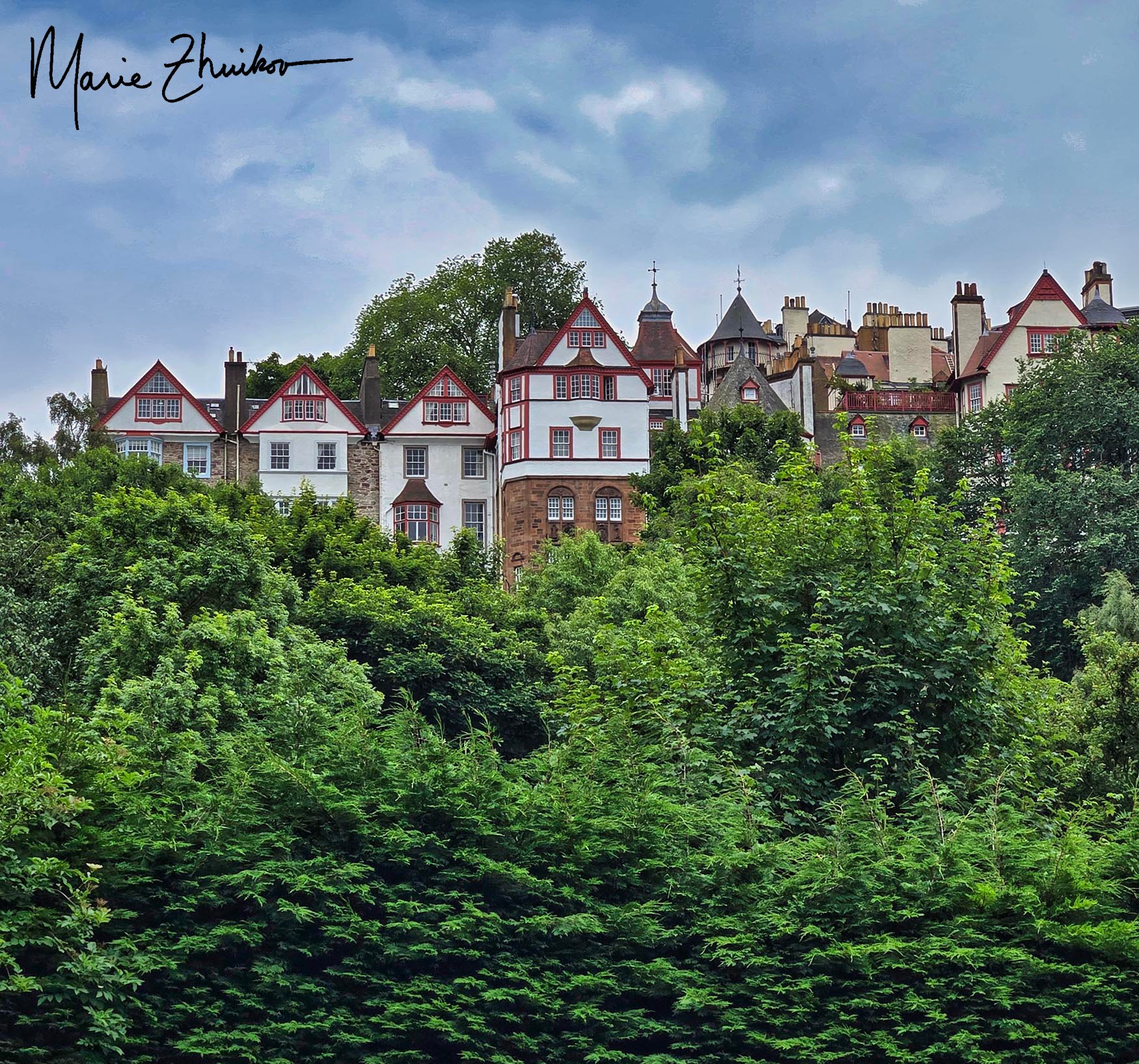
After an awesome Outlander Tour and seeing the Tower of Clackmannan the previous day, we spent our final day in Scotland meandering some more around Edinburgh. We walked through the Princes Street Gardens, marveling at the fountain, statues, and quaint homes that can be viewed from it.
Homes seen from the Princes Street Gardens, Edinburgh
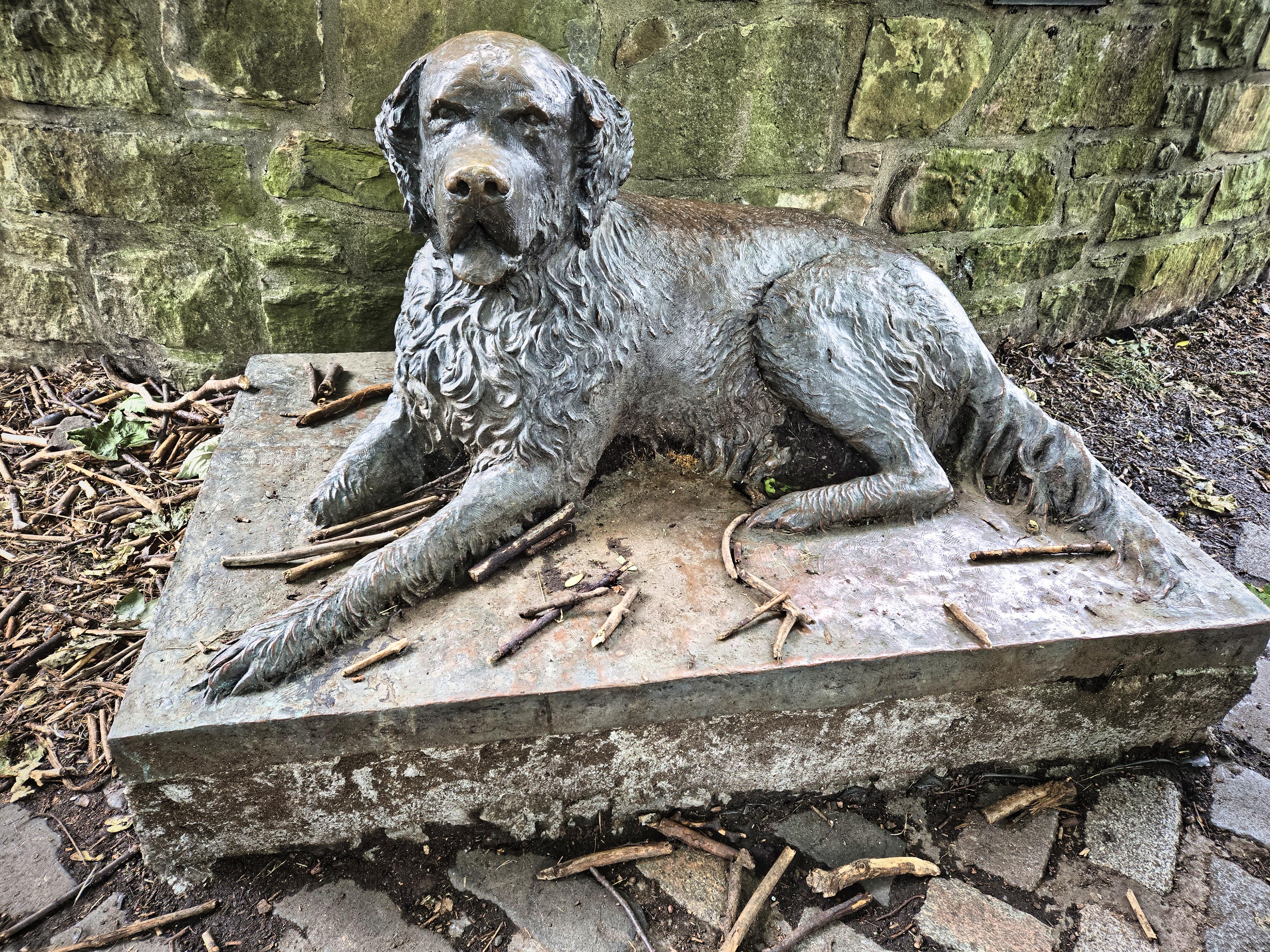
One unexpected sight was a statue memorializing Bum the Dog. Usually, everyone wants to see Greyfriars Bobby, the cute little statue of a terrier who slept on his master’s grave for years. I mean, the dog has even had a movie made about him! I don’t know. I much prefer the less popular landmark of Bum.
Bum, the San Diego dog, in Scotland
This remarkable dog disembarked from a ship in San Diego, where he won the hearts of the populace. The half-St. Bernard, half-Spaniel was owned by everyone and no one. Butchers fed him scraps and local doctors met his medical needs. He was so beloved that when San Diego issued its first dog license, Bum’s image adorned it.
His likeness sits in a small park in Edinburgh in tribute to San Diego, which is Edinburgh’s sister city. The Scots gifted San Diego with a statue of Bobby. The dogs represent the spirit of a twinning link friendship, loyalty, and shared experience. Bum died at age 12 in 1898. His memorial is one of five dog statues in Edinburgh.
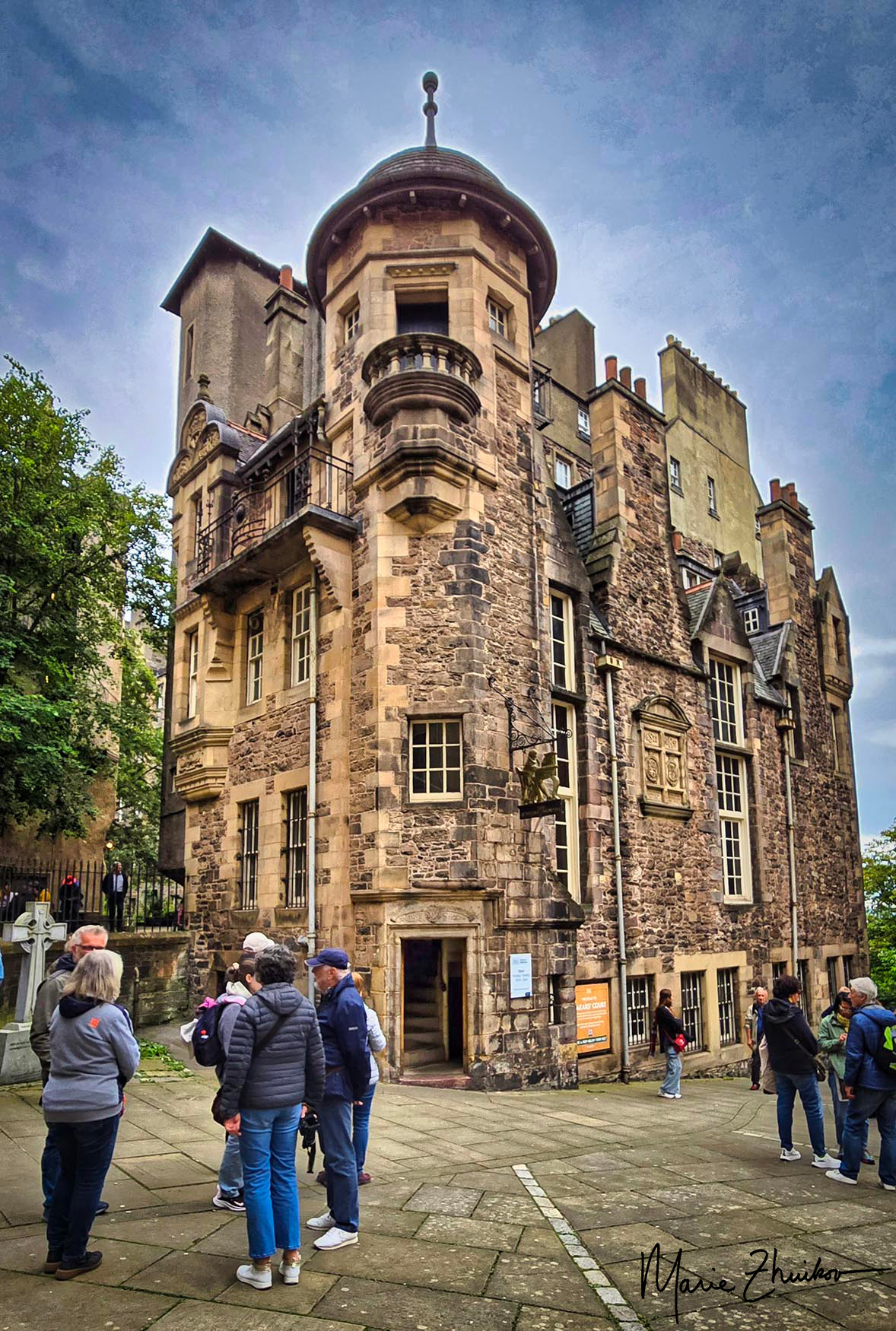
The Writers’ Museum, Edinburgh
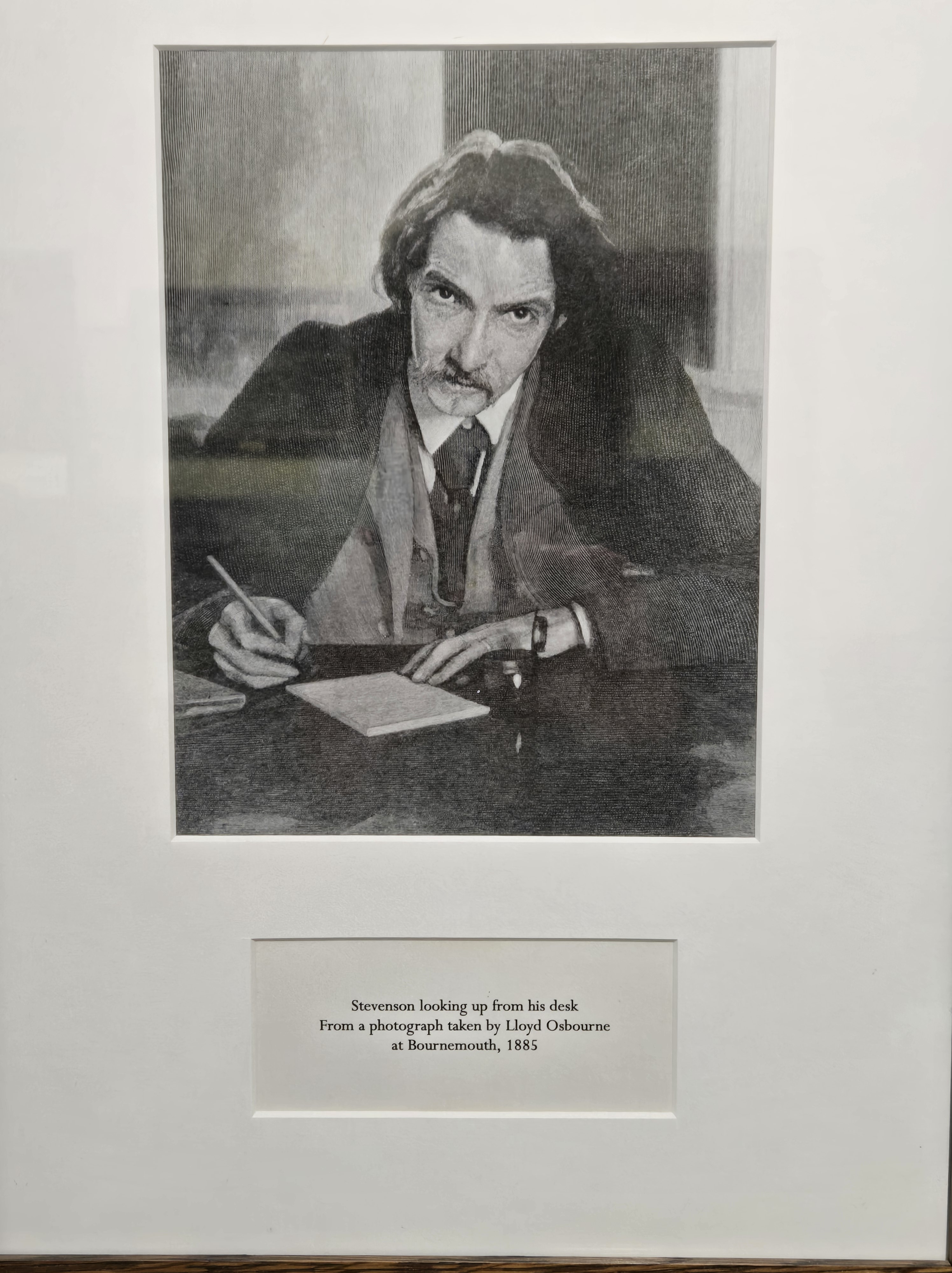
On the other side of the gardens, we made our way to the Writers’ Museum. It’s in a narrow stone building, complete with more spiral staircases (my favorite!) The free museum is devoted to three Scottish writers: Robert Louis Stevenson, Sir Walter Scott, and Robert Burns. I never knew that Stevenson spent his later years in Samoa. One of the artifacts we saw was a tortoise shell ring given to him by a Samoan chief, engraved with the name ‘Tusitala,’ meaning ‘teller of tales.’
AuthorRobert Lewis Stevenson
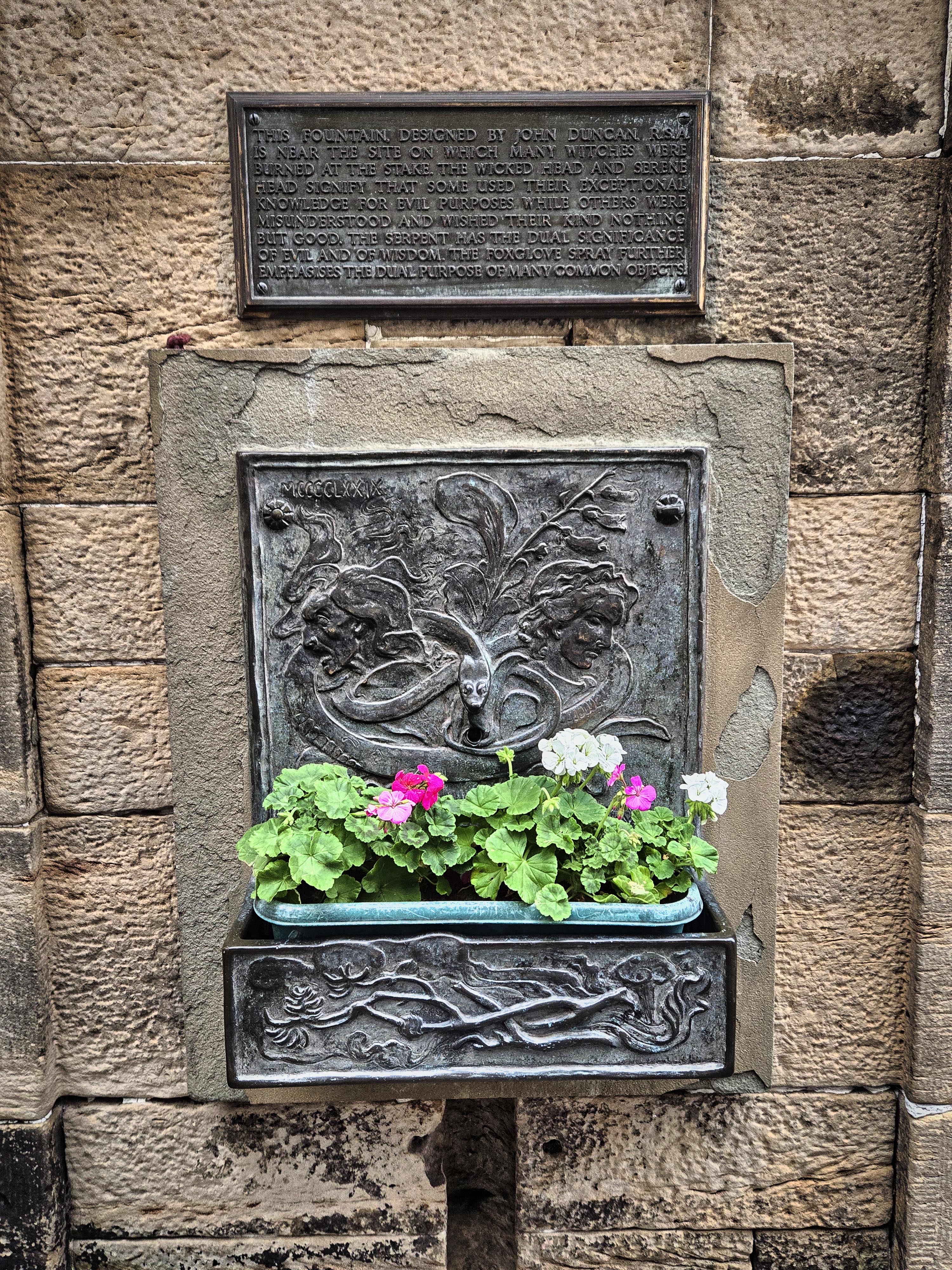
The museum is near the Royal Mile, so we walked down that again, picking up last gifts for people back home. We also found the Witches’ Well, a memorial to all the women who were killed for practicing “witchcraft.” They were strangled and burnt on Edinburgh Castle’s Esplanade. It’s so small, we almost missed it! Surely, a memorial to the deaths hundreds of people should be a bit larger?
The Witches’ Well, Edinburgh
The plaque features a bronze relief of witches’ heads entangled by a snake. It uses dualism to highlight the balance between good and evil and to show that every story has two sides. The relief contains the image of a foxglove plant, from the center of which is a coiled snake intertwined around the head of Aesculapius, the god of medicine, and his daughter Hygeia, the goddess of health. Foxglove, though used medicinally, can also be poisonous depending on dosage, and the image of the serpent imbued with wisdom is also acknowledged as evil.
As if to counterbalance the paganism, we popped into St. Giles Cathedral, another free tour opportunity. It’s quite the impressive structure! It was built in 1124 and has no doubt been rebuilt over time. I loved the ornate ceiling.
St. Giles Cathedral, Edinburgh
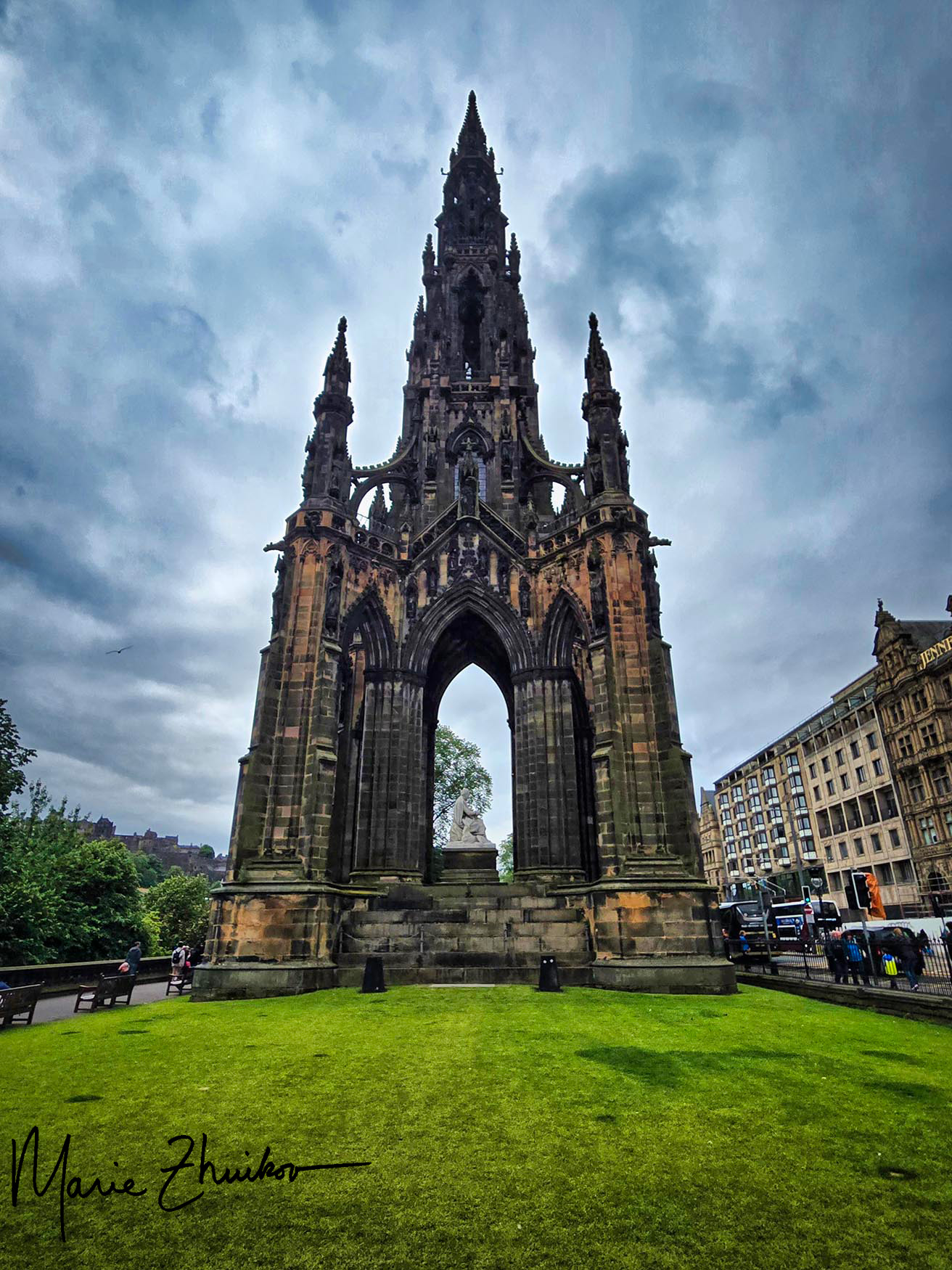
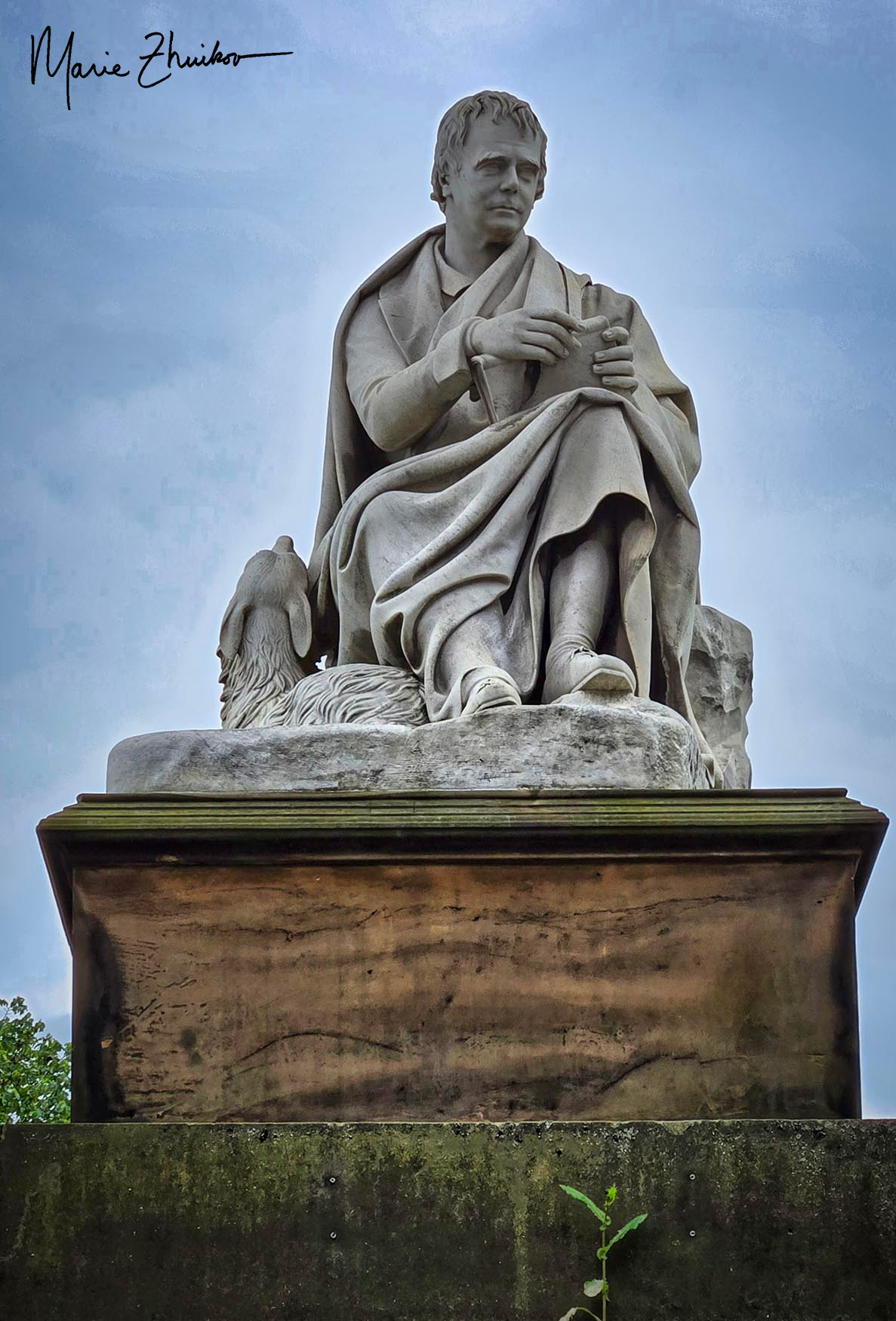
On our walk back to our hotel, we passed the Sir Walter Scott Monument, or the “gothic rocket ship” as our Outlander tour guide Henry dubbed it. I climbed the monument as a child and didn’t particularly feel the need to traverse more spiral staircases with my mending broken ankle now, so we appreciated it from the ground. Sir Walter’s statue in the middle of the tower sported another one of Edinburgh’s dogs, which sits by Sir Walter’s side. The dog, Maida, was a cross between a highland deerhound and a Pyrenean wolfdog.
Sir Walter Scott and Maida
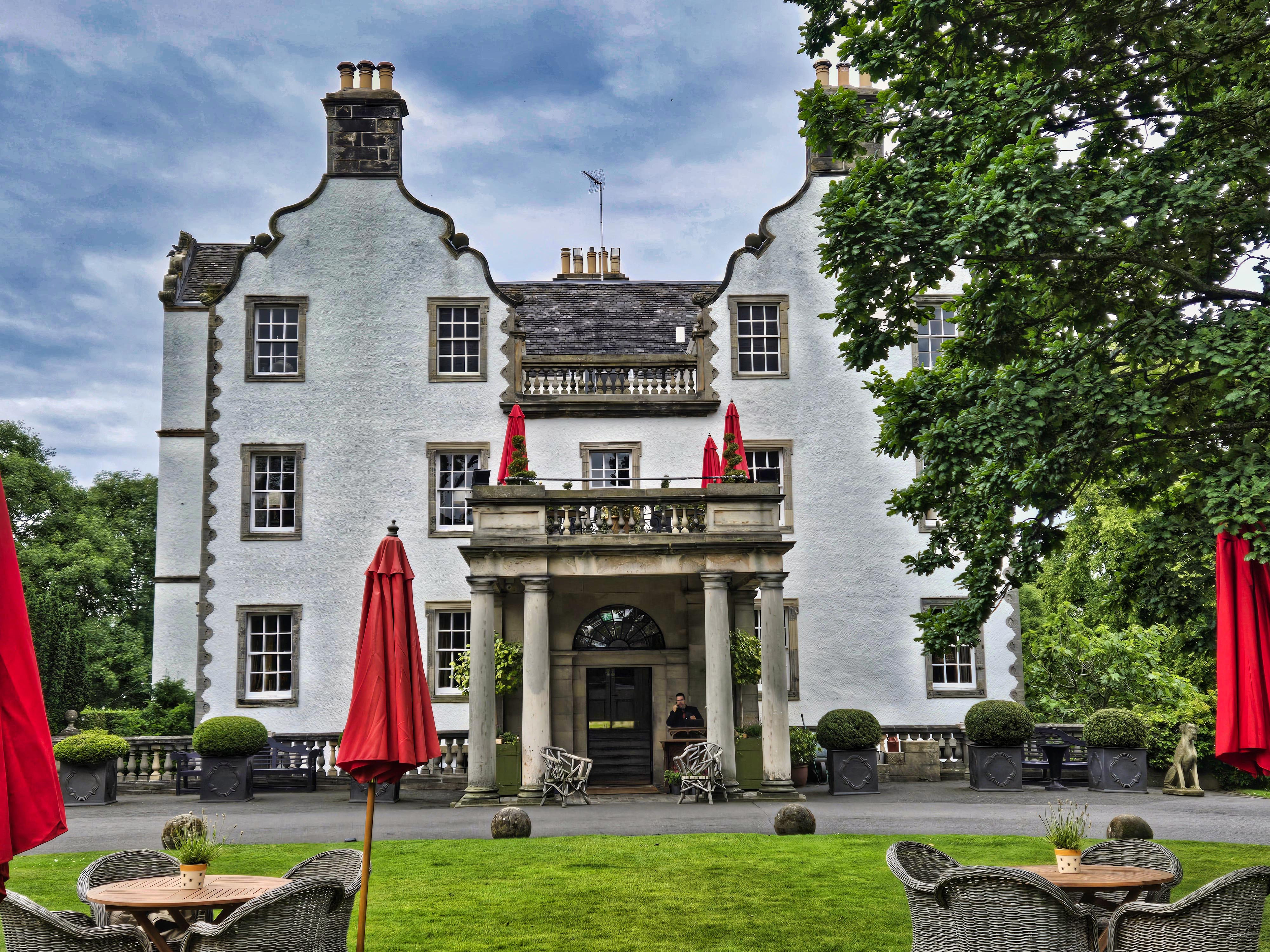
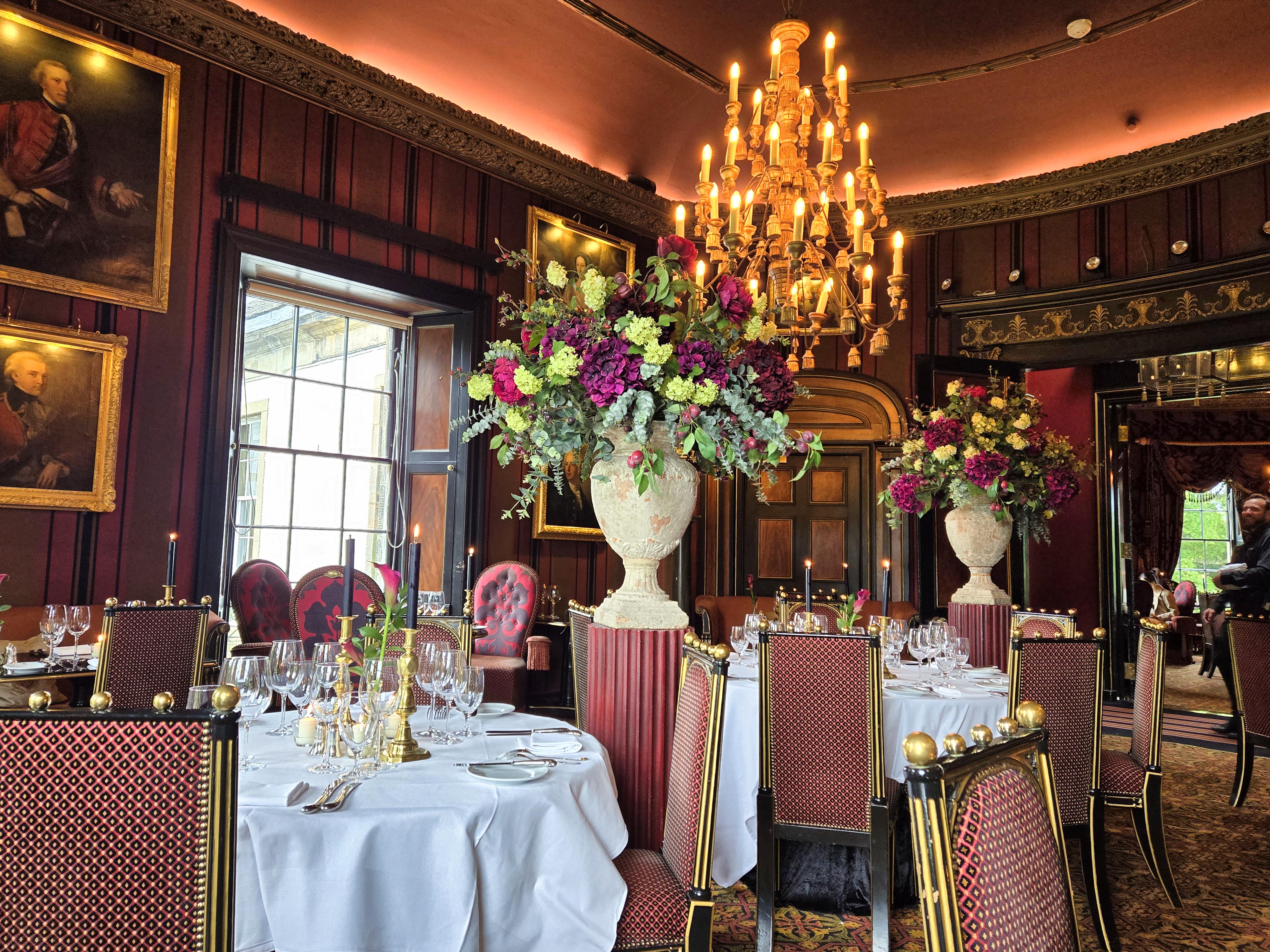
At the hotel, we got spiffed up for our final dinner in Scotland. We planned to go out in style! We had made reservations at The Rhubarb Restaurant, where rhubarb was first introduced to Scotland from Asia in the eighteenth century. Its garish yet fun interior reflects the plant: red velvet with green accents. So does its menu.
The Rhubarb Restaurant and Hotel
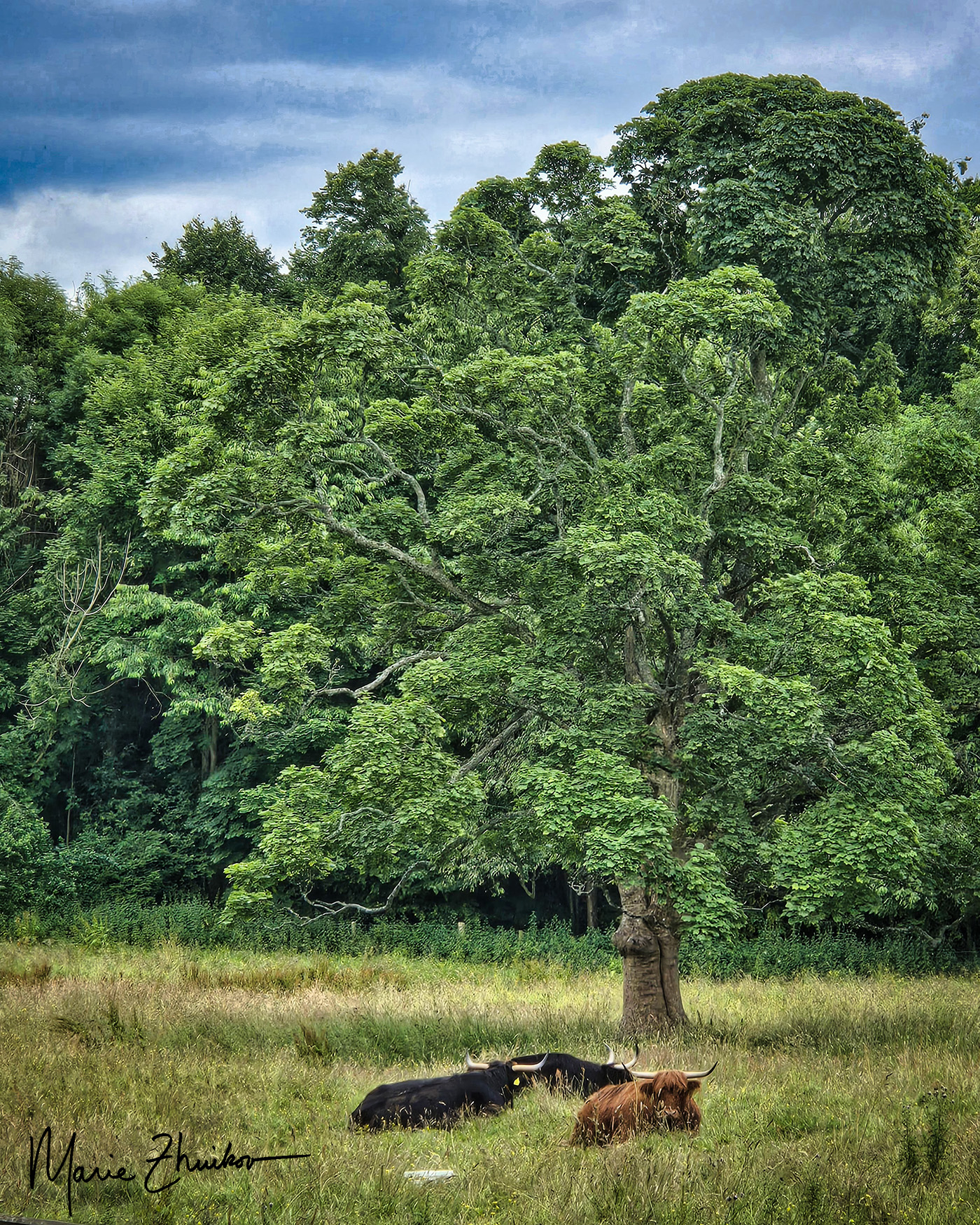
We caught a cab for a ride around the other side of Edinburgh Castle and Arthur’s Seat where the mansion and its large landholdings sit in the middle of the city. We had some time before our reservation and used it to explore the grounds and gardens. We were inordinately excited to see Highland cows (or coos) on the estate. We hadn’t seen any proper coos during our trip yet. There they were, lying underneath an impressive tree!
The coos! Rhubarb Restaurant Estate.
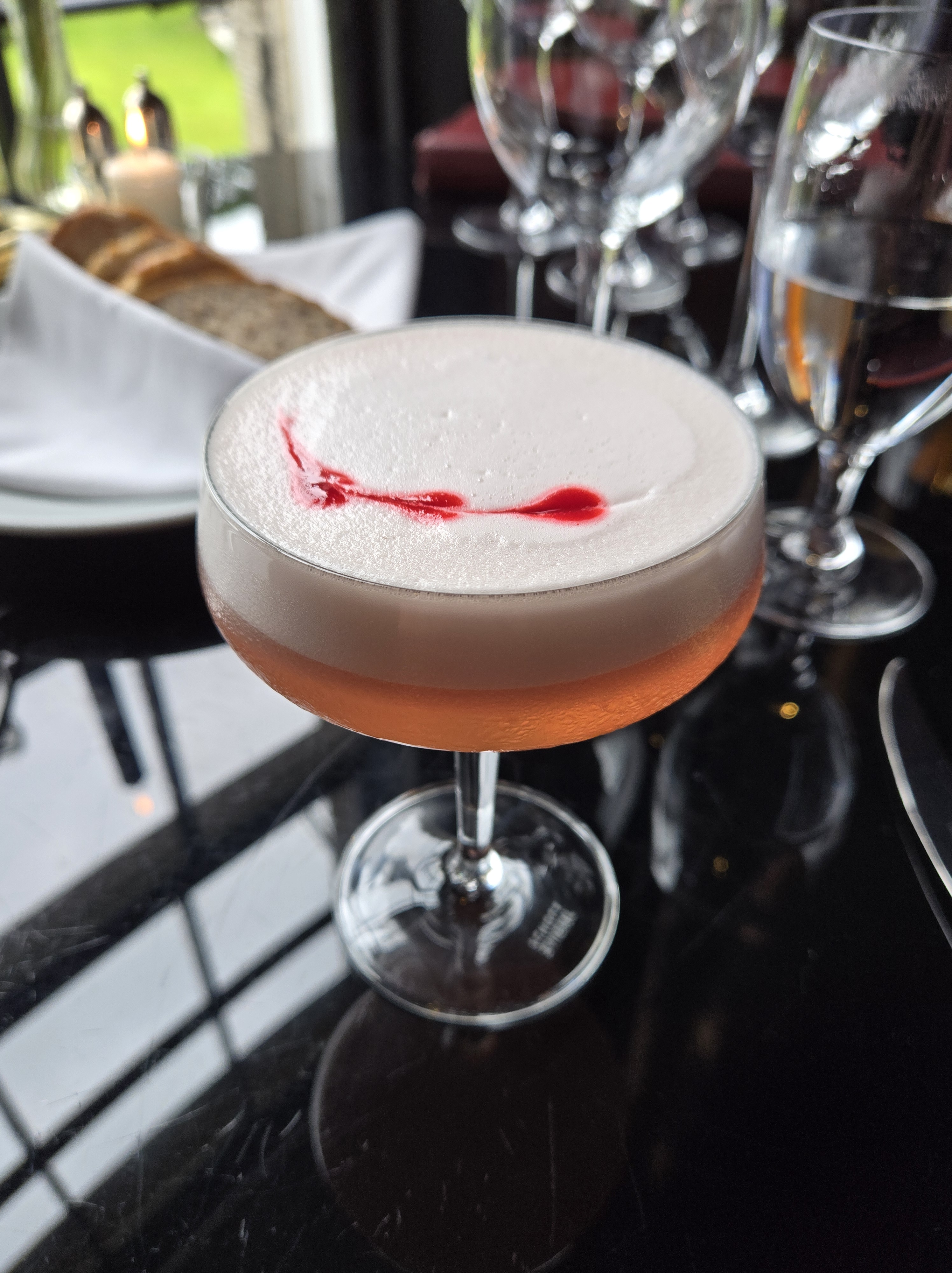
Inside, we were seated in a dining room (there are several) that offered a beautiful view of the grounds. I had a rhubarb-themed cocktail called the rhubarb patch. It had vermouth and rhubarb syrup — very good!
A rhubarb patch cocktail
For dinner, we shared a Châteaubriand Angus steak platter for two that was accompanied by potato purée, Lyonnaise potato with leek emulsion, crispy onions, braised red cabbage, honey-roasted pumpkin, beef dripping parsnips, a chicory and watercress salad, Béarnaise sauce, and Madeira jus. Oh man, the meat was so tender. As we ate, we watched a peacock strut outside and a cat scampering.
The view from our table. Note the peacock.
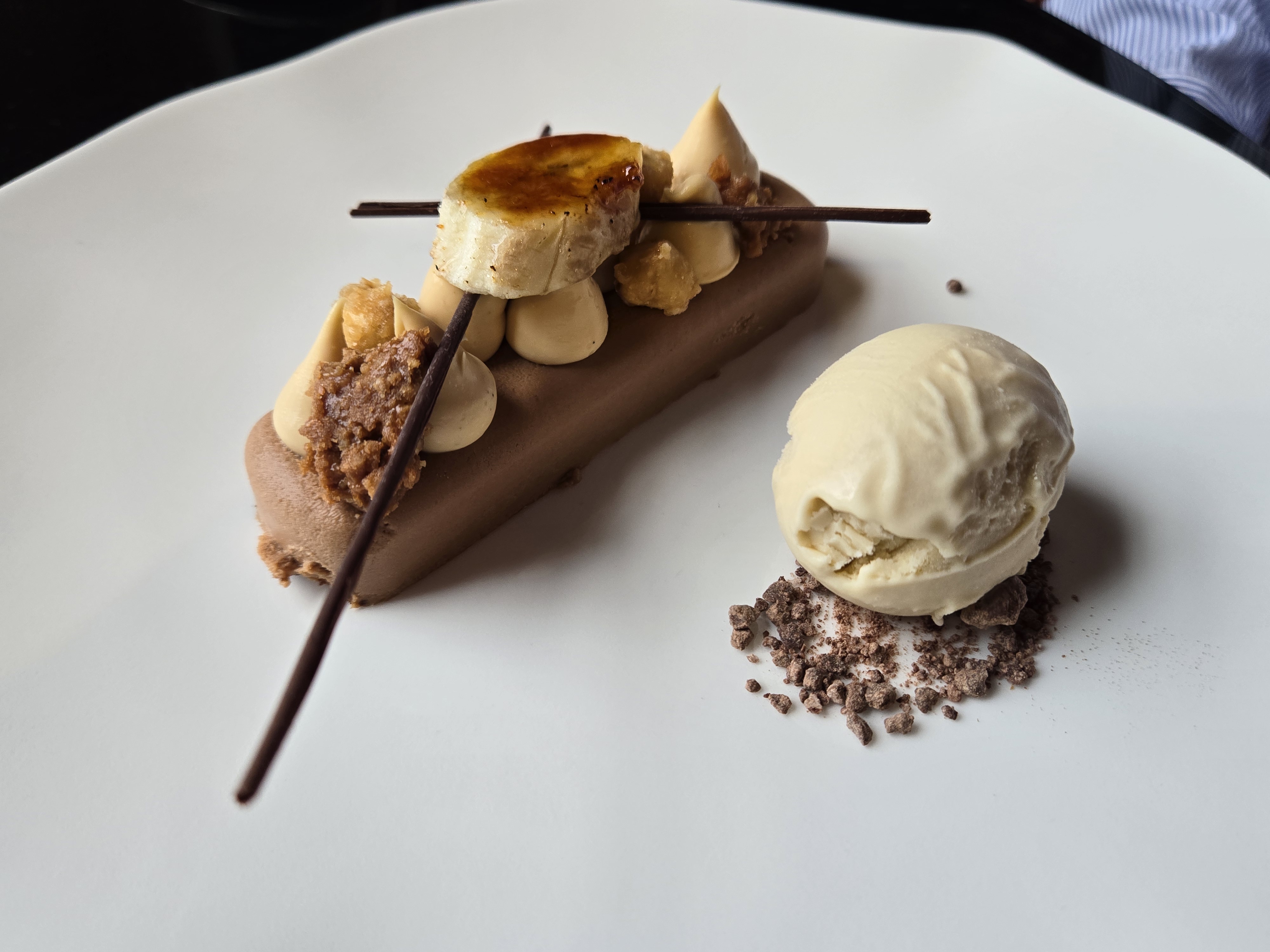
For dessert, Russ had a hazelnut banana ice cream concoction. I had tiramisu topped with a decorative chocolate square. Our dining experience was completed by a bagpiper who marched through the restaurant. I can’t think of a better way to top off our trip.
The Rhubarb Restaurant
The next day, however, we were slapped back into reality. Our plans were to fly to Dublin and then to Minneapolis. We made it to Dublin, but our plane arrived late from Edinburgh, and it took SO LONG to get through the Dublin Airport customs and security that we missed our flight to Minneapolis. When we arrived at the gate, they informed us we missed our flight by only two minutes! As it turned out, this was just as well because our baggage never even made it on the plane to Dublin because they didn’t have room for it.
Same as with our flights to Ireland at the beginning of this adventure, once again we were stranded without our baggage. But unlike that experience, this time the airline (Aer Lingus) put us up in a 4-star hotel and all our meals were paid for. It was a nice place, but it had a non-functioning toilet paper dispenser. How can a hotel get 4 stars with broken TP dispensers? I know, whine, whine. But we just wanted to get home! By now, we knew how to survive without a change of clothes or any toiletries. It really wasn’t that bad. What upset us was that due to this delay, we would miss our friends’ 50th wedding anniversary back home.
The next day at the airport, the lines for security and customs were EVEN LONGER (think hundreds of people) but we made it to our gate in time. Plus, once we landed in Minneapolis, our baggage was there, too!
So ends our nearly three-week excursion through Ireland and Scotland. Thanks for coming along on this epic ride. It’s taken me three months to write about everything. Reliving our adventures was so fun. Every time I wrote a post, I felt like I was right back in the experience. But my impatient mind already has ideas for six other topics I’d like to write posts about. I guess I’ll just have to keep blogging!
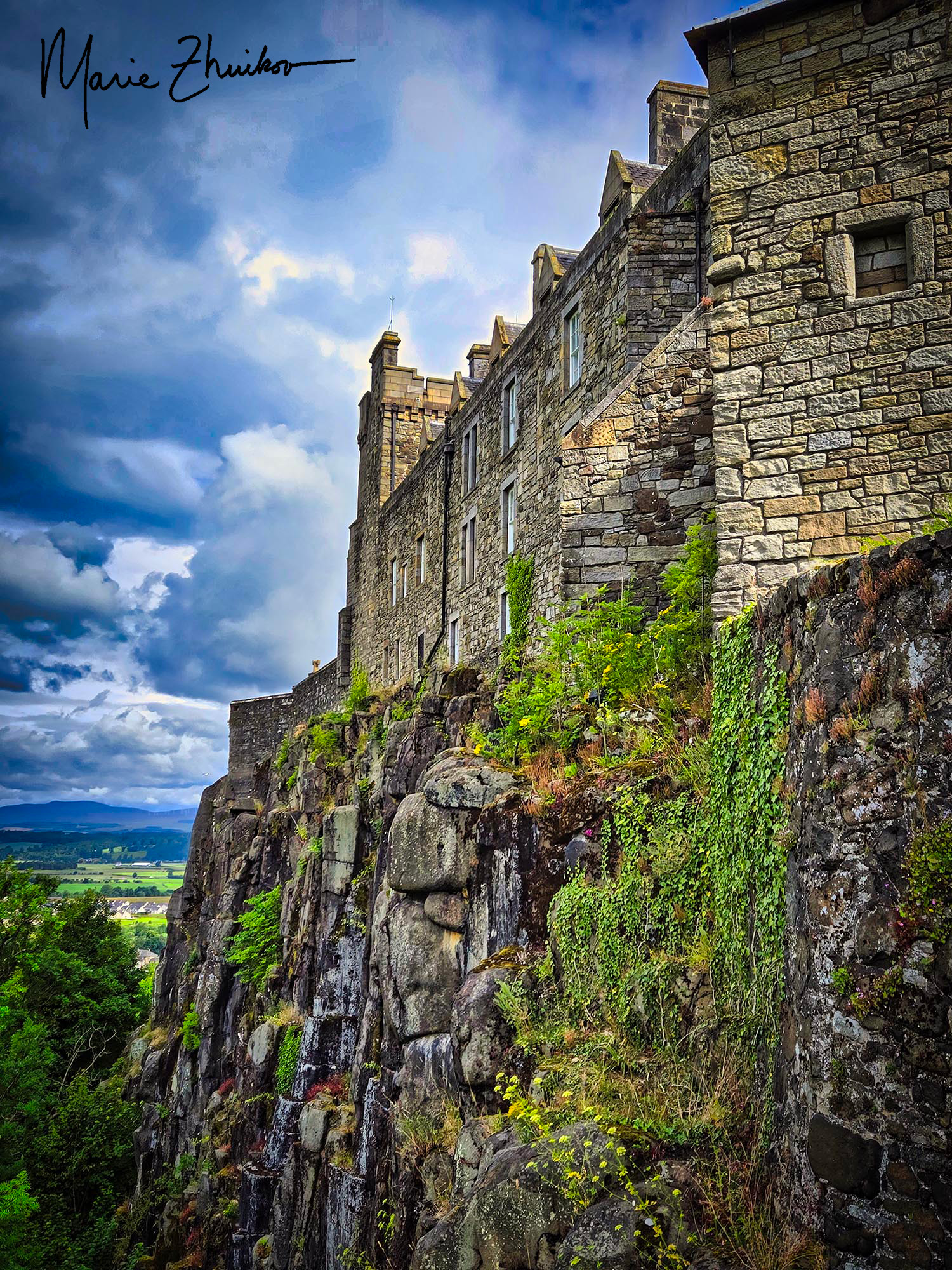
Despite setbacks, this trip opened our eyes to our pasts and gave Russ and I a stronger sense of where we come from. In Russ’s case, it’s a quaint hovel in the Irish countryside. In my case, it’s an imposing tower on a hill. It was truly a journey of discovery, and we feel so fortunate to have had these experiences.
I am interrupting my U.K. meander to cover some exciting developments since we returned home. I’ll resume with our trip to Scotland in a few posts.
My husband Russ has lived in Minnesota for 23 years, raised two children here, trekked the Boundary Waters Canoe Area Wilderness, biked gravel roads, sailed Lake Superior’s North Shore, cross-country skied, and snowboarded. He also volunteers his medical expertise for the local ski patrol. About five years ago, he married a Minnesotan: me. But when people hear that he’s originally from New England, they call him a Yankee.
Thanks to our recent meander to the Minnesota State Fair, I can correct that misconception now. Despite all his time in Minnesota, Russ had never been to the fair. I was aghast at hearing this and decided it’s the one last quest he needed to do to call himself a real Minnesotan.
So, we went last week with a busload of other people arranged through our local community education organization. If we had been traveling on our own, we might have picked a different day because the heat index was 103 degrees!
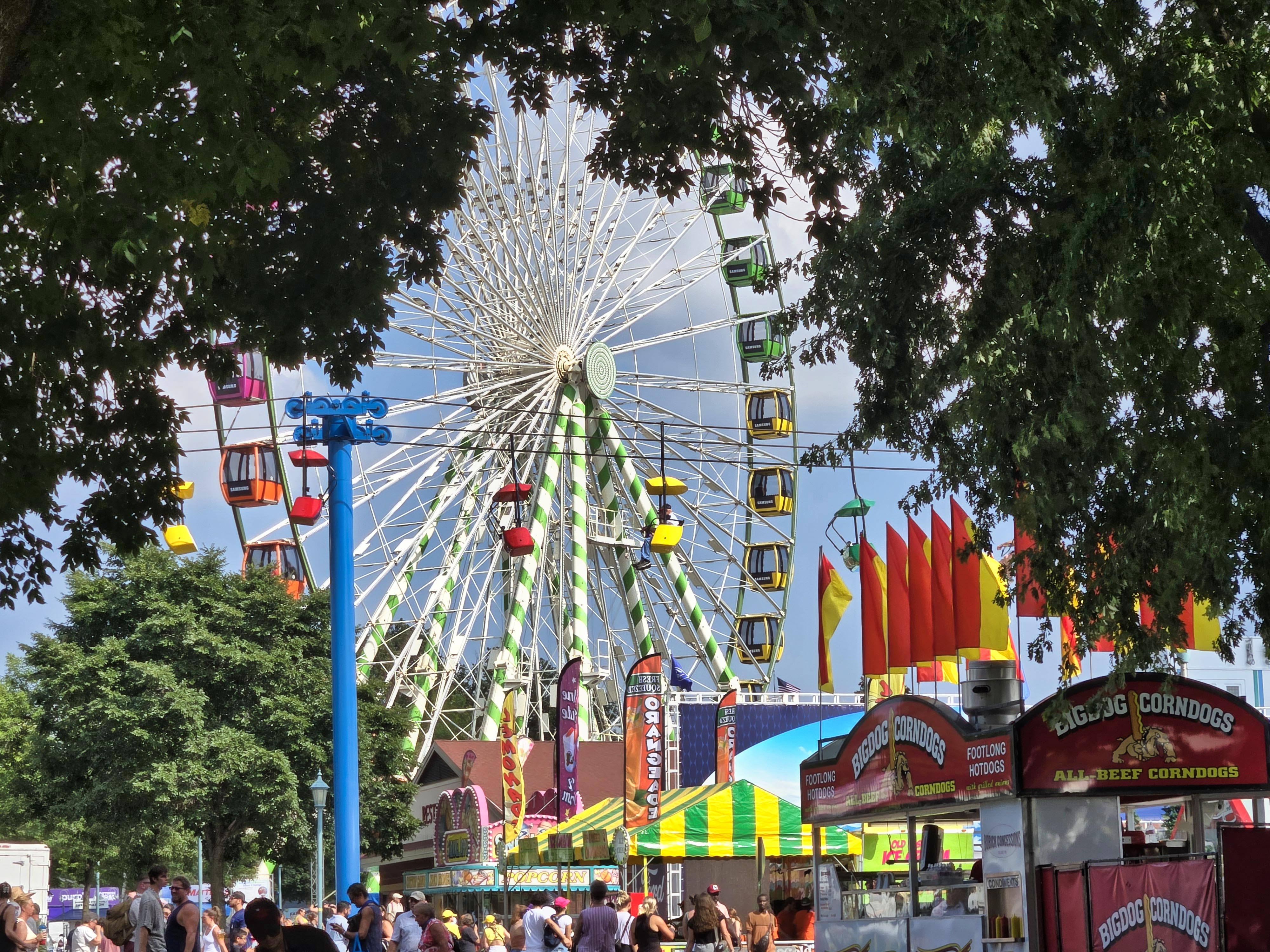
We survived traipsing around the fairgrounds with the help of plenty of lemonade, water, and root beer floats. The merry-go-round is my favorite ride at the fair. Even though I’m in my 60s, I had to go on it. Russ was a good sport and accompanied me. I think he had fun! We wanted to have new experiences on other rides, as well. We hopped aboard the Great Big Wheel (think Ferris wheel) and the Space Tower (think Space Needle).
Russ makes a rare blog appearance, riding on the merry-go-round and being a good sport about it!
Then it was lunchtime. Russ sated his hunger at the Hamline Methodist Church Dining Hall. My extended family goes to that church and has a long history of volunteering in the hall for the fair. Russ had ham loaf with corn and a corn muffin. I carried in my Spam burger with cheese from an outside vendor. I do have a fondness for Spam and usually use it during camping trips once or twice a year, but why not the state fair, too?
The Spam food stand.
As we were dining, I noticed that NY Times bestselling Minnesota author William Kent Krueger was at the head of the serving line, taking food orders. He attends that church and was a friend of my aunt who also worshipped there. I’ve met him a few times over the years. I caught Ken’s eye and gave him a wave. He waved back!! He’s such a great guy, and his books are pretty darn good, too.
After lunch, we wandered over to the animal barns. In the horse barn, huge draft horses were getting prepped for the afternoon competition. Percherons, Clydesdales and Belgians stood docilely still outside their stalls while people groomed them. They’re about twice the height of a regular horse. We watched in awe as two women stood on tall stools to brush a Percheron’s black coat and braid its tail. I’m not sure I would want to stand behind those powerful legs and haunches and fiddle around with a horse’s tail! Another person worked on its hooves.
A Percheron being groomed for competition.
We returned to the arena a few hours later to watch the draft horse wagon-pulling competition in the coliseum. Sixteen teams of six horses competed, trotting in circles around the arena with harnesses jingling, and then showing their prowess at backing up and doing figure eights. Seeing the powerful beasts with rippling muscles high stepping in synch was like watching poetry in motion—mesmerizing.
In the end, all the horse teams lined up in the arena for final judging. It’s not every day you get to see 96 huge horses standing around in front of you. I was particularly impressed by a team of Percherons pulling a red wagon. They seemed more in synch and stepped higher than the other teams. I told Russ my bet was on them to win.
The draft horse teams lined up for final judging.
Apparently, I have a previously unknown talent for judging draft horses because in the end, that team won! They took a victory lap and accepted a trophy. They were a team from Minnesota, which made their victory all the sweeter.
We capped off the day with a trip to the department of natural resources fishpond, which sports all sorts of native species, and we took in parts of several music shows. We also ate ice cream and funnel cake and visited “tractor hill.” Unlike my past memories of it, there’s no hill anymore; and it’s more like riding lawn mower land—not so many tractors on display.
By the time we clambered back on the bus, our shirts were drenched with sweat. But we had survived both the heat and the crowds! More to point, Russ had survived his first Minnesota State Fair experience and earned his long-awaited induction into Minnesotahood. Welcome, Russ.
Did you know that fish have cheeks? And did you know you can eat them?
Well they do and you can. Several species of fish, both saltwater and freshwater have cheeks that are large enough to harvest. These include halibut, grouper, cod, walleye, whitefish and lake trout. About the size of a scallop, fish cheeks are prized for their firm texture and tenderness.
They’re usually not available in supermarkets, but if you’re near a commercial fisherman, you might be in luck. For work, I recently meandered along Lake Superior to the Bayfield Peninsula in Wisconsin. I stopped by Halvorson Fisheries in Cornucopia where they had frozen lake trout fish cheeks for sale. I’d never had them before, so was intrigued. I bought a half pound and took them home in my cooler.
To find out what happened and get a free recipe, please visit a blog post I wrote for work. You can visit it here.
Cullen Skink soup, homemade bread and tea served at the Laird’s Kitchenin Delgatie Castle (2016).
I know what you’re thinking – that is an unappetizing name for a soup! But there’s a reason behind it.
Back in 2016, when my friend Sharon and I traveled to Scotland, we became acquainted with Scotland’s version of chowder, thanks to some friendly people in a café in Gardenstown. The soup is called Cullen Skink and they said the best place to find it was Delgatie Castle, which was not too far away.
We took them up on the advice and ate lunch at the café in the basement and then toured the pinkish castle. We tried the soup, which is made with smoked haddock, potatoes, and onions – thus, a very white dish. It was served with homemade white bread slathered with butter. More whiteness!
Delgatie Castle, Scotland, where I had my first Cullen Skink.
The soup was very creamy and good. I am a chowderholic, so I loved it. The café is also known for its scones, which were lovely. The soup was invented in the Scottish town of Cullen. It was created from deprivation and want. The skink part of the name is usually reserved for soups in Scotland with ingredients like a shank of beef or ham. Having none of these on hand, smoked fish was used instead, but the name of “skink” stuck to it.
Cullen Skink has been described by The Guardian newspaper as “smokier and more assertive than American chowder, heartier than classical French bisque.” I agree.
The Scottish are proud of their skink, holding an annual Cullen Skink World Championships competition. The most recent event was just a couple of weeks ago in a hotel in Aberlour.
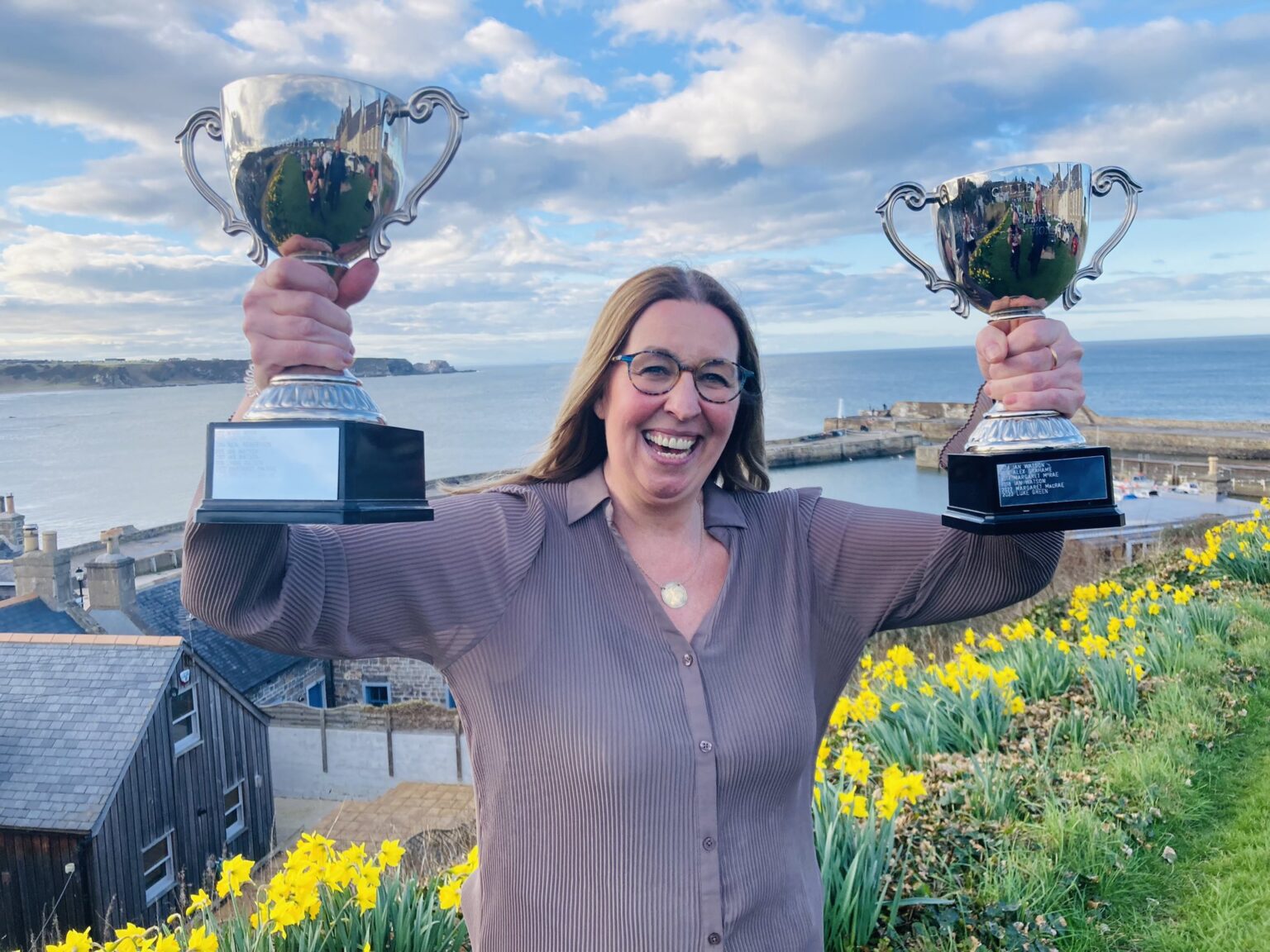
Kellie Spooner, excited winner of the 2024 Cullen Skink World Championships. Image courtesy of NE Scotland BBC.
During our trip, Sharon found a recipe in a travel guide and took a photo of it. I recently came across the image and decided to follow up on my long-ago plans to make the soup at home. The only problem is that smoked haddock is impossible to find in my neck of the woods. So, true to the original nature of Cullen Skink, I had to make do with what was at hand, and that was a Lake Superior smoked whitefish.
To make the soup even more white, I substituted white pepper for black pepper. For the milk, I used Carnation brand evaporated milk because it was on sale. But I had forgotten I can’t have it due to my intolerance to corn and any ingredients derived from corn. Carnation contains dextrose, which is derived from corn.
I had migraines for two days as I ate the soup and its leftovers, until I figured out the culprit. So, if you have a corn intolerance, keep that in mind! The generic brand of evaporated milk at my store is free of dextrose, so I will use that next time.
If you want to introduce a bit of color into the soup, I suggest using B-sized (new) red potatoes and not peeling them. The parsley also adds color.
I forgot to soak the smoked fish overnight in the milk beforehand, but it still came out tasting great! If you love chowder but are looking for something different, this is the soup for you.
Here’s my version, which I have named Lake Superior Skink to honor the fish from Lake Superior that I used. If you use a local fish species, feel free to call this recipe your own geographic version of skink. For instance, a version containing catfish could be called Mississippi River Skink. Yet another appetizing name!
2 Tablespoons butter 1 onion, diced 2 pints evaporated milk (approx. 3 cans) or whole milk 1-1/2 lbs potatoes, peeled and diced 1 lb smoked Lake Superior whitefish or lake trout 2 teaspoons dried parsley sea salt and white pepper, to taste lite sour cream
Soak fish in milk overnight to infuse extra smoky flavor into the broth.
Melt butter in a pan, add the onion and cook gently for 7-8 minutes until it is soft but not browned. Pour in the milk and bring to a simmer. Poach the smoked fish for 3-4 minutes until it is cooked and will flake easily.
Carefully lift the fish out onto a plate and leave it to cool slightly. Add the diced potatoes and simmer for about 20 minutes until soft. Blend some of the potatoes with a stick blender to thicken the soup a little. If you have a regular blender, put about a quarter of the soup into it, blend, then return to the pan.
When the fish is cool enough to handle, break it into flakes, discarding the skin and bones. Return the fish to the pan and stir in the parsley and spices. When serving, add sour cream as desired.
Bogs get a bad rap. People tend to think they’re just a waste of good land. However, they have a unique beauty, especially when frosted with winter.
This is my favorite bog that I often visit in northern Minnesota. I’ve written about it before. (See Bog Wonder). I recently finished reading “The Good Berry Cookbook” by Tashia Hart. It’s much more than recipes about wild rice. She also describes her relationship to plants and the importance of Manoomin (wild rice) to her Native culture.
One funny story she shared was about spending an hour admiring plants (orchids, Labrador tea, pitcher plants, etc.) in a bog. A car pulled up on the dirt road near the bog and parked. A woman emerged and then, “squinted at me, and began to shout, ‘What are you doing out there!’ It came across as less a question about what I was doing and more a question about my character. ‘Looking at flowers!’ I replied, still crouched low. She stood there for a bit, hands on hips, obviously disturbed, then shook her head and flailed her arms as she stomped back to her vehicle and drove away.”
Tashia mentions that one must be careful not to sink into bogs. Perhaps the woman was concerned for her safety. But Tashia felt safe there. Moose walk on the floating plant masses and seem to do fine. But to be safe, she recommends bringing a friend along.
She offers a recipe for Swamp Tea, made with the Labrador tea plant. I think those reddish masses in my photo are dried up Labrador tea plants. The tea is supposed to lift anxieties and aid creativity.
Sounds good to me. Next time I’m at “my” bog, think I’ll put on my rubber boots or snowshoes, grab Russ, and meander out there to gather some tea leaves. We’ll see if anyone stops and yells at us.
Not much has been going on lately in my mind or in my personal life, thus the paucity of posts. But I have been blogging for work. I attended a two-day wild rice symposium recently in northern Minnesota and learned all sorts of useful tips for harvesting this wild delicacy. Plus I learned more about efforts to restore it to lakes where it has disappeared. Read more here.
You may recall my recent “immersive experience” into ricing. I heard many similar tales of tipped-over harvesting canoes, so felt in good company.
Gobs of people attended the symposium — well over 200. It was good to see so much interest in the topic!