Stepping Back in Time at Bark Bay Slough

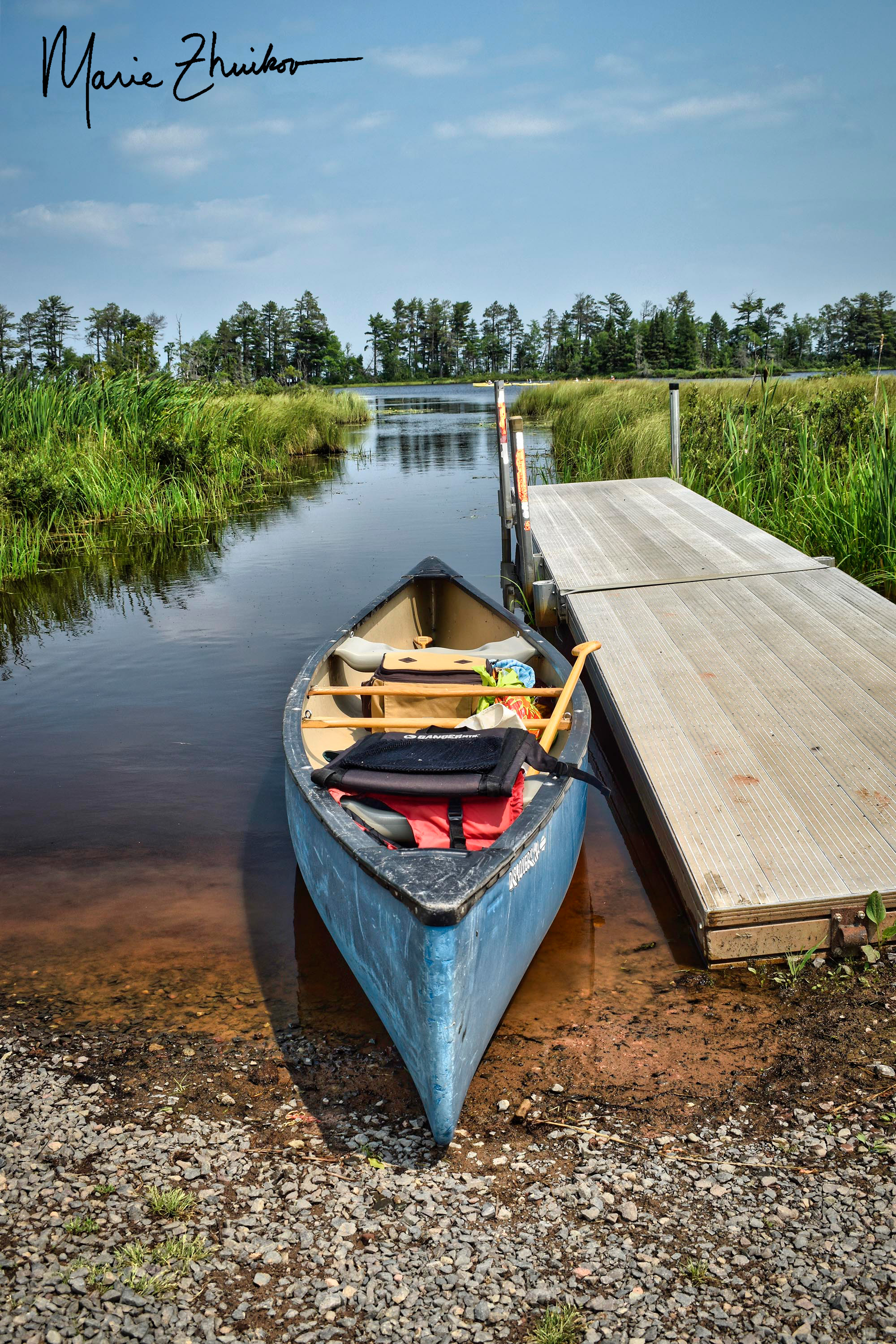
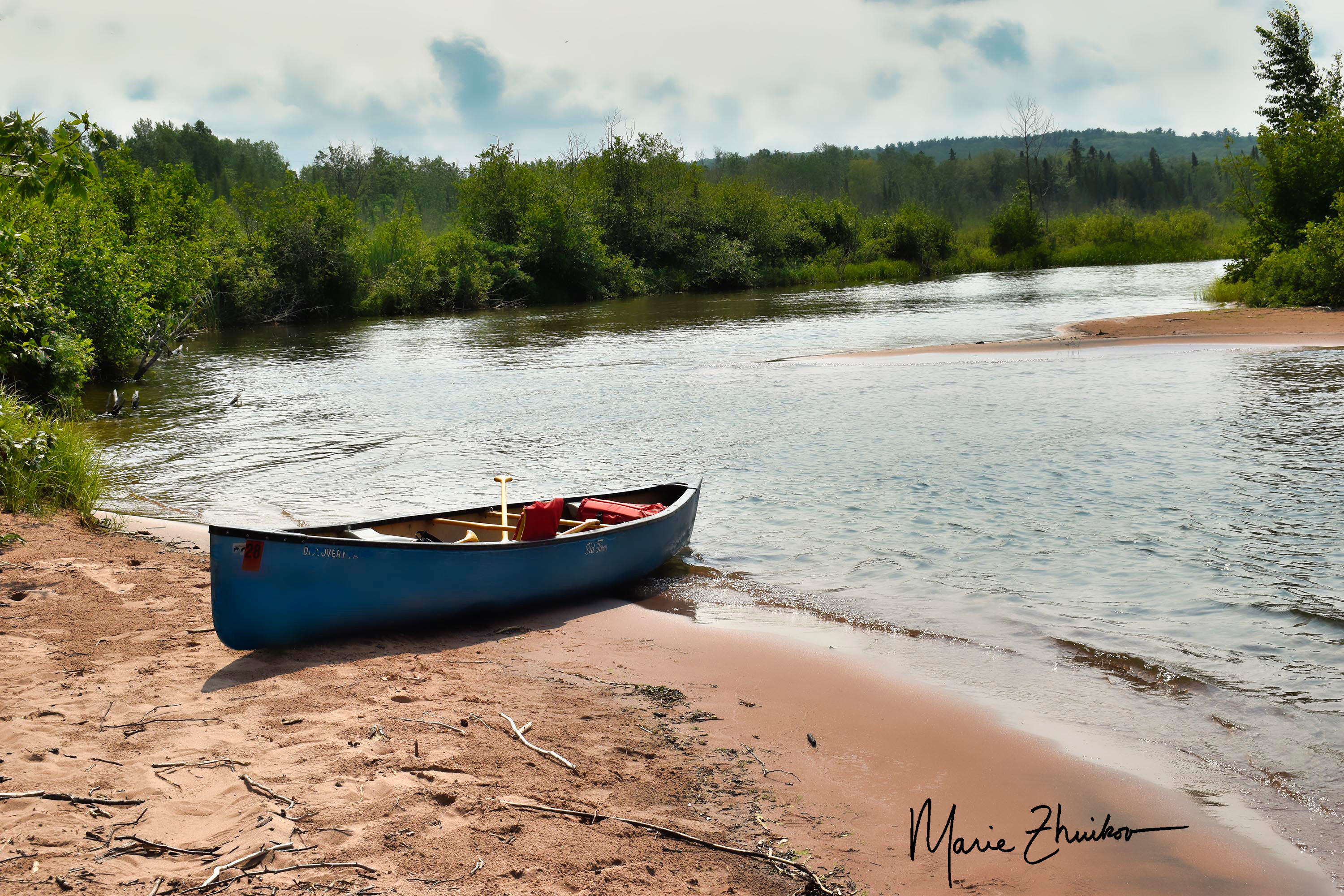
Old Blue at Bark Bay Slough

My friends and I were supposed to go into the Boundary Waters Canoe Area Wilderness in mid-July. Unfortunately, wildfires happened there and in Canada. The fire danger was so high and the air quality so poor that the Forest Service closed the entire wilderness! It seems funny that a wilderness can be closed, but there you have it.

We wanted to do something together nevertheless, so we needed to come up with a Plan B. We decided to spend a few days in a friend of a friend’s cabin in Brule, Wisconsin.

Besides enjoying meals of whitefish from Lake Superior, hiking, and chasing waterfalls, we satisfied our need for canoeing with an afternoon trip on Bark Bay Slough, near Herbster. I’d been to the canoe landing there before but never had time to venture out on the water, so I was looking forward to this trip.

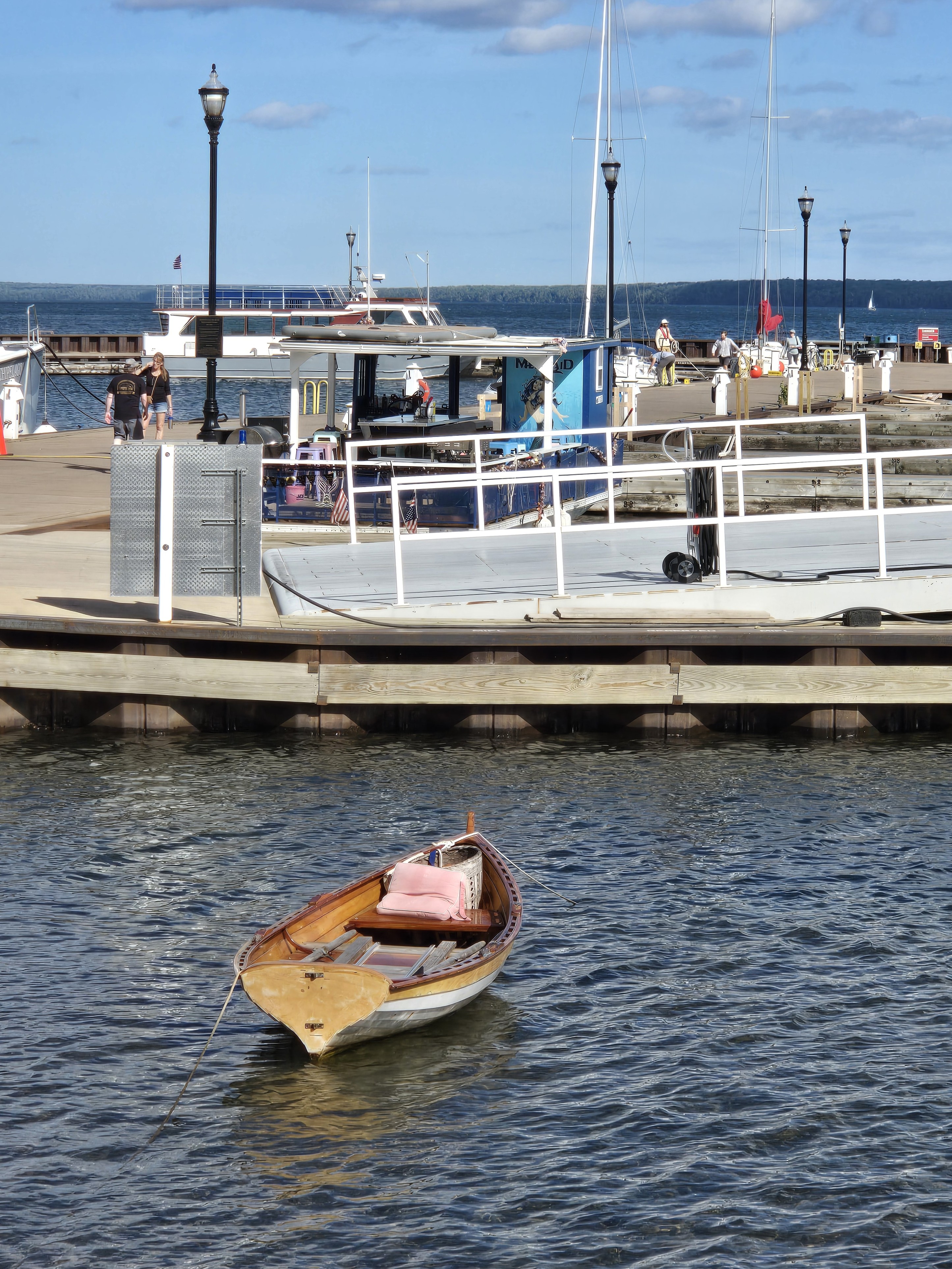
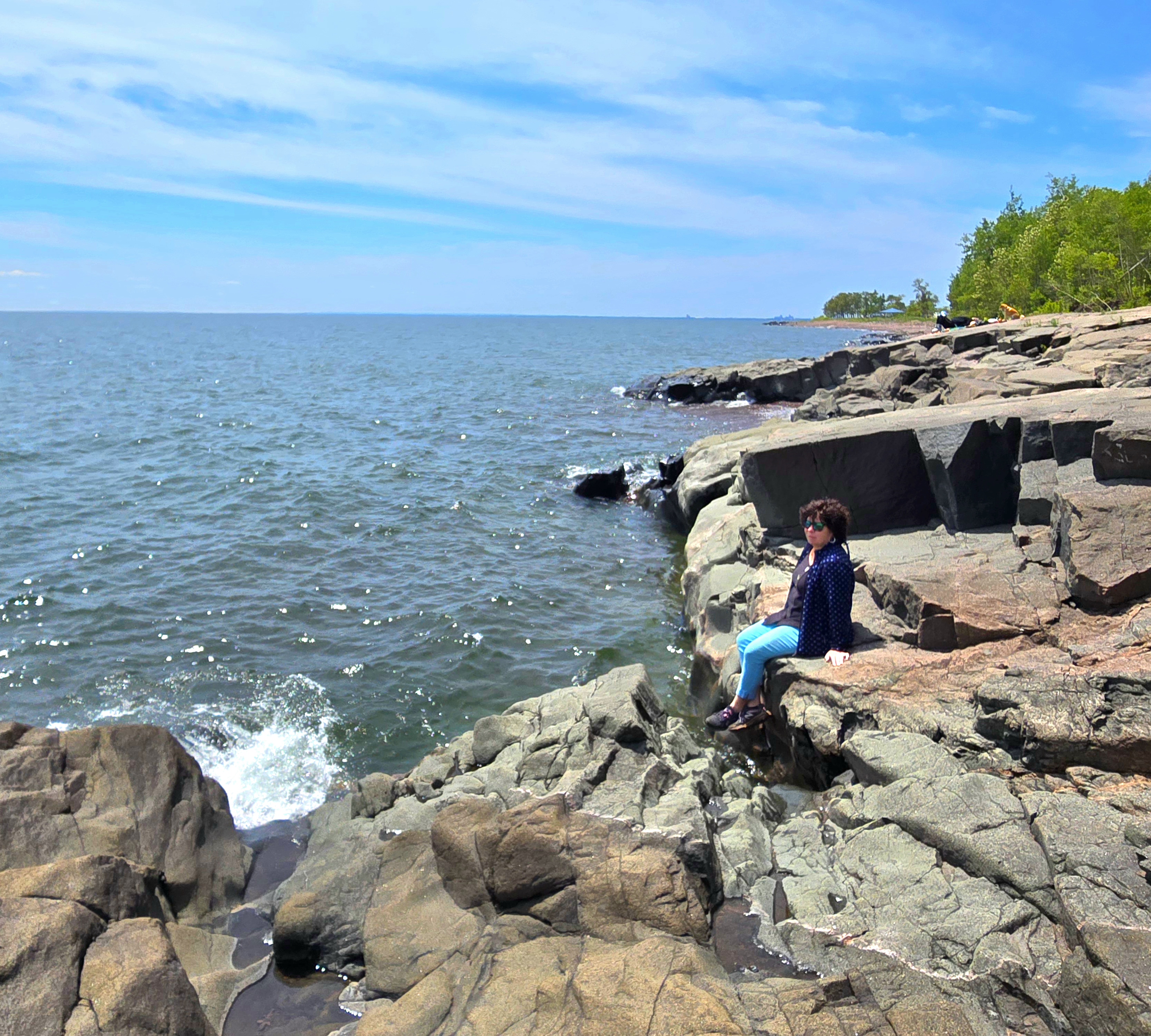
The three of us piled into my Old Blue canoe with our camp chairs and books. We headed out onto the smooth water toward the bay mouth, where the slough empties into Lake Superior. Bark Bay Slough is bounded by the mainland on one side and a two-mile sandspit on the other. It’s a Scientific and Natural Area full of floating bog islands, birds, fen and bog plants that’s managed by the state of WI.

Old Blue where the slough meets Lake Superior.

As we paddled, I thought about how the Duluth-Superior Harbor back home used to look like this slough before dredging occurred for shipping and the Duluth canal was cut, which allowed the bog islands to just float away into Lake Superior. Canoeing the slough was like stepping back in time.

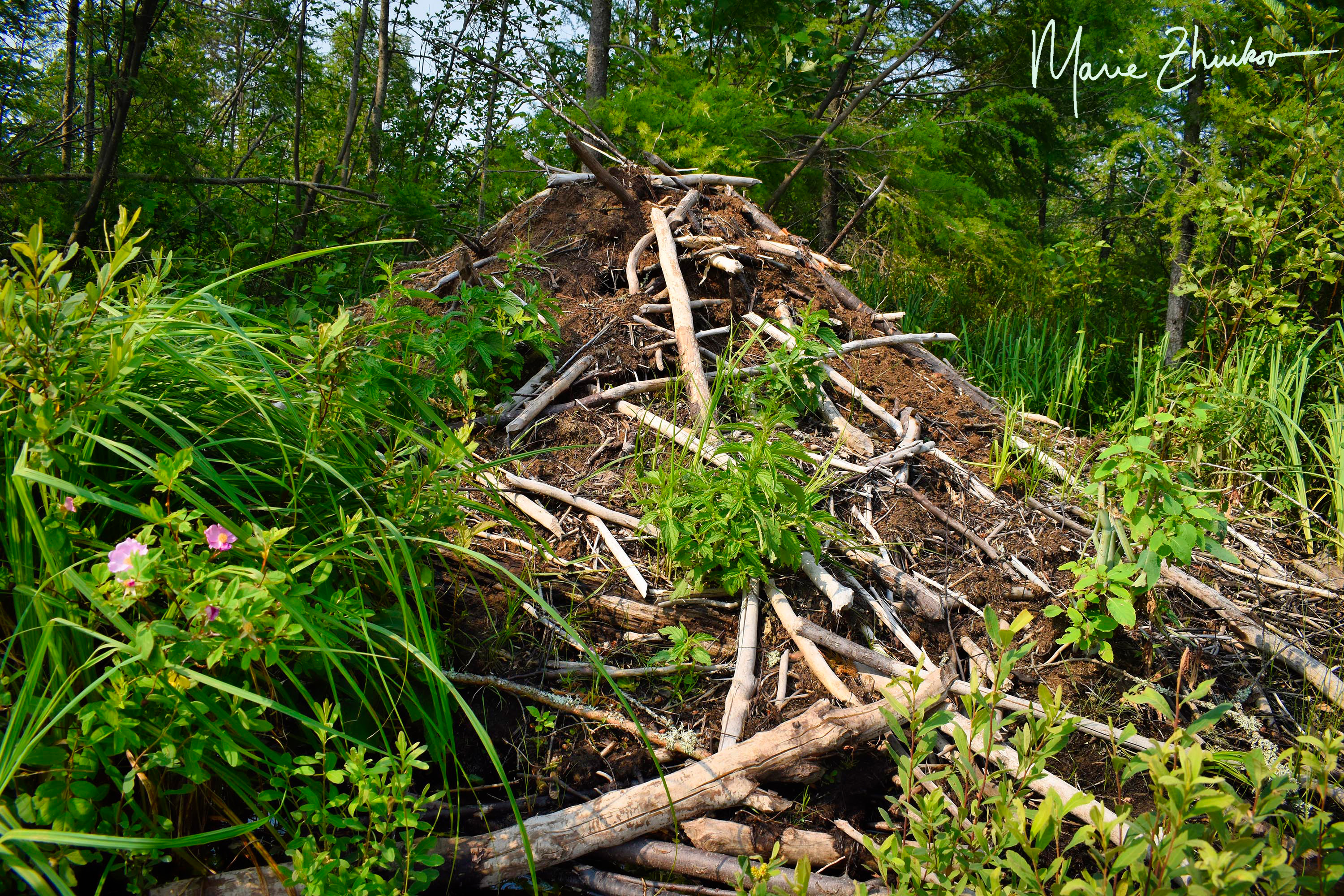
We passed modest cabins perched on the sandspit and amused ourselves by pointing out which ones we would like to own if we could. None of us chose the beaver house, though, that came into view. Even though it looked well-constructed and had wild roses in the “yard,” that particular house would have been too dark and damp. No windows!

A beaver house in the slough

Eventually, we reached the bay mouth, which was surrounded on both sides by sand beaches. We landed our canoe and spent the rest of the afternoon swimming in the cold waters, lying in the sun, wandering, and reading.

Finally, the lure of an ice cream store in Herbster dragged us back into the canoe for our return paddle.

Reflecting on our adventure at Bark Bay Slough, I realize how sometimes the best memories are made when plans change. The peaceful beauty of the slough, the laughter shared with friends, and the chance to experience a landscape lost elsewhere left a lasting impression. Our trip reminded me that detours can create moments we’ll cherish long after the paddle home.

Chasing Waterfalls in Northern Wisconsin

Listen to me
Don’t go chasing waterfalls
Please stick to the rivers and the lakes that you’re used to
—Waterfalls, lyrics by TLC

My friends and I didn’t obey these song lyrics. Last month, we found new rivers, and best of all, new waterfalls while staying in a cabin near Brule, Wisconsin.

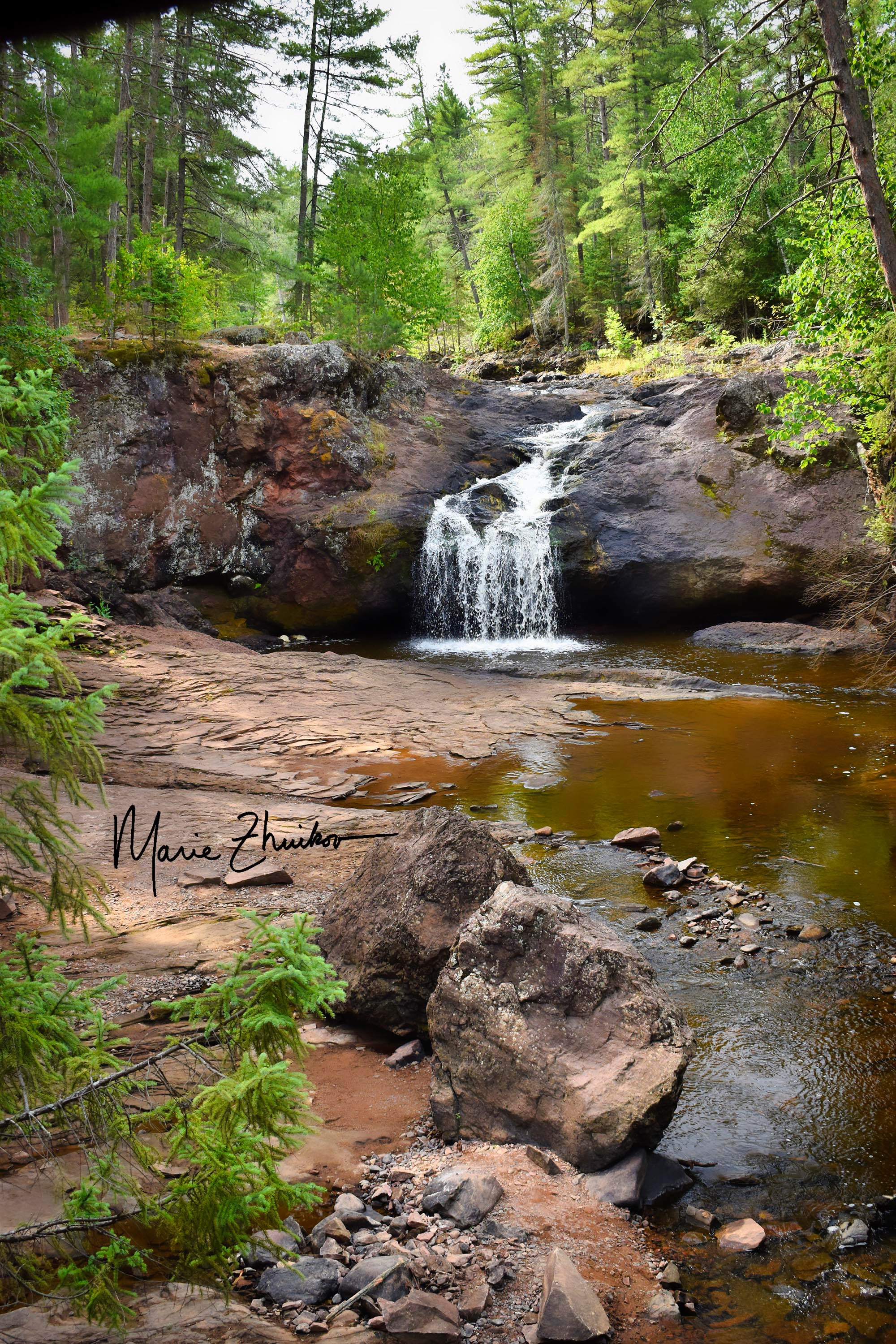
Lost Creek Falls

The first was Lost Creek Falls. The trailhead for the falls is near the town of Cornucopia. From there, it’s a fairly easy 1-1/2- mile hike to the falls and a small picnic area. The falls feature an eight-foot plunge with a few feet of cascades above and below it.

You can get close to the falls by walking through Lost Creek, which was shallow when we were there (we were able to rock hop across). A tree has recently fallen in front of the falls, so if you want good photos, you need to get past this visual barrier.

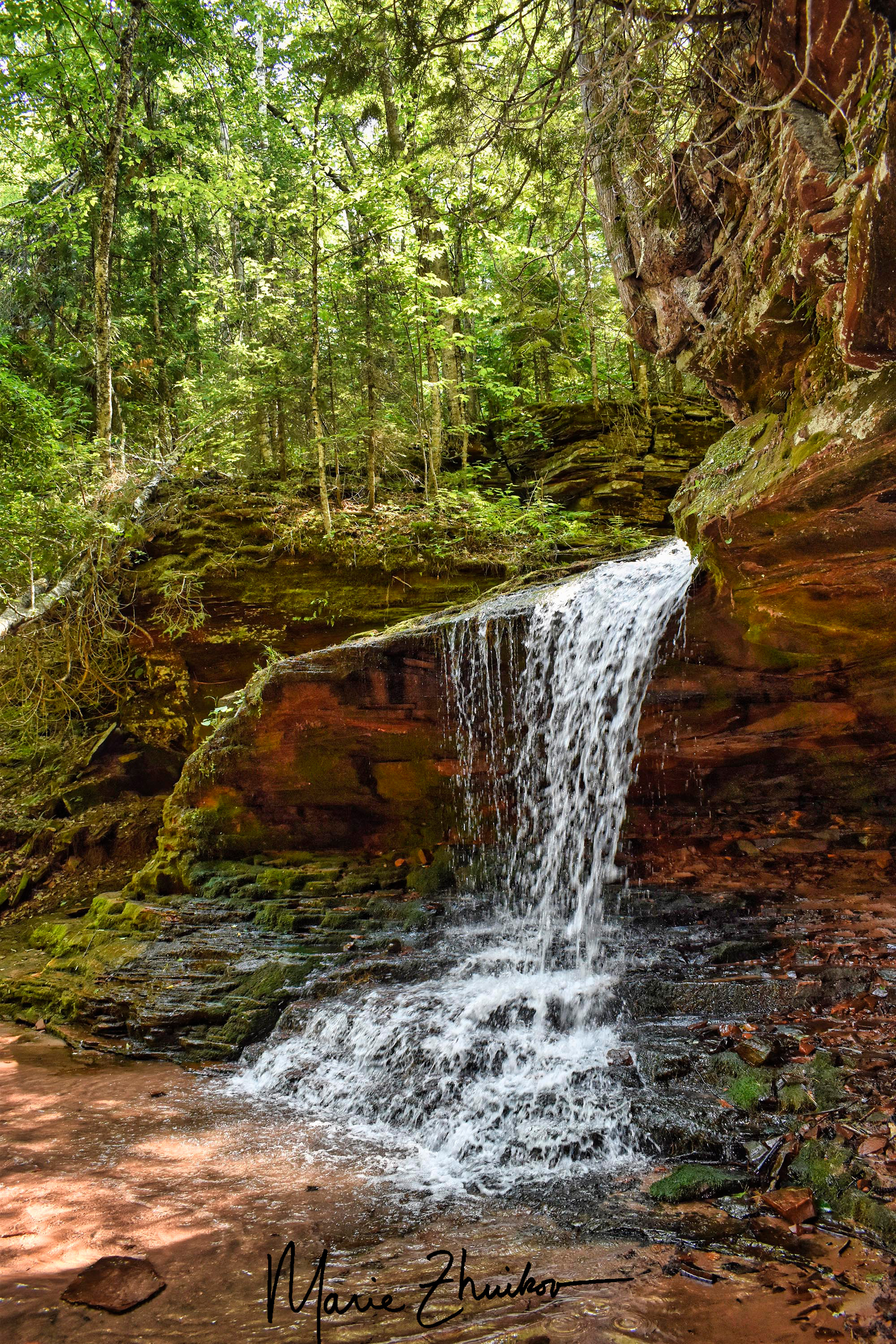
Behind Lost Creek Falls
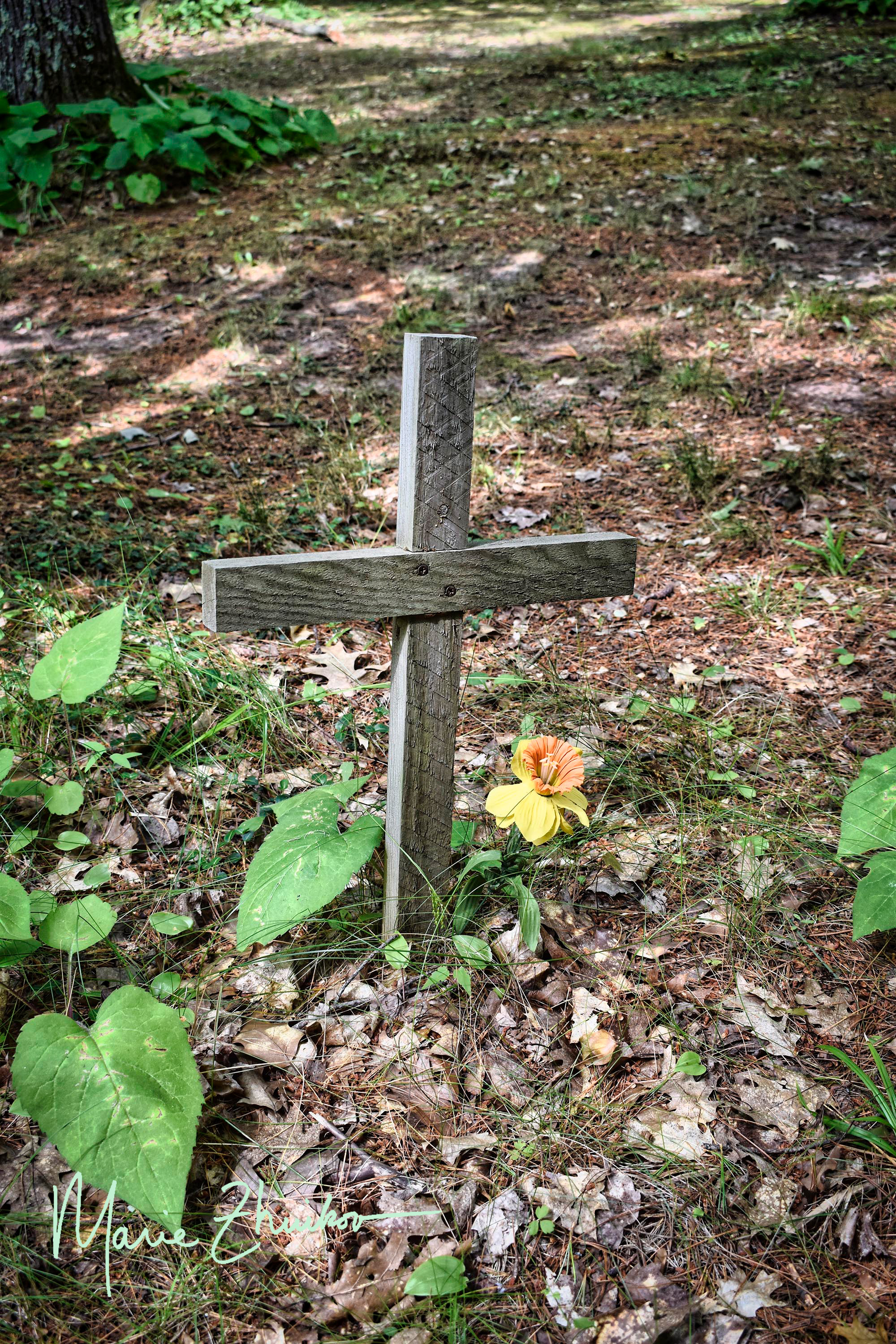
Town of Bell Cemetery

My friends and I enjoyed walking behind the falls, which is not common for waterfalls around Lake Superior. The spray refreshed us, and we were heartened to see how many families were out on the trail, showing this natural wonder to their children.

When we returned to our car, we took time to explore the small Town of Bell Cemetery across the road. It’s home to 23 graves from 1902-1915. They feature simple wooden crosses, and many are for infants.

Next was Siskiwit Falls, which is also near Cornucopia. A short walk from the parking lot brings you to this series of gentle ledges. The falls are known as a good “butt slide” area, but we did not partake in that particular activity.

Siskiwit Falls

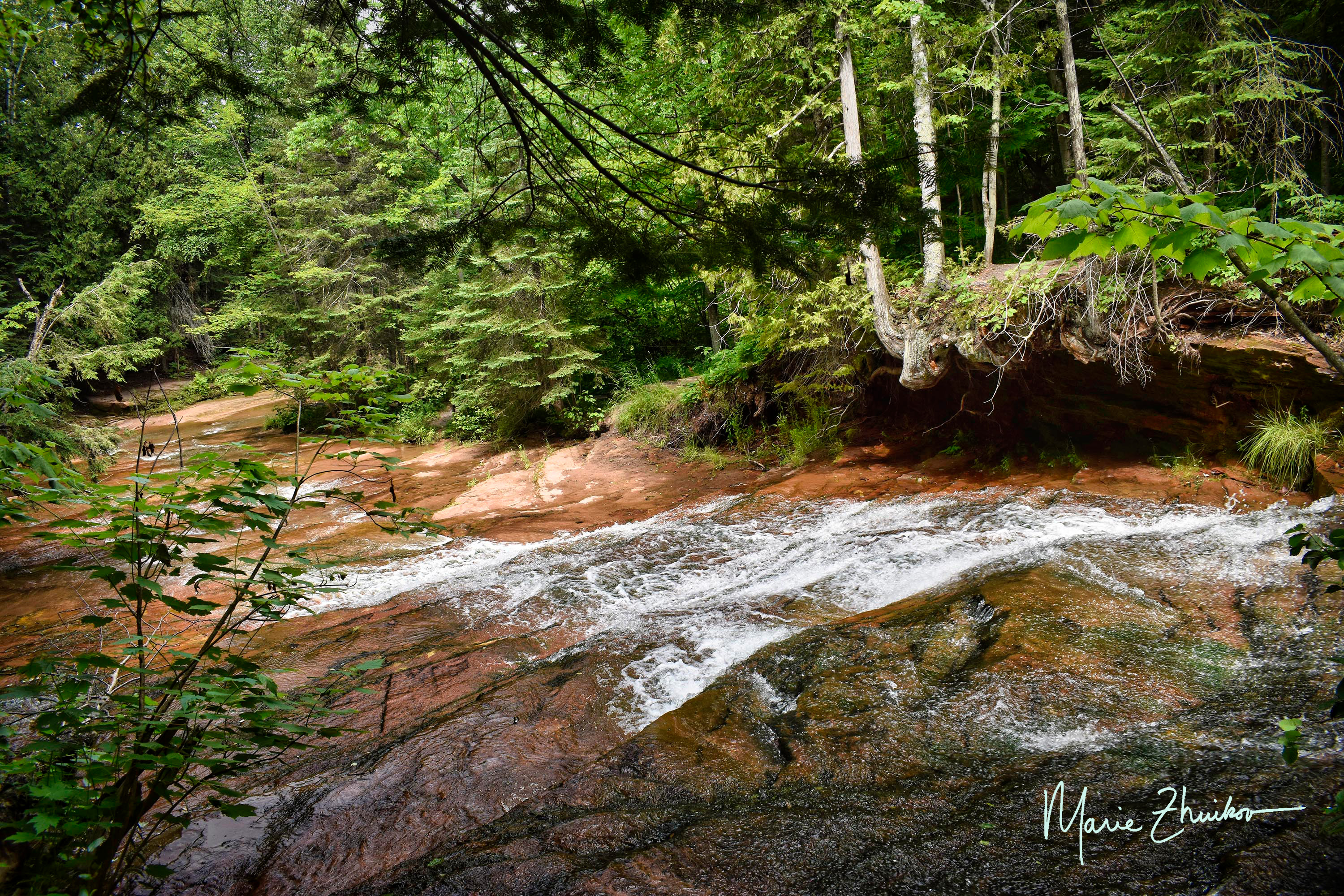
On another day, we visited Mays Ledges. I guess they aren’t technically a waterfall, more like a series of cascades, but they were part of our trip, so I’m including them!

Mays Ledges

The ledges are in a nature reserve on the Brule River. The walk to them isn’t very long. It’s downhill with a series of stairs on the way there, which means uphill on the way back. Some of the ledges feature interesting circular holes, which I assume were formed when rocks were trapped in softer stone and whirled around during high water. This time, we took a dip. Beware of poison ivy along the trail.

The Brule River, which is famous for trout fishing and past visits by U.S. presidents, empties into Lake Superior. We meandered over to that site and spent an afternoon soaking up sunshine and Vitamin D on the sand spit.

My friends at the mouth of the Brule River

One waterfall we noticed a sign for but didn’t get to was Twin Falls near Port Wing. One of my friends went there later and said it was worth a visit.

On a different trip the next week, I revisited Amnicon Falls. They are in a state park outside of Superior, Wisconsin. I was last in the park during COVID and spring runoff. The falls were tamer this time, but still impressive.

Amnicon Falls

Exploring these waterfalls and ledges reminded me how much beauty is tucked away in Northern Wisconsin. Each site offered its own unique charm, from tranquil cascades to lively sprays and quiet moments of reflection. If you’re ever in that area don’t forget to chase the promise of discovery that lies beyond the familiar.

Oulu!!

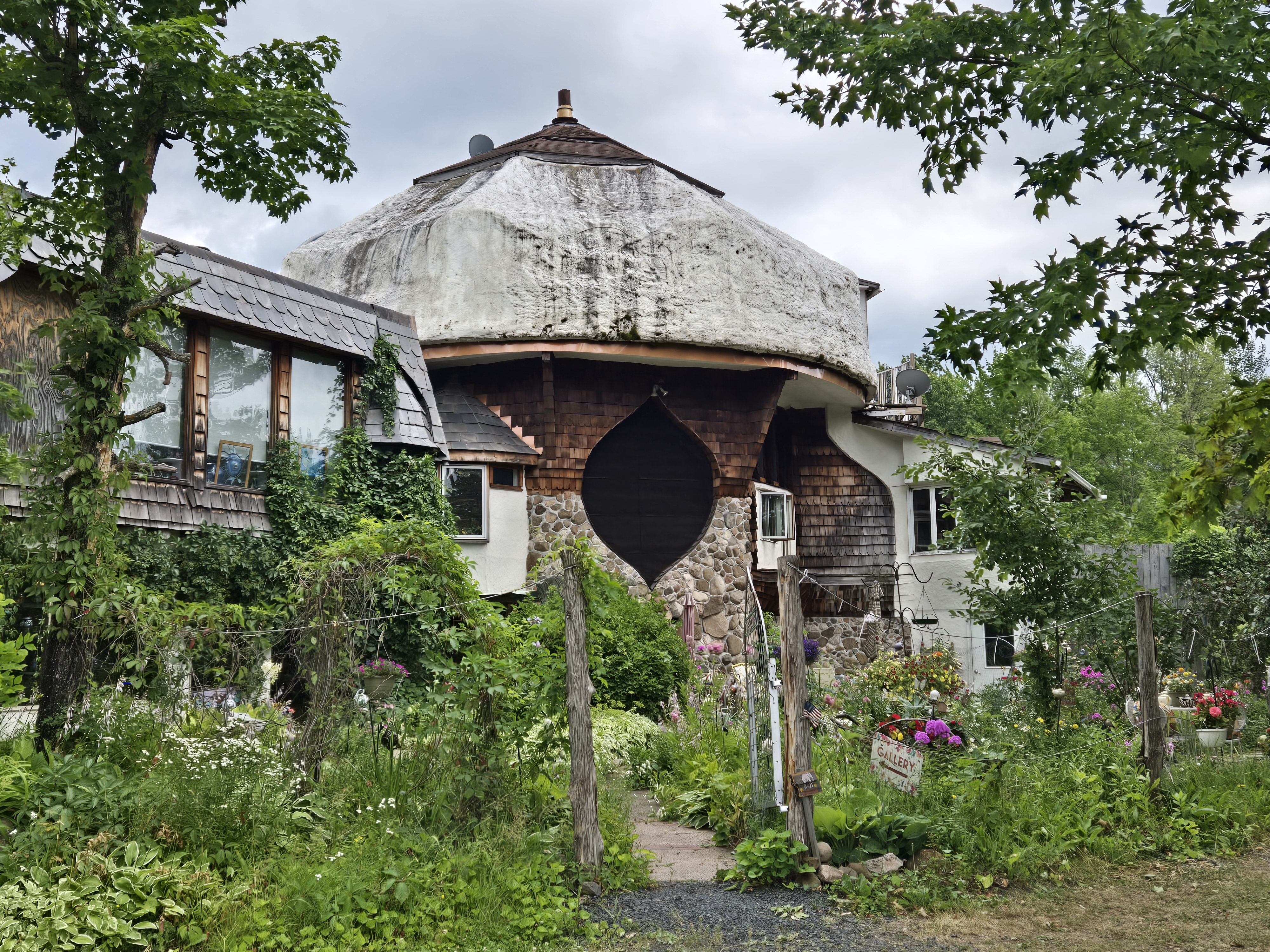
The glass studio in Oulu, Wisconsin

Although it may sound like a Finnish battle cry, the title of this post actually refers to a small town in northern Wisconsin (population 560). The town was named by Finnish immigrants after the fifth-largest city in Finland.

I meandered to Oulu late last month during a trip with some friends. The attraction that drew us was the Oulu Glass Gallery Studio. It’s run by Jim and Sue Vojacek, glass artists who are influenced by Lake Superior and the Bois Brule River, which runs nearby.

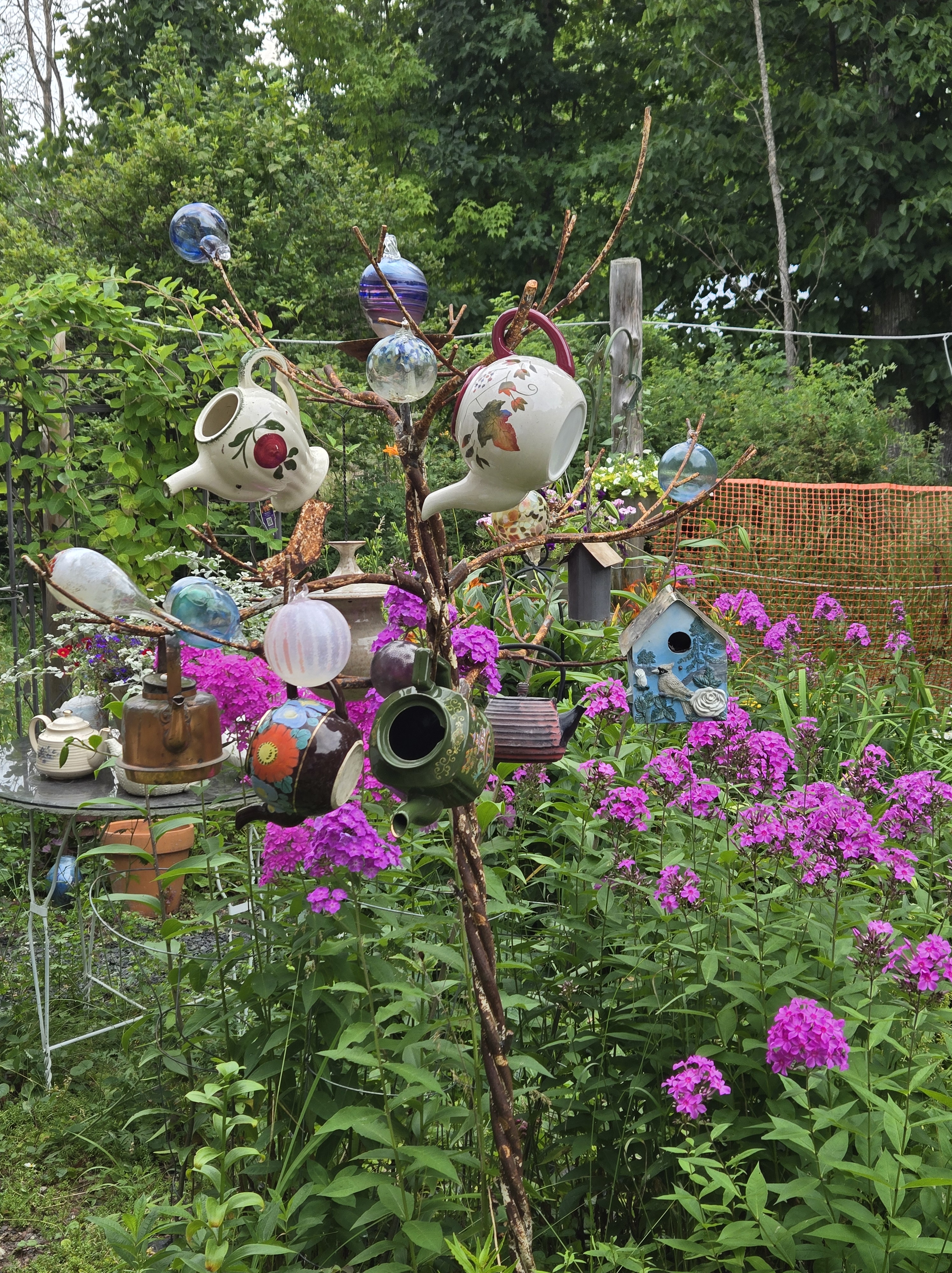
The teapot garden

Their studio looks something like a geodesic mushroom. In winter, visitors can watch the glass-blowing process. In summer, you can tour the teapot garden, planted in memory of Sue’s mother, who collected the teapots. In all seasons, you can purchase unique glass art.

An example of Oulu glass art, a fish.

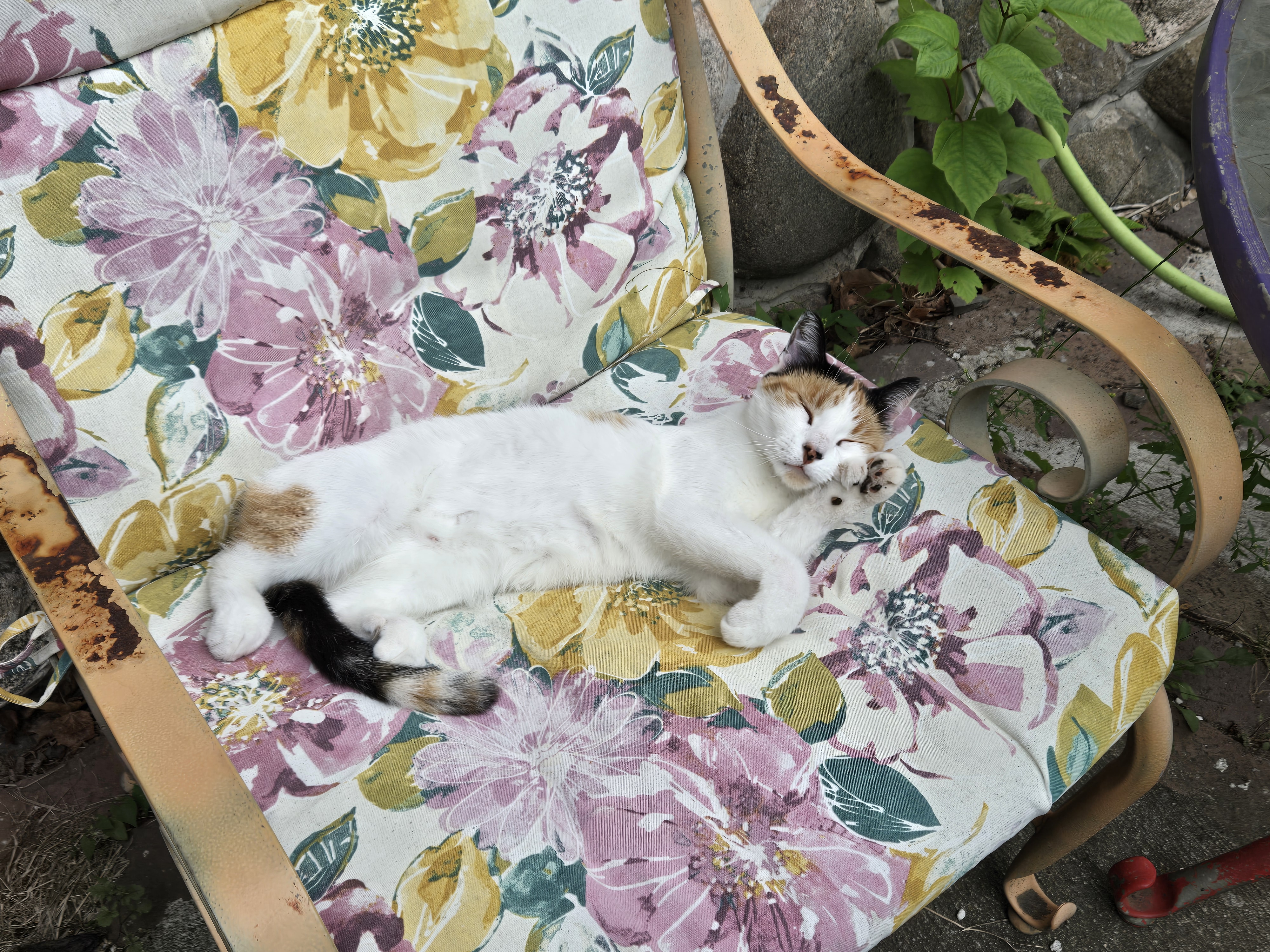
As we entered the studio, we were greeted by one of several calico cats that roam the property. Sue emerged from a back room and chatted with us as we perused the glass art. I ended up choosing a paperweight inspired by a Lake Superior wave and a small blue-and-yellow glass vase complete with a glass flower. Sue said that she and her husband made the vase and flower separately, but they went together so well, they made a match. I loved hearing the stories behind the art!

As we left, we toured the colorful teapot garden and met another one of the cats.

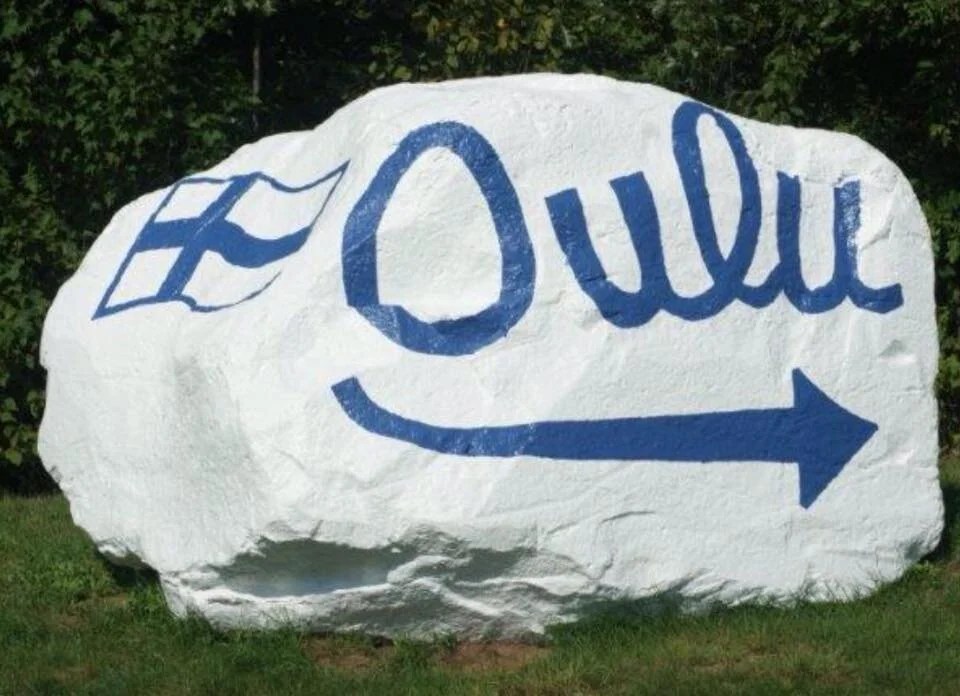
If you’re ever on Highway 2 going across northern Wisconsin, turn off at the Oulu Rock, and you’re in for a treat!

The locally famous Oulu Rock. Image courtesy of the Oulu Cultural Center.

Meander Along Lake Superior with Me

The contract is signed, so it should be safe to let you know about this travel opportunity: I have a gig lined up this August to lead two trips for the Road Scholar Program along Lake Superior. I learned about the job from an email forwarded by a friend who knows about my outdoorsy and traveling nature.

Road Scholar is a nonprofit travel organization designed to inspire older adults to learn, discover and travel. Their learning adventures “engage expert instructors, provide extraordinary access, and stimulate discourse and friendship among people for whom learning is the journey of a lifetime.”

These Lake Superior trips are based in Superior, Wisconsin. Travelers will learn about the history of the Twin Ports (Superior and Duluth) and enjoy field trips to historical sites and presentations by local Indigenous elders and historians. Experience hands-on learning, explore the aquatic creatures of the Brule River State Forest and surrounding natural wonders through canoeing and hiking.

There are a few spots left for the two trips I’m leading in August. If you’re over 50, have $2,000 lying around, and want to spend six days meandering with me, consider signing up! It’s rated as a vigorous trip, so you’d need to be in shape. You can learn more at this link: A Superior Exploration: Lake Superior’s History & Ecology. [UPDATE: The 2026 trips are all sold out now!]

I can’t wait to share my love of Lake Superior with fellow travelers.

Visiting Wisconsin’s Highest Waterfall, Pattison State Park

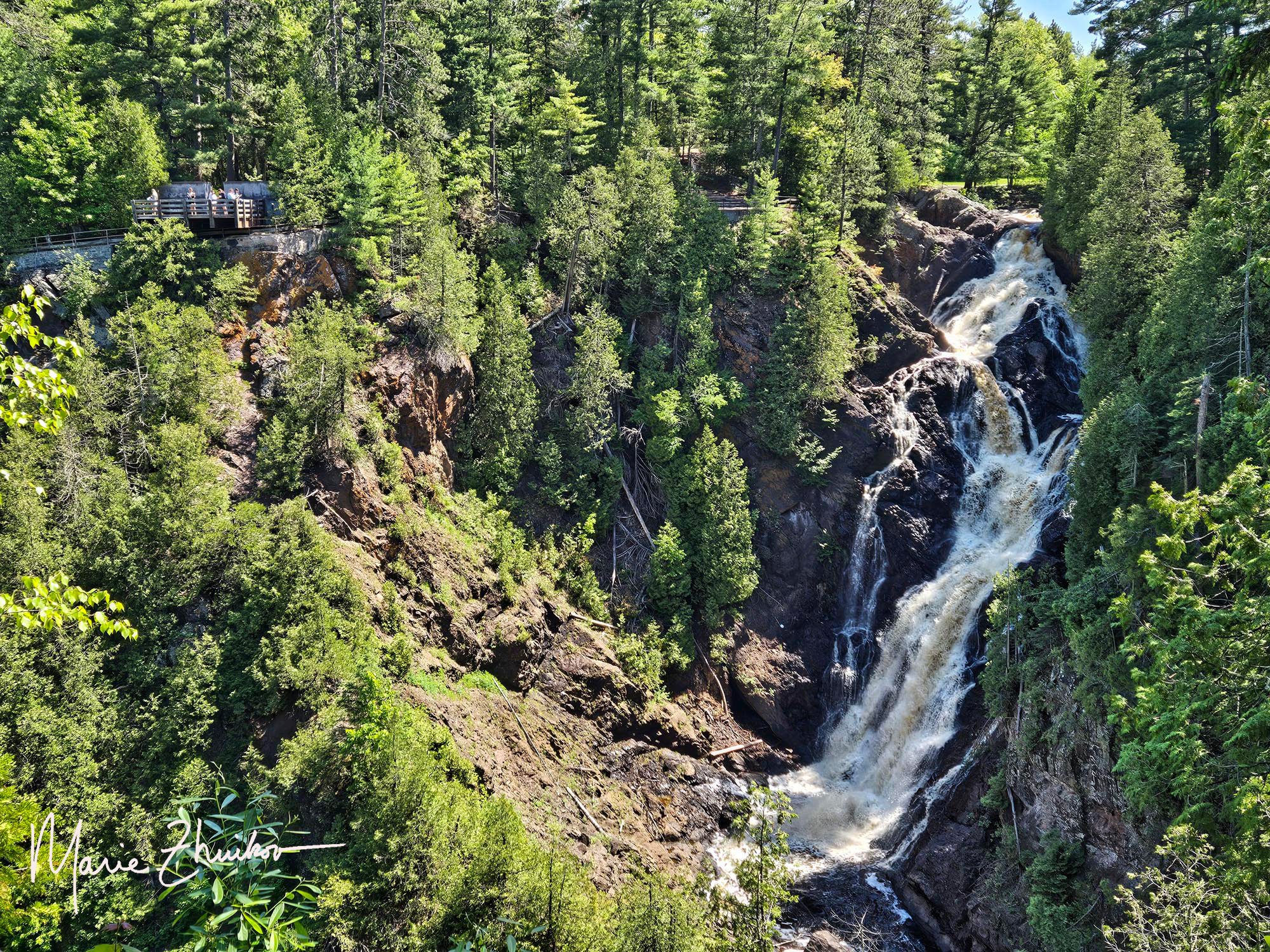
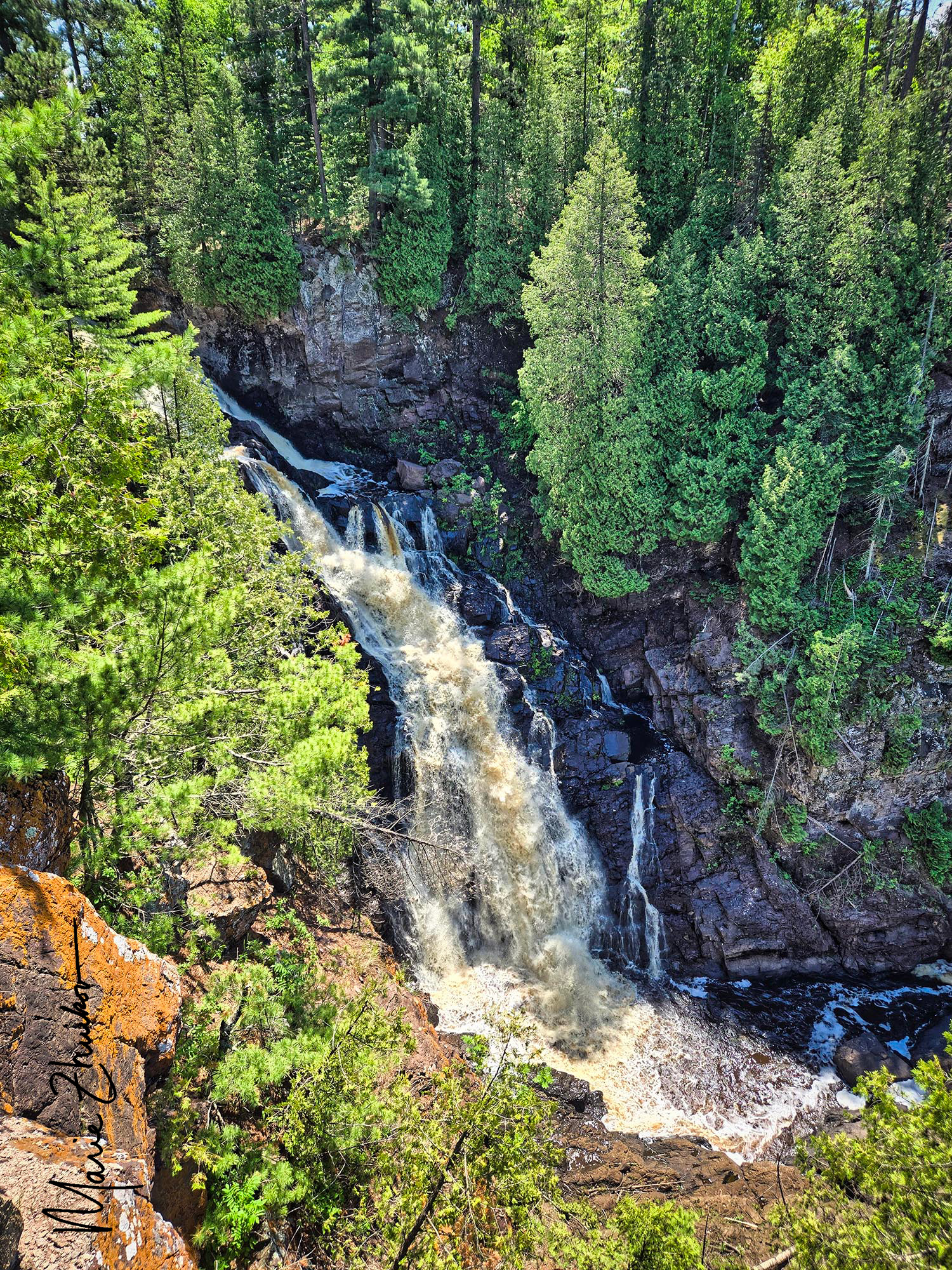
Big Manitou Falls, Pattison State Park. Note the tiny people on the overlook platform in the upper left.

Last weekend, admission to Wisconsin State Parks was free. Russ and I took advantage of this annual event to visit a park that’s only 22 miles from our house. As you, dear astute readers, can tell from the title of this post, Pattison State Park is home to the state’s tallest waterfall. The Black River falls 165 feet down a basalt cliff called Big Manitou Falls. A smaller waterfall, Little Manitou Falls, is also in the park, farther downriver.

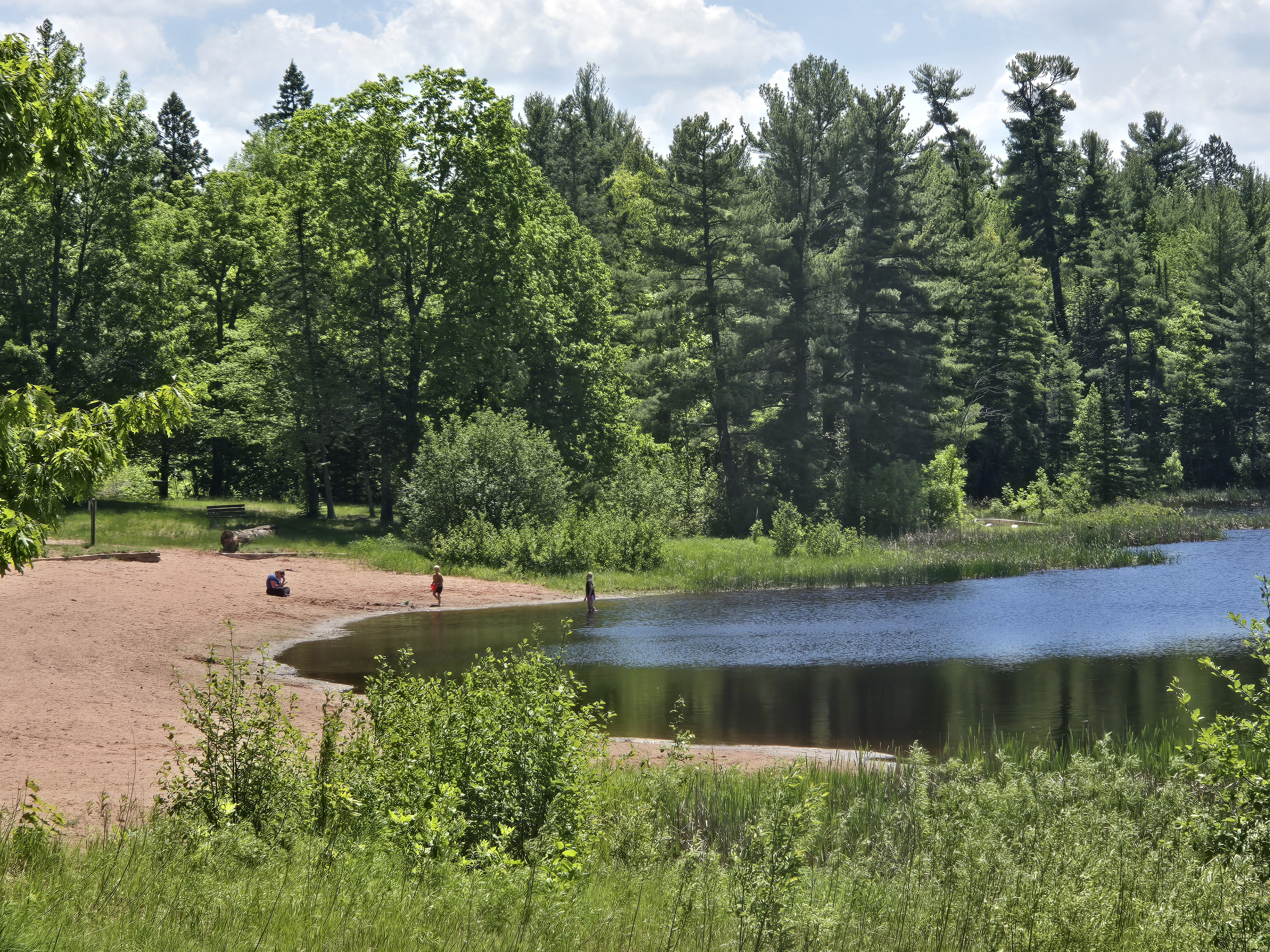
The swimming beach at Pattison State Park.

Martin Pattison, a lumber baron who had a logging camp on the Black River, donated 660 acres of the 1,400-acre park to the state. If you’ve ever toured Fairlawn Mansion in Superior, Wisconsin, that was his house. In 1917, Pattison learned of plans to build a hydroelectric dam on the river, which would have destroyed the falls. With his wife’s encouragement, he secretly purchased all the land surrounding the falls to block development, and Pattison Park was formed in 1920.

According to the park newspaper, Patterson saved the falls because he felt a connection to them. “In being able to grant this site to the public, I have accomplished one of my chief ambitions. For years, I have spent much time amid the surrounding of the falls and have received so much enjoyment there that it gradually became part of my life,” he said.

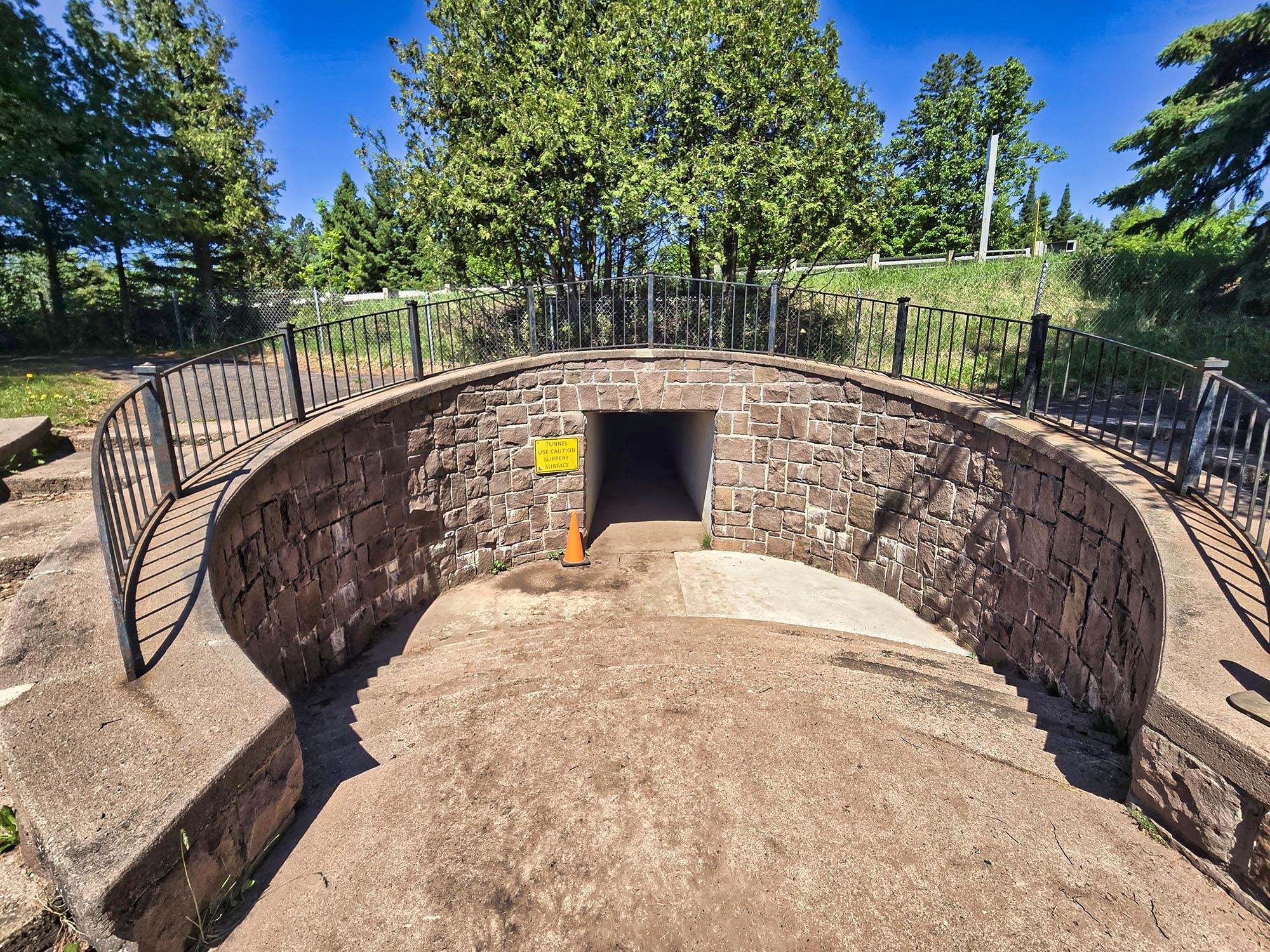
On our trip, Russ and I left Duluth, Minnesota, which was shrouded in fog with temps in the 50s, and mist rising off the harbor. We journeyed to inland Wisconsin, with temps in the 70s. We parked in the main lot and took a short hike on a paved trail past the swimming beach on Interfalls Lake, then through a tunnel that runs under the road. Of course, we had to make noises in the tunnel to test the echo. 😊

The tunnel to the Big Manitou Falls Trail.

A small bridge took us across the river. From there, it was a short walk to an overlook where we could see the impressive power of the water flowing over the top of the falls. Another short walk (part of which was along the road and past the Big Manitou Falls parking lot) took us to several overlooks of the falls. Wild and rugged, the falls are the antithesis of the farmland and village we passed on our drive to the park.

We thought that we might get a good view of the falls from the riverbed, so we took the Big Manitou Falls Trail a half mile down to the river, but we were mistaken. We “only” saw the river. But if you like rivers, it’s worth it!

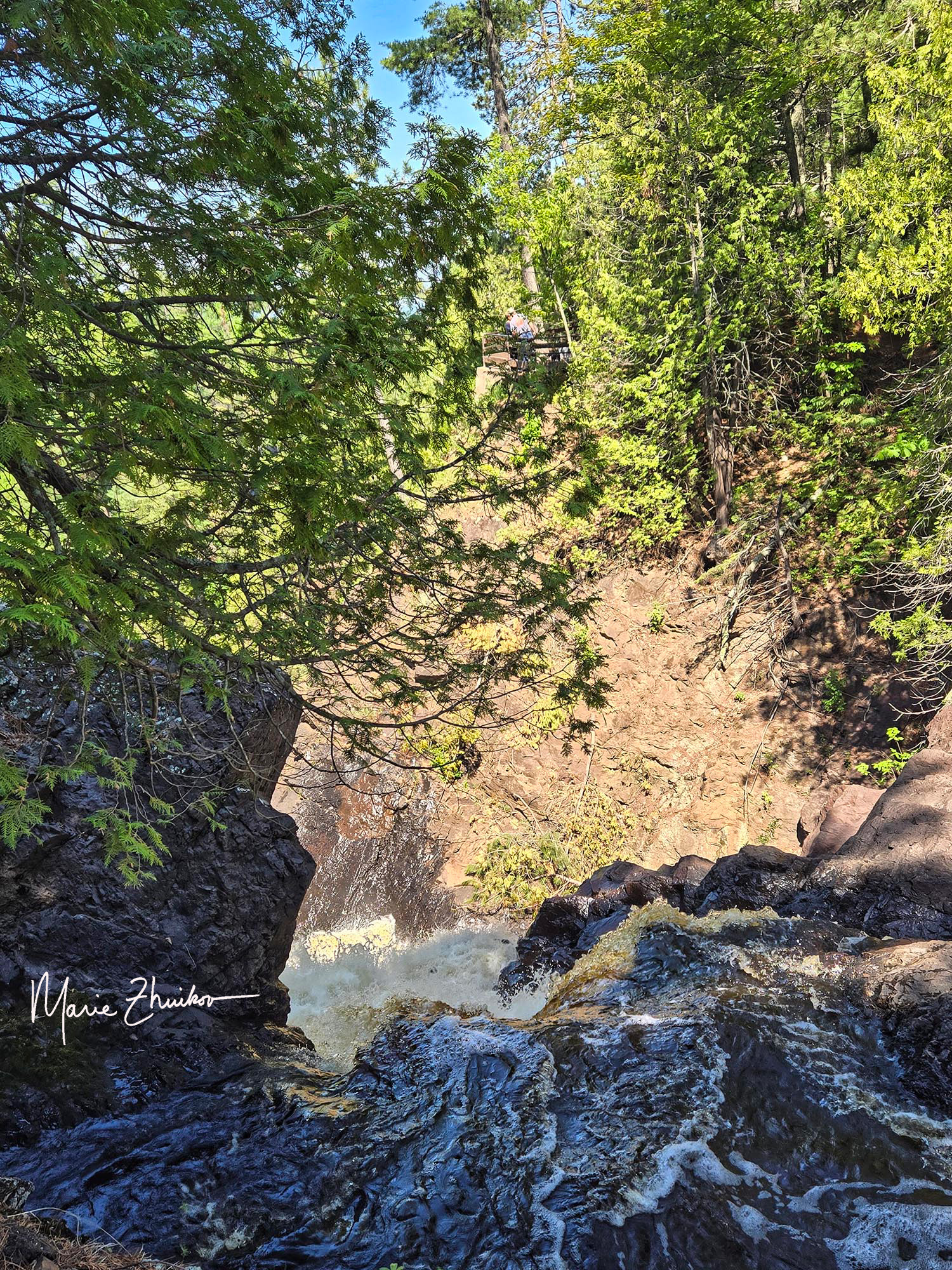
The view from the top of the falls.

Then came the half-mile hike back UP to the top of the falls. The trail is rated moderate to difficult due to the incline, but most of it was wide enough for two people to walk beside each other and was fairly level.

We walked back to the bridge and hiked along the other side of the river to two overlooks. The last overlook is not for the faint of heart! A wooden platform perched on the hillside makes you feel like you’re hanging on the edge of the cliff (because you are). But the view of the falls and the river gorge is spectacular.

The park features several other longer hiking trails, a campground, picnic area, and a backpacking camping area.

During our trip, I marveled that I’d never been to the park, especially since it’s so close to Duluth. After arriving back home, I checked with my older brother, and he assured me that I visited the park several times as a child.

I have no memory of those visits. Perhaps I was too young? In any event, I’m glad I rediscovered this gem of a park. It offers a blend of natural beauty, history, and adventure that makes it worth the visit. Whether you’re drawn by the thunderous falls, the hiking trails, or simply the peaceful setting, there’s something here for everyone to enjoy. I felt grateful for the chance to experience such a remarkable place—and am eager to return for more memories in years to come.

If you’re ever in northwestern Wisconsin, be sure to check out Pattison State Park!

Another view of Big Manitou Falls.

Wandering Wisconsin Point

The Superior ship canal and Wisconsin Point lighthouse.

Russ and I visited a windswept peninsula near Superior, Wisconsin, last weekend. We wanted to check on how the prescribed burn area was rejuvenating after the burn I helped with last fall. As we approached Wisconsin Point, the steady roar of Lake Superior on one side and the more muted lap of Allouez Bay on the other created a backdrop of sound. Once, the Ojibwe lived there, but now the point is mainly a recreational area. It’s known for its towering pine forest and the distant flash of its lighthouse.

The prescribed burn area on Wisconsin Point.

In the burn area, the air still held a faint, smoky tang, but plants seemed to be coming back well, even with our chilly spring. Bright green grass sprouted bravely through ashen soil, and I ran my fingers over the bark at the base of some trees, rough and blackened but still sturdy. The large trees seemed little worse for wear—did you know that the rugged bark of red pines is fire-resistant? The trees need fire to regenerate, so they have adapted to it. That’s one reason for the prescribed burn: to encourage red pine regeneration. The point’s white pines, their needles soft and fragrant, are doing fine, but the red pines remain sparse. On our walk, we spotted an eagle’s nest, a massive tangle of sticks perched high above, and heard the sharp calls of the birds echoing through the canopy.

Bear Creek Trail, Wisconsin Point

Wisconsin Point also sports a relatively new nonmotorized trail that I haven’t had a chance to hike yet. The Bear Creek Trail begins near Hwy 53 and parallels Moccasin Mike Road to Wisconsin Point. Once on the point, it crosses Wisconsin Point Road, enters a wooded upland, and then a marsh for a total of 2.3 miles. It ends at the first parking lot on the point and sports a gravel surface, wooden bridges, and an impressive floating boardwalk over the marsh. Along the way, a pagoda provides a scenic view of the lake and the bay. Although the weather was a blustery 45 degrees, the forest provided shelter and warmth.

The pagoda on Bear Creek Trail

As we crossed the marsh, we noticed a beaver lodge and heard a Sora waterbird call. Soras are also known as Carolina Crakes. They’re brown and white, about the size of a chicken, but with longer legs perfect for wading in the shallows. Although the birds are common throughout the U.S., they are relatively rare in Wisconsin because they require large and healthy wetlands for habitat, and we all know what humans like to do to wetlands. (Drain them!)

A wetland along the Beaver Creek Trail, complete with beaver lodge.

Our visit to Wisconsin Point was both invigorating and enlightening. Seeing the resilience of the landscape, from the recovering burn area to the thriving wildlife, was a reminder of nature’s ability to adapt and flourish. The combination of ecological restoration, immersive natural experiences, and unique wildlife sightings makes Wisconsin Point a destination delights the senses and invites return in every season.

Dining in Dives

Dear readers, you may recall that Russ and I have a penchant for fine dining. When we travel, we try to hit at least one gourmet restaurant per trip. Featured on this blog in recent years have been The Rhubarb Restaurant in Edinburgh (with its rhubarb-themed drinks and a Châteaubriand Angus steak platter for two), The Wharf on Grand Cayman (with lobster, and you can feed the shells to awaiting tarpon fish off the dock), the Mariposa in Sedona (with juniper cocktails and mejillones con chorizo, a mussel and sausage appetizer), the Von Trapp Family Lodge in Stowe (with a lingonberry spritz and quail/venison dinner), and the Eiffel Tower Restaurant in Las Vegas (with its grand Marnier souffle), to name a few.

More recently, our dining experiences have literally taken a dive. We’ve been exploring the cheapest (but tastiest) places we can find. Whether this shift is because we’re both retired and on fixed incomes or simply inspired by the fun we had last year at the Czech Grill in Grand Cayman—where we wrote on the walls and enjoyed our sixth wedding anniversary with ribs, potato salad, a tabby cat, and a handsome rooster—the change is noticeable.

We’ve experienced several memorable meals this past year, dining in northern Minnesota/Wisconsin dives. Our definition of a dive is a place where we can buy dinner for two for $40 or less. Many times, this even includes adult beverages and the tip! We have friends who also love dives, and they’ve introduced us to a few.

With that in mind, here are six of our favorites, listed in no particular order. Each offers its own unique charm, and we’d happily return depending on our mood.

The Alborn Tavern is a family-owned, small-town restaurant and bar in northern Minnesota. If you like a place with crumbling vinyl seat covers, pool tables, dart boards, and meat raffles, this is the place for you! BTW, a meat raffle is a community fundraiser where people buy tickets for the chance to win packages of meat, usually steaks, roasts, and bacon.

Art on the door of the El Toro Lounge.

The El Toro Lounge and Wilbert Café is a historic stopping place and local watering hole along the highway that leads to Canada. It used to be THE place to stop when Greyhound bus routes ran between the Iron Range and the rest of Minnesota. Now, it mainly serves locals, anglers, and snowmobilers. Diners can get breakfast all day most days of the week. There are also bingo nights and Friday fish fries. We celebrated our fifth wedding anniversary in the lounge.

Near the El Toro is the Dawghouse in Canyon, Minnesota. The renovated restaurant has a more modern feel than the Wilbert Café, plus there’s a large and lovely event venue suitable for hosting a wedding reception or party. There are even customized racks so that snowmobilers can hang their helmets and gear while they eat, and an outdoor patio that’s dog-friendly.

Diners order dinner at Gordy’s Hi-Hat.

Gordy’s Hi-Hat in Cloquet, Minnesota, is a family-owned burger joint that’s only a few years older than me. It’s well known for stellar customer service and a family atmosphere. Guy Fieri, with the Diners, Drive-Ins and Dives television show, has even dined there. If you’re more into salads and coffee, stop next door at their Warming House. We celebrated my recent birthday at the Hi-Hat with a Swiss-and-mushroom burger, fries, and a hot fudge malt. I highly recommend the malt!

The Anchor Bar in Superior, Wisconsin, wins “best burger” almost every year in local competitions. Their burgers are homemade, cheap, and good. The fries are plentiful. But what’s most notable is the maritime décor. Ship ropes hang from the ceiling, sailing books line the shelves, ore boat photos grace the walls. It’s also been featured on Diners, Drive-Ins and Dives. The clientele is mixed, from doctors to longshoremen, from college students to truckers. The cashew burger is my fave. Look for the ship’s anchor outside the door.

The aftermath of a meal at the Anchor Bar.

Tired of burgers? Try the India Palace in downtown Duluth. It offers a plethora of Indian food options with levels of heat friendly to Minnesotan palates. There are also vegetarian options. It’s known for tandoori chicken and curry dishes. The service was very good.

True to this trend, we plan to spend our seventh anniversary this week at another local dive. If it’s any good, I’m sure you’ll be hearing about it!

Please feel free to share a link to your favorite dive in the comments and tell us where it’s located!

Returning Good Fire to the Land

A fire crew member monitors the Nov 2025 cultural prescribed burn on Wisconsin Point.

A story of mine appeared in the April/May 2026 issue of Lake Superior Magazine. It covers a project I’m involved with that’s designed to bring back the Ojibwe tradition of prescribed burning on Wisconsin Point, a long sandspit on Lake Superior. The Ojibwe once lived in the red and white pine woods there until they were moved to reservations in the mid-1800s. Before then, they would set small, controlled fires to keep brush down, encourage plants like blueberries, and help red pines sprout. They call these fires “Ishkode,” or good fire.

I first heard about this practice a few years ago while I was still working as a science communicator for Wisconsin Sea Grant. The organization funded research that studied tree rings and fire scars on Wisconsin Point and its neighboring sandspit, Minnesota Point. I reported on the project by writing articles, news releases, and producing a podcast.

Last year, a few months before I retired, I heard that the Ishkode group was looking for help with communications. I immediately volunteered, and you can read about the results in my article. I’m happy to say that last fall, Ishkode successfully returned to the point for the first time in 159 years. And nobody got hurt! More patchwork burns are planned in the future.

As a result, I was approached by a different group that’s working to bring Ojibwe fire practices back to Minnesota Point. Although the two points are separated by a short span of water, they are different politically and socially. Not only are they in different states, but Wisconsin Point is uninhabited, whereas more than 100 homes line Minnesota Point, many of which are beachfront mansions. Wisconsin Point is owned by the City of Superior and the Fond du Lac Tribe. Minnesota Point is a mix of private, city, and state Department of Natural Resources property. There’s even an airport near the end of it.

Both fire projects are led by Fond du Lac tribal members. Except for those folks and me, most of the rest of the people involved in each project are different. Because of its complexity, the Minnesota Point group is much larger (about 40 people). I began helping them this winter and finally have everyone’s names and affiliations down.

Our goal is to conduct a prescribed burn on Minnesota Point this spring. It will be the first time in 180 years that a burn has occurred there. Things are falling into place nicely, and so far, public reception has been good.

I’m happy to have a hand in returning a missing piece of the ecosystem to the shores of Lake Superior. As one of our group members said, the burns will help the choked forests breathe again. These points aren’t the only places where the Ojibwe used to burn. Evidence can be found all around the lake.

For more information, check out my article in the print version of the magazine, or check the Wisconsin Point Ishkode webpage.

Smoke from the prescribed fire drifts through the pines on Wisconsin Point. The fire will help the beleaguered red pine population regenerate.

Unrestrained: An Interview with Anthony Bukoski

Image of Tony Bukoski by Diane Merchant

I spent a memorable afternoon with Superior, Wisconsin, short story writer Anthony Bukoski last summer. We discussed his book, The Thief of Words, which was published in 2025 by the University of Wisconsin Press. Tony’s stories feature white collar-blue collar tensions that belie his time spent in both worlds. The Thief of Words focuses on such themes as loneliness, longing, dislocation, assimilation, and generational conflict.

Thanks to the kickboxing workouts I’ve been doing for the past four years, our interview ends in a surprising way! You can read about it in Hypertext, a digital literary magazine published in Chicago.

I thank Tony for this opportunity and Hypertext for publishing it. If you’re looking for something to read, please check out Tony’s book.

Foxes and Fireflies Bookstore Turns One

Superior, Wisconsin, is just across the Minnesota state border from my home in Duluth. A twenty-minute drive down a hill and over a bridge takes me to another state. I used to make this drive nearly every day for work before I retired this spring. Now, I do it less often but it’s for events that are more fun than work!

One such event is a reading and discussion next Saturday (Aug. 30) at Foxes and Fireflies Bookstore in Superior (1401 Tower Ave). It’s billed as a “local author extravaganza,” which I love, especially since there are only two of us doing presentations. 😊

I used to get nervous before these events from self-consciousness and fear of being judged, etc. (By the way, fellow blogger Swabby offers an excellent post today about self-absorption.) But I’ve had enough practice now and done enough presentations about my books and photography that for the last several events, I’ve just winged it.

Me at the book launch for Meander North. (This was before Foxes and Fireflies had opened.) Look, I’m having fun! Image by Russ.

It’s worked out well, I think. I wasn’t nervous one bit. I’m glad I’ve finally reached this point. That only took over a decade! Public appearances still take a lot out of me, but dare I say they’re even becoming fun. I enjoy learning about the audience members and pondering their questions. And I’m not talking about huge audiences here, so they’re usually intimate affairs. Ah yes, the glamorous life of a local author!

For next weekend’s event, I’ll read from my books, The Path of Totality (magical realism short story collection) and Meander North (blog memoir). I’ll look over notes from past talks beforehand, but I’m going to leave them at home and see how “winging it” goes again.

The other author who’s reading is Gina Ramsey from Superior. Her book is Burnt Gloveboxes. (Two volumes.) She relates crazy but true things that have happened to her family.

Foxes and Fireflies is the first independent bookstore that Superior has had in years since Beecroft Books closed. I used to love going to Beecroft for author events. Afterward, the authors would have the honor of signing their names on a long white hallway. It was my goal to someday write a book and be able to sign that hallway, but the store closed before I had that chance.

My fox from the bookstore.

Foxes and Fireflies was opened by Maria Lockwood, a reporter for the Superior Telegram, kind of by accident. She was researching a business grant program for a story and decided to submit a grant to see how the process worked. Lo and behold, her project was chosen to receive the funding! She’s been working at the bookstore and at her reporting job, so she has her plate full. She’s so supportive of local authors. Besides books, Maria offers all sorts of other literary paraphernalia and cute little toy foxes.

Instead of a long hallway for authors to sign, in the tradition of Beecroft Books, Maria offers a whiteboard. My name is proudly on it.

If you’re in the area, please stop by for the author extravaganza or any of the bookstore’s other events.