Wandering Wisconsin Point

The Superior ship canal and Wisconsin Point lighthouse.

Russ and I visited a windswept peninsula near Superior, Wisconsin, last weekend. We wanted to check on how the prescribed burn area was rejuvenating after the burn I helped with last fall. As we approached Wisconsin Point, the steady roar of Lake Superior on one side and the more muted lap of Allouez Bay on the other created a backdrop of sound. Once, the Ojibwe lived there, but now the point is mainly a recreational area. It’s known for its towering pine forest and the distant flash of its lighthouse.

The prescribed burn area on Wisconsin Point.

In the burn area, the air still held a faint, smoky tang, but plants seemed to be coming back well, even with our chilly spring. Bright green grass sprouted bravely through ashen soil, and I ran my fingers over the bark at the base of some trees, rough and blackened but still sturdy. The large trees seemed little worse for wear—did you know that the rugged bark of red pines is fire-resistant? The trees need fire to regenerate, so they have adapted to it. That’s one reason for the prescribed burn: to encourage red pine regeneration. The point’s white pines, their needles soft and fragrant, are doing fine, but the red pines remain sparse. On our walk, we spotted an eagle’s nest, a massive tangle of sticks perched high above, and heard the sharp calls of the birds echoing through the canopy.

Bear Creek Trail, Wisconsin Point

Wisconsin Point also sports a relatively new nonmotorized trail that I haven’t had a chance to hike yet. The Bear Creek Trail begins near Hwy 53 and parallels Moccasin Mike Road to Wisconsin Point. Once on the point, it crosses Wisconsin Point Road, enters a wooded upland, and then a marsh for a total of 2.3 miles. It ends at the first parking lot on the point and sports a gravel surface, wooden bridges, and an impressive floating boardwalk over the marsh. Along the way, a pagoda provides a scenic view of the lake and the bay. Although the weather was a blustery 45 degrees, the forest provided shelter and warmth.

The pagoda on Bear Creek Trail

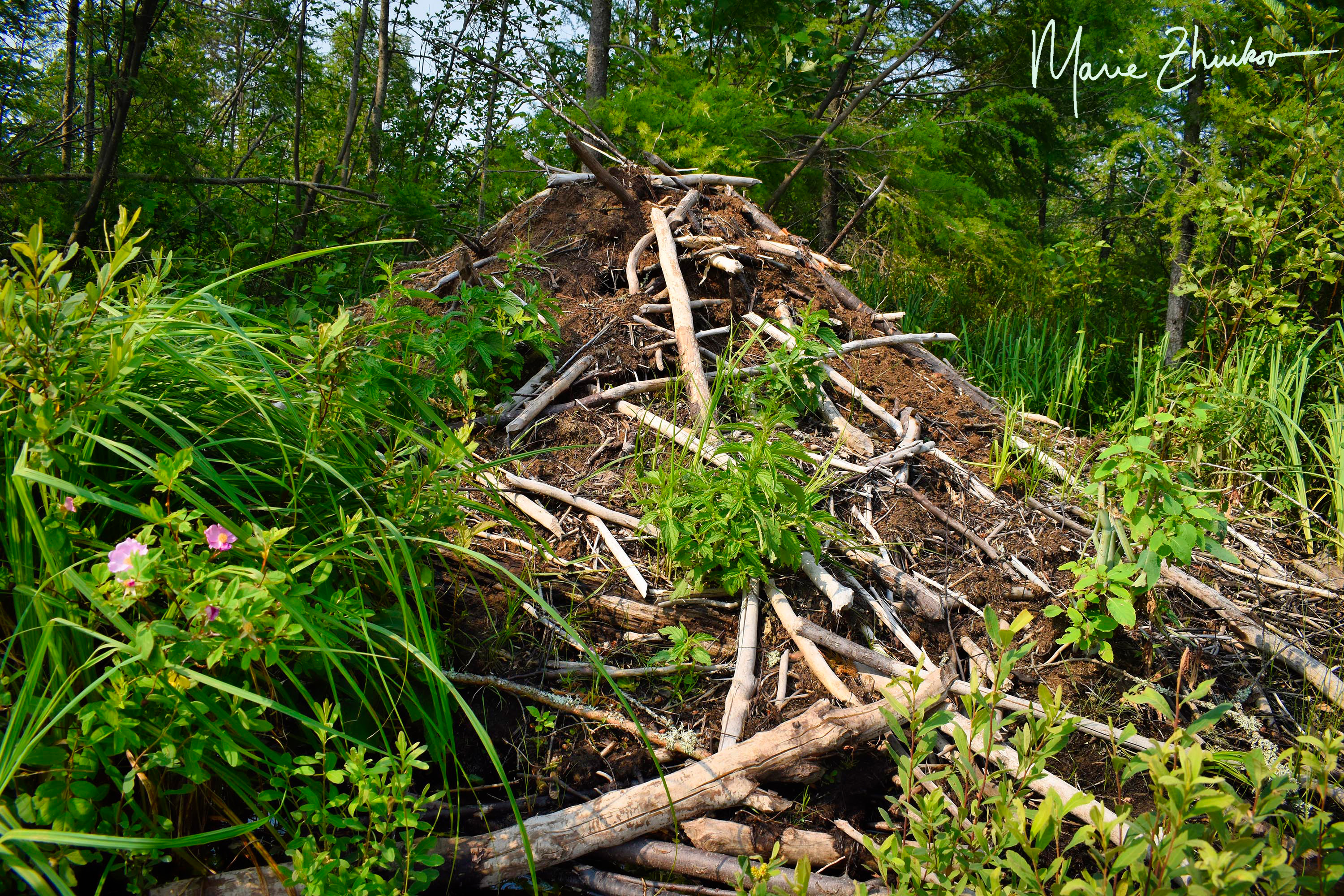
As we crossed the marsh, we noticed a beaver lodge and heard a Sora waterbird call. Soras are also known as Carolina Crakes. They’re brown and white, about the size of a chicken, but with longer legs perfect for wading in the shallows. Although the birds are common throughout the U.S., they are relatively rare in Wisconsin because they require large and healthy wetlands for habitat, and we all know what humans like to do to wetlands. (Drain them!)

A wetland along the Beaver Creek Trail, complete with beaver lodge.

Our visit to Wisconsin Point was both invigorating and enlightening. Seeing the resilience of the landscape, from the recovering burn area to the thriving wildlife, was a reminder of nature’s ability to adapt and flourish. The combination of ecological restoration, immersive natural experiences, and unique wildlife sightings makes Wisconsin Point a destination delights the senses and invites return in every season.

A Hike on the Prairie

We meandered west to Minnesota’s Pothole Prairie Region last weekend. Russ’s daughter had planted roots — bought her first house in a small town there. Naturally, we were eager to witness her new beginning.

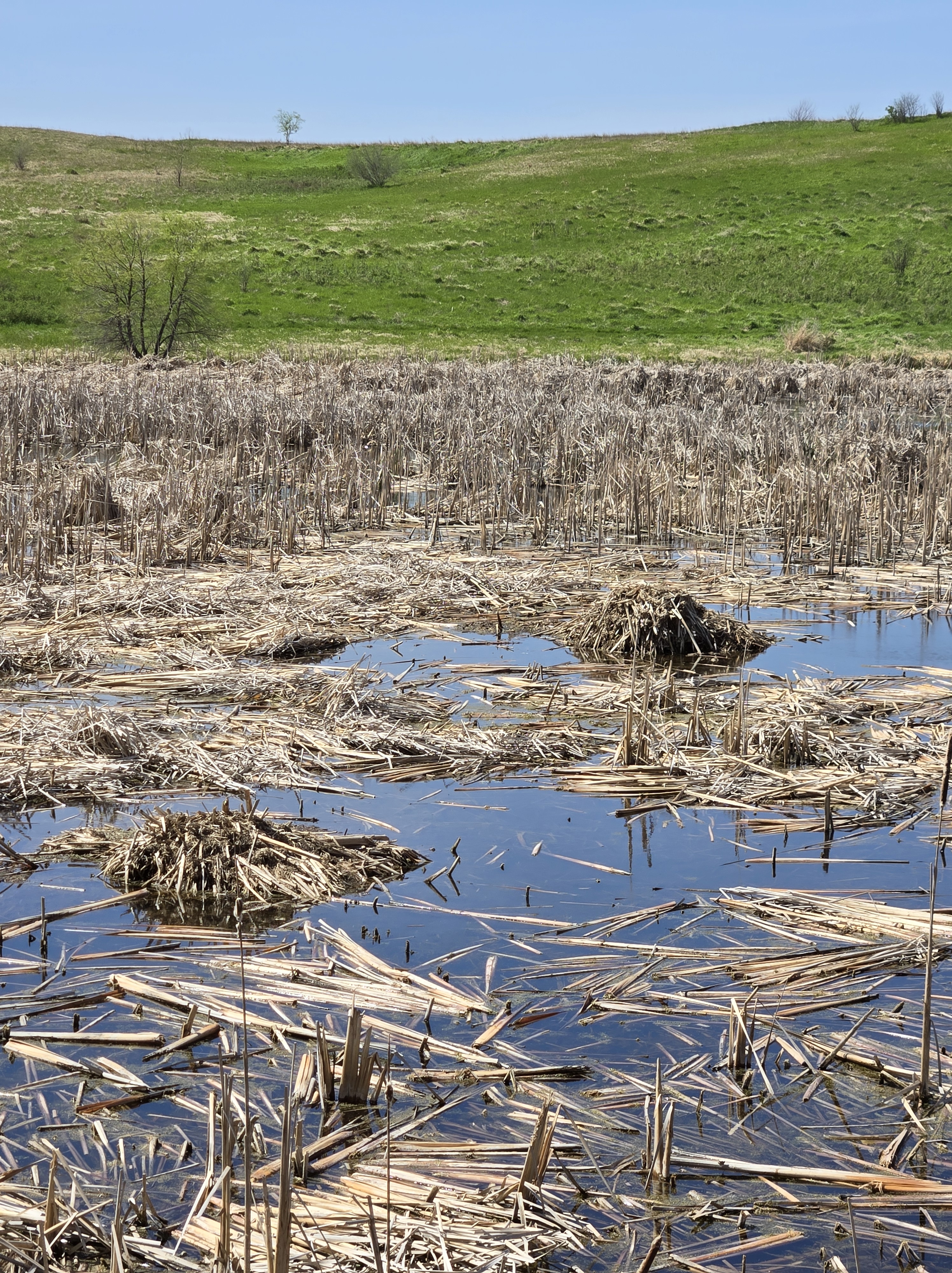
The Prairie Pothole Region is an expansive area in the northern Great Plains, primarily located in Minnesota, North Dakota, South Dakota, Iowa, and parts of Canada. It’s known for its thousands of shallow wetlands, commonly called potholes, formed by glaciers about 10,000 years ago. Depressions in the ground left by glaciers fill with water from snowmelt and rainfall, creating a diverse habitat for various species.

Muskrat houses

The region is often called “America’s Duck Factory” because it supports over 50% of North America’s migratory waterfowl. These wetlands provide essential breeding, nesting, and feeding grounds for many bird species, making them one of the most important migratory bird habitats in the Western Hemisphere.

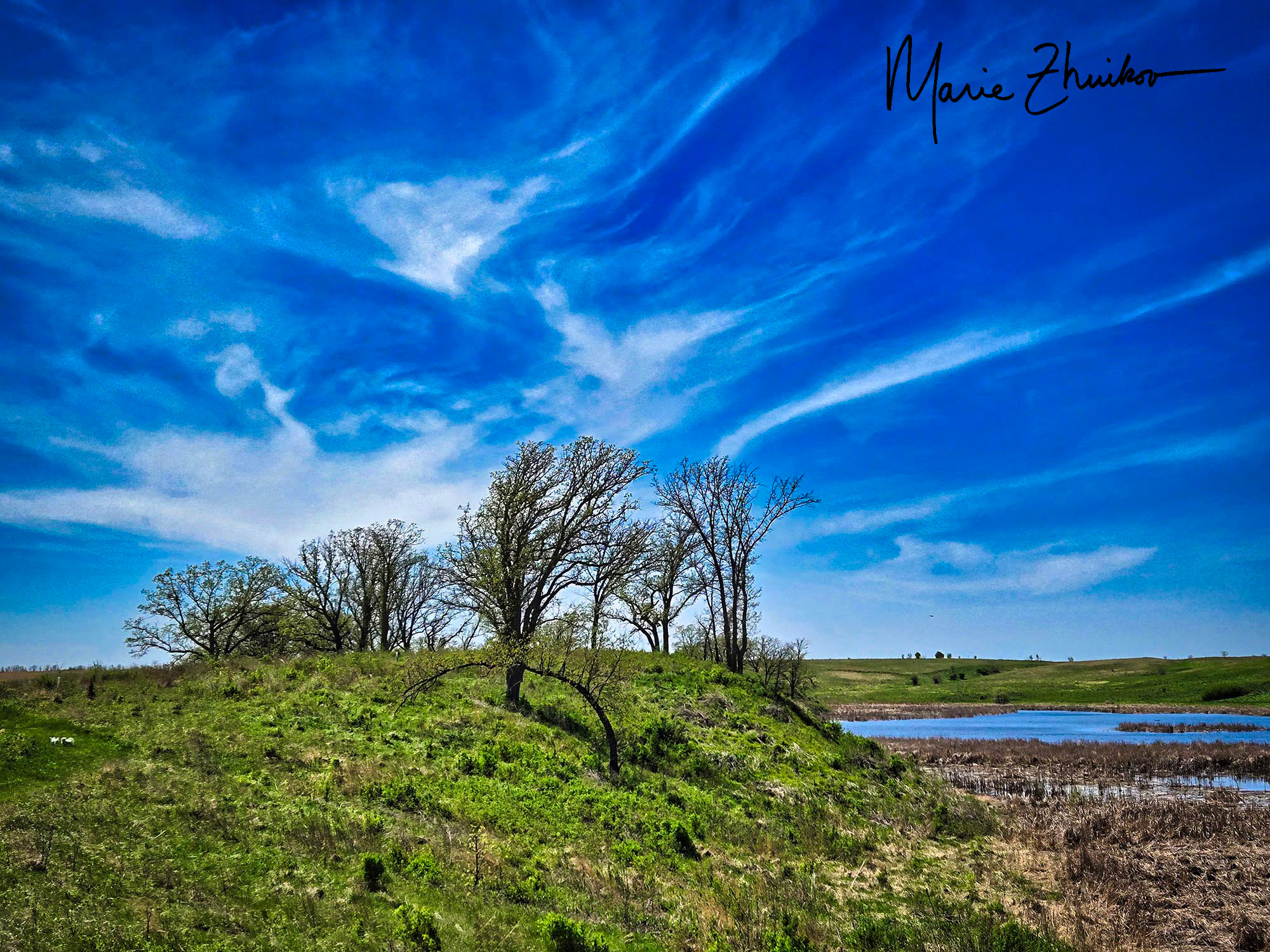
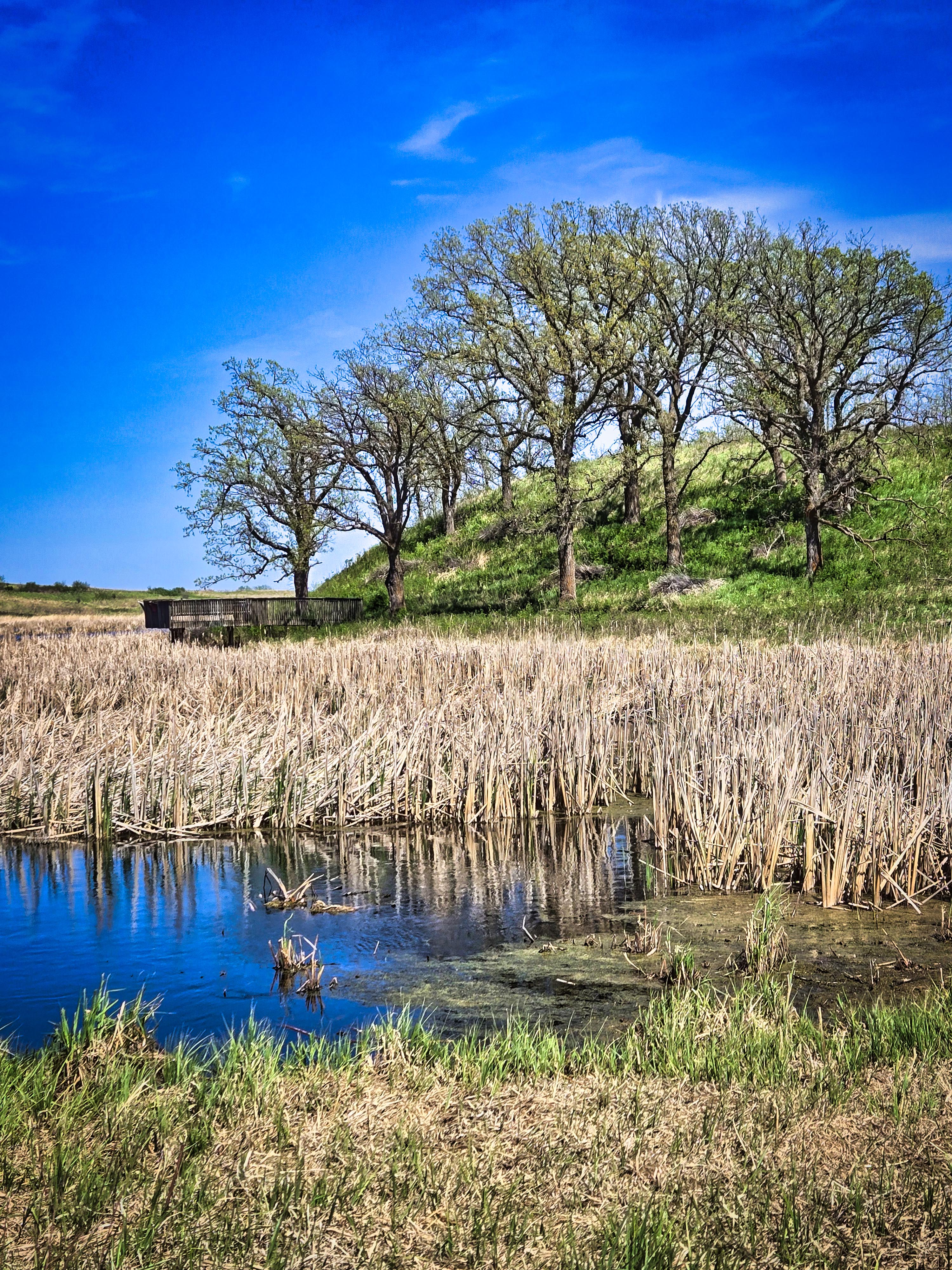
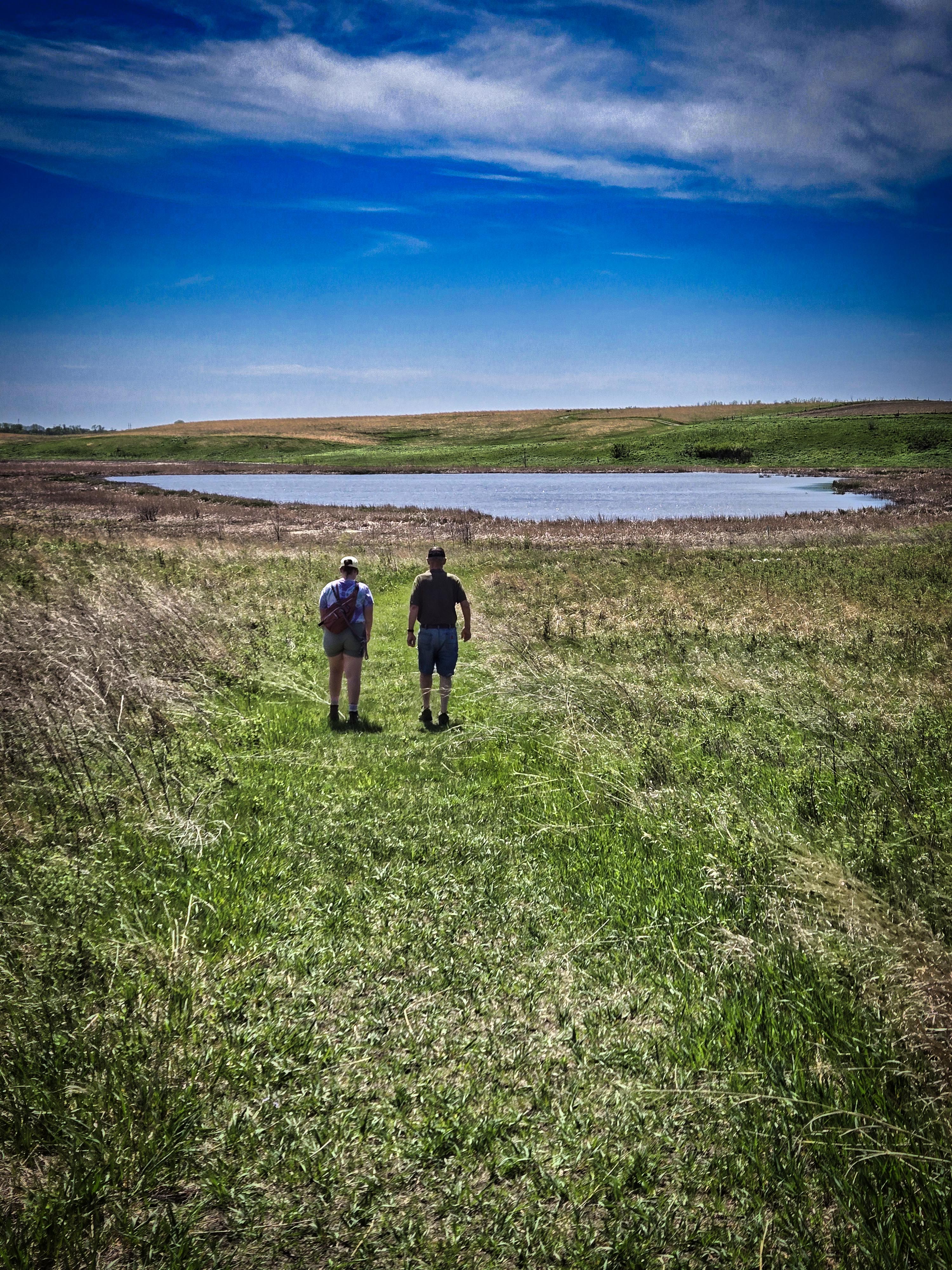
We enjoyed our visit not only to the house and stepdaughter, but also with our two little white “grand dogs.” They are energetic and wonderful hikers. We wore them out on the first day with two hikes. The second, where I took these images, was on the Edwards Waterfowl Production Area Trail. The first part of the trail was paved, then a longer section (about a mile) was mowed.

The trail sports a photography blind on one of the pothole ponds. We entered, but the ducks were far away, and I don’t have one of those fancy telephoto lenses on my camera, so the blind was wasted on me. But, we saw and heard many redwing blackbirds, yellow-headed blackbirds, tree swallows, killdeer, Canada geese, yellow warblers, and song sparrows.

The clouds put on a show – the kind only available in wide open spaces. I loved the oak stands that graced the hillsides.

We left the wetlands full of wood ticks and wonder. I hope you enjoy this virtual tour.

The Tulip that Dared to be Different

We bought nine white tulips last week to bring a bit of spring into the house. About a foot of snow still lies on the ground here in northern Minnesota, but the increasing sunshine has us impatient for winter to leave.

Once we brought them home and arranged them in a vase, I noticed that the tulip flowers were hiding inside their green leaf sheaths like the heads of shy turtles. But after a few days, they began to grow and emerge. One had a tinge of red to it, so I was curious to see what it would look like as the flower opened more. The fresh bouquet looked gorgeous as big white and fluffy snowflakes fell outside. Outdoors, spring had hidden its face once more.

A few more days later, the flower fully opened, and I was surprised to see that half of one petal was a deep ruby red. I was expecting an inner ring of red or something—not this. I asked my friends if they’d ever seen anything like that. None had, but some said we must be lucky, that it was like finding a four-leaf clover.

I turned to the ever-useful internet and discovered that this phenomenon is called sectorial chimera. Sectorial means that only one section of the flower is affected. Chimera means changeable or mixed. In scientific terms, it means that the flower has a mix of genetic tissues. My tulip was a white tulip that also contained red tulip genes. For some reason, the redness was expressed in a single petal. In a way, my friend was correct. Like a four-leafed-clover, this tulip was a unique genetic mutation.

There’s some info also on the internet that symbolically, the white flower represents purity and peace, and the red petal, a streak of hidden passion. “Together, they convey a deep emotional connection and the beauty of love in all its forms.”

I just wanted a sense of spring but received so much more from a simple grocery store bouquet!

Returning Good Fire to the Land

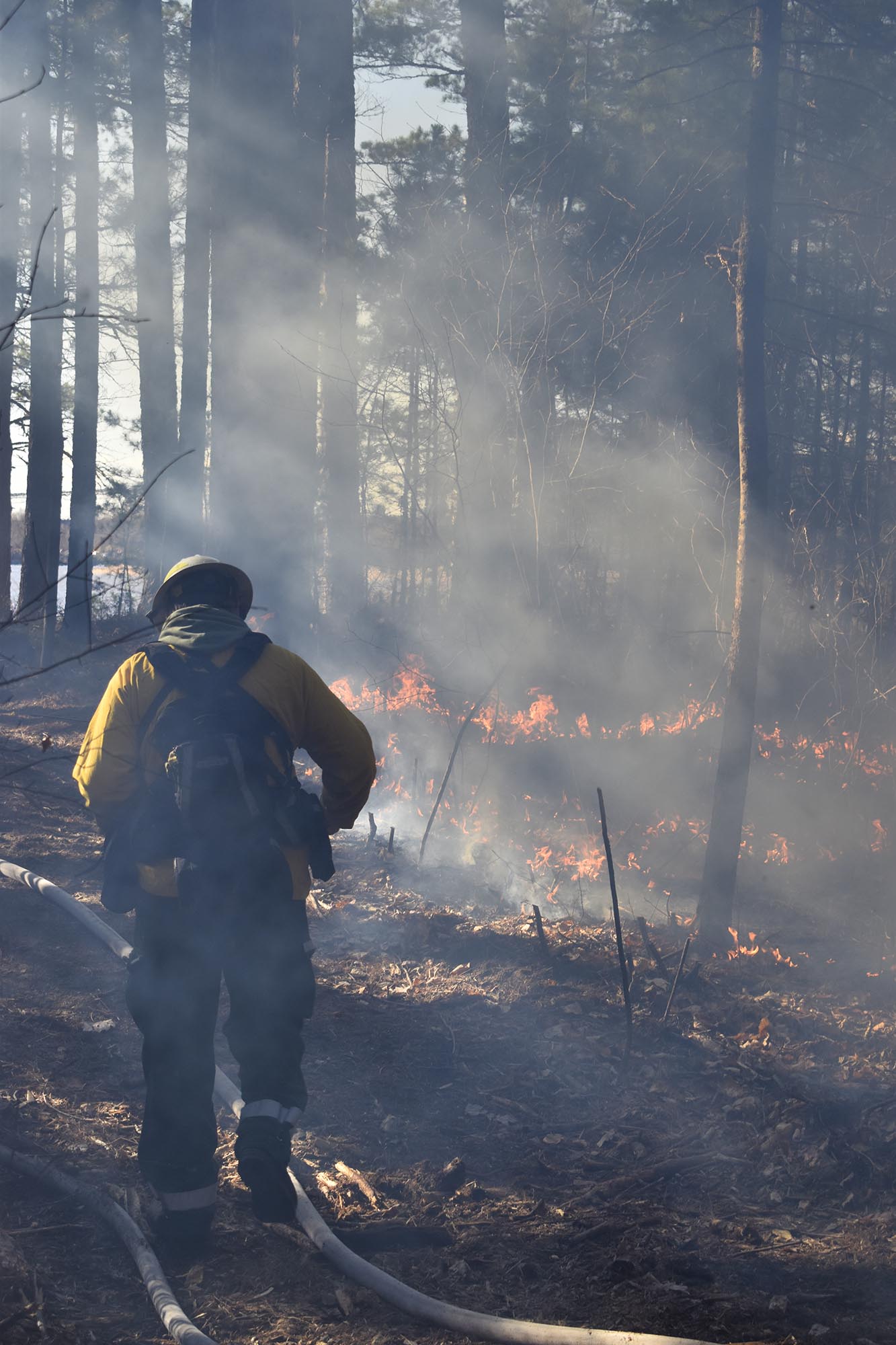
A fire crew member monitors the Nov 2025 cultural prescribed burn on Wisconsin Point.

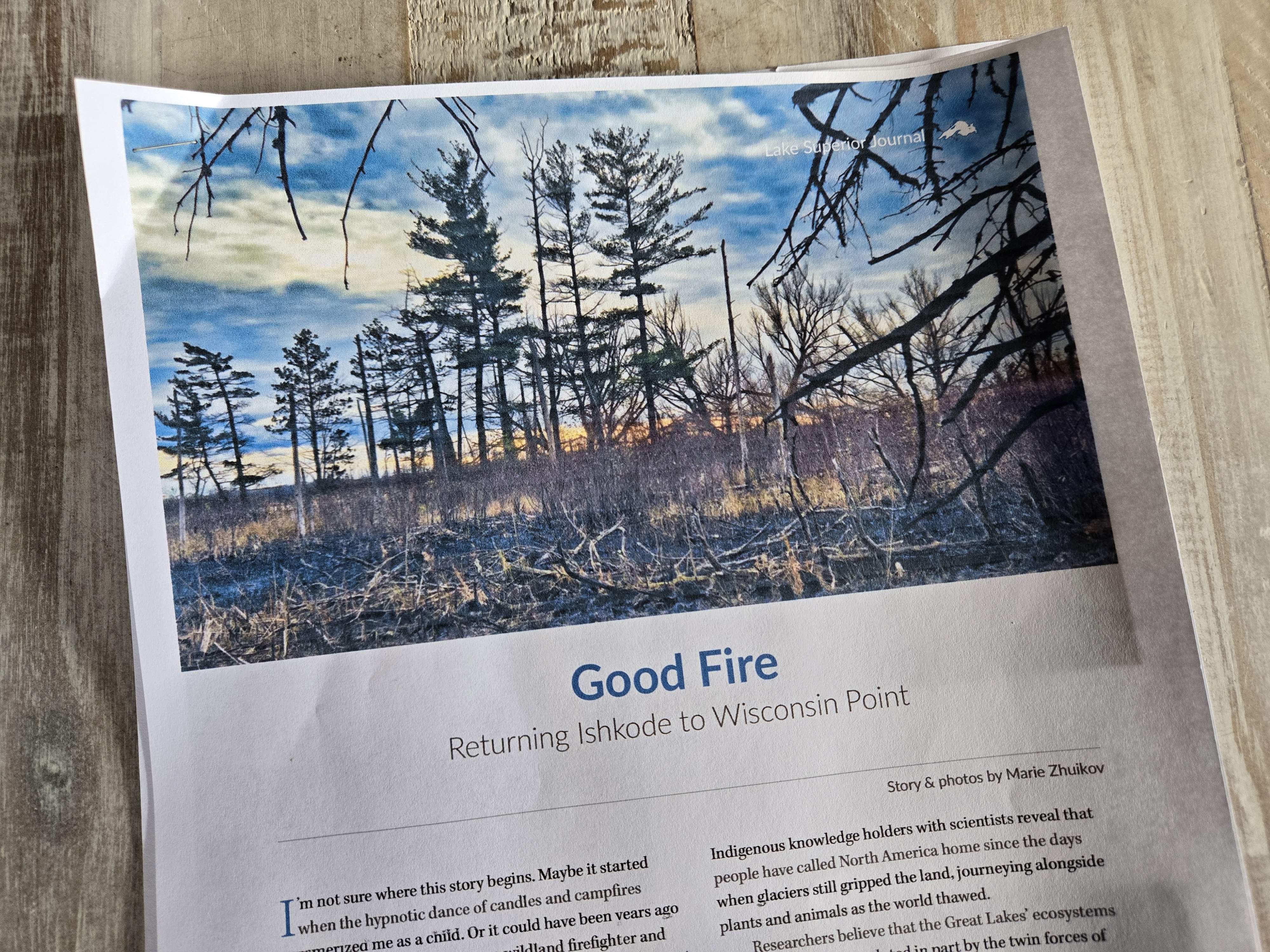
A story of mine appeared in the April/May 2026 issue of Lake Superior Magazine. It covers a project I’m involved with that’s designed to bring back the Ojibwe tradition of prescribed burning on Wisconsin Point, a long sandspit on Lake Superior. The Ojibwe once lived in the red and white pine woods there until they were moved to reservations in the mid-1800s. Before then, they would set small, controlled fires to keep brush down, encourage plants like blueberries, and help red pines sprout. They call these fires “Ishkode,” or good fire.

I first heard about this practice a few years ago while I was still working as a science communicator for Wisconsin Sea Grant. The organization funded research that studied tree rings and fire scars on Wisconsin Point and its neighboring sandspit, Minnesota Point. I reported on the project by writing articles, news releases, and producing a podcast.

Last year, a few months before I retired, I heard that the Ishkode group was looking for help with communications. I immediately volunteered, and you can read about the results in my article. I’m happy to say that last fall, Ishkode successfully returned to the point for the first time in 159 years. And nobody got hurt! More patchwork burns are planned in the future.

As a result, I was approached by a different group that’s working to bring Ojibwe fire practices back to Minnesota Point. Although the two points are separated by a short span of water, they are different politically and socially. Not only are they in different states, but Wisconsin Point is uninhabited, whereas more than 100 homes line Minnesota Point, many of which are beachfront mansions. Wisconsin Point is owned by the City of Superior and the Fond du Lac Tribe. Minnesota Point is a mix of private, city, and state Department of Natural Resources property. There’s even an airport near the end of it.

Both fire projects are led by Fond du Lac tribal members. Except for those folks and me, most of the rest of the people involved in each project are different. Because of its complexity, the Minnesota Point group is much larger (about 40 people). I began helping them this winter and finally have everyone’s names and affiliations down.

Our goal is to conduct a prescribed burn on Minnesota Point this spring. It will be the first time in 180 years that a burn has occurred there. Things are falling into place nicely, and so far, public reception has been good.

I’m happy to have a hand in returning a missing piece of the ecosystem to the shores of Lake Superior. As one of our group members said, the burns will help the choked forests breathe again. These points aren’t the only places where the Ojibwe used to burn. Evidence can be found all around the lake.

For more information, check out my article in the print version of the magazine, or check the Wisconsin Point Ishkode webpage.

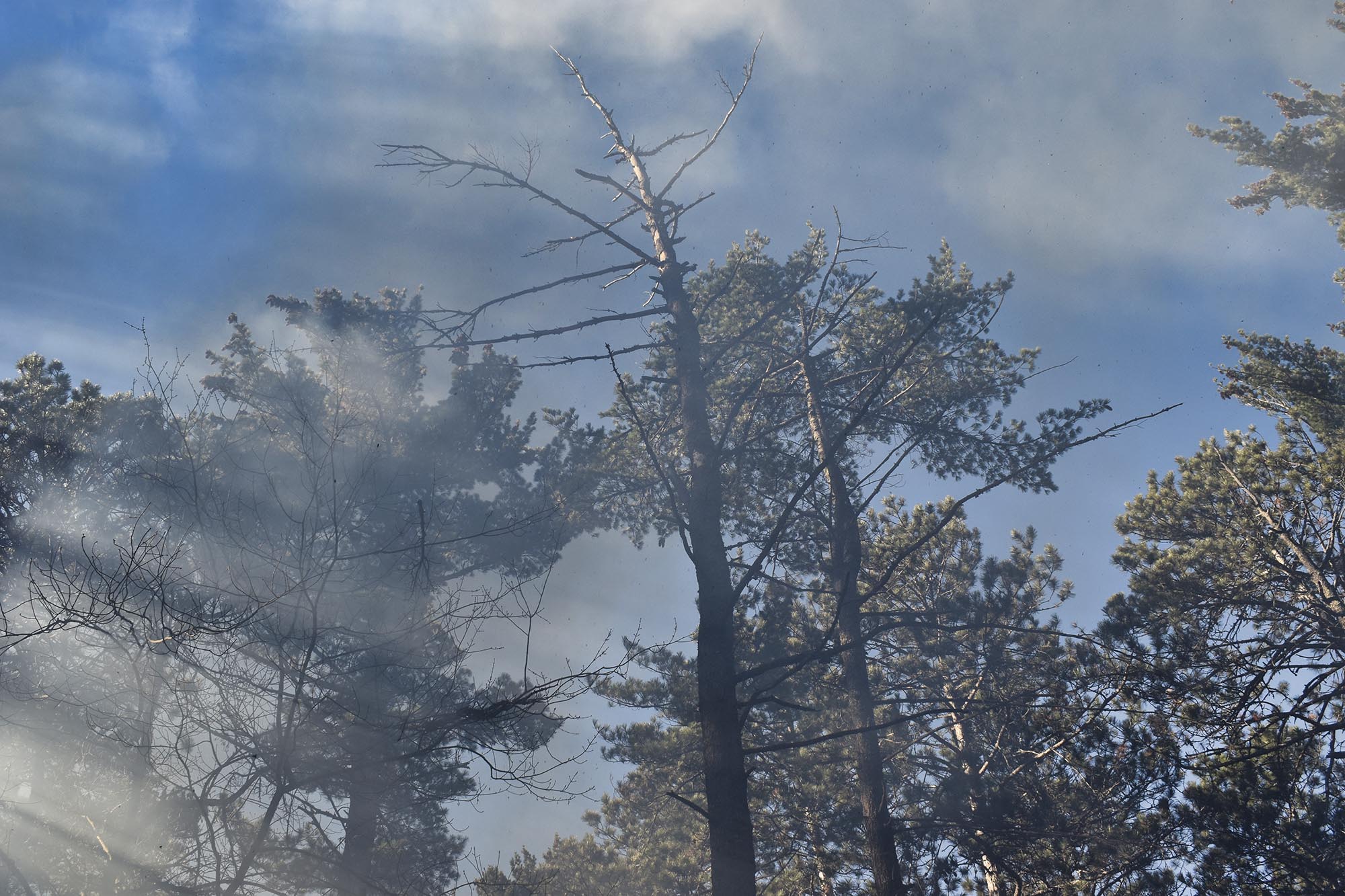
Smoke from the prescribed fire drifts through the pines on Wisconsin Point. The fire will help the beleaguered red pine population regenerate.

Pancakes, Anyone?

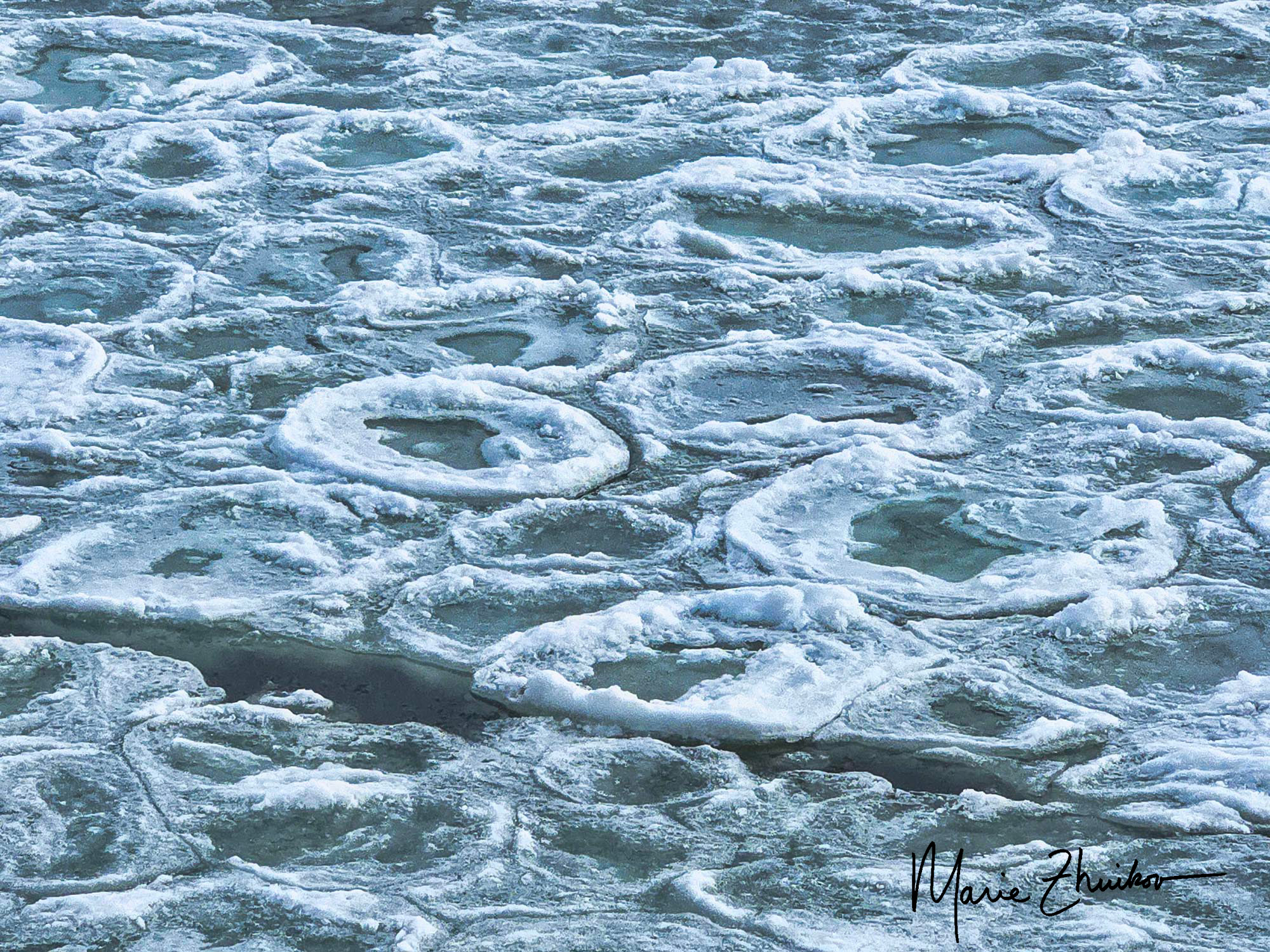
Each of these ice pancakes is about three feet across.

Winter is loosening its cold, hard grip on Lake Superior. One sure sign of spring is pancake ice. Sorry for the misleading title—these pancakes are not edible. But I suppose they are, if you like chewing ice.

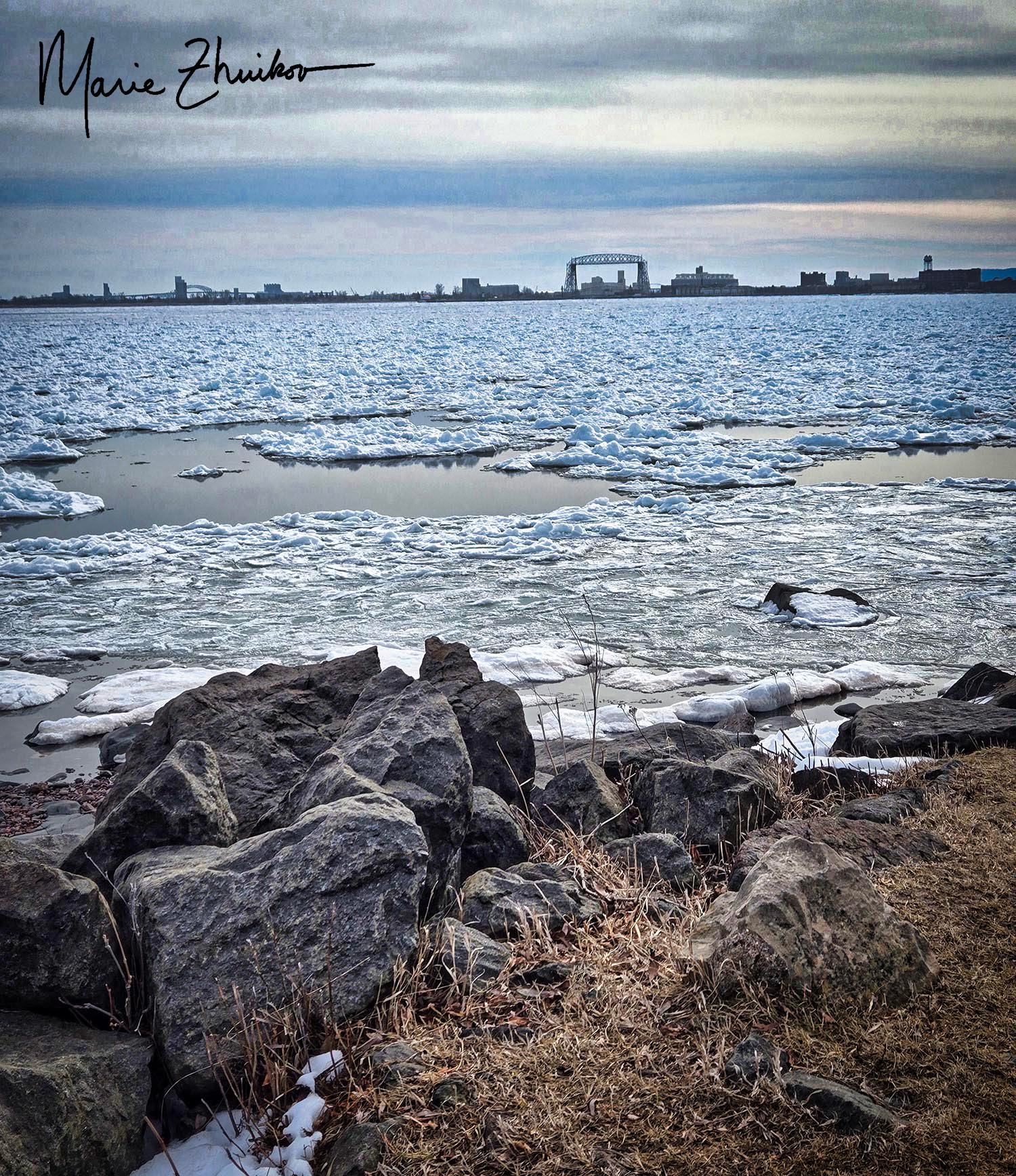
Pancake ice on Lake Superior with Duluth’s iconic aerial lift bridge in the distance.

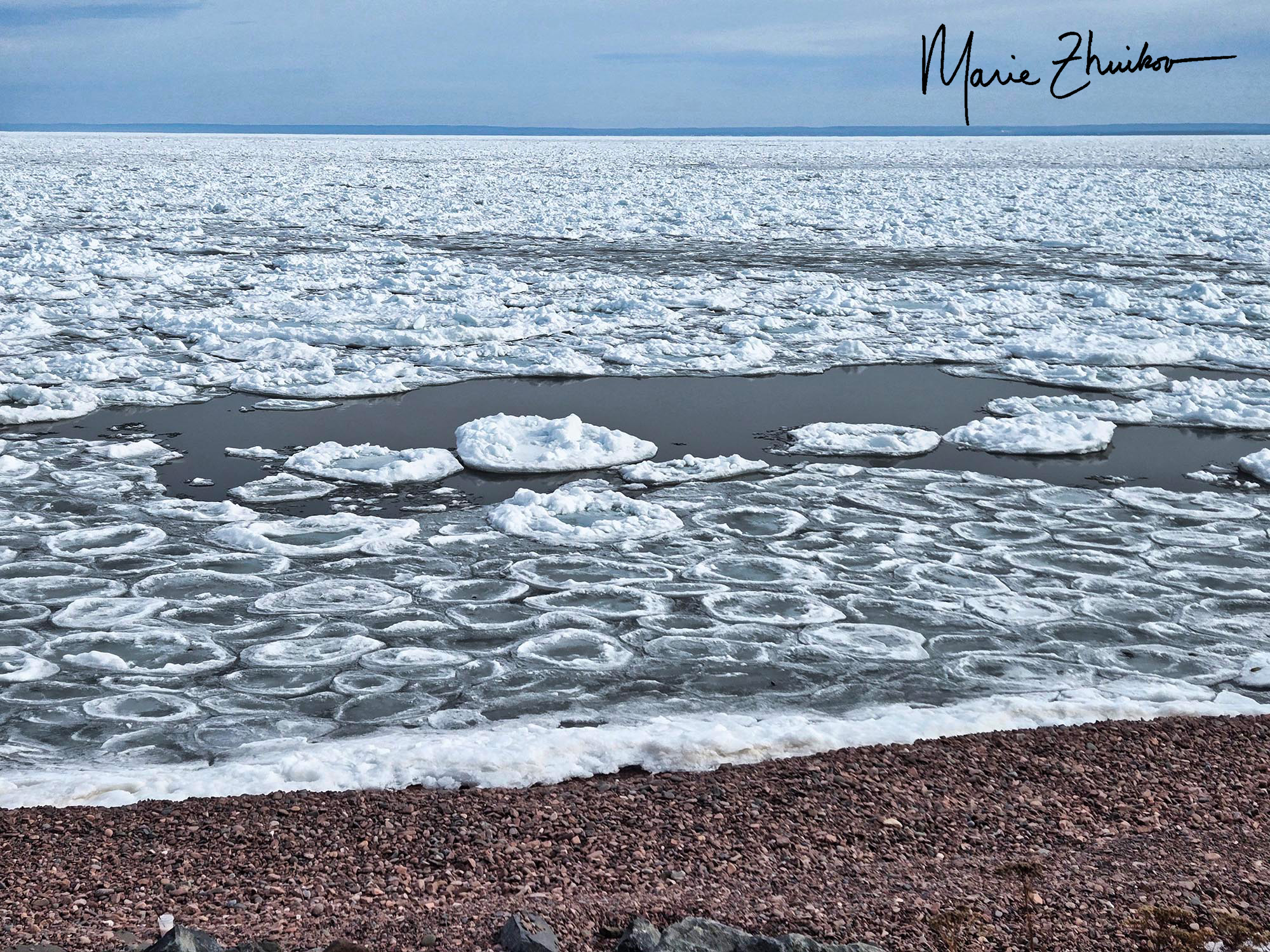
Pancake ice can form in early winter, too, but in spring it occurs when the ice begins to melt and waves or wind blow the ice chunks around. The wind whistles over the lake, carrying the crisp scent of melting ice and the freshness of open water. The ice chunks slap against each other like bumper cars at a fairground. The pancakes form circles with ridges along the sides, their surfaces glistening under the pale, watery sunlight. Pancake ice can also form on open water when it gets cold and ice crystals freeze and then break up and are blown around. This phenomenon can also occur on rivers and in the ocean.

Sometimes the rotating, colliding ice makes sounds, but I didn’t hear any during Russ’s and my walk along Lake Superior’s shore the other day when I took these photos. Instead, there was only the whisper of our boots on the asphalt trail, and the restless sigh of the breeze—sharp enough to sting cheeks and make eyes water.

This year, Lake Superior experienced 27% ice cover. The last time the lake came close to being completely frozen was 2019. The long-term average is 61.5% ice cover, and I assume that average is going down as the climate changes.

During our walk, other signs of warming weather in Duluth were the white legs of everyone who wore shorts for the first time since October. Mind you, it was only 44 degrees F with a cold northeast breeze, but people are so desperate for spring that shorts seemed like a good idea! I even saw a bare-chested man wearing shorts, his skin turning pink in the biting wind. I was not so inclined. In fact, I had to raise the hood on my jacket and cinch it tightly around my face, feeling the rough fabric press against my cheeks as I tried to shield myself from the breeze once we turned around and headed back to our car.

But the pancakes and white legs are here on Lake Superior. Spring can’t be far behind.

On the Dunes

Ice off of Minnesota Point in Duluth. Each of those slabs in the foreground is the size of a person lying down. The ridge behind it is about fifteen feet tall. (I popped a squat to obtain this viewpoint.)

On the Dunes
By Sara Teasdale

If there is any life when death is over,
   These tawny beaches will know much of me,
I shall come back, as constant and changeful
   As the unchanging, many-colored sea.

If life was small, if it has made me scornful,
   Forgive me; I shall straighten like a flame
In the great calm of death, and if you want me
   Stand on the sea-ward dunes and call my name.

I recently stumbled upon this poem while leafing through a stack of old, yellowed pages—poems I had once painstakingly typed on a clattering Underwood typewriter during my high school days. Back then, before the convenience of photocopiers, I’d wander the library aisles, selecting poetry books that called to me. I would borrow them, then sit for hours, as I copied lines that stirred my soul. I imagined that I’d refer to these pages often, though, they have gathered more dust than fingerprints. Now, rereading them, I’m flooded with nostalgia, peering through a window into what once moved my younger heart.

Poet Sara Teasdale lived from 1884 to 1933. She is characterized as “neurotically intense,” and it’s said she moved in the company of poets like a “recessive flame.” She had a tempestuous affair with poet Vachel Lindsay. Later, she married a businessman but then divorced him, retired to seclusion, and in the end, died from an overdose of sleeping pills.

Her poem struck me because I’d just meandered to the beach in Duluth with Russ. If you’re not familiar, we are blessed with a long sandbar at the mouth of Lake Superior. Of course, the beach was snow-covered. The lake’s power was on full display in the form of huge piles of ice piled high about ten yards offshore. I had my phone with me and was tempted to brave the ice to take some photos, but I hesitated, not knowing if the ice was safe. I am well acquainted with the vagaries and dangers of this Great Lake.

However, two other people walked out to an ice ridge in front of me. They survived, so I figured I’d be okay if I followed in their footsteps. I ventured out, and these photos are the result. I was glad I braved the ice to share them with you! Russ wisely remained onshore. I’m also glad that the little adventure didn’t hasten my death so that Russ would need to stand on the dunes and call my name when he wants me. 😊

Seeing Red

Here’s yet another side detour from my New England travelog. Don’t worry, I’ll get back to it!

The other night Russ and I meandered around the backroads north of Duluth, joining many others who parked their cars in random spots and looked up to the spectacle happening in the sky.

That spectacle was the northern lights. I took these photos the second night of the show at about 8:30 p.m. It was so kind of the aurora to happen before bedtime! We found a spot on a gravel road where we could see a whitish curtain of aurora on the horizon. We first stopped at a town hall but there were too many lights, so we went back down the road until we found a dark area. I took a few test shots with my phone camera and wowza! Jackpot.

A green curtain filled the sky, with some red overtones. As the lights continued to dance, the red intensified. This color is rare in auroras.

Here’s an explanation from a local astronomer, Astro Bob (King). I don’t totally understand it, but here’s what he said about that storm:

Red aurora occurs high up in the atmosphere at an altitude of around 150-300 miles. Green emission happens at lower altitudes, around 75 miles. Both are produced when incoming charged particles strike and energize oxygen atoms. After the impacts, the atoms release that energy in the form of green and red light when they return to their original relaxed state.

At high altitude, the number of atoms drops sharply — it’s basically a hard vacuum up there. After it’s struck by a charged particle, an oxygen atom needs almost two minutes to release that energy. If a neighboring atom were to bump into it during the transition, it would short-circuit the process. But because there are so few atoms at that altitude, oxygen has time to release red light before a collision occurs.

There’s so little oxygen to begin with at high altitude, a strong storm is required to crank up enough oxygen atoms to produce the red aurora. Seeing red is a good sign that a significant storm is underway. Overall, the Nov. 11 storm reached the G4 (severe) level, with aurora reported in all 50 states (including Hawaii) and as far south as the tropics.

A farm house and barn stood off to the side and provided more visual interest to the shots. Eventually, the cold got the better of us and we crawled back into our car to return to our modest home filled with artificial light.

Flipping Fishing on its Head

A new sport has reached the shores of Lake Superior. It’s called microfishing. Think birdwatching, but with tiny fish. Quite a change from trying to catch the largest possible fish!

You can read all about it if you’re a subscriber to Lake Superior Magazine. My story is in the October/November 2025 issue. I learned about this unique sport when I interviewed a local department of natural resources fisheries biologist for a different story. Once I retired, I had time to pursue a magazine story. The sport is practiced all over the world.

If you’re not a magazine subscriber and want to learn more, visit microfishing.com.

A Fall Bike Ride

Last month, Russ and I continued our quest to cycle different sections of the Mesabi Trail, which crosses northern Minnesota’s Iron Range. Amid the crunch of fallen leaves and the brilliant red of sumac, we biked from Nashwuak to Calumet with a side trip to Pengilly.

A warm breeze offered one of those final temperate days between summer and fall. The trail began in Nashwauk at a nondescript parking lot near a closed restaurant with the suggestive name of Big O’s Chef House. (Maybe that’s why it went out of business?) Except for a few frost heaves, the mostly flat trail was in good condition. It parallels the highway ,so the distant noise of cars is ever-present.

Much of the land surrounding the trail is owned by Mesabi Metallics Co., an iron ore and taconite mining company. We passed huge piles of mine tailing waste and overgrown past mining roads as a few vultures circled overhead.

In the sleepy Sunday town of Calumet, we rested at a public picnic shelter. The only evidence of life was a man throwing a ball for his black lab. Then we turned around and made our way back to Nashwauk. Along the way, we took a short spur trail to the town of Pengilly just for a change of scenery.

Scenery along the trail.

Once, a pair of teenagers on an ATV surprised us (they’re not supposed to go on the trail). Several times, we had to dodge Halloween-colored (black and orange) woolly bear caterpillars inching their way across the trail. Folklore says they can predict how harsh the winter will be by the width of the colored bands on their bodies: more black equals a harsher winter. We were trying too hard not to squish these fuzzy forecasters, so we didn’t notice their band patterns.

Apparently, science has not confirmed the caterpillars’ weather-forecasting abilities. Even so, the woolly bear remains a symbol of autumn. Its presence offered us a gentle reminder that the season is turning, and nature is preparing for the quiet, cold months ahead. This will probably be our last long ride of the season.

Total distance: 14 miles. For more information about other sections of the trail, please see these previous posts:

Bicycling from Keewatin to Nashwauk

Biking the Mesabi Trail from Ely West

The Mesabi Bike Trail from Mt. Iron to Kinney, MN

Biking the Mesabi Trail from Hibbing to Chisholm

Biking Along the Giant’s Ridge

Biking Across Minnesota’s Tallest Bridge

Jane Goodall

Jane Goodall
Story from the Minnesota Daily, May 7, 1986, page 1.

You may have heard that chimpanzee researcher Jane Goodall died recently. As a young college environmental reporter, I had the chance to meet her once. Here’s a story that I posted in my blog previously and included in my Meander North book. Not only was Goodall a great scientist and advocate for nature, she was a wonderful human being.

Here’s a link to my story: https://mariezwrites.com/2014/09/23/how-i-got-jane-goodall-to-stick-her-head-in-a-potted-palm-tree/.

We’ll miss you, Jane!