France, Day 3: Monet’s Gardens and Rouen (and a chocolate croissant)

A rose tree in Monet’s garden, Giverny

I fell asleep with a head full of grandiose images of Versailles. In the morning those images faded, and I awoke with a mission: to find and eat a genuine Parisian chocolate croissant. Before our trip, many people asked what I was looking forward to most in France. I didn’t answer with a standard reply like the Eiffel Tower or Versailles. For me, it was eating a chocolate croissant. Yes, that’s all it takes to make me happy.

A picture of a picture on a sign that describes a crookie.

You see, in the U.S., I can’t eat anything made with wheat (or corn). From past travels, I know I have good luck eating wheat in Russia and the U.K. Today was the day I put France (and my digestive system) to the test.

A bakery was just around the corner from our hotel, so I hotfooted it over there and made my purchase. I was almost sidetracked by a new type of croissant called a “crookie” that’s all the rage, but I stuck with classic chocolate. (A crookie is a combo croissant and chocolate chip cookie.)

I was not disappointed! The croissant was so crunchy, buttery, and rich with chocolate. If I had to die in Paris now, I could die happy.

My breakfast chocolate croissant

I’m also happy to say that my digestive system suffered no ill effects from the wheat, so I was free to eat like a normal person for the rest of the trip! I’ve read articles about the phenomenon of U.S. tourists in Europe who can eat wheat when they can’t at home. It may be because the wheat used in Europe contains less gluten than U.S. wheat. It could also be because fewer pesticides are used on the crop in Europe.

The Arc de Triomphe as seen through a moving bus window

Powered by croissant fuel, I rejoined Russ and the tour group for a bus ride to our next stop, which was the town of Giverny – site of Monet’s home and gardens. On our way out of Paris, we passed the impressive Arc de Triomphe.

Giverny was more rural than I expected, such a charming village. A long line of tourists were waiting to enter. We had to walk through them to get to the group entrance beyond. I made it through the gauntlet, but others farther back in our group line weren’t so lucky. They said an angry German woman stuck out her arm and wouldn’t let them pass. She must have thought they were cutting the line. Somehow, they convinced her to let them pass. They rejoined our group, shaken by the rudeness, and in a bit of disbelief.

Monet’s pond

But hopefully, the peace of Monet’s gardens and ponds soothed them. In addition to being an artist, Monet was quite the botanist and civil engineer. To create his ponds, he diverted the flow of a small creek. The ponds are the site of his famous waterlily paintings, which he created in his later years when his eyes were clouded by cataracts.

Another shot of Monet’s pond

Like in Versailles, taking a photo without a ton of people in it was challenging, but I managed a few. Russ and I sat on a bench for a while to soak up the feel of the place. That was also a challenge with a parade of people walking past, but we were partly successful.

Monet’s home

Then the path took us into his gardens, and next, to Monet’s pink and green house. I was surprised by all the paintings in the home, but I guess I shouldn’t have been. They were mainly by other artists who were Monet’s friends, but some were by Monet. I was also surprised by all the Japanese prints on the walls. Our guide said that Monet never went to Japan but considered the prints an investment. The home’s kitchen and dining room were quite picturesque.

Monet’s dining room

Then we were back on the bus, traveling to Rouen, which is known for its cathedral, half-timbered houses, and as the place where Joan of Arc was burned at the stake.

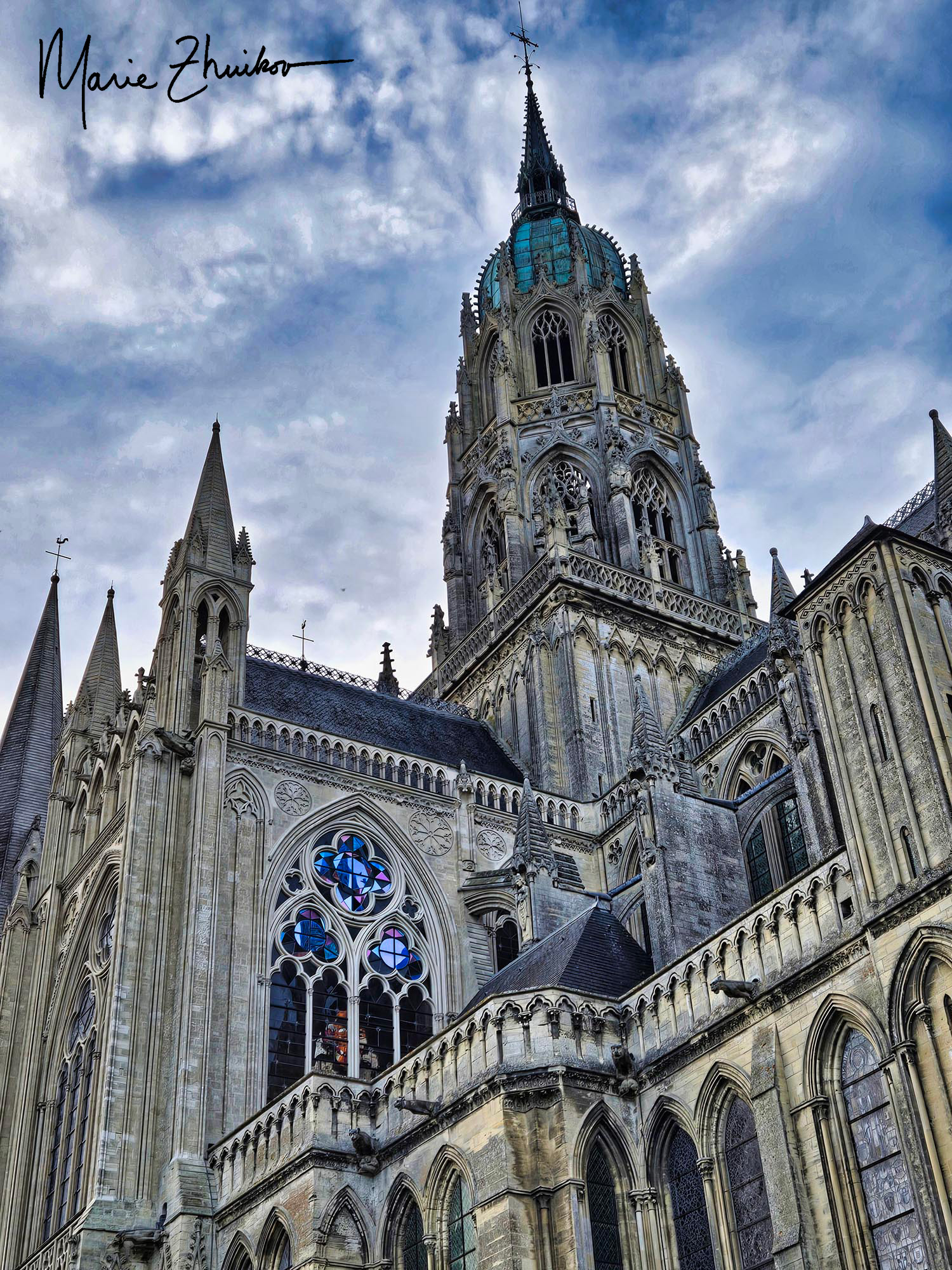
The spot where Joan of Arc was burned bears a stone plaque and is near a large church built with a fish architectural theme (the roof looks like fish scales, etc.) We ate lunch not far from there, and then our group walked to the impressive Romanesque/Gothic-style cathedral, which Monet painted in a famous series to capture how light played on the outside.

Looking up at the Notre Dame Rouen

The inside of the Notre Dame Rouen cathedral was more interesting to me than the outside because it contained the tomb of Rollo, the First Duke of Normandy, and his son, William Longsword. If you’ve been following this blog for a while, you may recall the post about my visit to Maine and the history of my Herring ancestors.

Rollo’s tomb

Rollo was a Viking raider who was given the land in Normandy by the French king so that he would cease his raider ways. Family lore says my ancestor was commander of Rollo’s Navy and was given the title of Viscount. In research I’ve done, I’ve learned that he usually only gave titles like that to relatives (nepotism at its best!), so there’s a good chance we’re related to Rollo.

I made a beeline for his tomb, which carries an inscription that translates to, “He toiled so hard that he died.” In life, Rollo had another nickname: The Walker. Legend has it he was too tall and massive for a horse to carry, so he had to walk everywhere. While historians have debated whether this was an exaggeration, the nickname became part of his enduring legend, emphasizing his imposing stature and intimidating presence on the battlefield. Rollo’s tomb was large but certainly didn’t seem massive.

Walking back to our bus, we saw many properties with bullet holes remaining from WWII activities in Rouen. This included the local police station. The French are sensitive to accusations that they didn’t fight back against the German invasion, but this proves that in Rouen, they did.

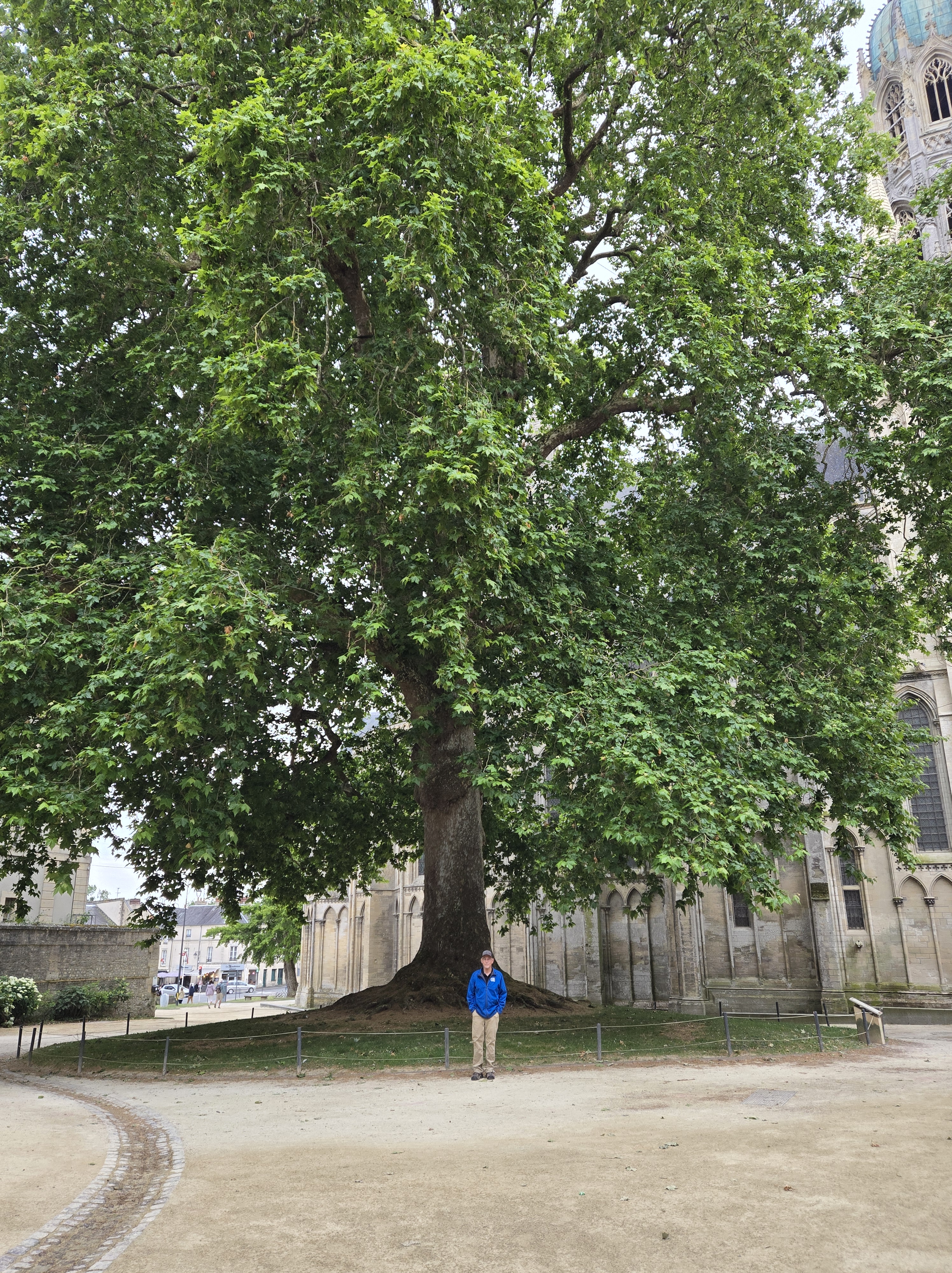
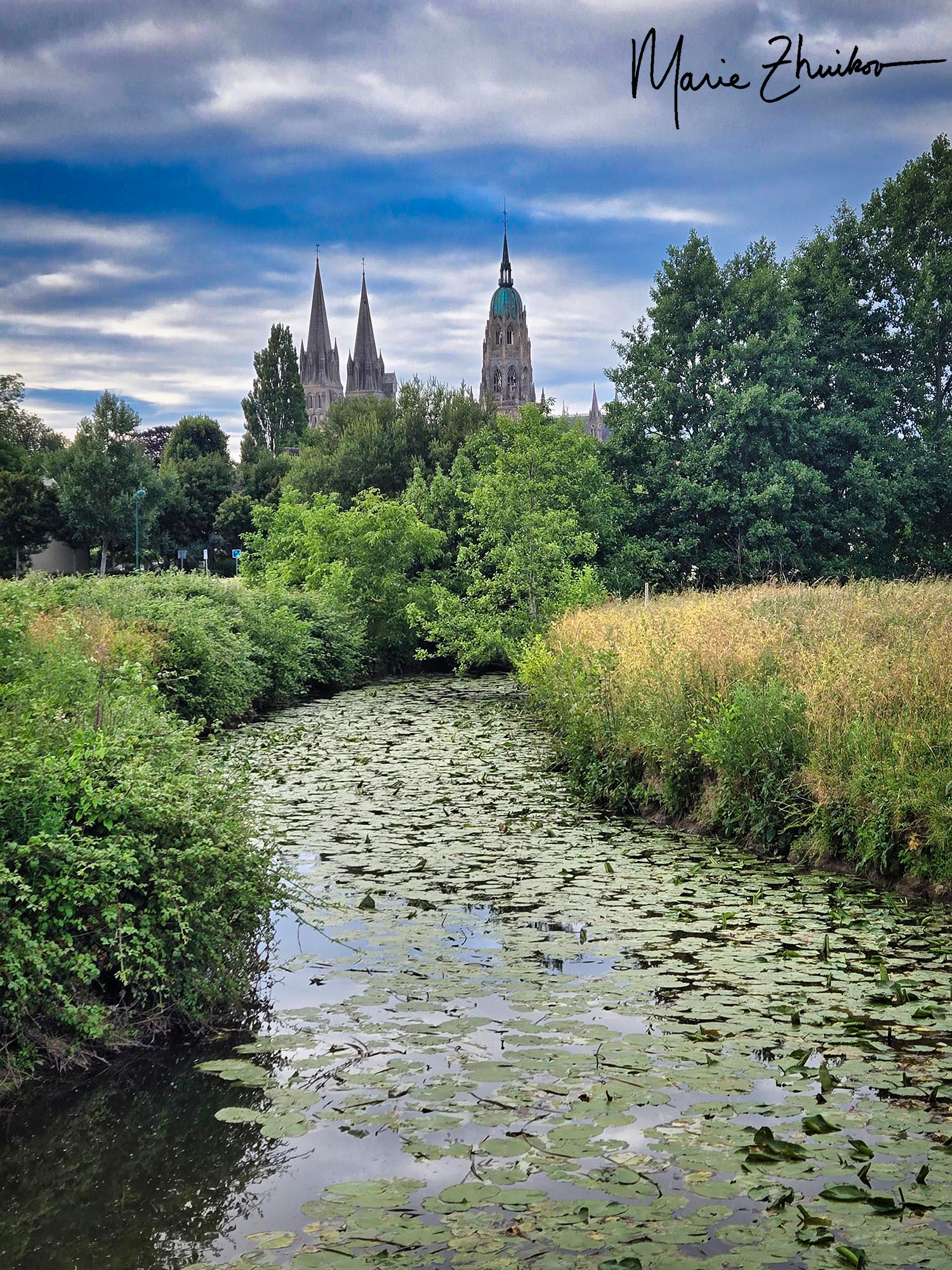
A peaceful scene in Bayeux

Another bus ride took us to the town of Bayeux, which was to be our base for the next few days. After supper, we had free time. Russ and I were able to meander around. We found a city park with a fountain in the middle that depicts the local woman who married Rollo. Her name was Poppa.

Poppa’s fountain in Bayeux. She was Rollo’s wife.

Reflecting on the day, I’m struck by how each experience—from the simple pleasure of a perfect croissant to the awe of Monet’s gardens and the storied streets of Rouen—wove together into a delightful tapestry. These moments, both grand and small, capture the magic of travel: unexpected connections, new tastes, and a deeper sense of history coming alive. France continued to surprise me at every turn, and I was looking forward to what tomorrow would bring.

Next up: The D-Day Beaches of Normandy, Apple Brandy, and Bayeux

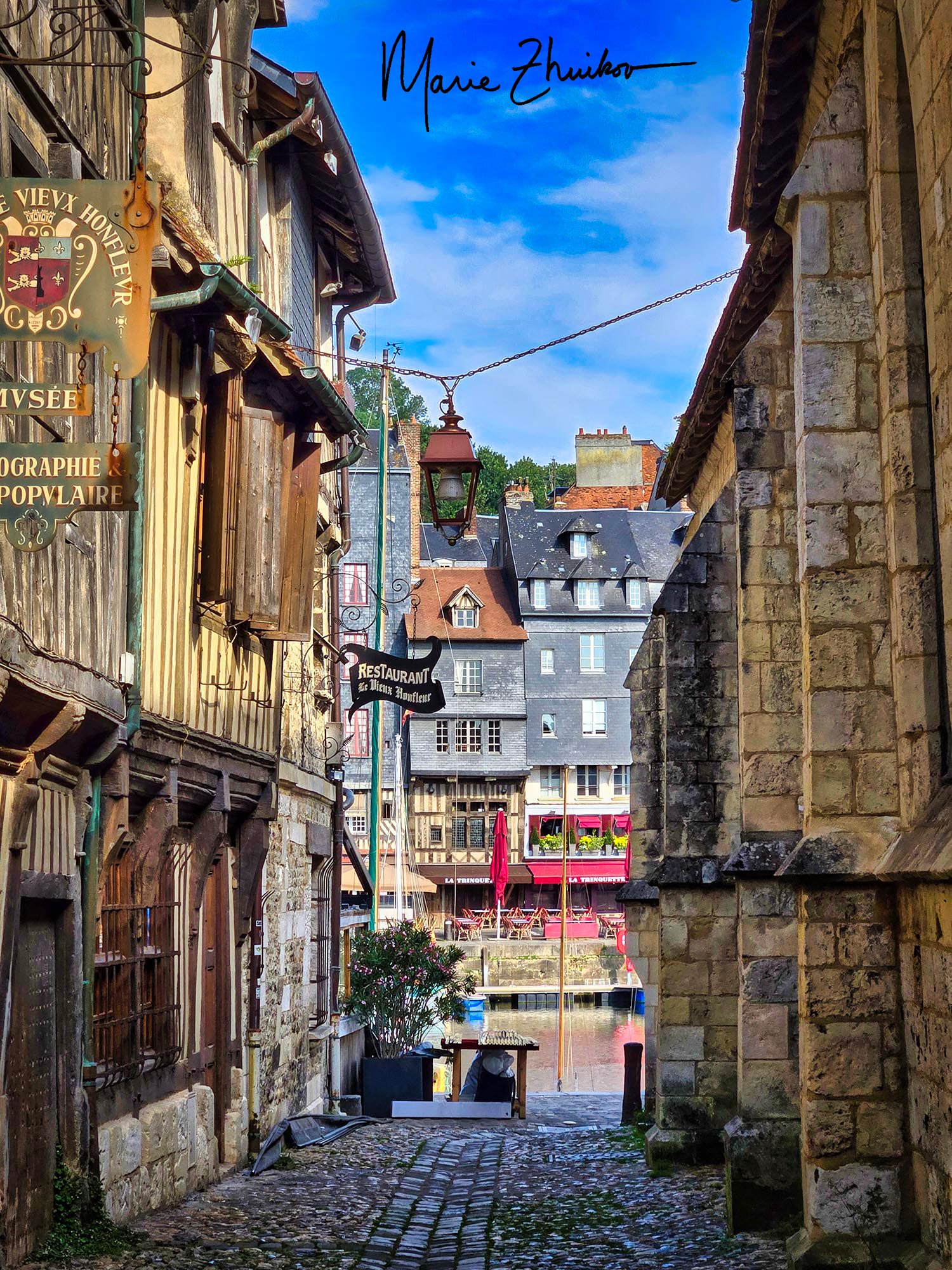
A scene down a side street in Rouen

France, Day 2: Versailles, Musee d’Orsay, and Hemingway

The Orangery parterre at Versailles. It’s like an outdoor greenhouse.

On a bright, warm morning, we boarded a chartered bus to the Palace of Versailles during our Road Scholar tour. We were met there by our local guide, Aurora, and armed guards. I’m not sure whether there are always armed guards at the Versailles entrance, but it might have had something to do with a U.S. president visiting the palace a few days later.

In the 1600s, Versailles was a hunting lodge for the royal family until Louie the 14th decided to turn it into a palace with gardens and fountains. Three generations of royalty lived there until the French Revolution in 1789. Louie the 14th fancied himself a “Sun King”—the center of the kingdom and universe. As such, images of the sun decorated the palace gates and many other parts of the palace.

The impressive gates at Versailles.

The Sun King didn’t want any shade in the front courtyard, so tourists lining up for tickets are forced to bake while they wait to enter. We had group tickets, which involved a shorter line, but we still got a good feel for the heat of the former king’s symbol. The gilded main gate and fences around the courtyard were impressive.

We toured the gardens first. The fountains weren’t on while we were there, but they were still impressive, along with the grand canal. Due to time constraints, we couldn’t see any of the side gardens, which was disappointing.

The Latona Fountain, which features frogs and lizards, and the Grand Canal.

Many years ago, I toured the Russian Summer Palace, Peterhof, outside St. Petersburg. The design was inspired by Versailles. We spent many hours in the gardens and palace there. The French won’t like me saying this: although Versailles is impressive, I think the Russians went a step above. Peterhof was truly spectacular.

The ceiling of the Hercules Room.

Once inside the palace, we toured the Hercules Drawing Room. With its marble walls and ornately painted ceiling, this is where parties were held. Next was the Royal Chapel where Louis the 16th married Marie Antoinette. Following that, we went to the King’s Apartments, where we saw the king’s bed. Between the king’s and queen’s apartments is the famous Hall of Mirrors. I’ve watched movies about Marie Antoinette, and the 250-foot hall is as impressive in real life as it is on screen. The Queen’s Apartments hold a bust of Marie Antoinette, and her bed. Our tour ended outside in the Royal Courtyard, which also lacks trees.

The Hall of Mirrors

The chance to see Versailles was a highlight of our tour, but so many other tourists jostling us and fighting for good photos marred the experience. You’ll notice that many of my photos in this post are of the upper parts of rooms. That’s because the lower levels are filled to capacity with throngs of tourists (like myself!) The French government is trying to preserve key tourist sites by introducing quotas, but it seems like more restrictive ones are needed at Versailles.

A sphinx and cupid sculpture, Versailles

We parted with guide Aurora and our bus took us back to Paris, where we visited the Museum d’Orsay. The huge building used to be a railway station but now houses collections of paintings, sculptures, and decorative objects. The works cover 1848-1914 and include artists such as Renoir, Van Gogh, and Monet.

Luncheon of the Boating Party painting by Renoir. I also saw it in Minneapolis years ago. Felt like I was meeting an old friend!

The museum was also crowded, but not quite as much as Versailles. I found that people-watching was almost as captivating as the artwork. Instagrammers dressed to the nines vied for the best selfies next to famous paintings or sculptures. One woman couldn’t get the selfie she wanted and stood in front of Van Gogh’s self-portrait, making ugly faces to show her displeasure.

Dinner was on our own. Russ and I made a reservation at a restaurant a short walk away, which was one of Ernest Hemingway’s hangouts. Brasserie Lipp is a Paris institution that offers traditional French cuisine. Our waiter told us they haven’t changed how they operate since the 1920s.

Brasserie Lipp, Hemingway hangout

If you go, though, please note that proper attire is required. We missed that info when we made our reservation. Once we arrived, we were met by a sign that said men cannot wear shorts into the restaurant. Guess what Russ was wearing? We pled our case to a waiter. Russ must have looked respectable enough because they let him in. 😊

I ordered a St. Germain spritz, smoked (Scottish) salmon and blinis. (Blinis are like small crepes.) For dessert, we split a rhum baba, which is a rum-soaked cake. It was all very good! Our waiter was excellent, resupplying my blinis before I could even ask, and seeming to read my mind in general. I’ve never had that experience at a restaurant before. (I felt like I was in an episode of The Bear!)

As we ate, I could imagine Hemingway and his friends looking at the same tiles on the walls and enjoying the wonderful food. In his 1964 memoir A Moveable Feast, Hemingway fondly recalled visiting the brasserie, where he would order a cold liter of beer and warm potato salad, immersing himself in the lively atmosphere of the Left Bank.

After supper, we braved the subway by ourselves and made it back to our hotel with no problems. I was very proud of us!

Next up: Monet’s Gardens and Rouen

A retro entrance to the Paris subway system.

France, Day One: Montmartre, Sainte-Chapelle, and the Seine

The Sacre Couer Basilica and part of a merry-go-round in Montmartre, Paris

Russ and I meandered across the ocean to France for a six-day tour through Road Scholar. In case you missed the explanation in my previous post, Road Scholar is a nonprofit travel organization for older adults. We learned about the organization from our parents, who took trips when it used to be called Elderhostel. This was our first trip with them, and it was a great experience!

We decided to go with a tour company instead of making arrangements ourselves since this was a location with language and cultural differences, crazy traffic, and crowds. Besides, we needed a break from planning.

After arriving in Paris, we met our tour guide, Christine, at the airport. She was from England but now lives in France. She had arranged for a van driver to take us and another couple on the tour to our hotel, which was in the 9th District (Arrondissement). We had time to unpack before meeting the others in our group of sixteen in the lobby for orientation. Everyone was from the U.S. There were a couple of single people and one couple who were dating. The others were all related in some way, either through marriage or blood.

Other than dinner at a restaurant a short walk away, that was it for this partial day, so I’m not counting it. Our next full day began at a civilized time to help with our jet lag, which was much appreciated. After breakfast, which featured crème brulee (we’re definitely not in Minnesota anymore), we were off!

St. Denis and his head in the Notre Dame de Montmartre Cathedral.

With the help of our Paris guide, Aurora, we navigated the Paris Metro (subway) to travel to Montmartre, the historic neighborhood made famous by past artists like Renoir and Picasso. It continues to be popular with artists and writers today. In Roman times, it was called the Mount of Mars. Temples to Mars and Mercury were built on the hill. The Christian era gave the neighborhood the name it has today, which translates to “Mount of the Martyrs, when Saint Denis, the first bishop of Paris, was martyred there around 250 AD.

According to legend, he was beheaded in front of the temple of Mars, then carried his head six kilometers to the site of the Basilica of Saint-Denis, where he was buried. A chapel called the Martyrium (“chapel of martyrs”) was built nearby, and the neighborhood’s name came to reflect its role as a site of Christian martyrdom.

We did not visit St. Denis’ basilica, but we did see two others there. One was the Sacre Coeur, which is perched atop the hill. To see the great views of Paris from this location, visitors must either walk up 400 steps or take a funicular (incline tram) to the top. While some in our group walked up the stairs, most opted for the funicular. Russ and I rode it just for the novelty.

The line was long, however. Our intrepid guide, Aurora, gained permission from the tram operator for our group to move up in line, although she must have played a medical card because she asked a couple of our members to exaggerate their disabilities as we walked to the front of the line. 😊 (One man in our group had a recent knee replacement; another had had a stroke and walked with a tilted limp, although both kept pace with the group admirably the rest of the time, even so.) It worked. The crowd parted for us like the proverbial Red Sea.

View of Paris from the Montmartre neighborhood

At the top, we enjoyed the view of Paris and our first glimpse of the Eiffel Tower. A short walk took us to Notre Dame de Montmarte, which is the oldest church in Paris. Aurora told us a story about how it was saved by the artists, most of whom weren’t religious, because they realized the structure’s historical significance. We toured the interior, where I noticed a statue of a man carrying his head, which could only have been good old St. Denis.

One thing I figured out before our trip is that there are A LOT of cathedrals in France named Notre Dame. The name isn’t reserved just for THE Notre Dame Cathedral. It translates to the Virgin Mary, and she’s a big thing in France, so there are many cathedrals named for her.

Aurora, our wonderful Paris and Versailles guide

As we walked through the cobblestone side streets, Auora explained that for centuries, gypsum was mined from the hill, giving rise to the “plaster of Paris” industry.

After some free time to shop, we walked back down the hill and took the subway to the heart of Paris, or the Île de la Cite, the island where Paris was first founded in the Iron Age by a Celtic tribe.

Norte Dame Cathedral

There, we saw THE Notre Dame Cathedral. It’s still undergoing repairs from the fire that damaged it in 2019, but the front looked great. Statues of many kings line the walls of the outside. Aurora told us that many of the statues were beheaded during the French Revolution when the monarchy fell out of favor. The heads were repaired in the 1840s. The cathedral houses holy relics, including the crown of thorns and pieces of the cross. We had the option to go inside, but the line was so long, and we were hungry, so we opted to eat lunch nearby instead.

Sainte-Chapelle Cathedral

Our next stop on the Île de la Cite was Sainte-Chapelle, which offers an excellent example of Gothic architecture. Aurora told us it only took 6-8 years to build, which is amazing given its ornateness. King Louis IX wanted it to house the religious relics he acquired from the holy land at great cost (half the country’s GNP) – the same relics that are now in Notre Dame. He acquired them to elevate Paris and France’s status as a center of Christianity in medieval Europe.

Sainte-Chapelle has upper and lower chapels. Aurora said that 70 percent of the stained glass in the upper chapel is original. The windows depict bible stories and the king’s coronation. Being surrounded by the slender columns of glass made me feel like I was in a large jewelry box. Of all the cathedrals we saw on this trip, Sainte-Chappelle was the most impressive.

Next on our agenda was a boat tour of the Seine River. On the way, we passed the Eiffel Tower, which we were excited to see. I never realized that it is painted brown! (I thought it was black.) Although before our trip we had wanted to go to the top of the tower, once we were in Paris, it didn’t seem as important, so we did not do that typical tourist experience.

During our boat ride, I was impressed by the number of people hanging out along the river. Parisians (and tourists, I suppose) really like the Seine! That was good to see. As the tour progressed, we passed the Golden Flame. Originally built in 1989 as The Flame of Liberty, a symbol of friendship between France and America, after Diana Princess of Wales’ fatal car crash in the tunnel beneath it, the monument became a de facto shrine to her.
People hanging out along the Seine

Later, we drove through that same tunnel. I was surprised by how short it was. But I guess if conditions are right (or wrong), tragedy can happen anywhere. I can still remember arriving home after a week in the wilderness and hearing about her death on television. We were about the same age and in similar places in life emotionally, so I took her death hard. Although the Golden Flame isn’t officially her shrine, I’m glad she’s being remembered anyway.

After the boat ride, a private bus took us back to our hotel. Dinner was on our own. Since we were in France, you’d think we’d opt for French food. But we had French food the night before, so we chose a Mediterranean restaurant across the street called Madonna. An excellent choice! Seated alfresco, I had sea bream (a whole fish) that was baked in a salt crust with anise, and an eggplant dish on the side. I have cooked fish this way at home and had never seen it on a restaurant menu before, so I was excited to try it. What I didn’t know was that our waiter would fillet the fish before our eyes. He freed it from its salty crust, cut it, and deboned it. You’d think the fish would be salty, but that’s not the case. Only a bit of salt slowly infuses into the fish as it cooks. The result was moist and wonderful.
My memorable tirimisu

I also made our waiter work his magic for dessert. I ordered the tiramisu, which is prepared at the table. Two rum-soaked ladyfinger cookies arrived on a plate. He poured espresso over them, then topped them with heaps of whipped cream. A sprinkle of cocoa completed the dish. Somehow, it tasted better after having watched the process.

Looking back on our first full day in France, I am struck by the blend of history, beauty, and small delights that set the tone for our trip. From the soaring cathedrals and storied streets of Paris to the pleasures of fine cuisine, every moment offered a fresh perspective on this remarkable city. As we settled in for the night, full of good food and new experiences, we were already looking forward to the adventures still to come. France had welcomed us with open arms, and our journey was off to an unforgettable start.

Next up: Versailles and the Musee d’Orsay

A gargoyle on Sainte-Chappelle

Meander Along Lake Superior with Me

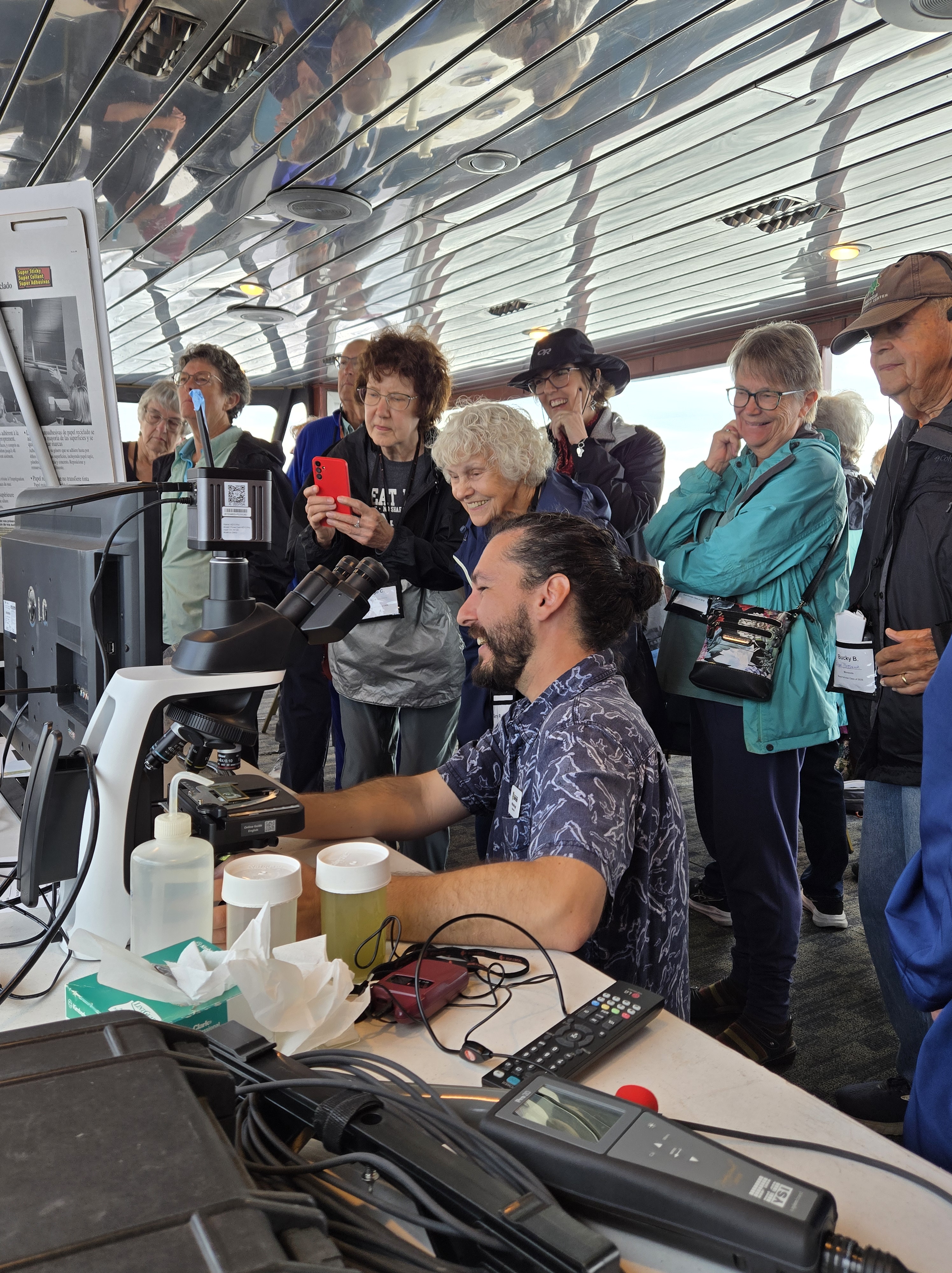
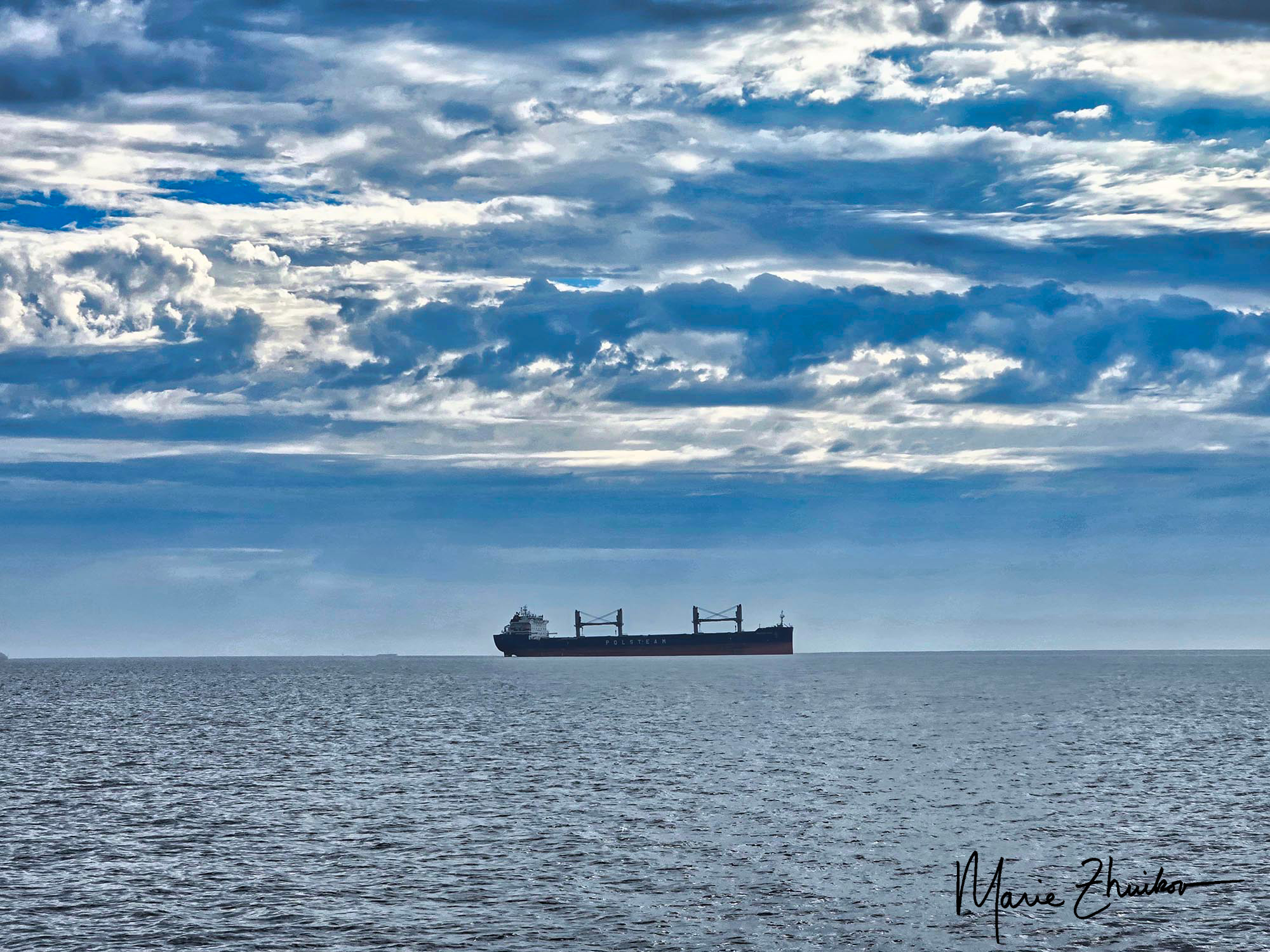
The contract is signed, so it should be safe to let you know about this travel opportunity: I have a gig lined up this August to lead two trips for the Road Scholar Program along Lake Superior. I learned about the job from an email forwarded by a friend who knows about my outdoorsy and traveling nature.

Road Scholar is a nonprofit travel organization designed to inspire older adults to learn, discover and travel. Their learning adventures “engage expert instructors, provide extraordinary access, and stimulate discourse and friendship among people for whom learning is the journey of a lifetime.”

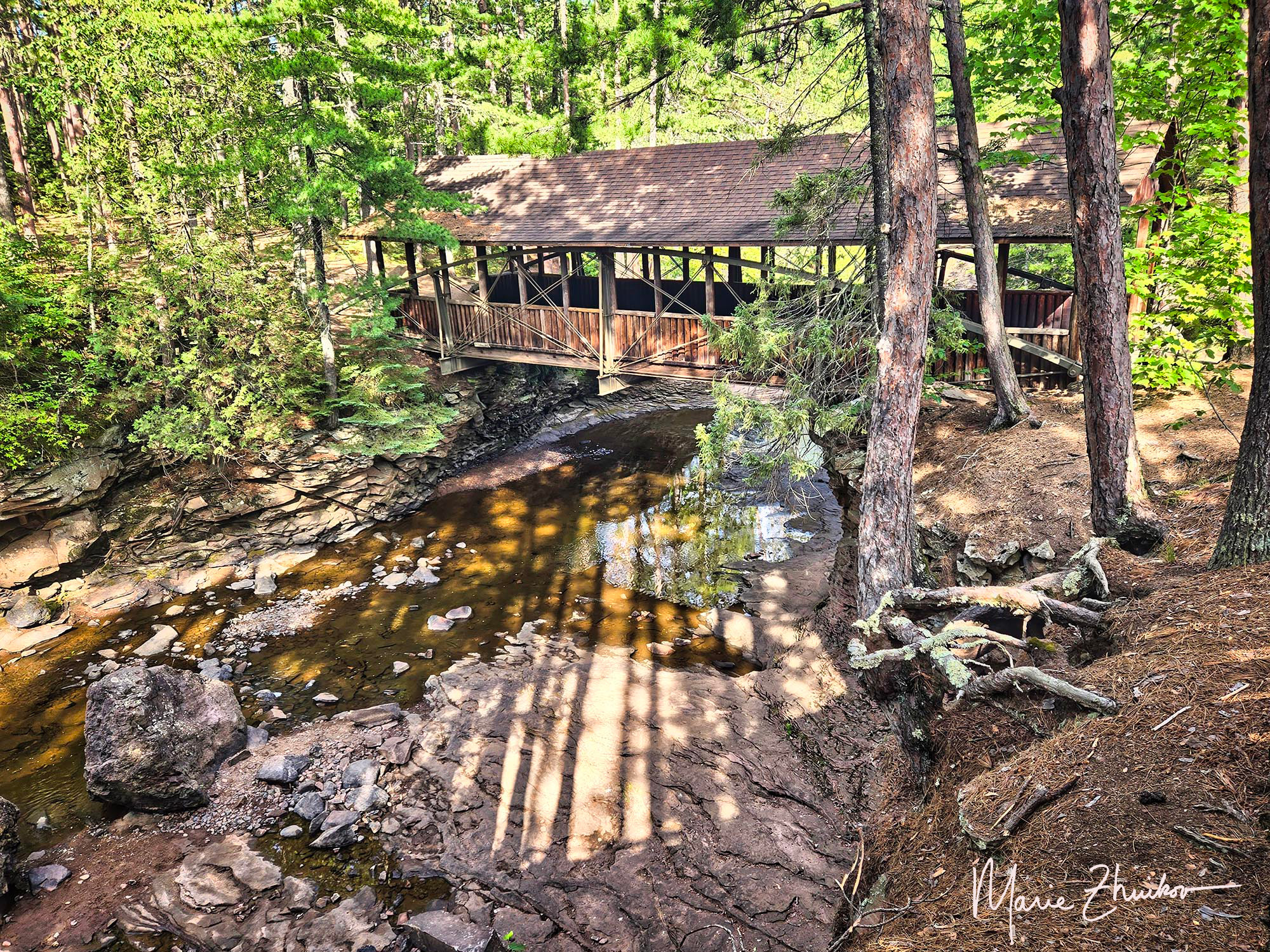
These Lake Superior trips are based in Superior, Wisconsin. Travelers will learn about the history of the Twin Ports (Superior and Duluth) and enjoy field trips to historical sites and presentations by local Indigenous elders and historians. Experience hands-on learning, explore the aquatic creatures of the Brule River State Forest and surrounding natural wonders through canoeing and hiking.

There are a few spots left for the two trips I’m leading in August. If you’re over 50, have $2,000 lying around, and want to spend six days meandering with me, consider signing up! It’s rated as a vigorous trip, so you’d need to be in shape. You can learn more at this link: A Superior Exploration: Lake Superior’s History & Ecology. [UPDATE: The 2026 trips are all sold out now!]
I can’t wait to share my love of Lake Superior with fellow travelers.

Visiting Wisconsin’s Highest Waterfall, Pattison State Park

Big Manitou Falls, Pattison State Park. Note the tiny people on the overlook platform in the upper left.

Last weekend, admission to Wisconsin State Parks was free. Russ and I took advantage of this annual event to visit a park that’s only 22 miles from our house. As you, dear astute readers, can tell from the title of this post, Pattison State Park is home to the state’s tallest waterfall. The Black River falls 165 feet down a basalt cliff called Big Manitou Falls. A smaller waterfall, Little Manitou Falls, is also in the park, farther downriver.

The swimming beach at Pattison State Park.

Martin Pattison, a lumber baron who had a logging camp on the Black River, donated 660 acres of the 1,400-acre park to the state. If you’ve ever toured Fairlawn Mansion in Superior, Wisconsin, that was his house. In 1917, Pattison learned of plans to build a hydroelectric dam on the river, which would have destroyed the falls. With his wife’s encouragement, he secretly purchased all the land surrounding the falls to block development, and Pattison Park was formed in 1920.

According to the park newspaper, Patterson saved the falls because he felt a connection to them. “In being able to grant this site to the public, I have accomplished one of my chief ambitions. For years, I have spent much time amid the surrounding of the falls and have received so much enjoyment there that it gradually became part of my life,” he said.

On our trip, Russ and I left Duluth, Minnesota, which was shrouded in fog with temps in the 50s, and mist rising off the harbor. We journeyed to inland Wisconsin, with temps in the 70s. We parked in the main lot and took a short hike on a paved trail past the swimming beach on Interfalls Lake, then through a tunnel that runs under the road. Of course, we had to make noises in the tunnel to test the echo. 😊

The tunnel to the Big Manitou Falls Trail.

A small bridge took us across the river. From there, it was a short walk to an overlook where we could see the impressive power of the water flowing over the top of the falls. Another short walk (part of which was along the road and past the Big Manitou Falls parking lot) took us to several overlooks of the falls. Wild and rugged, the falls are the antithesis of the farmland and village we passed on our drive to the park.

We thought that we might get a good view of the falls from the riverbed, so we took the Big Manitou Falls Trail a half mile down to the river, but we were mistaken. We “only” saw the river. But if you like rivers, it’s worth it!

The view from the top of the falls.

Then came the half-mile hike back UP to the top of the falls. The trail is rated moderate to difficult due to the incline, but most of it was wide enough for two people to walk beside each other and was fairly level.

We walked back to the bridge and hiked along the other side of the river to two overlooks. The last overlook is not for the faint of heart! A wooden platform perched on the hillside makes you feel like you’re hanging on the edge of the cliff (because you are). But the view of the falls and the river gorge is spectacular.

The park features several other longer hiking trails, a campground, picnic area, and a backpacking camping area.

During our trip, I marveled that I’d never been to the park, especially since it’s so close to Duluth. After arriving back home, I checked with my older brother, and he assured me that I visited the park several times as a child.

I have no memory of those visits. Perhaps I was too young? In any event, I’m glad I rediscovered this gem of a park. It offers a blend of natural beauty, history, and adventure that makes it worth the visit. Whether you’re drawn by the thunderous falls, the hiking trails, or simply the peaceful setting, there’s something here for everyone to enjoy. I felt grateful for the chance to experience such a remarkable place—and am eager to return for more memories in years to come.

If you’re ever in northwestern Wisconsin, be sure to check out Pattison State Park!

Another view of Big Manitou Falls.

Canoe Story Published!

My story, which originally came from this blog, was recently published in a local magazine called Northern Wilds. The story is about “That Time I Lost a Canoe in the Boundary Waters.” The magazine is on local (northern MN) newsstands now, but if you’re not from around here, you can read the original story here. This story, which took place in 2003 with my BFF Sharon and her children (and mine), also appeared in my blog-memoir book, Meander North. The Wilderness teaches me a lesson in it.

The Northern Wilds editor has been gracious enough to agree to publish some of my blog posts in her magazine when she needs stories. In this June issue, I was also interviewed by writer Victoria Smith for her story about, “Camping with Canine Friends.” You’ll see photos of my dearly departed goldendoodle, Buddy, and tips about how to successfully camp with your dog.

In case you’re wondering, I still miss my Buddy greatly, but I’m not ready to get another dog. I have too much meandering left to do, and that is easier without having to pay kennel fees for the dog left behind. Perhaps once I/we curtail our traveling, we’ll be open to loving another pet.

Happy reading and happy writing!

Buddy lives in print!

Wandering Wisconsin Point

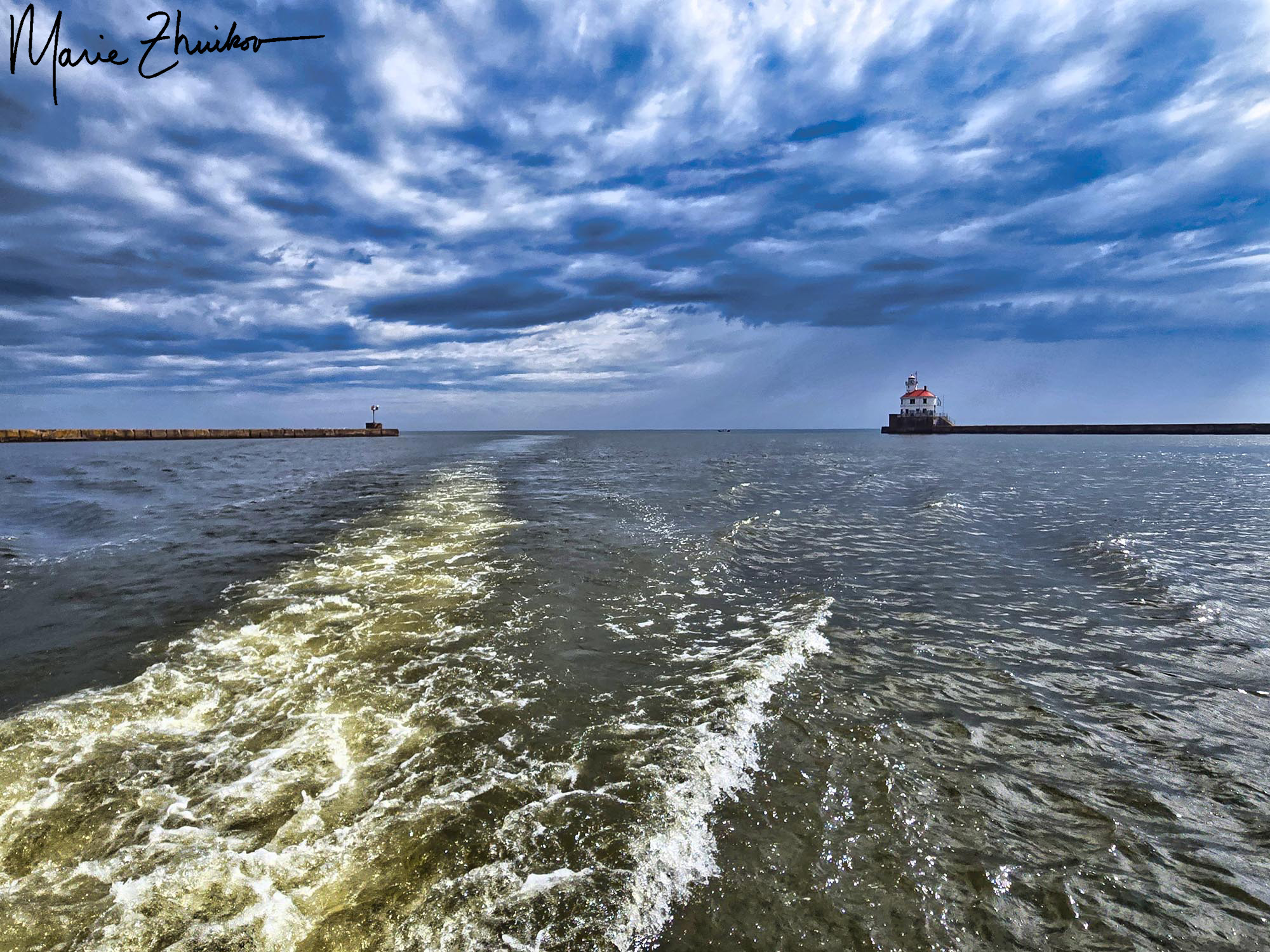
The Superior ship canal and Wisconsin Point lighthouse.

Russ and I visited a windswept peninsula near Superior, Wisconsin, last weekend. We wanted to check on how the prescribed burn area was rejuvenating after the burn I helped with last fall. As we approached Wisconsin Point, the steady roar of Lake Superior on one side and the more muted lap of Allouez Bay on the other created a backdrop of sound. Once, the Ojibwe lived there, but now the point is mainly a recreational area. It’s known for its towering pine forest and the distant flash of its lighthouse.

The prescribed burn area on Wisconsin Point.

In the burn area, the air still held a faint, smoky tang, but plants seemed to be coming back well, even with our chilly spring. Bright green grass sprouted bravely through ashen soil, and I ran my fingers over the bark at the base of some trees, rough and blackened but still sturdy. The large trees seemed little worse for wear—did you know that the rugged bark of red pines is fire-resistant? The trees need fire to regenerate, so they have adapted to it. That’s one reason for the prescribed burn: to encourage red pine regeneration. The point’s white pines, their needles soft and fragrant, are doing fine, but the red pines remain sparse. On our walk, we spotted an eagle’s nest, a massive tangle of sticks perched high above, and heard the sharp calls of the birds echoing through the canopy.

Bear Creek Trail, Wisconsin Point

Wisconsin Point also sports a relatively new nonmotorized trail that I haven’t had a chance to hike yet. The Bear Creek Trail begins near Hwy 53 and parallels Moccasin Mike Road to Wisconsin Point. Once on the point, it crosses Wisconsin Point Road, enters a wooded upland, and then a marsh for a total of 2.3 miles. It ends at the first parking lot on the point and sports a gravel surface, wooden bridges, and an impressive floating boardwalk over the marsh. Along the way, a pagoda provides a scenic view of the lake and the bay. Although the weather was a blustery 45 degrees, the forest provided shelter and warmth.

The pagoda on Bear Creek Trail

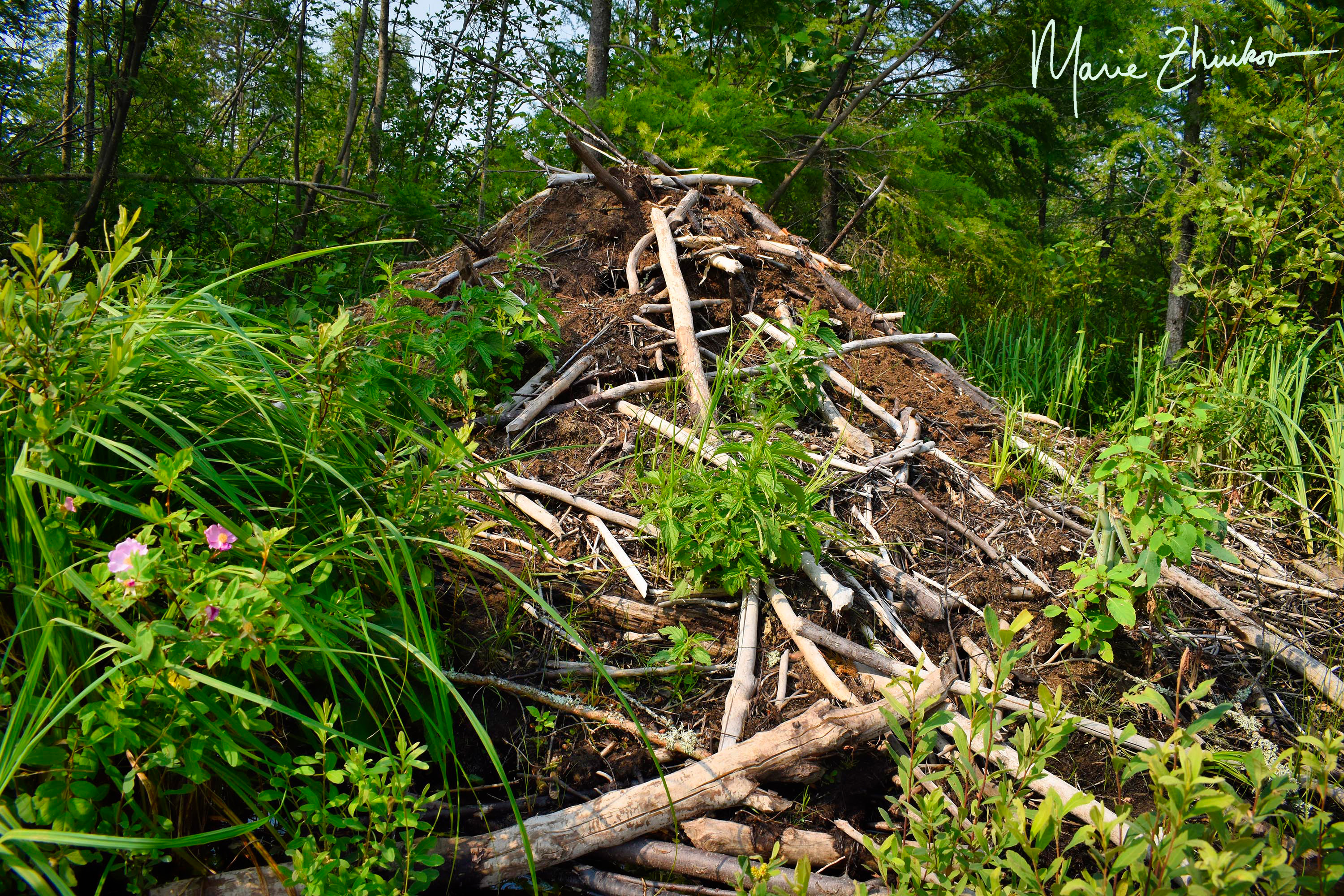
As we crossed the marsh, we noticed a beaver lodge and heard a Sora waterbird call. Soras are also known as Carolina Crakes. They’re brown and white, about the size of a chicken, but with longer legs perfect for wading in the shallows. Although the birds are common throughout the U.S., they are relatively rare in Wisconsin because they require large and healthy wetlands for habitat, and we all know what humans like to do to wetlands. (Drain them!)

A wetland along the Beaver Creek Trail, complete with beaver lodge.

Our visit to Wisconsin Point was both invigorating and enlightening. Seeing the resilience of the landscape, from the recovering burn area to the thriving wildlife, was a reminder of nature’s ability to adapt and flourish. The combination of ecological restoration, immersive natural experiences, and unique wildlife sightings makes Wisconsin Point a destination delights the senses and invites return in every season.

A Hike on the Prairie

We meandered west to Minnesota’s Pothole Prairie Region last weekend. Russ’s daughter had planted roots — bought her first house in a small town there. Naturally, we were eager to witness her new beginning.

The Prairie Pothole Region is an expansive area in the northern Great Plains, primarily located in Minnesota, North Dakota, South Dakota, Iowa, and parts of Canada. It’s known for its thousands of shallow wetlands, commonly called potholes, formed by glaciers about 10,000 years ago. Depressions in the ground left by glaciers fill with water from snowmelt and rainfall, creating a diverse habitat for various species.

Muskrat houses

The region is often called “America’s Duck Factory” because it supports over 50% of North America’s migratory waterfowl. These wetlands provide essential breeding, nesting, and feeding grounds for many bird species, making them one of the most important migratory bird habitats in the Western Hemisphere.

We enjoyed our visit not only to the house and stepdaughter, but also with our two little white “grand dogs.” They are energetic and wonderful hikers. We wore them out on the first day with two hikes. The second, where I took these images, was on the Edwards Waterfowl Production Area Trail. The first part of the trail was paved, then a longer section (about a mile) was mowed.

The trail sports a photography blind on one of the pothole ponds. We entered, but the ducks were far away, and I don’t have one of those fancy telephoto lenses on my camera, so the blind was wasted on me. But, we saw and heard many redwing blackbirds, yellow-headed blackbirds, tree swallows, killdeer, Canada geese, yellow warblers, and song sparrows.

The clouds put on a show – the kind only available in wide open spaces. I loved the oak stands that graced the hillsides.

We left the wetlands full of wood ticks and wonder. I hope you enjoy this virtual tour.

Connecting with Family History in Guilford, Maine

The Piscataquis River in Guilford at sunset.

As you may recall, for our epic New England Road Trip, in October Russ and I flew from our home in Duluth, Minnesota, to New York to visit Russ’s family members there and in Connecticut, and then drove north, exploring sites connected with my mother’s ancestors. Guilford, in the Maine Highlands, was the culmination of our trip and was the spot I’d been wanting to visit for over 15 years, ever since I did an internet search on my Herring ancestors and discovered that Robert Herring (my great-grandfather to the fifth power on my mother’s side) was one of the founders of Guilford.

As if that weren’t enough, Guilford was the original home of the Burt’s Bees brand of personal care products infused with honey and beeswax. That company has since moved away and changed owners. Now, Guilford is home to a company that makes many of those cotton-tipped nose swabs that we all became too familiar with during the COVID epidemic.

Back when I made my discovery fifteen years ago, I was so excited that I wrote a history about Gilford’s founding and sent it to their historical society. I see that it has since ended up in the University of Maine’s Digital Commons! (“Early Town History: A Tale of Three Roberts.”)

A photo of Robert Herring. On the back, it says “Robert Herring the 1st,” so I assume this is Benjamin Herring’s son Robert, who was the privateer-turned- deacon. The photo was taken in nearby Dover, Maine. (Now known as Dover-Foxcroft.)

Privateers and a Deacon

My mother and her sisters compiled an extensive genealogy for our family before the era of computers. In it, they documented Robert Herring, his father Benjamin Herring, who was born in Gloucester, Massachusetts, in 1727, and his father Robert Herring, who immigrated from England in the early 1700s. But my mother and her sisters didn’t know about the family’s role in founding Guilford.

I found these ancestors interesting because Benjamin Herring was a Revolutionary War privateer who was buried at sea off Cape Sable Island, Nova Scotia. According to info I found on Wiki-Tree, Benjamin was the captain, and his ship’s name was the Princeton. His son Robert was also a privateer, but according to research by one of my California cousins, he gave up that life, became a deacon in the Baptist Church, and headed inland with his cousin Robert Low to found Guilford. Robert Herring’s son, Robert Lowe Herring, and his family followed soon after.

(There’s some question about whether there was an “e” on the end of Robert Low’s name. I’m leaving it off to minimize confusion with Robert Lowe Herring. But I’m pretty sure that RLH is named after his relative Robert Low.)

Brian and Cindy Woodworth.

I let the Guilford Historical Society know about our trip, and their president and treasurer, Brian and Cindy Woodworth, were good enough to notify other Herring relatives and to open the museum for us during our two-day stay.

Before our museum visit, we had a delightful chat with some cousins, who are related to the original Bennett settlers of Guilford and to the Herrings. We met at the Guilford Bed and Breakfast, where we were staying. They gave me copies of helpful information about the Herrings and privateers.

By the way, if you ever stay in Guilford, the Bed and Breakfast is the place to go! The colonial Victorian is run by John and Lisa McNamara, new transplants from Georgia. They’re also active members of the historical society and the community. They spoiled us with homemade gourmet breakfasts made to order. In the evenings, we enjoyed a cocktail in the inn’s Hummingbird Lounge when we weren’t curled up with a book in front of the library fireplace.

The Guilford Bed and Breakfast

We ate other meals at the Red Maple Inn. If you want a taste of “real backwoods Maine” and superb service, that’s the place!

Guilford Historical Society Museum

During our museum visit with Brian and Cindy, we were excited to meet a Herring cousin. She and I compared genealogical charts and figured out how we might be related. We were also happy to see the “mother’s chair” at the museum. When Robert Lowe Herring brought his family from New Gloucester, Maine, to Guilford via ox cart, this was the chair his wife, Mary (Polly) Wagg, sat on for the week-long trip. The chair was then passed down through the family and later donated to the historical society. I got to actually touch this piece of history!

The Herring “Mother’s Chair”

My newfound cousin showed us Herring photos that I had not seen before. Afterward, she drove with us to the cemetery was in town and showed us where some Herring graves were located. Then we parted. Russ and I drove to Guilford Center and toured the cemetery and Baptist church there. This is where the family first settled. We also drove across Lowe’s Bridge, a covered bridge named after Robert Low), and past Herring Brothers Meats store, which the family owns. We even took a walk along the Piscataquis River where Robert Lowe Herring built a sawmill. (I learned the hard way from locals that the river’s name is pronounced pis-CAT-a-qwis not PIS-cat-a-qwis.)

Lowe’s Bridge in Guilford. It’s been rebuilt a time or two due to flooding.

Both Robert Lowe Herring and his father had eleven children each. Robert Lowe Herring died in 1847, about a year after from the heartbreak of seeing his youngest son, Alvin, die in a tree-felling accident.

Historical accounts (Sprague’s Journal of Maine History) say that Robert Lowe Herring was “well-fitted for pioneer work. Robust in mind and body, no combination of obstacles and hard labor changed his course once he determined upon the accomplishment of a certain purpose. He enjoyed overcoming difficulties-the greater they were, the greater his satisfaction when they were surmounted. The sight of suffering, in man or beast, moved him to tears. No one was ever turned from his door unwarmed or unfed. No neighbor in difficulty or distress ever appealed to him in vain for aid.”

I found another good story about Robert Lowe Herring in the History of Piscataquis County. It involves his neighbor, Ephriam Andrews. This poor neighbor was “afflicted with a morbid and partially insane state of mind . . . Although surrounded with good neighbors, he would drive his plow team all day with an axe on his shoulder, fearing that some of them would take his life.” Ephriam was a Revolutionary War veteran, so it could be that his mental health issues stemmed from that experience.

Ephriam’s sons regarded him as dangerous. They “prepared a small cage and shut him in. But he was marvelously ingenious in contriving and making escapes. They would capture him and force him back, and this would aggravate his insanity and rage.”

The breaking point came one spring in 1814 when Ephriam escaped. His sons surrounded him, trying to recage him. “He had armed himself with a small axe, and brandishing it, bade them stand off at their peril. But his youngest son, Samuel, then about fourteen years old, not believing that he would strike, daringly pressed up. The enraged father struck him a full blow in the face with the edge of the axe – nearly a fatal stroke.”

Ephriam was then jailed. His son recovered but carried an ugly scar the rest of his life. After being released from jail, Ephriam’s wife left him. The one person he seemed to trust was Robert Lowe Herring. Ephriam gave him all his property, and Robert let him live with him and his family. The arrangement seemed to work.

“There he had a good home, lived in listless ease, and sought his own entertainments. . . He died suddenly on his ninetieth birthday in Mr. Herring’s house.”

Can you imagine having a would-be axe murderer living in your house?! It says a lot about Robert’s character that Ephriam trusted him and that no more physical harm ensued, even though Ephriam’s “evil spirit would at times return.”

Ancient Family History

One of my Guilford cousins directed me to a book in the museum (Connor Genealogy) that contained information about Herring ancient history. This info was compiled by Menzies Herring, a family genealogist who lived in Massachusetts years ago, and Jerome Campbell Herring. Menzies used to mail questionnaires to Herring relatives across the country and perhaps that’s where he learned the history. 

William the Conqueror image courtesy of History on the Net.

The family supposedly originated in Denmark. (My note: possibly in a town with a name that sounds like “herring,” which could either be Herning or Hjørring). They became Viking raiders and eventually settled in Normandy. A Herring ancestor was a “commander” in the Norman Navy under Rollo, the Norman chief who became the first Duke of Normandy. As such, this Herring was given the Norman title of Viscount. Generations later, another Viscount Herring supported William the Conqueror, who sailed from Normandy and overthrew the English King Harold II during the Battle of Hastings in 1066. Viscount Herring then remained in England to help William hold onto his new kingdom. He was then given the English title of Baronet.

That’s where the ancient history stops. It agrees with my genetic testing, which indicates Nordic ancestry in the distant past and then more recent ancestry from France and the British Isles. In recent research, I have found a number of Herrings on the British Peerage website; however, it appears that the records only go back to the early 1600s. These Herrings are associated with Lambeth Palace in London, and one Herring (Thomas Edward) was even the Archbishop of Canterbury (head of the church in England). Looks like I’ll need to do some sleuthing!

The Herrings in Minnesota

Getting back to the Maine Herrings, my branch of them ended up in Minnesota after Robert Lowe Herring’s daughter, Charlotte, married William Weymouth. They migrated with their daughter, Olive, to Ripon, Wisconsin, perhaps for the opportunity of timber or their own farmland. Olive married a Mainer named John Andrew Potter, and they were one of the pioneer founding families of Springfield, Minnesota, where my mother was born a few generations later. The family was known for their Hereford cattle breeding operation, and they owned the Potter Stockyards in Springfield.

Our bedroom at the Guilford Bed and Breakfast

I don’t know if we’ll ever have the chance to return to Guilford, but I was so thankful for this opportunity to connect more with my family’s history and to meet “new” relatives. After two days in Guilford, we drove to Bangor and then flew home. This eleven-day trip was epic on so many levels, and I’m a different person because of it.

Conclusion

I felt the most “at home” in Maine. That’s probably because the landscape is similar to Minnesota’s. It’s wilder and has more “natural” nature than states like Connecticut or Vermont. The land just “is” and doesn’t seem like it’s been specially preserved as natural. However, Maine and its kind people have a hardscrabble existence. Piscataquis County has the least densely populated area in Maine, just over 17,000 people (only 3.9 people per square mile), although it’s the size of Connecticut. Social challenges like drugs and poverty show in the houses and the people. There’s an underlying feel that the state is more like one portrayed in a Stephen King novel than a cozy seaside mystery novel.

I enjoyed reconnecting with Russ’s relatives and seeing sites related to his family. He feels a bit bad that his family didn’t found a bunch of towns like mine did, but I remind him that my ancestors made it here about a hundred years earlier than his. There were more opportunities to found towns then.

Seeing the sites involved in the beginning of our country has driven home the values that went into the conflicts. I’ve vowed to do what I can to uphold those values and continue the legacies my ancestors began.

This trip also brought a whole new meaning to my traditional holiday dish of pickled herring. (For some strange reason, Russ doesn’t share my delight in this culinary delicacy.) I have an enhanced appreciation for it now that I know more about my Herring ancestors.

That’s it. The trip’s done, finally! But the effects will reverberate for years to come, I’m sure.

The Guilford Historical Society Museum

The Lost Kitchen, Freedom, Maine

The Lost Kitchen

Russ and I left Waterbury and meandered through the rest of Vermont and New Hampshire on our way to Maine. Our goal was a small town north of Bangor named Guilford, which my ancestors founded. But on our six-hour road trip, we took a slight jog to Freedom, Maine, to visit The Lost Kitchen, a place featured in one of our favorite cooking shows.

The Kitchen is run by Chef Erin French and her crew and is named after a restaurant she once owned in Belfast, Maine. She lost the restaurant because she had a really mean husband who closed it down and fired everyone while Erin went into treatment for substance abuse. (You can read all about it in her memoir, Finding Freedom.) She also lost custody of her son to the mean husband. But Erin got clean and slowly pulled herself up by her Maine rubber bootstraps. She ditched the husband, regained contact with her son, and began her own mini restaurant in a refurbished Airstream trailer.

She still has her trailer, but along the way, she was able to buy an old mill in her hometown of Freedom. It’s situated on a pond in the middle of town. I’d been to Freedom in the past – once filled up at a gas station there and bought a red T-shirt that featured a moose filling his Model T with gas that said something about Beautiful Downtown Freedom, Maine. I swear, that T-shirt lasted twenty years! I wore it every time I worked out, and it served me well. It is long gone, however.

I was excited to return to the town and visit Erin’s Lost Kitchen site that we’d seen so often on TV. Her show is on the Magnolia Food Network, which is available via streaming through Discovery+. We’d watched all her episodes, which focus on her local farm-to-table foods that she feeds to guests (chosen by a lottery, which we entered last year but did not win). Her restaurant is open for dinner at all times of year, except for winter, when the staff hibernates.

One of the memorable scones that we ate.

Our fall drive through New Hampshire would have been beautiful except for the leaf colors muted by drought and a viewshed clouded by rainy mist. When we arrived at The Lost Kitchen mill, we visited the kitchen’s café, which features fresh-baked goods and other light lunch fare. We ordered a candied apricot and ginger scone. It turned out to be fresh-from-the-oven warm. OMG, so flaky and good!

In addition to the café, Erin also has a cooking store on-site. I bought some candlestick stickum (to make taper candles stick in their holders despite the candles or the holders being off-kilter), a pastry brush (which we needed for our cabin), a sourdough bread-rising bowl, and a gluten-free cookbook that one of the staff members (who we saw on TV!) recommended.

Then we went back outside and wandered around the grounds. We crossed the famous bridge over the mill pond, which is featured in the TV show, and ended up buying yet another scone (not so warm this time) and eating it in the outdoor dining area near Erin’s Airstream.

The Lost Kitchen mill pond.

One thing that struck me is that the mill site looked smaller in real life than it does on TV. But it was still exciting to see it. Also, it’s surrounded by old Maine houses that could use paint jobs. (Which they would never show on TV.) That’s one thing that struck me about our drive through this state. I’ve been to Maine several times over the years, but I don’t recall so many houses that need attention. I fear that the state and its occupants are suffering financially.

We did not glimpse Erin or her new husband, Michael (a media executive who probably helped get her show on TV), but we were still so thankful to spend a bit of time in the reality of this place. Methinks that Erin’s ex is eating his heart out now. (Smile.)

Then we hit the road to Guilford. More on that, next!