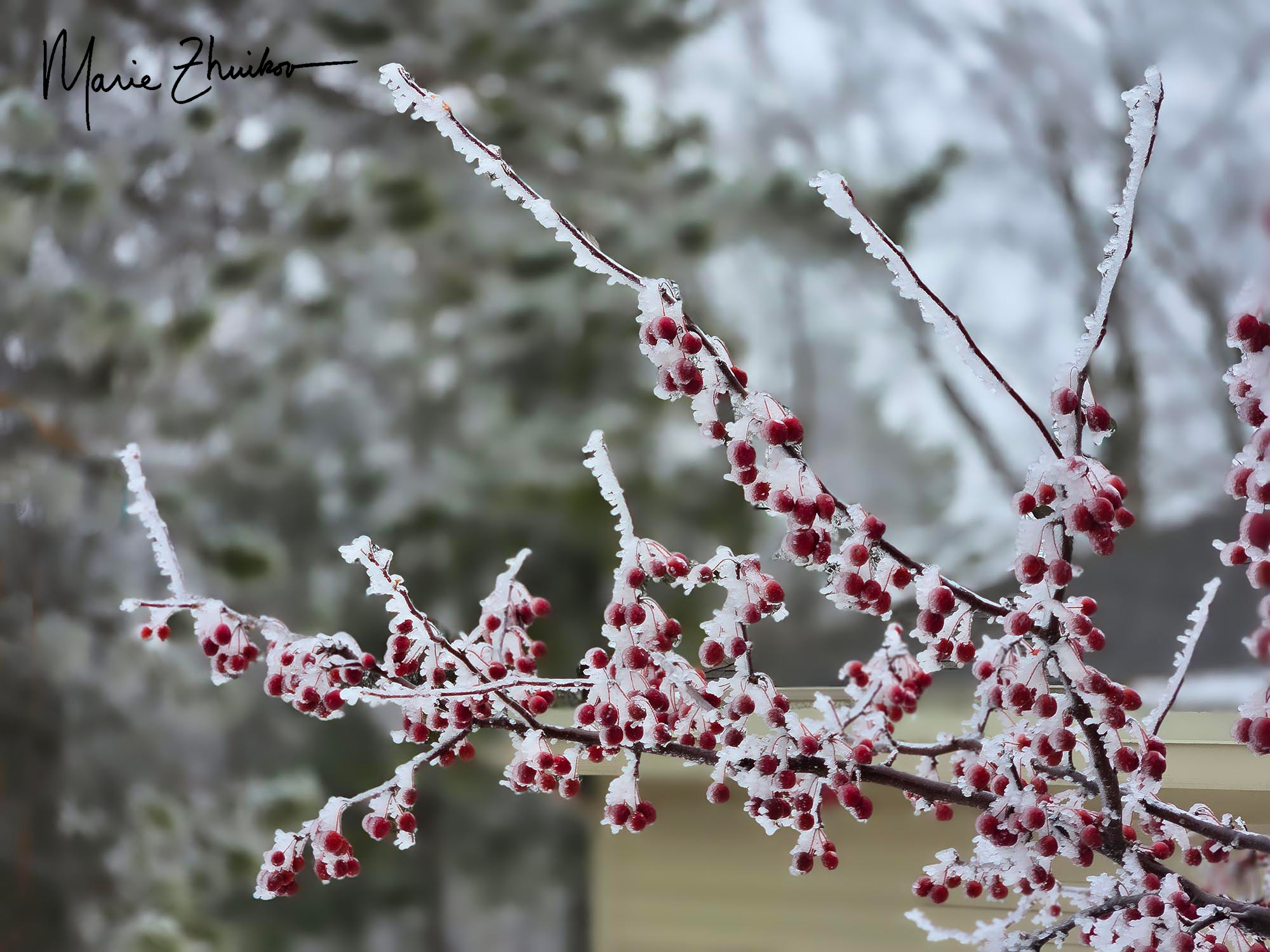
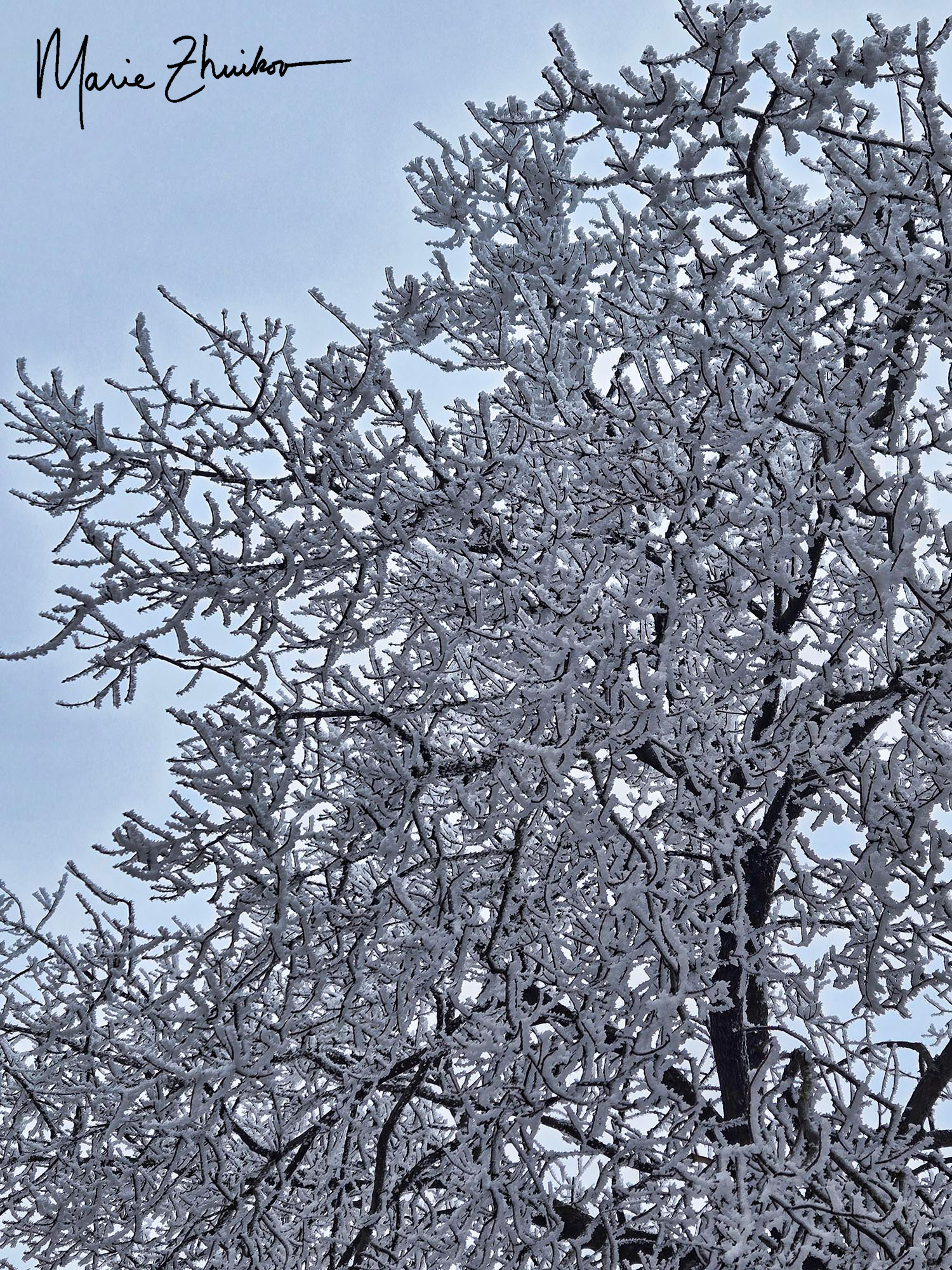
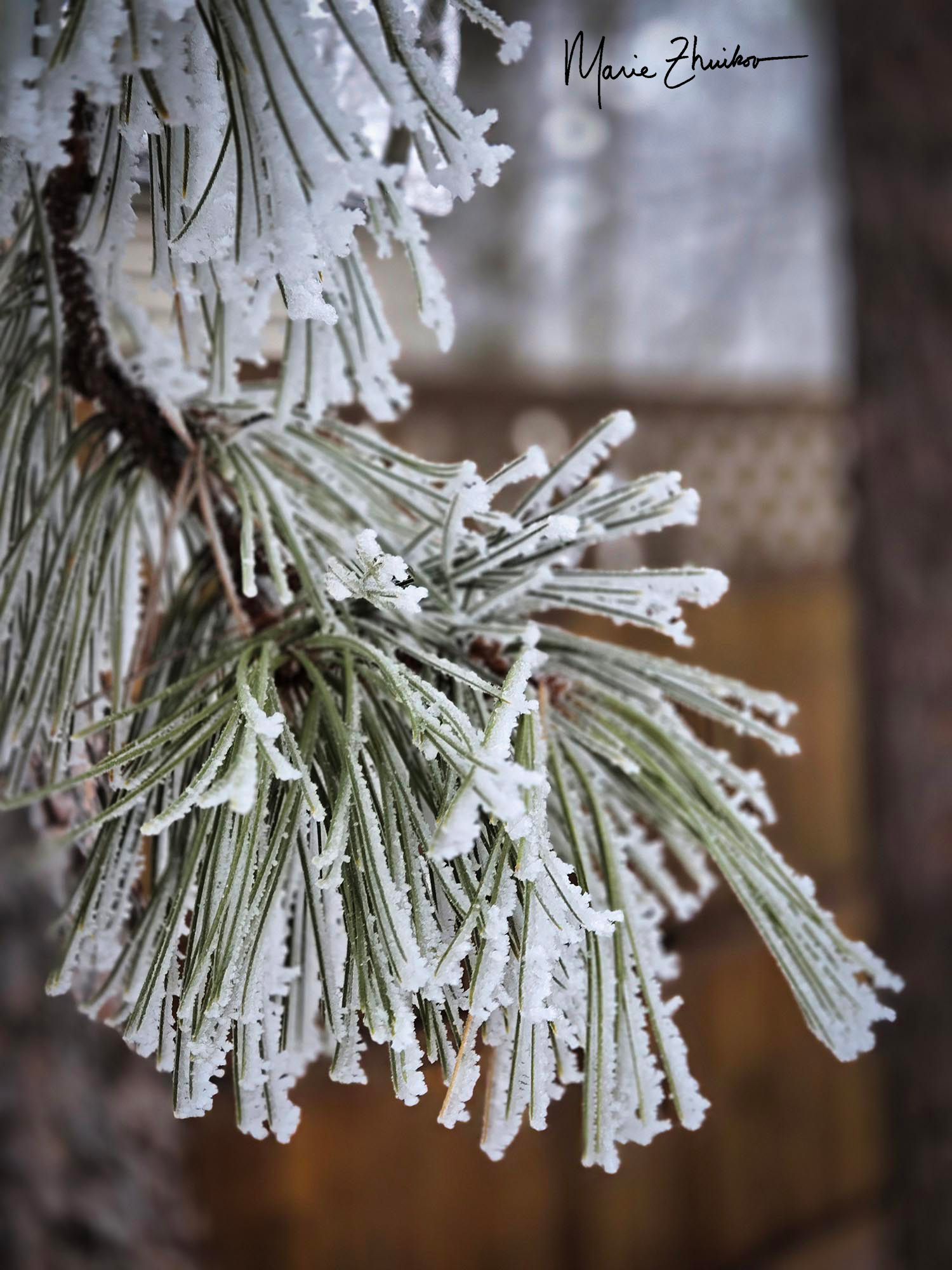
My fair city of Duluth, Minnesota, has donned a silvery veil these past few days—a haunting fog that drapes the world in mystery. I don’t know about you, but I adore the hush and wonder of fog; here, I am home. Each morning, the temperatures bite, and the fog cloaks every branch and rooftop in crystalline frost and shimmering ice.
Restless for movement, I ventured out, camera in hand, into my transformed neighborhood. The roads glittered treacherously beneath a thin armor of ice, so I strapped on my boot’s iron claws. Each step crunched with possibility. The world was both dazzling and dangerous.
As the sun coaxed the temperature upward, ice shards crashed from trembling trees and sagging power lines. Splintered branches, felled by the weight of winter, littered yards and tangled themselves in lines above. Once, a cascade of ice from a power line narrowly missed me, which sent my heart pounding. But I pressed on, determined to witness the spectacle to its end.
Who knew a simple walk around the neighborhood could be so exciting?
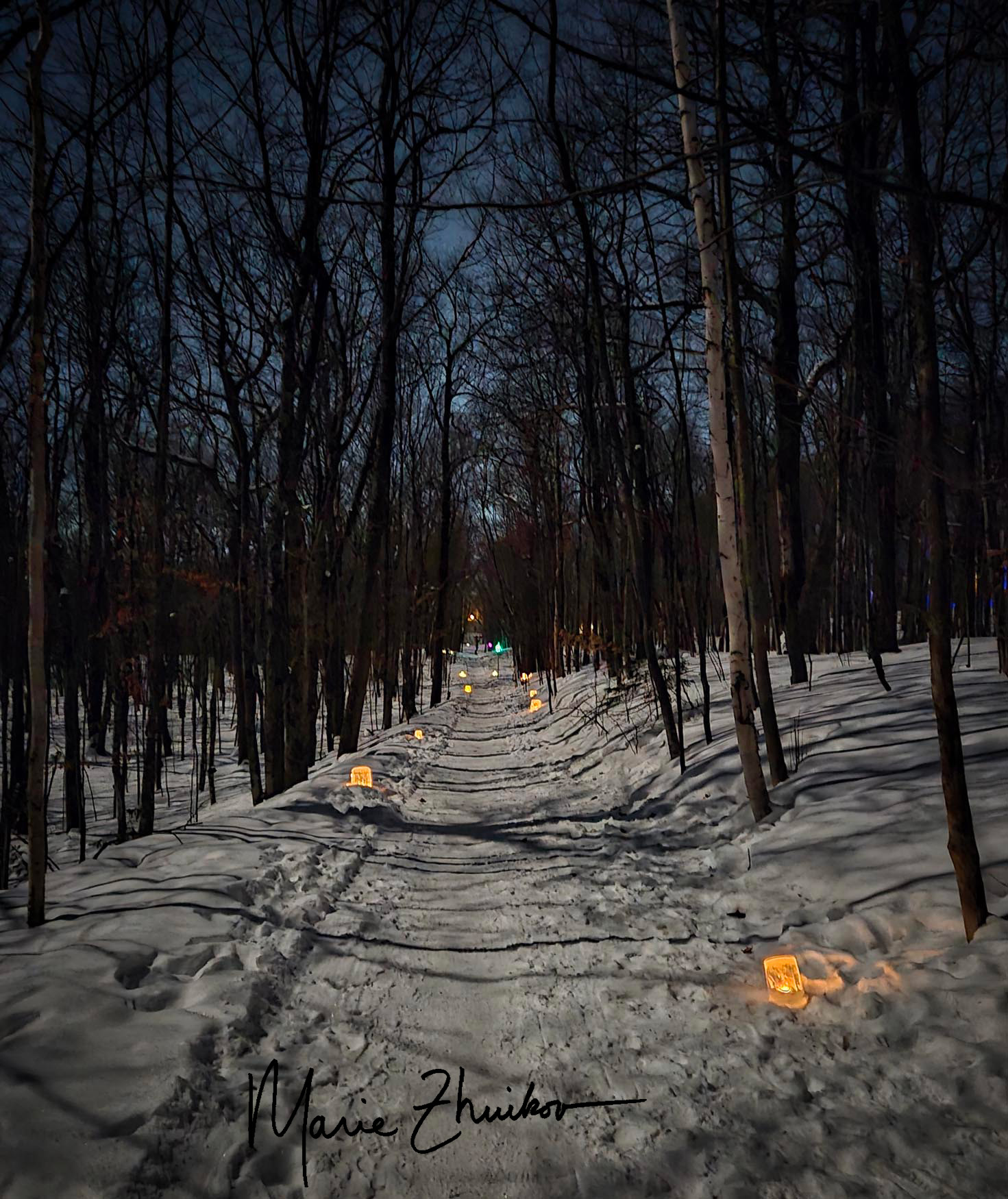
Inside our mailbox was an invitation on a slim, hand-cut piece of paper: Luminary Walk. It contained a date, time, and location, which was a short woodland trail in our neighborhood. On the bottom were the words: light, warmth, hope, welcome, neighbors.
How could we resist? We waited until dark and ventured out into the calm night. An almost-full moon watched our progress, casting shadows on the snow. That was all the light we needed. We didn’t even consider bringing a flashlight.
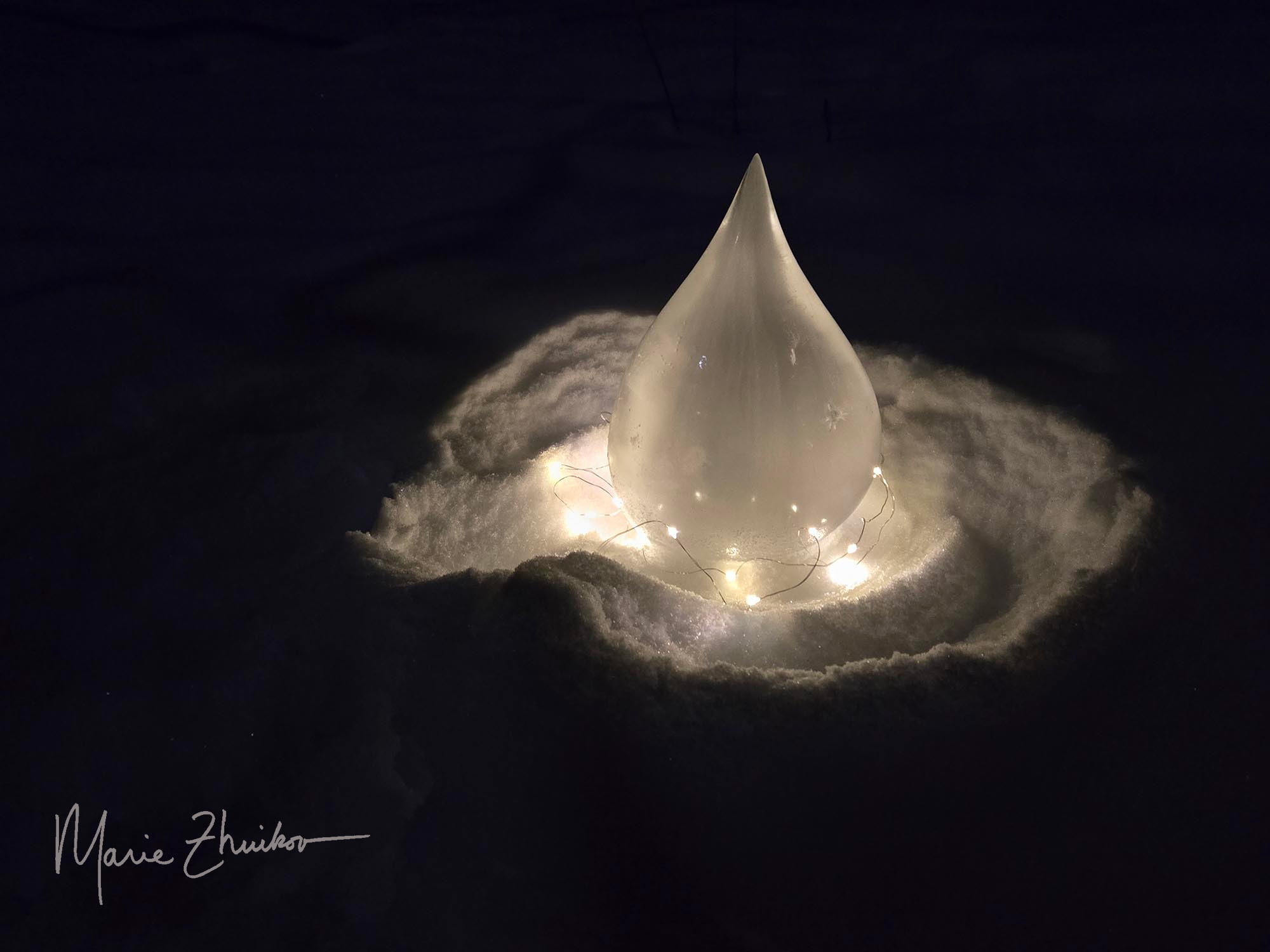
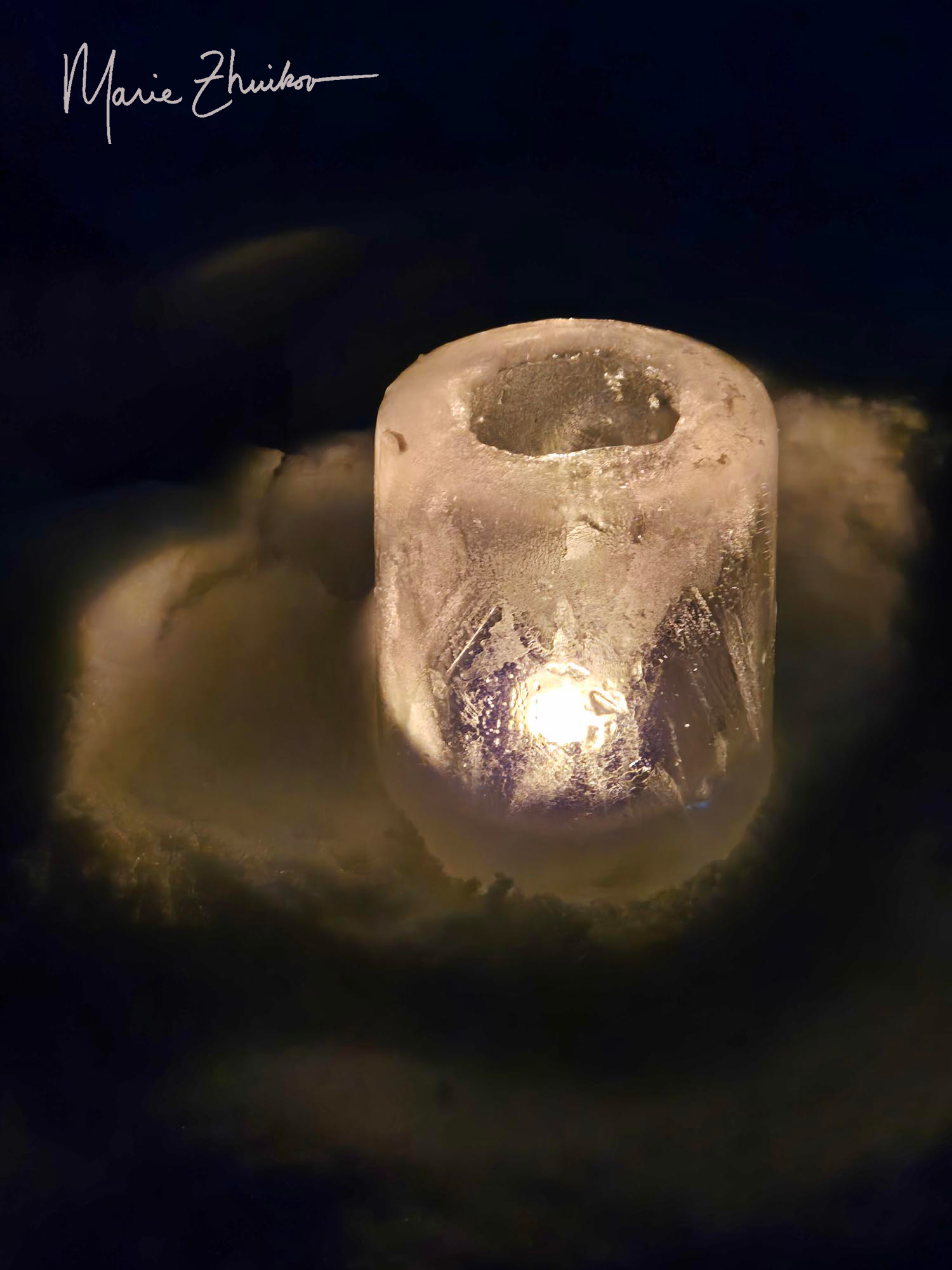
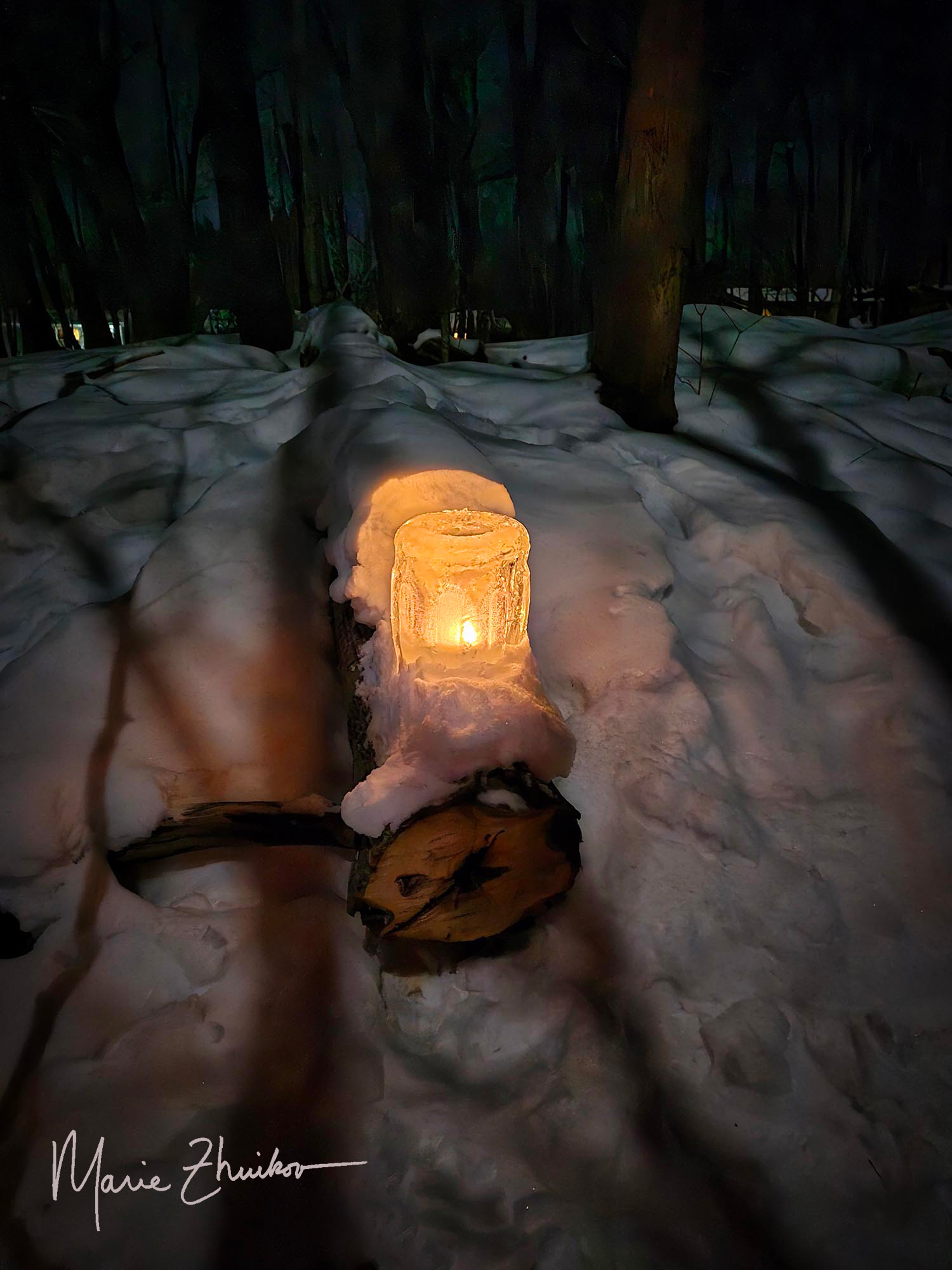
When we arrived at the trailhead, an alternating path of ice luminaries glowed softly down the length of the trail. As we walked, we noticed some were lit with candles and some with LED lights. Most glimmered with soft, natural light. Others swirled with a riot of color. There were round and rectangular clear ice luminaries, colored square ones, and huge raindrop-shaped ones.
We weren’t sure who was responsible for creating this magic, but it must have been several families, given all the work involved. Halfway down the trail, we met other neighbors enjoying the scene with their dogs. We greeted each other and marveled over the view.
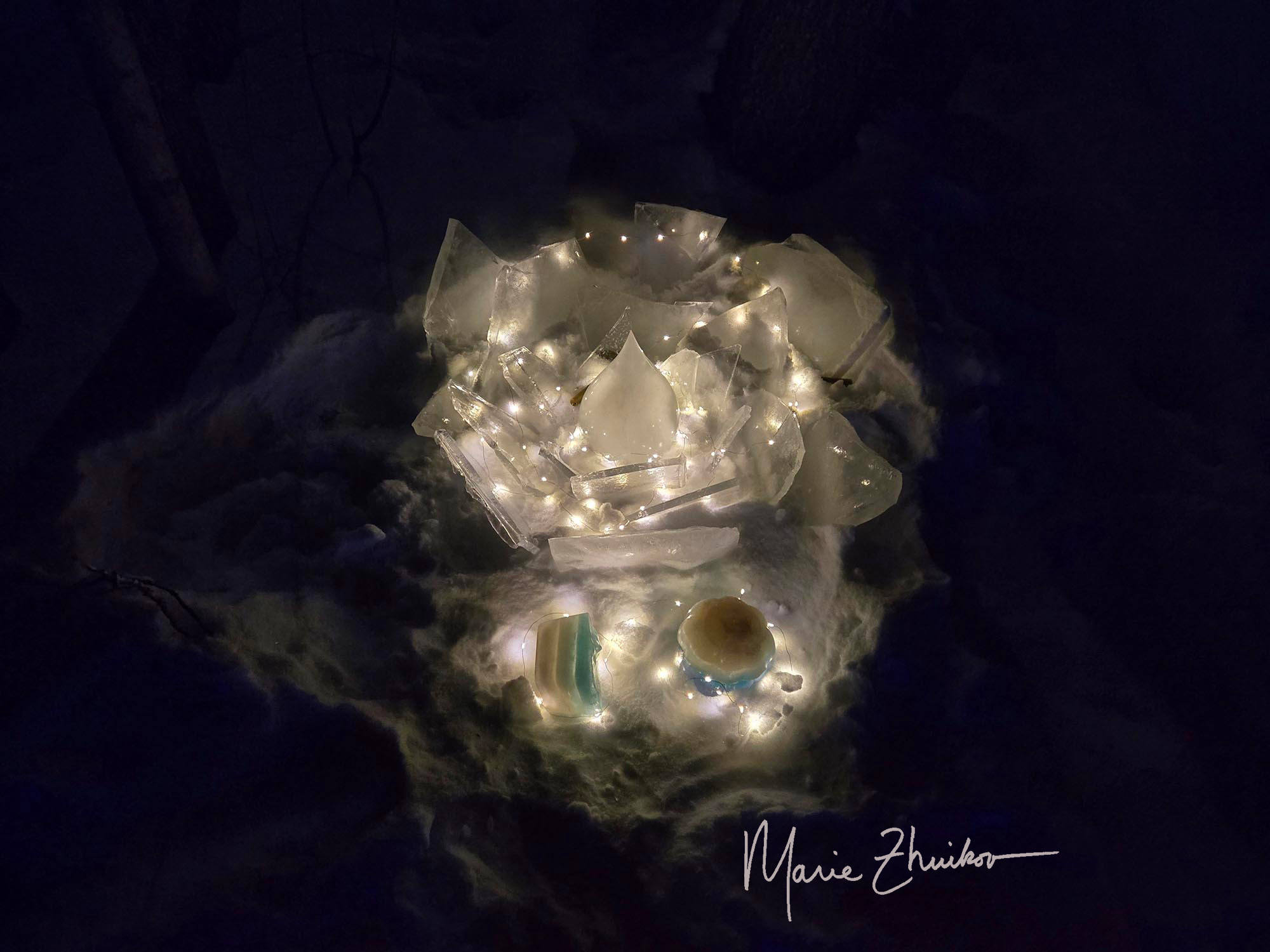
One display looked like a snowy rose: a raindrop luminary in the middle, surrounded with icy petals and lit with a string of white lights. Orange slices, cranberries, and pine needles were embedded in another. Most lay on the snow. One was perched on a log.
We left the trail and walked back home with these words echoing in our heads: light, warmth, hope, welcome, neighbors.
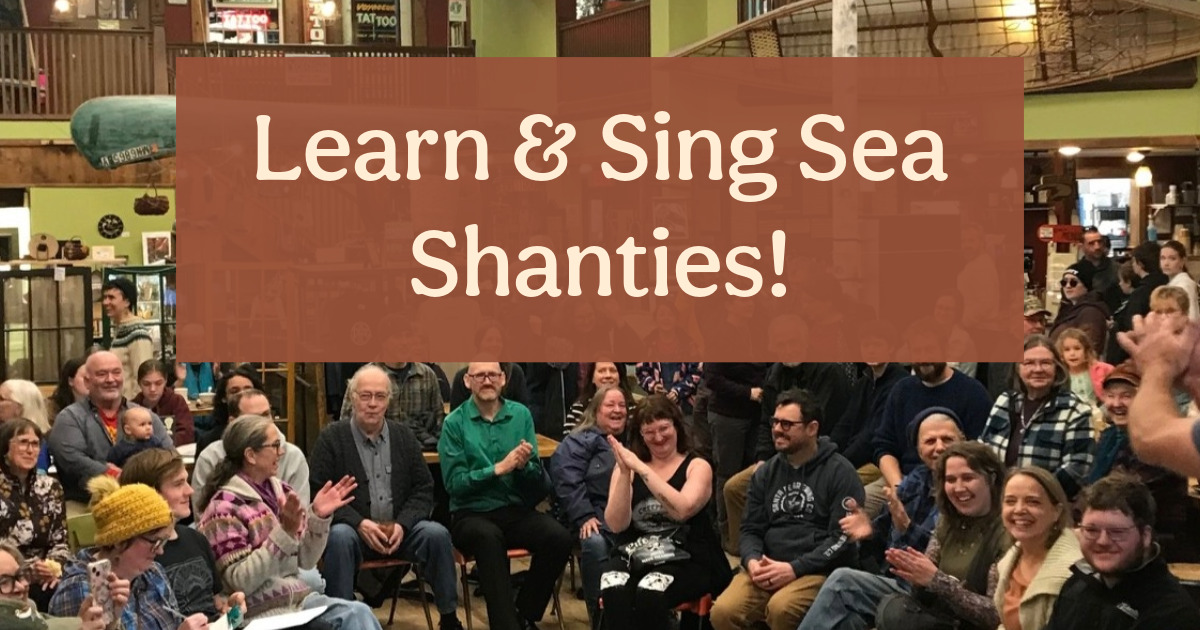
The Duluth, Minnesota, All Hands sea shanty group. Image courtesy of the Duluth Folk School.
At the end of 2025, a Duluthian named Paul Webster revived a sea shanty singing group in town. The group originally began during COVID when a bunch of friends (around 10) would gather outside in parking lots and sing together (to allow for social distancing, etc.) As conditions improved, the group disbanded, but Paul wanted to breathe life back into it.
In a story in Northern Wilds magazine, Paul said, “We realized there are not enough places around Duluth where adults can make music together in a casual, informal way.” He and the other founders of the group partnered with the Duluth Folk School to hold singing sessions every first and third Sunday afternoon (3 – 4 p.m.), where people can explore the stories behind the music as well as sing.
Before the first session, the local newspaper did a story about the gathering. That, and perhaps the maritime history of our area, led to a turnout of over one hundred people! I was one of those people. Besides, it just sounded like a stupidly fun thing to do on a Sunday afternoon, I am familiar with many shanties from my time on the Audubon Expedition Institute. While we were traveling around North America on a yellow school bus learning about environmental issues, we often sang shanties to pass the time. I missed that and welcomed this opportunity to revisit my past. It’s also a nod to my Maine privateer ancestors.
Paul seemed a bit overwhelmed by the large turnout, which has not diminished as the sessions continued. Jumping from 10 to 100 people is a big leap! I think it indicates he found the right audience through the folk school and is meeting a pent-up demand for socialization.
At the first meeting, Paul asked for ideas for a group name. We ended up voting in “All Hands,” which I love because it’s inclusive and is the same name we used to call our staff meetings at Wisconsin Sea Grant, where I used to work.
As the name implies, all are welcome to the sessions. There’s no cost, although a donation basket is passed during the sessions. Singing is optional, but I don’t know how a person could resist joining these catchy working and drinking songs. The school’s café is open during the sessions, so people can have refreshments while they sing. I recommend their hard cider.
Sea shanties (American) or chanties (British) are a genre of traditional folk songs that aided in the timing of various tasks on sea-faring vessels. Many reference a task at hand or life at sea, including missing loved ones or dangers of the job. Some of my favorites are “Barrett’s Privateers,” “Leave Her Johnny,” and “Rolling Down to Old Maui.” People take turns leading the shanties, but Paul leads most. People can suggest their favorite shanties, as well. I’m hoping we get nimble enough as a group to sing “Hoist up the Thing,” someday (a comical modern shanty about a know-nothing captain).
I haven’t missed a session since they began. Ironically, I’m missing one today because Russ and I are going to a concert. But I’ll be at the next session, fate willing. I feel good after singing and it’s something fun to do during the bleak midwinter. The songs offer a good perspective on hardships, both historical and present.
Reflecting on my experience with this group, I am struck by how music can transform a simple gathering into a source of strength and belonging. Singing together, whether with friends or strangers, reminds me that even in challenging times, we can find joy, solidarity, and shared purpose. As our voices blend in harmony, the tradition of sea shanties continues to connect us not just to the past, but to each other.
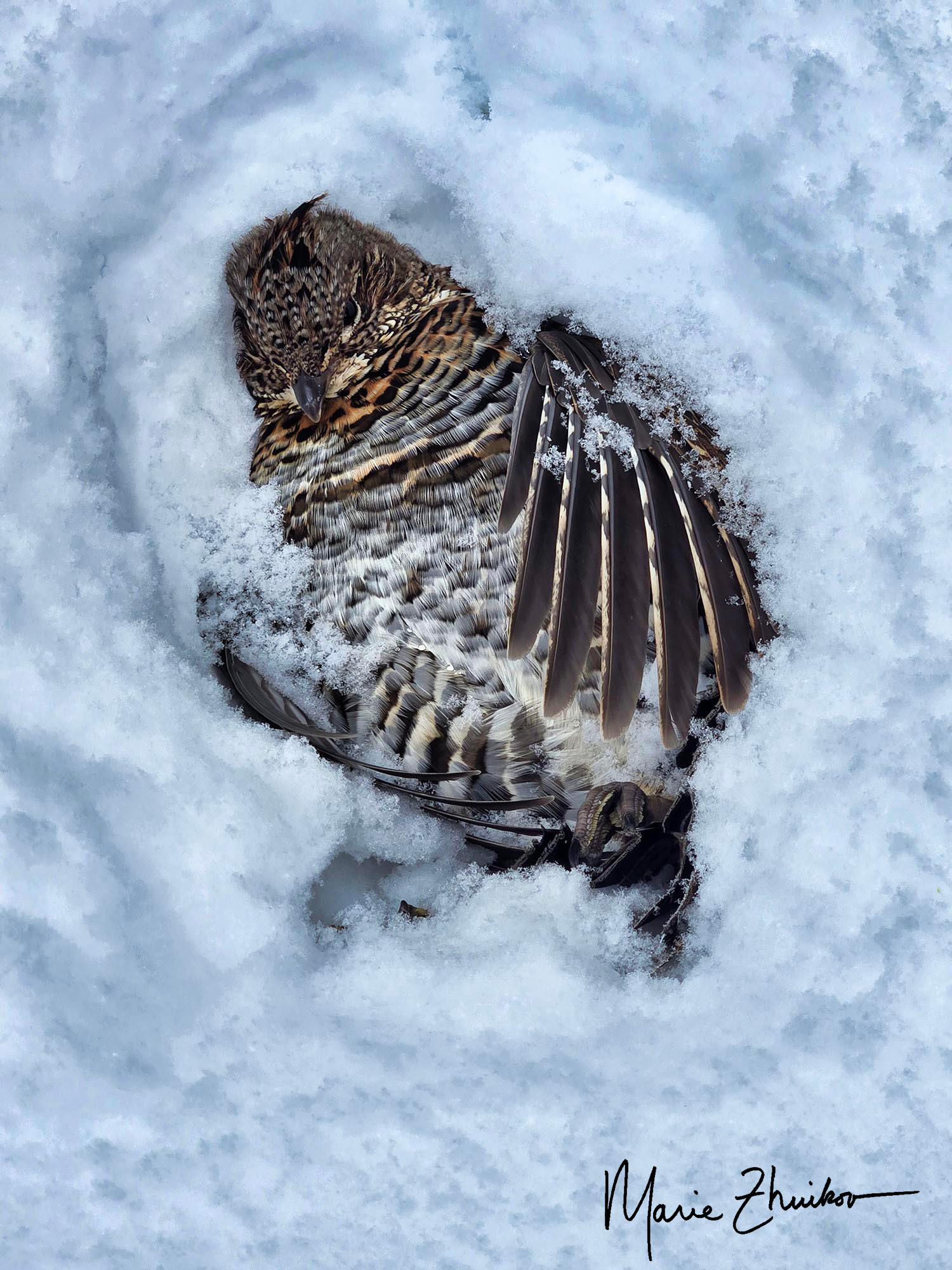
I came upon this scene at our cabin. The grouse must have hit the window on our garage, even though it’s on the second story. I’ll have to do something about that — close the curtain, perhaps? At least the bird had a soft landing in new snow. It looked so peaceful, I was moved to take a photo. We left it where it fell. Some fox has probably already made quick work of it — returning its energy to the world.
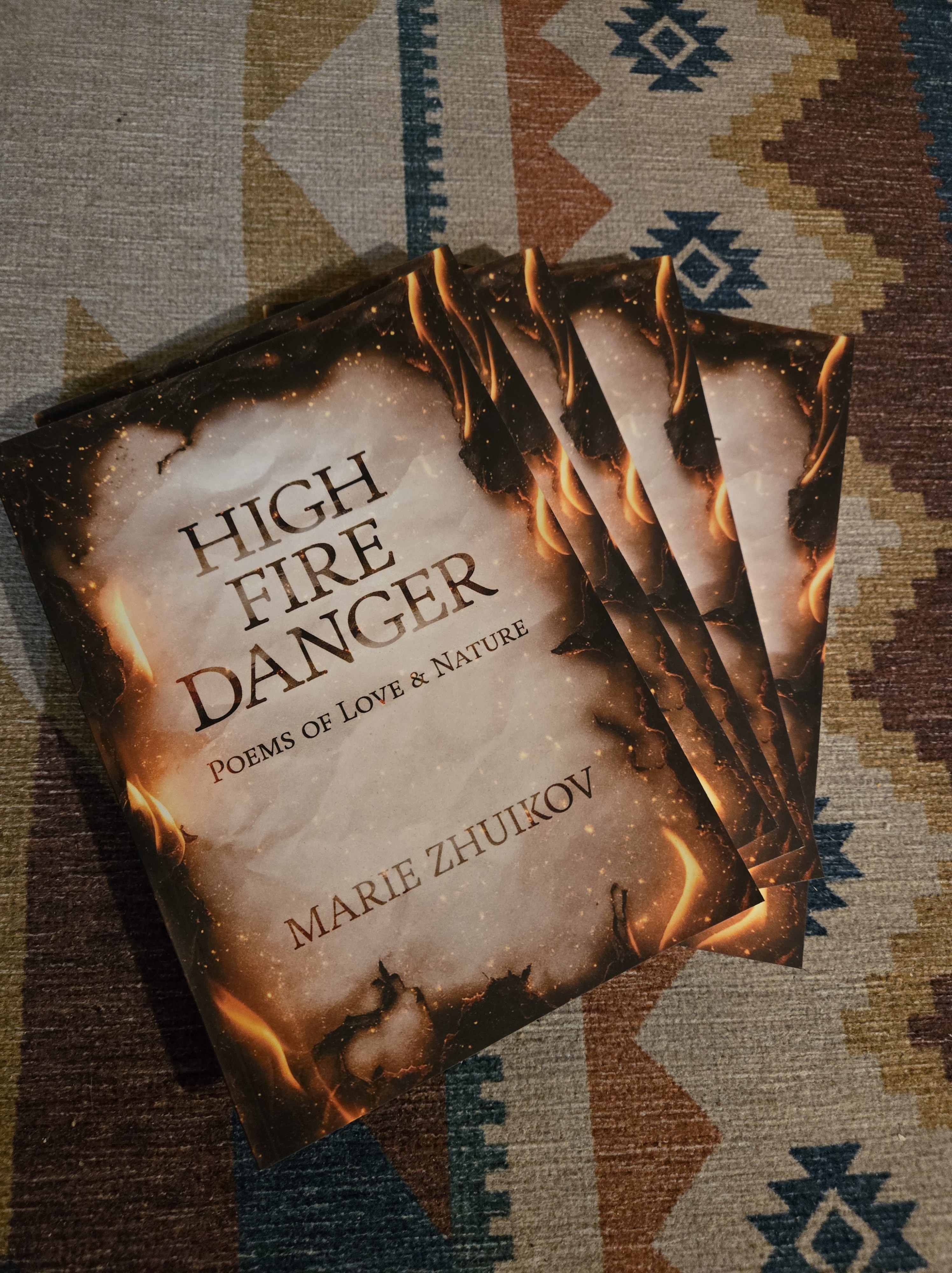
I was interviewed this week by the MN Reads radio show, which features Minnesota-related authors. The show airs on Duluth’s community station and is hosted by Luke Moravec, who is a new author himself (and also a talented actor, musician, and probably some other things I don’t know about). The interview was about my latest book, High Fire Danger: Poems of Love and Nature. I feel fortunate that Duluth has this media outlet that supports local authors.
You can listen to the eight-minute interview here.
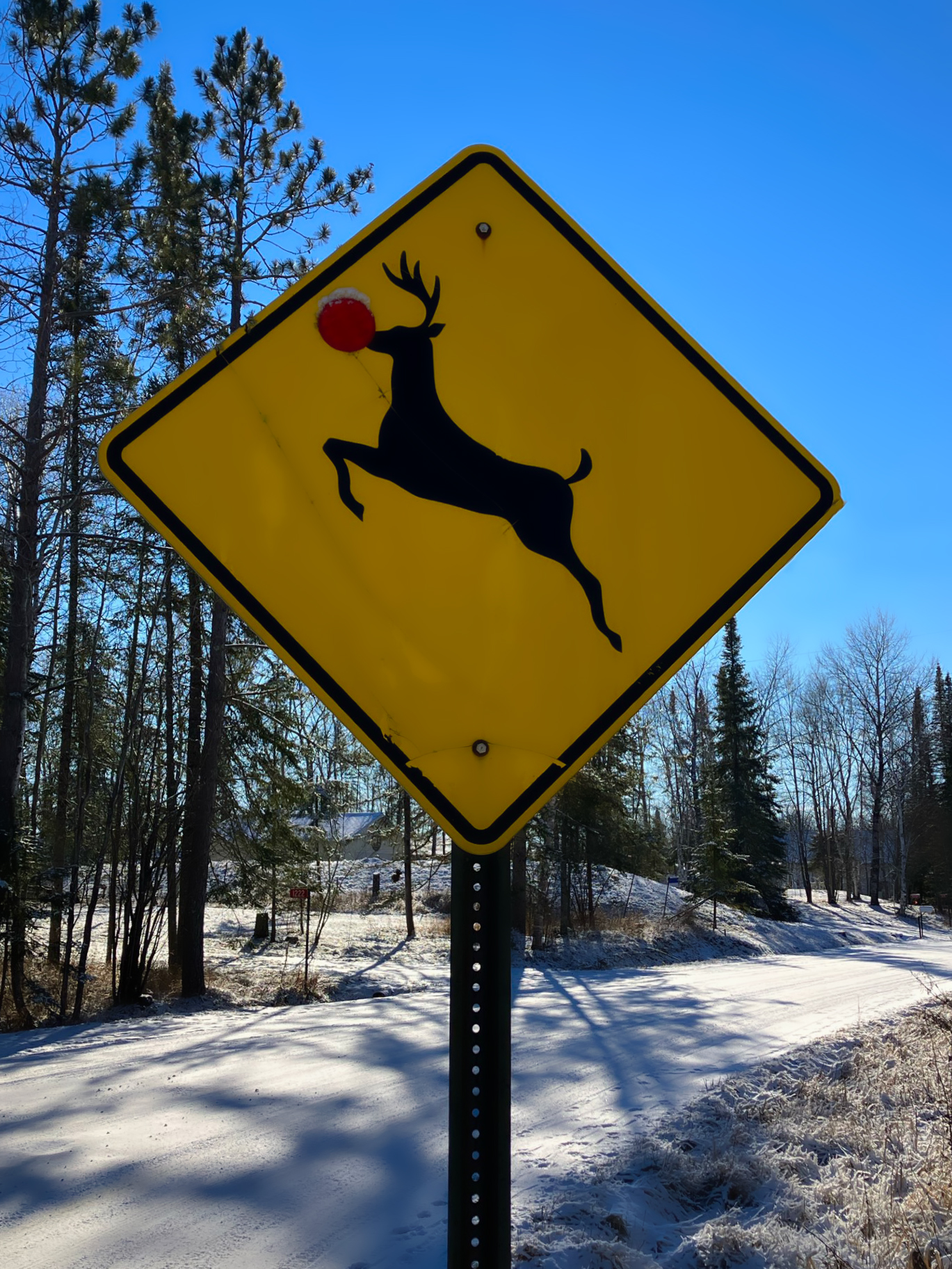
Here’s wishing you a Merry Christmas the Minnesota way! I took this photo near my cabin. It’s a typical rural Minnesota scene, except perhaps for the red reflector on the deer’s nose. I found the sign this way — I did not add the reflector! Rudolph’s red nose has since fallen off, so I’m glad I took the photo before that happened. This sign provided the design for our custom-made Christmas cards this year — the first time I’ve done that and maybe not the last. Because I retired this year, I’ve had time to write cards and pop them in the mail. It’s been fun “going retro” this season.
We hope you have a wonderful, whimsical holiday, and thank you for reading.
Here’s yet another side detour from my New England travelog. Don’t worry, I’ll get back to it!
The other night Russ and I meandered around the backroads north of Duluth, joining many others who parked their cars in random spots and looked up to the spectacle happening in the sky.
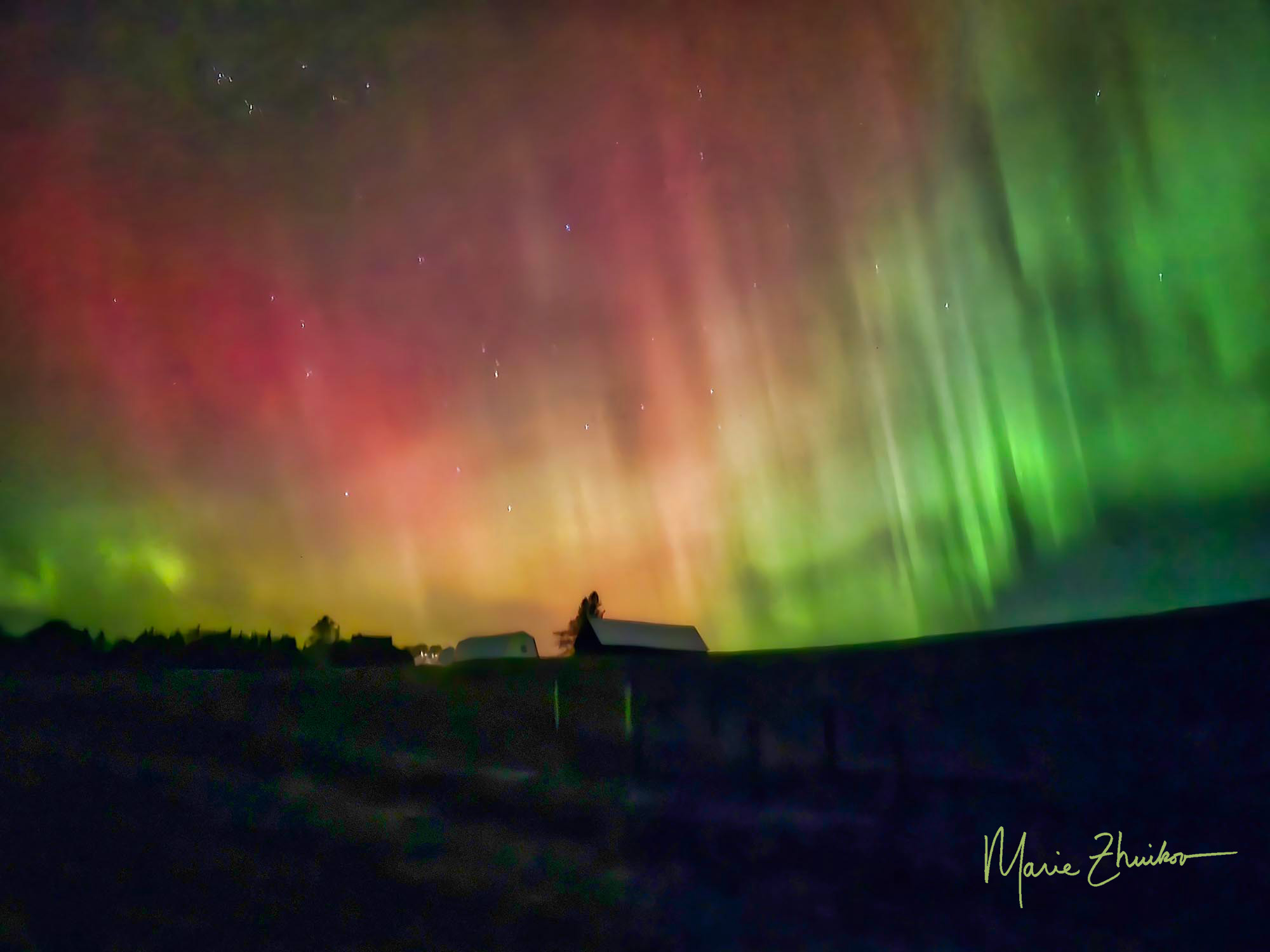
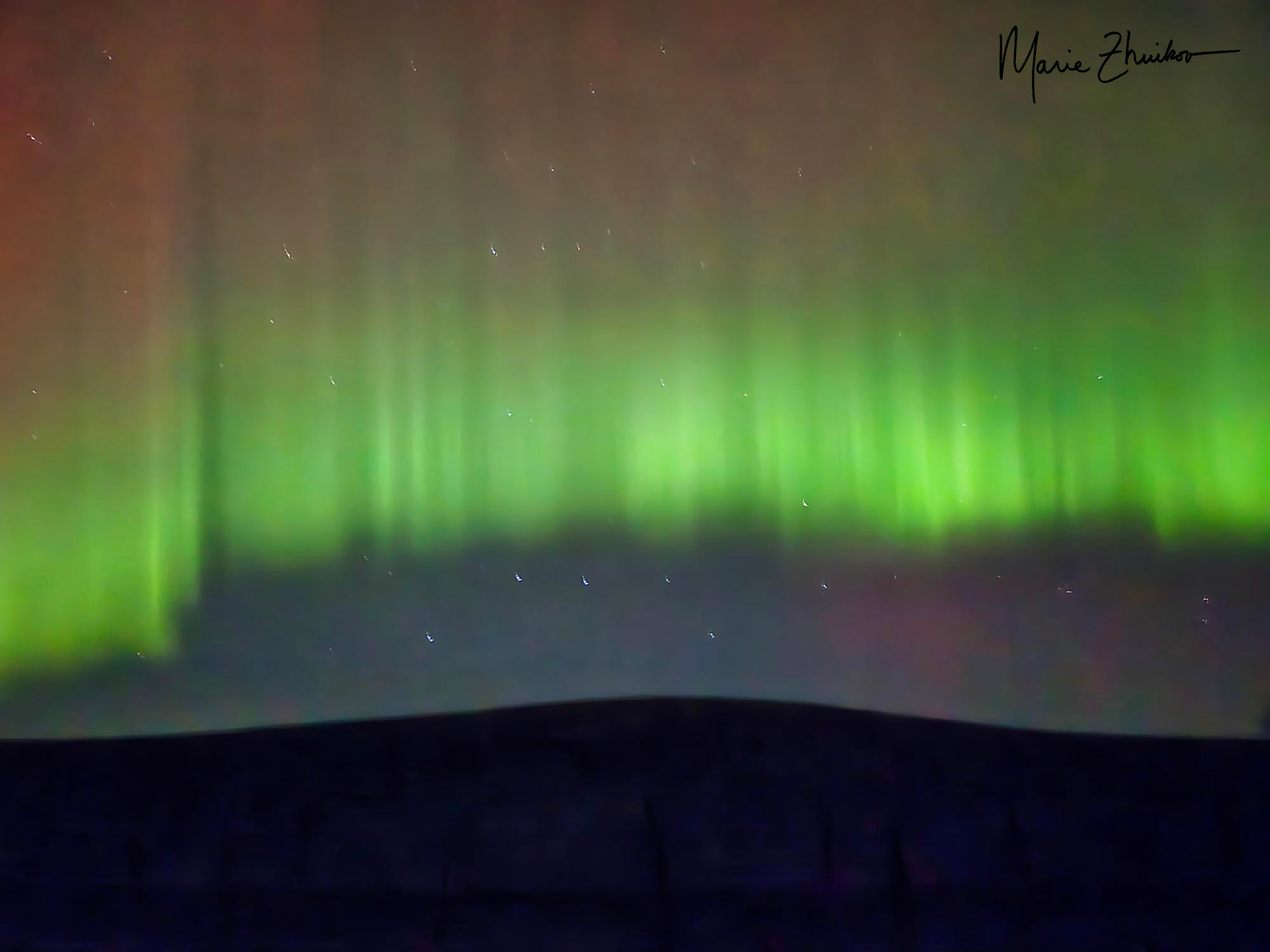
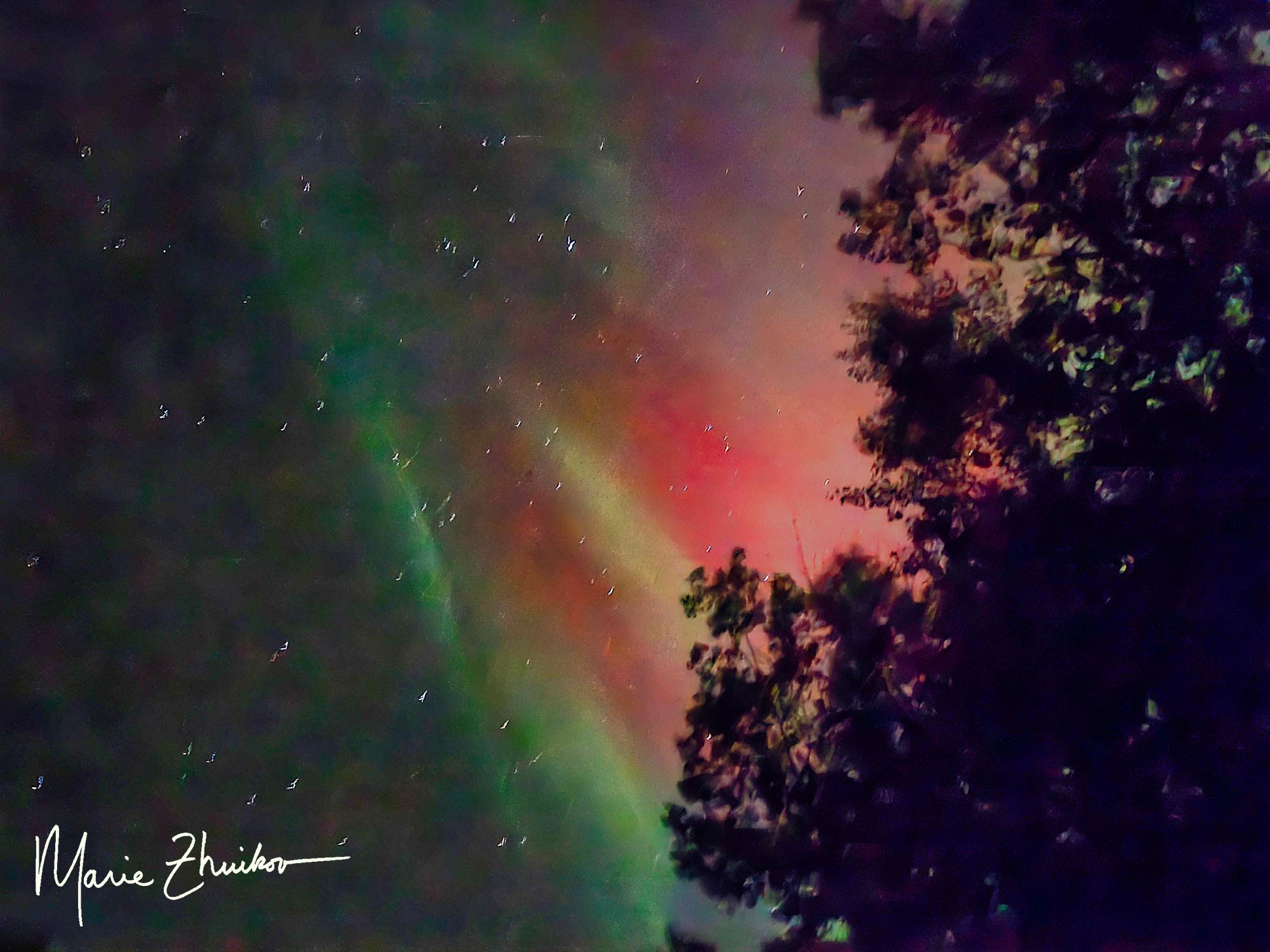
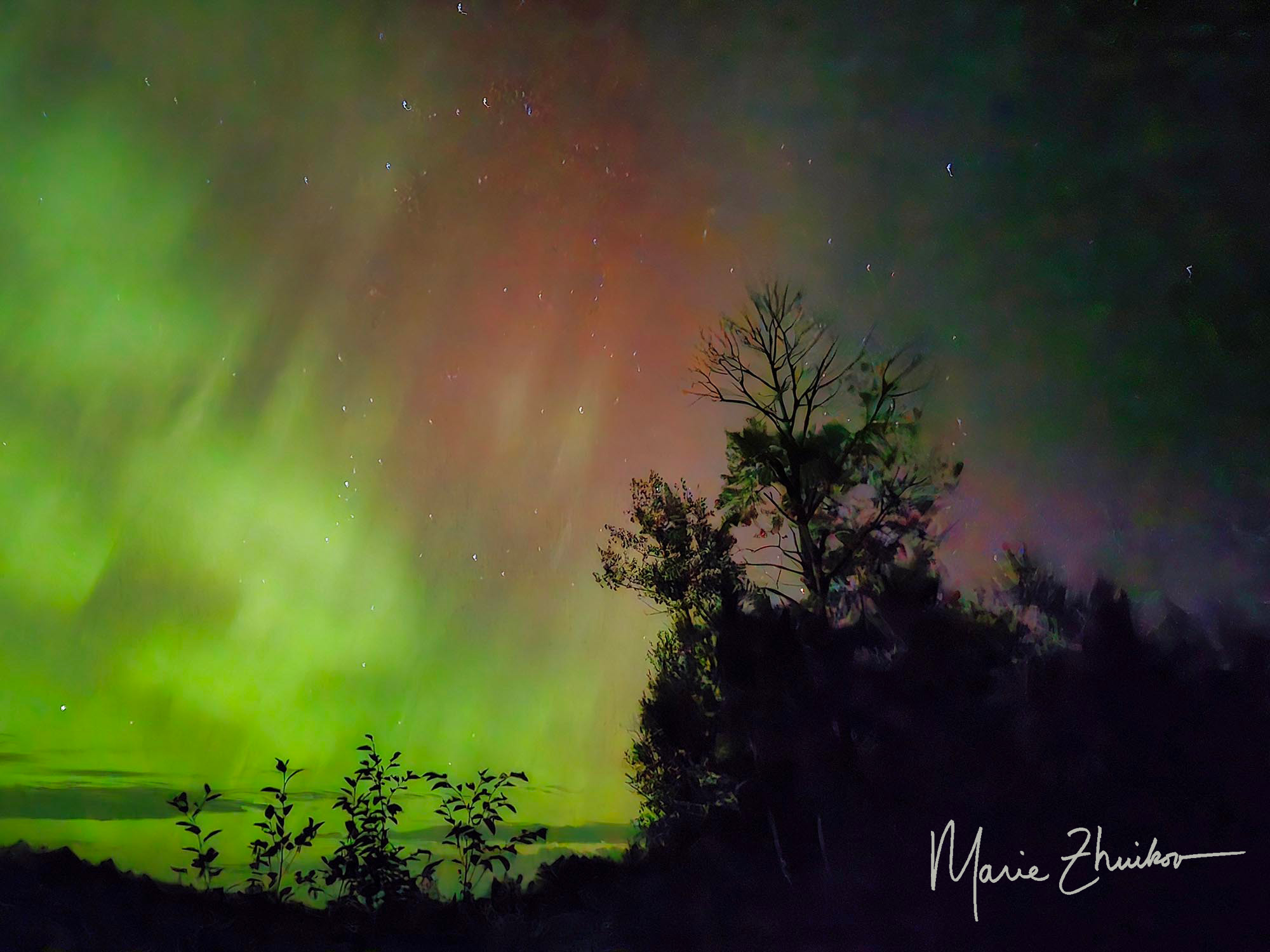
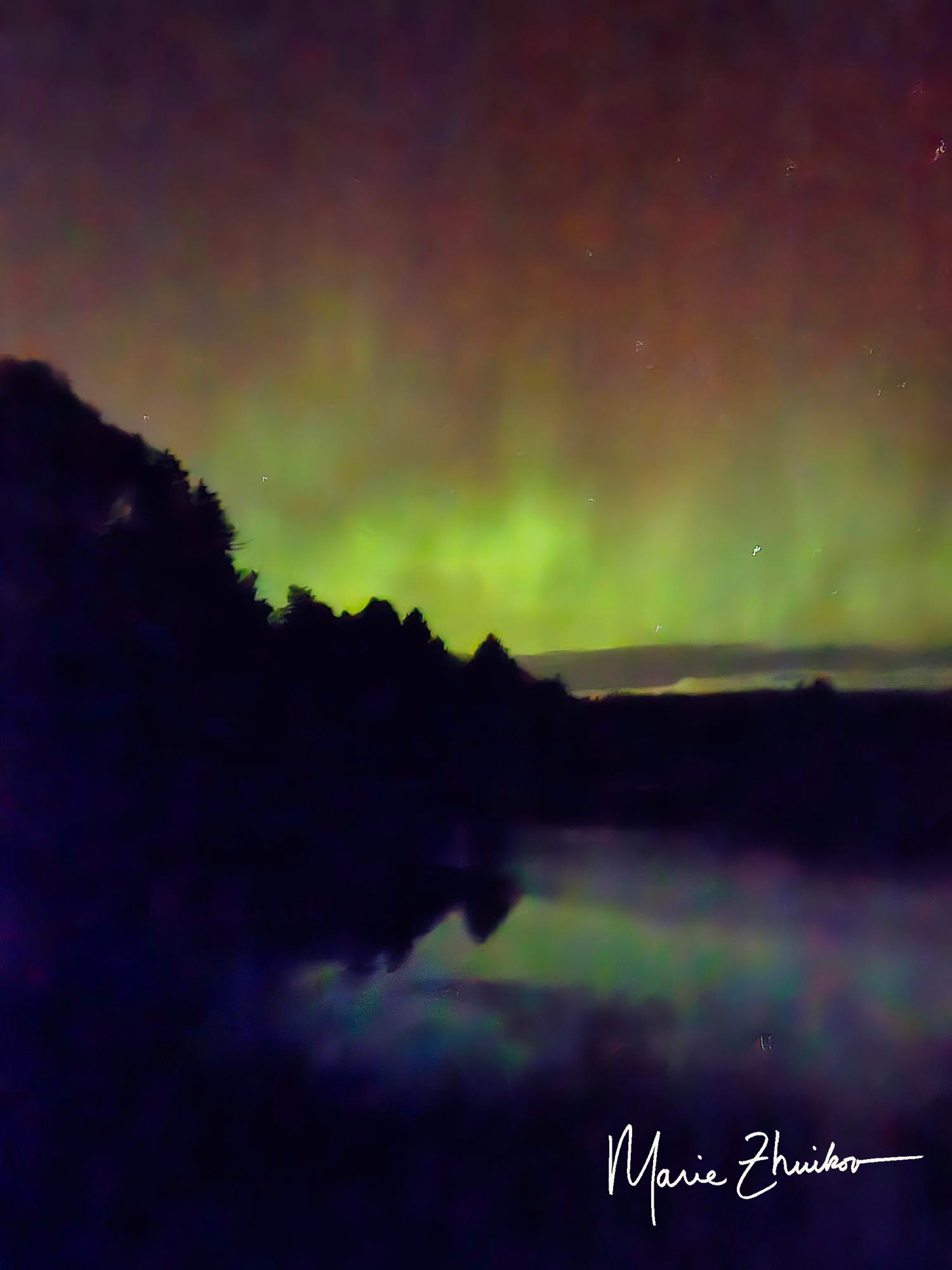
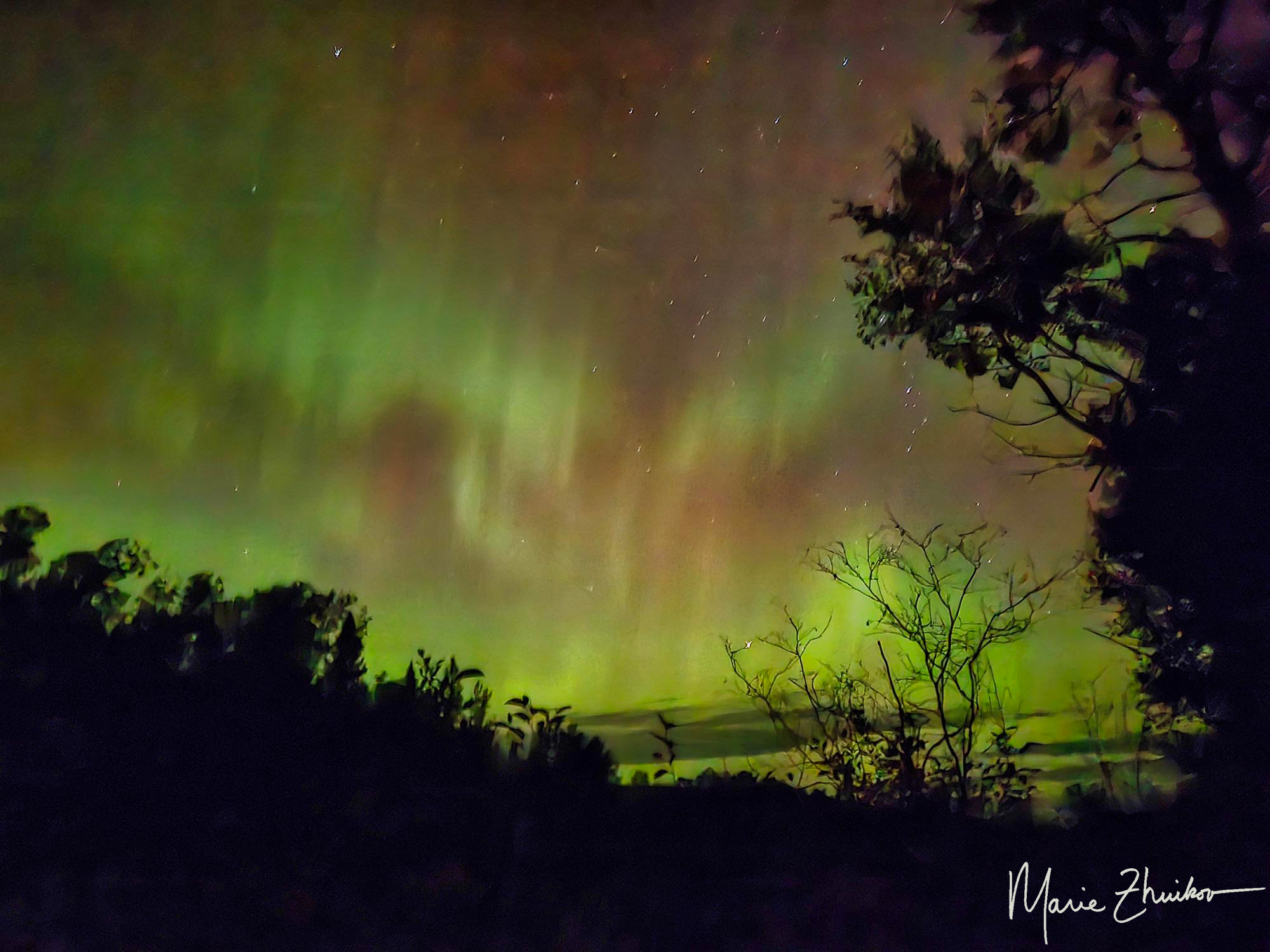
That spectacle was the northern lights. I took these photos the second night of the show at about 8:30 p.m. It was so kind of the aurora to happen before bedtime! We found a spot on a gravel road where we could see a whitish curtain of aurora on the horizon. We first stopped at a town hall but there were too many lights, so we went back down the road until we found a dark area. I took a few test shots with my phone camera and wowza! Jackpot.
A green curtain filled the sky, with some red overtones. As the lights continued to dance, the red intensified. This color is rare in auroras.
Here’s an explanation from a local astronomer, Astro Bob (King). I don’t totally understand it, but here’s what he said about that storm:
Red aurora occurs high up in the atmosphere at an altitude of around 150-300 miles. Green emission happens at lower altitudes, around 75 miles. Both are produced when incoming charged particles strike and energize oxygen atoms. After the impacts, the atoms release that energy in the form of green and red light when they return to their original relaxed state.
At high altitude, the number of atoms drops sharply — it’s basically a hard vacuum up there. After it’s struck by a charged particle, an oxygen atom needs almost two minutes to release that energy. If a neighboring atom were to bump into it during the transition, it would short-circuit the process. But because there are so few atoms at that altitude, oxygen has time to release red light before a collision occurs.
There’s so little oxygen to begin with at high altitude, a strong storm is required to crank up enough oxygen atoms to produce the red aurora. Seeing red is a good sign that a significant storm is underway. Overall, the Nov. 11 storm reached the G4 (severe) level, with aurora reported in all 50 states (including Hawaii) and as far south as the tropics.
A farm house and barn stood off to the side and provided more visual interest to the shots. Eventually, the cold got the better of us and we crawled back into our car to return to our modest home filled with artificial light.
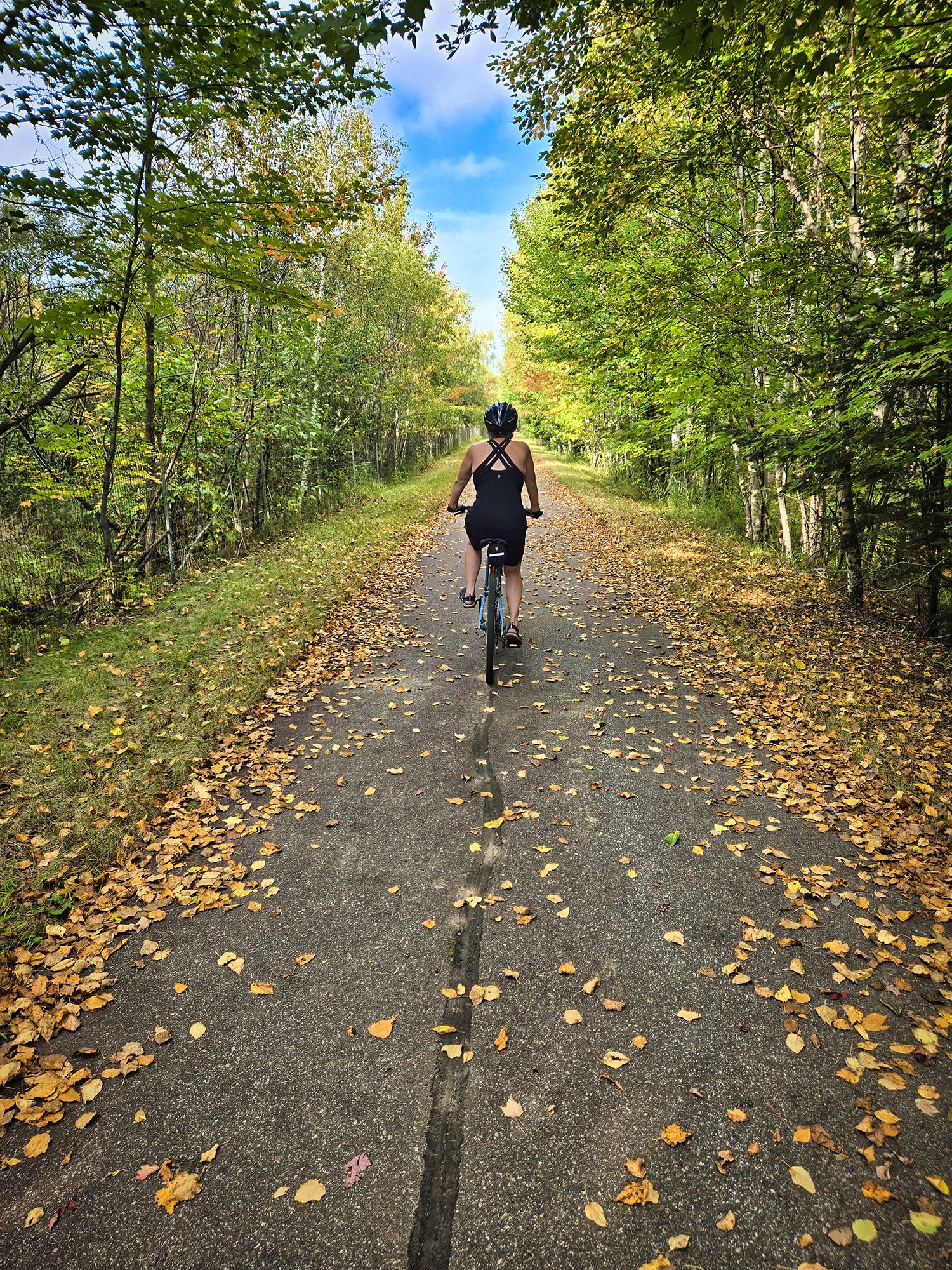
Last month, Russ and I continued our quest to cycle different sections of the Mesabi Trail, which crosses northern Minnesota’s Iron Range. Amid the crunch of fallen leaves and the brilliant red of sumac, we biked from Nashwuak to Calumet with a side trip to Pengilly.
A warm breeze offered one of those final temperate days between summer and fall. The trail began in Nashwauk at a nondescript parking lot near a closed restaurant with the suggestive name of Big O’s Chef House. (Maybe that’s why it went out of business?) Except for a few frost heaves, the mostly flat trail was in good condition. It parallels the highway ,so the distant noise of cars is ever-present.
Much of the land surrounding the trail is owned by Mesabi Metallics Co., an iron ore and taconite mining company. We passed huge piles of mine tailing waste and overgrown past mining roads as a few vultures circled overhead.
In the sleepy Sunday town of Calumet, we rested at a public picnic shelter. The only evidence of life was a man throwing a ball for his black lab. Then we turned around and made our way back to Nashwauk. Along the way, we took a short spur trail to the town of Pengilly just for a change of scenery.
Scenery along the trail.
Once, a pair of teenagers on an ATV surprised us (they’re not supposed to go on the trail). Several times, we had to dodge Halloween-colored (black and orange) woolly bear caterpillars inching their way across the trail. Folklore says they can predict how harsh the winter will be by the width of the colored bands on their bodies: more black equals a harsher winter. We were trying too hard not to squish these fuzzy forecasters, so we didn’t notice their band patterns.
Apparently, science has not confirmed the caterpillars’ weather-forecasting abilities. Even so, the woolly bear remains a symbol of autumn. Its presence offered us a gentle reminder that the season is turning, and nature is preparing for the quiet, cold months ahead. This will probably be our last long ride of the season.
Total distance: 14 miles. For more information about other sections of the trail, please see these previous posts:
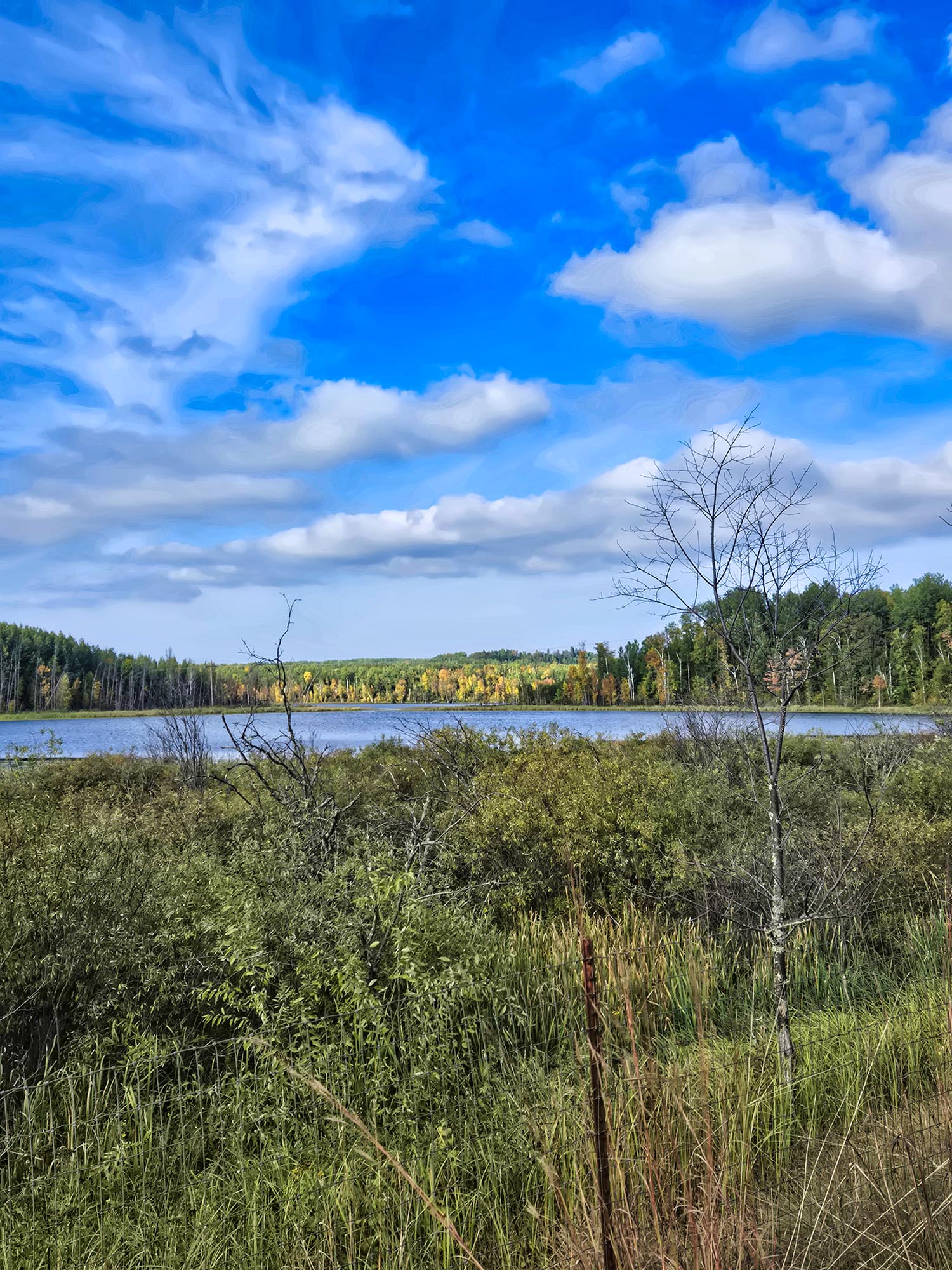
A rare show lit up the sky above our cabin last night. Russ and I meandered down roads in the dark, feeling our way by the gravel crunching under our shoes. We made it to a bog that has a good view north.
As the aurora silently danced above in curtains of reds and greens, lightning bugs danced closer to the ground, their feeble white lights the last of summer.
If you’d like to see my photo page with lots of other images (organized by topic: water/wood/stone/sky/travel and lighthouses) please visit my photography page and choose a topic: https://mariezwrites.com/photography/.
Wild rice, the kind of rice native to the Great Lakes and other parts of North America, is not only delicious in soups and other dishes, it makes a great and healthy snack.
A few years ago, I was gifted a copy of The Good Berry Cookbook by Tashia Hart. The author is a member of the Red Lake Anishinaabe (northern Minnesota) and she’s a culinary ethnobotanist, artist, photographer, writer, and cook. The book is more than a cookbook. It’s everything you ever wanted to know about wild rice.
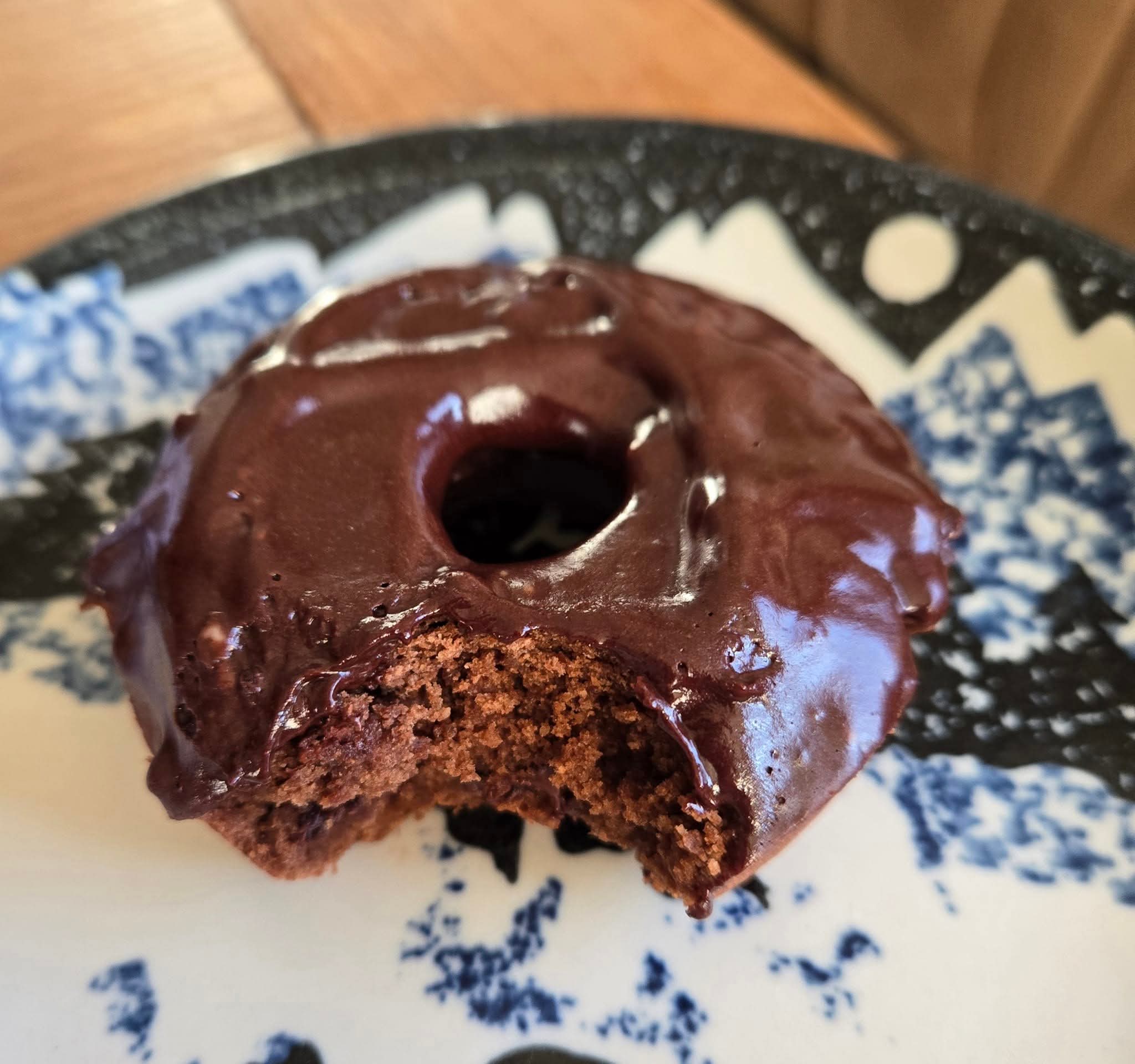
A wild rice triple chocolate donut. Doesn’t it look tasty?
I’ve made several recipes from the book, notably, one for wild rice chocolate donuts (Triple Chocolate Donuts). As someone who’s always on the lookout for alternatives to wheat and corn, I was attracted by this recipe. They turned out looking great but were a bit gritty. Maybe I didn’t grind the rice into flour as fine as I should have. Since then, I’ve found other wheat- and corn-free recipes I like better.
This weekend, I went to a Harvest Festival in Duluth, which features produce from local farmers and artisans. One booth offered puffed wild rice in several flavors (for instance, cheese pizza!) I tried a sample of salted rice puffs. They were very good. Done this way, the wild rice tastes almost like popcorn, but with a richer, nuttier flavor. I would have bought some, but the vendor used popcorn salt, which usually contains cornstarch, so I passed.
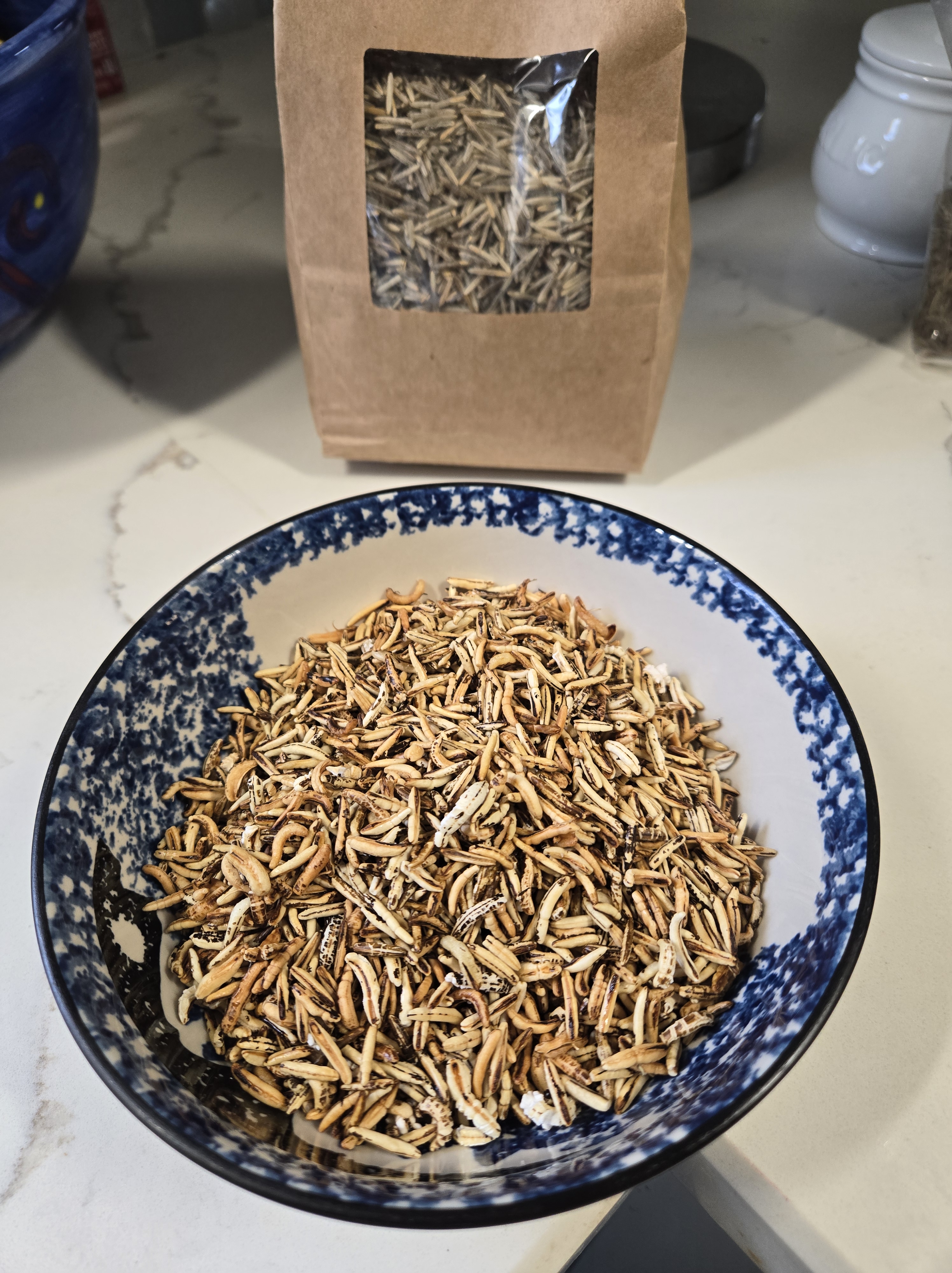
Seeing the puffed wild rice reminded me that the Good Berry cookbook had a recipe for it, so when I returned home, I made some. It requires wild rice that has been picked and parched in a traditional manner. This makes it a lighter color (dull brown) versus the paddy-grown wild rice, which is dark and shiny.
All you do is heat a few inches of oil (I used canola) in a pan at a high temperature. I used setting 7 out of 9 on my stovetop. Wait until the oil is good and hot, then place a small amount of wild rice in a sieve (2-3 tablespoons) and lower it into the oil. It should puff up quickly if the oil is hot enough. Then spread the rice on a plate lined with paper towels to drain. I seasoned mine with sea salt (which usually contains no cornstarch).
If you’ve ever had puffed wheat cereal, you’ll recognize puffed wild rice, although the rice kernels are smaller and skinnier. It tasted great!
Marie tries her hand at harvesting wild rice, St. Louis River, MN.
Russ has developed the habit of eating popcorn in the evenings, which is sort of torture for me because I can’t have it. (Do you think he’s doing this on purpose??) Now, I have an alternative.
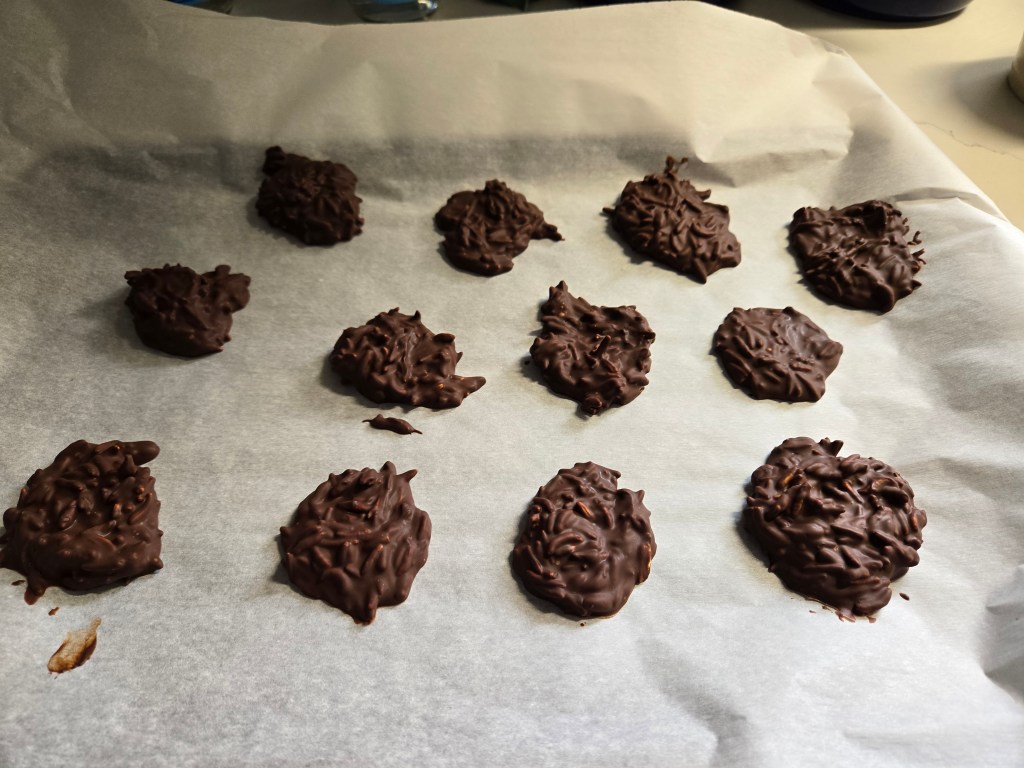
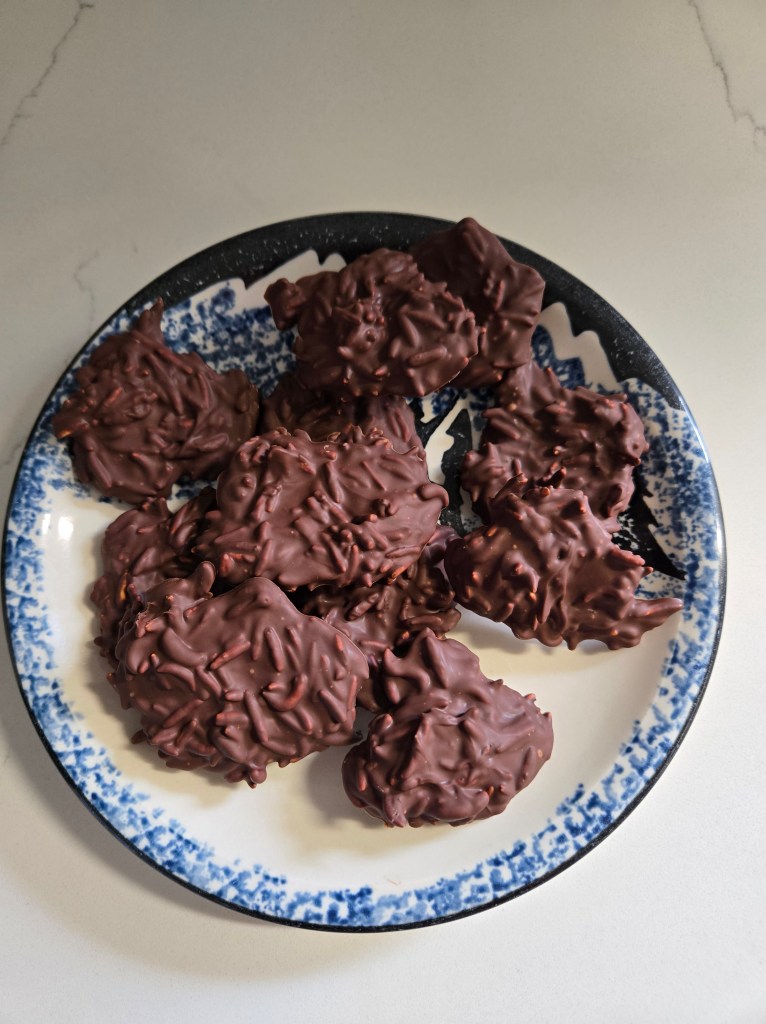
Tashia also offers a recipe for wild rice chocolates. Basically, you take the puffed wild rice and pour melted chocolate chips over them. I have some leftover puffed wild rice. That’s next on my list!
For a story about my “immersive” experience harvesting wild rice, visit this link.
Update: 9/10/25
I made the puffed wild rice chocolates. Very good! The recipe calls for making them in a flat sheet, but I chose to clump them instead. They taste rather like a Nestle crunch bar.


 Marie's Meanderings