
That Time I was Invited to Join Mensa

Human_brain_NIH

Credit: National Institutes of Health.

Back in my high school days – when cowl neck fuzzy sweaters were in, hair styles were big, and women’s shirts sported shoulder pads large enough for the wearer to participate in professional football – I took the ACT test to get into college.

I studied out of a large book, which offered practice questions and reviews of math concepts. Now, I’m sure students must be able to do this all online, but this was back in the 80s, before most people had any inkling about computers.

I’m not sure if the test is still in the same format, but back then, most of it was multiple-choice. The most useful thing I learned from studying for the ACT was how to identify incorrect answers so that I could home in on the correct ones. The hardest things about the test were figuring out its format and its unwritten rules.

All my studying paid off. I scored very high in the English section, and higher in the math section than if I hadn’t studied. My overall score was good enough that I didn’t need to worry about admission into the college of my choice. It was also elevated enough that I received a letter from Mensa in the mail one day.

Mensa International is an organization for people with high IQs. As author and comedian David Sedaris says in “Me Talk Pretty One Day” (which I just finished reading), Mensa members “come from all walks of life and get together every few weeks to take in a movie or enjoy a weenie roast. They’re like the Elks or the Masons, only they’re smart.”

Growing up in the northern hinterlands of Minnesota, I had never heard of Mensa. After opening the letter, I mentioned it to my mother, and her first, and only, response was, “Ach, you don’t want to join that!”

So I didn’t.

I was so taken aback by her reaction, I didn’t ask her why I shouldn’t join them.

Looking back over the decades, I have a twinge of regret that I so blindly followed my mother’s advice. How might my life have been different if I had surrounded myself with high-IQ people?

But I also realize my mother’s knee-jerk reaction was truly Minnesotan. It’s not part of our culture to brag or make ourselves stand out. (See more in my post about “Minnesota Nice.”)

Perhaps my mother was afraid my head would swell with self-importance were I to hang around other intelligent people. Or, maybe she figured they were all a bunch of dorks and exposure to them would increase my social awkwardness. Or she could have been threatened by having a daughter labelled as “smart.” I don’t know. My mother has passed, so it’s not like I can ask her now.

A couple of years ago, I looked into the qualifications for joining Mensa. They’ve upped them now. My ACT score is a few points short. Another way to qualify is through an IQ test. But an IQ test just seems like a lot of work to me now. I wonder if they grandfather (or in my case, grandmother) people into the organization based on the year they took their ACT?

Even if I did get in somehow, I suspect I would feel like a fraud. I am not naturally brilliant; I just know how to study, and I read a lot.

I guess I’m satisfied I was invited and could have joined Mensa if I really wanted to — but that I am just too Minnesotan to do so.
Guest Post: Eating Invasive Species, A Pandemic Alternative

By Sharon Moen

If you know Marie of “Marie’s Meanderings,” you know a few things. She loves her family, which includes biological kin and people like Russ, Buddy the Wonderdog, and me. She enjoys food and foraging, is committed her job at Sea Grant, and devours books. Knowing these things about Marie prompted me to ask her if I could share some words with you about food and COVID-19.

If you are reading this, then she said, “Yes.”

“No, no, a thousand times no!” That’s what I imagine Marie said when a far-right-wing talk show host spluttered his willingness to eat his neighbors in the aftermath of the pandemic, given the high meat prices and shortages. She is against cannibalism and stuff like that.

Someone like Marie would invite you over FOR dinner, not AS dinner. If you accepted the invitation and whatever COVID-19-inspired guidance was in vogue, Marie might deftly turn a local invasive species into haute cuisine.

Here in Minnesota, invasive species foragers could rustle up a rusty crayfish potpie in a cattail-root crust accented with dandelion salad. If in Florida, they might prepare a double lion: lionfish with dandelion greens.

Posh, eh? I bet someone like Marie would even ferment some dandelion wine to complement the meal, if only there were time. I know for a fact that she recently cooked fern fiddleheads from her local forest.

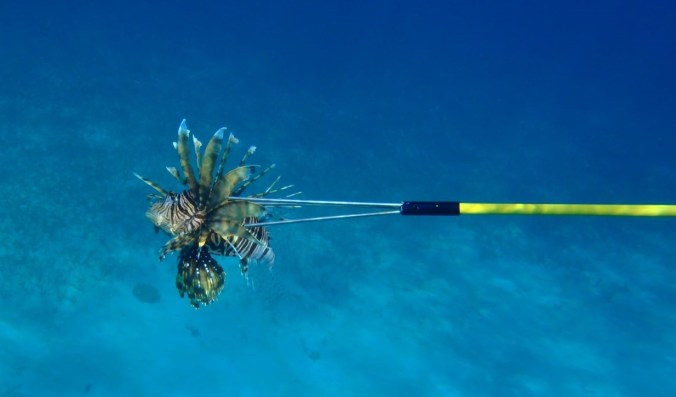
Speared lionfish

A speared lionfish in Belize. Be careful not to touch the poisonous spines! Image by Mike Sierszen.

I’ve joined Marie for meals and meanderings from Scotland to St. Martin. Believe me, the experiences were memorable! I’ve also had the privilege of tagging along with people trapping rusty crayfish in Minnesota and spearing lionfish in Belize to be used as food.

During these adventures, I learned a few valuable lessons about attracting and handling these pesky invaders:

Pro tip #1: Bait your invasive crayfish traps with fish heads and leave the traps in the water overnight. You’ll likely have a pile of bones and a mess of crayfish by morning.

Pro tip #2: Tie scissors to your spear when hunting lionfish. Use the scissors to cut off the poisonous spines before touching the fish.

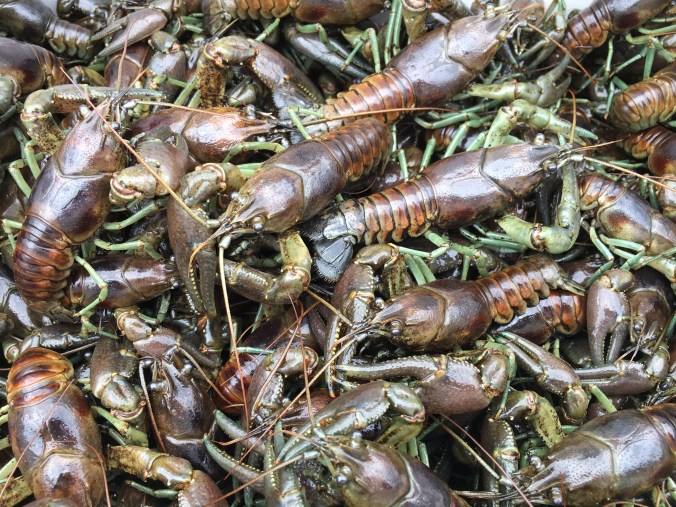
Rusty crayfish S Moen

One night’s rusty crayfish catch on the St. Louis River several years ago, reflects the scale of infestation: 57 traps, 2,140 crayfish. Image by Sharon Moen, Minnesota Sea Grant.

I also learned that as invasive species harvests make their way to tables, people along the way often gain a better perspective about why these species are so economically and ecologically harmful. Aquatic invasive species like rusty crayfish and lionfish tend to outcompete native species and disrupt food webs through their sheer numbers and voracious appetites. Crayfish claws and lionfish spines also make playing in water more hazardous. Their presence can reduce property values, and hurt recreation and tourism industries.

Through her job at Sea Grant, Marie and her colleagues conduct public education initiatives helping to control the spread of aquatic invasive species. During her storied career, Marie even organized an invasive sea lamprey taste test.

While you wait for her to tell you that story, consider reading The Omnivore’s Dilemma in which Michael Pollan challenges readers to understand where food comes from, what’s in it, and the processes involved in bringing it to human lips. The challenges of feeding yourself and those you love have always been real but they are manifesting differently through the COVID-19 pandemic. Be a thoughtful omnivore. Weigh the choices about what could be eaten and what is et.

Our friends at “Northern Wilds” magazine recently published an article on consuming dandelions. You can find many crayfish and lionfish recipes online. There’s even a cookbook published by the Institute for Applied Ecology you could add to your pandemic collection: They’re Cooked: Recipes to Combat Invasive Species.

Someday soon I’m looking forward to inviting Marie and Russ over to share dinner, not to be dinner. I’ll likely include an invasive species in the mix. What would you serve?

Be kind and stay optimistic.

Editor’s note: Sharon is available for freelance writing work. If interested, please contact me through my website and I’ll put you in touch with her.