
I mentioned a few posts ago that during this trip to Scotland, I figured out that my ancestors were the Barons of Clackmannan and lived for many generations in a tower in the village of Clackmannan. Because we were the only ones who signed up for a group Outlander tour, Henry, our bekilted Tartan Viking Tour guide, had leeway to treat us to a side trip to this venerable ancestral tower.
For me, our visit to Clackmannan Tower was truly an unexpected highlight of our trip (thank you, Henry!). King’s Seat Hill upon which the tower is built had long been a strategic outpost. Before the brick tower, the English had built a wooden tower upon it. It commands a view of the Ochil Hills, a 25-mile range that stretches between the Firth of Tay and Stirling.

I’m not exactly clear on this, but I think the tower was built by King David Bruce (Robert the Bruce’s son and second king of Scotland) and was given to his kinsman, Sir Robert Bruce, who is my ancestor. It was inherited by Sir Robert’s son Thomas, who was the 1st Baron of Clackmannan. My ancestors were part of the tower’s history until the 6th Baron of Clackmannan. After that, my ancestry diverges through the baron’s daughter, Lady Christina Bruce. The tower was passed from father to son, and since she was a daughter, she left once she got married.
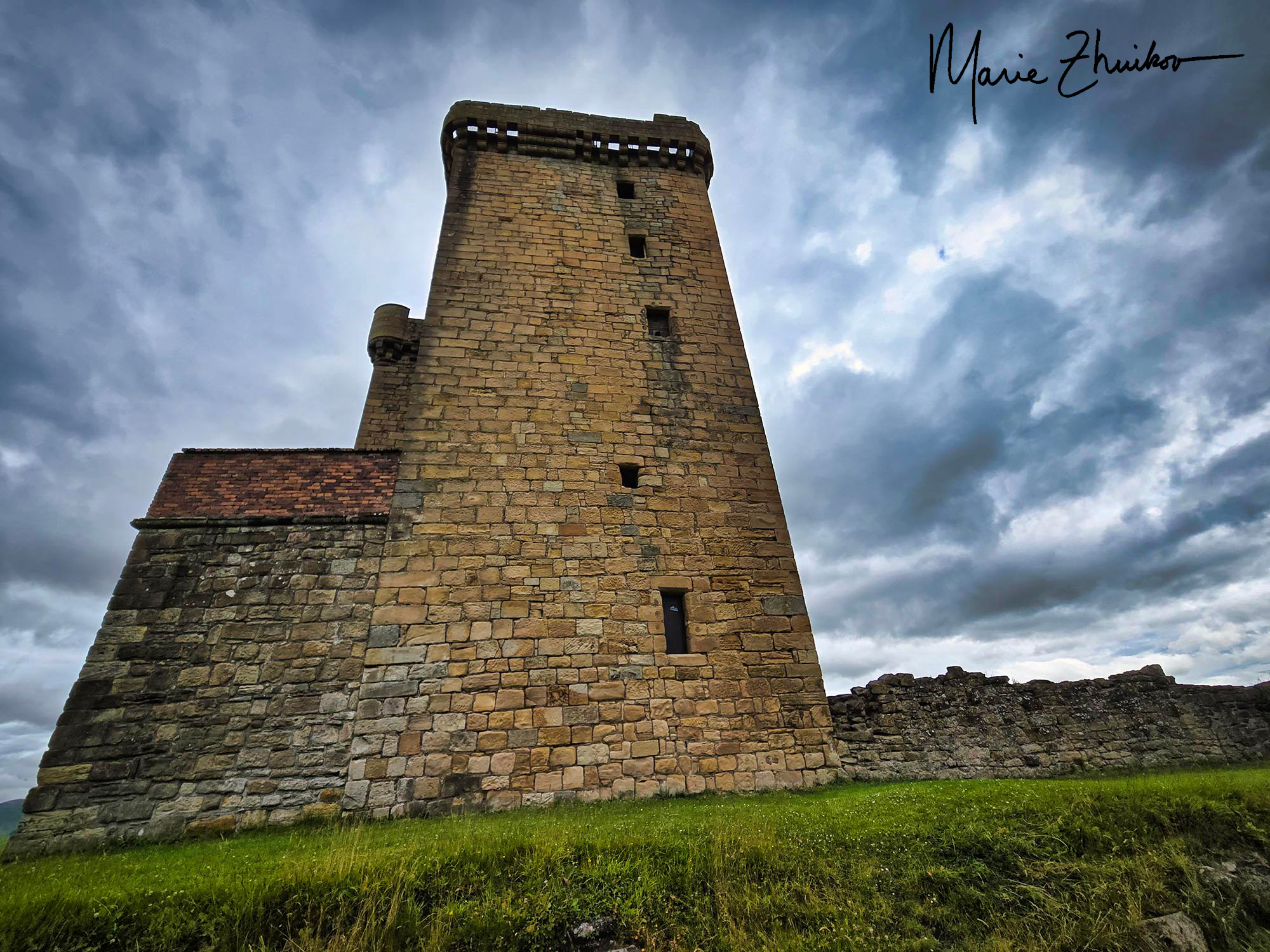
A wonderful post with useful links about the tower is available through Wee Walking Tours, including embedded videos.
The tower had another tower built onto it, forming an L shape. Originally, a mansion was attached to the tower, but that has been long gone now. In the 1700s, the Bruces who were the current Barons of Clackmannan built a coal mine underneath the tower. Their venture into coal proved a downfall for both the family and the tower. They became bankrupt and the ground underneath the tower became unstable, causing it to lean. The family had to sell the tower to pay their debts. After that, it fell into neglect.
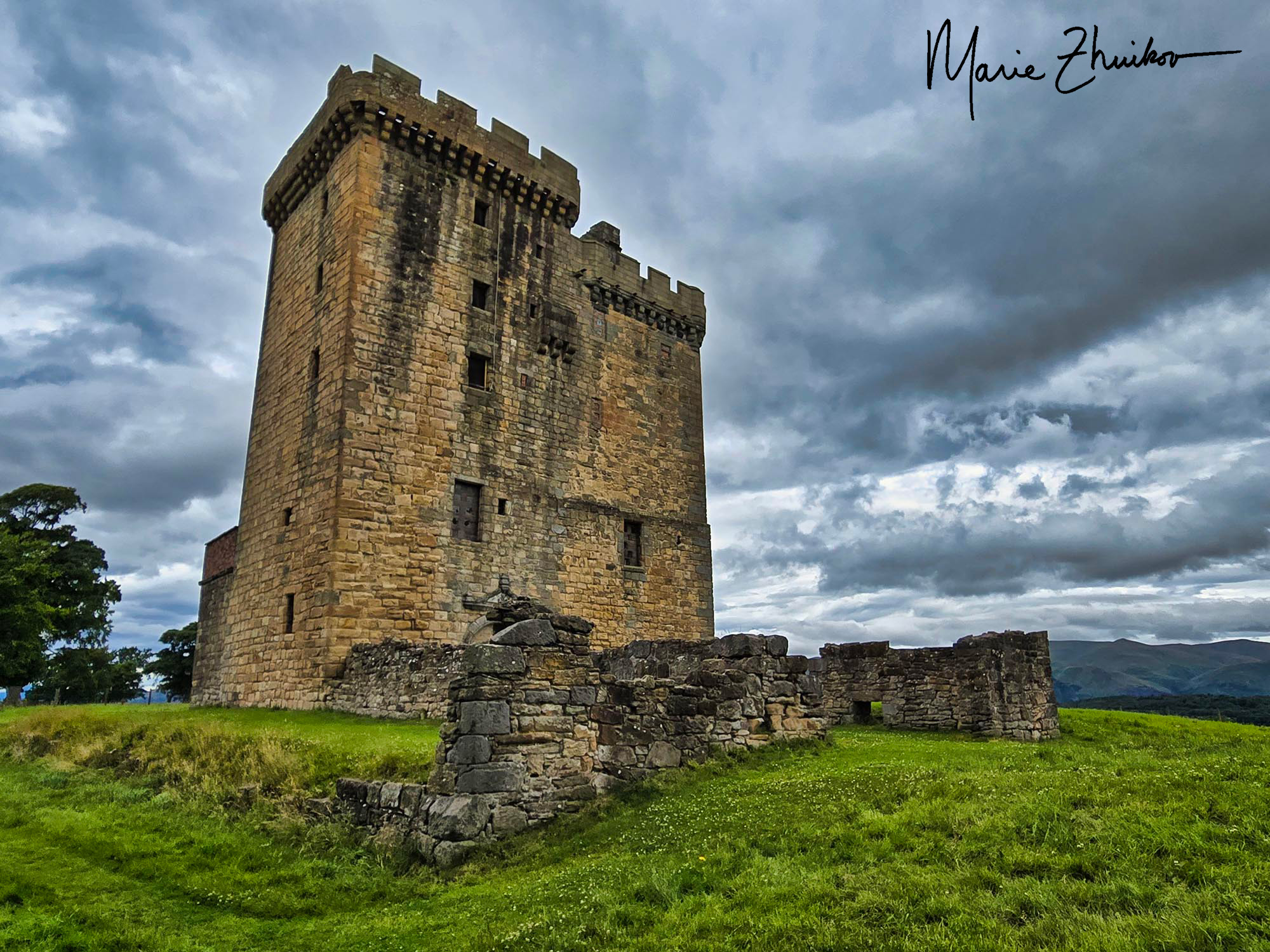
The tower has been rebuilt and refortified a couple of times due to this subsidence. It’s not usually open for tours and is now owned by Historic Scotland. During our tour of Broomhall, Charles Bruce told us that one of the stone archways in an upper level of the tower collapsed and broke through the floors below it. It’s not habitable but does have electricity and a well with water. Historic Scotland has plans to increase public access to the tower in the coming years. I wish them luck!
Near the tower is a modern stone timeline that describes the geologic and glacial history of the area. A nostalgic and primitive tree swing hangs from one of the large trees on the hillside.

If I ever return to Scotland, I think it would be fun to stay in Clackmannanshire and learn more about the area where my ancestors lived for so many generations, and spend more time with the leaning tower.
Next up: our final day in Scotland and a fancy dinner in a mansion that we won’t soon forget!

 Marie's Meanderings
The link was very informative….and I loved the angels!
Thanks, Helen! Did you ever visit the tower when you lived in Scotland?
No…father’s family were from Galloway.
Fine essay. Scotland has such a deep and convoluted history. A fascinating part of the world, for sure.
I agree! If I ever win the lottery, I’m going to spend a chunk of it on this tower!
The tower looks foreboding and reminds me of the rook chess piece.
Oh yes, perfect!
Uncovering heritage and drawing up a family tree is a rewarding and addictive undertaking that can change lives.
Yes, I only wish I were retired or something, so I could delve into it further!