I spent much of the first part of 2024 researching and writing a story about flight and how it came to my family. It’s a tale of inspiration and dreams, but also one of tragedy. This was originally published in “Minnesota Flyer” magazine as a two-part series in October and November, 2024. Offered here with permission.
My family’s history with flight began in the 1930s in the fields and pastures of southwestern Minnesota in the little town of Springfield. The town’s population was around two thousand, about the same as it is today. The fertile black soil encouraged farming. Dry winds blew off the prairie, carrying the songs of meadowlarks. The roads ran straight as sticks, forming squares across the landscape in compass directions. The flat land was good for bicycling. The Cottonwood River flowed on the town’s eastern edge. It offered swimming holes for skinny dipping and was lined with huge trees of its namesake that offer shade for picnics. Dust storms often wasted the fine soil. Hailstorms broke windows and ruined crops.
The town’s Methodist and Catholic churches huddled near each other, outnumbered and surrounded by three Lutheran churches. The Chicago and Eastern Railroad crossed the southeastern end of town, following the river. Hobos rode atop the cars and peered from open doors in the empties as the train blew its whistle at crossings.
On the outskirts of town in a field on Shady Lane Farm, the mail plane flew extra low, entertaining two boys who broke from their chores and ran below, waving. The pilot waved back and tipped his wings to the Potter boys, David Edgar and Reuben Dick. The boys were lean and gangly, born five years apart. Sixteen-year-old David was the second born to a family with five children. Eleven-year-old Reuben, who went by the name Dick, was fourth-born, with ears that stuck out in the unfortunate Potter way. Both boys tended the farm’s Hereford cattle and sheep.
As the eldest son, David had a quiet confidence borne of instructing his brother and sisters. His chin was prominent and his smile ready. His friends called him a “slow talker.” He was a methodical deep thinker, but not the most ambitious person, especially when it came to the farm. However, when something interested him, he was energized.
Dick was also quiet, always listening to others, often with a smile on his face. When he did speak, it was to offer a wry observation. My mother, Dorothy, was their youngest sister.
By this time, both boys were smitten with a love of flight, no doubt due to Charles Lindbergh and his aerial accomplishments. Lindbergh’s record-breaking transatlantic flight took place only a few years earlier in 1927, when David was thirteen and Dick was eight. Lindbergh grew up in Little Falls, Minnesota, only 150 miles north of Springfield.
After Lindbergh’s 1927 flight came the “Lindbergh boom,” when interest in aviation exploded. Publicity surrounding the flight boosted the aviation industry and made a skeptical public take air travel seriously. Within a year, a quarter of Americans (an estimated thirty million) personally saw Lindbergh and his plane, the Spirit of St. Louis. This included my father, Howard Pramann, who grew up in St. Cloud, Minnesota, a mere 30 miles south of Little Falls. He recalled running out into the street with his neighbors as Lindbergh flew over their town enroute to Little Falls. People even clambered on rooftops for a better look.
Over the remainder of 1927, applications for pilot’s licenses in the U.S. tripled, the number of licensed aircraft quadrupled, and U.S. airline passengers grew between 1926 and 1929 by 3,000% from 5,782 to 173,405.
Eventually, Dick took flying lessons. Perhaps expecting his father’s disapproval, he kept the lessons secret, sneaking to the nearby town of Redwood Falls on Sundays for instruction when he didn’t have to work the farm. After Dick gained his pilot’s license, he finally told his father. As my mother described it, a “big crisis” ensued once that happened. Reuben probably understood all too well that he would lose his youngest son off the farm and into the air.
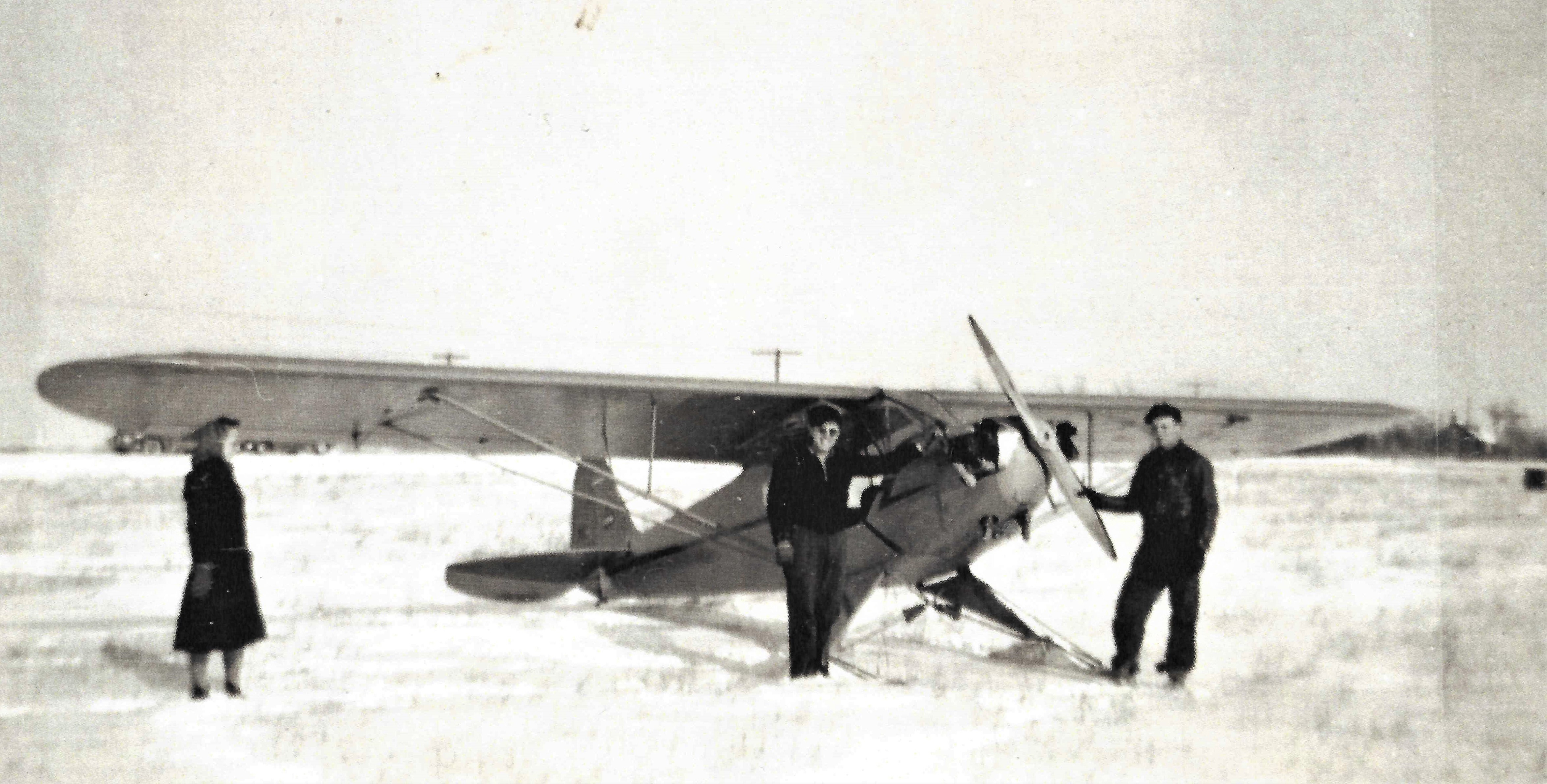
He lost his oldest son, David, to flight, too. Probably spurred by Dick’s experience, David took flying lessons, although his weren’t secret. Soon, he and Dick turned the fields by their farm into runways. Their sisters recalled seeing them take off and land in their Piper J-3 Cub. They were the first ones in Springfield to own an airplane, bought with their portions of the farm income.

I don’t know if my mother ever flew with her brothers. I also don’t know if Reuben ever relented on his objections and flew with them. However, according to Brian Lindner, a personable and meticulous Vermont historian who interviewed both my mother and Uncle Dick for a project I’ll describe later, the young men cajoled their own mother to fly.
Lindner said, “She wouldn’t go. She says, I’m not going to walk that far out [into the field] to get into an airplane. And one day, the boys took the fencing down, brought the plane right up in front of the house, and said, ‘Okay, now you’re going up.’”
Eventually, an airport was built in Springfield, which David and Dick no doubt had a hand in. They built a small hangar for their plane (the airport’s first hangar) with a man named Fred Mottinger and flew on business trips to cattle auctions and meetings, as well as pleasure trips.
Besides Lindberg, Dick was probably also swayed by actor and pilot Jimmy Stewart and his 1942 army air force recruiting film, “Winning Your Wings.” In addition to outlining different options for enlistment, the movie revealed pay grades for various air force positions and portrayed the uniform wing pins as a way to attract women.
Whatever their motivations, the two brothers from Springfield loved to fly. Their joint goal was to fly the largest planes possible. David, especially, had finally found his passion, and it didn’t hurt that it was something that would get him off the farm.
Royal Canadian Air Force
When World War II began, David was twenty-four years old. He tried to enlist in the U.S. Air Corps but was rejected due to nearsightedness. Somehow, he learned that the Royal Canadian Air Force took pilots who wore glasses. David enlisted in 1941 and was based out of Port Hardy. He worked anti-submarine patrol around the Vancouver Island area, flying a Lockheed Ventura, a medium-sized twin engine bomber, over the North Pacific.
In letters home, David expressed his pleasure with these planes. He said they’re “not flying boats like I thought I would be on. Very happy about that. These planes have the most powerful engines built. When you open the throttles, things really start to happen!”
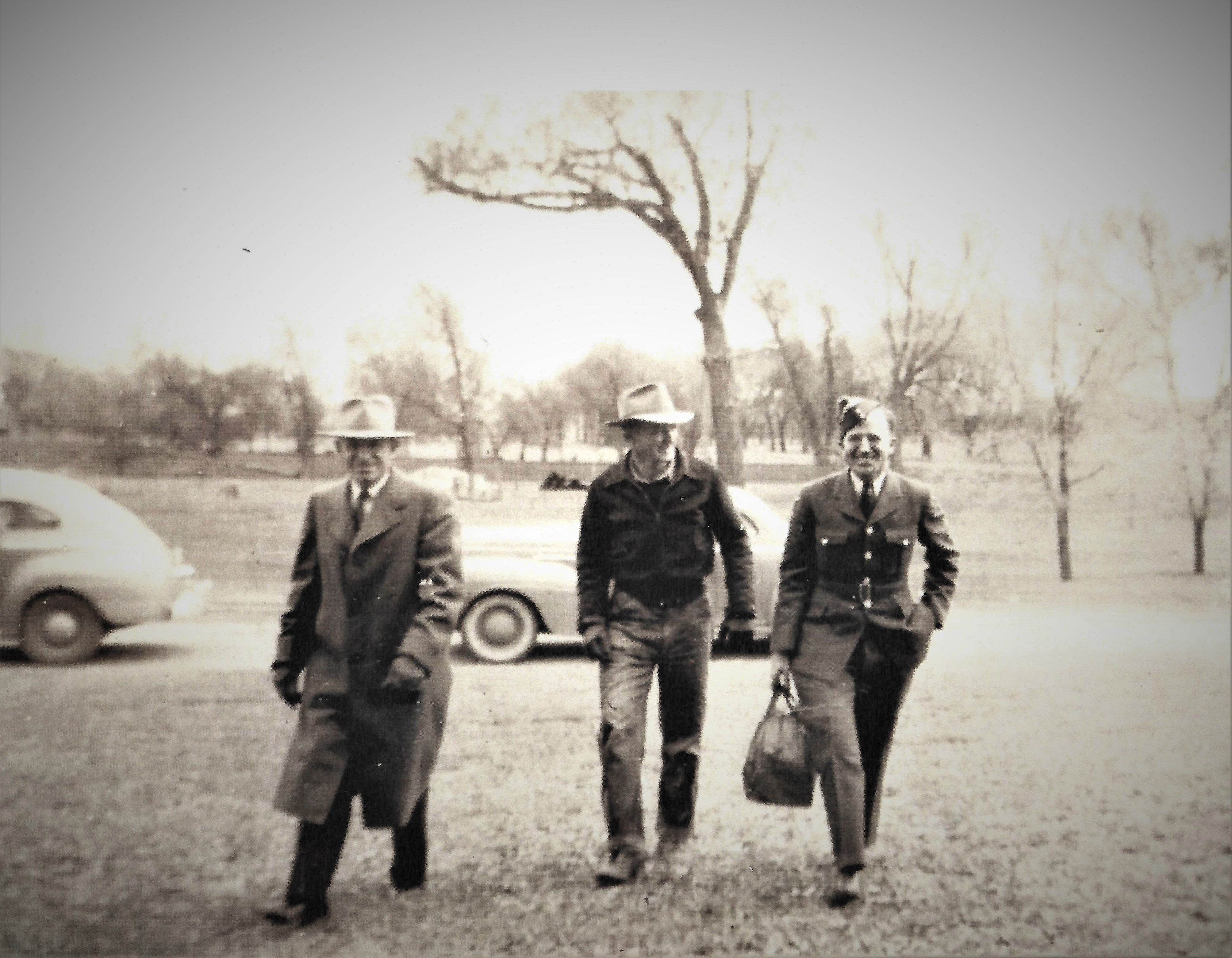
He liked his situation, saying, “Don’t have to work very hard, in fact, it looks like this would be a very easy life.” The men got weekends off and were able to ride the streetcar 45 minutes into Vancouver for entertainment.
David described their station as “built amongst the tall pines, the runways are cut right through the trees. The good old Pacific is on one side of us with the mountains on the other. Can hear the surf pounding and the wind whistling through the pines. Sounds romantic, but don’t think it will be after a bit as we are really in the sticks.”
He chafed at receiving mail by boat only twice a week and the length of time it took for his hometown newspaper, The Springfield Advance-Press, to arrive. He was aware of censors reading his letters, but only once did information get cut from one. “Mail is about all we live for here, you know,” he said. Phone calls could only be made when he was in Vancouver and he couldn’t always get through to his parents.
Christmas 1943 was probably one of David’s first Christmases apart from his family. He missed them but seemed pleased with the presents he received by mail. He managed to hold off opening them until Christmas Eve. On Christmas Day, he participated in the tradition where officers and noncommissioned officers served a turkey dinner to the enlisted men. “It was a lot of fun for us and the men, I know, got a big kick out of it.”
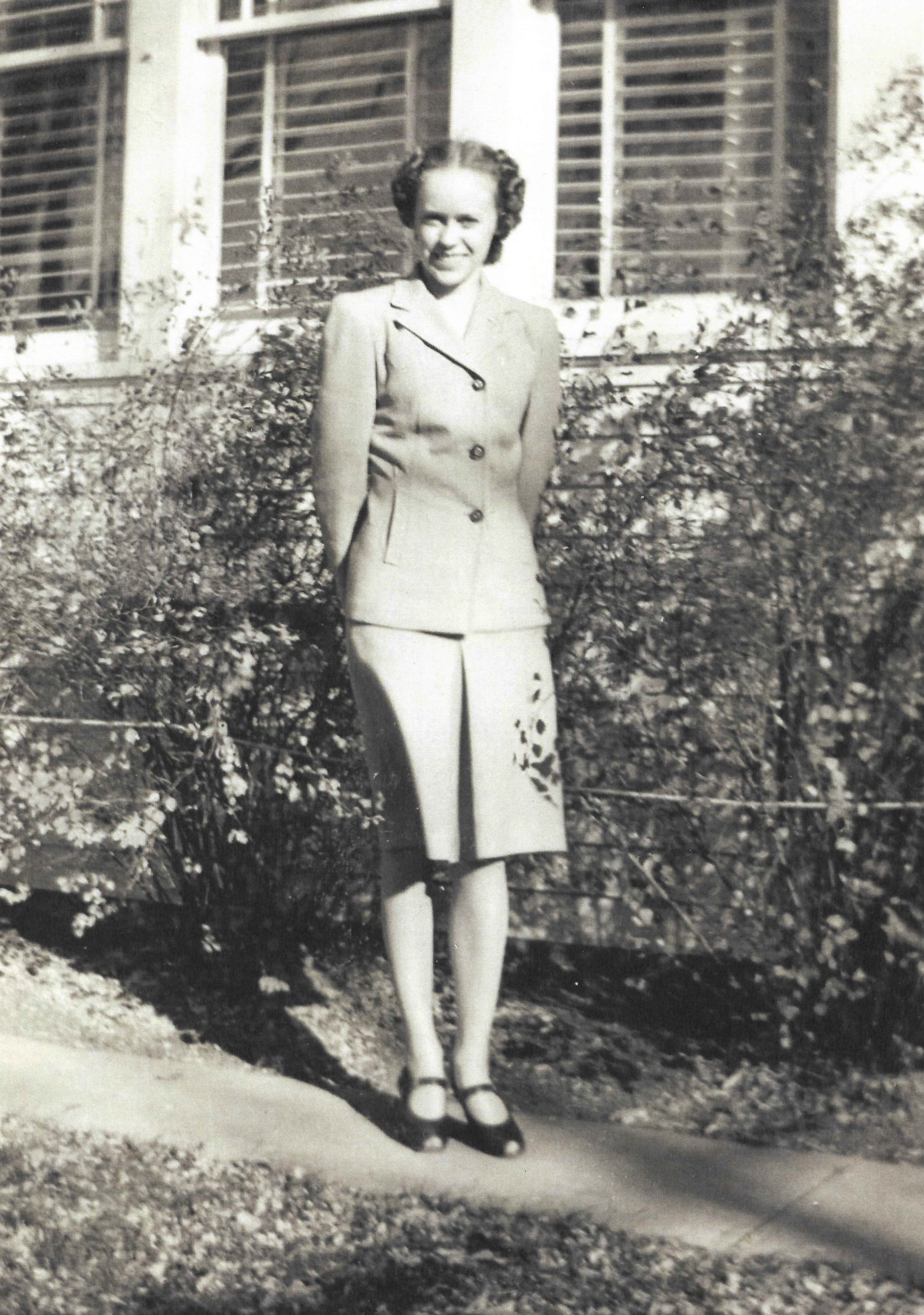
Over a New Year’s break, he “saw quite a lot of this little lady friend that I met some time ago in Vancouver. Think she’s really O.K…” This woman might have been his future fiancée, Inez Copeland. (There’s some question about whether she was his official fiancée or a serious girlfriend. Whichever the case, they clearly became devoted.)
Lindner said that David’s methodical personality was “exactly the type that they wanted for bomber pilots in World War II. Your fighter pilots were young, aggressive, break the rules, you know, party, have fun. In the bomber crew pilots, they were looking for somebody that was much more refined. In my mind, he fit right into that.” David’s RCAF crewmembers noted his safety-consciousness and calm demeanor.
While in Canada, David was made pilot officer (the equivalent of a U.S. lieutenant) and a flight instructor. He got serious with Inez. Like many other couples of the time, they probably swing danced to “Jersey Bounce” by Benny Goodman on their dates, falling deeply in love.

David also had a brush with Hollywood. Producers for the movie, “Son of Lassie,” were looking for a pilot to fly a bomber for the movie filmed in Canada. David fit the bill and performed most of the flying scenes. The movie starred Peter Lawford and June Lockhart. It follows the adventures of Lassie’s owner who heads off to fight the Nazis with Lassie’s puppy son Laddie in tow.
My mother made copies of the DVD for my brothers and me. When I watched it, I was disappointed that I couldn’t see my uncle. The closest to that came when his silhouette appears in the plane’s cockpit during one scene where Laddie jumps up on the bomber’s wing.
But David’s dream to fly for the U.S. remained. In 1944, when the U.S. was hurting for pilots, they began accepting pilots with glasses. David would finally be a flyboy for his own country.
U.S. Army Air Force
David began his tour in Richmond, Virginia, filling out paperwork, making a new will, and giving his father power of attorney. Then he moved to Camp Springs Army Air Field near Washington, D.C. When not on base, David was able to see sights like the capitol building, Pentagon, and Mount Vernon.
In one of his letters home he mentioned receiving “a lot of letters from Inez. She does a very nice job of letter writing, which really makes it O.K. for me.”
He was becoming accustomed to camp routines, “except for this getting up at six a.m. or earlier every morning! Sure miss the weekends off, too, that I had in the RCAF. The longer I’m in this outfit, the more I think of the air force up there [Canada], especially the way they treat their personnel. I guess, though, they have to be tougher here as everyone in this outfit seems to like to get away with all they possibly can.”
David returned from a visit to the Pentagon one afternoon, disgusted from learning he would not receive credit for his Canadian service, except for flying time. “Can’t wear the ribbons for serving up there and no promotions based on our record up there. I raised plenty of h—, but naturally, it didn’t do a bit of good,” he wrote home.
He was not impressed by the Pentagon’s internal layout, complaining that he needed “a navigator to find your way around! The guy who figured that one out must have been a little crazy.”
In August, he was moved to Westover Army Air Field in Chicopee, Massachusetts. He got “checked out” on the B-24 Liberator bomber and waited for a crew. In the meantime, he flew with the headquarters squadron as a copilot until he had enough experience to fly solo. Those flights took him to Ohio, New York City, and Bermuda. He loved the big planes, saying it was a “thrill to have those four engines out there.”
By the end of the month he was feeling more comfortable with the Liberator. That was, “until the instructor cut out the two engines on one side as I was coming in to land. I began grabbing everything I could and had my hands plenty full for a while. He caught me off guard that time, but believe me, he won’t again.”
In a letter to his sister Lydia, David complained that the army had been doing their best to make him an instructor but that he flatly refused. He wrote, “Makes me very mad, the idea that seems to prevail here–that being on a combat crew is an insult and anyone wanting it must be crazy. Have been offered so many jobs except what I want, that I think it must be a conspiracy.”
In late September he told Lydia that, “After much running around, digging through red tape, talking nice to high-ranking officers, and practically signing my life away, I got three days off this coming weekend!!!” He planned to take a six-hour train ride to visit his former RCAF crew in Montreal where they were stationed before leaving for combat in India. He envied them getting into the action. “Sure wish I was with them now,” he wrote.
“We plan to get together Sunday, and if I know the boys, it won’t be a tame one. I know what kind of a beating I’ll take from them as they always had some bright remarks to make about my being from the U.S. In all their letters since I left, they have given me hell for ‘deserting’ them!”
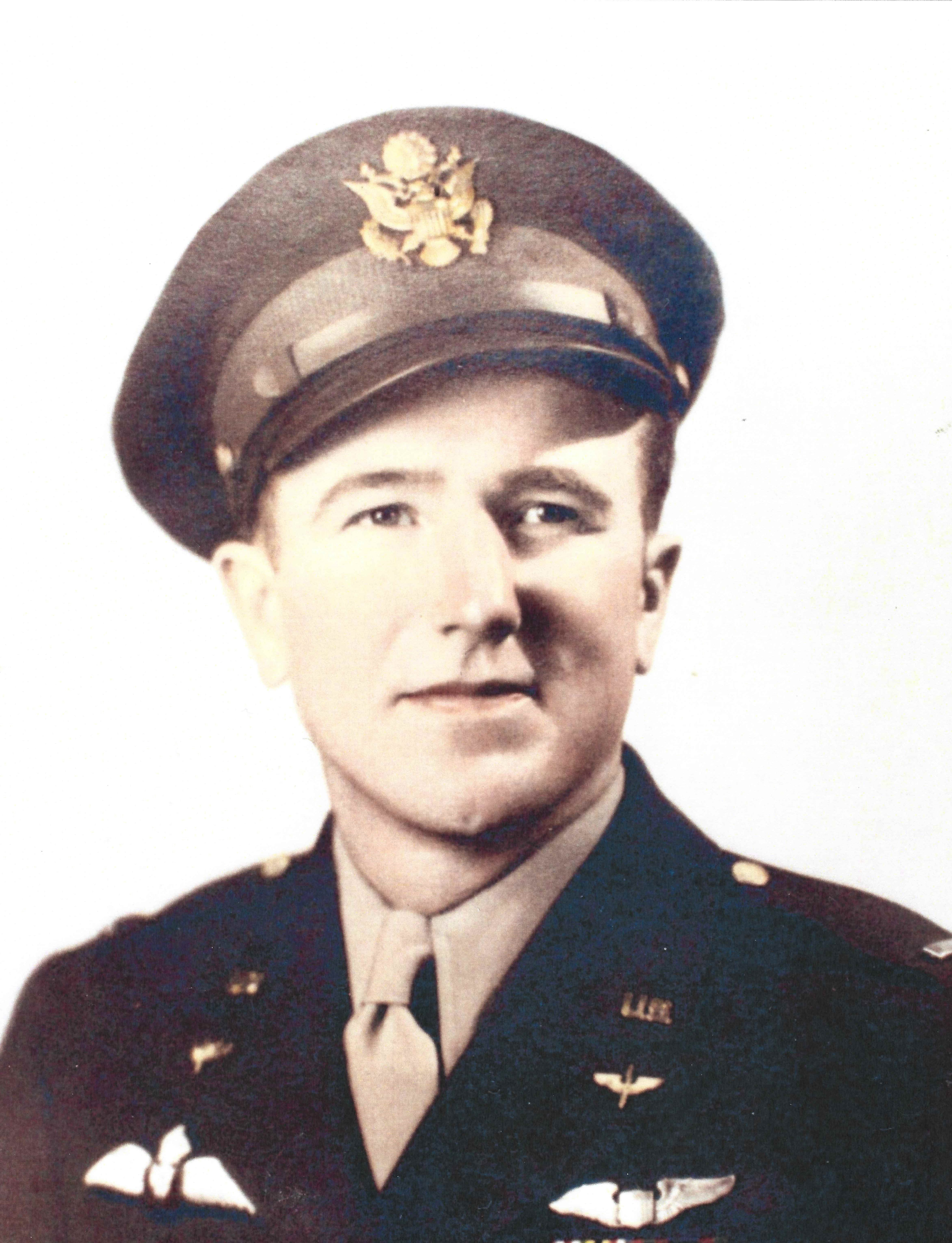
After returning from Montreal, David was finally assigned his crew on October 7. This was not without controversy, however. Historian Lindner described it this way: “Just imagine you had this young crew. They’re like eighteen, nineteen, twenty years old. They’re high school kids. And they’re brought together as a bomber crew for over two weeks. They’ve got an eighteen-year-old pilot, his name was Eddie Stumpe. And they just bonded. These guys did everything together. And then boom, they wake up one morning and Eddie Stumpe has been removed as pilot. And he’s gone. And then they find this thirty-year-old guy is now their new pilot. Just imagine being that pilot. All of a sudden, I’ve got this crew that doesn’t know me, and they were in love with the first pilot.”
From interviews with one of David’s crew members, Lindner thinks Stumpe got replaced after he made several poor night landings. He was gone the morning after his last botched landing. Stumpe, however, saw things differently. He said to Lindner, “This guy comes down, and he gets in with all the officers, and he’s buddy-buddy with them, to the point where they let him take his pick of the best crew on the base, and he decided to take my crew, that’s the one he wanted, and that’s what forced me off.”
Squadron Commander Dick Hurd offered Lindner yet another viewpoint: “I got this eighteen-year-old-kid, very little experience. He’s a brand-new pilot. I’m responsible for every life on that bomber. And along comes this guy who’s thirty years old, highly experienced. He’s an instructor pilot. He’s got hundreds of hours of flying time. I said, who would you put on that crew? I take the least-experienced guy off and I put the most experienced guy on.”
As with most human situations, the truth is probably a blend of those three things. Nevertheless, when David became pilot, the crew quickly realized they had a winner. In a letter home, one crewmember said that after only two flights, “My new pilot is really good. He can really fly that thing. In fact, he is better than the instructors that we have flown with.” Another crewmember said David was a “hot rock,” which in World War II was a huge compliment. Lindner said that David was a patient man who inspired the confidence and respect of his crew.
David and his crew itched to get overseas where the action was. They worried that the war would be over before their training was completed.
For his birthday, David asked his parents for an alarm clock because it was impossible to get one on base. He anticipated needing to wake up at four a.m. once he got “on course.” That referred to his crew training course, which involved a regimented schedule of three days waking at various times and then repeating the cycle.
The alarm clock arrived quickly, much to David’s delight. He also began receiving the Springfield newspaper again and was excited by the news that the local baseball team won a championship.
He was still true to Inez. Responding to his father’s letter asking him about “eastern gals,” David responded, “I still think the western gals got it all over them. I mean, the far west one!”
He had a heavy schedule of flying and ground school and complained about not having spare time. When he did get it, he slept. David likened himself to an “old hen” with his crew, “trying to keep track of them, seeing that they get to all their classes and report for flying, etc. Have to listen to all their troubles, too!” Despite this, he said he was, “quite pleased with them all so far.”
Their training cycle began at six a.m. and ended at six p.m. The next day began at eight a.m. until three a.m. the next day. The third day began at noon and ended at eight-thirty p.m. Then it was lather, rinse, repeat! On top of this, David had ground school classes to make up that he missed from not being on the crew from the start.
Camel’s Hump Mountain
On October 15, 1944, the crew was nearing the end of their training runs before heading over to Europe. Much of the following account comes from Lindner, who has spent decades researching what happened next.
David and his crew of nine took off at night sometime before eleven p.m. from Westover Field. Their mission was to give the copilot, John Ramasocky, practice flying on instruments. According to Lindner, a canvas hood was snapped in place around Ramasocky’s side of the cockpit, which prevented him from seeing his surroundings.
The sky was clear when the heavy bomber roared down the runway and climbed to 8,000 feet. The plane headed toward Albany, New York, on the first leg of their flight plan, which called for them to fly over Albany, then Burlington, Vermont, turn southeast toward Manchester, New Hampshire, and then return to Westover Field in western Massachusetts.
Although the bomber was equipped to supply power for electrically heated flight suits, David and his crew were issued only fleece-lined leather suits. The electric flight suits were reserved for combat missions. This would play a role in the tragedy that was to come. For every thousand feet the plane climbed, cabin temperatures dropped about three degrees. The crew’s discomfort was compounded by cold air pouring in and around the drafty gun turrets.
At 11:42 p.m., the plane made its last radio contact with Westover Field. Shortly after, a drowsy Private First Class and top turret gunner James Wilson, age 19, decided to leave the crowded flight deck where the other crewmembers were huddled for warmth and conversation. Dropping through a trap door and climbing onto a catwalk through the bomb bay, he reached the rear hatch that lead up to the middle section of the bomber. Once there, he used the crew’s parachutes to form a bed and lay down on the floor. Within moments, he was dozing.
While Wilson dozed, the pilots apparently decided to employ an old aviation trick by bringing the plane down to 4,000 feet for the crew’s comfort. This raised the temperature of the cabin about 12 degrees. Although most of the mountains shown on their charts were below 2,400 feet, Camel’s Hump Mountain in Vermont, named for its dromedary-like peak, was clearly marked at 4,083 feet.
At about one-thirty a.m., the lights of Burlington appeared. The B-24 executed a right turn toward Manchester. Lieutenant Robert Geoffroy, the navigator, didn’t know that a strong autumn cold front was approaching with 50-knot south winds preceding it. Slowly, imperceptibly, the plane was pushed farther north than he realized. They were now flying directly at Camel’s Hump.
David and Ramasocky were seated at their controls. As Ramasocky studied the instruments under his hooded shield, David checked the plane’s altitude visually. But he couldn’t see much because they were over sparsely populated hills. The moon was new and well below the horizon. That, combined with safety blackouts, left Vermont in almost total darkness once they passed Burlington.
Flying at 190 mph, the bomber approached Camel’s Hump. For several hundred feet, it skimmed over bare rock and alpine tundra spruce. If someone wearing night vision goggles had been watching on the mountainside, they would’ve thought the plane was going to make it unscathed.
Nestled in his parachute bed, Wilson awoke to the sound of scraping, crunching, and tearing metal. He was bounced onto his feet and then knocked unconscious. A mere 18 inches of the plane’s left wingtip and the fragile bomb bay doors struck bare rock and the plane cartwheeled into the mountainside.
Because they couldn’t see the mountain, David and his crew probably had no idea what was happening. As the right wing clipped the tops of several small trees, did David have time to think of Inez, waiting for him back in British Columbia, or his beloved brother Dick who was training to be a Navy pilot in Texas, or his family back in Minnesota?
Then the wing and nose impacted the mountain head-on. The force ripped the tail assembly from the plane and flung it against a tree. The crew huddled in the nose would have died instantly as everything forward of the bomb bay disintegrated.
The instrument panel clock stopped. It was 1:58 a.m. on Monday morning, October 16, 1944.
Part 2 is next!
 Marie's Meanderings
Amazing family history, beautifully written.
How wonderful and sad at the same time. Thanks for sharing.
Thanks, Diana. There’s more to come to the story!
This is amazing WWII history, Marie. And obviously a sorrowful episode for your family. Excellent writing – gripping read.
Thank you, Eilene. It was so interesting reading my uncle’s WWII letters. I felt like I got to know him even though I never met him.
Every paragraph is a joy to read. The tragic crash was well-described. Thank you for sharing this story.
Thanks, Swabby! I benefited from the work that the historian had already done. My family would know so little without his interest in the crash.
You interpreted it well.
Such a fascinating, engaging, and tragic story, Marie. And beautifully told!
Thank you, Carol. Thanks for reading this longer-than-usual post!
Don’t make us want too long for part 2! Very interesting read.
I plan to post it next Monday. Hope that’s not too long! Thanks for reading, Vickie.
Pingback: Camel’s Hump Mountain and the von Trapp Family Lodge, Vermont | Marie's Meanderings