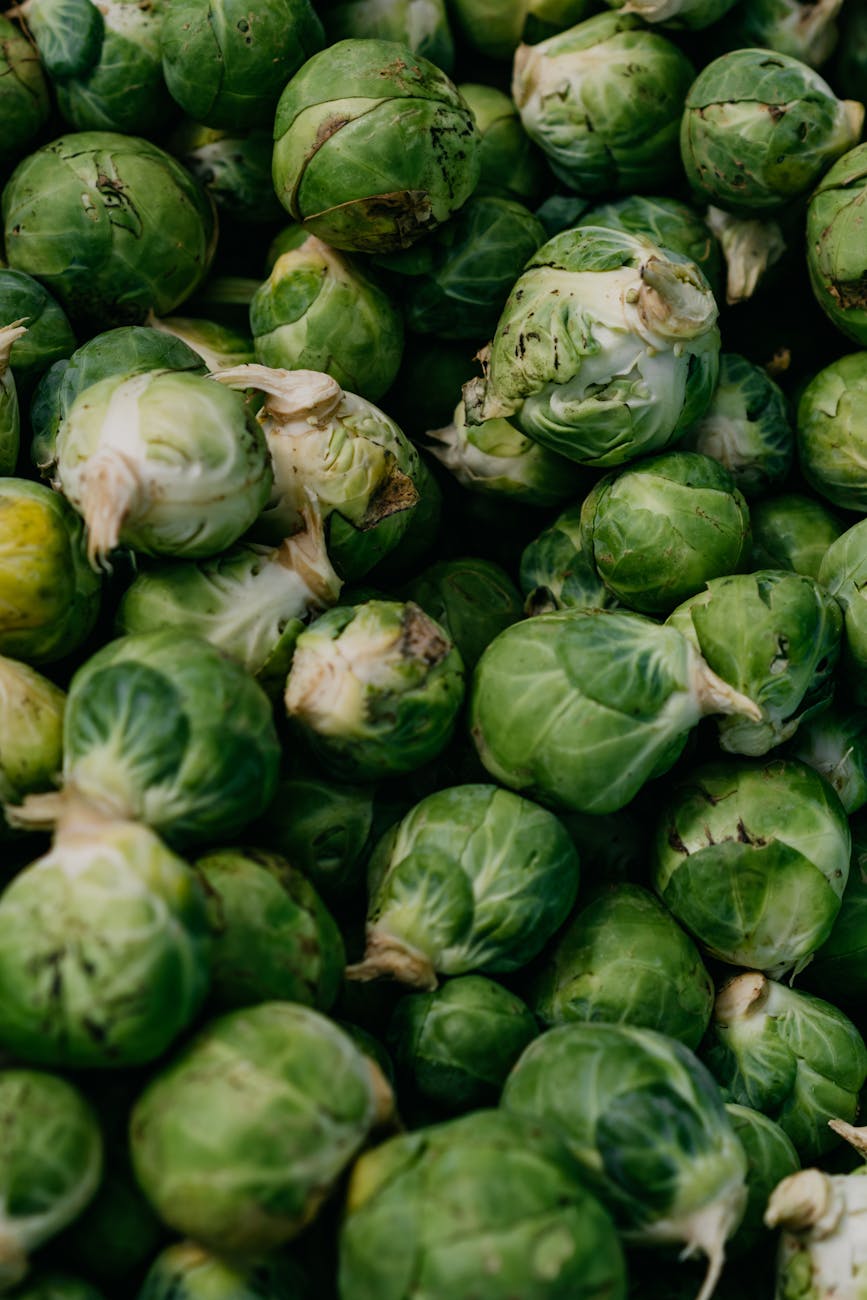
My husband’s nickname is Russell Brussel. He has a fondness, some might call it an obsession, with Brussels sprouts. We were cooking supper the other night: caramelized Brussels sprouts pasta with toasted chickpeas – a great vegetarian meal that we’ve cooked before – and I noticed a curious thing. The day was warm, so we had the kitchen windows open. Gradually, gobs of large black flies collected on the screens. They not only collected, they swarmed. In a spontaneous, miniature airshow, they divebombed the screens, as if trying to get inside.
Curious about whether this was happening elsewhere around the house, I checked other windows. No. The phenomenon was only happening at the kitchen windows. Thank god for the screens or we would have had an invasion on our hands!
We were busy cooking and then eating, so I didn’t think much more about it, although I noticed that the flies dispersed once the cooking was done.
The next morning, I did an internet search about whether flies are attracted to the smell of cooking Brussels sprouts. As you can probably guess, YES, they are!
Here’s why:
- Odor Amplification:
Cooking can intensify the smells of food, making them more noticeable to flies, which have a highly developed sense of smell.
- Volatile Compounds:
When heated, Brussels sprouts release various volatile organic compounds, some of which might be similar to those produced during decomposition, a known fly attractant.
- Opportunistic Feeders:
Flies are attracted to a variety of food sources, including those that are decaying or decomposing.
The process of cooking, especially when done with heat, can amplify the odors of food and make them more appealing to flies. Brussels sprouts, like other vegetables, can release volatile compounds when cooked that are similar to those found in decaying organic matter, which is a common attractant for flies. This is due to the presence of methyl eugenol, which is also found in other fruits and vegetables such as cherries, raspberries, and basil. When this compound is present in high concentrations, it can be intoxicating to flies and other insects.
Now you know! Plus the next time we have Brussels sprouts I can joke to Russ that he’s cooking carrion again.
 Marie's Meanderings
Thank goodness we ate sprouts in winter!
That sounds like a wise practice!
Fascinating! Generally, we can’t get sprouts in the summer, so can’t say we’ve had a fly problem! In fact over the last few years there seem to be fewer insects around!
We are lucky (at least Russ thinks so) to be able to get B. sprouts all year round. Maybe the grocery stores in the U.K. are trying to save you from this fly problem by only offering them in winter? Ha ha.
I did not know this! I wonder if cooking cauliflower yields similar rioting!?
I haven’t notice anything similar with cauliflower, but now you’ve got me curious….
That’s why I don’t like brussels sprouts!! 😅
I didn’t know this. Thankfully, I don’t like brussels sprouts! 😊
I used to be able to take or leave Brussels sprouts, but since I met Russ, there’s been much more “taking” of them. I’m surprised that the fly attraction hasn’t happened to us already. Maybe it did, but we just didn’t notice?
I suppose vegetables could be compared to animal flesh because they both decompose. Regardless of that, I will still enjoy the deliciousness of Brussels sprouts. In the summer, I halve them and use them raw in salads.
It’s great that you like Brussels sprouts, Swabby. Just don’t ever cook them outdoors!
🙂
Thank you for sharing, Marie!
You are most welcome. I consider it a public service. 🙂
How interesting!
I’m glad I took the time to investigate the secret power of Brussels sprouts!