The Parker Tavern, Reading, Massachusetts

The Parker Tavern

If you have been reading this blog for about two years and have an excellent memory, you may recall this previous post about my search for Irish ancestor names in my genealogy before our trip to Ireland in 2024. I was unsuccessful in that quest, but I found colonial American treasure instead.

The first “treasure” was information about my direct ancestor, Caleb Parker. He was born in Shrewsbury, MA, in 1760, and was originally named Nathanial but was renamed by his parents after his presumed-dead-in-war brother. Caleb served under George Washington late in the Revolutionary War. Later, he was head of the Vermont militia. After he resigned his commission, he and his family moved to and founded Stukley, an eastern township of Lower Canada, not far over the Vermont border. Caleb died there in 1826.

That, in itself was pretty cool, but in following Caleb’s line back in time, I discovered that his grandfather, Thomas Parker, a Congregational Church deacon, immigrated from England and founded Reading, Massachusetts. I also found that the oldest surviving building in Reading is named after the family. The Parker Tavern was owned and operated by Thomas’s great-grandson Ephriam (who would have been a cousin of sorts to Caleb), and it has been turned into a museum. I vowed to visit it one day.

Well, that day came during our New England Road Trip. The first part of our trip was all about Russ and his family. The next part was all about MEEEE! (and my ancestors.) We left Russ’s relatives in Andover, Connecticut, and drove to Massachusetts. Our first stop that Sunday morning was to attend a church service at Theodore Parker Unitarian Church. More on that in the next post.
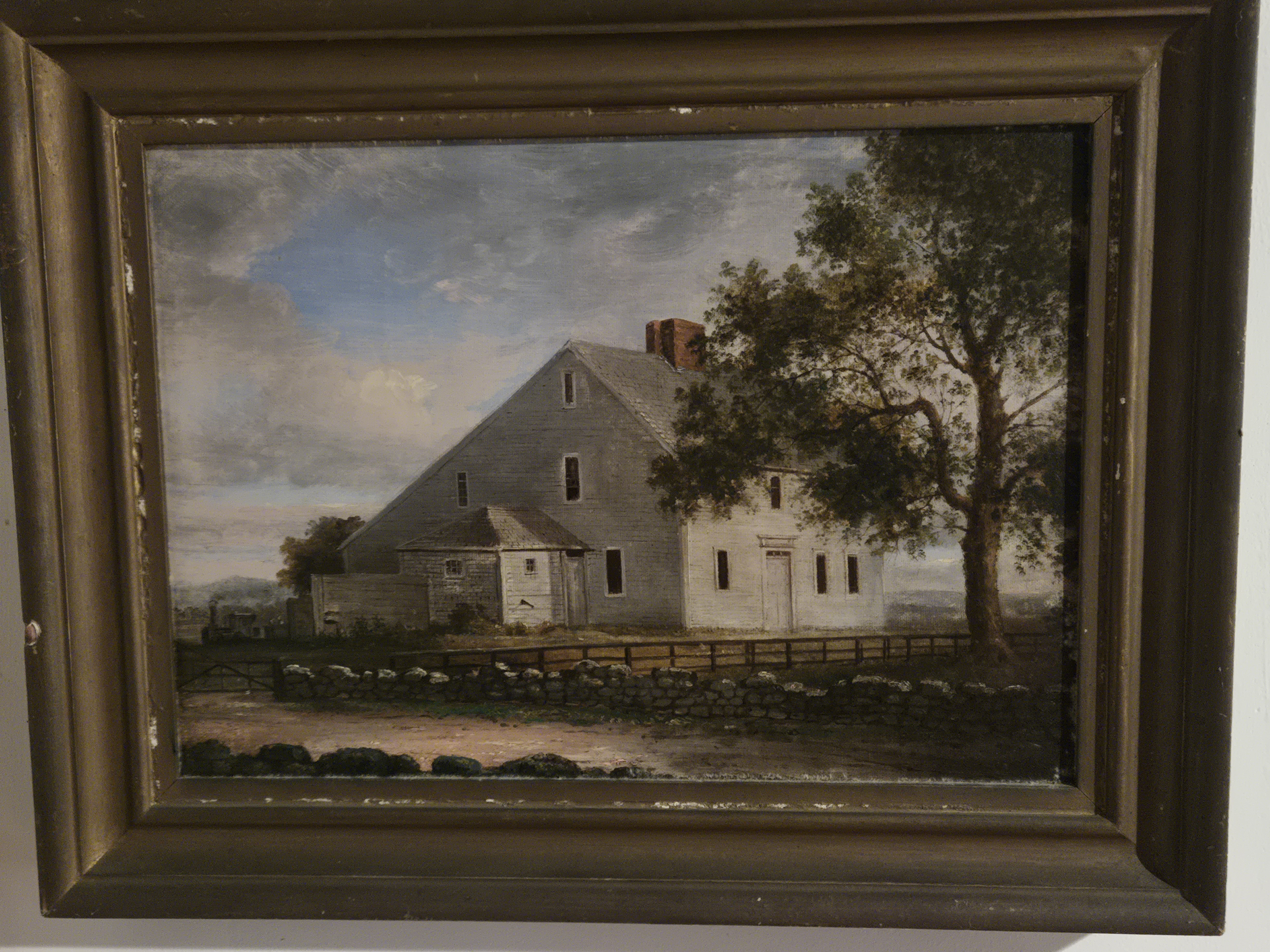
A painting of what the Parker Tavern used to look like.

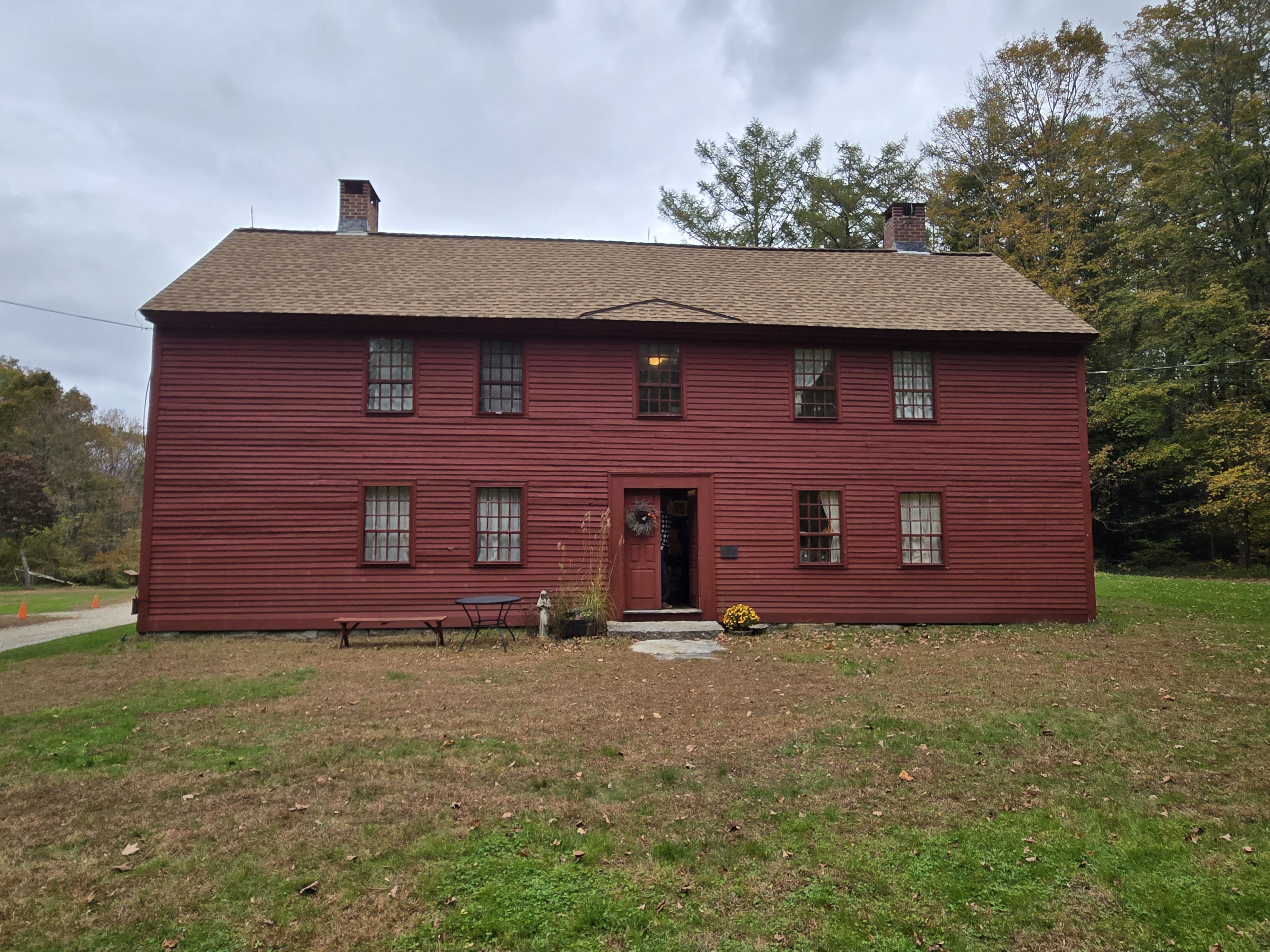
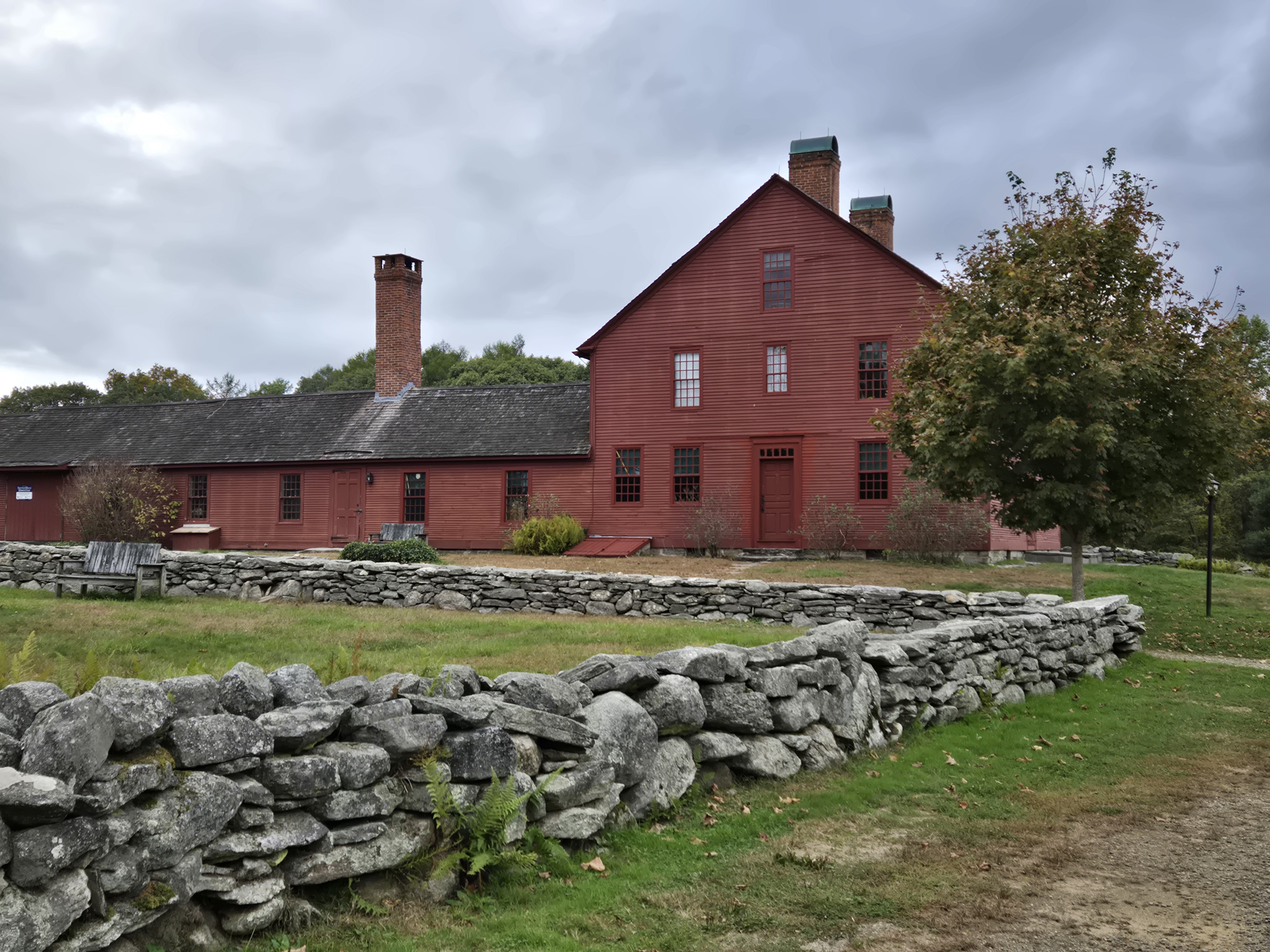
Our second stop was the Parker Tavern in Reading. The tavern is on the National Register of Historical Places. It has been turned into a museum and is open Sunday afternoons from May to October. Due to our recent education about the importance of taverns at the Strong-Porter Homestead in Connecticut, we knew taverns were vital to colonial communities. They served as gathering places where information was exchanged and they provided food and lodging for travelers. As such, they were instrumental in the spread of revolutionary ideas, ultimately becoming hotbeds for political debate and organizing that led to the American Revolution. If you’re an Outlander fan, you’ll be familiar with this concept because characters in the books/movies are often shown scheming in taverns. Although the series is fiction, this depiction is based on truth.

Because they were such important spots, not just anyone could run a tavern. Managers needed to be in good standing in the community. Often, they were people associated with the local church, be they the ministers themselves or relatives of ministers. Given that Ephriam was from a ministerial family, it makes sense he was a tavern owner.

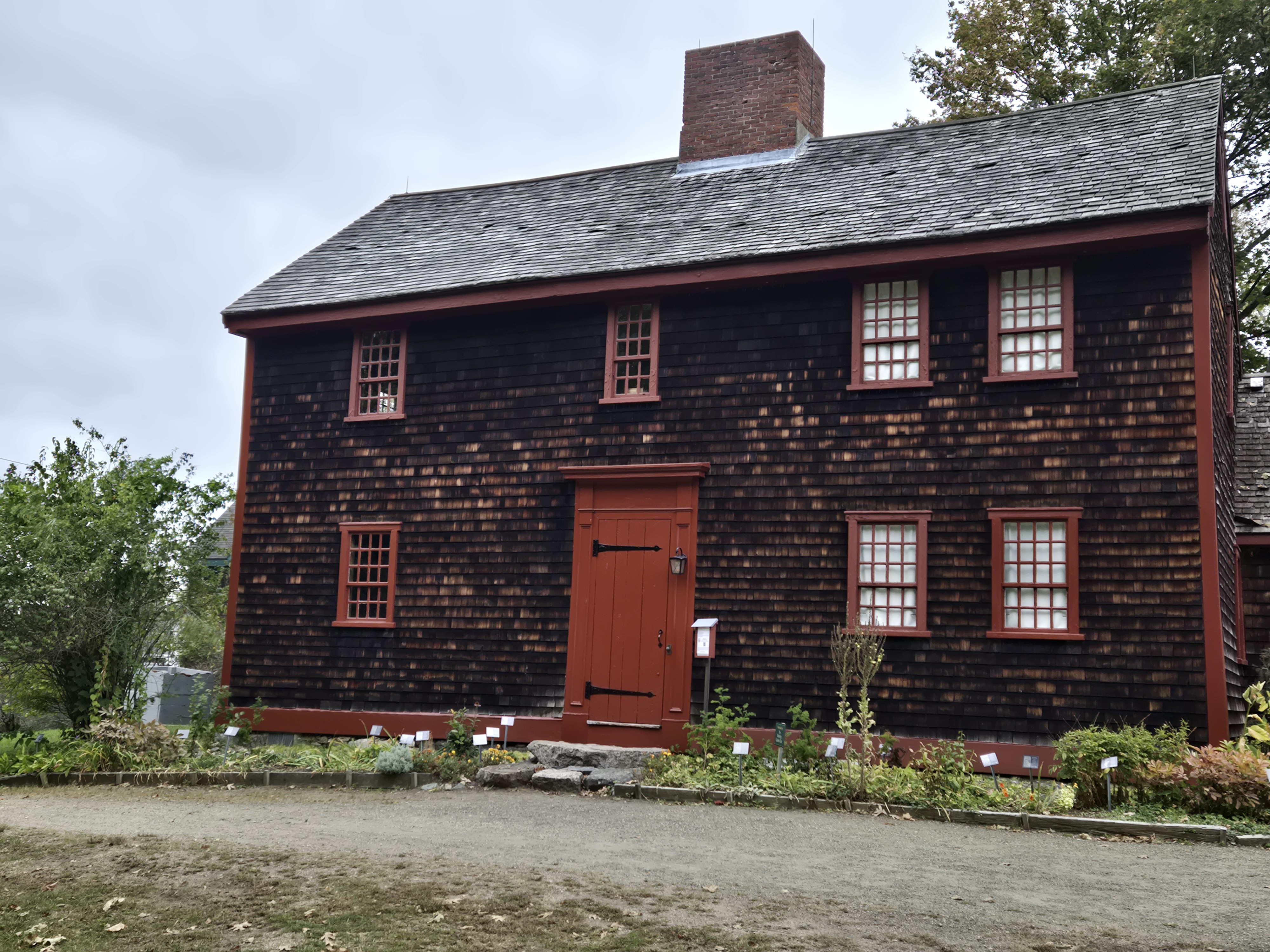
Like the colonial homesteads we visited the previous day, the Parker Tavern is a saltbox building, and it was built in the late 1600s. Besides providing lodging for travelers, the tavern also served as a jail of sorts. The docent told us that Sir Archibald Campbell, a lieutenant general for the British, was kept at the tavern from June 1776 to January 1777. He was a wealthy Scot who owned a lot of land in that country. At the time of his capture, he commanded the 71st Regiment of Foot, Fraser’s Highlanders. (For Outlander fans, another commander was Simon Fraser of Lovat.)
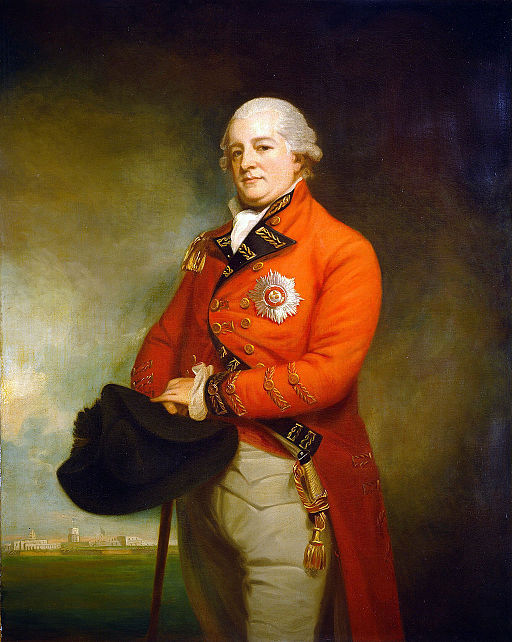
Sir Archibald Campbell image credit: George Romney, Public domain, via Wikimedia Commons

Campbell was captured after a battle aboard a ship in Boston Harbor. At first, he was in solitary confinement in the Concord jail. But after complaining to his superiors, who brought Campbell’s plight to the attention of George Washington, he was moved to the tavern for more humane living conditions.

In researching for this blog post, I discovered that Wikipedia says that the tavern was owned by the jailer. Ephriam Parker owned the tavern from 1770 to 1785, which is during the time that Campbell would have been there. The docent told us that Campbell was thankful for the amenities the tavern provided and enjoyed his stay there, as much as a prisoner can enjoy his “jail.” He wasn’t alone, however. According to a Daily Times Chronicle story (Woburn, MA), he housed about twenty-five of his servants in a tented area on the grounds and possibly on nearby Scotland Hill to comply with the army’s prison requirements.

The same newspaper story states that Ephriam and his son were part of the 4th Company of Minutemen, which took part in the battle of Lexington and Concord in April 1775 that began the Revolutionary War.

After his stay at the Parker Tavern, Campbell was released to “freedom” within the confines of Concord. In May of 1778, he was finally totally freed in an exchange for Ethan Allen. He later became the governor of Georgia, Jamaica, and Madras. His tomb lies in Westminster Abbey.
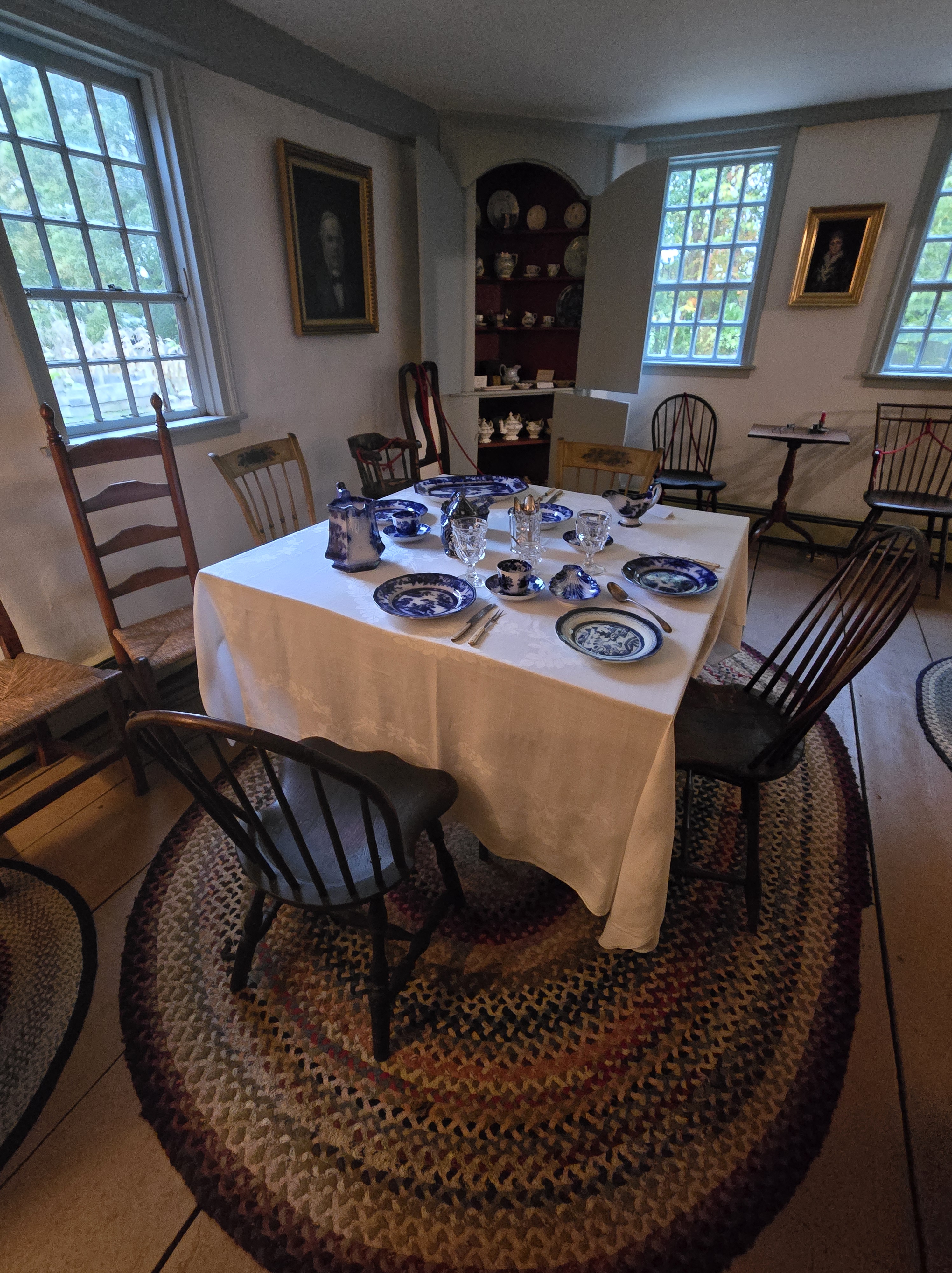
The Parker Tavern dining room.

The tavern museum is filled with antiques and an interesting display of shoe-making equipment. (I think Ephriam was a cobbler in addition to all his other jobs.) The docent explained that shoemaking used to be a cottage industry and that many homeowners participated in this side business.

Touring the museum is free; however, we chose to support it by joining the antiquarian society that runs it. To find out more about the tavern and to see more images, visit their Facebook page.

We left the tavern with our heads stuffed full of information and with a greater appreciation for the role of such buildings in the foundation of our country. Later, we toured the town to get a feel for it, and walked the graveyard where Thomas Parker is buried. We didn’t find his grave, but we saw some great examples of Puritan gravestones and their distinctive three-lobed shape, symbolic carvings like the “death’s head” or winged skull, and inscriptions that reflect their beliefs about death and eternity.

Next up: Theodore Parker Church

For previous posts about our New England trip, view:

The Nathan Hale and Strong-Porter Homesteads
Wickham Park

The Katherine Hepburn Museum

Governor’s Island

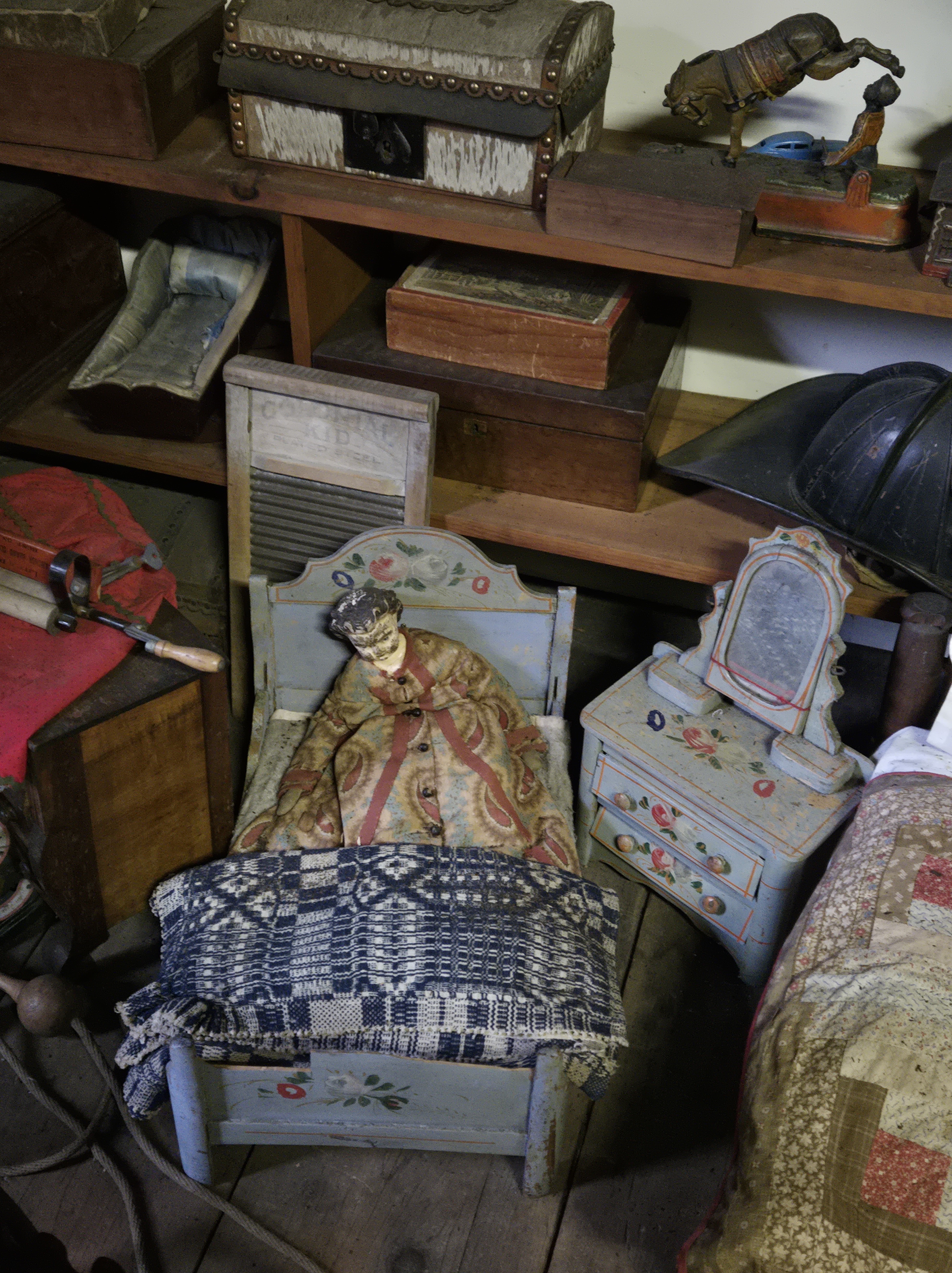
A creepy doll in the Parker Tavern attic.

The Nathan Hale and Strong-Porter Homesteads
The Nathan Hale Homestead in Connecticut

Andover Connecticut was our next stop in the Great New England Road Trip. Russ was having a mini family reunion there with his cousins, one of whom I hadn’t met yet. We stayed at his cousin’s home, which backed up to the Nathan Hale Homestead and state forest. After socializing, we decided on the spur of the moment to visit the homestead.

Because we hadn’t planned our trip well, the homestead museum was closed, but the grounds were open. Nathan Hale, Connecticut’s State Hero, was born on the property in 1755. After working as a schoolteacher, he was recruited as a Patriot spy but was caught and hanged by the British in 1776. He’s known for uttering his famous last words: “I only regret that I have but one life to lose for my country.” Statues of Hale stand in the Connecticut state capitol, at Yale University, the headquarters of the CIA, and more. 

Hale’s dark maroon Georgian-style home has remained intact. If we had been able to go inside, we would have seen that it is furnished with family possessions and other period antiques. As it was, we wandered the grounds and enjoyed soaking up the colonial ambiance. It was easy to imagine a young Nathan frolicking in the nearby forest and working in the family fields.

The Strong-Porter House

Not far down the road we found a museum that was open. The Strong-Porter House was built by Nathan Hale’s great-uncle and is listed on the National Register of Historic Places. It was the same dark maroon as the Hale homestead. The oldest part of the saltbox-style house dates from 1710 and admission is free. The museum is open Sundays during summer and fall.

The dining room-turned museum in the Strong-Porter House.

The helpful docent showed us the dining room, which was filled with historical information about the importance of taverns in colonial times. We found this of keen interest because we planned to visit a historic tavern that’s associated with my ancestors the next day. (Synchronicity!)

The home’s floorboards were much wider than usual, a testament to the huge trees they were made from. The main parlor has exposed beams, wide paneled wainscoting, and a fireplace cupboard that suggests a much larger chimney once stood there. 

We left with a greater appreciation for the basic comforts and hardships people must have experienced during the early years of our country.

Next up: Theodore Parker Church and the Parker Tavern in Massachusetts

For previous posts about our New England trip, view:

Wickham Park

The Katherine Hepburn Museum

Governor’s Island

Wickham Park

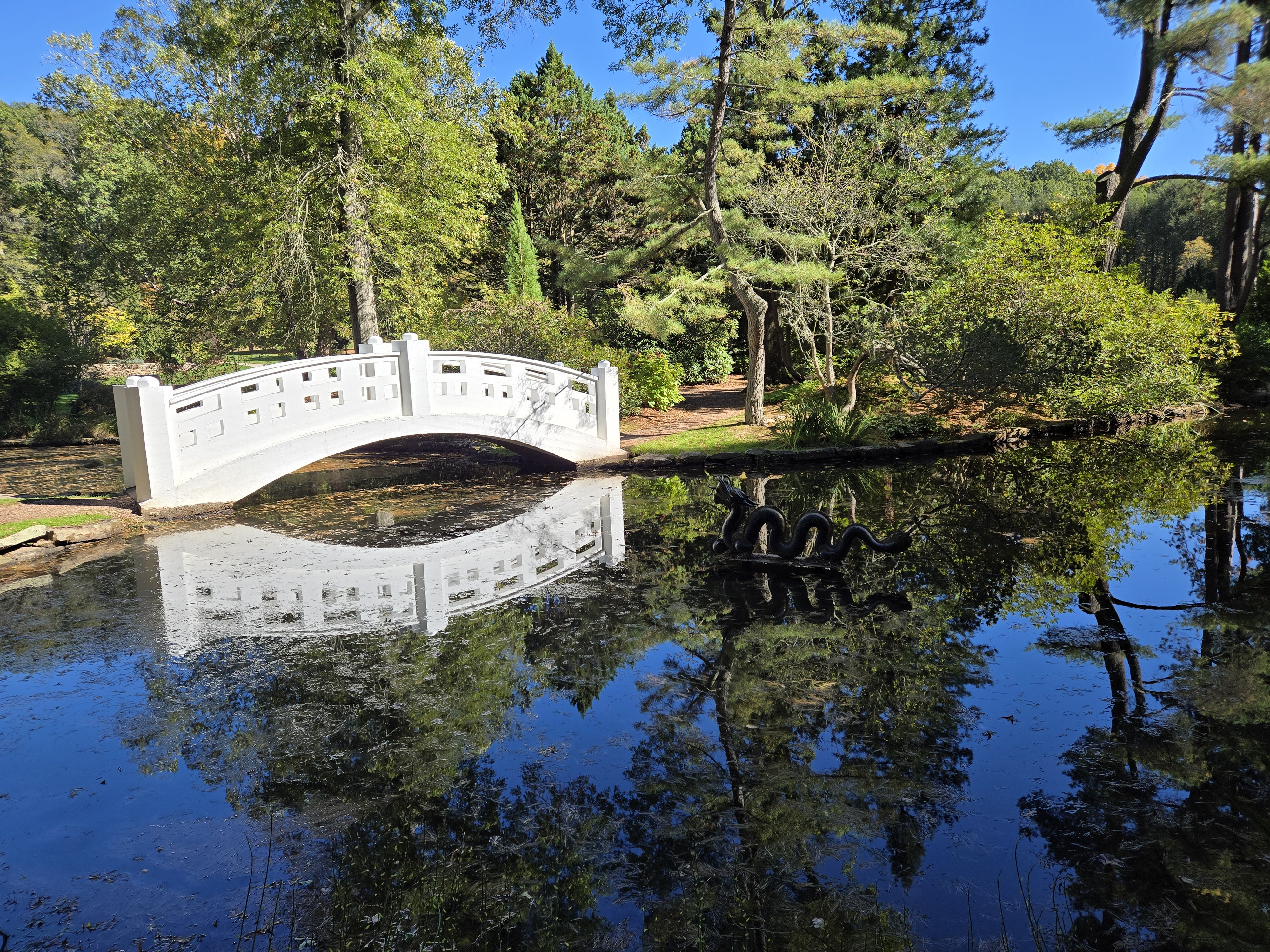
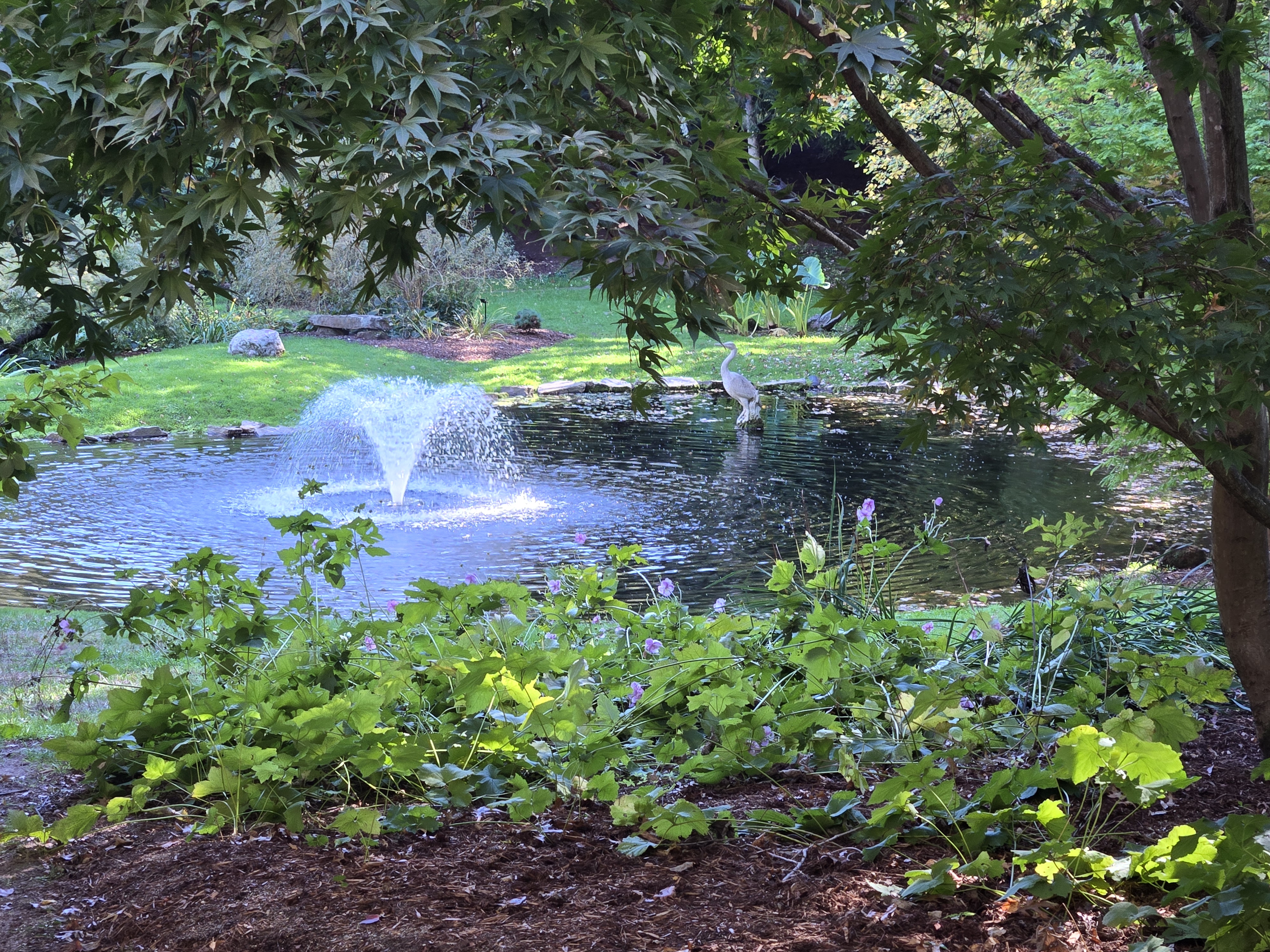
Part of the Oriental Garden in Wickham Park.

The next stop on our New England road trip was Manchester, Connecticut, and the beautiful Wickham Park. We chose this particular park because one of Russ’s cousins was a long-term manager of it, and it has connections to Russ’s family. Although Russ’s cousin Jeff is retired, he still works at the park “part-time” as director emeritus. That’s in quotation marks because, although his official position is part-time, we suspect he spends much more time at the park!

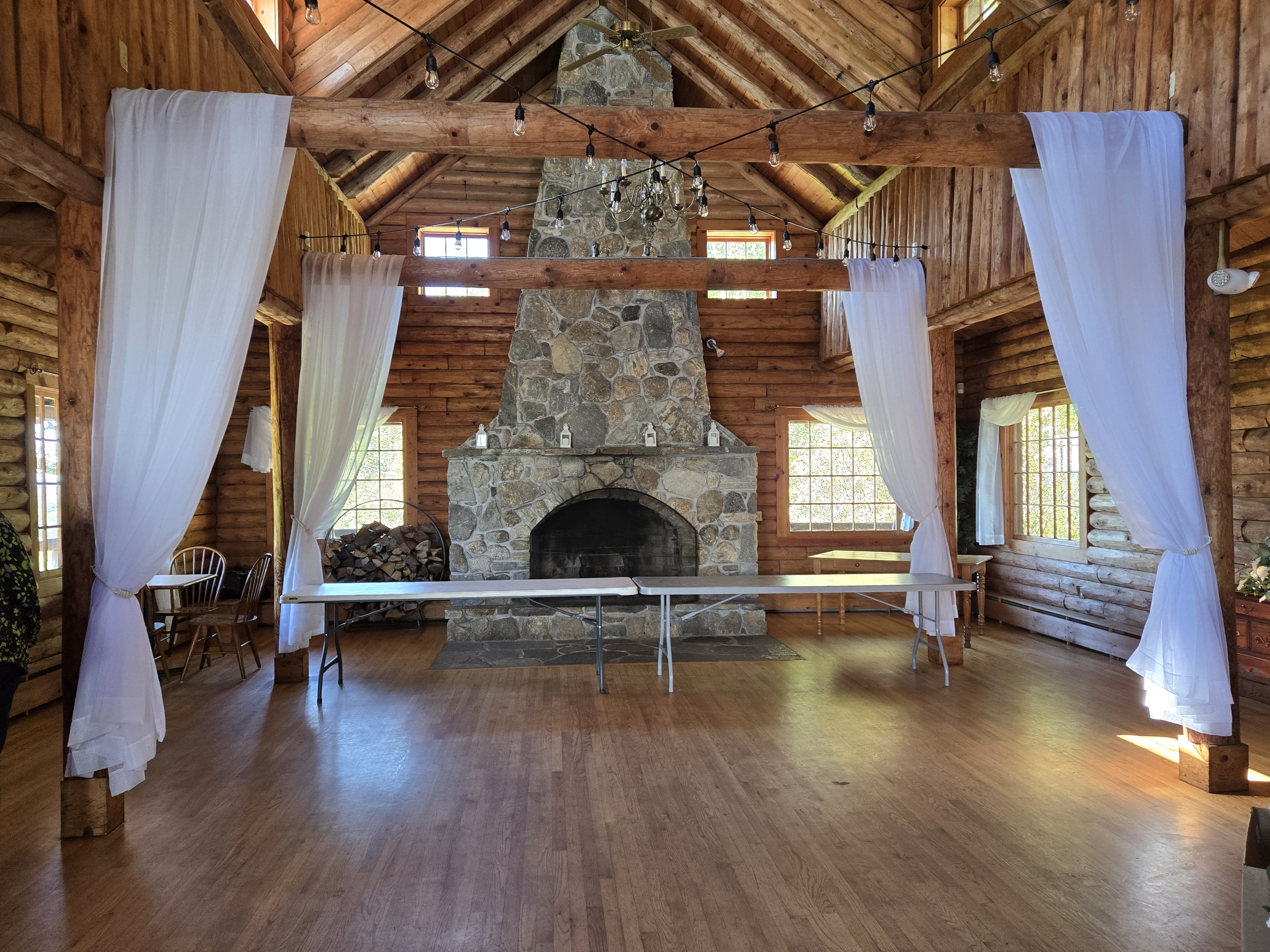
Just off Interstate 84, the park is managed under a nonprofit, private foundation and was created in 1961. It contains 280 acres of gardens, fields, woodlands, ponds, and sports facilities. People can even get married there in one of two stunning venues, including a log cabin. The entry fee is very reasonable ($7).

This log cabin was being set up for a wedding. It sits on a hill with a stunning view of Hartford, CT.

The majority of the park was a gift from businessman and inventor Clarence Wickham. If you’ve ever used an envelope with a little plastic window in it for the address, you’ve used one of Clarence’s inventions.

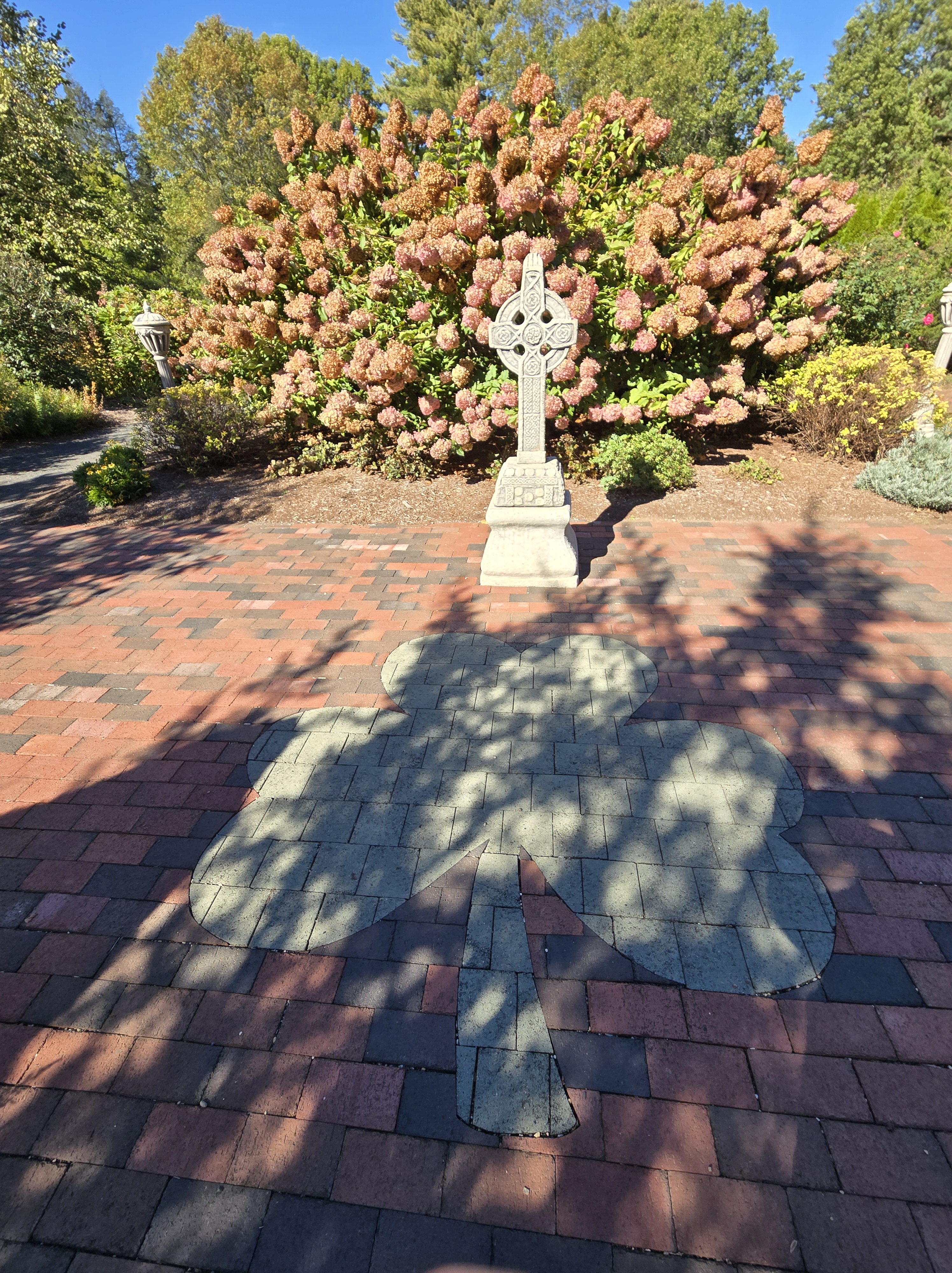
We received a personal tour from Jeff and his wife. We didn’t have time to tour the entire park (which would take more than a day, anyway), so we only saw the Irish Garden, the Italian Shrine, the Lotus Garden, the Oriental Garden, the Scottish Garden, and the Nature Center.

The Irish Garden and Wickham Park.

The highlight of the trip was a tour of a new garden that’s not open yet to the public. It’s named for Jeff and Russ’s family. (I’m not going to divulge that name here, but if you go to the park, it will be obvious). It was conceived by Jeff and his wife, financed by the family and donors, and built with the help of park staff. It celebrates the relationship between art and the natural world, showcasing sculptures and other art forms, including topiaries sculpted from plants. It even sports an observation tower and labyrinth. Some bureaucratic matters are still being finalized, but as soon as the paperwork is complete, the art park will open to the public.

The view from the observation tower in the “family art garden.” The building in the background used to be the carriage house but now houses the park office.
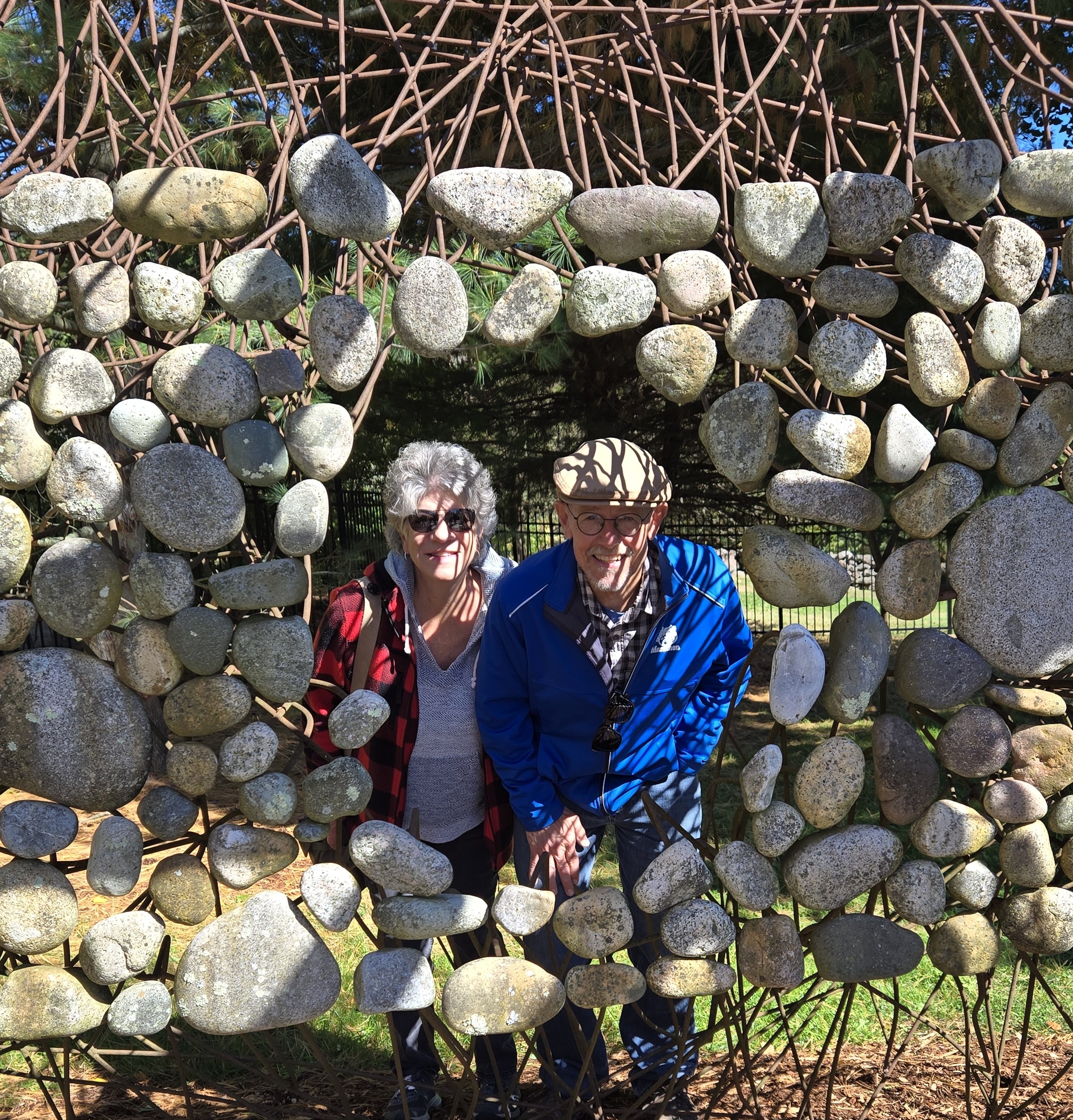
Russ and I interact with an art piece in the family garden.

The place exudes peace. If we lived in the area, I’m sure it would be one of our favorite places to visit and hold family gatherings. As it is, we live over a thousand miles away. So, we’ll have to visit it in our memories.

Next up: Two historic Connecticut homes.

For previous posts about our trip, view:

The Katherine Hepburn Museum

Governor’s Island

The Lotus Garden

Seeing Red

Here’s yet another side detour from my New England travelog. Don’t worry, I’ll get back to it!

The other night Russ and I meandered around the backroads north of Duluth, joining many others who parked their cars in random spots and looked up to the spectacle happening in the sky.

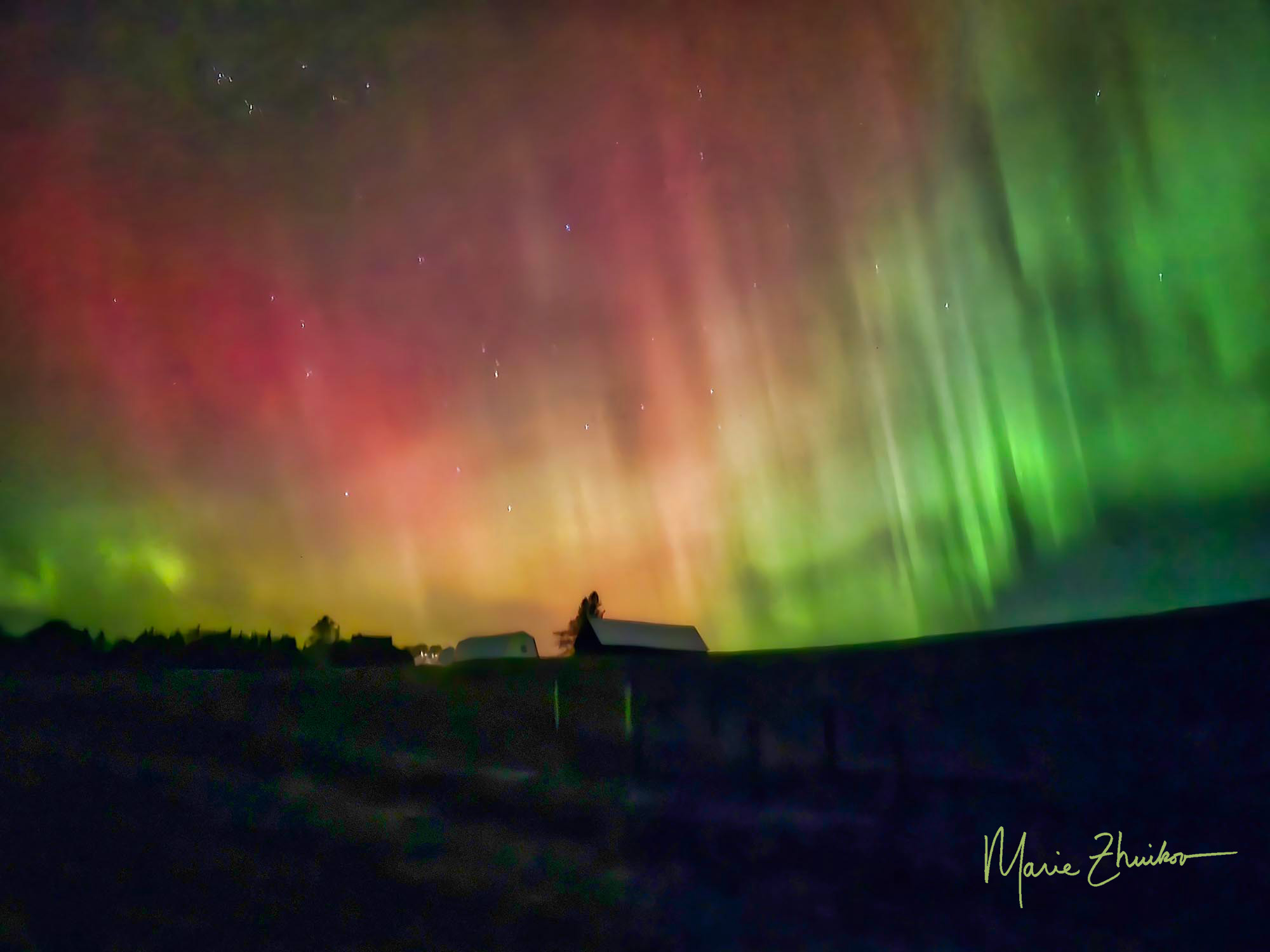
That spectacle was the northern lights. I took these photos the second night of the show at about 8:30 p.m. It was so kind of the aurora to happen before bedtime! We found a spot on a gravel road where we could see a whitish curtain of aurora on the horizon. We first stopped at a town hall but there were too many lights, so we went back down the road until we found a dark area. I took a few test shots with my phone camera and wowza! Jackpot.

A green curtain filled the sky, with some red overtones. As the lights continued to dance, the red intensified. This color is rare in auroras.

Here’s an explanation from a local astronomer, Astro Bob (King). I don’t totally understand it, but here’s what he said about that storm:

Red aurora occurs high up in the atmosphere at an altitude of around 150-300 miles. Green emission happens at lower altitudes, around 75 miles. Both are produced when incoming charged particles strike and energize oxygen atoms. After the impacts, the atoms release that energy in the form of green and red light when they return to their original relaxed state.

At high altitude, the number of atoms drops sharply — it’s basically a hard vacuum up there. After it’s struck by a charged particle, an oxygen atom needs almost two minutes to release that energy. If a neighboring atom were to bump into it during the transition, it would short-circuit the process. But because there are so few atoms at that altitude, oxygen has time to release red light before a collision occurs.

There’s so little oxygen to begin with at high altitude, a strong storm is required to crank up enough oxygen atoms to produce the red aurora. Seeing red is a good sign that a significant storm is underway. Overall, the Nov. 11 storm reached the G4 (severe) level, with aurora reported in all 50 states (including Hawaii) and as far south as the tropics.

A farm house and barn stood off to the side and provided more visual interest to the shots. Eventually, the cold got the better of us and we crawled back into our car to return to our modest home filled with artificial light.

Cover Reveal!

I’m interrupting my New England Road Trip travelog to reveal the cover of my latest book. It’s my first collection of poetry. As I mentioned in this previous post, the book came together fast because it’s locally (but professionally) produced. The designer and I had fun playing with ideas for the cover but we settled on this one quickly.

The book’s comprised of poems I’ve written over the past 38 years. Many were published in literary journals, including the one for which the book is named. Here’s a taste:

High Fire Danger

The flame is still there,
sparking,
small and warm.

It was all I could do
to dampen it.
Your breath
kindles it brighter.
Neutrality only a
smoky dream.

I will give you
what breath I can,
but my house burned once
and I must protect
my family from fire.

The paperback is available now on Amazon for $15. Visit this link to buy. I’m so happy to see the book out in the wilds! For info about my other fiction and nonfiction books, please visit my book page.

Katherine Hepburn Museum

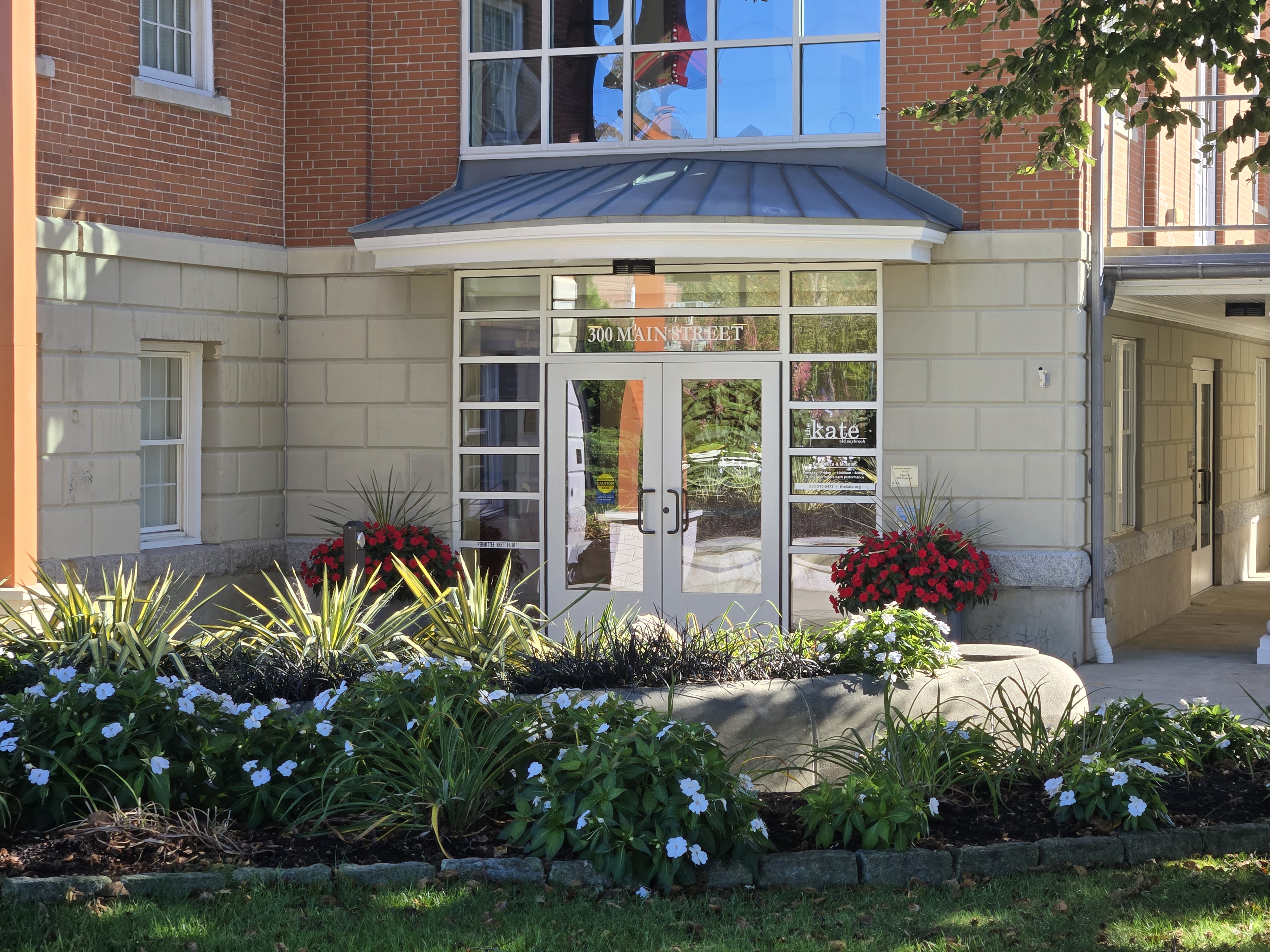
The entrance to the Katherine Hepburn Museum.

We continued our New England Road Trip by taking a train from New York City to Old Saybrook, Connecticut. This is where Russ spent many of his formative years. We rented a car and toured his old neighborhood and saw his family home, which is still standing. We even spent a little time greeting the Atlantic at the town beach.

The docent told us that Kate liked this photo of herself, so it’s featured prominently in the front of the museum.

Before we left Old Saybrook the next day, we had a few hours to kill so we visited the Katherine Hepburn Museum. Hepburn lived near Old Saybrook after her family bought a summer home there when she was five. The day before, we’d driven through the exclusive oceanside neighborhood (Fenwick) where her home was located. It sports a golf course and a lighthouse. We wanted to visit the lighthouse, but couldn’t due to public access issues. We also weren’t able to see her home, where she retired in 1996.

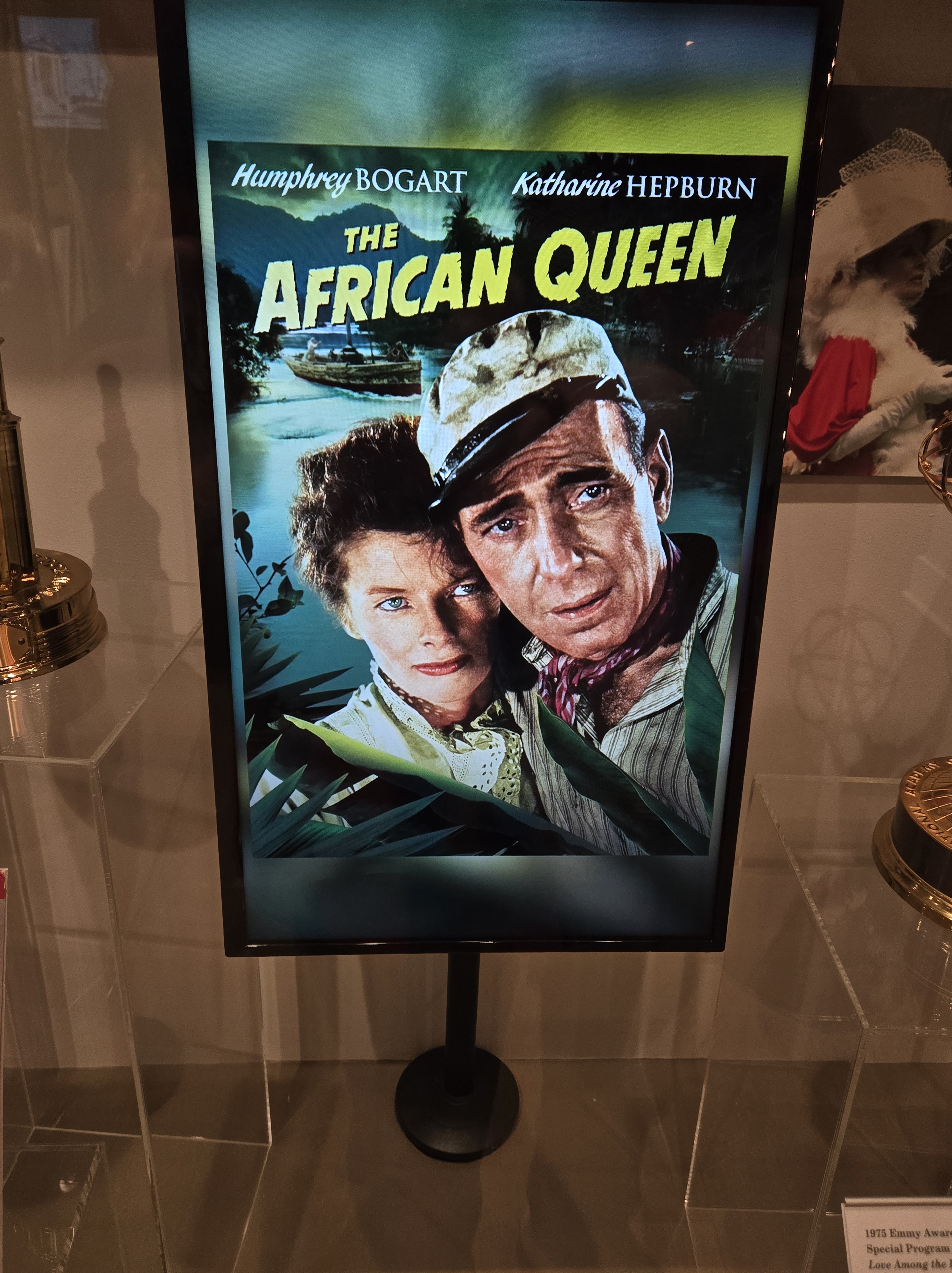
If you’re not familiar, Katherine Hepburn (aka Kate) was a feisty actress of great renown who had a six-decade career in Hollywood. She’s best known for movies like The Philadelphia Story, The African Queen, and On Golden Pond. With her athleticism and outspokenness, she broke the mold for women in Hollywood.

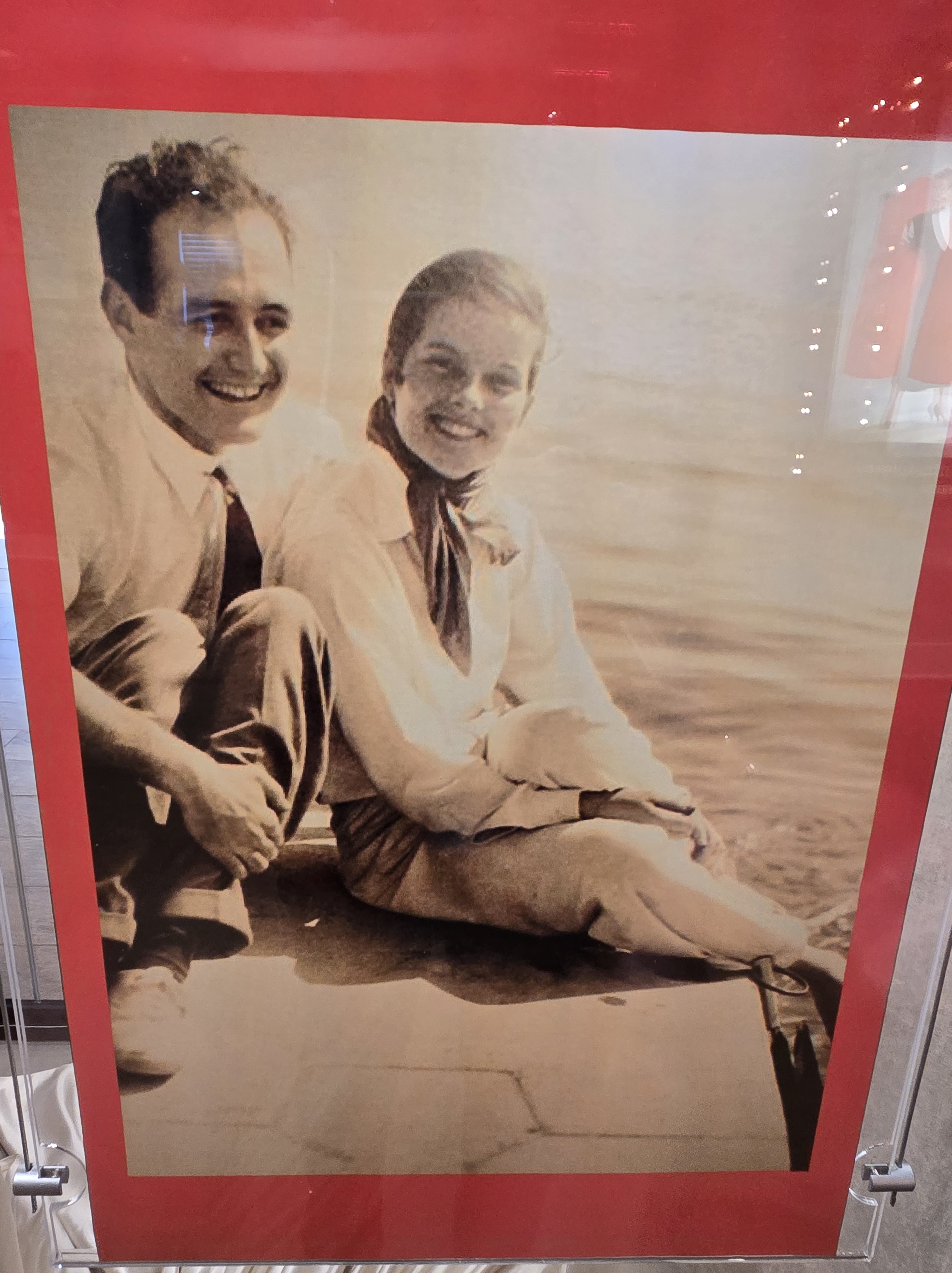
Kate and her husband Ludlow Smith. They were married for six years.

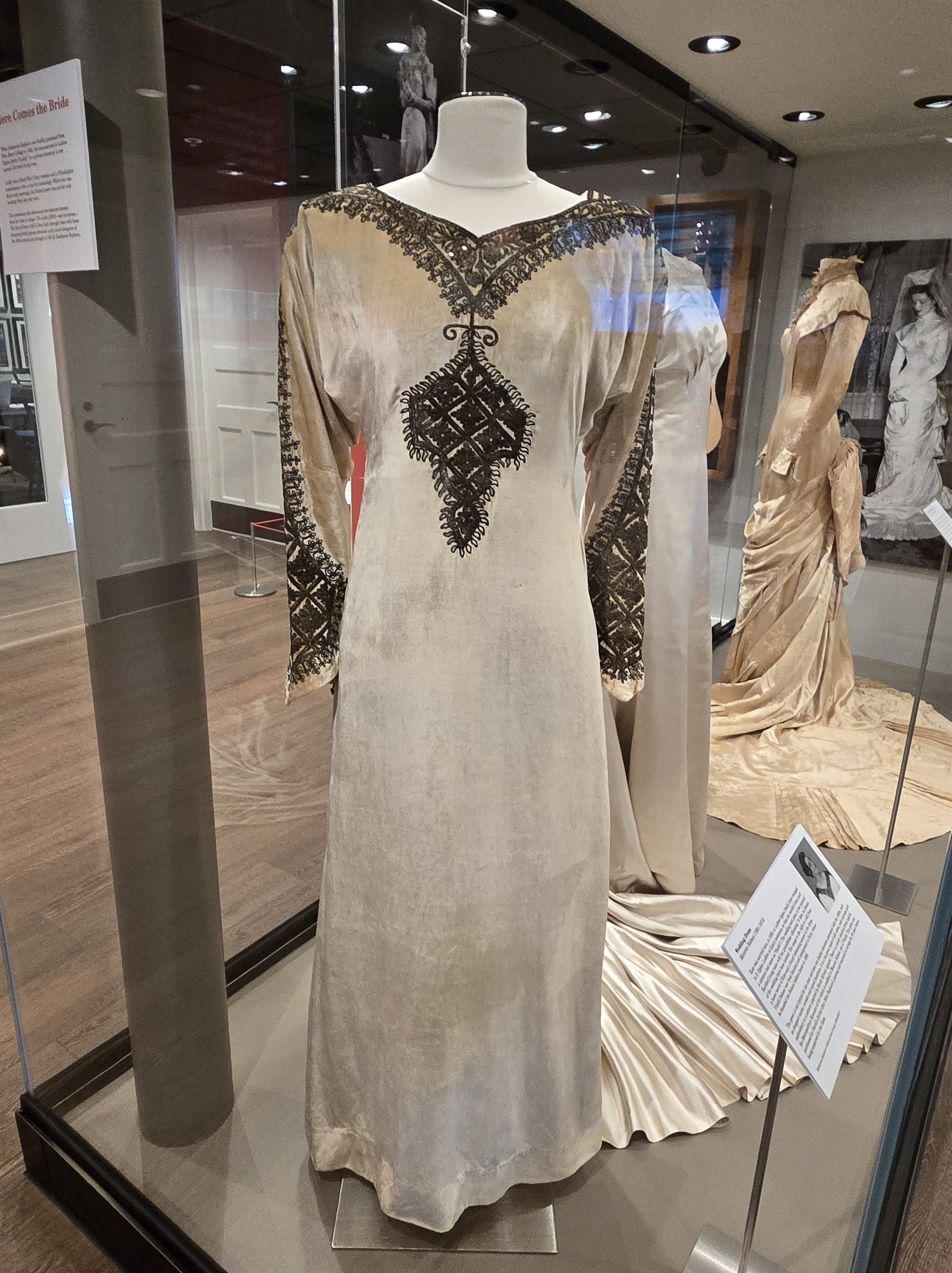
At the museum, we were given a comprehensive introduction by a helpful docent, who was excited to learn that Russ was a hometown boy. The museum features eight exhibits that focus on Kate’s family, her athleticism, her Fenwick home, her career and other special topics. Wedding gowns were the focus of the special exhibit when we were there, including Kate’s own wedding gown from when she was married early in her life.

I always enjoyed Kate’s movies, and she’s been an inspiration to me to keep active. I recall watching her on a television talk show once when I was younger. I believe she was in her 70s and she proudly showed the host how she could still bend over and touch her toes. I remember thinking, I want to be able to do that when I’m 70! I’m happy to report that I can still accomplish this feat in my early 60s. 😊

Kate’s wedding dress. It’s a tea gown made of silk velvet with gold embroidery in a pattern inspired by North African apparel. It was purchased by a wedding gown company and remained in storage for 20 years before being purchased by the museum.

The museum is also a cultural arts center, hosting lectures, workshops, and film screenings. Admission is free but there’s a suggested $10 donation per person.

According to one placard, “Although her legendary career catapulted her to dizzying heights of international fame, Connecticut’s local girl never really left home. The road always led her back to her family and to her refuge in Fenwick.” Katherine died in her Fenwick home in 2003. Her grave is in a cemetery in Hartford. She didn’t want a service, nonetheless accolades for this special actress were given throughout the country in many other ways. It’s good to know that her memory and passions are preserved in this little piece of Old Saybrook.

Do you have a favorite Hepburn movie?