A tree reading a book. Image by Angela Waye. This is what I envision on the cover of my upcoming book.
I’ve mentioned a few times in passing here that I’ve been working on a collection of short stories. I tried for about a half year to find an agent for them, to no avail. So, I switched to contacting publishers directly.
I am happy to announce my collection will be published by Cornerstone Press, the publishing arm of the University of Wisconsin-Steven’s Point. They were actually the first publisher I tried!
I learned about them when I went to a conference by the Wisconsin Writers Association and happened to sit by someone who had a short story collection published by them. I checked out her book. It was good quality, so then I researched Cornerstone Press, and they looked good, too.
I had time between holidays in December to finalize my book proposal. The stories are of a magical realism bent, similar to my novels. They deal with the power of appearances to captivate and deceive. Plenty of nature is included, along with a monster, trees that can communicate, and a hot botanist.
It’s tentatively titled, “Don’t Judge a Book.” But we’ll see if that name sticks. I expect the book to be available in spring of 2024.
I submitted the proposal for my recent blog-memoir, “Meander North” a year ago between December holidays, too, when it got picked up. That seems to be a good time for me. Maybe I’ll make that a standing tradition!
So, I’m doing a little happy dance in Marie Land. Join in the dance with me . . . .
A coworker and I meandered over to Cornucopia, Wisconsin the other day. This is a small town (more officially known as a census-designated place) on the South Shore of Lake Superior, population 98.
Our goal was to speak with some of the good folks with Halvorson Fisheries for our “Fish Dish” podcast. Our next episode is about burbot – a slimy bottom-feeder of a fish that tastes great and is under-appreciated. Halvorson’s is a fifth- or sixth-generation commercial fishery in Cornucopia and they know their burbot and other, more typical Lake Superior fish like lake trout and whitefish.
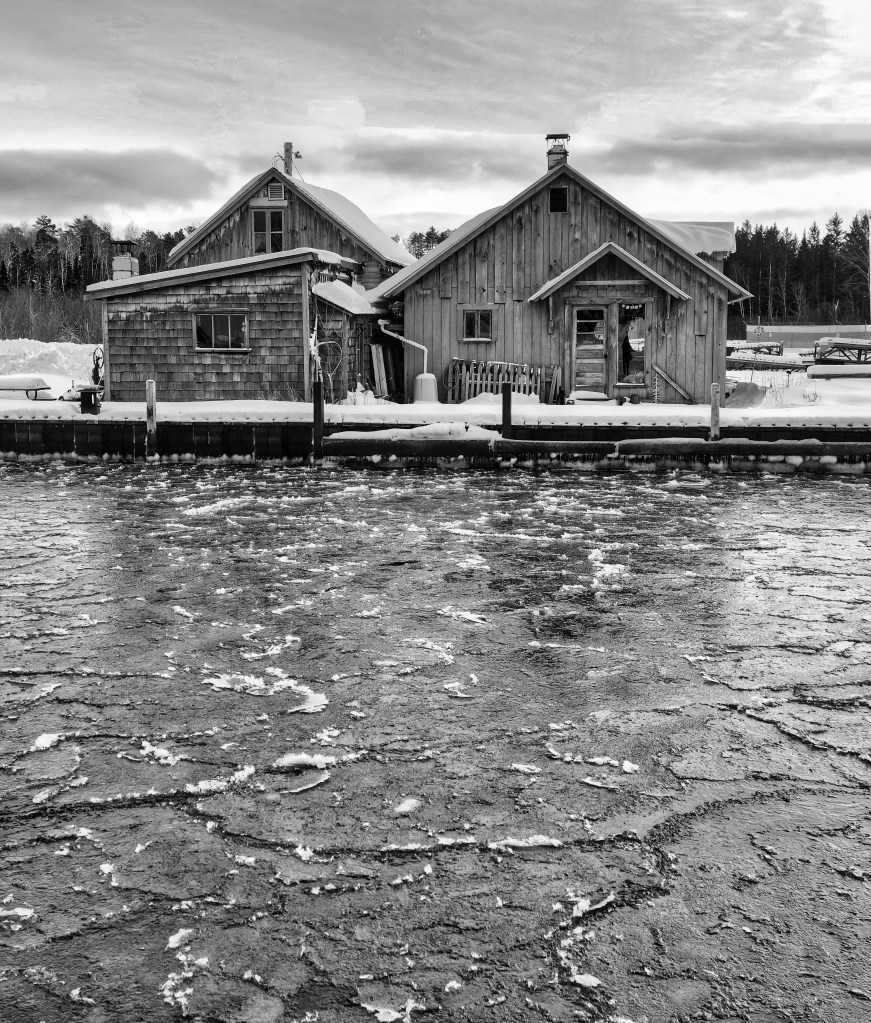
We arrived at their business on the harbor, but nobody was around. While my coworker made some calls and wrote texts, I had a chance to wander and take photos of the icy harbor and boats. These are the results. I felt like it was time well-spent!
After cooling our heels in the only open restaurant in town (along with about 40 snowmobilers), we were able to meet with the Halvorsons, do our interview, and get burbot. The problem was they had decided to stop fishing for the season but hadn’t anticipated that when my coworker made arrangements to speak with them a few days previously. But that’s life on the lake. You gotta go with the flow.
We haven’t cooked the burbot yet. That comes this week. I’ve never eaten burbot before, so am looking forward to the experience. I’ll include a link to our podcast in this post once it’s available.
In the meantime, please enjoy the scenery.
Update: You can hear all about my burbot-eating experience on “The Fish Dish” podcast. The eating part comes at about 18:18. It was great! Today I’m going to make burbot chowder – substituting burbot for steelhead in my chowder recipe you can find here.
Long-time readers of my blog may recall that I identify with my Scottish heritage. I had a chance to celebrate that recently by attending Robert Burns Night, which was organized by the Duluth Scottish Heritage Association (DSHA).
Robert Burns is a well-know historic Scottish poet. If you’ve ever sung Auld Lang Syne on New Year’s Eve, you have him to thank. His birthday is recognized on January 25 by Scots, rather in the tradition of Christ’s birth on December 25 by parts of the world, if you’ll permit me a bit of sacrilege.
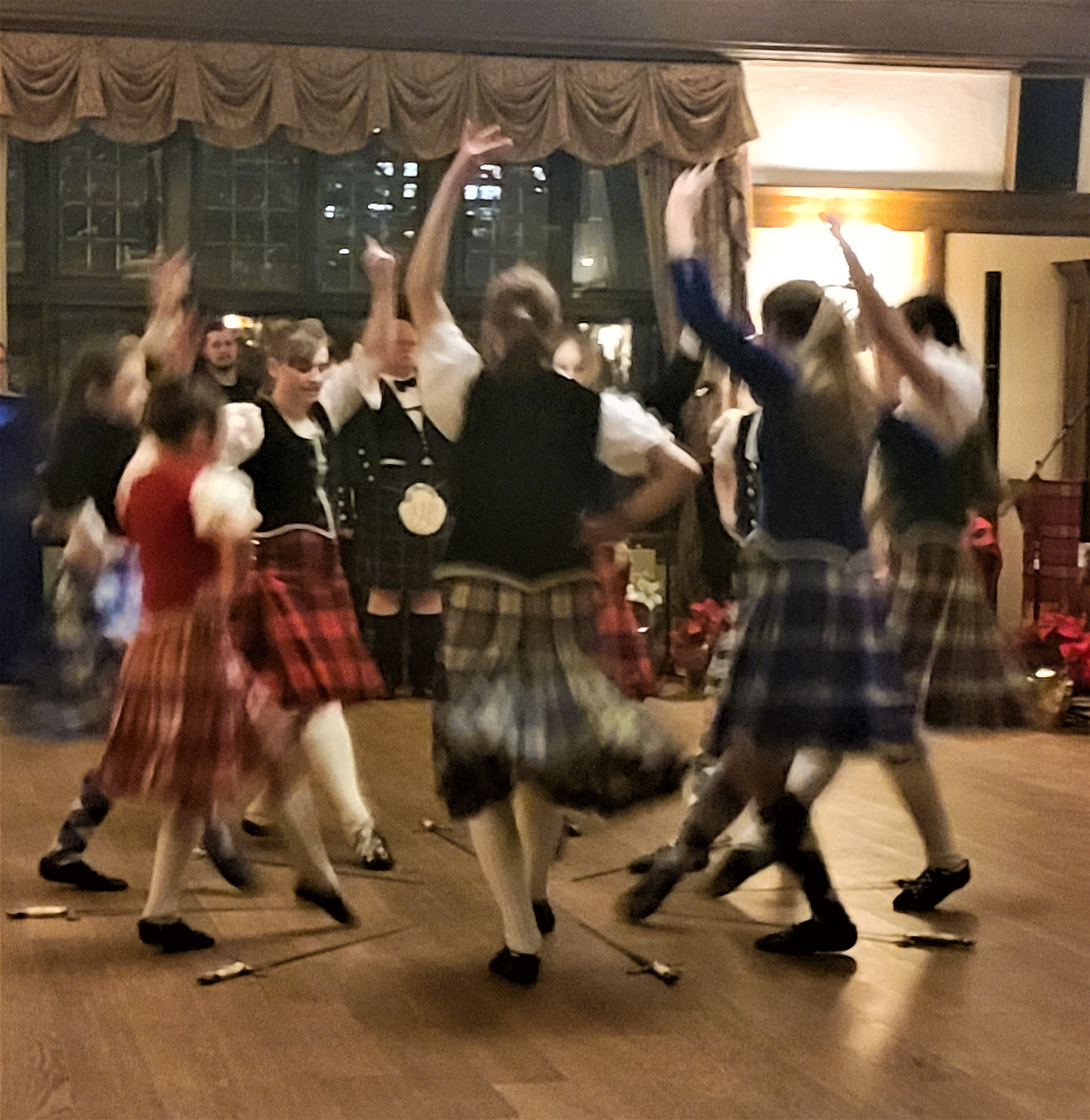
Scottish dancing lassies doing the sword dance.
The celebration was held at a historic club downtown. This was not my first Robert Burns Night. My mother took me to one held at the university many years ago. Then last year, Russ and I ordered a takeout Robert Burns dinner from the club since there was no gathering due to the pandemic. That “dinner” fed us for four days! It featured neeps and tatties (turnips and potatoes), haggis (more about that later), black pudding (blood sausage), Scotch eggs (hard-boiled eggs wrapped in sausage meat, breaded and fried), and trifle for dessert (a decadent concoction of cake cubes layered between berries, pears, and vanilla pudding mixed with whipped cream).
Attendance was larger than usual for Burns Night this year because it was the first time in three years it had been held in person. One-hundred-and-sixty of us gathered in kilts and clan scarves to listen to bagpipes and watch Scottish dancers.
After that came the formal part of the program, which included 4 toasts of scotch: One to “the immortal memory of Robert Burns,” one to the president, one to the king, and one in Gaelic.
Then came the star of the show, the Haggis. This traditional dish takes minced sheep heart, liver, and lungs, and mixes it with oatmeal, suet and spices like nutmeg, cinnamon and coriander, plus salt, pepper and stock. The mixture is boiled in a bag, usually made from a sheep’s stomach. We love it. I’d say it tastes like a chunky beef barley stew.
The Haggis is paraded into the hall by the chef and a whisky bearer, led by a piper in formality that would border on the absurd if it weren’t Robert Burns Night. Once the Haggis was settled up front, one of the DSHA members recited Burns’s “Address to the Haggis,” which involved stabbing it with a large knife and inhaling its pungent vapors.
Make way for the Haggis!
After that, a local reverend offered grace and a piper in the rafters played “Amazing Grace.” Then we dispersed to seven clan rooms. Each featured different foods to sample and memorabilia specific to each clan. One room featured scotch. I was disappointed at the lack of trifle this year, but our enterprising friends found dessert bars on a different floor.
After much eating and conversation, a ceilidh dance was held in a large lounge room. Even though I’ve been to a ceilidh before, it wasn’t until that night that I learned (from overhearing a conversation) that ceilidh means “party” or “social visit.” We danced and listened to Scottish music performed by a live band.
We were sated and pleasantly tired from dancing once the evening ended. We felt like we’d been on a trip to Scotland without leaving the comfort of our own city. If you ever have the chance to attend Robert Burns Night, I’d encourage you to do so. It’s a spectacle, indeed.
I once planted poems throughout my town (Duluth, MN) when I contributed to a Local Free Poetry project. Our poet laureate at the time scattered hard copies of poems by local poets in area businesses. I submitted four poems. One of them was entitled, “Perfunctory Kisses.” The short (8-line) poem detailed how I dislike kisses that don’t mean anything. I might want to publish it somewhere in the future, so I won’t share the whole thing here, but just let me say that the first line is: Perfunctory kisses suck.
I know, not exactly subtle, but I like my poetry to be accessible. 😊
Last summer, I received an email through my author website from a woman who lives in Eau Claire, Wisconsin. She said my poem captivated her when she found it. She used it as a reading at her recent wedding – her groom read it to her before they exchanged vows.
“Your short poem offered a sharp and punchy contrast to some of the more traditional readings of the ceremony,” she said. “We heard gasps of delight as the first line was read aloud. Let’s say, it was well received, as we knew it would be.” She ended with, “Thanks for your contribution to making our ceremony unique and memorable.”
Receiving her note made my day, my year! I’m tickled and honored that my poem landed on fertile ground and was used in such a personal way.
After my book launch this winter for “Meander North,” I heard from our friend, Sailor Dave, who connected with one of the stories I read about bunnies. Unlike with my poem, you can read this one because the book is made up from posts from this blog. (Seeing Rabbits) It explores the thought that rabbits might be guardians of our sleep.
Dave lives in a tiny house at a local marina. He said, “I wanted to tell you that I had a “pandemic bunny” living under my house last winter, too. When listening to Marie read the story, I was anticipating a dark turn, with Russ finding a great “New York Times” rabbit stew recipe that he was dying to try. Of course, it took a more spiritual turn and I found myself wondering if my rabbit would return. I did leave veggies out now and then. And there were baby bunnies in the spring. After our last snow, I spotted fresh bunny tracks around the house. My guardian bunny has returned! Probably under the house right now, waiting for me to go to sleep.”
Then there was a note I received through my website right after Christmas. A reader from Marshall, Minnesota, thanked me for writing my first novel, “Eye of the Wolf,” which deals with the wolves on Isle Royale National Park. He said it was, “An enjoyable foray into their lives and possibilities.”
Since my novel is rather old now (12 years), I asked him where he found it and he said it was in the library there. I let him know that there’s a sequel (“Plover Landing”), which he also ended up reading, and appreciated. I planted those copies in the town when I participated in a local arts board event years ago. So nice to learn they also found fertile ground!
I love these connections and I love it when readers take the time to send me their comments.
Russ and I were just listening to the latest episode of NPR’s “Wait, Wait, Don’t Tell Me” show. Author George Saunders (“Lincoln in the Bardo”) was on it. During his interview he offered this thought on how to define a literary work: “Anything that connects people in a way that’s deeper than the usual way – habitual way we connect. That can be seen as literature.”
I’d also posit that literature connects through space and time. The good books will resonate into the future and across geography. I’m not really saying that my writing is great literature, but I’m always trying and am heartened by these little successes.
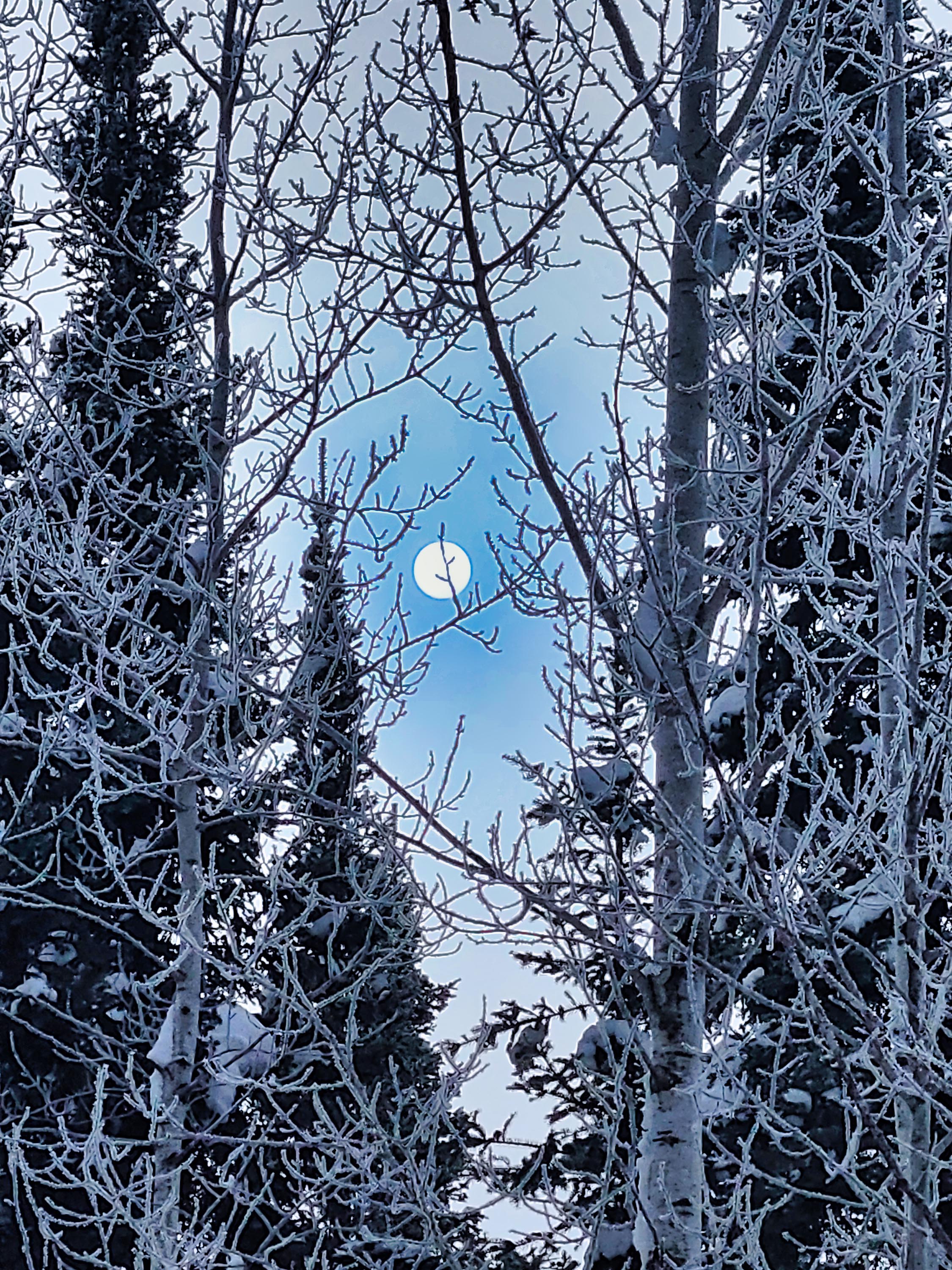
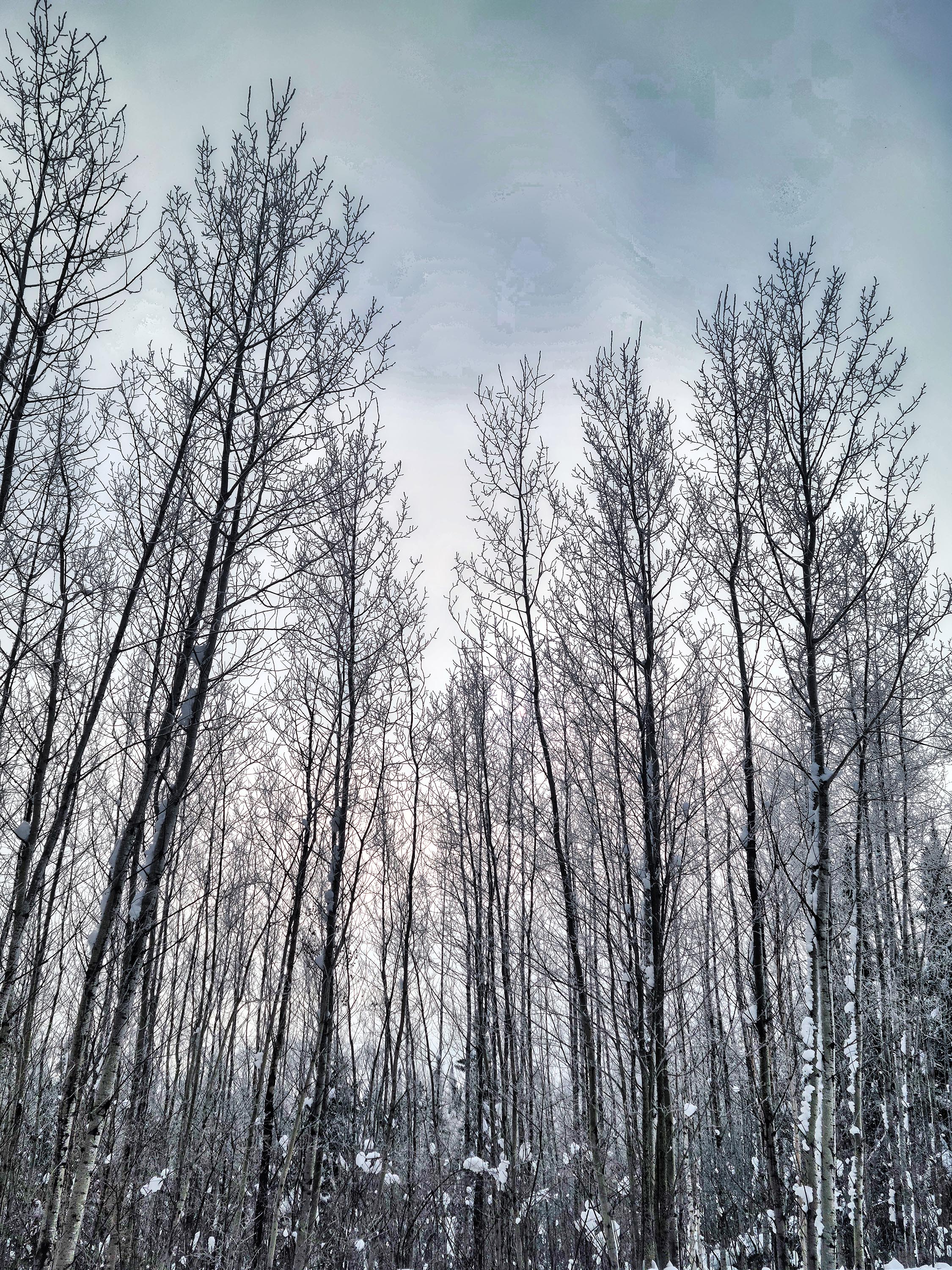
A morning fog descended upon our cabin deep in the north woods, outlining the barren trees with frost. The birds stilled. The sun pushed through, a white disc more like the moon. I walked the wide road, a witness.
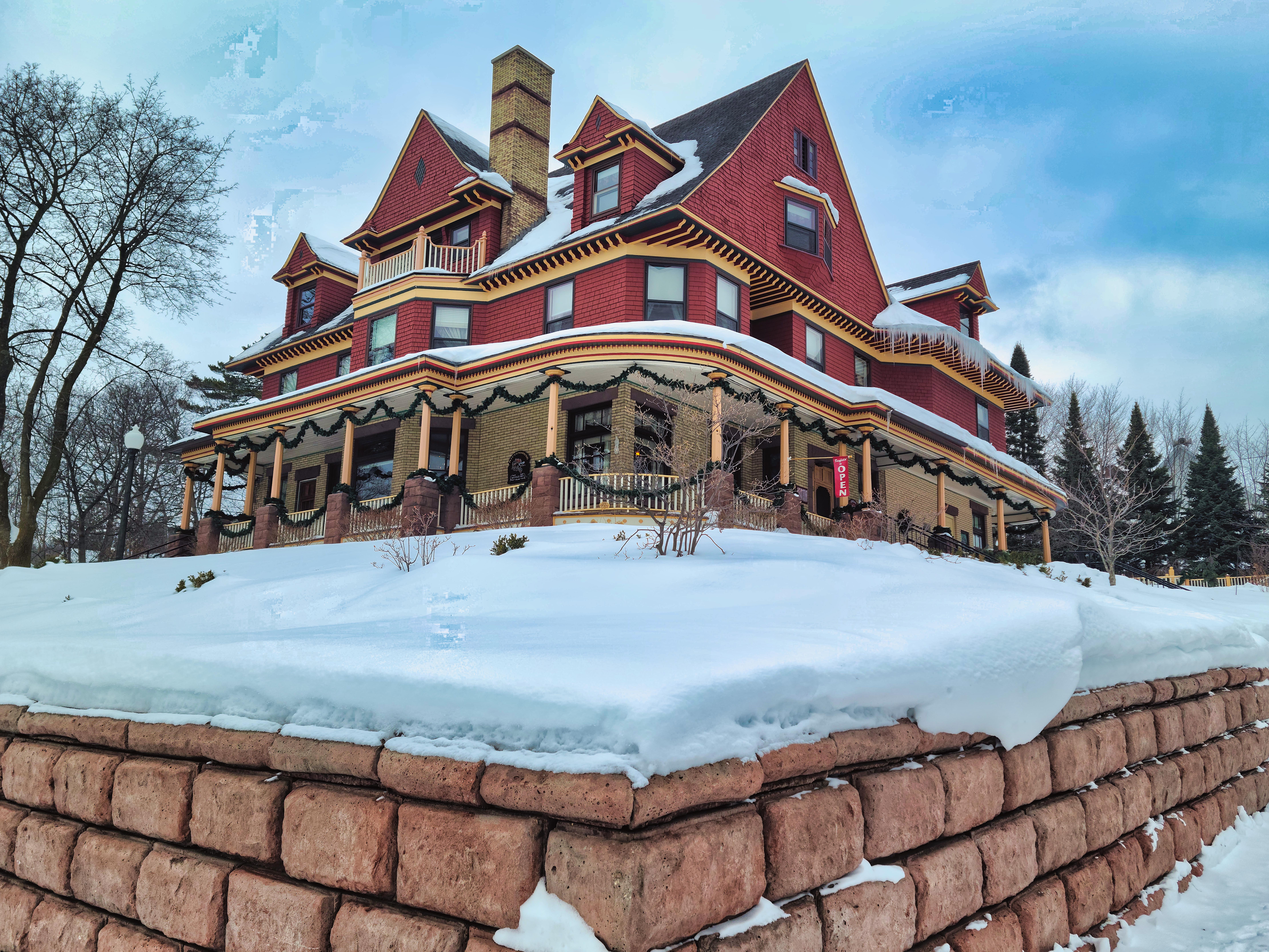
For the end of 2022, Russ and I meandered over to Bayfield, Wisconsin, to stay at the Rittenhouse Inn. If you’ve ever been to Bayfield, you’ve seen the place: a huge maroon-red mansion on the left side of the main street as you head toward Lake Superior in this northern town.
This was Russ’s first stay at the inn and my fourth, but it had been years since I’d been there. For my birthday last spring, Russ gave me the choice of two local trips, and this was the one I chose. So, we combined two occasions into one: my birthday and New Year’s Eve.
Built in 1890, the Rittenhouse is a Queen Anne Victorian home. It’s one of three properties in Bayfield owned by Mary and Jerry Phillips. But it was the first one they purchased, back in 1973. Check out their website (link in the first sentence of this post) to learn more.

The Christmas tree at the Rittenhouse Inn.
We checked in on the afternoon of New Year’s Eve and had just enough time to change into clothing befitting a six-course dinner at the Inn’s Landmark Restaurant, which is on the first floor of the inn. Our room was on the third floor in Suite #10. This was originally the home’s ballroom. I got a glimpse of it during a tour on one of my first stays at the inn and was impressed by its spaciousness, double-sided fireplace, and view of the lake. I vowed to stay there one day.
Descending the floors on the stunning cherry staircase in my emerald-green velvet dress, I felt like I belonged to the place. Russ looked dapper in his khakis and pressed blue and white shirt. We were seated by the hostess in one of three rooms used for dining. There’s a green room, a red room, and a blue. We were shown to the red room, which features ornate wallpaper, lavish holiday decorations, and a fireplace. Actually, all the dining rooms feature that, just in different colors!
The special New Year’s dinner featured an appetizer (I had mussels in cream sauce), soup (I had oyster soup – sense a theme here?), salad (kale and pomegranate in the shape of a wreath), a palate cleanser of cranberry sorbet, main course (champagne chicken), and dessert (crème brulee with whipped cream and blueberries). It also included a champagne cocktail with a sugar cube in the bottom of the glass and an orange peel curlicue.
The meal was exquisite. Although the portions were reasonable, I’m not used to that much food anymore and have since sworn off all multi-course dinners! But it made for a memorable and tasty evening.
Afterward, we retired to our room and played a rousing game of Mexican Train Dominoes (I won, as usual). We brought our own bottle of champagne and Chombard liqueur (raspberry). We mixed them together and rang in the New Year.
Some things have changed about the inn since my last stay. For instance, they no longer use real wood in their fireplaces. Instead, they offer those fake logs you can buy at the grocery store, which are easy to light. This was disappointing – I wanted the crackle of a real fire – but it was better than an electric fireplace.

The fireplace in our suite.
They also no longer recite the menu orally. This was a thing on my first visit in the 1990s. The waiters, who all seemed trained in voice or drama, would recite the menu options from memory, adding luscious words and embellishments – so many that it felt like you had eaten a meal by the time they completed voicing the options. That left a lasting impression on me and I discovered the instigator of that past practice was still working at the inn. We met him the next morning at breakfast (which is included in the cost of your room). His name is Lance and he’s worked at the inn since 1974, just a year after it opened.
When I bemoaned the lack of an oral menu, he admitted that the recitation was one of his schemes. I didn’t get to ask him what stopped the practice, but I suppose it was hard to keep up over time, especially if new hires didn’t have talents in those areas.
Not much was stirring in Bayfield on New Year’s Day. Russ and I walked down the main street (Rittenhouse Ave.) and only found one store open, besides the grocery store and coffee shop. But that one store was enough, because I found a birthday present for a friend of mine who was born on January 2. What an awful time to have a birthday! Everyone is “presented” out by then from Christmas. But this year, I revived my present-finding skills quickly, and acquired something I think my friend would like.
The inn’s restaurant was not going to be serving dinner that evening, and we were staying another night, so we asked around and found out which other places in town would be open. We had two options to choose from: a bar and a bistro. We chose the bistro.
But before dinner, we exercised off some of our six-course dinner and scrumptious breakfast calories by cross-country skiing at Mt. Ashawabay Ski Area just outside of town. Besides downhill runs, the ski area offers 40K of ski trails. Because I’m recovering from a broken ankle, we stuck to the easy trails. They were perfect, although the tracks were a bit icy and I could have used a warmer (sticker) wax. But we made of the best of it for 1-1/2 hrs, and I did not reinjure my ankle.
We skipped lunch, so were hungry once we returned to Bayfield. We ate at the bistro and spent our evening curled up by the (fake log) fireplace, reading. Heavenly! The next morning, we had another lovely Rittenhouse Inn breakfast and then headed home to Duluth.
I felt fortunate to have finally stayed in Suite #10 and to spend such a peaceful New Year’s in elegant surroundings. The Rittenhouse or one of its other properties are definitely the pinnacle of places to stay in Bayfield, should you ever have the chance.
The Bayfield waterfront, decorated for the season.
Well, the tenth year of “Marie’s Meanderings” is wrapping up. I made up for a lack of meandering during the pandemic with many more travel posts than in the past few previous years. That made for fewer musings than usual and more practical information. So, it’s not surprising that this year’s most popular posts feature outings that Russ and I took. One was to the homestead of my father’s side of the family in central Minnesota, the other to a popular cross-county ski trail in northern Wisconsin, and the last to a new restaurant in Minneapolis.
Drumroll, please! Here are the top posts for 2022:
A Family Tradition Returns – My father’s ancestors emigrated from Germany to Minnesota in the mid-1800s. Every two years, the descendants all gather in the town near the family farm for a picnic. This story is about the picnic and the family history. Several of my relatives helped with facts and photos, and they shared the post among the family, which I suspect accounts for its popularity.
Superior Skiing – Chronicles our first cross-country ski outing in the Superior Municipal Forest. This city forest is one of the largest in the country and sports trails perfect for all levels of skiers. This post got shared among local skiers via social media, which accounts for its popularity.

Owamni Restaurant: Celebrating Native American Cuisine – Russ and I were lucky enough to snag a chair (well, actually two chairs) for dinner at Owamni, a Minneapolis restaurant run by Chef Sean Sherman who wrote the “Sioux Chef” cookbook. This unique eatery specializes in precolonization food – natural foods that Natives ate before European colonization of the U.S.
Thank you for meandering with me for yet another year. I plan to keep writing whenever something of interest happens or meanders into my head. I’m working on getting a fiction book published, so my posts might be fewer than usual until I make headway with that, and then there’s this long fiction story I need to finish . . . but I will not abandon my blog!
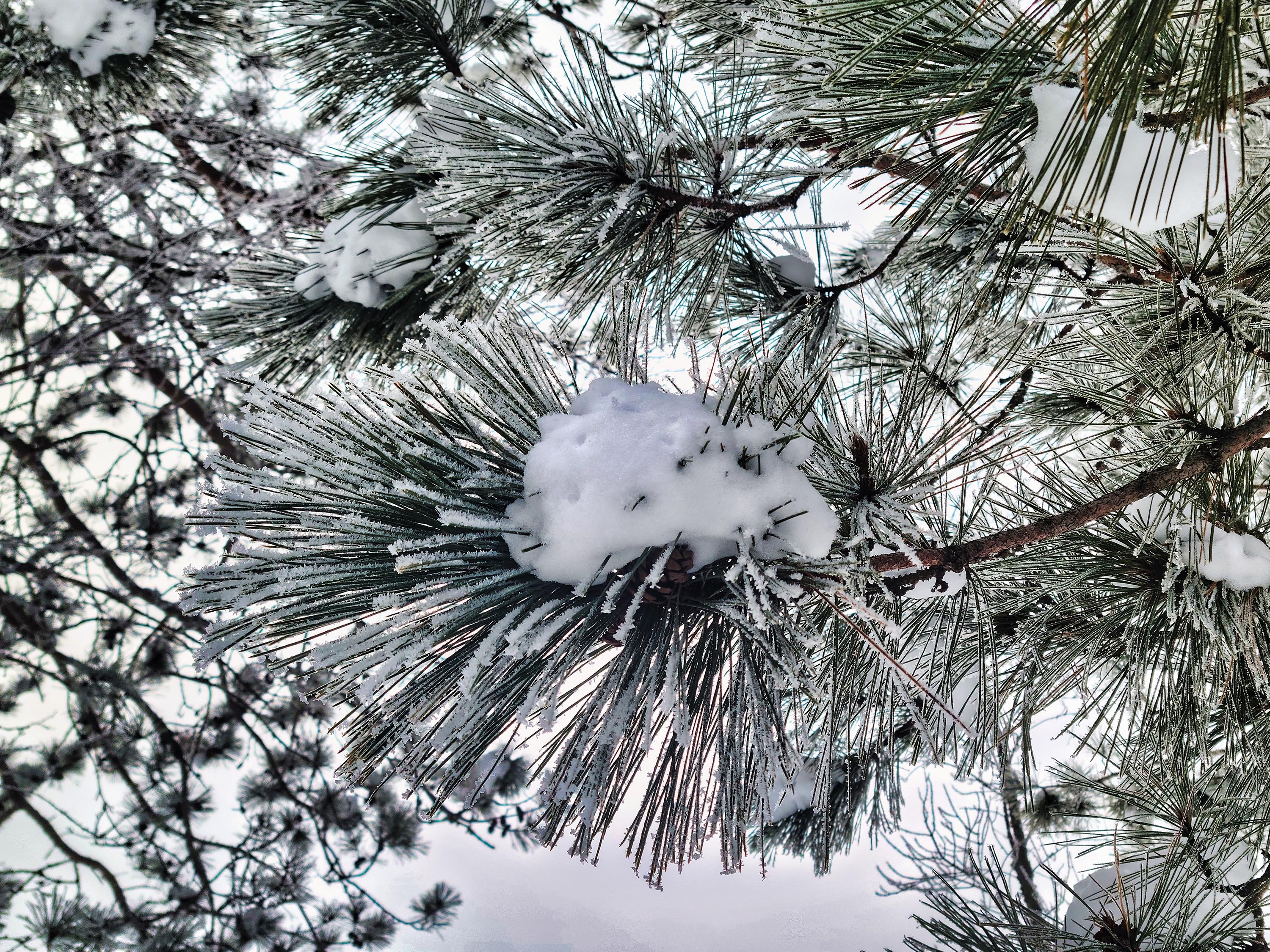
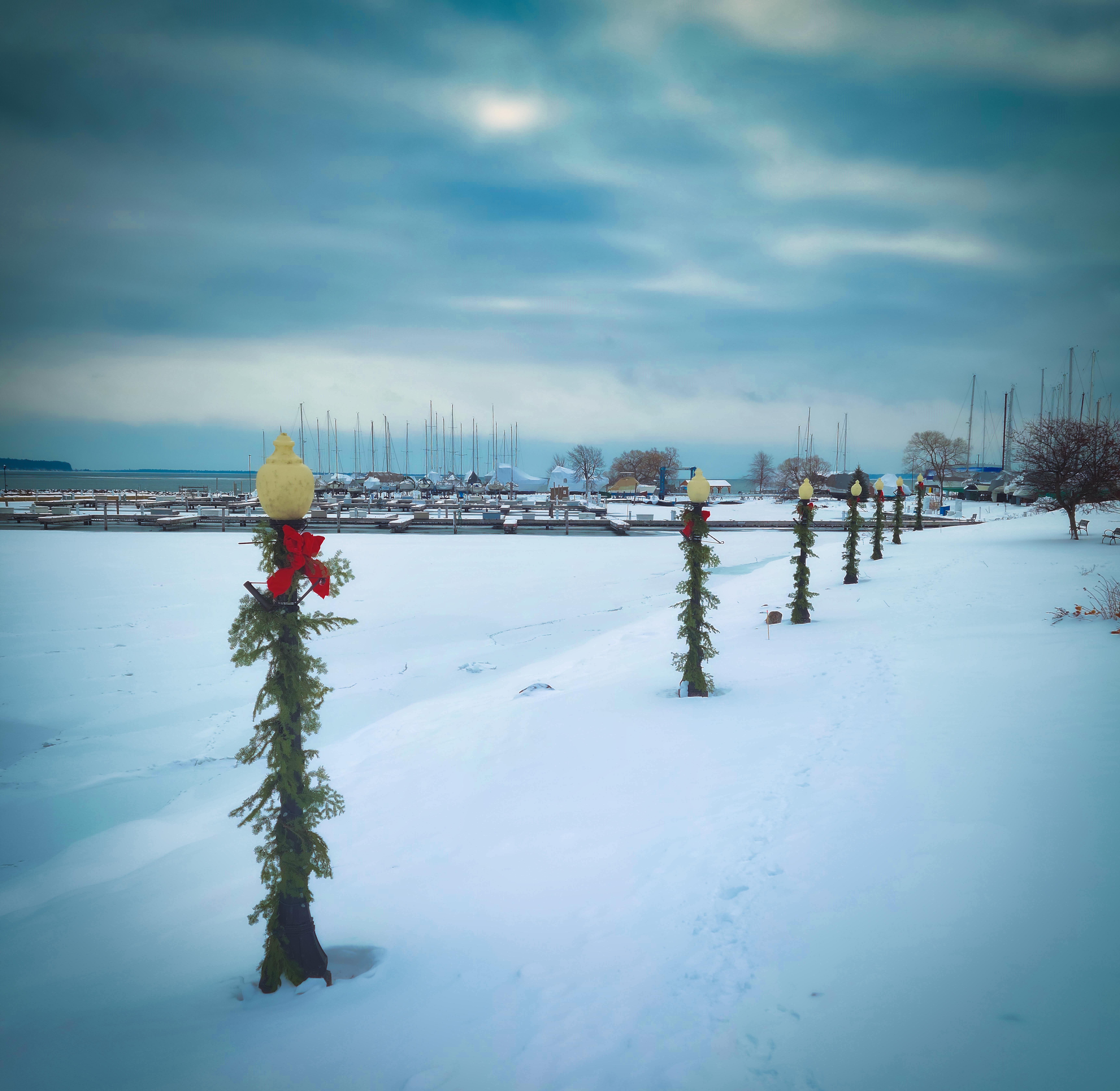
Happy Holidays from the Great White North. I took this photo at our cabin not long after a snowstorm. Thank you for meandering with me again this year.
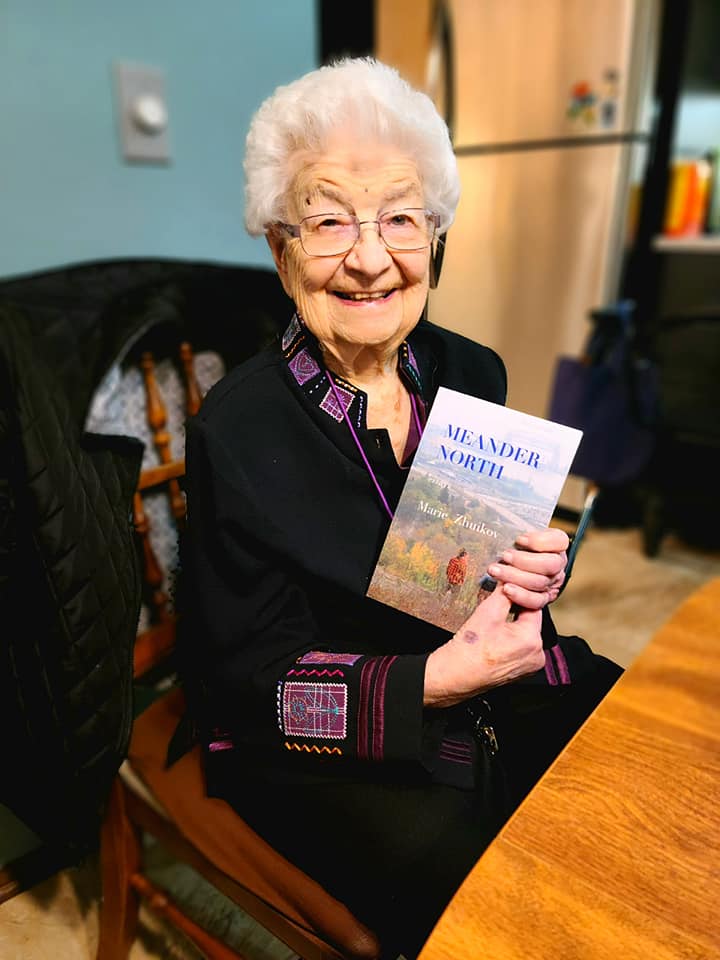
My and your favorite posts from the first nine years of this blog have been published in my book, “Meander North.” My 101-year-old aunt just read it and approves! She’s read a lot of books in her life, so her opinion counts. 🙂
You can purchase the book from Itasca Books. Just click on this link.
One of my writer friends wrote a thoughtful review of the book, in case my aunt isn’t enough to convince you.







 Marie's Meanderings