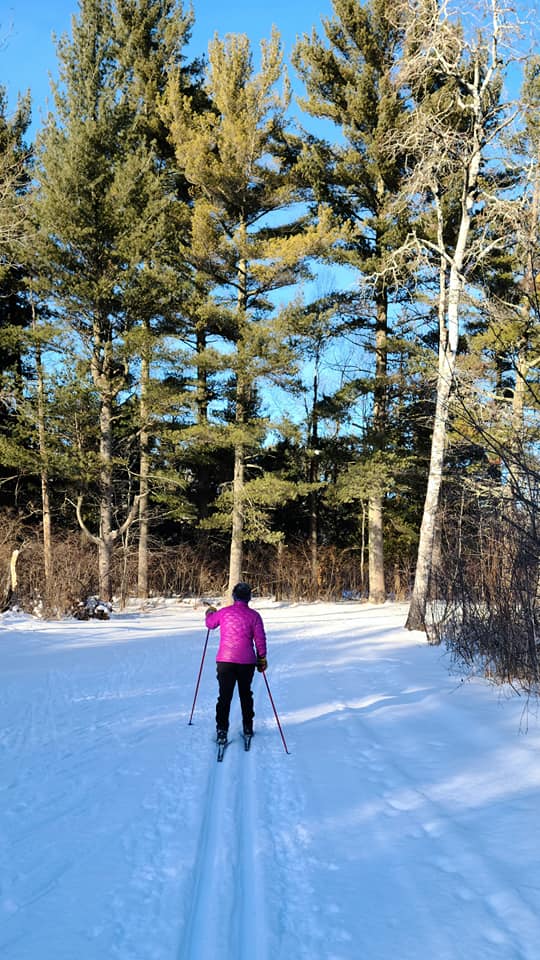
Marie skiing on one of the trails in the Superior Municipal Forest.
If, like me, you live in Duluth and you’ve cross-country skiied every trail and want something new, consider meandering across the bridge to the Superior Municipal Forest for some “superior” skiing in Superior, Wisconsin.
Russ and I tried the ski trails there for the first time this weekend. Since Russ doesn’t quite have his ski legs back yet (after not skiing last season due to an injury) we stuck to the easy red trail, going around both the outer and inner loops for a total of 4.1 kilometers.
The trail lives up to its beginner status. It’s fairly flat the whole way, sporting both classic and skating tracks. The trail winds through a forest filled with big ol’ white pines and birch/aspens. The views are inspiring, especially as the sun starts to slant through the trees in the late afternoon.
One thing to note is that you’ll need a ski pass to go on these trails. You can either purchase a seasonal one or a day pass. We purchased a day pass at the self-service kiosk at the trailhead for $5. See the web link in the first paragraph of this post for details. I hear that the city grooms the trails every day, so they are usually in good condition.
And, if you need a dog fix, this is the place for you. The city dog park is right at the trailhead, so you can visit with the dogs as you come and go. You don’t get that with just any old ski trail. Truly superior!
I saw an article in the Minneapolis Star Tribune yesterday saying that Owamni Restaurant was designated as the newspaper’s top restaurant for 2021. It reminded me I still needed to follow up on my promise to write about Russ’s and my experience at this Native American eatery during our weekend Romancing the Minneapple.
I’ve wanted to eat at one of Chef Sean Sherman’s places (he has a food truck, as well) ever since I saw him speak at a launch for his cookbook in Duluth. Sherman focuses on precolonization food (food that Natives used to eat before all us Europeans immigrated and mucked up their lifeways). This includes ingredients that Natives grew themselves or foraged, like squash, wild rice, venison, chestnuts, fish, berries, and cedar boughs.
He’s trying to reconnect Natives to their pre-European culture, so much of which has been lost. I suppose it’s also a way to show us nonnatives what life used to be like in America historically, plus the food is super healthy – no wheat flour, dairy, or refined sugar.
Several recipes from his cookbook have found their way into my permanent recipe file, notably the squash apple soup with cranberry sauce and cedar-maple tea.
Russ and I were late in planning our trip to Minneapolis and only began making reservations for it a couple of weeks beforehand. Owamni has been featured in the New York Times, Lost Angeles Times and Chicago Tribune, among others, so, as you can guess, reservations are booked months in advance. But, they have first-come, first served bar seating, so we decided to take a chance on that. If it didn’t work out, we had a Plan B restaurant in mind.

Wild game salad
We took a snowy ¾ of a mile walk under a full moon over and along the Mississippi River from the Nicollet Island Inn to get to Owmani, which is housed in an historic water works building. We figured if we got there early in the evening (5:30 pm), the wait might not be as long. I think this was a good strategy. We only had to wait about 45 minutes for seats at the bar.
One of the first things you’ll notice is that the menu isn’t typical. There are not separate listings for appetizers, plus the entrees are sharable. When I expressed confusion to our friendly bartender, he explained that the concept is like a Tapas Bar, where you end up ordering lots of small plates and sharing. That way, you can sample a variety of selections.
To begin, we ordered (and shared) the cedar maple baked beans, the wild game salad, and the bison pot roast. They also have a good selection of wines and nonalcoholic drinks available. Everything was wonderful. The beans, because they are flavored with maple syrup instead of brown sugar, aren’t as sweet as usual, but that allows the natural bean flavor to come through, with cedar lurking in the background. The wild game salad featured dried duck and turkey, which could be a bit chewy, on a bed of kale garnished with a duck egg. Russ is normally not a big fan of kale, but he said it was delish and ate it all!

The bison pot roast was the piece de resistance – a slow-cooked and tender hunk of bison surrounded by natural gravy, hazelnut-crusted carrots, a mustard green sauce and a horseradishy sunchoke (Jerusalem artichoke) puree, topped with an edible purple violet. The meat melted in our mouths. It’s the first time I’ve had bison and it was truly memorable.

For dessert, I had a chocolate chia cake with sorbet and a caramel honey sauce, and Russ had a berry-walnut milk parfait. Both were excellent.
The cedar maple baked beans, berry walnut milk parfait, and the chocolate chia cake
The neat thing about sitting at the bar is you can watch the workers and see the other dishes and drinks they are preparing. I noticed a cranberry nonalcoholic drink that I’d like to try if I eat there again. Diners with reservations got tables near windows that overlooked part of the river (Owamni Yomni) considered a site of peace and wellbeing for the Dakota and Anishinaabe people.
Most of the workers looked to be of Native American descent. Most of the diners looked like well-to-do white people. That felt rather weird to me. Is this just another way for white people to appropriate Native American culture? Have we turned these Natives into slaves serving us food we want to eat just because it’s the latest trend?
Although I was a bit uncomfortable with those feelings, it seemed like it was high time that Native American foods were celebrated. After all, we have Mexican restaurants, Chinese, etc. However, these cultures haven’t been oppressed like the Natives have. Part of me feels like this restaurant should only be for Native Americans at first. I felt like I was taking the chair of someone who might need this food more than I did in order to feel whole.
I am still struggling with these feelings and I’m not sure what to make of them. But I probably wouldn’t let them stop me from eating there again.
Alas, the restaurant is closed for a mid-winter break right now. But it plans to reopen on January 19 (2022) for a winter dinner series. Proof of vaccination will be required to enter.
Thank you, dear readers, for meandering around with me again this past year. Although our travels and musings were not as far-flung as in the past, we tried to make the best of things despite Covid. We narrowly escaped being infected just recently and hope you have remained healthy.
Here are the five top posts from this year, along with news about an exciting project I have in the works.
But first – a couple more numbers: views almost doubled again this year, with 47,600. My blog has about 700 followers.
An image of one of my favorite commercials, courtesy of Progressive Insurance.
The #1 new post this year was “A Keen Grasp of the Obvious.” I wrote it in homage to the Progressive Insurance commercials that feature Dr. Rick,” a pseudo-therapist who tries to ensure his customers (patients) don’t turn into their parents once they become homeowners (a.k.a. parentomorphosis). The commercials earlier this year reminded me of a saying one of my high school friends used to espouse. Several more commercials in the series have aired since then, and I still like them all! Other people must like them too, if they are finding my blog. If I had a second chance at a career, I’d like to work at whatever agency produced these ads.
#2: “A Review of the Lungplus Device.” This gadget is distributed by a Duluth-area woman. It’s a mouth-worn humidity and heat exchanger you can use while cross-country skiing to make your lungs happier. Yes, it works, and yes, it makes you look like a dork. But it’s worth it to have happy lungs.
#3: “Letting go of the Past.” The elevatorized Baby Butler was a combination highchair, play table, and bed for young children that was manufactured in the 1950s and 60s. I survived being placed in the contraption as a baby and in this post, describe the process of letting go of it.
#4: “A Time for Photography: Madeline Island.” This was about a life-changing photography class I took at the Madeline Island School for the Arts on a small island in Lake Superior. It features some of my favorite photos from the trip. Because I took the class for work, and I work for a public university funded by taxpayers, the photos are available for reuse. BUT, just a reminder that photos appearing in my blog that have my signature on them are ones I took on my own time with my own equipment and are not for reuse without permission.
#5: “The Path of Totality.” One of my short stories based on the 2017 eclipse was printed in a local literary journal. This post is about how I developed the story idea and what I hope to do with the collection of which it is a part. I’m still looking for an agent for this collection, hint, hint. Although I’m not having much luck with that.
Since you’ve read down this far, I have news to impart. During a bout of insomnia in the wee hours of the morning about a month ago, I got the idea to create a northern Minnesota memoir collection of the “best” stories from my blog over these past eight years. I thought “Meander North” would make a good title. I’d arrange the stories by season, plus add a couple of other miscellaneous chapters.
I developed a book proposal and sent it out to a couple of well-known Minnesota publishing houses. I heard back from one, and they want to publish it! EEEEEeeeee!
In 2022, I’ll be polishing up a bunch of these posts and they’ll be coming out in a book. I must say, I’m pretty darn excited for the new year. It’s about time one of those crazy insomnia ideas paid off.
Russ and I meandered south to Minneapolis the other day, in search of a little romance, and to visit relatives. For the uninitiated, Minneapolis’ nickname is the Minneapple as opposed to New York City’s Big Apple nickname.
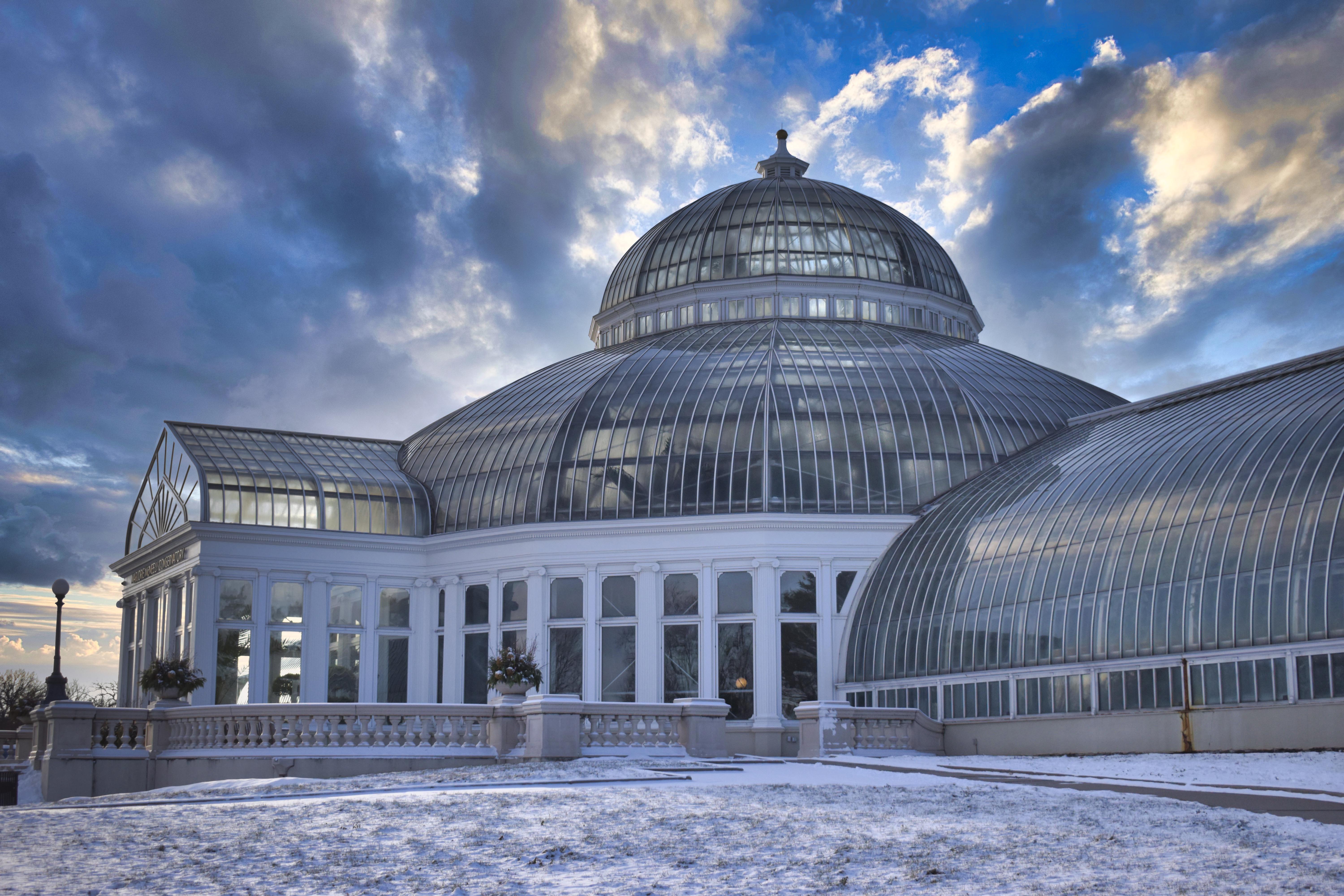
We took my 100-year-old Aunt Marguerite to the Como Conservatory for its poinsettia show. All that red color and dewy warmth sounded like just the thing to offset the winter blahs and a good way to spend time with Marguerite.
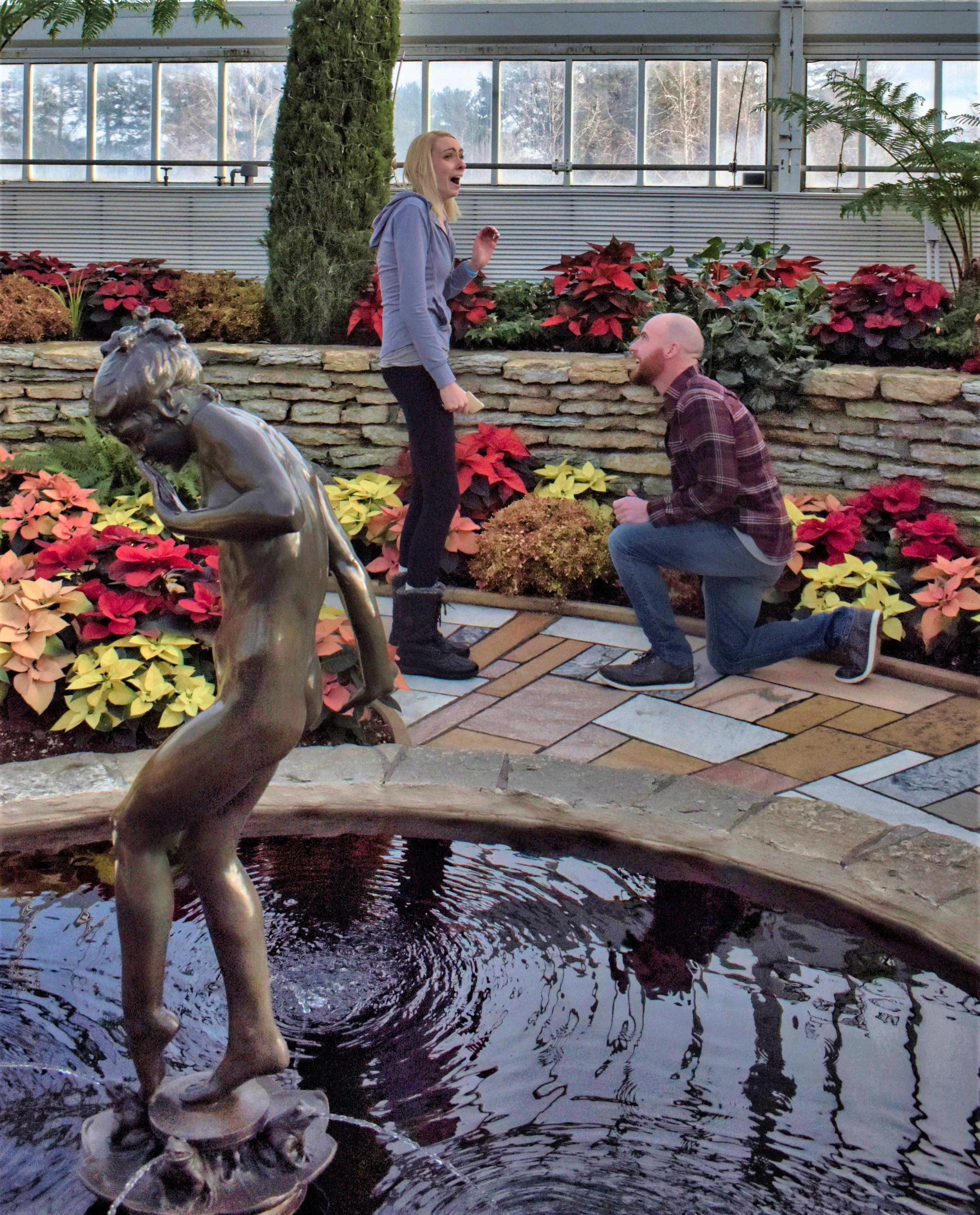
But did you know that poinsettias come in colors other than red? During the show, we saw yellow ones, pink, and even orange. While we were enjoying the sights and the smells of soil and water in the sunken garden, a commotion caught our attention. A family that had been strolling along stopped. Gasps of surprise could be heard as a young man got down on one knee and held up a ring to his very tall and willowy girlfriend. Hyperventilating, she finally got enough air to say, “Yes!” and the family and audience clapped.
The proposal amid the poinsettias
Doesn’t get much more romantic than that! But wait, more romance was to be had. After shuttling my aunt back to her place and visiting for a short time, we headed to the Nicollet Island Inn, touted as “Minneapolis’ most romantic hotel.” Situated on an island in the Mississippi River, the inn is in an historic building that was once a window sash and door company. It has survived fire, several other business ventures, and even time as a men’s shelter to become the charming venue it is today.
We booked the bed and brunch package, which provides for a Saturday night stay and a $60 voucher for brunch at the inn’s restaurant the next morning. There’s also an “Ultimate Romance Package,” but we didn’t do that one because it involves dinner at the inn’s restaurant, and we had other plans for that meal. These involved taking a snowy evening stroll under a full moon to Owamni Restaurant (by the Sioux Chef), which is on the riverbank not far away. (More on that experience in a post to come.)
I must say that one decidedly unromantic thing about the inn is that they seem not to be able to process or communicate about things that go against the grain, like the bed and brunch package and gift certificates. The people checking in before us had a gift certificate, which caused no end of issues. The manager had to be called to the front desk to give his blessing. Not romantic.
Our package was not noted on our reservation for some reason, even though I had called beforehand and talked to the person in charge of such things and she assured me it would be noted in their system. This necessitated a call by the clerk to this person for verification. Not romantic.
And then, when we checked out the next day, the same gift certificate people were in front of us and the same issues came up for them. We quickly left our keys on the front desk and got out of there before we had to wait around for a manager to reappear.
The Nicollet Island Inn restaurant

BUT all else at the inn was romantic. The Christmas decorations were classy and glowing, our room was high-ceilinged with a view of the river and city skyline. Our brunch in the chandeliered restaurant was filling and delicious. I had the American breakfast with sausage and eggs over-easy plus a mimosa. Russ had the breakfast Reuben, which featured eggs and hollandaise sauce. It’s hard to believe the restaurant used to be a factory loading dock.
The breakfast Reuben
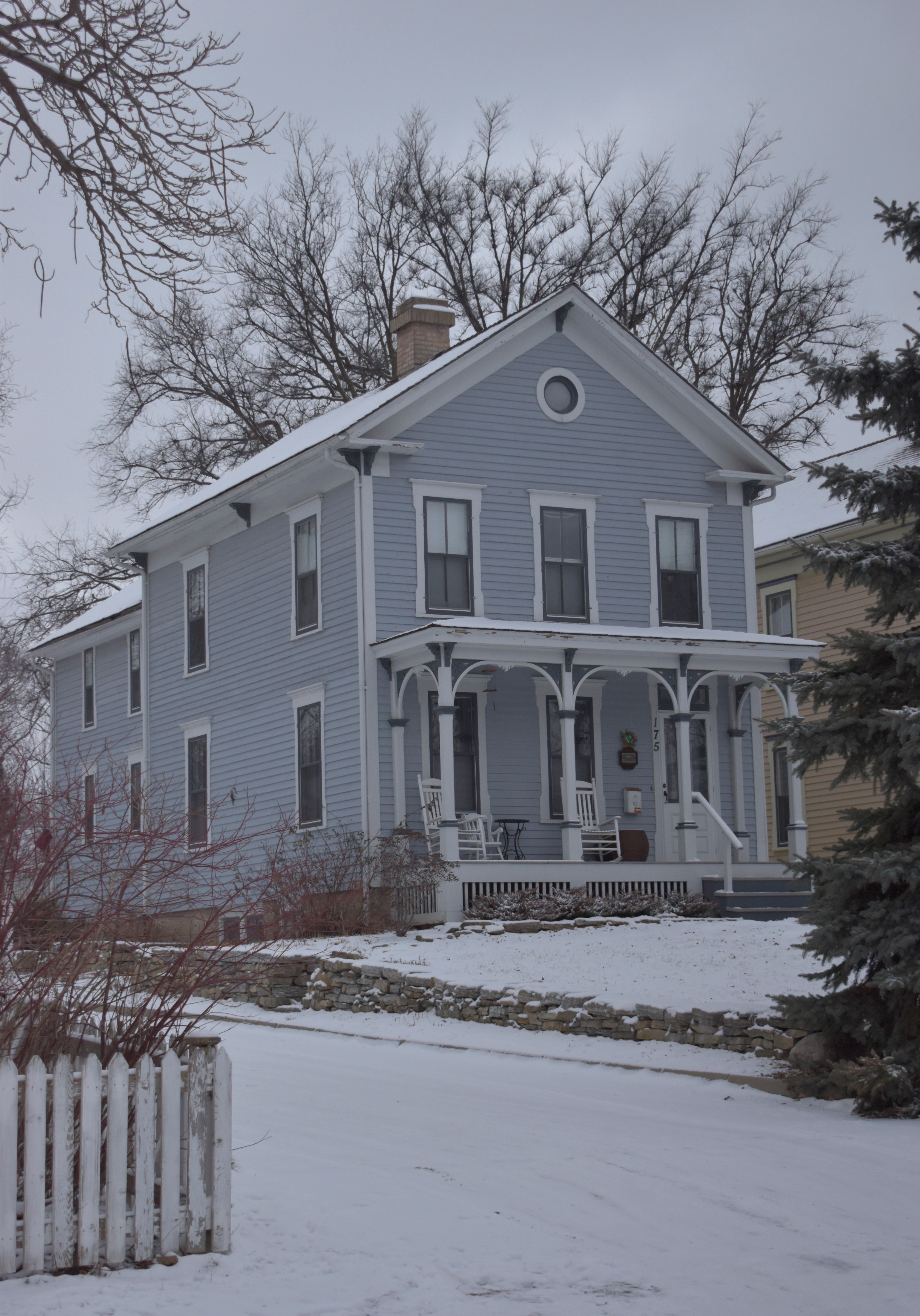
After brunch, we strolled around the small island, marveling at the parkland and quaint Victorian clapboard homes. I found myself thinking that if, for some reason, I was forced to live in Minneapolis, Nicollet Island wouldn’t be such a bad location. But the wilds of the north are my true home. We were glad for a short visit to the big city, but just as glad to return home.
After 9 years of free blogging, I finally filled up my Word Press account space. I needed to make a decision to either stop blogging or keep doing it, but pay for an upgrade. I decided to pay. So, I will continue my blog, and you’ll get to read it without the ads. Yay!
I have at least two posts in mind before the year ends, so stay tuned. More to come.
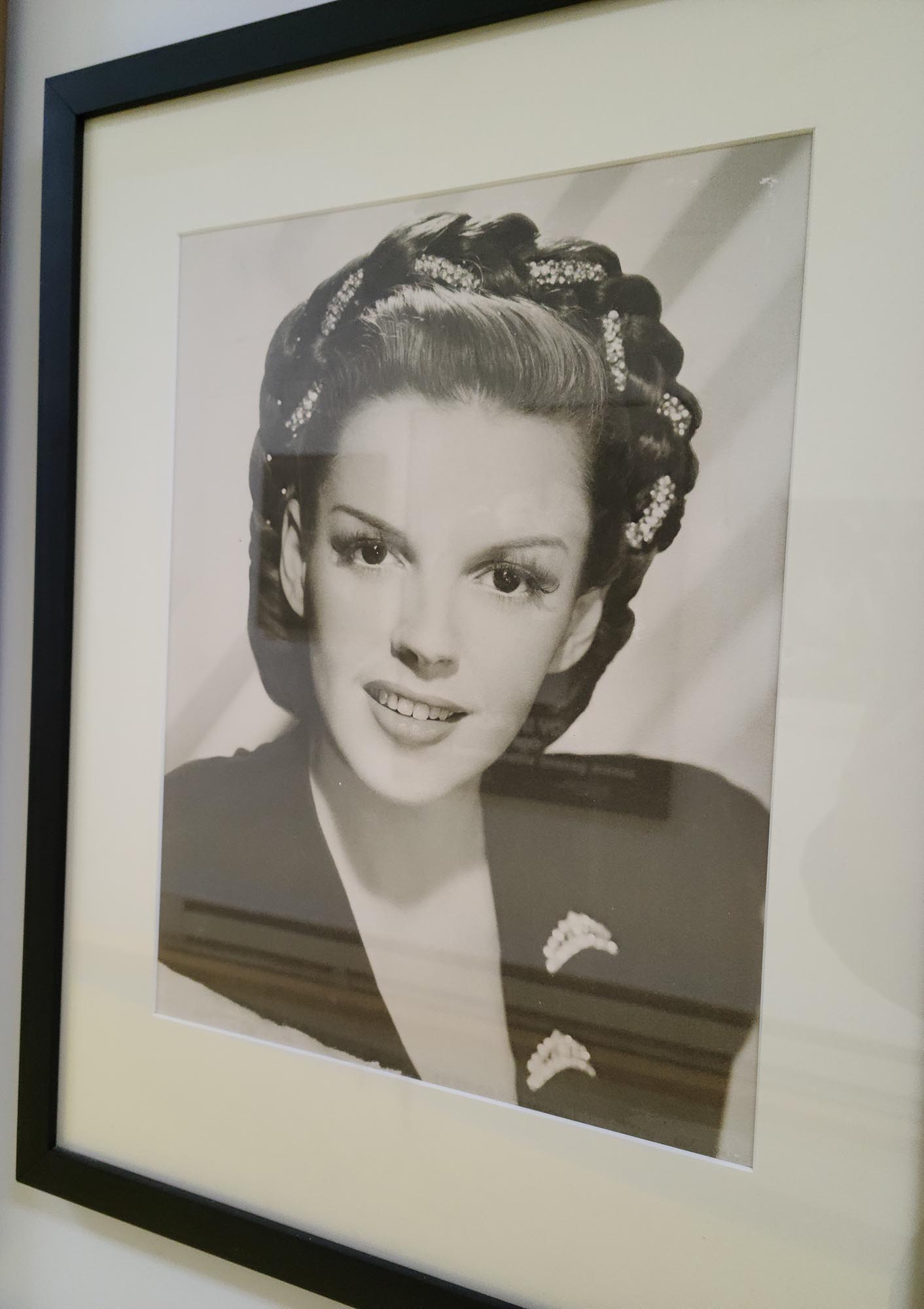
Judy Garland. Image courtesy of the Judy Garland Museum
When I was a child, I used to run around the neighborhood on certain summer evenings, letting my friends know that “The Wizard of Oz” movie was going to be on television that night. I’d hear a promo for the show during the network news or something, and out the door I’d go. I enjoyed the movie so much, I wanted to make sure my friends didn’t miss it.
Our television was black and white until I was almost a teenager, when we got a color set. Imagine my surprise when I watched the Wizard movie and saw everything change to color once Dorothy reached the land of Oz! Nobody had ever told me that happened until I experienced it myself.
Although the Judy Garland Museum opened in 1975, I didn’t know it existed until about a decade ago. I made a mental note to visit one day, and that one day came a few weeks ago when Russ and I meandered north. The museum in Grand Rapids, Minnesota, is composed of a 13,000-square-feet building that’s attached to Judy Garland’s childhood home. Her house has been moved twice, so although the building is original, its location is not. It currently has a scenic view of an Applebee’s Grill and a Home Depot store.
Judy Garland’s Grand Rapids Home
Visitors enter the museum building first to pay and look at the exhibits, and then can access Judy’s home from a covered ramp inside.
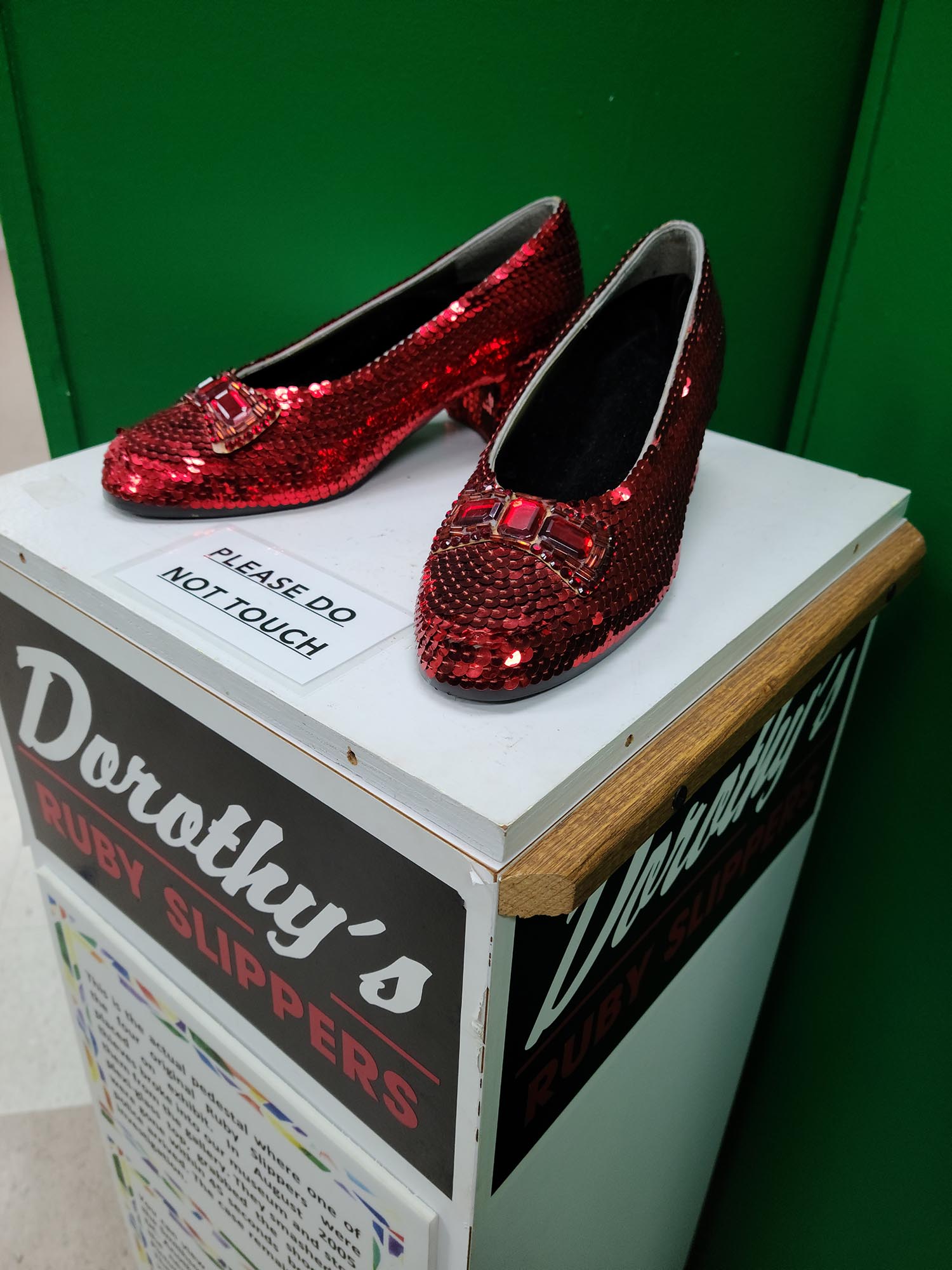
We enjoyed seeing the Lincoln Carriage – the carriage that Dorothy and her friends take into the Emerald City. Of course, there’s also the ruby slippers. You may have heard that the slippers, one of at least four pairs, were stolen from the museum in 2005 and then found recently by the FBI. Although they were recovered, they haven’t been returned to the museum and the perpetrators have not been brought to justice.
There are ruby slippers on display at the museum, but they are obvious replicas, not the originals. (Although, the podium is the original podium the stolen slippers rested upon, according to a somewhat amusing sign.)
The infamous ruby slippers.
One thing I found strange was that the COVID arrows in the museum direct visitors on a path through Judy’s life backwards. You first see all the memorabilia from her death and when she was famous, and the displays end with her beginnings in Grand Rapids. I’m not sure if that route was due to COVID requirements or if that’s the way the displays were planned.
The chance to look inside Judy’s home was fascinating. The structure was originally built in 1892 by a steamboat captain and his wife. Judy’s parents Frank and Ethel Gumm purchased it was their first family home in 1919. They moved out in 1926 to California. The house was first transplanted in 1938 to make way for a hotel, which was never built. It was brought to its current site in 1994.
While touring the house, visitors are treated to piped-in Judy Garland music. I found that was what I was missing in the museum. Judy’s voice was her claim to fame and it felt weird up to that point not to hear it.
“Judy’s crib” in her parents’ bedroom.
Some pieces of the house are original and some contain carefully curated replicas. One thing you might not know is that Judy didn’t have her own bedroom. She slept in a crib in her parents’ room and her two older sisters shared the bedroom next door. Although the bedrooms were much smaller than we’re used to today, the lower level of the house seemed spacious and similar to present-day homes.
On our way out of the museum, we passed the Children’s Discovery Center, where a raucous birthday party was in the works. There’s also a gift shop that I’m sure will meet all your Judy Garland memorabilia needs.
I appreciated the humor in this particular museum display.
I left the museum feeling a bit weirded out and sad for Judy. Imagine having your personal items all out for display to the public! You also get the feeling that she was all too used to having her talent used to make other people money. But I was glad I visited, and feel the museum is a good tribute to this outstanding Minnesota girl.
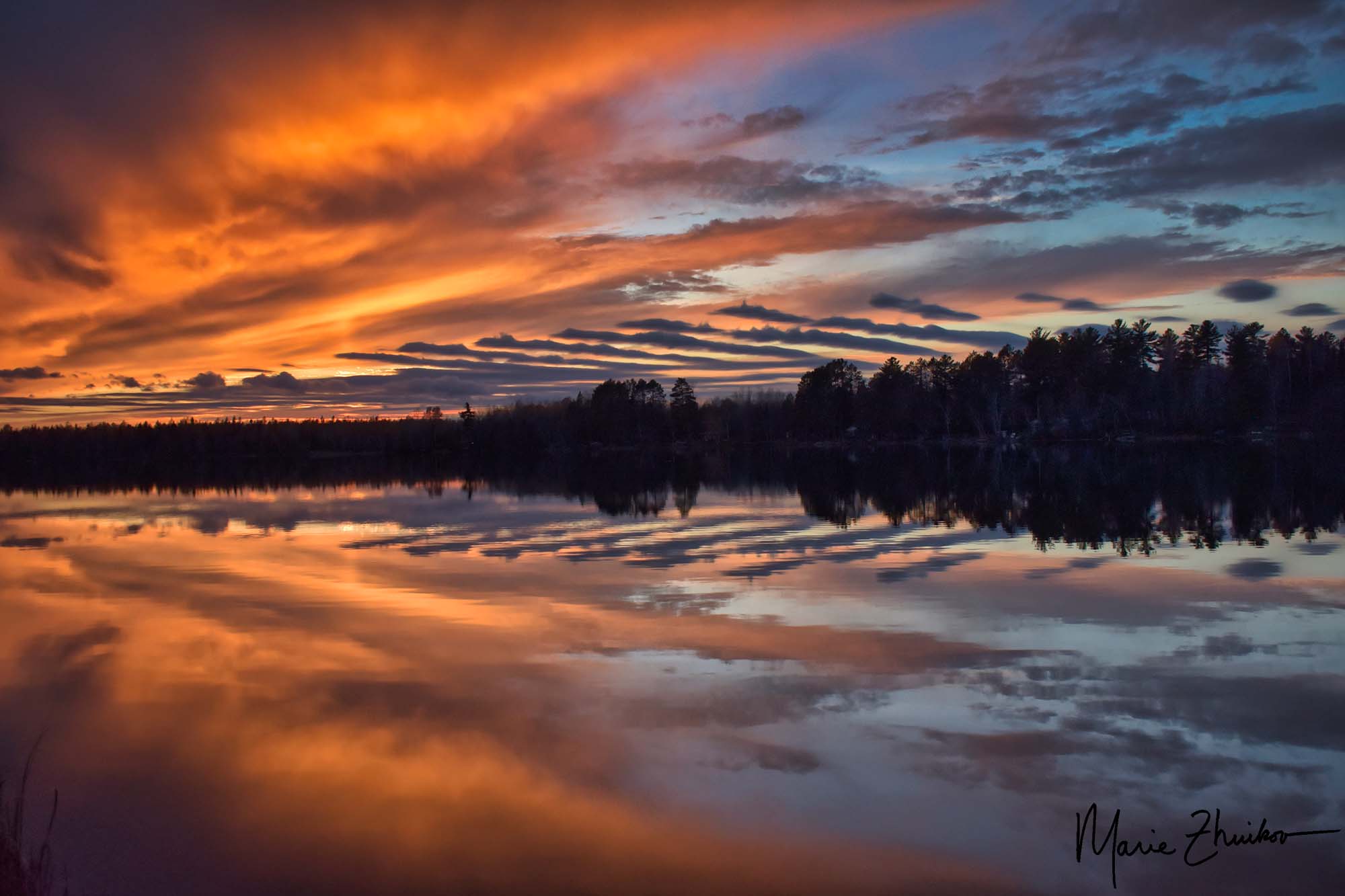
I was supposed to be helping Russ cook supper, but the sunset over our cabin lake was too distracting. At first, I thought it couldn’t possibly get any better. I ran outside to the shore with my camera and started clicking away.
Feeling neglectful of my supper duties, I went back inside to help with the chicken recipe, which involved at least 20 cloves of garlic and wine. Then I made the mistake of looking out the window. The sunset was growing even more brilliant. I grabbed my camera and ran to the lake again.
The orange was intensifying. The purple clouds near the horizon were separating into a zebra-stripe pattern. I clicked away some more. Then I remembered we were supposed to cook veggies with our chicken, so I traipsed back inside.
After taking care of the veggies, my gaze drifted back to the window. Doh! Now the zebra stripes were growing and the clouds were turning pink. You guessed it. Russ just laughed when he lost me to the outdoors yet again.
Since Russ was handling most of the cooking by this point, I had time to enjoy the view without my camera viewfinder in front of my eyes. I felt grateful and priviledged to be in this place at this time, thankful that we own this little slice of shoreline.
Inspired to lofty thoughts by the sunset, I wondered how anyone can really “own” land. It’s such a strange concept, but we’ve made an art out of real estate and all its intricacies. Owning land is as artificial a thing as owning water, or air, space, or stars. We may think we own it. We may have paperwork that says so. But it’s really just a figment of our imagination.
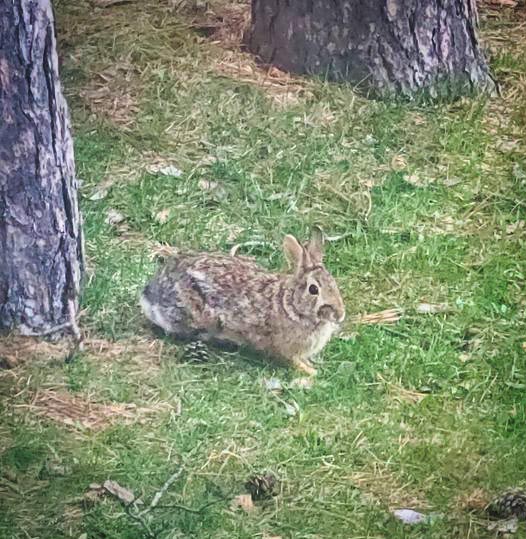
Last winter, a rabbit lived in our backyard, sheltering under our neighbor’s shed. We’d awaken in the morning, shuffle downstairs and take a look out our window on the landing where we could see the back yard. More often than not, there she crouched, a brown cottontail, nibbling what grass wasn’t already covered by snow.
Since both of our dogs died, we’ve been petless. We saw this rabbit so much, it just seemed natural to start becoming a little attached. I began leaving her offerings of dried orchard grass, remnants of our deceased guinea pig. I also initiated a naming contest for the bunny on Facebook. My friend June won with the moniker of “Tater Tot.” It fit – the shape and coloring were approximately right.
Tator Tot survived the winter and this spring we noticed several Tiny Tots scampering around the backyard – her children, no doubt. They didn’t seem to be doing any damage to my hostas, just hiding under them instead of eating them, so we welcomed these new additions to the yard.
I suspect that Tator Tot eventually left our yard for the forest at the end of our road. We sometimes saw a rabbit fitting her description during our woods walks. Her Tiny Tots hung around for several weeks and then seemed to disappear. I hope they, too, found their way to the forest. But they could have easily been eaten by a neighborhood cat or a fox.
I rather miss these foster pets. They were easy to take care of. No fuss, no muss.
I recently read Linda LeGarde Grover’s book “Gichigami Hearts.” LeGarde is a former neighbor of mine; we grew up in on the same street on the other side of Duluth. Her book offers a Native American perspective of our old neighborhood. In one chapter, “Rabbits Watching Over Onigamiising,” she describes how seeing rabbits reminds her of the Native spiritual being, Nanaboozhoo. Now, if you’ve read my book, “Eye of the Wolf,” you know that Nanaboozhoo is a trickster – part rabbit, part human. He embodies the best and the worst of humans and the supernatural.
Tator Tot
LeGarde’s backyard bunnies savored her tulips, necessitating a change the next spring to planting marigolds, which she says the “rabbits nibbled on, but not much.” LeGarde writes that planting different flowers rather than trying to eradicate the bunnies was a good compromise. “We are all here to live our lives . . . We know from traditional teachings that all animals are important to the earth, that no animal is ranked higher or lower than any other in the eyes of the Creator, and that all have a contribution to make.”
She recounted a conversation she had with a friend about seeing rabbits on clear nights in the moonlight in winter, sitting with their legs folded under them like a cat – like they were waiting for something. LeGarde’s friend told her, “When we see them like that at night it is because the rabbits are watching over us, over a sleeping world and our dreams.”
Here in the north, we have two kinds of rabbits: cottontails like Tator Tot and snowshoe hares, which are larger and turn white in winter. Rabbits in the moonlight reminded me of one of my favorite chapters in northland author Sigurd Olson’s book, “The Singing Wilderness,” about the Boundary Waters Canoe Area Wilderness. It’s the chapter called “Moon Madness,” where he recounts seeing hares on his moonlight walks.
“If, when the moon is bright, you station yourself near a good rabbit swamp and stay quiet, you may see it, but you will need patience and endurance, for the night must be cold and still. Soon they begin to emerge, ghostly shadows with no spot of color except the black of their eyes. Down the converging trails they come, running and chasing one another up and down the runways, cavorting crazily in the light.”
Olson concluded that moonlight “made animals and men forget for a little while the seriousness of living; that there were moments when life could be good and play the natural outlet for energy.”
It’s comforting to think of rabbits or hares cavorting crazily in the darkness or quietly keeping watch. I never saw Tator Tot or the Tiny Tots at night because I was, well, sleeping. Perhaps I never saw them because the magic they worked was so effective.
When I emerged from my office building in Superior yesterday evening, I was thinking about all this. As I walked, who scampered across the parking lot pavement not ten feet from me? A big fluffy cottontail. She looked suspiciously like Tator Tot.
A few blocks down a gravel road near our cabin in northern Minnesota sits a tiny lake, easily seen from the road. It’s so small that a football player with a good arm could throw the ball from one end to the other.
On a bright fall day a few weeks ago, I stopped to admire this lake. While the lake our cabin sits on was rocked with waves, this lake was calm in the shelter of trees. Only one cabin hunkers along its shores. Those folks own the land all around it, so it’s likely no other dwellings will appear in the future. Although small, the lake is deep – up to thirty feet – making it a favorite of local anglers. I almost always see wildlife when I visit: mink, muskrats, turtles, osprey.
I had my camera along and snapped several images in sequence, pointing to opposite sides of the lake. I was amazed by how such a small lake could look so different on either side. Below are two of my favorite images from that outing. They got me thinking about how people can be multi-faceted, too.
I’ve been busy at work lately, giving birth to a new podcast. If you want the latest “dish” about Great Lakes fish, you’ll want to listen to “The Fish Dish.” I host it with longtime coworker and friend Sharon Moen, Sea Grant’s Eat Wisconsin Fish Outreach Specialist. Besides introducing you to the people behind Wisconsin’s fishing and aquaculture industries, each episode includes a “Fish-o-licious” section where we cook a new fish recipe.
The first episode features Craig Hoopman, a sixth-generation commercial fisherman from Bayfield, Wisconsin. Hoopman shares his beginnings in the business, current challenges, plus his dreams for the future. Also, Sharon and I share our backgrounds in fishing and introduce listeners to the Eat Wisconsin Fish campaign. During the “Fish-o-licious” part of the show, we cook Greek-Style Lake Whitefish at Hoopman’s recommendation.
Tying it all together is ska music by Twin Ports band, Woodblind. Take a listen — let me know what you think!












 Marie's Meanderings