A New Venture

Hello Dear Readers

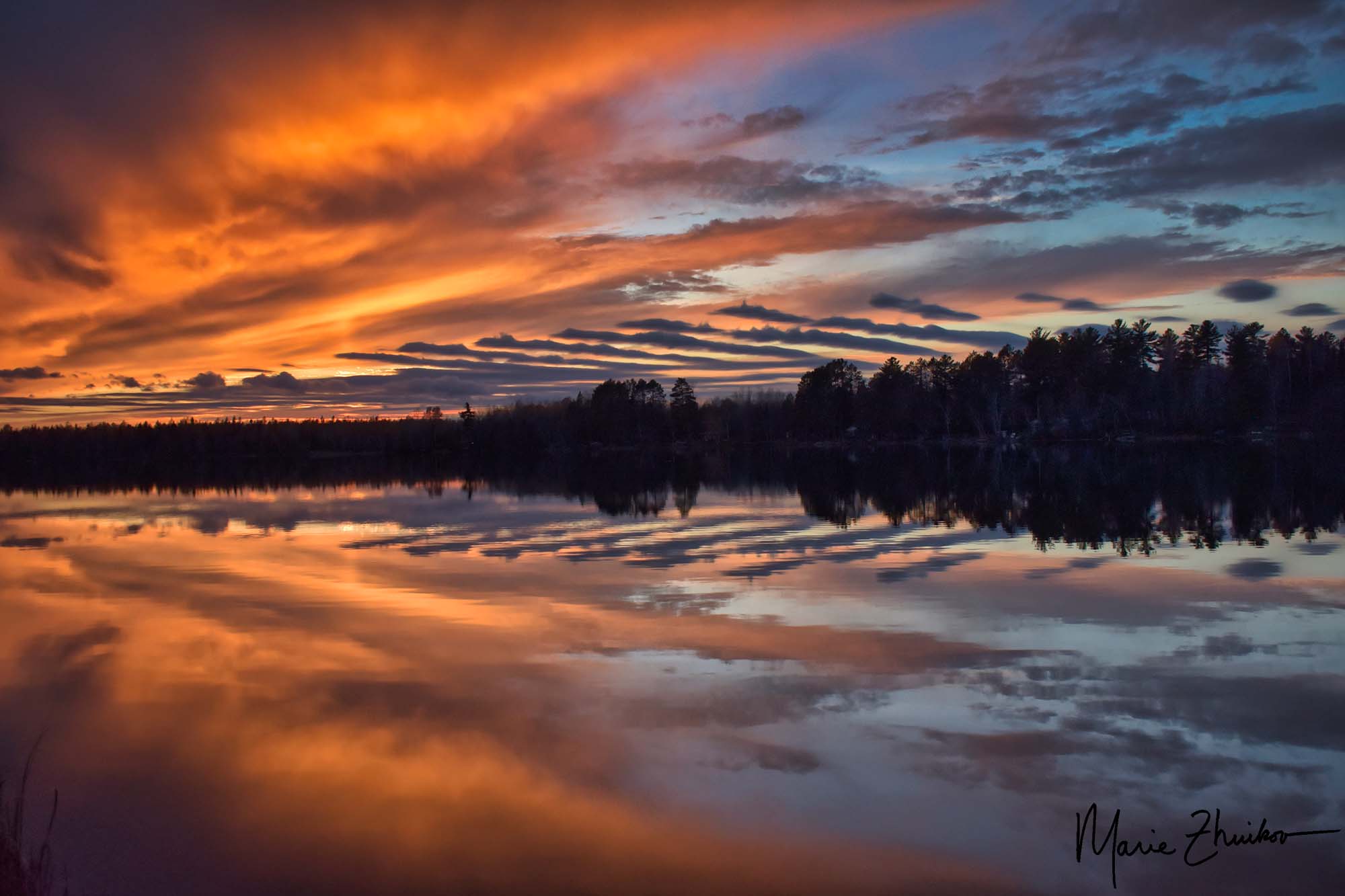
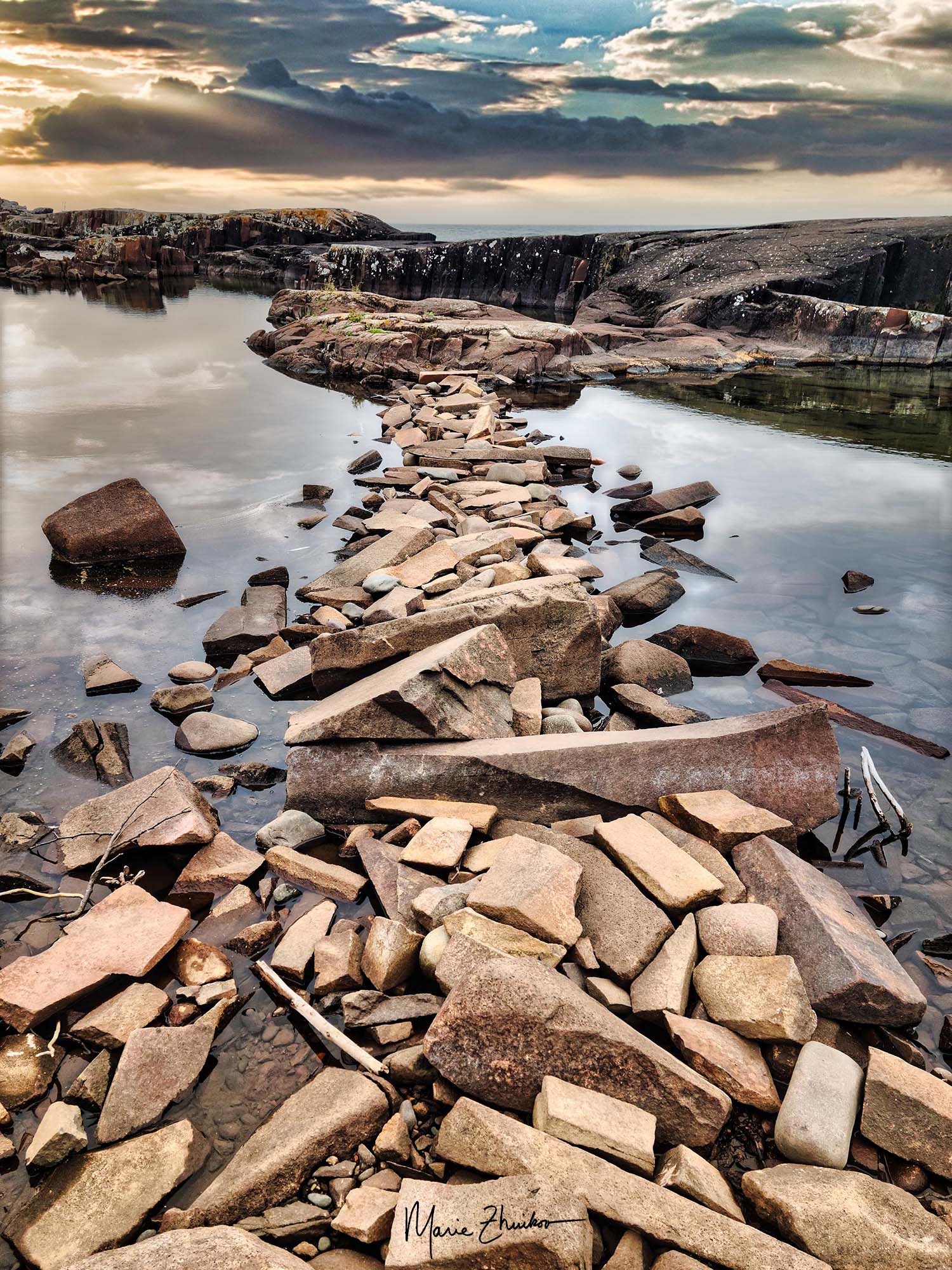
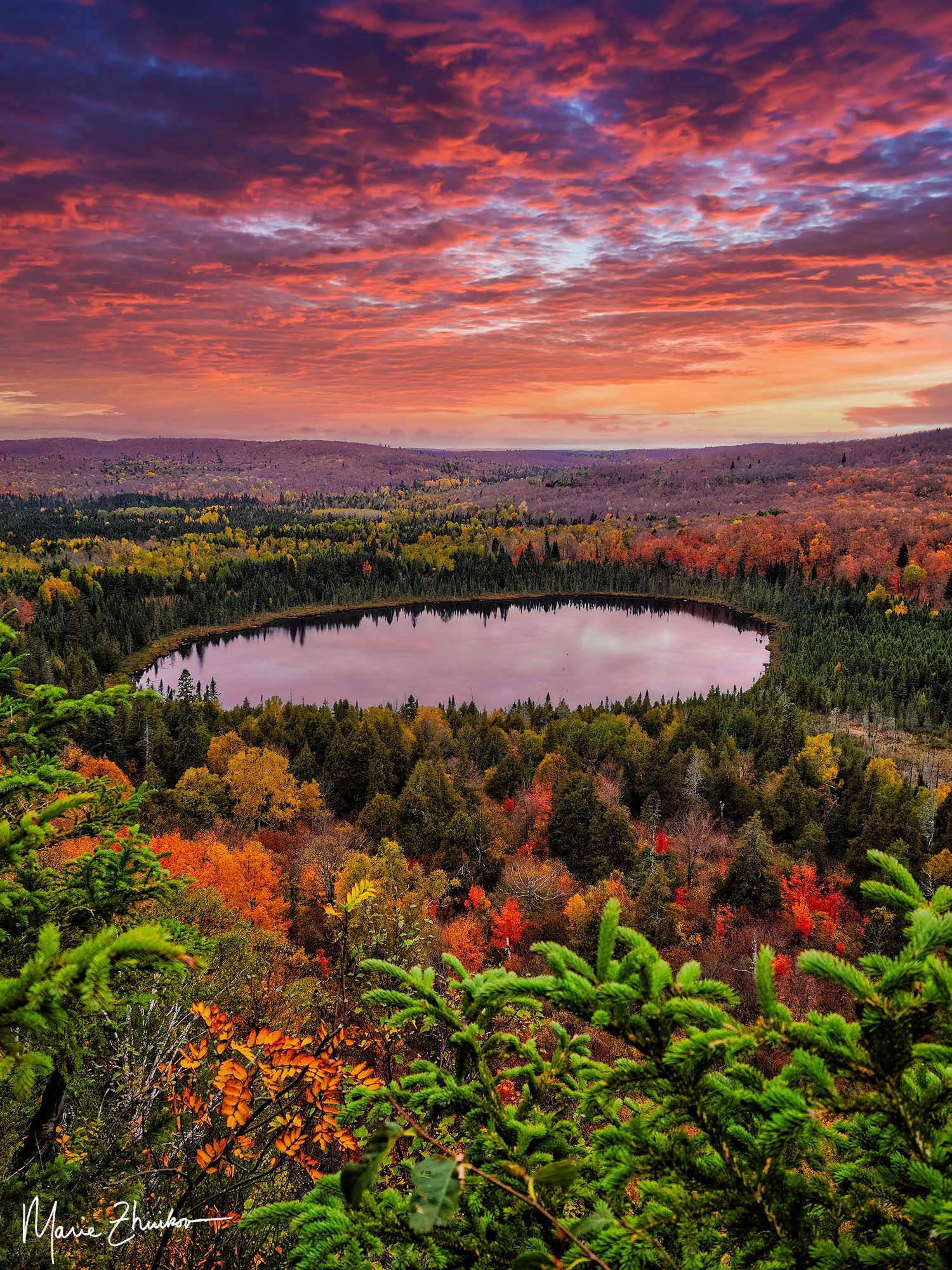
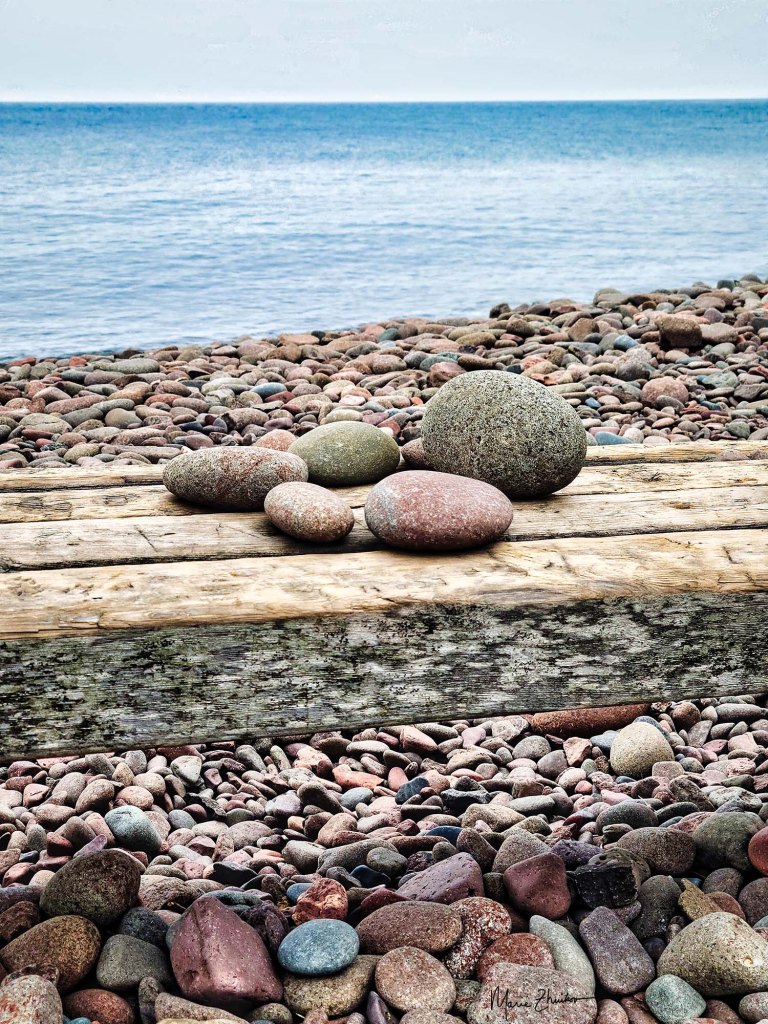
Like the photos you see on my blog? I’m starting a new venture selling my photos. Visit my personal website http://www.mariezwrites.com/photography.html to see my galleries and make a choice!

The way it works is, once you’ve decided on a photo, contact me throught the Contact page on my blog (http://www.mariezwrites.com/contact-1.html). Let me know if you’d like the image as a print, canvas-wrapped frame, or fine art metal (aluminum) print. Let me know what size you want and I will send you a quote. Payment will be through Paypal.

Other photographers — I’m looking for a service that will process photo orders for me. Which one do you use? How do you like it?

Mini-Minnesota Vacation #5: Grand Marais and Oberg Mountain

The Path to Enlightenment, Grand Marais, MN

Sometimes you can visit a town many times for decades but still discover new places in it. That’s the way Grand Marais, Minnesota, was when Russ and I meandered north for a weekend in our Scamp.

We were too slow on the uptake to get a reservation at the municipal campground, which is right on the shores of the harbor. But half of the sites (the ones closest to Lake Superior) are first-come, first-served, and there are a lot of them. We figured if we arrived early in the afternoon, we might have a good chance of finding an open site. We didn’t have the option of travelling during a different weekend because we had reservations for a concert that wasn’t happening any other time. We made backup plans to camp in a friend’s driveway and headed out.

I’m sure the suspense is killing you. Did they find a campsite? Yes, we did. In fact, we had five to choose from, thanks to the shortness of our Scamp (13 feet). After we got situated, we had several hours before supper and the concert. We meandered around the campground, getting the lay of the land. We walked into town and along the way, checked out the fishing museum that’s on the shore of the harbor. It features an old fish house complete with fisherman mannequins, a fishing boat, and a smoke house.

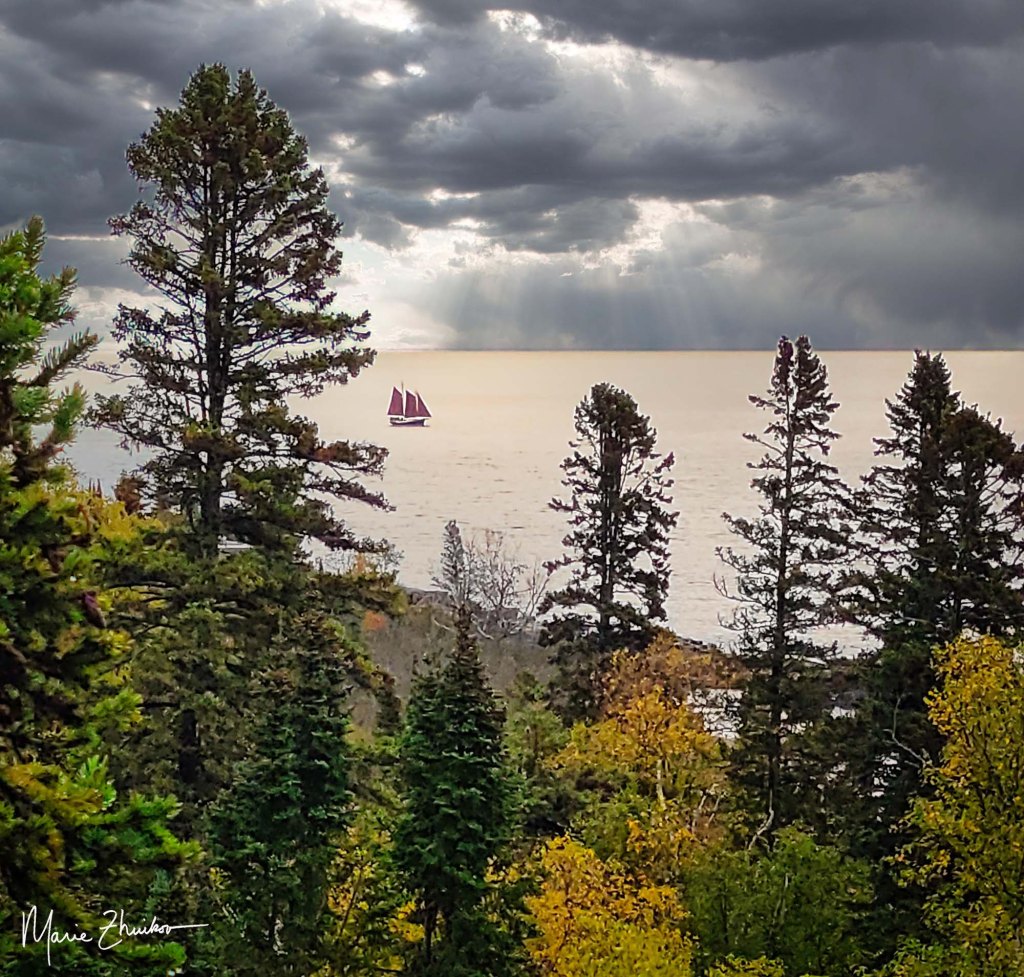
Sailboat Layercake. The Hjordis sailing out of the Grand Marais Harbor.

In town, we visited the Johnson Heritage Post Art Gallery, one of the places I’ve never been inside, despite coming to Grand Marais periodically for fifty years. Unbeknownst to us, the town was hosting a plein air (outdoors) painting festival and competition that week. The artists’ works were displayed in the gallery – a most impressive and inspiring collection!

No visit to the town is complete for us unless we stop in at the Ben Franklin Department Store. The owners are friends who we don’t get to see nearly enough. We also had time to visit the Sivertson Art Gallery, which I think I’ve only been inside once – another notable collection of local artists and photographers.

After supper at the Angry Trout Cafe, which features local foods (note, the Trout is open all year now but is closed sometimes in November), we headed north just outside of town for the concert. The artist is Michael Monroe, an acoustic guitar, ukulele and glass flute musician who’s popular in Minnesota (and other parts of the country, I’m sure!) He offers log cabin concerts. I signed up for our concert months in advance and was dismayed to learn along the way that Michael and his partner Deb sold their log cabin. But they found a friend who was willing to host the concert in their cabin right on the shore of Lake Superior, literally eight feet away from the water.

Musician Michael Monroe

With the sound of waves as a backdrop, we enjoyed an intimate concert in a home environment. Michael’s music makes a person feel all warm and fuzzy inside. If you like Cat Stevens, Paul Simon, and Joni Mitchell, you’ll love Michael’s music.

After a peaceful rainy night’s sleep (we were impressed by how quiet the campground was), the following day, we pursued more natural activities. Right next door to the campground is the Sweetheart’s Bluff Nature Area. An easy, wheelchair-friendly trail begins on the end of one of the campground loops, offering lake and woodland views. If you’re up for a challenge, take the definitely not wheelchair-friendly black diamond-level trail up the bluff. Be prepared to clamber! But the views of the lake and harbor are worth the effort.

The view of Grand Marais from Sweetheart’s Bluff.

Soon, it was time to vacate our weekend home. One place I wish we would have stopped in Grand Maris is the Gunflint Mercantile. They make THE BEST maple chocolate truffles on Earth. Maybe next time!

On our way home, we stopped just outside of Tofte to hike the Oberg Mountain Trail.  This fairly easy three-mile loop is known for stellar views of the Superior National Forest and Oberg Lake. The Forest Service says the trail gets “medium” usage, but when we were there on a colorful fall day, I would classify the usage as extreme. There were tons of people there and parking was at a premium. It felt more like a major national park attraction than a national forest.

As we hiked through the cedars and maples, fog began to roll in off Lake Superior. The first few overlooks we reached were totally shrouded. So much for stellar views. But we persisted and were rewarded by fog-free views on the other side of the mountain.

Easter Egg Fall. Oberg Lake as seen from Oberg Mountain.

The wildlife seemed used to people. I was able to get a close look at a hairy woodpecker working on a birch. The red squirrels seemed to delight in racing across the trail just steps away. A ruffed grouse took noisy flight nearby.

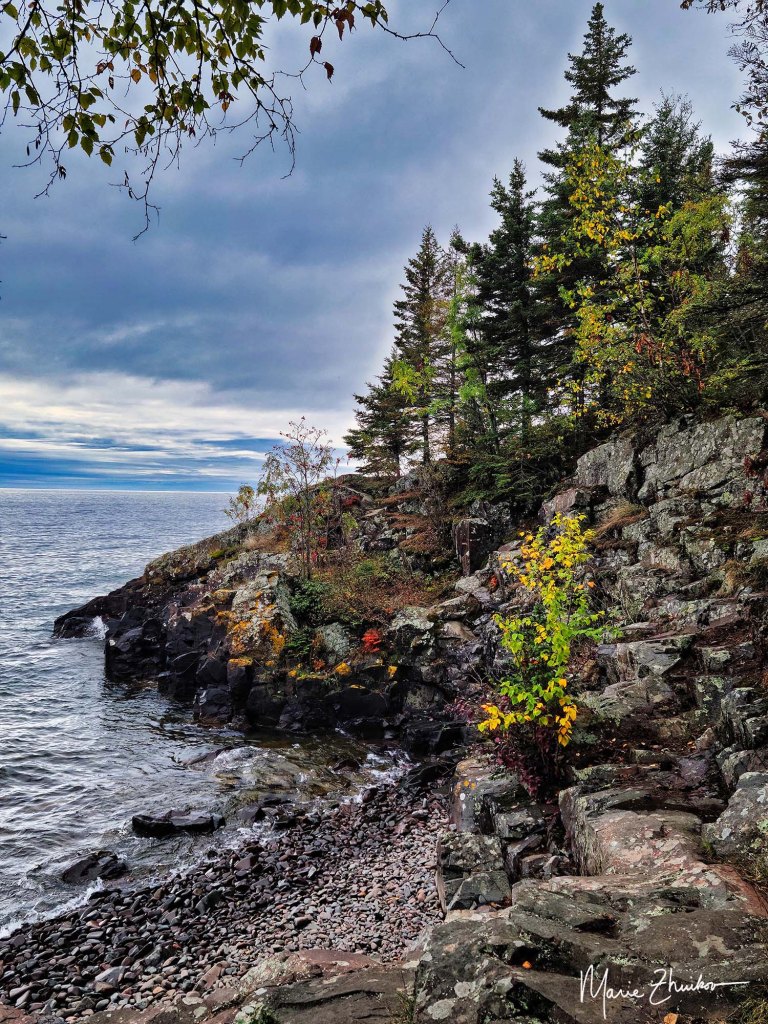
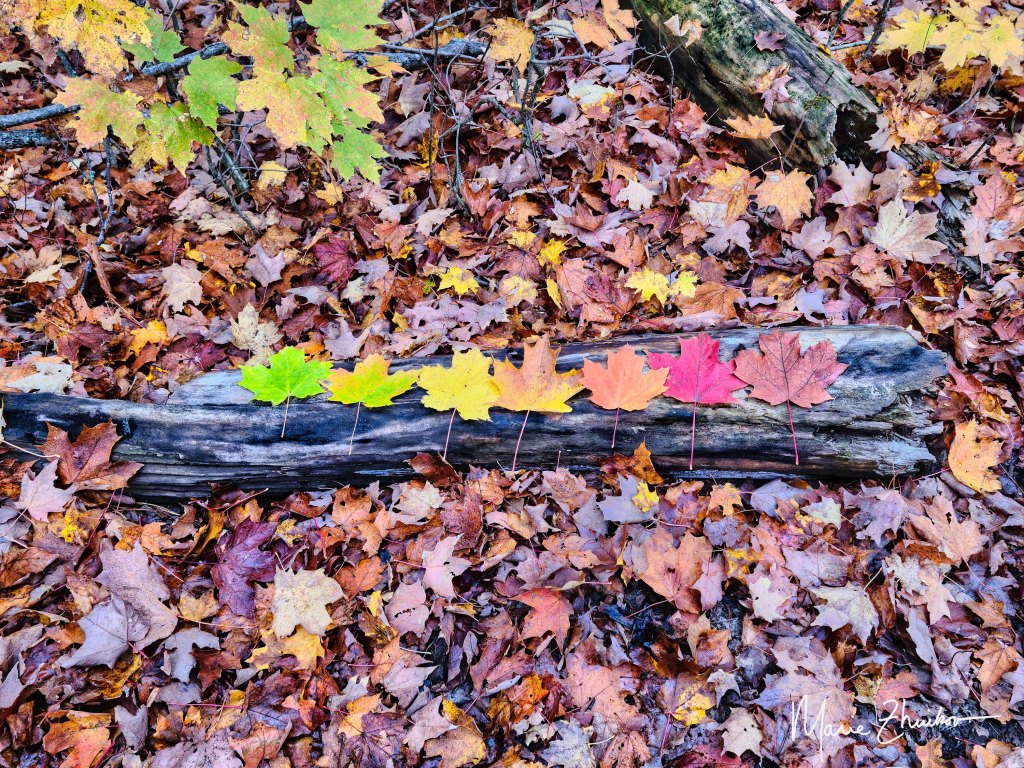
All the good art we saw must have rubbed off, because I took some pretty darn good photos. Here’s a show of the ones I haven’t already shared.

I hope everyone’s having a good fall. Stay safe, my friends.

Lawn Mower Races: Cutting-Edge Excitement

The grand marshal of the Thunder Valley Lawn Mower Races, Maine. Image credit: Mark Haskell, Courier-Gazette

Apologies for the bad pun in the title, but I wanted to let you know that you truly haven’t lived until you’ve witnessed this phenomenon. Lawn mower races happen all across America, from Idaho to Maine. I received my first taste in late summer when I meandered into Cotton, a small town in northern Minnesota.

Grown men (and in other places, women) clamber aboard riding lawn mowers that they have modified for racing. In Cotton, the circular racing track was an actual lawn situated behind what used to be the town’s high school but is now a community center.

The races are a cultural highlight of the season. Families gather to sit on the grass or on haybales to watch the festivities. Kids eat cotton candy. Some folks even back their jacked-up pickup trucks along the track. Sitting in folding lawn chairs in the cargo bed, they have a prime, elevated view.

Engines rev. The starting gun cracks, and they’re off! The machines tilt as they round the corners, wheels lifting off the ground. The drivers likewise tilt, leaning into the movement. Around and around they buzz, neck and neck. After a few turns around the track, one man’s mower putters out and he pulls into the center, defeated.

Cotton, MN, lawn mower racers lean into the turn.

According to the U.S. Lawn Mower Racing Association, this quirky form of racing began in the early 1970s – touted as a perfect way to use a machine that many people already have, and to let off steam. It became official when the makers of a fuel stabilizer came up with the idea of using a lawn mower race to promote their product on April Fools’ Day in 1992.

I had no idea this pastime had been around for so long! There’s even such a thing as lawn mower ice racing in winter.

With a wave of a checkered flag, the race ends. The crowd applauds. The winners strut over to claim their prizes and pose for the local newspaper photographer.

In Cotton, racers competed in two events, “modified” and “stock.” I felt culturally enriched for having watched these events. But it all seemed like such a waste. You see, the racing mowers don’t have their blades engaged. All that noise and hype, and in the end, the grass on the track is just as long as before. 🙂

Author Appearance this Weekend

The “Going Coastal” anthology sporting its snazzy Northeastern MN Book Awards seal.

Hi – this Saturday (10/16) I’ll be selling books at the Twin Cities Book Festival from noon-2 p.m. Look for me at the Metropolitan Library Service Agency table. I’ll have copies of “Going Coastal” (a Lake Superior short story anthology written by Lake Superior locals, including me) and “Plover Landing,” my eco-mytic-romance novel.

Free Halloween Story!

My creepy short story, “A Night in the Tower-Soudan Mine,” was published on the Twin Ports Terror website. You can access it for free by clicking on the linked text above. Eventually, it will be published in their printed book, which is distributed for free around the Twin Ports of Duluth and Superior.

The storyline was inspired by several trips I’ve taken into the mine, a half-mile underground on Minnesota’s Iron Range, since I was a youngster. My latest trip was just a few weeks ago, taken to refresh my memory. The sections about the mine tour are factual (other than the character getting knocked out thing), but the latter parts about the safety tunnel are figments of my imagination, informed by research.

Iron ore, which is used to make steel.

I began writing the story as part of a fiction workshop by the indomitable and inspirational Felicia Schneiderhan, where she challenged us to write two short stories that follow the same “rules” and feature the same random object in them.  If you read the story, I’d be interested in hearing what you think is the random object.

The second story I wrote for the workshop is part of a collection for which I’m currently trying to find an agent. So far, I’m striking out, but I just received some good tips, so we’ll see if they are helpful.

Enjoy and Happy Early Halloween!

Marie in the mine.

William O’Brien State Park: A Feast for the Eyes

One of the tranquil views from the Prairie Overlook Trail in William O’Brien State Park.

Russ and I meandered south a couple of hours to camp along the St. Croix River in William O’Brien State Park. We chose the park mainly for the location – we wanted to visit the river towns of Stillwater and Afton, both of which are not far south – but we plan to return again someday because of the great accommodations and the views – oh, the views!

Visitor can choose from two campgrounds at the park. We chose the Riverway Campground because it was closest to the river, and we are water people. After setting up camp our first night, we visited Stillwater and took advantage of its foodie options. We ate at the Marx Fusion Bistro – excellent food and drinks – much better than camp food. That was a treat for us — who usually camp in the middle of nowhere.

Back at our trailer, we enjoyed a fire and a visit from three fat racoons who quickly checked our site for food. Finding none, they waddled off to the next site.

The next morning, we walked the 1.6-mile Riverside Loop Trail near the campground. The trail passes through old white pines along the river and then turns inland a bit, meandering by Lake Alice, which is named after the daughter of William O’Brien, a lumberman who used to own the land that’s now the park. Two bald eagles graced us with their presence, performing aerial acrobatics.

Later, we took a nine-mile (round-trip) bike ride to the small town of Marine on St. Croix. We explored its short main street and stopped to visit an old lumber mill site featuring a short trail and interpretive signs. The mercantile in town looked like it could accommodate any forgotten food needs, plus there’s a coffee shop that touts its cold-press coffee as “best in the valley.”

We sipped our coffee while sitting in the town’s gazebo/band stand in a small park just across the street from the shop. The town was so quaint and picturesque, I felt like I was in a gosh darn Hallmark Channel movie.

A view of the St. Croix River from the Riverside Trail. I call this one, “X Marks the Spot.”

After supper, we revisited the Riverside Trail and made good use of one of its benches to watch the moon rise above the clouds lining the river. Barred owls hooted their “who cooks for you?” calls and Canada geese honked as they flew to their nightly roosting waters.

As we fell asleep back inside our trailer, the quiet of the night was interrupted by a pack of coyotes who yipped to each other.

On our final morning in the park, we drove a few miles to hike the Prairie Overlook trail through a restored oak savanna. The trail loops around a small lake. As I hope my photos attest, everywhere we looked was a feast for the eye. Seas of sumac had turned red and lined the trail.

The day was overcast, and the rain conveniently waited until we reached our car to begin. The drops came down, steady and persistent, so once back at the campground, we packed up and headed home.

Lullabye Lumber Camp, a Bedtime Story

Once upon a time on Outer Island in Lake Superior, a lumber company cut much of the remaining old growth hemlocks and other trees to make baby furniture. The lumberjacks lived in a camp near sandstone ledges on the shore. They used a railroad built by previous loggers through the middle of the island to haul the heavy logs to a dock for shipping to shore. Eventually, the crew built an air strip so they could go home on weekends.

The company that used the wood was Lullabye Furniture of Steven’s Point, Wisconsin. By the 1960s, logging on the island cost too much, so the men left their camp. They also left behind the buildings, old trucks, a stove, a water tank.

Slowly, the forest took its revenge. Snow knocked down the buildings, the trucks rusted, animals carried away seat cushion stuffing for their nests. The forest regrew, swallowing the lumber camp and reclaiming the land as its own.

The End

Outer Island Lighthouse and the Research Project that Wasn’t

Outer Island Lighthouse in 2012.

Last month, I meandered out to the most remote spot in Wisconsin: Outer Island in the Apostle Islands National Lakeshore in Lake Superior. Now, the folks on Washington Island off the Door County Peninsula in Lake Michigan might argue that they live in the state’s most remote spot. I guess it’s all in how you define “remote.”

The Milwaukee Journal gives Outer Island this distinction. However, the rest of the internet says it’s Washington Island.

To check on which place is really the remotest, I consulted with the Wisconsin State Cartographer’s Office. Jim Lacey, associate state cartographer, said he has not tried to define such a spot in the state yet. Is it defined as the farthest outpost of civilization that a person can easily reach, or is it the place farthest from any roads and the hardest to reach?

We went back and forth a couple of times about a worthy definition. Lacey agreed that it wasn’t very hard to get to Washington Island – all a person needed to do is pay for a ferry, drive their car onto it, and they’re set.

The spiral staircase that leads up to the top of the tower.

Outer Island, on the other hand, is twenty-eight miles from the port of Bayfield, Wisconsin, has no ferry and no roads. To get there, a person either needs to have their own boat, spend a couple days paddling a kayak, or pay a small fortune for a water taxi. A water taxi is basically a private motorboat ride. That’s how I traveled to the island last month.

Lacey said, “To sum it up, I’m afraid I don’t have a very satisfying answer for you! I think this is one of those situations where a deceptively simple question gets very complicated, very quickly.”

But, to my way of thinking, the difficulty of access and the lack of civilized conveniences makes Outer Island the “winner” for the remote spot title.

Anyway – I had a great time camping on the island. Visiting the place again reminded me of a research project, which never quite worked at the lighthouse, in part, due to the island’s remoteness.

Nine years ago as part of my job with Wisconsin Sea Grant, I accompanied Chin Wu, a researcher from the University of Wisconsin-Madison, to Outer Island. His goal was to install a webcam atop the lighthouse to track the development of rogue waves and wave patterns off the island’s coast.

Hooking the webcam up to the solar power grid on the lighthouse.

The National Park Service was cooperating with the project, so they drove our small research team out to the island for the installation. Once at the island, the park service staffer let us into the lighthouse and led us to the top of the tower.

We installed the camera and plugged it into the solar power system atop the lighthouse. Thankfully, the day was calm and warm, so hanging around outside ninety feet in the air wasn’t too scary.

I took some great photos, but they were never published because the project didn’t pan out. Why? The webcam needed a cell phone signal in order to transmit the photos. Back then, the cell phone system wasn’t powerful enough on the island for this to work.

The doomed webcam.

Even smart people need to learn things the hard way, sometimes, I guess. It just goes to show that science doesn’t always work out despite the best of intentions. But these photos are too cool to waste, so here you go. Mr. Wu has since gone onto conduct other projects in the Apostle Islands, which were much more successful, such as this WISC-Watch website, which provides tons of info about wave and wind conditions.

Canoeing “Old Blue” Down the Whiteface River

A story that began as a post on this very blog was recently published by “Northern Wilds” magazine. It details an adventure Russ and I had canoeing down the Whiteface River in northern Minnesota. As I began writing it, I quickly realized its magazine potential. So, I didn’t post it here.

The good news is, you can read it for free, just as if it were a blog post: https://northernwilds.com/canoeing-old-blue-down-the-whiteface-river/

Excerpt:

…I marveled that a trip that takes about five minutes by car could take three hours by canoe. But in a car, we would not have had the wonder of the white birds, a mermaid, and a lightning-blasted pine. Now, we have a mental map of the liquid emerald that flows beyond the screen of trees bordering the road.

Outer Island Sunset

Russ and I meandered to the Apostle Islands National Lakeshore last month. We had the privilege of camping on Outer Island for two glorious, warm nights. Lake Superior was so calm, we could hear ore boat engines quietly throbbing even though they were dozens of miles away as they passed the island.

I took this shot from the beach near the lighthouse. You can just see the lighthouse over the tops of the trees by the dock. A wave-worn rock provided a perfect foreground. Can you feel the peace?