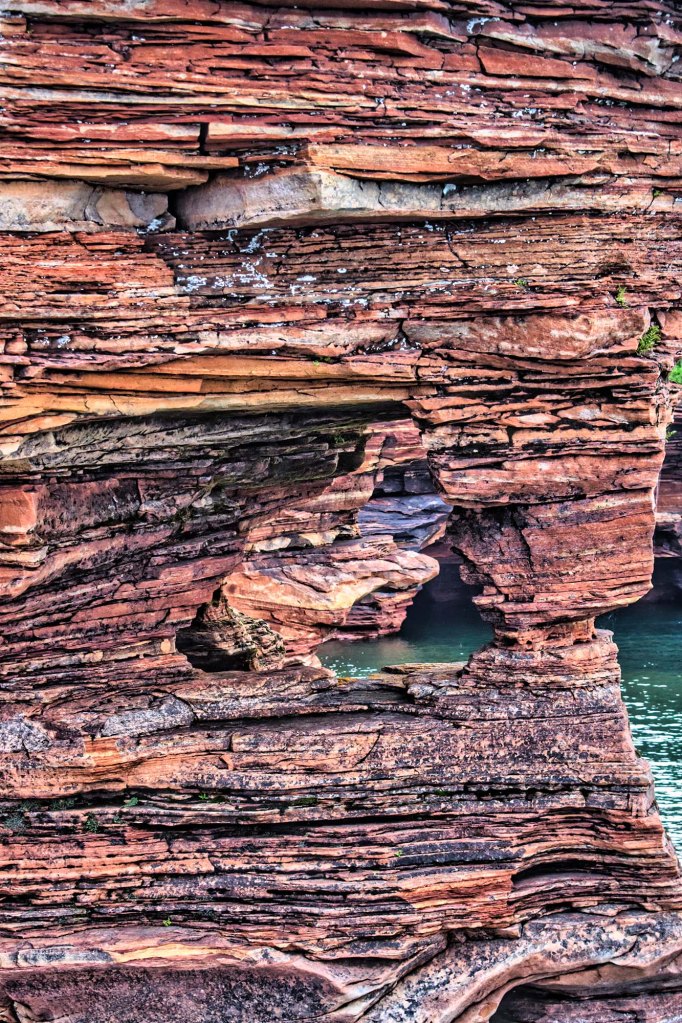
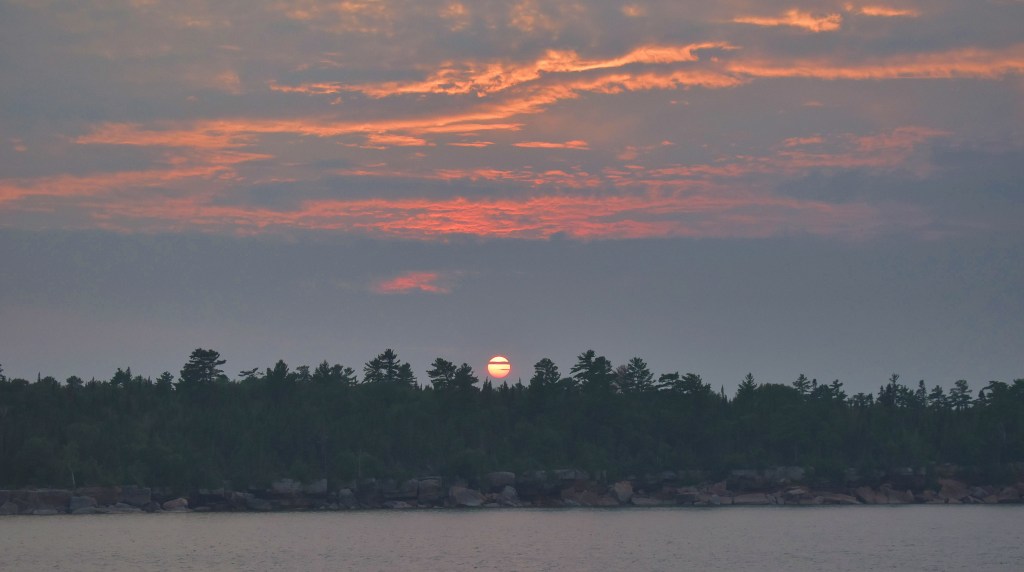
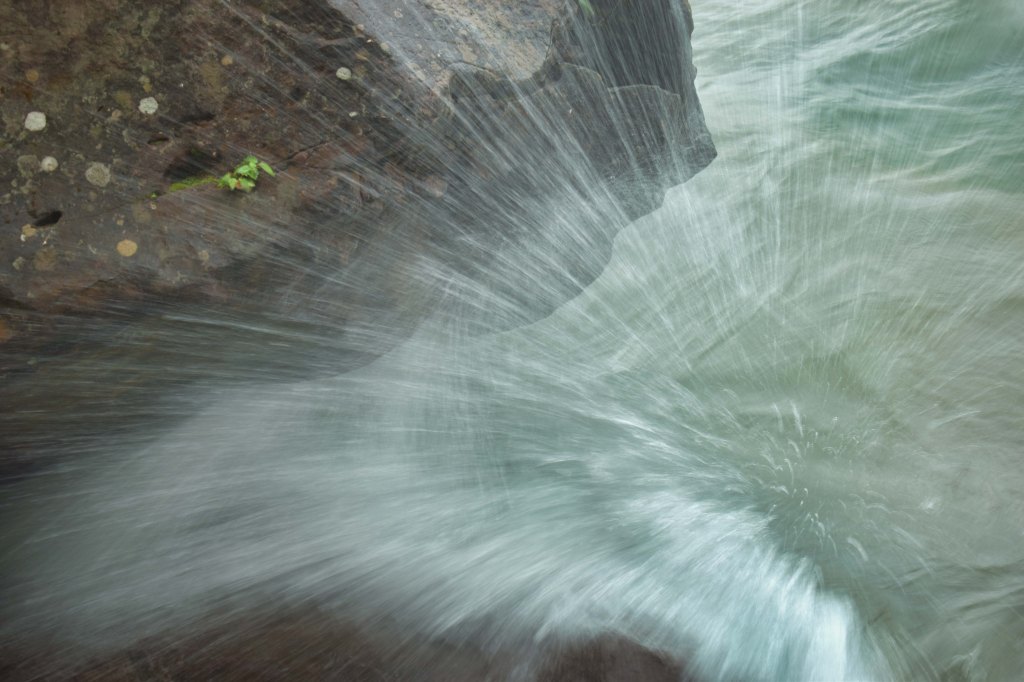
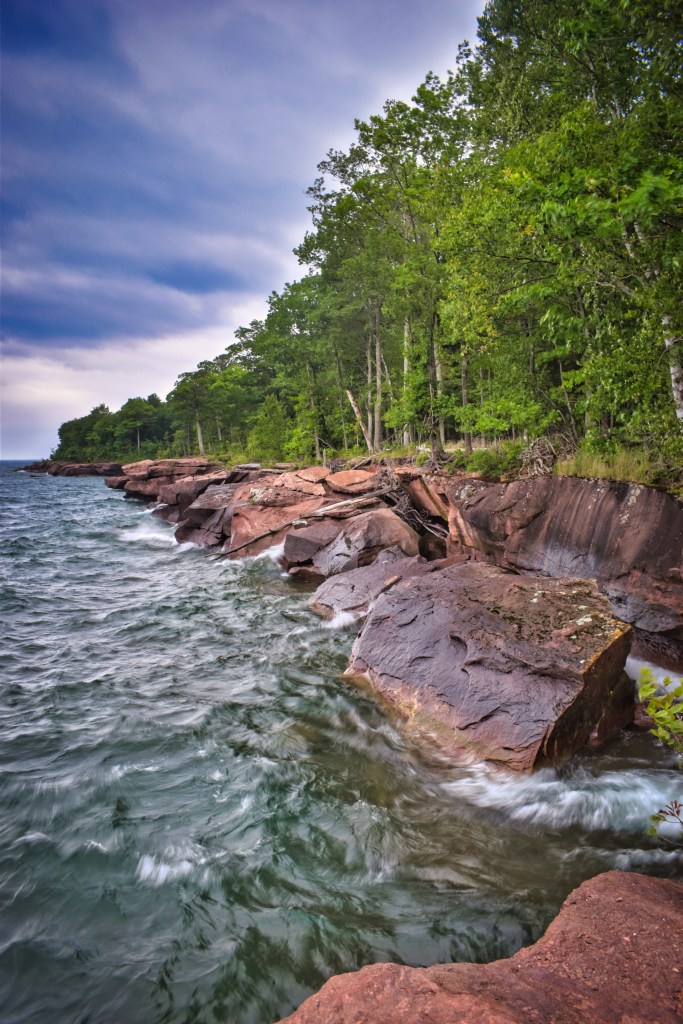
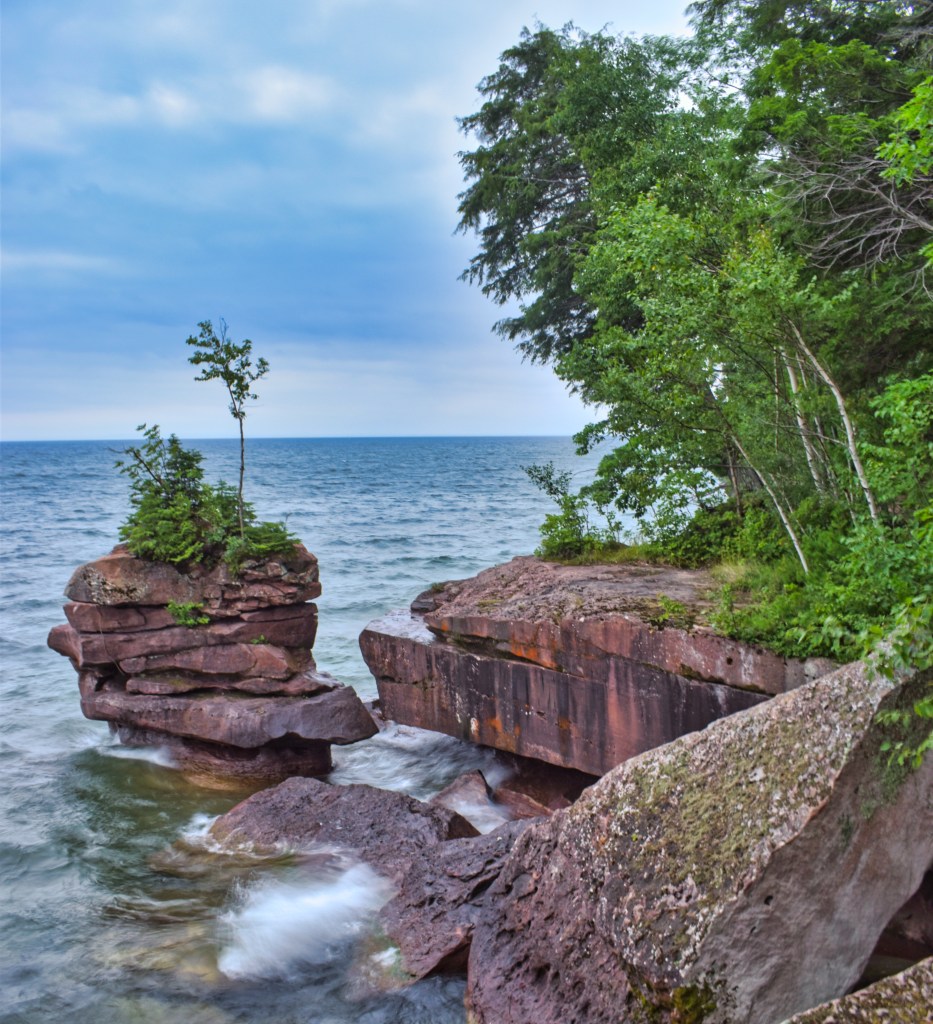
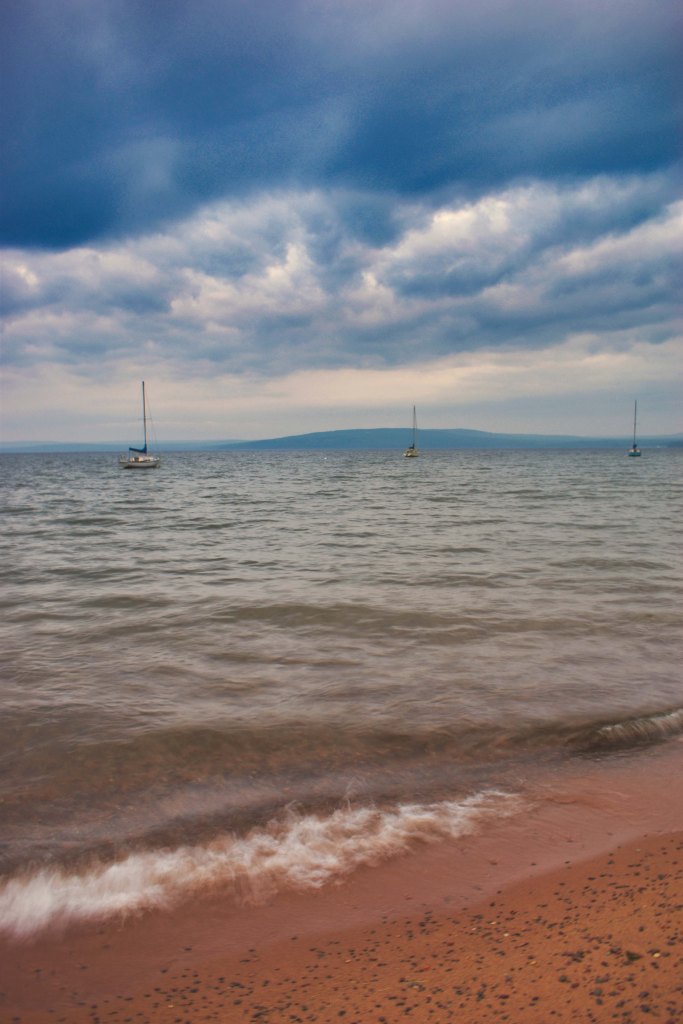
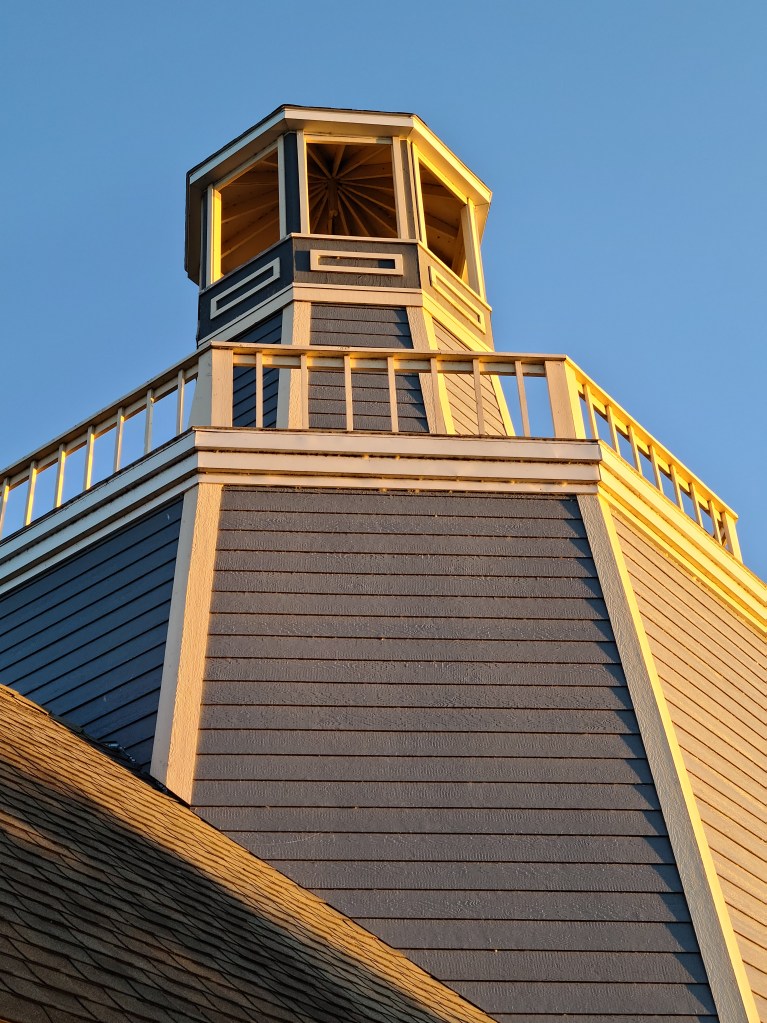

I’ve never had time to just hang out somewhere and take photos for a week. That’s what I was able to do (thanks to my awesome workplace) earlier this month. I took a landscape photography class at the Madeline Island School for the Arts.
Madeline Island lies off the Bayfield peninsula in northern Wisconsin. It’s adjacent to (but not part of) the Apostle Islands National Lakeshore.
The class focused on sunrise and sunset photography. This made for long days, but it was worth it. The class was life-changing and life-affirming. I knew I had a good eye — I told my fellow students I learned photography “by osmosis” from my mother — but I’ve never had any formal training in it. An F-stop? ISO? What are those? I got a crash course and affirmative feedback, but am still learning.
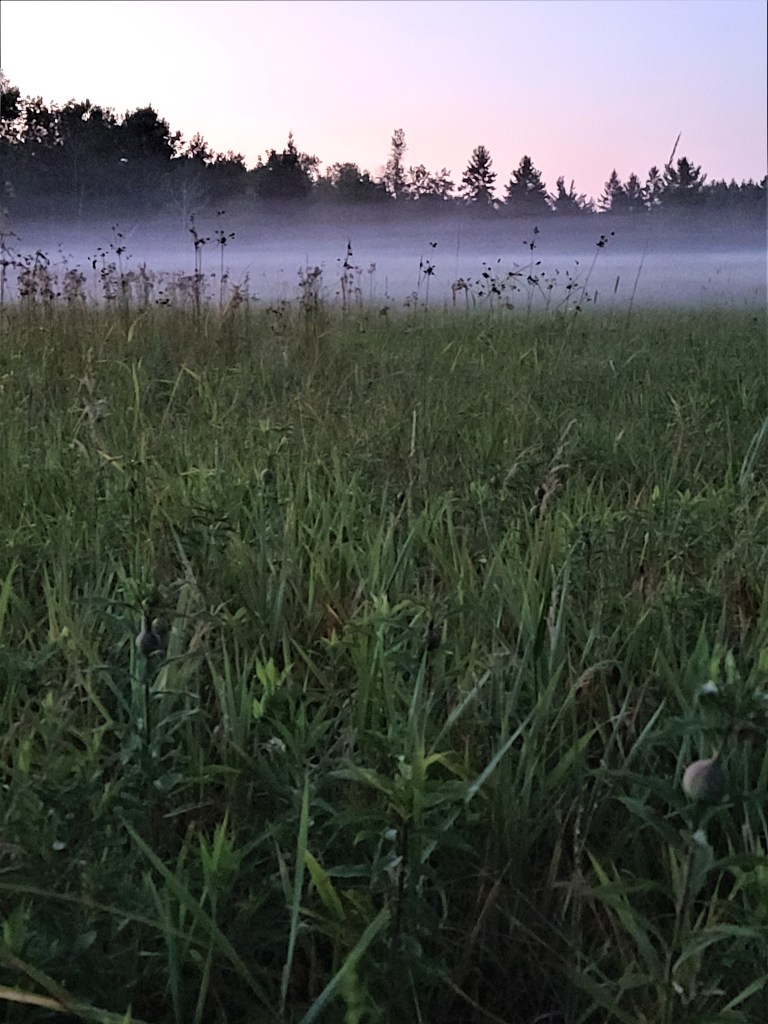
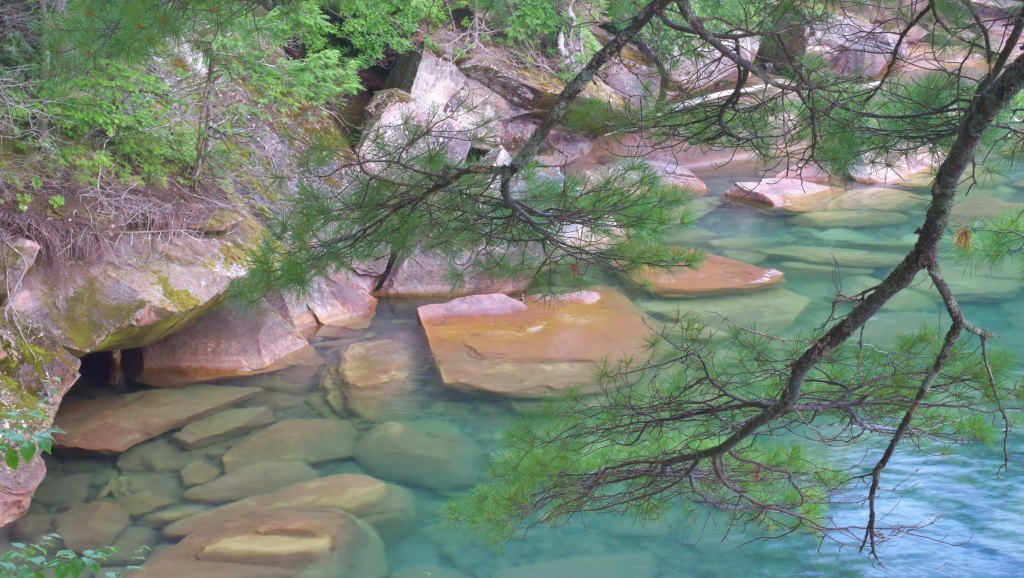
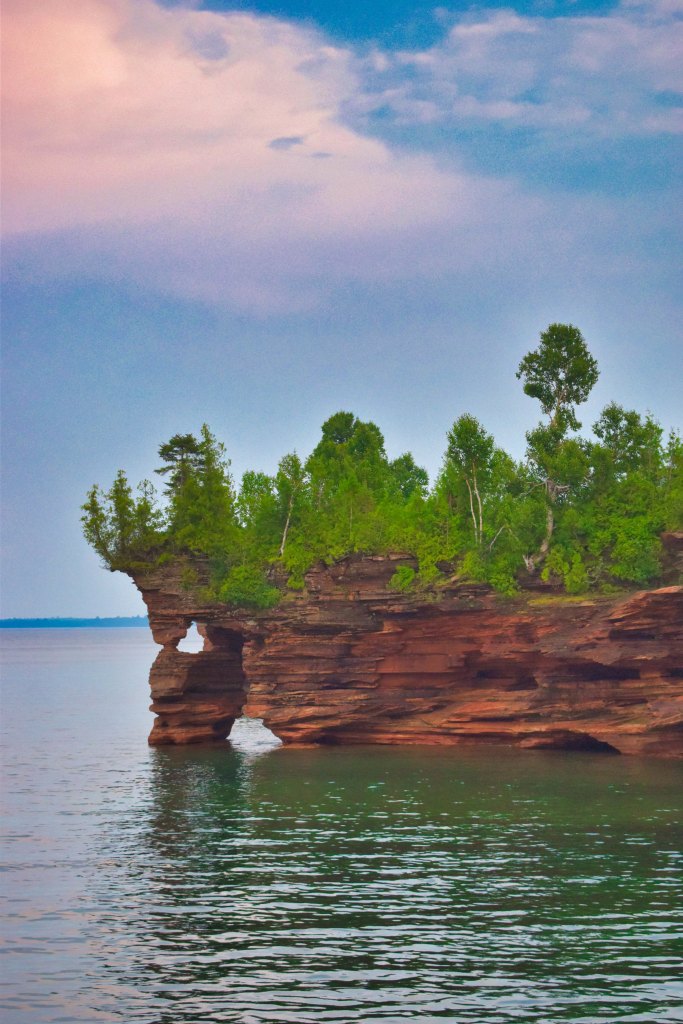
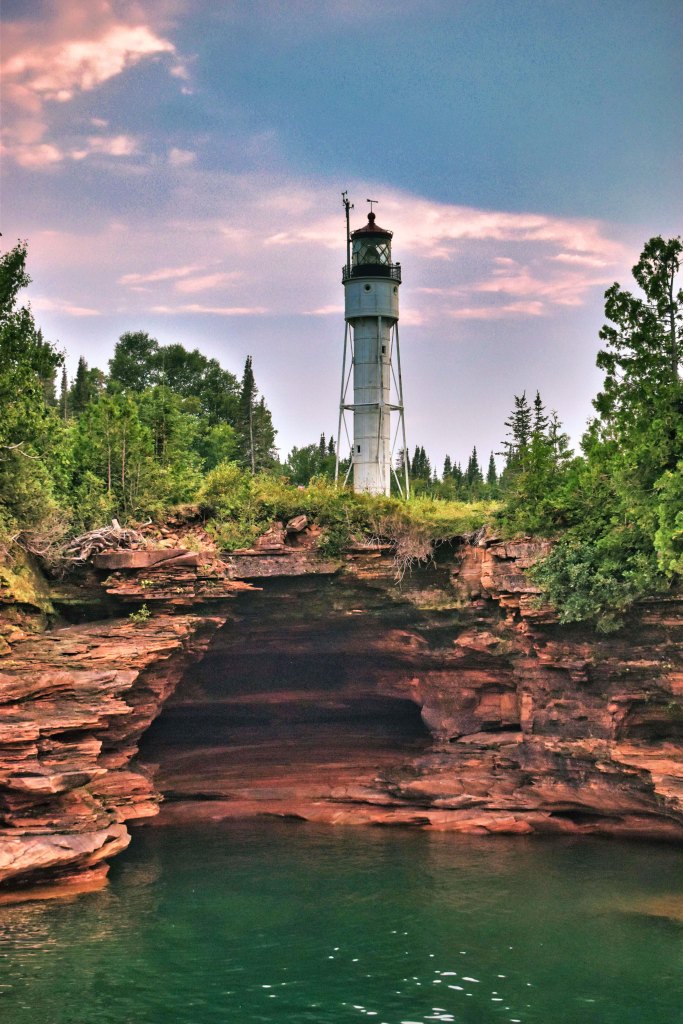
I’d like to share some of my favorites from the week with you. Locations include Joni’s Beach, Grant’s Point, Big Bay State Park, Black Shanty Road wetlands, the art school grounds, and Devil’s Island.
As always, feel free to use my images, but please give me (Marie Zhuikov) credit.

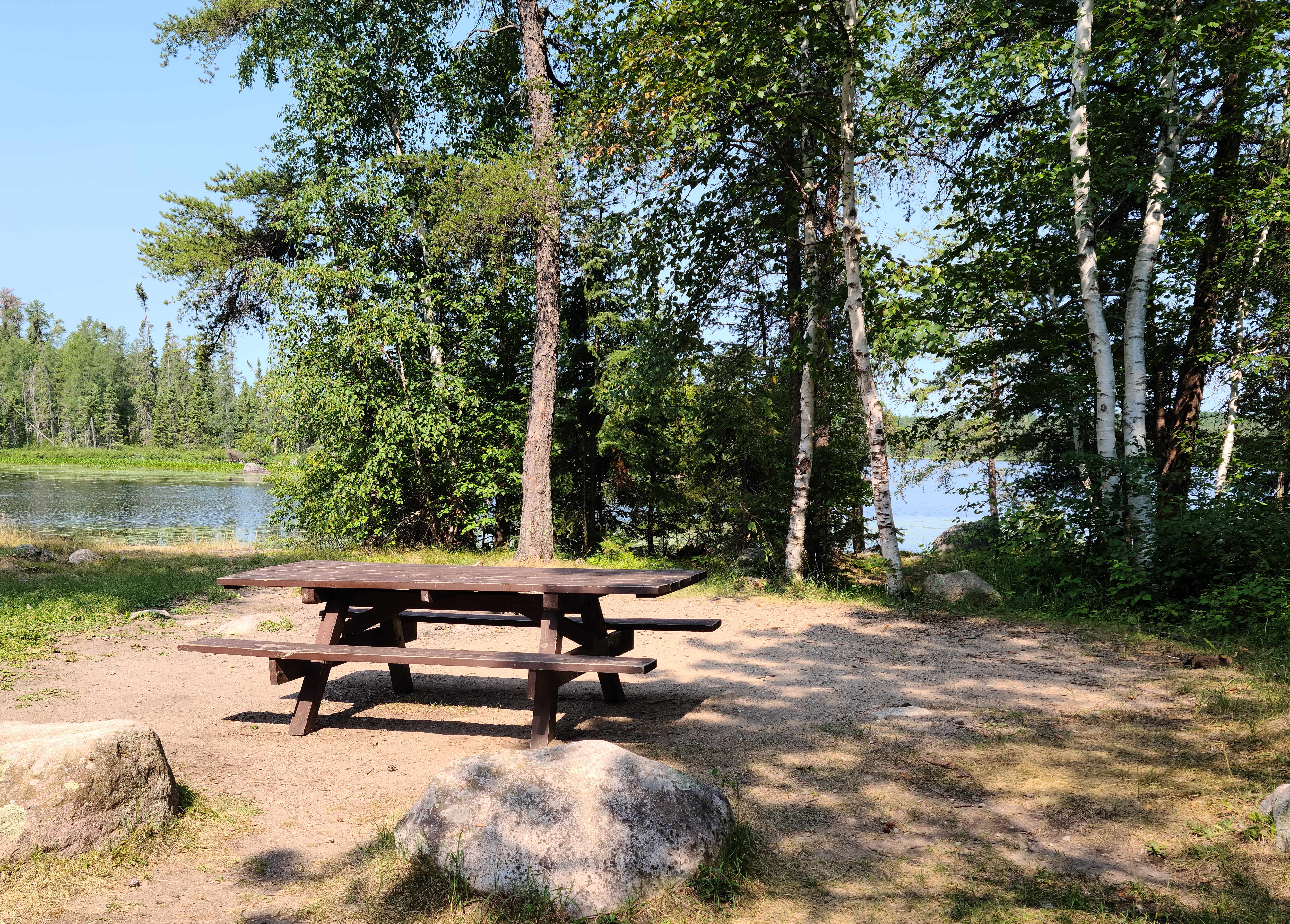
Our water toys await launch into Jeanette Lake in the Superior National Forest.
If someone ever wanted to successfully torture me for information, all they would need to do is stick me in a dark room full of mosquitoes. Between the incessant buzzing and the blood-sucking, I would divulge anything anyone wanted to know. I’d even make up stuff if it would get me out of that hellhole faster.
I was reminded of effective torture methods during our inaugural night at Jeanette Lake Campground in northern Minnesota’s Superior National Forest. Russ and I arrive late on a Friday night with our Scamp trailer. The site we had reserved months before was the only one available in the government system for the dates we desired. It was situated in dense woods near a wetland along the lake. Mosquitoes love wetlands. They also love the dark. And, they apparently love my ankles.
We set up camp between mosquito slaps, amazed that so many bugs were still alive when our summer has been so dry. I’d expect swarms like this earlier in the season, not in mid-July, but I guess this year has been a good one for them.
Somebody (and I’m not naming names) left our camper door open too long. By the time we were ready to sleep, our trailer was filled with mosquitoes. We spent a good forty-five minutes trying to kill every last one before we went to bed.
But you know that ONE mosquito always survives. They will hunt you down during the night, buzzing insistently around your pillow as you try to sleep.
After a few belated kills, we were serenaded by the mosquitoes that had collected outside on our window screens. Such a lovely way to drift off into dream land!
In the morning, I was loath to leave the trailer. Still demoralized from the night, I envisioned cutting our weekend camping trip short due to the bugs. Russ was awake and out before me. I noticed he stayed outside for a long time. Wasn’t he getting eaten alive?
Thankfully, it turned out he wasn’t. As I took my first cautious steps outdoors, he sat, smiling, at the picnic table, coffee in hand. The mosquitoes were nowhere near as numerous as the night before. Maybe our camping trip wouldn’t be a bust, after all.
I first learned of Jeanette Lake over thirty years ago when I spent a summer as a photojournalist volunteer for the LaCroix Ranger District in the Superior National Forest. I’d driven past and through the campground a few times on my way to other places. With its islands and white pines, the glacier-carved lake looked like one that should be in the Boundary Waters Canoe Area Wilderness. The thought of being able to drive to it and camp appealed to me, but I never had the chance until now.
We ate our breakfasts and took a walking tour of the campground, which offers about a dozen sites. Two are walk-in. Backcountry sites are scattered around the lake and on the islands for those who want to work harder (by paddling or boating) for their camping experience.
A few of the non-reservable sites were empty, including a picturesque one right on the lakeshore. I noticed it had perfect access to the water for kayaks or paddleboards, both of which we brought with us. A nice breeze off the lake would keep mosquitoes at bay.
After we returned to our site and got talking, Russ said he had paid for our site at the pay station that morning while I was sleeping. My brain was beginning to work by that time, and I remembered that I had paid for our site when I made our reservation.
So, we had paid for two sites. Why not move to the better one? The Forest Service might frown upon such practices, but it seemed like a good idea to us, so we packed up and moved out of the wetlands and to the lakeshore. Later, we told several people who were looking for campsites about the free one they could have that was under our name, but nobody took us up on it. Gee, do you think that might have had something to do with MOSQUITOES?
Our non-mosquitoey campsite.
We spent our Saturday paddling the lake, resting on a tiny island covered in jack pines and blueberry bushes (the berries were ripe). We also hiked on the Astrid Lake Trail, which can be accessed from the campground near the walk-in sites. After the trail crosses the road (the Echo Trail), it wanders through a black spruce bog. If you look closely, you’ll see rare pitcher plants. Farther on, glacial erratic rocks — huge boulders dropped by glaciers as they retreated and melted 10,000 years ago — dot the sides of the trail in the forest.
We spent the evening around a campfire, admiring the red orb that served as a sunset in skies hazy from northern wildfires. As the sun disappeared, the mosquitoes reappeared, but in more manageable numbers.
Ferns growing on an ancient glacial erratic boulder along the Astrid Lake Trail.
Sunday morning, we mountain-biked on the Echo Trail, which is the gravel road that provides access to this part of the land. After a quick dip in the lake, it was time to pack up and head home. Along the way, we made a lunch stop at the Montana Café in Cook, Minnesota, the town where I was stationed during my volunteer stint. The café was another one of my old haunts and I was glad to see it was still in business. They have great malts and burgers.
Despite the best efforts of the mosquitoes, we were able to salvage this trip down memory lane. If you’re interested in a touch of wilderness with easy access, don’t be put off by all my whining about mosquitoes; put gorgeous Jeanette Lake on your list.
Two shed skins from a garter snake that lived near our site. We also had a camp chipmunk and cottontail rabbit.
I’ve posted several times about the “River of Poems” project on my blog. I’d like to let you know we (as in Wisconsin Sea Grant and the Lake Superior Reserve) finally got around to publishing this book of river poems from poets around the world.
To refresh your memory, in 2020, we sent out a call for river poems for The River Talks speaker series we hold with the Lake Superior National Estuarine Research Reserve. Poets were offered the opportunity to read their poems via Zoom during one of the River Talk monthly presentations.
Poets from across the world responded. With help from a judging committee, we narrowed the pool to a dozen poets, who read their works in March 2021 in conjunction with the St. Louis River Summit. The event was so moving, and the poems so well received, we created a publication to showcase them. “A River of Poems,” is now available as a free download.
In “I Held Us on for 36 Hours After the Levee Broke to Hell,” Heather Dobbins tells the story of a family who spends the night atop a phone pole to escape a raging river.
In “Catching Your Drift,” Lorraine Lamey highlights the subtle humor in natural resource regulations for a river in Montana.
Poet Ron Riekki shares how water can be an antidote for PTSD from war in “It Took a Long Time to Discover.”
A river in Detroit burns in Derold Sligh’s “Rouge River” poem, heralding a cry for environmental and social justice.
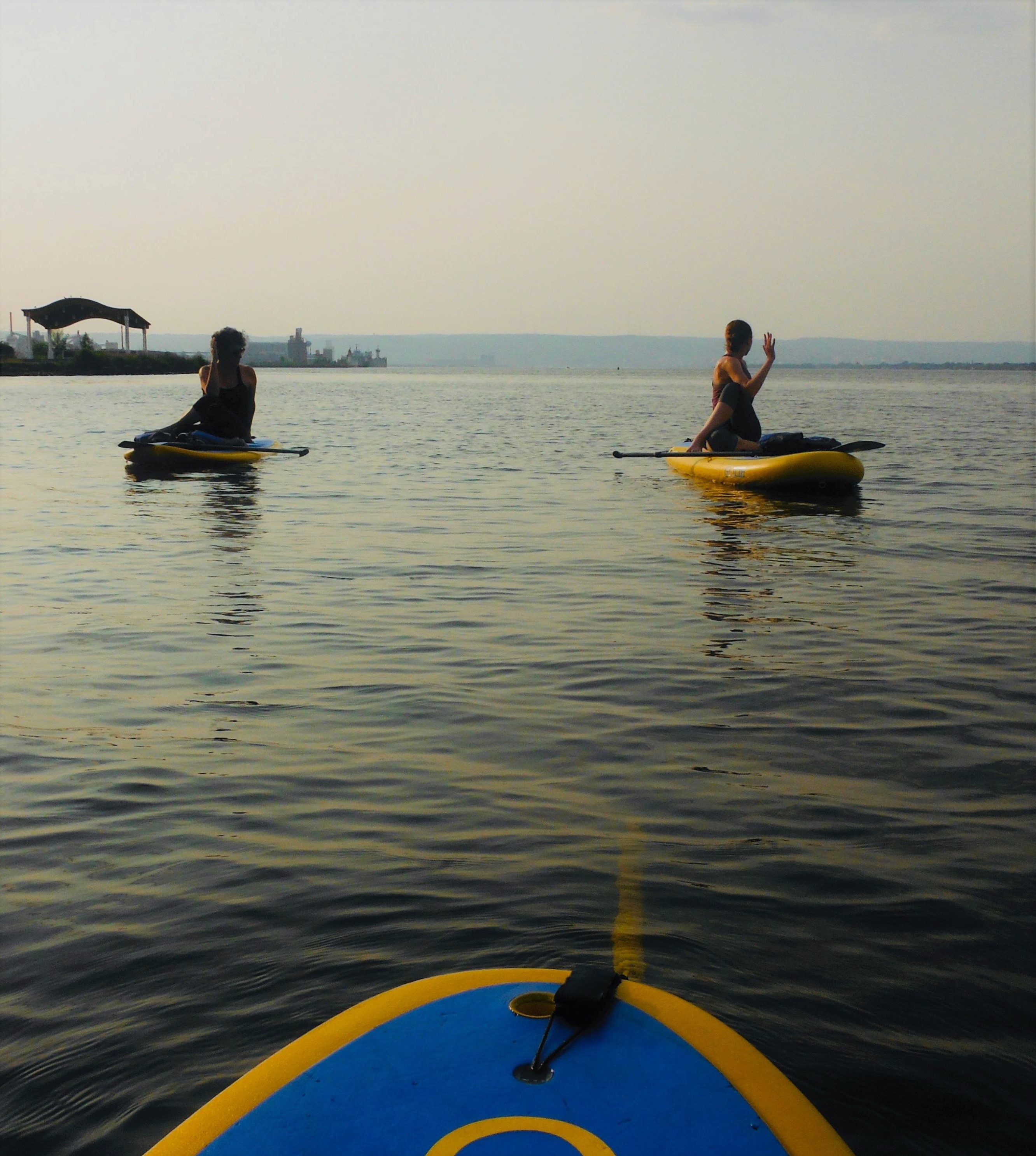
Doing a sitting spinal twist yoga pose in the Duluth-Superior Harbor. I’m on the left. Willowy younger person is on the right. (Image courtesy of North Shore SUP.)
You probably already know that I love doing yoga. I also love paddle boarding. Well, I finally had the chance to combine both these pastimes by taking a standup paddleboard yoga class the other day.
The opportunity was offered by North Shore SUP (also known as Duluth SUP even though they are located in Superior). Their business is run out of Barker’s Island in the Duluth-Superior Harbor. Owners Heather and Garrett are great – so enthusiastic about sharing their love of paddle boarding with everyone. I first learned how to paddleboard with their help eight years ago, when I began this blog.
My main fear was that I would fall off the board and make a fool of myself in front of the other students. Because keeping my fear to myself is boring and not blog-worthy, I broadcast it to everyone else by alerting my Facebook friends that I planned to do SUP yoga and then asked how many times they thought I would fall. They had much more faith in me than I had myself. They didn’t think I would fall, or that if I did, the water would be refreshing.
The evening was warm and fairly calm, with a haze of smoke in the air from the wildfires in Canada and northern Minnesota. Two younger women joined me in the class. After some conversation, I discovered it was their first time SUP yoga-ing, too, which made me feel better. The 1-1/2-hour class costs $30, which includes the board rental. I thought that was a good deal. It’s offered every Tuesday and Thursday evening, weather permitting.
We began by paddling our boards around the tip of Barker’s Island to a spot sheltered by trees from prying eyes. That also made me feel better because fewer people would see me fall. We anchored our boards in the shallows with a five-pound weight wrapped around the ankle leashes.
Katie, our instructor, started us off with some basic poses, including tips on techniques to maintain our balance. I would say the poses were Level One difficulty (which equals easy), but when you do them on a floating board, that automatically makes them Level Two. Combined with some boat wakes, the poses reach Level Two-Point-Five.
The other women were taller than I am, with long limbs that looked so elegant with each pose. Then there’s me, with short arms and legs. I looked like a yoga blob (see photo), but at least I didn’t fall!
Actually, I wouldn’t have minded falling. The air temps were hot and cooling off would have been nice. But big chunks of algae were floating in the water, along with dead bugs. It did not look appetizing for swimming. The water quality issues are only temporary, though, so don’t let that turn you off from trying SUP yoga.
My favorite part was the final resting pose, where you lay on your back, looking up to the sky. Although traffic noise from the nearby highway was audible, blissing out was still possible.
Class over, I asked the others what they thought. They all said they enjoyed it and would try it again. I agreed. It was wonderful!

A display in the lobby of the Greyhound Bus Museum.
A former landlady of mine was the first to inform me that the Greyhound Busline had its start in northern Minnesota – Hibbing, to be exact. One of her relatives had a hand in beginning it. Our conversation was years ago. I’m not sure if the Greyhound Bus Museum had been built yet or even why the topic came up, but one thing was sure: she was proud of that heritage.
During one of our recent quests to bike different sections of the Mesabi Trail, Russ and I had the opportunity to visit the bus museum – it was located in the same parking lot as the trailhead for the section that runs between Hibbing and Chisholm.
The first thing we noticed was the air conditioning. After biking seventeen miles in eighty-five-degree heat, it was a godsend. The clerk noticed our biking gear and immediately informed us where we could refill our water bottles (unlimited!) at the drinking fountain.
Festooned with a red, white and blue beaded “tie” necklace in celebration of the fourth of July, the attendant explained how we could tour the museum and access the pushbutton audio and video presentations in the exhibits. Although we were the only visitors at the time, others must have come before us because the attendant bragged that her tie was the “talk of the bike trail” and that other cyclists had encouraged trail acquaintances to at least stop into the museum to see her festive tie. A shiver of patriotic privilege passed through us, or was that the air conditioning?
I would have been happy just spending time in the lobby, as it housed what ended up as my favorite artifact: a black velvet painting of a Greyhound Bus. How classy can you get? It also featured a recreated bus ticket office, complete with a mannequin attendant.
My favorite artifact.
After paying a modest $5 per person, the tour began with explanations of the people and machines that comprised the first bus line, which was developed for iron ore miners who lived a couple of miles away from their work in the small town of Alice, Minnesota (which no longer exists – it was incorporated into Hibbing later). From these humble beginnings in 1914, Greyhound became an international business that’s still running today, although not in northern Minnesota anymore.
While perusing the handmade exhibit panels, it soon became evident that grammar was not the museum founder’s strong suit. Some visitors had taken it upon themselves to correct mistakes on the signs in pen, which you don’t see every day.
A fake bus with seating provided a comfortable place to watch an extended video about the origins of the busline. Since we were tired from our ride, we sat through most of it. The video seemed to have been produced in the 1980s, because the timeline stopped after that point. It was fun to watch as an example of how videos used to be made, back in the day, but also for the history.
From there, we progressed to the attached bus garage, which houses different eras of busses. My favorite was an art deco bus from the 1950s. Its red and yellow streamlined shape was so appealing. A dozen creepy (and sometimes gender-bending) mannequins made up a diorama of how Greyhound aided the war effort in WWII.
The World War II mannequins.
If you look behind the bus that is the focus of the diorama, you’ll see the purgatory where museum managers must store misbehaving mannequins. A sailor mannequin was separated from his hands, and others were in pieces between the bus and the wall.
Another creepy thing is that the museum is located next to a graveyard. The garage area is supposedly haunted, with reports of bus windows and doors opening and closing by themselves, as well as sightings of apparitions, including a young girl. Did she get left on a bus? Or is she visiting from the cemetery, looking for an eternal ride? Although we did not experience any ghostly activity, I sure did get strange vibes from those mannequins!
We thoroughly enjoyed our trip through the museum. It’s a local labor of love that must have taken a lot of time and effort to create. If you’re ever near Hibbing, it’s a must-see.
In our continuing quest to familiarize ourselves with the Mesabi Trail in northern Minnesota, Russ and I recently biked an 8.5-mile section right in the middle between the towns of Hibbing and Chisholm. This section runs by iron ore mine pits and a spur that leads to the Discovery Center, a cultural museum about the Iron Range.
The trail offers a good mix of ups and downs, shade and sun. In Hibbing, the trailhead parking lot is the same one that serves the Greyhound Bus Museum. We had time to visit the museum, which I’ll feature in my next post.
We rode out and back for a total of 17 miles. Not every bike trail offers sights like the Bruce Mine Headframe (pictured). A nearby sign said this structure was originally underground and it hoisted low-grade iron ore 300 feet to the surface. It’s the last standing headframe on the Mesabi Range.
The Bruce Mine Headframe — one of the sights along the Mesabi Trail between Hibbing and Chisholm.
The sign also goes onto to relate an incident that happened in the Bruce Mine. “In July 1927, Nick Bosanich was reported to have died in a rockslide in the mine. Forty-six hours later, he was found alive in a 10-foot-square room. His first request was for a cigarette.”
Ironic that upon his “resurrection” he probably shortened his life by resuming smoking!
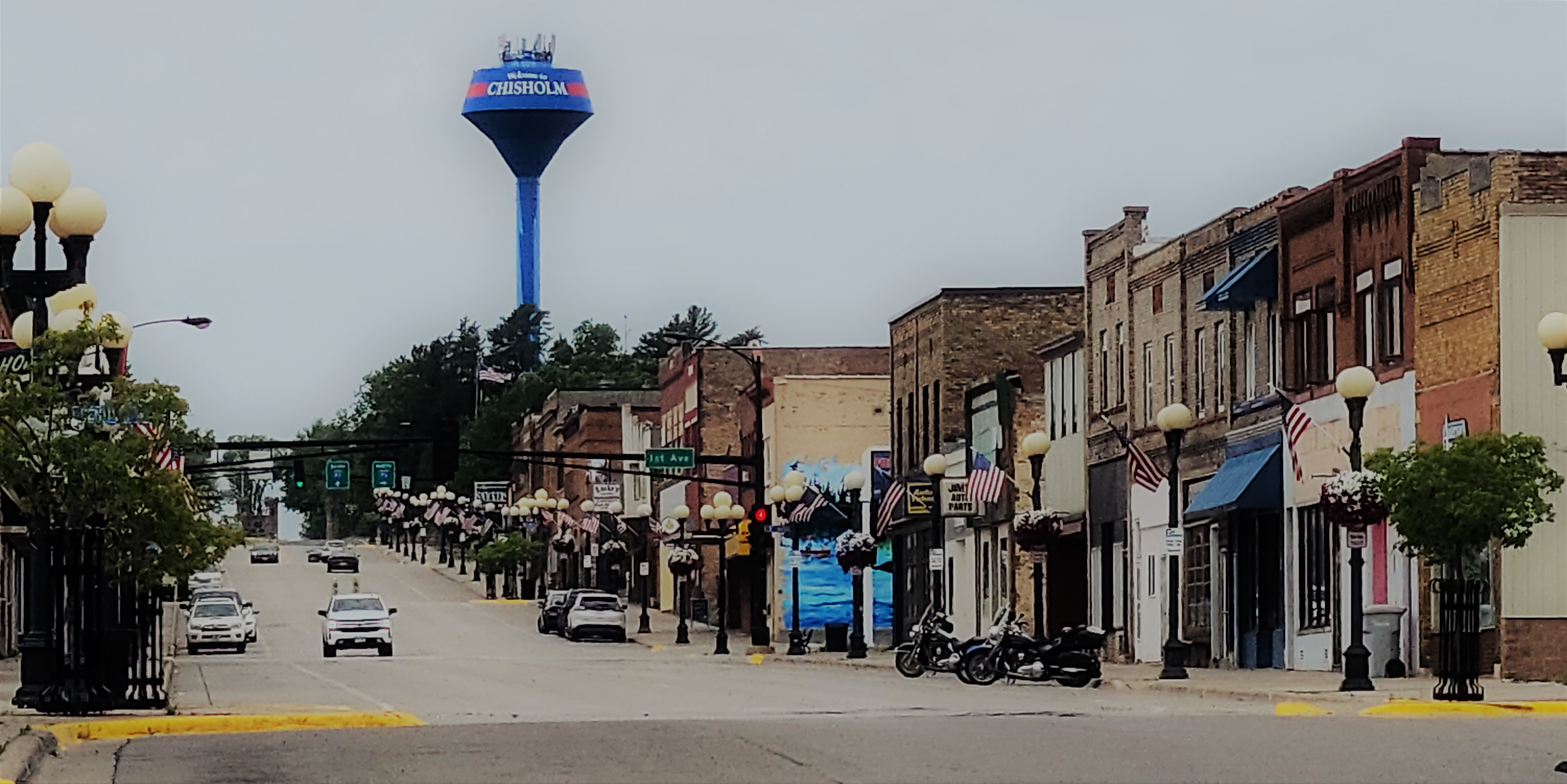
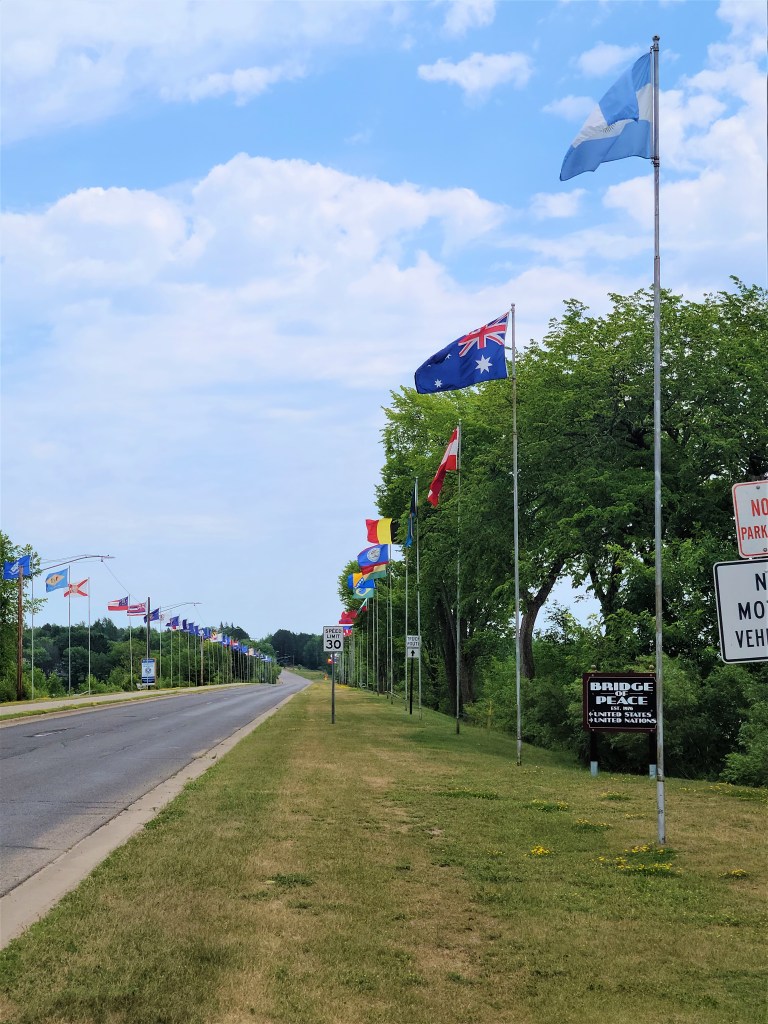
On the way into Chisholm, the trail follows a city park along a lake. At our turnaround point, we could view downtown one way and in the other direction, the “Bridge of Peace” causeway across the lake. The bridge showcases flags from all 50 states as well as flags from around the world, which gives this small town a touch of the cosmopolitan.
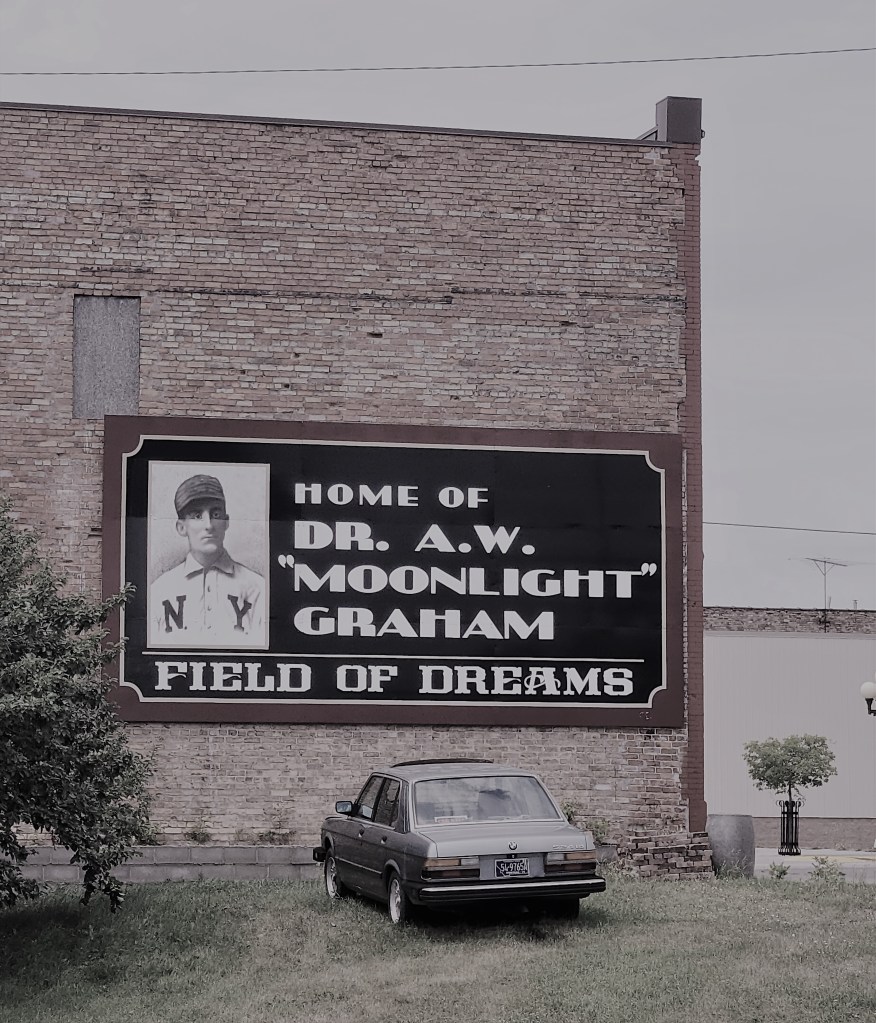
Ever watch “Field of Dreams?” (One of my faves.) Chisholm’s other claim to fame is as the home of the legendary baseball player, Doc “Moonlight” Graham, who is featured in the movie.
So, this section of the trail offers mines, museums, and movie heroes. If you want a good introduction to the Iron Range, this is the right section of trail for you!
I’ve been a member of an all-women book group for many years. This past fall, we read “The Wolf’s Trail: An Ojibwe Story, Told by Wolves” by Native American author, Thomas D. Peacock. Like my novel, “Eye of the Wolf,” Peacock’s story is told from the viewpoint of wolves. Set in northern Wisconsin and Minnesota, it details the long parallel relationship between wolves and the Ojibwe people.
Peacock is a retired associate professor of education who taught and served as an administrator at the University of Minnesota Duluth for thirteen years. Several of his books are Minnesota Book Award winners. He’s well-respected in academic and literary circles, plus, he’s a member of the Fond du Lac Band of Lake Superior Chippewa.
We enjoyed “The Wolf’s Trail” so much, we invited Tom to speak to our group. Despite the pandemic, he and his wife Betsy came out from their home in Duluth on a cold wintry evening and met with us outside around a backyard fire.
I wish I had taken notes about our discussion then, but I was too busy tending the fire. Lucky for me (and you), after our meeting, Tom and Betsy invited us to their other home in Red Cliff, Wisconsin, in the spring for a potluck dinner and discussion of another book of his, “Beginnings: The Homeward Journey of Donovan Manypenny.” Tom offered to show us some of the locations where the novel is set on the Ojibwe reservation there. We readily agreed to this generous offer.
The Donovan Manypenny book is a poignant coming-home story. It’s about a boy who lived with his Ojibwe grandparents near Red Cliff until they died when he was ten. Shunted into the foster system, abused and rejected, Donovan is finally adopted by a loving white couple who ultimately moved to Boston, where he remained for forty-three years until the whispers of his beginnings lured him back home to the reservation. During his journey, Donovan followed the same historic westward migration trail that the Ojibwe travelled in their search for a new land “where food grows on the water.” (This refers to wild rice.)
Finding a date that worked for my book group members pushed our meeting until after the solstice. The weather was beautiful for a drive along the South Shore of Lake Superior to Red Cliff. Tom spent his summers with a great uncle and aunt in Red Cliff, and Betsy is a Red Cliff band member, so that’s what drew them to live there.
Here’s what happened.
Blueberry Road
Blueberry Road winds its gravelly way through the Red Cliff Reservation woods, dotted with FEMA trailer homes and other modest dwellings. After meeting at Tom’s home, we caravanned down the road, stopping at the trailhead for the new Frog Bay Tribal National Park after Blueberry Rd. veered and turned into Frog Bay Road.

Tom explained that his great uncle and aunt lived on Blueberry Road, which served as his inspiration for the setting of Donovan’s grandparents’ home. “My aunt and uncle seemed ancient to me, but I was only ten at the time. They didn’t have any running water, no electricity. They had an outhouse. Like many homes at that time, they had lilacs and weeping willows in the yard. That was the setting I thought of for my book,” he said.
The house where Donovan grew up on Blueberry Road isn’t actually on that road but is off busy Highway 13 a few miles away. Tom showed us that later during our tour.
An older couple who Tom met while he was teaching an Ojibwe language class in Bemidji years ago served as inspiration for Donovan’s grandparents. “They were just old-time native people who spoke the language and ended up teaching the language. The husband would drive the wife and then he’d sit with her in class. They always sat in the back.”
Tom said people who are familiar with the area often think he named Donovan Manypenny and his grandparents after the street in Bayfield called Manypenny Avenue. “But I didn’t,” he said. “There’s a lot of native people from the White Earth Reservation with that last name. I just liked it.”
While driving to our next stop, I had the luck (or was it planning?) to be in Tom’s car with a couple other book group ladies. We discussed different parts of the book that struck us. One I particularly liked was the conversation that Donovan’s grandparents have after they’re dead. The grandmother died first and after the grandfather dies, he apologizes to her for not being able to take care of Donovan anymore. But he’s so matter of fact about being dead – no wailing, no gnashing of teeth, just, “I’m dead, that’s all, I guess . . . maybe we’ll just have to help him from here.”
Tom said, “I wondered about putting that in there. But I wanted to write it, so I did. I took it out at one point, then I put it back in again. I worried that maybe people would think it was too weird.”
We told him we were glad he included it. Plus, it set up a pattern for other (living) characters to offer their viewpoints later in the story. That brought our conversation around to “Chapter 7, Ramona of the Wolf Clan.” This was another section Tom thought twice about including because Donovan, who is married by this time and is on his solitary westward migration, finds himself attracted to Ramona, gets drunk, and almost has an affair with her.
“Some people wonder why I put the Ramona chapter in there. It seems out of character for Donovan. I thought it was important that he be tempted, challenged, to show his humanity and that he isn’t a saint. And the chapter does explain, too, the difficult position that a lot of native women are put into.”
By this time, we reached our next stop.
St. Francis Catholic Church

The quaint red and white church in town was the inspiration for the church that Donovan and his grandparents attended, and the cemetery where Donovan’s relatives are buried. Tom said the church was familiar to him as a child. “I’ve gone to a million funerals in that church.”
Across the street sits a decrepit school building that he envisioned as Donovan’s school.
Standing in the church parking lot, we discussed Tom’s own westward migration, which he took thirty-five years ago when he finished college in Boston. (He graduated from Harvard with a master’s and doctorate in education.) At the time, he did not know he would write a book about his travels – he just needed to go home.
“After school, I had to pack up everything and leave. The route west just seemed like the logical thing to do. One of my brothers came out and helped me pack up. I had an old rez car and he works on cars, so he helped me fix it up enough that I’d make it home.”
Shore of Lake Superior with view of Sand Island
Our next stop was at the end of a road near Tom and Betsy’s home. We gathered at a parking area near a small beach with a view of the nearby Apostle Islands. Near the end of the novel, Donovan, his wife, and daughter visit Lake Superior one morning to offer tobacco. They prayed and Donovan thanked the Creator for everything, “For our lives and all the blessings we have had. Just then when I prayed a slight breeze came up and caused ripples on the water. I know it was our Creator answering,” Donovan said.
Tom explained he was thinking of this beach during that scene. It’s also the same beach where he and Betsy married.
The Peacock’s Living Room
After our potluck dinner, we sat down for an extended conversation. Tom let us in on some other changes he made to the story before it was published and gave us insights into its main characters.
He explained that in his original version, Donovan discovered he had Stage Four pancreatic cancer, which is basically a death sentence. “So that’s why he made his journey home – to die. But my publisher, Jim Perlman, liked Donovan so much, he didn’t want him to die, so I had to rewrite it.” (Perlman is the publisher for Holy Cow! Press.)
When he reached Red Cliff, Donovan discovers he has a sister, Maggie. Tom said she is a character in a previous story he published, where he described her journey from the foster care system in Minneapolis to Red Cliff. I was glad he mentioned that because I noticed the lack of her backstory in the Donovan Manypenny book. I will have to find that story and read it!
The character of Uncle Eddie, who orients Donovan to Red Cliff and his past, has been featured in many of Tom’s short stories. He is also the main character in Tom’s next book, which is coming out soon from Dovetailed Press.
“Eddie is 86 years old and the story is written in first person like a memoir. Eddie’s been my favorite character. Donovan is also in the story, but more as a cameo,” Tom offered.
I’ll end this extended post (thanks for sticking with it!) with some Q & As from our living room conversation. The second question was especially enlightening, and Tom’s response seemed out of character for this soft-spoken, mild-mannered author:
Growing up, did you experience the same disconnect with your heritage that Donovan did?
“No. I grew up on the Fond du Lac Reservation and I’m very comfortable there. Even when I was out East, I hung out with native people. I think when you’re educated you can be comfortable in both worlds (the white world and native world). I feel safe on Fond du Lac. Those people who are shooting each other are all my relatives. But because I was blessed with an education – I feel comfortable in the academic world, too.”
So, you didn’t find education to be a barrier between you and your native heritage, similar to the main character in Sherman Alexie’s “The Absolutely True Diary of a Part-Time Indian?”
“I think I was kind of an enigma because I liked to drink, fight, and raise hell. During prom, I was out stealing gas from all the cars and getting straight A’s at the same time. I could do that and get away with it. I didn’t feel stigmatized at all – because if they did, I’d beat the crap outta them!”
Do you think things really got better for the little boy that Donovan comforts on Manitoulin Island after they went to the police?
“No, I don’t think so. That’s a really common thing with a mom and her boyfriend – the kid kinda takes all the crap. I had to leave it at that. There are a lot of native kids who are of mixed race, black and native, and I wanted to have that in a character. It’s hard for them. They get picked on by everybody and they’re never accepted anywhere.”
What’s your writing process?
“When I’m writing, I’ll write a chapter a day. I’ll get up at five in the morning and write until seven or eight at night. Then I’ll ‘force’ Betsy to read it before we go to bed because I want someone to read it. (Laughs) And then I’ll work on it for about a week, editing.”
Do you know many people who have come back to the rez?
“In Fond du Lac, I had a nephew who showed up right around his eighteenth birthday from California. He just came and banged on the door one day. He was the spitting image of one of my brothers who passed away 20 years ago. He scared the crap out of all of us!
“One of our nieces showed up when she was eighteen, too. Then when they were sniffing around for someone to date, we had to set them down and tell them who they shouldn’t be hanging out with because, ‘That’s your first cousin.’ We had to do that with both of them.”
Why didn’t you describe Donovan’s physical characteristics much in your book?
“I couldn’t visualize what he looked like. That’s one thing I had to add in as an edit. Same thing with Maggie. I couldn’t visualize her. The characters often appear to me as voices rather than a physical presence.”
And so, sated on Betsy’s fry bread, filled with a new appreciation for Tom’s work and a deeper understanding of native issues, we said our goodbyes and each began our own journeys, homeward.
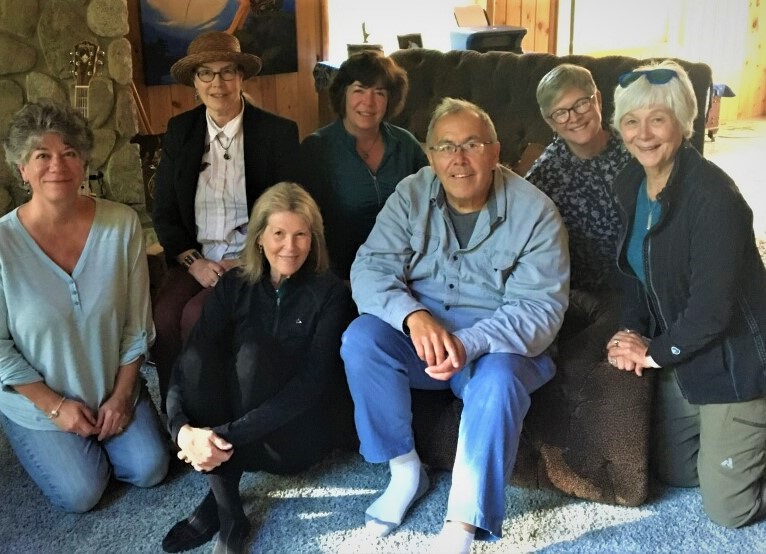
My book group with Tom in his living room. From left to right, me, Konnie, Sherry, Sharon, Tom, Judy and Diane.
Many people who were not fighting for their lives during the pandemic spent their time remodeling their homes. Just do a search on “home remodeling during the pandemic” and you’ll see what I mean. People had more time, motivation, and money to remodel since they couldn’t travel.
Russ and I were no exception. We decided to remodel our kitchen, a dark brown dungeon that was probably last remodeled in the mid-1980s. We didn’t have much room to work with, so we didn’t enlarge its footprint — we simply brought it into the current century by replacing the cabinets, countertop, sink, and backsplash. We also painted a few window frames.
It looks marvelous, I must say. We went for a modern farmhouse look, and I think we succeeded. However, I’m not going to post any photos because I feel weird about having you all know what my kitchen looks like.
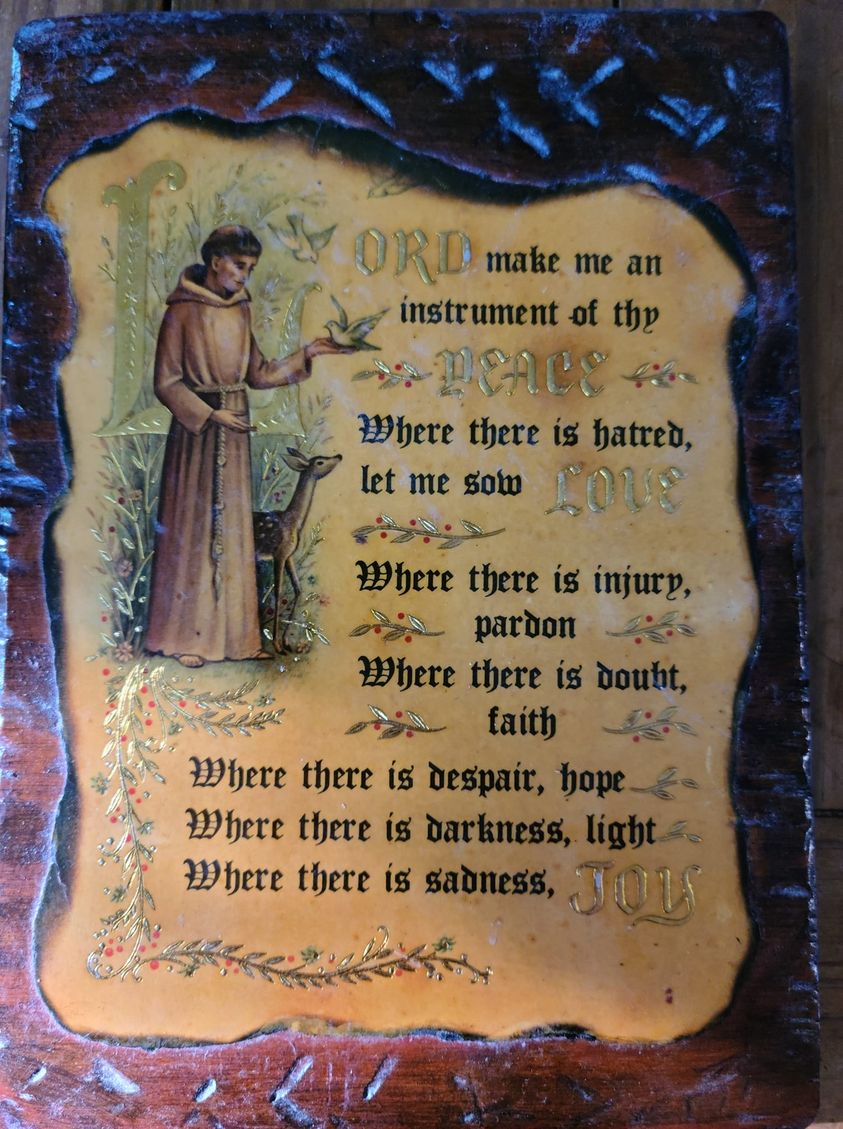
What I will post a photo of is something mysterious we found inside one of the kitchen walls. One of our last jobs involved removing some old Z-brick tile (the stuff that looks like white bricks) on a furnace chimney that runs through the kitchen and retiling it with stone. We hired someone to do the work for us.
When we came back home from a walk, the tile guy said he had something he wanted to show us. He’d found it in the wall surrounding the chimney. He held up a dusty yellowing wooden plaque. It featured paper with burnt edges – a technique popular in the 1970s, with a picture and prayer associated with St. Francis of Assisi.
We weren’t quite sure what to make of this find. We aren’t Catholic or particularly religious. Russ, for one, was disappointed they didn’t find a hoard of gold instead!
After cleaning the plaque and pondering on it for a while, we decided it would not go back inside the wall. But we wouldn’t throw it out, either. That would seem a shame since it’s part of the history of the house. Instead, on the back of it, we wrote in sharpie marker when and where the plaque was found along with our names. We plan to hang it up in the attic so that it will remain with the house – it will be hidden, but not too hidden.
I wonder how many others who remodeled their homes this past year found unexpected treasures in their walls?
I recently wrote a post for the blog I manage for work, which I think you might enjoy. The promo: “Senior science communicator, Marie Zhuikov, recalls a grisly discovery in connection with a project to control invasive goldfish.”
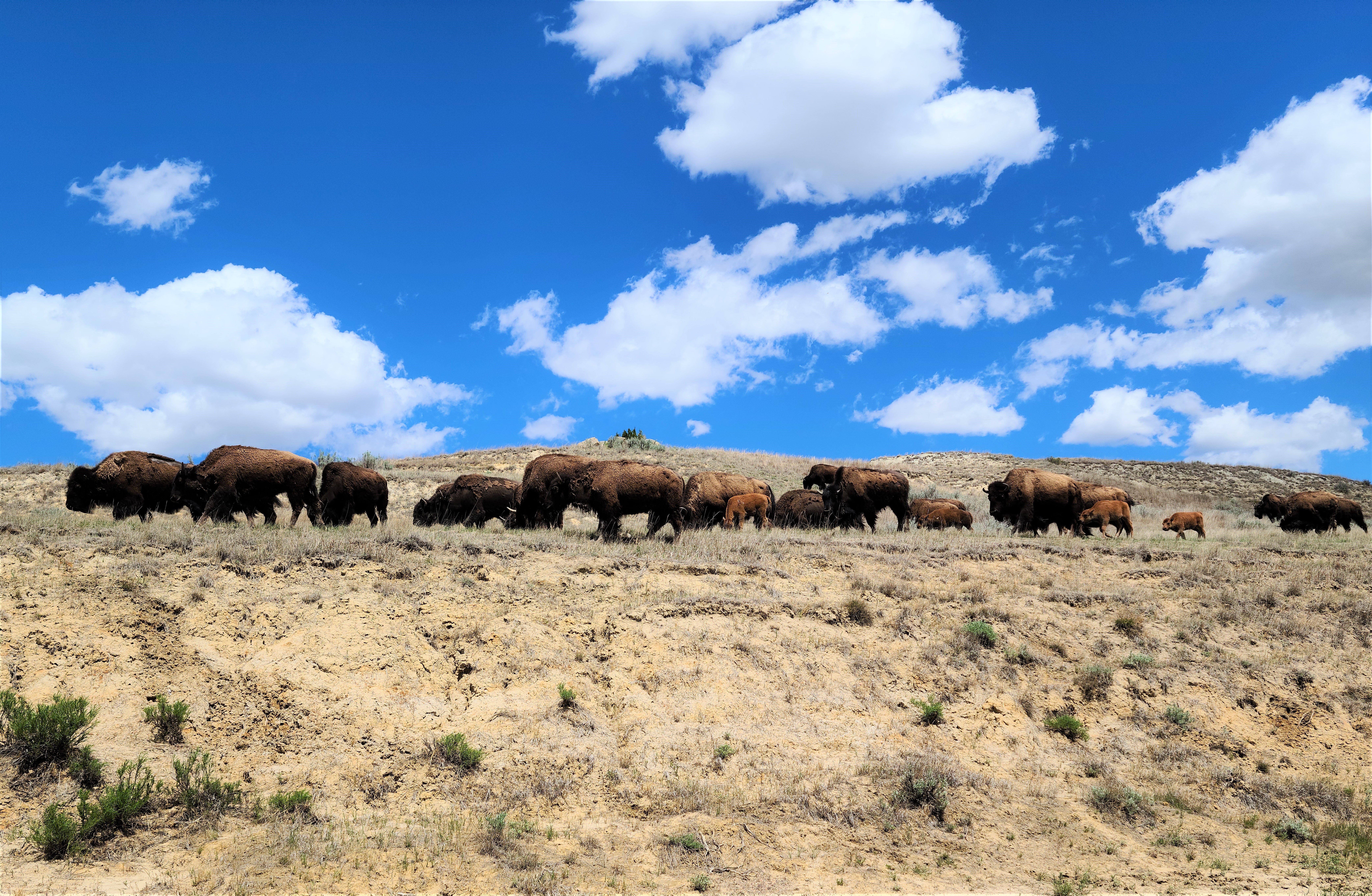



As you may be aware, Russ and I had the chance to camp in Theodore Roosevelt National Park last month. Here’s my last group of photos from the trip. We felt privileged to wander among the wild buffalo, horses and prairie dogs.