How my Blog Helped me Win a Writing Contest

Gut Instict

Northland College in northern Wisconsin holds an annual writing contest organized around a specific theme. Chosen writers have the opportunity to read their poems, essays or short stories in front of an audience. Plus, for the past couple of years, the readings are broadcast on Wisconsin Public Radio.

The theme last year for the Writer’s Read Contest was “The Dark Side.” I wasn’t going to enter because I didn’t feel like I had anything that fit the theme.

That is my strategy – I rarely write anything new for contests. I like to choose from pieces I’ve already written. I guess I’m lazy that way, or efficient. Take your pick!

A nice thing about this contest is that, unlike most writing competitions, they will accept stories that have been previously published. So you can recycle works that have appeared elsewhere or won other contests.

However, a friend encouraged me last year to “add my voice into the mix,” so I entered a couple of stories even though I didn’t think they fit the theme. My stories were not chosen.

This year, after learning that the theme was “Gut Instinct,” I performed a mental inventory of all my short stories, poems, and blog entries to see if I had anything that fit. I have learned from conducting writing contests myself that the nonfiction essay category usually has the fewest entries, so I decided to concentrate on my blog posts to increase my chances of being chosen to read.

A couple of postings came to mind, but one I wrote in 2013 was especially dramatic. It was called “Are Book Signings Worth Risking Your Personal Safety?” It detailed two run-ins I had with a robber when I was in college, and it also dealt with writing, so I hoped it would be appealing to the judges and to the listening audience. How did it fit the theme? My gut told me to run the robber over. My brain told me otherwise. Which one did I listen to?

However, I needed to make the story even more dramatic, so I rewrote the blog post. I also had a writer friend (the same one who encouraged me to enter last year) look at the story and offer comments before I submitted it. She had some good ideas for rearranging the middle and for adding more details, which I heeded. In return, I offered comments on the fiction story she planned to enter.

Lo and behold, both of us were chosen to read! The event is happening later this week and our stories will be broadcast at a later date. (I will be sure to post a link here when that happens.) (Here’s the link! My story starts at the 4:10 minute mark.)

I’ve toyed with the idea of writing my blog for money. But the whole reason I started it was to write for fun, and to try and make sense out of my life — and perhaps share some wisdom. So I have refrained from blog-writing-for-profit. However, now I have discovered that blog writing can also help a person win a writing contest! How cool is that?

Taking an Old-School Snowshoe

20180120_121621It’s been about twenty years since I used my own snowshoes. I had the chance this week to dig them out and tromp around the grounds of a local mansion that’s open to the public for nighttime outdoor tours.
It was an expansive experience. What do I mean by that? Well, please, read on.

My snowshoes are old-school — made in Canada of wood with rawhide lacings. Tapering from a rounded nose to an elongated straight tail, they are four feet long. Their only nod to modernity are the plastic buckles and synthetic foot straps.

Not familiar with the various types of snowshoes, I looked mine up so I could describe them to you. I discovered they are an Alaskan snowshoe, which is supposed to work well on flat and rolling country with a deep snow pack. However, their length makes turning difficult.

My snowshoes were a Christmas present. I used them several times, but then my circumstances changed and I just didn’t have the motivation or opportunity to get out on them. But this nighttime snowshoe excursion sounded like fun, so off I went. It was held on the grounds of Glensheen Mansion, which is in Duluth, on the shores of Lake Superior. A group of about thirty people met and were divided among two tour guides who led us onto the grounds.

The quiet night air was about 20 degrees with little wind. Stars twinkled overhead as we shuffled over land that, in bygone days, held greenhouses where banana trees grew.

What I had forgotten about snowshoes is that they are like the land rovers of winter gear. You can walk up or down any kind of snowy slope with those things without worrying about slipping. That is, except for stairs. I don’t recommend their use on stairs!

At one point, we arrived on the shore of Lake Superior. We stood, rooted, listening to ice slush tinkling and crunching with the motion of low waves. The constellation Orion shown overhead, his slanted belt seeming to point down directly at us.

The sky was dark and huge over the lake. Even though we were within the city, we might as well have been miles away in a wintery wilderness. Almost immediately, a calmness descended on the group and we stopped talking, except for some exclamations of beauty.

I’ve been reading lately about how people’s brain wave patterns and emotions change when they view vistas like a great lake or an ocean, or even an empty desert landscape. We have a primal need for these wide-open natural places as much as we need the comforts of civilization.

A Northern Minnesota writer, Sigurd Olson, described these effects so well in his books about wilderness that I won’t even try to match him. But, as we stood on the shore, our hearts and our minds expanded — just for a moment — until it was time to catch up to the tour guide again.

20180117_190232

The snowshoe hike ended at a cozy bonfire.

The Taste of Hope

20171126_181632

Chef Sean Sherman

Native American chef, Sean Sherman, visited my fair town several weeks ago to promote his book, “The Sioux Chef’s Indigenous Kitchen.” Given my interest in cooking and gathering wild edibles, I had to go. He spoke to a packed house along with his co-author, Beth Dooley, who is the food editor for the Minneapolis Star Tribune. The event was sponsored by Zenith Bookstore.

One of the first things Sherman did was to disabuse the audience of the notion that Native American cuisine involves any type of fry bread. He works with pre-colonization food made with ingredients the natives grew themselves or foraged. These are things like squash, wild rice, chestnuts, fish, berries, and cedar boughs.

Sherman talked about how natives used all parts of edible plants and animals and how every one of those things had a purpose, “Except for wood ticks. They don’t have a purpose,” he joked.

A member of the Sioux tribe, Sherman grew up in a hardscrabble life on the Pine Ridge Reservation in South Dakota.  He became interested in learning about the foods of his ancestors when he was twenty-nine and was burned out from working as an executive chef in Minneapolis.

He took a year off in Mexico and ended up consulting for a restaurant there that focused on local foods. In his book, Sherman writes, “In an epiphany, I tasted how food weaves people together, connects families through generations, is a life force of identity and social structure. After seeing how the Huicholes held on to so much of their pre-European culture through artwork and food, I recognized that I wanted to know my own food heritage. What did my ancestors eat before Europeans arrived on our lands?”

Re-energized, Sherman returned to the U.S. with a plan in mind. After a lot of research and consulting, he formed The Sioux Chef in 2014 in Minneapolis.  He worked with other indigenous team members to cater events, operate a food truck, host pop-up dinners, and soon they will open a restaurant.

Sherman’s vision for revitalizing indigenous foods reaches beyond the Midwest. He hopes to spread an indigenous food system model across the country, which involves providing education and tools to native communities to reclaim their ancestral cuisines and an important part of their cultures.

And why not? It’s a diet that is hyperlocal and uberhealthy in more ways than just the physical. At the end of his talk at Beaner’s Coffee House (thank you Beaner’s!), samples of cedar tea sweetened with maple syrup were passed around. Man, was that good!

As I drove home with his book on the car seat beside me, I was excited to learn more about Native American cuisine. I could still taste the tangy cedar and sweet syrup on my tongue. To me, it tasted like hope – hope that this movement will undo some of the damage to native cultures, and hope that it will interest more people in taking care of the natural world. You don’t pollute places where you gather your food. If we look on our whole landscape as a big grocery store, perhaps we will take better care of it.

The Year in Blogging, 2017

20170422_100312

This was my favorite image from 2017. I took it at the beginning of the March for Science, which happened in Duluth, Minn. I call it “Standing Strong for Science.”

My fifth year as a blogger has come to a close. I hear in the blog-o-sphere that such longevity is unusual. Most bloggers only maintain their efforts for a year or two. What can I say?  I keep doing it because I keep coming up with stories to tell and places to visit. I don’t have any goals other than sharing my stories. Well, there might be a bit of book promotion in there, but I try to keep that to a minimum. Oh, and there’s also that time I tried to save my job, but more about that later…

In 2017, my blog saw the most traffic so far. It had over 4,500 visitors and over 6,100 views. I’m sure part of that is because there’s more content so my blog shows up in more searches, but I’d also like to think it’s because people find what I have to say of interest and of use.

I’m sure if I was active on more social media channels, I could up those numbers. But upping numbers is not my goal, it’s just a nice side-benefit of telling stories.

Here are the most popular stories for the year:

# 1 Why Sea Grant is a Kick Ass Program (And Not Just Because I Work There) – This was my plea for people to contact their congressional representatives to save the federal program that employs me. The post got shared widely among my colleagues and friends, and guess what? It worked! We all still have our jobs with an organization that works to study and protect one of our most basic requirements of survival: water.

Not only was this post the most popular for 2017, but for the entire time I’ve been blogging.

Congress ignored the President’s budget cut for us, and even gave us a little bit of a raise. It’s nice to know that your country values you. Alas, the president has zeroed out our budget once again for next year, but I’m not freaking out because the Sea Grant leadership suspects that congress will keep us in the budget as before.

Anyway, thank you for the support you all provided!! It means a lot.

#2 Iams Dog Food Alert!—This story didn’t take off right away like the Sea Grant one did. Its popularity is unfortunately based on the fact that many dogs other than mine have had bad reactions to the sneaky changes this company made in the recipe of their dog food. This is one story I wish wasn’t popular, but more and more people keep finding it though searches. I am glad the story is providing them with answers, but sorry that their dogs are having problems.

#3 Minnesota Singer/Songwriter Jacob Mahon – This is a short post that I whipped out in about 10 minutes after seeing a new Duluth-based musician. I suspect part of its appeal is that it was short and to the point, plus the guy is good! The story was shared by several people, which helped lead to its popularity. Go Jacob!

#4 and #5 The Lake, it is Said, Never Gives Up Her Dead and Remembering Black Sunday in Duluth – I group these two together because they are about the same topic, and because they follow each other in popularity. Fifty years ago, three of my cousins drowned in Lake Superior. The stories are about the incident and a special ceremony that was held on the lake in their honor and to remember the people who tried to rescue them. They serve as a reminder of how powerful this lake can be.

#6 Challenge: Describe Your Community in One Word – This story, which I wrote in 2014, describes the efforts of myself and a friend to find one word that describes the people who make up Duluth, Minnesota. I’ve noticed that this story pops up in a lot of searches, especially from the Philippines. I suspect there’s a school teacher there who is giving his/her students the assignment of coming up with one word for their city or country. My blog has probably been plagiarized for many a school paper, but that’s okay with me!

Thank you for meandering with me, and Happy New Year wherever you may be . . .

Heavenly Food: Adventures in Northern Arizona – Part 5

20171208_154644

The Cameron Trading Post Restaurant near the Grand Canyon. Note the pressed tin ceiling.

This will be my last installment about Sedona, and it deals with the next best thing to the scenery: the food!

Our first morning in town, we made our way to Creekside Coffee after seeing it advertised on television. What a way to wake up! Perched on the edge of a hill on the second floor of a galleria, the café offers a stunning view along with just about any kind of coffee one would want, plus pastries and organic fare. Wine is also available.

Another great place for breakfast is the Coffeepot Restaurant (near Coffeepot Rock). I didn’t eat there, but my traveling partner did and said it was great. They offer 101 different types of omelets!

We usually ate lunches we packed ourselves. But the one time we ate a restaurant lunch was at the English Kitchen in Jerome. See my previous post about that divine and spooky BBQ experience.

20171207_183824

The mussels and chorizo appetizer from the Mariposa.

We saved the piece de resistance of dining for after a full day of hiking near the end of our trip. We made dinner reservations at Mariposa, a Latin-inspired grill. We chose partly for the scenery — the restaurant has a wall of windows that look out to the red rock hills. The only glitch in our plan was that it was dark by dinner time! Duh.

But our view of the food more than made up for the lack of an outdoors view. And even though something went wrong with our reservation through Open Table, the hostess was able to find a spot for us.

We started off with cocktails. After hiking past juniper trees all day, I opted for a drink made from juniper berries (in the form of gin) called a juniperita. Other ingredients include St. Germain liquer, lemon juice, and agave. The lemony sweetness was the perfect refresher for my desert-worn pallet.

For an appetizer, we shared mejillones con chorizo, a mussel and sausage dish served in a white wine bouillabaisse with charred corn. O.M.G. – the sauce was divine! We dipped our bread in it, and could have been happy just with that. The sausage complemented the mussels surprising well.

20171207_185214

The grouper.

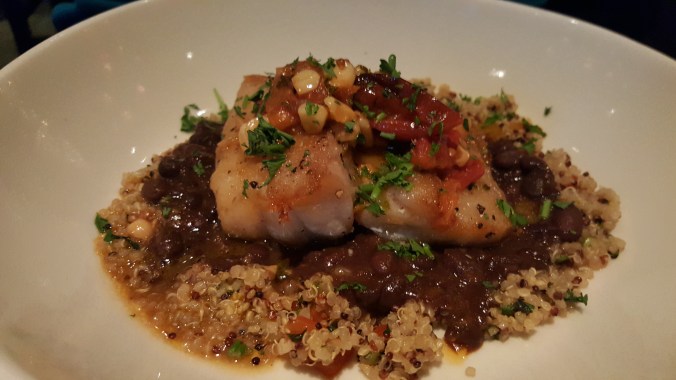
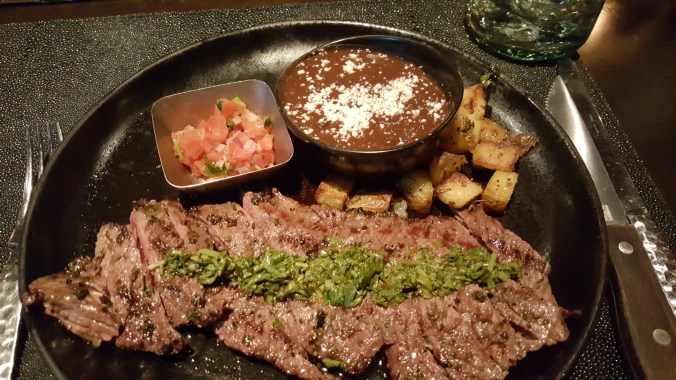
For entrees, Linda had grouper, which was the fish of the day. It was served with Campari fire-roasted tomatoes, charred corn, white wine and herb butter, frijoles negros and quinoa pilaf. She allowed me a wonderful taste. I had skirt steak served with roasted rosemary potatoes and frijoles negros.

Have you ever had a steak that melts in your mouth? It’s a rare thing, and that’s what this was. I had a hard time eating it because I kept making noises of gustatory satisfaction.

20171207_185234

The skirt steak.

Although tempted, we opted out of dessert because we had a plan, and we made our way back to our resort. Although it was only 43 degrees outside, a hot tub awaited steps away from our unit. We hearty Minnesotans donned our swimsuits and ran out to the hot tub with wine, chocolate truffles and mint fudge in hand.

The candy was from the Sedona Fudge Company. Life doesn’t get much better than when it’s spent in a hot tub under the Arizona stars, accompanied by chocolate and alcohol. I truly felt like I was on vacation.

20171208_160219

The Navaho taco (front) and other fare from the Cameron Trading Post.

The last notable eating spot we had a chance to sample was the Cameron Trading Company Restaurant near the Grand Canyon. Want a Navaho taco that’s bigger than your head while viewing Navaho blankets worth thousands of dollars? This is your place then.

Established in 1916, the trading post was the place where Hopis and Navahos bartered their wool blankets and livestock in exchange for dry goods. The restaurant’s ceiling of pressed tin is flanked by walls featuring cabinetry and stained glass from years past. A huge stone fireplace decorated for Christmas warmed us while we ate.

I had a Navaho taco, which is the most popular thing on the menu. It’s composed of a large round piece of fry bread, smothered with a combination of ground beef and beans, topped with lettuce, tomato, cheddar cheese and crowned with chopped green chilies. Spicy salsa is served on the side, but it was too much for my bland Minnesota taste buds.

So ends my accounting of this meander. I would go back in a heartbeat. There are more rocks to see, trails to hike, places to eat, and energy vortexes to experience. Thank you for journeying with me through words.

20171208_154613

The Cameron Trading Post Restaurant fireplace.

Steelhead and Clam Chowder

Steelhead ChowderThis was my Christmas Eve dinner. Hey, don’t look at me like that! While not typical, this chowder is totally holiday-appropriate, with red and green colors provided by the ham/steelhead and the green onions.
I modified this recipe from a crockpot version. This was the first time I used steelhead instead of cod or haddock because I “accidentally” found a nice fillet for half-price at the grocery store. All I can say is, yum!

20171224_160544

What the soup looks like before the potatoes and milk are added.

1 lb fish fillets (torsk, cod, haddock, steelhead, etc.)
2-6.5 oz cans of clams
3 slices bacon (diced) or 1-8 oz package of diced ham
1 medium onion, chopped
½ cup green onions, chopped
2 large potatoes, pared and cubed
2+ cups water
1-1/2 tsp sea salt
¼ tsp pepper
1-12 oz can evaporated milk

Chop the onions and cube the potatoes. Cut the fish fillets into bite-sized pieces. In skillet, sauté onion and bacon (or ham) until golden in two tablespoons butter. (But if you use bacon, no butter is needed.)

Add all remaining ingredients except evaporated milk. There should be almost enough water to cover the ingredients. (Feel free to add more, if two cups isn’t enough.)

Cover and simmer for 30-40 minutes, or until potatoes are tender. Add evaporated milk and cook 10 minutes more.

Grand Canyon Joy

20171208_143044

“Wherever you have friends, that’s your country, and wherever you receive love, that’s your home.” A Tibetan saying.

20171208_121345

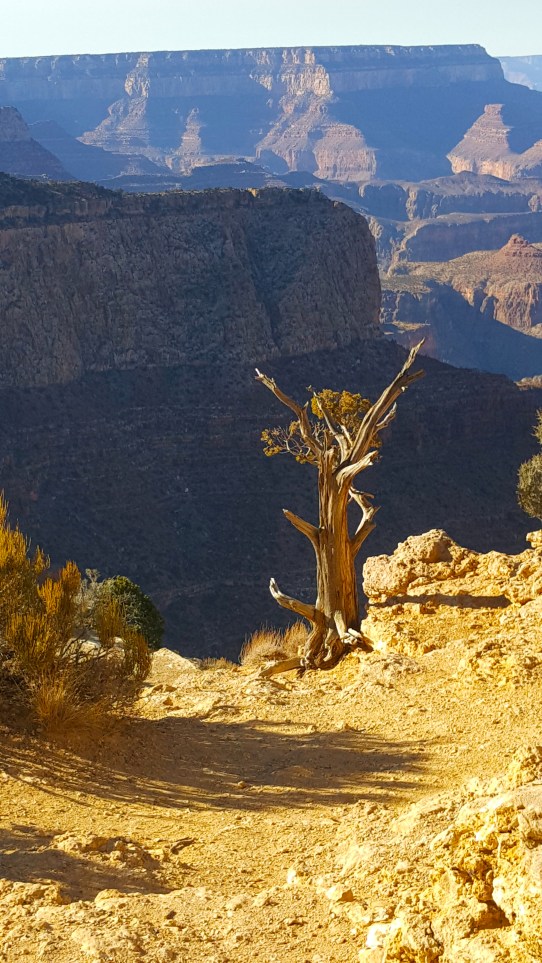
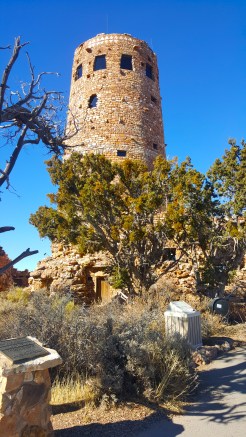
The Observation Tower on the South Rim of the Grand Canyon.

“Pain is inevitable; suffering is optional.” Dali Lama.

“Whoever gives you love, that’s your parent.” Dali Lama

“The brave man is not he who does not feel afraid, but he who conquers that fear.” Nelson Mandela

These quotes, which are worthy of pairing with Grand Canyon scenery, came from “The Book of Joy.”

20171208_135431

The Grand Canyon in Arizona.

The Vortex Made Me Do It: Adventures in Northern Arizona, Part 4

Sedona 2017 016

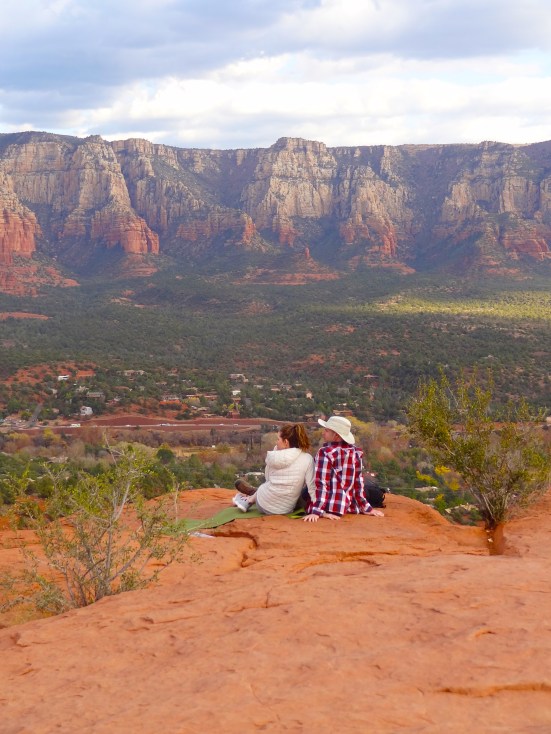
Linda (left) and I on Airport Mesa, before we knew it was a vortex area.

You know how, when you go on trips, you sometimes end up with a running joke in your conversations? The joke can be related to an event, a person you met, or a hapless comment made along the way. Well, for Linda’s and my Sedona trip, our running joke was The Vortex.

Because Linda and I are from Minnesota, we were mainly familiar with Polar Vortexes. You know, that’s when all the cold air comes down from the arctic and tries to freeze everything in its path. Although we had heard of Sedona’s reputation as a vortex center before we began our trip, we didn’t know any specifics.

Personally, I just thought the whole place was the site of mysterious energies. Little did I know that there are specific locations and different types of energies to be had.

Let me back up and define the word vortex (plural = vortices or vortexes). Merriam Webster says that a vortex is something that resembles a whirlpool. I assume all of you, dear readers, have watched water swirl down a drain. That’s a whirlpool — except that in Sedona, the swirling involves invisible energy more than it does water or freezing arctic air.

Our Vortextual Education

Our resort offered various programs for its patrons. Among the classes, which had titles like “Crafting a Festive Wine Glass for Christmas,” was one about vortexes. We decided we had to attend to learn more about this phenomenon. The presentation was given by a local Reiki healer.

She described the concept of vortexes and said the energies involved come from the rocks because of their mineral composition. She passed out a sheet that listed eight locations that are thought to be vortices and it described their different kinds of energies.

Some of the energies come out of the rocks (upflow), some flow into the rock (inflow), some are combinations of upflow and inflow, and some are horizontal (lateral). The lateral flow places involve the energy from nearby rivers and streams.

The sheet she gave us was an excerpt from a book entitled, “Scientific Vortex Information,” which was written by an author who claims to have been educated at the Massachusetts Institute of Technology.

I don’t know. The title seemed like an oxymoron. “Science” and “Vortex” don’t really go together in my world, where I move among scientists every day. I suspected there wasn’t that much science behind the information — more like wishful, imaginative thinking.

Once I got back home, I looked inside the first few pages of the book on Amazon, hoping to see proof that scientific instruments were used to actually measure electromagnetic fields at these locations, but all I saw were explanations of inflow and outflow, with nary any hard proof in sight.

But that’s okay. We weren’t in Sedona for the science. We were there for the experience. We were there for . . . The Vortex!

Our Vortextual Experiences

Sedona 2017 026

Oak Creek Canyon.

While looking at the list of locations, Linda and I discovered we had already visited a vortex the previous day. The site was Airport Mesa, which is easy to access because it’s right in town.

While we were enjoying the view there, we had noticed a couple of people sitting on the rocks in a lotus position. We didn’t think much of it – maybe they were just doing it because the scenic view inspired meditation. But after reading the list, we knew better. Those lotus people were trying to feel The Vortex.

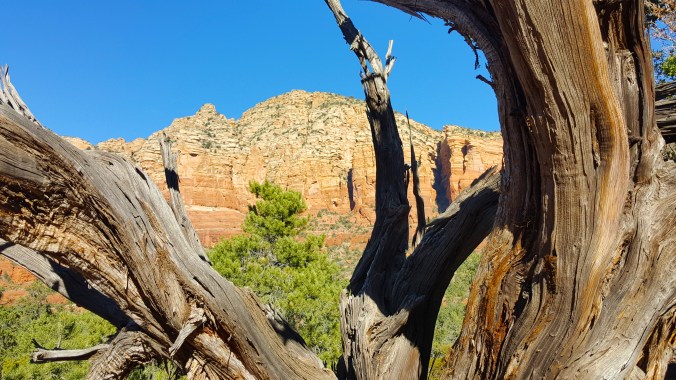
We decided we needed to try that. Our journey the next day involved a trip north to Flagstaff, so we made plans to stop at the Oak Creek Canyon Overlook, which is on the way. The overlook scenic vista is located at the top of the switchbacked road at the end of the canyon about 15 miles from Sedona. A short walk on a paved path leads to an impressive overlook.

I sat on a bench near the overlook and Linda stood near the wall. Neither of us were hard core enough at this point to get into a lotus position (which is sort of hard on a bench, after all). So we just closed our eyes and tried to feel the feels.

I felt my own internal vortex more than any external one. My heartbeat rocked my body and made it sway a little. The Arizona sun felt good on my face and the breeze whispered its secrets.

After having our moments, we conferred. Linda said she didn’t really feel anything. We walked back to our car, but along the way, we stopped to look at some Navaho jewelry being sold at stand along the walkway. I was drawn like a magnet to one ring that featured a bright blue opal. I picked it up and it fit perfectly. I had to buy it.

We joked later that The Vortex made me do it. Who knows, maybe it did? It was like the ring was calling to me.

20171207_153459

Cathedral Rock

A few days later, after a day of hiking, we visited Cathedral Rock, which is thought to be home to an upflow/inflow combination vortex. We hiked up to the flat rock plateau below the formation.

Someone had scratched two spirals into the rock about ten feet away from each other. Linda and I thought they looked like logical places to sit for people like us who were trying to find a vortex, so we sat with legs crossed and eyes closed.

The day had been breezy, but not particularly so. A few moments after we got into position, big gusts of wind started buffeting us. They were so powerful that Linda’s hat flew off.

We opened our eyes and quickly stood, spooked. The wind stopped.

We headed down the rock toward our car. We didn’t joke as much about vortexes after that.

The Beauty Way: Adventures in Northern Arizona, Part 3

Sedona 2017 015

Young lovers on Airport Mesa, Sedona.

These words from the Navaho prayer, The Beauty Way, kept going through my head during a hike among the red rocks in Sedona. It’s hard to get exercise when all you’re doing is gawking all around you. But perhaps that offers exercise of a different sort….

I walk with beauty before me. I walk with beauty behind me.
I walk with beauty below me. I walk with beauty above me.
I walk with beauty around me. My words will be beautiful.

20171207_123728

Bell Rock as seen from the Bell Rock Pathway.


20171207_140144

20171203_140249BW

20171205_143734

Red rock, white trees, Red Rock State Park.

Sedona 2017 049

May you walk in beauty…