A few hours post-procedure. Lots of redness!
March 20th
Today, I willingly let someone drag needles all over my entire face, and I paid good money for it, too ($300 with tip). The procedure is called micro-needling. It’s an optional skin care treatment designed to reduce signs of aging and improve scarring.
Perhaps you remember the painful fun I had a few years ago with the Lamprobe. Masochist that I am, I have had an additional Lamprobe treatment since then, plus a facial or two. But now, the hint of droopy jowls, enlarged pores, and lines around my lips and eyes caused me to look for a different type of therapy.
The woman who gave me my last facial recommended micro-needling. It involves the use of a micropen, which is a device that looks rather like a large magic marker. It has a dozen tiny needles on its tip, which, according to the brochure I got from my skin care clinic, creates “controlled micro-injuries to the skin in order to aid in the production of collagen and elastin.”
How is it done? “In a single motion, the pen will be gently pressed against the skin while simultaneously gliding in one direction until the entire treatment area has been covered.”
In other words, someone drags needles all over your face and you pay them for it.
After my previous painful beauty experiences, I was not looking forward to the procedure. BUT, unlike with the Lamprobe, a topical anesthetic was applied to my face beforehand. The technician waited 20 minutes for it to work (during which I got to listen to New Age Space Music) and then she broke out the pen.
While she worked, she explained that the tiny injuries “wake up” your skin and make it start producing the materials that keep it firm and youthful. Did it hurt? No. I did feel some pricks, but nothing too bad. Mostly, I felt the vibration of the pen as it glided across my skin. It felt like an electric razor. It even tickled, especially near my ears and nose.
From check-in to check-out the session took an hour. My face was still numb when I left the office. Your face will most likely turn bright red afterward, so it’s a good idea to hole up at home for the rest of the day, unless you are totally unselfconscious.
Even after the anesthetic wore off, my face felt tingly and “awake” but it didn’t really hurt. It did turn red, though – reminiscent of raw hamburger with a sunburn. A few pricks of blood were scattered across my nose and forehead.
Eventually, my face got hot and dry. The technician had sent me home with an after-care kit, which included a cleanser, a cucumber spritz, a balm, a growth factor serum (what does it grow, I wonder?), and a hyaluronic acid serum. I used the balm and spritz as the technician recommended, and that calmed down my skin.
So that’s where I am at this point. I will write more later to let you know how long the redness lasted and what I think of the results. But I can tell you it didn’t hurt as much as I was expecting.
*
March 21, the day after
When I awoke, my face was about half as red as it was yesterday. It has graduated from sunburnt raw hamburger to just looking like someone attacked me with sandpaper.
I didn’t have any trouble sleeping – no pain or irritation. My skin still looks too inflamed for makeup, so I’m going to wait on that until tomorrow. At least I can put on eye makeup and lipstick.
*
March 22, Day Two
The redness has decreased again by half. I almost look normal – just a little tan. It seemed safe to put on makeup, so I did that today. Some tiny pieces of skin are flaking off, but that subsided after I applied the various skin care products in my after-care kit.
I can’t tell a whole lot of improvement in my skin yet, but my jawline might be a bit tighter. I suppose it will be easier to tell once the skin calms down.
I keep thinking of something the technician said — that skin care should be like going to the dentist. Once or twice a year, we go and get a deep cleaning, and the rest of the time we do our own maintenance. She recommended one or two procedures like micro-needling per year in addition to “home maintenance.” She almost made me feel like I wasn’t being vain, just practicing good self-care. But part of me thinks I’m still being vain. 🙂
As the day wore on, more flaking started around my lips and on my nose.
*
March 23, Day Three
Lots more flaking going on today, mainly around my lips and nose. The skin on my cheeks surrounding my mouth looks firmer. I don’t think it’s just my wishful imagination. I’m beginning to think this procedure might be worth it.
The redness is gone.
I like the fact that this procedure is somewhat “natural.” It stimulates your skin’s own mechanisms to improve itself. You don’t have to be put to sleep like you would with a face lift, or have weird chemicals injected into your skin (like botox). And no, I am not getting paid to write this!
*
March 24, Day Four
My nose shed the rest of its skin this morning. There’s still some flaking on the rest of my face.
The post-procedure instructions say that you’re supposed to let the flakes fall off naturally and not pick at them. I am doing pretty well at this. Well, maybe I am picking at them just a little. Okay, maybe I am standing in front of the mirror for minutes on end, trying to get rid of all the flakes.
Stop it, stop it, Marie! The problem is that a friend and I are in a social situation for the next few days – we’re around a bunch of people who we are meeting for the first time, and I don’t want to have a big chunk of skin hanging off my nose while I try to hold a conversation.
I gave my friend permission to tell me if/when I have a flake that needs addressing. So far, though, I don’t think anyone has noticed but me.
*
March 25, Day Five
Just a little flaking. Things are looking good! I am doing better at restraining myself from picking at them.
*
March 26, Day Six
Still some more flaking. My skin looks smoother. I am happy with the results, and I would recommend the procedure to anyone in their “elder years” who wants to do some upkeep on their face. You can also do the procedure elsewhere on your body to get rid of scarring or stretch marks. People also do it on their décolleté to firm up the skin.
 In conjunction with my trip to see Minnesota’s Tallest Waterfall, I also got to spend time with the state’s largest stone fireplace, or so the claim goes. The structure is located inside the dining room of Naniboujou Lodge on Lake Superior, near the Canadian Border.
 The trickster god myth “belongs” to more than just one tribe. The lodge gets its spelling and images from the Cree version. In my book, I concentrate on the Ojibwe version. Nanabozho’s mother was human and his father was the west wind. He’s a shapeshifter, often appearing as a rabbit or a human with rabbit ears and legs.


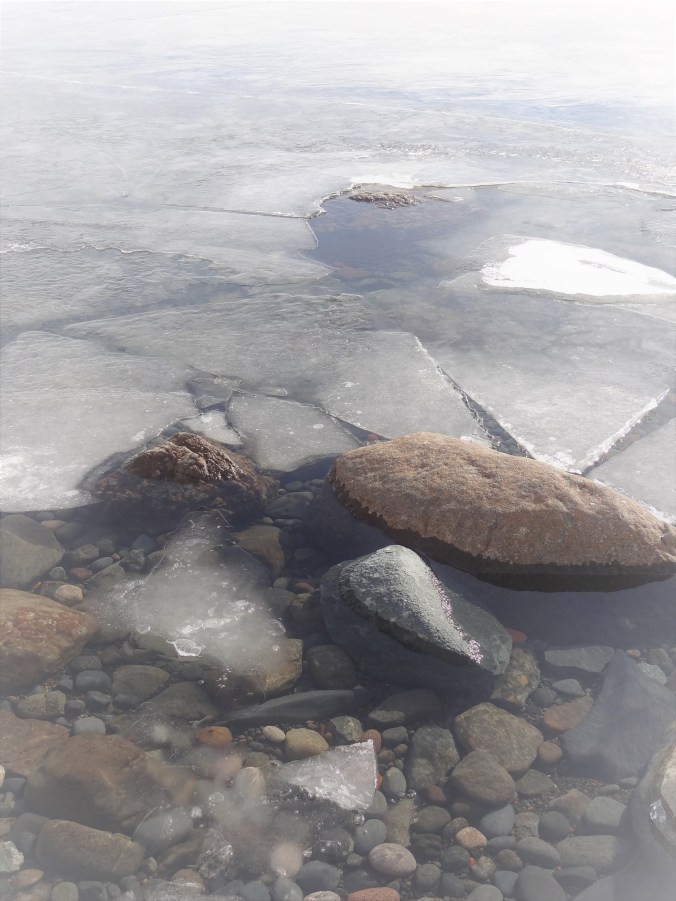
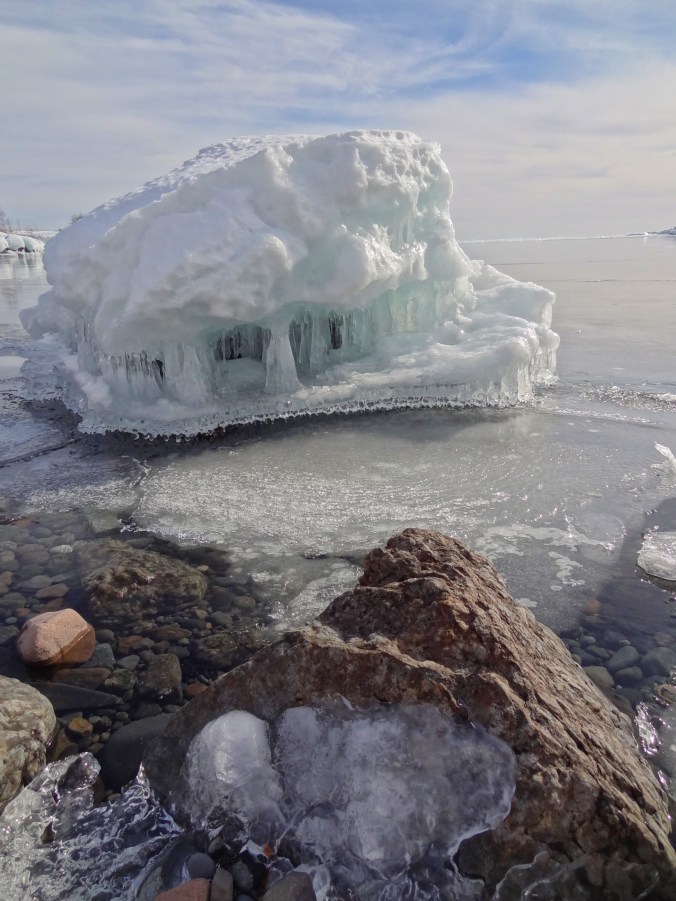
 We stopped several times along the highway, but the best place was one without a ready-made scenic parking lot. We glimpsed a bay that whispered of Norway and ice and stillness. We drove back and forth, looking for the best access road. There were no roads, only private driveways.



 The recent indictment of Russians who were part of the notorious Russian internet “troll farm” that interfered with the U.S. elections hit close to home for me. I have suspicions that my little ol’
 Although it looks like it’s been on the site forever, the hotel is young. It opened in 1986 only about a half-block away from the original hotel. According to a helpful historical fact sheet provided to me by the desk clerk, the original hotel was built in 1877 by the Wisconsin Central Railroad when Ashland was a transportation hub for lumbering, quarrying, and mining.
 The basement level is home to Molly Cooper’s Bar and Grill. It was closed in the morning when I was snooping around, but looked like it would be a fun place to eat, with views of the lake.
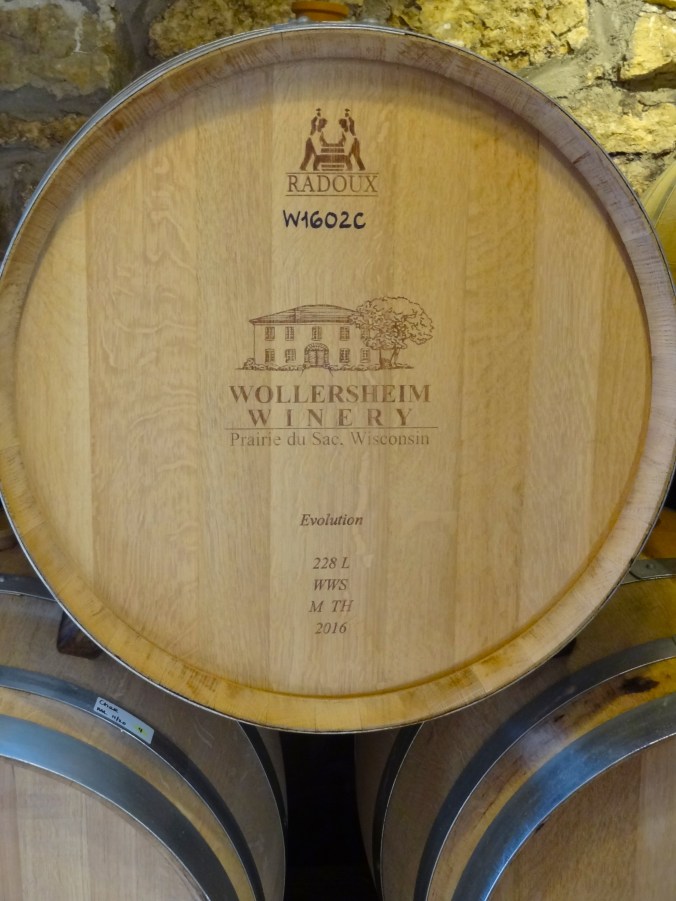
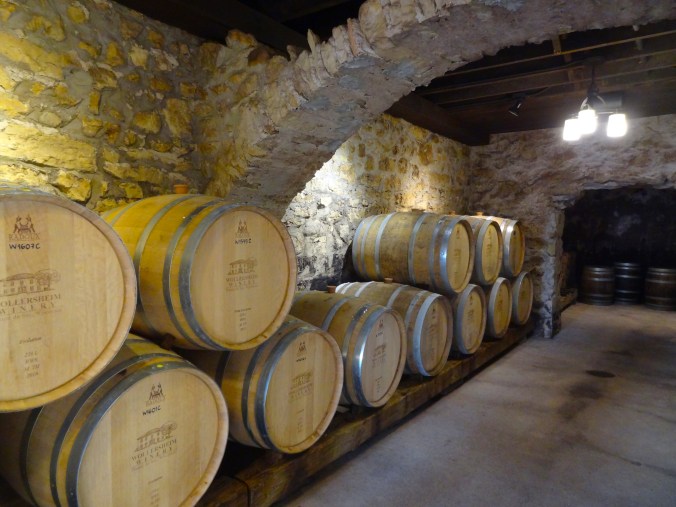 Wisconsin is known best for its beer and cheese. The state offers wineries, too, and I took a tour of the most productive facility this past week.
 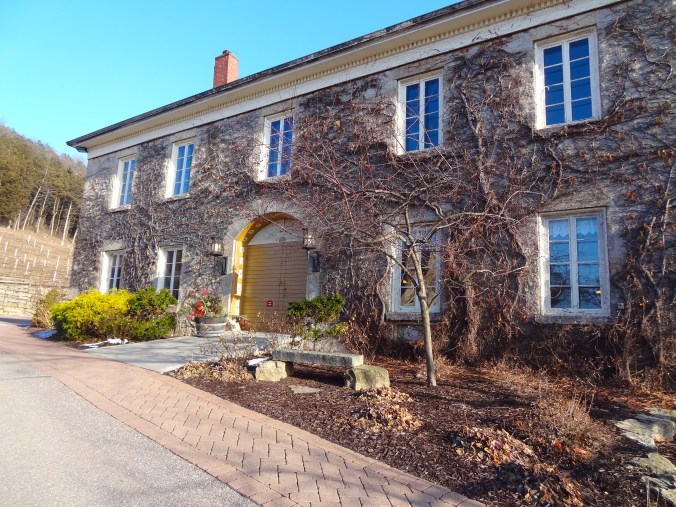 The land the winery sits on has grown grapes on and off since the 1840s, whenever the weather has allowed. The vines on the property now were planted in 1972 when the Wollersheims bought it.
 I found the winery easily and parked in the lot below. The winery’s website says it takes 10 minutes to walk the path from the lot to the winery (which is uphill, BTW), but I estimate it would only take any relatively able-bodied person a couple of minutes. However, I suppose if you stop to read the historical sign along the way that would add more time.
 I learned that the Prairie Fumé is made from grapes not grown on the property. The grapes come from the Finger Lakes region of New York and are trucked in juice form to the winery, where Philippe works his magic on them.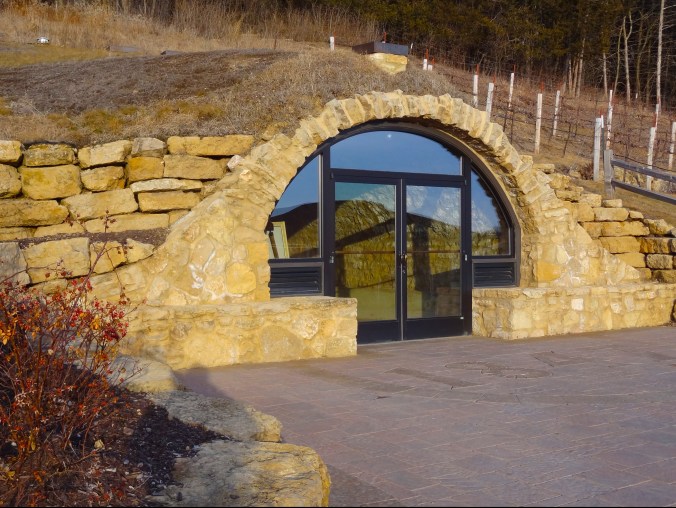
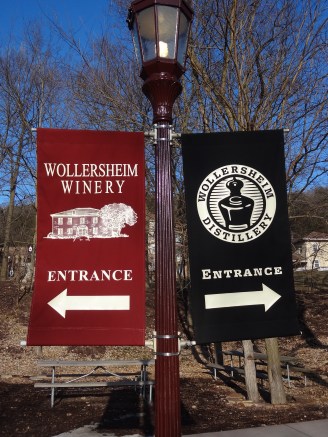 Alas, it was time for me to continue onto my ultimate destination, which was Madison. I was expecting to eat dinner alone there, but things worked out so that a friend from high school was able to meet me. Plus, it was her birthday, so I brought along the bottle of Prairie Fumé for her.