“H is for Hawk” Book Review: The Value of Animals Apart from Us

A northern goshawk. Image by Norbert Kenntner.

A northern goshawk. Image by Norbert Kenntner.


I gave this memoir five out of five stars on Goodreads not because I agreed with everything in it but because I found it thought provoking and well written. It’s the story of Helen Macdonald, an Englishwoman who is dealing with the death of her father.

To help her get through her grief, Macdonald decides to train one of the most difficult of hawks: the goshawk. She names hers Mabel. She contrasts her experience with that of Terence White, author of the childhood classic, “Sword in the Stone,” and an avid falconer who wrote about his experience in “The Goshawk.” I listened to the audio version of the CD, read by the author in her classic British accent.

So many things to say. Where to begin? To start, it’s ironic that Macdonald chose to deal with death by training an avian killing machine. It’s kind of like dealing with a job loss by helping other people get fired from their jobs over and over again. But this technique worked for Macdonald, who wanted solace by forming an attachment to an animal, and by coming closer to the wild.

However, by the middle of the book, I found myself thinking how unfair it was to burden the bird with the owner’s grief and mental health issues – both for Macdonald’s and White’s goshawks. I mean, they are birds, not people. They are separate beings, but both authors are so caught up in themselves they don’t see this. It’s a lesson I learned years ago from living in the wilderness, and something I suspect most people, who are used to having animals around as pets or for food, don’t have an opportunity to realize.

Macdonald’s attitude of animals being defined in the world by the meanings given to them by humans came to light in a section where she attended an art exhibit about California condors. She says, “I think about what wild animals are in our imaginations and how they are disappearing, not just from the wild but from people’s everyday lives – replaced by images of themselves in print and on screen. The rarer they get, the fewer meanings animals can have. Eventually, rarity is all they are made of. The condor is an icon of extinction . . . How can you love something, how can you fight to protect it if all it means is loss?”

My argument is you fight for endangered animals because they have value apart from us. It’s perhaps the ultimate hubris to think the world revolves around us and our meanings. Most wild animals don’t need us to survive. In fact, they would probably do much better if humans were out of the picture. And why did the condor nearly go extinct in the first place? From human actions (poaching lead poisoning, etc.) It seem so unfair for humans to cause these problems and then to complain that thinking about these animals is depressing. What’s really depressing is what we do to some animals.

Toward the end of the book Macdonald finally realizes that people are more fitting agents for emotional support than animals. While animals provide great solace, they are no substitute for a pair of human arms around you. And she realizes that animals have intrinsic value apart from humans.

She writes, “Of all the lessons I’ve learned in my months with Mabel this is the greatest of all: that there is a world of things out there – rocks and trees, stones and grass, all the things that crawl and run and fly – they are all things in themselves. We make them sensible to us by giving them meanings that shore up our own views of the world.”

Right on. She says she learned with Mabel how to “feel more human once you have known, even in your imagination, what it is like to be not.” She could have ended the book there and I would have been happy but she continued on with White’s story, which at times, overshadowed her own. I could have done without much of the detail of his story and the book would have been stronger for it. I also found myself getting tired near the end from hearing mini dramas about how she was always losing her hawk. But I still gave it five stars, so it these things must not have bothered me too much!

One thing I thought was funny was how, once Macdonald started using antidepressants, she described the hawk as looking much happier, too. I think this was when she was still caught up in the hawk being an extension of herself.

And I was happy to see that Macdonald delved into the “conversation of death” described in Barry Lopez’s book, “Of Wolves and Men.” This is an exchange that happens between wolves and their prey that either triggers a chase or diffuses the hunt. If you’ve read my novel “Eye of the Wolf,” you know that I delved into it, too.

As I was thinking about writing this review, I came across a quote from Henry Beston (“The Outermost House”) that sums up my philosophy and what I think Macdonald was trying to say with her memoir well:

“We need another and a wiser and perhaps a more mystical concept of animals…. For the animal shall not be measured by man. In a world older and more complete than ours they move finished and complete, gifted with extensions of the senses we have lost or never attained, living by voices we shall never hear. They are not brethren, they are not underlings; they are other nations, caught with ourselves in the net of life and time, fellow prisoners of the splendour and travail of the earth.”

Agree? Disagree? Am I some psycho loony? (Smirk.)
Gale-Force Winds and Gear Thieves – A Trip to the Apostle Islands

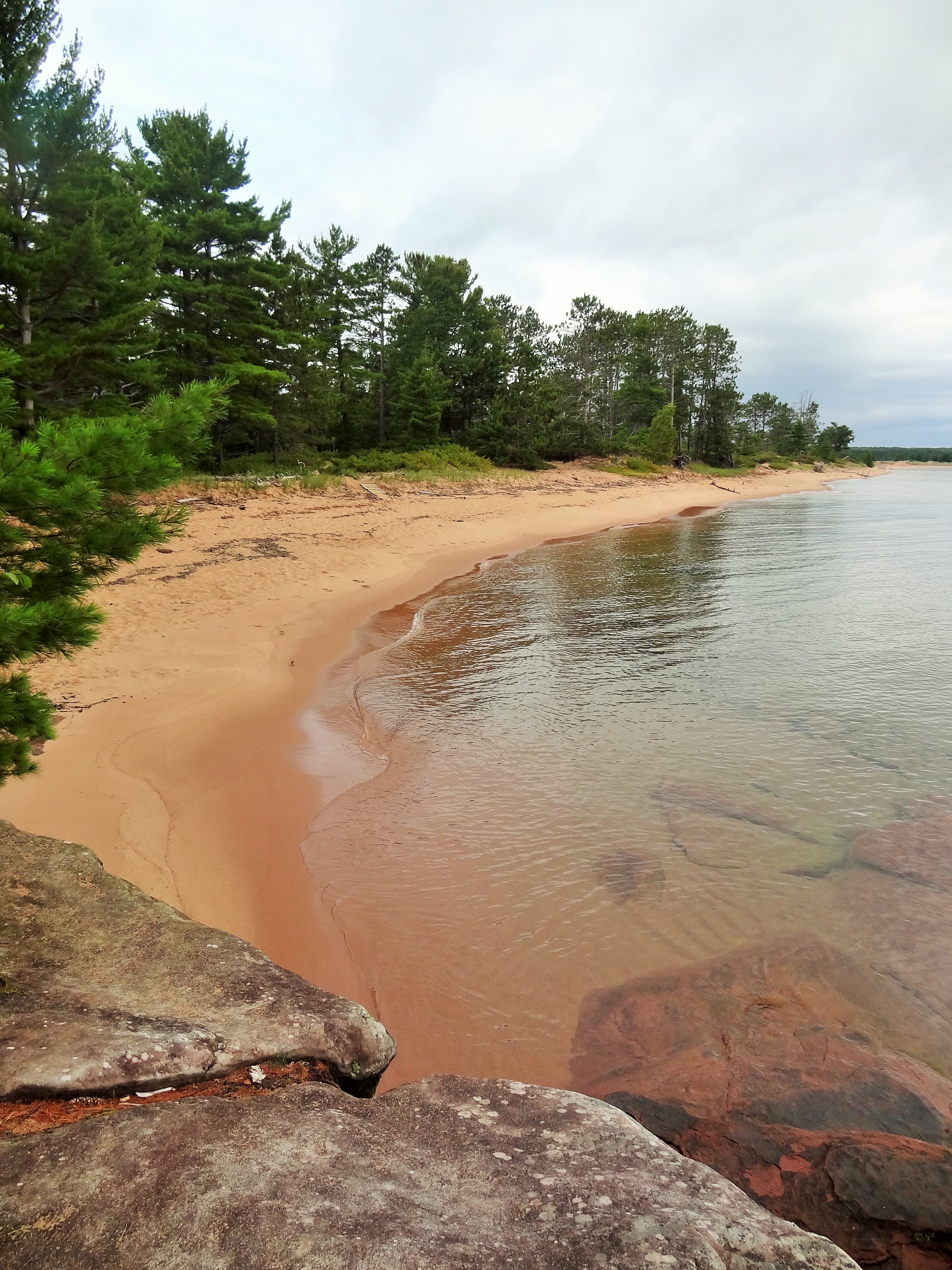
Julian Bay on Stockton Island in the Apostle Islands National Lakeshore.

Julian Bay on Stockton Island in the Apostle Islands National Lakeshore.

I recently meandered to the Apostle Islands National Lakeshore in Lake Superior. The Apostles are a group of islands scattered off the end of the Bayfield Peninsula in Wisconsin. Unlike the name would suggest, there are more than twelve.

No roads or stores exist on the islands. They offer a primitive camping experience – not quite as primitive as the boundary waters, but close to it. Madeline Island, where I also travelled recently, is part of the formation, but it’s not part of the lakeshore because it’s so developed.

My friend and I had reservations to camp for four nights on Stockton Island, the largest in the park. The weather forecast couldn’t get much better – 75 degrees and sunny every day, so I Ieft my hat, gloves, and warm jacket at home even though I knew better.

Pretty nice campsite view, eh?

Pretty nice campsite view, eh?

Our first day was gorgeous – sunny and warm. Setting up a tent in such calm conditions was a novelty. I should back up and mention that although people can reserve a campsite on Stockton, they can’t reserve a specific site. Instead, after the boat drops campers off, a free-for-all sprint is required to beat others and snag your desired site.

Such athletic prowess is not required every day – just the more popular ones for travel, such as Friday. Nineteen sites are scattered along about a mile of shoreline, so the sprint (okay, perhaps it was more like a jog) can get a bit long. I don’t recommend carrying anything heavy during this process!

Another friend told me which sites had the best beaches, and of course, these were the ones farthest from the boat dock. While my camping friend stayed on the dock with our gear, I successfully staved off a woman about my age who was carrying a backpack to bag a site that offered a view and private beach. It’s dog-eat-dog in the wilderness, you know.

Brownstone quarry, Stockton Island.

Brownstone quarry, Stockton Island.

The next day was a little windy, but still sunny. We chose to hike to an abandoned brownstone quarry on the island. Once we returned to our campsite, the wind picked up to gale intensity and stayed that way until our last evening. In the ensuing days, to escape the wind we crossed the island to Julian Bay and Anderson Point. Julian Bay boasts a protected, beautiful beach, and Anderson Point features a mossy primeval forest.

Thankfully, the temperatures stayed in the 60s, so although the wind was a nuisance, it was not bone-chilling. But having a hat and warm jacket along would have made for more comfortable camping. Lesson learned? Don’t believe the weather report. As the park people like to say, “The Lake is the Boss.” It (and its weather) will do what it wants. Bring warm clothes, even in August.

Another lesson we learned was to guard your gear on the dock. We had piled ours there in anticipation of the cruise boat back to the mainland. Unbeknownst to us, several families had just arrived and were all camping together. They had a few kayaks left on the dock that they came back to move. But because their group had so many people, they weren’t sure what gear was whose, and they started to grab our packs to float them back to their campsite in their kayaks. Luckily, I happened to be watching. I ran to the end of the dock and let them know they were taking our stuff.

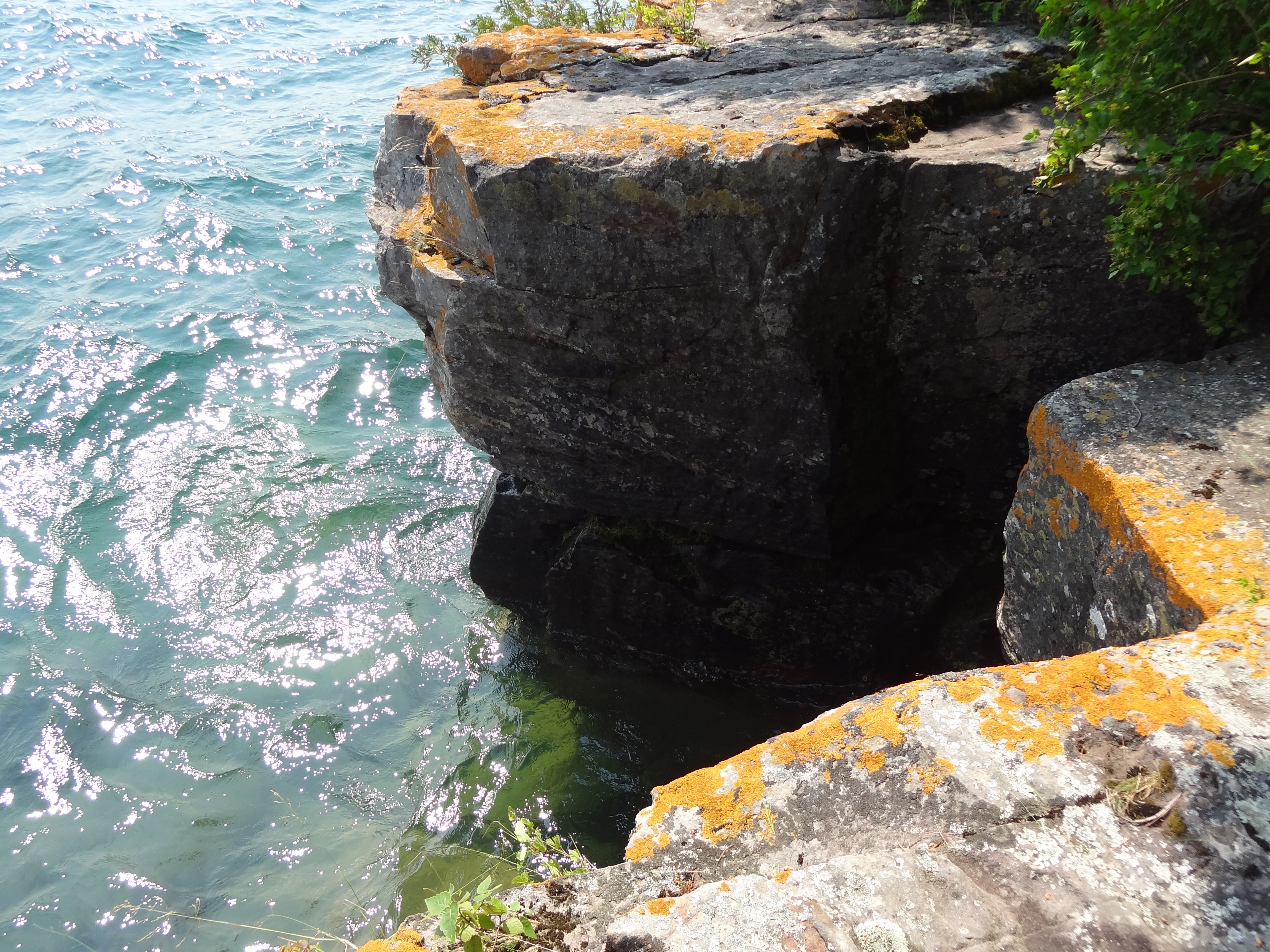
Anderson Point rocks, Stockton Island.

Anderson Point rocks, Stockton Island.

The same thing happened about an hour later when other members of the group made their way to the dock. This time, I was distracted. I was talking to my friend about how I had saved our stuff from being carted away. We walked back toward the dock and looked at the spot where our stuff should be. It wasn’t there!

As we approached, we ran into several people carrying our gear off the dock. Again, we explained that it was our stuff. They were appropriately sheepish and apologetic, and probably secretly thankful they didn’t have anything more to carry.

Despite the would-be gear thieves and gale-force winds, the island worked its magic. I was able to exchange my everyday worries for worries about basic survival, which was somehow refreshing. I read a book, hiked a lot, swam (well, almost) in chilly Lake Superior, breathed in the scent of pines and cedar, stretched out on the beach, attended evening ranger talks, and learned more about a new place and a new person.

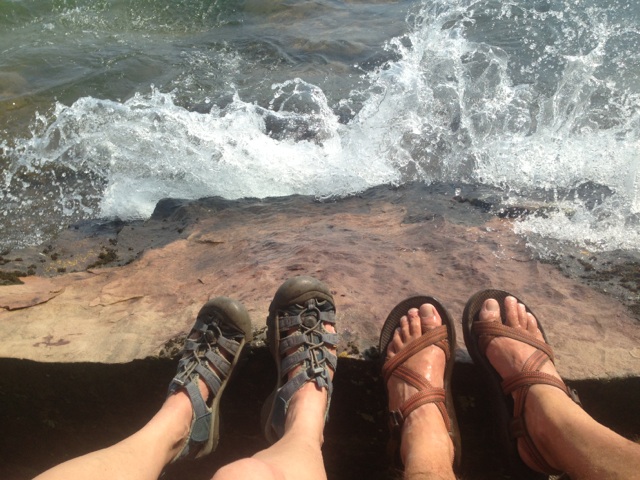
Lake Superior thrill ride.

Lake Superior thrill ride.

Radio Interview About My Books

Hello — Life has been sweeping over me like a tidal wave recently, but I was still able to make time for an interview about my novels on a community radio station. Follow this link to hear my interview yesterday on KUMD’s Minnesota Reads show (and discover why I’m nervous to have my parents read my books).

I was honored to be included in the show, which airs every Thursday morning at 8:15 a.m. Tune in!

Afternoon in the Museum – Finger Weaving with Dennis White

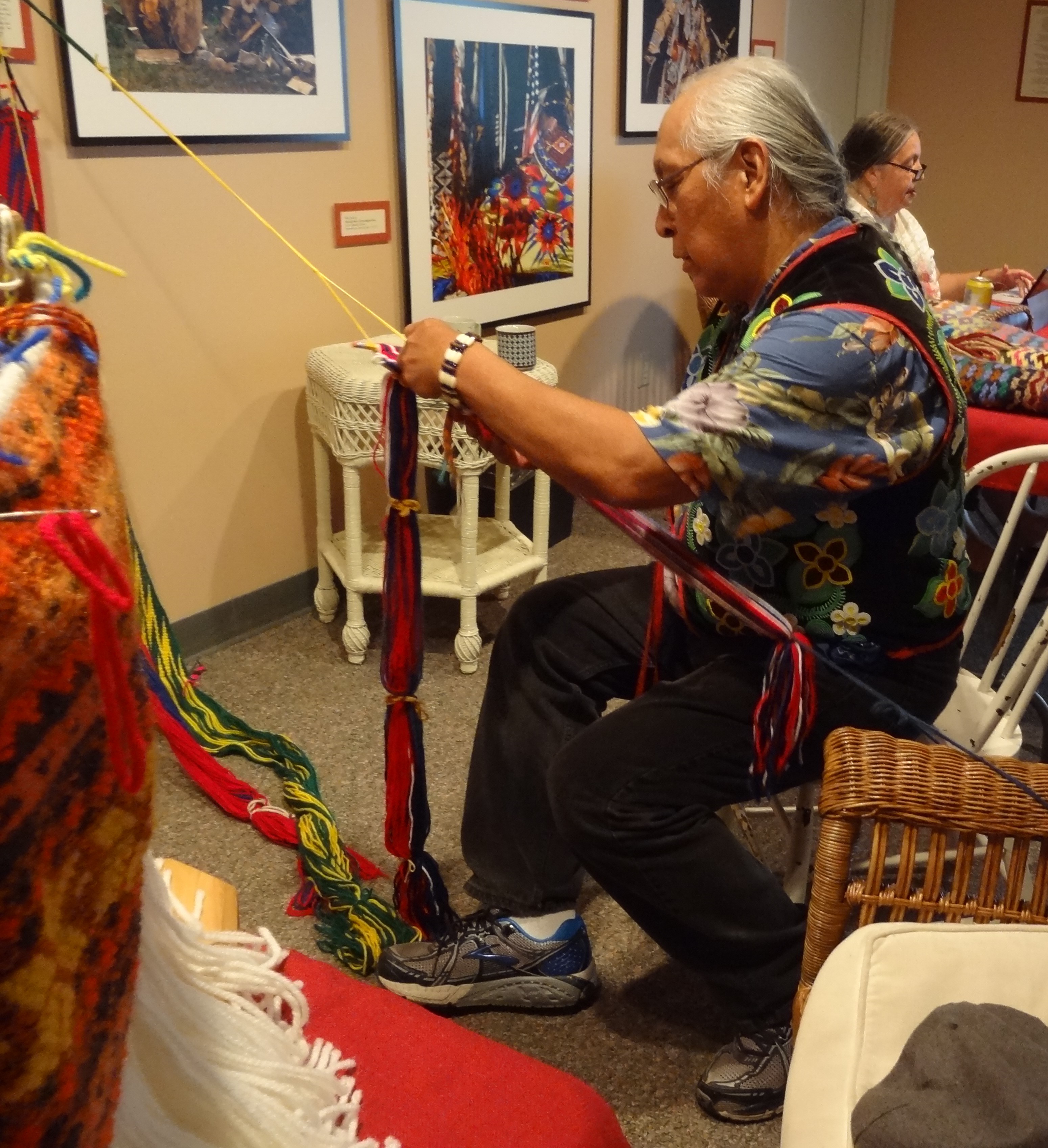
Dennis White demonstrates finger weaving in the LaPointe Museum.

Dennis White demonstrates finger weaving in the La Pointe Museum.

Last weekend I had the chance to revisit Madeline Island in Lake Superior – my latest island love. This time I brought my family along and was able to spend more than an hour on the island – more like five hours – but it still wasn’t enough!

The most noteworthy experience was a visit to the museum in La Pointe, the town on the island. The museum is a compendium of historic and modern buildings. Although the dusty artifacts were interesting, the coolest thing was an actual live human being named Dennis White. He was demonstrating finger weaving, a Native American craft.

Finger weaving is new to me. Dennis explained it’s like weaving without a loom. He described two methods to us, one that uses a single stick as a frame for the weaving and another that uses the doubly complicated equipment of two sticks. For the two-stick method, Dennis had some custom-made wooden frames, but explained that a person could just as easily poke two sticks into the ground for the same effect. I loved that the technique was so primitive and portable.

He weaves sashes for ceremonial purposes, bags, and small pouches that people are now commandeering to carry their cell phones. To allay the boredom that can come from working on a single design, Dennis usually works on multiple weaving projects at a time (eight or more). It takes him about 10 hours to weave a sash. The longest amount of time he spent on a project was 100 hours.

Dennis is an Ojibway from Hayward in northern Wisconsin. He’s so accomplished at his craft that he was invited to do an artist’s residency at the Smithsonian Institute. One of his weavings is featured in the Tweed Museum of Art in Duluth. Dennis also has a master’s degree in mathematics and is a retired math teacher.

We got into a philosophical conversation about the links between math and art, and how people with a talent for one of these things often possess a talent for the other. I wish I could better remember his words. In any event, they were deep and true. Just from our short exchange I could tell he was kind, wise, patient, and proud of his heritage. His sense of humor was delightful, too.

An elementary school art teacher happened to be standing next to me during our conversation and told me she hopes to invite Dennis to her class someday. I get warm fuzzies knowing that this chance encounter could lead to young minds being instructed and inspired in an ancient craft.

For more information about Dennis, read this story from “On Wisconsin” magazine.

Strange Goings-on at the Office (A.K.A. A Missed Opportunity with the Inventor of the Post-it Note)

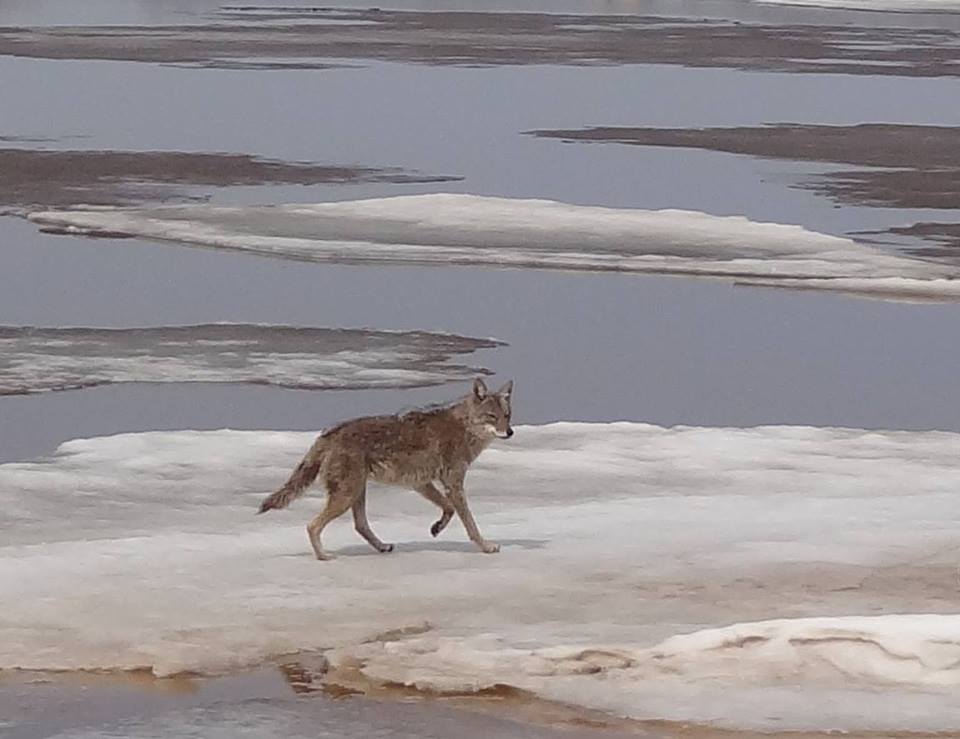
A coyote seen crossing the ice outside of my office.

A coyote seen crossing the ice outside of my office.

I’ve had the privilege of working in some unusual office buildings. They range from an historic federal building of imposing gray stone, a renovated college dorm with stone stairways grooved by the trodding of many feet, sterile medical center cubicles, a building with intricately carved panels on heavy brass doors and bathrooms with floors and stall dividers made of marble, a building in a tourist district that shared space with shops where my office was above a popular restaurant, and a basement newsroom filled with clacking typewriters.

But my most recent office building is the most interesting in several ways. It’s situated on an island in the Duluth-Superior Harbor in what was once was my favorite restaurant for Lake Superior fish. It features a deck that’s just steps from the water and from public docks. The building is in a city park that draws people for recreation.

When I was eating at the restaurant, never in my wildest dreams did I think I would one day work in the building, but as fate would have it, here I am, right in the spot where I ate lake trout with friends. I have two banks of windows that look out on the water. Although I assure you I spend most of my time staring at my computer screen, the windows have afforded plenty of opportunity to see other things in my three years here – like the coyote who crossed the ice from the mainland one spring, or the fox who heard a mouse underneath the deck and kept trying to pounce on it (see video here), or the family of otters cavorting in the water, or the disabled gull , or a young common tern begging its parent for food, or woodchucks sunning themselves on the deck, or the bear who walked through the parking lot.

Humans have also created distractions — like the guy who walked backwards past my office for several mornings in a row, only to pass by walking forwards minutes later in what must have been an exercise ritual. (Now he bikes past). Then there was the man who swam past my office. I read later in the newspaper that he was a long-distance swimmer who traveled from the Duluth to the Superior ship entries. My office is along the way. Then there was the man who drove a Zamboni down the road, and the man who wanted to build a world-record ice sculpture .

We get all sorts of people wandering inside our office as well, looking for public restrooms and tourist attractions that haven’t operated in the park for years. There was the tour busload of people who were looking for Wisconsin cheese, people who want to buy harbor boat tour tickets, people who think we’re the office for the historic ship that’s parked next door.

But sometimes we actually have visitors who take time to read the signs outside our office and want to know what kind of research we do. (For those of you who have not paid attention over the years, I work as a writer for a water research organization.) Sometimes these visitors are scientists, sometimes they are crackpots who want us to publish their theory to the universe and everything. But sometimes they’re the inventor of the Post-it Note.

Yes, you heard me right.

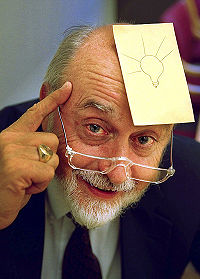
This week, the real live, honest-to-god inventor of the 3M Post-it Note dropped by the office on a whim to learn about what we do. He came in with his wife and talked with our receptionist, whose office is right outside mine. I couldn’t help but overhear the conversation and recall thinking the duo asked intelligent questions. It was just as they were leaving that the wife told the receptionist that her husband was Arthur Fry, inventor of the Post-it Note. After a moment’s hesitation in disbelief, I rolled my chair over to my doorway just in time to see the retreating back and profile of the purported inventor.

Arthur Fry. Image courtesy of Wikipedia.

Arthur Fry. Image courtesy of Wikipedia.

I shrugged and went back to my task, but started thinking later in the day: what if he really was the inventor of the Post-it Note? What does the inventor of the Post-it Note look like, anyway? I looked him up on Wikipedia, and by Jove, our office visitor was a dead ringer.

It was then that I metaphorically kicked myself for not taking advantage of the opportunity. I should have run after him with my camera and new fancy digital voice recorder and interviewed him for my world-famous blog! He seemed like a very nice man, I’m sure he would have obliged. It’s just that I had spoken with one of the crackpot people only the day before and I wasn’t in the frame of mind to believe that a genuine inventor could just walk in off the street.

Next time, I assure you I’ll be ready. Now I’m just waiting for the person who invented the coffee cup sleeve to walk into my office.

I’m an Isle-ophile. Are You?

St. Martin Island, West Indies.

St. Martin Island, West Indies.

An island doesn’t have to be very far away from shore or very big to accomplish its true work: to surround you with imminent water, and to unhitch you from the grappling hooks of your own life for a while. – Minnesota Author Bill Holm, Eccentric Islands

I love islands. I’ve known of this affliction for quite a while, even before I heard the term for it: isle-ophile. Some of my most intense experiences have happened on islands. I like how islands make me feel and how they make other people behave (unless they are deserted islands, then it’s not so pretty.)

I first got a feel for islands when my parents took us camping. I have hazy young memories of Mackinac Island in Lake Huron; Prince Edward Island in Canada; the U.K.; and Madeline Island, Stockton Island, and Isle Royale in Lake Superior.

My exposure to Isle Royale led me to work there during college for two summers at the rustic resort. Then there was Grand Manan Island off New Brunswick, Newfoundland, Gero Island in Maine, Cumberland Island Georgia, Key Largo Florida (and eventually all the keys), Puerto Rico, Catalina Island in California, Ludlow’s Island in Minnesota, Orcas Island of the San Juan chain in Washington, St. Martin in the West Indies, and Brigantine in New Jersey.

Each place has provided intense experiences — unlike those a person can have on the mainland. Islands have offered: opportunities to form and intensify friendships, crazy experiences with animals, cold refuge from storms, hot refuge from heartbreak, family vacations, work conferences, romantic vacations, and immersions in local culture.

Islands force people to depend on one another more than they do when on the mainland. Usually, you’re more at the whims of nature because you’re in the middle of a body of water. Communication with the outside world is sporadic and takes more effort (although it’s a lot easier now, with computers). You’re living on the edge, but that edge is defined and it’s hard to get lost.

I’m irresistibly drawn to islands. Are you?

Here’s another reason to ponder about why islands draw people, offered by Mr. Holm:

In one way, all islands are female, surrounded by female water. John Fowles, in his book, “Islands,” says, “The domain of the siren had been where sea and land meet; and it is even less for nothing that the siren is female, not male.” Islands are secret places where the unconscious grows conscious, where possibilities mushroom, where imagination never rests. “All isolation . . . is erotic.”

“Doing” Madeline Island in an Hour – a Photo Story

DSC02535

Say you have an awful terrible job like mine (smile) that requires travel to a picturesque lakeside (as in Lake Superior) town (as in Bayfield, Wis.) for a meeting. Let’s say that after the Bayfield meeting your coworker has another meeting that requires travel by car ferry to a nearby island. He invites you to use the car while he’s in his meeting so you can tool around the island and take scenic photos for the various publications produced by your organization.

Bayfield, Wis.

Bayfield, Wis.

DSC02517

Let’s say you only have an hour to spend on the island before your coworker’s meeting is done and you have to ferry back to the mainland. Where would you go on the island? Why, you would go where the ferry worker recommends, that’s where!

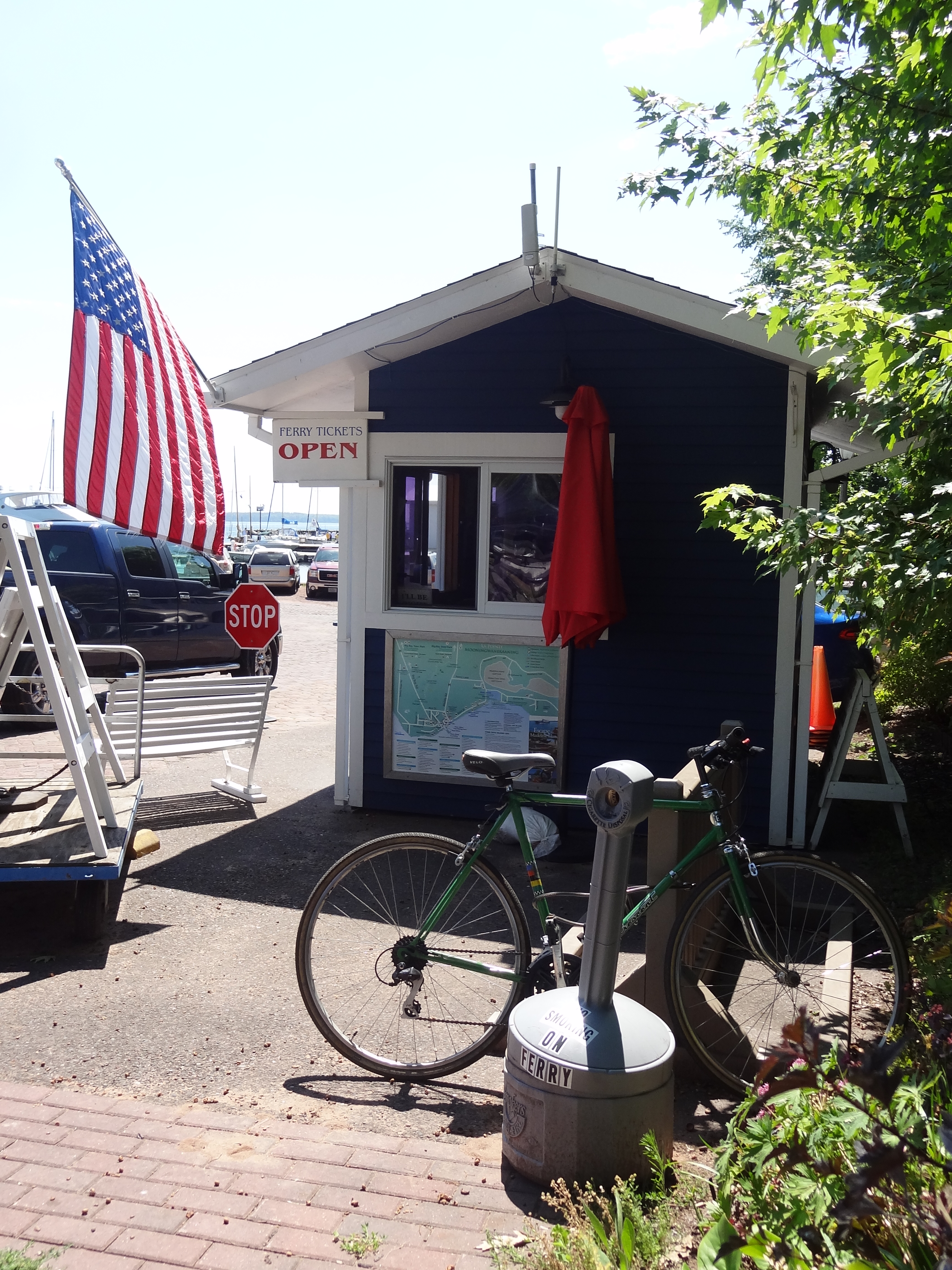
I recently meandered over to Madeline Island on the south shore of Lake Superior under such circumstances. Without prompting, the lady selling ferry tickets pointed to a sand spit in Big Bay State Park on a map and said, “If I was going to Madeline Island today, that’s where I’d head.”

I recently meandered over to Madeline Island on the south shore of Lake Superior under such circumstances. Without prompting, the lady selling ferry tickets pointed to a sand spit in Big Bay State Park on a map and said, “If I was going to Madeline Island today, that’s where I’d head.”

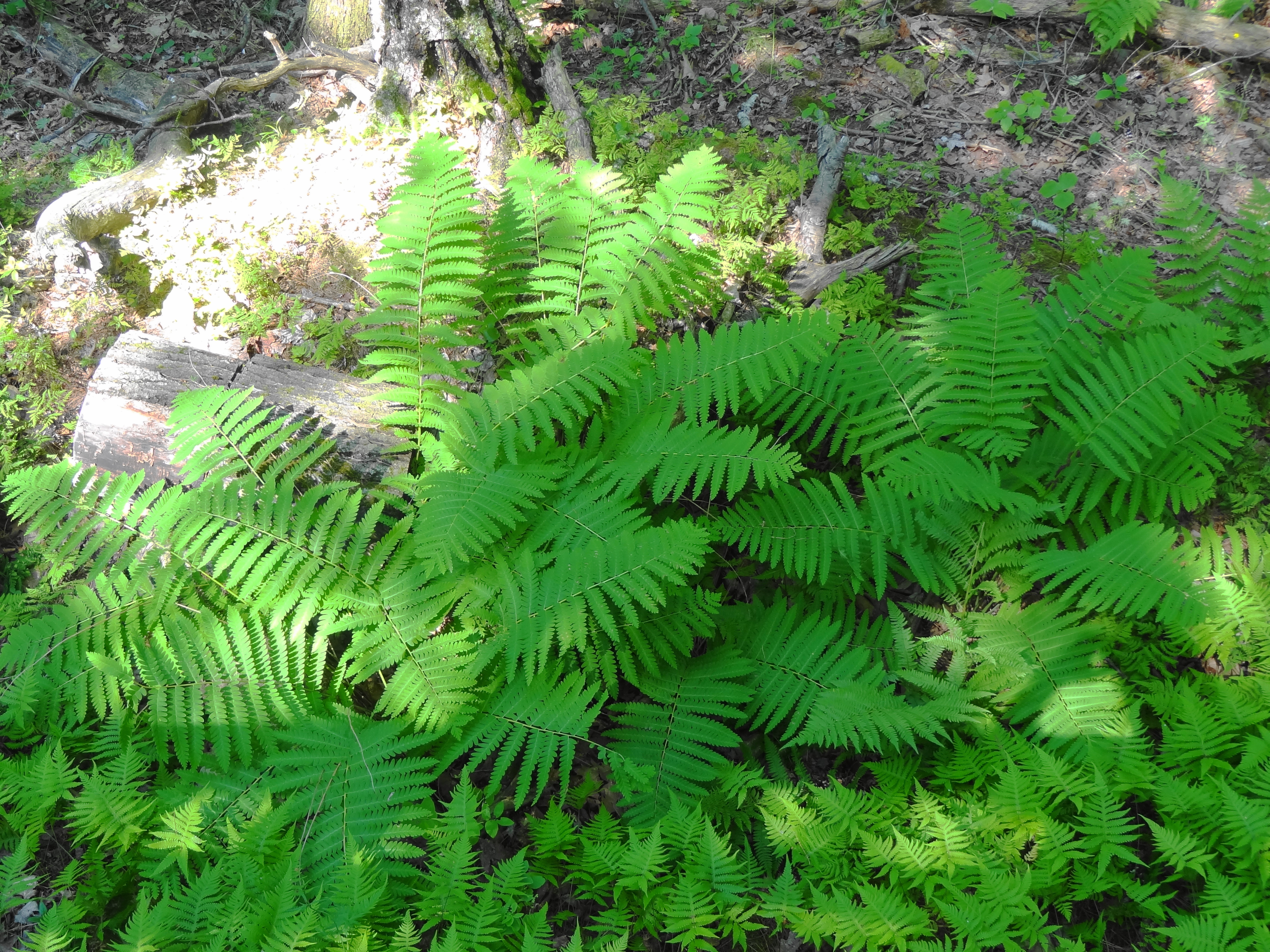
I figured she knew what she was talking about. While my coworker was in his meeting in the quaint town of LaPointe on the island, I drove to the park which, like any good cheap hotel, included an option to just pay for an hour. I located the trail to the sandspit and enjoyed a short hike through a verdant ferny forest...

I figured she knew what she was talking about. While my coworker was in his meeting in the quaint town of LaPointe on the island, I drove to the park which, like any good cheap hotel, included an option to just pay for an hour. I located the trail to the sandspit and enjoyed a short hike through a verdant ferny forest…

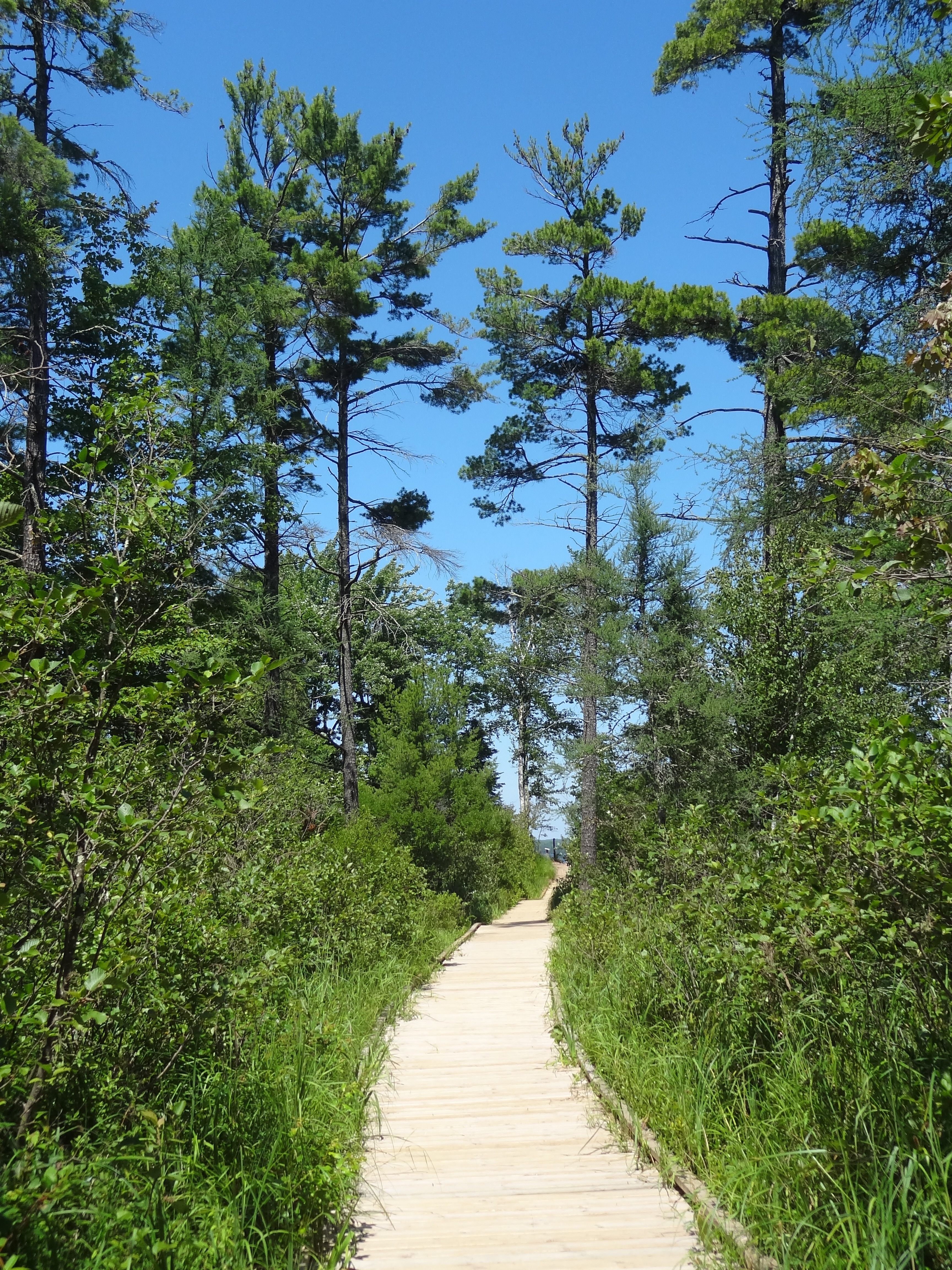
...that gave way to a grove of white pines just before the beach.

…that gave way to a grove of white pines just before the beach.

Dozens of swimmers enjoyed the cool waters of Lake Superior.

Dozens of swimmers enjoyed the cool waters of Lake Superior.

 I had just enough time to take off my sandals and wade in.

I had just enough time to take off my sandals and wade in.

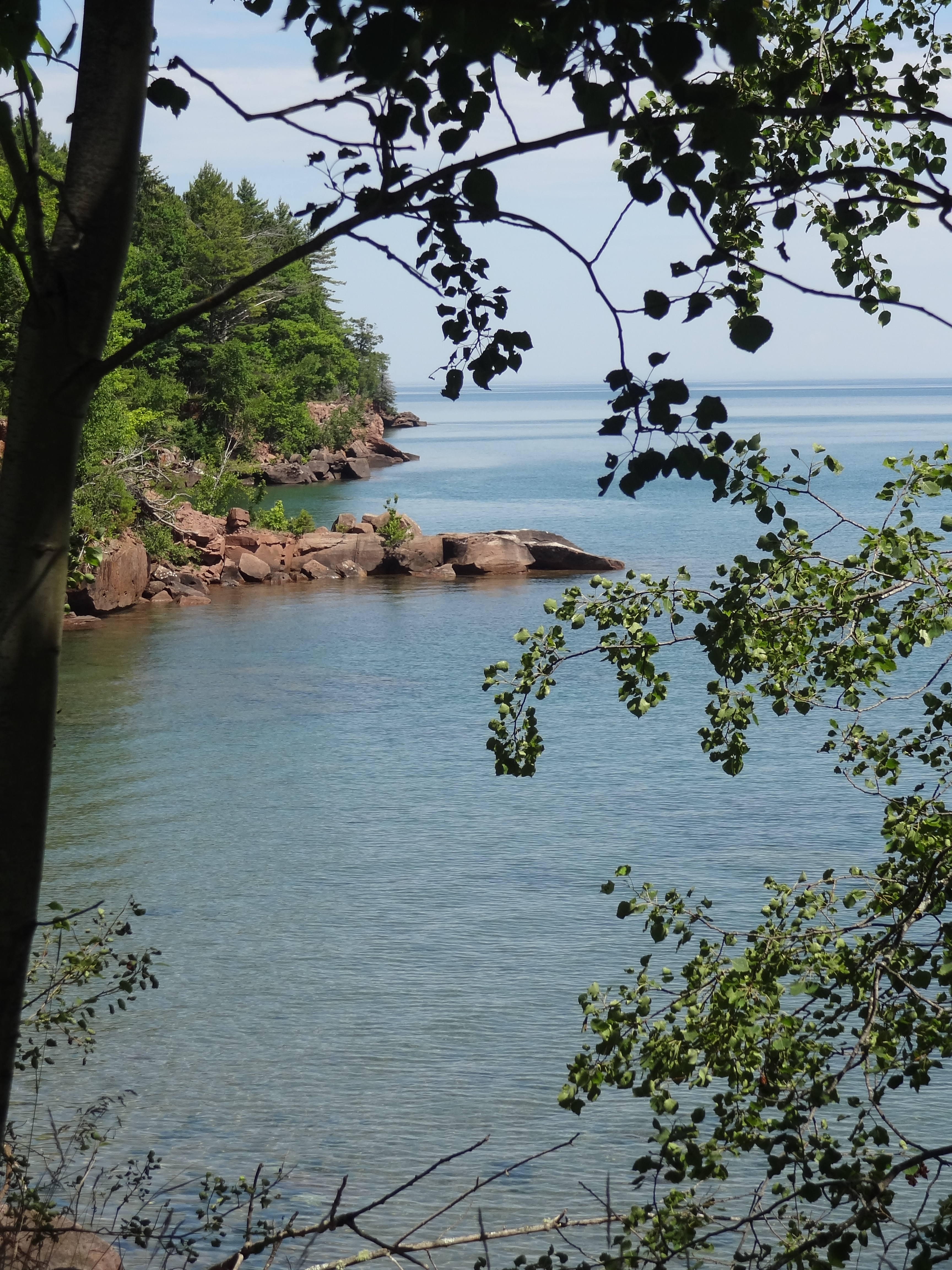
Then I departed and looked for a scenic overlook I noticed near the park entrance. The view was all right, but the beach was better.

Then I departed and looked for a scenic overlook I noticed near the park entrance. The view was all right, but the beach was better.

By now, I had fifteen minutes left to drive back to LaPointe. Once in town, I had time to snap photos of a few local landmarks before rejoining my coworker and heading for the ferry back to Bayfield.

By now, I had fifteen minutes left to drive back to LaPointe. Once in town, I had time to snap photos of a few local landmarks before rejoining my coworker and heading for the ferry back to Bayfield.

I think I’m in love. Seriously. I will return someday when I have enough time to do Madeline Island justice. Much more awaits.

I think I’m in love. Seriously. I will return someday when I have enough time to do Madeline Island justice. Much more awaits.

Nantucket Sleigh Ride Via Loon

Loons dancing in the morning mist on Tuscarora Lake in the Boundary Waters Canoe Area Wilderness. (Photo taken by me in the mid-1980s.)

Loons dancing in the morning mist on Tuscarora Lake in the Boundary Waters Canoe Area Wilderness. (Photo taken by me in the mid-1980s.)

Strange things happen sometimes in the Northwoods – this land where humans and animals live so near each other. When I was young (8? 9?) my family went fishing on a lake north of Duluth. While casting our lines, we noticed a loon swimming nearby, calling in an unusual manner. As outdoorsy types, we had heard many loons before, but this one sounded more plaintive than normal, like it was in distress.

The loon kept circling — swimming near us, which was also odd for this rather stand-offish species. My dad said something like, “I think that loon needs help,” so we canoed toward it. Soon we saw the problem. A homemade fishing pole crafted from a large branch trailed about fifteen feet behind the bird. My dad grabbed the pole, thinking he could just pull the loon toward us and find where the fishing hook was lodged in it.

Ha! He underestimated the power of the loon. Upon feeling the tug of the line, the loon took off and dove underwater. My dad kept his grip on the pole, and the loon proceeded to pull our canoe (and the three or four of us in it) through the water at a good clip.

Now, a Nantucket sleigh ride is what used to happen to whalers after they harpooned a whale. The whale would take off, towing the whaling boat and its occupants through the sea until the whale tired and surfaced. That’s what was happening to us, only our whale was a loon.

Soon the loon tired and my dad was able to pull it close enough to capture in his gloved hands. This in itself was a feat of daring. Adult loons are about the size of a goose, and their bills are long and sharp.

After my dad wrestled it onto his lap, we discovered the hook embedded in the bird’s neck. Imagine — all that force from our lake sleigh ride concentrated on such a fragile body part. But that hadn’t stopped the loon.

My brother handed my dad the pliers and he was able to remove the hook. We released the loon back into its watery home. As the loon departed, its call was different. Happier.

Was it saying thank you? I’d like to think so.

In Which I Learn About Aquaponics (and eat it, too!)

A salad made with aquaponic lettuce. Photo by Moira Harrington.

A salad made with aquaponic lettuce. Photo by Moira Harrington.

Last week, a small cadre of my co-workers and I visited an aquaponics facility in Montello, Wis., to learn more about this intriguing way to grow food. The types of food involved are fish and plants: walleye and tilapia, and just about any type of veggie one can imagine. This alone would be cool, but what’s even more notable is that the water used in the system is recirculated and reused, thanks to the wonders of bacteria and a specialized filter system.

The facility we visited housed joint operations by Nelson and Pade Inc. and the University of Wisconsin-Stevens Point. Nelson and Pade sells aquaponics systems commercially, along with the fishy and veggie fruits of their labor. UW-Stevens Point conducts research into new aquaponics methods.

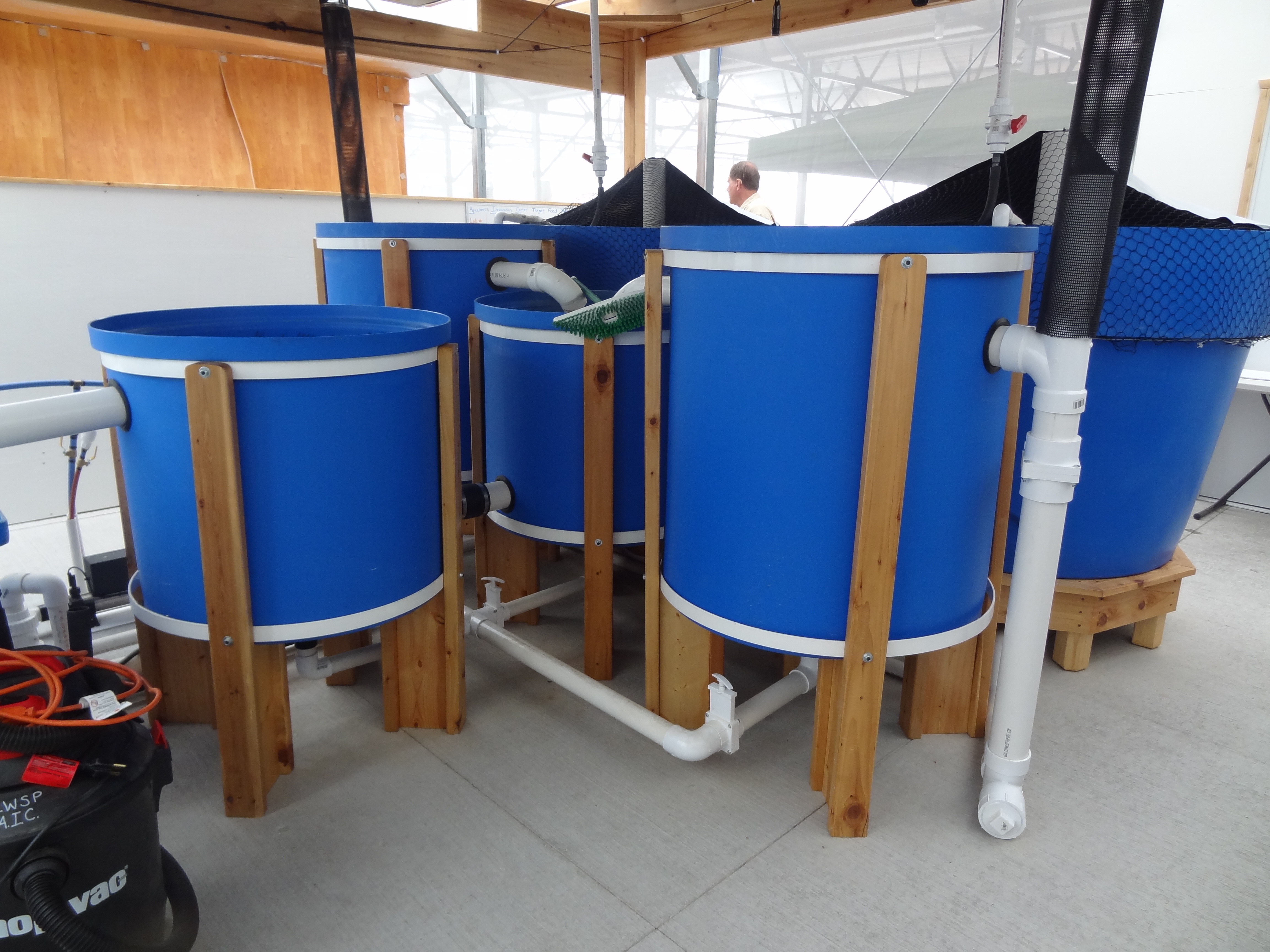
Aquaculture tanks that hold tilapia fish.

Aquaculture tanks that hold tilapia fish.

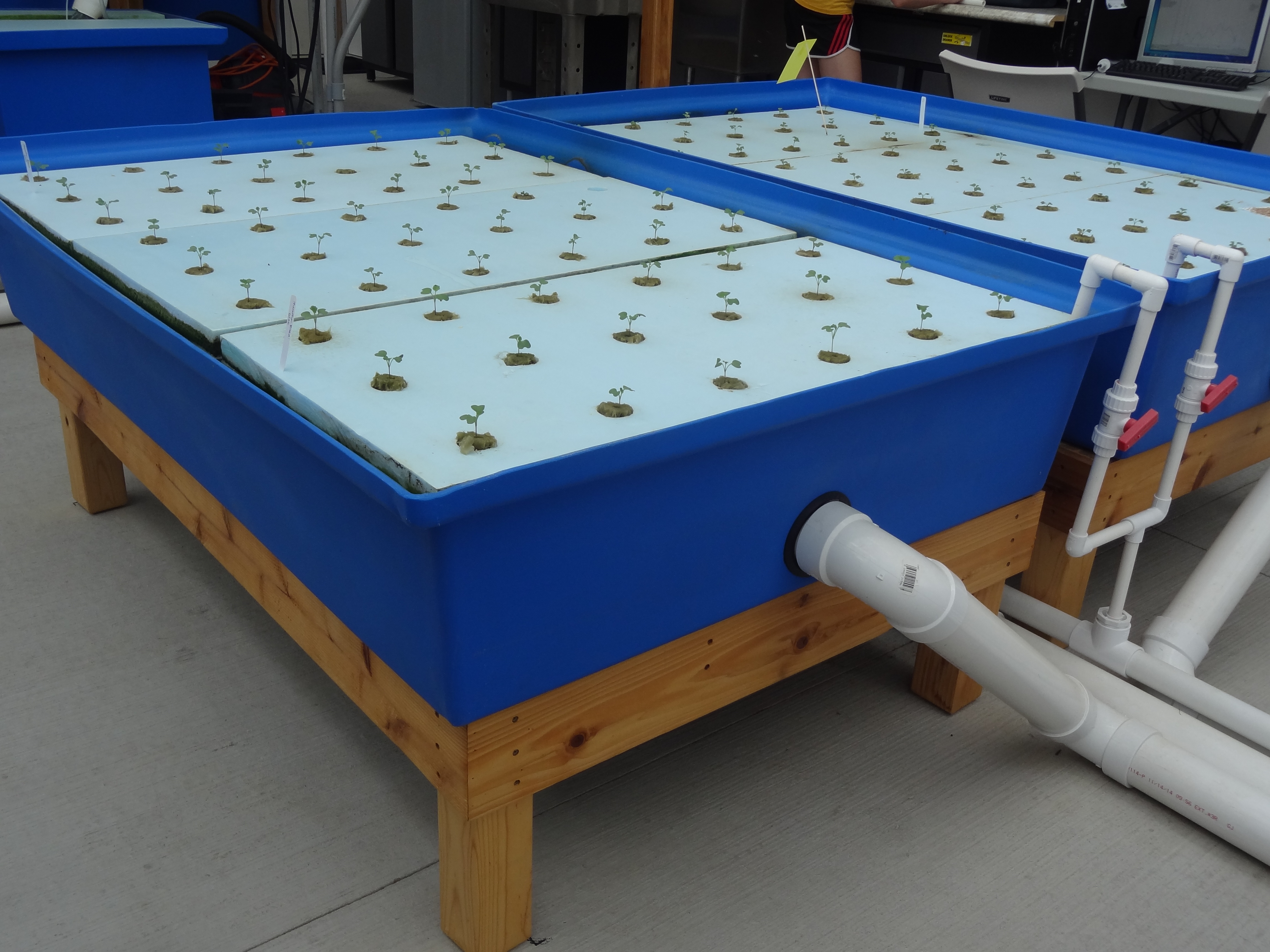
How does aquaponics work? Basically, the fish are grown in aquaculture tanks. The resulting nutrient-rich water from the tanks is filtered through several systems and pumped into plant-growing systems. The plants grow in their own individual base of porous rockwool atop the water in floating platforms. No soil is needed. The plants receive enough nutrients and natural fertilizer from the fish water to grow. The used plant water is then filtered again and recirculated back into the aquaculture tanks.

The goal with aquaponics is to provide a sustainable system for growing high-quality food. Pesticides aren’t used on the plants for fear they will contaminate the water and hurt the fish. Instead, natural methods are used like mites that eat pests.

The plant growing platforms.

The plant growing platforms.

The systems don’t take up much space or use much water after the first set-up, and they produce high volumes of food: ten pounds of plants for every one pound of fish. People can purchase systems small enough to fit in a home or classroom, to those large enough for family farms. My guess is that anyone able to keep fish alive in a home aquarium would be able to do the same thing in an aquaponics system. Sure, the aquarium in this case is a bit more expensive, but the concepts are the same.

To round out the tour, our group ate at a local café where aquaponics lettuce was used in a tasty strawberry walnut salad. It was super good. If you ever get the chance to tour such a facility or eat aquaponics-produced food, go for it!

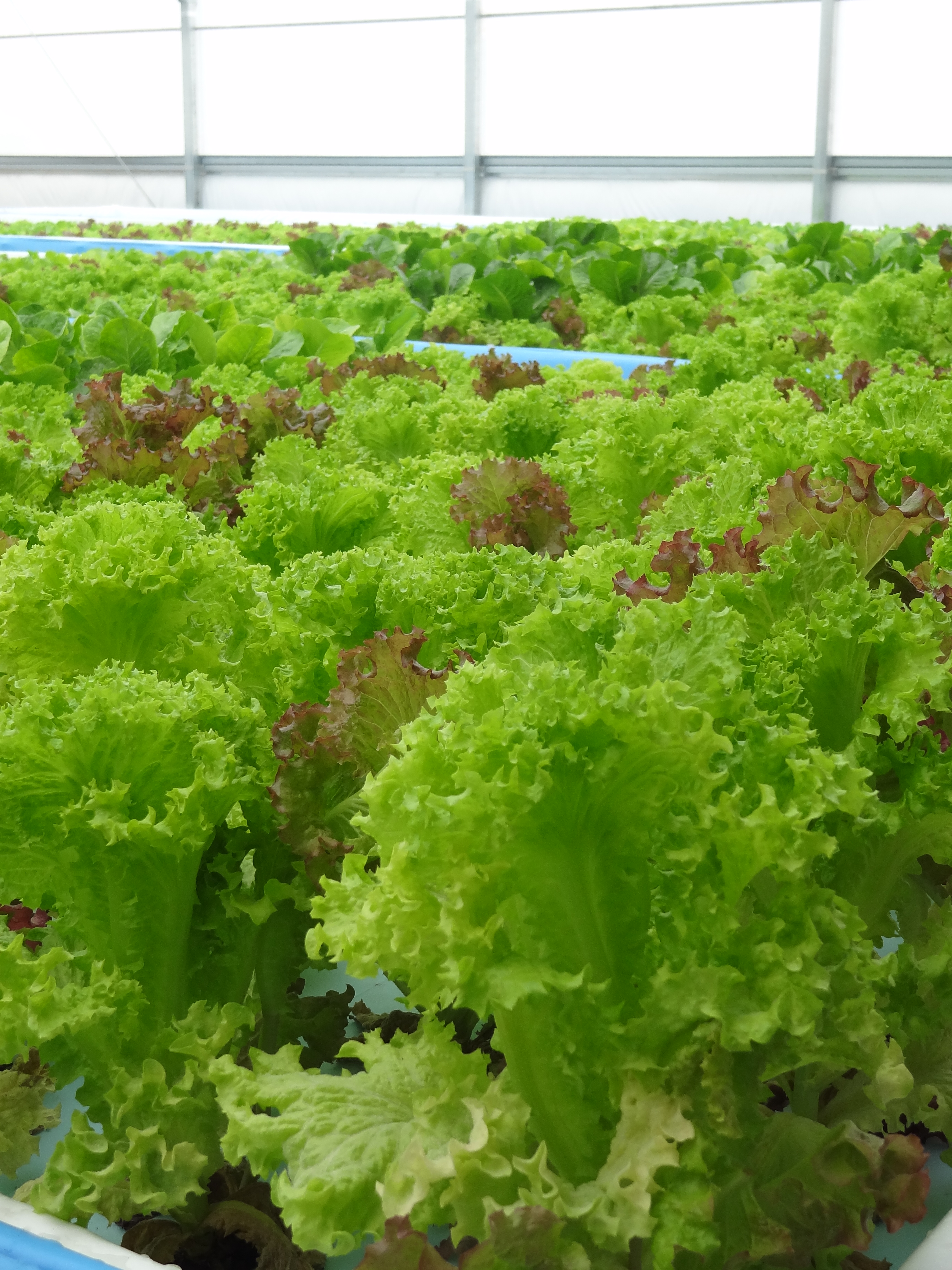
The luscious resulting lettuce.

The luscious resulting lettuce.