The Neanderthal in Me

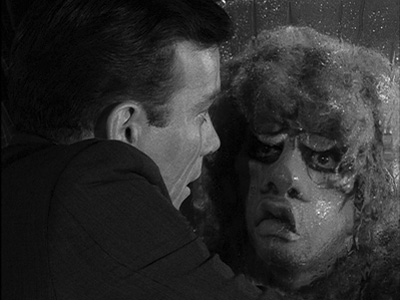
Neanderthal image from Wellcome Images, a website operated by Wellcome Trust, a global charitable foundation based in the United Kingdom.

Neanderthal image from Wellcome Images, a website operated by Wellcome Trust, a global charitable foundation based in the United Kingdom.

I figure a birthday is a perfect excuse to discover more about myself, so I sent my spit in the mail to 23andMe, a company that tests DNA. Each person’s DNA contains 23 pairs of chromosomes, thus the company’s name. And if you order one DNA test kit, you can get additional kits at a discount, so I requested one for my son, too.

Although several companies provide personal DNA testing, I’ve been watching this company for a while. They first came to my attention when I worked for a major medical center and one of the founders gave a presentation there. Back then, their DNA test cost too much for me: $500. But now the price is only around $100.

The doctors at this major medical center (which shall remain nameless) expressed concern that 23andMe was providing medical genetics results but no genetics counseling. They thought it was irresponsible to give people possibly alarming information without giving them a means to interpret it.

Turns out, the U.S. Food and Drug Administration thought the same thing in 2013, prompting the company to no longer provide medical results. Instead, they have limited their offerings to ancestry DNA and, as an exciting added bonus, you can discover if you have any Neanderthal DNA lurking in your family tree. If you wish to share your information with others who have used the service, there’s also the chance you could find relatives you didn’t know you had. And you can participate in research surveys.

So my son and I sent our saliva samples off. The company said it could take six weeks for results, but we started receiving ours in about two weeks. I’m still waiting for the final round of info, but here’s what I’ve learned so far:

  • I have more Neanderthal DNA in me than 66% of the population. Most people of European descent have a smidgeon of Neanderthal DNA, a relic of when our ancestors migrated out of Africa and mixed with the Neanderthals living on what eventually became the European Continent. My son has more caveman DNA than 98% of the rest of the population. Hmmm, what does that say about my ex? (Smirk.) And if you’re really enthused about your inner Neanderthal, you can buy a T-shirt on the company’s website proclaiming your Neanderthal DNA percentage.
  • There were rumors of Native American blood on my mom’s side of the family, and this test confirmed it. There’s not as much Native American DNA in my genes as we thought, but it’s fun to know that its there. There’s even a tinier bit of Middle Eastern DNA in me.
  • The biggest chunk of my ancestry is from English/Irish/Scottish stock. This must be why I feel I have a Gaelic soul (see previous blog post about this). The next largest chunk is German/French. A tiny bit of Scandinavian rounds it out.
  • Singer/author Jimmy Buffet (who is Wastin’ Away Again in Margaritaville) is a distant relative on my mom’s side. I hear he has a thing for islands. I am an isle-o-phile, too. Maybe it’s in our genes. (I also like margaritas!)

As I am a bit of a science nerd, this was all very fun to learn.  I hope that someday the company will be able to provide medical DNA results again. I gave them permission to store my sample in hopes that they can test it later for this purpose.

Yes, it is rather scary that this company now has genetic information on gobs of people, and although customers can sign off on how much of that info they are willing to share, in the end, the company has it and could do whatever they wanted, I guess. In my case, curiosity won out over paranoia.

Mother’s Day is coming up. Maybe dear old mom would like to embrace her inner Neanderthal?

Marie Versus the Cockleburs

An ant receiving honeydew from an aphid. Image credit: Wikipedia.

An ant receiving honeydew from an aphid. Image credit: Wikipedia.

I’ve been in a fifteen-year war against cockleburs and deadly nightshade in my back yard. After my latest experience today, I fear the weeds are winning.

At least once or twice each summer, I take to the terraced land in my back yard to rid it of the worst weeds. The area isn’t mowable, so I’ve just let it grow. It’s held together by rotting railroad ties that I intend to replace with brick walls someday when my ship comes in. My ship is far out to sea yet, so I just do what I can to control the weeds.

I can live with tansy, but because young children live in the neighborhood, I pay particular attention to the nightshade, which grows bright red poisonous berries alluring to small children. And because my dog Buddy has hair that attracts burs with an unnatural magnetism, I hack the heck out of the cockleburs. Being averse to herbicides, I do the work by hand — except for one summer when I was lazy and wanted to see if chemicals were more effective. They weren’t.

Last summer, something halted my rampage against one cocklebur plant. I was just about to cut the five-foot tall stem when I noticed black ants and green aphids all over it. I was transported back to fourth grade when my class watched a black-and-white science movie about how ants farm aphids on certain plants.

Here was an ant-aphid farming operation going on in my back yard! How could I destroy it? Yes, I know that aphids are also considered pests. But the ants milk the aphids and live off their nectar (also called honeydew). How could I obliterate such ingenuity? Such industriousness? I couldn’t. I let the plant stand, intending to chop it down in late fall once the ants went into hibernation or whatever ants do.

But I didn’t chop it down. I forgot about it, until I saw the plant today, standing tall and prickly in my back yard, burs just itching to reach Buddy. Guilt-free now that no ant farms were involved, I chopped it down, plus the remnants of a few neighboring plants that I missed last year. I disposed of them in my yard waste container and went into my house, feeling satisfied at a job well done. I had completed my war on noxious weeds and was ready for another round with the coming summer.

Any feelings of victory were short-lived, however. As I sat down to take off my shoes, something prickly and round was lodged under my butt. You guessed it, the cockleburs had the last say.

Yo, Dorcas!

Some of my female ancestors.

Some of my female ancestors.

My ancestors had weird names. I was looking through a genealogy book for my mom’s side of the family recently, and came upon gems like “Experience.” Actually, there are several “Experience”s, and they were women who lived in the 1700s. Tell me, how can you make a nickname out of “Experience?” Spiery? Expy? It just doesn’t work. Maybe they didn’t use nicknames in the 1700s.

I know that names of virtuous traits were popular then – such as Prudence, Virtue, Hope, but Experience? Maybe it meant the opposite of Chastity? (Smirk)

Then there was Dorcas. And there are several of those poor women in my tree from the 1600s and 1700s. The name connotes whiffs of Dork and Doofus. I was so curious and disturbed by this name that I had to look up its meaning on several baby name websites.

One said: Dorcas — Derived from the Greek dorkas (gazelle). The name was borne by a Christian woman of Joppa who devoted herself to works of charity. She was raised from the dead by the Apostle Peter and converted many to Christianity.

Another said the name was used in America. The Aramaic version is “Tabitha” and that it means gazelle. In the bible, Dorcas was called Tabitha by the Jews.

Personally, I like Tabitha better, too.

With names like Ephraim, Menzies and Ruben, my male ancestors didn’t fare much better. There’s even an Ebenezer.

I suppose in the far future, should I be so lucky to still have descendants, they can laugh at my name, Marie. The urban dictionary (my favorite dictionary!) says it’s the French version of Mary. It’s a universal middle name. Also that it’s “the name for that irresistibly mysterious girl whom you see around often, yet know nothing about. An outrageously cute spontaneous person. Lovable, extremely intelligent, and slightly eccentric. Often resembling a nymph of sorts. Beautiful and trustworthy.”

Yeah, a nymph. That’s me! Actually, my mother told me I was named after a Catholic nun who took care of her when she was in the hospital having me. Sister Marie later left the order. Maybe because she was such a nymph.

Rockin’ the First Day of Kindergarten

Five-year-old me wearing my cowgirl outfit from my Grandpa. I suspect the card is from him, too.

Five-year-old me wearing my cowgirl outfit from my Grandpa. I suspect the card is from him, too.

Last night, I attended a performance of “Love, Loss, and What I Wore” – a play about the associations between women’s clothing and emotions. It reminded me of how my childhood friend and I rocked the first day of kindergarten.

When I was young, my grandfather owned a western goods store in southwestern Minnesota. He sold saddles, boots, and clothing. When we visited, I loved the smell of leather in his store, and riding the ponies, mules, and horses he kept on his land.

For my fifth birthday, he sent me and my neighborhood best friend, Jody, cowgirl outfits – shirts, short skirts lined with white fringes, cowgirl boots and western hats. Mine was blue and Jody’s was red. We were both horse crazy and loved those outfits — so much so that we decided to wear them the first day of kindergarten together. We wanted to be stylish, yes, but we also wanted to catch the attention of the boys by twirling our short skirts so they could see our underwear. We must have been pretty provocative five-year-olds!

Our first day of kindergarten went as planned, including the twirling. I don’t recall if it garnered any male attention, but for me, the cowgirl outfit was the first of many favorite clothes yet to come. And it made what could have been an intimidating experience into one of confidence and fun. Do you have any favorite clothing memories?

North Shore Spring

A frozen/melting waterfall in Gooseberry Falls State Park.

           A melting frozen waterfall in Gooseberry Falls State Park.

I meandered up the North Shore of Lake Superior last weekend, looking for signs of spring. Although no tree buds are out, the snow is all but gone (except in the shade) and the ice is melting on the rivers. I hope you enjoy these photos from the trip. Click on a photo below to see a larger image.

How I Fought for my Mole

Cindy-Crawford Style Noted

Cindy Crawford and her mole. Image from Style Noted website.

I have a skin condition (rosacea) that, if left untreated, will turn my face into a vein-strewn red mess. Years ago, I had an elective skin treatment to eliminate the broken veins that had snaked their way onto my cheeks and nose. It was a light laser treatment, which they said would “feel like a rubber band is being snapped on your face.” Let me tell you, it was a heck of a lot more painful than that! But the treatment worked well. Since some veins and other assorted age-related globules were beginning to appear on my face, I decided it was time to subject myself to more elective self-torture.

I went to a local plastic surgery clinic that has a skin care specialist. She took one look at me and gave me a facial to remove about seven years of dead skin. We discussed options for removing my globs and decided on the lamprobe, a device that uses high-intensity something or ruthers to zap the veins and bumps into oblivion. This option was cheaper than the laser treatment I had before, so I was all for trying it.

We discussed what she would remove on my face next week, once my skin recovered from the shock of the facial. Things were fine until we talked about the big juicy mole I have on my right cheek. Well, it used to be a mole until a couple of years ago when its color began mysteriously disappearing. Now it’s just a big bump.

I swear I could hear the saliva collecting in the skin care specialist’s mouth as we discussed zapping my mole. She wanted it to add to her collection of dead skin tissue that I’m sure she keeps on a shrine in a hidden room inside her home.

I panicked. Unlike the other unwanted spots on my face, my mole had been with me for as long as I can remember. It had become part of my identity. Sure, it wasn’t as sexy as Cindy Crawford’s mole, but I was uncomfortable at the thought of parting with it.

The specialist said I should think about it during the coming week, and let her know when I came back for the procedure. So I did. The more I thought, the more I knew my mole had to stay. But that old crone’s bump alongside my nose? That could go. All those bumps on my forehead? Those could go, too. Good riddance.

The day of the procedure the specialist showed me a small device (like a pen) that had a pencil-lead thin metal probe on the end of it. This is what she would stick into my skin, firing the high-intensity whatevers to zap my face.

Would it hurt? She wouldn’t answer that directly, instead saying how some patents “got tired” after the worst blemishes were zapped and sometimes decided to leave the rest for another time. That did not bode well.

She washed my face and we discussed again what would go. The mole? “It stays,” I said. I gave her the whole Cindy Crawford argument.

She countered with “But Cindy Crawford’s mole has color to it. Yours doesn’t. It’s just a bump!”

After further negatory comments on my part, she begged, “Are you sure you don’t just want it made smaller? I can do that.”

“We’ll see once we get to that point,” I said.

She began on my forehead and worked her way down my face. It @#$%^&*! hurt. Not as much as the laser, but enough that my back arched several times while the probe did its nasty work. Specialist Lady said I was doing wonderfully.

Somewhere in our conversation punctuated by small moments of intense stinging – like a wasp was having its way with my face — I asked her if anyone had ever tried to hit her because of the pain. She said a woman raised her arm once, but put it back down after the specialist called the woman’s attention to it.

When Specialist Lady arrived at my mole terrain, I knew by that point how much more it would hurt than the other things she’d removed. I turned a hard heart to her pleas and said no again. But I did let her take off a mole on my lower neck as a consolation prize.

However, it’s been a few days now, and my neck mole has turned into a colorless blob. I’m a bit worried it will stay that way and am regretting giving Specialist Lady even this bit of turf. Well, I guess if it stays a colorless blob, it will match the one on my cheek! Who knows? Maybe I’ll even become attached to it.

* * *

P.S. My  neck mole did eventually disappear, so the treatment worked!

A Sign of Spring

The Lake Superior Ice Project yesterday.

The Lake Superior Ice Project yesterday.

I’ve been chronicling the rise and fall, and rise again of the Lake Superior Ice Project on Barker’s Island in Superior, Wis. Efforts have now begun to dismantle it for the season. I suspect this was spurred a bit earlier than planned due to the high temperatures (40s and 50s!) we are experiencing and that are in the forecast for the next week.

Yesterday, crews from the Superior Fire Department sprayed the formation with a hose to knock it down. Funny thing was, although the formation seemed to get skinnier, no knocking occurred. Ice Man Roger Hanson apparently did his rebuilding job too well, and now his creation can’t be destroyed!

The Lake Superior Ice Project today.

The Lake Superior Ice Project today.

However, this morning, the lower sides of the thing have disappeared, so it’s on its way to destruction. The shape reminds me a bit of a Madonna, spreading her robed arms in a benediction upon the parking lot.

The snow is melting fast. Between the sculpture dismantling and the Apostle Islands Ice Caves closing for the season, dare we hope that spring is coming?

Help, help! I can’t find my dog.

Oh, there he is.

Oh, there he is.

Having nothing profound to say, I am posting photos of my dog. You haven’t heard from Buddy for a while – not since Christmas 2013. Oh yes, and when he shat upon my exercise room fantasy . In the meantime, he’s been perfecting the art of camouflage.

A highland cow. Courtesy of Wikipedia.

A highland cow. Courtesy of Wikipedia.

The photo above was taken last week. Buddy looks a lot different now, after a visit to the groomers. Buddy is a goldendoodle (half standard poodle, half golden retriever). He has actual hair that needs to be cut. This means he doesn’t shed (thank goodness!) But it also means he needs a haircut every six weeks or so.

DSC02511

Buddy after a haircut.

I always think he looks like a Scottish highland cow before his groomings. Some of my friends think he looks more like a sheep. Whatever the impression, afterwards, he looks more like a doe-eyed African gazelle. Although he weighs 75 pounds, he looks about 20 pounds lighter with all that hair gone. And he’s less likely to disappear into the carpet.

The Dolphin Who Ate Fish at my Feet

A dolphin beaching itself to catch fish it has pushed ashore. Cumberland Island, Georgia.

A dolphin beaching itself to catch fish it has pushed ashore. Cumberland Island, Georgia.

I once lived outside for nine months (September – May), traveling North America. The experience was through the Audubon Expedition Institute and I was working toward a graduate degree in environmental education.

While on the trip I learned I was not there for the academics but for the adventure. And there certainly was a lot of adventure. It was 1986-87 and we travelled from New York City up the East Coast to Maine and Nova Scotia, Canada. Then we took the ferry to Newfoundland. We went all the way to the northern tip (you can see Labrador and icebergs from there) and then headed back south, eventually reaching all the way to Key Largo, Fla. From there we headed West, making it to Canyonlands Utah before the yellow school bus that was our home had a fatal break down.

Along the way we tented and cooked our meals over campstoves. We sometimes lived for a week in a fishing village, or among Buddhist monks or uranium miners. We visited with local experts, learning about environmental issues and how the locals thought about the land and sea. We took hikes, canoe trips, and snorkeling excursions; swam with manatees; danced contra dances; joined pow wows and local organic fairs; and were privy to Native American ceremonies.

Me on the moors in Newfoundland, looking for caribou, circa 1986.

Me on the moors in Newfoundland, looking for caribou, circa 1986.

I got so acclimated to living outdoors that when I came home to my parents for breaks, I slept in the backyard, even when it was twenty below. My body was so used to revving up with heat at night, that I got too hot sleeping indoors. I also remember when we visited a medicine man in Boston (Slow Turtle). Twenty of us crowded into a skyscraper conference room to speak with him. That, combined with being in a heated space, made me feel faint. I had to go outside to cool off for a while.

The experience was like a combination of “Survivor” and one of those bachelor/bachelorette reality TV shows. We began with twenty-four people, but through a process of mostly self-elimination, ended up with twenty.

All this is a long preamble to what I really want to write about, which is an experience I had during the expedition with a dolphin on Cumberland Island National Seashore in Georgia. We spent several days on the island among wild horses and armadillos, hiking from one end to the other, mostly along the beach on the Atlantic side. On the other side of the island, a salt marsh and river separate it from the mainland. One evening, we camped on the mainland side. We had eaten dinner and several of us were hanging out by the water as the sun started to set.

Then the dolphins came. Two of them swam alongside the muddy banks of the river, peeling off into circles. We didn’t realize it until later, but the dolphins were corralling fish with their bodies. When enough were captured in their water circle, they rushed toward the bank. The fish were stranded on the bank, easy pickings for a dolphin who doesn’t mind a little air time itself. . I learned later that this behavior is indeed called strand feeding. Here’s what I wrote in my journal:

We run down to the Brickhill River like lunatics, insatiable for a rare glimpse into the workings of nature. We try not to get too close and scare the dolphin away, but it’s hard. We follow the dolphin as it swims along the shore, the deep mud sucking at our shoes.

The mammal tips on its side and looks at us with a dark gray eye – two, three times. It corrals the fish and rushes the bank, its whole body breaching again. We go mad. Paul jumps up and down, saying he’s seen God. I click photos like I’ve got a roll of thirty-six instead of only four photos left. Our oohs and ahhs echo across the sunset.

The dolphin wriggles its body back into the water comfortably. It swims back upriver and down. Its companion across the way breathes five times in quick succession, and with that signal, they depart.

Despite the shortage of film in my old-fashioned 35mm Olympus, I managed to snap a good picture of the dolphin doing its work. And it was just a few feet away from me – close enough for us to see eye-to-eye. It’s an experience I’ll never forget. It filled us with wonder and awe, and we felt a connection beyond time, beyond words to the place and each other.

Bye bye dolphin!

Bye bye dolphin!

It’s Aliiive!

The Lake Superior Ice Project.

The Lake Superior Ice Project.

The ice formation on Barker’s Island in Superior, Wis., is slowly “regrowing” after its collapse a few weeks ago. I took this photo yesterday. The formation (which reminds me a bit of the Crazy Horse sculpture in the Black Hills) is functioning as a tourist attraction, and is the subject of weekend light and music shows.