Flight Dreams: My Family’s Love of Aviation Spans Generations – Part 1

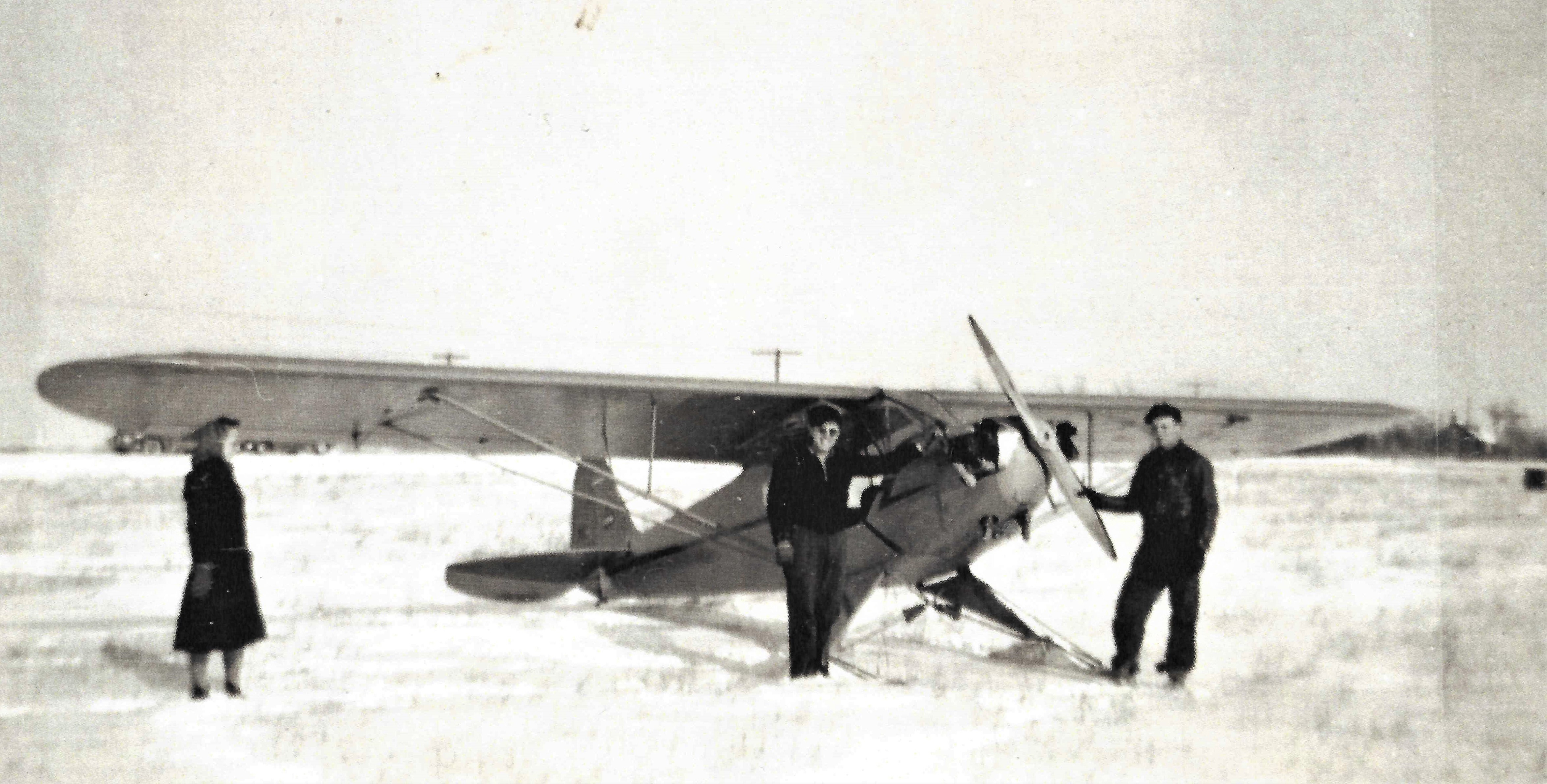
David Potter (left) and Dick Potter stand by their Piper J-3 Cub. The woman is unknown. Potter Family photo.

I spent much of the first part of 2024 researching and writing a story about flight and how it came to my family. It’s a tale of inspiration and dreams, but also one of tragedy. This was originally published in “Minnesota Flyer” magazine as a two-part series in October and November, 2024. Offered here with permission.

My family’s history with flight began in the 1930s in the fields and pastures of southwestern Minnesota in the little town of Springfield. The town’s population was around two thousand, about the same as it is today. The fertile black soil encouraged farming. Dry winds blew off the prairie, carrying the songs of meadowlarks. The roads ran straight as sticks, forming squares across the landscape in compass directions. The flat land was good for bicycling. The Cottonwood River flowed on the town’s eastern edge. It offered swimming holes for skinny dipping and was lined with huge trees of its namesake that offer shade for picnics. Dust storms often wasted the fine soil. Hailstorms broke windows and ruined crops.

The town’s Methodist and Catholic churches huddled near each other, outnumbered and surrounded by three Lutheran churches. The Chicago and Eastern Railroad crossed the southeastern end of town, following the river. Hobos rode atop the cars and peered from open doors in the empties as the train blew its whistle at crossings.

On the outskirts of town in a field on Shady Lane Farm, the mail plane flew extra low, entertaining two boys who broke from their chores and ran below, waving. The pilot waved back and tipped his wings to the Potter boys, David Edgar and Reuben Dick. The boys were lean and gangly, born five years apart. Sixteen-year-old David was the second born to a family with five children. Eleven-year-old Reuben, who went by the name Dick, was fourth-born, with ears that stuck out in the unfortunate Potter way. Both boys tended the farm’s Hereford cattle and sheep.

As the eldest son, David had a quiet confidence borne of instructing his brother and sisters. His chin was prominent and his smile ready. His friends called him a “slow talker.” He was a methodical deep thinker, but not the most ambitious person, especially when it came to the farm. However, when something interested him, he was energized.

Dick was also quiet, always listening to others, often with a smile on his face. When he did speak, it was to offer a wry observation. My mother, Dorothy, was their youngest sister.

By this time, both boys were smitten with a love of flight, no doubt due to Charles Lindbergh and his aerial accomplishments. Lindbergh’s record-breaking transatlantic flight took place only a few years earlier in 1927, when David was thirteen and Dick was eight. Lindbergh grew up in Little Falls, Minnesota, only 150 miles north of Springfield.

After Lindbergh’s 1927 flight came the “Lindbergh boom,” when interest in aviation exploded. Publicity surrounding the flight boosted the aviation industry and made a skeptical public take air travel seriously. Within a year, a quarter of Americans (an estimated thirty million) personally saw Lindbergh and his plane, the Spirit of St. Louis. This included my father, Howard Pramann, who grew up in St. Cloud, Minnesota, a mere 30 miles south of Little Falls. He recalled running out into the street with his neighbors as Lindbergh flew over their town enroute to Little Falls. People even clambered on rooftops for a better look.

Over the remainder of 1927, applications for pilot’s licenses in the U.S. tripled, the number of licensed aircraft quadrupled, and U.S. airline passengers grew between 1926 and 1929 by 3,000% from 5,782 to 173,405.

Eventually, Dick took flying lessons. Perhaps expecting his father’s disapproval, he kept the lessons secret, sneaking to the nearby town of Redwood Falls on Sundays for instruction when he didn’t have to work the farm. After Dick gained his pilot’s license, he finally told his father. As my mother described it, a “big crisis” ensued once that happened. Reuben probably understood all too well that he would lose his youngest son off the farm and into the air.

He lost his oldest son, David, to flight, too. Probably spurred by Dick’s experience, David took flying lessons, although his weren’t secret. Soon, he and Dick turned the fields by their farm into runways. Their sisters recalled seeing them take off and land in their Piper J-3 Cub. They were the first ones in Springfield to own an airplane, bought with their portions of the farm income.
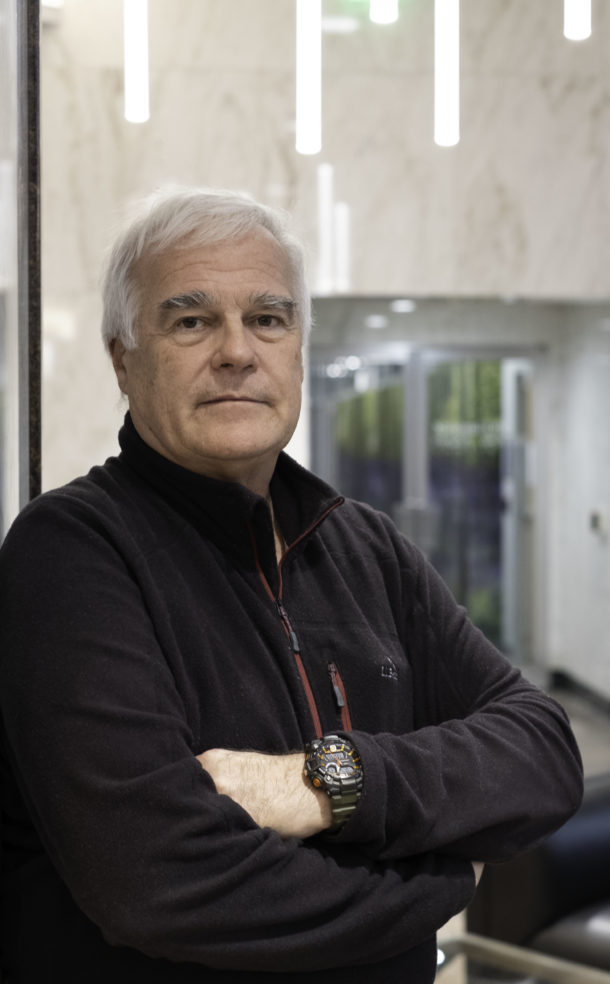
Brian Lindner. Image credit: Mark Bushnell

I don’t know if my mother ever flew with her brothers. I also don’t know if Reuben ever relented on his objections and flew with them. However, according to Brian Lindner, a personable and meticulous Vermont historian who interviewed both my mother and Uncle Dick for a project I’ll describe later, the young men cajoled their own mother to fly.

Lindner said, “She wouldn’t go. She says, I’m not going to walk that far out [into the field] to get into an airplane. And one day, the boys took the fencing down, brought the plane right up in front of the house, and said, ‘Okay, now you’re going up.’”

Eventually, an airport was built in Springfield, which David and Dick no doubt had a hand in. They built a small hangar for their plane (the airport’s first hangar) with a man named Fred Mottinger and flew on business trips to cattle auctions and meetings, as well as pleasure trips.

Besides Lindberg, Dick was probably also swayed by actor and pilot Jimmy Stewart and his 1942 army air force recruiting film, “Winning Your Wings.” In addition to outlining different options for enlistment, the movie revealed pay grades for various air force positions and portrayed the uniform wing pins as a way to attract women.

Whatever their motivations, the two brothers from Springfield loved to fly. Their joint goal was to fly the largest planes possible. David, especially, had finally found his passion, and it didn’t hurt that it was something that would get him off the farm.

Royal Canadian Air Force

When World War II began, David was twenty-four years old. He tried to enlist in the U.S. Air Corps but was rejected due to nearsightedness. Somehow, he learned that the Royal Canadian Air Force took pilots who wore glasses. David enlisted in 1941 and was based out of Port Hardy. He worked anti-submarine patrol around the Vancouver Island area, flying a Lockheed Ventura, a medium-sized twin engine bomber, over the North Pacific.

In letters home, David expressed his pleasure with these planes. He said they’re “not flying boats like I thought I would be on. Very happy about that. These planes have the most powerful engines built. When you open the throttles, things really start to happen!”
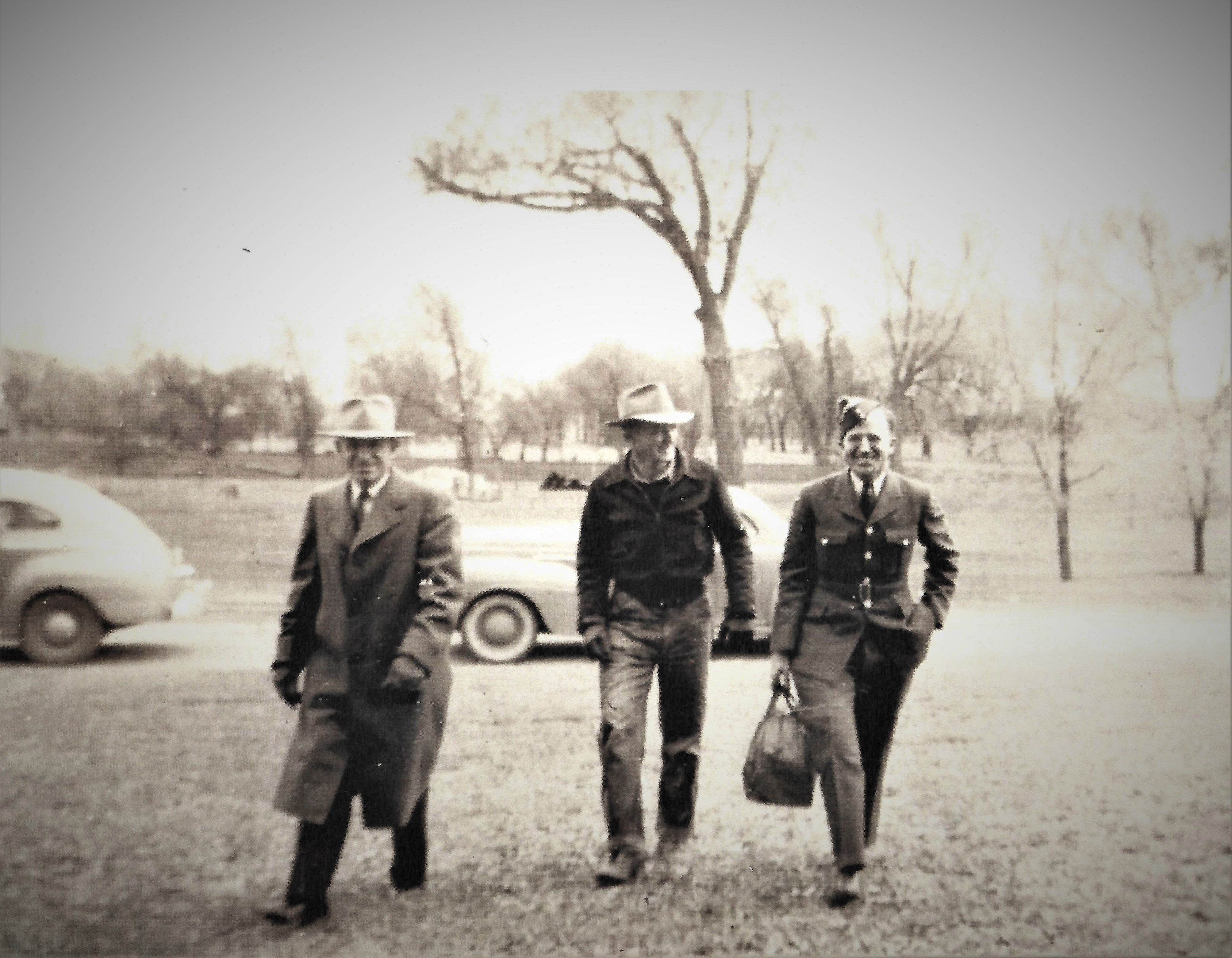
David (right) home on leave from the RCAF. Brother Dick is walking next to him, then his father Reuben. Potter Family photo.

He liked his situation, saying, “Don’t have to work very hard, in fact, it looks like this would be a very easy life.” The men got weekends off and were able to ride the streetcar 45 minutes into Vancouver for entertainment.

David described their station as “built amongst the tall pines, the runways are cut right through the trees. The good old Pacific is on one side of us with the mountains on the other. Can hear the surf pounding and the wind whistling through the pines. Sounds romantic, but don’t think it will be after a bit as we are really in the sticks.”

He chafed at receiving mail by boat only twice a week and the length of time it took for his hometown newspaper, The Springfield Advance-Press, to arrive. He was aware of censors reading his letters, but only once did information get cut from one. “Mail is about all we live for here, you know,” he said. Phone calls could only be made when he was in Vancouver and he couldn’t always get through to his parents.

Christmas 1943 was probably one of David’s first Christmases apart from his family. He missed them but seemed pleased with the presents he received by mail. He managed to hold off opening them until Christmas Eve. On Christmas Day, he participated in the tradition where officers and noncommissioned officers served a turkey dinner to the enlisted men. “It was a lot of fun for us and the men, I know, got a big kick out of it.”
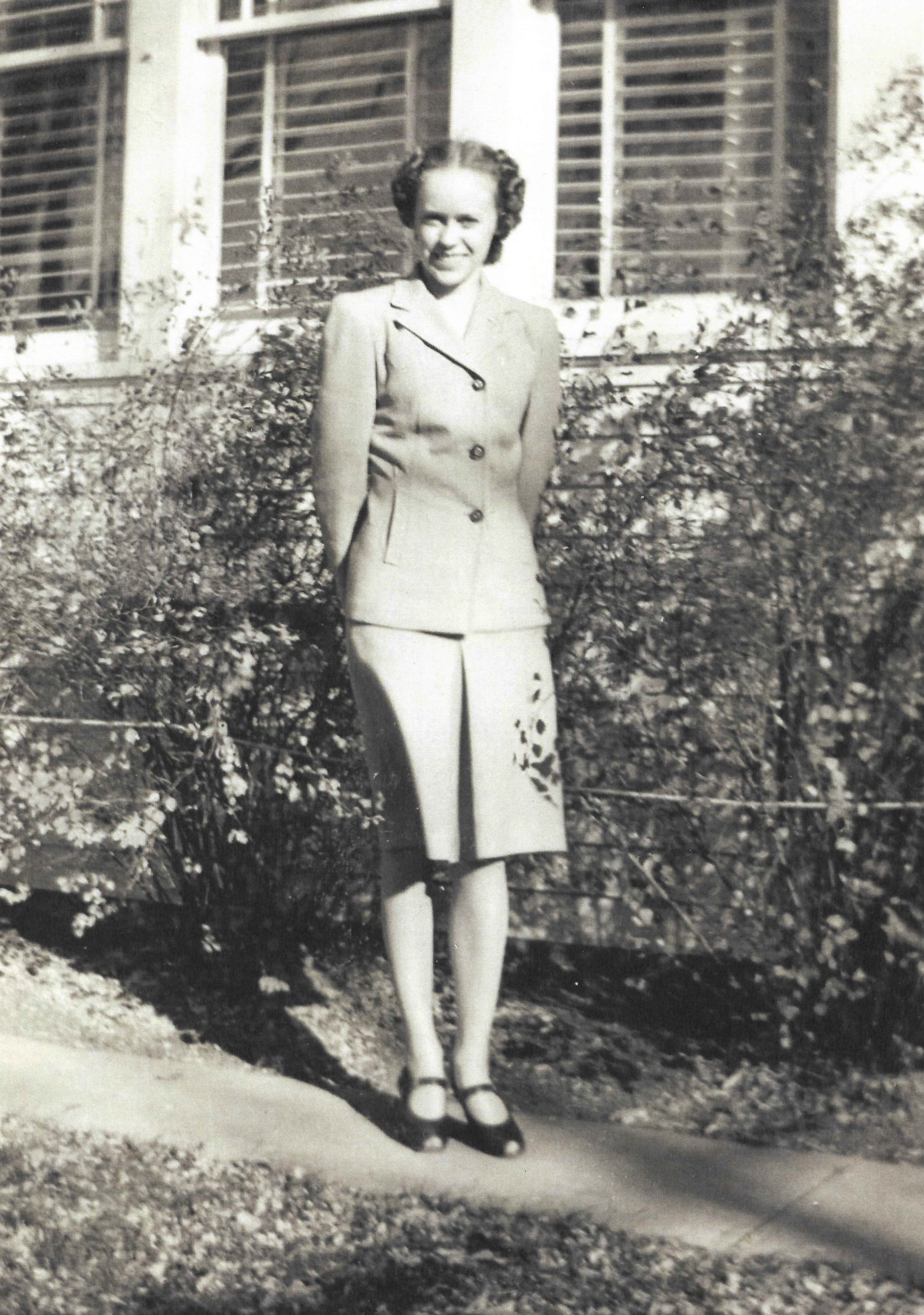
Inez Copeland. Potter Family photo.

Over a New Year’s break, he “saw quite a lot of this little lady friend that I met some time ago in Vancouver. Think she’s really O.K…” This woman might have been his future fiancée, Inez Copeland. (There’s some question about whether she was his official fiancée or a serious girlfriend. Whichever the case, they clearly became devoted.)

Lindner said that David’s methodical personality was “exactly the type that they wanted for bomber pilots in World War II. Your fighter pilots were young, aggressive, break the rules, you know, party, have fun. In the bomber crew pilots, they were looking for somebody that was much more refined. In my mind, he fit right into that.” David’s RCAF crewmembers noted his safety-consciousness and calm demeanor.

While in Canada, David was made pilot officer (the equivalent of a U.S. lieutenant) and a flight instructor. He got serious with Inez. Like many other couples of the time, they probably swing danced to “Jersey Bounce” by Benny Goodman on their dates, falling deeply in love.

Image courtesy of Wikipedia

David also had a brush with Hollywood. Producers for the movie, “Son of Lassie,” were looking for a pilot to fly a bomber for the movie filmed in Canada. David fit the bill and performed most of the flying scenes. The movie starred Peter Lawford and June Lockhart. It follows the adventures of Lassie’s owner who heads off to fight the Nazis with Lassie’s puppy son Laddie in tow.

My mother made copies of the DVD for my brothers and me. When I watched it, I was disappointed that I couldn’t see my uncle. The closest to that came when his silhouette appears in the plane’s cockpit during one scene where Laddie jumps up on the bomber’s wing.

But David’s dream to fly for the U.S. remained. In 1944, when the U.S. was hurting for pilots, they began accepting pilots with glasses. David would finally be a flyboy for his own country.

U.S. Army Air Force

David began his tour in Richmond, Virginia, filling out paperwork, making a new will, and giving his father power of attorney. Then he moved to Camp Springs Army Air Field near Washington, D.C.  When not on base, David was able to see sights like the capitol building, Pentagon, and Mount Vernon.

In one of his letters home he mentioned receiving “a lot of letters from Inez. She does a very nice job of letter writing, which really makes it O.K. for me.”

He was becoming accustomed to camp routines, “except for this getting up at six a.m. or earlier every morning! Sure miss the weekends off, too, that I had in the RCAF. The longer I’m in this outfit, the more I think of the air force up there [Canada], especially the way they treat their personnel. I guess, though, they have to be tougher here as everyone in this outfit seems to like to get away with all they possibly can.”

David returned from a visit to the Pentagon one afternoon, disgusted from learning he would not receive credit for his Canadian service, except for flying time. “Can’t wear the ribbons for serving up there and no promotions based on our record up there. I raised plenty of h—, but naturally, it didn’t do a bit of good,” he wrote home.

He was not impressed by the Pentagon’s internal layout, complaining that he needed “a navigator to find your way around! The guy who figured that one out must have been a little crazy.”

In August, he was moved to Westover Army Air Field in Chicopee, Massachusetts. He got “checked out” on the B-24 Liberator bomber and waited for a crew. In the meantime, he flew with the headquarters squadron as a copilot until he had enough experience to fly solo. Those flights took him to Ohio, New York City, and Bermuda. He loved the big planes, saying it was a “thrill to have those four engines out there.”

By the end of the month he was feeling more comfortable with the Liberator. That was, “until the instructor cut out the two engines on one side as I was coming in to land. I began grabbing everything I could and had my hands plenty full for a while. He caught me off guard that time, but believe me, he won’t again.”

In a letter to his sister Lydia, David complained that the army had been doing their best to make him an instructor but that he flatly refused. He wrote, “Makes me very mad, the idea that seems to prevail here–that being on a combat crew is an insult and anyone wanting it must be crazy. Have been offered so many jobs except what I want, that I think it must be a conspiracy.”

In late September he told Lydia that, “After much running around, digging through red tape, talking nice to high-ranking officers, and practically signing my life away, I got three days off this coming weekend!!!” He planned to take a six-hour train ride to visit his former RCAF crew in Montreal where they were stationed before leaving for combat in India. He envied them getting into the action. “Sure wish I was with them now,” he wrote.

“We plan to get together Sunday, and if I know the boys, it won’t be a tame one. I know what kind of a beating I’ll take from them as they always had some bright remarks to make about my being from the U.S. In all their letters since I left, they have given me hell for ‘deserting’ them!”
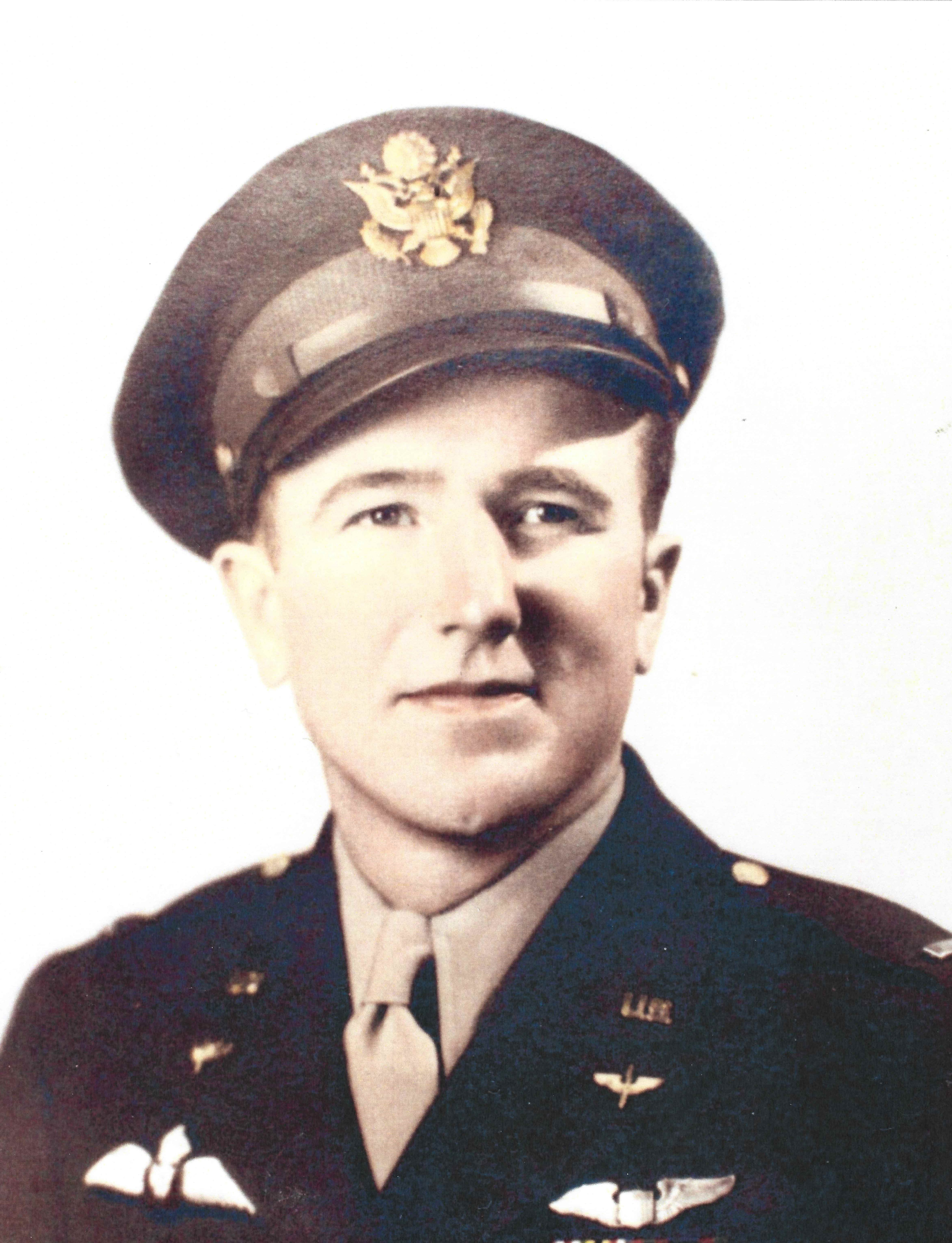
David in the U.S. Army Air Force, 1944. He was famous at Westover Field for being the only one who wore two sets of wings, one for the RCAF and one for the U.S. Potter Family photo.

After returning from Montreal, David was finally assigned his crew on October 7. This was not without controversy, however. Historian Lindner described it this way: “Just imagine you had this young crew. They’re like eighteen, nineteen, twenty years old. They’re high school kids. And they’re brought together as a bomber crew for over two weeks. They’ve got an eighteen-year-old pilot, his name was Eddie Stumpe. And they just bonded. These guys did everything together. And then boom, they wake up one morning and Eddie Stumpe has been removed as pilot. And he’s gone. And then they find this thirty-year-old guy is now their new pilot. Just imagine being that pilot. All of a sudden, I’ve got this crew that doesn’t know me, and they were in love with the first pilot.”

From interviews with one of David’s crew members, Lindner thinks Stumpe got replaced after he made several poor night landings. He was gone the morning after his last botched landing. Stumpe, however, saw things differently. He said to Lindner, “This guy comes down, and he gets in with all the officers, and he’s buddy-buddy with them, to the point where they let him take his pick of the best crew on the base, and he decided to take my crew, that’s the one he wanted, and that’s what forced me off.”

Squadron Commander Dick Hurd offered Lindner yet another viewpoint: “I got this eighteen-year-old-kid, very little experience. He’s a brand-new pilot. I’m responsible for every life on that bomber. And along comes this guy who’s thirty years old, highly experienced. He’s an instructor pilot. He’s got hundreds of hours of flying time. I said, who would you put on that crew? I take the least-experienced guy off and I put the most experienced guy on.”

As with most human situations, the truth is probably a blend of those three things. Nevertheless, when David became pilot, the crew quickly realized they had a winner. In a letter home, one crewmember said that after only two flights, “My new pilot is really good. He can really fly that thing. In fact, he is better than the instructors that we have flown with.” Another crewmember said David was a “hot rock,” which in World War II was a huge compliment. Lindner said that David was a patient man who inspired the confidence and respect of his crew.

David and his crew itched to get overseas where the action was. They worried that the war would be over before their training was completed.

For his birthday, David asked his parents for an alarm clock because it was impossible to get one on base. He anticipated needing to wake up at four a.m. once he got “on course.” That referred to his crew training course, which involved a regimented schedule of three days waking at various times and then repeating the cycle.

The alarm clock arrived quickly, much to David’s delight. He also began receiving the Springfield newspaper again and was excited by the news that the local baseball team won a championship.

He was still true to Inez. Responding to his father’s letter asking him about “eastern gals,” David responded, “I still think the western gals got it all over them. I mean, the far west one!”

He had a heavy schedule of flying and ground school and complained about not having spare time. When he did get it, he slept. David likened himself to an “old hen” with his crew, “trying to keep track of them, seeing that they get to all their classes and report for flying, etc. Have to listen to all their troubles, too!” Despite this, he said he was, “quite pleased with them all so far.”

Their training cycle began at six a.m. and ended at six p.m. The next day began at eight a.m. until three a.m. the next day. The third day began at noon and ended at eight-thirty p.m. Then it was lather, rinse, repeat! On top of this, David had ground school classes to make up that he missed from not being on the crew from the start.

Camel’s Hump Mountain

On October 15, 1944, the crew was nearing the end of their training runs before heading over to Europe. Much of the following account comes from Lindner, who has spent decades researching what happened next.

David and his crew of nine took off at night sometime before eleven p.m. from Westover Field. Their mission was to give the copilot, John Ramasocky, practice flying on instruments. According to Lindner, a canvas hood was snapped in place around Ramasocky’s side of the cockpit, which prevented him from seeing his surroundings.

The sky was clear when the heavy bomber roared down the runway and climbed to 8,000 feet. The plane headed toward Albany, New York, on the first leg of their flight plan, which called for them to fly over Albany, then Burlington, Vermont, turn southeast toward Manchester, New Hampshire, and then return to Westover Field in western Massachusetts.

Although the bomber was equipped to supply power for electrically heated flight suits, David and his crew were issued only fleece-lined leather suits. The electric flight suits were reserved for combat missions. This would play a role in the tragedy that was to come. For every thousand feet the plane climbed, cabin temperatures dropped about three degrees. The crew’s discomfort was compounded by cold air pouring in and around the drafty gun turrets.

At 11:42 p.m., the plane made its last radio contact with Westover Field. Shortly after, a drowsy Private First Class and top turret gunner James Wilson, age 19, decided to leave the crowded flight deck where the other crewmembers were huddled for warmth and conversation. Dropping through a trap door and climbing onto a catwalk through the bomb bay, he reached the rear hatch that lead up to the middle section of the bomber. Once there, he used the crew’s parachutes to form a bed and lay down on the floor. Within moments, he was dozing.

While Wilson dozed, the pilots apparently decided to employ an old aviation trick by bringing the plane down to 4,000 feet for the crew’s comfort. This raised the temperature of the cabin about 12 degrees. Although most of the mountains shown on their charts were below 2,400 feet, Camel’s Hump Mountain in Vermont, named for its dromedary-like peak, was clearly marked at 4,083 feet.

At about one-thirty a.m., the lights of Burlington appeared. The B-24 executed a right turn toward Manchester. Lieutenant Robert Geoffroy, the navigator, didn’t know that a strong autumn cold front was approaching with 50-knot south winds preceding it. Slowly, imperceptibly, the plane was pushed farther north than he realized. They were now flying directly at Camel’s Hump.

David and Ramasocky were seated at their controls. As Ramasocky studied the instruments under his hooded shield, David checked the plane’s altitude visually. But he couldn’t see much because they were over sparsely populated hills. The moon was new and well below the horizon. That, combined with safety blackouts, left Vermont in almost total darkness once they passed Burlington.

Flying at 190 mph, the bomber approached Camel’s Hump. For several hundred feet, it skimmed over bare rock and alpine tundra spruce. If someone wearing night vision goggles had been watching on the mountainside, they would’ve thought the plane was going to make it unscathed.

Nestled in his parachute bed, Wilson awoke to the sound of scraping, crunching, and tearing metal. He was bounced onto his feet and then knocked unconscious. A mere 18 inches of the plane’s left wingtip and the fragile bomb bay doors struck bare rock and the plane cartwheeled into the mountainside.

Because they couldn’t see the mountain, David and his crew probably had no idea what was happening. As the right wing clipped the tops of several small trees, did David have time to think of Inez, waiting for him back in British Columbia, or his beloved brother Dick who was training to be a Navy pilot in Texas, or his family back in Minnesota?

Then the wing and nose impacted the mountain head-on. The force ripped the tail assembly from the plane and flung it against a tree. The crew huddled in the nose would have died instantly as everything forward of the bomb bay disintegrated.

The instrument panel clock stopped. It was 1:58 a.m. on Monday morning, October 16, 1944.

Part 2 is next!
Marie’s Meanderings in Photos

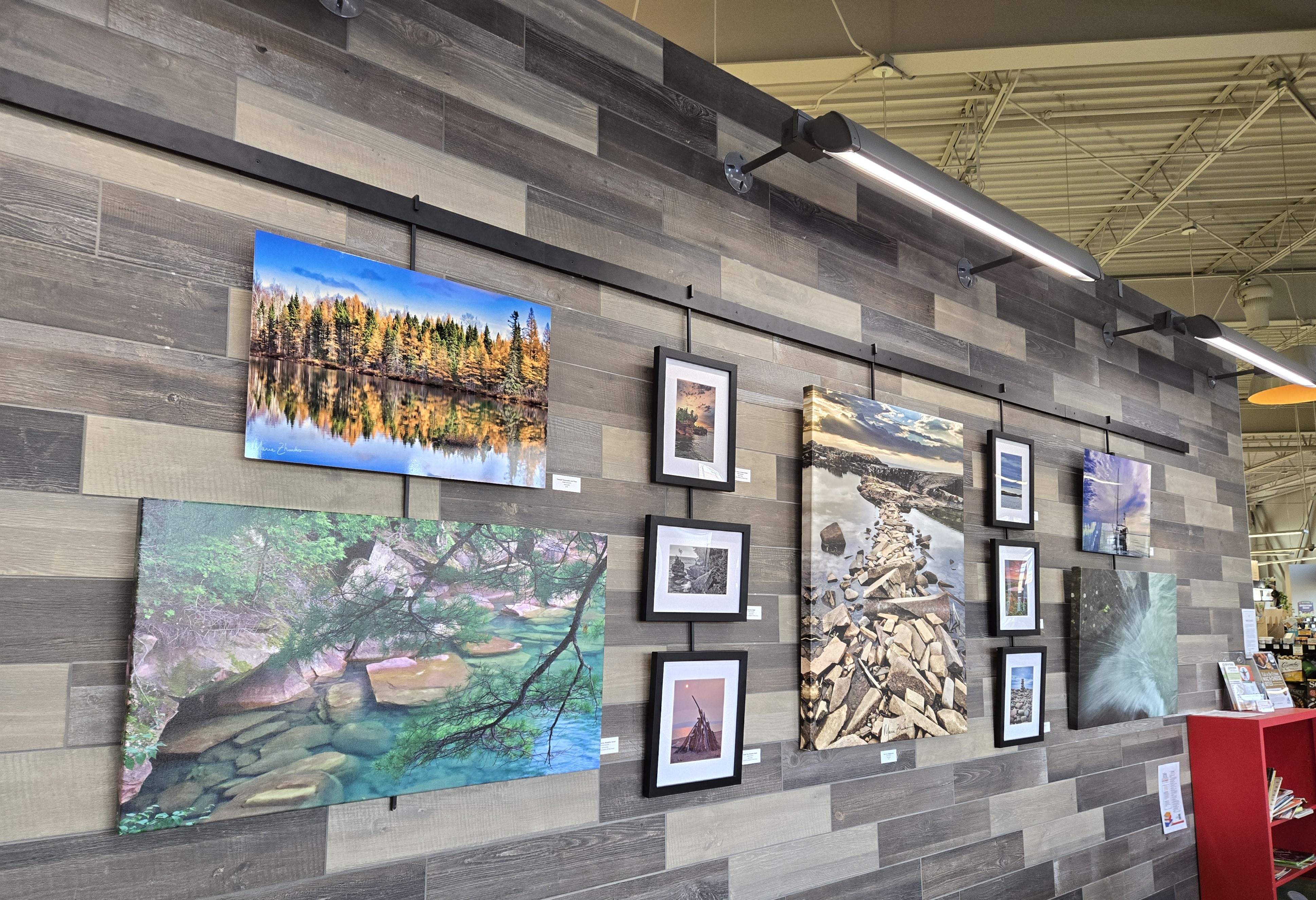
This week, I set up my second-ever public photo display at a local whole foods coop in Duluth, MN. I was selected for this opportunity months ago, so it’s been a long wait. I’m not the most patient of people, so this was very hard!

Unlike with my first display up the North Shore of Lake Superior in Grand Marais, I couldn’t just drop off my images (or my babies, as I like to think of them) and go. This time, I had to figure out how they would be hung. I wasn’t quite prepared for this but would like to think I rose to the occasion. I fell back on a technique I used to use for making informational display boards at work: begin with a major image and work outward.

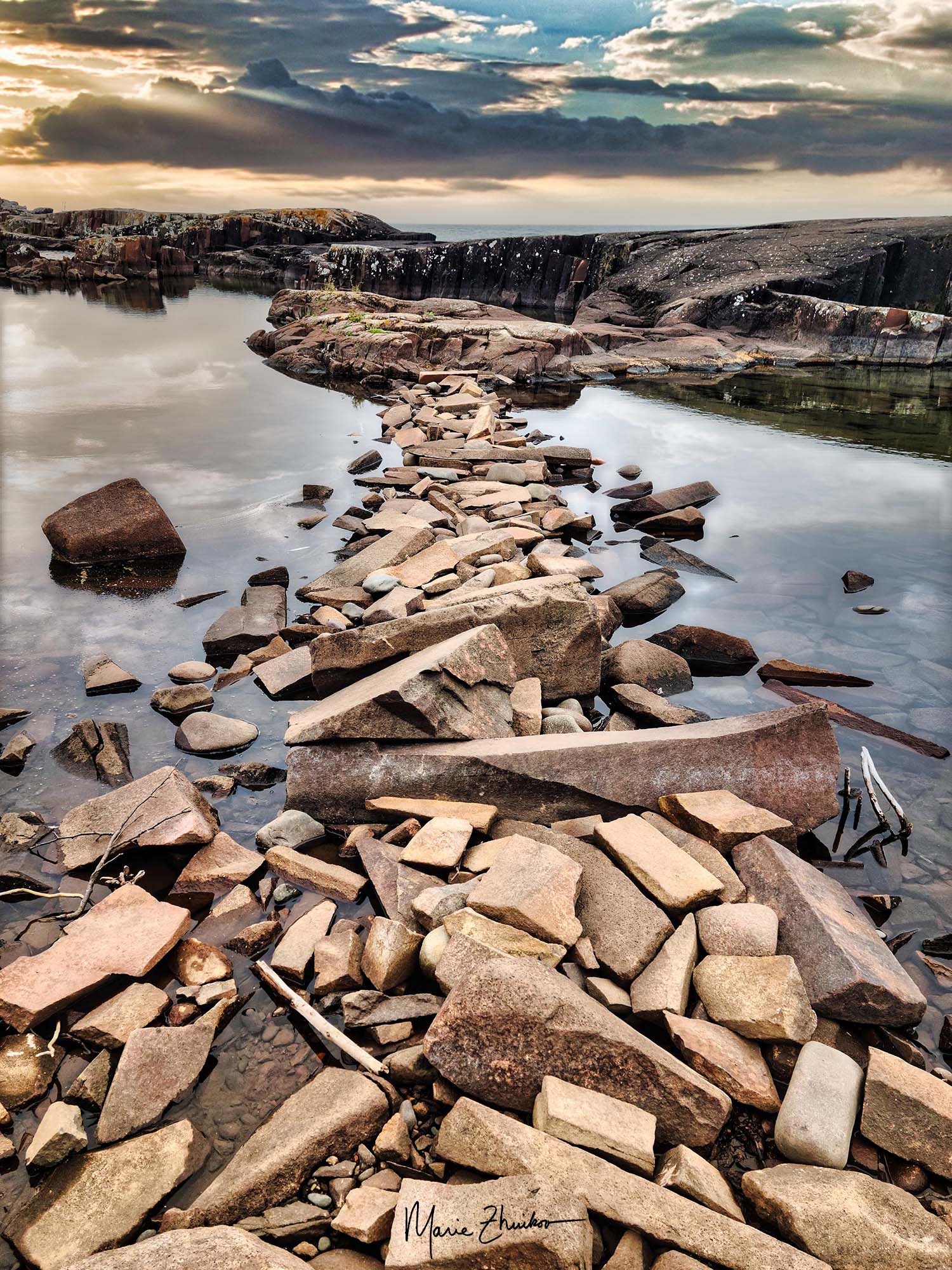
The Path to Enlightenment

We began with the largest image, a canvas print of stones leading into Lake Superior, which I call “The Path to Enlightenment.” Then we hung smaller images outside of it. They’re all photos I’ve taken during my meanderings. Some have been featured in this blog. I was pleased with the result, and I loved the faux gray hardwood backing they rest against.

For readers in the area, my display will be up at the Denfeld Coop (4426 Grand Avenue) for the month of November. They are for sale. If you’re interested, my contact info is on an artist statement that’s posted to the right of the images.

If you’d like to see more of my photos, please visit my website and pick a category, or two!

That Time I Lost a Canoe in the Wilderness

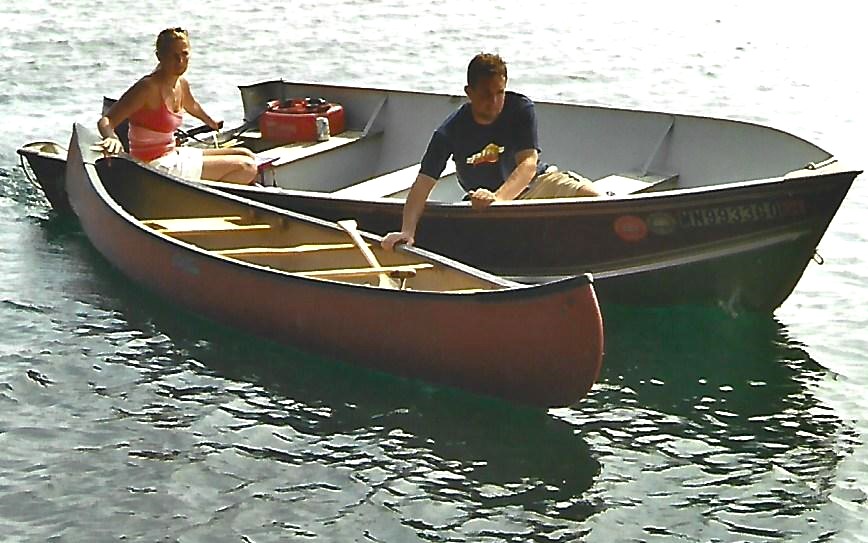
Me and my boys in our Old Town canoe, Clearwater Lake. Photo by Sharon Moen.

It was August 2003 and my friend Sharon and I decided it would be fun to do a mother/children canoe trip in Minnesota’s Boundary Waters Canoe Area Wilderness. At the time, my boys Hunter (4 yrs) and Logan (11 yrs) had been camping but I don’t think they’d been in the wilderness yet.

We planned to stay on Clearwater Lake, which I became familiar with years ago when I was a volunteer wilderness trail crew member for the Forest Service. I had fond memories of the clear water and impressive rock ledges on the campsites there. I used to work for the Forest Service and had been in the wilderness many times, so I was quite comfortable taking my children there in our red Old Town canoe without their dad.

Marie, Hunter, and Logan. Photo by Sharon Moen

Sharon brought along her two girls, Sierra and Savannah, and their dog. I can’t recall exactly how many days we camped – maybe two or three. The weather was great, and the water was warm enough for swimming. A submerged log lay not far offshore from our campsite and provided endless hours of entertainment for our children as they swam. They could stand and bounce on it, which made it seem like a wilderness theme park ride. A downed tree near our campsite also fascinated them.

Marie camp cooking. Photo by Sharon Moen

We spent evenings around the fire regaling each other with tales of our wilderness exploits and prowess. One afternoon, we decided to canoe to a campsite farther down the lake that I recalled was a good fishing spot. A large rock ledge with a deep drop off was also the perfect place for a picnic lunch. We beached our canoes on the small sandy beach at the empty campsite and the festivities commenced.

Sharon about to help Logan unhook his fish.

Later, Logan caught a fish. As Sharon was trying to unhook it for him, the hook went into her finger. I performed minor surgery to get the hook out and all was well. That was, until I noticed a red canoe floating across the lake.

“Huh, that canoe looks the same as mine,” I said to Sharon.

She looked at the beach where her canoe sat all by itself. “That IS your canoe!” she said.

What I, Miss Wilderness Expert, didn’t count on was the wind switching. Part of my canoe had still been in the water, enough so that it floated away.

I panicked. Losing a canoe in the wilderness is like losing your car in the city; maybe worse than losing your car because there’s no public transportation in the wilderness. I was ready to swim out and grab it. I’m not sure why I didn’t think of paddling to it in Sharon’s canoe with one of my children and having them hold onto the canoe so we could tow it back. Anyway, swimming was what made sense at the time. And time was of the essence before the canoe drifted farther away.

I was ready to jump into the lake when a couple in a motorboat happened by. Although motors are not allowed in most of the wilderness, there are a few lakes like Clearwater where they are allowed. I think it’s because there’s a resort on this lake.

“That your canoe?” One of them asked. When we responded in the affirmative, they followed up with: “Want us to get it?”

That earned an enthusiastic “Yes, please!”

Helpful motorboaters return my canoe. Photo by Sharon Moen

They grabbed the canoe, no problem, and brought it back to us. We thanked them profusely and I made sure that sucker was totally out of the water when I beached it this time.

Over the years, Sharon has made sure I don’t forget this incident. We trotted it out just last week when having lunch with a new coworker who wanted to know how long we’d been friends.

Although it was incredibly embarrassing at the time, losing my canoe was a good lesson about not getting too complacent in the wilderness or in life. You never know when the wind might switch.

The whole crew.

End of Season Paddle

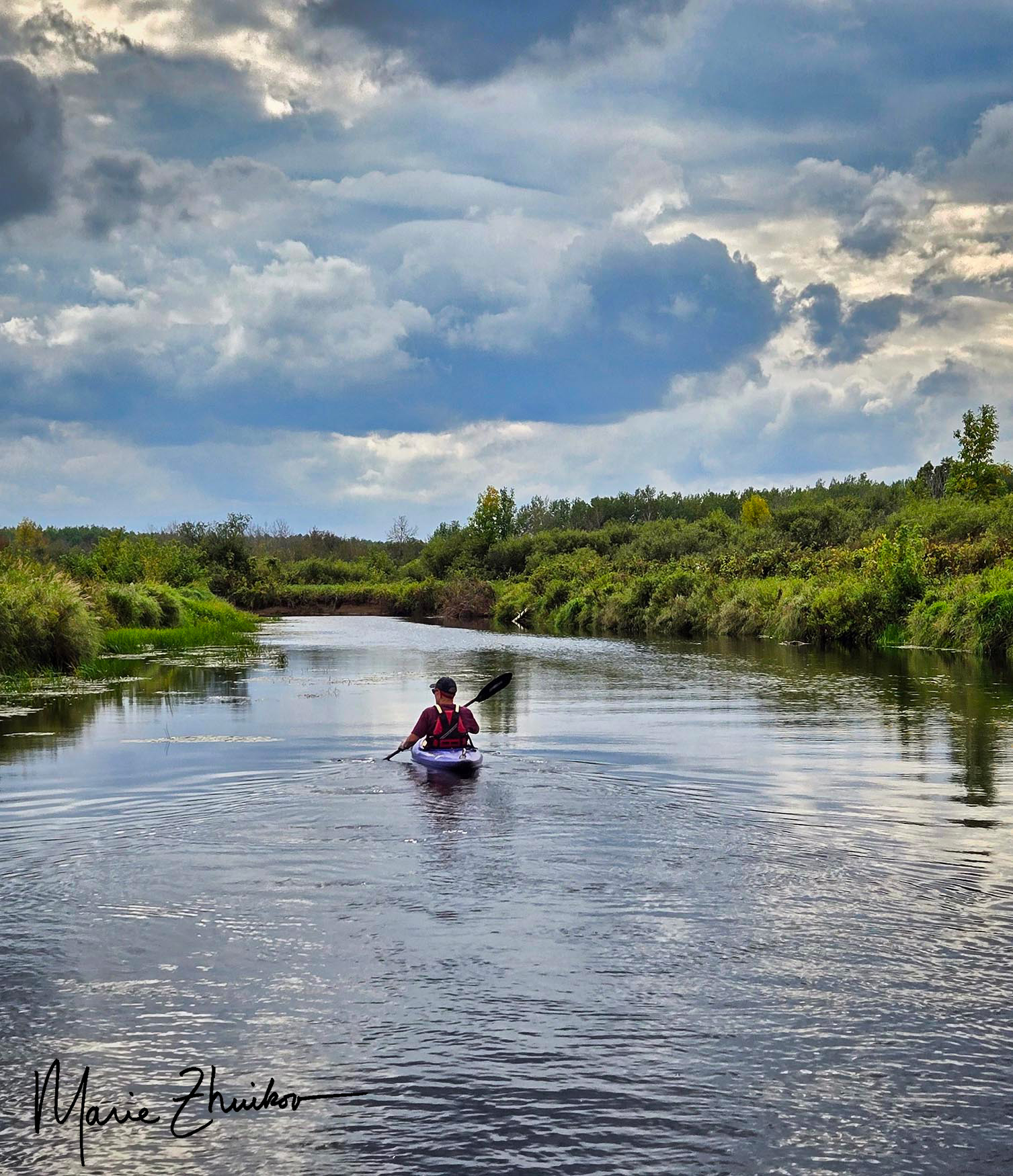
Russ and I took our kayak and paddleboard to a river near our cabin in northern Minnesota. We’d been on this stretch once before in a canoe. It was so calm, I vowed to return with my paddleboard some day. This was that day.

The fall colors were turning but not quite at their peak. We’ve had an usually warm fall and this day was no exception.

We paddled past beaver homes, some derelict, some not so derelict. Three Canada geese, disturbed by our approach, flew downriver to escape us several times. Fluffy white down feathers littered the backwaters where they must have spent the night.

Rain threatened, but never fell. After an hour paddling, we turned around to head back to the landing. We were going with the current this time, so the return trip was faster. My legs were quaking with fatigue when we reached the end of this long, end of season paddle. But my heart sang.

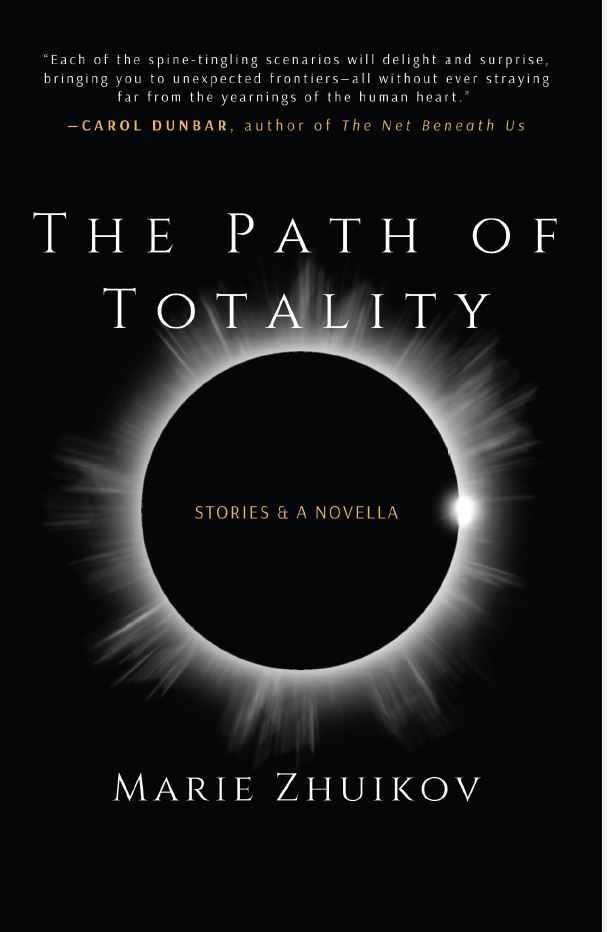
“The Path of Totality” is Coming!

A young man is mystified by why he can’t see an eclipse. A scammer falls for a woman he’s targeting. A nondescript gray house hides a secret from a curious woman walking her dog. A girl discovers a mummified Viking bog boy while on a birding tour. A college student gets trapped in a biosphere after hours. Hemingway’s stolen stories are found in New Jersey. Singing in the shower takes on a whole new meaning. And a librarian develops her own theories about the influence of trees. United by the power of appearances to deceive and captivate, these tales glisten with the magic and menace of everyday lives.

My next book is a collection of short stories and a novella. “The Path of Totality” is a meditation on the power of appearances to deceive and captivate. It’s being published by Cornerstone Press at the University of Wisconsin-Stevens Point and is now available for preorder at a 20% discount. The books will be distributed in February.

It’s already received some endorsements:

These stories concern everyday people discovering who they now are as opposed to who they once were. A grieving couple come to accept the death of their child. A woman pays too large a price for caring about a neighbor’s son. And in “Bog Boy: A Northern Minnesota Romance”—a gem of a story, a perfect story—a teen falls in love with someone suspended in time. Not all of Zhuikov’s characters find peace and harmony, for the damned soul and the broken heart and the heart’s longing are nothing to fool with. But the few who find love, for instance, Sheila and Peter in the long final story, enter paradise.

—Anthony Bukoski, author of The Blondes of Wisconsin

Richard Powers meets Gabriel Garcia Márquez in a collection that nonetheless could have been produced only by a singular sensibility— one firmly planted in a fully recognizable, verifiable natural world that’s also brimming over with mystery, wonder, and the fantastic. I love Marie Zhuikov’s brain. She’s both a scientist and a dreamer. These stories, rich in emotional metaphors that play out in magical ways, remind us to tread carefully and to always pay attention.

—Cheri Johnson, author of The Girl in Duluth (under the pen name of Sigurd Brown)

In settings strange yet familiar we meet characters who are sincere but possibly duplicitous in this new story collection spun by science writer Marie Zhuikov. Each of the seven, spine-tingling scenarios will delight and surprise, bringing you to unexpected frontiers—in a biodome, a graveyard, the husk of a living tree—all without ever straying far from the yearnings of the human heart. Reader, I defy you not to be curious.  

—Carol Dunbar, author of The Net Beneath Us

Marie Zhuikov’s The Path of Totality is a gem of a collection. These speculative stories explore a wide range of unusual situations with humor and insight, with empathy and heart. Readers will get carried away—just like these memorable characters get carried away—into imaginative worlds full of mystery and wonder. She delves into our longing for connections, how we respond in the face of strangeness and mystery beneath the ordinary.

—Jim Daniels, author of The Perp Walk

Please consider preordering while this discount is in place. You’ll be happily surprised come February. And thank you for your support!

Scotland Day 10: The Last Day!

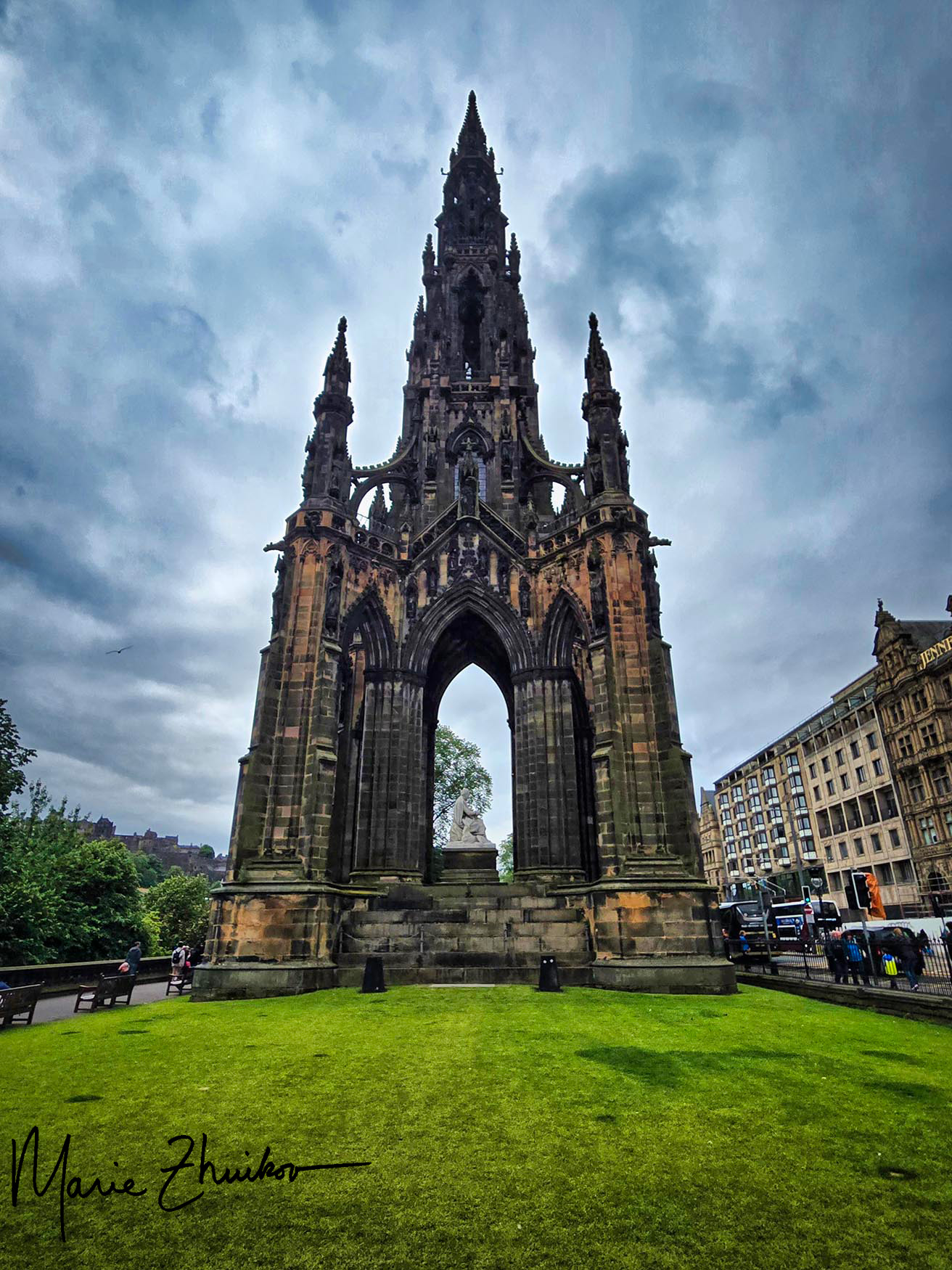
The Sir Walter Scott Monument, Edinburgh

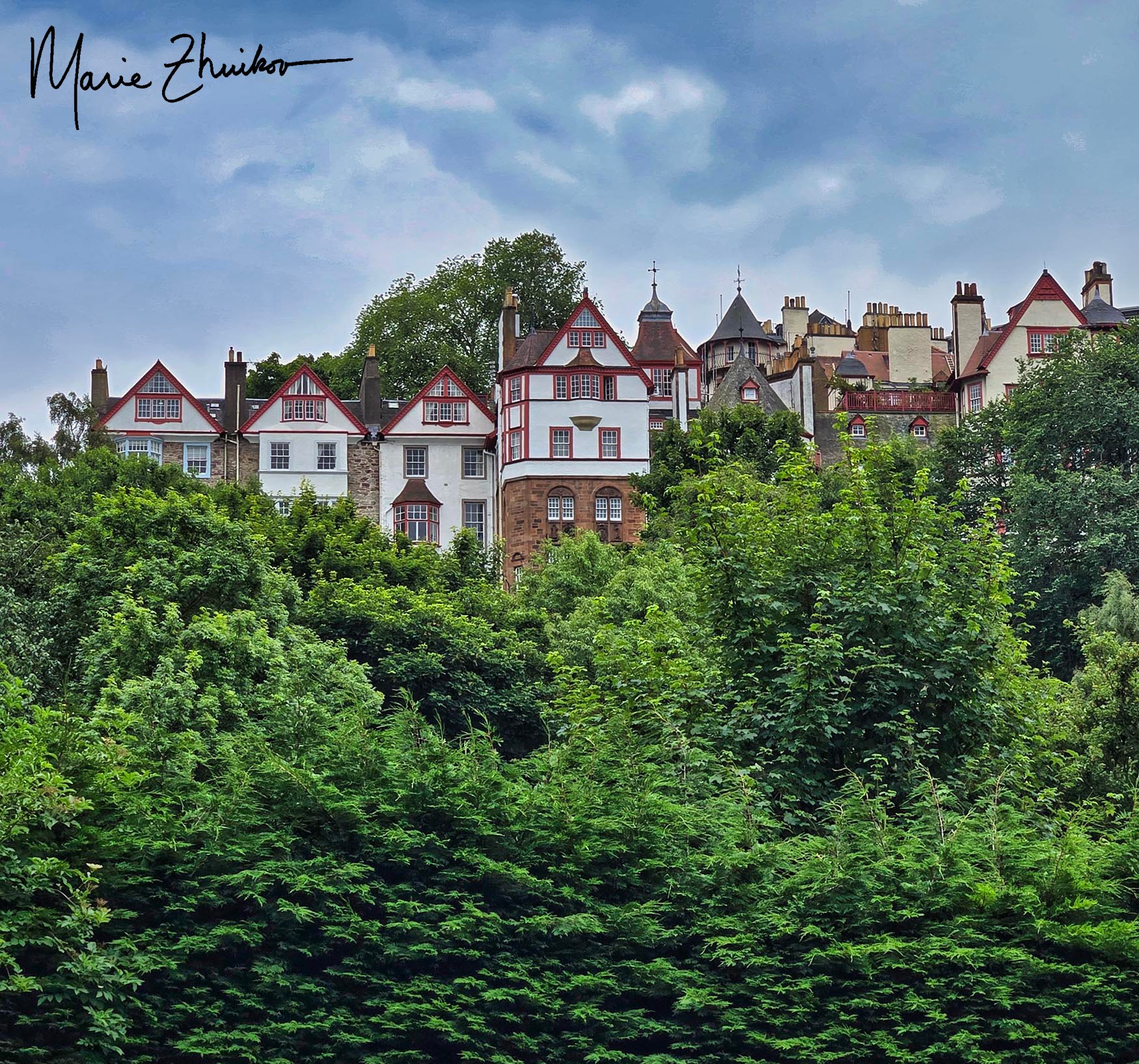
After an awesome Outlander Tour and seeing the Tower of Clackmannan the previous day, we spent our final day in Scotland meandering some more around Edinburgh. We walked through the Princes Street Gardens, marveling at the fountain, statues, and quaint homes that can be viewed from it.

Homes seen from the Princes Street Gardens, Edinburgh

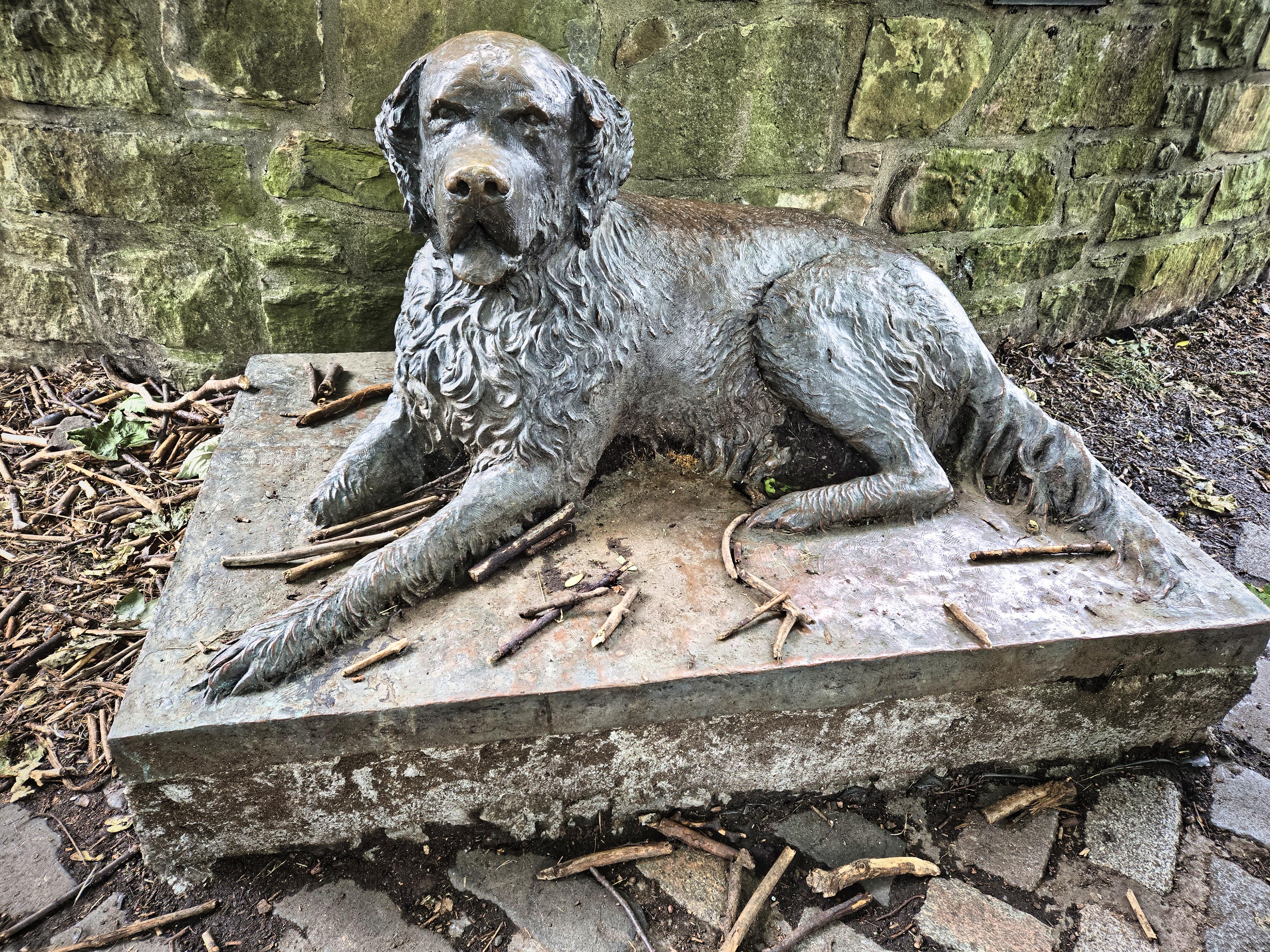
One unexpected sight was a statue memorializing Bum the Dog. Usually, everyone wants to see Greyfriars Bobby, the cute little statue of a terrier who slept on his master’s grave for years. I mean, the dog has even had a movie made about him! I don’t know. I much prefer the less popular landmark of Bum.

Bum, the San Diego dog, in Scotland

This remarkable dog disembarked from a ship in San Diego, where he won the hearts of the populace. The half-St. Bernard, half-Spaniel was owned by everyone and no one. Butchers fed him scraps and local doctors met his medical needs. He was so beloved that when San Diego issued its first dog license, Bum’s image adorned it.

His likeness sits in a small park in Edinburgh in tribute to San Diego, which is Edinburgh’s sister city. The Scots gifted San Diego with a statue of Bobby. The dogs represent the spirit of a twinning link friendship, loyalty, and shared experience. Bum died at age 12 in 1898. His memorial is one of five dog statues in Edinburgh.

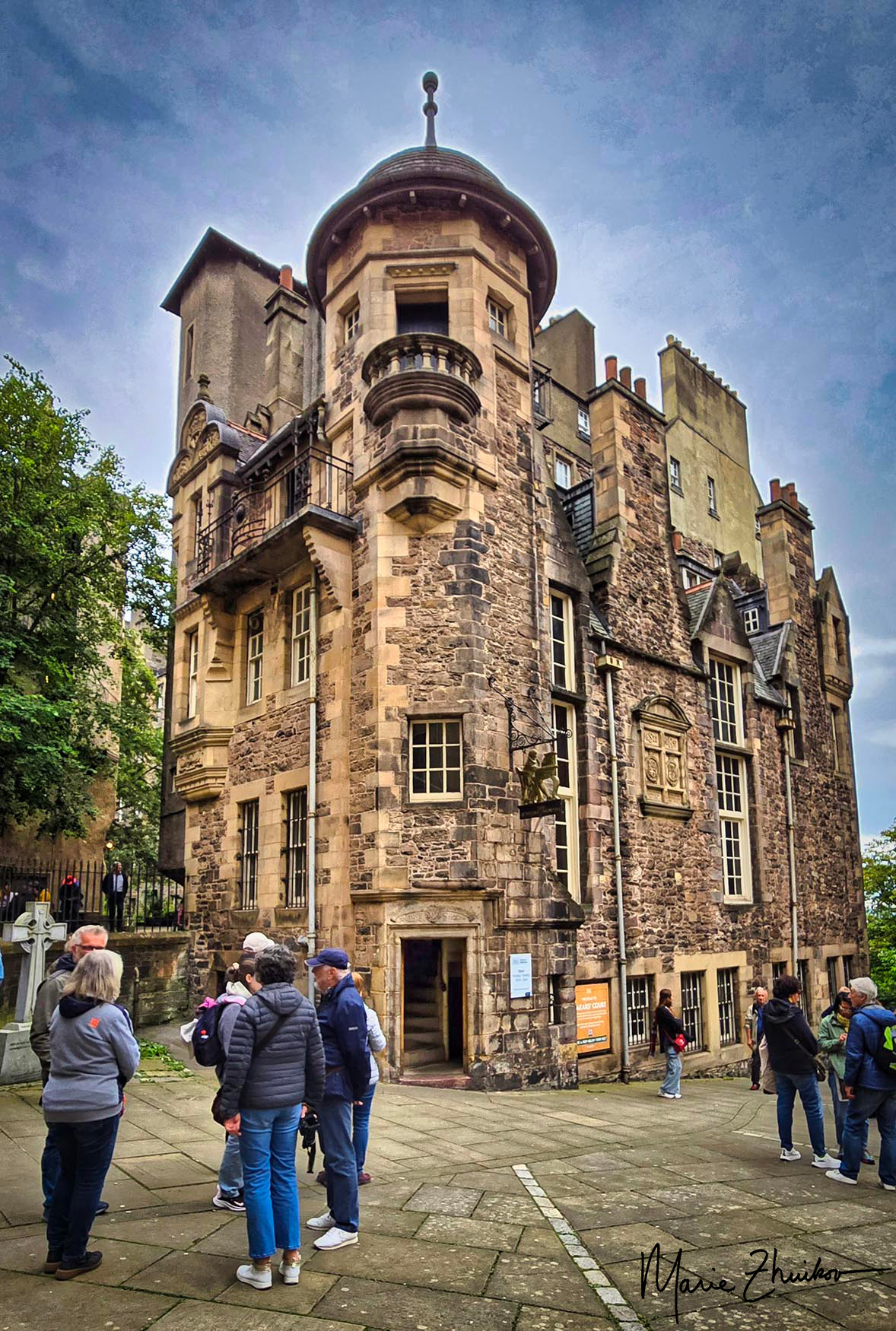
The Writers’ Museum, Edinburgh

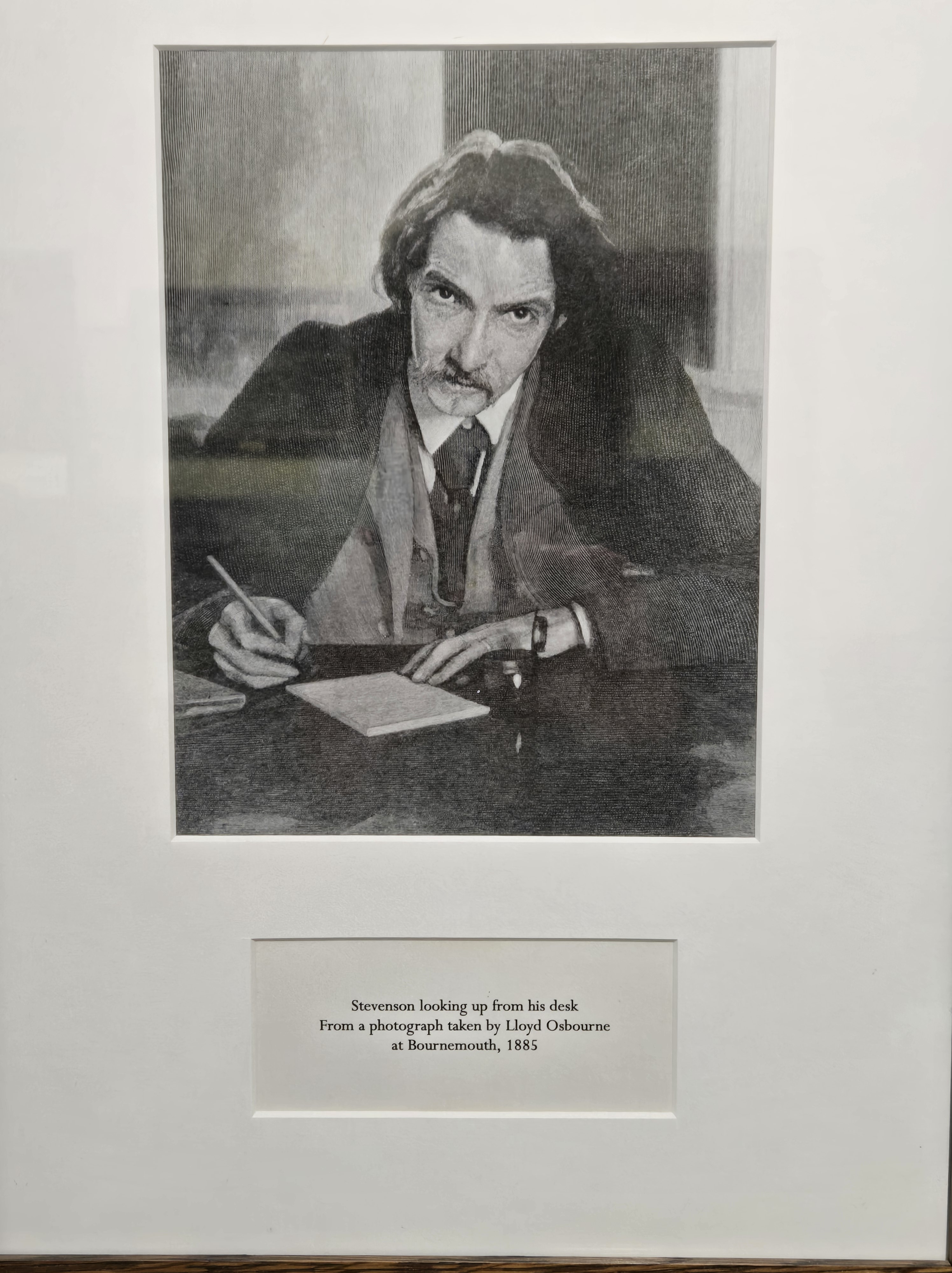
On the other side of the gardens, we made our way to the Writers’ Museum. It’s in a narrow stone building, complete with more spiral staircases (my favorite!) The free museum is devoted to three Scottish writers: Robert Louis Stevenson, Sir Walter Scott, and Robert Burns. I never knew that Stevenson spent his later years in Samoa. One of the artifacts we saw was a tortoise shell ring given to him by a Samoan chief, engraved with the name ‘Tusitala,’ meaning ‘teller of tales.’ 

Author Robert Lewis Stevenson

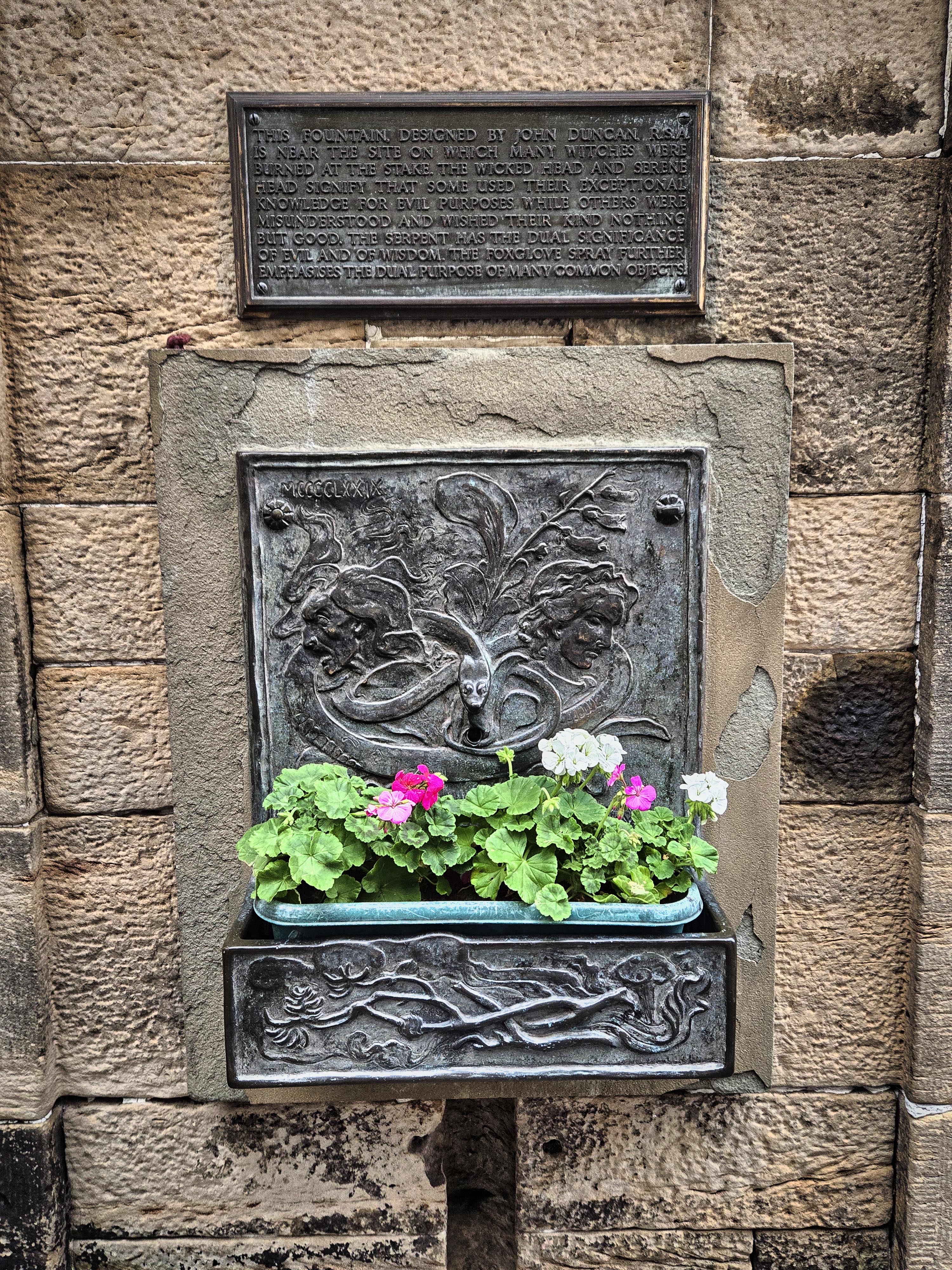
The museum is near the Royal Mile, so we walked down that again, picking up last gifts for people back home. We also found the Witches’ Well, a memorial to all the women who were killed for practicing “witchcraft.” They were strangled and burnt on Edinburgh Castle’s Esplanade. It’s so small, we almost missed it! Surely, a memorial to the deaths hundreds of people should be a bit larger?

The Witches’ Well, Edinburgh

The plaque features a bronze relief of witches’ heads entangled by a snake. It uses dualism to highlight the balance between good and evil and to show that every story has two sides. The relief contains the image of a foxglove plant, from the center of which is a coiled snake intertwined around the head of Aesculapius, the god of medicine, and his daughter Hygeia, the goddess of health. Foxglove, though used medicinally, can also be poisonous depending on dosage, and the image of the serpent imbued with wisdom is also acknowledged as evil. 

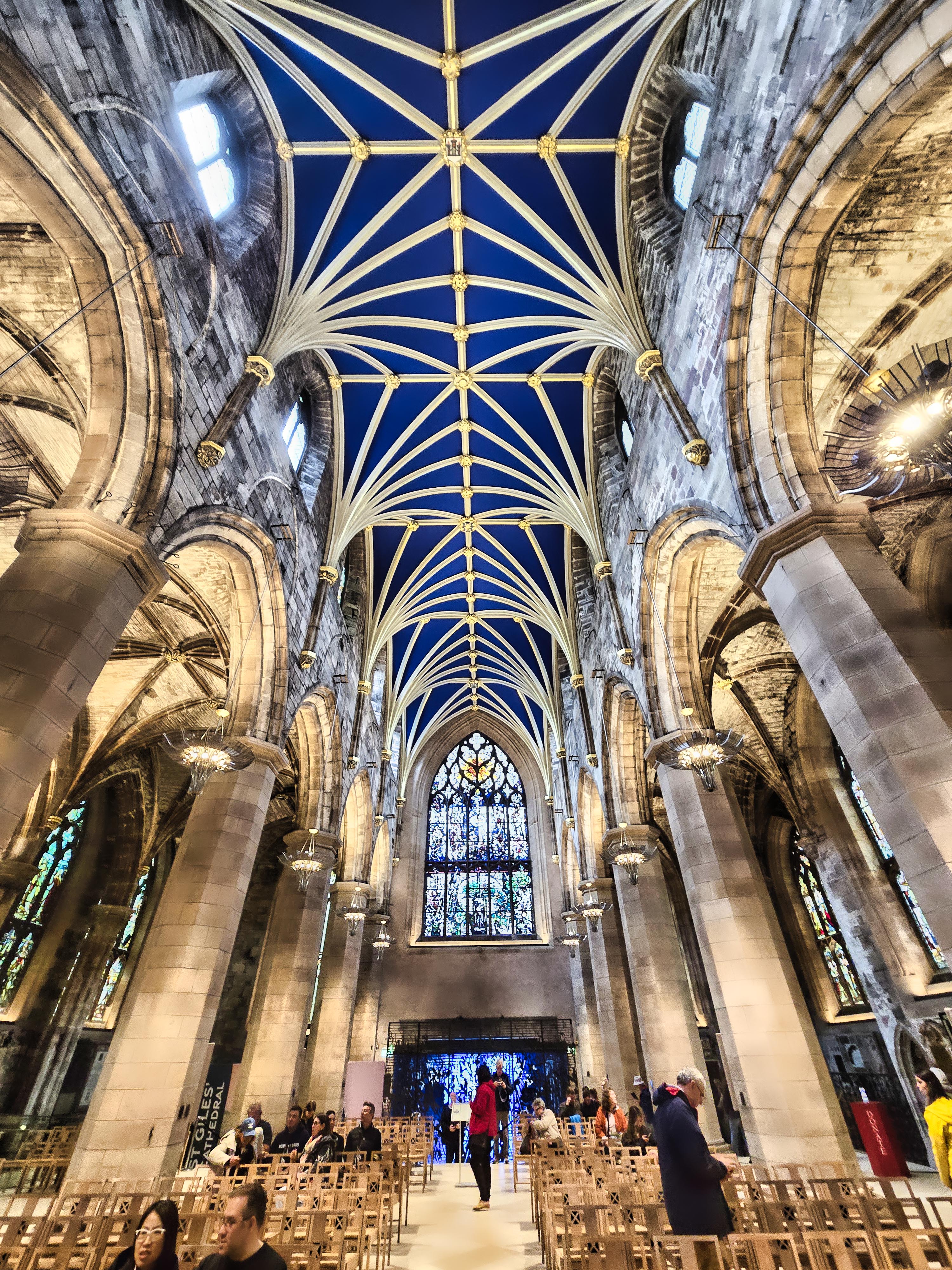
As if to counterbalance the paganism, we popped into St. Giles Cathedral, another free tour opportunity. It’s quite the impressive structure! It was built in 1124 and has no doubt been rebuilt over time. I loved the ornate ceiling.

St. Giles Cathedral, Edinburgh

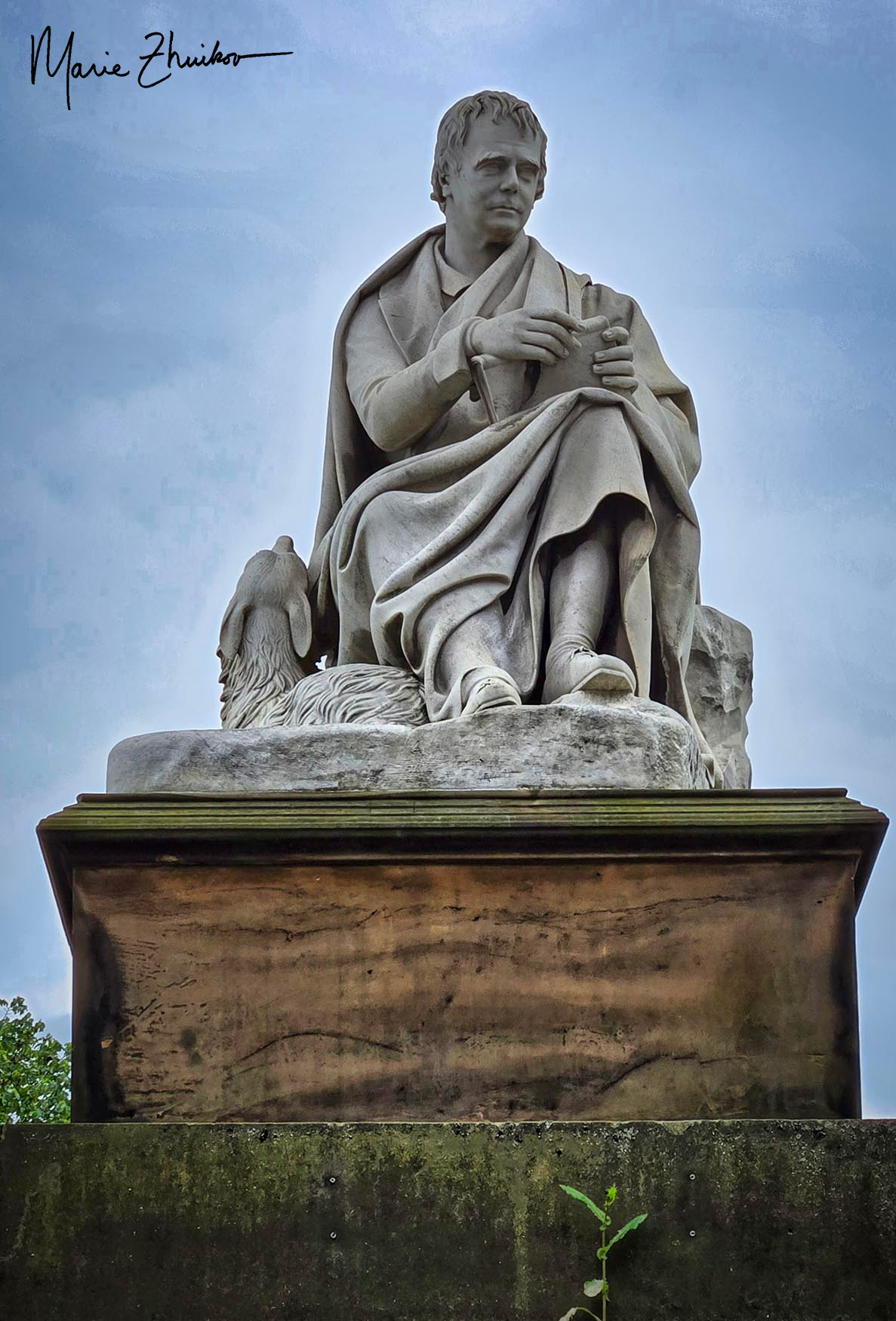
On our walk back to our hotel, we passed the Sir Walter Scott Monument, or the “gothic rocket ship” as our Outlander tour guide Henry dubbed it. I climbed the monument as a child and didn’t particularly feel the need to traverse more spiral staircases with my mending broken ankle now, so we appreciated it from the ground. Sir Walter’s statue in the middle of the tower sported another one of Edinburgh’s dogs, which sits by Sir Walter’s side. The dog, Maida, was a cross between a highland deerhound and a Pyrenean wolfdog.

Sir Walter Scott and Maida

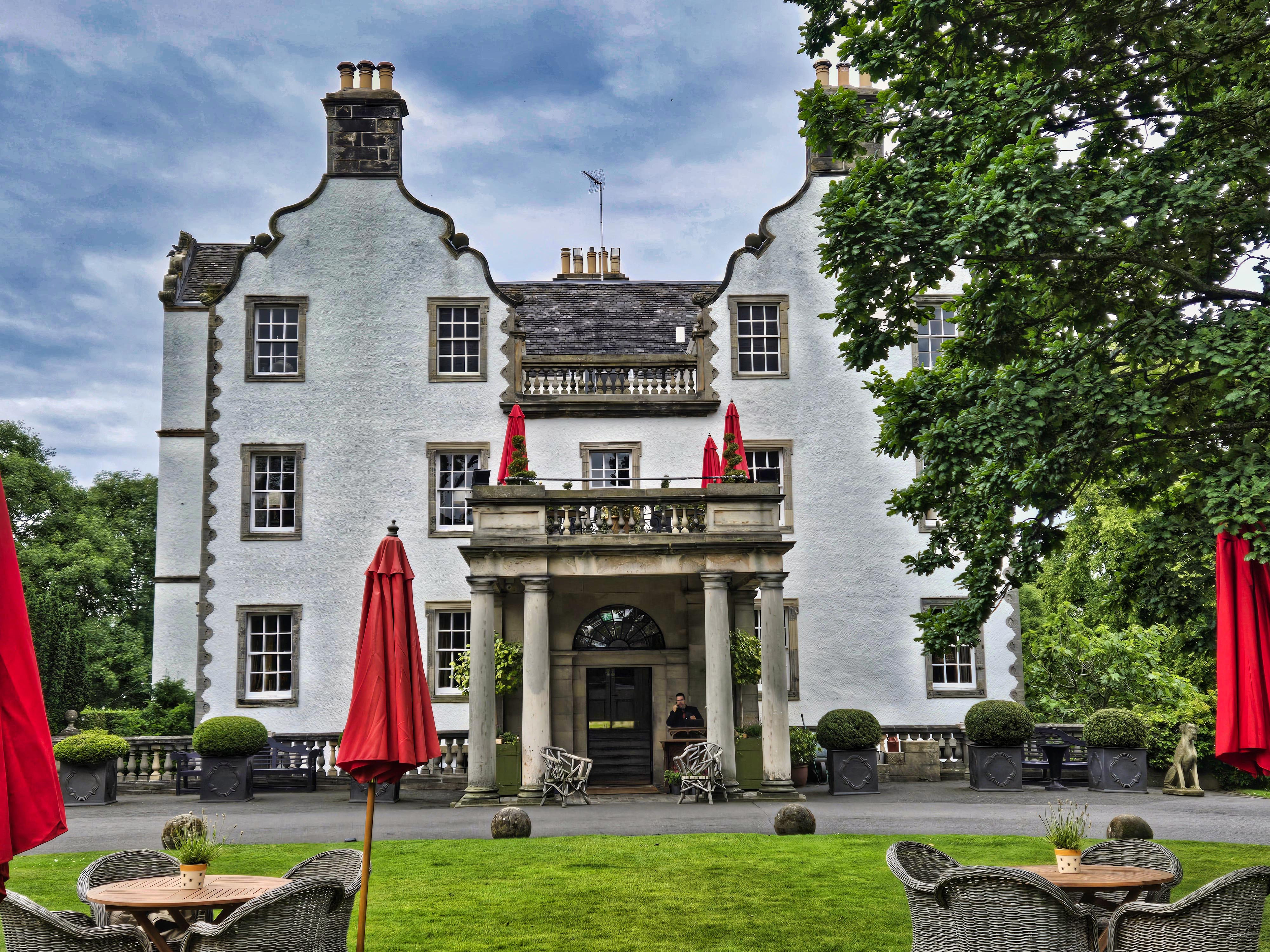
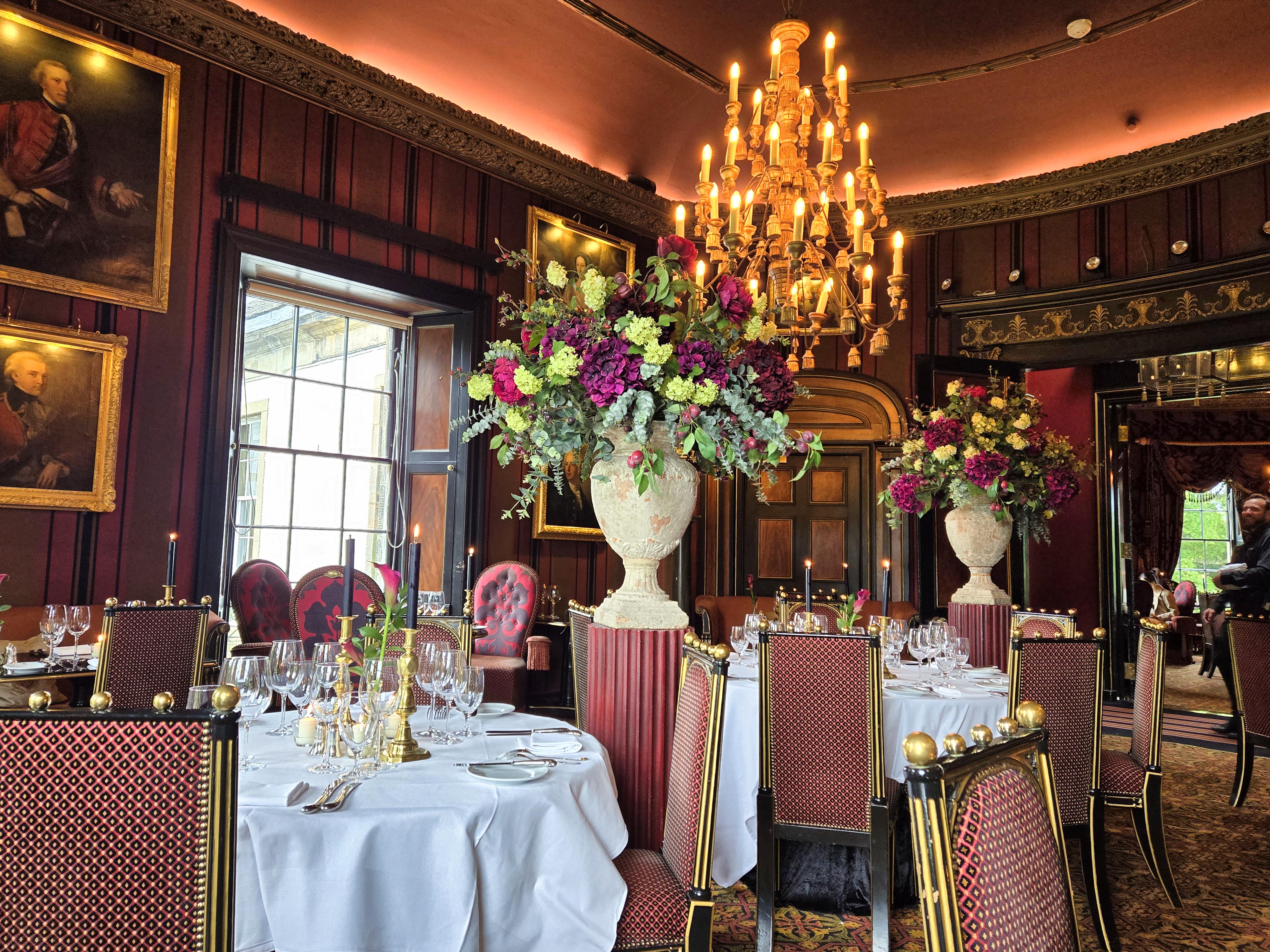
At the hotel, we got spiffed up for our final dinner in Scotland. We planned to go out in style! We had made reservations at The Rhubarb Restaurant, where rhubarb was first introduced to Scotland from Asia in the eighteenth century. Its garish yet fun interior reflects the plant: red velvet with green accents. So does its menu.

The Rhubarb Restaurant and Hotel

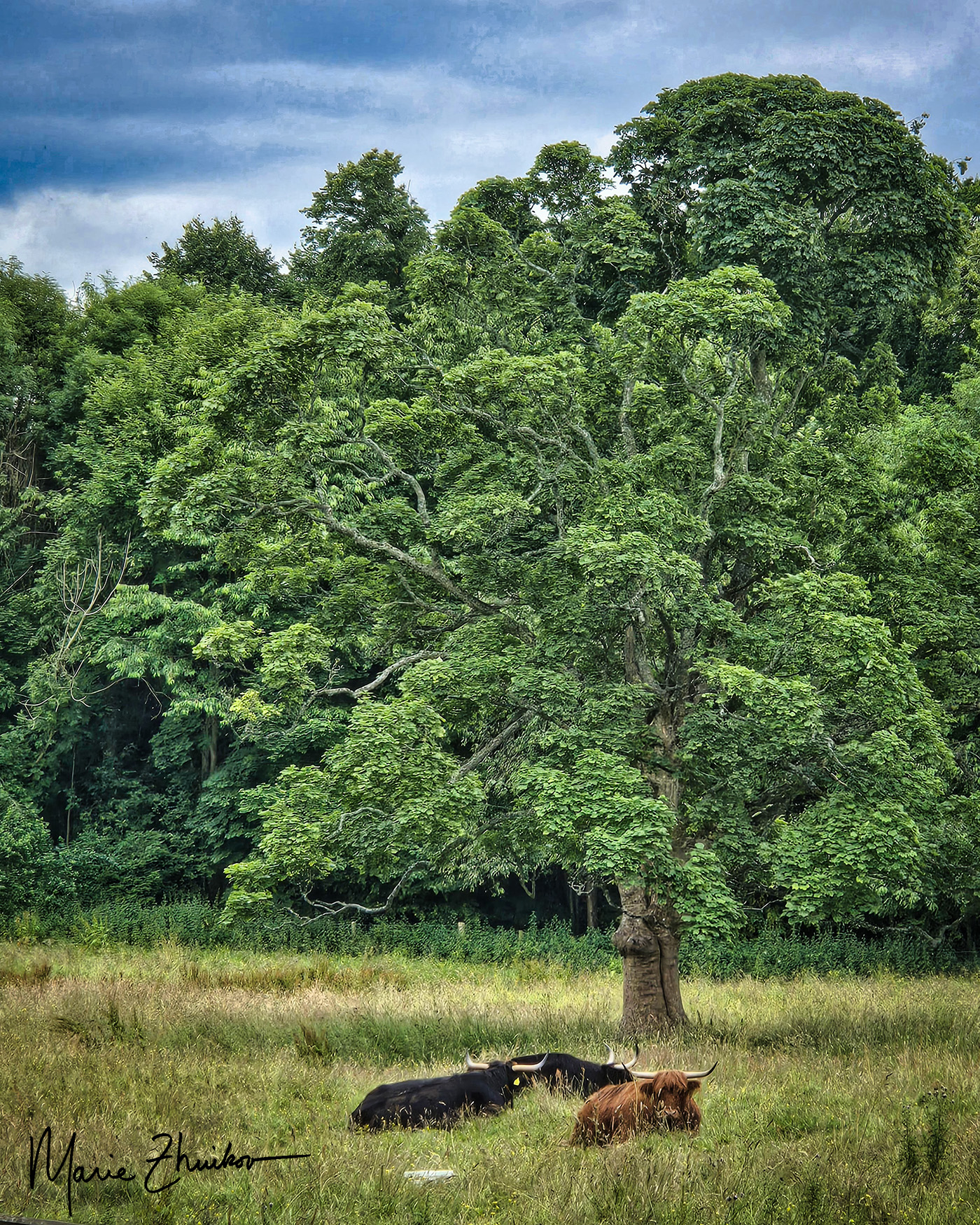
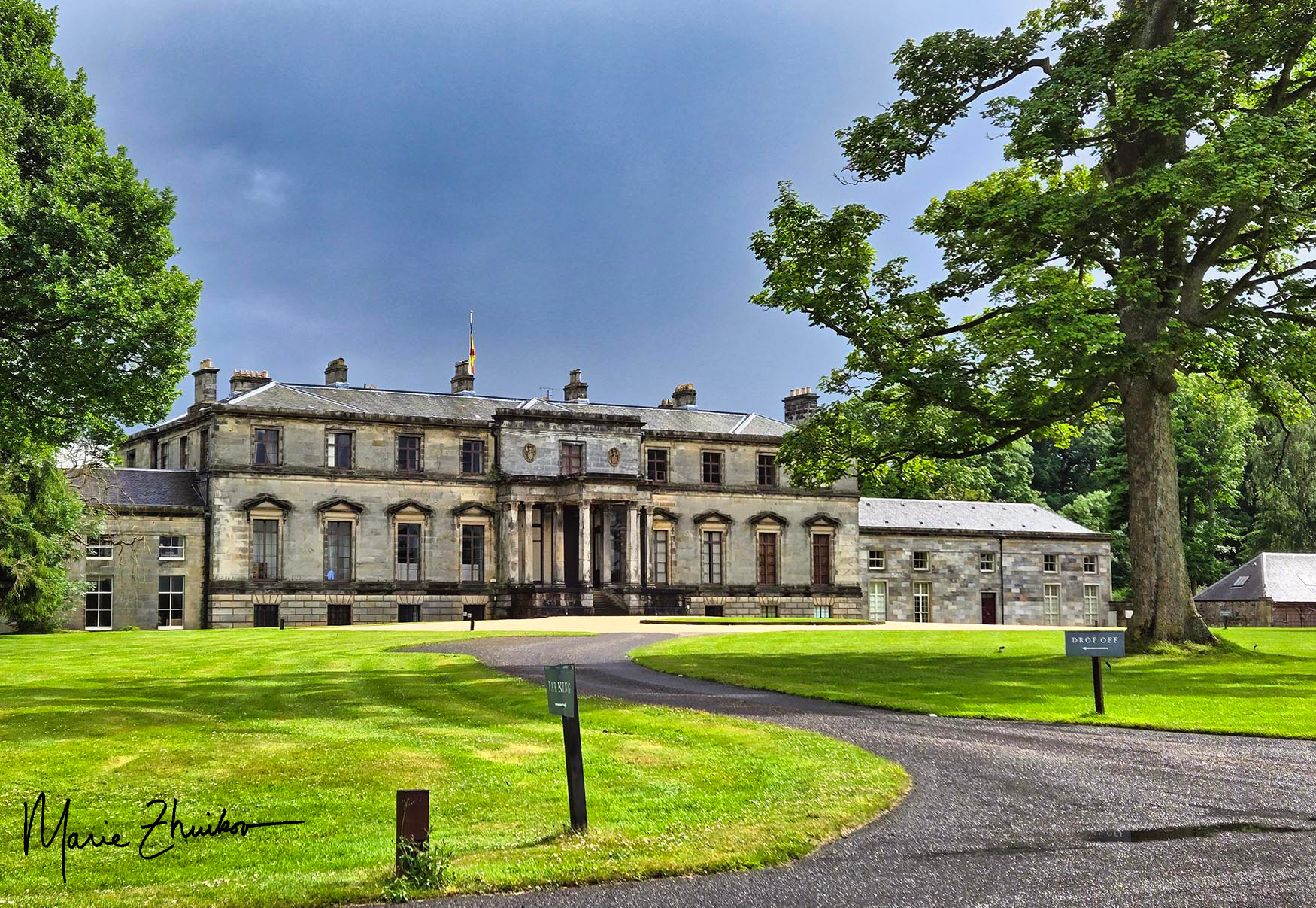
We caught a cab for a ride around the other side of Edinburgh Castle and Arthur’s Seat where the mansion and its large landholdings sit in the middle of the city. We had some time before our reservation and used it to explore the grounds and gardens. We were inordinately excited to see Highland cows (or coos) on the estate. We hadn’t seen any proper coos during our trip yet. There they were, lying underneath an impressive tree!

The coos! Rhubarb Restaurant Estate.

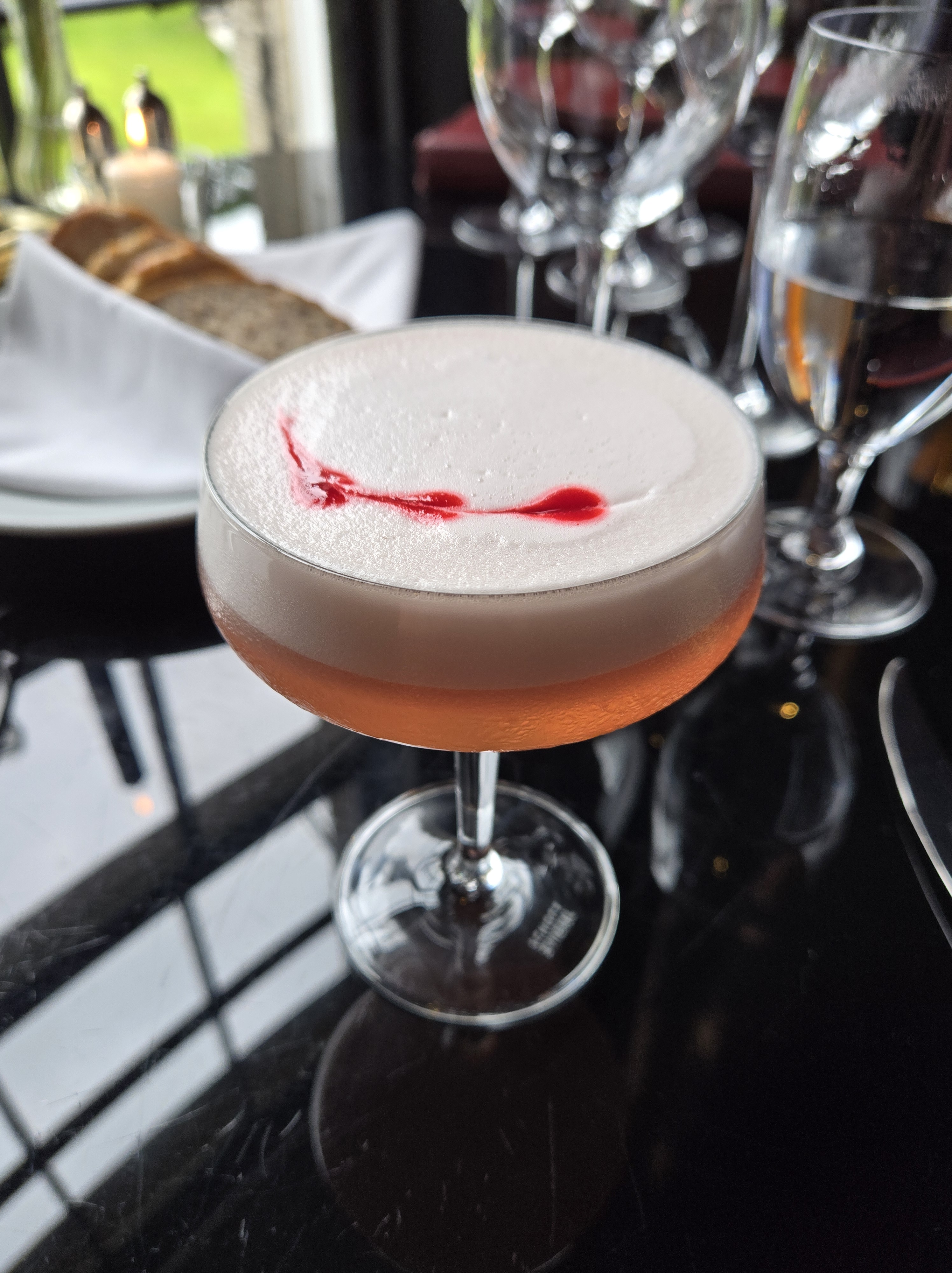
Inside, we were seated in a dining room (there are several) that offered a beautiful view of the grounds. I had a rhubarb-themed cocktail called the rhubarb patch. It had vermouth and rhubarb syrup — very good!

A rhubarb patch cocktail

For dinner, we shared a Châteaubriand Angus steak platter for two that was accompanied by potato purée, Lyonnaise potato with leek emulsion, crispy onions, braised red cabbage, honey-roasted pumpkin, beef dripping parsnips, a chicory and watercress salad, Béarnaise sauce, and Madeira jus. Oh man, the meat was so tender. As we ate, we watched a peacock strut outside and a cat scampering.

The view from our table. Note the peacock.

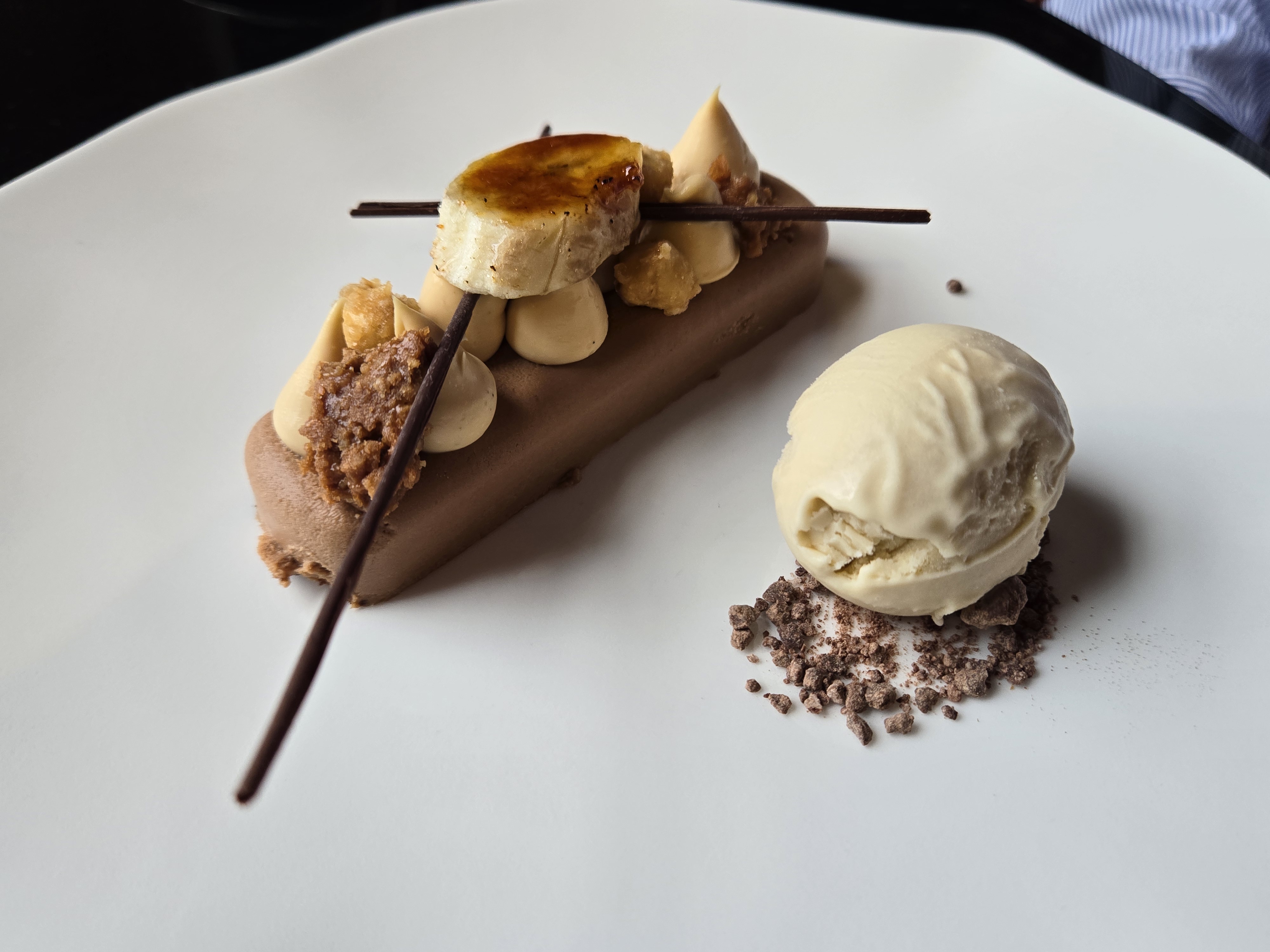
For dessert, Russ had a hazelnut banana ice cream concoction. I had tiramisu topped with a decorative chocolate square. Our dining experience was completed by a bagpiper who marched through the restaurant. I can’t think of a better way to top off our trip.

The Rhubarb Restaurant

The next day, however, we were slapped back into reality. Our plans were to fly to Dublin and then to Minneapolis. We made it to Dublin, but our plane arrived late from Edinburgh, and it took SO LONG to get through customs and security that we missed our flight to Minneapolis. When we arrived at the gate, they informed us we missed our flight by only two minutes! As it turned out, this was just as well because our baggage never even made it on the plane to Dublin because they didn’t have room for it.

Same as with our flights to Ireland at the beginning of this adventure, once again we were stranded without our baggage. But unlike that experience, this time the airline (Aer Lingus) put us up in a 4-star hotel and all our meals were paid for. It was a nice place, but it had a non-functioning toilet paper dispenser. How can a hotel get 4 stars with broken TP dispensers? I know, whine, whine. But we just wanted to get home! By now, we knew how to survive without a change of clothes or any toiletries. It really wasn’t that bad. What upset us was that due to this delay, we would miss our friends’ 50th wedding anniversary back home.

Russ’s hazelnut banana ice cream dessert, Rhubarb Restaurant

The next day at the airport, the lines for security and customs were EVEN LONGER (think hundreds of people) but we made it to our gate in time. Plus, once we landed in Minneapolis, our baggage was there, too!

So ends our nearly three-week excursion through Ireland and Scotland. Thanks for coming along on this epic ride. It’s taken me three months to write about everything. Reliving our adventures was so fun. Every time I wrote a post, I felt like I was right back in the experience. But my impatient mind already has ideas for six other topics I’d like to write posts about. I guess I’ll just have to keep blogging!

Despite setbacks, this trip opened our eyes to our pasts and gave Russ and I a stronger sense of where we come from. In Russ’s case, it’s a quaint hovel in the Irish countryside. In my case, it’s an imposing tower on a hill. It was truly a journey of discovery, and we feel so fortunate to have had these experiences.

I opened this series with a quote and I’m going to end with a favorite quote I discovered during our trip:

The world is full of magical things patiently waiting for our senses to become sharper. William Butler Yeats.

Keep your senses open, dear readers, and keep meandering!

Stirling Castle, Scotland

Scotland Day 9 – continued: The Leaning Tower of Clackmannan

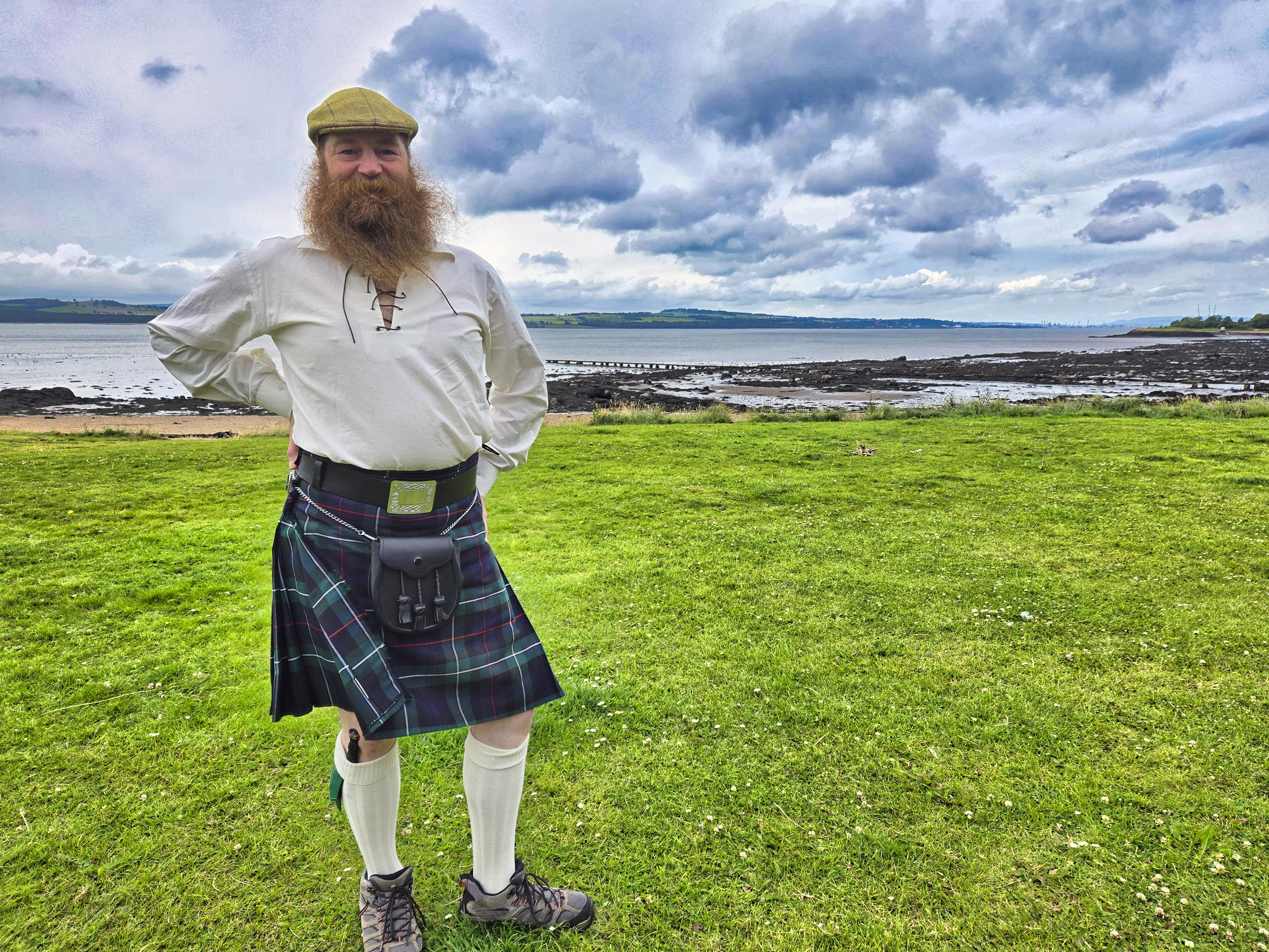
I mentioned a few posts ago that during this trip to Scotland, I figured out that my ancestors were the Barons of Clackmannan and lived for many generations in a tower in the village of Clackmannan. Because we were the only ones who signed up for a group Outlander tour, Henry, our bekilted Tartan Viking Tour guide, had leeway to treat us to a side trip to this venerable ancestral tower.

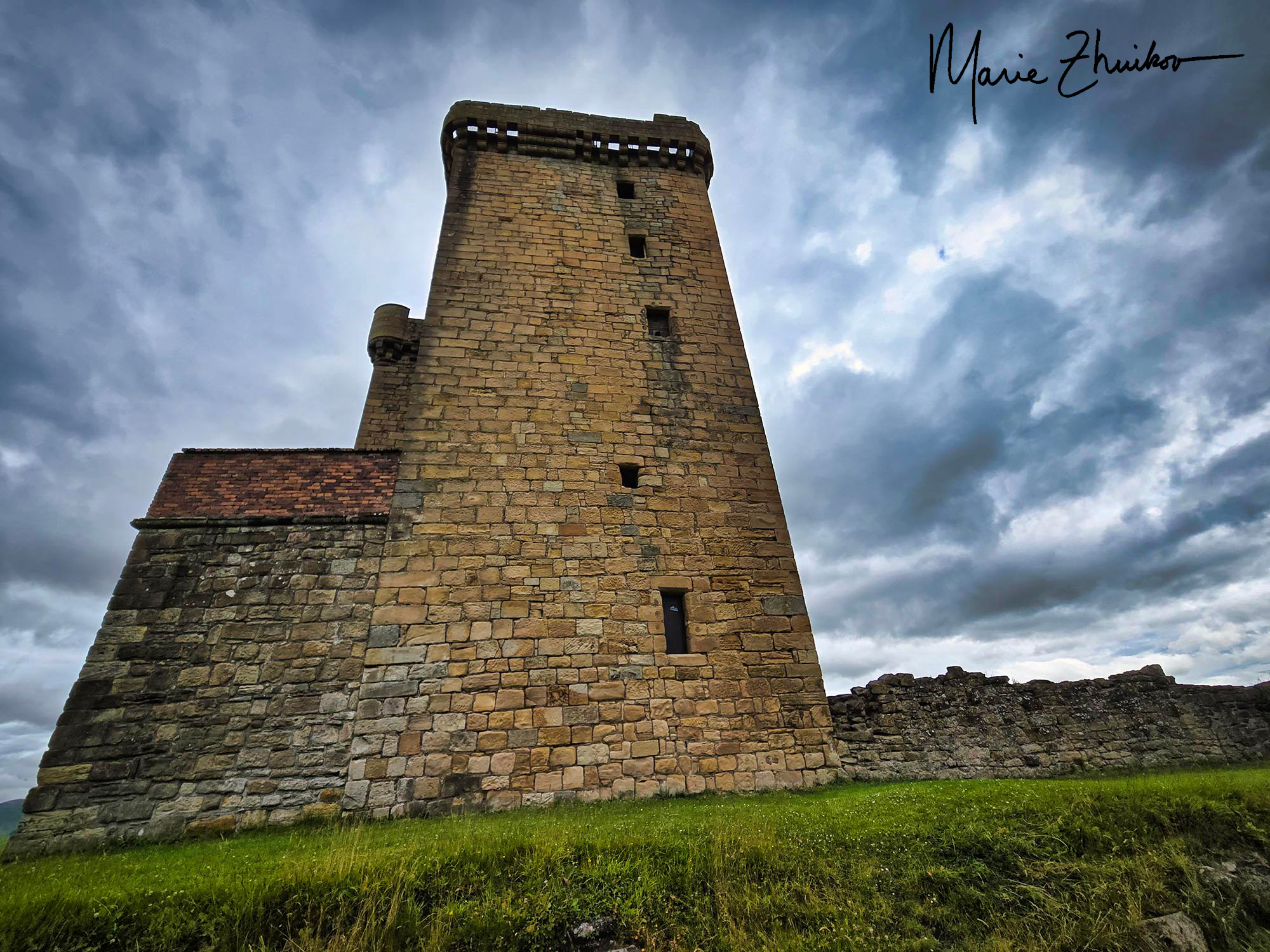
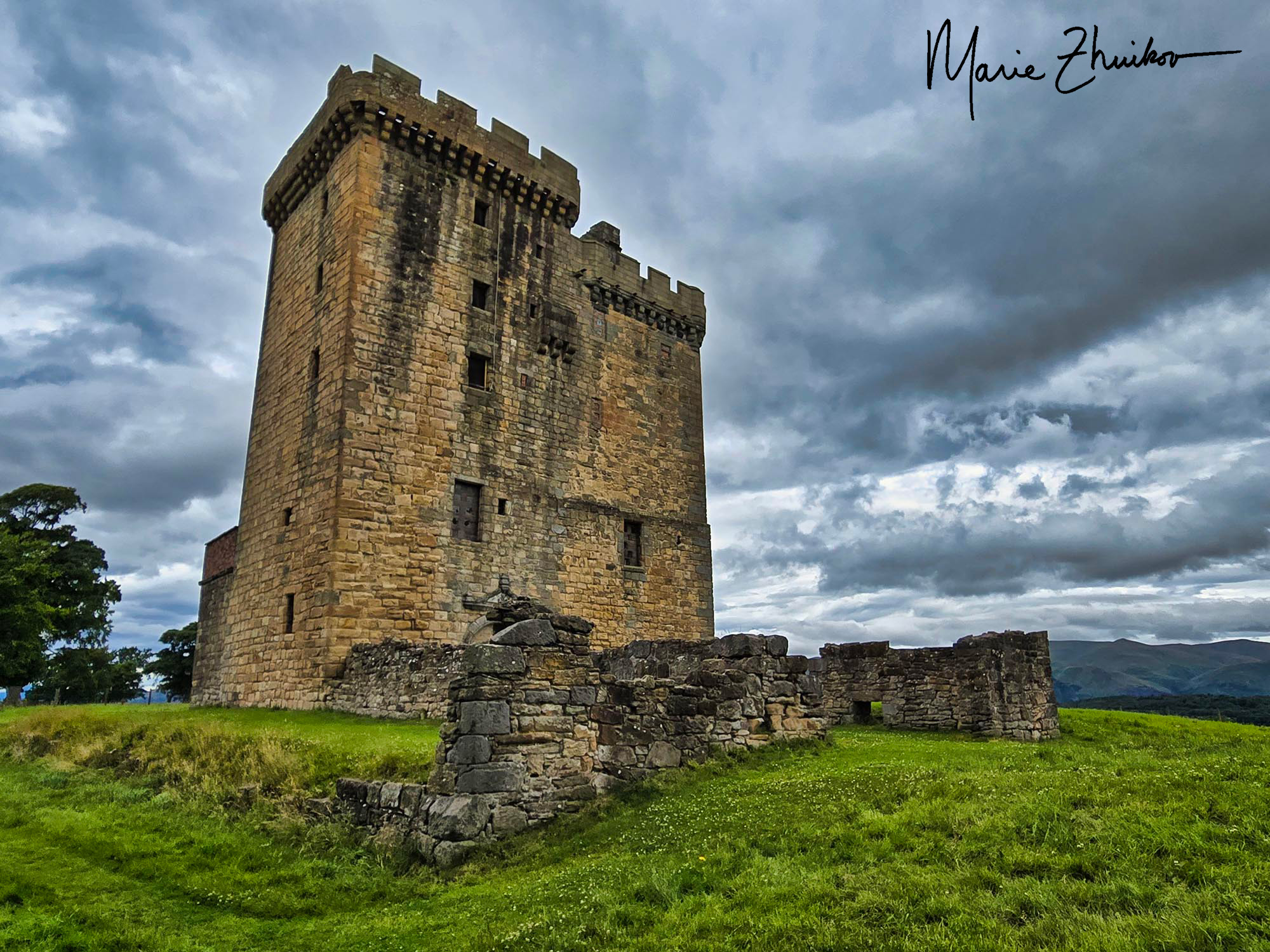
For me, our visit to Clackmannan Tower was truly an unexpected highlight of our trip (thank you, Henry!). King’s Seat Hill upon which the tower is built had long been a strategic outpost. Before the brick tower, the English had built a wooden tower upon it. It commands a view of the Ochil Hills, a 25-mile range that stretches between the Firth of Tay and Stirling.

I’m not exactly clear on this, but I think the tower was built by King David Bruce (Robert the Bruce’s son and second king of Scotland) and was given to his kinsman, Sir Robert Bruce, who is my ancestor. It was inherited by Sir Robert’s son Thomas, who was the 1st Baron of Clackmannan. My ancestors were part of the tower’s history until the 6th Baron of Clackmannan. After that, my ancestry diverges through the baron’s daughter, Lady Christina Bruce. The tower was passed from father to son, and since she was a daughter, she left once she got married.

A wonderful post with useful links about the tower is available through Wee Walking Tours, including embedded videos.

The tower had another tower built onto it, forming an L shape. Originally, a mansion was attached to the tower, but that has been long gone now. In the 1700s, the Bruces who were the current Barons of Clackmannan built a coal mine underneath the tower. Their venture into coal proved a downfall for both the family and the tower. They became bankrupt and the ground underneath the tower became unstable, causing it to lean. The family had to sell the tower to pay their debts. After that, it fell into neglect.

The tower has been rebuilt and refortified a couple of times due to this subsidence. It’s not usually open for tours and is now owned by Historic Scotland. During our tour of Broomhall, Charles Bruce told us that one of the stone archways in an upper level of the tower collapsed and broke through the floors below it. It’s not habitable but does have electricity and a well with water. Historic Scotland has plans to increase public access to the tower in the coming years. I wish them luck!

Near the tower is a modern stone timeline that describes the geologic and glacial history of the area. A nostalgic and primitive tree swing hangs from one of the large trees on the hillside.

If I ever return to Scotland, I think it would be fun to stay in Clackmannanshire and learn more about the area where my ancestors lived for so many generations, and spend more time with the leaning tower.

Next up: our final day in Scotland and a fancy dinner in a mansion that we won’t soon forget!

Scotland Day 9: Outlander Tour

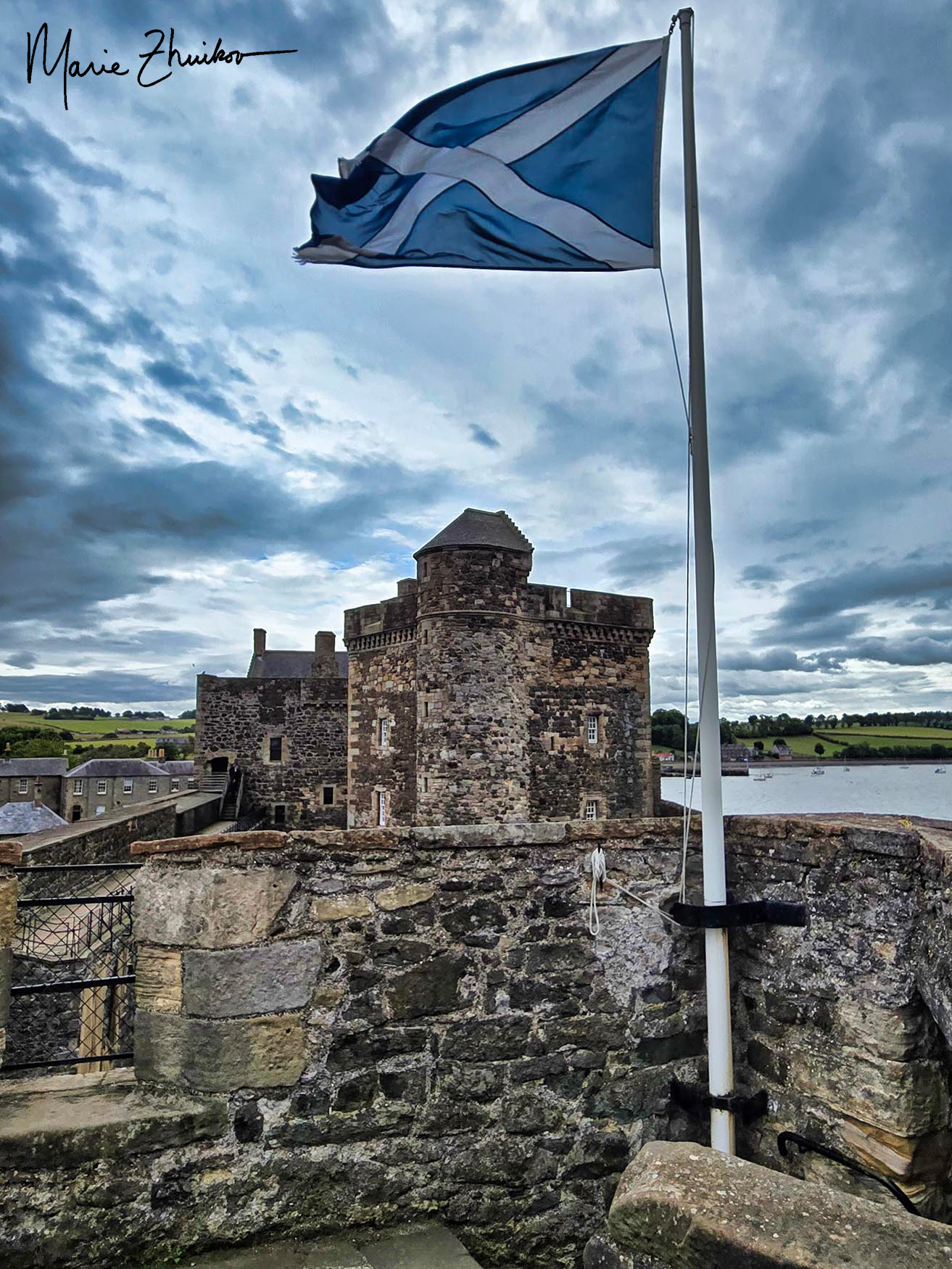
Blackness Castle. In the “Outlander” series, it’s Fort William.

Russ and I have long been fans of the “Outlander” television series and books. Actually, I was a fan first, then I sucked Russ into it. He’s been a willing and devoted victim. We were tickled to discover during our Broomhall House tour the previous day that even distant cousin Charles Bruce is a fan!

If you’re not familiar, “Outlander” follows the story of Claire Randall, an Englishwoman who’s enjoying a second honeymoon in Scotland with her husband once World War 2 ends, when she’s sucked back in time 200 years after touching a mysterious standing stone. While in the past, she meets Jamie Fraser, a burly and charming Scot, who ends up marrying her to save her from the clutches of an evil pre-ancestor of her English husband.

The series hops back and forth in time and geography, but some fans’ most-beloved sites can be found in Scotland, many not far from Edinburgh. It only made sense for us to go on an Outlander tour while we were there, especially after I found a company that offered group tours that departed only a few blocks from our hotel.

That’s where we met Henry, who is a co-owner of Tartan Viking Tours. He informed us that we were in luck; nobody else had signed up for the tour, so we were getting a private tour for the cost of a group one. That allowed us more leeway in what we could see, which worked out great!

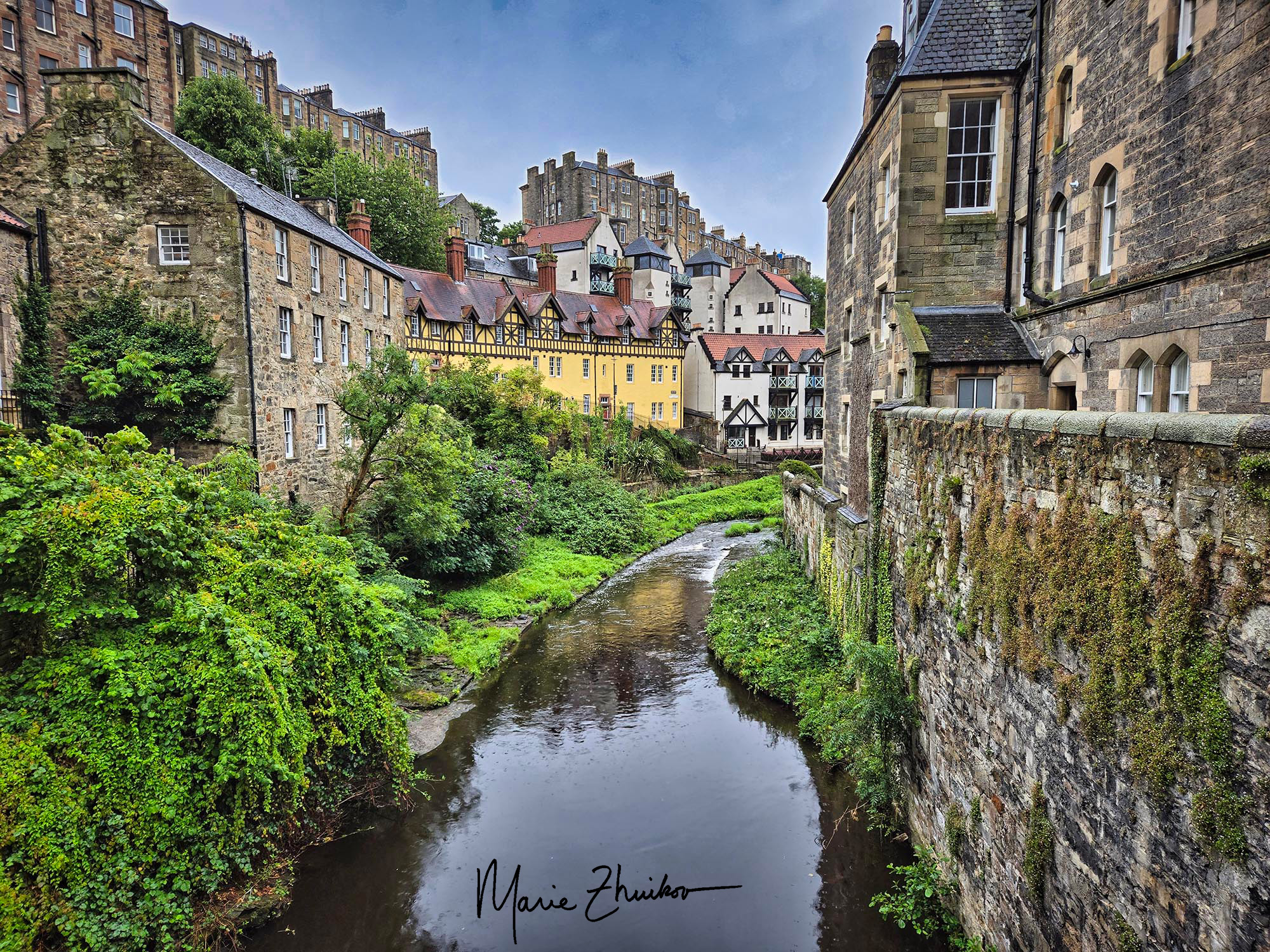
Dean Village and the Water of Leith

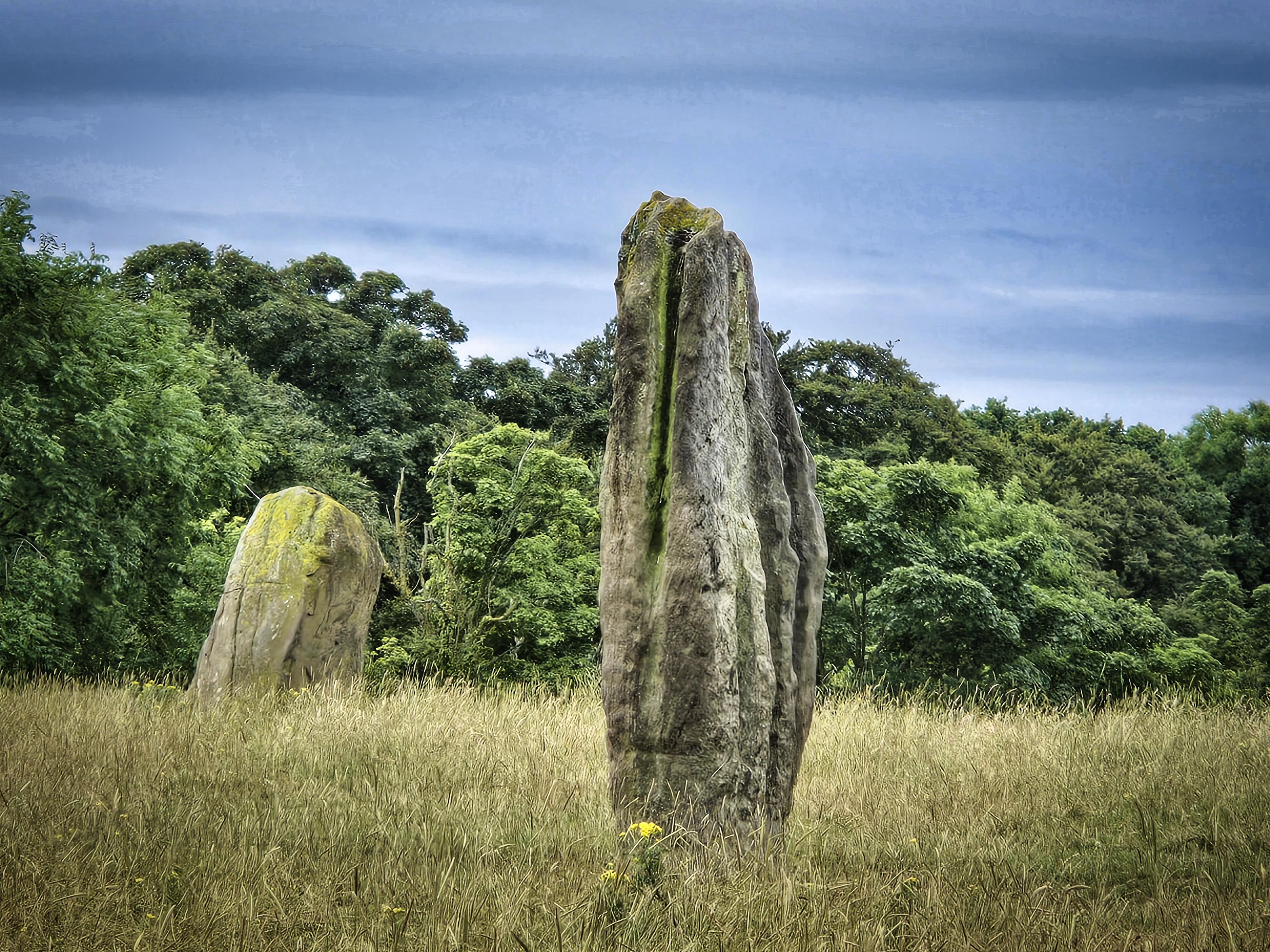
On our way out of town, we stopped at two non-Outlander locations that were just too picturesque to pass by. The first was Dean Village which is split by a river named Water of Leith. It used to sport many water mills for grinding grains into flour. Next were some Pictish standing stones that happened to be along the highway on the way to the village of Culross, which stands in for Crainsmuir in Outlander. I was excited to see them because I hadn’t had the chance to see anything Pictish or standing on either of my other trips to Scotland.

Standing stones in a field.

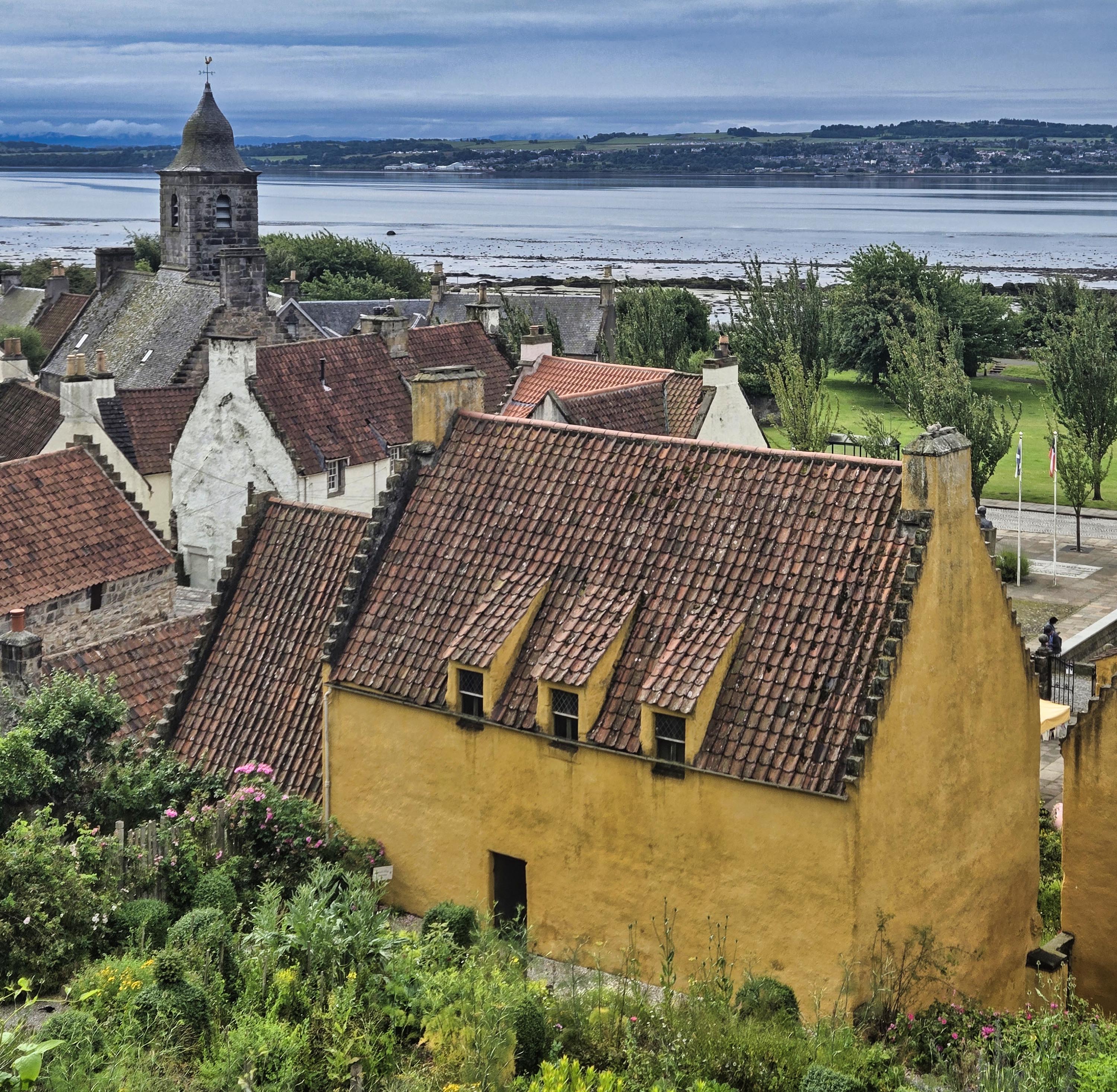
Crainsmuir/Culross is where the witch Gellis Duncan lived and is where she and Claire were tried for witchcraft. The village is one of Scotland’s most complete examples of a 17th and 18th-century town. Steep cobblestone streets are lined with white stone houses that sport red-tiled roofs. The town center is occupied by a small golden-yellow palace with a beautifully reconstructed period garden. Henry took us along the streets and up to an overlook flanked by a garden full of pink roses. We could also see an herb garden behind the palace that was Gellis’s garden in the series.

A rose garden in Culross.
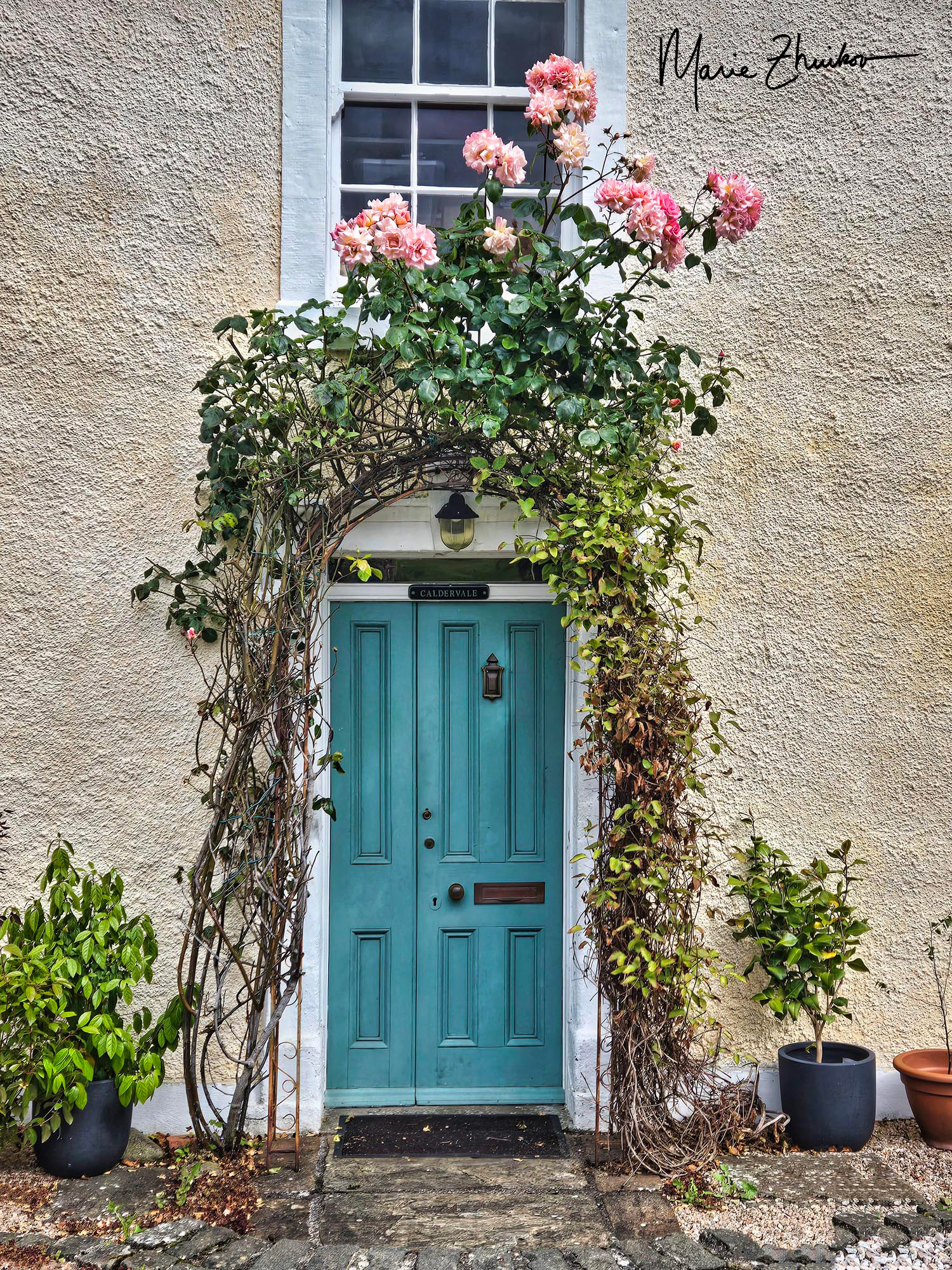
A picturesque doorway in Culross
Culross Palace with Gellis’s herb garden behind it.

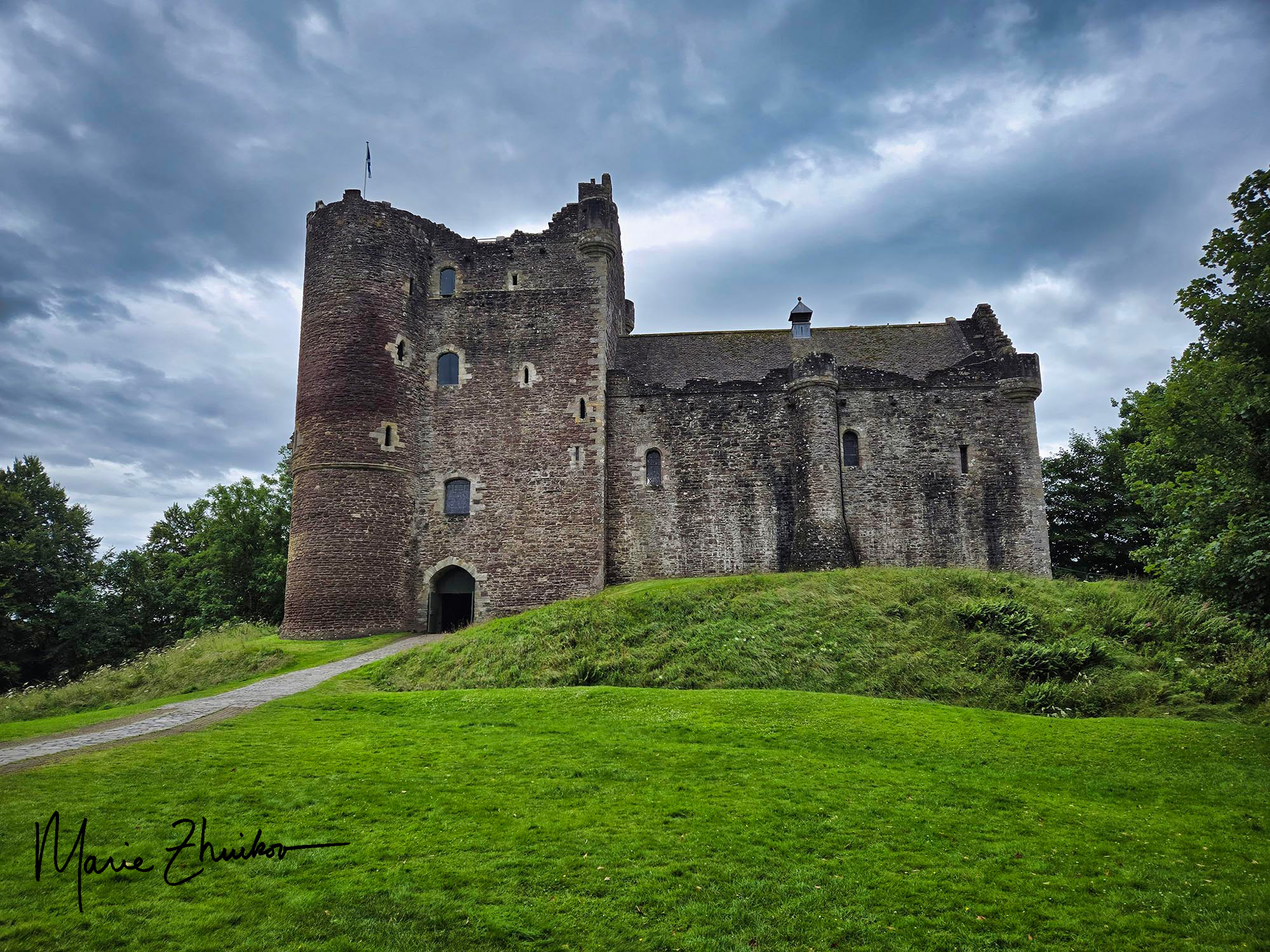
Then we were off to Doune Castle. In Outlander, it’s Castle Leoch, home to Clan MacKenzie. In “Monty Python and the Holy Grail,” it’s the castle where there’s a discussion about African Swallows and where a prince croons about how he doesn’t want to be king. It’s also featured in “Game of Thrones.” Seeing the familiar courtyard, Mrs. Fitzgibbon’s kitchen, and other movie locations was so fun! We took an audio tour, which was narrated by Sam Heughan, the actor who plays Outlander’s Jamie Fraser.

Doune Castle
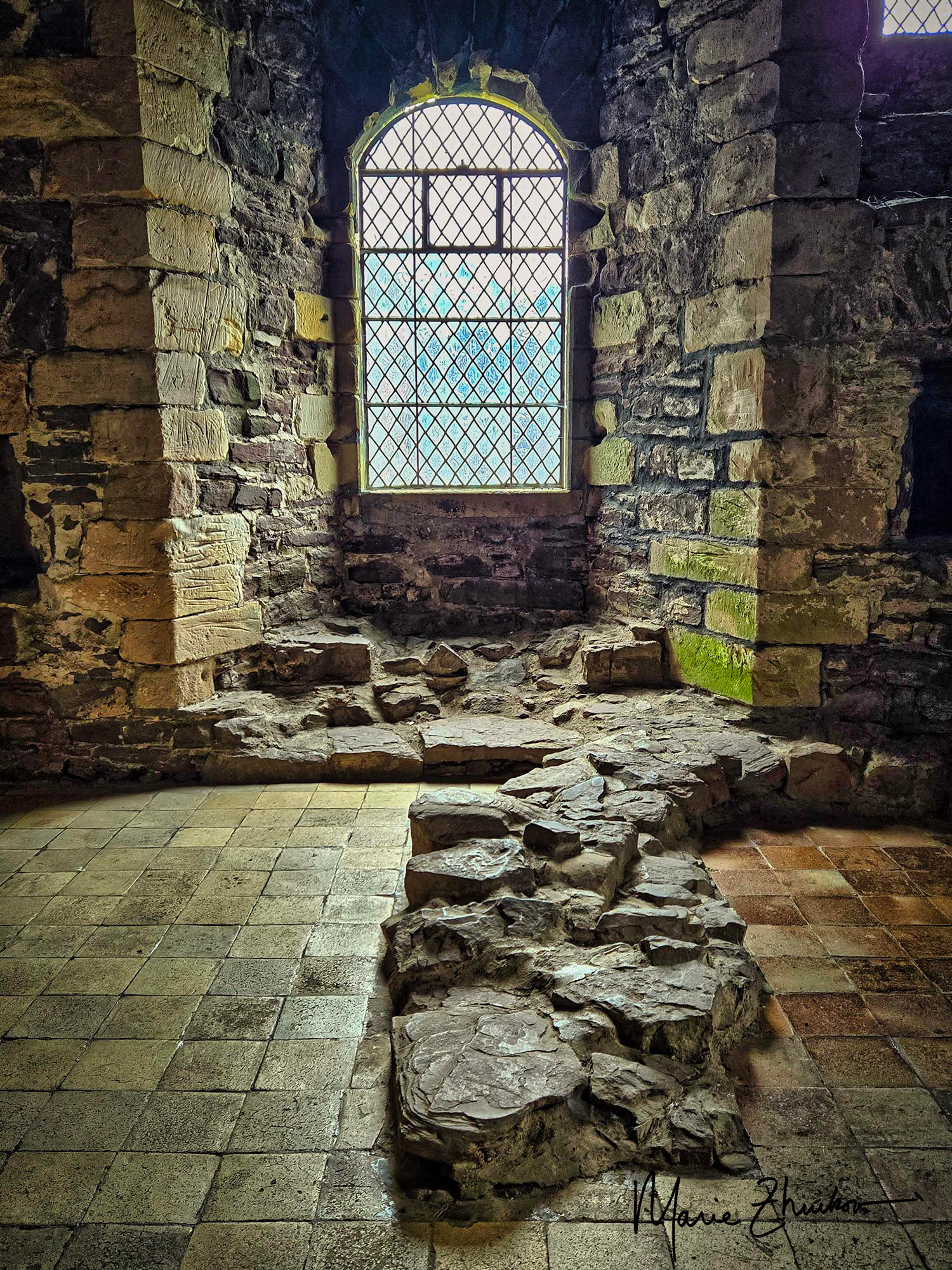
A window in Doune Castle.

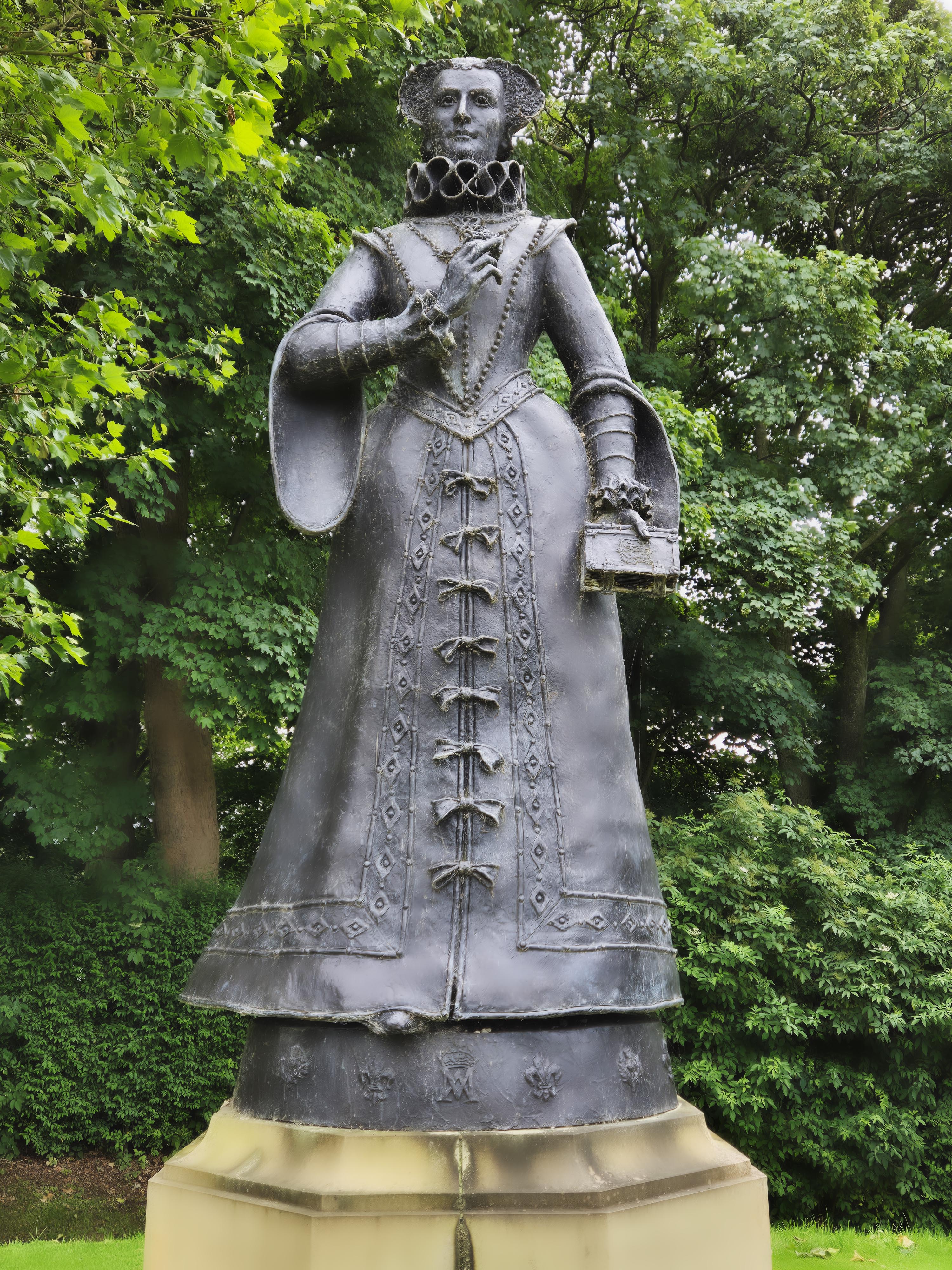
Our next stop was Linlithgow Palace, which is known as the birthplace of Mary Queen of Scots. In Outlander, it’s also the stand in for Wentworth Prison where Jamie was sentenced to hang and was tortured and assaulted by Captain “Black Jack” Randall. Linlithgow means “the loch in the damp hollow,” named because the palace lies on the shore of a small lake. We weren’t really feeling a need to tour the castle, so spent most of our time walking the grounds and visiting the Mary Queen of Scots statue, which sports the mysterious quote: “My heart is my own.” A biography about her has the same title, but I suspect that the statue came first. Apparently, this quote was from one of her letters to her cousin Queen Elizabeth where Mary discusses potential husbands for herself. I guess she didn’t like any of her suitors! Mary’s such a fascinating historical figure. I had the chance to visit a museum about her in Jedburgh during a previous visit.

Mary Queen of Scots was born in this turret room at Linlithgow Palace.
Mary Queen of Scots statue at Linlithgow Palace

We ate a scrumptious lunch at The Four Marys pub, named for Queen Mary’s ladies in waiting, who all obviously must have been named Mary. One thing to note in Scotland and Ireland is that at smaller restaurants and pubs like this one, which are outside of large towns, you have to pay at the bar till. They don’t bring a bill to your table like in the U.S. And if you wait for them to do so, you’ll be waiting for a long time!

Blackness Castle and the courtyard where Jamie was flogged.

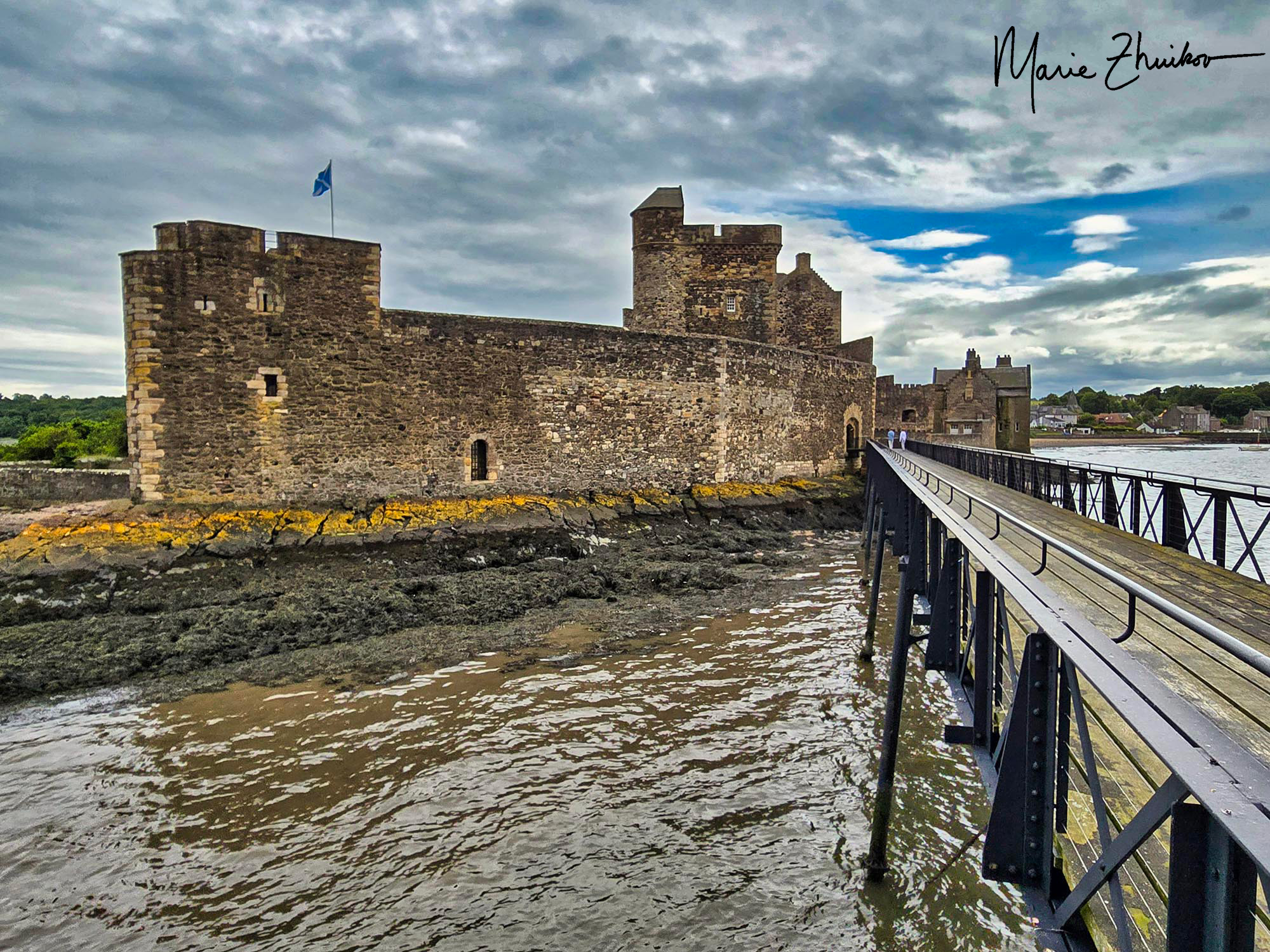
Next to last was Blackness Castle, a.k.a. Fort William. This imposing stone structure is built on the Firth of Forth and was meant to resemble a ship. Like in Outlander, the castle served as a prison in real life, housing high-ranking prisoners and their household staff. This was where Jamie was flogged and held prisoner in Season One. The place is depressing, dank, and rocky. It was so interesting how the original landscape was incorporated into it. We spent a lot of time climbing around and walking out on the pier over the Firth.

Blackness Castle as viewed from the pier. Note its ship-like shape.

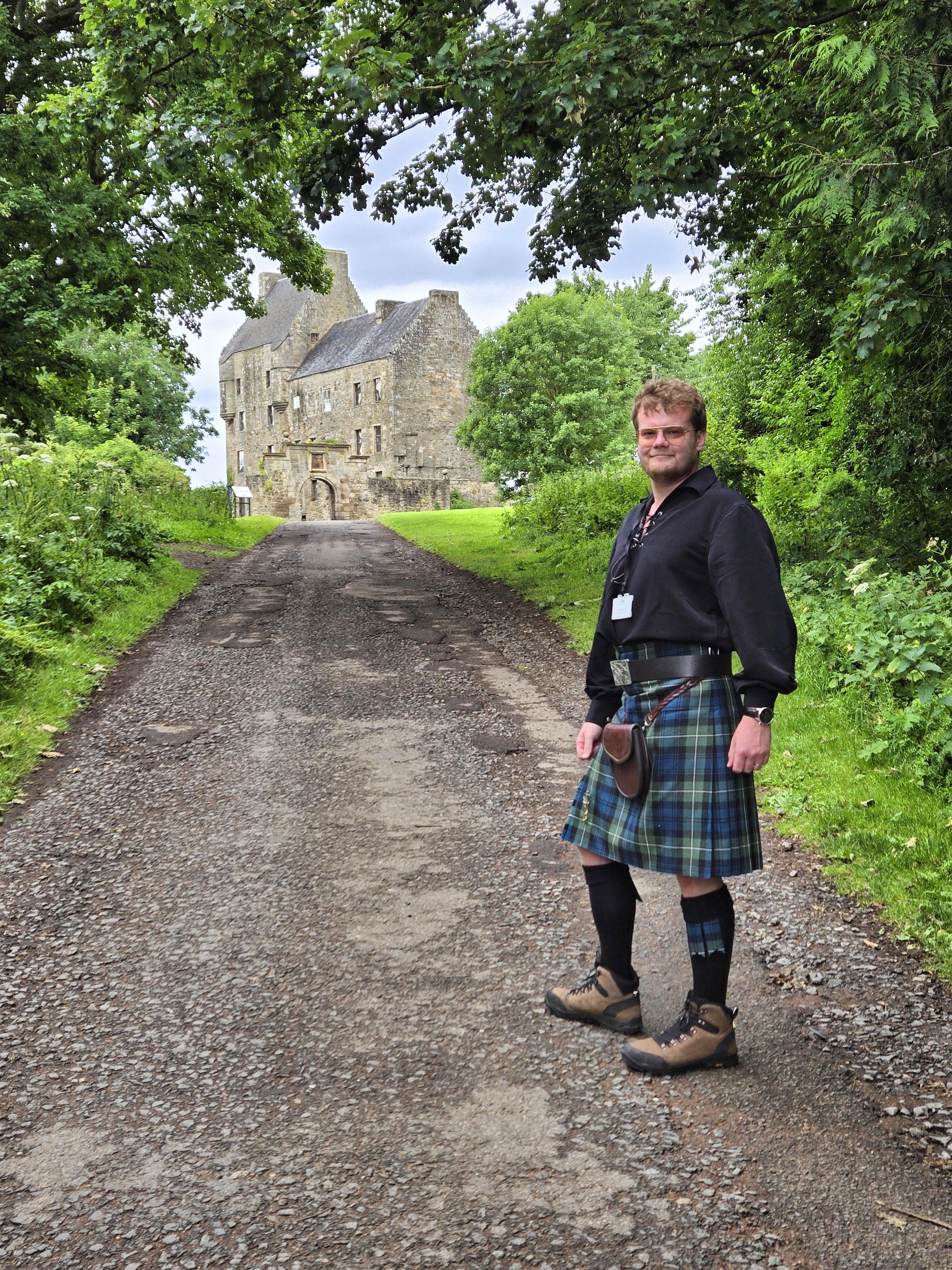
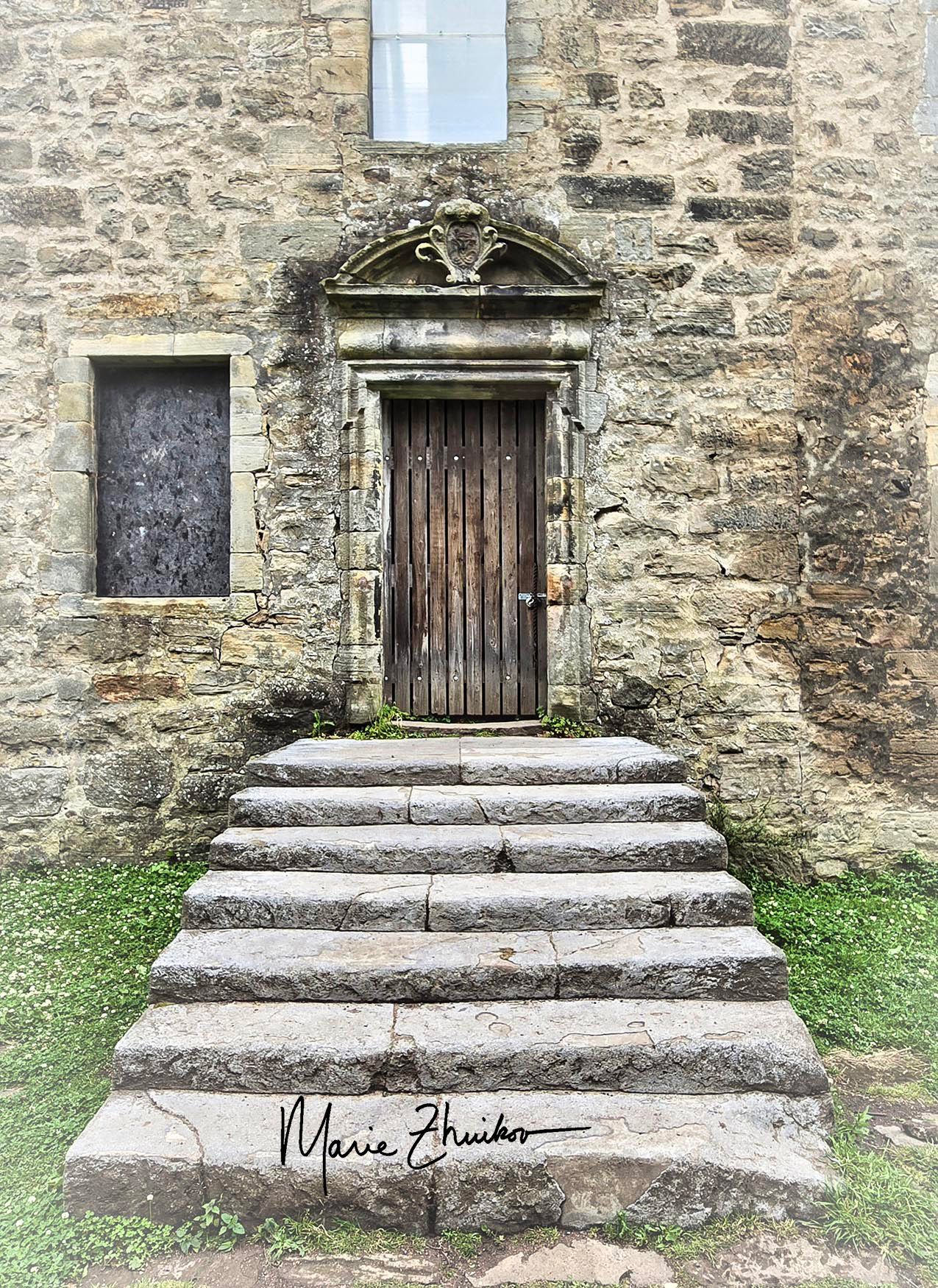
Our last stop was Midhope Castle, a.k.a. Lallybroch, home to Jamie Fraser and his kin. Just the outside of the castle was used for filming because the inside is not habitable. Walking up the road and under the familiar archway made me feel like I was in an episode of Outlander! We snooped around the castle and meandered into the back yard where several ruined sheds and stables molder. In Outlander there are scenes of the back of Lallybroch, but they are so far away, they conceal the ruins.

Our tour guide, Henry at Midhope Castle. Or is that Jamie Fraser with glasses?!
The stairway into Midhope Castle.

I’d recommend an Outlander tour for anyone who is a fan. There are cheaper versions with other companies out there, but you might not get a kilted guide or a “wee dram” along the way. We enjoyed meeting Henry and seeing sights from the books/movies. Once we returned home, I began watching the series all over again to see if I could spot the places we visited. Also, the next season is set to begin this November, so it’s been a good refresher.

One of the sheds behind Midhope Castle.

I didn’t mention this, but between Culross and Doune Castle, Henry obliged us with a non-Outlander side trip to Clackmannan Tower, which is connected to my ancestors. That deserves its own entry, so that’s up next!

Scotland Days 7 & 8: Edinburgh Castle and Broomhall House

The Royal Scots Greys Monument with Edinburgh Castle in the background.

In my previous post, Russ and I returned to Edinburgh, mystified and a bit sad after a failed attempt to tour Broomhall House, current home of the Family of Bruce, which we’d been planning for months.

We spent the next day in Edinburgh, seeing the sights including the Scottish National Gallery, which offered several floors of exquisite Scottish and international art from the Renaissance to the beginning of the 20th century. The building looks like an ancient Greek temple and was meant as a “temple to the arts.”

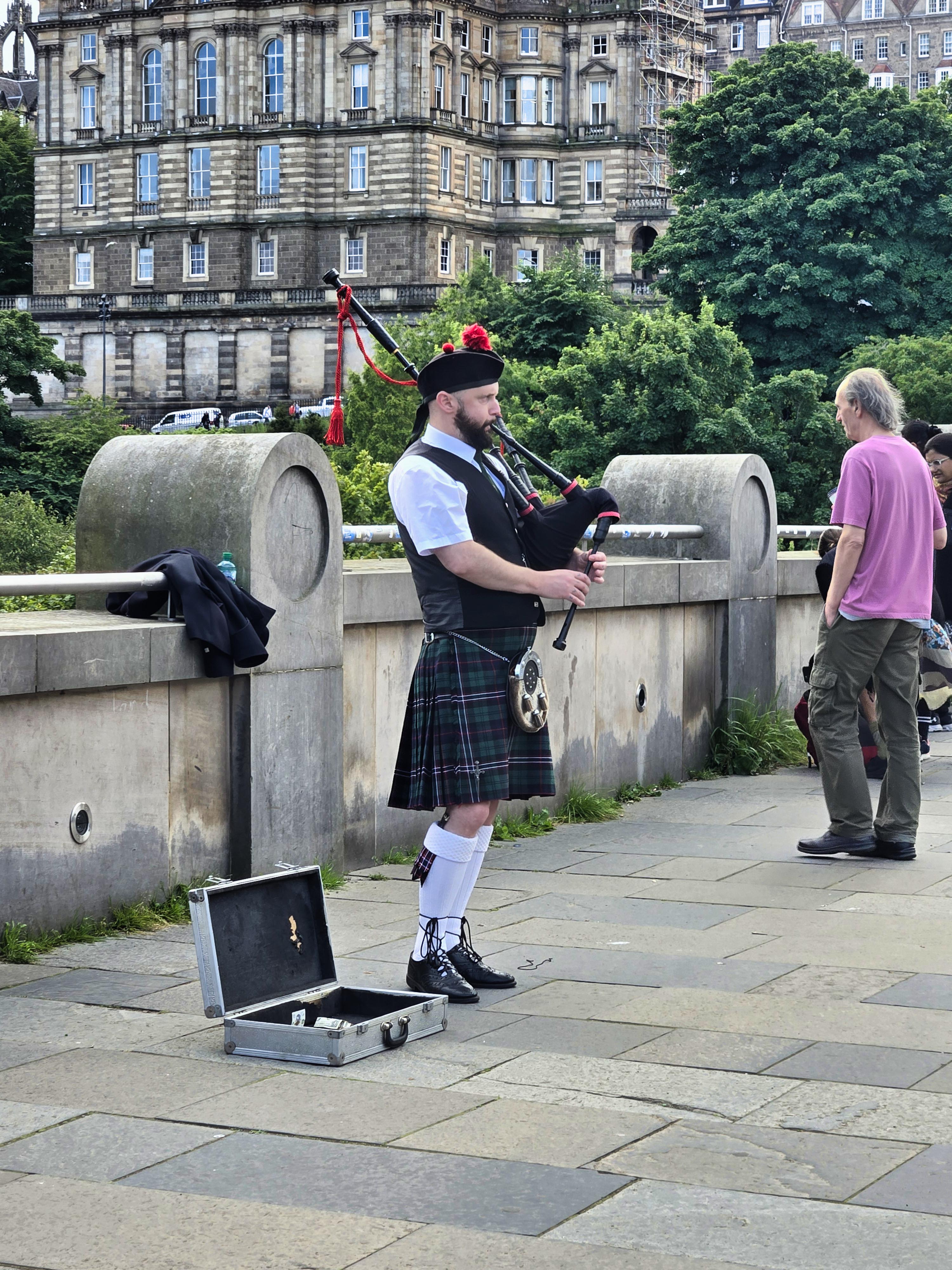
A street piper outside the Scottish National Gallery.

As we walked back to our hotel, we got a happy text from Tartan Viking Tours that our Broomhall tour was rescheduled for tomorrow! We ate lunch next door to our hotel, at Whighams Wine Cellars. I was excited to see they had Cullen skink soup on their menu. It was very good! We ended up eating two more meals there since the food was so good and the prices reasonable. In the afternoon, we meandered about a mile up the hill to Edinburgh Castle. We were an hour early for our reserved tour, so we wandered down the Royal Mile (along with thousands of other people) and shopped.

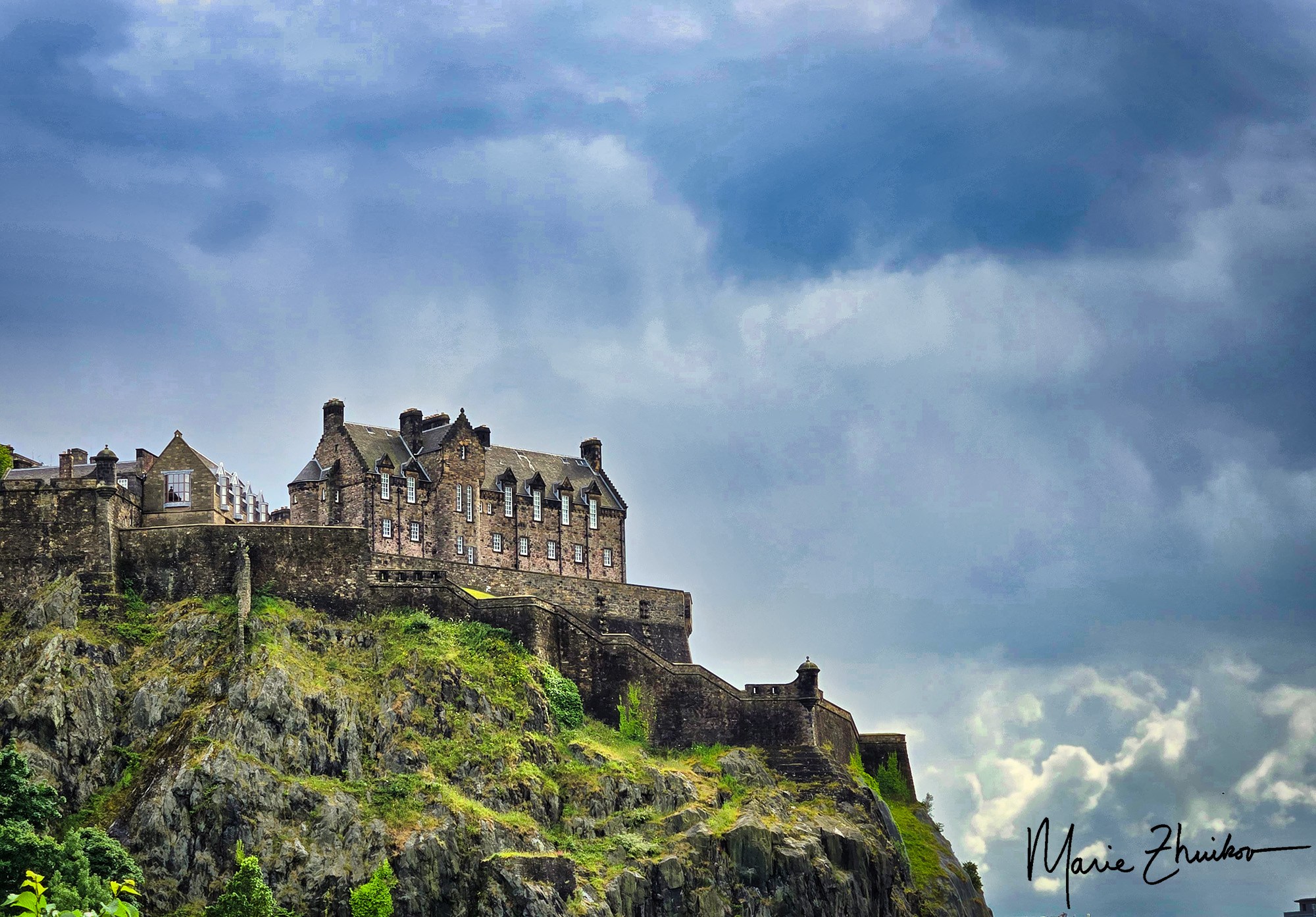
When it was finally tour time, great-grandfather to the 21st power, Robert the Bruce, greeted us in statue form as we crossed the drawbridge. (William Wallace is on the other side.) It’s crazy to think The Bruce strode some of the same walkways that we were now treading. Later, inside, we saw the ruins of a tower built by his son David. They were crumbling away underneath another building that had been constructed atop it. Stones may crumble, but the bloodline lives on in me and so many other people. I’ve seen estimates that 200 million people are related to Robert the Bruce. (BTW, I just sent off a DNA test kit so that I can confirm, or not, this relationship. The current info I have comes from some cousins.)

The Robert the Bruce statue at Edinburgh Castle.

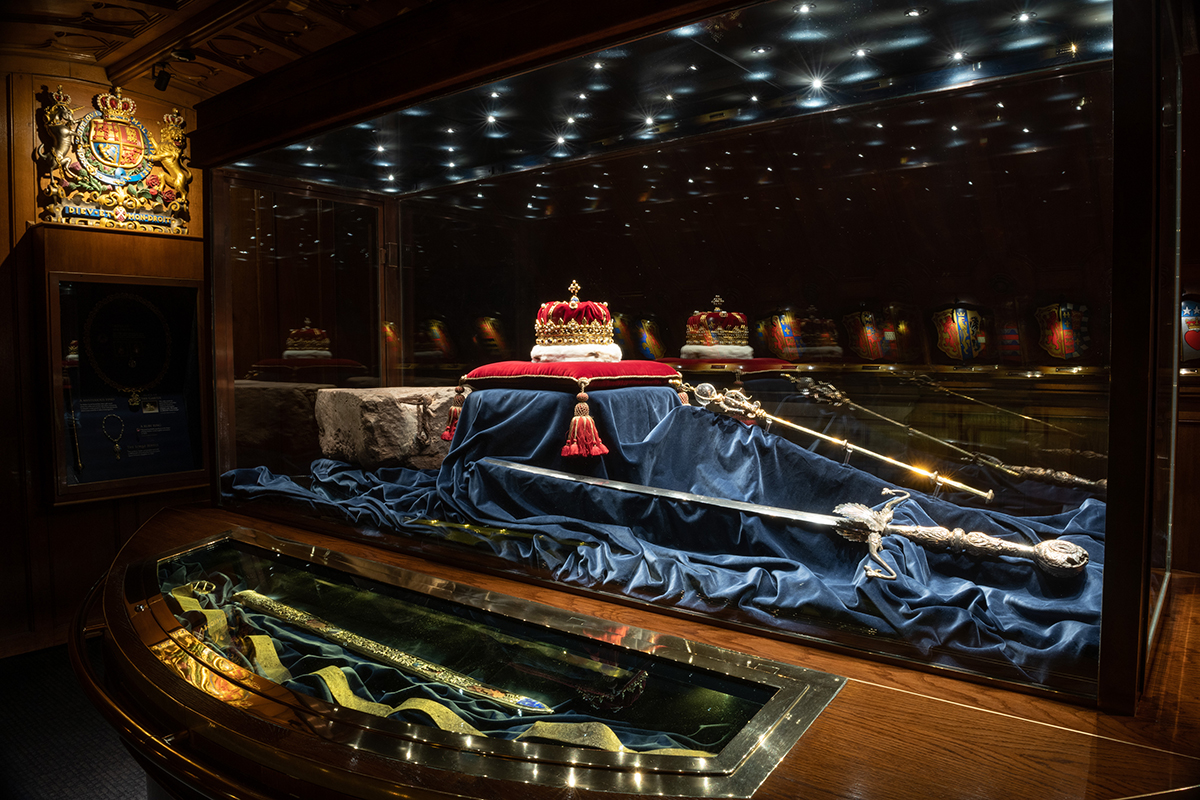
The castle is built on an impressive volcanic plug, but I found the castle itself – especially the royal quarters – not that impressive when compared to Stirling Castle. The Great Hall was cool, though, with its huge fireplace, oak paneling and suits of armor. I was also a bit let down by the crown jewels. From the long line of people waiting to see them, I guess I expected something more than just a crown, scepter, and sword. They wouldn’t let us take photos, but thanks to the castle’s blog, I have one to share with you.

Edinburgh Castle Crown Jewels Room. Image courtesy of Honours of Scotland.

I wondered if part of the reason the castle wasn’t “all that” was because it was yet another casualty of Robert the Bruce’s campaign to destroy castles so that the English couldn’t use them later. (Read more about that on the castle blog here.)

Tour over, we shopped some more on the Royal Mile and returned to our hotel. That was enough for me for the day. I had developed a bad cold or allergies was feeling under the weather. However, the actual weather this day was the best yet – no rain for once!

The beginning of the Royal Mile outside of Edinburgh Castle.

Day 8 in Scotland found Russ and I with our kilted tour guide Calum on the way to Broomhall House. Our tour was finally going to happen!!

Broomhall House

Distant cousin Charles Bruce met us at the door. My first impression was that he must have an awesome skin care routine. His face positively glowed! After exchanging greetings, Calum said he was going to depart now. I looked at him, surprised. We had talked earlier about whether he’d be able to do the tour with us. He said he wanted to, as long as I was okay with it and Charles was okay with it. I was astute enough to notice that although Calum’s mouth was saying one thing, his eyes were pleading to let him stay. I said something like nonsense, we were fine with having Calum along for the tour as long as it was okay with Charles. Charles gave his permission and then led us through a room containing replicas of the “Elgin Marbles.” These are historic marble statues collected by a previous Lord Elgin (the 7th) from the Parthenon in Greece. In recent years, they caused quite a stir at being in the hands of the family, so they donated them to the British Museum in London.

Calum, our Tartan Viking Tour guide, in Limekiln.

We settled in the library and Charles poured us some tea. He asked a bit about my ancestral background and then began a lecture about Andrew Carnegie, the Scottish-American industrialist and philanthropist who was born nearby in Dunfermline. He showed us a ledger book that contained an IOU to the Bruce Family from the Carnegie Family. It’s not known whether this debt was ever paid since the Carnegies moved to America later. But Charles was rather tickled to think that a family destined to become one of the richest in America had been in debt to his family.

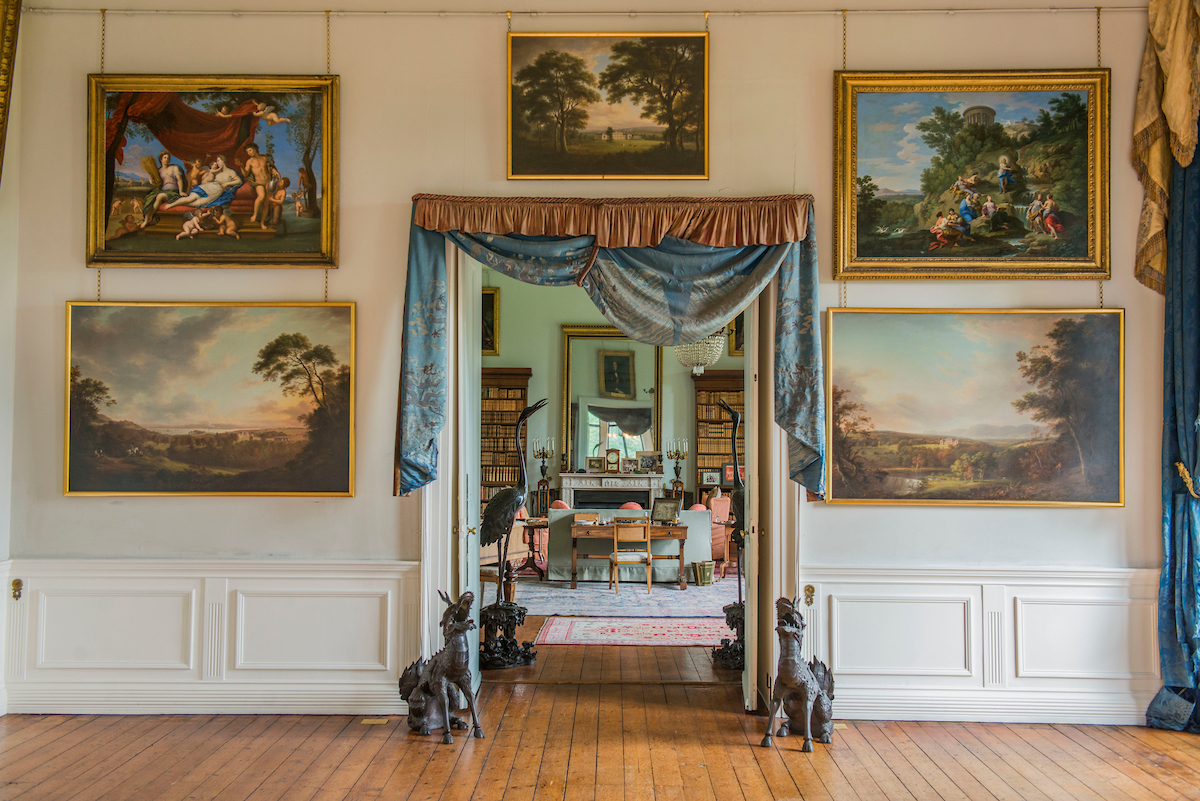
View from the Music Room into the Library. Image courtesy of Broomhall House.

As we discussed the books in the library, Charles off-handedly mentioned they had a first edition copy of “Waverly” by Sir Walter Scott. Later, I asked if I could see it. He couldn’t find it, but he did find a third edition of “Rob Roy.”

At one point, he opened a book that contained an old map. Me, with my cold and my dust allergies, immediately began a mortifying coughing fit. Charles, the dear man, ran out of the room to find me some water. In the meantime, I thought to pour myself more tea. By the time he returned, my fit had subsided, thankfully.

The Music Room in Broomhall. Image courtesy of Broomhall House.

Our next stop was the Music Room, which contained the original plans for Broomhall House. It was originally supposed to have marble columns on the front, but the family ran out of funds by that point. The columns, which were already cut, were added to a different building elsewhere. Charles also talked about the nearby town of Limekiln and how the citizens there made the best mortar (plaster) for building. It’s the same mortar that was used by the Scottish builders who worked on the White House in the U.S. Limekiln no longer has a lime works, but a nearby town does.

Limekiln, Scotland. Home of the mortar that holds the U.S. White House together!

On our way into the dining room, we passed a lighted cabinet that contained one of the plaster casts of Robert the Bruce’s skull and his claymore sword, which has been passed down in the family through the generations. I felt compelled to stand in front of it for a few moments and pay my respects.

The dining room sported a long table that Charles said was given as a wedding present. Family members each bought a chair that line the table, and he said they are very uncomfortable! There was also an impressive Delft tile fireplace with a mantle made from a bed that Queen Anne of Denmark slept in. Charles said his grandfather found the bed in pieces in an antique shop. There weren’t enough pieces to make it back into a bed, so he had them crafted into the mantle instead.

The Broomhall Dining Room and fireplace, decorated for the holidays. Image courtesy of Broomhall House.

On the table were many silver pieces, some oriental-looking. One of Charles’s ancestors was ambassador to Turkey and perhaps picked them up in his travels. The dining room also sported a painting of Catherine Bruce of Clackmannan. She was the last Bruce to live at the mansion and tower in Clackmannan and was a memorable character. She and her husband were Jacobites. She is known for unofficially knighting poet Robert Burns with the very sword I saw in the cabinet. She also has a contra dancing reel named after her.

Catherine Bruce of Clackmannan, the painting that hangs in Broomhall House. Image courtesy of Wikipedia.

Our last stop was a room that had a large, tattered Union Jack flag hanging from the ceiling. Charles said the flag had been flying at the house in the 1940s when three Nazi planes attacked. Charles’s father was ushered to the basement, but his grandfather grabbed a gun and went outside to shoot the planes! Later, at least one of the planes was shot down and it contained some bullet holes that might have been made by his grandfather. Charles showed us newspaper accounts of the adventure.

Our tour was only supposed to last for two hours but a fast 2-1/2 hours had gone past. As we began parting words, I thought to grab my genealogy list from my purse. I asked Charles if we could figure out where our lines diverged. He led me to a large book that contained a family chart. As near as I could tell with a quick look, our paths diverged after the 6th Baron of Clackmannan, David Bruce, in the late 1400s, which was about 15 generations ago.

Charles said he’d never had anyone come so prepared to discuss genealogy before. I was excited to see that the information Charles had gibed with what I had. I just laughed at his comment but inside I was thinking, “You have no idea!” I was glad for the time that my broken ankle gave me to bone up on the family tree. (Ha ha.) By now, my ankle had healed enough that I didn’t need to use hiking pole anymore. I was glad I didn’t have that thing clunking around in this fine home.

Charles gave me permission to blog about our visit; however, the Bruces don’t allow photos to be taken in the house. The ones accompanying this post are from the Broomhall website. We did take some shots of all of us on the steps of the house, thanks to Calum. I was tickled to notice that both Russ and Charles were wearing the same seersucker shirt.

Me, Charles and Russ after our tour.

I was so happy the tour came to pass. It truly was a once-in-a-lifetime thing. As Calum later commented, “That was posh!” And it was worth every penny and all the angst. In fact, the angst made me appreciate it even more.

Next up: An Outlander Tour.

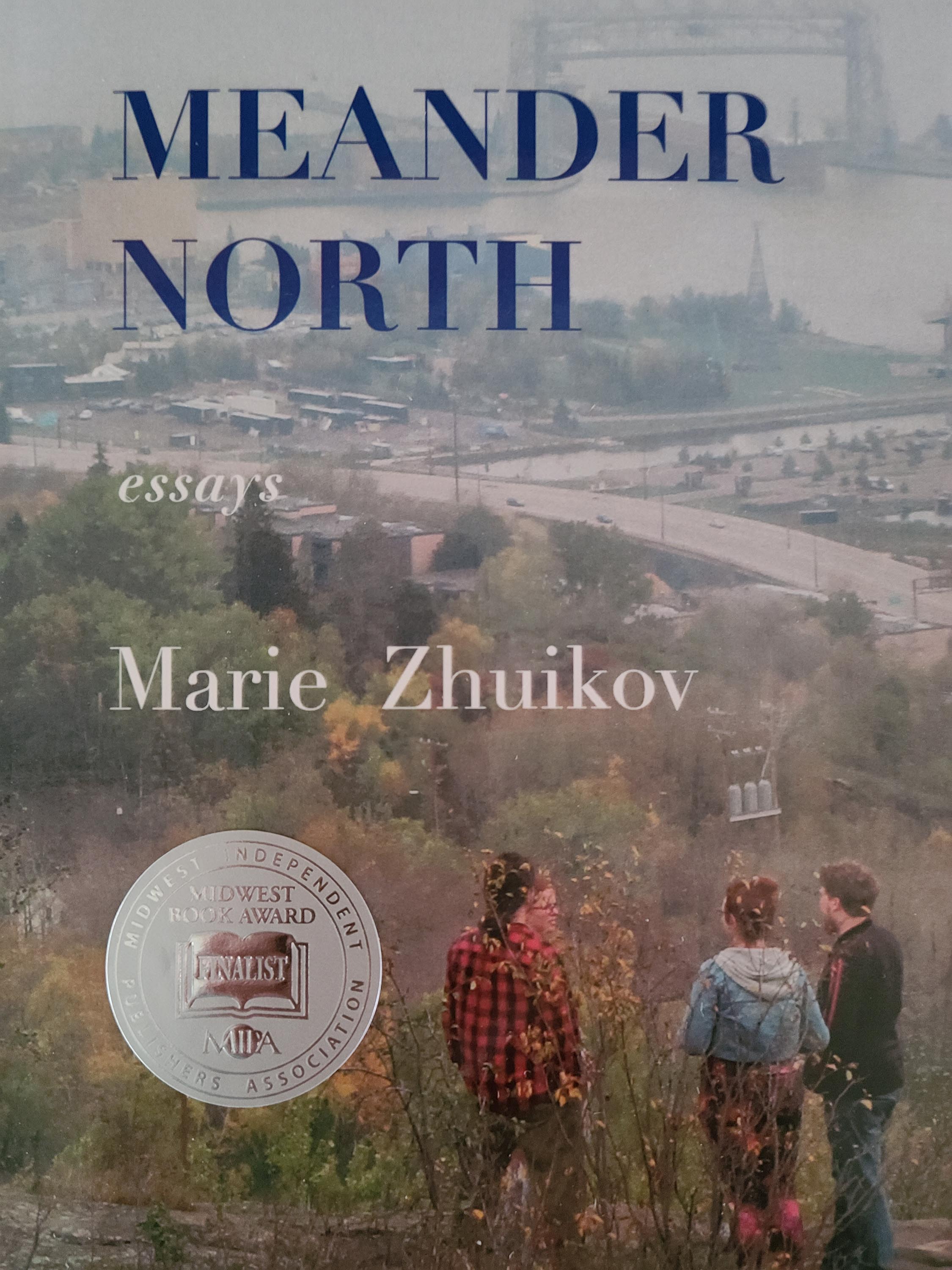
If you enjoy my blog, you’ll love my book! Meander North showcases 51 of the best stories from this blog about my quirky life in northern Minnesota and my writerly pursuits. It earned a silver Midwest Book Award for nature writing and was published by Nodin Press in Minneapolis. It is available for $19.95 through their distributor at this link.

Scotland Days 5 & 6: Edinburgh and Robert the Bruce

A cute train planter at the Huntly train station.

We departed the village of Gardenstown in a drizzle, boarding a bus for Banff with water squishing out of our shoes. In Banff, we caught a cab to the train station in Huntly. We had learned from our lesson the previous day and booked the cab in advance. The train arrived on time. We spent the relaxing ride reading and playing cards.

Schlepping my suitcase around while using a hiking pole for my broken ankle wasn’t easy, but my ankle, despite its deep purple, green, and sickly yellow hues, was no longer swollen and it felt pretty good. About five hours later, we arrived in Edinburgh.

The Angel’s Share Hotel, Edinburgh

Our destination for the next six nights was the Angel’s Share Hotel. I chose it because it was only six blocks away from the station (so we could walk there) and because I liked the name. If you’re a whisky drinker, you probably know that it’s named for the small amount of whisky that evaporates while it ages in a cask. It’s thought that the angels drink it, and thus get their share. The hotel’s bar and restaurant offer a wide range of whiskies and each room features large images of famous Scots. The singer Lulu Kennedy-Cairns graced our room. She’s best known for her song, “To Sir, With Love.” She looks like Olivia Newton-John.

After settling in our room, we popped down to the restaurant for a meal. The restaurant and bar are combined. The place was packed, and a soccer game was on (England vs. Sweden), plus a birthday or two were being celebrated. The decibel level was high! We assumed the crowd would be rooting for England, since it is geographically closer to Scotland, but they seemed to be cheering Sweden. I guess that even when it comes to sports, old grudges and rivalries die hard in Scotland.

Edinburgh Castle as seen during our walk from the train station.

Staying at the Angel’s Share ended up being a superb experience. It’s in a great location for walking to Edinburgh Castle, the Royale Mile, and many, many wonderful restaurants. We ate at a different place almost every day and never had a bad meal. Most were only a few blocks away. The rooms were quiet, and I loved the ambiance of the lobby with its dark wood paneling and fireplace.

We rose early the next day for a tour I’d been eagerly awaiting for months: sites connected with my great-grandfather to the 21st power and first king of Scotland, Robert the Bruce, including Broomhall House, the current home of the Bruce Family.

I was most excited about Broomhall House. It only recently opened for tours, which are led by Charles Bruce. I had contacted Broomhall directly through their website inquiring about a tour over six months before our trip but I never heard anything back from them. Then I contacted a tour company that listed Broomhall on its website as a tour option. I did not hear back from them, either. A few months before our trip, I tried the company again and they said they were all booked. By this time, I’d made arrangements for a different tour with Tartan Viking Tours (an Outlander tour. More on this in a later post) I contacted them and asked if I could “build a private tour” with them that included Broomhall. They said they could do it, which delighted me to no end. Later, they told me the private tour would cost $1,500. This gave us pause, but not for long. We figured this was a once-in-a-lifetime experience and that it would save us having to return some other time to do it, so we said “Yes!”

Calum was our guide. Sporting full Scottish regalia, he picked us up at our hotel in a van. Our first stop really didn’t have anything to do with “The Bruce,” but I had wanted to see it because I love Scottish myths and the images I’d seen of this attraction. Besides, The Kelpies were on the way to the other things we wanted to see.

The Kelpies

The Kelpies are two giant horse heads surrounded by a moat of water. In Scottish myth, kelpies are shape-shifting water spirits that lure humans to their deaths by drowning. They were built by Andy Scott and unveiled in 2014. The Kelpies have royal names: Duke and Baron. We saw more of Scott’s smaller sculptures in the middle of round abouts along the way. Also, Minnesota just got one of his giant sculptures in the form of a loon in St. Paul. It was just put in place last week!

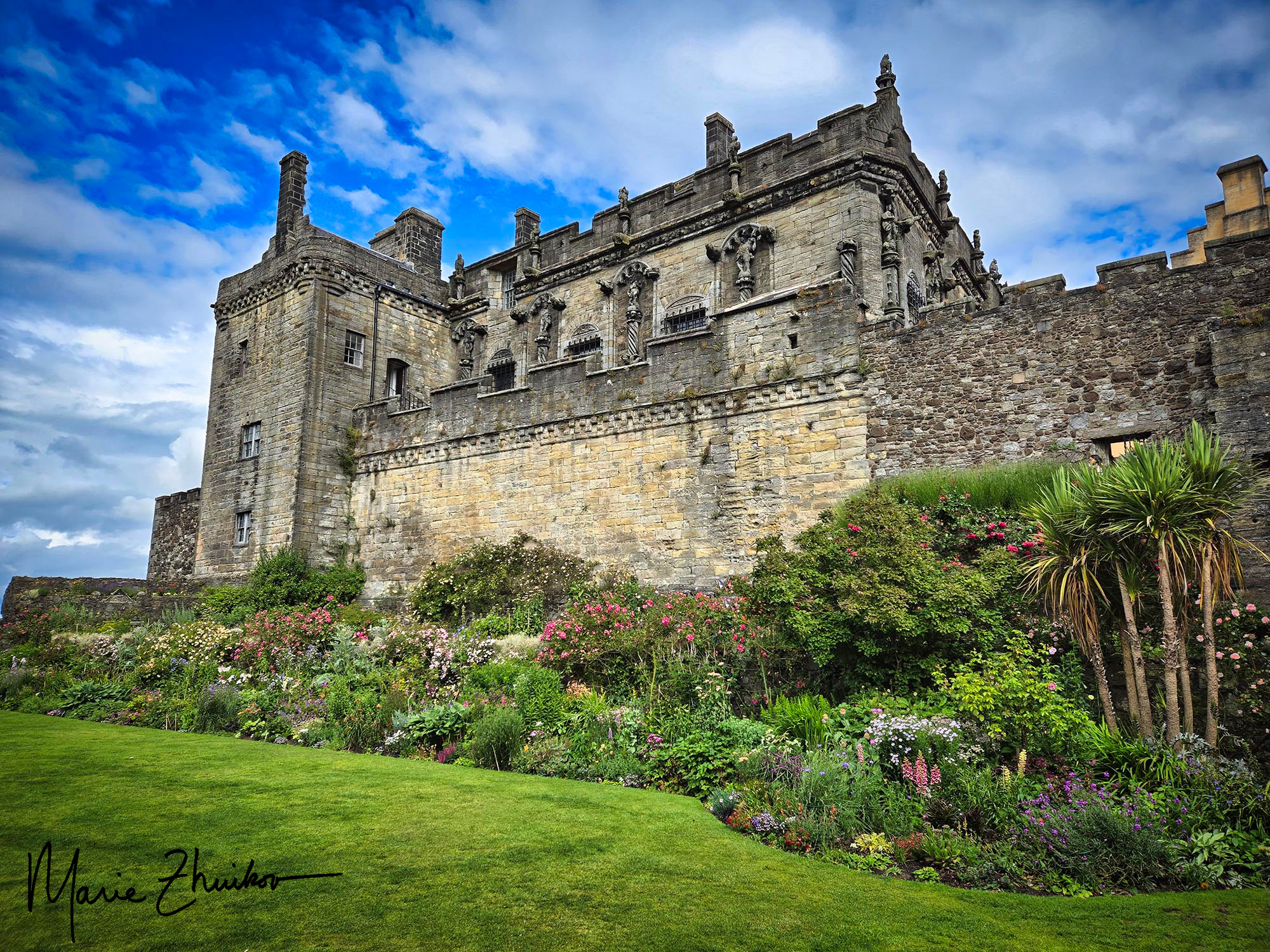
The gardens at Stirling Castle

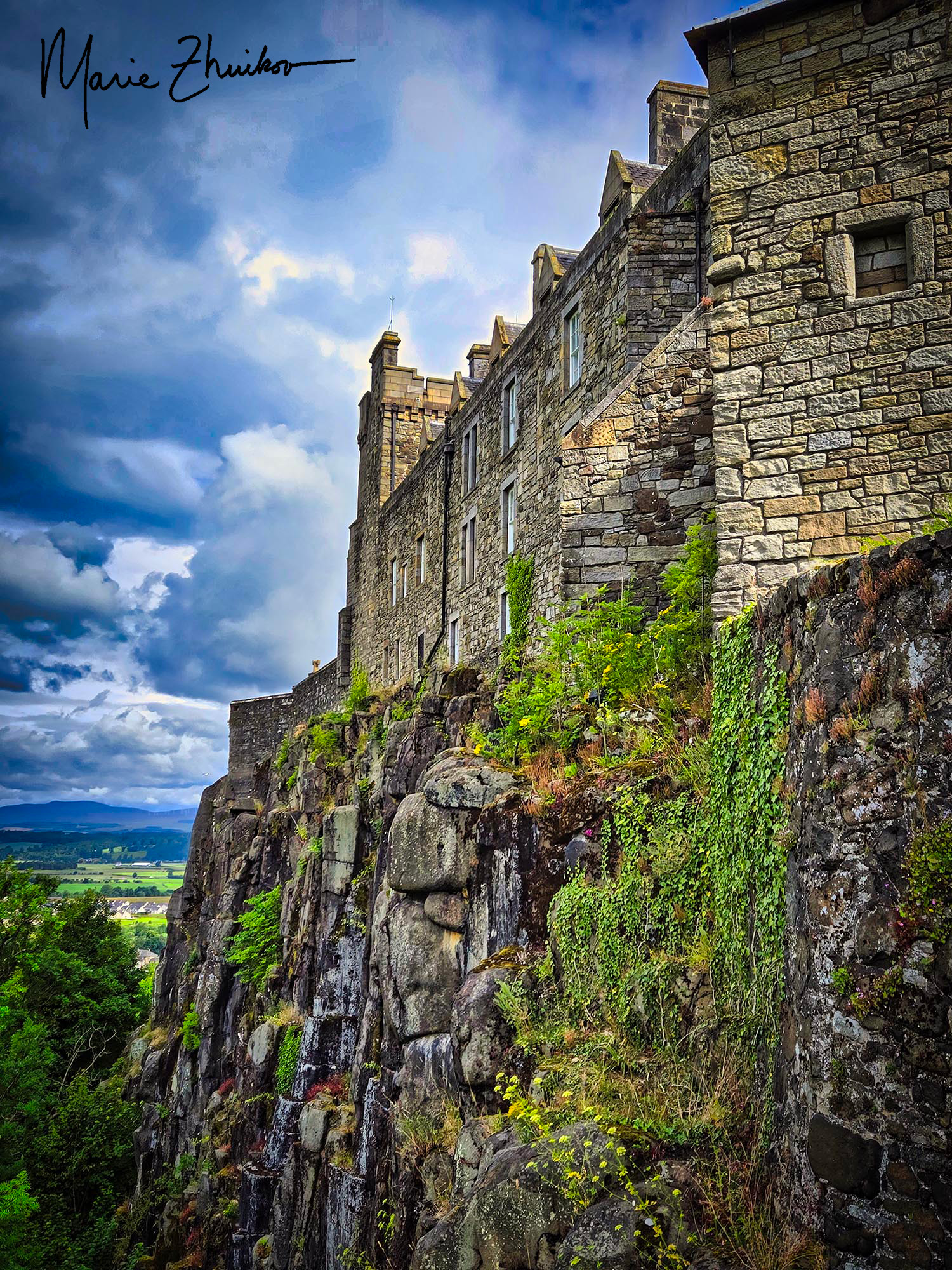
Our next stop was Stirling Castle. If you only have time to visit one castle in Scotland, I suggest this one. We liked it because it just seemed like a castle should be. Built on a volcanic crag, the castle has a great hall, a palace with impressive bedrooms, a chapel, pretty gardens, and great views of the surrounding landscape including the Wallace Monument. Live actors worked in several of the rooms. One thing I learned was that the impressive bedrooms were mostly for show. Castle royalty actually slept in smaller, more modest rooms off the showy bedrooms.

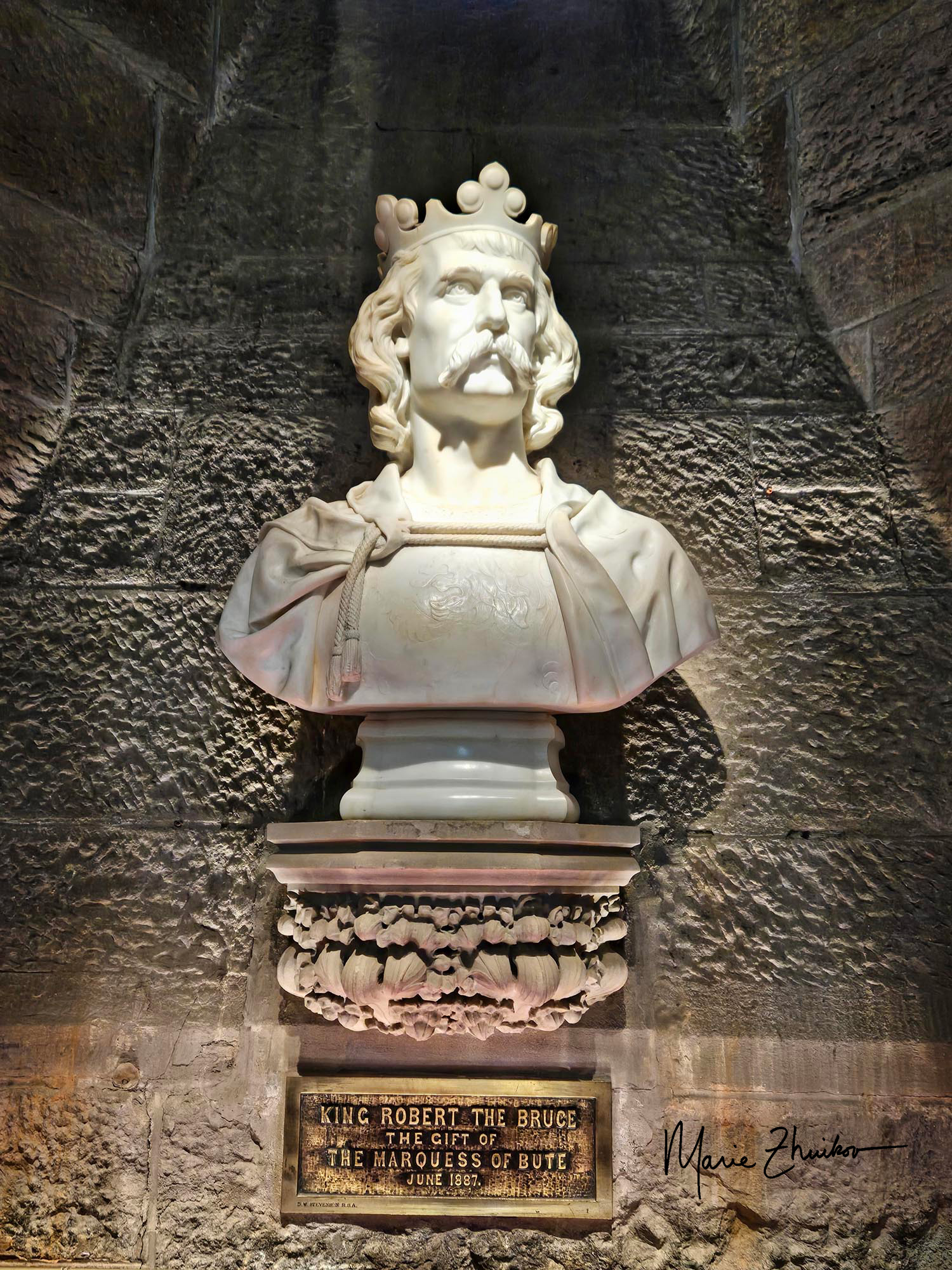
The Robert the Bruce statue at Stirling Castle

Throughout his reign Robert the Bruce was known for destroying castles. He did this so that they couldn’t fall into the hands of the British. He also never settled in one place long himself to avoid being killed. Stirling Castle was one of The Bruce’s castle casualties, but it was rebuilt later. Even so, The Bruce is honored with a statue outside of it. While we were admiring the statue, Calum and his kilt created quite a stir among a group of Asian tourists. They were so excited, they were taking photos of his back! I mentioned this to Calum, who graciously posed for some full-frontal photos with the group. 😊

Calum being accommodating

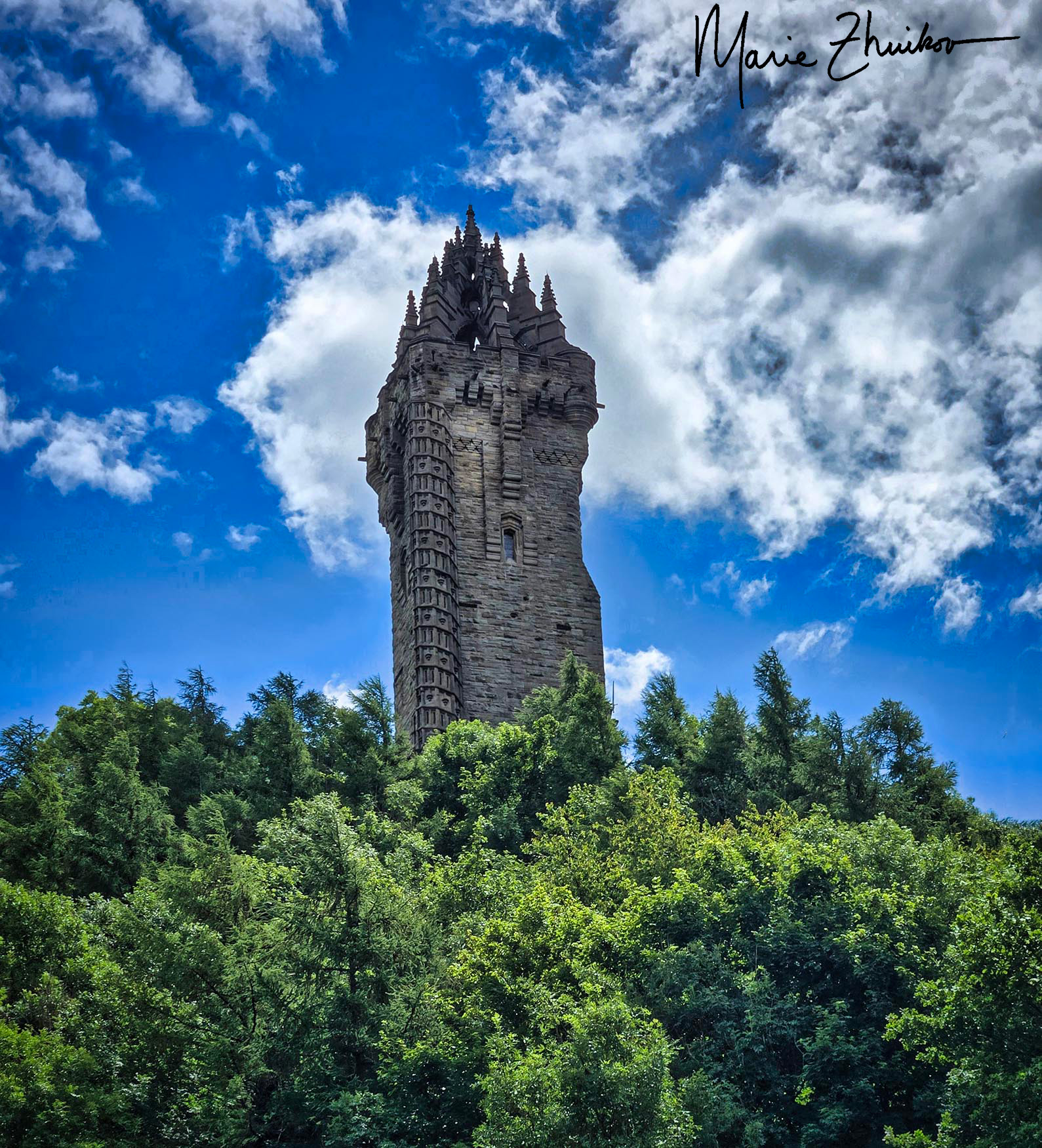
Next was the Wallace Monument. Although it was built to honor William Wallace, a heroic Scottish warrior, Robert the Bruce is honored in it, as well. A spiral staircase leads to the top of the monument. Several floors on the way up offer exhibits (and a rest from stair climbing). I learned that climbing spiral staircases with a hiking pole and a broken ankle is tricky. We encountered MANY spiral staircases during this tour and others, but in case you were worried, I’m happy to say, I emerged unscathed.

Our next site offered a much stronger connection to The Bruce. Dunfermline Abbey is where Robert the Bruce was buried. Actually, his alabaster tomb was destroyed during the reformation in the 1500s, but his body (along with alabaster fragments) was found in 1818 when the abbey was being renovated. His new tomb is done in the Scottish royal colors of red and yellow/gold. A wooden pulpit was built directly over it, so it’s as if the minister is channeling the king during his/her sermons! The abbey is still in use.

Robert the Bruce’s grave in Dunfermline Abbey.

The whole structure honors the former king. As we walked toward it, Russ noticed the words “King Robert The Bruce” are spelled out at the top of the abbey’s square spire. Before his body was reinterred, five plaster casts were taken of his skull. One was on display at the abbey. Another one is in Broomhall. For me, this was perhaps the most moving of all the places we visited. Something about the silence and the reverence impacted me.

Dunfermline Abbey

Then came the piece de resistance: Broomhall House! Calum had never been there, so he had to look it up on his mapping app. As we drove up to it, I noticed signs for a restaurant and hotel. The research I’d done on Broomhall had not mentioned anything like that. Curious.

We hopped out of the van and went to the reception desk. Calum said, “We’re here for the tour.” The receptionist looked at him blankly. Uh oh. As it turned out, we were at Broomhall Castle, not Broomhall House.

After discovering the error, we sped back in the proper direction. This time, the place we approached looked much more like what I was expecting. We stayed in the van while Calum knocked on the door. A woman came out from a different door, and they chatted. She looked worried and took up her phone. Uh oh. Eventually, both of them approached the van.

Broomhall House

The gist of it was that we were not expected. My heart bottomed out right there but I tried to keep it together. The woman who was speaking with us was Antonia Bruce, Charles’s sister. She had tried calling Charles, but he wasn’t picking up. She was willing to go into the house with us but she wasn’t really up on giving tours and besides, she was taking care of her parents, 100-year-old Lord Elgin (Andrew Bruce) and Victoria.

Antonia was verra verra nice. We apologized for interrupting her and said we’d try to come back another day. We had two days open on our itinerary and hoped that one of them would work. Somewhere there had been a communications breakdown. (Hint: it wasn’t on the tour company’s side.) I was hugely disappointed but realized that shit happens. I was just glad we were staying longer and might have time to for the situation to be rectified.

So, with fingers crossed, we drove away.

Did months of planning go down the drain? Did we just throw away a bunch of money? Did we ever get to tour Broomhall? Tune into the next exciting installment!
If you enjoy my blog, you’ll love my book! Meander North showcases 51 of the best stories from this blog about my quirky life in northern Minnesota and my writerly pursuits. It earned a silver Midwest Book Award for nature writing and was published by Nodin Press in Minneapolis. It is available for $19.95 through their distributor at this link.