Book Review: Hawks on High

20190915_141115_001

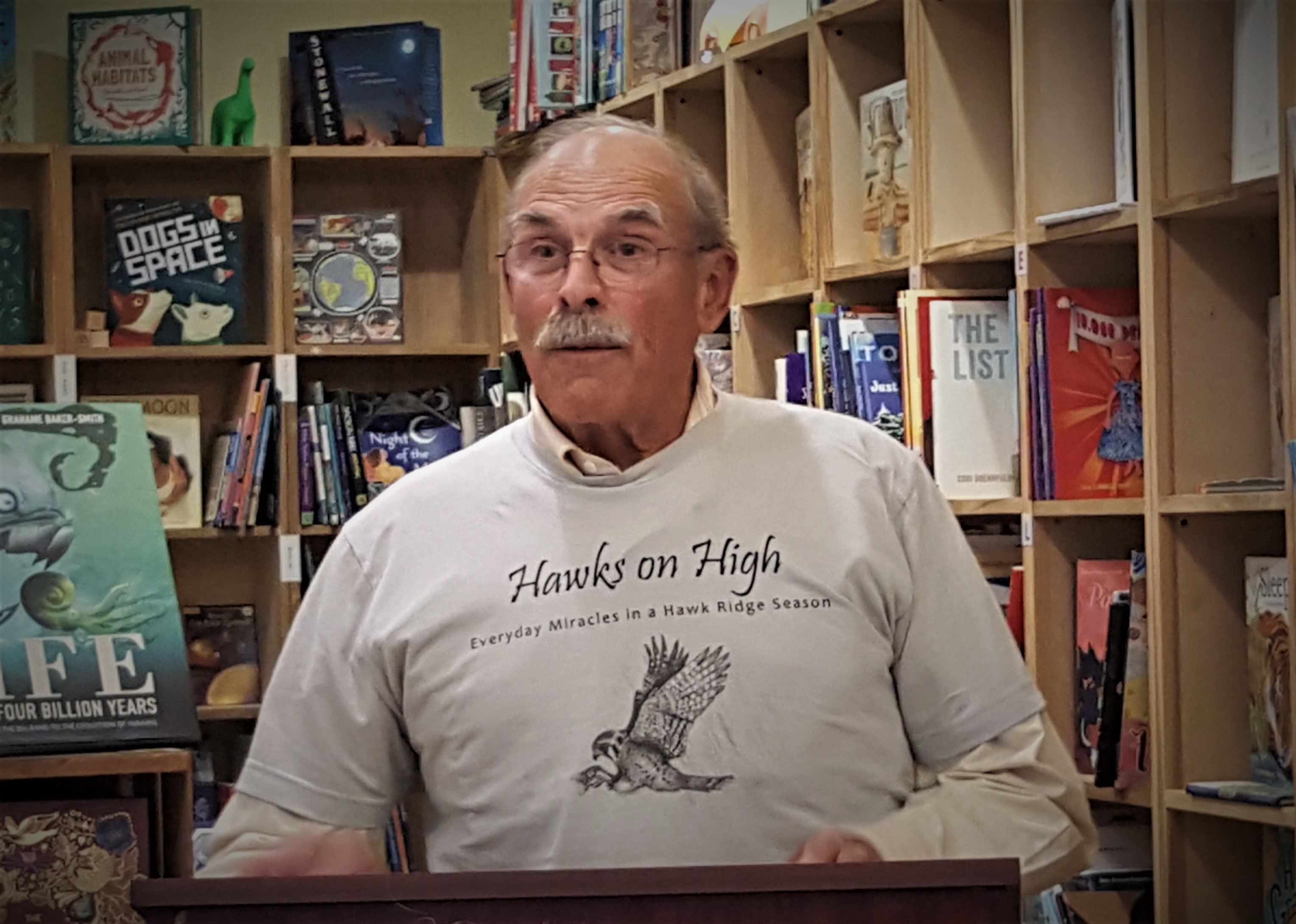
Phil Fitzpatrick talks about his book “Hawks on High” recently at Zenith Bookstore in Duluth, Minn.

It’s about time someone wrote a book of poems about Hawk Ridge in Duluth. And it took a newcomer to do it. Author Phil Fitzpatrick (Hawks on High: Everyday Miracles in a Hawk Ridge Season) has only been coming to the popular bird migration counting station on the ridge for two years. However, with his “new eyes,” that was long enough for him to amass enough poems for this book. His poems are combined with pen and ink drawings by artist Penny Perry.

My favorite poem is “Pringles Prize.” It describes how the hawk ridge workers use Pringles potato chip cans to contain the hawks they catch in mist nets on the ridge. Once the hawks are slipped into the cans, their legs can be easily banded for later identification. Before a hawk is released, the birder eases it “from its cardboard confines” for a short show-and-tell to the gathered bird-watchers. Then it “lifts above wide-eyed kids who now love hawks even more than Pringles.”

Love the wonder and subtle humor of that ending! I gave “Hawks on High” five out of five stars on Goodreads.
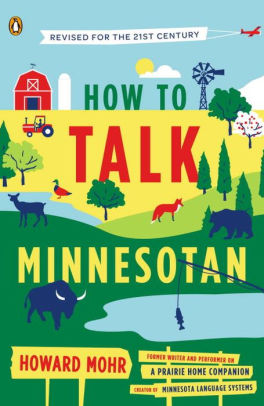
Book Review: How to Talk Minnesotan, Revised for the 21st Century

9780143122692_p0_v3_s550x406The first version of this book, published in 1987 and later made into a video, helped me understand my own culture. Before reading it, I never understood that the “long good-bye” was something unique to my state of Minnesota. (The long good-bye is where it takes at least three tries to leave a friend’s home before they will actually let you go.)
Also helpful was the “angle rule,” which describes how many Minnesotans talk to each other without actually looking at each other. Instead, they stand at 90-degree angles, looking off at some mysterious distant point while conversing. I had seen that many times and just thought that’s how everyone did it. I was not conscious that these were Minnesota “things.”

I watched the “How to Talk Minnesotan” video so many times, I had the lines memorized. So when I heard the book had been updated (in 2013), I put it on my list to read.

In reading the recent edition, it didn’t seem like a whole lot had changed. Although it now contains sections on Tweets, Facebook, and smart phones, the same lines from the video are there on the page.

However, in reading this new version, I realized something that nagged me with the first version, which is that this is not a book that encompasses the whole of my dear state. The traits described in it are more common in farm country. I’d say that’s about from Hinkley, Minnesota, and south. With token mentions of smelt and lutefisk, this book has a bit of relevance to northern Minnesota, BUT, there’s not one mention of a sauna etiquette, iron ore mining, Lake Superior, Ole and Lena jokes, or wilderness camping. It lacks northern nuances.

A more accurate title for this book would be “How to talk Mid- to Southern-Minnesotan.” If you live north of Hinkley, reading it will be helpful, but it won’t get you the whole way. If a third version is ever done, the author should come on up here and talk to us northerners for some new material, don’t cha know.

Book Review: Babbitt by Sinclair Lewis

ilewish001p1

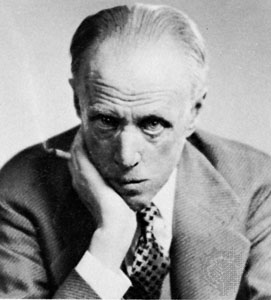
Sinclair Lewis. Image courtesy of the Encyclopaedia Brittanica.

I was motivated to read “Babbitt” because the author lived in my hometown in the 1940s for a time. I periodically drive by the house Sinclair Lewis used to own and it made me curious to read his works.

Also, my mother had a brush with Lewis. As a home economics major at the University of Minnesota, to gain experience she worked as a cook for a professor who had Lewis over for dinner one night. As I recall, my mother was not impressed with the author, saying that his face was pock-marked, he seemed unhappy, and was inordinately self-absorbed.

Although the book and its slang are dated, I found the tale eerily relevant, given the current political climate. It’s not so much a story as it is an extended character study of George Babbitt, a real estate broker in the mythical town of Zenith (which is patterned after Sauk Centre, MN). And if you ever wondered how white male privilege came about, this story reads like a propaganda packet for it and it will enlighten you.

During Babbitt’s time, cigar lighters in cars were a big deal. Ads were written in flowery language with fountain pens, and protracted descriptions of electrical outlet covers could make their way into novels. “Boosterism” was big. Prominent community members were expected to extol the virtues of their small towns far and wide to encourage business and prosperity.

Babbitt is a 48-year-old economic booster who faces a mid-life crisis – kind of like if Donald Trump ever got a conscience or sought spiritual enlightenment. The story follows him from his rise to the ultimate booster, to his decline after his friend is jailed for a shooting. Babbitt begins to question the social culture of his town and he rebels to the point of drinking heavily, having an affair, and consorting with **gasp** liberals and men deemed as socialists.

Babbitt is brought back to the fold of social respectability after his wife contracts appendicitis and the community rallies around his family. However, after his wife’s recovery, the old rebellion starts in on him again. He feels powerless to act on it because he’s finally back in the good graces of the town’s powerful men.

It is at this time [spoiler alert!] when his son elopes with the neighbor girl. After they come back home and announce their news, the shocked families start expressing their disapproval, except for Babbitt, who takes his son aside into another room. Babbitt praises him for having the guts to buck society and do the things that Babbitt was never strong enough to do. Thus, he passes the torch of social rebellion onto his son to carry.

My favorite scene in the book involves the subtle satirical humor at a dinner party where all the men complain about small town hicks who repeat the same things over and over again during their dinner parties because they are so uncultured. Each big city cultured Zenith man at the table expresses this same complaint, just in different words.

Although Lewis is an astute observer of human nature and his story is meant to be a cutting social commentary, the language makes it rather quaint today. It’s full of words like “zip” and “pep,” and such shocking swear words as “golly,” and “rats.”

But I liked the story. I gave it three out of five stars on Goodreads. I feel I’ve done my duty in reading a local author. Next time I drive by his former house, I’ll utter a couple of “gollies” in his honor.

A Tribute to Mary Oliver

I happened to be reading Mary Oliver’s “Dog Songs” book of poems over the course of several evenings when I heard the news of her death last week. What a momentous passing for the poetry world! The thought that she will never write another word for the world to read is depressing. I’ve been in a funk for a few days.

One of my friends said that when he heard the news, it hit him like that scene in “Star Wars” when Princess Leia’s home planet of Alderaan is destroyed by the Death Star; a giant scream passes through the galaxy, heard only by those who are strong in the Force. In the case of Mary Oliver, I imagine many poets emitted silent screams when they heard the news.

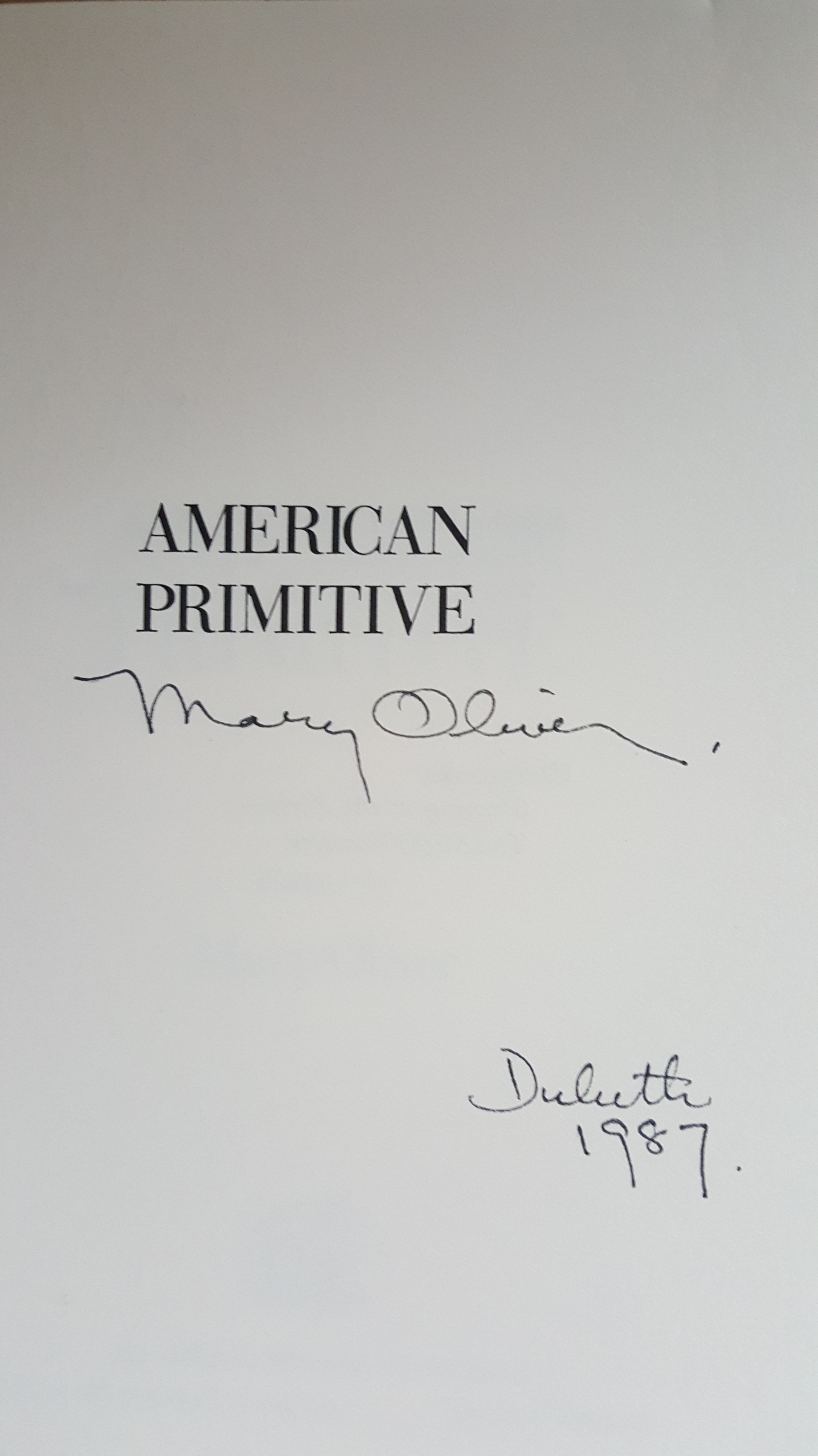
20190121_143759I’ve long been a fan of her work. I even was able to see her read in person in the hinterlands that are Duluth way back in 1987. Her autograph is on my copy of “American Primitive” as proof!


I appreciate how Mary made poetry accessible. Her consistent weaving of themes from the natural world and the sensual world spoke to me unlike the work of any other poet.  Thank you thank you Mary Oliver for having the courage to put your words to paper and the perseverance to publish them!

I’d like to share with you some of my favorite poems from “Dog Songs,” which, as if you couldn’t guess, are poems about her dogs.

These lines are from one entitled “Her Grave,” and they echo thoughts I have almost every time I walk my dog:

A dog can never tell you what she knows from the

smells of the world, but you know, watching her,

that you know

almost nothing.

In that short phrase, Mary explains the different worlds that dogs and humans inhabit, yet how closely they are connected.

Another favorite is, “The Poetry Teacher.” This poem describes how the university gave Mary a “new, elegant” classroom to teach in – one where her dogs were not allowed. She would not agree to that and instead moved into an old classroom in an old building. She kept the door propped open and eventually her dog would arrive with his friends . . .

all of them thirsty and happy.

They drank, they flung themselves down

among the students. The students loved

it. They all wrote thirsty, happy poems.

Then there’s “The Wicked Smile,” about a dog who seems famished for breakfast and “talks” Mary into feeding it, only to “confess” afterward that someone else fed him breakfast already.

While her dog poems are not quite as strong as her people-oriented poems, they are certainly worth reading. You won’t look at dogs in quite the same way afterward.

May you all write thirsty, happy poems!

Psycho Dads: A Comparative Book Review of “My Absolute Darling” and “The Marsh King’s Daughter”

Warner bros the shining

One of the scariest psycho dads of all time: Jack from “The Shining.” My post is not about him, but it is about psycho dads. Image by Warner Bros.

Fathers. They can have a profound impact on their daughters’ lives. Unfortunately, the two daughters in these books hit the jackpot when it comes to living in a family headed by psycho dads. Both books make for compelling, disturbing reads.

I read them back-to-back by happenstance. I was lured into “My Absolute Darling” by an intriguing and glowing New York Times book review. Alas, judging from all the complaints on Goodreads, I wasn’t the only one misled by the review, which glosses over the nasty bits about incest and the fact that THE DOG DIES in it. (I hate books where the dog dies, especially when scavengers pull its intestines out of its anus afterward.)

Instead, the review focused on positive comments by other writers, including Stephen King, and the author Gabriel Tallent’s background (this is his first novel).

The unfortunate daughter in “Absolute” is Turtle, a young teen living in the woods of northern California with her dad. Her mother died when she was young, leaving her at the mercy of her father who has an inordinate fondness for guns, and a paranoia about societal collapse. Turtle eats raw eggs for breakfast and wears combat boots to school. Her only friends are her grandfather, who lives in a trailer home next door, and a teacher who sees the signs of abuse and tries to help.

Later, Turtle befriends Jacob and Brett, two boys near her age who are lost in the woods. These well-read surfer dudes provide a foil for Turtle’s dark story, and are the catalyst for her father’s abuse to escalate.

The story of Turtle’s escape from her father is often profane, violent, heartbreaking, frustrating, stark and sometimes funny. On Goodreads, I rated the book 3/5 stars, mainly because some of the violence felt unnecessarily exploitive.

I read “The Marsh King’s Daughter” at the recommendation of my book group and because it’s set in Michigan’s Upper Peninsula – not far from my stomping grounds. The unfortunate daughter in this story is Helena. Her father kidnapped her mother when she was young and brought her into a remote marsh in the wilds of the U.P. Born in the marsh, Helena grows up in blissful ignorance of her true situation because her family is so isolated from the outside world.

Like Turtle, Helena is at home in the woods. Her father has taught her well how to survive and track animals. These descriptions are especially vivid and believable, as are the scenes of Helena’s eventual escape from the marsh.

The abuse in “Marsh King” is tamer than that in “Absolute.” Another thing that puts readers at more of a distance is that the story is told in retrospective. Helena is grown and out of the marsh, with a family of her own when she begins relating the tale. Even when the action is in the present, Helena is prone to bouts of rumination and repetition that slow down the action. There was so much of this in the climax scene where she has a death match with her father that I could hardly tell it was taking place in the present. But the story hooked me enough that I kept reading.

Another scene that stuck in my reader’s craw, however, was the one where Helena’s father tries to drown her mother in punishment for what he thinks is an escape attempt. Helena’s mother is canoeing alone across a lake (to search for strawberries on the other side) – something she is apparently forbidden to do. The father comes home and asks Helena where her mother is. Helena points to her mother who is out in the canoe. Somehow (I don’t recall exactly and no longer have the book to refer to), the father reaches the mother in the canoe and manhandles her out of it. To punish her, he almost drowns her. But does he do it in the lake where there’s plenty of available water? No. He drags her up to the porch, gets a bucket full of water and does it there. That just seems inefficient and weird to me, even for a psycho dad.

I gave “Marsh King” a higher rating on Goodreads (4/5 stars) than “Absolute” because the violence seemed less exploitive. I would have given it an even higher rating but for the rumination/repetition issues and the near-drowning scene.

Neither book dwells on how the fathers became psycho. They just deal with how the fathers’ actions impact their families.

In both books [spoiler alert!] the daughters triumph over their fathers both physically and emotionally. So if you want to read a book about “girl power” these are for you.

Polar Opposites: A Review of Two Frigid Books

ASHLEY_SHELBY_c-Erica_Hanna

Ashley Shelby by Erica Hanna.

SP station

Bravermanweb

By chance, I read two books about cold climates back-to-back. In some ways they are opposites, but in more ways they are similar, and both are good reads.

The reason why I am spending the fleeting Minnesota summer reading books about cold places is something you’ll have to ask my psychologist (if I had one). Maybe it’s just that it’s “safer” to read cold books during a warm summer. I certainly wouldn’t want to read them during the winter. It’s cold enough here then! That’s the best reason I’ve got for you.

The books are “Welcome to the Goddamn Ice Cube” by Blair Braverman and “South Pole Station” by Ashley Shelby.

Ways the books are opposite: Braverman’s book is nonfiction – a memoir set in northern climes like Norway and Alaska. Shelby’s book is fiction and is set in Antarctica. So we have opposite genres and opposite geography.

Ways the book are similar: They are both written by Midwestern women. Braverman now lives in Wisconsin and Shelby lives in Minnesota. They’re also both about women who have put themselves into challenging situations, socially and physically.

Braverman, a California native, traveled to Norway as a high school exchange student, and later as a folk school student, and still later as a museum curator of sorts in an isolated town there. She also lived on a glacier in Alaska, offering dogsled rides as part of a tourist business.

She chose Norway in high school to pursue her love of cold places, but had a bad experience (well, several bad experiences) with her host family father that made her fear men and question her own mettle. To prove her mettle, she later enrolled in the folk school to learn how to train sled dogs and survive outdoors in the North.

She writes, “What I feared most was men, and what I feared for was my body, and yet my body wanted men, and there was no answer for any of it. No, that wasn’t right. There was an answer for some of it. And that answer, I felt certain, was somewhere in the north, if I would only go and find it.”

The folk school is a community unto itself where she must prove herself and earn the respect of her teachers and fellow students. She learns her crafts well enough to later on get the job in Alaska, which is another isolated community encapsulated by and encamped on a glacier. This is where the book gets its title – the workers refer to the glacier as the “ice cube” and newbies are welcomed to the hard and challenging life on the “goddamn ice cube.”

(As an aside, this reminds me of when I used to work on Isle Royale National Park, which is located on an island in the middle of Lake Superior. We referred to it as “The Rock.”)

It’s here she has her first relationship with a man, but when things start to get difficult between them, he retaliates emotionally and physically, and makes her living situation in the camp very uncomfortable.

Eventually, Braverman makes her way back to Norway again and helps out the keeper of a general store and local historical museum. Much of the book centers around conversations of the shop regulars, who gather for coffee. Even here, Braverman is isolated and feels she must prove her usefulness to the locals.

“South Pole Station” centers on the story of Cooper Gosling, an artist who earns a fellowship to spend time and paint at the South Pole. Like Braverman, Gosling and most of the other characters in “South Pole Station” put themselves in the situation because, as one character aptly states, “We’re all here because of some shit.”

They are fighting personal battles along with elemental battles. Gosling’s battle is with the suicide of her brother. When they were young, they both used to love reading about polar explorers and made up imaginary games centered around their exploits.

Gosling’s battle almost costs her her life when she walks out into the elements in a drunken stupor. But in the end, the polies all gather around her and help her pay homage to her brother at the bottom of the world in a most fitting way.

The author does a great job describing the various social cliques that develop at the South Pole. You have the beakers, who are the scientists, and the nailheads who are the maintenance crew, etc. Like Braverman in her situations, Gosling must earn her place in the social system and in the hearts of the other polies in order to survive.

The books are both interesting reads. I gave them 4 out of 5 stars on Goodreads. And although they are set at opposite ends of the world their major themes are eerily alike.

Wisconsin Public Radio Interview – Holiday Reads

love-books-1Greetings! I had the privilege of being interviewed last week on the local Wisconsin Public Radio affiliate, along with Julie Gard, a poetry professor at the University of Wisconsin-Superior, and Julie Buckles, the public relations person for Northland College in Ashland, Wis.

The show is hosted by Danielle Kaeding, now a full-fledged reporter for KUWS Radio (91.3 FM), who assisted me when she was but a college student and I had a radio show for work. Danielle hosts “Hear Me Out,” an hour-long show every Friday morning. She asked us what books we recommend for holiday gifts and holiday reading. (During all that spare time you have during holiday break – right!?)

In my role on the board of Lake Superior Writers (a local writers’ group), I always like to feature our member writers and other local authors when the topic of books comes up. And this interview was no exception. Between the three of us, we hit many of the most recent books produced locally. I only wish we would have had more time to highlight even more authors.

Our interview is featured in the first half-hour of the show. You can listen here.

Oh, and if you need a little romance during your holiday, don’t forget about my books.

Happy Reading!

“H is for Hawk” Book Review: The Value of Animals Apart from Us

A northern goshawk. Image by Norbert Kenntner.

A northern goshawk. Image by Norbert Kenntner.


I gave this memoir five out of five stars on Goodreads not because I agreed with everything in it but because I found it thought provoking and well written. It’s the story of Helen Macdonald, an Englishwoman who is dealing with the death of her father.

To help her get through her grief, Macdonald decides to train one of the most difficult of hawks: the goshawk. She names hers Mabel. She contrasts her experience with that of Terence White, author of the childhood classic, “Sword in the Stone,” and an avid falconer who wrote about his experience in “The Goshawk.” I listened to the audio version of the CD, read by the author in her classic British accent.

So many things to say. Where to begin? To start, it’s ironic that Macdonald chose to deal with death by training an avian killing machine. It’s kind of like dealing with a job loss by helping other people get fired from their jobs over and over again. But this technique worked for Macdonald, who wanted solace by forming an attachment to an animal, and by coming closer to the wild.

However, by the middle of the book, I found myself thinking how unfair it was to burden the bird with the owner’s grief and mental health issues – both for Macdonald’s and White’s goshawks. I mean, they are birds, not people. They are separate beings, but both authors are so caught up in themselves they don’t see this. It’s a lesson I learned years ago from living in the wilderness, and something I suspect most people, who are used to having animals around as pets or for food, don’t have an opportunity to realize.

Macdonald’s attitude of animals being defined in the world by the meanings given to them by humans came to light in a section where she attended an art exhibit about California condors. She says, “I think about what wild animals are in our imaginations and how they are disappearing, not just from the wild but from people’s everyday lives – replaced by images of themselves in print and on screen. The rarer they get, the fewer meanings animals can have. Eventually, rarity is all they are made of. The condor is an icon of extinction . . . How can you love something, how can you fight to protect it if all it means is loss?”

My argument is you fight for endangered animals because they have value apart from us. It’s perhaps the ultimate hubris to think the world revolves around us and our meanings. Most wild animals don’t need us to survive. In fact, they would probably do much better if humans were out of the picture. And why did the condor nearly go extinct in the first place? From human actions (poaching lead poisoning, etc.) It seem so unfair for humans to cause these problems and then to complain that thinking about these animals is depressing. What’s really depressing is what we do to some animals.

Toward the end of the book Macdonald finally realizes that people are more fitting agents for emotional support than animals. While animals provide great solace, they are no substitute for a pair of human arms around you. And she realizes that animals have intrinsic value apart from humans.

She writes, “Of all the lessons I’ve learned in my months with Mabel this is the greatest of all: that there is a world of things out there – rocks and trees, stones and grass, all the things that crawl and run and fly – they are all things in themselves. We make them sensible to us by giving them meanings that shore up our own views of the world.”

Right on. She says she learned with Mabel how to “feel more human once you have known, even in your imagination, what it is like to be not.” She could have ended the book there and I would have been happy but she continued on with White’s story, which at times, overshadowed her own. I could have done without much of the detail of his story and the book would have been stronger for it. I also found myself getting tired near the end from hearing mini dramas about how she was always losing her hawk. But I still gave it five stars, so it these things must not have bothered me too much!

One thing I thought was funny was how, once Macdonald started using antidepressants, she described the hawk as looking much happier, too. I think this was when she was still caught up in the hawk being an extension of herself.

And I was happy to see that Macdonald delved into the “conversation of death” described in Barry Lopez’s book, “Of Wolves and Men.” This is an exchange that happens between wolves and their prey that either triggers a chase or diffuses the hunt. If you’ve read my novel “Eye of the Wolf,” you know that I delved into it, too.

As I was thinking about writing this review, I came across a quote from Henry Beston (“The Outermost House”) that sums up my philosophy and what I think Macdonald was trying to say with her memoir well:

“We need another and a wiser and perhaps a more mystical concept of animals…. For the animal shall not be measured by man. In a world older and more complete than ours they move finished and complete, gifted with extensions of the senses we have lost or never attained, living by voices we shall never hear. They are not brethren, they are not underlings; they are other nations, caught with ourselves in the net of life and time, fellow prisoners of the splendour and travail of the earth.”

Agree? Disagree? Am I some psycho loony? (Smirk.)

A Review of “The Goldfinch”

The Goldfinch“The Goldfinch” is an ambitious book, dealing with questions like: what is art? What is love? Is fate more due to relentless irony, divine providence, or a mix of the two? Just simple questions like that. (Smile.)

I found myself comparing this novel to “Extremely Loud and Incredibly Close” because they both have boy narrators who lost a parent to terrorism. In the case of Extremely Loud, it’s the World Trade Center crashes. In this book, it’s the bombing of an art museum. I like “The Goldfinch” better because the narrator isn’t as unreasonably anxious. He’s anxious yes, but in a calmer, more reasoned way, if that’s possible. And the timeline is more straightforward, which makes it easier to follow.

The story follows the life of Theodore Decker from age thirteen until his late twenties, exploring his longing for his dead mother, his relationship with his dead-beat father, adjustments (or lack thereof) to his new living conditions, and his attachment to a famous painting.

I liked how the author shows feelings of emotional displacement through descriptions of the characters’ surroundings – furnishings, food – and not only through human interactions. She incorporates a huge amount of detail, which makes the story real. Unless one is a writer, it’s hard to appreciate how difficult this is to do well. I also enjoyed the author’s fresh metaphors. There’s a reason “The Goldfinch” won the Pulitzer Prize for fiction this year.

Toward the end, I started getting impatient with Theo’s inarticulateness and inability to function. And when he does function, it’s like he’s outside of himself. He’s so inactive, it’s like he’s the opposite of a protagonist. He just stands there saying, “Ummm… ahh…” and things happen to him.  Theo’s Russian friend Boris takes over as protagonist at this point, and I ended up with a fondness for him despite his bad influence on Theo. I learned more about drinking and drugs than I ever wanted to know. Also, the author has the Russian soul down.

Some readers complain that the ending paragraphs aren’t worth all the angst in the previous parts of the book, but I don’t agree. The ending starts several chapters before the last chapter. I was listening to it on CD, so I’m not entirely sure of the organization of the book, but to me, the summation starts with Theo’s “coming clean” discussion with his mentor Hobie (I love Hobie!) and continues through the remainder of the novel. I thought it was cohesive and worth the wait. In fact, it was so worth the wait that I incurred my first library fine in recent memory so that I could complete the story. So beware: “The Goldfinch” is a bad influence – it could encourage you to incur library fines without remorse for the rest of your days.

“Zenith City” Offers a Broader Understanding of Duluth

Zenith_City-210“Zenith City” is a collection of stories by former Duluthian Michael Fedo (cousin of former Duluth Mayor John Fedo). The memoir chronicles his time growing up in Duluth, Minn., in the 1950s and 60s.

I enjoyed reading the book. I recognized Fedo’s references to the city’s inferiority complex (which is turning around, now, thank you, with Duluth being named things like Best Outdoors City, etc.), and Fedo’s references to Duluthians’ relationship with their hills, KDAL Radio, dear old Denfeld High, the Flame Restaurant, and the Pickwick.

However, in many instances, Fedo writes about a Duluth with which I am unfamiliar — one where relatives live next door (my parents were the northernmost transplants of their central- and southern-Minnesota families), where the vices and haunts of downtown were nearby (I grew up in more distant Piedmont Heights), and where folk music was popular (I was born about 15 years too late for that).

But that’s all right. The descriptions gave me a better understanding of the place where I live. I especially enjoyed his reminiscences about Don LaFontaine, the famous movie trailer voiceover actor (think, “In a world where….”), his encounter with Louis Armstrong, and with Bob Dylan’s mother. And because of my exposure to this book, I now intend to read “Babbitt” by Sinclair Lewis, who lived in Duluth for a time. (Also because my home economics-major mother once made and served him dinner when she was working in college for a family who entertained him.)

I noticed two punctuation errors: one where closing quotation marks are missing, another where a sentence ends with both a period and a comma. This surprised me since I’ve come to expect better from the University of Minnesota Press. I don’t know if it’s a sign of their quality slipping or of my editorial eye getting sharper with experience.

The only other thing that gave me pause was the repetition among the stories. For instance, we hear that Fedo worked at the local college radio station at least four times throughout, but I suppose this is an artifact of the book being a compilation of stories that were written for other publications. Just be aware it’s not a seamless memoir written in a singular effort.

Earlier this year, I went to an event by Fedo at Duluth Public Library. He read from many of the stories, and afterwards, he and his wife were generous with their time for a discussion with me, a newbie novelist. They were a class act. I highly recommend this book, even to non-Duluthians.