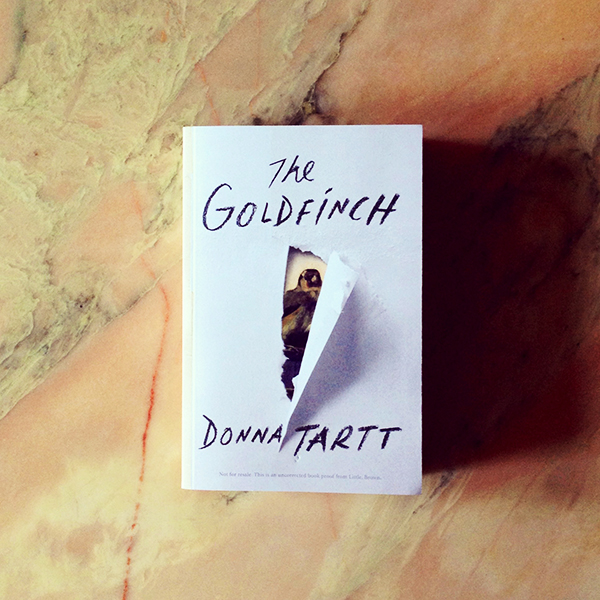
Making Mosses Sexy (The Signature of All Things – Book Review)

SigofAllThings

I picked up this book because I like Elizabeth Gilbert’s nonfiction (I’ve read “The Last American Man,” “Eat, Pray, Love,” and “Committed”). I haven’t read any of her novels, so I wanted to see what she could do with fiction. Also, I wanted to see how/whether she could make botany interesting. Caution: this review contains spoilers, so if you don’t want to know how the novel ends, it’s best to stop reading now.

The story follows the life of Alma Whittaker, a scientifically inclined child born into a wealthy American family in the 1800s. Alma’s life is so lonely and sterile in the first part of the novel that I began to wonder why I was continuing to read. Finally, when she meets a botanical artist, Ambrose, things look up for her. Gilbert does an admirable job taking readers along with Alma’s joy and hopes/fears at this point, so that when they come crashing down, so do readers’ hearts. I liked how Alma dealt with life’s disappointments by grinding them under her boot heel. That’s a philosophy worth emulating.

Midway through the novel, when Alma is casting about for things to occupy her time, I found myself asking – why doesn’t she try to help someone else for a change? That thought doesn’t come to her at that point and she turns instead to a solitary life of studying mosses. I was thankful to see altruistic motivation finally come to her after her father dies.

So how does Gilbert make botany interesting? She combines it with a life story, sex, and spiritualism. Gilbert uses Alma’s situation to explore the dichotomies between science and the soul, and how a woman can endure a lifetime of sexual frustration, yet still function in the everyday household and business duties required of her.

I want to share a quote from the story that particularly resonated with me: “These are two things I have always observed to be in singular accord: super-celestial thoughts and subterranean conduct.” I have found this to be true, as well. Think of all the televangelists and others in positions of authority who have been brought down by sexual scandals. But I am meandering…

One thing that bothered me is that when Alma was in Tahiti, she did not even think of showing a drawing of the mysterious Tahitian boy to someone. She did mention there were some facial drawings of him that weren’t lewd. Showing one to someone she trusted, like the reverend or the ‘wild boys,’ would have saved her a lot of time trekking around the island. She could have said she found it in Ambrose’s things and was wondering who his friend was. Gilbert didn’t even have Alma consider showing someone a drawing, which bothered me and seemed unrealistic (even for fiction!)

Another thing that bothered me that one of Alma’s major goals in life was to give a man a blowjob. I mean, seriously?! The feminist in me is just so affronted by that. Alma’s character is already so intelligent, capable and self-sacrificing. I would have been much more comfortable if her goal in life was to have a man give HER oral sex. (Smirk.)

The dust jacket description says that events take place at a galloping pace. I wouldn’t say this is true. The pace is more like that of a pachyderm than a horse. Both Alma and her father are so deliberate in their speech and actions that all sides of an issue are explored before action is taken. This is hardly galloping. But the good side of this is that you come to know the characters intimately.

I ended up wanting SOMETHING good to happen for Alma – better than performing a blowjob on a lovely male Tahitian in a cave (which is not bad, but still….) Near the end, there’s another glimmer of hope when she develops her own theory of natural selection. But does she publish it? No. Like the aforementioned slow-moving pachyderm, she has to investigate all sides of her theory, which takes time. She’s not satisfied that it provides the answer to everything everyone would ever want to know about how the world works, so she lets the document sit in a valise under her couch, until it’s too late and Darwin beats her to the punch.

In a Hollywood ending, Alma would have published her theory to great fame and finally be recognized. But since this is not a Hollywood book, it ends with Alma being satisfied that just one person recognizes her for what she is. This was a good ending for the circumstances, and refreshing in some ways, but it’s much too realistic. If I wanted to realism, I would just plod along in my own daily fight for survival and grinding of life’s disappointments under my boot heels. I read to escape or to see characters overcome obstacles and succeed. However, Gilbert did manage to make mosses interesting.

Overall, I give it a mixed review. There’s no question that Gilbert knows her mosses and how the scientific mind works. Her character development is outstanding as is her insight into the human condition. I just had problems with certain aspects of the story that didn’t fit my personal escapist needs.

I am Finally Killing a Mockingbird

MockingbirdI may be one of the only semi-literate people who have not read “To Kill a Mockingbird.” I can’t even use the excuse that it’s because I live at the end of the world in Duluth, because the book was promoted as a community read a few years ago.

I’m in the process of rectifying this oversight. I like to listen to books on CD from the local library during my commute to work, and “To Kill a Mockingbird” is my most recent choice. Before reading the description on the back cover of the CD case, I knew vaguely that the novel was about a white southern lawyer who defends a black man; that it was written by the no-speech-giving and friend-to-Truman-Capote Harper Lee; that it was turned into a movie starring Gregory Peck; and that Bruce Willis and Demi Moore named one of their daughters after a character in it.

What finally attracted me to listen to the CD is that the story is told through the eyes of a child, and a precociously literate girl child at that. I am a sucker for unusual narrators. I’ve listened to about half of it by now, and I am coming to understand its classic appeal. Although the beginning is rather murky — you don’t really know why you’re reading (listening to) it because it doesn’t spoon feed the themes like authors do for readers now — if you give it a chance, you’ll notice it addresses all sorts of social issues.

Instead of being praised for her skills and sent on to a higher grade, the precociously literate girl (Scout) is made to feel bad that she can read by her insecure teacher. There’s sexual role modeling: Scout is under pressure to act more like a “lady” even though she’s only in early elementary school. There’s discrimination in the form of gender and color. A creepy neighborhood house and family stands testament to the damage that being overly religious can cause. And I haven’t even gotten to the trial part of the book yet.

If I were to dare to criticize the story (and I dare, for I am about as ladylike as Scout), I would say that sometimes the words used by Scout are too advanced for her age, even given that she’s literate. But the tone is spot-on as are the topics. The story also unintentionally provides a scathing commentary on the status of our communities today, where neighbors barely know each other or their histories.

It’s a great story. Go kill a mockingbird if you haven’t already.

An Aversion to Introversion

MarieBook 005

I’m listening to the book “Quiet: The Power of Introverts in a World that Can’t Stop Talking,” by Susan Cain. As about a two-thirds introvert and one-third extrovert, I’m finding the information useful to better understand myself, and I recommend it to all who are introvertedly inclined.

What are introverts? People who would rather read a book than go to a party; people who tend to study social situations before entering into them; people who are more comfortable writing than talking; people who are slow but creative thinkers; people who don’t like violent, gory movies. And did you know there are ambiverts? Those are people with an equal mix of introversion and extroversion.

The main thing this book does is dispel the societal myth that it’s bad to be an introvert. Introversion is seen as unnatural in our current society, which values sociability and boldness. Cain explains how the condition is biologically based (in the brain’s amygdala and elsewhere) and how it is valuable from an evolutionary and societal point of view.

I recall my parents pushing me many times as a child to be more assertive. I was urged to make my way to the front of the crowd, speak up for what I wanted, and criticized for my shyness. I don’t blame my parents. They were just trying to help me fit into our extrovert-loving society, and it is good to go beyond your comfort zone sometimes.

But their actions did make me feel like I was lacking. This book helps people understand that introversion is just a different and natural way of relating to the world and all the sensory input we receive.

“Quiet” gives various suggestions about how work environments can be modified so they are more introvert-friendly, from group brainstorming sessions to the physical layout of offices. I shared these ideas with my son (who is also rather introverted) as considerations when he takes a job after college.

And Cain’s tips for finding your “sweet spot” (the best emotional place for one’s self, offering a balance of stimulation and relaxation) really resonated. Even though I am introverted, I enjoy being around people and need it to feel happy, perhaps more than other introverts. I gained ideas on how I can change my environment to make that so.

As for a criticism: I couldn’t figure out why the topics were organized like they were, but that could be an artifact of listening to the book on CD instead of reading it.

“Quiet” covered a lot of ground. However, I found three things I wished it addressed. 1) The author cites a lot of brain research, but I would love to hear if there’s a link between right- and left-brain thinking with introversion/extroversion. The section on “flow” comes close, but not quite. 2) The nervous system research on babies made me wonder about the mysterious condition of colic and whether there’s any link between it and intro/extroversion. 3) I wonder if there’s any link between introversion and post-traumatic stress disorder. It seems likely that introverts would be more susceptible to PTSD, given their natural aversion to violence and its deep impact on them. If there is a link, perhaps only extroverts should go into battle??!

I’ve worked hard to develop more extroverted traits over the years – studying assertiveness techniques, taking public speaking classes, chairing national committees (on communications, no less!), even organizing and participating in conference panels. I’ve learned coping mechanisms, which have allowed me to become what the book describes as a “socially poised introvert.”

Even so, I’d still rather sit by a fireplace and read a good book. And you know what? That’s okay!