Note: The time on this graphic is incorrect. The event is beginning at 6 p.m., not 5 p.m.!
Hey, this Thursday at 6 p.m. Central, I’ll be one member of a four-author panel for my publisher, Cornerstone Press. The event is being held at the University of Wisconsin-Stevens Point. If you can’t make it in person, it will also be live streamed and available afterward on their YouTube channel.
I’ll be reading from my speculative fiction short story collection, The Path of Totality. We’ll also be doing a panel discussion and taking questions from the audience.
I’m looking forward to meeting my publisher in person for the first time, along with the other authors!
Marie and most of her books at Foxes and Fireflies Booksellers in Superior, WI.
Bookish things have been happening in my world. First, I wanted to let you know that my speculative fiction/magical realism short story collection, The Path of Totality, (POT) is having a giveaway on Goodreads. Three copies will go to some lucky readers in ten days on March 12.
The second thing is something I learned from one of my fellow writers. He clued me into the WorldCat website, which is where you can see what libraries around the world carry certain books. He looked up POT and told me that it was in seven libraries already. Cool! Of course, I then looked it up and my other books. POT is available in libraries in Omaha, NE; Farmington, NM; Charleston, SC; and Orlando, FL. This exercise reminded me that I should donate a copy to my library in Duluth so that they have it.
One surprising thing I discovered is that my first novel, Eye of the Wolf, is available in the National Library of Qatar, in the Middle East. How did that happen?? Another surprising thing is that my second novel, “Plover Landing,” is available in 233 libraries! I think that might be because I offered libraries free rights to a PDF download of it. Since that happened a few years ago, I can’t recall now what service I used for that.
The last bookish thing regards a signing and reading I had yesterday at a new bookstore that opened in Superior, Wisconsin. Foxes and Fireflies Booksellers is run by a woman who’s also a reporter for the local newspaper. Maria Lockwood began the store as a lark. She was reporting on a business startup grant program and as part of that, put in a grant request to open a bookstore as an experiment to see how the process worked. Lo and behold, she was awarded the grant.
Superior hasn’t had a literary independent bookstore in many years, so the community was excited to see Foxes and Fireflies open. The store is very cozy and is filled with neat items. I probably spent any royalties I made during my signing on a cute little fox toy that is destined for our cabin. Oh, the glamorous life of a regional author! Superior writer Vickie Smith featured the bookstore recently on her blog.
Now that I’m on a countdown to retirement for my day job (not my fiction writing), I figure I’ll have more time to read writing trade magazines. I used to subscribe to Writer’s Digest but quit after a while because the copies just kept piling up and it felt too much like work to read them. I’m wondering what writing magazines are your favorites? I’d appreciate recommendations.
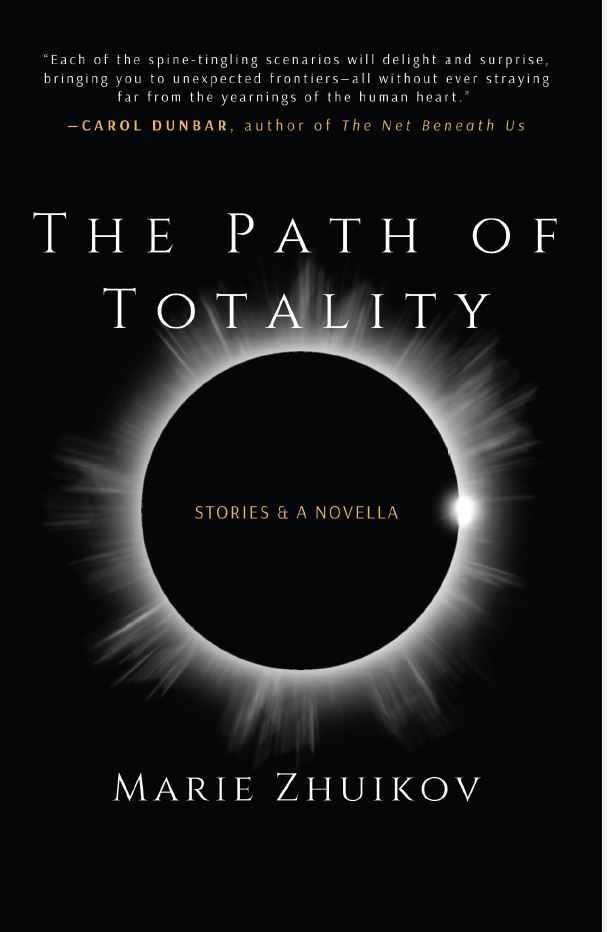
My collection of shorts stories, “The Path of Totality,” is being published this week by Cornerstone Press. It will still be on sale for a few more days for 20% off until the publication date, which is Feb. 11. You can order it from Cornerstone here.
I’m having a launch event Feb. 18th, 6:30 p.m., at one of my favorite cafes in Duluth—Wussow’s Concert Cafe. It’s being hosted by Zenith Bookstore. I’ll also be doing a reading/signing at Foxes and Fireflies Bookstore in Superior on March 1 from 1-3 p.m. If you’re in the area, please stop by!
Noted Superior, Wisconsin, author, Carol Dunbar is helping me with the Feb. 18th event. She is way more well-known than I am, having had two books published by a national publisher. She was nice enough to write a blurb for my book, which appears on its cover. She was also nice enough to volunteer for a question and answer discussion with me of our books and careers. We deal with many of the same themes in our writing, so it should be a cool event!
“Booklist,” which caters to libraries, recently reviewed “The Path of Totality.” Here’s what they said:
Love, in its numerous forms: romantic, parental, devotional, inspirational, and desperate, has a lingering presence in Zhuikov’s collection of tales. The title story describes a young couple’s emotional struggles after the devastating loss of a premature baby boy. While viewing the 2017 total solar eclipse, healing suddenly sprouts as something “flipped a reset switch” inside the wife. “Bog Boy” is a comically creepy tale illustrating that love truly has no limits. A teenage girl discovers the long-dead body of a young man entombed by peat in the woods, and the preserved corpse becomes her de facto boyfriend. “The Shower Singer” is a feel-good story about an aspiring musician who receives more than just a much-needed jolt of creativity when he hears a woman in the adjacent apartment singing lovely melodies in the shower. Other characters include a sleuthing widow obsessed with the strangeness of a house who ultimately pays a steep price for her curiosity, a hungry alien life form that stalks a college student in Biosphere 2, and a reference librarian with an extraordinary connection to sentient trees.
Fellow writer and blogging friend Vickie Smith was kind enough to review my upcoming short story collection for the Wisconsin Writers Association. You can find the review here, plus a link to preorder the book at a discount. (It’s coming out on Feb. 11.) You can find out more about Vickie at her blog, “Writing Near the Lake.”
Like me, Vickie lives near Lake Superior. We support each other as writers, and I hope to return the reviewing favor when her first book is published!
Here’s an excerpt from her review: Zhuikov’s stories explore a wide range of human emotions – grief, duplicity, curiosity, loneliness, love, obsession, and fear – against a backdrop of both rural and urban worlds filled with the inexplicable, the mystical, and the paranormal. She skillfully combines these human emotions with well-crafted imaginative worlds as she delves into the everyday desires and struggles people face, making her tales intriguing reads to be enjoyed by everyone.
A young man is mystified by why he can’t see an eclipse. A scammer falls for a woman he’s targeting. A nondescript gray house hides a secret from a curious woman walking her dog. A girl discovers a mummified Viking bog boy while on a birding tour. A college student gets trapped in a biosphere after hours. Hemingway’s stolen stories are found in New Jersey. Singing in the shower takes on a whole new meaning. And a librarian develops her own theories about the influence of trees. United by the power of appearances to deceive and captivate, these tales glisten with the magic and menace of everyday lives.
My next book is a collection of short stories and a novella. “The Path of Totality” is a meditation on the power of appearances to deceive and captivate. It’s being published by Cornerstone Press at the University of Wisconsin-Stevens Point and is now available for preorder at a 20% discount. The books will be distributed in February.
It’s already received some endorsements:
These stories concern everyday people discovering who they now are as opposed to who they once were. A grieving couple come to accept the death of their child. A woman pays too large a price for caring about a neighbor’s son. And in “Bog Boy: A Northern Minnesota Romance”—a gem of a story, a perfect story—a teen falls in love with someone suspended in time. Not all of Zhuikov’s characters find peace and harmony, for the damned soul and the broken heart and the heart’s longing are nothing to fool with. But the few who find love, for instance, Sheila and Peter in the long final story, enter paradise.
—Anthony Bukoski, author of The Blondes of Wisconsin
Richard Powers meets Gabriel Garcia Márquez in a collection that nonetheless could have been produced only by a singular sensibility— one firmly planted in a fully recognizable, verifiable natural world that’s also brimming over with mystery, wonder, and the fantastic. I love Marie Zhuikov’s brain. She’s both a scientist and a dreamer. These stories, rich in emotional metaphors that play out in magical ways, remind us to tread carefully and to always pay attention.
—Cheri Johnson, author of The Girl in Duluth (under the pen name of Sigurd Brown)
In settings strange yet familiar we meet characters who are sincere but possibly duplicitous in this new story collection spun by science writer Marie Zhuikov. Each of the seven, spine-tingling scenarios will delight and surprise, bringing you to unexpected frontiers—in a biodome, a graveyard, the husk of a living tree—all without ever straying far from the yearnings of the human heart. Reader, I defy you not to be curious.
—Carol Dunbar, author of The Net Beneath Us
Marie Zhuikov’s The Path of Totality is a gem of a collection. These speculative stories explore a wide range of unusual situations with humor and insight, with empathy and heart. Readers will get carried away—just like these memorable characters get carried away—into imaginative worlds full of mystery and wonder. She delves into our longing for connections, how we respond in the face of strangeness and mystery beneath the ordinary.
—Jim Daniels, author of The Perp Walk
Please consider preordering while this discount is in place. You’ll be happily surprised come February. And thank you for your support!
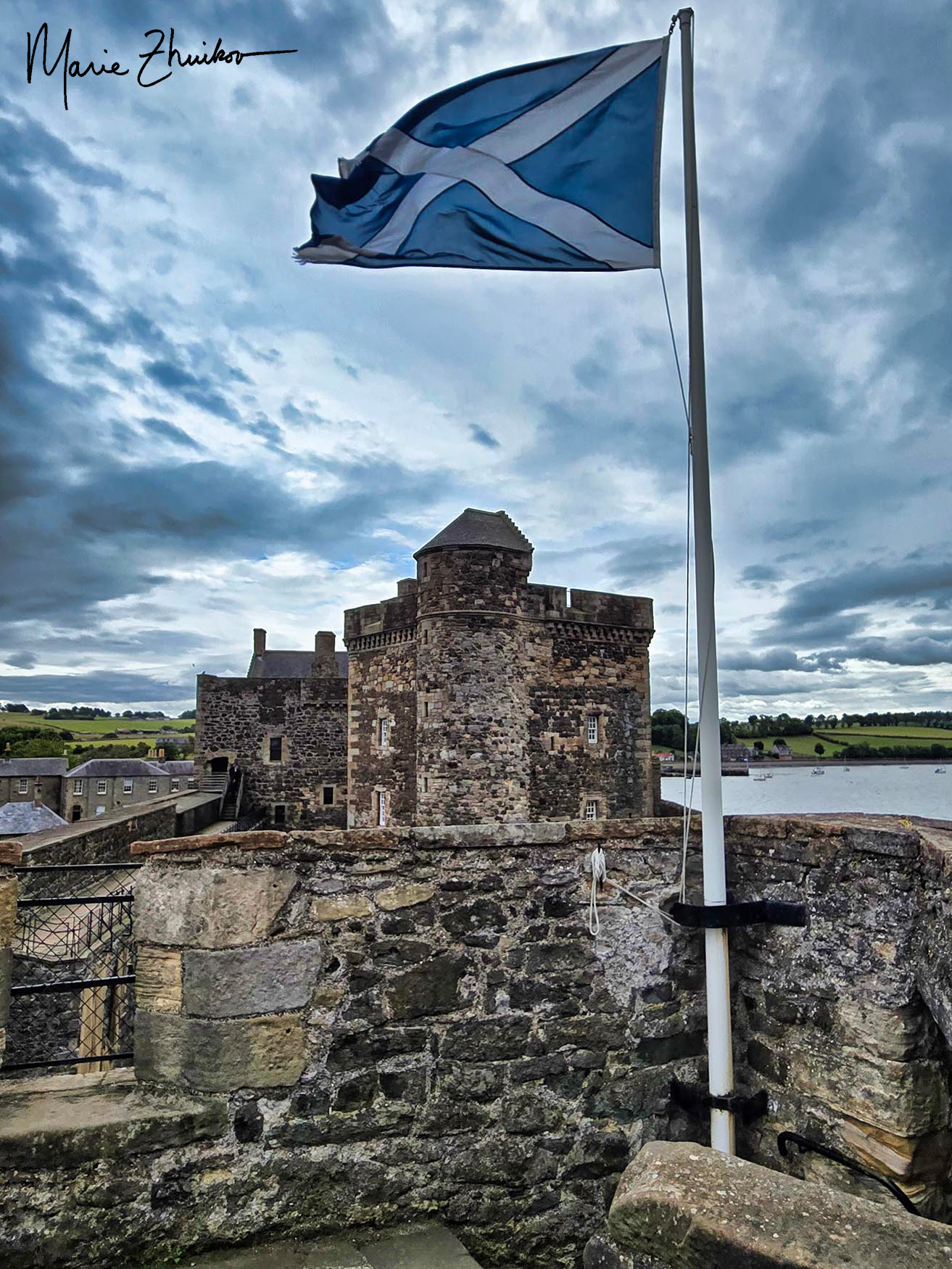
Blackness Castle. In the “Outlander” series, it’s Fort William.
Russ and I have long been fans of the “Outlander” television series and books. Actually, I was a fan first, then I sucked Russ into it. He’s been a willing and devoted victim. We were tickled to discover during our Broomhall House tour the previous day that even distant cousin Charles Bruce is a fan!
If you’re not familiar, “Outlander” follows the story of Claire Randall, an Englishwoman who’s enjoying a second honeymoon in Scotland with her husband once World War 2 ends, when she’s sucked back in time 200 years after touching a mysterious standing stone. While in the past, she meets Jamie Fraser, a burly and charming Scot, who ends up marrying her to save her from the clutches of an evil pre-ancestor of her English husband.
The series hops back and forth in time and geography, but some fans’ most-beloved sites can be found in Scotland, many not far from Edinburgh. It only made sense for us to go on an Outlander tour while we were there, especially after I found a company that offered group tours that departed only a few blocks from our hotel.
That’s where we met Henry, who is a co-owner of Tartan Viking Tours. He informed us that we were in luck; nobody else had signed up for the tour, so we were getting a private tour for the cost of a group one. That allowed us more leeway in what we could see, which worked out great!
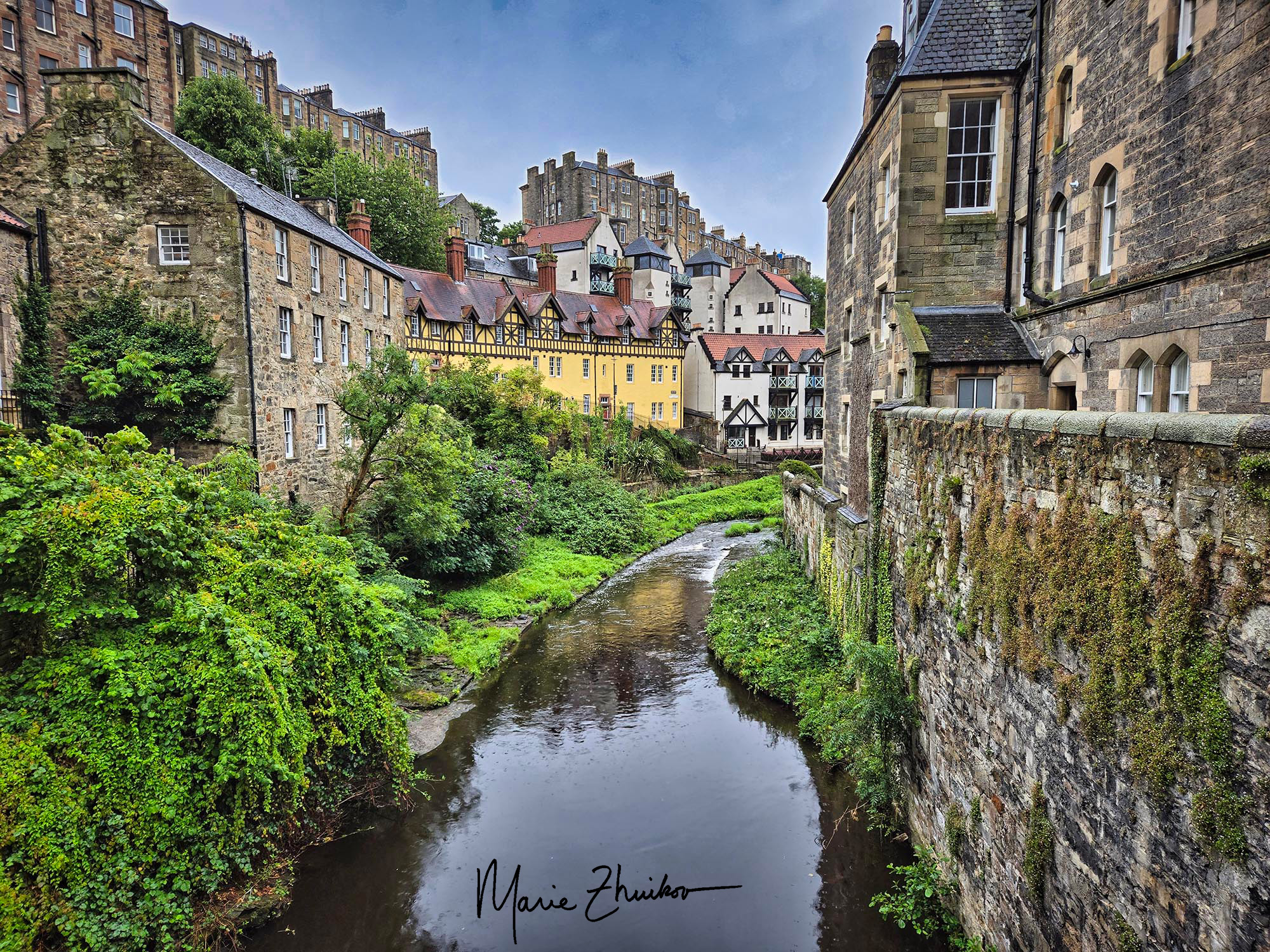
Dean Village and the Water of Leith
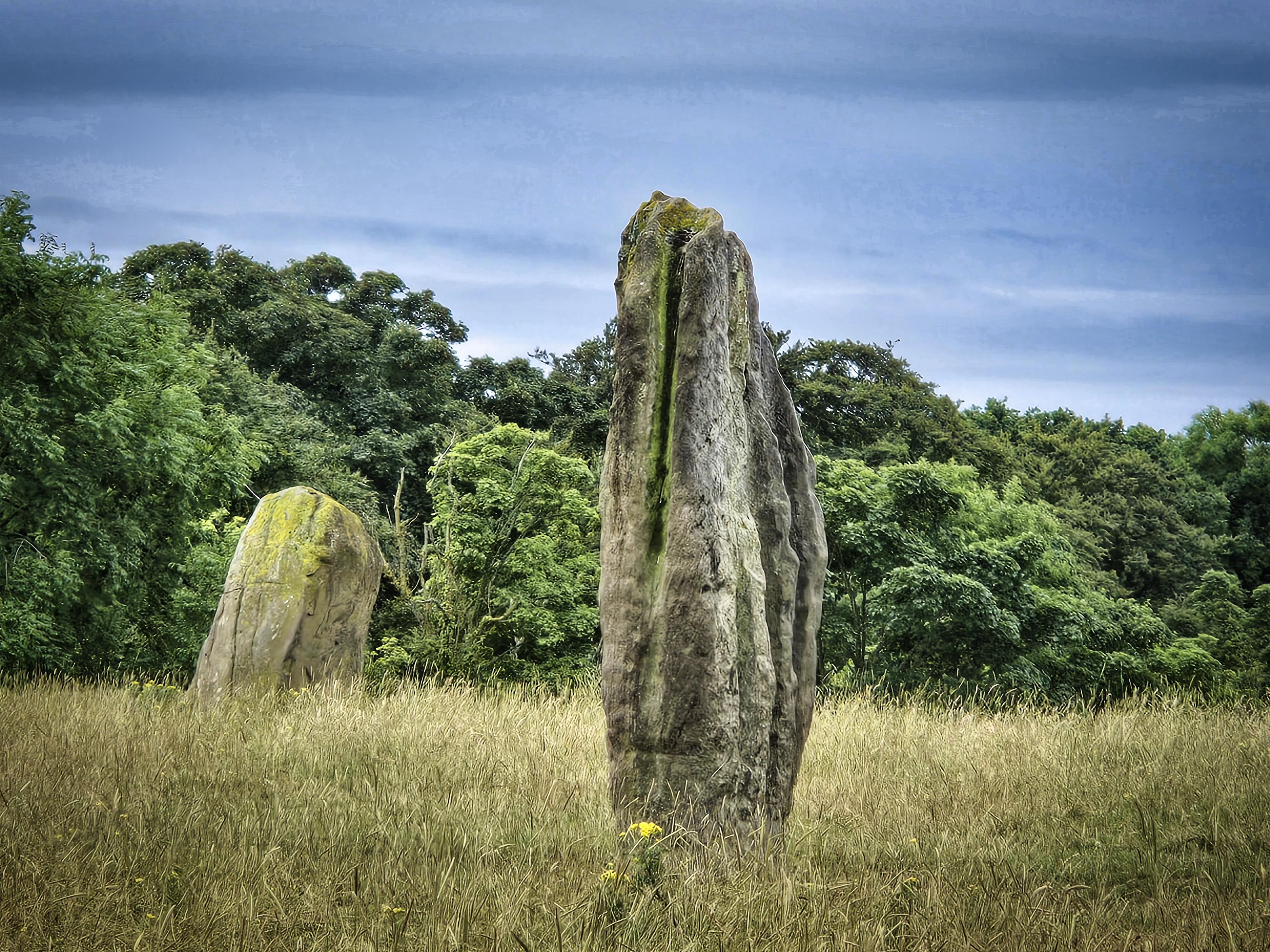
On our way out of town, we stopped at two non-Outlander locations that were just too picturesque to pass by. The first was Dean Village which is split by a river named Water of Leith. It used to sport many water mills for grinding grains into flour. Next were some Pictish standing stones that happened to be along the highway on the way to the village of Culross, which stands in for Crainsmuir in Outlander. I was excited to see them because I hadn’t had the chance to see anything Pictish or standing on either of my other trips to Scotland.
Standing stones in a field.
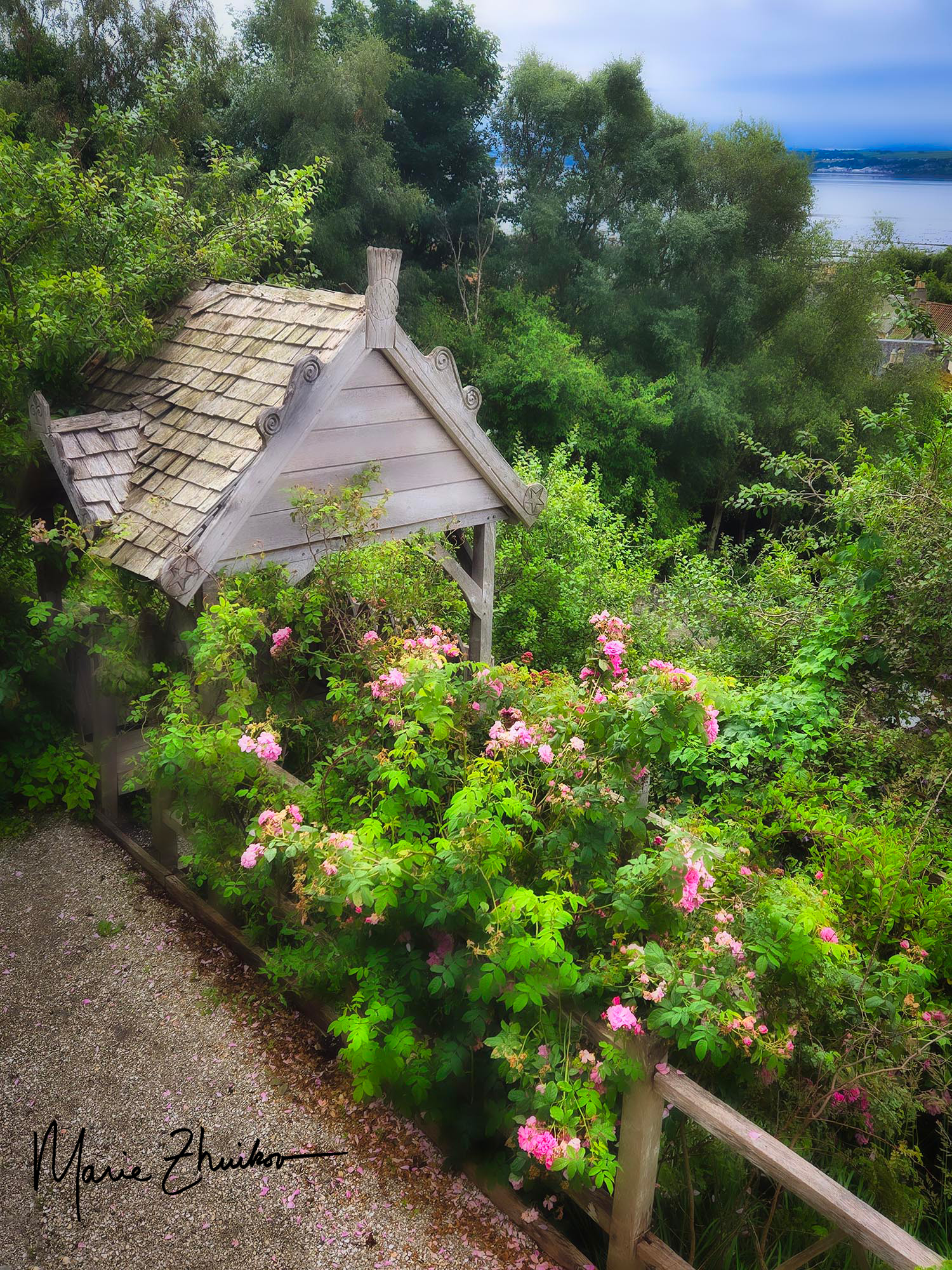
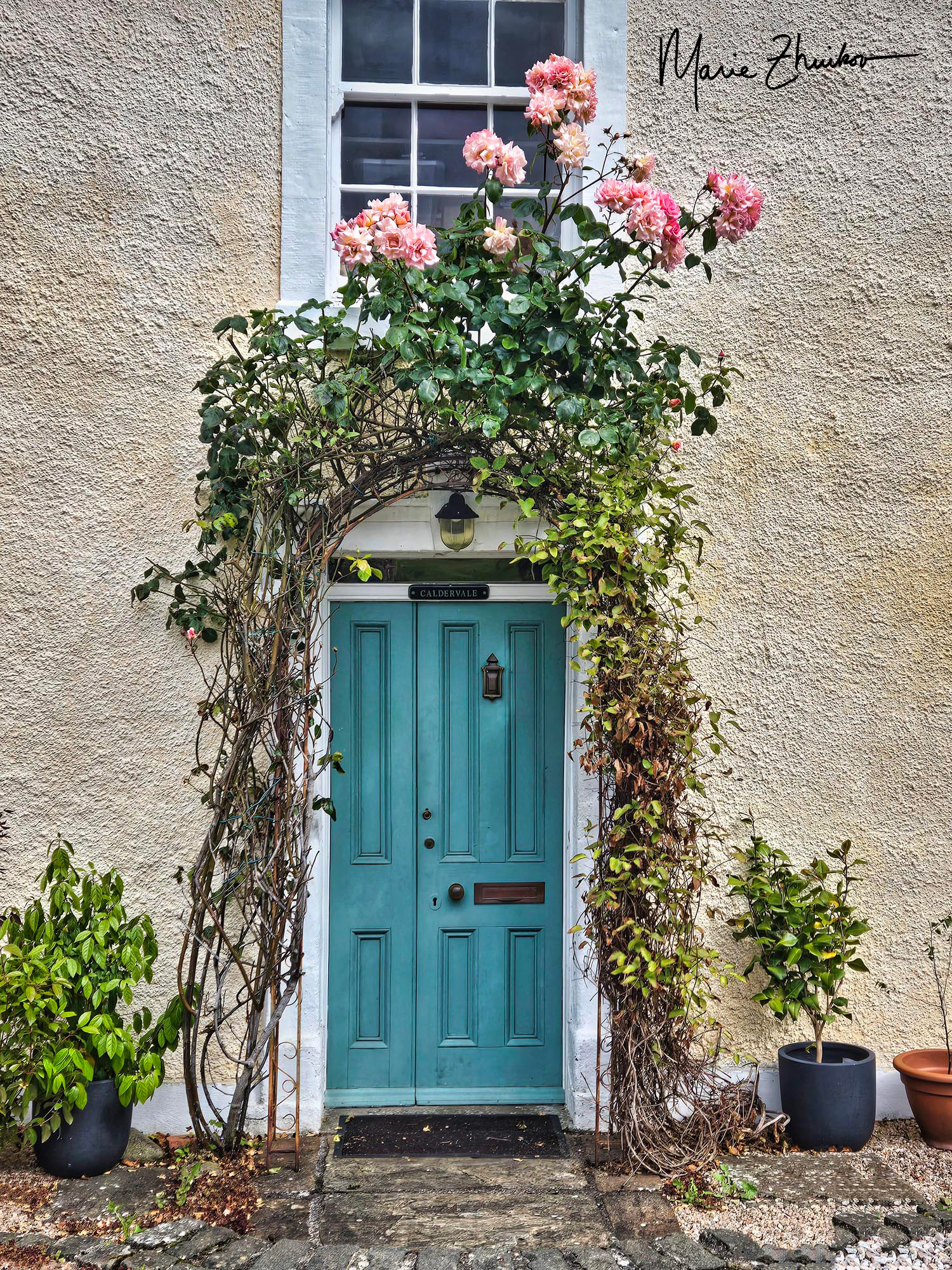
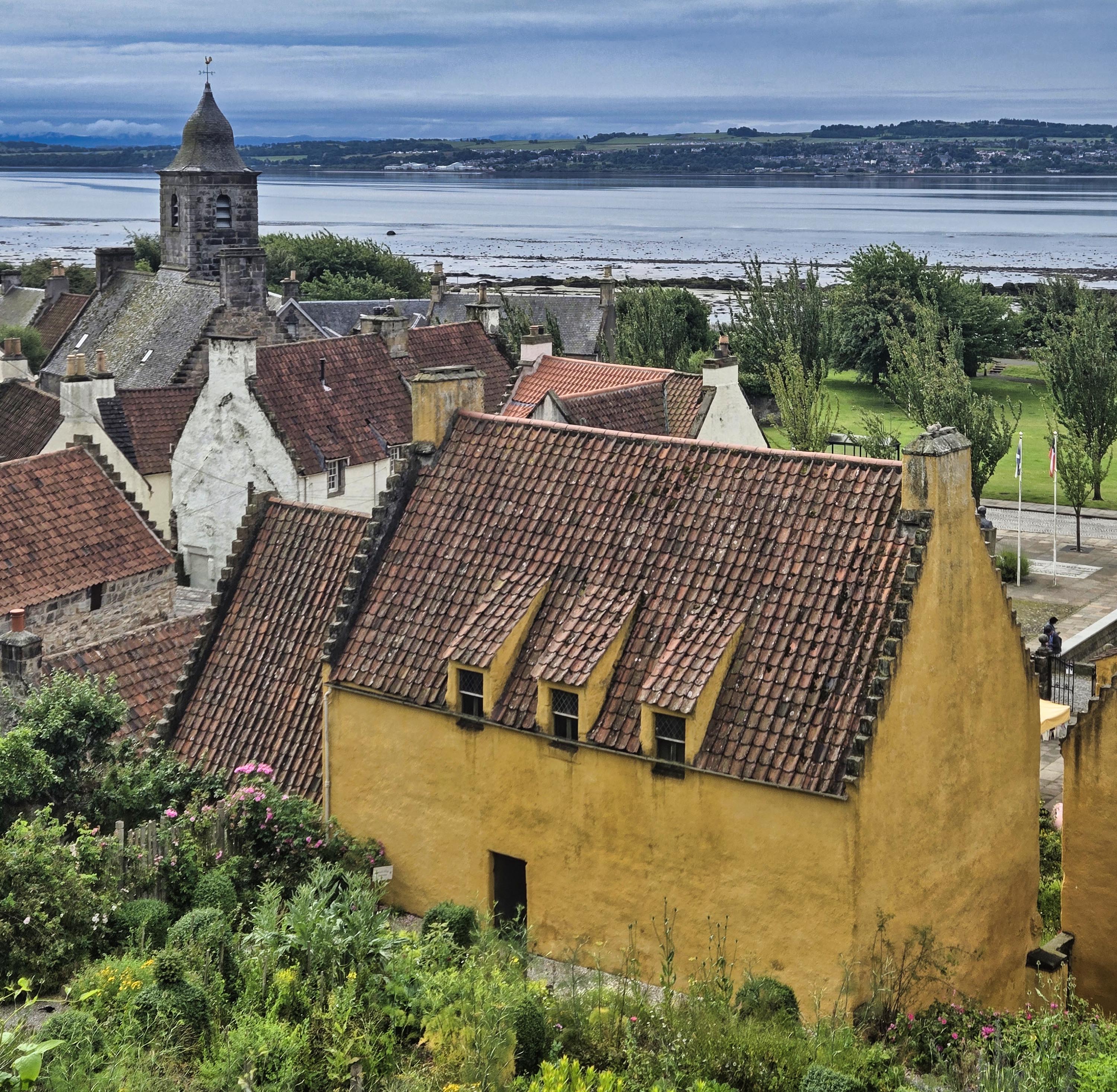
Crainsmuir/Culross is where the witch Gellis Duncan lived and is where she and Claire were tried for witchcraft. The village is one of Scotland’s most complete examples of a 17th and 18th-century town. Steep cobblestone streets are lined with white stone houses that sport red-tiled roofs. The town center is occupied by a small golden-yellow palace with a beautifully reconstructed period garden. Henry took us along the streets and up to an overlook flanked by a garden full of pink roses. We could also see an herb garden behind the palace that was Gellis’s garden in the series.
A rose garden in Culross.
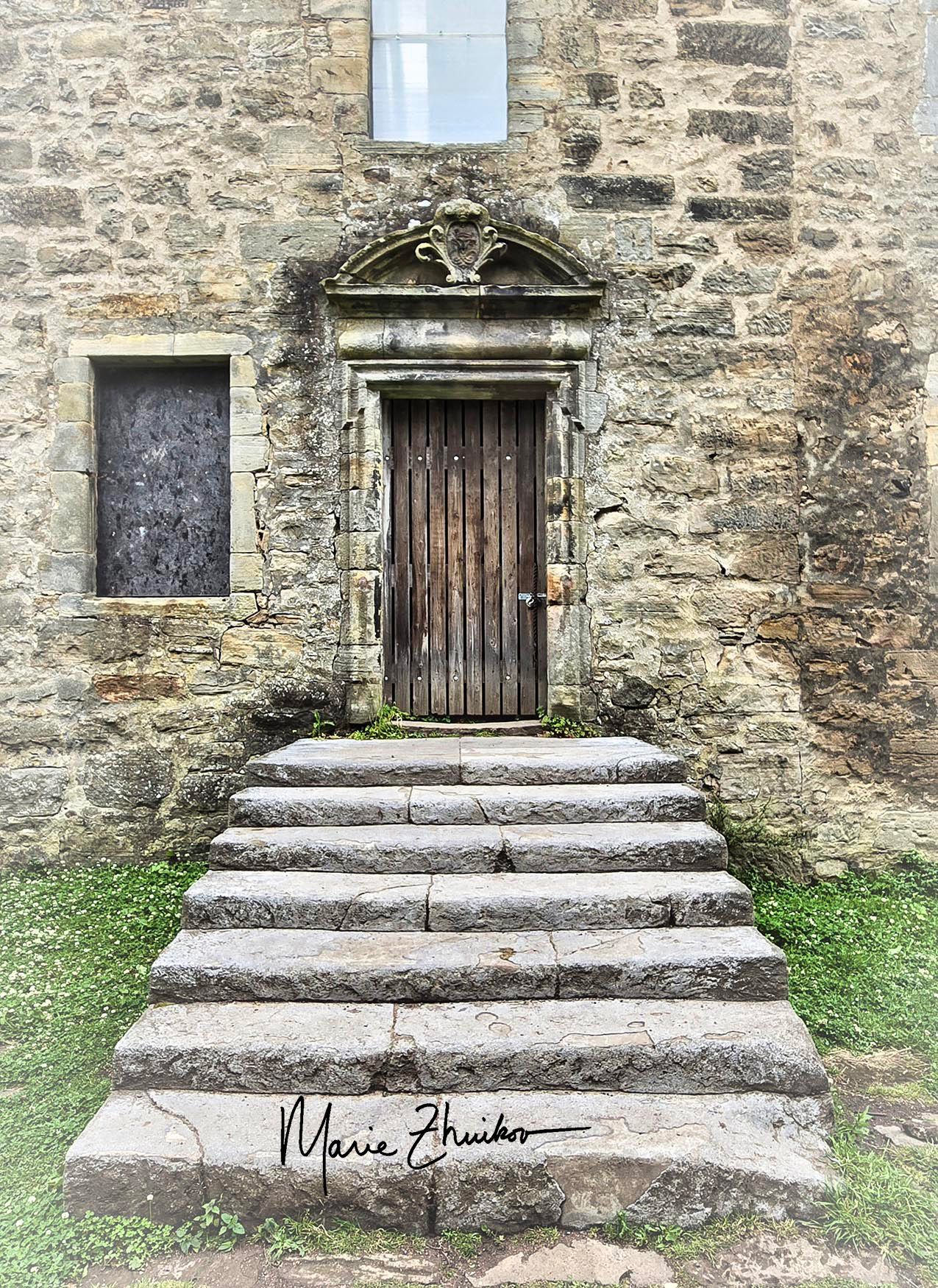
A picturesque doorway in Culross
Culross Palace with Gellis’s herb garden behind it.
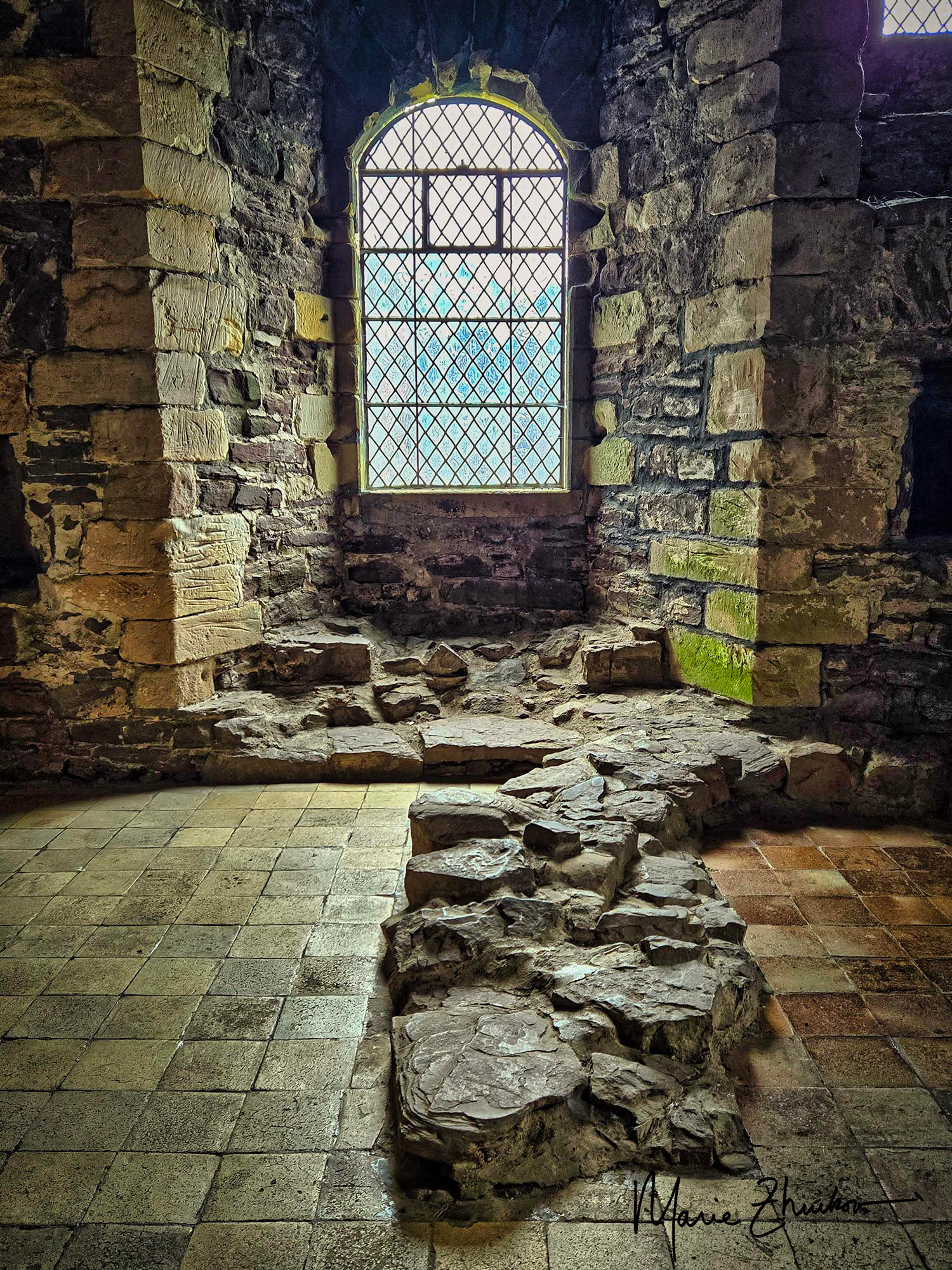
Then we were off to Doune Castle. In Outlander, it’s Castle Leoch, home to Clan MacKenzie. In “Monty Python and the Holy Grail,” it’s the castle where there’s a discussion about African Swallows and where a prince croons about how he doesn’t want to be king. It’s also featured in “Game of Thrones.” Seeing the familiar courtyard, Mrs. Fitzgibbon’s kitchen, and other movie locations was so fun! We took an audio tour, which was narrated by Sam Heughan, the actor who plays Outlander’s Jamie Fraser.
Doune Castle
A window in Doune Castle.
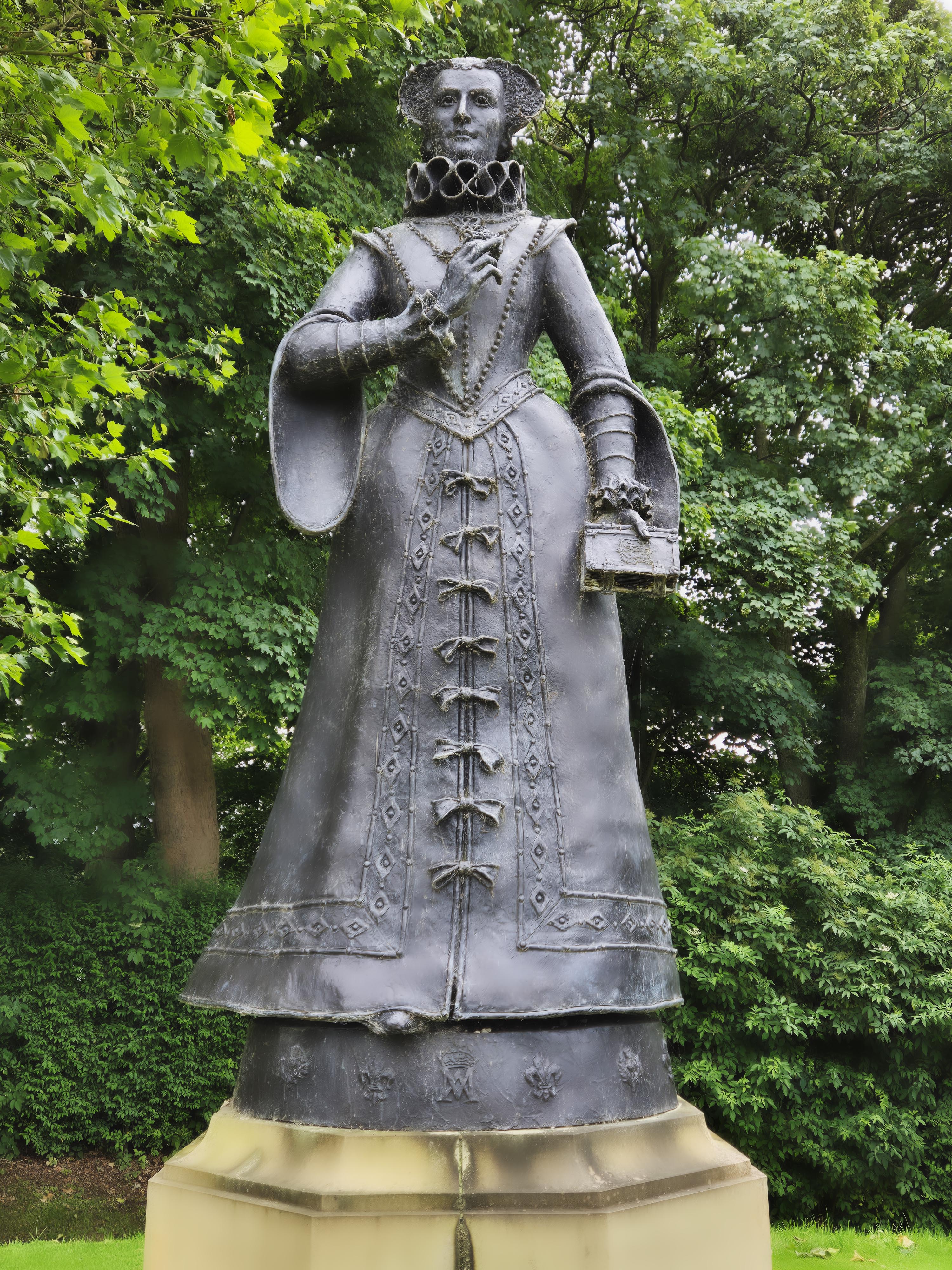
Our next stop was Linlithgow Palace, which is known as the birthplace of Mary Queen of Scots. In Outlander, it’s also the stand in for Wentworth Prison where Jamie was sentenced to hang and was tortured and assaulted by Captain “Black Jack” Randall. Linlithgow means “the loch in the damp hollow,” named because the palace lies on the shore of a small lake. We weren’t really feeling a need to tour the castle, so spent most of our time walking the grounds and visiting the Mary Queen of Scots statue, which sports the mysterious quote: “My heart is my own.” A biography about her has the same title, but I suspect that the statue came first. Apparently, this quote was from one of her letters to her cousin Queen Elizabeth where Mary discusses potential husbands for herself. I guess she didn’t like any of her suitors! Mary’s such a fascinating historical figure. I had the chance to visit a museum about her in Jedburgh during a previous visit.
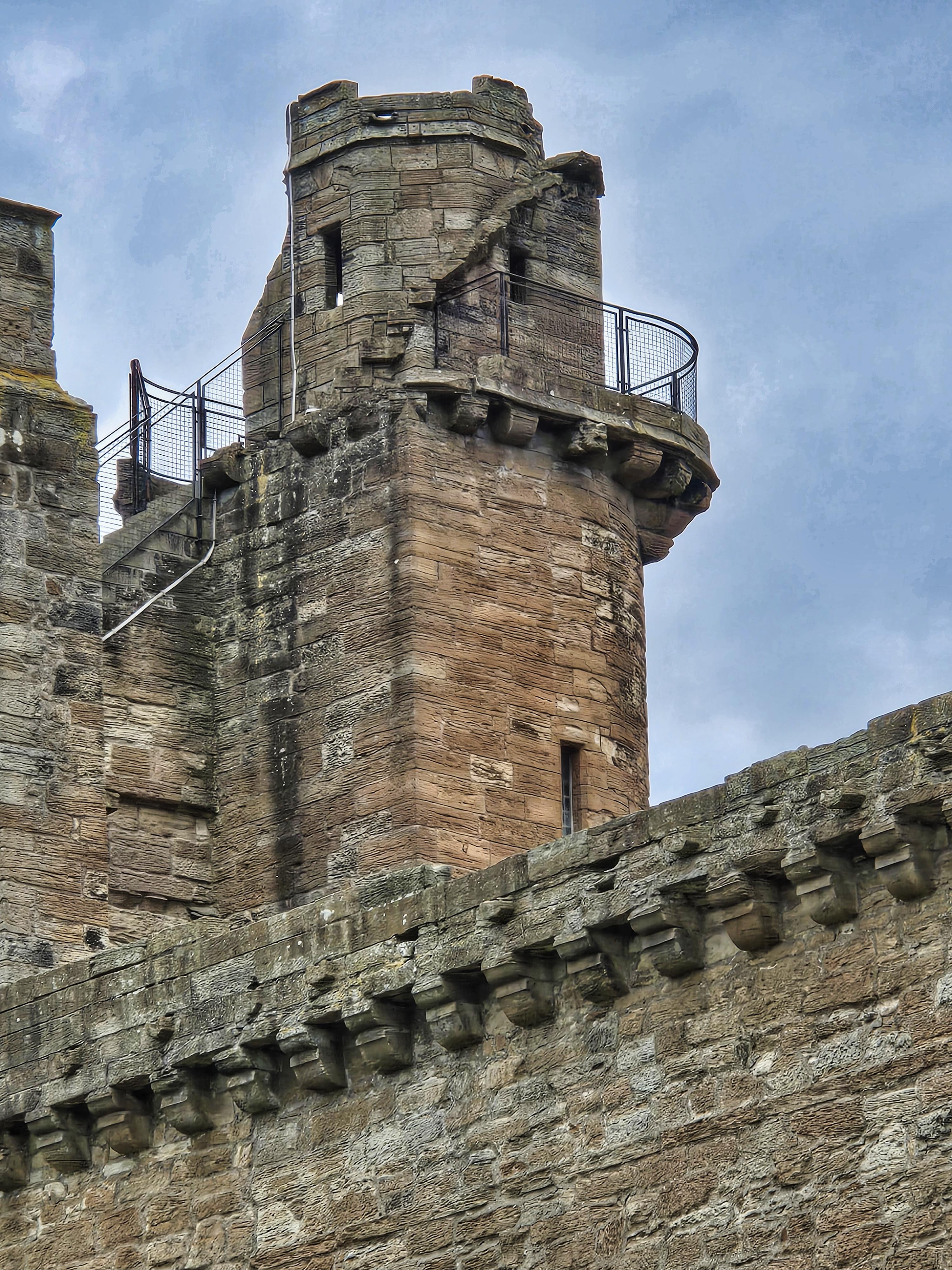
Mary Queen of Scots was born in this turret room at Linlithgow Palace.
Mary Queen of Scots statue at Linlithgow Palace
We ate a scrumptious lunch at The Four Marys pub, named for Queen Mary’s ladies in waiting, who all obviously must have been named Mary. One thing to note in Scotland and Ireland is that at smaller restaurants and pubs like this one, which are outside of large towns, you have to pay at the bar till. They don’t bring a bill to your table like in the U.S. And if you wait for them to do so, you’ll be waiting for a long time!
Blackness Castle and the courtyard where Jamie was flogged.
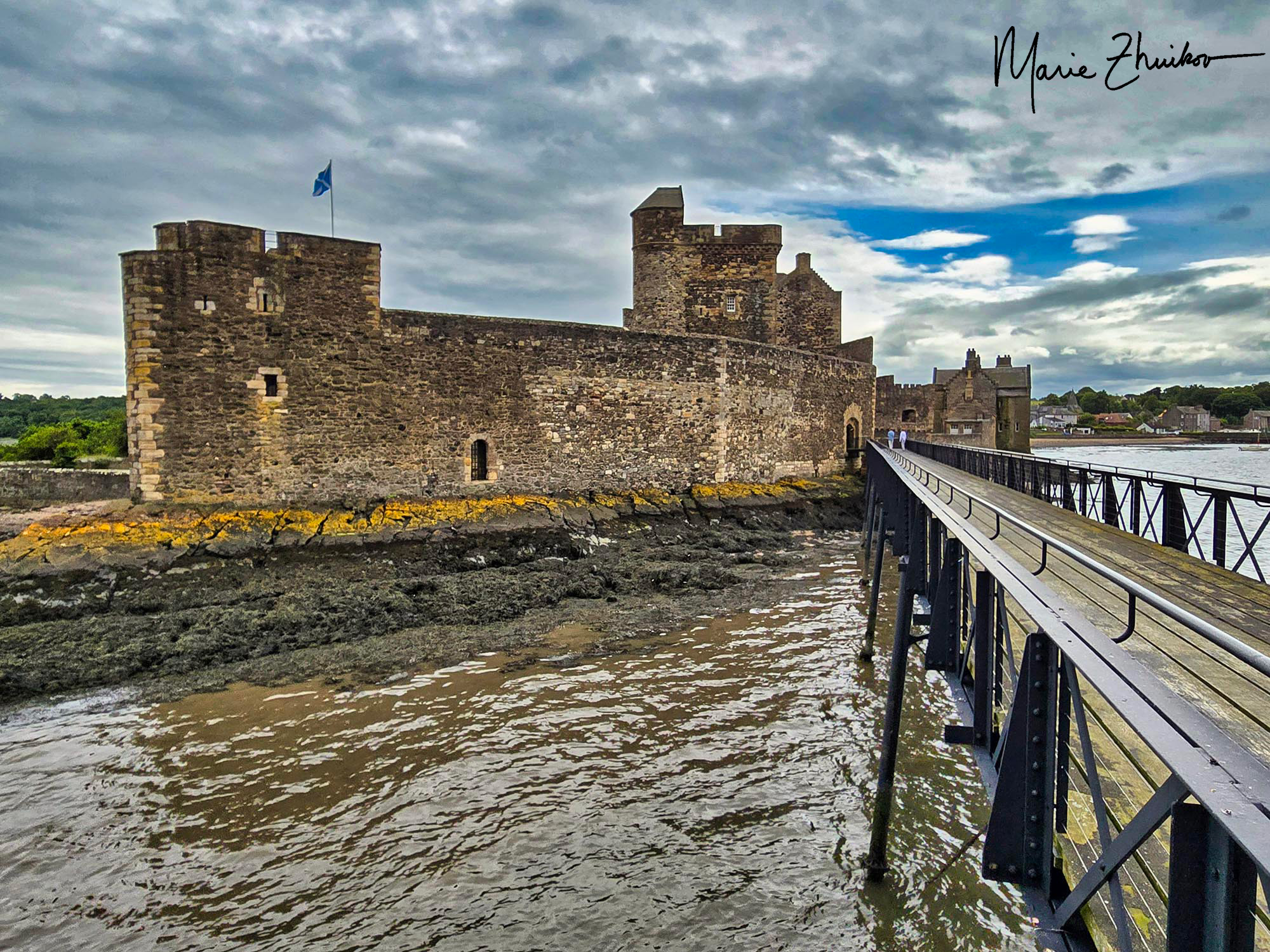
Next to last was Blackness Castle, a.k.a. Fort William. This imposing stone structure is built on the Firth of Forth and was meant to resemble a ship. Like in Outlander, the castle served as a prison in real life, housing high-ranking prisoners and their household staff. This was where Jamie was flogged and held prisoner in Season One. The place is depressing, dank, and rocky. It was so interesting how the original landscape was incorporated into it. We spent a lot of time climbing around and walking out on the pier over the Firth.
Blackness Castle as viewed from the pier. Note its ship-like shape.
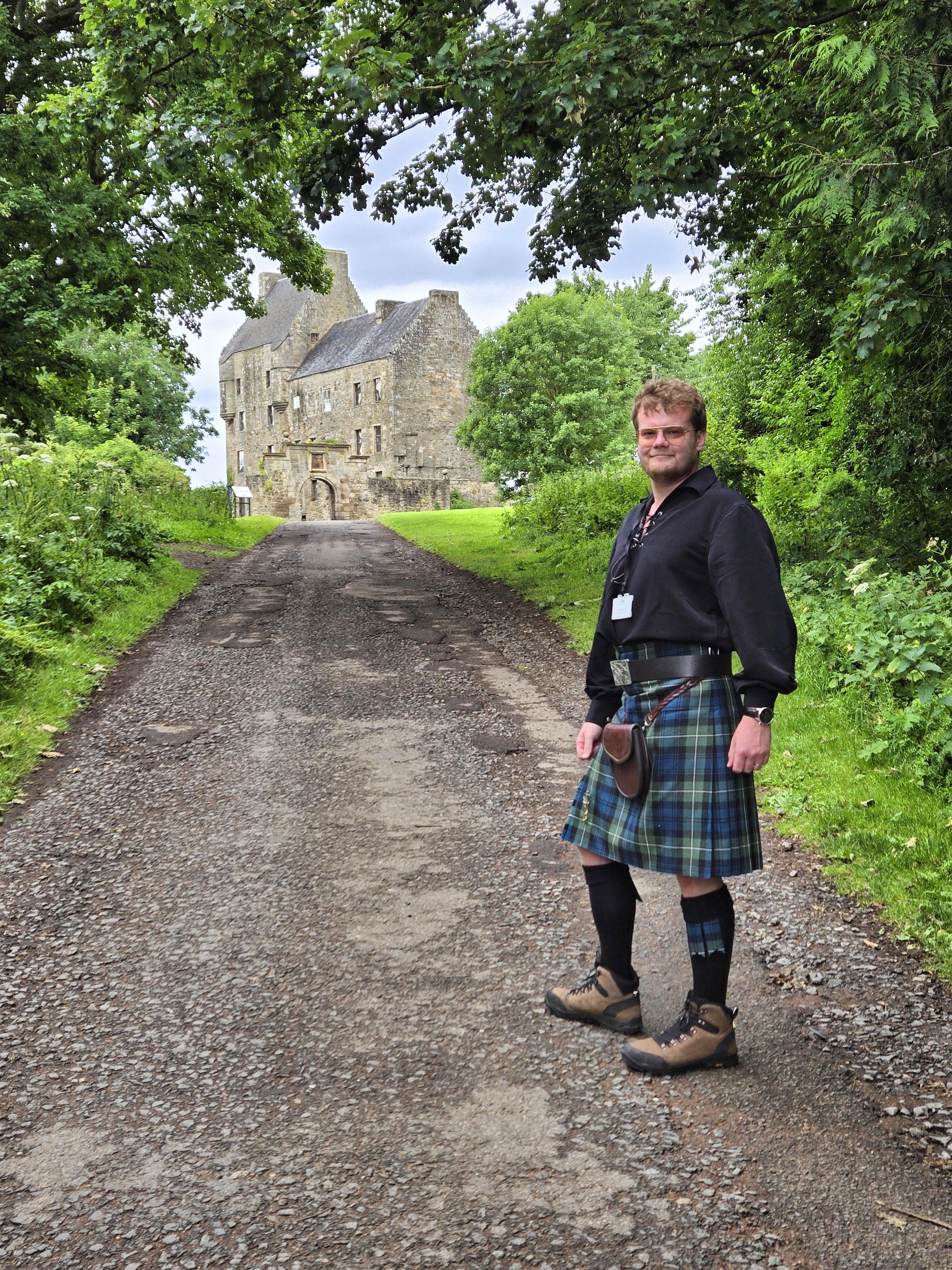
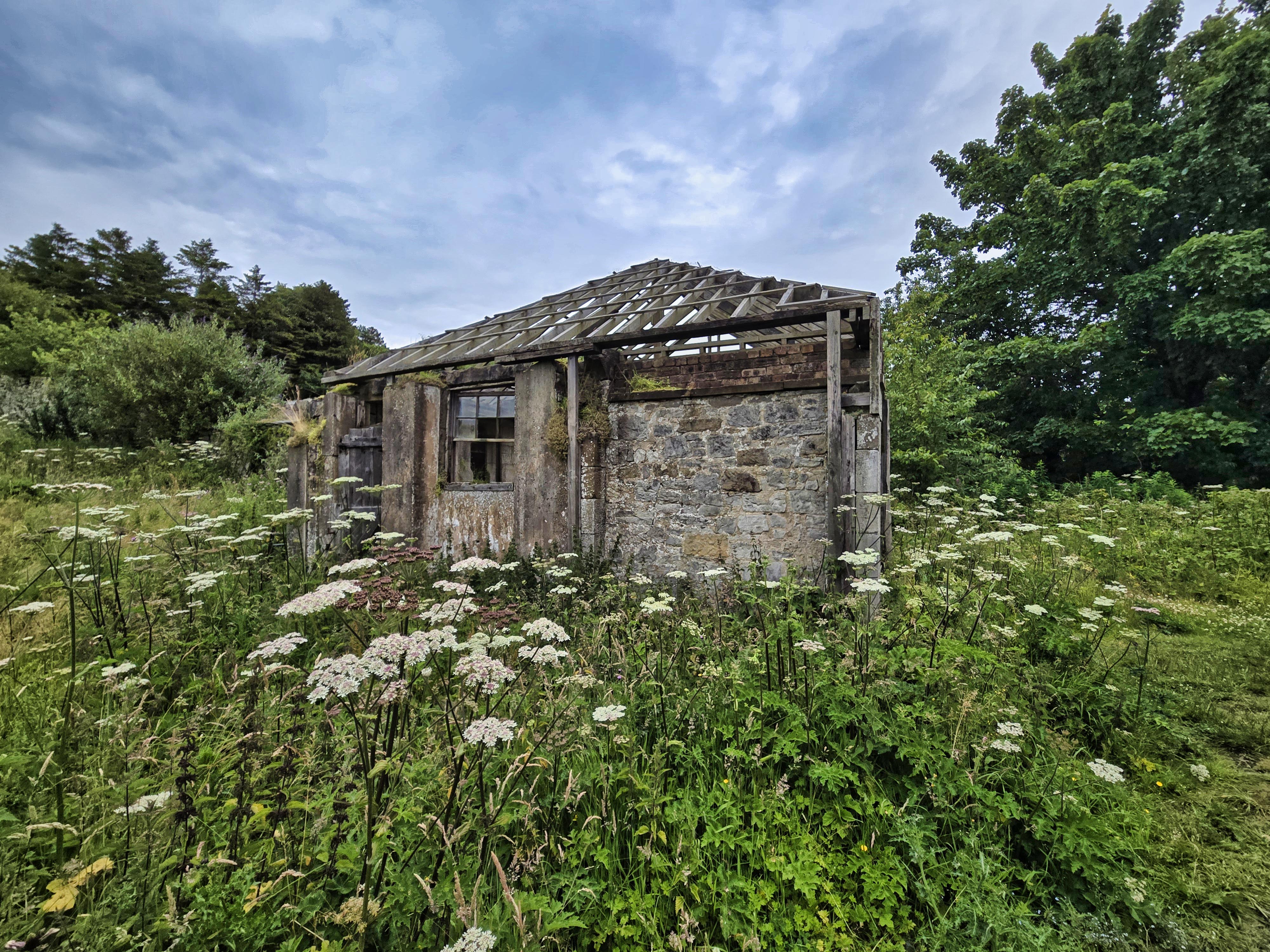
Our last stop was Midhope Castle, a.k.a. Lallybroch, home to Jamie Fraser and his kin. Just the outside of the castle was used for filming because the inside is not habitable. Walking up the road and under the familiar archway made me feel like I was in an episode of Outlander! We snooped around the castle and meandered into the back yard where several ruined sheds and stables molder. In Outlander there are scenes of the back of Lallybroch, but they are so far away, they conceal the ruins.
Our tour guide, Henry at Midhope Castle. Or is that Jamie Fraser with glasses?!
The stairway into Midhope Castle.
I’d recommend an Outlander tour for anyone who is a fan. There are cheaper versions with other companies out there, but you might not get a kilted guide or a “wee dram” along the way. We enjoyed meeting Henry and seeing sights from the books/movies. Once we returned home, I began watching the series all over again to see if I could spot the places we visited. Also, the next season is set to begin this November, so it’s been a good refresher.
One of the sheds behind Midhope Castle.
I didn’t mention this, but between Culross and Doune Castle, Henry obliged us with a non-Outlander side trip to Clackmannan Tower, which is connected to my ancestors. That deserves its own entry, so that’s up next!
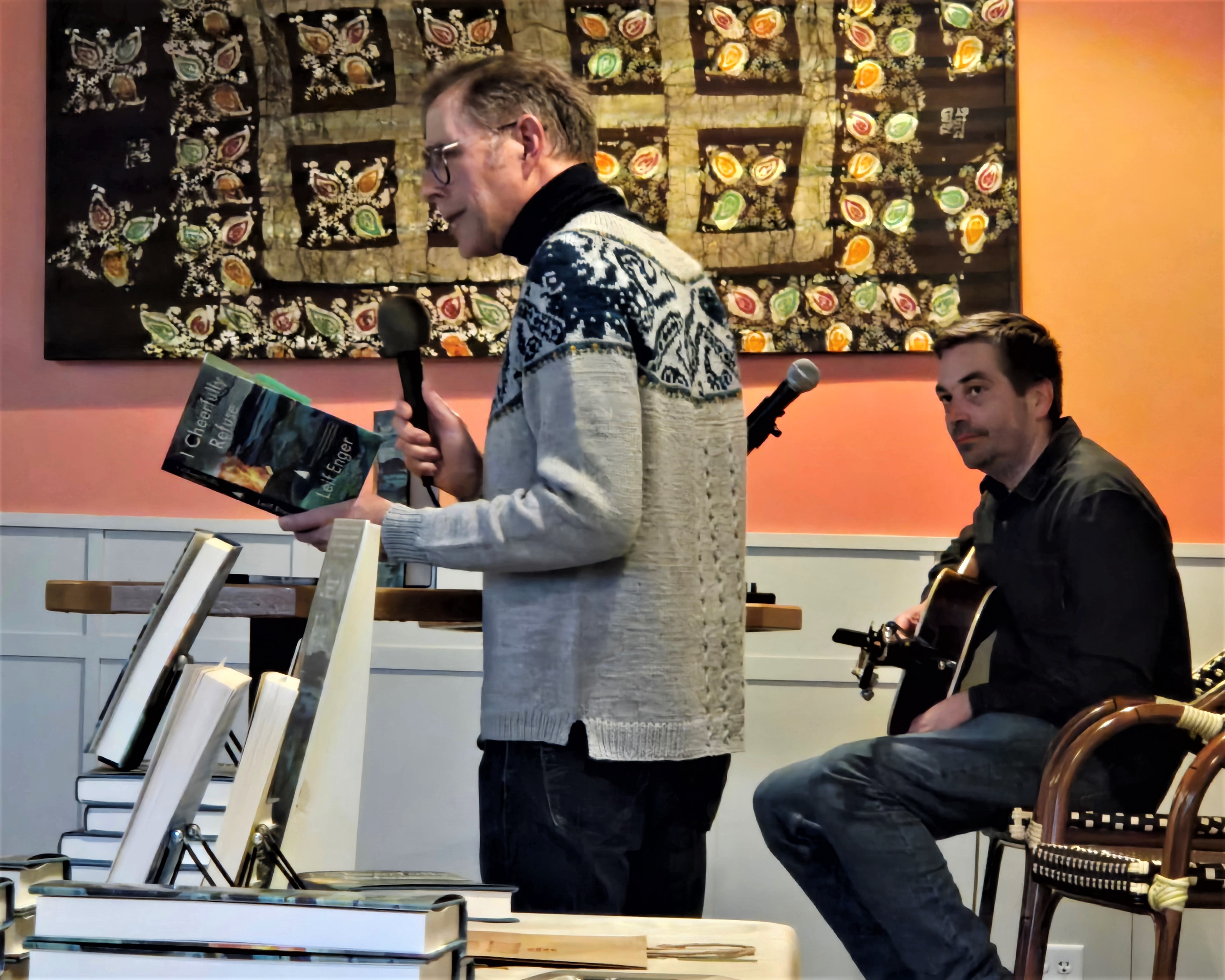
Leif Enger and musician at Enger’s launch for “I Cheerfully Refuse,” a novel set on Lake Superior.
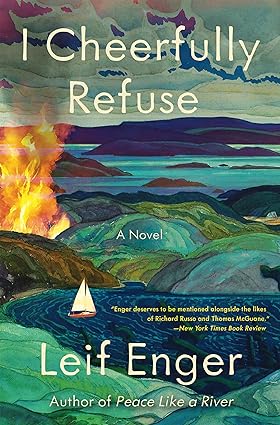
Duluth author Leif Enger’s latest novel, “I Cheerfully Refuse,” is set in the near future in small towns along Lake Superior and on the wide water itself. The apocalypse that’s occurred isn’t some cataclysmic event, rather the novel investigates what could happen if current conditions exaggerate. Citizens are increasingly desperate and illiterate, a billionaire ruling class referred to as “astronauts” (think Elon Musk and Jeff Bezos) employ indentured servants and conduct “compliance” experiments on people in medical ships that roam the seas. Lake Superior is subject to rogue storms and increasing temperatures. The warming waters finally give up the bodies that have lain preserved in icy slumber in its depths. School children have so many behavior problems from toxic chemicals they’d been exposed to in utero, they’re rated on a Feral Comportment Continuum.
Rainy, the narrator, is a bereaved bear of a man and a musician from the small mythical town of Icebridge on Minnesota’s North Shore. (If you read Enger’s previous novel, “Virgil Wander,” Icebridge is right next to Greenstone, the mythical town where that book is set.)
Image courtesy of Amazon
Through a series of unfortunate events, Rainy ends up fleeing Icebridge on a sailboat named “Flower.” Most of the novel follows his Gulliver-like travels to the Slate Islands and Michigan’s Upper Peninsula where he encounters fog, hunger, storms, and lawless townspeople. But there’s also poetic beauty in gulls that settle on his sailboat when he plays his bass, magisterial island rocks, and unexpected kindnesses from strangers. I don’t want to give away too much more of the plot.
Things I loved: The novel’s focus on the importance of music, books and literacy. The sailboat setting, and Enger obviously knows his nautical terms, having had a boat himself in Bayfield, Wisconsin. I also appreciated the hopefulness amidst the horror.
Things I didn’t like so much: The book’s ending. Although it’s beautiful and literary, I expected more after the epic events that led up to it. Once Rainy reaches his ultimate destination, readers are only given a few vague lines about Rainy feeling a slight warm weight against his back, “a pressure like a palm between my shoulder blades.” A few dream-like images round it out and that’s it. But I still think I’ll give it a 5 on Goodreads because the writing is so gorgeous, and we Duluthians need to support each other. The world out there is already cruel enough.
I attended Enger’s Duluth launch last April and noted a contrast to his “Virgil Wander” launch six years earlier. That event was held at a local independent bookstore shortly after Enger had moved here. About 45 people attended and ate brownies and bars made by Enger’s wife, Robin.
His latest launch was held at a local brewery where people’s food order buzzers interrupted Enger’s presentation as their pizzas arrived. I’d say the audience tripled, which is a testament to the connections Enger has developed in the community during his time here. True to the musical emphasis in “I Cheerfully Refuse,” a guitarist accompanied Enger, playing through breaks in his reading.
Enger said he wasn’t sure if he could call himself an actual Duluthian yet or not. As he lies in bed at night, he still thrills at the sound of the lift bridge and ore boats in the canal communicating with each other with their horns. He thinks if he were a real Duluthian, that would all be passé.
I would answer: the trick is holding onto that wonder even after hearing the horns a thousand times. Then Enger will be a real Duluthian.
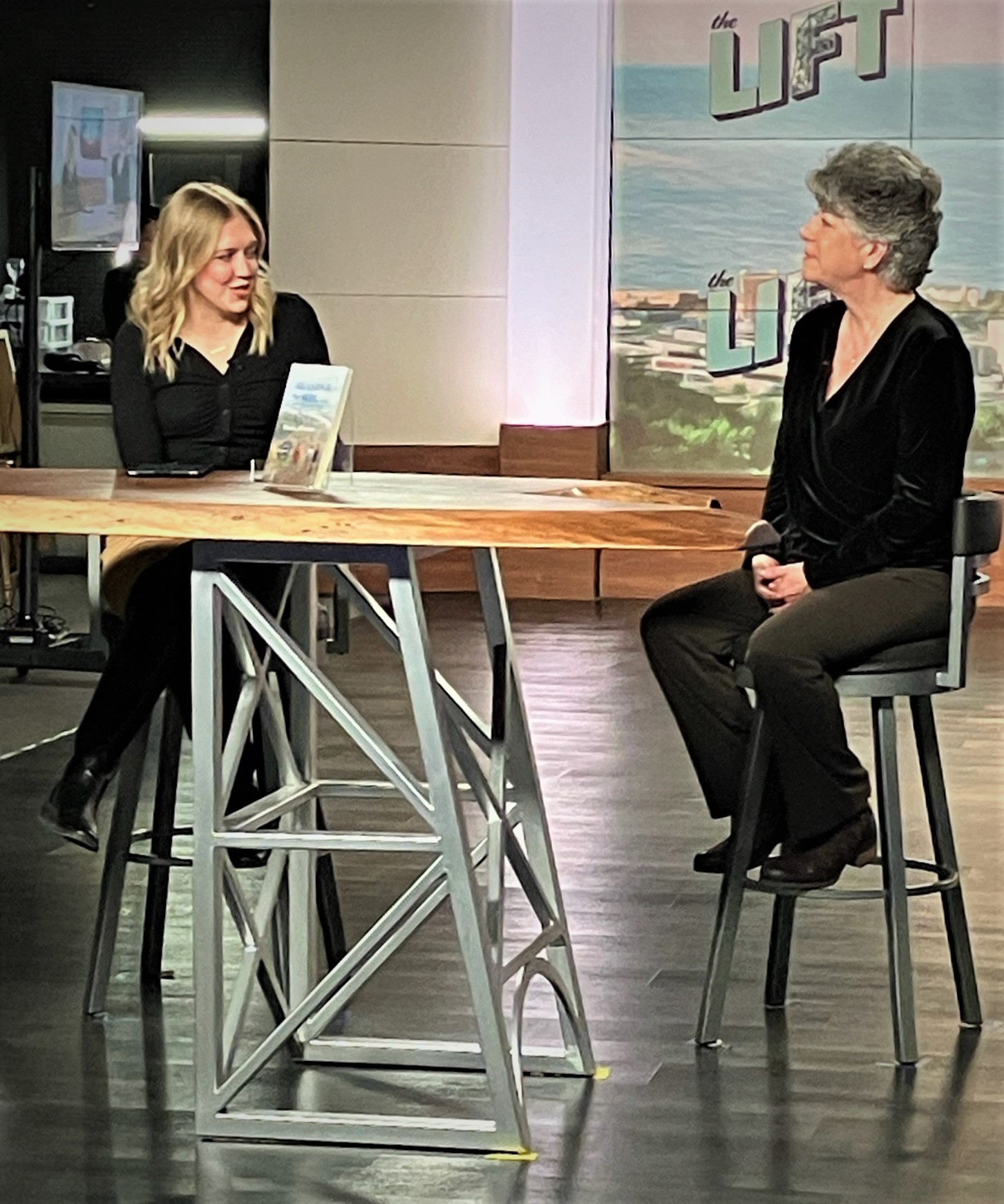
“The Lift” host Baihly Warfield interviews me about my blog-based book.
I was interviewed on local TV about my blog memoir, “Meander North,” the other day. It was a live interview, so was rather nerve-wracking. I’m not complaining, though! I appreciate every bit of free publicity and the interview seemed to go well. I had another live interview for work a few weeks beforehand, so I had some practice. You can watch the hoopla here.
For more information about my book, please visit my website.
“The world today is sick to its thin blood for lack of elemental things, for fire before the hands, for water welling from the earth, for air, for the dear earth itself underfoot. In my world of rock and water these elemental presences lived and had their being, and under their arch there moved an incomparable pageant of nature and the year.”
― Slightly modified quote from Henry Beston,The Outermost House
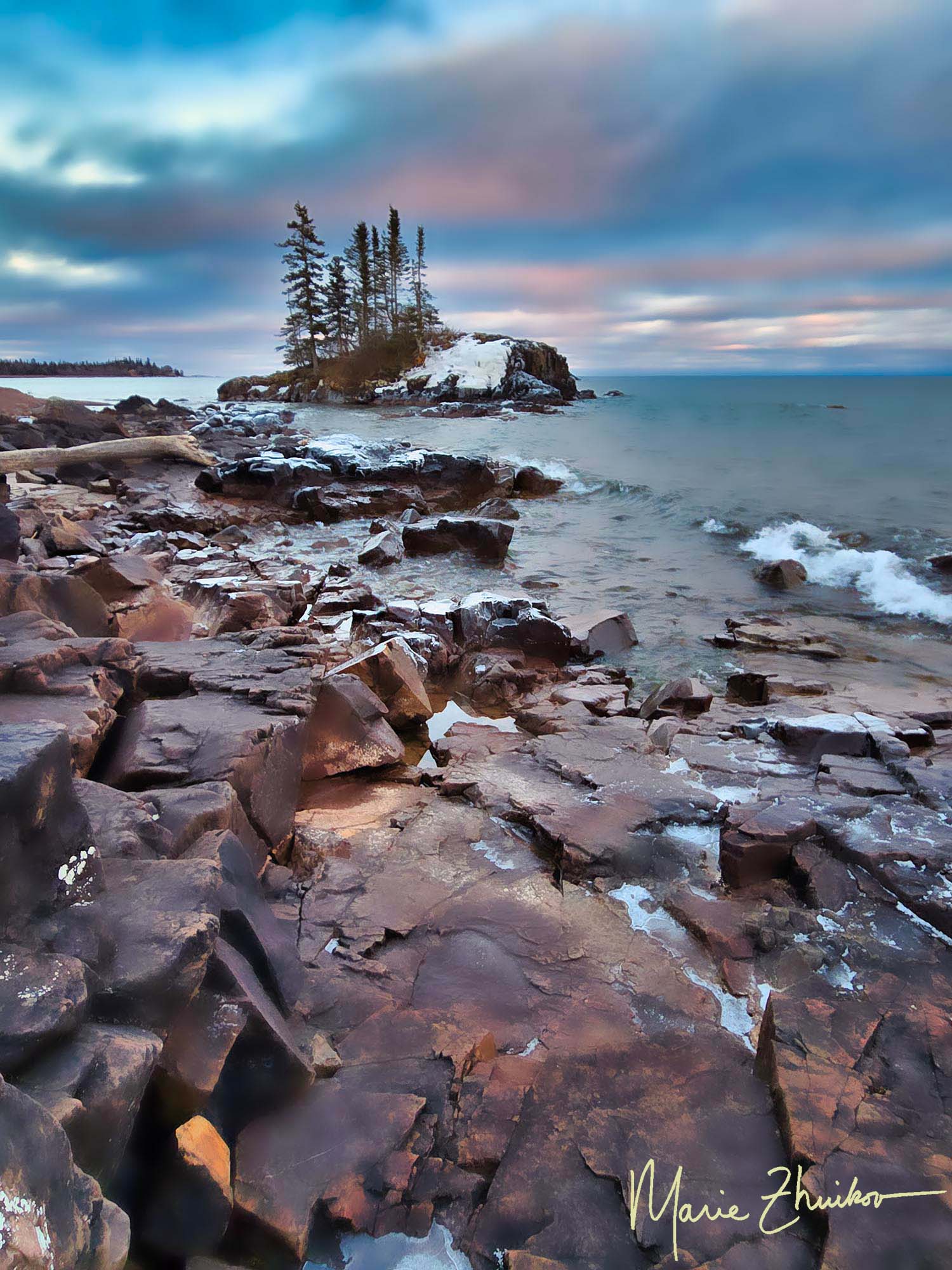
Bogs get a bad rap. People tend to think they’re just a waste of good land. However, they have a unique beauty, especially when frosted with winter.
This is my favorite bog that I often visit in northern Minnesota. I’ve written about it before. (See Bog Wonder). I recently finished reading “The Good Berry Cookbook” by Tashia Hart. It’s much more than recipes about wild rice. She also describes her relationship to plants and the importance of Manoomin (wild rice) to her Native culture.
One funny story she shared was about spending an hour admiring plants (orchids, Labrador tea, pitcher plants, etc.) in a bog. A car pulled up on the dirt road near the bog and parked. A woman emerged and then, “squinted at me, and began to shout, ‘What are you doing out there!’ It came across as less a question about what I was doing and more a question about my character. ‘Looking at flowers!’ I replied, still crouched low. She stood there for a bit, hands on hips, obviously disturbed, then shook her head and flailed her arms as she stomped back to her vehicle and drove away.”
Tashia mentions that one must be careful not to sink into bogs. Perhaps the woman was concerned for her safety. But Tashia felt safe there. Moose walk on the floating plant masses and seem to do fine. But to be safe, she recommends bringing a friend along.
She offers a recipe for Swamp Tea, made with the Labrador tea plant. I think those reddish masses in my photo are dried up Labrador tea plants. The tea is supposed to lift anxieties and aid creativity.
Sounds good to me. Next time I’m at “my” bog, think I’ll put on my rubber boots or snowshoes, grab Russ, and meander out there to gather some tea leaves. We’ll see if anyone stops and yells at us.







 Marie's Meanderings