For the holidays, Russ and I decided to get away from it all – so much safer for us and for others, especially with this new variant of Covid-19 going around. Where better to avoid seeing anyone else than in a bog?
At our cabin in northern Minnesota, we walk regularly past a bog. It’s right next to a gravel road, enticing us with its remoteness and untrammeled nature. The plat book we consult signifies the bog is privately owned, however there’s no owner’s name listed, so we weren’t sure who to ask for permission for access. So, we just took a chance, donned our snowshoes, and trammeled it, just a little bit.
Although they look sterile, bogs are places of unparalleled abundance and life. The vast peatlands of northern Minnesota cover more than ten percent of the state. Unlike the clearing of the prairies and white pine forests, efforts to drain and develop the peatlands were mostly failures, although unnaturally straight ditches in some bogs testify to this toil.
The bottom of a peatland is a breathless place – cold, acidic, anaerobic – with no oxygen to decompose branches or the small, still faces of the weasels interred there. Sphagnum mosses wrap around the fur, wood, skin, casting their spell of chemical protection, preserving them whole. Growth is impossible, and Death cannot complete his spare work.
Minnesota’s peatlands formed over five thousand years ago when the climate cooled and rain increased. The state contains more peatlands than any other in the U.S., except its Alaskan stepsister. (A surprising number of Minnesotans spend time in Alaska and vice versa.) Although in the U.K. and northern Europe the smoky glow of peat still heats many houses, the trend never caught on in Minnesota.
In Europe, bogs are portals to distant worlds, wilder realms. Gods travel the bogs. In America, peatlands are just an inconvenience to be drained or avoided. Even the Ojibwe let them alone. Maybe that’s why birds love bogs, like the nearby Sax-Zim Bog. They are places where people are not. Owls can hunt voles, mice, and moles to peaceful content.

We saw many deer trails crossing the bog. Shrubby bushes of Labrador tea poked their tips through the covering of snow. We investigated an island of red pines at the bog’s edge – an upland out of sync with the rest. Climbing a short way, we came upon a human-made square wooden platform covered with a thin layer of snow. A cache of short, fire-ready sticks lay piled between two tree trunks nearby. It looked like a tent platform, ready for use.
We vowed to check the plat map to see how people could access this red pine “island” in summer. It was surrounded by the bog, but perhaps not too much bog for a person to cross when conditions are more liquid.
Back on the bog, we passed stunted black spruce trees and tamaracks, denuded of their needles by winter. A gentle snow began to fall, consecrating all with a layer of white.
All was silent. All was good.
We completed a circuit around the area, which was surprisingly much larger than we could see from the road. As we took off our snowshoes and walked back to our cabin, we were suffused with the peace of this wild place.
Imagine our distress when, a couple of weeks later, we walked past the bog again, only to see snowmobile tracks leading out onto it. The snowmobiles had run ragged circles around the part nearest to the road that was clear of trees. They churned up vegetation, spewing spatters of green “blood” across the snow.
It made me wonder what the snowmobilers were thinking of when they chose to motor around in the bog. They probably thought it looked like a fun place to tear around in – a wasteland, devoid of life, useless to humans. Why not have some fun in it?
Agh. It hurt my heart to see it. Thus, this blog post – letting people know that just because something looks useless to humans doesn’t mean it has no value. Bogs are home to countless creatures and many rare plants. Please, please don’t misuse them.
Getting my novel and an excerpt ready for the exhibit.
This week in downtown Duluth, an exhibit is being installed in the Zeitgeist Arts Café lobby windows. The effort is spearheaded by Tone Lanzillo and Phil Fitzpatrick to highlight how the creative arts can help people gain a deeper understanding and appreciation for the various impacts that climate change has on our lives. It’s part of a global campaign, “Culture x Climate 2020” organized by the Climate Heritage Network in France.
Although my novel “Plover Landing” may look like it’s all about shorebird restoration, it’s about climate change in equal measure. Besides being cute as a button, the character of young Demitri has mysterious powers related to climate. Much of the story revolves around Demetri and his friends figuring out his role in the world.
When Phil approached me about submitting poems for the Culture x Climate project, I had to decline, saying I had none, but that I did have a whole novel about climate change. He encouraged me to submit an excerpt and to provide a copy of the book for the display.
Tone and Phil are putting the finishing touches on the exhibit today and it will be up all week, possibly longer. Other activities are happening, too. Zenith Bookstore and the Duluth Public Library will present books on climate change for adults and children on social media. KUMD Radio and PACT-TV will be interviewing artists and poets who are participating in this project. The Duluth/365 climate initiative, as well as other climate and environmental groups, will be posting information about various poets, artists, musicians and photographers on social media. There is a Facebook event and discussion about the creative arts community and climate change on Nov. 17. And there will be a new blog providing information on the creative arts and climate change.
As Tone said in his Duluth Reader article, “This project will hopefully illustrate how important the creative arts are to the quality of life in Duluth. And just as significantly, show how the creative arts can be used as a very valuable and meaningful tool to engage, educate and empower our citizens to address climate change.”
I am happy to be part of this. I hope you get the chance to check it out!
The New York Times recently published an article about eating invasive species as a means of control. It reminded me of a demonstration project we undertook when I worked at Minnesota Sea Grant in 1996. We received money from The Great Lakes Protection Fund for two years to study the overseas market potential for Great Lakes sea lamprey.
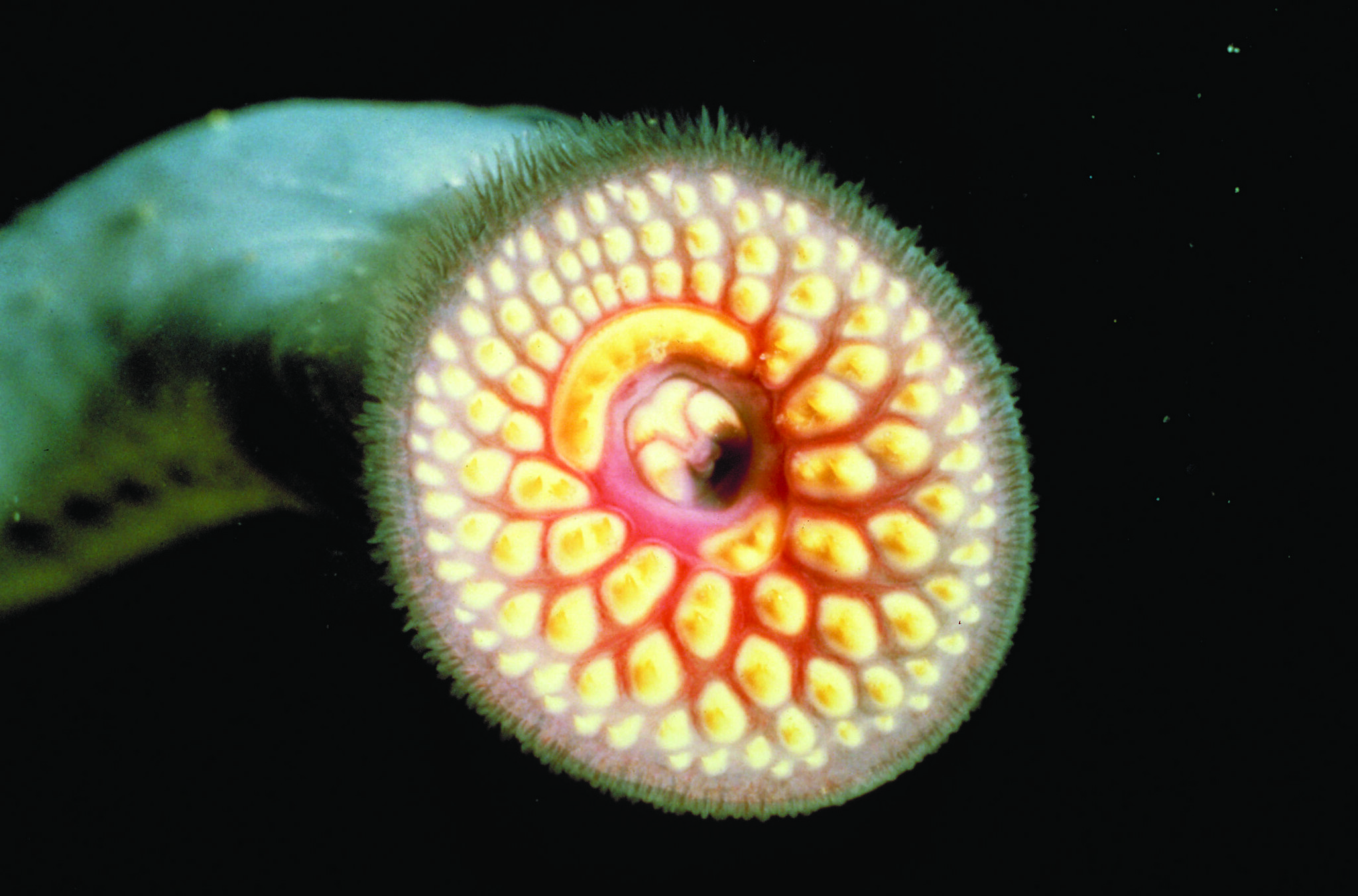
The business end of a lamprey. Image credit: U.S. Environmental Protection Agency
I’m sure many of you are familiar with the story: lamprey, with their penchant for sucking blood, are a parasitic exotic species that entered the Great Lakes and almost wiped out the Great Lakes fishery by the 1940s. This led to a control program coordinated by the Great Lakes Fishery Commission that is ongoing even today. Every year, the commission’s various lamprey control programs cost millions of dollars. Sea lamprey are clearly still an enduring threat.
In the mid-1990s, the commission’s lamprey control program routinely landfilled thousands of female lamprey they trapped. At that same time, lamprey populations in their native countries like Portugal and Spain were becoming decimated due to overfishing and habitat loss. This was an issue because lamprey were/are considered a culinary delicacy in Portugal and Spain. Like the lobster aquariums found in American restaurants, Portuguese restaurants offered tanks of sea lamprey where people could pick their dinners. Exclusive and expensive clubs even formed around lamprey consumption.
Jeff Gunderson, the fisheries and aquaculture specialist with Minnesota Sea Grant at the time, took an idea from a University of Minnesota food professor and the extension leader at Minnesota Sea Grant and turned it into a project to find a use for the excess, unwanted Great Lakes lamprey by seeing if chefs in Portugal and Spain would find them as palatable as their native lamprey. He set up a team that included a professor in Portugal who would conduct market testing, University of Minnesota experts, a NOAA international marketing expert, and a fisheries biologist.
My job was to garner visibility for the project and its results. When Jeff first described the project to me, one of my first questions was whether the lamprey had been tested for mercury. “I don’t want to promote something that’s going to contaminate people,” I recall saying. He assured me the lamprey had been tested and were within U.S. standards. But what I didn’t know at the time was that only a small sample of lamprey were tested. (More to come on this later.)
To figure out my publicity strategy, I consulted a couple of my news reporter friends. I think it was Mike Simonson, the well-known and now dearly departed Superior bureau chief for Wisconsin Public Radio who said, “You gotta have a taste test!”
That sounded like a capital idea, so my first step was to find a local chef willing to cooperate. I approached my favorite restaurant, Bennett’s Bar and Grill, run by Bob Bennett. This “forefather of contemporary cuisine in Duluth” was game.
The Portuguese professor had given me several traditional sea lamprey recipes, at least one of which involved using lamprey blood. Ewww. Anyway, I showed these to Chef Bennett, and we came up with a taste-test plan. He would prepare two traditional recipes and create two of his own. Gunderson talked the original Lou of Lou’s Fish House in Two Harbors into smoking some lamprey for the taste test, as well.
Next, we had to find some brave lamprey consumers. Somehow, I managed to convince the Duluth mayor (Gary Doty) to participate along with the University of Minnesota Duluth chancellor (Kathleen Martin). Several members of our Sea Grant Advisory Committee also agreed as did a freelance graphic designer who worked for us, a congressional office manager and the Minnesota Sea Grant director (Michael McDonald),
We held the lamprey taste test at Bennett’s restaurant, which was on Superior Street in downtown Duluth. Eight intrepid tasters were seated at a long table facing into the room so that reporters could easily see them and ask about their reactions to the food. We gave them a rating form. We also provided an aquarium with several lamprey in it, just to add to the room’s ambiance, and the smoked lamprey and some crackers for snacks.
Simonson was right about the lure of the taste test. We were mobbed by local reporters, both print and broadcast. Reporters from the Twin Cities even made the trip up north for it. The resulting stories went everywhere, even internationally. The Associated Press picked up the print story, and Gunderson said he talked to someone who saw it on a television station in Seattle. The story eventually made it into Newsweek and The New York Times.
Back in my office after the test, I received a phone call from the daughter of a Portuguese immigrant in Boston who saw the news stories and wanted to know how to obtain lamprey. She told me lamprey was a traditional Sunday dinner in Portugal, just like American pot roast. Her father was so excited when he saw the news, he implored her to find out more. I had to give her the disappointing information that lamprey were a regulated invasive species without a commercial source yet.
The highest rated dish was Bennett’s own lamprey stew with garlic mashed potatoes, rated 4.5 out of a possible 5. The smoked lamprey came in second, earning 3.7 out of 5. The taste of the lamprey came out more strongly in the traditional dishes, which did not suit these American taste-testers.
I ate both the lamprey stew and the smoked lamprey. I enjoyed the stew, although the chef forgot to take out the lamprey’s cartilaginous backbone (called a notochord), which made it a bit crunchy for my taste. I bet if he had removed the backbone, the dish’s ratings would have been higher. The smoked lamprey tasted rather like any kind of smoked fish – very good!
The taster’s comments included: “Surprisingly good. Try selling it without telling people what they are eating. It would be better.” And, “I would not order this out, but Bennett’s dishes were by far the best.”
More extensive taste tests were run in Porto, Portugal. Eight restaurants with lamprey-cooking experience, two homemakers and 16 individual taste testers participated in two studies. The restaurant chefs were asked to rate how the lamprey looked while alive, how they cooked compared to Portuguese lamprey, how they smelled/tasted/looked after cooking, how the lamprey tasted to them, and how their clients or family members liked them.
Overall, the Portuguese taste testers enjoyed the strong flavor and firm texture of the lamprey, noting the lamprey had a pleasant “turf” taste and was less soft and fatty than Portuguese lamprey. (A turf taste refers to an earthy flavor, somewhat like mushrooms or liver.) They rated the flavor 4.5 out of 5 – a definite win.
During the second year of the project, more lamprey were shipped to Spain for taste tests. The results weren’t as glowing, perhaps because only frozen and canned Great Lakes lamprey were shipped instead of live wriggly ones. The Spanish testers liked the texture and that some contained eggs. Yes, lamprey are a delicacy in Spain, but lamprey caviar takes it to a whole other level.
The death knell for this innovative program came from subsequent contaminant tests on the lamprey. The Great Lakes lamprey contained mercury levels that were too high to meet European Union standards. They tested at 1.3 ppm for mercury. The EU standard at that time was 0.3 ppm. This information came too late for our taste testers, but hopefully, one meal of lamprey was not detrimental. I certainly didn’t feel any ill effects.
Gunderson summed it up like this: “At least we have an answer to the question that has been debated for nearly 40 years. Yes, Great Lakes lamprey are marketable in Europe. Because of current control programs and experimental programs, a commercial harvest of lamprey would not have been a priority even if mercury levels were acceptable. But given time, a commercial harvest could fit into lamprey control and management. Lamprey are here forever and who knows if the funding for lamprey control will last that long. If funding ever does wane, let’s hope it’s not before mercury levels decline to acceptable levels so that lamprey harvest can be evaluated as part of a low-cost management program.”
That was almost 25 years ago. A Lamprey and Rice Festival is apparently held in Portugal each year, so it still must be popular, but I fear that the people who used to love eating them for Sunday dinner are aging out of this world.
Unfortunately, mercury levels in Great Lakes lamprey are still high. According to a 2018 study by the Great Lakes Indian Fish and Wildlife Commission and the University of Wisconsin, levels in adult lamprey were still beyond that deemed safe for human consumption.
In any event, this project was one of the highlights of my career. It seemed like a win-win idea: The U.S. could rid itself of an expensive invasive species, and European diners could eat a traditional and much longed-for dish. Yes, I promoted something that could have contaminated people. But I did a darn good job of it.
I’m psyched that a photo of Lake Superior I took while on vacation last year is being used by my employer for ads that will soon appear in “Milwaukee Magazine” and the Milwaukee Airport. The ads are designed to increase awareness and appreciation for the Great Lakes.
I took this photo from the top of Spar Island during a sailing trip last year. (Read about it and see more photos in my blog post about the trip, “Wilderness Sailing in Canada, eh?“)
We need to do all we can to protect this source of life for so many!
If you know Marie of “Marie’s Meanderings,” you know a few things. She loves her family, which includes biological kin and people like Russ, Buddy the Wonderdog, and me. She enjoys food and foraging, is committed her job at Sea Grant, and devours books. Knowing these things about Marie prompted me to ask her if I could share some words with you about food and COVID-19.
If you are reading this, then she said, “Yes.”
“No, no, a thousand times no!” That’s what I imagine Marie said when a far-right-wing talk show host spluttered his willingness to eat his neighbors in the aftermath of the pandemic, given the high meat prices and shortages. She is against cannibalism and stuff like that.
Someone like Marie would invite you over FOR dinner, not AS dinner. If you accepted the invitation and whatever COVID-19-inspired guidance was in vogue, Marie might deftly turn a local invasive species into haute cuisine.
Here in Minnesota, invasive species foragers could rustle up a rusty crayfish potpie in a cattail-root crust accented with dandelion salad. If in Florida, they might prepare a double lion: lionfish with dandelion greens.
Posh, eh? I bet someone like Marie would even ferment some dandelion wine to complement the meal, if only there were time. I know for a fact that she recently cooked fern fiddleheads from her local forest.
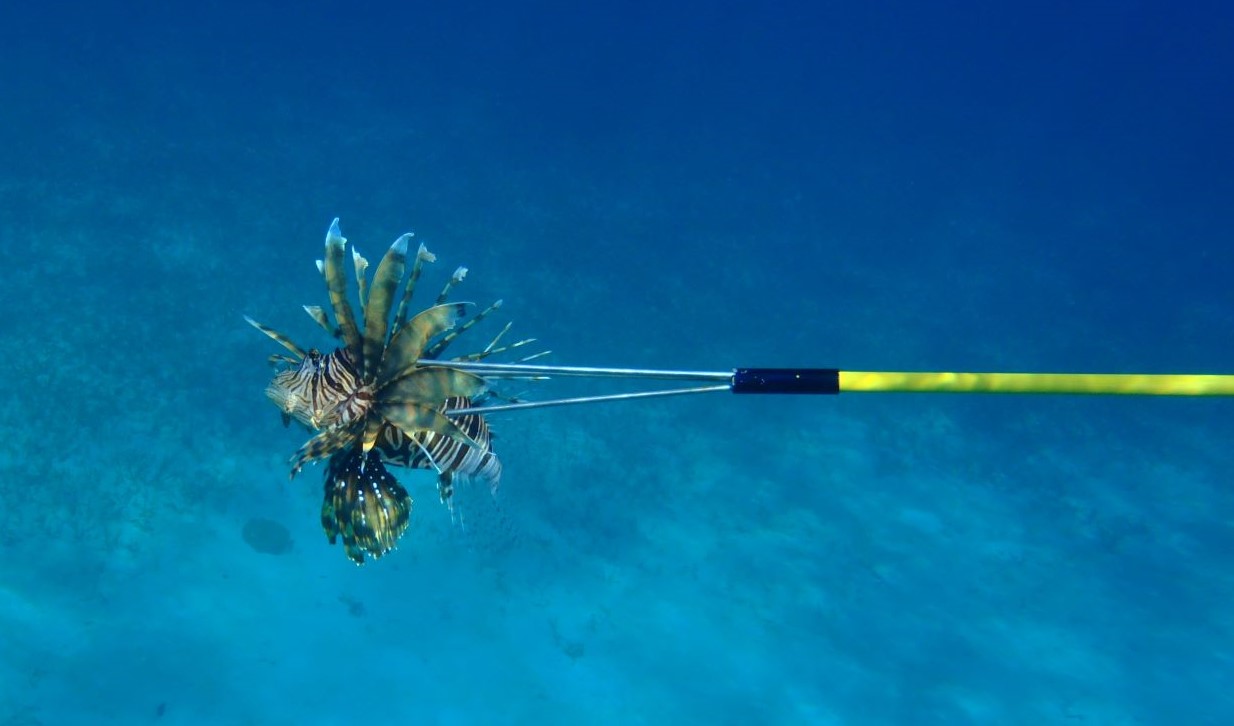
A speared lionfish in Belize. Be careful not to touch the poisonous spines! Image by Mike Sierszen.
I’ve joined Marie for meals and meanderings from Scotland to St. Martin. Believe me, the experiences were memorable! I’ve also had the privilege of tagging along with people trapping rusty crayfish in Minnesota and spearing lionfish in Belize to be used as food.
During these adventures, I learned a few valuable lessons about attracting and handling these pesky invaders:
Pro tip #1: Bait your invasive crayfish traps with fish heads and leave the traps in the water overnight. You’ll likely have a pile of bones and a mess of crayfish by morning.
Pro tip #2: Tie scissors to your spear when hunting lionfish. Use the scissors to cut off the poisonous spines before touching the fish.
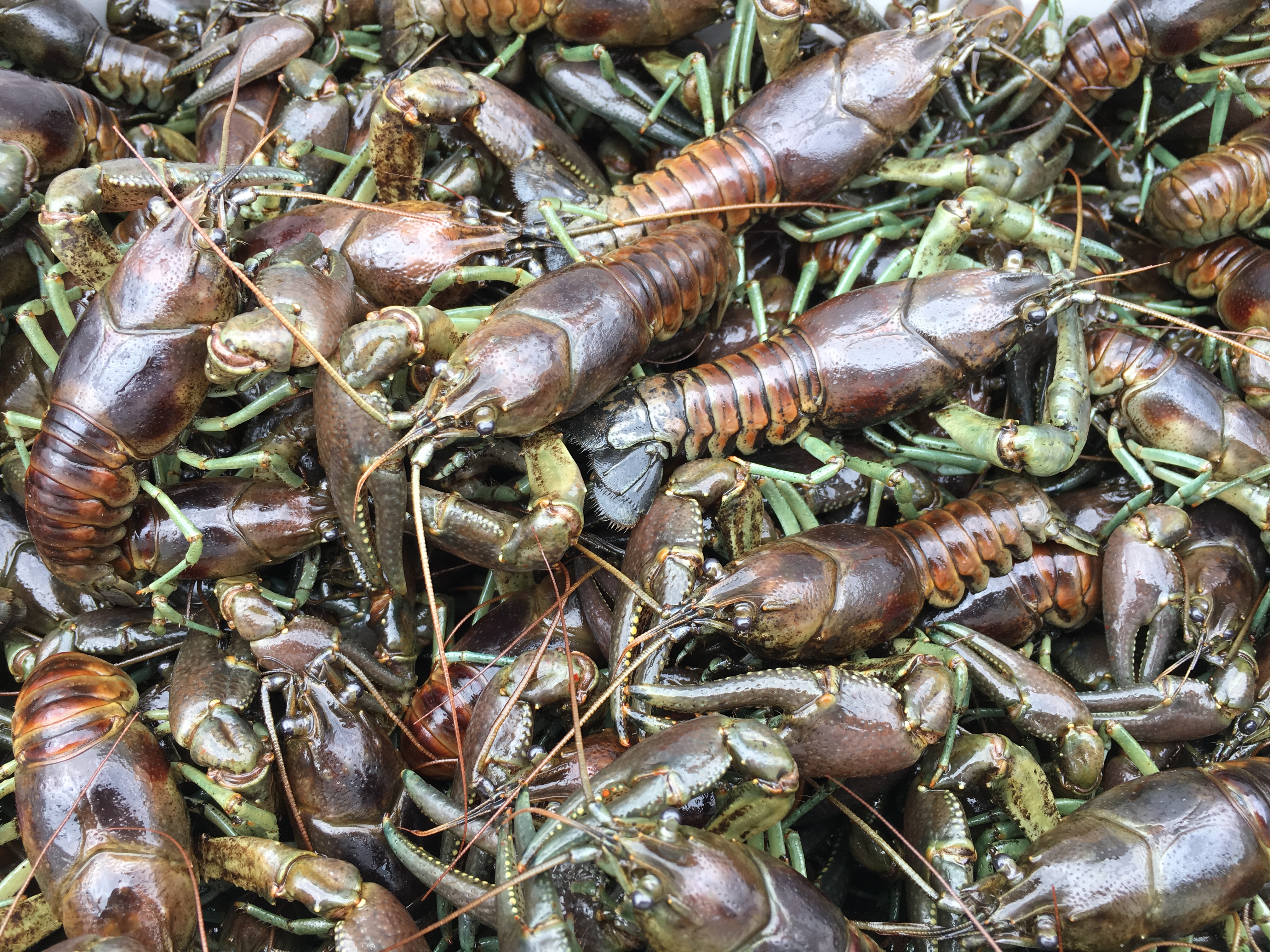
One night’s rusty crayfish catch on the St. Louis River several years ago, reflects the scale of infestation: 57 traps, 2,140 crayfish. Image by Sharon Moen, Minnesota Sea Grant.
I also learned that as invasive species harvests make their way to tables, people along the way often gain a better perspective about why these species are so economically and ecologically harmful. Aquatic invasive species like rusty crayfish and lionfish tend to outcompete native species and disrupt food webs through their sheer numbers and voracious appetites. Crayfish claws and lionfish spines also make playing in water more hazardous. Their presence can reduce property values, and hurt recreation and tourism industries.
Through her job at Sea Grant, Marie and her colleagues conduct public education initiatives helping to control the spread of aquatic invasive species. During her storied career, Marie even organized an invasive sea lamprey taste test.
While you wait for her to tell you that story, consider reading The Omnivore’s Dilemma in which Michael Pollan challenges readers to understand where food comes from, what’s in it, and the processes involved in bringing it to human lips. The challenges of feeding yourself and those you love have always been real but they are manifesting differently through the COVID-19 pandemic. Be a thoughtful omnivore. Weigh the choices about what could be eaten and what is et.
Someday soon I’m looking forward to inviting Marie and Russ over to share dinner, not to be dinner. I’ll likely include an invasive species in the mix. What would you serve?
Be kind and stay optimistic.
Editor’s note: Sharon is available for freelance writing work. If interested, please contact me through my website and I’ll put you in touch with her.
A recent New York Times article described results from a study that quantified how much exposure to nature people need to impact their health in a positive way.
The researchers found that people who spent about 120 minutes per week in nature (like a park or a forest) were less stressed and healthier than people who didn’t get outside at all. Spending less time (60-90 minutes) did not have as significant an effect. Even spending more time (5 hours) offered no additional benefits.
From this post’s title, perhaps you thought I was going to describe how to get nekkid and take a bath in the forest. Sorry, “forest bathing” just means immersing yourself in nature.
The study’s results made sense to me. As a species, we evolved in the outdoors. It’s what we’re made for. Spending time by water is also beneficial.
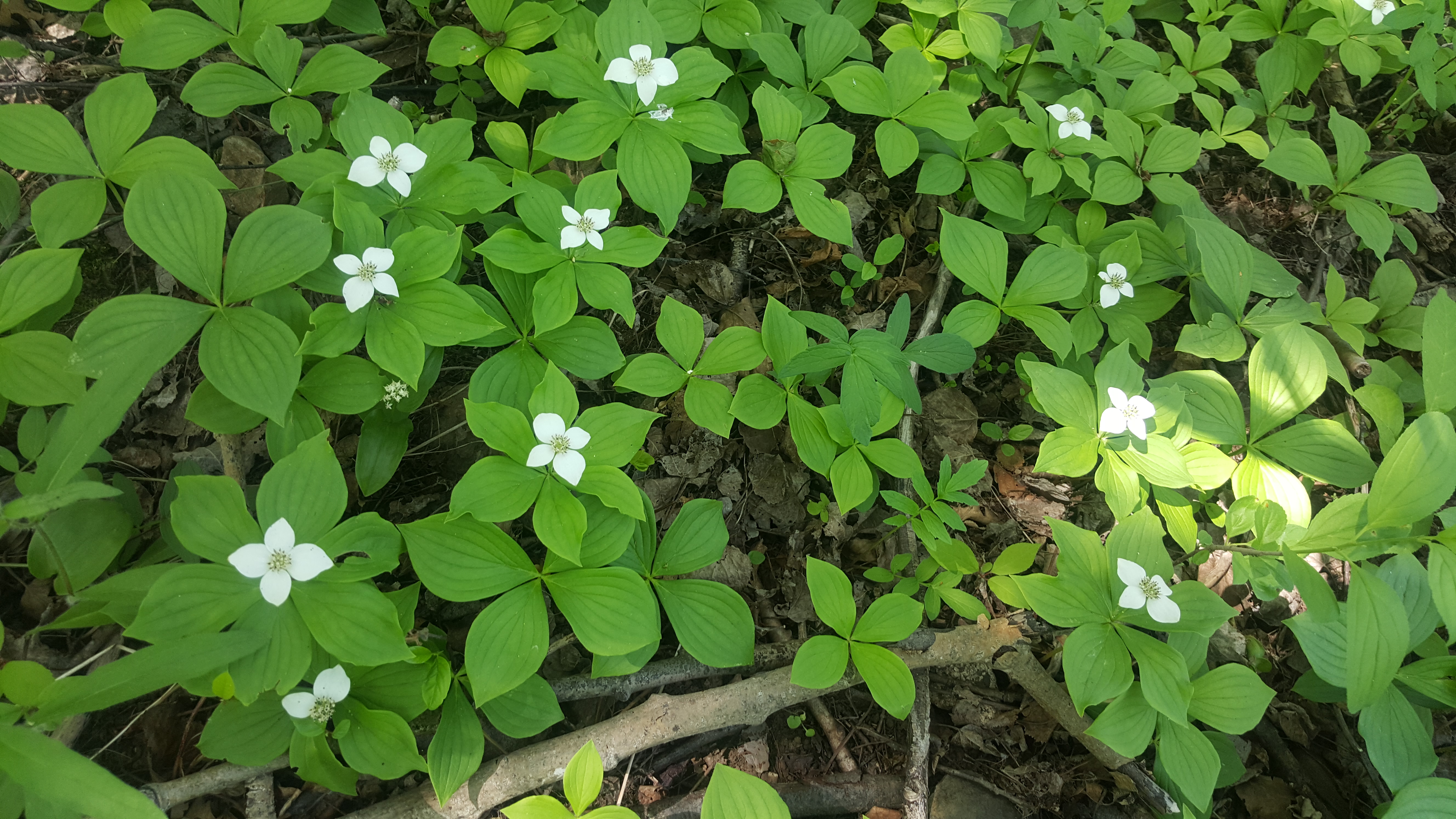
I am happy to report that I spend at least 140 minutes in nature per week. I am lucky to have a huge city park by my home where Buddy the Wonderdog and I walk every day.
I took some photos from my last walk through the park. At 640 acres, the park is large enough that you’d never know you were in the middle of a city while walking its trails. Signs of civilization are few, even from the rocky knob that features a view of Lake Superior.
My photo walk was longer than usual – over an hour. I returned home feeling serene, indeed. Have you had your dose of nature today?
I am happy to announce that two of my poems will be featured in the Wisconsin Department of Natural Resource’s 2019-2020 Calendar. The DNR holds an annual contest for photos and takes writing submissions for their 16-month Great Waters calendar, which is designed to show the ways that people connect with the state’s lakes and rivers.
My poem, “Stockton Island” graces the month of August 2020. I wrote the piece decades ago after my first stay at Quarry Bay on the island for a summer science program. My second poem, “Lake Superior Auntie” made the December 2020 page. This poem looks back on my career with organizations that are working to understand and preserve lakes Superior and Michigan.
The calendar will be distributed for free beginning August 1 at the Wisconsin State Fair, Wisconsin DNR offices, state and national park visitor centers, and through partner organizations.
The DNR has just posted the calendar on their website, too. If you’re interested in checking out information about the submission process, take a look here. Your work could be in their next one!
I meandered down to Tucson, Arizona, with one of my sons last week. On the last day of our trip, before we caught our plane back home, we had a few extra hours. We decided to go see Biosphere2, the world-renowned self-enclosed science station run by the University of Arizona that’s about a 45-minute drive outside of town.
Because we would be time-limited, I checked the station’s website to see when their tours run. The text said tours were offered throughout the day on a first-come, first-served basis. Great! We would have time for a tour if we arrived right when their doors opened at 9 a.m.
However, when we got there, the docent said the tours wouldn’t be starting until 10 a.m., which was when we needed to leave to catch our flight. We were disappointed, but decided to pay the entry fee anyway and take a self-guided tour of the grounds.
I remembered hearing about the facility while I was growing up when a team of “terranauts” closed themselves into this giant terrarium for two years to see if humans could live in a man-made environment, with the thought that something similar could be done on some other planet, like mars.
What I didn’t realize from the news stories about the experiment is that Biosphere2 has different enclosures for different environments. There’s a rainforest, an ocean, a desert, and a coastal fog desert. To ensure adequate air exchange, there are event two “lung” buildings that control air volume.
On our self-guided tour, we were able to see the outside of the rainforest building, which is covered in glass panels. Leaves were plastered against the windows, making it look like the plants were just about to burst out of their man-made enclosure.
We were also able to go into the living area that the team used when they were enclosed in the facility. Unfortunately, construction was going on, so we really weren’t able to see much of anything. But there was a cool globe where we could see graphic representations of world populations, Facebook friend links and the like.
The last place we visited was the ocean building. We were able to go inside it and see the exhibits. Unfortunately, the ocean itself is experiencing an algae overgrowth. The water was green, which made it hard to see any fish.
Although we hardly got to see anything, it was still cool. I would like to go back there again under better circumstances and try to get the official tour.
The huge rainforest pavilion, with plants plastered against the glass.
Last week, I had the chance to watertend for my job. What’s that? It’s like being a bartender, but without the alcohol.
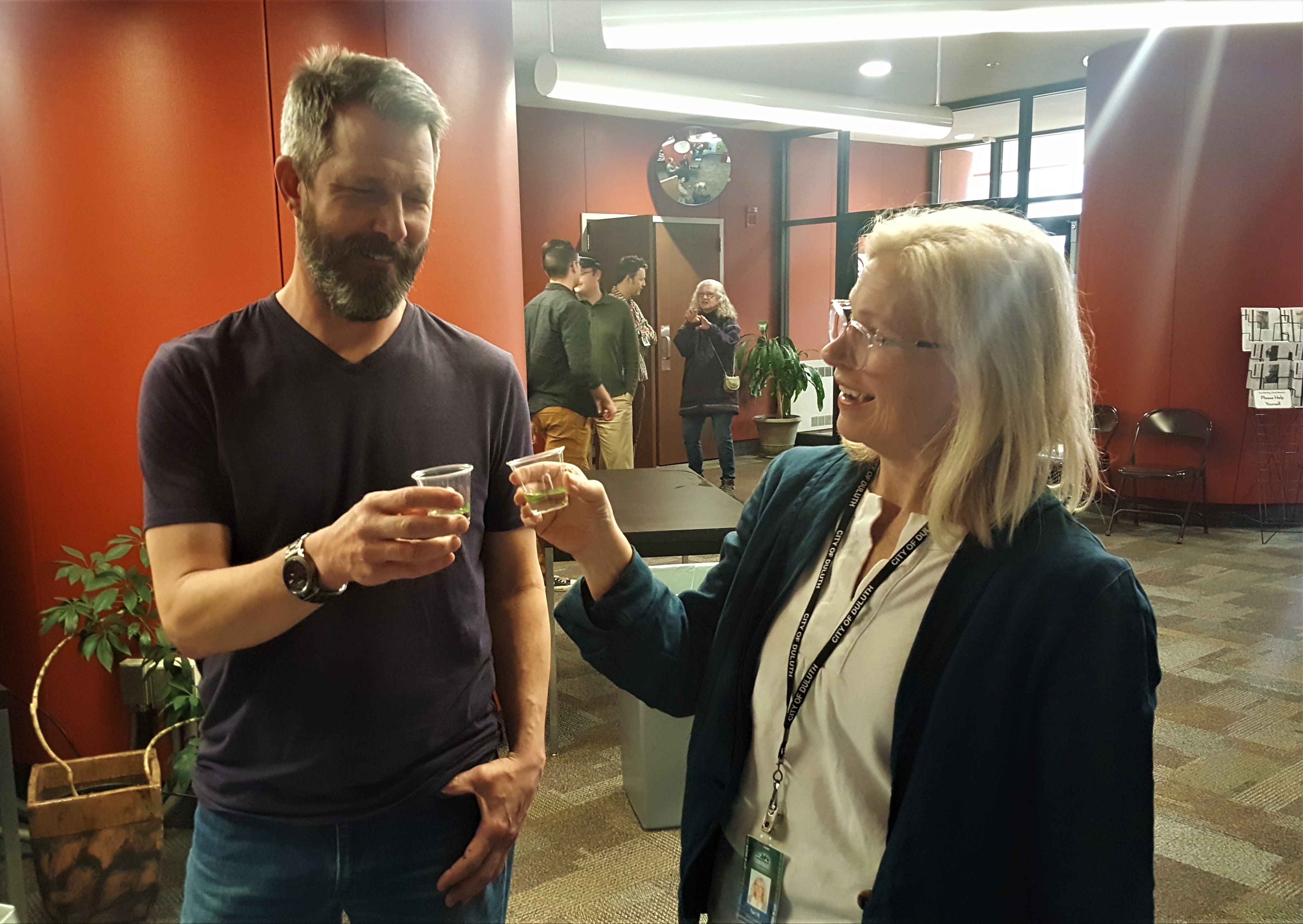
I learned my new trade at an open house hosted by the Natural Resources Research Institute (NRRI) in Duluth, Minnesota. The “Tapping into Science” event was the brainchild of June Breneman, a friend of mine and fellow science communicator, with the intent of celebrating the importance of clean water by offering the public a chance to taste regional water at a Water Bar and local craft beer brewed with Lake Superior water. It’s also an opportunity to put water professionals and educators in contact with the public in an approachable setting.
Unlike a real bartender, my preparation was minimal. All I needed to do was read a one-pager on how to tend water and watch a short video. Plus, I had help. I worked with fellow watertender Steve Berger, who serves as chief of staff for NRRI.
Steve and I served three varieties of water from growler jugs. Varietal #1 was from Minneapolis, which gets its water from the Mississippi River. Varietal #2 was from Duluth, which gets its water from Lake Superior. Varietal #3 was from Buhl, a small town on the Iron Range, which gets its water from an aquifer.
Me, watertending. Image courtesy of the Natural Resources Research Institute.
Like a real bar, the atmosphere is intentionally casual, with convivial and open-ended interactions. As the one-pager says, there’s no wrong or right way to do it, so that takes the pressure off right away!
We wore aprons with big blue water drops on them and served the water in compostable plastic cups on a flight board featuring three circles with numbers for the different types of water.
I arrived thirsty, so before the event began, I did my own tasting. #1 had a chemical tang to it with a hint of algae. #2 didn’t taste like anything to me, probably because I live in Duluth and am so used to it. #3 tasted much like #2. I found it interesting how many subtle differences I could taste between the Minneapolis water and the other samples when drinking them sequentially.
Most of our patrons at the water bar wanted to guess which samples came from which locations. It was interesting to see their different interpretations of the tastes. The experience sparked many discussions about the kind of drinking water people grew up with and the sources of the drinking water they now use.
After finishing their flights, patrons walked down the hallway to visit water research displays and to sample beer from three local breweries.
This is a unique way to encourage thought and discussion about water. If you work for a water organization, keep this in mind as a public outreach method. The Water Bar and Public Studio provided materials for the bar. It’s a nonprofit arts organization connected to the Freshwater Society in Minnesota. According to June, the amount organizations pay for the bar materials is negotiable.
Now I have a new skill to list on my resume.
And I have a whole new definition for what constitutes a “dive” bar. 🙂
Earlier this month, I attended the St. Louis River Summit. This science conference about the largest river that empties into Lake Superior (on the U.S. side) has gradually been incorporating more presentations that aren’t as “sciencey” as usual.
One of them caught my interest. Presented by Leah Prussia with the College of St. Scholastica, it was called “Solstalgia: An Intersection of Shared Knowledge.”
“What is solastalgia?” you may ask. Solastalgia is an English term for the mental or emotional distress that people feel from harmful environmental changes. It’s made up of “solace” and “nostalgia.” People feeling solastalgia no longer receive solace from their environment. Due to changes, they feel nostalgia for the way the place used to be. It’s a relatively new word, coined in 2003.
The changes can be from environmental catastrophes, such as volcanoes or floods, or from human-made changes like development or climate change.
St. Scholastica students gathering stories about people’s experiences with solastalgia.
Prussia, a social work professor, had her students at the Summit to collect people’s stories during lunch. I told them the story of a grove of trees near my home where I used to play with other neighborhood kids. I was devastated when the grove was cleared for a new house.
I remember complaining to the neighbor boy about it while we were on the swing set in my back yard. He said I’d get over it. That was almost fifty years ago!
I’m obviously still not over it if I can remember the pain I felt at the change. Have you ever felt solastalgia?



 A recent
  I am happy to report that I spend at least 140 minutes in nature per week. I am lucky to have a huge city park by my home where Buddy the Wonderdog and I walk every day.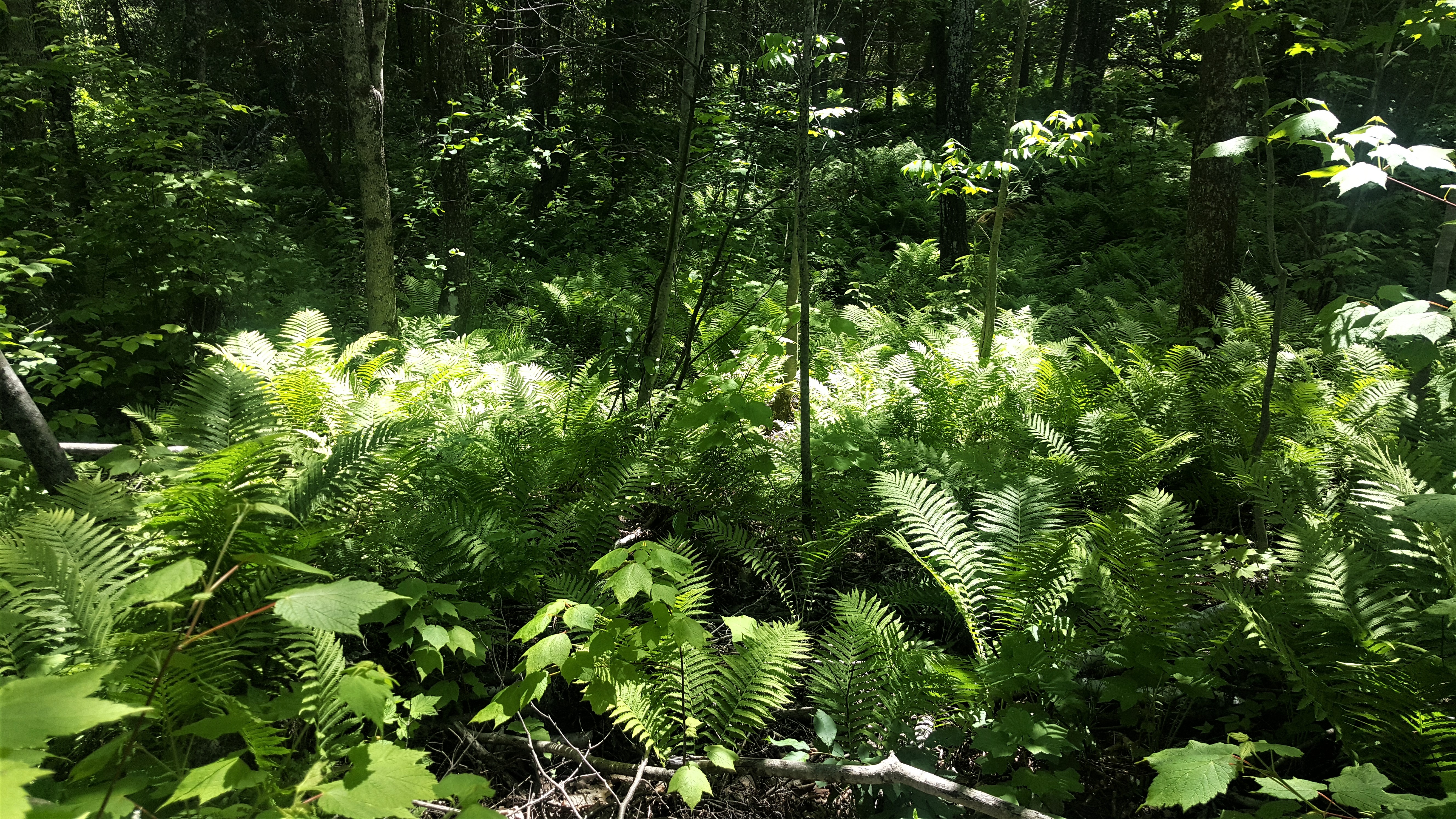

 I meandered down to Tucson, Arizona, with one of my sons last week. On the last day of our trip, before we caught our plane back home, we had a few extra hours. We decided to go see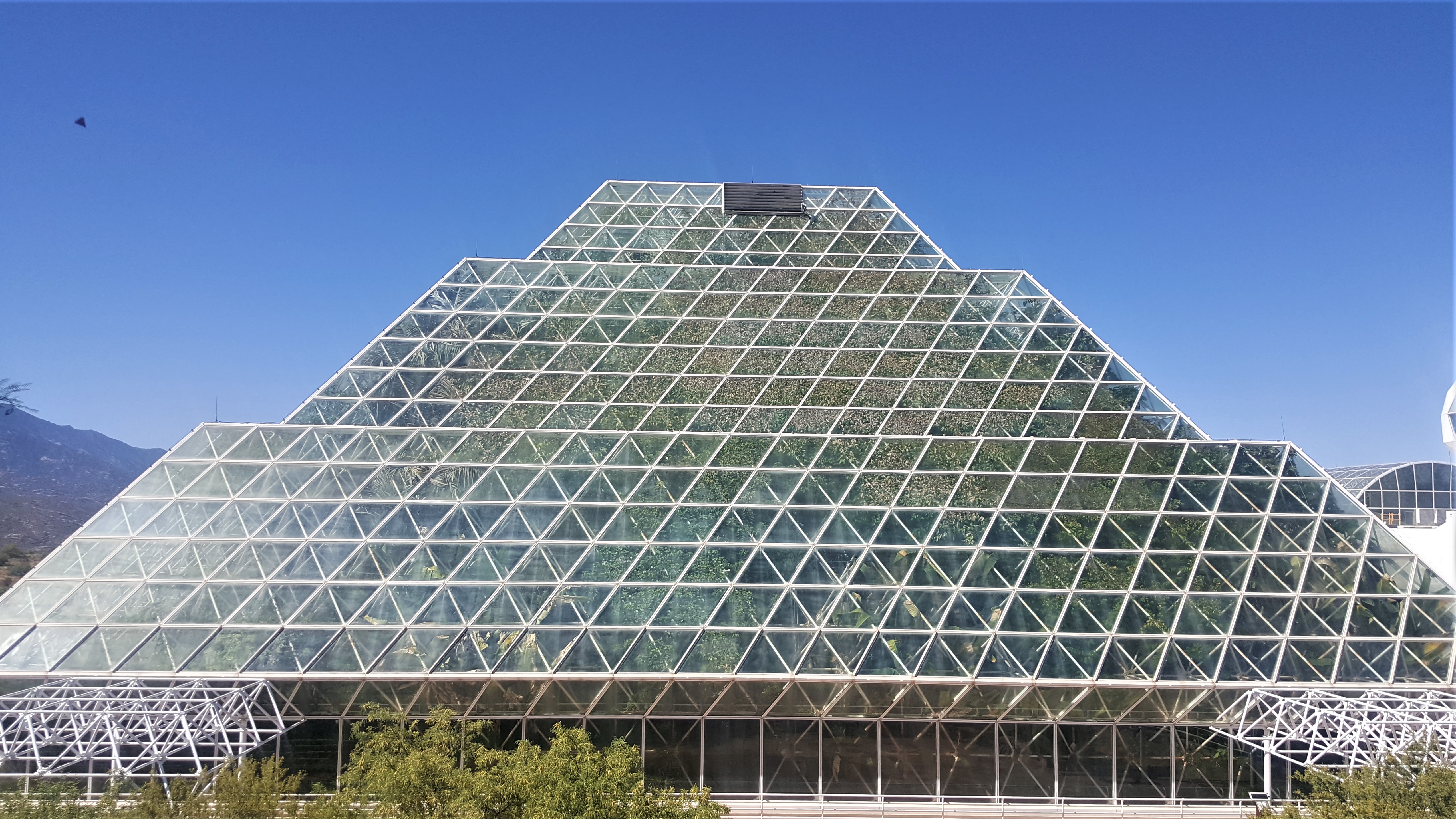


 Marie's Meanderings