Vinny with a Y not an IE

grey wolf

grey wolf (Photo credit: Wikipedia)

I was walking my dog through the local forest the other day when I met a 12-year-old neighbor boy for the first time. His name is Vinny; spelled with a Y on the end, not an IE. “People mix that up all the time,” he said. He was walking a chocolate lab who was also 12 years old. His lab got along well with my goldendoodle so we let them off their leashes to romp.

Vinny was the talkative sort. I’m always amazed at how much kids unknowingly reveal about their lives and their parents’ lives to strangers. While on the one hand, I’m glad children are still trusting, on the other hand, I shudder to think what could happen if the information made it into the wrong ears.

During our short walk, and with hardly any prompting from me, I learned about all of Vinny’s former and current pets, that Vinny’s parents are hiring a nanny for the summer to drive him to his soccer games, that he has a sore knee but his mom said that some exercise walking the dog would probably be good for it (I had to smile at that one), and that Vinny’s dad shot a wolf.

Of course, as a wolf novelist, this last bit of news gave me pause. I can’t even remember how the topic came up, but suddenly, there it was, as unexpected and pungent as blood on leaves. I do remember that Vinny was explaining how he likes to deer hunt. He was in his deer stand when he was 7 and a wolf appeared and scared him. From questioning and further conversation, I got the impression he was in the stand alone, but that his dad was nearby, possibly in a different stand. Vinny ended up meeting up with his dad and telling him about the wolf. That’s when he told me his dad shot the wolf.

Oh, there were so many things I could have said and so many routes our conversation could have taken. My first instinct was to trot out the fact that wolves have not been documented to kill a human in the U.S. but once in recent history; that they are shy and normally do not approach humans. But I didn’t. I wasn’t there in the forest in a deer stand with a scared young boy. Obviously, something the wolf was doing scared him and concerned his dad enough that he decided to kill it. And during my book signings in northern Minnesota and Michigan, I’ve heard many stories from people about wolves. I understand that they are capable of all sorts of behaviors, many of which are seen as threatening by humans.

Instead, I said something about wolves usually being curious more than anything else. I wanted to ask him if his dad reported the shooting, because I’m sure at that point in history (5 years ago) the wolf was still considered an endangered species and thus illegal to kill. But I really didn’t want to know.

Vinny then went on to describe a plan he and his dad made in case Vinny ever felt threatened by a wolf again. He told me the special kind of ammunition they would use, which would hurt/scare the wolf but not kill it. This gave me a bit of consolation. At least they knew that killing the wolf was wrong and either got the special ammunition idea from a conservation officer or his dad had thought about it enough to figure it out. I doubt that shooting a wolf with anything is a good idea because the wolf could die of an infection, but I kept my mouth shut about this, also. I didn’t want to criticize Vinny’s dad because that could shut Vinny off for future conversations about wolves.

Our conversation ended with Vinny asking me if my youngest son likes to hunt. I told him we weren’t hunting people, but that my son enjoys fishing. By that time, we were at a crossroads and we separated, each to our own homes. I hope I meet Vinny again. Maybe I’ll have another chance to educate him more about wolves. I sure hope so.
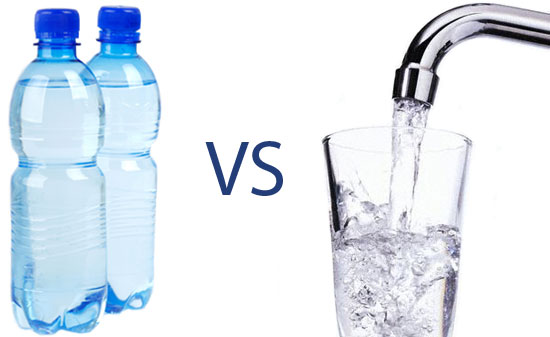
Why I’m Giving Up Bottled Water


bottled-water-vs-tap-water

I admit I drink bottled water. Not as much as I used to. But every two weeks or so, an eight-pack will find its way onto my grocery list.

I drink it for health and convenience reasons. The health reasons: I figure it’s better for me than pop (which is what we call it in Minnesota), and I have an intolerance to corn, which is in virtually every other bottled drink in a store in one form or other (corn syrup, citric acid, natural flavors, etc.) Also, the water is put through reverse osmosis, which is a process that can make it cleaner than most other types of bottled water. The convenience reasons: I like the bottles. They are easy to carry to work, grab out of the fridge, and they fit nicely into a bike water bottle holder.

I try to be responsible by reusing the water bottles. After drinking the purchased water, I fill up the bottle a few times with tap water to extend its life. I felt even greener when the company (oh, all right, it’s Dasani) came out with “plant bottles,” which are made from “up to 30%” plant material.

But all that changed on World Water Day this year. The official World Water date was March 22, but here in the hinterlands we didn’t get around to celebrating it until April 4. Several local colleges hosted events and since I work in a watery kind of job, I thought it prudent to attend.

I went to the movie “Blue Gold: World Water Wars,” which is based on the book of that same name by Maude Barlow and Tony Clarke. Barlow is co-founder of the Blue Planet Project , which works internationally for the human right to water. Blue Gold is not a movie about saving the environment as much as it’s a movie about saving ourselves. The film opens with a description of what happens to a person’s body when it gets dehydrated, including the fact that once your tears dry up, your eyes cry tears of blood instead.

It lays out our unsustainable use of freshwater resources in the usual doom-and-gloom way, citing pollution, destruction of wetlands, desertification, urbanization and the pavement it brings, and dams. All that was not news to me. What was news is that governments are selling off local water rights to corporations; their community’s public drinking water supply becomes privatized.

Why are local politicians doing this? The movie explained that corporations convince municipalities they can do it for lower cost and they pay a handsome price for the water rights. In effect, the politicians become “hydrostitutes” (my favorite word from the movie).

In a talk that Maude Barlow gave separate from but on the same day as the movie showing, she cited examples from across the world about how the privatization of public water supplies can mean increased prices for water use, decreased drinking water quality, and draconian measures for those who can’t pay for water, including cutting off service. Of course, these things could happen with a public water supply, but Barlow’s argument is that this is a trend with privatized water systems.

Maude Barlow

Maude Barlow (Photo credit: Wikipedia)

Barlow, sometimes called the ‘Al Gore’ of water, argues that since water is such a fundamental requirement for health, it should remain a publicly shared resource, not a private one. That charging for water is like charging for air. (Yes, I know that corporations are already trying to do this in China –selling clean air in cans.) Privatization of public water systems isn’t only happening overseas in places like France, Newfoundland and South America, and it’s happening in the U.S. (Barlow gave an example from Detroit). Then, once the communities become dissatisfied and try to take back their water systems, the corporations sue them for the water left behind that they no longer have access to.

Barlow says that were water is concerned, “We have a system of deep injustice and governments that accept that it exists. We are running out of clean water. We have done everything in our power to destroy access to it: dams, pollution, exported food, overuse of groundwater. By 2030, global demand for water will outstrip the supply for 40% of the population.” Not a pretty picture.

Okay, so what does this have to do with me giving up bottled water? I agree with Barlow’s argument that for a corporation to own something as vital and basic to human survival as water is unethical. And I’d rather not encourage that. So I’m going to switch to carrying around a water bottle (non-BPA, of course) filled up with good ol’ Lake Superior tap water. We do have some of the best water around here according to experts I’ve spoken with in the past. (Never mind the asbestos fibers and benzene spill from a few years back.)

I don’t make this decision lightly. Yes, I am an environmentalist and a humanist, but I’d like to think that I’m a rational environmentalist. I don’t just jump on every green bandwagon that comes along. I think it’s worth changing my habits to keep my money out of a private corporation and to support my local municipal water system instead. Water belongs to us all and it must be managed for the greater public good to ensure that it’s available for future generations.

So, my friends, if you ever see me with a store-bought bottle of water, you have my permission to whap me upside the head! Oh – and my idea of refilling the plastic water bottles? I found out from some friends I talked to in the lobby after Barlow’s speech and from Internet searches that this is a bad idea. The type of plastic in that the bottles are made of are intended for one use and they can leach a probable carcinogen if used too often. Just great.

To learn more about water protection efforts in the Great Lakes, visit the Great Lakes Water Commons.