Biskey Beauty


Russ and I meandered north to the Biskey Ponds Nordic Ski Trails on Fish Lake last weekend for the first time.

All I can say is that these cross-country ski trails are terrible. They were noisy and crowded. The other skiers scowled at us and muttered oaths most foul. The snow was coated with soot, the scenery filled with skyscrapers. The forest was mangled and misshapen. The grooming was awful – tracks all over the place. And the air held a lingering stench, reminiscent of dried pickles.

If you enjoy the Korkki Nordic Ski Trails near Duluth, you’ll intensely dislike these ski trails because they are like Korkki but with frozen ponds everywhere.

By all means, you should never ever go on these classic-only ski trails. Really, don’t go.

We want them all to ourselves.

Biskey Ponds Ski Trails

Superior Skiing

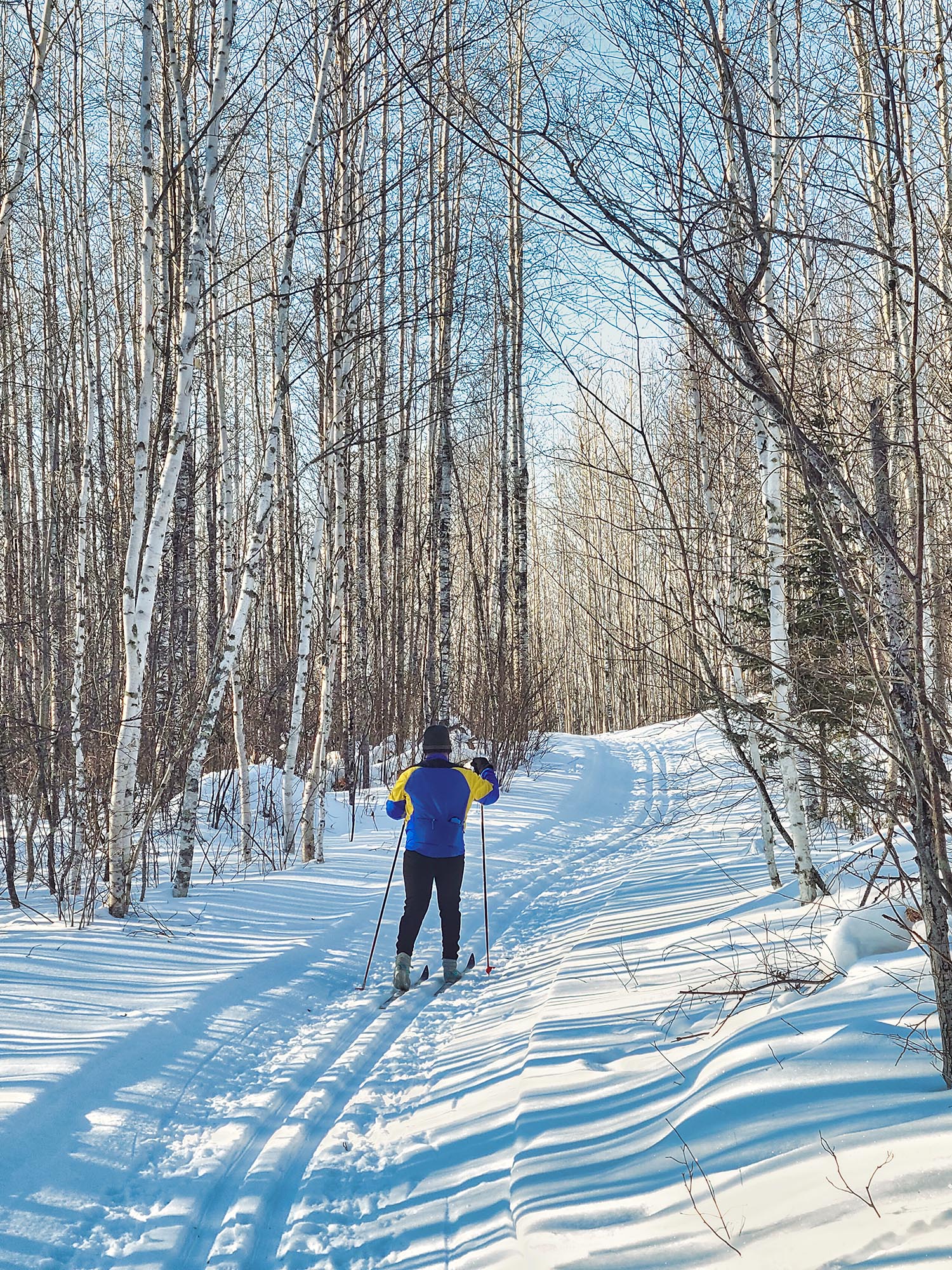
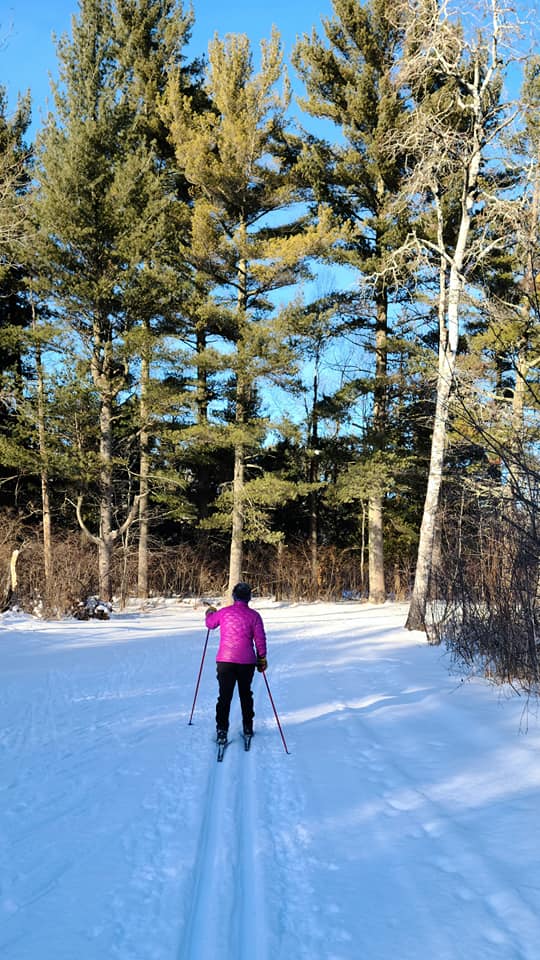
Marie skiing on one of the trails in the Superior Municipal Forest.

If, like me, you live in Duluth and you’ve cross-country skiied every trail and want something new, consider meandering across the bridge to the Superior Municipal Forest for some “superior” skiing in Superior, Wisconsin.

Russ and I tried the ski trails there for the first time this weekend. Since Russ doesn’t quite have his ski legs back yet (after not skiing last season due to an injury) we stuck to the easy red trail, going around both the out and inner loops for a total of 4.1 kilometers.

The trail lives up to its beginner status. It’s fairly flat the whole way, sporting both classic and skating tracks. The trail winds through a forest filled with big ol’ white pines and birch/aspens. The views are inspiring, especially as the sun starts to slant through the trees in the late afternoon.

One thing to note is that you’ll need a ski pass to go on these trails. You can either purchase a seasonal one or a day pass. We purchased a day pass at the self-service kiosk at the trailhead for $5. See the web link in the first paragraph of this post for details. I hear that the city grooms the trails every day, so they are usually in good condition.

And, if you need a dog fix, this is the place for you. The city dog park is right at the trailhead, so you can visit with the dogs as you come and go. You don’t get that with just any old ski trail. Truly superior!

SUP Yoga: Combining Two Great Pastimes

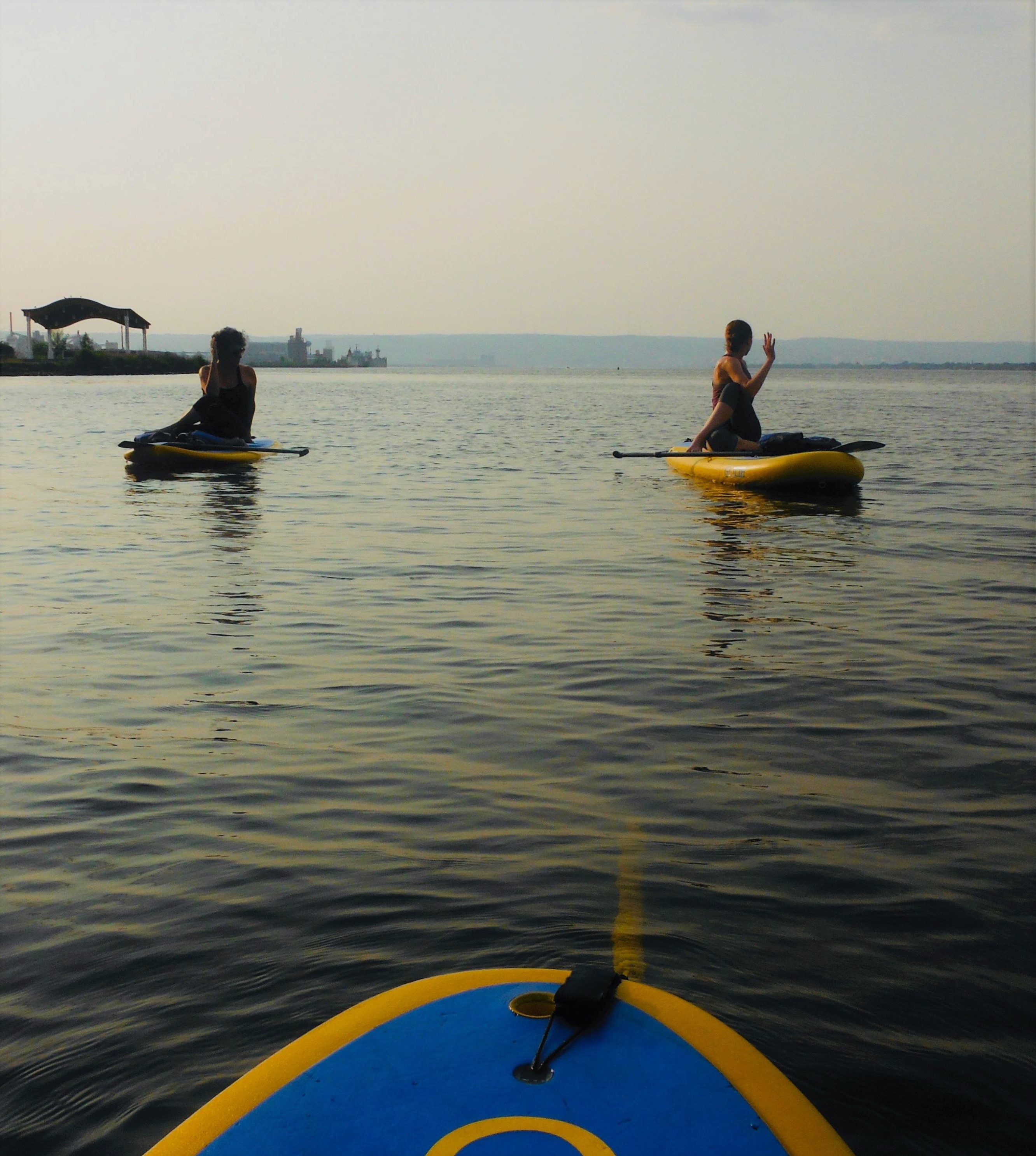
Doing a sitting spinal twist yoga pose in the Duluth-Superior Harbor. I’m on the left. Willowy younger person is on the right. (Image courtesy of North Shore SUP.)

You probably already know that I love doing yoga. I also love paddle boarding. Well, I finally had the chance to combine both these pastimes by taking a standup paddleboard yoga class the other day.

The opportunity was offered by North Shore SUP (also known as Duluth SUP even though they are located in Superior). Their business is run out of Barker’s Island in the Duluth-Superior Harbor. Owners Heather and Garrett are great – so enthusiastic about sharing their love of paddle boarding with everyone. I first learned how to paddleboard with their help eight years ago, when I began this blog.

My main fear was that I would fall off the board and make a fool of myself in front of the other students. Because keeping my fear to myself is boring and not blog-worthy, I broadcast it to everyone else by alerting my Facebook friends that I planned to do SUP yoga and then asked how many times they thought I would fall. They had much more faith in me than I had myself. They didn’t think I would fall, or that if I did, the water would be refreshing.

The evening was warm and fairly calm, with a haze of smoke in the air from the wildfires in Canada and northern Minnesota. Two younger women joined me in the class. After some conversation, I discovered it was their first time SUP yoga-ing, too, which made me feel better. The 1-1/2-hour class costs $30, which includes the board rental. I thought that was a good deal. It’s offered every Tuesday and Thursday evening, weather permitting.

We began by paddling our boards around the tip of Barker’s Island to a spot sheltered by trees from prying eyes. That also made me feel better because fewer people would see me fall. We anchored our boards in the shallows with a five-pound weight wrapped around the ankle leashes.

Katie, our instructor, started us off with some basic poses, including tips on techniques to maintain our balance. I would say the poses were Level One difficulty (which equals easy), but when you do them on a floating board, that automatically makes them Level Two. Combined with some boat wakes, the poses reach Level Two-Point-Five.

The other women were taller than I am, with long limbs that looked so elegant with each pose. Then there’s me, with short arms and legs. I looked like a yoga blob (see photo), but at least I didn’t fall!

Actually, I wouldn’t have minded falling. The air temps were hot and cooling off would have been nice. But big chunks of algae were floating in the water, along with dead bugs. It did not look appetizing for swimming. The water quality issues are only temporary, though, so don’t let that turn you off from trying SUP yoga.

My favorite part was the final resting pose, where you lay on your back, looking up to the sky. Although traffic noise from the nearby highway was audible, blissing out was still possible.

Class over, I asked the others what they thought. They all said they enjoyed it and would try it again. I agreed. It was wonderful!

Biking the Mesabi Trail from Hibbing to Chisholm

In our continuing quest to familiarize ourselves with the Mesabi Trail in northern Minnesota, Russ and I recently biked an 8.5-mile section right in the middle between the towns of Hibbing and Chisholm. This section runs by iron ore mine pits and a spur that leads to the Discovery Center, a cultural museum about the Iron Range.

The trail offers a good mix of ups and downs, shade and sun. In Hibbing, the trailhead parking lot is the same one that serves the Greyhound Bus Museum. We had time to visit the museum, which I’ll feature in my next post.

We rode out and back for a total of 17 miles. Not every bike trail offers sights like the Bruce Mine Headframe (pictured). A nearby sign said this structure was originally underground and it hoisted low-grade iron ore 300 feet to the surface. It’s the last standing headframe on the Mesabi Range.

The Bruce Mine Headframe — one of the sights along the Mesabi Trail between Hibbing and Chisholm.

The sign also goes onto to relate an incident that happened in the Bruce Mine. “In July 1927, Nick Bosanich was reported to have died in a rockslide in the mine. Forty-six hours later, he was found alive in a 10-foot-square room. His first request was for a cigarette.”

Ironic that upon his “resurrection” he probably shortened his life by resuming smoking!

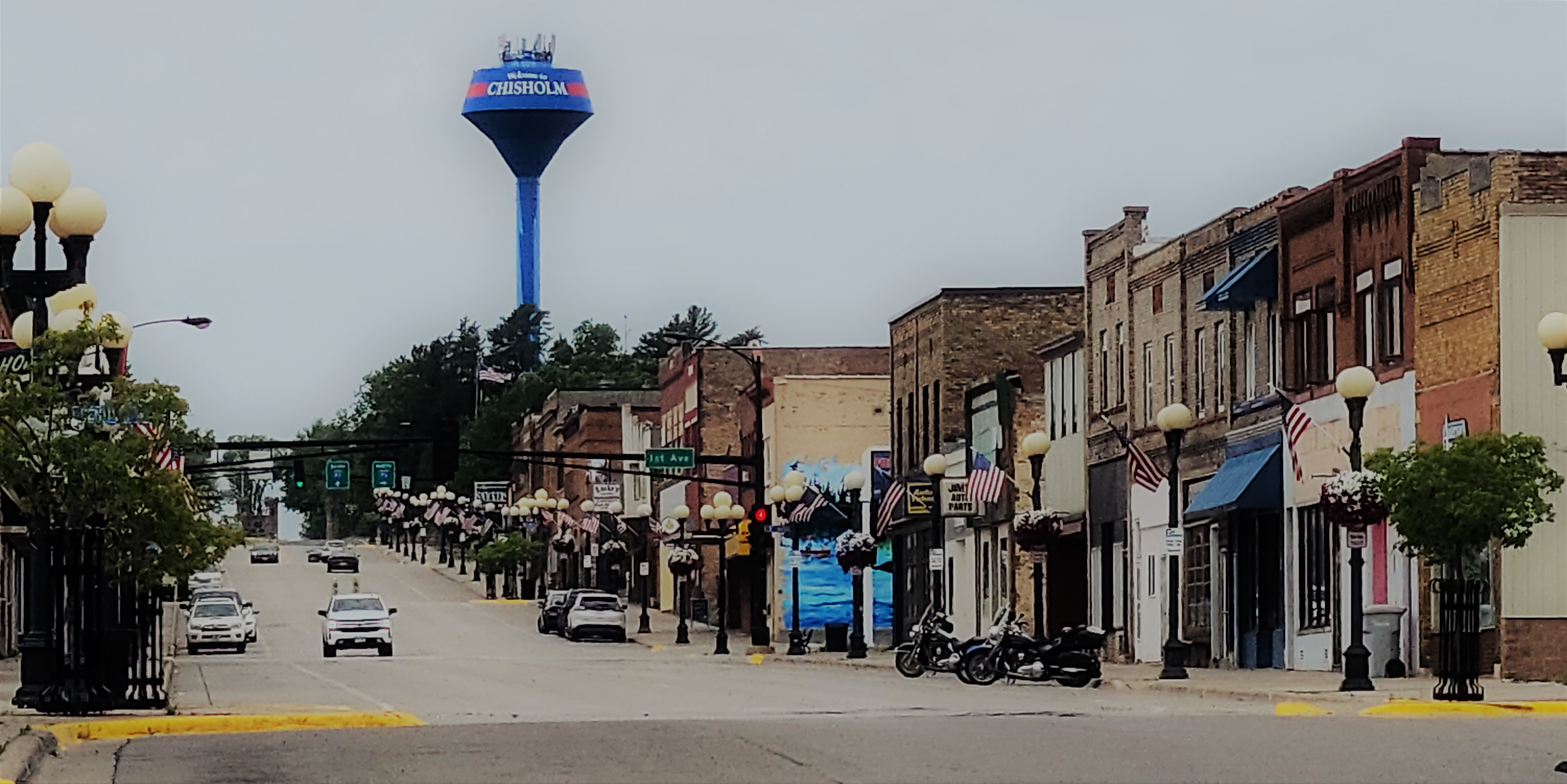
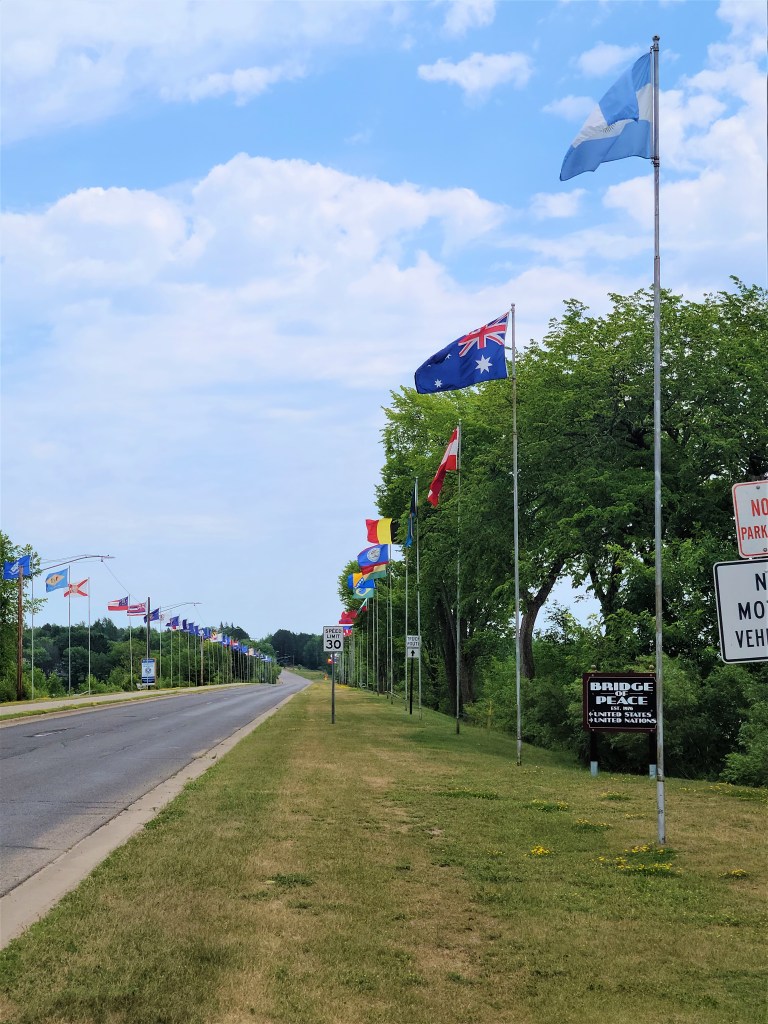
On the way into Chisholm, the trail follows a city park along a lake. At our turnaround point, we could view downtown one way and in the other direction, the “Bridge of Peace” causeway across the lake. The bridge showcases flags from all 50 states as well as flags from around the world, which gives this small town a touch of the cosmopolitan.

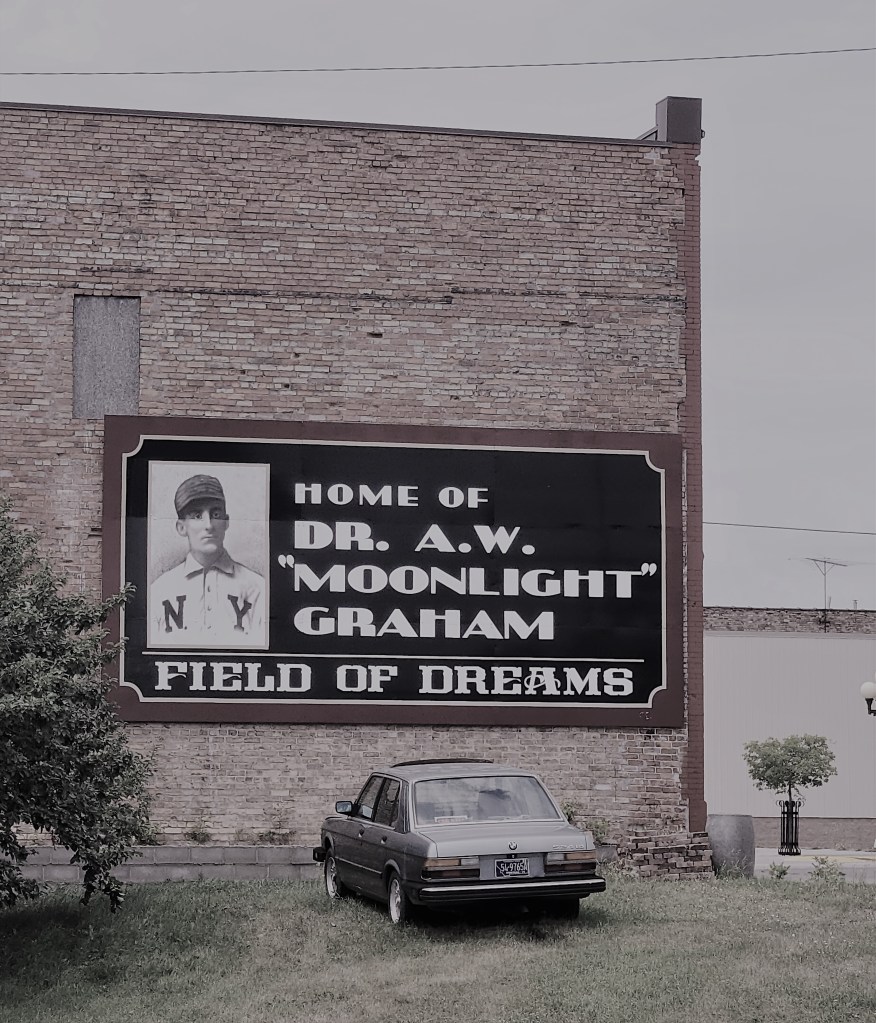
Ever watch “Field of Dreams?” (One of my faves.) Chisholm’s other claim to fame is as the home of the legendary baseball player, Doc “Moonlight” Graham, who is featured in the movie.

So, this section of the trail offers mines, museums, and movie heroes. If you want a good introduction to the Iron Range, this is the right section of trail for you!

A Review of the Lungplus Device

The first time I cross-country ski each year, my lungs revolt in the form of tightness while skiing and coughing afterwards. I have allergies and have had pneumonia a couple times in the past. I think my lungs just don’t like the stress of breathing in all that cold air while I am working hard skiing. I guess you could call it exercise asthma, but does it count as asthma if it only happens once per year?

This year, among the “joys” of the pandemic (she said sarcastically), I realized that my lungs did not seem to be adjusting to cross-country skiing. I was coughing afterward every time, not just the first time. And I’ve been skiing a lot this year since the snow conditions and temps have been good.

So, it was with interest that I watched a TV news story about a local lady who is the U.S. distributor for Lungplus, a mouth-worn humidity and heat exchanger you can use while skiing to make your lungs happier.

I want happy lungs, so I ordered the Lungplus Sport ($50), which is for use with high-intensity activities like cross-country skiing.


As I took it out of the package, I was pleasantly surprised by how small it was – it had looked larger on the people using it on TV. It comes with a long piece of embroidery string that you can use to hang it around your neck, so don’t throw it away like I almost did!

The device works by trapping the heat and humidity of your breath inside an aluminum mesh as you breath out. When you breathe in, the air passes through the mesh, which is already warmed and humidified, and makes lungs happy.

I did a test-ski recently and am here to report that my lungs were about 80% happier. I still had a little tightness and coughing, but nowhere near as much as usual. Another pleasant surprise was how light and easy to use the Lungplus was. You just stick it in your mouth in the space between your lips and teeth. Yes, you look like a dork doing this, but hey, it’s worth it to breathe easy.

Excess condensation collects inside it. The Lungplus lady says the embroidery string will catch the “drool” so it doesn’t end up on your chest, or you can blow out the water or suck it in and swallow. That last suggestion grossed me out, but that’s what I ended up doing. The condensation seemed to naturally collect in my mouth, so swallowing it was really no big deal.

The string is also handy if you want to remove the device. You can just take the Lungplus out and it will hang like some space-age necklace pendant around your neck, handy for when you want to put it back in.

Besides allowing me to breathe easier, I found the Lungplus had the side benefit of discouraging conversation by passing skiers. This is handy for introverts. Nobody wants to talk to someone with a strange white gadget sticking out of their mouth.

Lungplus is easy to clean. Just rinse it with warm water or stick it in the dishwasher.

So, I’m here to say that it works! And no, I have not been paid to say this.

Biking Along the Giant’s Ridge

Russ biking across the 3/4-mile floating bridge on the Mesabi Trail.

The Mesabi Bike Trail website offers a rather hokey legend about how this part of northern Minnesota came to be named “Mesabi.” Basically, it describes how native peoples thought of the glacier(s) that covered the far north during the Ice Age. The story says the area was “guarded by this great white giant, so large that he could not be seen over. He could not be walked around.” The early people named him Mesabi, which means “a great and stout giant man.”

When the weather warmed and the giant grew weak, he retreated, uncovering a land of abundant forests, lakes, and farmland. The Mesabi Bike Trail traverses 135 miles (of a planned 155 miles) through this terrain.

Russ and I had the opportunity to bike several sections of the trail this summer. Thanks to unseasonably warm weather on a weekend earlier this month, we had the chance to pull on our biking shorts and explore more. We took the Giant’s Ridge Spur, which we reached from the parking lot of the Giant’s Ridge Recreation Area near Biwabik, Minnesota.

Our goal was to make it across an extensive floating bridge that crosses a bog near the end of the spur, a 16-mile round trip. This goal was no big deal to Russ, a retiree who routinely bikes 50 miles at a pop, but for me, a person whose life is still ruled by working for a living, it would be the longest trip of the season.

I’ll cut to the chase: we made it! The trail runs through remote country, passing regrown timber lands and beaver ponds, and crossing cabin driveways. A relatively new section climbs up a rather large ridge – high enough that it sports cell phone towers on top. The trail on other side of the ridge features at least a half-mile downhill stretch that you can just blast down. The metal floating bridge is at the bottom; it runs ¾ of a mile through a wetlands in the Darwin Myers State Wildlife Management Area (WMA). The trail turns to gravel at the end of the bridge for a short stretch through the rest of the WMA.

Of course, going downhill means you have to go uphill on the way back. I needed to walk my bike a couple of times, but the fun I had during the downhill runs on the way out were totally worth it.

Soon after our bike trip, Old Man Winter returned with snow, so we put our bike shorts away for the season. Unlike those who lived during the Ice Age, at least we can look forward to taking them out again on the other side of winter.

Seeing snow on the runs at Giant’s Ridge while we were biking in shorts was strange.

Biking the DWP

20200815_151705If you are a Duluthian or just want to be Duluthy, and you are tired of biking the Munger Trail, try its wild, more adventurous twin, the Duluth, Winnipeg and Pacific Railroad Corridor Trail. I call it a twin because, like the Munger Trail, it follows an abandoned railroad line and passes over a similar geography. But the DWP is wilder and more adventurous because it’s gravel, less developed, and fewer people use it.

20200815_154215We accessed the DWP from Spirit Mountain’s Grand Avenue chalet. If you go up the ski hill about 200 yards from the chalet, you will run into the trail, which crosses the hill. You can also access it from a gravel road and trail system to the right of the chalet, but those are technically closed this season due to COVID-19.

Take a left, and you are on your way to new vistas, a couple of updated trestle bridges, and a tunnel. The 10-mile trail will take you to Ely’s Peak, Becks Road, and eventually to Proctor. When we arrived at Ely’s Peak tunnel, rock climbers were scaling the outside walls, testing their nerve and equipment.

We turned back at the tunnel. Later, while resting on a bridge, we had the chance to speak to a family who said they biked to the Buffalo House and had lunch before biking back to the parking lot at the chalet.

We hope to do the rest of the trail next time!

20200815_161259

Paddling into Deep Summer

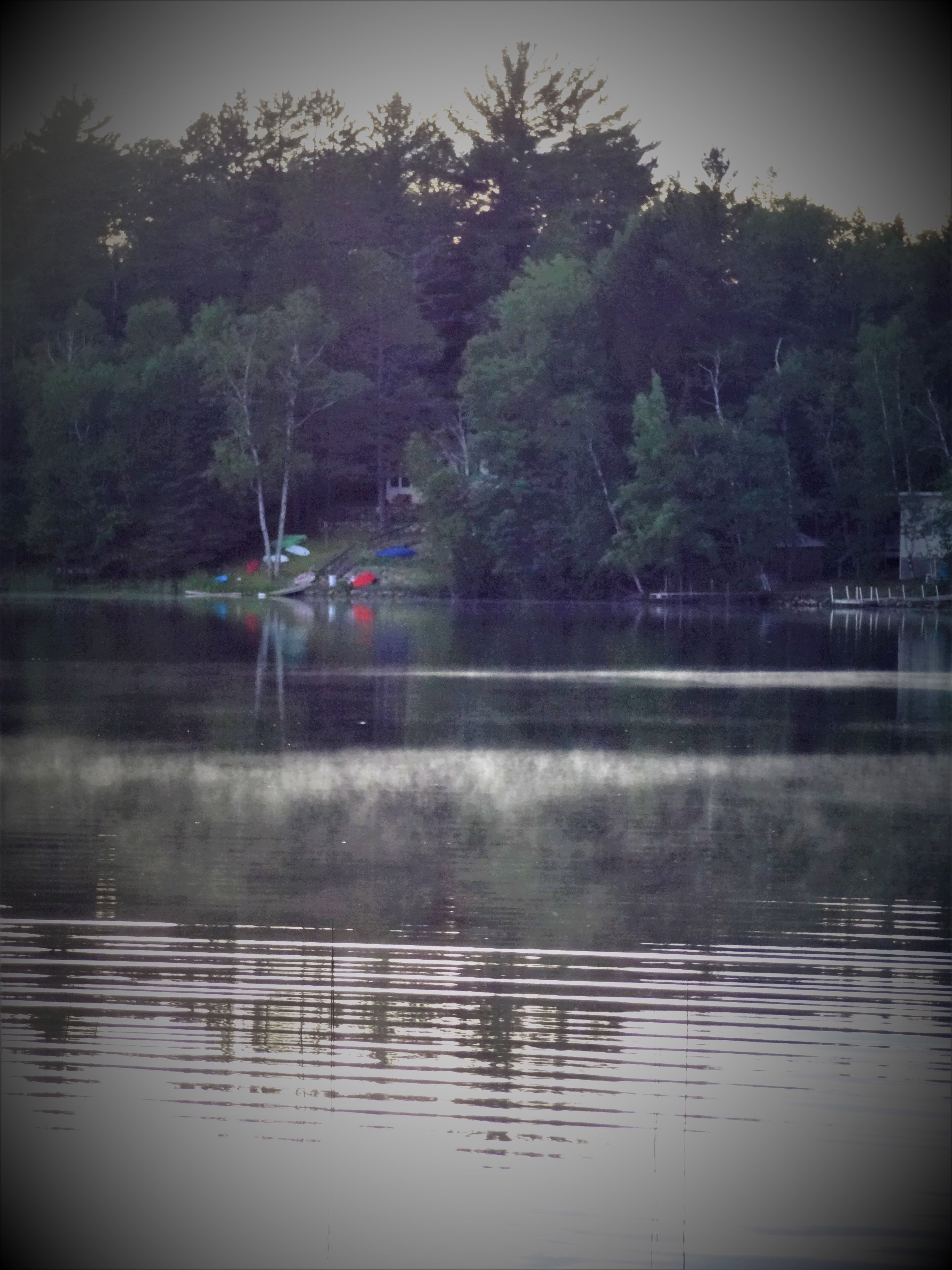
DSC05846FixedI awaken at 6 a.m., roll over and look at the lake outside the window. The water is smooth as a scrying mirror. The sun peeks over the spruces, encouraging a lake mist to form.

If I were more ambitious, I’d be out paddle boarding right now. Instead, I roll over and shut my eyes, lulled into a doze by the trills of hermit thrushes deep in the forest.

An hour later, I open my eyes to the same scene — the lake still calm, mist still rising.

Although in my book, 7 a.m. is still early to rise, I succumb to the siren call of my standup paddle board. It is early July and the temperature is already 70 degrees outside – one of those days that Minnesotans dream of during February. It would be criminal not to enjoy it.

Russ and the dog are still sleeping, so I quietly get out of bed and don my swimsuit. I tiptoe out into the dew-wet grass toward the boat house – feeling like a teenager headed for an illicit rendezvous. However, I am responsible enough to leave a note on the kitchen table: “Gone paddleboarding!”
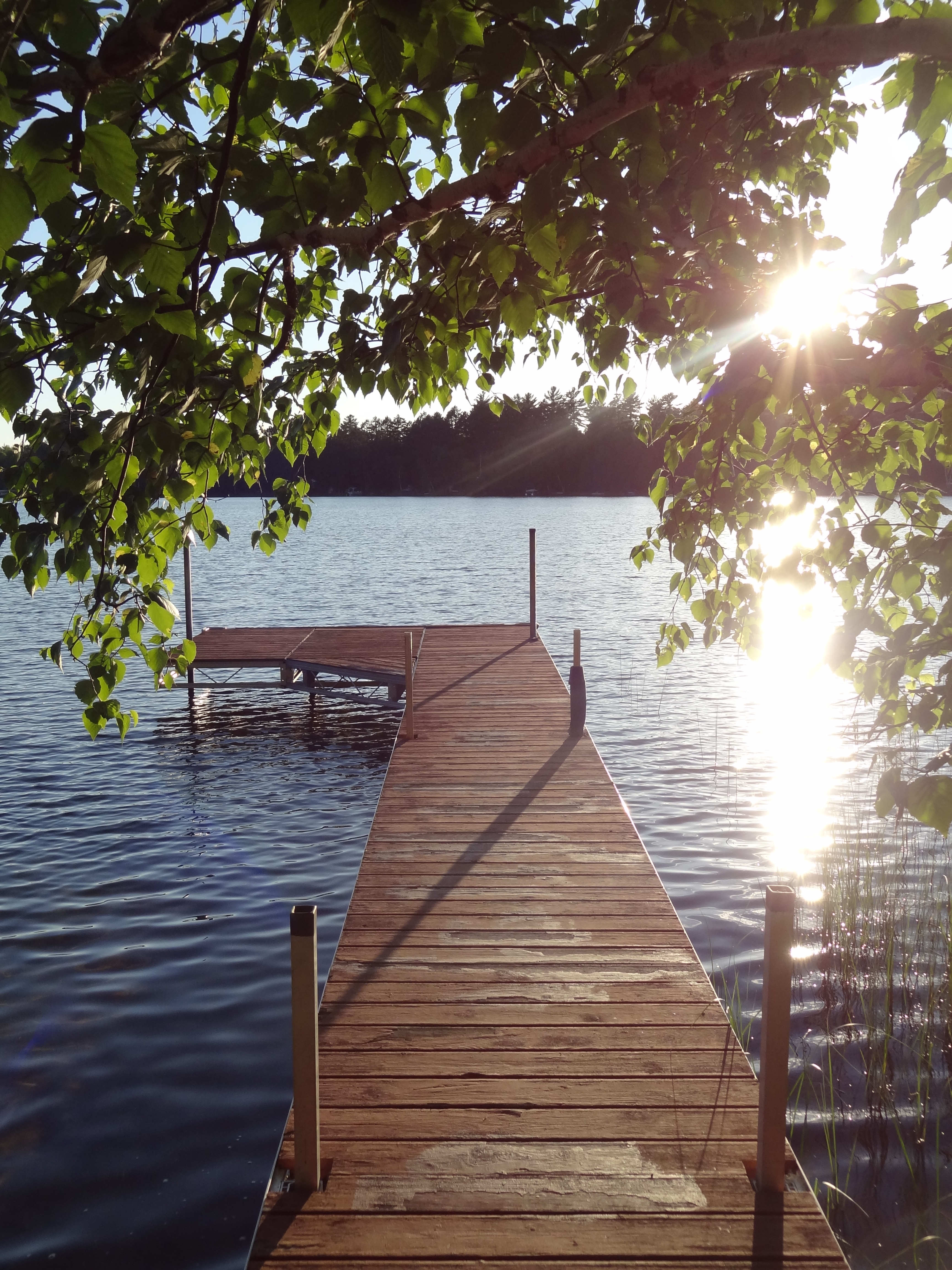
DSC05814Opening the boathouse door, I inhale. There’s nothing like that old boathouse smell – decades of damp, mixed with a little mustiness and a hint of worn wood.

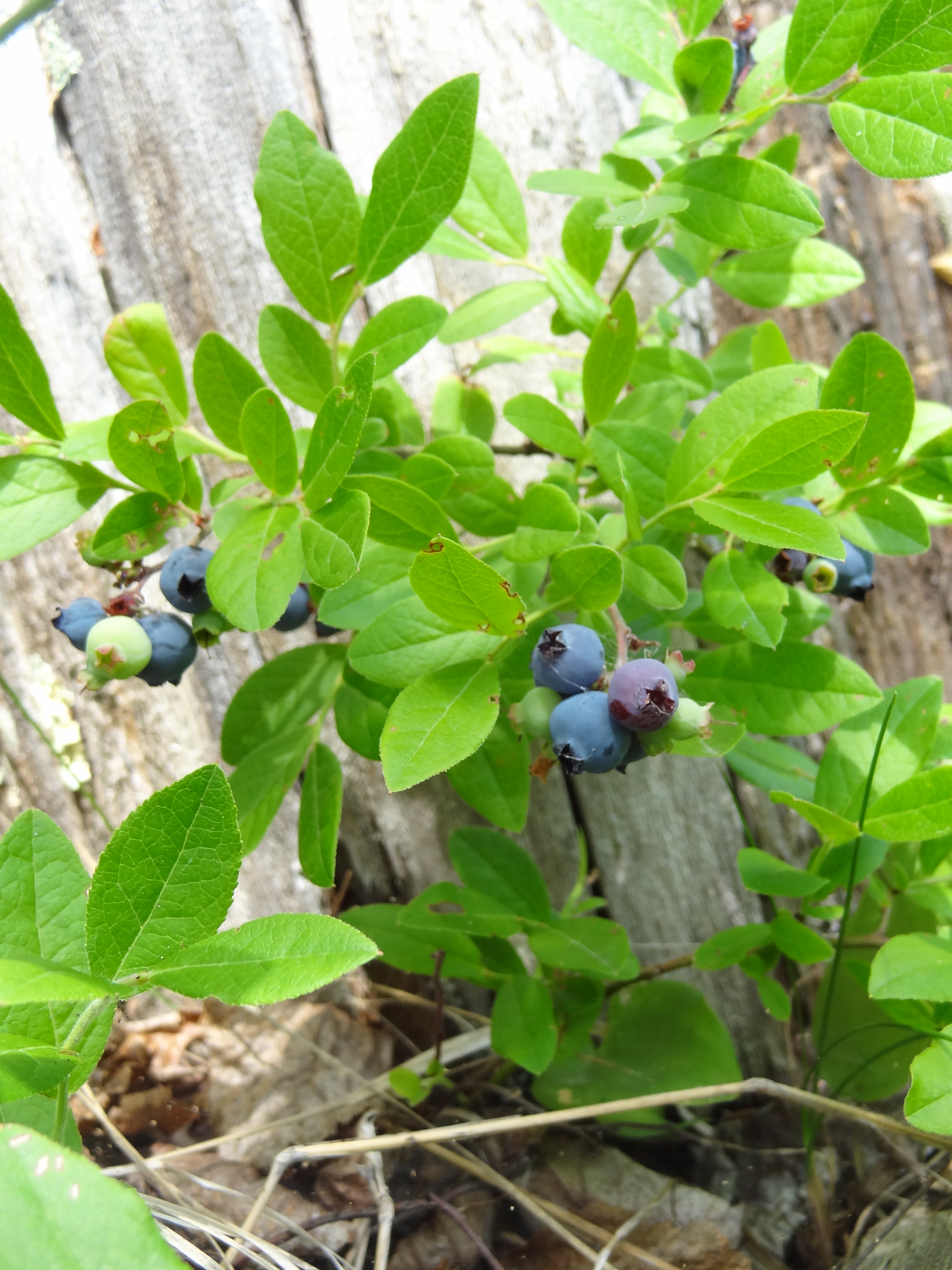
I heft my board and paddle, carefully closing the door so I won’t wake those in the cabin. On my way to the dock, I pass a bunch of blueberry plants covered with small blue sapphires – berries ready for picking. I can’t be distracted, though. They’ll have to wait.

As I settle my board into the water, I giggle inwardly. Hardly typical behavior for someone nearing retirement age, but a quick glance at the lake has told me it will only be me and the loons out there this morning. Life cannot get much better.

I head out in a clockwise direction around the lake. This just seems natural. The night before, a small parade of pontoon boats were all going counterclockwise. We’re living in the northern hemisphere. The toilet water spins clockwise. I figure it’s better not to go against the spin.

My board skims the surface easily. In the clear water below, bluegills rush to hide in the reeds. Water plants stand still and straight as trees. As I paddle, the mist seems an elusive dream. I know I’m in it, but I can’t see it when I arrive. The mist is always just out of reach ahead, playing tricks with my senses.

All of the other cabins are silent, still shuttered for the night. I only see a couple of other ladies, each sitting on shore, enjoying their morning coffee. I wave and they wave back.

My morning idyll is shattered by a pain in the middle of my back, between my shoulder blades. A horse fly or deer fly has found me! As I struggle to paddle into position so that I can safely use my paddle to scratch it off my back, I marvel at how these flies know exactly where to bite where they can’t easily be swatted. It’s like all the babies attend Fly Biting School were the teachers point out the safest places on people and animals to chomp.

Board in position, I carefully balance while lifting my paddle to scratch my back. Success! I don’t fall off my board and the pain disappears, along with the fly. Although a nuisance, these flies need clean water to live. Their presence is an indicator of a healthy environment.

The rest of my paddle is uneventful, if you can call relishing every summer sight and sound uneventful. I arrive back at the dock feeling like I’ve paddled into deep summer.

I am so thankful to be able to enjoy this morning, especially since there are so many people gone from this Earth due to the coronavirus, who will never have the chance to experience such things again. It was worth getting out of bed early.

Now, where are those blueberries?
DSC05805

Forest Bathing: A Secret to Better Health

20190622_135935A recent New York Times article described results from a study that quantified how much exposure to nature people need to impact their health in a positive way.

The researchers found that people who spent about 120 minutes per week in nature (like a park or a forest) were less stressed and healthier than people who didn’t get outside at all. Spending less time (60-90 minutes) did not have as significant an effect. Even spending more time (5 hours) offered no additional benefits.

From this post’s title, perhaps you thought I was going to describe how to get nekkid and take a bath in the forest. Sorry, “forest bathing” just means immersing yourself in nature.

The study’s results made sense to me. As a species, we evolved in the outdoors. It’s what we’re made for. Spending time by water is also beneficial.

20190622_133733I am happy to report that I spend at least 140 minutes in nature per week. I am lucky to have a huge city park by my home where Buddy the Wonderdog and I walk every day.
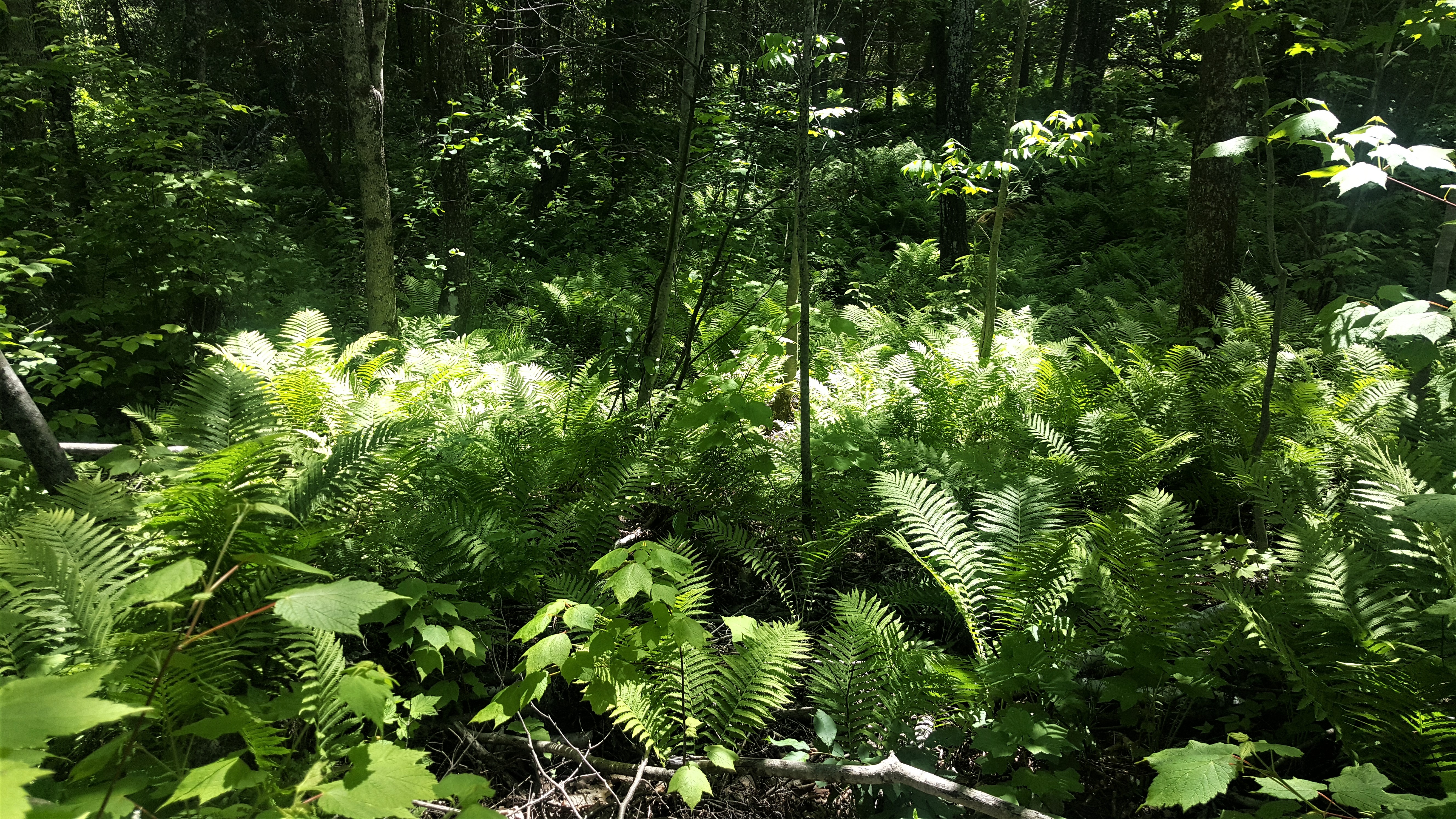

I took some photos from my last walk through the park. At 640 acres, the park is large enough that you’d never know you were in the middle of a city while walking its trails. Signs of civilization are few, even from the rocky knob that features a view of Lake Superior.

My photo walk was longer than usual – over an hour. I returned home feeling serene, indeed. Have you had your dose of nature today?

20190622_132014

When Classical Music Goes Bad

switched-on-bach

Image courtesy of Syracuse New Times.

Look what I found in the classical record collection that I inherited from my father.

During the two years since he died, I’ve been listening to my dad’s records whenever I exercise on my elliptical strider at home. It’s a way of getting healthier, figuring out which records I’d like to keep, and remembering him.

I’m about halfway through the stack and probably have another two years to go, unless I start exercising a whole lot more.

As a child, I used to hang out in my dad’s “radio room” when he played music after supper. I remember some of the albums vividly, others not so much.

I don’t recall this album (“Switched-on Bach” played on Moog synthesizers) and somehow don’t think it’s going to make my cut! Although all classical music is retro, this is just a little too retro-techno for me.

I wonder what possessed my father to purchase it? Maybe he thought it was cutting-edge at the time.

According to an article this spring in the Syracuse New Times, “Switched-on Bach” was released in 1968.  It “dropped like a bunker buster on the world of classical music, fostering incredulity and pushback from classical music purists, who considered such treatment to be blasphemous.”

Apparently, those objections were quickly quashed by enthusiasm from younger listeners who were otherwise not interested in classical music. The album vaulted to the top of the classical charts where it remained for 49 weeks. It was honored with three Grammies in 1970: Classical Album of the Year, Best Classical Performance by an Instrument Soloist, and Best Engineered Classical Album.

It even sold one million copies (!) – the first classical album to achieve that status.

*   *    *

Okay, I just listened to it. My judgement hereby is that the music does not stand the test of time despite all the awards it won.

Sorry dad, this one’s going in the rummage sale pile.