I received notification about new results recently from one of the DNA-testing services that I use. (Note: it is not the beleaguered 23&Me.) Through this service, I had my maternal (mitochondrial) DNA tested. One report offered is called “Notable Connections.” These are “connections based on direct DNA testing or deduced from testing of relatives and should be considered as fun facts.”
Included in my results were some Swedish and Danish royalty and some poor bronze-age blokes who were dug up in England when modern roads were built. One connection sent shivers through me, however. It was for an Egyptian mummy named Takabuti. Her remains are currently on display at the Ulster Museum in Belfast. We visited that museum this summer! We went there on our first day in Ireland.
I racked my brains trying to remember if we’d seen the mummy. We must have because it’s a major display. But I don’t think we paid her a lot of attention. I mean, I’ve seen King Tut’s mummy, and after that, everything else is small potatoes. I also recall a vague distaste at seeing a dead body on display. However, if I had known I was related to this mummy, you can bet I would’ve taken more notice!
Takabuti. Image courtesy of the Egypt Museum.
According to the DNA site, Takabuti and I shared a common ancestor 6,300 years ago. She died and was mummified about 2,600 years ago in Thebes, which is now known as Luxor. The striking thing about her is that she has red hair. It has lightened to a golden color now, due to light exposure since she’s been on display. DNA testing on the mummy showed that her mother was European – probably from the Canary Islands or Southern Iberia (Spain and Portugal). Red hair is not uncommon in that part of the world. It’s thought to come from the area’s indigenous peoples who were known as the Guanches. They were believed to have originated in North Africa, specifically the Berber people of the mainland African deserts.
Takabuti was the daughter of a priest of Ammon-Ra, the sun good and the major deity in Egypt (like Zeus was to the Greeks). As such, her family would have lived comfortably and enjoyed the benefits of high status. Later, Takabuti was the mistress of a great house, and held high social standing. Although she wasn’t royalty, she was mummified to expensive royal standards.
Tragically, Takabuti’s life was cut short between the ages of twenty and thirty. Recent scientific analysis revealed she met a violent end while running, killed by an axe blow to her upper left shoulder that was likely instantly fatal. She may have been trying to escape an assailant, possibly during a period of conflict – perhaps at the hands of an Assyrian soldier or someone from her own community. A magic poultice was packed into her wound to help it heal in the afterlife.
How did an Egyptian mummy get to Ireland? The DNA site says that following the Napoleonic Wars, during a period of active trade in Egyptian antiquities (known as Egyptomania), Takabuti was purchased in 1834 by Thomas Greg of Ballymenoch House, Holywood, County Down. (Perhaps, because of her red hair, he thought he was bringing her back to her homeland?) She made history as the first mummy to be unwrapped in Ireland, with this significant event taking place on January 27, 1835, at the Belfast Natural History Society’s museum. The unwrapping generated considerable scientific interest, particularly in Belfast, then the commercial center of the Irish linen industry, which took special note of her fine linen wrappings.
The cover of a book about Takabuti shows a reconstruction of her face and the face on her coffin.
We know so much about Takabuti because she was the subject of intense academic study. Her face has been reconstructed. A book has been written about her, and she’s also been the subject of a short story. I haven’t read that story yet, but plan to soon. (It’s in Matters of Life and Death by Irish/Scottish author Bernard MacLaverty. Yet another retirement project!)
I wonder if her unusual red hair contributed to her high status is Egypt. Although I don’t have red hair, my mother had it. But hers came from her Scottish/Irish ancestry. My relationship to the mummy is a fun link to history. You can bet if I ever visit Belfast again, I’ll stop into the Ulster Museum and pay distant, distant cousin Takabuti proper respects.
Growing up in the 1970s, I had plenty of opportunities to attend slumber parties. One of my favorite party places was the house of my best friend up the street, Jody. (She’s the one who had a horse.) She had all sorts of mysterious things at her house like a fortune-telling 8 ball. You could ask it a question, shake it, and the answer would appear through a dark, watery window in the bottom. I always thought the answers were a little lame, but it was fun to feel like I was receiving some magical advice. My friend’s family also had a Ouija Board that could supposedly be used to talk to the dead like in a séance.
One of my least favorite slumber party games was Bloody Mary. In this game, you go into the bathroom alone with a candle. You light the candle, turn out the lights, and look in the mirror. Say “Bloody Mary” three times slowly. It’s supposed to make Bloody Mary (whoever that is) appear. I didn’t like this game because I needed to be alone for it. I didn’t want to be alone if and when a creepy person appeared! I don’t recall ever doing the game myself, but I may have watched other people do it. (We bent the rules on being alone.) I don’t recall any specter appearing in the mirror, but we were scared out of our wits, which I guess was the whole point.
One of my favorite games was Light as a Feather, Stiff as a Board. We played the version where one person lays down (there’s another version where a person sits in a chair). Everyone would gather around under dim lights and placed two fingers from each hand (index fingers) underneath them. The goal was to lift the person off the ground. If we would try to lift the person at this point, it wouldn’t work because we’d be giggling and uncoordinated. But if we tried to lift as we recited the chant associated with the game, the person would rise as if levitating.
The first record of this game came from a British Naval administrator in 1665 who saw a group of French girls doing it. The leader of the game (usually the person at the head) says, “She’s looking ill.” And everyone repeats that in a call and response a few times. Then the leader says, “She’s looking worse,” in the same call and response. Then, “She’s dying,” and “She’s dead.”
This initial ritual is completed when everyone stacks their hands atop the liftee person’s forehead, alternating so that their hands are separated by the hands of another person. The leader then tells the group that they are opening the liftee’s body to supernatural influences and that outside spirits are entering the body to make it lighter.
After that, everyone puts their fingers back under the person. The leader chants, “Light as a feather, stiff as a board,” repeating the phrase many times. Then the group begins lifting the person slowly. Unlike the first lifting attempt, this one should happen easily and for only a few inches. Then the group lowers the person back to the ground.
The game was spooky, exciting, and mysterious. How could we all lift such a weight with only a few fingers? I did a little research and discovered the game is actually based on physics. The weight of the person is divided equally among each lifter. The stiffness of the lifted player also helps the trick work. As the lifters chant, the liftee will become stiff and focused. Their rigid, tense body makes the lifting easier. The supernatural references just make the game more fun.
As with many things in life, the ultimate secret to the “magic” of this game is the synchronization of the group. Many hands (in this case, fingers) working together makes for light work.
Did you ever play these games, or something like them?
Russ and I just finished watching the Hulu television series “Reservation Dogs.” It’s about four teens who live on the Muscogee reservation in Oklahoma. The gang’s dead friend’s wish was to travel to California and see the ocean, so the teens try to raise money for a commemorative trip any way they can, including via crime (i.e., stealing a flaming-hot potato chip truck). During their adventures, they are guided by spirits and tribal elders.
The three-season series is classified as a comedy, but it’s so much more than that. I think it’s the best thing currently on television. Even better than “Outlander.” (Gasp!! I can’t believe I just said that, but it’s true.) Although there are supernatural happenings, the series is the most real thing around. The acting is totally believable and the situations the young ones find themselves in could happen anywhere, but especially on a Native American reservation. I’ve spent a few weeks living on reservations, enough time to soak up the atmosphere, and recognize an accurate representation when I see one.
The funniest character is probably William “Spirit” Knifeman, a self-proclaimed warrior who died at the Battle of Little Big Horn, even though he didn’t actually fight. He had Custer in his sights but before he could do anything, his horse stepped in a gopher hole, fell, rolled over, and squashed him. He’s a spirit guide for one of the teens (Bear), and always shows up at the most embarrassing times and places, including bathrooms. In one such scene, Bear complains to Knifeman about his new construction job. He doesn’t know what he’s doing and nobody’s showing him anything. Knifeman says, “That’s the Native way of learning. We have this traditional pedagogy of ‘just get out there and learn, fu*cker.’”
I also noticed that, like the Ojibwe in Minnesota, the Muscogee point with their lips, not their fingers. That’s not something you’d ever see if the series was produced by non-Natives.
My favorite episode is called “This is Where the Plot Thickens” (Season 2, Episode 8). A smallish tribal cop named Big investigates several stolen shipments of catfish that never made it to a local restaurant. His ensuing adventure involves LSD, running around in the woods, bigfoot, and a “take back the land” cult of white supremists. The episode is a combination of movies like “The Wicker Man” and “Midsommar.” Besides its humor, what I appreciated is that it combined Natives and sci-fi/horror themes. That seldom happens and is something I know that Native authors are working to rectify. It also has bigfoot in it, which I love because I recently finished a story about him. Hint – you need to watch this episode all the way to the end to fully appreciate it.
Anyway, I love the humor in this series. It’s the humor of the oppressed. My Native acquaintances call it survival humor. Their experiences of cultural oppression have made them sympathetic to other oppressed cultures, as well, such as the Irish. When we were recently in Ireland, one of our tour guides told us that the Choctaw Nation donated money to help the Irish during the Great Famine. There’s even a statue in County Cork to honor the Choctaws.
“Shogun” is another Hulu series we recently watched. It’s about an Englishman who is one of the first to make it to Japan in 1600 during the start of a civil war there. I watched the original series years ago. Although the current actor who plays John Blackthorne is no Richard Chamberlain, he won me over by the end.
A cultural connection that struck me about this series was the similarity of the Japanese clan system and politics to that of the Scots. Alliances were formed and battles fought along the lines of the clans in a manner like the Scots. The clan that Blackthorne was taken in by was oppressed like the Scots were by the English.
I’m not sure why I’m paying attention to oppression across cultures. Maybe it’s due to the power shift occurring in the U.S. right now. Perhaps I’m looking for clues on how to survive it myself.
Remnants of the plane crash on Camel’s Hump Mountain in Vermont, which claimed the life of Marie’s Uncle David Potter in 1944. Image provided by Dave Pramann.
This story was originally published in “Minnesota Flyer” magazine as a two-part series in October and November, 2024.Offered here with permission.See part 1 here.
The Rescue
How could something like this happen to a plane piloted by someone as safety conscious as David Potter? What a waste of young, healthy men! All because of darkness, a cold front, and perhaps an interrupted sleep schedule.
Vermont Historian Brian Lindner thinks fatigue due to their training schedule is “entirely possible. Some or all of the crew could have been sleeping. Jimmy Wilson certainly was.” He also thinks it’s possible that one or more of the pilots fell asleep. “Think about it. You’ve got the drone of the engines, it’s total darkness, there’s nothing to see out the window. But we’ll never know.”
My Uncle David died that day. When the plane hit the mountain, the fuselage was catapulted into the air, falling to the ground and skidding several yards to a stop at the bottom of a steep embankment. Inside, Wilson was unconscious. Thanks to his position farther back in the plane and perhaps to his nest of parachutes, Wilson’s only injuries were a gash over his right eye and a broken right knee. He was the only survivor.
The blow to Wilson’s head rendered him semi-conscious for two days and left him unable to protect himself from the cold. As he lay in the shattered fuselage, temperatures hovered in the low twenties as the cold front continued to move in. The skies clouded and snow began to fall.
Initially, there was little concern when the plane didn’t return to Westover Field. It was authorized to land at any major airport along its route if it experienced difficulties. However, come dawn, all military bases and Civil Air Patrol units in northern New England and New York were notified that the bomber was missing.
Civil Air Patrol (CAP) units flew throughout the day but found nothing. Same thing the next day. Two days after the crash, the clouds finally lifted, and they spotted the wreckage 80 feet below the southeast corner of Camel’s Hump summit.
Map coordinates were issued shortly after the sighting, but it was soon discovered they did not match the original description and placed the plane on the wrong side of the mountain. Volunteer CAP wing Commander, Major William Mason made a hurried call to Westover Field to report his discovery of the error. A captain there bluntly told Mason that the Army knew what it was doing and that the CAP should consider itself off the case.
The Army searchers were all gathered on the wrong side of the mountain! Undeterred and desperate, Mason, who needed to tend to his factory, called his son, Peter, a high school senior and CAP cadet, asking him to gather several other cadets and organize a rescue attempt of their own.
Peter quickly assembled seven cadets, ranging from seventh to twelfth grade. Meanwhile, Mason searched for someone who could transport and guide the cadets up the mountain. Eventually, a local dentist and outdoorsman, Edwin Steele, was found. Slogging through six inches of new snow, he guided the cadets up the slopes.
As the sun began to set, the group neared the summit. They soon spotted two parachutes flapping in small trees near the base of the cliff below the summit. Crushed trees and wreckage were strewn everywhere; the smell of aviation fuel filled the cold air. The cadets struggled through the new snow and thick underbrush to pick their way through the crash site.
In the distance, they heard a faint call. They scrambled through brush down a steep embankment where they discovered Wilson sitting outside, propped up against the remains of the fuselage. In his hypothermic state, he had partially removed his heavy flight pants, opened his jacket, and taken off his gloves and boots.
The resourceful cadets wrapped Wilson in parachutes. To protect him from the wind, they made a lean-to from heavy canvas engine covers they found inside the wreckage, and saplings. They started a fire with the aid of an oxygen bottle from the plane. By this time, it was dark, and they were certain no one else had survived the crash. Between them, the rescuers only had one sandwich, and this they fed to Wilson.
Members of the 112th Army Air Force Base Unit feed Jimmy Wilson at the rescue basecamp moments after he was carried down Camel’s Hump. Credit: Silver Special Collections, University of Vermont.
The group spent the night on the mountain using the parachutes and engine covers for protection. One cadet bear-hugged Wilson to warm him. According to Lindner, “This act clearly saved the young airman’s life.”
At first light, Steele and two cadets hiked back down the mountain–they’d need more help to transport Wilson. As they neared the base of the trail, they met some of the Army rescuers who were on the right path, at last. The Army men headed up the mountain and once they reached Wilson, placed additional wrappings around him and dressed his wounds.
As the cadets, Army men, and civilian guides carried Wilson down the difficult trail, the remaining men gathered the fragmented remains of the dead, including David, and carried them down the mountain.
Aftermath
Wilson was loaded into an Army ambulance approximately 63 hours after the crash on a Wednesday afternoon. That evening, telegrams were sent to the families of the dead crewmen with the sad news. Although Wilson’s injuries were comparatively minor, he received severe frostbite, which required amputation of both his hands and feet. He was the first of two soldiers in World War II to undergo such a radical surgery.
Despite challenges and hooks for hands, Wilson later completed his education and became a successful attorney in Denver. Wilson visited David’s parents several times in Springfield and also dedicated a new flagpole at a Memorial Day ceremony at the city cemetery.
The cadets were instructed not to talk about the crash. As a result, rumors abounded in Waterbury and the rest of Vermont. Some thought it was a Nazi spy plane that had crashed. Others thought it was a cargo plane. Likewise, the crewmen’s families never got the whole story, only four telegrams informing them the plane was missing, then that it had been found, that their loved one was dead, and lastly, that his body was coming home.
Thanks to Lindner’s diligent research, we know more now. To read a story about how he became interested in the crash and for more information about the crew members, visit the Vermont Digger website.
My family visited Camel’s Hump in 1970 when I was six. We stayed in Waterbury with Dr. Steele and his wife. While I stayed at the Steeles’ watching television and eating M&Ms (which seemed like the ultimate in happy decadence for me at the time) the rest of my family hiked up the mountain guided by Steele.
I recall Steele as white-haired, old (but to a child everyone is old!) and kind. His wife was also very kind to me.
While she was on the mountain, my mother collected a few small parts of the plane. Back at home in Duluth, she strung them from pieces of wood to make a rather macabre mobile. It hung in my father’s ham radio room. Part of me could understand why she did it to honor David. As I aged, part of me began to think of it as a gruesome reminder.
HistorianBrian Linder has been fascinated by the Camel’s Hump crash since he encountered it as a boy in 1963. Image credit: Mark Bushnell
My mother and brothers returned to Waterbury in 2004 for a sixtieth anniversary commemoration event of the crash organized by Lindner. I had young children at home at the time and couldn’t travel. At a local church, more than a hundred relatives, friends, and interested citizens attended a dinner and evening presentation about the crash.
Three former CAP cadets (now in their seventies) were feted along with Wilson’s widow and their two adult children, a daughter of Ramasocky the copilot, and my family. Afterward, Lindner hiked up Camel’s Hump with my brother Dave.
Over the years, souvenir-hunters like my mother have taken pieces of the plane and its engines off the mountain. A college student extracted the star insignia from the plane and hung it in his dorm room, only to leave it behind when he moved on. The most visible reminders left of the plane now are the wings, which lie overgrown by trees and brush.
Uncle Dick
Dick worked on his father’s stockyards, specializing in feeding livestock for market. He left the farm in 1942 to work as a copilot with Northwest Airlines (which is now Delta Airlines), and later with the Chicago and Southern airlines out of New Orleans. He married Cleo Abbet, a Springfield woman, in 1943.
In fall of 1944 when David was at Westover Field, Dick appealed to take leave from his commercial piloting to enlist in the Naval Air Corps. His eyes were better than David’s, so he was able to enter the military more easily. Eventually, he trained at Corpus Christi, Texas.
Dick and his sister Lydia, 1977. Image credit: Dorothy Pramann
While researching this story, I noticed that David’s crash was on Dick’s birthday. I imagine that must have put a terrible damper on his celebrations for years. But perhaps it made him realize how precious life is and become more thankful. I don’t recall my family ever discussing this connection.
A few months after David’s crash, Dick was transferred to Alameda, California, and became a pilot in the naval air transport service in the Pacific. Cleo followed him to California and lived in Oakland. True to his goal to fly big planes, Dick ended up flying Douglas C-54 Skymasters for the Navy over the Pacific on noncombat missions like air-sea rescues. After the war, he returned to commercial piloting, eventually flying 747s when they were put into service in the 1970s.
Historian Lindner spent several days with Dick and Cleo in Springfield where he met family members and pursued more research on the crash. During that time, Dick mentioned that he only had one major incident while flying and this was when an engine died on his 747 on takeoff.
During Dick’s recounting of the incident, Lindner recalls thinking, “Dick was talking about his flying emergency and he just seemed so cool, calm, and collected. He’s telling me about it like it was next to nothing. So, quite frankly, I think he and David were very much alike.”
My cousin Ginger Beske, who met Dick more often than I did said he eventually soured on large planes and switched to smaller planes. “He didn’t want to be responsible for so many lives,” she said. Perhaps it was after this incident with the 747?
Dick flew for Delta Airlines for years out of Atlanta, Georgia. When he retired, he was one of their top pilots in terms of seniority. He died at the ripe age of 86, still married to Cleo and with several adopted children who gave him grandchildren and great-grandchildren.
Brother Dave Pramann
Although Dave’s swimming teacher said he was a natural, he never took to water like I did. He was drawn instead to the rush and freedom of air. What could draw someone into aviation when it killed his namesake?
Dave remembers Uncle Dick flying a charter plane into the airport in our hometown of Duluth, Minnesota, once when Dave was very young. “He let us up into the cockpit. Then when he left, he stuck his head out the window and waved goodbye. I thought that was the coolest thing ever.”
Dave estimates he might have been three years old. Afterward, whenever anyone asked him what he wanted to be when he grew up, he said, “A pilot. I knew I was destined to be a pilot, and that was from Uncle Dick and David.”
When I asked him if he always knew he was named after Uncle David, my brother said, “You know, Mom never actually came out and said I was named after her brother, but I figured it out pretty quick.”
When he was thirteen, our parents gave Dave his first flight as a birthday present. Dave said the 30-knot winds made it, “the bumpiest airplane ride I’ve ever been on!” His motion sickness was severe enough to last through the next day.
Dave Pramann, 13 years old, 1970. Image credit: Pramann Family photo
As an adult, Dave criticized the Cessna pilot for not paying more attention to him and his green pallor or being prepared for a passenger’s airsickness. “But he was probably a young guy looking to build hours,” Dave conceded.
The rocky flight didn’t deter him. “I was like, ‘I’m gonna learn to fly.’ Even some of the best pilots in the world like Chuck Yeager, who was the first guy to break the sound barrier in the world, got sick his first time in an airplane. Eventually, I got used to it and it’s not a factor for me anymore.”
Like his Uncle David before him, my brother also lacked perfect vision. The U.S. Air Force had raised its standards again and weren’t taking pilots with glasses. So, he decided to major in meteorology at the University of Wisconsin-Madison. That’s where he met his wife Mary. They ended up in Denver, where Dave worked 10-hour days making about $18,000 a year for a weather consulting company. He enjoyed it but also pursued his commercial instrument flight rating, thinking he’d try to get hired into commercial aviation, which didn’t have the strict vision standards. He was building up flight hours when air traffic controllers decided to strike in the 1980s.
“I knew the business because I was a pilot,” Dave said. “I flew out of tower-controlled airports regularly, so I knew what their job was. Plus, I saw an interview on Denver television about a couple of controllers. Each made $60,000 a year. I was like, ‘You know, for $60,000, I can put up with a lot of bad management like these controllers were complaining about!’”
He applied and did well on the aptitude test. Then he traveled to Oklahoma City for a pass-fail screening. He passed and was sent to the Minneapolis Airport. “I stayed there my whole career, which is really unusual for controllers,” Dave said.
Mary left her daycare supervisor job, and, pregnant with their son Travis, moved to Minneapolis. Later, they had another son named Tyler and a daughter, Rachael.
Dave Pramann in his element. Pramann Family photo
Although Dave took all his children flying, only Travis showed an interest. He was working on his pilot’s license when he also got hired by the FAA as an air traffic controller. He worked in Grand Rapids, Michigan, and then was hired at the Minneapolis Airport. He did not complete his pilot’s license, however.
Dave, now retired, said that Travis, “has a better knack for it than I did. I mean, every controller likes to think they’re the best, but I think Travis is at least as good as I was, and he’s calmer about it. So, he didn’t have quite as big an ego as I did.”
My First Experience with Flight
I am more into water than air. My hero was not Charles Lindbergh, but Jacques Cousteau, the undersea explorer I watched every Sunday afternoon on television. I swam competitively and I still canoe, sail, kayak, paddleboard–anything that will put me in or on water. I feel most at home in the tug and buoyancy of the lake or the sea–most like my true self.
In high school, when I had to select a poem to memorize, I chose “Sea Fever” by John Masefield, with lines like, “I must go down to the seas again, to the lonely sea and the sky/All I ask is a tall ship and a star to steer her by.” Dave would have chosen a poem like “High Flight,” with lines like “I have slipped the surly bonds of Earth.”
Like my brother Dave, my first flight was a bad experience. It occurred after fourth grade in 1973. My parents took Dave and me on a trip overseas to the U.K. and Europe. Our first leg of the journey was a flight from Duluth to Detroit. I recall not enjoying that first landing because it hurt my ears. As an adult, I was diagnosed with eustachian tube dysfunction. My ear tubes are very small, so it’s hard for me to equalize air pressure in them, especially on landings. Later, I found this to be true while scuba diving, too.
We landed in Detroit and had a layover before we left on the same plane to London. On our London flight, I was in a row with three seats. I sat next to the window, my mother was next to me, and then an elderly man who boarded in Detroit sat next to my mother. Dave and my father were seated elsewhere.
The flight across the Atlantic was uneventful. I recall being mesmerized by “cloud castles,” stacked cumulus clouds I could see out the window, formed from storms below. It felt like seeing heaven for the first time.
Once we got to London, we circled around Heathrow Airport for two hours before we could land. It could have been because of stormy weather or high air traffic volumes. If only we had landed right away, maybe my story would have been more pleasant.
As it was, the circling began to make me nauseous. Then the man seated by my mother started feeling ill, too. His face literally turned green, which I had never seen happen to anyone before. He began moaning and threw up into the airsickness bag.
My mother, alarmed by his condition, got out of her chair to seek help, leaving me alone with the sick man. That was more than I could handle. I plugged my ears and closed my eyes to escape the scene, like one of the proverbial three wise monkeys.
After what seemed an eternity, my mother returned with a doctor in tow. While the man was being attended, I kept my ears plugged and eyes closed. I don’t recall my mother returning to her seat. Maybe she stayed away to allow the doctor room to work. As the plane continued circling, my queasiness increased. I did not throw up, but by the end, wished that I would so I could feel better.
When we descended, my ears acted up again, adding pain to my nausea. Upon landing, I was extremely happy to see the ground. My moaning seatmate was carted off first. Freed from his proximity and on solid earth once more, I began to feel better.
My mother later learned that the man had a heart attack on the plane. He survived but did not have the European vacation he expected. He returned home directly after being released from the hospital.
We picked up our rented Dormobile (rather like a Volkswagen campervan) and drove to the campground where we had planned to stay for a few days while we explored the sights of London.
A few months before our trip, I had begun having some intestinal issues, which acted up while we were camping, perhaps from the stress of the flight. I don’t recall much except lots of bathroom visits (and being impressed that the toilet tank was hung on the wall far above the toilet).
After two nights, I was throwing up green bile and was barely conscious. I told my parents I thought I was dying. They called a doctor, who called for an ambulance. I was whisked away to Sydenham Children’s Hospital.
Our family Christmas photo, 1973. In front are Marie and her mother Dorothy, in back are brother Dave and father Howard. Pramann Family photo
I passed out in the ambulance. When I awoke in the hospital, I threw up. I remember my mom sitting outside the exam room, crying. I don’t remember anything else until I woke up after surgery, feeling much better. They had taken out my appendix and explored around the rest of my intestines, which made for a larger scar than usual. The doctor said my appendix probably didn’t need to be removed, but that my intestines were inflamed.
The pain was gone–that’s all I knew. I spent the next two weeks in the hospital, which wreaked havoc on my parent’s travel itinerary. But they had planned to travel for six weeks so our trip was able to get back on track once I recovered.
At our last campsite, my excitement to return to the familiarity of home overruled any worry I had about reboarding an airplane. Those flights all went well–no heart attacks, no endless circling, no appendicitis. Unlike Dave after his first flight, I had little desire to pursue an aviation career or to ever fly again! But I did my fair share of air travel later, mainly for work and pleasure trips.
Conclusion and Acknowledgements
This story was inspired by a trip I took to Chicago in the fall of 2023. True to my watery nature, I have spent most of my career working as a writer for a water research organization called Sea Grant. Every few years, the Sea Grant programs gather for a Great Lakes Sea Grant Network Conference where we share information and collaborate with each other.
The four-day event is capped by an evening awards banquet where outstanding staff and projects are recognized. During the banquet, I happened to sit next to John Brawley, a staff member for Lake Champlain Sea Grant, which has an office in Burlington, Vermont. I’d been to Burlington for a previous Great Lakes Sea Grant Network Conference and knew that Camel’s Hump is visible from town. During casual conversation, I mentioned to John that I had an uncle who died in a plane crash on Camel’s Hump.
This seemed to spark his interest, so I went into greater depth. As I talked, John’s gaze became more intent. Finally, he broke in saying, “I can’t believe it! My girlfriend and I climbed Camel’s Hump and saw that plane just last year.” He then showed me his cell phone photos of the plane’s wing surrounded by underbrush. He was flabbergasted to learn that I was related to the pilot in the crash. His attention made me feel almost like a celebrity. When I returned home and relayed the conversation to my relatives, I realized the crash story is pretty interesting. I’d always taken it for granted, and not every family has such a one to tell.
So, I decided to research the history of flight in my family. Speaking with my relatives and Brian Lindner, I came to understand better events from my childhood. Reading my Uncle David’s letters (provided by Lindner) brought him alive for me. I felt like I knew him better than many of my living relatives – only to lose him again as I read accounts of the crash.
Uncle David was buried in a sealed casket in the Springfield Cemetery where the wind carries the melodies of meadowlarks and wailing train whistles.
“Son of Lassie” was released in 1945, a year after David’s tragic death. I wonder if his parents and siblings watched it then. If so, did it offer comfort or dredge up more grief?
Inez ended up marrying Robert Collison, a Canadian logger. My mother kept in touch with her and my family traveled to Canada to visit her and Robert in Clearwater Station when I was three. I had no idea then that she was the former girlfriend or fiancée of my Uncle David. I just thought Inez and Robert were friends of my parents.
Marie in Clearwater Station, Canada, when her family visited the Collisons in 1966. Image credit: Dorothy Pramann
The Camel’s Hump incident became known as “Vermont’s most famous plane crash.” Every one of the men on that plane was eager to serve his country and had so much to give. We’ll never know what contributions they would have made. A plaque at the base of Camel’s Hump commemorates the crash and those who died in it.
I did not have as much information about my Uncle Dick. Because he lived on the other side of the United States from us, visits were few. I only recall seeing him a couple of times but have incorporated my impressions into this story along with those from others.
And, of course, the information provided by Brian Lindner was invaluable. We talked on the phone twice and he sent me copies of David’s photos, letters, and crew orders. I also interviewed my cousin Ginger Beske and brother Dave Pramann, along with internet research. Dave also found the weather information for the time period surrounding the Camel’s Hump crash.
My dearly departed mother, Dorothy (Potter) Pramann, provided her memories of growing up in Springfield through notes for a speech she gave at her high school class fiftieth reunion. She also had the foresight to save many newspaper articles about relatives and distributed copies to us.
I also appreciate the help of my writing group members, Linda Olson and Lacey Louwagie, for their keen editorial eyes. Although I use storytelling techniques in this work, all information is backed by facts or people’s recollections, and sometimes both things.
Grief settled over me for days while I wrote this, but I feel like it’s a necessary emotion and one that comes with the territory when working on such a story. If Uncle David were a ghost reading over my shoulder as I wrote, I like to think he’d be happy knowing that the love of flight lives on in at least one branch of our family– from the cornfields of Springfield, to a remote mountaintop in Vermont, and the runways of the Minneapolis Airport.
David Potter on leave from the RCAF at the Potter Stockyards in Springfield, Minnesota with a trusty dog by his side. Potter Family photo
David Potter (left) and Dick Potter stand by their Piper J-3 Cub. The woman is unknown.Potter Family photo.
I spent much of the first part of 2024 researching and writing a story about flight and how it came to my family. It’s a tale of inspiration and dreams, but also one of tragedy. This was originally published in “Minnesota Flyer” magazine as a two-part series in October and November, 2024.Offered here with permission.
My family’s history with flight began in the 1930s in the fields and pastures of southwestern Minnesota in the little town of Springfield. The town’s population was around two thousand, about the same as it is today. The fertile black soil encouraged farming. Dry winds blew off the prairie, carrying the songs of meadowlarks. The roads ran straight as sticks, forming squares across the landscape in compass directions. The flat land was good for bicycling. The Cottonwood River flowed on the town’s eastern edge. It offered swimming holes for skinny dipping and was lined with huge trees of its namesake that offer shade for picnics. Dust storms often wasted the fine soil. Hailstorms broke windows and ruined crops.
The town’s Methodist and Catholic churches huddled near each other, outnumbered and surrounded by three Lutheran churches. The Chicago and Eastern Railroad crossed the southeastern end of town, following the river. Hobos rode atop the cars and peered from open doors in the empties as the train blew its whistle at crossings.
On the outskirts of town in a field on Shady Lane Farm, the mail plane flew extra low, entertaining two boys who broke from their chores and ran below, waving. The pilot waved back and tipped his wings to the Potter boys, David Edgar and Reuben Dick. The boys were lean and gangly, born five years apart. Sixteen-year-old David was the second born to a family with five children. Eleven-year-old Reuben, who went by the name Dick, was fourth-born, with ears that stuck out in the unfortunate Potter way. Both boys tended the farm’s Hereford cattle and sheep.
As the eldest son, David had a quiet confidence borne of instructing his brother and sisters. His chin was prominent and his smile ready. His friends called him a “slow talker.” He was a methodical deep thinker, but not the most ambitious person, especially when it came to the farm. However, when something interested him, he was energized.
Dick was also quiet, always listening to others, often with a smile on his face. When he did speak, it was to offer a wry observation. My mother, Dorothy, was their youngest sister.
By this time, both boys were smitten with a love of flight, no doubt due to Charles Lindbergh and his aerial accomplishments. Lindbergh’s record-breaking transatlantic flight took place only a few years earlier in 1927, when David was thirteen and Dick was eight. Lindbergh grew up in Little Falls, Minnesota, only 150 miles north of Springfield.
After Lindbergh’s 1927 flight came the “Lindbergh boom,” when interest in aviation exploded. Publicity surrounding the flight boosted the aviation industry and made a skeptical public take air travel seriously. Within a year, a quarter of Americans (an estimated thirty million) personally saw Lindbergh and his plane, the Spirit of St. Louis. This included my father, Howard Pramann, who grew up in St. Cloud, Minnesota, a mere 30 miles south of Little Falls. He recalled running out into the street with his neighbors as Lindbergh flew over their town enroute to Little Falls. People even clambered on rooftops for a better look.
Over the remainder of 1927, applications for pilot’s licenses in the U.S. tripled, the number of licensed aircraft quadrupled, and U.S. airline passengers grew between 1926 and 1929 by 3,000% from 5,782 to 173,405.
Eventually, Dick took flying lessons. Perhaps expecting his father’s disapproval, he kept the lessons secret, sneaking to the nearby town of Redwood Falls on Sundays for instruction when he didn’t have to work the farm. After Dick gained his pilot’s license, he finally told his father. As my mother described it, a “big crisis” ensued once that happened. Reuben probably understood all too well that he would lose his youngest son off the farm and into the air.
He lost his oldest son, David, to flight, too. Probably spurred by Dick’s experience, David took flying lessons, although his weren’t secret. Soon, he and Dick turned the fields by their farm into runways. Their sisters recalled seeing them take off and land in their Piper J-3 Cub. They were the first ones in Springfield to own an airplane, bought with their portions of the farm income.
Brian Lindner.Image credit: Mark Bushnell
I don’t know if my mother ever flew with her brothers. I also don’t know if Reuben ever relented on his objections and flew with them. However, according to Brian Lindner, a personable and meticulous Vermont historian who interviewed both my mother and Uncle Dick for a project I’ll describe later, the young men cajoled their own mother to fly.
Lindner said, “She wouldn’t go. She says, I’m not going to walk that far out [into the field] to get into an airplane. And one day, the boys took the fencing down, brought the plane right up in front of the house, and said, ‘Okay, now you’re going up.’”
Eventually, an airport was built in Springfield, which David and Dick no doubt had a hand in. They built a small hangar for their plane (the airport’s first hangar) with a man named Fred Mottinger and flew on business trips to cattle auctions and meetings, as well as pleasure trips.
Besides Lindberg, Dick was probably also swayed by actor and pilot Jimmy Stewart and his 1942 army air force recruiting film, “Winning Your Wings.” In addition to outlining different options for enlistment, the movie revealed pay grades for various air force positions and portrayed the uniform wing pins as a way to attract women.
Whatever their motivations, the two brothers from Springfield loved to fly. Their joint goal was to fly the largest planes possible. David, especially, had finally found his passion, and it didn’t hurt that it was something that would get him off the farm.
Royal Canadian Air Force
When World War II began, David was twenty-four years old. He tried to enlist in the U.S. Air Corps but was rejected due to nearsightedness. Somehow, he learned that the Royal Canadian Air Force took pilots who wore glasses. David enlisted in 1941 and was based out of Port Hardy. He worked anti-submarine patrol around the Vancouver Island area, flying a Lockheed Ventura, a medium-sized twin engine bomber, over the North Pacific.
In letters home, David expressed his pleasure with these planes. He said they’re “not flying boats like I thought I would be on. Very happy about that. These planes have the most powerful engines built. When you open the throttles, things really start to happen!”
David (right) home on leave from the RCAF. Brother Dick is walking next to him, then his father Reuben. Potter Family photo.
He liked his situation, saying, “Don’t have to work very hard, in fact, it looks like this would be a very easy life.” The men got weekends off and were able to ride the streetcar 45 minutes into Vancouver for entertainment.
David described their station as “built amongst the tall pines, the runways are cut right through the trees. The good old Pacific is on one side of us with the mountains on the other. Can hear the surf pounding and the wind whistling through the pines. Sounds romantic, but don’t think it will be after a bit as we are really in the sticks.”
He chafed at receiving mail by boat only twice a week and the length of time it took for his hometown newspaper, The Springfield Advance-Press, to arrive. He was aware of censors reading his letters, but only once did information get cut from one. “Mail is about all we live for here, you know,” he said. Phone calls could only be made when he was in Vancouver and he couldn’t always get through to his parents.
Christmas 1943 was probably one of David’s first Christmases apart from his family. He missed them but seemed pleased with the presents he received by mail. He managed to hold off opening them until Christmas Eve. On Christmas Day, he participated in the tradition where officers and noncommissioned officers served a turkey dinner to the enlisted men. “It was a lot of fun for us and the men, I know, got a big kick out of it.”
Inez Copeland. Potter Family photo.
Over a New Year’s break, he “saw quite a lot of this little lady friend that I met some time ago in Vancouver. Think she’s really O.K…” This woman might have been his future fiancée, Inez Copeland. (There’s some question about whether she was his official fiancée or a serious girlfriend. Whichever the case, they clearly became devoted.)
Lindner said that David’s methodical personality was “exactly the type that they wanted for bomber pilots in World War II. Your fighter pilots were young, aggressive, break the rules, you know, party, have fun. In the bomber crew pilots, they were looking for somebody that was much more refined. In my mind, he fit right into that.” David’s RCAF crewmembers noted his safety-consciousness and calm demeanor.
While in Canada, David was made pilot officer (the equivalent of a U.S. lieutenant) and a flight instructor. He got serious with Inez. Like many other couples of the time, they probably swing danced to “Jersey Bounce” by Benny Goodman on their dates, falling deeply in love.
Image courtesy of Wikipedia
David also had a brush with Hollywood. Producers for the movie, “Son of Lassie,” were looking for a pilot to fly a bomber for the movie filmed in Canada. David fit the bill and performed most of the flying scenes. The movie starred Peter Lawford and June Lockhart. It follows the adventures of Lassie’s owner who heads off to fight the Nazis with Lassie’s puppy son Laddie in tow.
My mother made copies of the DVD for my brothers and me. When I watched it, I was disappointed that I couldn’t see my uncle. The closest to that came when his silhouette appears in the plane’s cockpit during one scene where Laddie jumps up on the bomber’s wing.
But David’s dream to fly for the U.S. remained. In 1944, when the U.S. was hurting for pilots, they began accepting pilots with glasses. David would finally be a flyboy for his own country.
U.S. Army Air Force
David began his tour in Richmond, Virginia, filling out paperwork, making a new will, and giving his father power of attorney. Then he moved to Camp Springs Army Air Field near Washington, D.C. When not on base, David was able to see sights like the capitol building, Pentagon, and Mount Vernon.
In one of his letters home he mentioned receiving “a lot of letters from Inez. She does a very nice job of letter writing, which really makes it O.K. for me.”
He was becoming accustomed to camp routines, “except for this getting up at six a.m. or earlier every morning! Sure miss the weekends off, too, that I had in the RCAF. The longer I’m in this outfit, the more I think of the air force up there [Canada], especially the way they treat their personnel. I guess, though, they have to be tougher here as everyone in this outfit seems to like to get away with all they possibly can.”
David returned from a visit to the Pentagon one afternoon, disgusted from learning he would not receive credit for his Canadian service, except for flying time. “Can’t wear the ribbons for serving up there and no promotions based on our record up there. I raised plenty of h—, but naturally, it didn’t do a bit of good,” he wrote home.
He was not impressed by the Pentagon’s internal layout, complaining that he needed “a navigator to find your way around! The guy who figured that one out must have been a little crazy.”
In August, he was moved to Westover Army Air Field in Chicopee, Massachusetts. He got “checked out” on the B-24 Liberator bomber and waited for a crew. In the meantime, he flew with the headquarters squadron as a copilot until he had enough experience to fly solo. Those flights took him to Ohio, New York City, and Bermuda. He loved the big planes, saying it was a “thrill to have those four engines out there.”
By the end of the month he was feeling more comfortable with the Liberator. That was, “until the instructor cut out the two engines on one side as I was coming in to land. I began grabbing everything I could and had my hands plenty full for a while. He caught me off guard that time, but believe me, he won’t again.”
In a letter to his sister Lydia, David complained that the army had been doing their best to make him an instructor but that he flatly refused. He wrote, “Makes me very mad, the idea that seems to prevail here–that being on a combat crew is an insult and anyone wanting it must be crazy. Have been offered so many jobs except what I want, that I think it must be a conspiracy.”
In late September he told Lydia that, “After much running around, digging through red tape, talking nice to high-ranking officers, and practically signing my life away, I got three days off this coming weekend!!!” He planned to take a six-hour train ride to visit his former RCAF crew in Montreal where they were stationed before leaving for combat in India. He envied them getting into the action. “Sure wish I was with them now,” he wrote.
“We plan to get together Sunday, and if I know the boys, it won’t be a tame one. I know what kind of a beating I’ll take from them as they always had some bright remarks to make about my being from the U.S. In all their letters since I left, they have given me hell for ‘deserting’ them!”
David in the U.S. Army Air Force, 1944. He was famous at Westover Field for being the only one who wore two sets of wings, one for the RCAF and one for the U.S. Potter Family photo.
After returning from Montreal, David was finally assigned his crew on October 7. This was not without controversy, however. Historian Lindner described it this way: “Just imagine you had this young crew. They’re like eighteen, nineteen, twenty years old. They’re high school kids. And they’re brought together as a bomber crew for over two weeks. They’ve got an eighteen-year-old pilot, his name was Eddie Stumpe. And they just bonded. These guys did everything together. And then boom, they wake up one morning and Eddie Stumpe has been removed as pilot. And he’s gone. And then they find this thirty-year-old guy is now their new pilot. Just imagine being that pilot. All of a sudden, I’ve got this crew that doesn’t know me, and they were in love with the first pilot.”
From interviews with one of David’s crew members, Lindner thinks Stumpe got replaced after he made several poor night landings. He was gone the morning after his last botched landing. Stumpe, however, saw things differently. He said to Lindner, “This guy comes down, and he gets in with all the officers, and he’s buddy-buddy with them, to the point where they let him take his pick of the best crew on the base, and he decided to take my crew, that’s the one he wanted, and that’s what forced me off.”
Squadron Commander Dick Hurd offered Lindner yet another viewpoint: “I got this eighteen-year-old-kid, very little experience. He’s a brand-new pilot. I’m responsible for every life on that bomber. And along comes this guy who’s thirty years old, highly experienced. He’s an instructor pilot. He’s got hundreds of hours of flying time. I said, who would you put on that crew? I take the least-experienced guy off and I put the most experienced guy on.”
As with most human situations, the truth is probably a blend of those three things. Nevertheless, when David became pilot, the crew quickly realized they had a winner. In a letter home, one crewmember said that after only two flights, “My new pilot is really good. He can really fly that thing. In fact, he is better than the instructors that we have flown with.” Another crewmember said David was a “hot rock,” which in World War II was a huge compliment. Lindner said that David was a patient man who inspired the confidence and respect of his crew.
David and his crew itched to get overseas where the action was. They worried that the war would be over before their training was completed.
For his birthday, David asked his parents for an alarm clock because it was impossible to get one on base. He anticipated needing to wake up at four a.m. once he got “on course.” That referred to his crew training course, which involved a regimented schedule of three days waking at various times and then repeating the cycle.
The alarm clock arrived quickly, much to David’s delight. He also began receiving the Springfield newspaper again and was excited by the news that the local baseball team won a championship.
He was still true to Inez. Responding to his father’s letter asking him about “eastern gals,” David responded, “I still think the western gals got it all over them. I mean, the far west one!”
He had a heavy schedule of flying and ground school and complained about not having spare time. When he did get it, he slept. David likened himself to an “old hen” with his crew, “trying to keep track of them, seeing that they get to all their classes and report for flying, etc. Have to listen to all their troubles, too!” Despite this, he said he was, “quite pleased with them all so far.”
Their training cycle began at six a.m. and ended at six p.m. The next day began at eight a.m. until three a.m. the next day. The third day began at noon and ended at eight-thirty p.m. Then it was lather, rinse, repeat! On top of this, David had ground school classes to make up that he missed from not being on the crew from the start.
Camel’s Hump Mountain
On October 15, 1944, the crew was nearing the end of their training runs before heading over to Europe. Much of the following account comes from Lindner, who has spent decades researching what happened next.
David and his crew of nine took off at night sometime before eleven p.m. from Westover Field. Their mission was to give the copilot, John Ramasocky, practice flying on instruments. According to Lindner, a canvas hood was snapped in place around Ramasocky’s side of the cockpit, which prevented him from seeing his surroundings.
The sky was clear when the heavy bomber roared down the runway and climbed to 8,000 feet. The plane headed toward Albany, New York, on the first leg of their flight plan, which called for them to fly over Albany, then Burlington, Vermont, turn southeast toward Manchester, New Hampshire, and then return to Westover Field in western Massachusetts.
Although the bomber was equipped to supply power for electrically heated flight suits, David and his crew were issued only fleece-lined leather suits. The electric flight suits were reserved for combat missions. This would play a role in the tragedy that was to come. For every thousand feet the plane climbed, cabin temperatures dropped about three degrees. The crew’s discomfort was compounded by cold air pouring in and around the drafty gun turrets.
At 11:42 p.m., the plane made its last radio contact with Westover Field. Shortly after, a drowsy Private First Class and top turret gunner James Wilson, age 19, decided to leave the crowded flight deck where the other crewmembers were huddled for warmth and conversation. Dropping through a trap door and climbing onto a catwalk through the bomb bay, he reached the rear hatch that lead up to the middle section of the bomber. Once there, he used the crew’s parachutes to form a bed and lay down on the floor. Within moments, he was dozing.
While Wilson dozed, the pilots apparently decided to employ an old aviation trick by bringing the plane down to 4,000 feet for the crew’s comfort. This raised the temperature of the cabin about 12 degrees. Although most of the mountains shown on their charts were below 2,400 feet, Camel’s Hump Mountain in Vermont, named for its dromedary-like peak, was clearly marked at 4,083 feet.
At about one-thirty a.m., the lights of Burlington appeared. The B-24 executed a right turn toward Manchester. Lieutenant Robert Geoffroy, the navigator, didn’t know that a strong autumn cold front was approaching with 50-knot south winds preceding it. Slowly, imperceptibly, the plane was pushed farther north than he realized. They were now flying directly at Camel’s Hump.
David and Ramasocky were seated at their controls. As Ramasocky studied the instruments under his hooded shield, David checked the plane’s altitude visually. But he couldn’t see much because they were over sparsely populated hills. The moon was new and well below the horizon. That, combined with safety blackouts, left Vermont in almost total darkness once they passed Burlington.
Flying at 190 mph, the bomber approached Camel’s Hump. For several hundred feet, it skimmed over bare rock and alpine tundra spruce. If someone wearing night vision goggles had been watching on the mountainside, they would’ve thought the plane was going to make it unscathed.
Nestled in his parachute bed, Wilson awoke to the sound of scraping, crunching, and tearing metal. He was bounced onto his feet and then knocked unconscious. A mere 18 inches of the plane’s left wingtip and the fragile bomb bay doors struck bare rock and the plane cartwheeled into the mountainside.
Because they couldn’t see the mountain, David and his crew probably had no idea what was happening. As the right wing clipped the tops of several small trees, did David have time to think of Inez, waiting for him back in British Columbia, or his beloved brother Dick who was training to be a Navy pilot in Texas, or his family back in Minnesota?
Then the wing and nose impacted the mountain head-on. The force ripped the tail assembly from the plane and flung it against a tree. The crew huddled in the nose would have died instantly as everything forward of the bomb bay disintegrated.
The instrument panel clock stopped. It was 1:58 a.m. on Monday morning, October 16, 1944.
I mentioned a few posts ago that during this trip to Scotland, I figured out that my ancestors were the Barons of Clackmannan and lived for many generations in a tower in the village of Clackmannan. Because we were the only ones who signed up for a group Outlander tour, Henry, our bekilted Tartan Viking Tour guide, had leeway to treat us to a side trip to this venerable ancestral tower.
For me, our visit to Clackmannan Tower was truly an unexpected highlight of our trip (thank you, Henry!). King’s Seat Hill upon which the tower is built had long been a strategic outpost. Before the brick tower, the English had built a wooden tower upon it. It commands a view of the Ochil Hills, a 25-mile range that stretches between the Firth of Tay and Stirling.
I’m not exactly clear on this, but I think the tower was built by King David Bruce (Robert the Bruce’s son and second king of Scotland) and was given to his kinsman, Sir Robert Bruce, who is my ancestor. It was inherited by Sir Robert’s son Thomas, who was the 1st Baron of Clackmannan. My ancestors were part of the tower’s history until the 6th Baron of Clackmannan. After that, my ancestry diverges through the baron’s daughter, Lady Christina Bruce. The tower was passed from father to son, and since she was a daughter, she left once she got married.
A wonderful post with useful links about the tower is available through Wee Walking Tours, including embedded videos.
The tower had another tower built onto it, forming an L shape. Originally, a mansion was attached to the tower, but that has been long gone now. In the 1700s, the Bruces who were the current Barons of Clackmannan built a coal mine underneath the tower. Their venture into coal proved a downfall for both the family and the tower. They became bankrupt and the ground underneath the tower became unstable, causing it to lean. The family had to sell the tower to pay their debts. After that, it fell into neglect.
The tower has been rebuilt and refortified a couple of times due to this subsidence. It’s not usually open for tours and is now owned by Historic Scotland. During our tour of Broomhall, Charles Bruce told us that one of the stone archways in an upper level of the tower collapsed and broke through the floors below it. It’s not habitable but does have electricity and a well with water. Historic Scotland has plans to increase public access to the tower in the coming years. I wish them luck!
Near the tower is a modern stone timeline that describes the geologic and glacial history of the area. A nostalgic and primitive tree swing hangs from one of the large trees on the hillside.
If I ever return to Scotland, I think it would be fun to stay in Clackmannanshire and learn more about the area where my ancestors lived for so many generations, and spend more time with the leaning tower.
Next up: our final day in Scotland and a fancy dinner in a mansion that we won’t soon forget!
The Royal Scots Greys Monument with Edinburgh Castle in the background.
In my previous post, Russ and I returned to Edinburgh, mystified and a bit sad after a failed attempt to tour Broomhall House, current home of the Family of Bruce, which we’d been planning for months.
We spent the next day in Edinburgh, seeing the sights including the Scottish National Gallery, which offered several floors of exquisite Scottish and international art from the Renaissance to the beginning of the 20th century. The building looks like an ancient Greek temple and was meant as a “temple to the arts.”
A street piper outside the Scottish National Gallery.
As we walked back to our hotel, we got a happy text from Tartan Viking Tours that our Broomhall tour was rescheduled for tomorrow! We ate lunch next door to our hotel, at Whighams Wine Cellars. I was excited to see they had Cullen skink soup on their menu. It was very good! We ended up eating two more meals there since the food was so good and the prices reasonable. In the afternoon, we meandered about a mile up the hill to Edinburgh Castle. We were an hour early for our reserved tour, so we wandered down the Royal Mile (along with thousands of other people) and shopped.
When it was finally tour time, great-grandfather to the 21st power, Robert the Bruce, greeted us in statue form as we crossed the drawbridge. (William Wallace is on the other side.) It’s crazy to think The Bruce strode some of the same walkways that we were now treading. Later, inside, we saw the ruins of a tower built by his son David. They were crumbling away underneath another building that had been constructed atop it. Stones may crumble, but the bloodline lives on in me and so many other people. I’ve seen estimates that 200 million people are related to Robert the Bruce. (BTW, I just sent off a DNA test kit so that I can confirm, or not, this relationship. The current info I have comes from some cousins.)
The Robert the Bruce statue at Edinburgh Castle.
The castle is built on an impressive volcanic plug, but I found the castle itself – especially the royal quarters – not that impressive when compared to Stirling Castle. The Great Hall was cool, though, with its huge fireplace, oak paneling and suits of armor. I was also a bit let down by the crown jewels. From the long line of people waiting to see them, I guess I expected something more than just a crown, scepter, and sword. They wouldn’t let us take photos, but thanks to the castle’s blog, I have one to share with you.
Edinburgh Castle Crown Jewels Room. Image courtesy of Honours of Scotland.
I wondered if part of the reason the castle wasn’t “all that” was because it was yet another casualty of Robert the Bruce’s campaign to destroy castles so that the English couldn’t use them later. (Read more about that on the castle blog here.)
Tour over, we shopped some more on the Royal Mile and returned to our hotel. That was enough for me for the day. I had developed a bad cold or allergies was feeling under the weather. However, the actual weather this day was the best yet – no rain for once!
The beginning of the Royal Mile outside of Edinburgh Castle.
Day 8 in Scotland found Russ and I with our kilted tour guide Calum on the way to Broomhall House. Our tour was finally going to happen!!
Broomhall House
Distant cousin Charles Bruce met us at the door. My first impression was that he must have an awesome skin care routine. His face positively glowed! After exchanging greetings, Calum said he was going to depart now. I looked at him, surprised. We had talked earlier about whether he’d be able to do the tour with us. He said he wanted to, as long as I was okay with it and Charles was okay with it. I was astute enough to notice that although Calum’s mouth was saying one thing, his eyes were pleading to let him stay. I said something like nonsense, we were fine with having Calum along for the tour as long as it was okay with Charles. Charles gave his permission and then led us through a room containing replicas of the “Elgin Marbles.” These are historic marble statues collected by a previous Lord Elgin (the 7th) from the Parthenon in Greece. In recent years, they caused quite a stir at being in the hands of the family, so they donated them to the British Museum in London.
Calum, our Tartan Viking Tour guide, in Limekiln.
We settled in the library and Charles poured us some tea. He asked a bit about my ancestral background and then began a lecture about Andrew Carnegie, the Scottish-American industrialist and philanthropist who was born nearby in Dunfermline. He showed us a ledger book that contained an IOU to the Bruce Family from the Carnegie Family. It’s not known whether this debt was ever paid since the Carnegies moved to America later. But Charles was rather tickled to think that a family destined to become one of the richest in America had been in debt to his family.
View from the Music Room into the Library. Image courtesy of Broomhall House.
As we discussed the books in the library, Charles off-handedly mentioned they had a first edition copy of “Waverly” by Sir Walter Scott. Later, I asked if I could see it. He couldn’t find it, but he did find a third edition of “Rob Roy.”
At one point, he opened a book that contained an old map. Me, with my cold and my dust allergies, immediately began a mortifying coughing fit. Charles, the dear man, ran out of the room to find me some water. In the meantime, I thought to pour myself more tea. By the time he returned, my fit had subsided, thankfully.
The Music Room in Broomhall. Image courtesy of Broomhall House.
Our next stop was the Music Room, which contained the original plans for Broomhall House. It was originally supposed to have marble columns on the front, but the family ran out of funds by that point. The columns, which were already cut, were added to a different building elsewhere. Charles also talked about the nearby town of Limekiln and how the citizens there made the best mortar (plaster) for building. It’s the same mortar that was used by the Scottish builders who worked on the White House in the U.S. Limekiln no longer has a lime works, but a nearby town does.
Limekiln, Scotland. Home of the mortar that holds the U.S. White House together!
On our way into the dining room, we passed a lighted cabinet that contained one of the plaster casts of Robert the Bruce’s skull and his claymore sword, which has been passed down in the family through the generations. I felt compelled to stand in front of it for a few moments and pay my respects.
The dining room sported a long table that Charles said was given as a wedding present. Family members each bought a chair that line the table, and he said they are very uncomfortable! There was also an impressive Delft tile fireplace with a mantle made from a bed that Queen Anne of Denmark slept in. Charles said his grandfather found the bed in pieces in an antique shop. There weren’t enough pieces to make it back into a bed, so he had them crafted into the mantle instead.
The Broomhall Dining Room and fireplace, decorated for the holidays. Image courtesy of Broomhall House.
On the table were many silver pieces, some oriental-looking. One of Charles’s ancestors was ambassador to Turkey and perhaps picked them up in his travels. The dining room also sported a painting of Catherine Bruce of Clackmannan. She was the last Bruce to live at the mansion and tower in Clackmannan and was a memorable character. She and her husband were Jacobites. She is known for unofficially knighting poet Robert Burns with the very sword I saw in the cabinet. She also has a contra dancing reel named after her.
Catherine Bruce of Clackmannan, the painting that hangs in Broomhall House. Image courtesy of Wikipedia.
Our last stop was a room that had a large, tattered Union Jack flag hanging from the ceiling. Charles said the flag had been flying at the house in the 1940s when three Nazi planes attacked. Charles’s father was ushered to the basement, but his grandfather grabbed a gun and went outside to shoot the planes! Later, at least one of the planes was shot down and it contained some bullet holes that might have been made by his grandfather. Charles showed us newspaper accounts of the adventure.
Our tour was only supposed to last for two hours but a fast 2-1/2 hours had gone past. As we began parting words, I thought to grab my genealogy list from my purse. I asked Charles if we could figure out where our lines diverged. He led me to a large book that contained a family chart. As near as I could tell with a quick look, our paths diverged after the 6th Baron of Clackmannan, David Bruce, in the late 1400s, which was about 15 generations ago.
Charles said he’d never had anyone come so prepared to discuss genealogy before. I was excited to see that the information Charles had gibed with what I had. I just laughed at his comment but inside I was thinking, “You have no idea!” I was glad for the time that my broken ankle gave me to bone up on the family tree. (Ha ha.) By now, my ankle had healed enough that I didn’t need to use hiking pole anymore. I was glad I didn’t have that thing clunking around in this fine home.
Charles gave me permission to blog about our visit; however, the Bruces don’t allow photos to be taken in the house. The ones accompanying this post are from the Broomhall website. We did take some shots of all of us on the steps of the house, thanks to Calum. I was tickled to notice that both Russ and Charles were wearing the same seersucker shirt.
Me, Charles and Russ after our tour.
I was so happy the tour came to pass. It truly was a once-in-a-lifetime thing. As Calum later commented, “That was posh!” And it was worth every penny and all the angst. In fact, the angst made me appreciate it even more.
Next up: An Outlander Tour.
If you enjoy my blog, you’ll love my book! Meander North showcases 51 of the best stories from this blog about my quirky life in northern Minnesota and my writerly pursuits. It earned a silver Midwest Book Award for nature writing and was published by Nodin Press in Minneapolis. It is available for $19.95 through their distributor at this link.
I meandered down to Savannah for a work trip last month. I’d visited the city once before, but that was a long time ago, and I didn’t stay long. I must say I enjoyed spending four days in this southern gothic berg, even though most of the time I was in an air-conditioned hotel listening to presentations.
When I did get outdoors, I loved walking along the Savannah River down historic cobblestone streets. Live oaks draped with Spanish moss lined the route and historical sites seemed to emerge around every corner.
One morning, I managed to take a guided trolley tour around the city. It was one of those tours where you can hop on and off to explore the sights more closely. The trollies run every 20 minutes, which makes exploring very convenient. (Note: There are two trolley companies, so make sure you’re at the correct stop to board!)
I’d heard that Forsyth Park was picturesque, so I hopped off there and meandered around. The park offers wide sidewalks, those wonderful live oaks, and a large fountain. Near the fountain, a sidewalk trumpeter played a mellow tune. Even so, children walking by danced and hopped around to the music.
For the hungry, there’s a restaurant (Collins Quarter) in the park that offers takeout and sit-down dinners. People were lounging outside, dining under umbrellas on the patio of the Greek Revival building. I wasn’t hungry but didn’t want to pass up such a quaint place, so I ordered an iced spiced lavender mocha (decaf) from their takeout window. It was divine! The drink contained espresso, Condor chocolate, cinnamon, ginger, nutmeg, and lavender. I would rate it as one of the best mochas I’ve ever had. I sipped this purple cinnamon flower elixir as I walked to the trolley stop. It made the short wait more enjoyable.
The fountain in Forsyth Park.
Besides the mocha, another thing that impressed me about Savannah was the way they remember the different ethnic groups that helped found the city. About a tenth of the original settlers were Irish, so a Celtic cross stood in the park by my hotel. On the trolley ride, the driver pointed out a marker honoring Scottish Highlanders. Since I was just in Ireland and Scotland, this warmed the cockles of my heart and made me feel at home.
Once I was back near my hotel it was lunchtime. I decided to check out The Pirate’s House Restaurant. The building was first opened in 1753 as an inn for seafarers and then, as its website says, it “fast became a meeting place for pirates and sailors from the Seven Seas.” The building fell into disuse after World War II, but has been restored and is now considered a house museum.
I ordered the soup, salad, and sandwich, which featured she crab soup and a chicken salad croissant. Delish! As I ate, I realized that the building, with its uneven floors and clapboard siding, had a familiar feel – like I’d been there before. As I read about the restaurant’s history on my placemat, it struck me. I’d imagined this place while reading the book, “Treasure Island,” by Robert Louis Stevenson! Stevenson had visited Savannah and the house was thought to be his inspiration for the inn where Captain Flint died, uttering his last words: “Darby M’Graw, fetch aft the rum.”
The Sapelo Island National Estuarine Research Reserve Visitor Center on the mainland.
The next day was field trip day for my conference. I had selected a trip to Sapelo Island off the Georgia coast. The island is a National Estuarine Research Reserve, part of the same national network dedicated to environmental research, education, and stewardship that the coworkers in my office back home work for. As you may recall, I’m an isleophile (I love islands!), so that, combined with the whole Reserve thing, is why I chose this particular field trip.
Not just anyone can visit the island. No roads lead to it—you have to take a ferry. Also, you need to be invited by the Reserve or one of the residents of the small island community of Hog Hammock. Many of the residents in Hog Hammock are Gullah—descendants of former slaves with their own unique culture.
Gullah ring shouters.
A few days earlier, our conference had kicked off with a stirring performance by Gullah ring shouters. They shuffled in a counterclockwise circle while singing, dancing, clapping, and stomping. Ring shouting is an African tradition that the slaves brought with them and is still part of the Gullah worship services. Hog Hammock is one of the last remaining Gullah communities in the U.S., and is under threat due to land development and zoning.
We boarded the ferry and traveled through the salt marshes to the island, where a flock of terns greeted us, sitting on the dock railings. Our first stop was the Reserve office where one of their naturalists oriented us to the island. Then we traipsed outdoors for a service project. The thirty of us weeded a native plant garden and transplanted live oaks into larger pots. The oaks were being grown to help rehab a former airstrip on the island. The island used to be owned by tobacco magnate, R. J. Reynolds. He built a mansion there (which sports a bowling alley and tennis courts and is now available for rent to large groups), a dairy barn and outbuildings. He wanted his compound on the island to be self-sufficient.
After the trees were all transplanted, we headed to the dock to collect some tiny salt marsh critters to bring back to the office lab and look at under microscopes. We found crabs, small fish, and barnacles.
A beach on Sapelo Island. I loved how natural it was.
After eating lunch under a shelter at the beach, our next stop was the University of Georgia Marine Research Institute. After Reynolds died, his widow donated the dairy barn compound to the university for that purpose. Students spend the summer on the island conducting research projects, and we saw several in progress.
The marine research institute on Sapelo Island.
A film screening studio is one surprising thing that Mr. Reynolds built into the dairy barn. Apparently, he had many friends in Hollywood who would fly out to the island to screen movies. He even had two extra-wide chairs built to accommodate his heftier movie mogul friends. We sat in the room and watched a movie about the research institute. But I must admit I was distracted by wondering if any famous movies were screened in that remote barn.
The turkey fountain on Sapelo Island.
Another surprising decorative feature at the institute was an outdoor fountain that features cement turkeys. Yes, you heard me, turkeys. Why? Conflicting stories abound. Some say it was R. J. Reynold’s idea. Others say it was his wife’s idea. It’s certainly not something you see every day, especially at a marine institute. When I first noticed the fountain from a distance, I assumed the turkeys, with their fanned-out tails, were large scallops or oysters. Huh.
Our last stop was the Sapelo Island Light Station. But on our way, we drove through Hog Hammock and were able to see where the ring shouter performers lived. The homes are very modest but some Gullah are selling their land to mainlanders who want to build larger homes, which would drive up property taxes.
The lighthouse is a red and white striped affair that rises 80 feet into the saltmarsh air. A tiny museum in a building alongside it offers bits of history and memorabilia. Others on our tour climbed the tower for the view from the top. I opted out. This northern lady was pretty sapped by the southern heat by then. Climbing a spiral staircase in a tower without air conditioning just didn’t appeal to me at that point.
Sapelo Island Light Station.
Then it was back to the ferry for us and a long bus ride back to Savannah. I felt privileged to have the opportunity for this special trip to the island and to learn more about Georgia’s environment and culture. It was fun to give back a bit, too, by transplanting those baby live oaks.
Savannah’s “Waving Girl” statue at night, waving hello (or is it goodbye?) to my blog readers and ships that pass on the Savannah River.
Newgrange seen in the distance from the banks of the River Boyne.
Surprises and mystery lay in wait for us on our final day in Ireland. We took a long cab ride from Dublin to the World Heritage Site of Newgrange, also known in Gaelic as Brú na Bóinne. Newgrange is like the Stonehenge of Ireland. It’s actually older than Stonehenge (and the Egyptian pyramids) and is likewise one of those mysterious Neolithic sites where during the Solstice the sun shines through the stone doorway and lights up the interior. Never having been to Stonehenge (yet), this version was a must-see for our trip.
Surprise No. 1 had come a few weeks before when we made reservations for a tour of the inner chamber at Newgrange. I had thought there was only one passage tomb mound at the site, but discovered there are two other large ones (Knowth and Dowth), plus standing stones and henges. We chose the main tour option, which includes entrance to the visitor center, a guided tour of the Knowth mound, and access to the chamber at Newgrange.
The visitor center does a great job of interpreting the site and it has a gift shop, which we appreciated more after our tour and learning about the significance of the symbols on the passage tombs. The shop sells jewelry and other things with those designs on them.
The River Boyne
We spent about 45 minutes in the visitor center before the start of our tour. Our tour began with a walk across the fabled River Boyne to a bus stop. I was excited to see the river in person. Our former minister, who was of Irish descent, often referred to the river in his tales of the “salmon of knowledge” from his trip to Ireland. Crossing the river on a small bridge, I was struck by the sheer lushness of the landscape and all the life that the river brings to it. Other than for some nearby farms, the area is largely undeveloped. It’s like an Irish Garden of Eden! I could imagine what it must have looked like in those Neolithic days (3200 BC).
After waiting at the bus stop with two dozen other people, our bus arrived. We boarded and rode through narrow rural Irish roads to the first stop at Knowth. It featured a large mound surrounded by 17 smaller mounds. Although no tours of the interior of the large mound are offered, a stairway is cut into its side, and we could climb atop it.
The stairway to the top of Knowth mound.
But first, we walked around the mound, admiring the largest assemblage of megalithic art in Europe. Designs were hand-carved (of course) into the stone. Unlike the main mound of Newgrange, every stone at Knowth seemed to be carved. They’re called kerbstones and there are 127 of them. Most interesting to me was the Mirror Stone, which sports two U shaped carvings. When the sun shines on them during the equinoxes, the shapes are mirrored below the originals. Some theories suggest they represent crescent moons. So cool!
The Mirror Stone, Knowth.
The tour guides didn’t come right out and say it, but I learned that these mounds are like human-made wombs. Knowth features two independent stone slab passages built along east and west lines. The passages were covered with layers of soil and stone. They end at cruciform chambers—think the end of a cross or a uterus and ovaries. Cremated remains of the ruling class were placed in these side chambers, along with bones.
Surprise No.2 was that the kerbstones are also carved on the inside—the sides that faces the mound. Our tour guide said this was so the dead could “see” the carvings also, but other things I’ve read suggest the stones were already carved elsewhere and were just reused for the mound. I prefer the first explanation. The huge stones were transported from surrounding areas by boat, or they were pulled on ox hides over the river ice.
The view atop the mound was amazing! This area is steeped in so much lore. If you ever go on the tour, interpretive signs atop the mound will describe the sites you are seeing. During the Middle Ages, a royal residence was built on the mound, but it’s no longer there.
View of the wood henge from atop Knowth mound.
Close to the Knowth mound and off to one side is a wooden henge. Surprise 3 to me was that there used to be such things. I thought all henges were built of stone. The original henge was made of oak trees, but the modern recreation features spruce tree trunks. Our guide said that when the site was used for rituals, tables were in the middle of the henge sheltered by a tarp. The bodies of the dead were laid on the tables for decomposition, I assume before they were moved inside the mound. The guide also said that the remains or cremains of 200 people have been found in the mounds and that Knowth mound was used as a giant refrigerator. Nine “sutrains” — things like little root cellars—were dug into the sides of it for food storage.
After our tour, we boarded the bus for the short drive to the Newgrange mound. It’s the largest mound in the area and is thought to have taken many years to build. Who built it? Our guide said that DNA testing on the remains in the mound shows a relationship most closely to people of Sardinian descent. Surprise 4 is that these people weren’t the ancient Irish! I’m sure they became the ancient Irish as they had families here, but huh. I wonder if that’s where the “dark Irish” come from?
Newgrange mound
During the time the Sardinians came to Ireland, the culture was changing from hunter-gatherer to farming. It would make sense that knowing the cycles and location of the sun would be important to farmers. Perhaps the Sardinians were ousted from their land in a royal feud or something. They were obviously highly intelligent and became a ruling class in their new land.
A large oblong stone lays on the ground at the entrance to the Newgrange chamber. It features at least spiral designs, which are thought to represent different life stages: birth, death, rebirth; or birth, adulthood, and old age.
The spiral stone and the entrance to Newgrange.
The guides warned us that the stone chamber is very narrow and low, and that larger people might not be able to make it all the way inside to the end chambers. We entered single file. Russ said that a couple people on our tour did have to turn back because they couldn’t fit. We made it to the end, however, and were treated to the sights of more spiral stones and basin stones that used to hold the bones and cremains.
Once we were all gathered, our guide turned off the lights. Another guide outside shined a light to simulate the sun during the Solstice so we could see what the chamber looked like on its banner day. A hush fell over us and I’m sure I’m not the only one who was awestruck.
Once the lights came back on the spell was broken. If you are a person of average dimensions, I highly recommend the chamber tour! Emerging from the chamber did feel like a kind of rebirth through time and history. We wandered off into daylight, returning to the modern world.
Our second-to-last day in Ireland, we bused to the city center and visited EPIC, the Emigration Museum. I never discovered just what EPIC stands for, but the experience truly was extensive in scope. There are walk-through exhibits on famous Irish people, personal stories about why people left for other countries (usually Canada, America, and Australia), what their emigration experience was like, and how they felt about leaving their homeland. People had many reasons for leaving including famine, economics, and conflicts.
The current population of Ireland is about 5 million, but it’s estimated (on Wikipedia) that 10 million people have emigrated and 50-80 million people around the world have Irish forebears. This is the largest amount for any one country in the world.
As mentioned in a previous post, Russ’s family were tax collectors and most likely flax farmers. They emigrated to the U.S. to reside in Connecticut and worked in silk and velvet factories. Perhaps their move was for economic reasons. Also, other relatives had already emigrated there.
The Famine Memorial Statues, Dublin
After leaving the museum, we walked to the Cobblestone Pub, which had been recommended to us by several friends for its authentic ambiance and live music. Along the way, we passed the famine memorial statues, which commemorate when more than one million Irish people (half the population at the time) died of starvation during 1845-1849. The famine was due to a potato blight, but also because too much of their food was being exported to England. The haunting, skeletal figures are shown clutching their meager possessions on their way to a ship to leave the country.
Even the dog was hungry….
The Cobblestone Pub doesn’t look like much from the outside, but don’t let that fool you. Four musicians were playing in the front alcove as we entered. We found seats at the bar. They don’t serve food, but of course, there’s Guinness and hard cider, of which we partook. A few patrons stood in the entry, blissing out on the music, drinks in hand. Previously, we had visited the famous Temple Bar, but bailed due to the crowds and noise. The Cobblestone experience was much more to our liking.
Afterward, we visited a nearby Mediterranean café (The Oasis) for lunch (very good!) Sated, we walked back to the city center to catch a bus to our hotel. We felt comfortable enough with knowing our route to sit on the upper deck this time, and we called it a day.
Next up: Our final day in Ireland finds us at Newgrange, a series of Neolithic burial mounds.
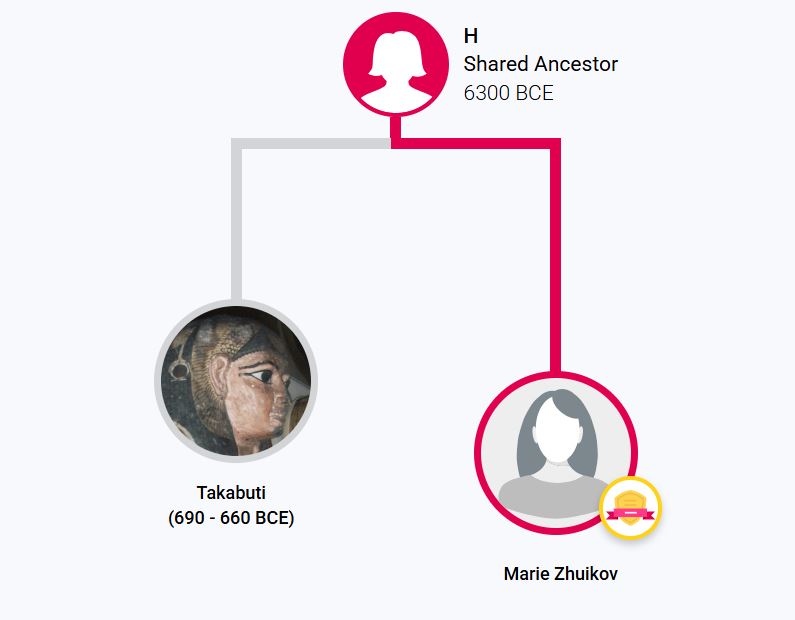
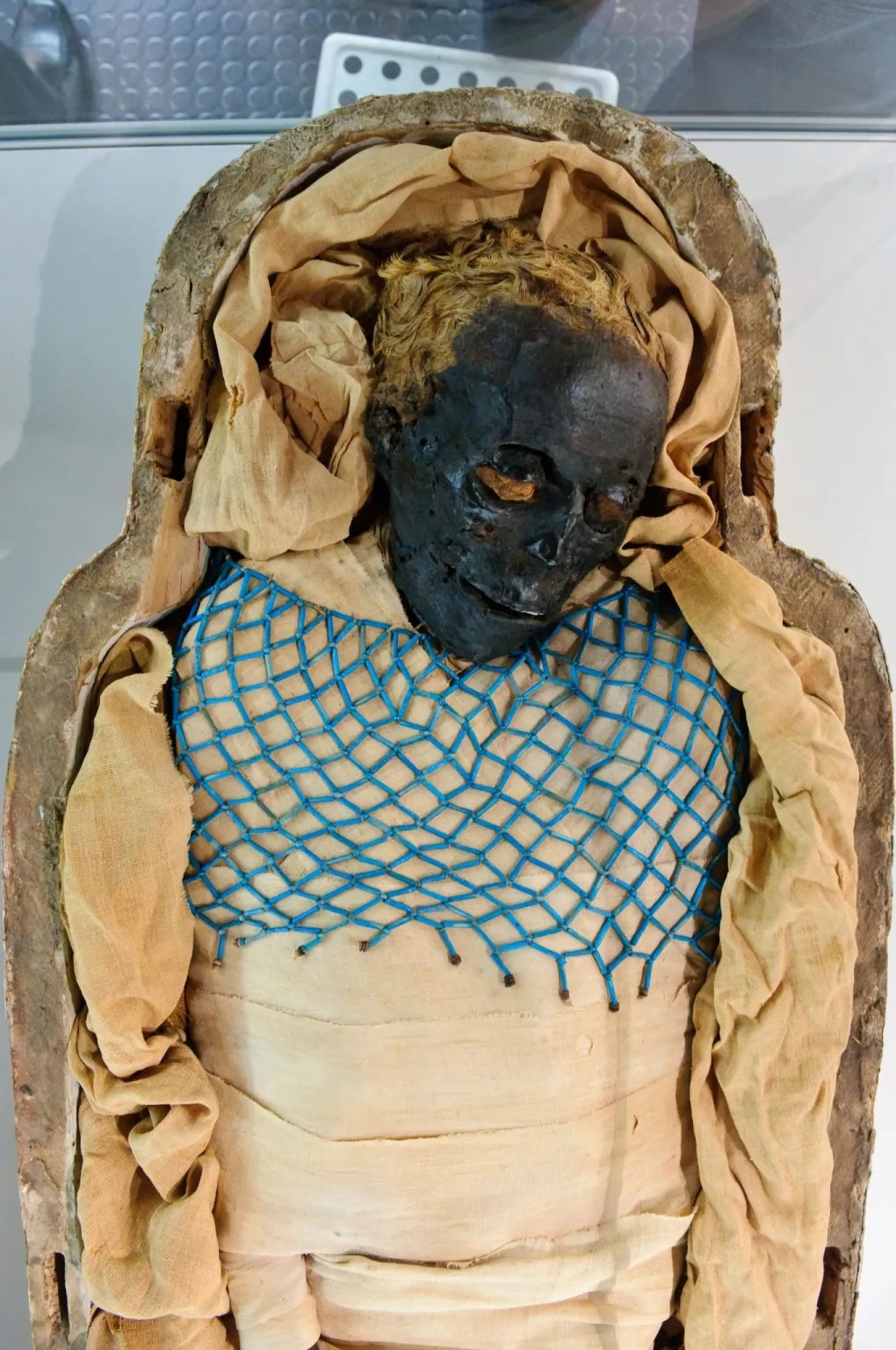
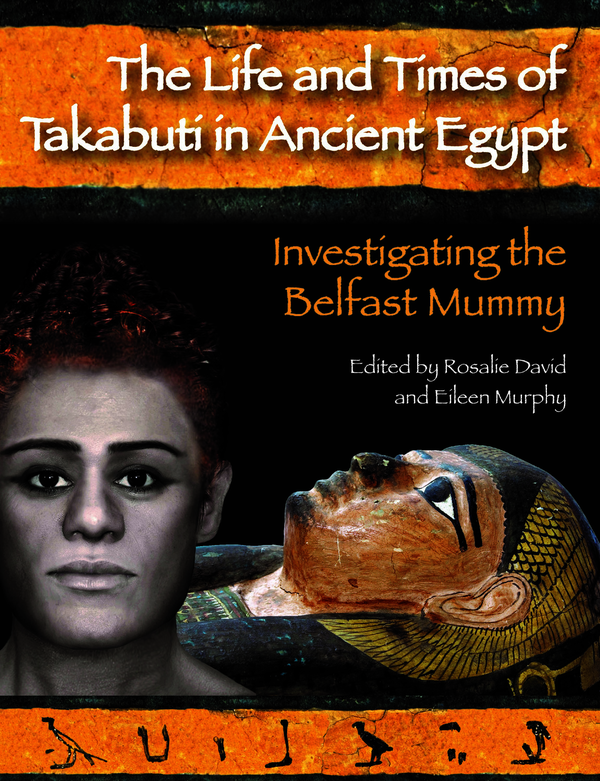
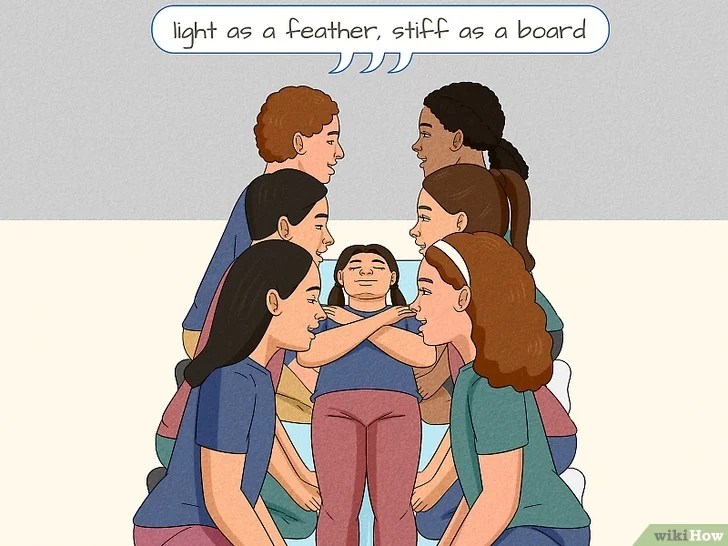
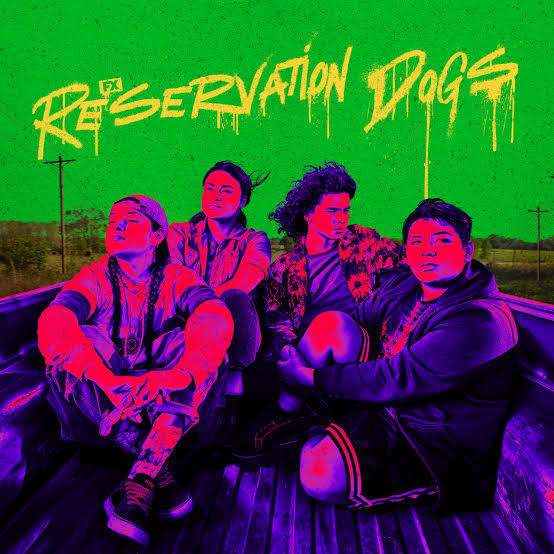

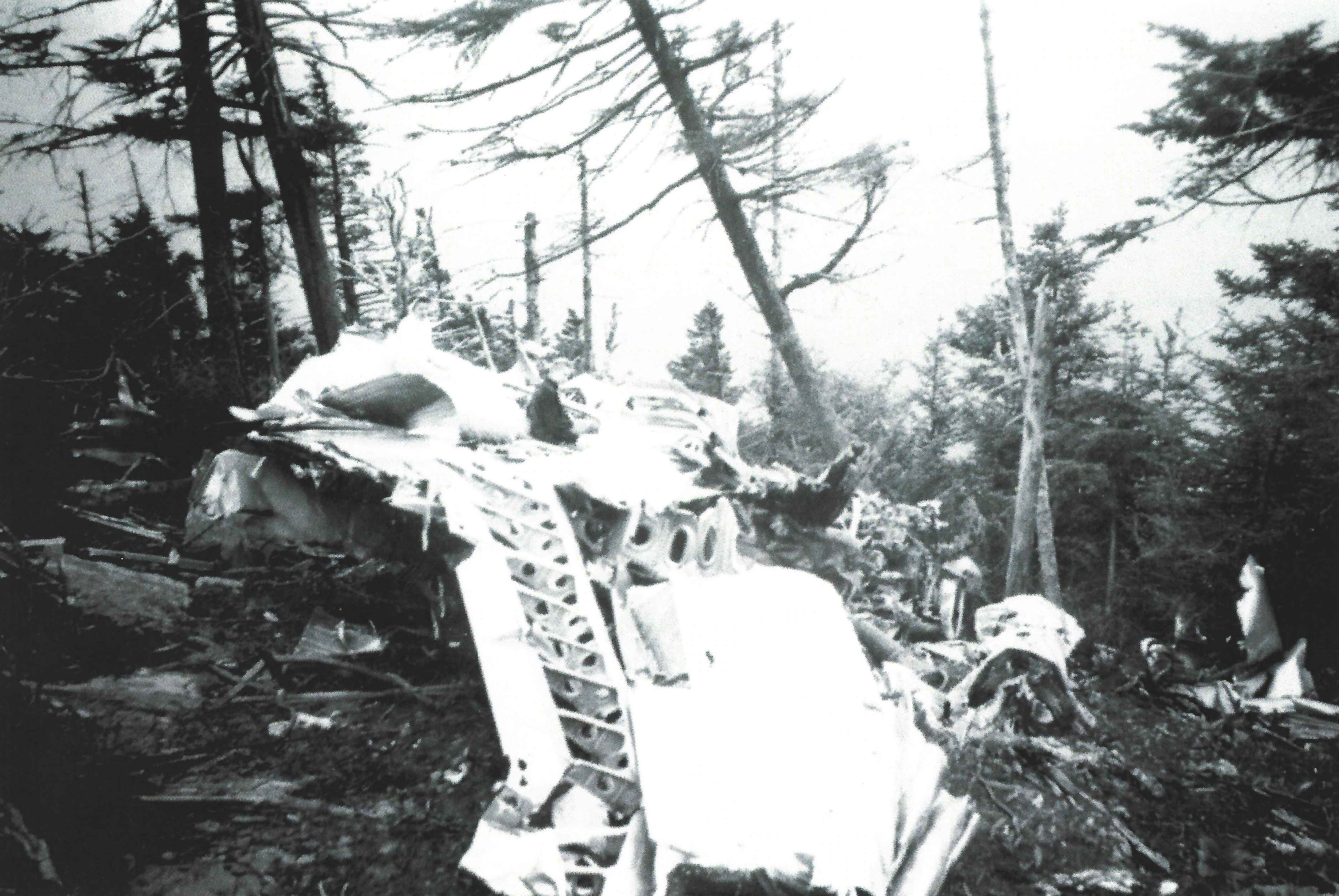
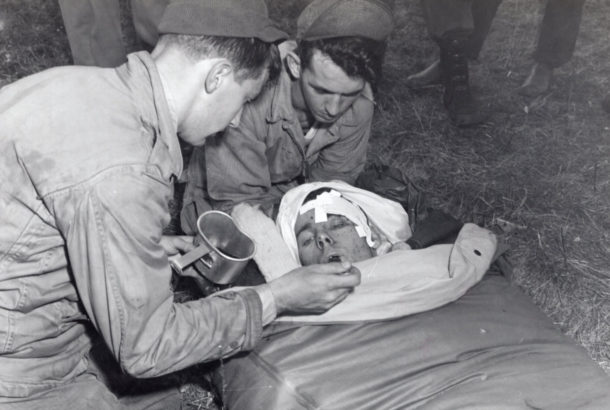
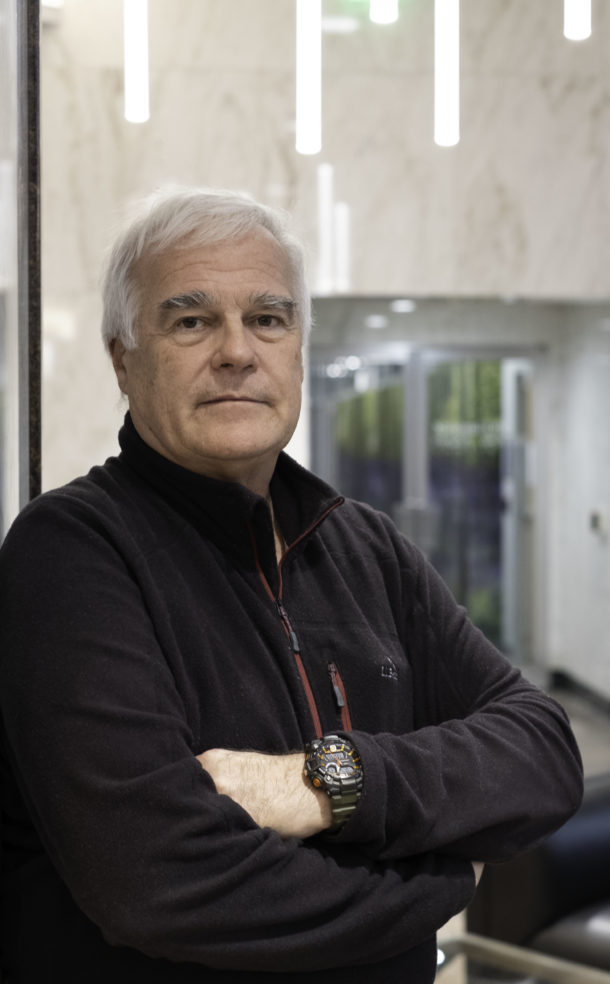
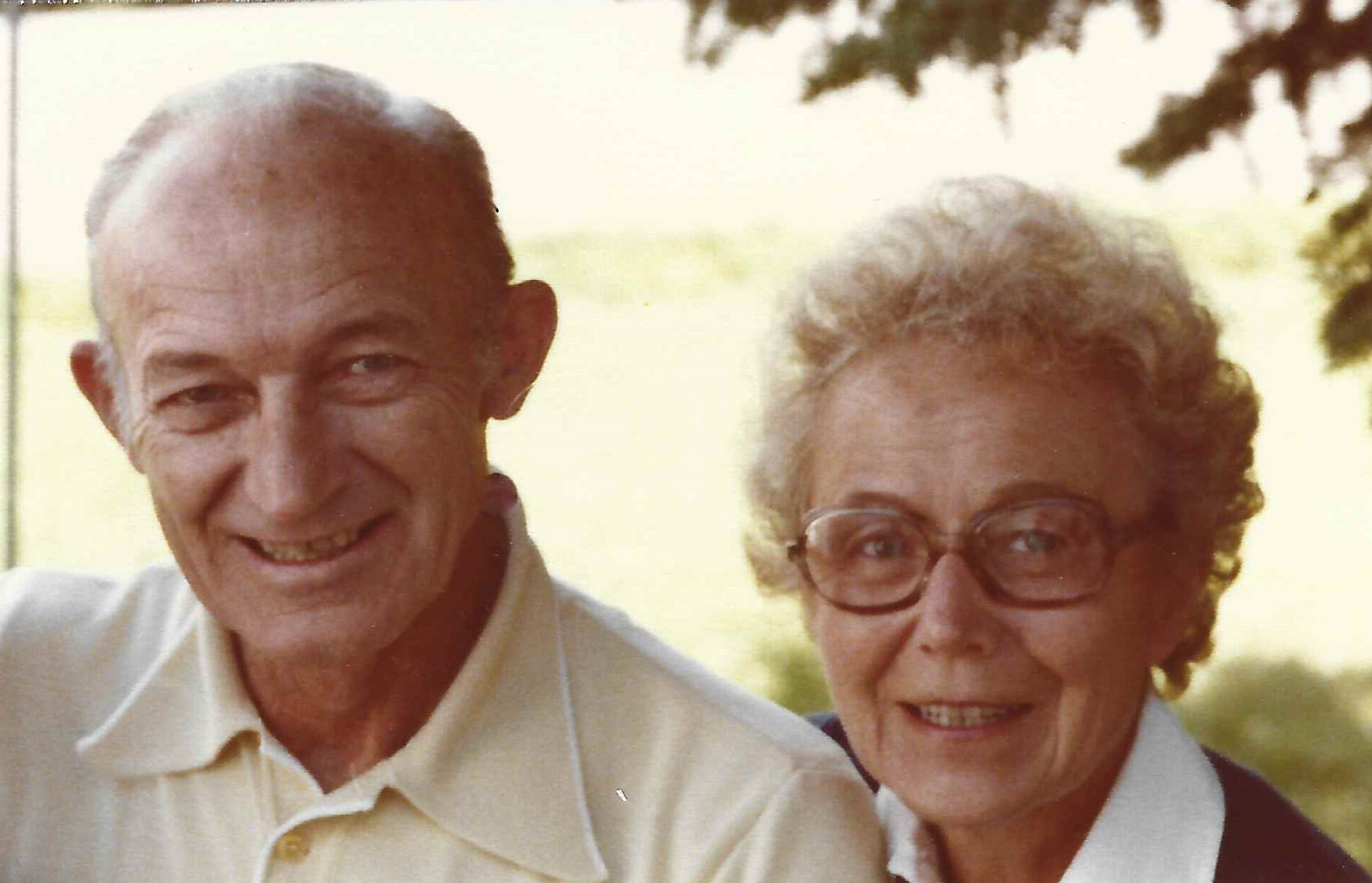
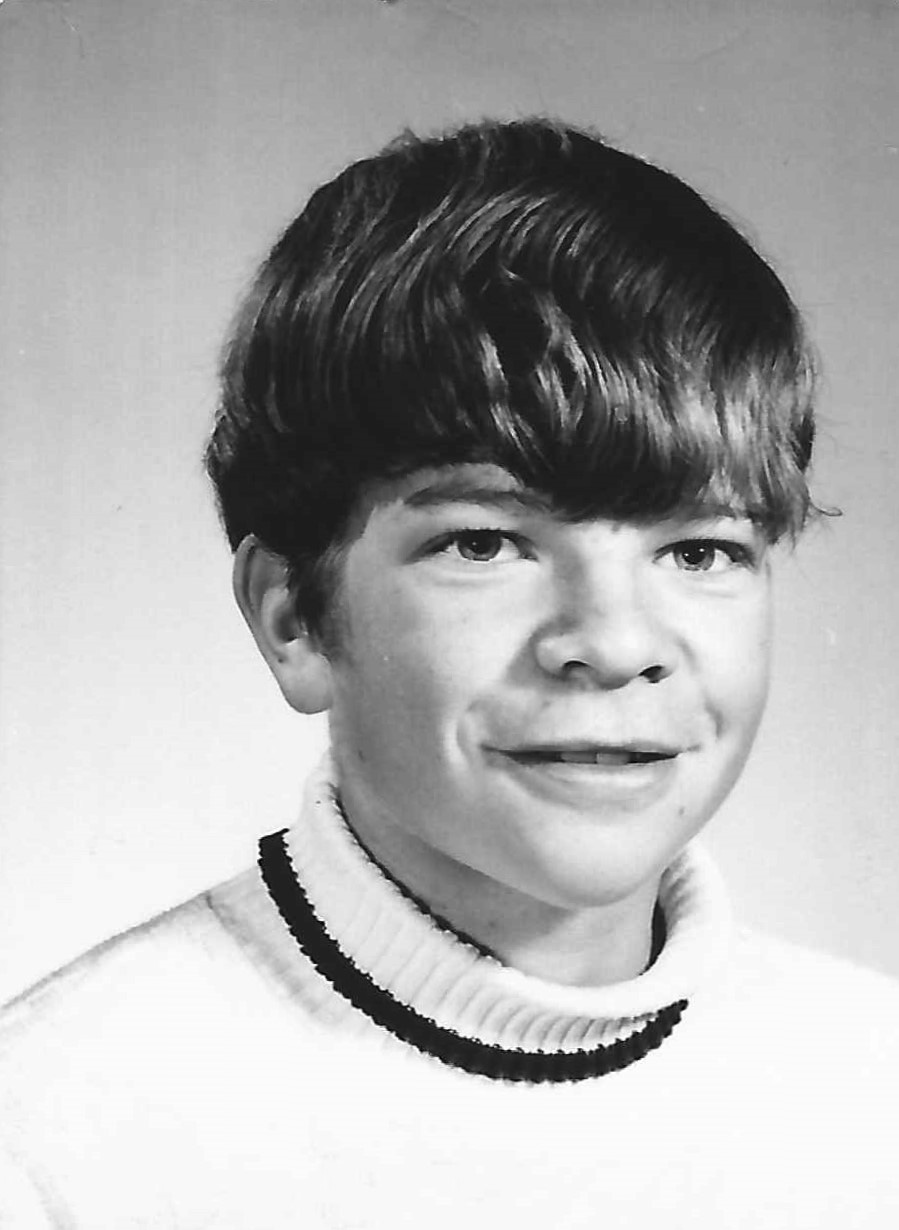
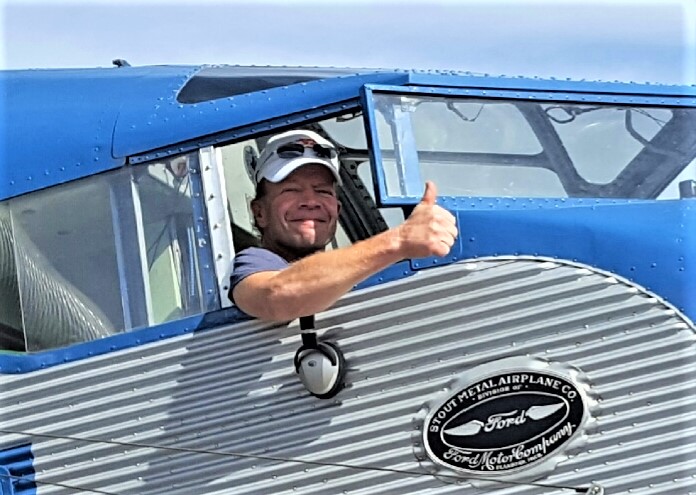
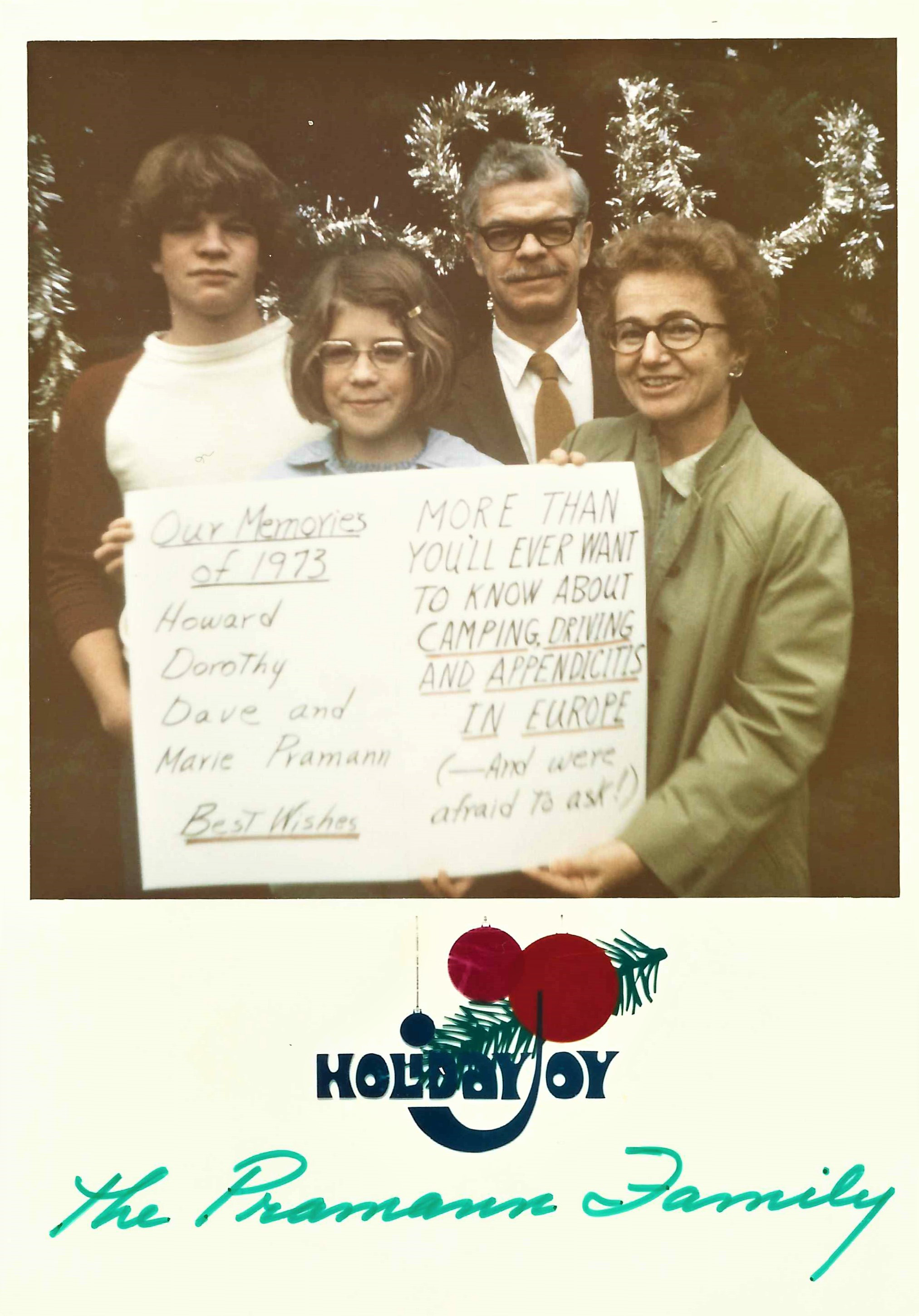
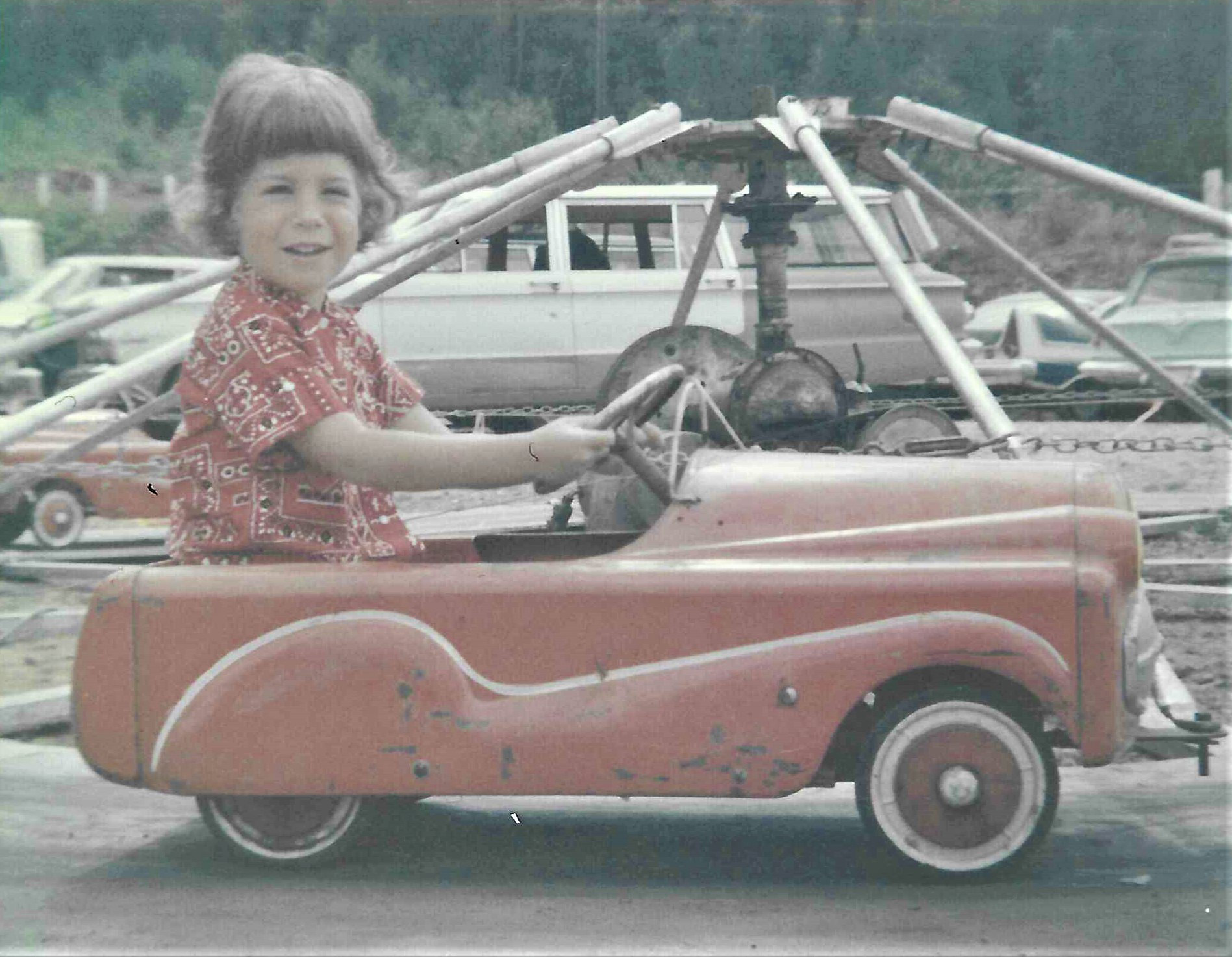
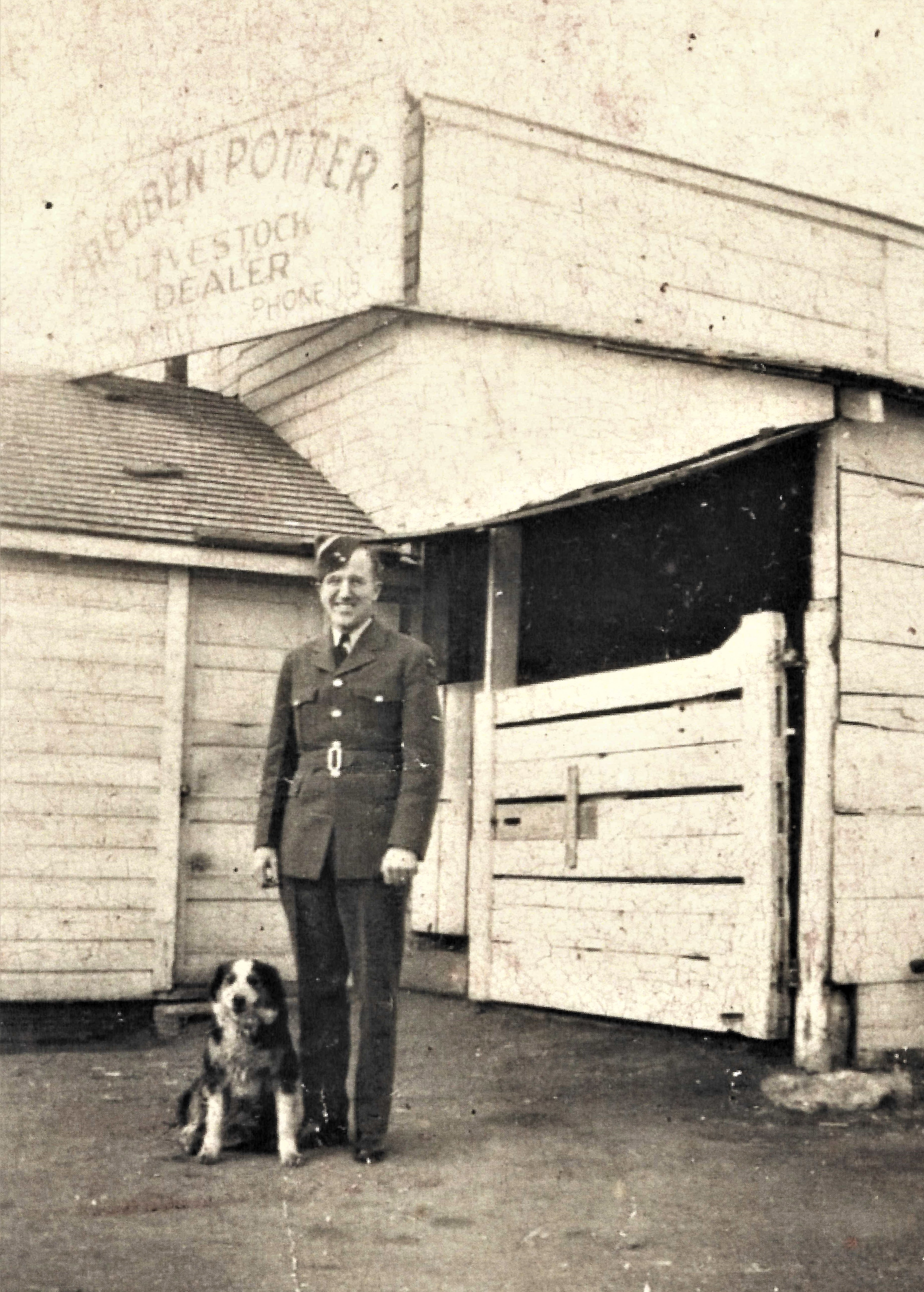
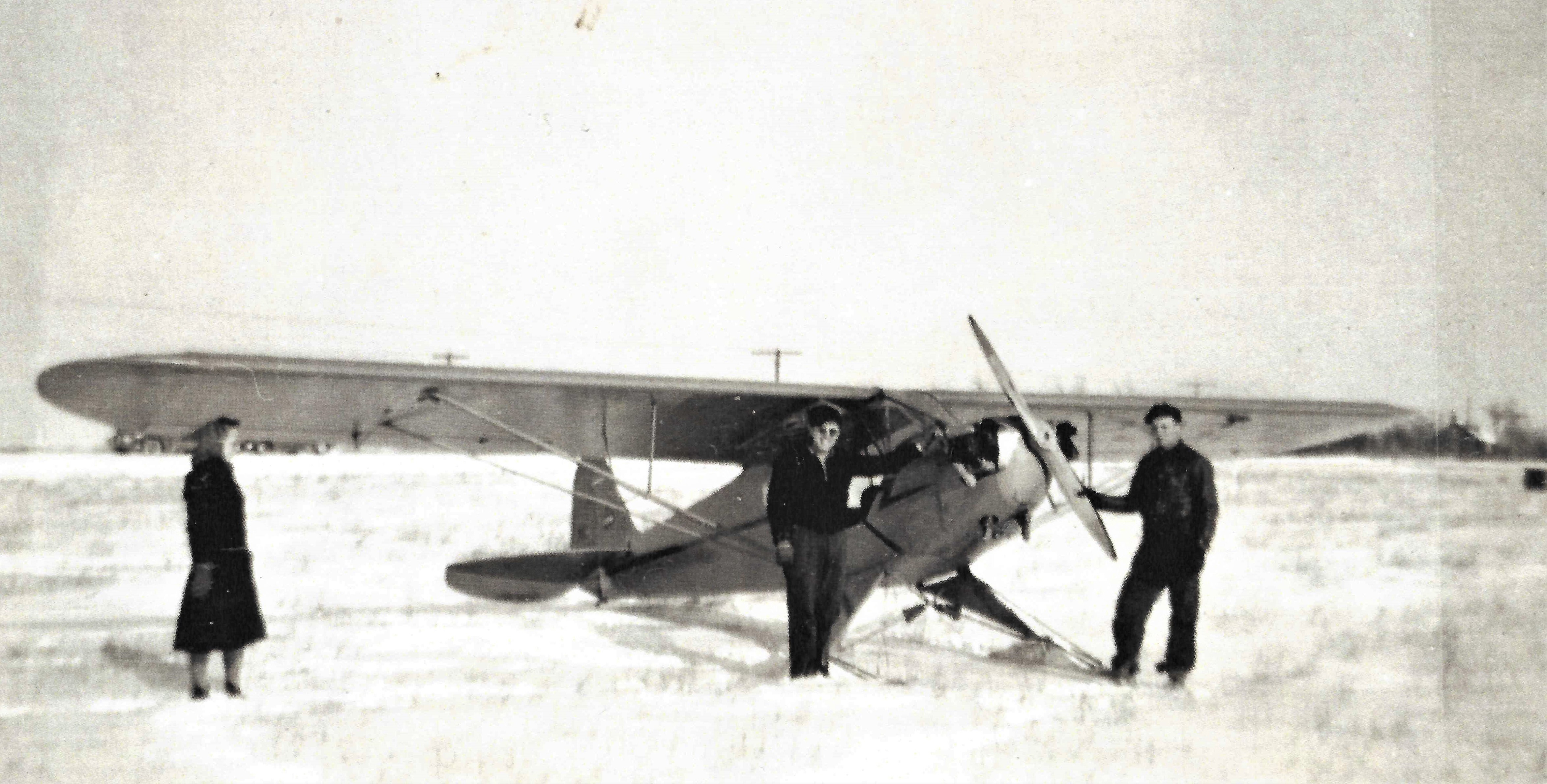
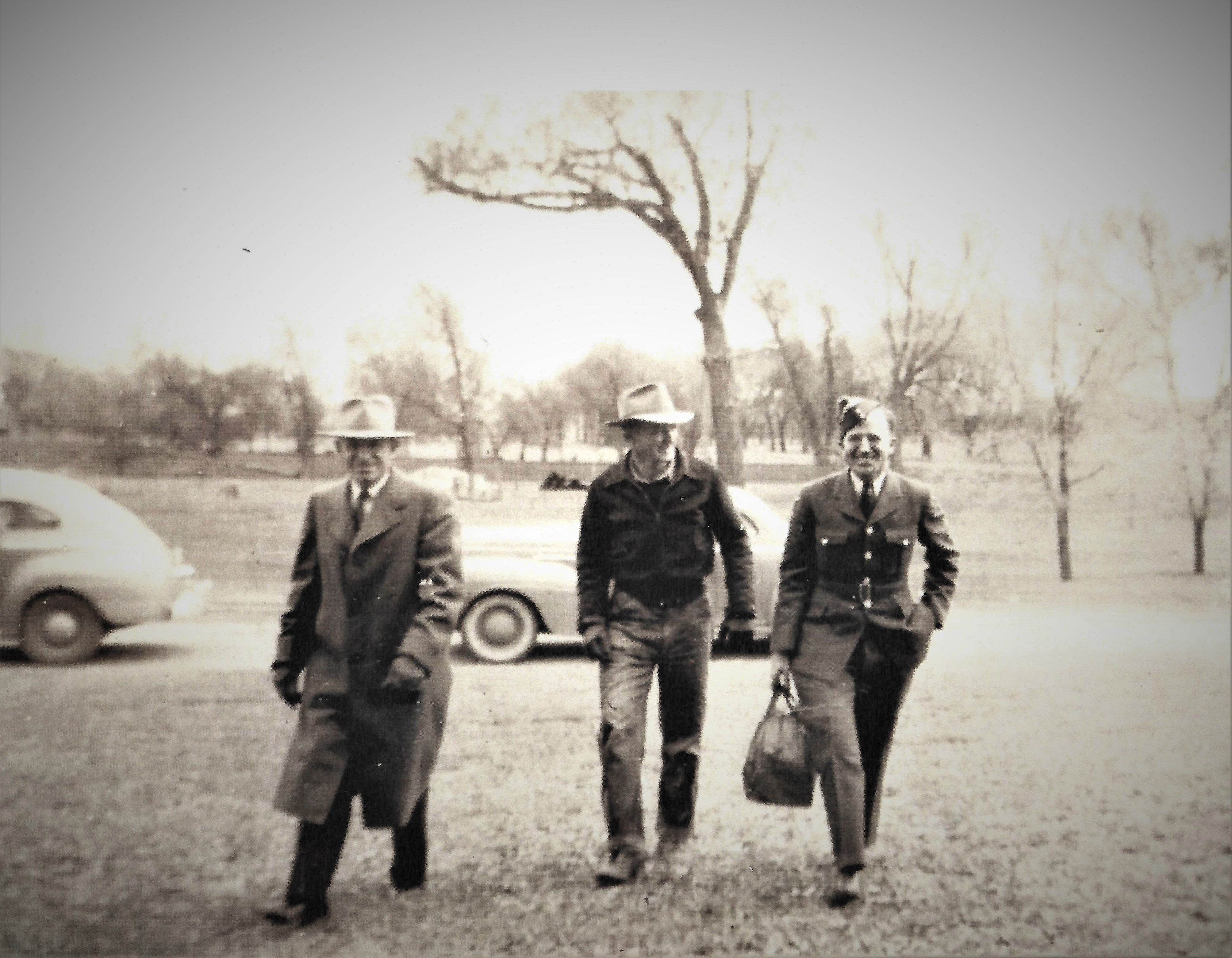
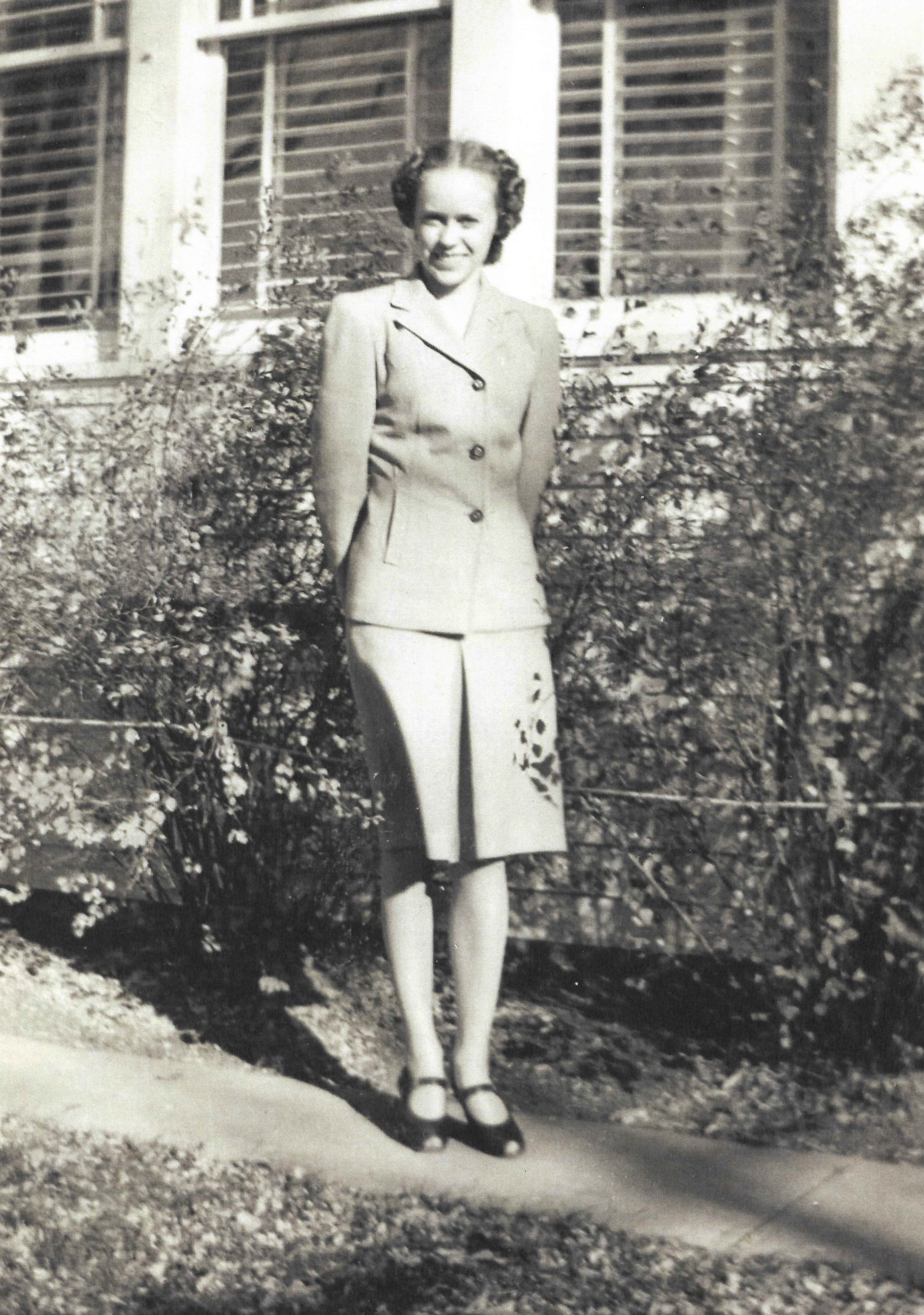

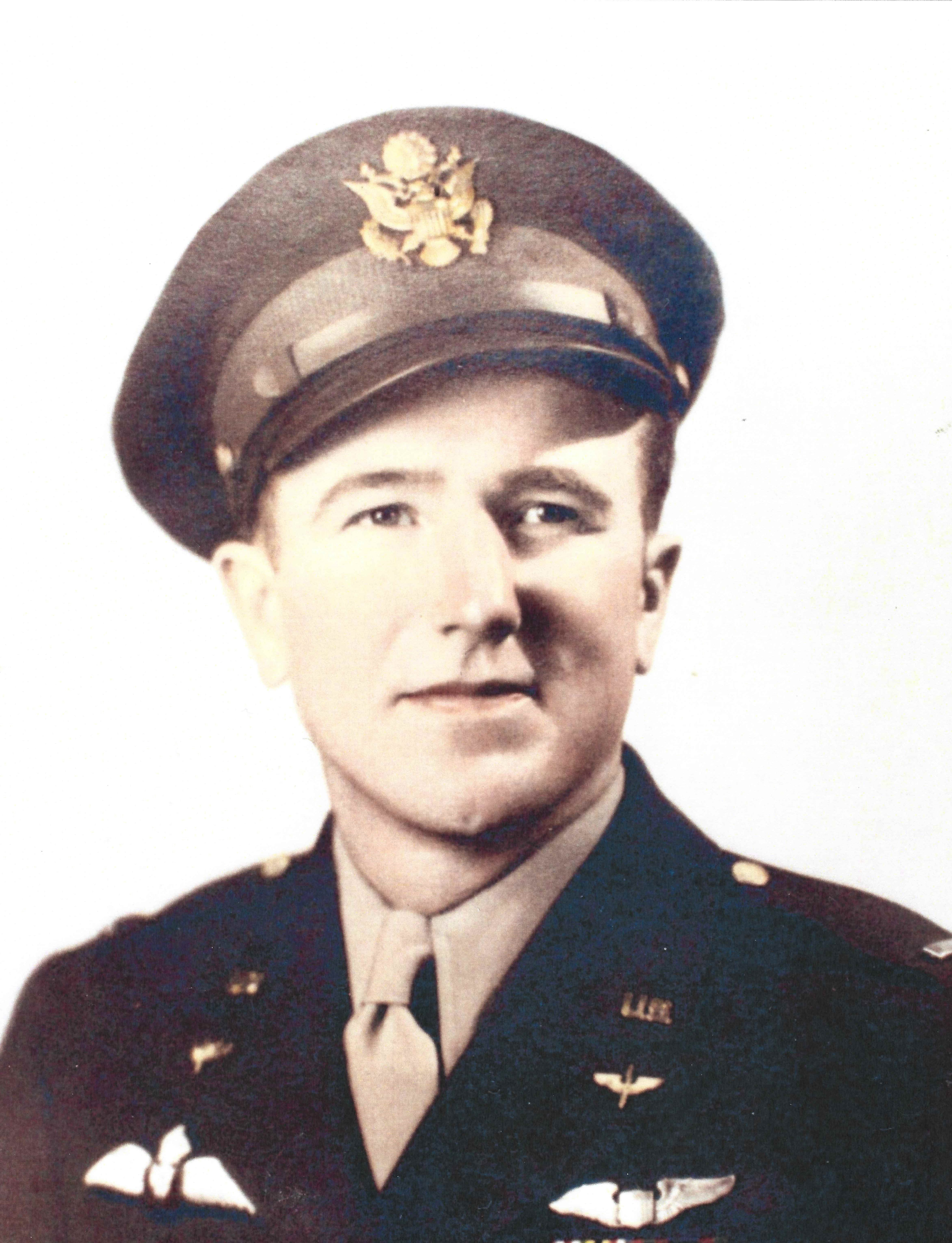


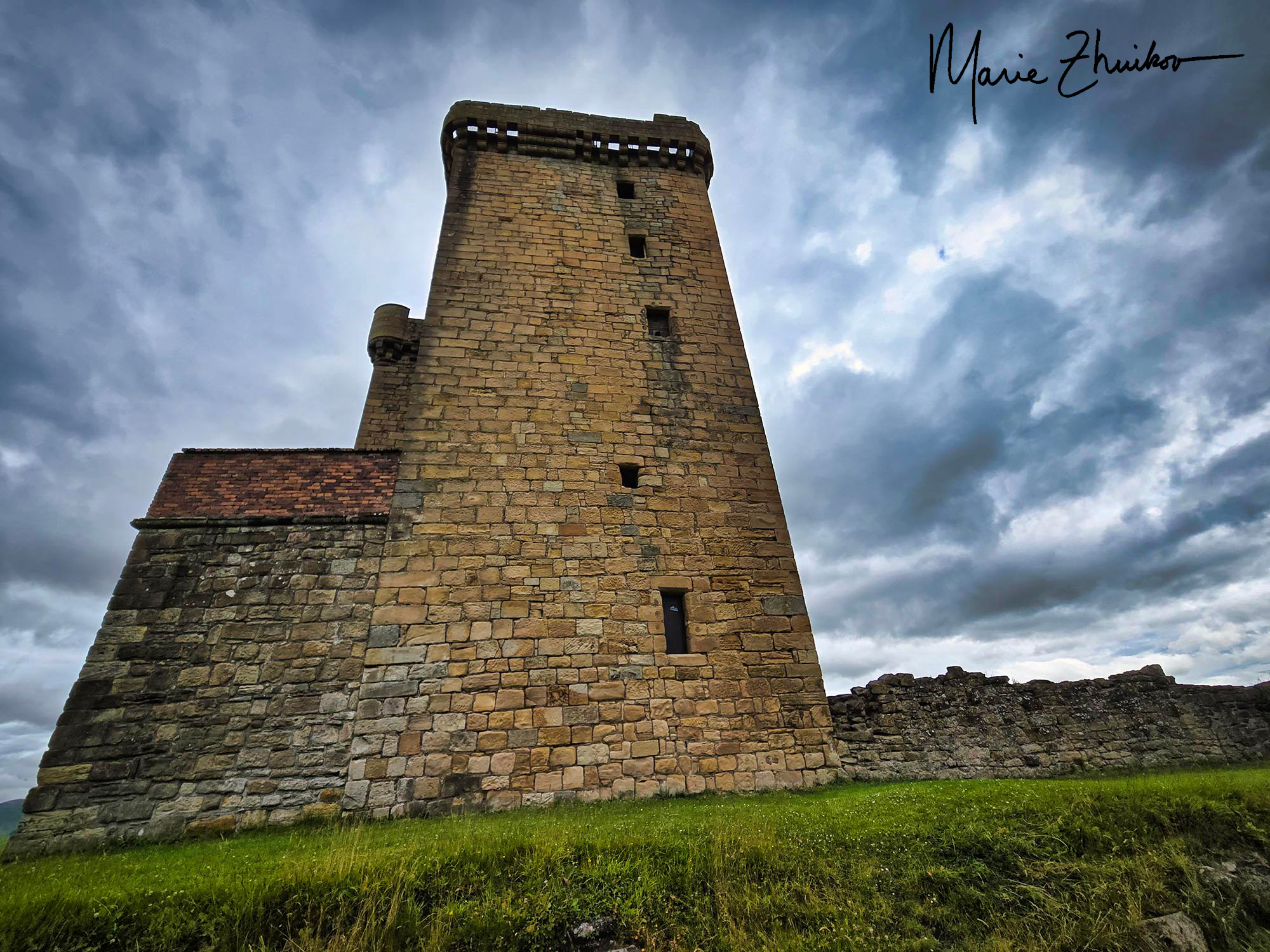
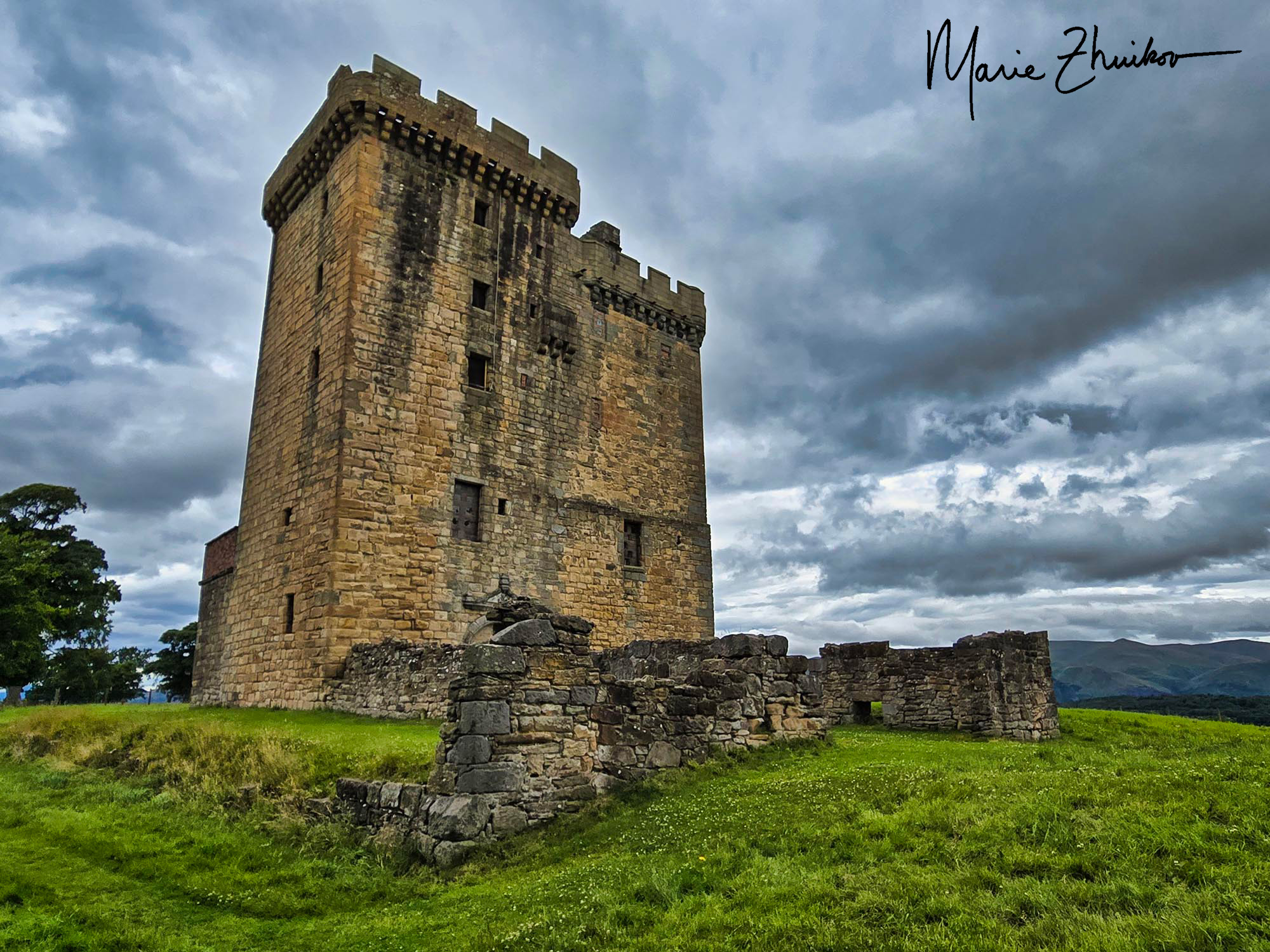


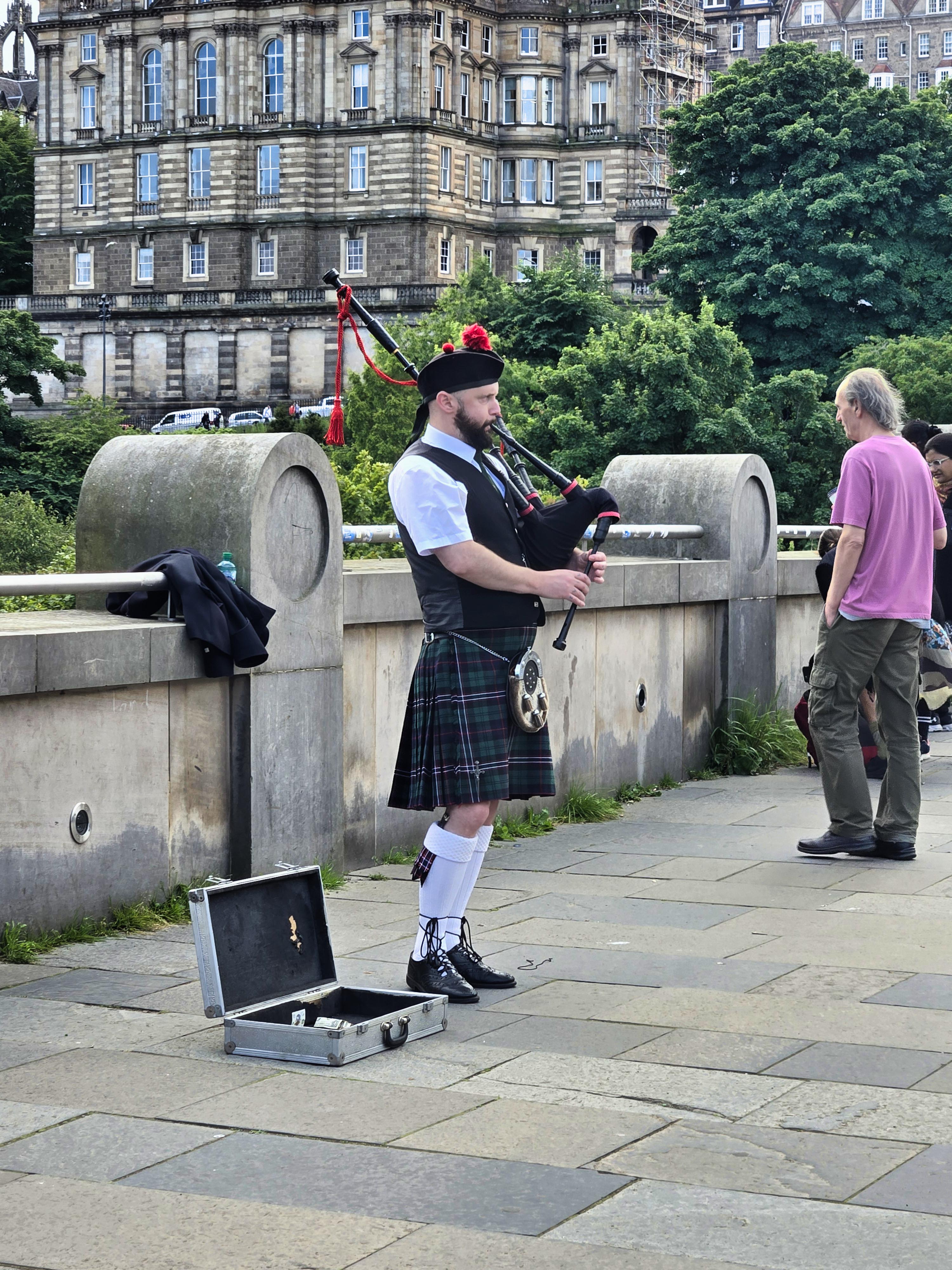

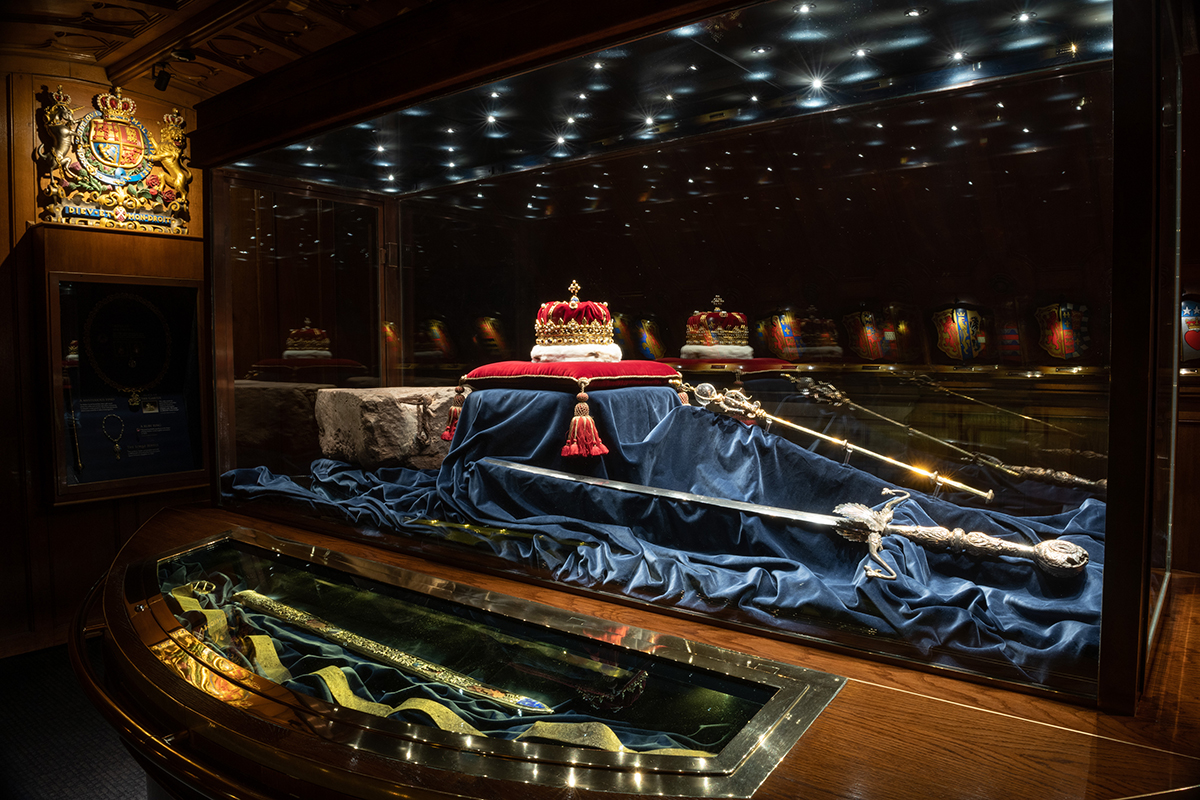

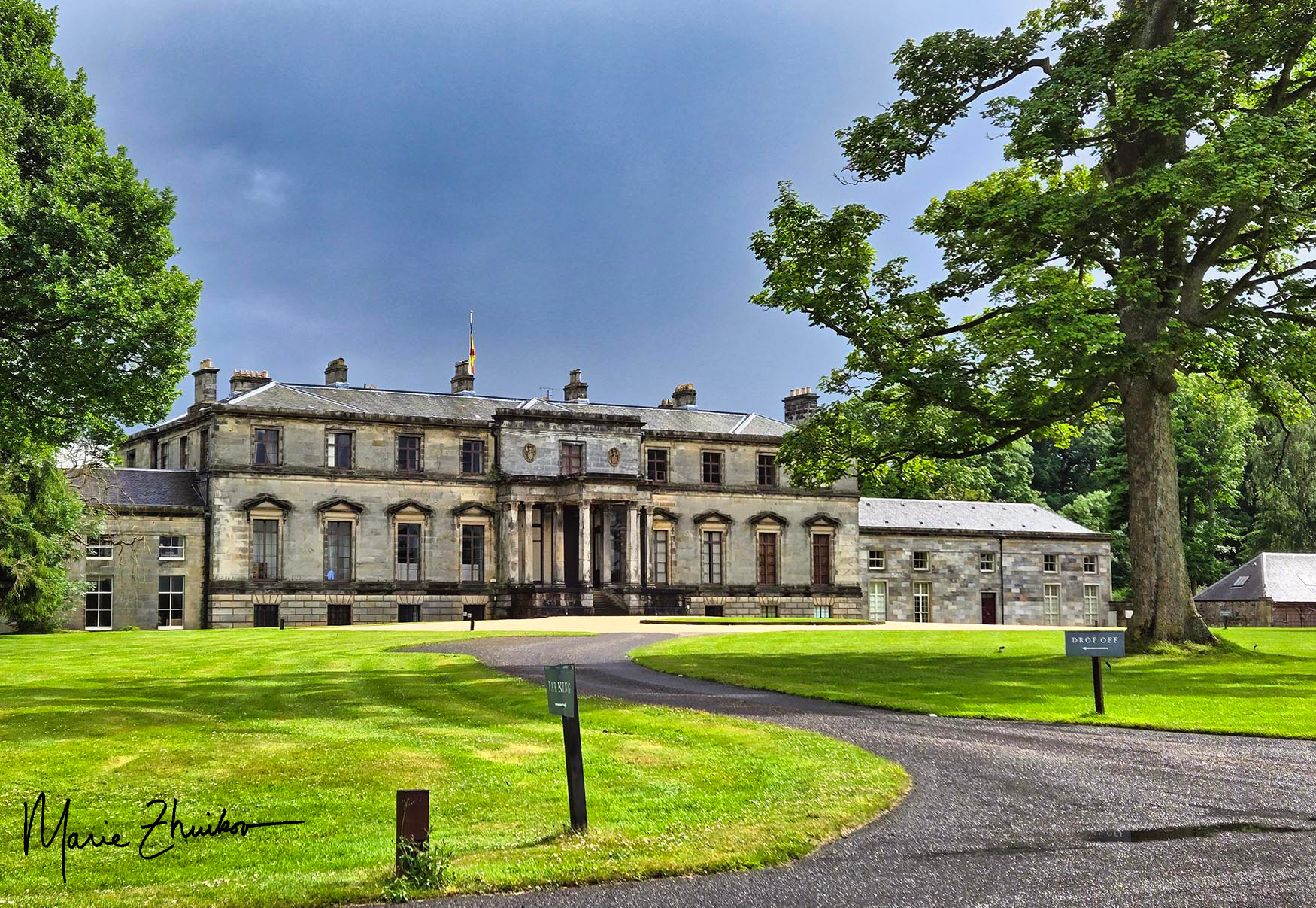
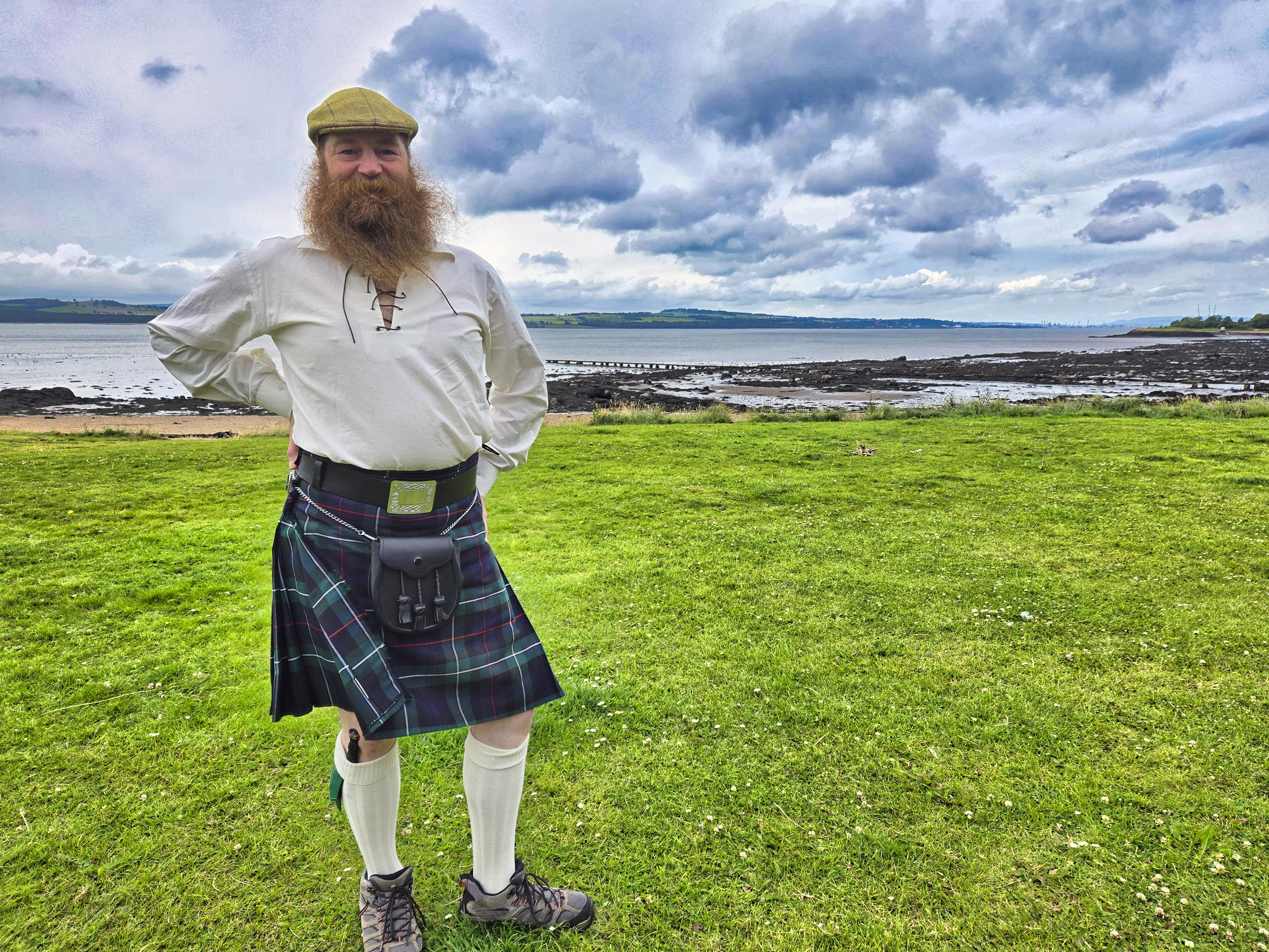
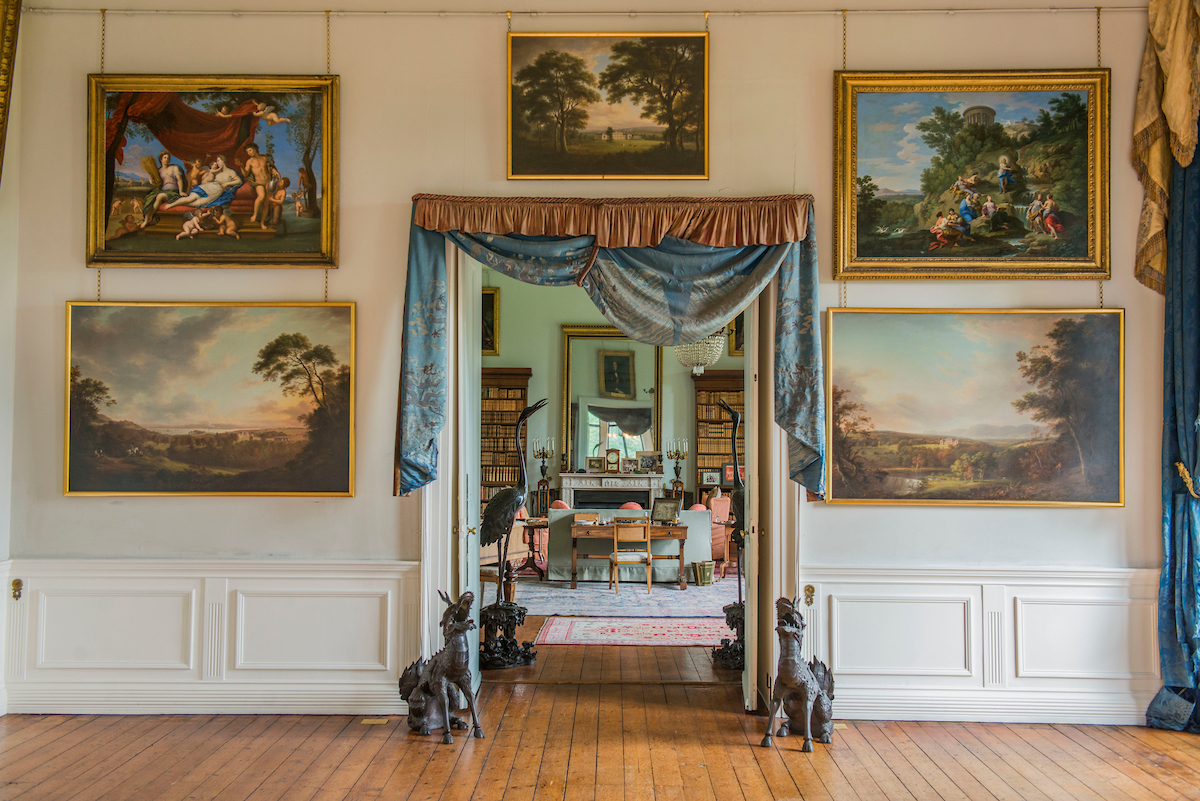

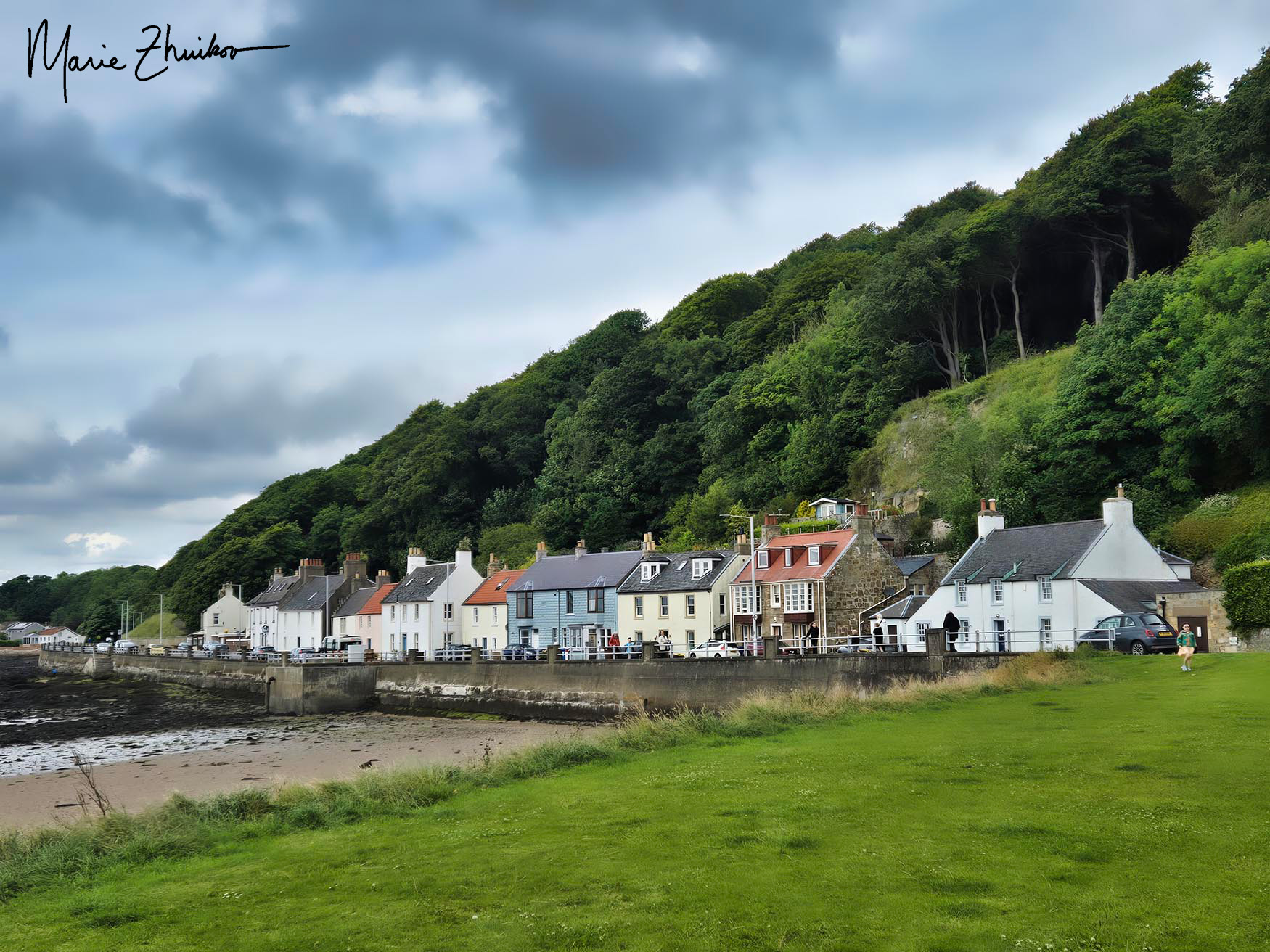


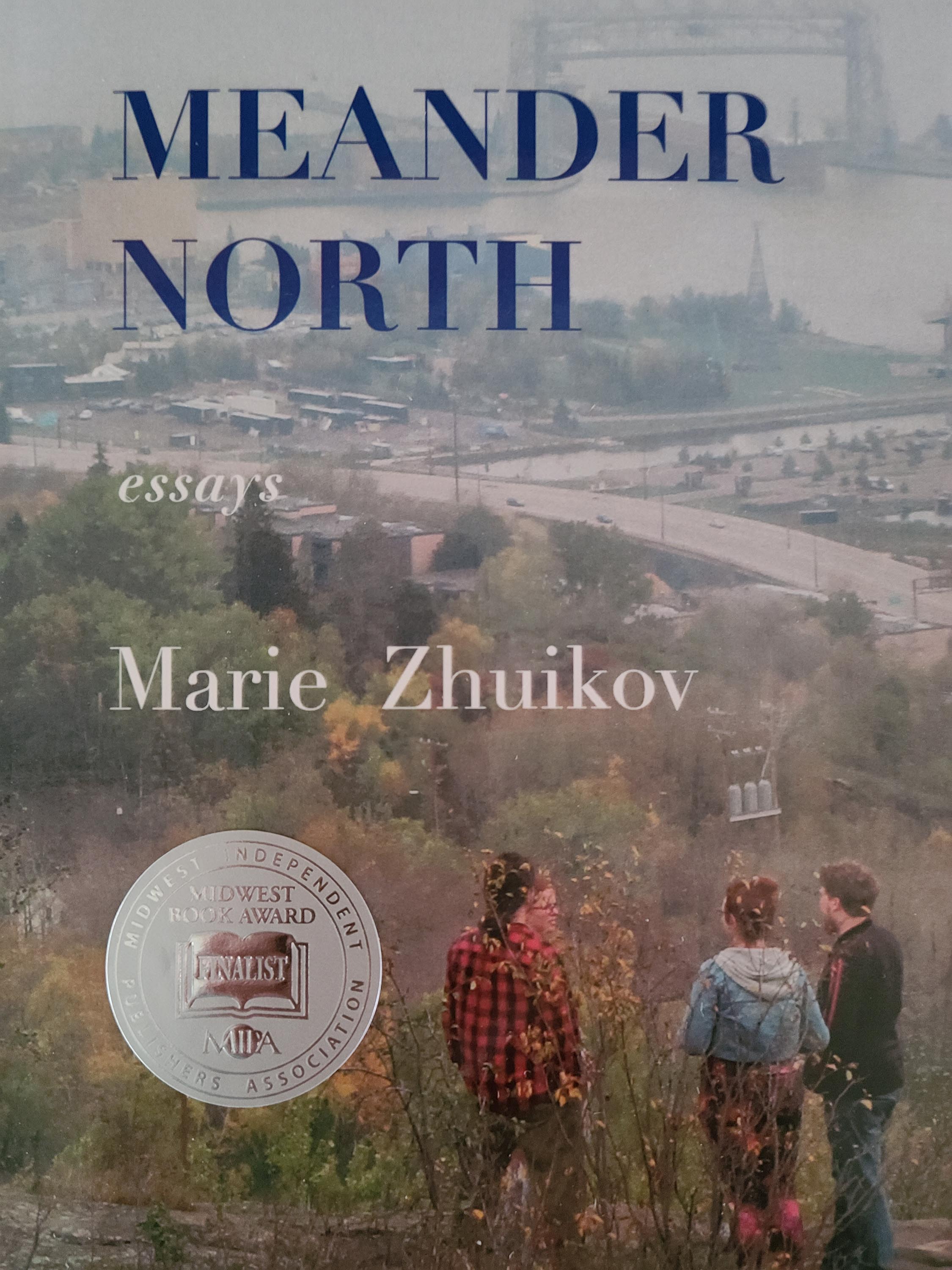
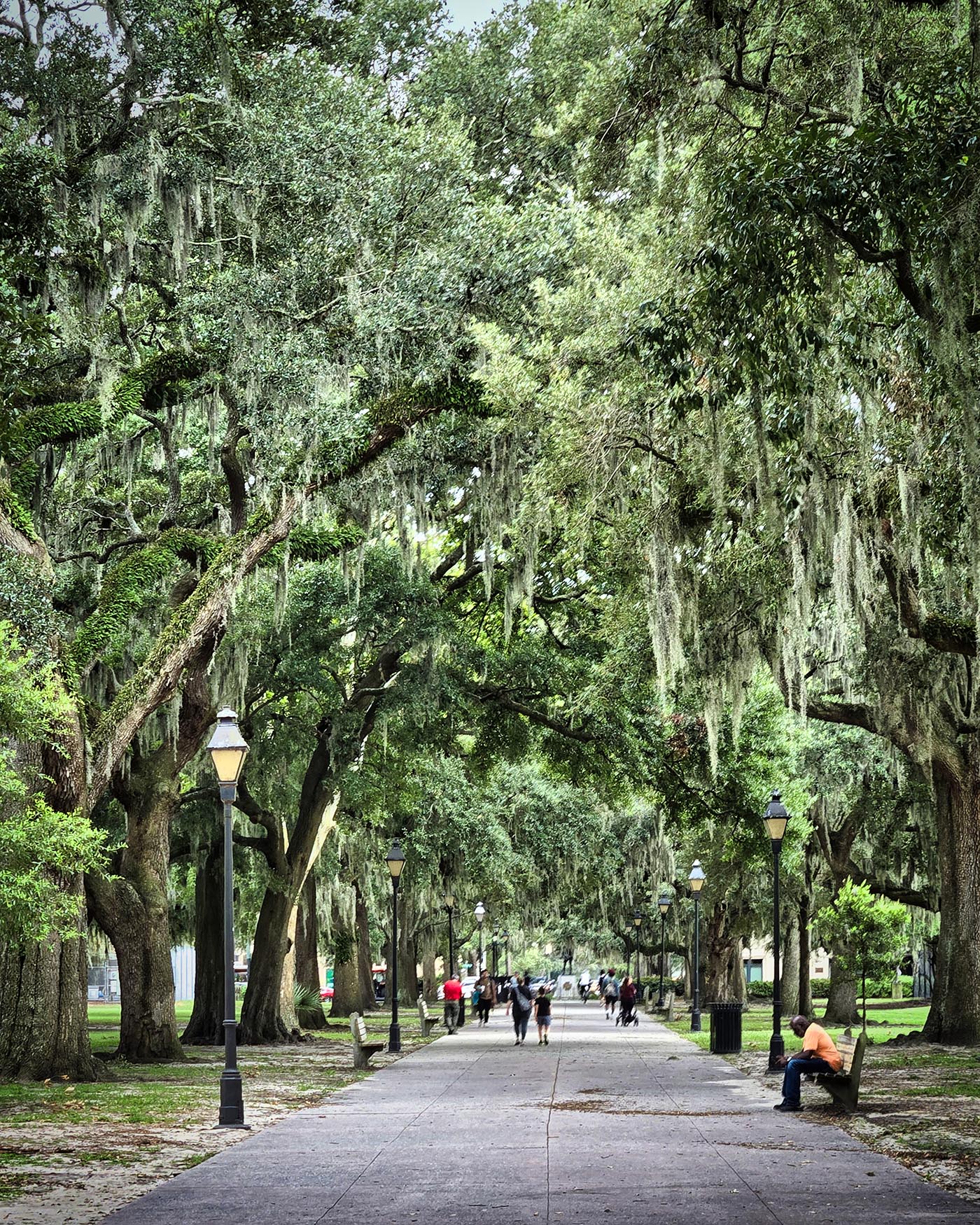


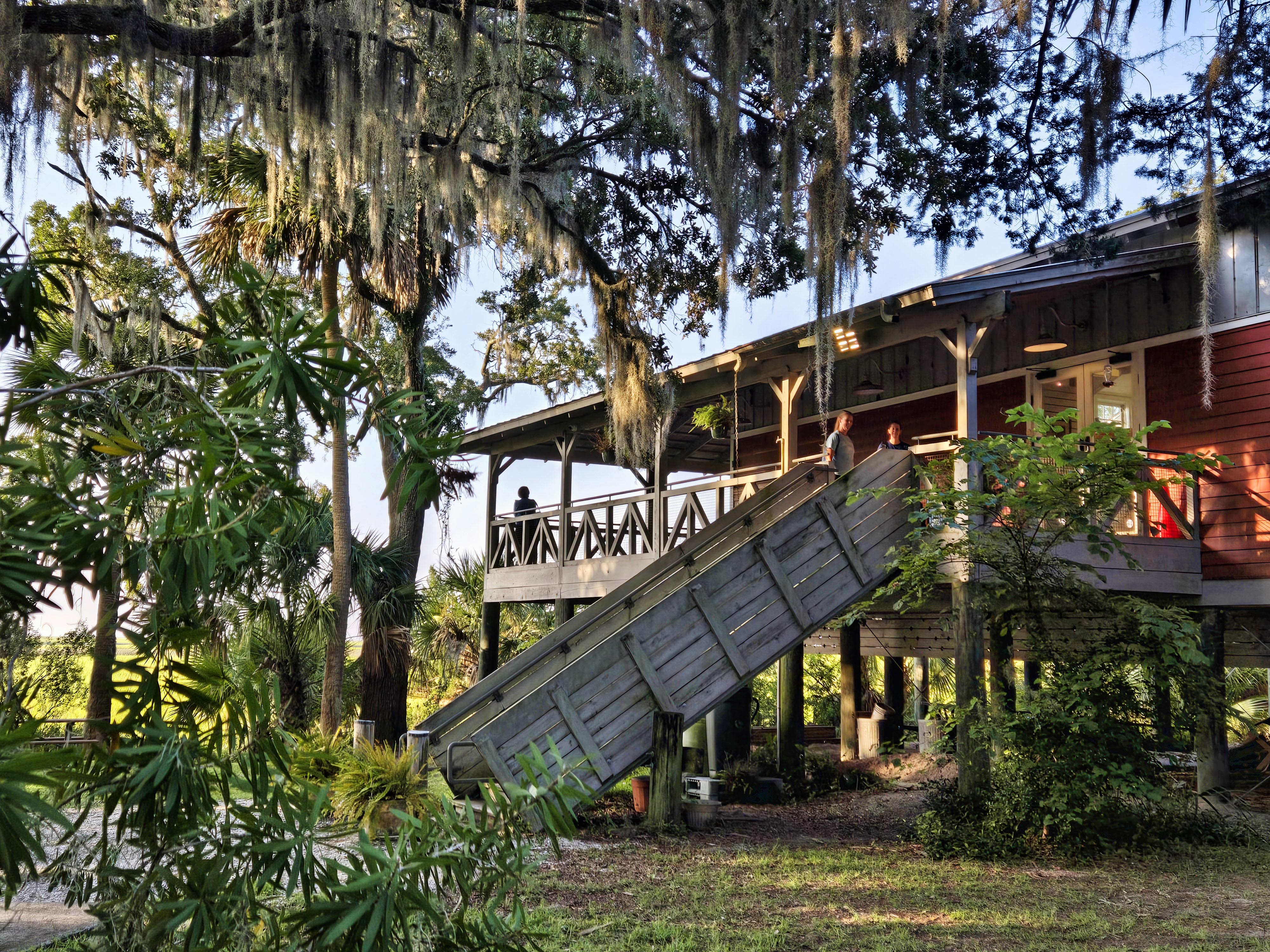


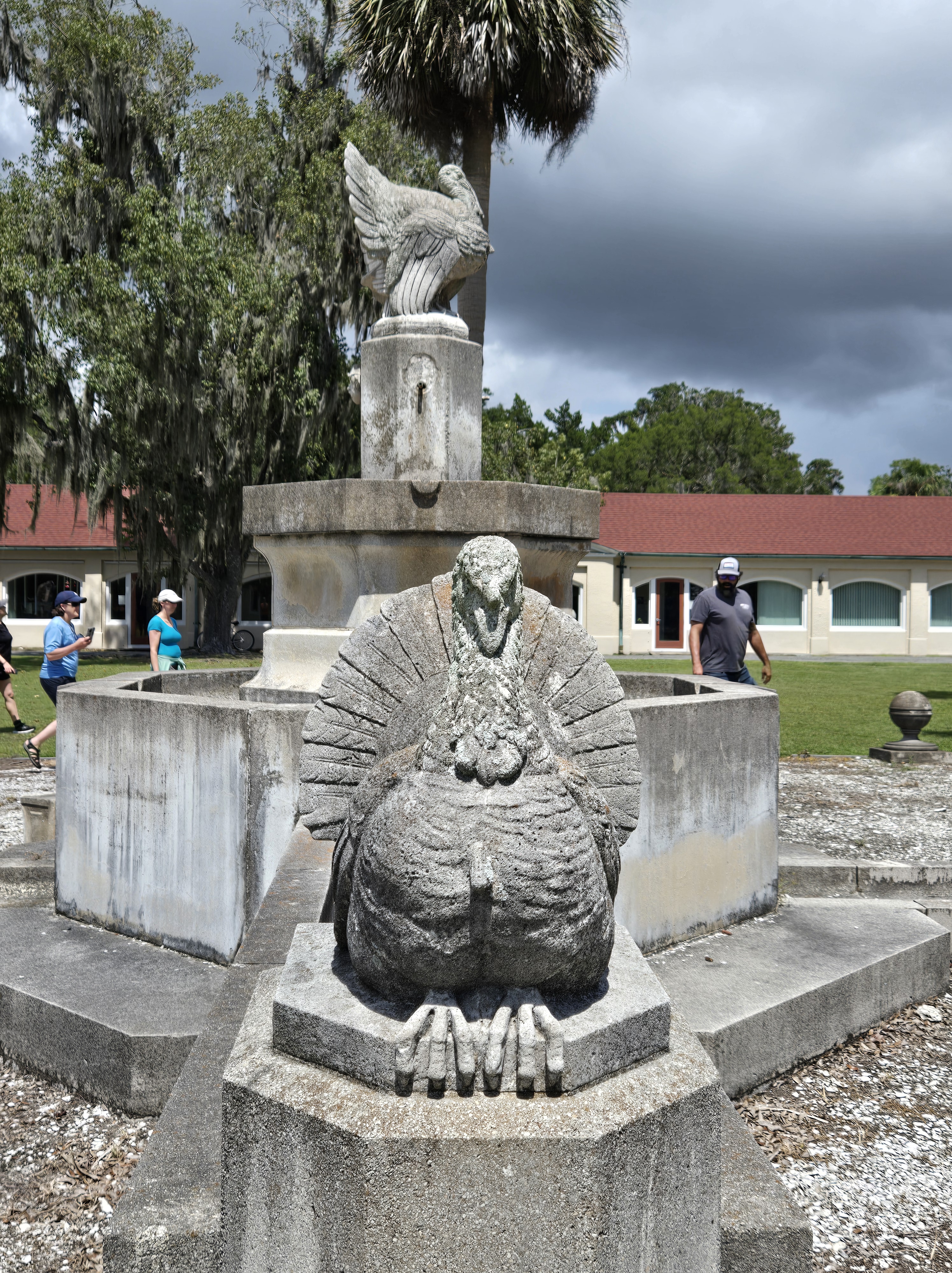


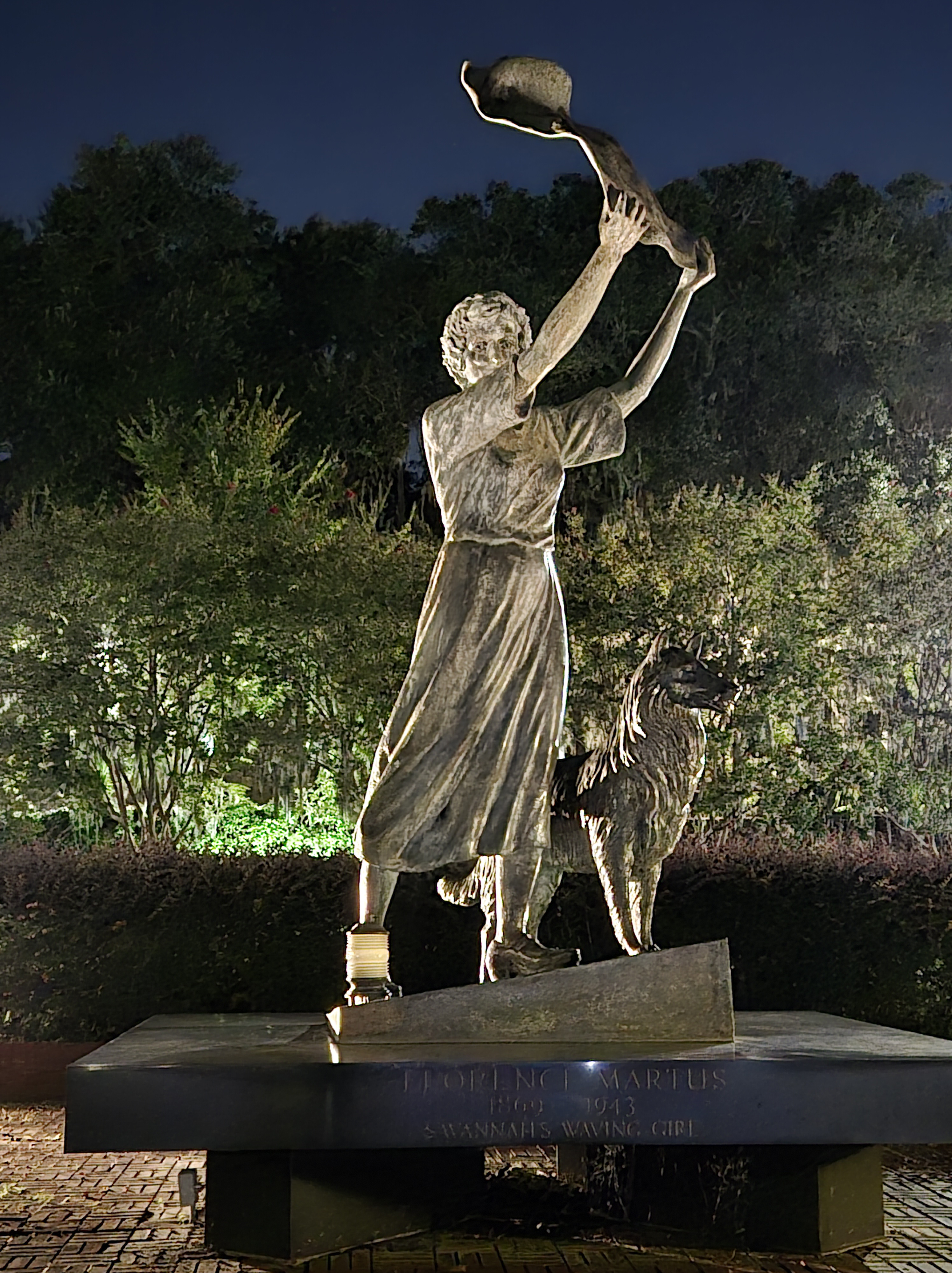
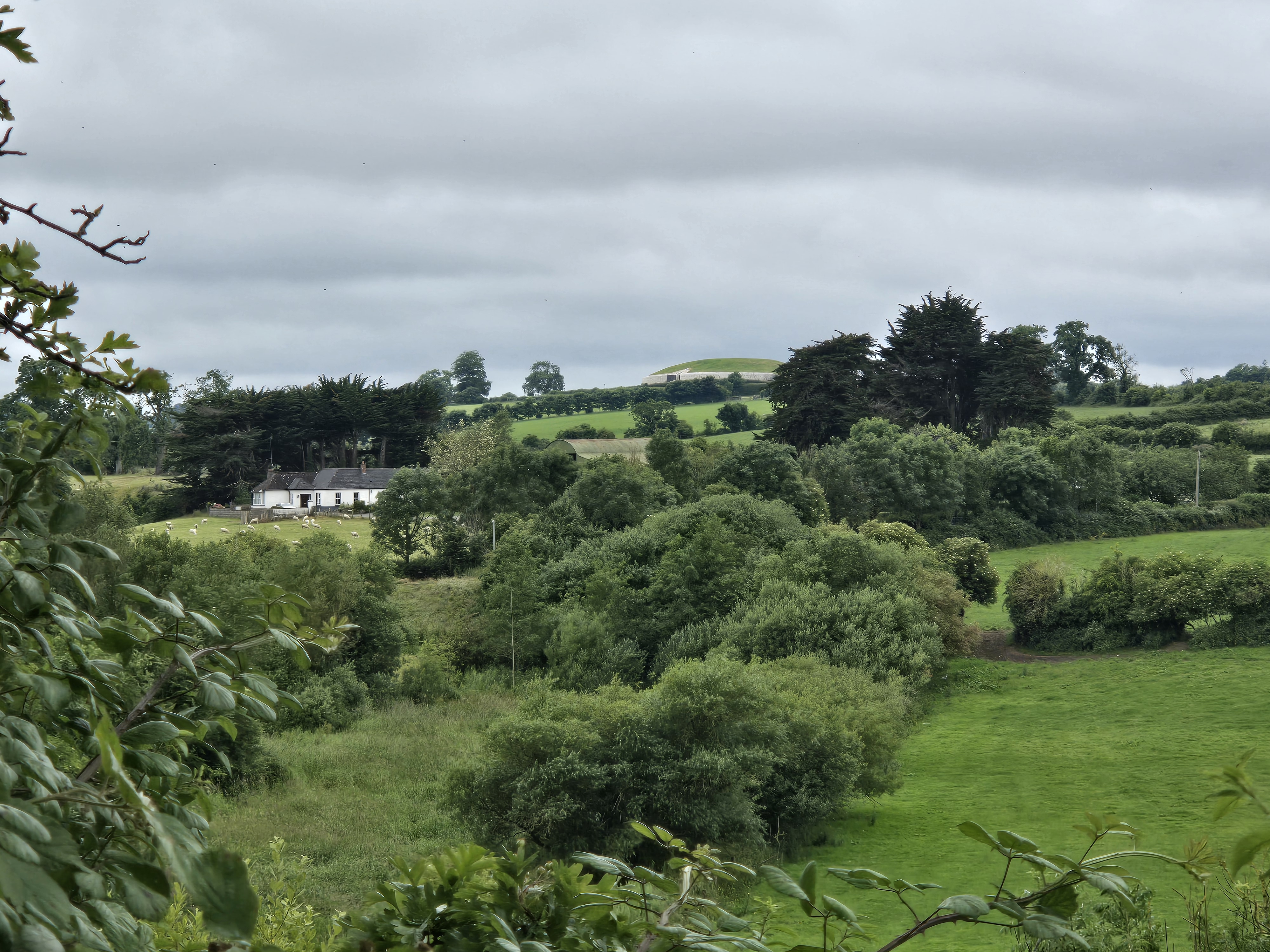

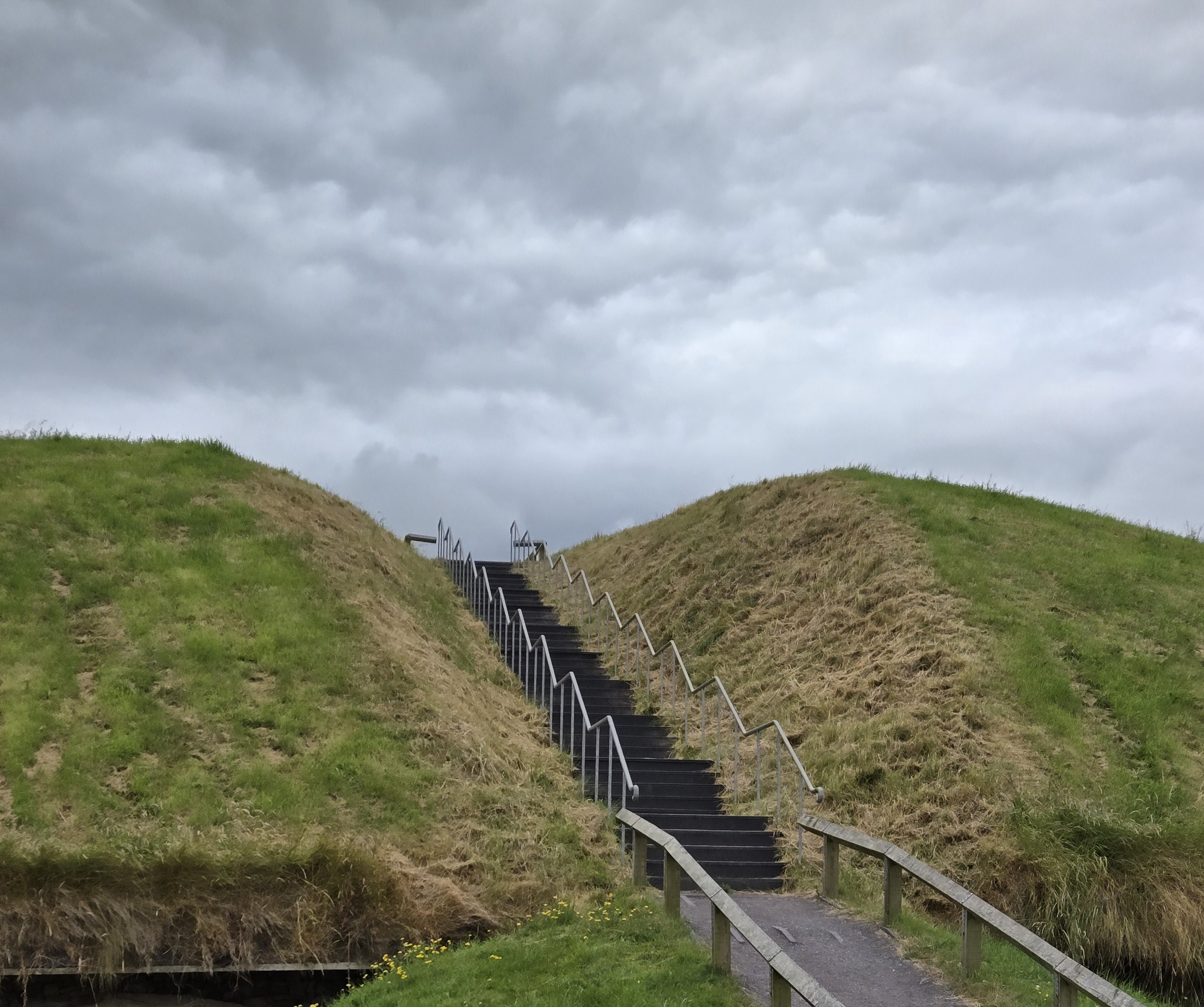
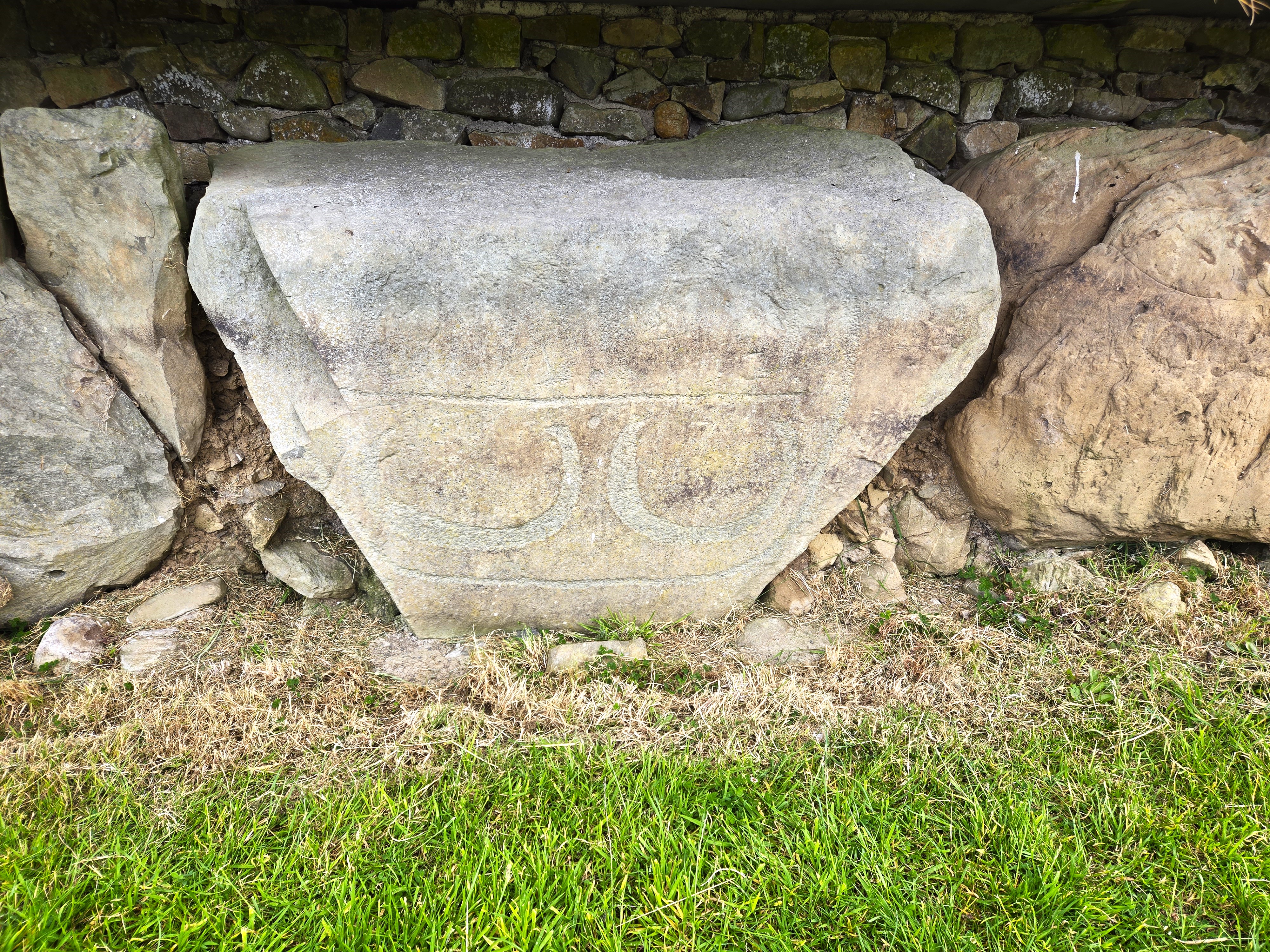


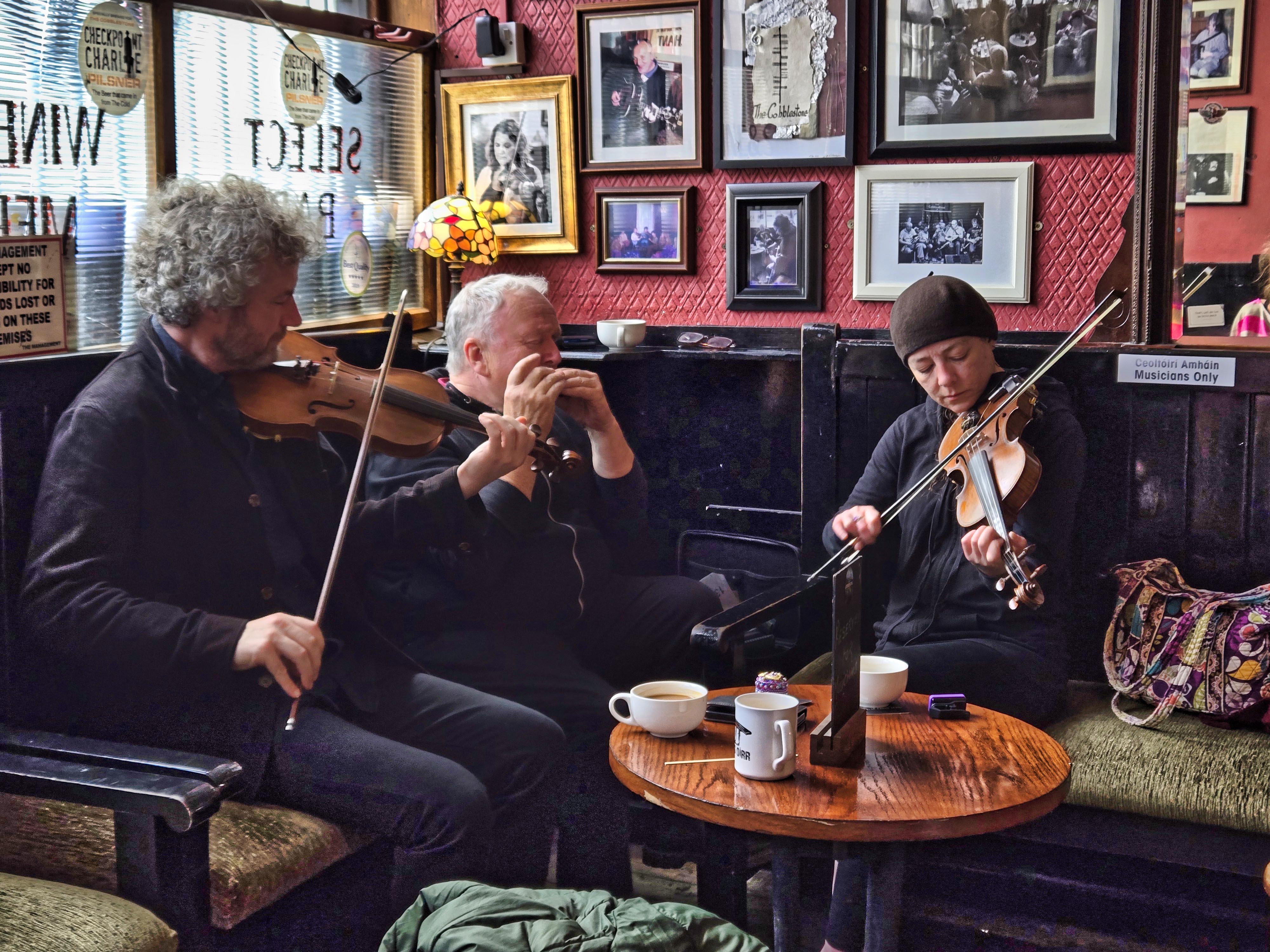
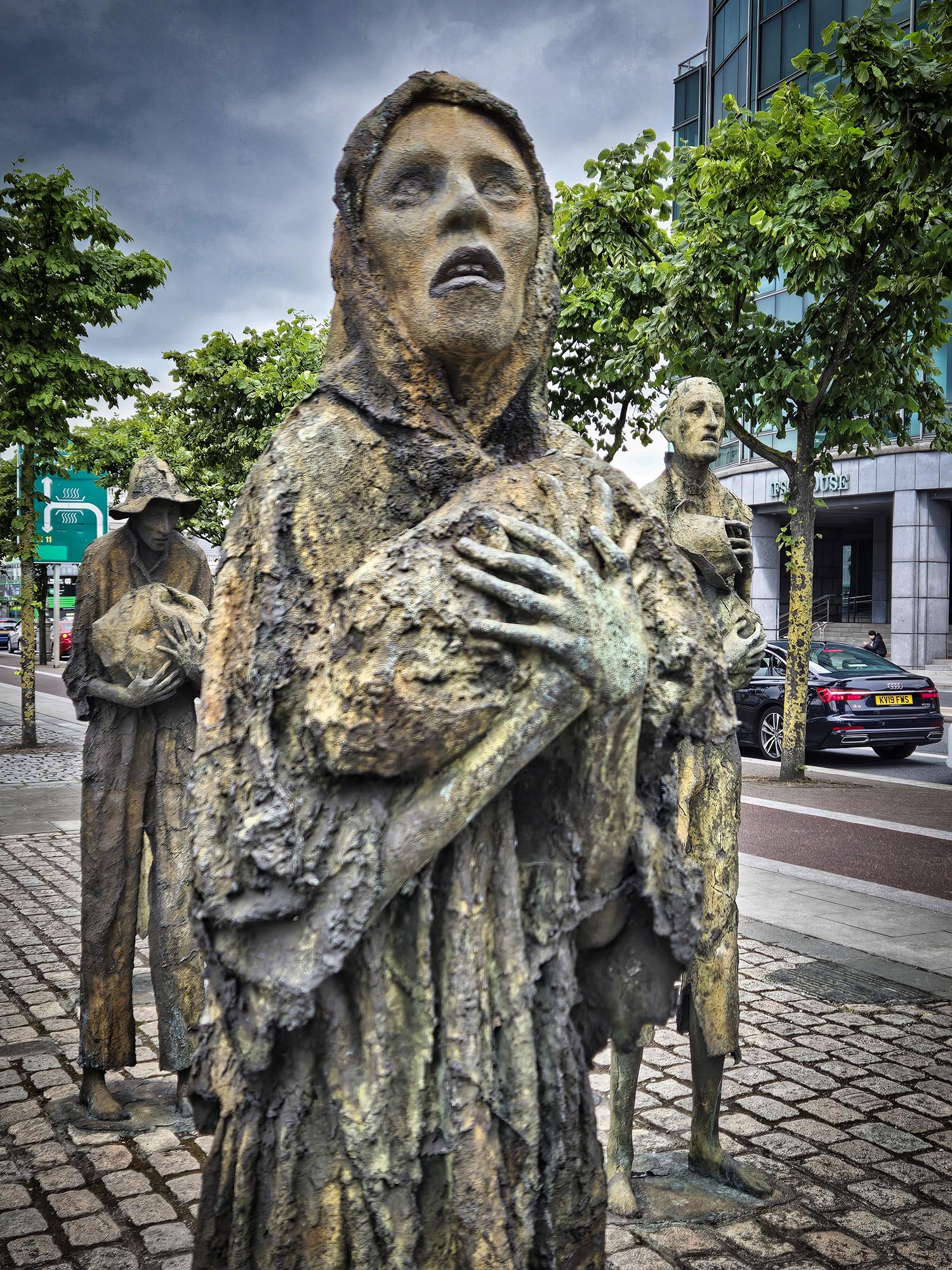
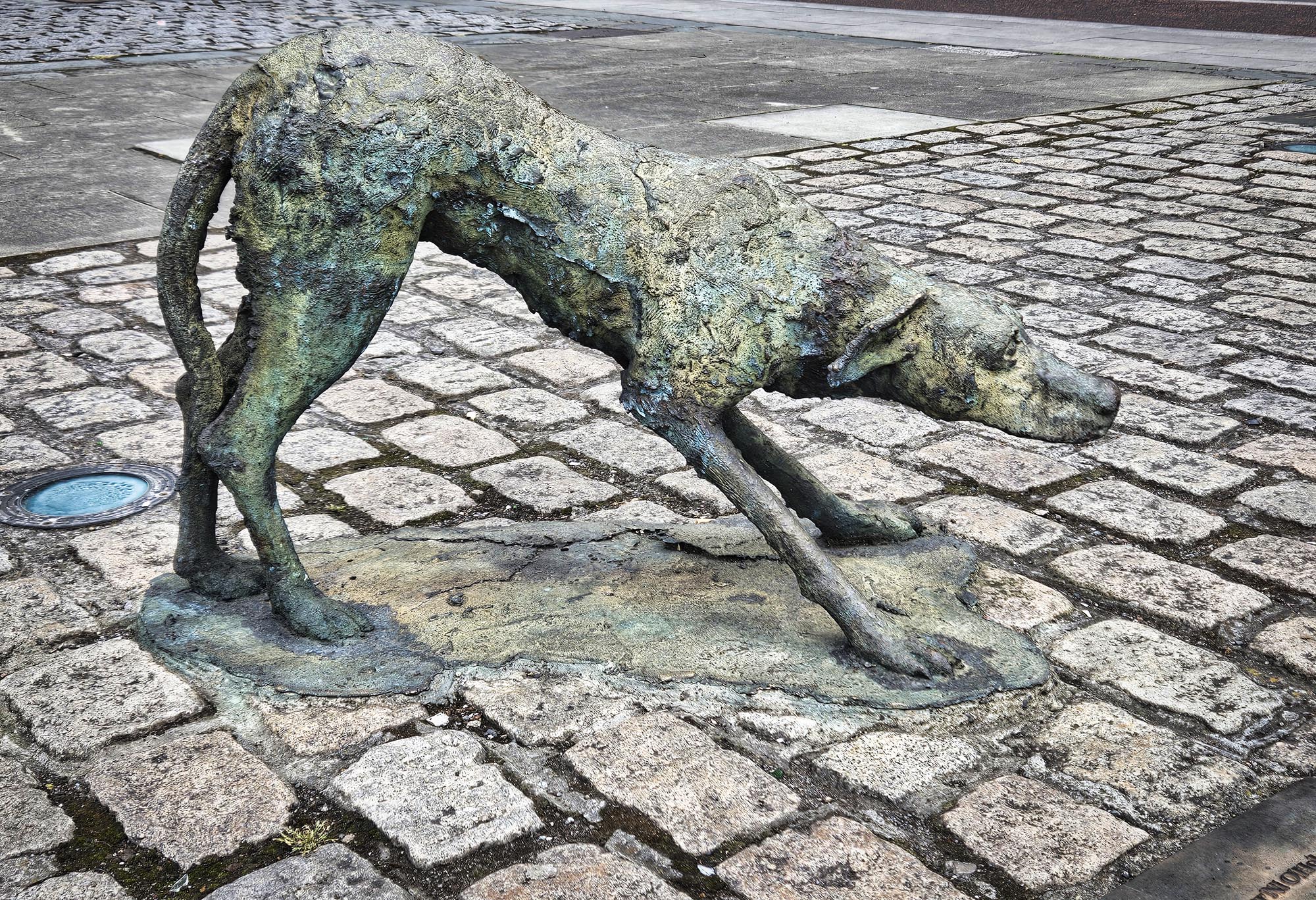
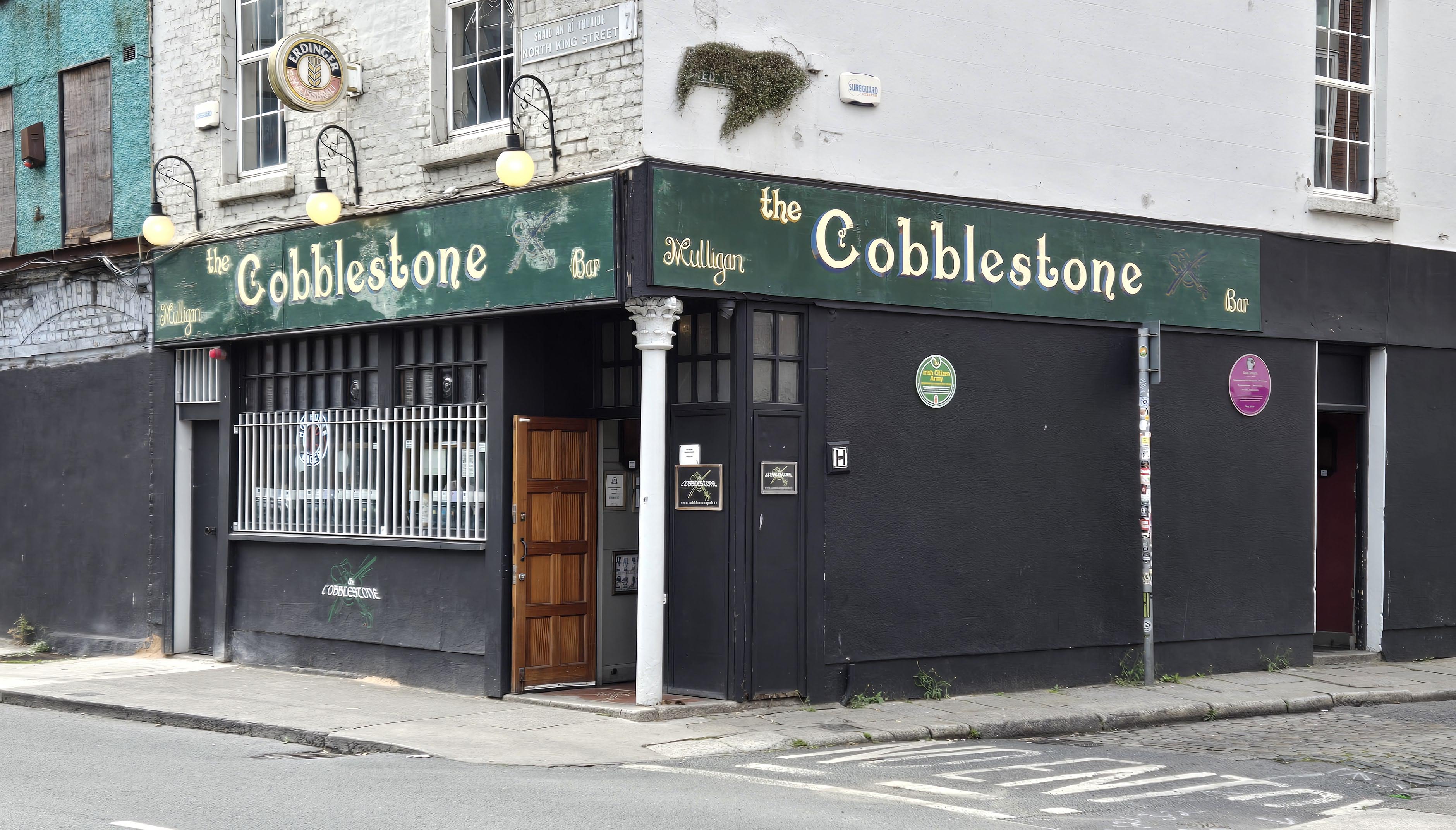
 Marie's Meanderings