Phoenix’s Musical Instrument Museum. Image courtesy of the Musical Instrument Museum
During our recent meanderings in Arizona, we visited the Musical Instrument Museum in Phoenix. Russ and I enjoy music, both listening and playing, so the museum naturally intrigued us.
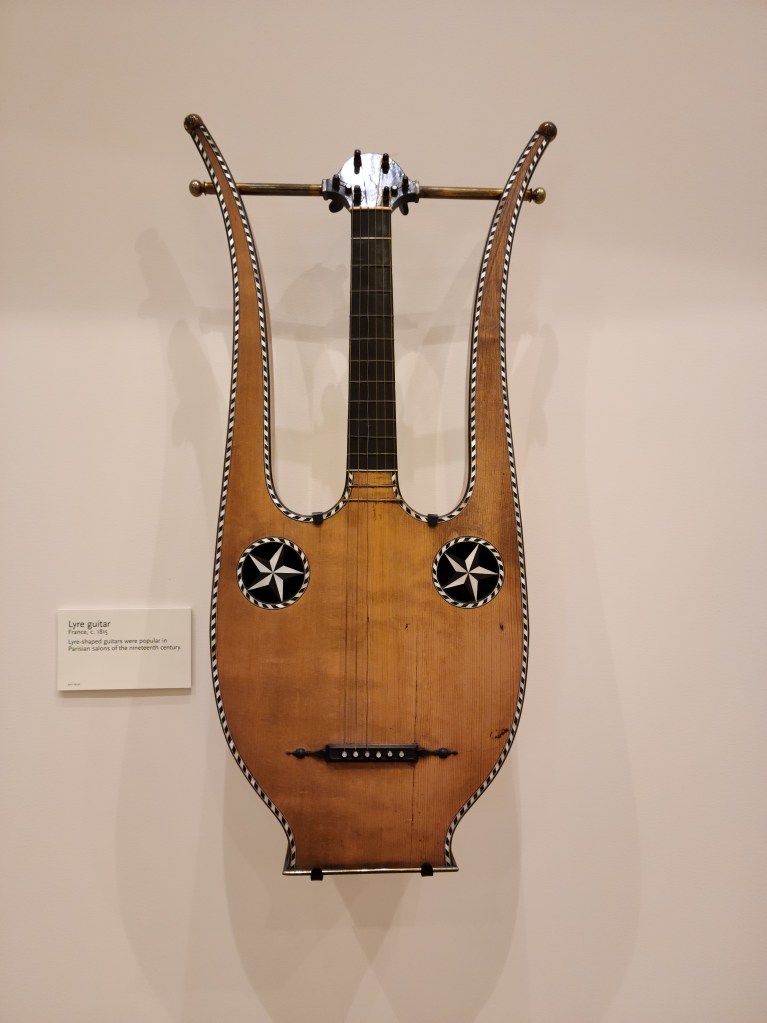
This musical museum offers two floors filled with 4,200 instruments from across the world. The CEO of the Target department store corporation founded it to highlight more than just western classical instruments (which are found in many other museums). Robert Ulrich wanted to focus on instruments played by everyday people across the globe. The museum’s motto is: Music is the language of the soul.
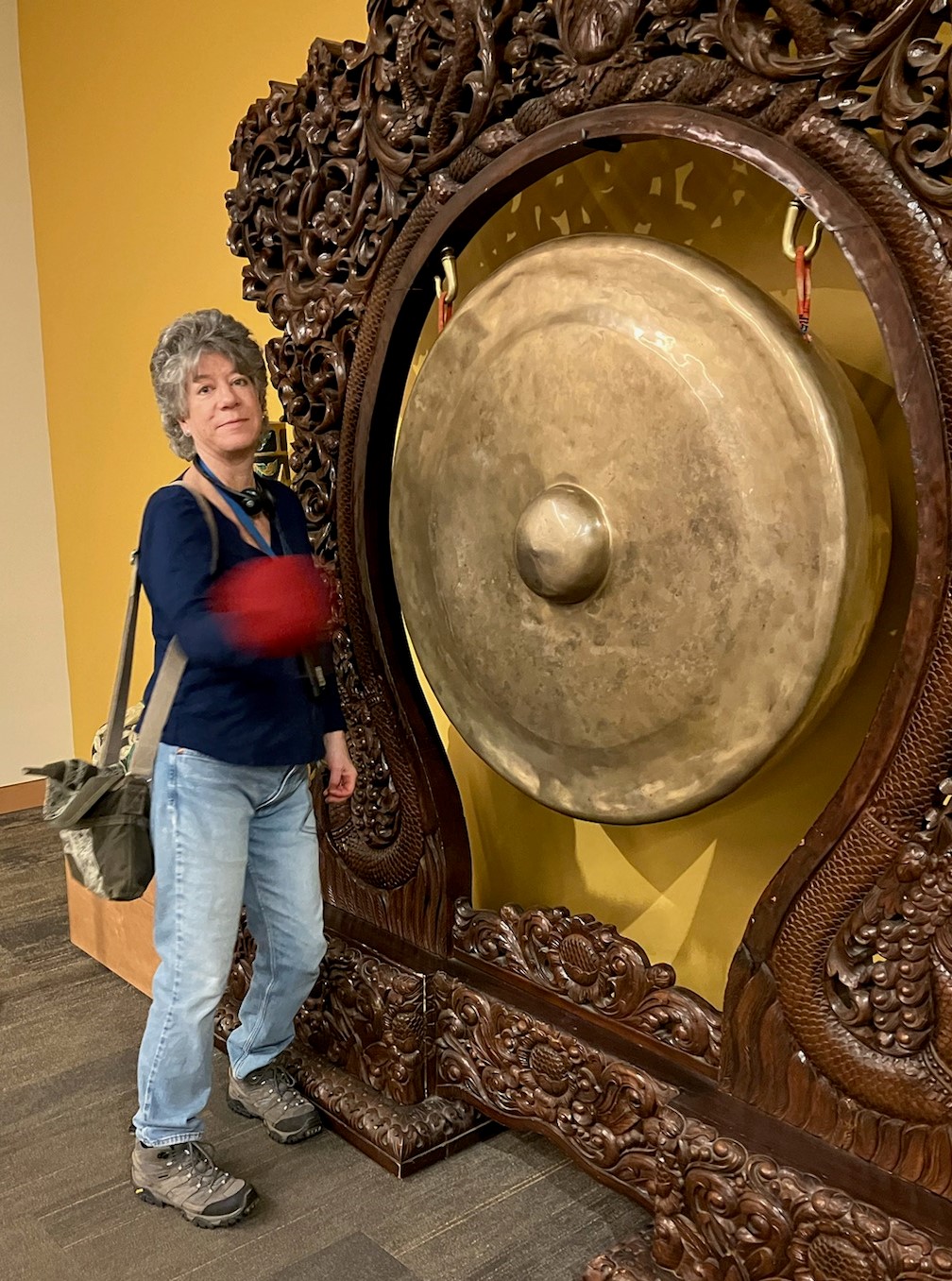
Marie getting it on, banging a gong.
The museum delivers on its mission and motto in spades! We could have easily spent an entire day perusing the exhibits. The upper floor has instruments from different geographic regions such as Asia, Europe, and Latin America. Tours are self-guided with an audio headset.
The lower level contains two of my favorite galleries. The Artist Gallery highlights famous musicians past and present, such as Prince and Johnny Cash. Each display features photos, music audio, and memorabilia. Prince’s had a purple piano from one of his tours. One unusual exhibit focuses on the theremin, an eerie electronic instrument played without any direct physical contact by the performer. Clara Rockmore was a theremin “virtuoso” featured.
My other favorite was the Experience Gallery. We were allowed to unleash our inner musicians in this room, which offers banjos to pluck, drums to beat, and gongs to gong.
The museum’s Mechanical Music Gallery shows self-playing pianos and the like. We arrived just in time for a demonstration of a wall-sized instrument called an orchestrion. It’s powered by compressed air and is like having a whole orchestra at the ready.
Until fall of 2024, the museum has a special exhibit called Acoustic America, which displays 90 iconic guitars, mandolins, and banjos that shaped American music since the Civil War. If you’re a stringed instrument-lover, you’ll have to check that out.
If you can’t just pick up and head to Phoenix, the museum provides this virtual tour.
We left the Musical Instrument Museum with many songs in our hearts.
Once upon a time, a woman lived alone in the northern Minnesota wilderness. Except, she wasn’t really alone. Birds and otters kept her company. Canoeists stopped by her island on Knife Lake near the Canadian Border. At one time, she even ran a resort there.

Image courtesy of the Dorothy Molter Museum.
But after the land was designated as an official roadless area and then a Wilderness with a capital W, making a living became more difficult for the woman, not to mention getting supplies. Rogue sea plane pilots tried to help her, but they were arrested. The only thing the woman could do was haul in the supplies she needed by canoe, portaging five times over the 33 miles to civilization.
In 1952, a writer with the Saturday Evening Post visited her and wrote a story about “The Loneliest Woman in America.” The article turned her into a national legend – a woman living alone among wolves and braving minus 50-degree winter temperatures. But the woman always contended the writer got it wrong, she was never lonely, even in winter.
One day, she was cleaning and found dozens and dozens of glass bottles left from when her resort served pop (as we call it in Minnesota). Rather than haul out the bottles and discard them, Dorothy Molter (as was her name) got the idea to make root beer for passing canoeists in the Boundary Waters Canoe Area Wilderness.
Dorothy Molter’s root beer cooler.
She hit the jackpot. If there’s one thing most wilderness campers appreciate, it’s a fizzy cold drink after days away from civilization. Dorothy made her drinks with root beer extract, sugar, yeast, and water from Knife Lake. They were cooled on ice cut from the lake in winter. Canoeists donated a dollar per bottle.
Dorothy made root beer for years. At the height of her business, she produced 12,000 bottles and still couldn’t keep up with demand. She was trained as a nurse and aided any canoeists who needed help by sewing up cuts and removing fishhooks from various body parts. She once saved the lives of a father and son who got hit by lightning in a sudden summer storm. Dorothy also nursed wild animals, including a crow and a mink.
A strong and plain-spoken woman, Dorothy didn’t swear or curse, but she didn’t mince words either. Her philosophy for surviving in the wilderness could be summed up in the sign she posted at her home on the Isle of Pines. “Kwitchurbeliakin,” it advised.
Dorothy continued living in the wilderness until she was in her late 70s. She kept in touch by radio, checking in with Forest Service staff daily. One winter day she didn’t check in. Then another day passed with no contact. A wilderness ranger made the trek and found her dead of a heart attack from hauling wood.
The Dorothy Molter Museum, Ely, MN
Although Dorothy’s time passed, her memory is preserved in a museum named after her in Ely, Minnesota. The fame and good will she garnered through her lifestyle prompted its formation.
Russ and I had heard of Dorothy over the years but never had a chance to meet her or visit her museum. We thought we were out of luck on a recent camping trip to Ely because a brochure we happened upon said the museum was closed after Labor Day.
With drizzly weather forecast, Russ and I ditched hiking plans and meandered into Ely to see what struck our fancy. We had driven though the whole town with no fancies struck, when we passed the sign for the Dorothy Molter Museum on the outskirts. The sign read “Open.” So, we turned in, hoping the sign wasn’t just the product of end-of-season-forgetfulness on somebody’s part.
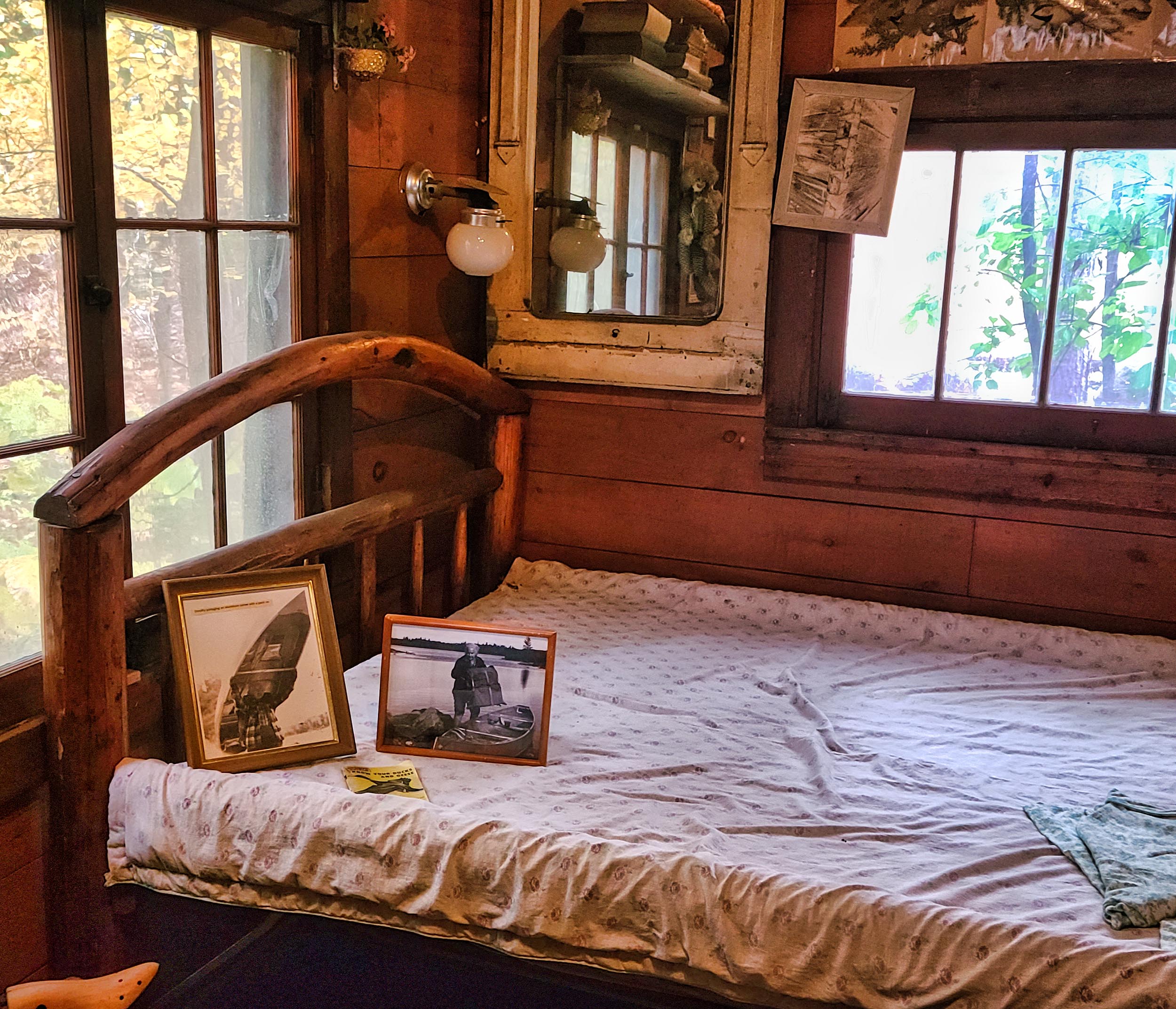
The museum really was open! We spent a couple of hours touring Dorothy’s cabins, which volunteers had hauled out of the wilderness to house her artifacts. We enjoyed watching excerpts from a video about Dorothy’s life. We viewed her root beer-making equipment and perused the gift shop, where visitors can buy a bottle of Dorothy’s root beer. Despite the drizzle, we also got a bit of hiking in on the quarter-mile trail in the pine plantation surrounding the museum.
We left glad to see Dorothy’s memory preserved. As one of the museum signs says, “Although Dorothy has been gone from Knife Lake for over 30 years, we hope that you find inspiration to live your lives like she did, in harmony with the environment, with integrity, helping humankind, and making a contribution toward a better world.”
Rain moved in on our last full day at Pictured Rocks. It foiled our morning plans to hike from our campground (Hurricane River, Lower Loop) to the Au Sable Lighthouse, a 3-mile round trip. But after Russ and I read and were generally slothful, the rain stopped in the afternoon and we were able to hike.
The “trail” to the lighthouse is more like a gravel road. In fact, the park employees who staff it drive on it with their car. It’s mostly level and easy walking along the shore of Lake Superior. Several shipwrecks lie on the beach near the lighthouse, but we couldn’t access them because of the rough waves.
The treacherous sandstone makes up Au Sable Point.
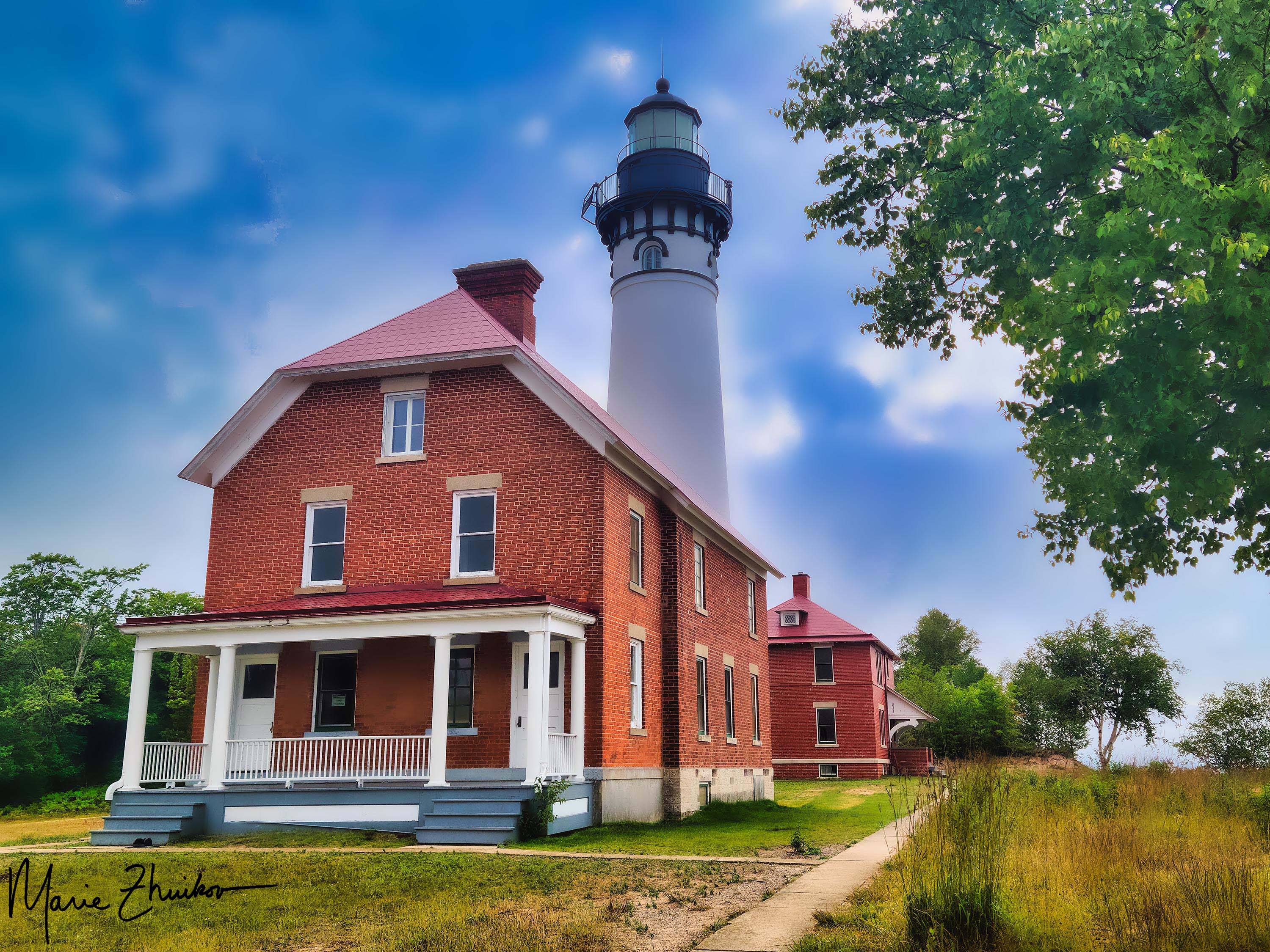
The light station is comprised of a small museum, the lighthouse and keeper’s quarters, a foghorn signal building, two historic outhouses (plus one the public can use), and a small brick oil building.
I’d wanted to visit this particular lighthouse for several years – ever since I discovered it’s the twin of the lighthouse on Outer Island in the Apostle Islands National Lakeshore. I would like to set a novel in the Outer Island lighthouse but was unable to tour inside it, so the Au Sable Light was the next best thing! Tours are offered during the summer for $5.
With its underwater reefs and thick fogs, Au Sable Point is a hazard to Lake Superior mariners. The lighthouse was built in 1874, the same year as the Outer Island Lighthouse. The light tower is 86 feet high. In 1945, the U.S. Coast Guard took over operation, replacing civilian keepers. In 1958, the Coast Guard converted the light station to an automatic, unattended light and discontinued the fog signal. The station became the property of the park service in 1968. The Coast Guard maintains the small LED beacon and solar panel that charges its battery. The park has completed several restoration projects over the years.
The Au Sable Lighthouse as the fog rolled in.
The furnishings inside the lighthouse are not original, but they are of the appropriate time period. The keeper’s quarters consist of a kitchen, dining room, living room, bedroom, work room and several closets. The lighthouse tower can be accessed directly from the living quarters.
The second floor of the keeper’s quarters is much like the first and was built for the assistant keeper’s family. Tours include a trip up the 90 steps to the top of the tower, with its impressive view of Lake Superior and the surrounding forest.
After the tour, Russ and I wandered the grounds (with me taking photos). As we prepared to leave for the hike back to the campground, a fog rolled in, completing the ambiance.
Our evening plans included a drive to Munising to trade in our Spam camping food for more elegant fare. We made reservations at Tracey’s at Roam Inn. It was pricey, but the food was worth it! I had the Lakeshore Pan Roast – a seafood stew made with lobster, whitefish and scallops in reposado cream (made with tequila). Russ had the Grass-Fed Bison Filet Mignon. You can choose three different ways for your meat to be prepared. He chose the “House” method, which involves covering the meat in pepper and serving it with mashed potatoes, birch syrup asparagus, and morel mead cream. If you like pepper, this is the dish for you.
The Lakeshore Pan Roast from Tracey’s Restaurant in Munising, MI.
Both of our meals were luscious and provided the perfect end to a wonderful trip. For dessert, Russ had the chocolate cake (served with raspberry sauce and whipped cream), and I had the crème brulee served with lingonberry sauce and a stroopwafel (a Dutch waffle cookie with caramel filling). This put our meals over the top!
Chocolate cake for dessert.
As we dined, we reflected on our experience. I was tickled by how excited people became from seeing “rocks.” On our sunset cruise, they were taking selfies with the various rock formations as well as cell phone videos to share with friends. Calling the Pictured Rocks National Lakeshore “just a bunch of rocks” (like our church friend did) was like calling the Grand Canyon “just a big hole in the ground.”
The next day, we would drive home with our Scamp. But we would do so filled with a new appreciation for an area we had driven past many times but never had time to visit.
I’m a born and bred Minnesotan. I’ve lived there almost my whole life. Sometimes, that can make working for Wisconsin institutions like Sea Grant and the University of Wisconsin-Madison challenging. While I am technically a UW-Madison employee, I live in Duluth, Minnesota, and my office is just across the border in Superior, Wisconsin. Although I’ve worked for Wisconsin Sea Grant 10 years, I’m not as steeped in my workplace’s culture and geography as I am in my home state’s.
This can lead to some interesting mistakes. One happened a few months ago when a co-worker said they grew up on Wisconsin’s Fox River. I only knew the part of the Fox that connects to Green Bay so, in the story I was writing at the time, I put that person’s birthplace near Green Bay. I was chagrined to learn she actually grew up near Oshkosh on a branch of the river 50 miles away from where I originally placed her.
I hate making mistakes in my stories. Even if it’s just during a draft. So, when I saw an announcement for the Wisconsin Idea Seminar in the UW employee newsletter, I jumped at the chance to apply.
The seminar is an annual five-day immersive study tour of Wisconsin culture and geography for UW-Madison faculty and staff. It’s designed so that participants:
Gain a deeper knowledge of the cultural, educational, industrial, social and political realities of Wisconsin
Learn firsthand about the social and cultural contexts that shape the lives of many UW students
See and experience the University’s connections to the state
Understand the public service mission of the University
Nurture an increased mutual understanding between the University and the people of Wisconsin
What this looks like in real life is about 40 people on a big red Bucky Badger bus riding around the state, talking to people and to each other, participating in activities and drinking in the landscape. The theme this year was Forest + River, which was right up my alley as a water research storyteller who is also a Wisconsin geographically challenged person.
This post focuses on just one of our experiences during the seminar’s first day. I plan to write another post later about the rest of the trip and a visit to the Green Bay Packaging Plant, which makes recycled paper used in boxes.
*
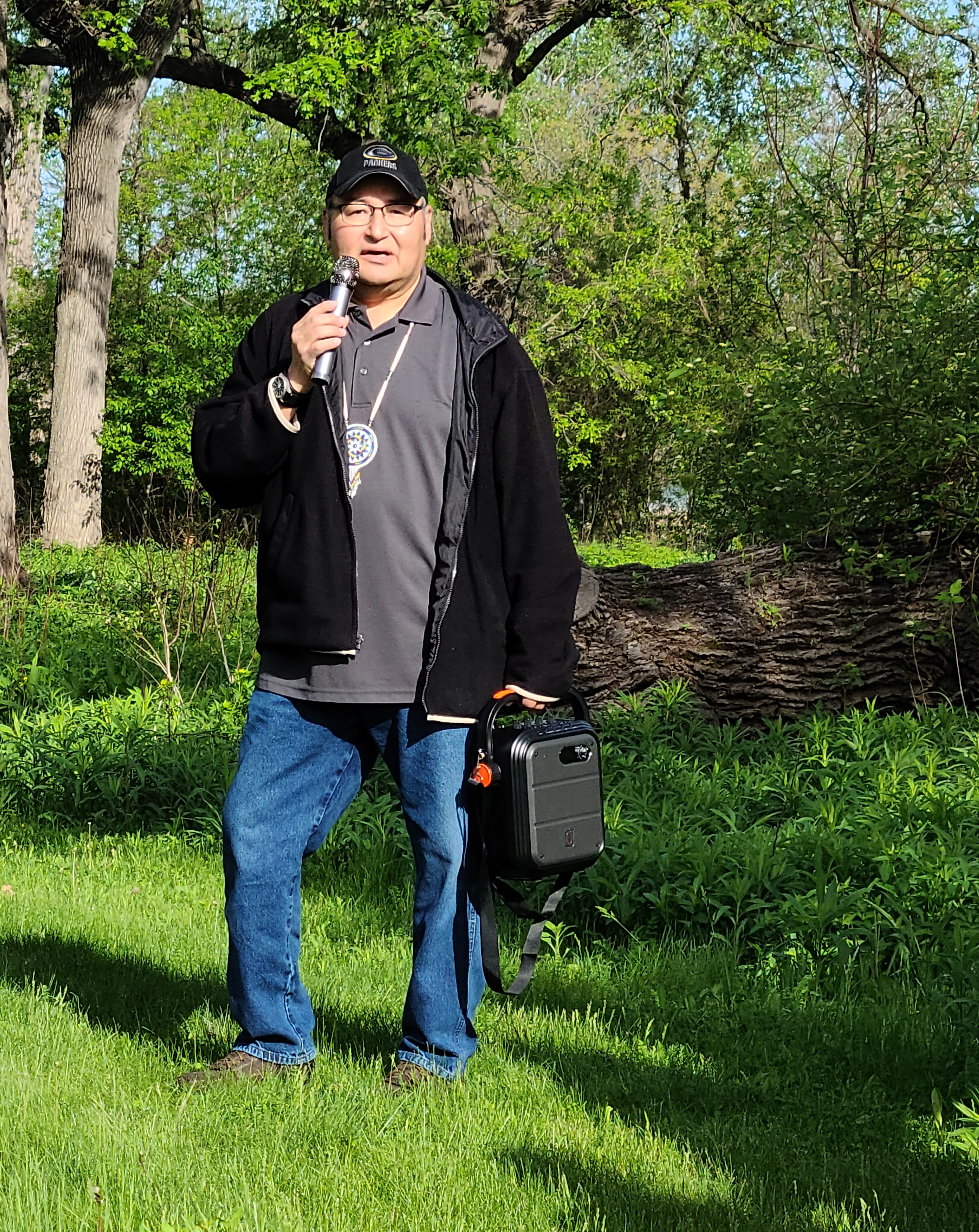
Our experience began on the Madison campus with a walking tour of Ho-Chunk sites. Amid a cacophony of spring birdsong, Bill Quackenbush, tribal historic preservation officer for the Ho-Chunk Nation, took us to several effigy mounds. These are ancient burial mounds formed in the shape of animals — birds, in the case of the two that we viewed.
Bill Quackenbush, Ho-Chunk tribal historic preservation officer.
The Madison campus is home to more of these ancient earthen monuments than any other university or college campus anywhere in North America, and probably the world. There are 38 burial mounds. At least 14 others have been lost to development. They are several thousand years old, perhaps as ancient as Egypt’s pyramids.
I learned something new right off the bat, mainly that there is a goose-shaped effigy mound right outside the Sea Grant office in Goodnight Hall. Granted, I don’t work on campus, but you’d think I would have heard something about that during my career here! Quackenbush said a Ho-Chunk village used to be where the office building is now located on the shores of Lake Mendota.
He explained how the Ho-Chunk are working to reclaim their culture. “These earth works are one small example of a portion of our life. We are no different today then we were back then. We humans like to take care of not only our babies and our children, but also our ancestors,” Quackenbush said.
The goose effigy burial mound near the Sea Grant office on the UW-Madison campus.
He criticized a stone marker on the mound not only for disturbing the site but for the text on it, which gives the impression that the mound is a thing of the past. “It isn’t a thing of the past at all,” Quackenbush said. “This is ever-present. It’s living and it’s here. Our ancestors are buried in this ground. They’re living, breathing things to us like that tree over there. Their bones have probably returned to the earth by now, but it’s the ground that is sacred to us.
“However, I don’t want to be all doom and gloom. There’s a lot of good things that have come from protecting these mounds,” Quackenbush added.
The mound site was designated on the National Register of Historic Places a few years ago. The University is working to restore an oak savannah that used to exist there.

The Ho-Chunk Clan Circle.
A short walk took us to the Ho-Chunk Clan Circle, a series of 12 metal sculptures that was dedicated earlier this year. Each depicts a clan symbol. Quackenbush said the circle represents the Ho-Chunk people as a whole.
Fitting my Sea Grant employment, I found myself standing near the Water Spirit sculpture. Quackenbush said the tribe was involved in the process of creating the circle and that the sculpture offers opportunities for him to meet and speak with more groups such as the Wisconsin Idea Seminar participants. He explained the various clan roles and how they fit into the tribe’s governmental system.

Next, the group was able to view a dugout canoe that Quackenbush built with the help of Ho-Chunk youth. They built it in much the same style as the ancient canoes that were recently discovered in Lake Mendota.
Quackenbush’s dugout canoe.
“This canoe doesn’t look very exciting, but the journey it’s been on is,” Quackenbush said. “When I saw that the historical society discovered the dugout canoes in the lake behind you as I was drinking my cup of coffee, it shot out of my nostrils! It was amazing to me because we had aspirations of putting one of them together.”
He worked with Dane County to find a suitable cottonwood tree that was going to be removed for a trail project. The county delivered the tree to a youth education center, which is where Quackenbush and the students worked on it. Everything came together and, like the clan circle, the canoe is a great educational discussion piece.
Amy Rosebrough, interim Wisconsin state archeologist, joined us and described how the historic dugout canoes were found. She also detailed the significance of the new canoe. “These lakes remember. With the canoes, they’re telling the story of the Ho-Chunk presence here.”
Her office’s goal has been to work with Quackenbush and other partners to keep that story alive, “…To let people know that when they’re out there fishing, this isn’t something new. This is something that’s been going on for thousands of thousands of years. It’s not just the mounds, it’s this whole landscape. And to have Bill and his team come through with this new dugout, that was a wonderful thing – to sort of bring that back,” Rosebrough said.
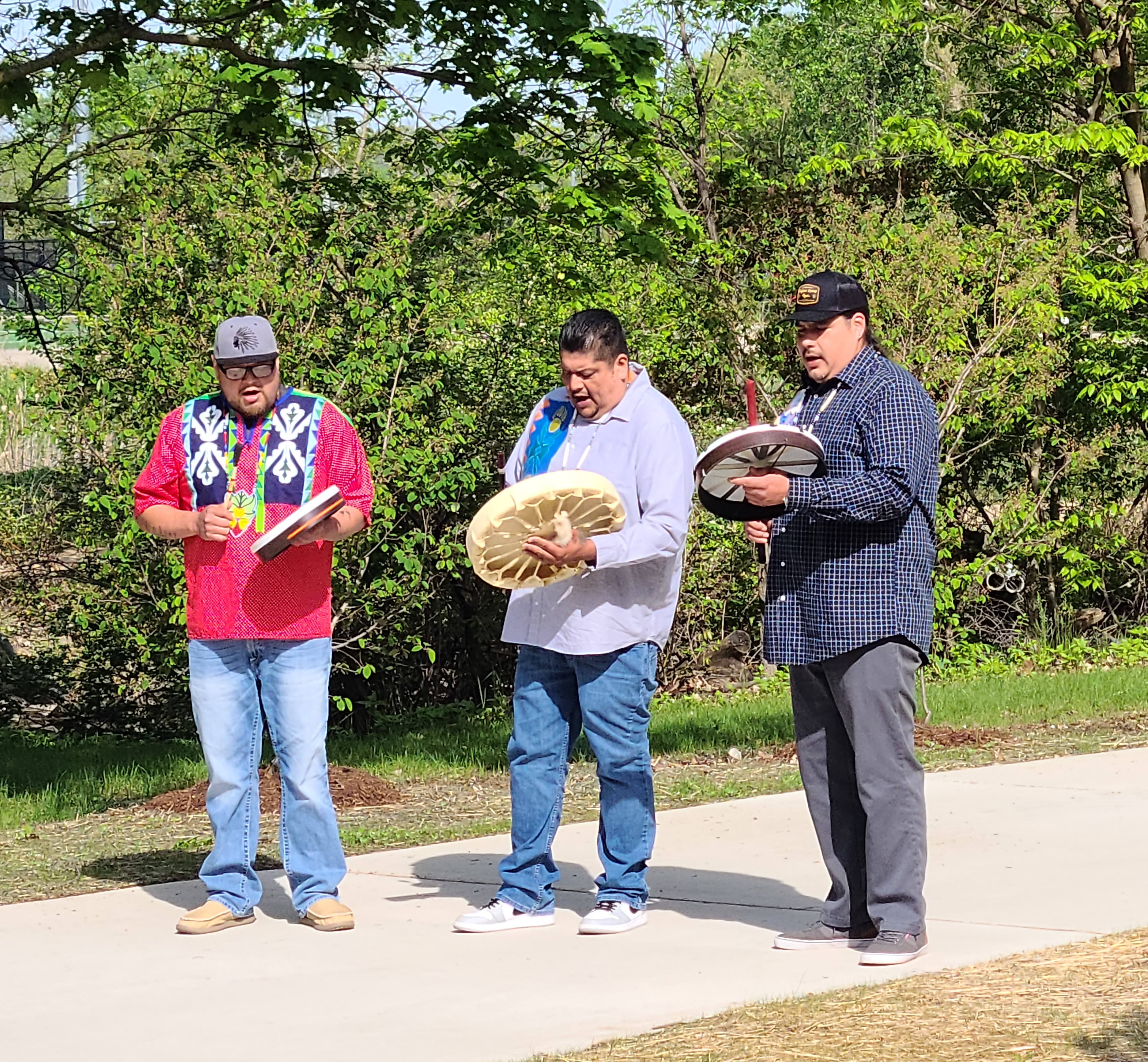
Our visit ended with a Ho-Chunk drum ceremony by the Iron Mound Singers. Listening to them was like hearing the heartbeat of the Earth. That is definitely not something I get to do everyday in my job as a science writer. As we walked back to the bus to head to Portage and Appleton, I felt privileged to learn more about Ho-Chunk culture and the history of the land where the university stands.
The Isle Royale Lighthouse on Menagerie Island. Image courtesy of the National Park Service.
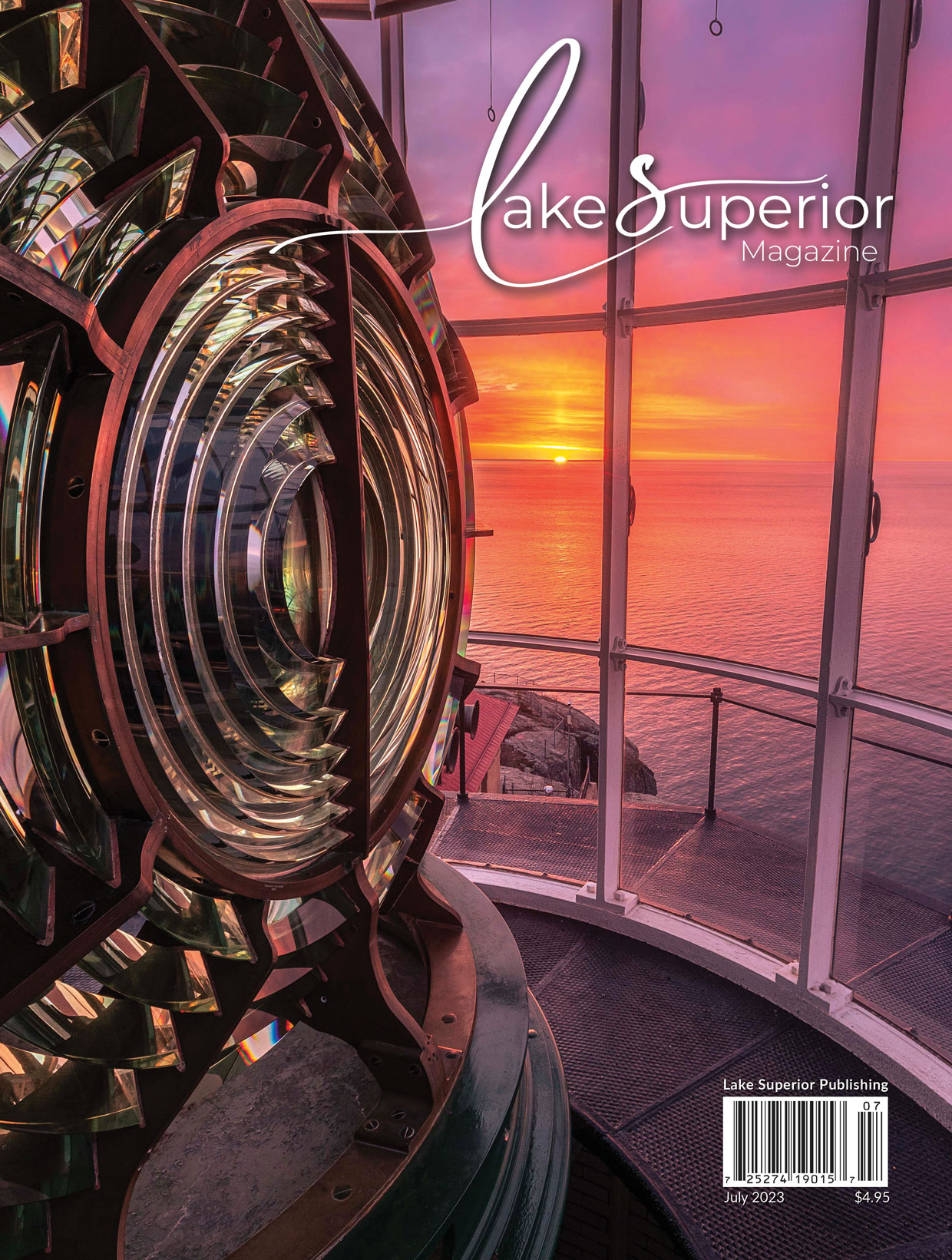
I recently had an article published in Lake Superior Magazine about a family of lighthouse keepers who spent their summers on a remote, rocky island that’s part of Isle Royale National Park. Here’s how the story (“Romancing the Stone”) came about.
Last December, I was hawking my books at a table at Fitger’s Bookstore in Duluth. Many holiday shoppers passed by, but one couple stopped to chat. Somehow, we got on the topic of Isle Royale, and I told them that my first novel was set on this island in Lake Superior.
The husband said something like, “Well, I’ve got a story for you. My ancestors were lighthouse keepers for two generations on Isle Royale.” The husband’s name was John Malone. His wife was LaRayne, and she mentioned they got engaged while on a trip to the “family’s lighthouse,” which was the Isle Royale Light on Menagerie Island. John mentioned that his lighthouse keeper great-grandfather had 11 children who lived out on the remote (and very small) island.
Although intrigued, I had plenty of story ideas in my head to keep me occupied for months. I told them I’d consider it but couldn’t promise anything.
But the more I thought about it afterward, the more interested I became in the story of the Malone Family. I checked with the Lake Superior Magazine editor to see if they’d ever featured a story about the Isle Royale Lighthouse and the Malone Family. She told me they hadn’t and that she would be interested in it.
I couldn’t find John Malone in the phonebook, but I was able to connect with him through social media. I reminded him who I was and told him I was interested in doing a story about his ancestors and family. On New Year’s Eve, he replied to me with his phone number. I called him to get more information so that I could pitch the story to the magazine.
Not long after, I pitched it, and the story was a go!
Then the work began. I was lucky that the Malones had a copy of a copy of the Isle Royale Lighthouse Keepers’ log, which they loaned me when I visited their home for an interview. Also, the National Park Service had done oral history interviews with two Malones a few decades ago. These Malones were now deceased, so those interviews were invaluable. I was able to combine those interviews with the ones I did with John.
After the last lighthouse keeper in the Malone Family quit his job on Isle Royale, he piloted yachts for the wealthy in Duluth. One of those families were the Congdons who built Glensheen Mansion, which is a tourist attraction now in the city. John Malone told me a tale about how his ancestor had been aboard the yacht when it sunk due to a fire. He had this great information (which is in my magazine story), but he didn’t think that the staff at Glensheen Mansion had heard the history.
It so happens that my daughter-in-law used to be a docent at the mansion and still has ties there. I consulted with her and she consulted with the staff at Glensheen to see what they knew about the sinking. It seemed as if a meeting between John and the mansion staff was in order, so I arranged it.
We met at the mansion and met with a Glensheen historian and the education manager. John got to tell his tale and I recorded it for my story. The mansion staff was excited to learn this new information. I hope they work it into the information that they provide to the public. And I think John was touched to have someone value the historic information he was privy to.
The Lake Superior Magazine editor only wanted a 1,200-word story, but I gave her more like a 2,000-word story. I apologized, saying the more I learned, the more there was to tell! But it paid off in the end because she dedicated much of that issue to maritime history.
Trying to sell books to people passing in a hallway can be depressing. I sometimes feel like one of those poor souls who stand on a street corner with a cardboard sign. My sign would say, “Will write for pay.” But this is one case where several good things came from putting myself out into the world.
Architectural drawings for the Isle Royale Lighthouse.This did not make it into my magazine story. Illustration courtesy of the National Park Service, U.S. Department of the Interior, Isle Royale Light Building Proposal, ISRO Archives, ACC#ISRO-00999, Cat#ISRO 20175.
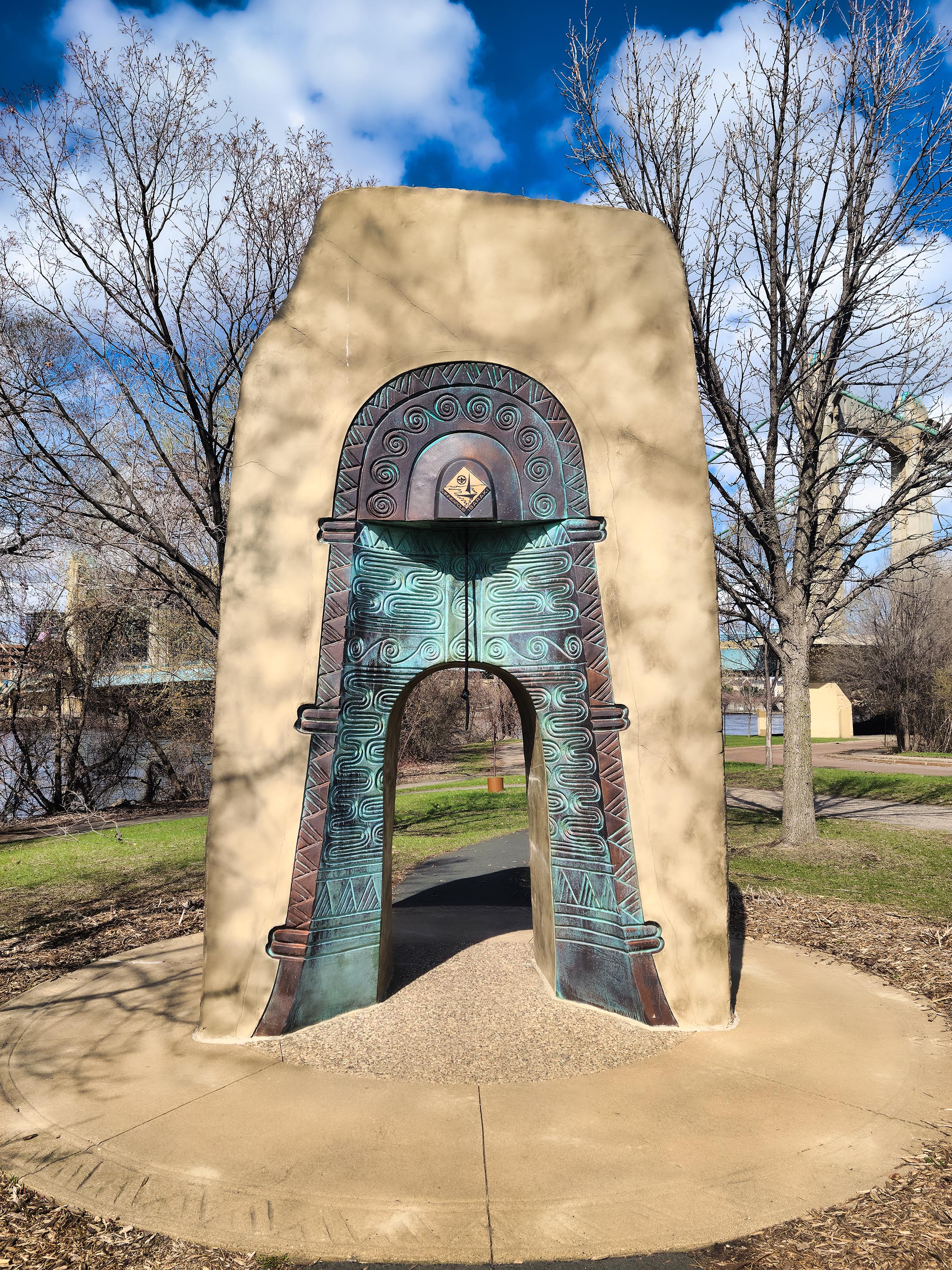
This is the Bell of Two Friends on Nicollet Island in Minneapolis. We came across it during an impromptu walk around the park pavilion. See the rope hanging down over the archway? Ringing the bell it’s attached to signifies a prayer for world peace and continued friendship between the people of Minneapolis and their sister city, Ibaraki, Japan.
The sculpture was inspired by a 2,000-year-old terra cotta mold of a bronze bell, discovered in Ibaraki. We didn’t know all this when we rang the bell, but we could feel the friendship somehow.
Nicollet Island is supposedly the only inhabited island in the Mississippi River. I’ve had the chance to visit it on several occasions. Each time, I come away thinking that if I was forced to move from Duluth (probably at gunpoint, which is what it would take) and reside in the Twin Cities, I might be able to be happy on this island.
I love the historic feel of it, the energy of the river that runs on both sides, the roar of St. Anthony Falls, the green spaces, and old homes. My latest visit prompted me to read a book about the island (“Nicollet Island” by Christopher and Rushika February Hage). I learned that there used to be five other islands near it but once settlers arrived, two were filled in so that they joined the riverbank, two were destroyed when a lock and dam was built, and one eroded.
The view from underneath the Hennepin Avenue Bridge on Nicollet Island.
Before it was named for explorer Joseph Nicollet, the Dakota people called it “wita waste,” meaning beautiful island. They fished from its banks and tapped maple trees that covered it. Rites of transition from childhood to manhood were carried out there and the island was considered as a safe place for women to give birth. Plus, it had the added benefit of the sound of the falls to drown out the screaming. 😊
Waterpower from the falls proved irresistible to the settlers, who used it to run sawmills and flour mills. Once the home of the most fashionable and prominent Minneapolitans, the island changed drastically after a fire in 1893 that began by boys smoking at a Wagon Works. Eventually, rebuilding occurred in the form of a Catholic high school and a monastery. Once-elegant apartments were subdivided and occupied by pensioners and veterans. As the economy tanked during the Depression, the island became home to the homeless.
The Hennepin Ave Bridge in black and white.
In the 1950s, the city razed many buildings in the nearby Gateway District, forcing even more homeless people to the island. Then the razing eyes of city government turned toward the island, but the residents resisted.
In the 1960s and 70s, the island was a favorite with the counterculture. Musicians, artists, (dare I say writers?), and drug-users coexisted with the poor island residents. They did not want to be “improved” upon by city planners.
In 1971, St. Anthony Falls and the island were designated in the National Registry of Historic Places. A city preservation commission helped with a movement to preserve the island’s historic homes. Eventually, a city park was established on the site of vacant industrial land.
Now, people like Russ and I enjoy walking, biking, and running on the island. And we ring a bell in world friendship.
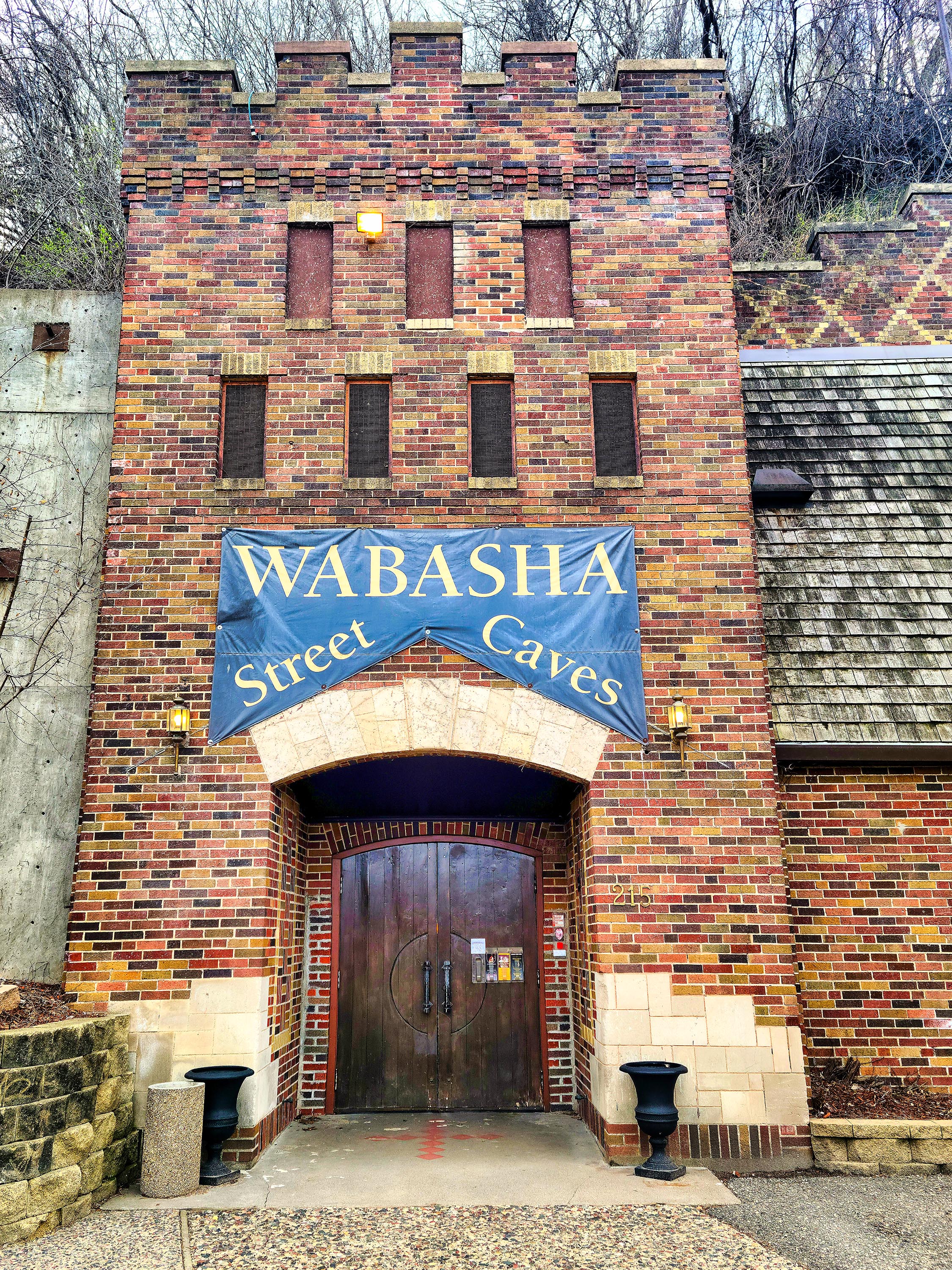
Russ and I meandered to the big city recently: i.e., the Twin Cities, i.e., Minneapolis and St. Paul, Minnesota. One of our stops was a tour of the Wabasha Street Caves in St. Paul.
This series of seven caves are in a sandstone/limestone bluff not far from the Mississippi River. They were dug in the 1850s to mine silica for making glass.

Our tour guide was named Lois. She began our tour not in the fancy entrance that leads to a refurbished part of the cave, but in a more primitive entrance, where we could see what the unfinished, original walls look like. While we stood in front of an entrance to a side cave, Lois explained that once the silica mining was over, the caves were used to store produce from off the river boats. Temperatures range from 50 to 55 degrees, which makes the caves ideal for storing veggies, growing mushrooms, and aging cheese.
The Wabasha Street Caves were once home to the largest mushroom growing operation in the United States. An immigrant Frenchman and his wife saw the cave’s dampness, darkness, and cool temperatures as the perfect environment for growing the delectable fungi. Plus, the streets of St. Paul provided a free source of growth medium in the form of horse manure.
Although that operation eventually ceased, the mushroom company lives on today in the form of Lehman’s Farm in Lakeville, Minnesota, which sells its marinated mushrooms to high-end food outlets like Lunds & Byerlys. The caves were also used by the Land O’Lakes Company to age Roquefort cheese.
In the 1950s, the caves fell into disuse until a flood caused massive damage to St. Paul. Lois said the caves were seen as the perfect place to store all that untidy debris. She shined a light down a side entrance where she stood to show us it was filled with old tires and dirt. But, before the flood, in the 1920 and 30s the cave was modified as a speakeasy, casino, and a nightclub. The debris-strewn side tunnel was thought to once lead to the speakeasy.
Tour guide Lois tells us spooky tales of nefarious doings in the Wabasha Street Caves.

From there, our tour moved into the refinished part of the cave. We saw the long bar, which was rebuilt based on old photos. Stucco covered the ceiling and water pipes and electricity ran through the walls. A separate section contained a dance floor, fireplace, and a stage. Lois said that famous jazz bands used to perform in the cave’s Castle Royal Nightclub.
The nightclub and casino were favorites with local gangsters. St. Paul had the reputation as a safe haven for them. The police wouldn’t arrest gangsters as long as they didn’t commit any crimes in St. Paul, although Minneapolis was fair game! The gangsters also shared their ill-gotten gains with the police department. This was called the Layover Agreement.
Despite this agreement, one notable crime happened in the caves. Four gangsters were gambling after hours. One of them apparently took umbrage at the conduct of the others and shot them all dead with his Tommy gun. At the noise, a cleaning lady ran in from another room to find three of the gangsters lying dead in pools of blood. She alerted the police who came to investigate.
Suffice it to say, with the cozy relationship between the gangsters and the police at that time, justice was not served. The police cleaned up the scene and chided the cleaning woman for filing a false report. It’s thought the bodies of the three gangsters still reside in the caves somewhere. Despite the protestations of the police, evidence of the crime can be seen in bullet holes on the cement fireplace.
Now the caves function as an event center and tourist attraction. They offer swing dancing and special ghostly tours. We were fascinated to learn about the caves and the shady history of the city of St. Paul.
An angry raccoon. This image is from a Fox News story about a Florida couple who thought they were attacked by a bobcat, but after DNA analysis, it turned out to be a raccoon.
In his “Recollections of L. E. Potter,” my great-grandfather Laforest, who was a young settler in Minnesota tells a cute story that I didn’t have time to include in an earlier post about him.
The year was 1865. The family of 12 had moved from Wisconsin to Minnesota, settling for a time on the banks of the Watonwan River a few miles south of Madelia. One spring day, Laforest’s father John was mowing hay with a scythe about 80 rods from the house they were renting. Laforest writes (edited for clarity):
*
I was sent to take him a drink of water, also a watermelon. We got our water from a spring on the riverbank back from the house. I took my pail and melon to the top of the bank or bluff, laid the melon down by the side of the path and went down the path through the brush after the water. When coming back up the bluff, I heard something going through the bushes straight down to the river. This was rather startling to an eight-year-old.
Laforest Potterin his later years.
When I got to the top of the bluff and my melon was gone, boy-fashion, I did not stop to reason, but let my imagination run wild. I thought some animal had carried it off and that was what I heard going through the bushes.
I took the water to father and told him about the melon and the animal that carried it off. The more I talked about it, the better my imagination worked until I could tell what the animal looked like – what color he was, bigger than a dog. In my mind it was something terrible!
Father asked what I thought it was. I couldn’t tell him. So, he said he thought it must be a Racorebob.
Father told folks about my Racorebob for years after. Whenever my imagination would get the best of reason, I was reminded about my Racorebob. I believe it has always had a good effect on my life.
Father found the melon at the foot of the bluff, smashed against a tree. Somehow, it had started rolling down the bluff and that was what I heard.
*
(Marie here – I’m not sure what the word amalgam Racorebob means. Laforest never explained it, but my guess would be a “raccoon or bobcat?” Any other interpretations are welcome!)
Long-time readers of my blog may recall that I identify with my Scottish heritage. I had a chance to celebrate that recently by attending Robert Burns Night, which was organized by the Duluth Scottish Heritage Association (DSHA).
Robert Burns is a well-know historic Scottish poet. If you’ve ever sung Auld Lang Syne on New Year’s Eve, you have him to thank. His birthday is recognized on January 25 by Scots, rather in the tradition of Christ’s birth on December 25 by parts of the world, if you’ll permit me a bit of sacrilege.
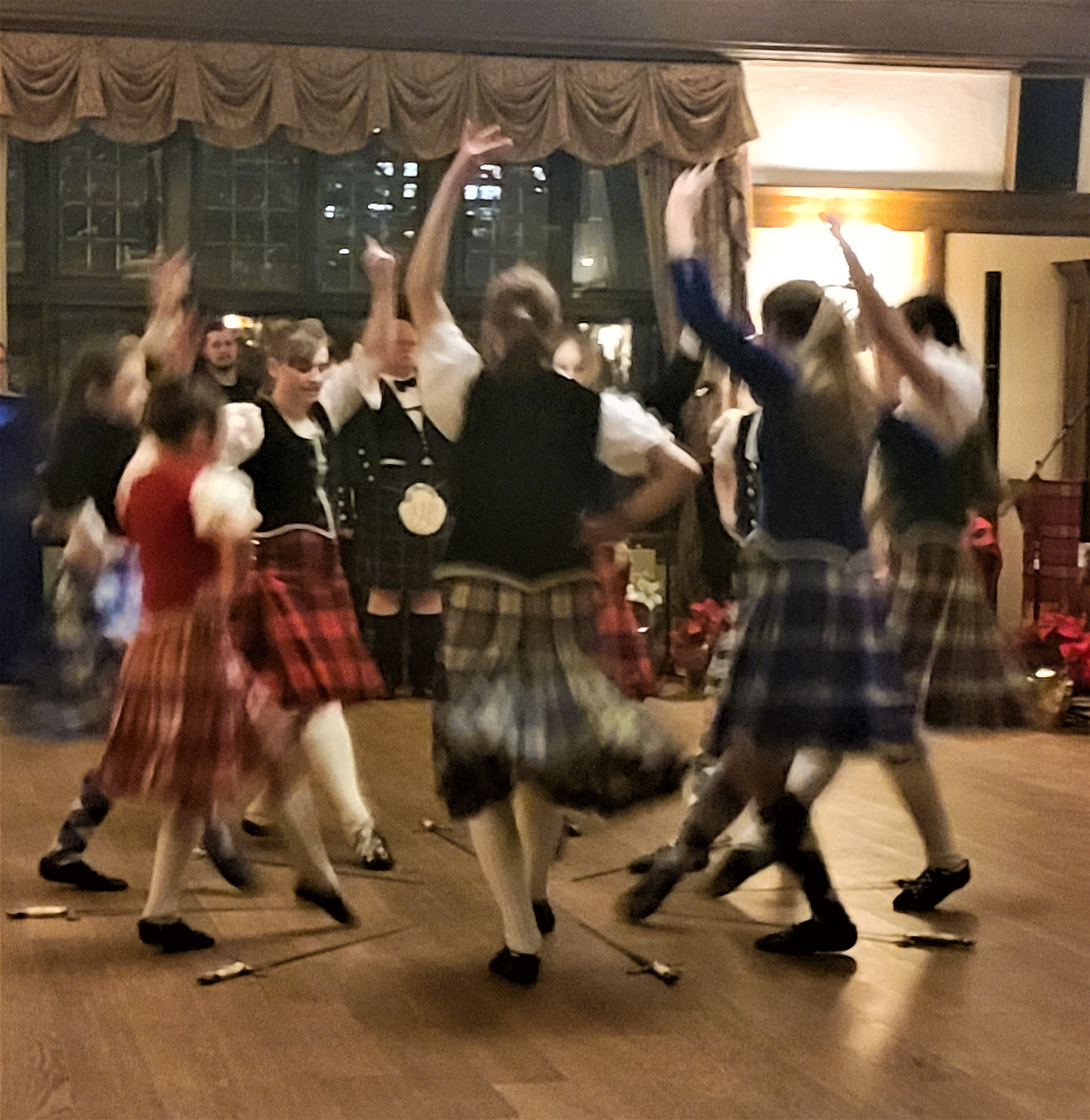
Scottish dancing lassies doing the sword dance.
The celebration was held at a historic club downtown. This was not my first Robert Burns Night. My mother took me to one held at the university many years ago. Then last year, Russ and I ordered a takeout Robert Burns dinner from the club since there was no gathering due to the pandemic. That “dinner” fed us for four days! It featured neeps and tatties (turnips and potatoes), haggis (more about that later), black pudding (blood sausage), Scotch eggs (hard-boiled eggs wrapped in sausage meat, breaded and fried), and trifle for dessert (a decadent concoction of cake cubes layered between berries, pears, and vanilla pudding mixed with whipped cream).
Attendance was larger than usual for Burns Night this year because it was the first time in three years it had been held in person. One-hundred-and-sixty of us gathered in kilts and clan scarves to listen to bagpipes and watch Scottish dancers.
After that came the formal part of the program, which included 4 toasts of scotch: One to “the immortal memory of Robert Burns,” one to the president, one to the king, and one in Gaelic.
Then came the star of the show, the Haggis. This traditional dish takes minced sheep heart, liver, and lungs, and mixes it with oatmeal, suet and spices like nutmeg, cinnamon and coriander, plus salt, pepper and stock. The mixture is boiled in a bag, usually made from a sheep’s stomach. We love it. I’d say it tastes like a chunky beef barley stew.
The Haggis is paraded into the hall by the chef and a whisky bearer, led by a piper in formality that would border on the absurd if it weren’t Robert Burns Night. Once the Haggis was settled up front, one of the DSHA members recited Burns’s “Address to the Haggis,” which involved stabbing it with a large knife and inhaling its pungent vapors.
Make way for the Haggis!
After that, a local reverend offered grace and a piper in the rafters played “Amazing Grace.” Then we dispersed to seven clan rooms. Each featured different foods to sample and memorabilia specific to each clan. One room featured scotch. I was disappointed at the lack of trifle this year, but our enterprising friends found dessert bars on a different floor.
After much eating and conversation, a ceilidh dance was held in a large lounge room. Even though I’ve been to a ceilidh before, it wasn’t until that night that I learned (from overhearing a conversation) that ceilidh means “party” or “social visit.” We danced and listened to Scottish music performed by a live band.
We were sated and pleasantly tired from dancing once the evening ended. We felt like we’d been on a trip to Scotland without leaving the comfort of our own city. If you ever have the chance to attend Robert Burns Night, I’d encourage you to do so. It’s a spectacle, indeed.
Russ and I took a long-awaited and several times cancelled trip to warmer climes earlier this month. We orginally planned to meander to Grand Cayman Island, but our timing was unfortunate. Twice our reservations coincided with times the island was closed due to COVID restrictions. We gave up on trying to go to a U.K. territory and opted for a Dutch/French one instead, the island of St. Martin.
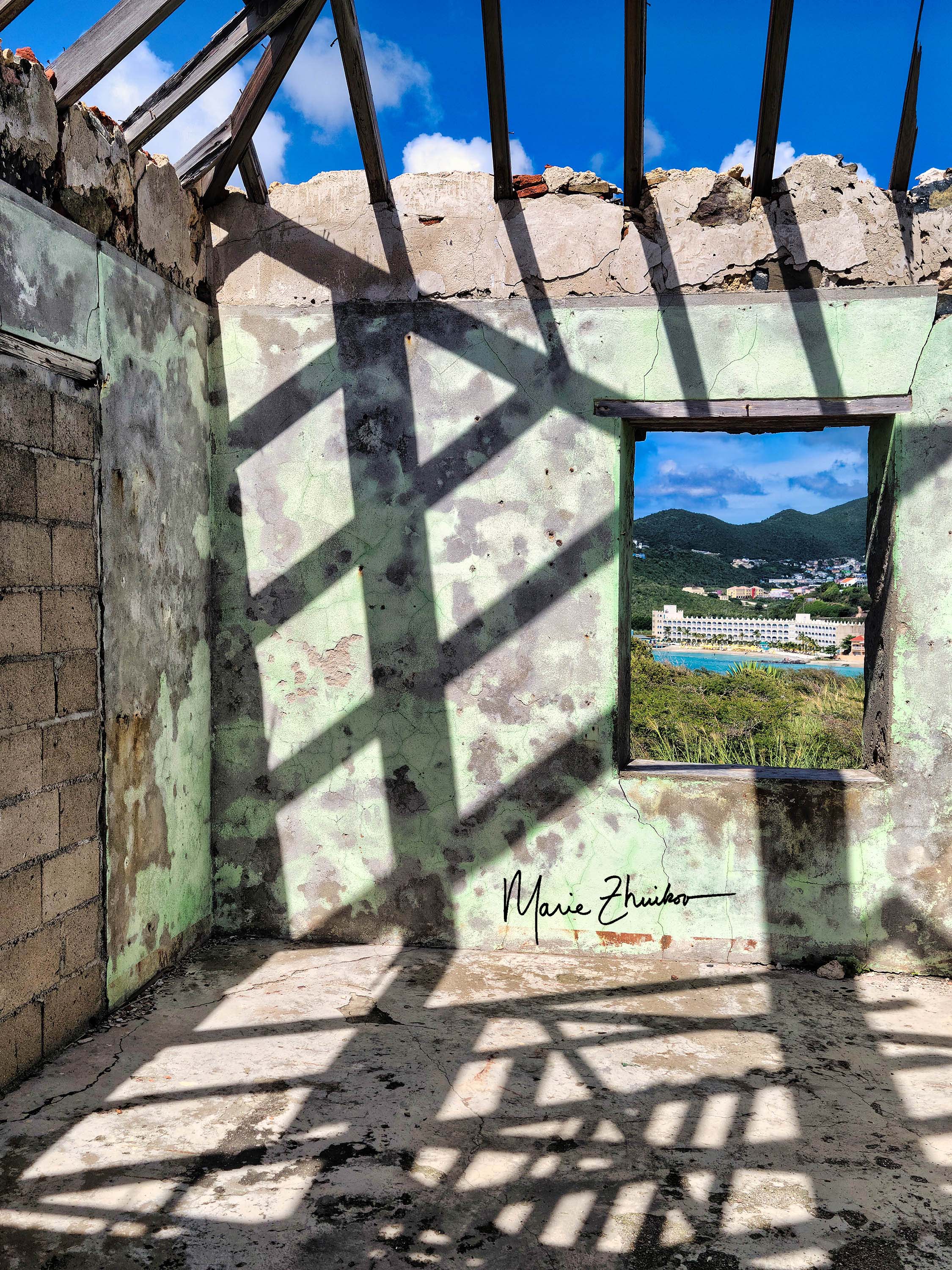
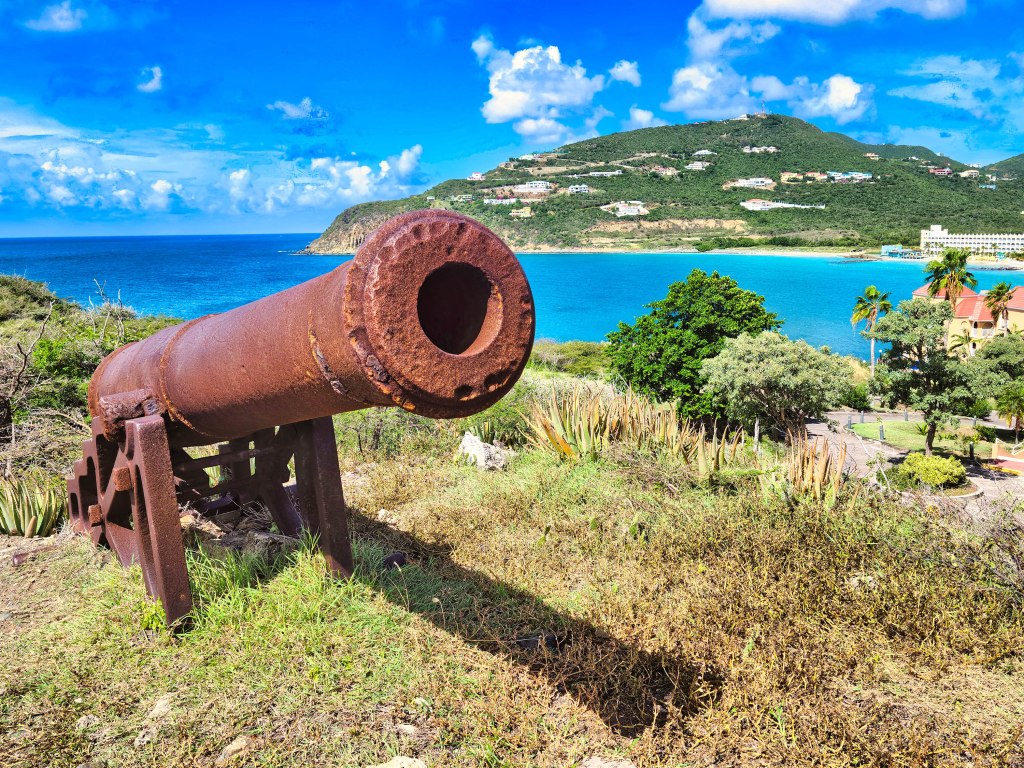
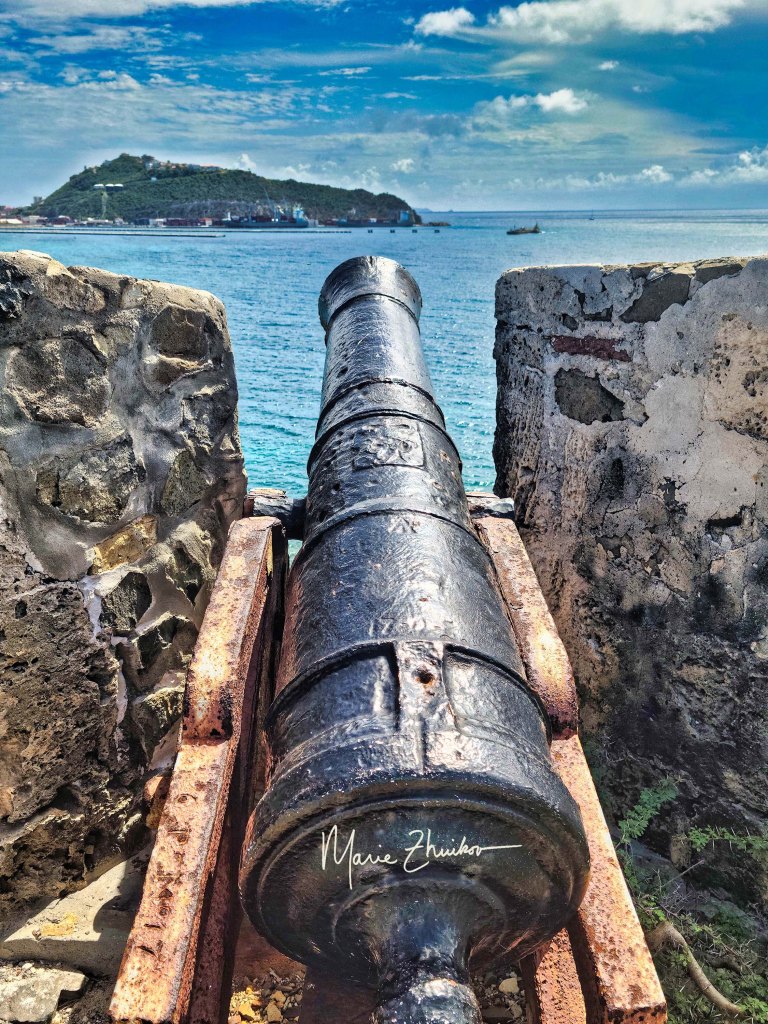
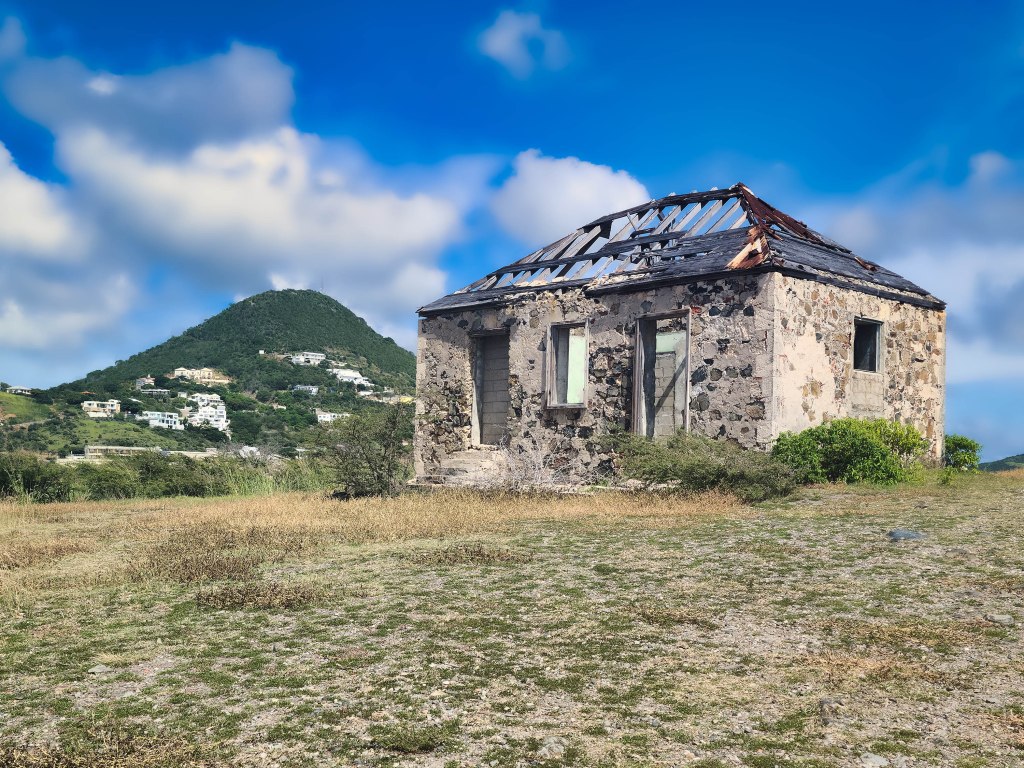
This was my second time there (for photos from the first time, see St. Martin Island – Where Nothing is Better). Sitting here in the snow of Minnesota, I am dreaming of the 85-degree (F) temps and warm turquoise ocean. In my next few posts, I plan to share images from our trip. The image above is from a fort that was near our resort. Fort Amsterdam was built by the Dutch and later the Spanish to protect the salt trade on the island. Several buildings and bastions comprise the fort, which is located on a dramatic point. My favorite was the signal house. It was built in the late 19th century for signal tower communications and was later used to house a radio station.
Its roof is missing, from Hurricane Irma, I suspect. The inside tells the tale of many layers of paint. Several windows look to the ocean or to our resort. Here are some of my favorite images.
A gallery of images from the rest of the area around the fort. Pelicans nest nearby and I caught one resting on rocks below the fort.



















 Marie's Meanderings