A Brush with the Elements on Lake Mendota

The Wisconsin State Capitol as seen from Lake Mendota.

May seemed the month for me to meander around Wisconsin. My communications group at Wisconsin Sea Grant goes on an annual field trip to familiarize ourselves with projects that our water research program works on and the researchers who we fund.

Although most of our staff is in Madison, Wisconsin, this year, we chose that locale for our field trip because we have several new staff members. This was especially useful to me, who works far away in northern Wisconsin.

One of our activities during the two days in late May was a pontoon boat ride on Lake Mendota. This is the lake where the University of Wisconsin-Madison is located, and Sea Grant has funded many research projects in and upon it. I had never been on the lake before, so I was looking forward to the ride. I know, I have such a tough job if I get paid to go on a boat tour!

Our videographer, Bonnie, arranged for the rental. She thought she would be able to drive the pontoon. But when we arrived, the staff said she was too young and that she had not taken a required boater safety course, so someone else who was older needed to drive the craft.

Captain Sarah at the wheel!

In stepped Sarah, our graphic designer. She had never piloted a pontoon boat before, but she had experience sailing, so we figured she was the next best thing. I could have possibly done it, too, but was happy not to have the responsibility since I am unfamiliar with the lake.

After Sarah’s short orientation to the pontoon’s operation, we motored off around the lake on a two-hour tour. Viewing how homeowners dealt with erosion in contrast to more natural areas around the lake led to interesting conversations among us.

When we were about a quarter of the way around the lake, a siren sounded. Everyone else on the boat seemed to know that this meant “get off the water!” We were near the university docks, so Sarah headed there. The problem is, she had never docked a pontoon boat before. She recalled from reading the orientation instructions that docking was the most dangerous part of operating the craft.

Understandably, she was wary. She thought maybe we could circle near the docks until the “all-clear” siren was sounded. In the meantime, the wind picked up and rain began to fall. Then came lightning. Sarah and Bonnie checked their phones. Both had received calls from the rental agency, telling them to get the pontoon off the lake.

After her third circle near the docks, Sarah gained enough confidence (or perhaps she was just worried enough) to try and dock the pontoon. She told us which side she planned to dock on, so we deployed the fenders and I organized everyone regarding who would throw ropes and who would jump onto the dock to catch them.

The only problem was that the wind was blowing with gusto by this time. Sarah’s plan to dock us on the left side quickly turned into a plan to dock us on the right side as the wind blew us in that direction. We adjusted on the fly and jumped out onto the right dock.

Stormwater gushes out into Lake Mendota underneath the college’s mascot, Bucky Badger. Note the mallard headed into the stream.

We secured the pontoon and stayed docked for at least a half hour. Rain poured down as the five of us huddled under its canvas roof. A brown plume of stormwater erupted from a nearby storm drain, carrying with it a red baseball batter’s helmet and assorted flotsam that the local mallard ducks surged toward, finding it irresistible. Gross!

Shortly, we discovered that rain leaked through the roof’s zipper, but that was easy enough to avoid. We thought of running through the rain into the shelter of the student union, but the surety of getting wet outweighed the danger of being on the water in a metal structure. Perhaps not so bright, but there were two other pontoons of people who had docked near us, and they were also waiting out the storm on their boats.

While rain poured down and thunder roared on our side of the lake, the pontoon rental people called Sarah and told her it was all clear and that we could go back on the lake. We were like, no way! We waited out the storm another half-hour.
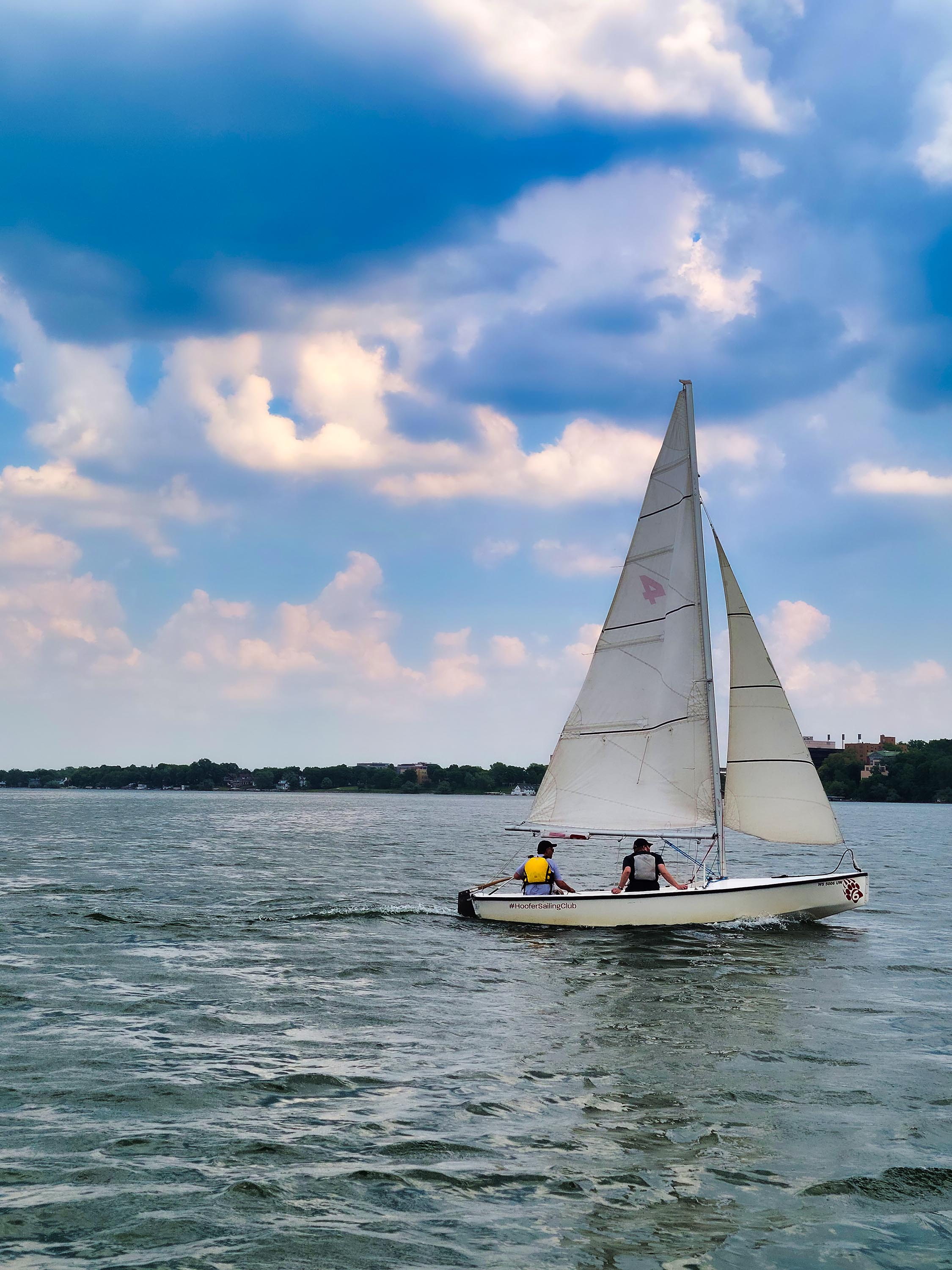
Our unscheduled team-building exercise wasn‘t all terror. We saw this picturesque sail boat before the storm. Note the gathering clouds.

When it seemed like the storm was over, we hightailed it back to the rental place because we were overdue. Bonnie and our boss, Moira, were sitting in the front of the boat and the rest of us were under the canopy. Bonnie had a cap on. Moira didn’t, and she noted with some amusement that her long hair was standing on end.

I wasn’t sure if this phenomenon was due to the wind or some less friendly element, but it’s obvious there must have been electricity in the air. Bonnie didn’t notice it happening to herself because of her cap.

Capn Sarah quietly checked her weather app and gunned the motor. Eventually, Moira’s hair deflated, and we made it back to the rental center intact. Our two-hour tour had turned into a three-hour tour due to weather, but we weren’t charged any extra due to this “act of God.”

Later, at dinner, I looked on the internet to see what it means “when your hair stands on end when you’re in a boat on water.” The entry stated, simply and plainly: You will be struck by lightning!

When I shared this with my colleagues, we all felt lucky to have survived the tour unscathed. Sarah admitted that when she had checked her weather app while Moira’s hair stood on end, it had shown lightning in our vicinity.

After more conversation, it slowly dawned on me that, although I had no hand in organizing the pontoon ride or piloting the craft, my coworkers unanimously blamed me for our misadventure.

Why? Because, as we were about to board the pontoon, I was singing the theme song to Gilligan’s Island. And I MAY have mentioned something about a three-hour tour.


Meandering Through David Copperfield

I’m reading “David Copperfield” by Charles Dickens in preparation for reading this year’s Pulitzer Prize-winning novel, “Demon Copperhead” by Barbara Kingsolver. Although it’s not a requirement to be familiar with Copperfield before reading Copperhead, the latter is based on former so I figure it can’t hurt.

Given my blog’s name, imagine my delight when, in the opening of Copperfield, I found a short treatise on meandering. David Copperfield was born with a caul (amniotic sack) around him. Back in the day, cauls were thought to have mystical properties, one of which was to protect whoever possessed it from death by drowning. They had value. David’s family sold the caul in a raffle. It was won by an old lady who died triumphantly in her bed years later at the age of 92. She was triumphant because she did not drown. But drowning would have been difficult for her even without a caul since she never went in or near the water except to cross a bridge.

Copperfield says, “Over her tea, to which she was extremely partial, she, to the last, expressed her indignation at the impiety of mariners and others who had the presumption to go ‘meandering’ about the world. It was in vain to represent to her that some conveniences, tea perhaps included, resulted from this objectionable practice. She always returned with greater emphasis and with and an instinctive knowledge of the strength of her objection: ‘Let us have no meandering!’”

That made me laugh. Good thing the dear departed lady is not alive to read my blog. She would surely find it objectionable.

I have been doing my share of meandering lately, thus my absence from this blog. I hope to write more soon about my adventures traveling around the state and culture of Wisconsin.

A Penultimate Mistake

Characters from the series “Sanditon.” Image courtesy of PBS.

In my household, we’ve been watching the Public Broadcasting Service series, “Sanditon.” It’s based on an unfinished novel by Jane Austin – the last of her writings before she died. It’s set in England, of course, with strong and conflicted heroines.

Anyway, a social media announcement for last Sunday’s program said it was time to watch “the penultimate episode of Sanditon!”

I got all excited and told Russ that the best-ever episode of Sanditon was coming up. In our ensuing discussion I discovered that the word “penultimate” does not mean the ultra-ultimate of something like I had been thinking all these decades. Instead, it simply means it’s the next to last episode.

I was so disappointed. Not only because the series is ending and because the episode wasn’t going to be the best-ever, but because I’d been misinterpreting this word for so long. I don’t think I’d ever actually used the word anywhere, but it was a quite a blow to someone who is a writer.

I had fun thinking up a title for this post. Does the title mean this is the second to last mistake I will ever make in my life, or does it mean I am mistaken about the word penultimate? Or does it mean I’ve made the best mistake ever? 😊

The Dreaded “Racorebob” Monster

An angry raccoon. This image is from a Fox News story about a Florida couple who thought they were attacked by a bobcat, but after DNA analysis, it turned out to be a raccoon.

In his “Recollections of L. E. Potter,” my great-grandfather Laforest, who was a young settler in Minnesota tells a cute story that I didn’t have time to include in an earlier post about him.

The year was 1865. The family of 12 had moved from Wisconsin to Minnesota, settling for a time on the banks of the Watonwan River a few miles south of Madelia. One spring day, Laforest’s father John was mowing hay with a scythe about 80 rods from the house they were renting. Laforest writes (edited for clarity):

*

I was sent to take him a drink of water, also a watermelon. We got our water from a spring on the riverbank back from the house. I took my pail and melon to the top of the bank or bluff, laid the melon down by the side of the path and went down the path through the brush after the water. When coming back up the bluff, I heard something going through the bushes straight down to the river. This was rather startling to an eight-year-old.

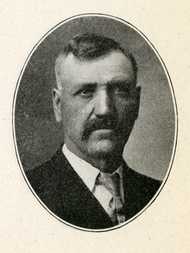
Laforest Potter in his later years.

When I got to the top of the bluff and my melon was gone, boy-fashion, I did not stop to reason, but let my imagination run wild. I thought some animal had carried it off and that was what I heard going through the bushes.

I took the water to father and told him about the melon and the animal that carried it off. The more I talked about it, the better my imagination worked until I could tell what the animal looked like – what color he was, bigger than a dog. In my mind it was something terrible!

Father asked what I thought it was. I couldn’t tell him. So, he said he thought it must be a Racorebob.

Father told folks about my Racorebob for years after. Whenever my imagination would get the best of reason, I was reminded about my Racorebob. I believe it has always had a good effect on my life.

Father found the melon at the foot of the bluff, smashed against a tree. Somehow, it had started rolling down the bluff and that was what I heard.

*

(Marie here – I’m not sure what the word amalgam Racorebob means. Laforest never explained it, but my guess would be a “raccoon or bobcat?” Any other interpretations are welcome!)

Happy Burbotine’s Day!

A giant burbot replica found in the lobby of Duluth’s Great Lakes Aquarium.

My recent post about a trip to a local fish market in Cornucopia, Wisconsin, to buy some burbot piqued readers’ curiosities about its taste and my experience eating this ugly looking fish for the first time. I’m here to say that I survived and that I’m no longer a Burbot Virgin!

The experience is memorialized in “The Fish Dish,” a podcast I co-host for work. We chose a Valentine’s Day theme for the show because Feburary is an important time in the burbot’s life cycle: a time for LOVE.

See photos and hear all about it at this Fish Dish link. And while you’re at it, get your sweetie a card with a big burbot on the front for that special day. Such smooth moves might not work on everyone, but you just never know . . . .

Five Reasons not to Wear a Bow Tie During a TV Interview

Photo by Moose Photos on Pexels.com

I recently attended a Zoom meeting for work where the presenter was wearing a bow tie. His tie was full of bright colors in contrast to his dark shirt. The speaker was a professed bow tie-aficionado. His tie was fun to look at, but it was crooked. I kept mentally straightening it during his whole presentation. It was distracting.

This reminded me that every bow tie I have ever seen someone wear has been crooked, which reminded me of an idea I had in 2010 when I worked for Mayo Clinic Public Affairs (where many of the doctors are also bow tie-aficionados) for an addition to a tip sheet for television interviews. This was a one-pager that we had on hand to advise doctors who weren’t familiar with being interviewed. It contained tips like women not wearing long, dangly earrings because they are distracting. (Although I suppose this could also apply to men!)

If I had continued working at Mayo Clinic longer and gained more “street cred” in the organization, I would have advocated for adding to the tip sheet: “Don’t wear a bow tie.”

Before I list the reasons why, I want to say that I think bow ties are fine for everyday life. I realize they are a way for the wearer to express their individuality and quirkiness, and I’m all for that. They are also convenient in many professions, allowing for a fashion statement that doesn’t drag in your soup bowl like a long necktie would. Also, according to a story on the WHYY public television station, for doctors, bow ties are more hygienic, collecting less bacteria than neckties. But I just don’t think they work for television interviews.

Here’s my reasoning, as if speaking to the interviewee:

  1. No matter how hard you try, your bow tie will be crooked, which is distracting and dilutes the verbal message you’re trying to convey.
  2. Yes, bow ties make the wearer look smart, but they also alienate you from the viewing audience. Historically, bow ties have been a marker of privilege and conservatism. Think of who you are trying to reach with your television interview message. For most health information, I would wager you want the widest possible audience.
  3. During media interviews, you are representing your organization. This is not a time to get all individualist and fancy. You can put your bowtie back on afterward.
  4. Despite straightening beforehand, your bowtie WILL become crooked during the interview.
  5. Your bowtie will run askew. (I cannot stress this enough.) 😊

There, I’ve been carrying that inside for a long time. I feel better now! Feel free to comment with dissenting opinions or agreements below.

Held Hostage by Wild Animals

It seems lately as if several species of wild animals have been stopping Russ and I from our normal activities. These include a song sparrow, mallards, and wasps.

It all began on Fourth of July weekend when, in preparation for mowing, I was cleaning up sticks that had fallen from the many birches that abound in our cabin yard. Every time I approached our fire ring to drop off a load of sticks, a small brown bird would fly away.

I thought the bird was coming from inside the fire ring. I looked around for evidence of a possible nest there but could not find any. So, I mowed the yard.

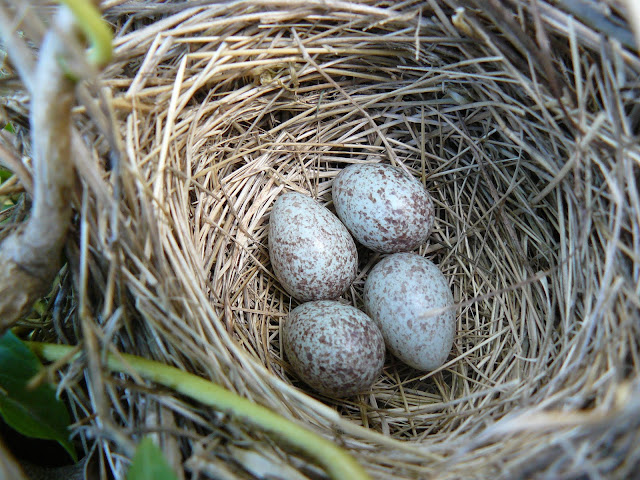
Song sparrow eggs. Image credit: Rich Mooney

I mentioned the mysterious bird to Russ, saying I thought maybe it had a nest nearby. It was later in the day when Russ was moving a pile of sticks we had a few feet away from the fire ring into the ring so we could have a major 4th of July blaze that he called me over. “Look!” he said, pointing to something at the base of the brush pile. Sure enough, it was a nest with a clutch of four to five eggs inside. The eggs were bluish-brown and spotted. The mother bird was nowhere to be seen. I must have traumatized her with my mowing.

We quickly added some sticks back atop the nest in a poor approximation of the shelter the pile had offered before. Then we hightailed it away from the fire ring. We didn’t want to encourage the mother to stay off her nest any longer than we already (unintentionally) had.

The day was warm, so I hoped the eggs had not suffered greatly from the mother’s absence while I had mowed. Still, we worried we may have scared her away forever.

A few hours later, I couldn’t help but check to see if she had returned to the nest. I carefully approached and peered through the grass and brush. The bird was back! I slowly retreated to leave her in peace.

Our plans for a fun campfire with friends and relatives over the 4th of July holiday evaporated. If we had a fire, we’d be baking some poor baby birds in their eggs. We didn’t want that on our conscience. When our cabin guests arrived, we let them know why we wouldn’t be having any fires that weekend. They were good sports about it.

Then, the evening before we were to return home, I was about to go out to our dock and retrieve my paddleboard, which was attached to a dock pole with its leg strap. Storms were supposed to roll in by morning and I wanted my board safe inside the boat house.

As I looked out the cabin window at my paddleboard on the lake in the evening gloom, I noticed an unusual dark shape on our dock. It looked like a duck was sitting there, right above where my paddleboard was wedged in the water between two of the dock supports.

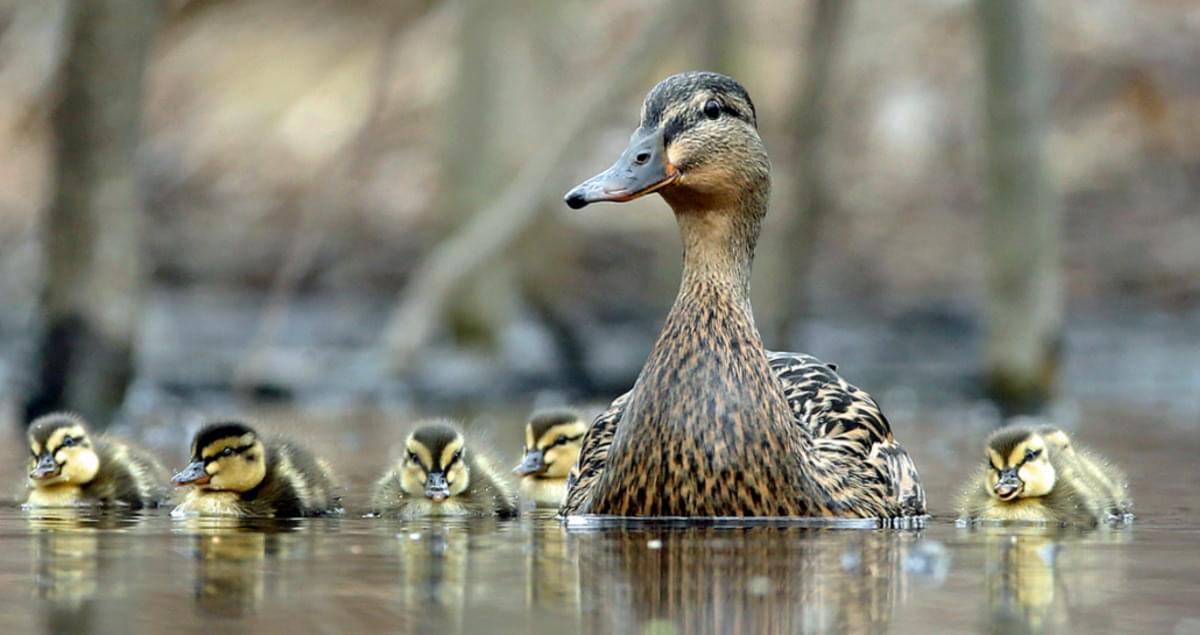
A mother mallard and her ducklings. Image credit: Cornell Lab of Ornithology

I mentioned to Russ that we had a duck on our dock, and when he looked at the scene, he discerned a bunch of smaller shapes on my paddleboard. We’d seen a mother mallard and her four ducklings swimming around our dock earlier in the day. Could they have decided to stay the night?

I took a closer look, and sure enough, the mother mallard was guarding her brood, who were nestled all cozy and cute against the life jacket I had strapped to my paddleboard.

What kind of heartless human could disturb them? Not me. I decided that stowing my board could wait until morning.

Of course, in the morning when I checked, baby duck poop covered my board. The ducklings must have spent the entire night on it. But that was easy enough to clean. I just turned the board over so that the top of it soaked in the lake for a while.

The next weekend we did not return to our cabin since we were on a trip to Isle Royale National Park (which I will describe in a later post). When we returned home from that excursion, Russ got stung several times while he walked up our back steps.

Wasps had built a hive in our absence under the top step. They were coming and going from a small crack between two boards. We couldn’t easily see the nest from underneath due to the cover provided by our day lilies.

What the heck, were the animals taking over? I mean, I’m an animal lover, but I was beginning to feel nervous.

Inconvenience by birds is one thing. Wasps are something different. I’m all for leaving wildlife in peace, but not when it comes to them controlling ingress and egress from my house.

We were too busy to deal with the hive for a few days, so we used the front door of our house instead. It was inconvenient, but better than risking stings.

One evening, when we hoped the wasps were drowsy, we donned our head nets and gloves. We used a broom handle to lay down the lilies along the side of the porch to see if we could pinpoint the hive’s location to spray it with some deadly wasp and yellowjacket foam.

I could not see where the hive was and I really didn’t want to stick my head any farther under the porch in this attempt, so Russ and I decided to spray the foam through the crack the bees were using to enter their hive.

This seemed mostly successful, although a wasp or two were still flying around the next day, so I put on my brave lady pants and stuck my head under the porch far enough to get a good shot at the nest with the spray this time. The nest wasn’t that large, and no insects emerged from the porch crack when I sprayed it, so maybe they were all gone by then. For good measure, we sprayed the crack one more time.

I think we successfully reclaimed our porch.

The next time we visited our cabin, we checked the nest by the fire ring and it was empty. It had been two weeks since we last saw it. I wondered, could the nestlings fledge that quickly? I hoped they could, and that the emptiness wasn’t because the mother had abandoned the nest.

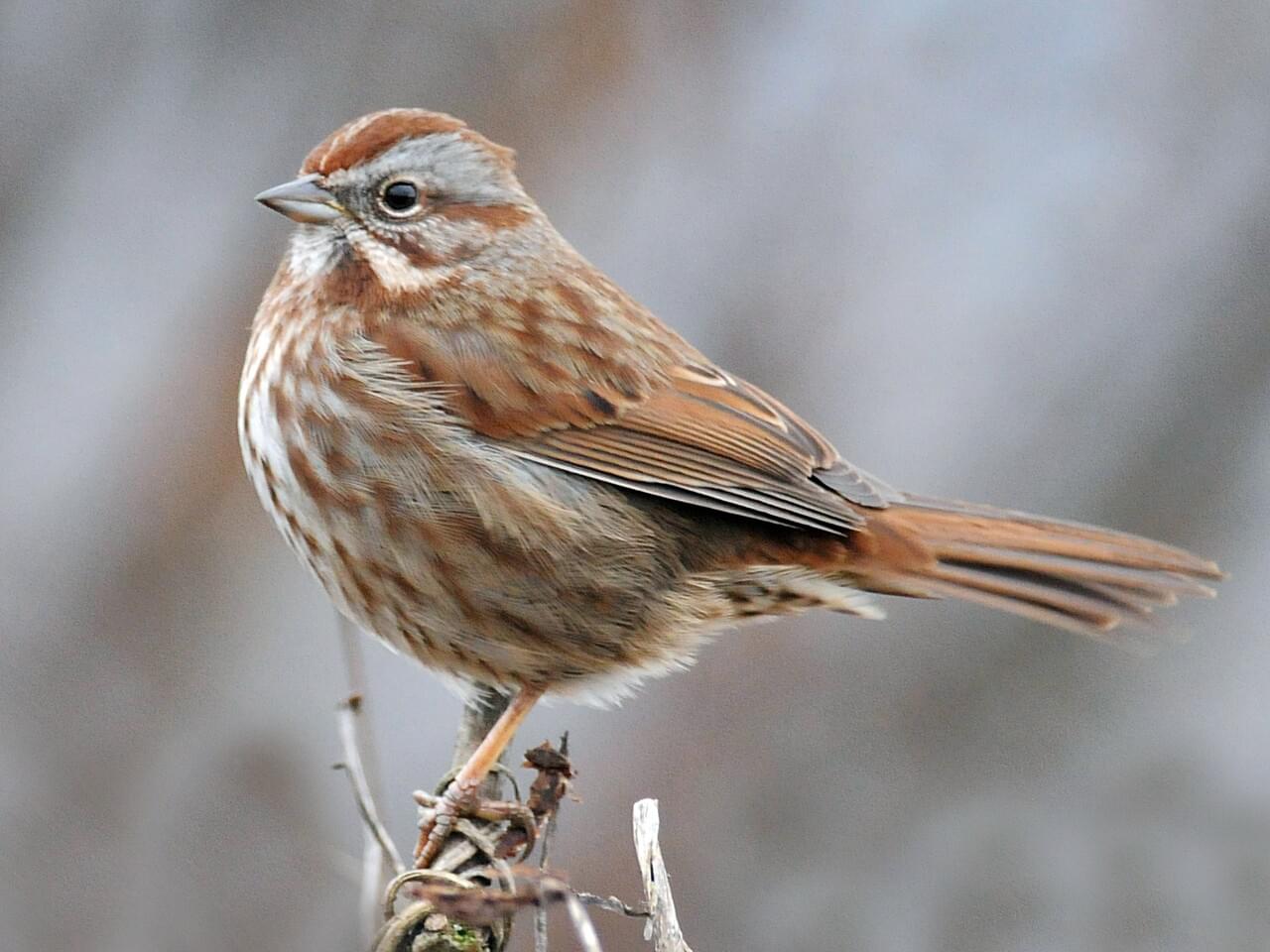
A song sparrow. Image credit: Steven Mlodinow

As we sat around the fire ring that night enjoying a crackling fire, a song sparrow sang from the woods nearby. With its trilling notes, it almost sounded as if this bird were thanking us for allowing her to nest in peace. Could it have been a song sparrow that had been holding our fire ring hostage previously?

I looked up the bird’s appearance and what its eggs looked like on the internet. Yes, I think it must have indeed been a song sparrow. The site I visited said that song sparrow young can fledge in 10-12 days, so it’s possible that the empty nest could have signaled a successful brood – they would have had enough time to fledge while we were gone.

The other thing the site said was that song sparrows can have up to seven broods in a season and that they often use the same nesting site.

The next day when I mowed the lawn, I made sure to aim for that nest.

Biskey Beauty

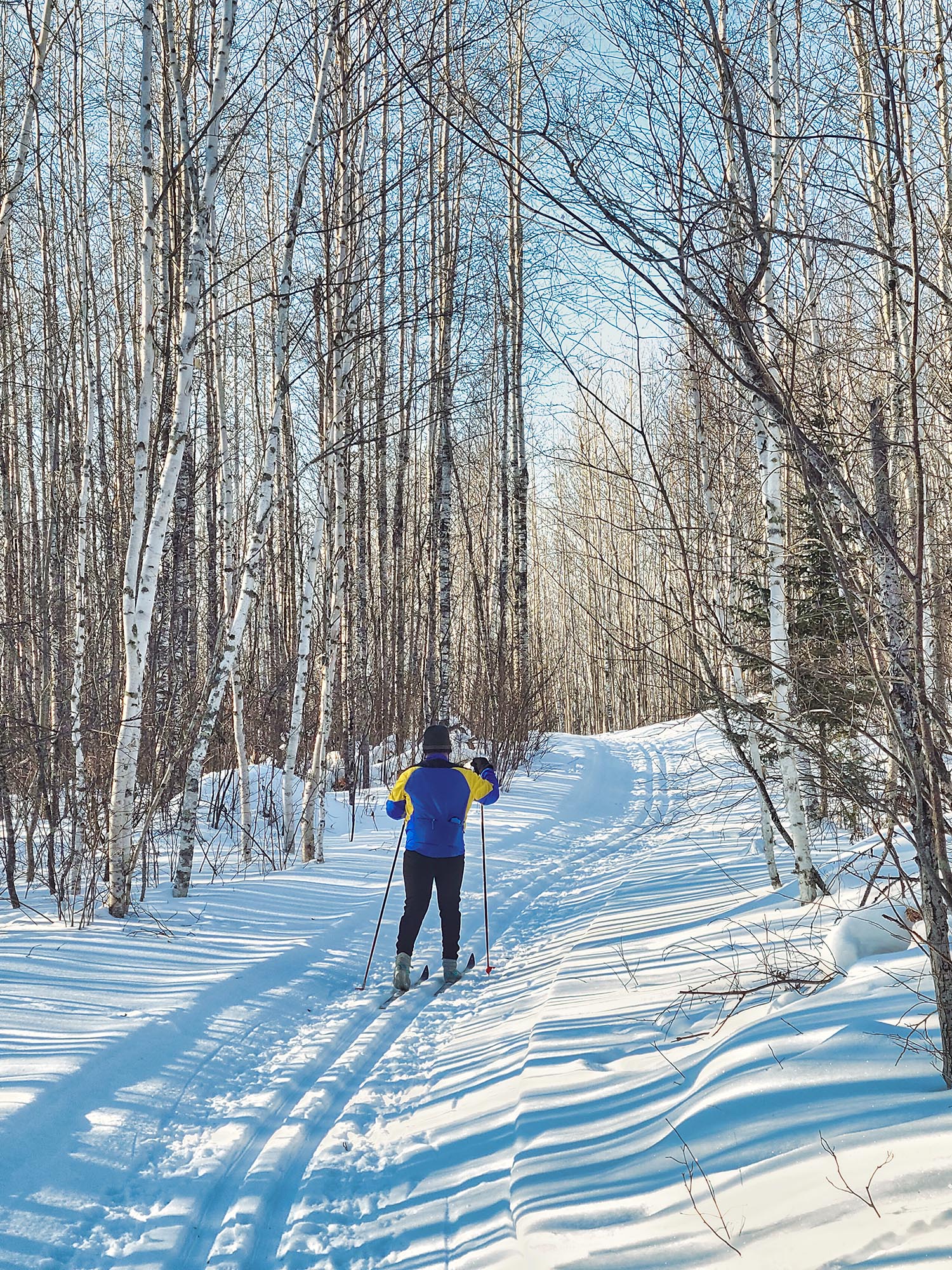
Russ and I meandered north to the Biskey Ponds Nordic Ski Trails on Fish Lake last weekend for the first time.

All I can say is that these cross-country ski trails are terrible. They were noisy and crowded. The other skiers scowled at us and muttered oaths most foul. The snow was coated with soot, the scenery filled with skyscrapers. The forest was mangled and misshapen. The grooming was awful – tracks all over the place. And the air held a lingering stench, reminiscent of dried pickles.

If you enjoy the Korkki Nordic Ski Trails near Duluth, you’ll intensely dislike these ski trails because they are like Korkki but with frozen ponds everywhere.

By all means, you should never ever go on these classic-only ski trails. Really, don’t go.

We want them all to ourselves.

Biskey Ponds Ski Trails

Lawn Mower Races: Cutting-Edge Excitement

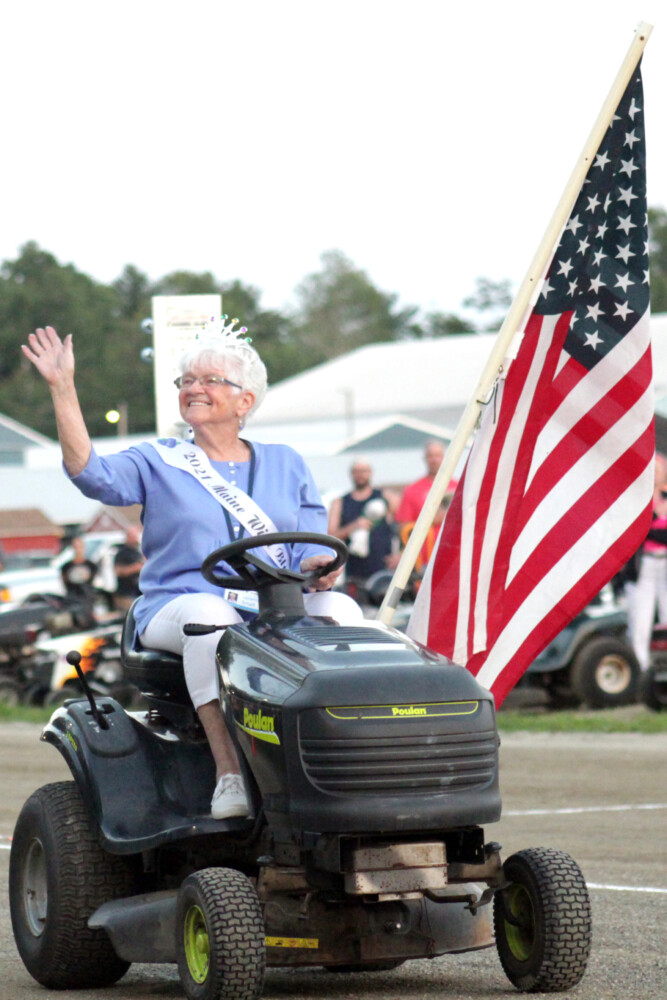
The grand marshal of the Thunder Valley Lawn Mower Races, Maine. Image credit: Mark Haskell, Courier-Gazette

Apologies for the bad pun in the title, but I wanted to let you know that you truly haven’t lived until you’ve witnessed this phenomenon. Lawn mower races happen all across America, from Idaho to Maine. I received my first taste in late summer when I meandered into Cotton, a small town in northern Minnesota.

Grown men (and in other places, women) clamber aboard riding lawn mowers that they have modified for racing. In Cotton, the circular racing track was an actual lawn situated behind what used to be the town’s high school but is now a community center.

The races are a cultural highlight of the season. Families gather to sit on the grass or on haybales to watch the festivities. Kids eat cotton candy. Some folks even back their jacked-up pickup trucks along the track. Sitting in folding lawn chairs in the cargo bed, they have a prime, elevated view.

Engines rev. The starting gun cracks, and they’re off! The machines tilt as they round the corners, wheels lifting off the ground. The drivers likewise tilt, leaning into the movement. Around and around they buzz, neck and neck. After a few turns around the track, one man’s mower putters out and he pulls into the center, defeated.

Cotton, MN, lawn mower racers lean into the turn.

According to the U.S. Lawn Mower Racing Association, this quirky form of racing began in the early 1970s – touted as a perfect way to use a machine that many people already have, and to let off steam. It became official when the makers of a fuel stabilizer came up with the idea of using a lawn mower race to promote their product on April Fools’ Day in 1992.

I had no idea this pastime had been around for so long! There’s even such a thing as lawn mower ice racing in winter.

With a wave of a checkered flag, the race ends. The crowd applauds. The winners strut over to claim their prizes and pose for the local newspaper photographer.

In Cotton, racers competed in two events, “modified” and “stock.” I felt culturally enriched for having watched these events. But it all seemed like such a waste. You see, the racing mowers don’t have their blades engaged. All that noise and hype, and in the end, the grass on the track is just as long as before. 🙂