A friend of mine couldn’t believe it when a hotel clerk, with whom she thought she had a memorable encounter a few hours before, didn’t remember my friend when she saw her again. I shared a theory about this with my friend. I developed the theory from reading Going Gray by Anne Kreamer and I turned it into a speculative fiction short story titled “Invisible.” But you’ll have to read my story to find out what it is! No freebies here. Although the story itself is free.
“Invisible” was recently published in Creative Wisconsin magazine, which is published by the Wisconsin Writers Association. I joined them a few years ago when I had a Wisconsin-based publisher and job, even though I don’t live in Wisconsin. I’ve taken a few classes from them, and I’ve attended two of their writing conferences. They’re a great group!
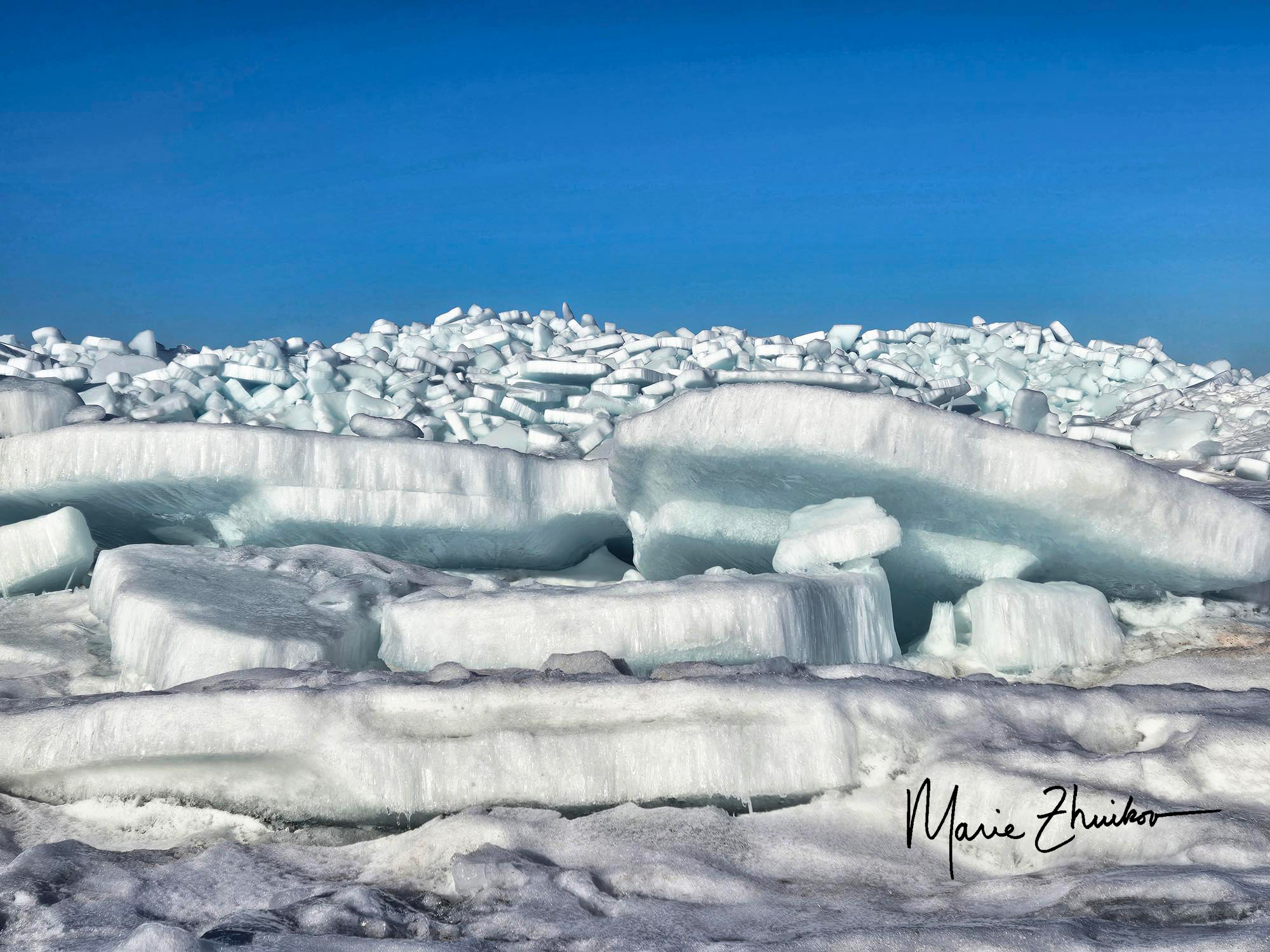
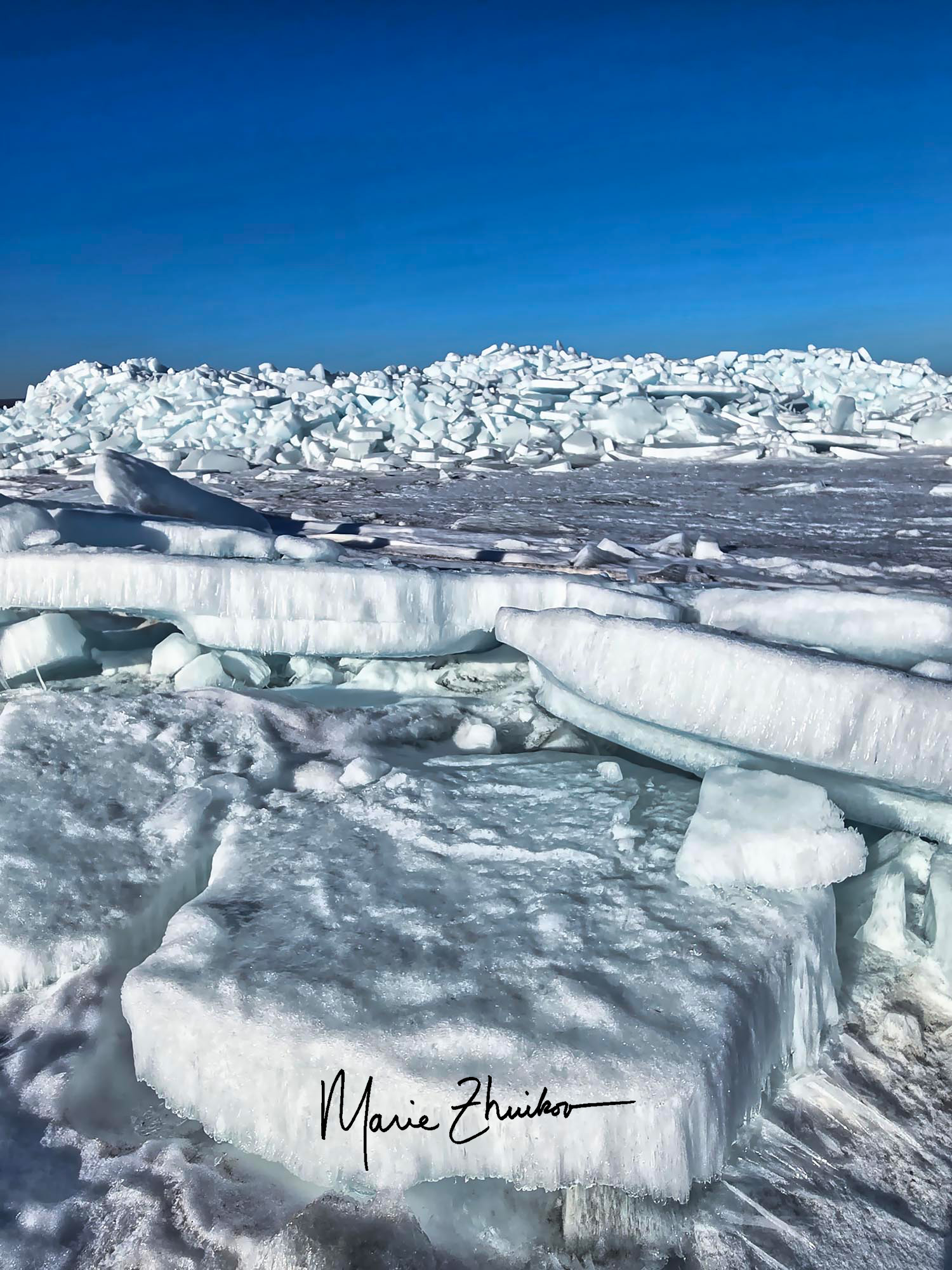
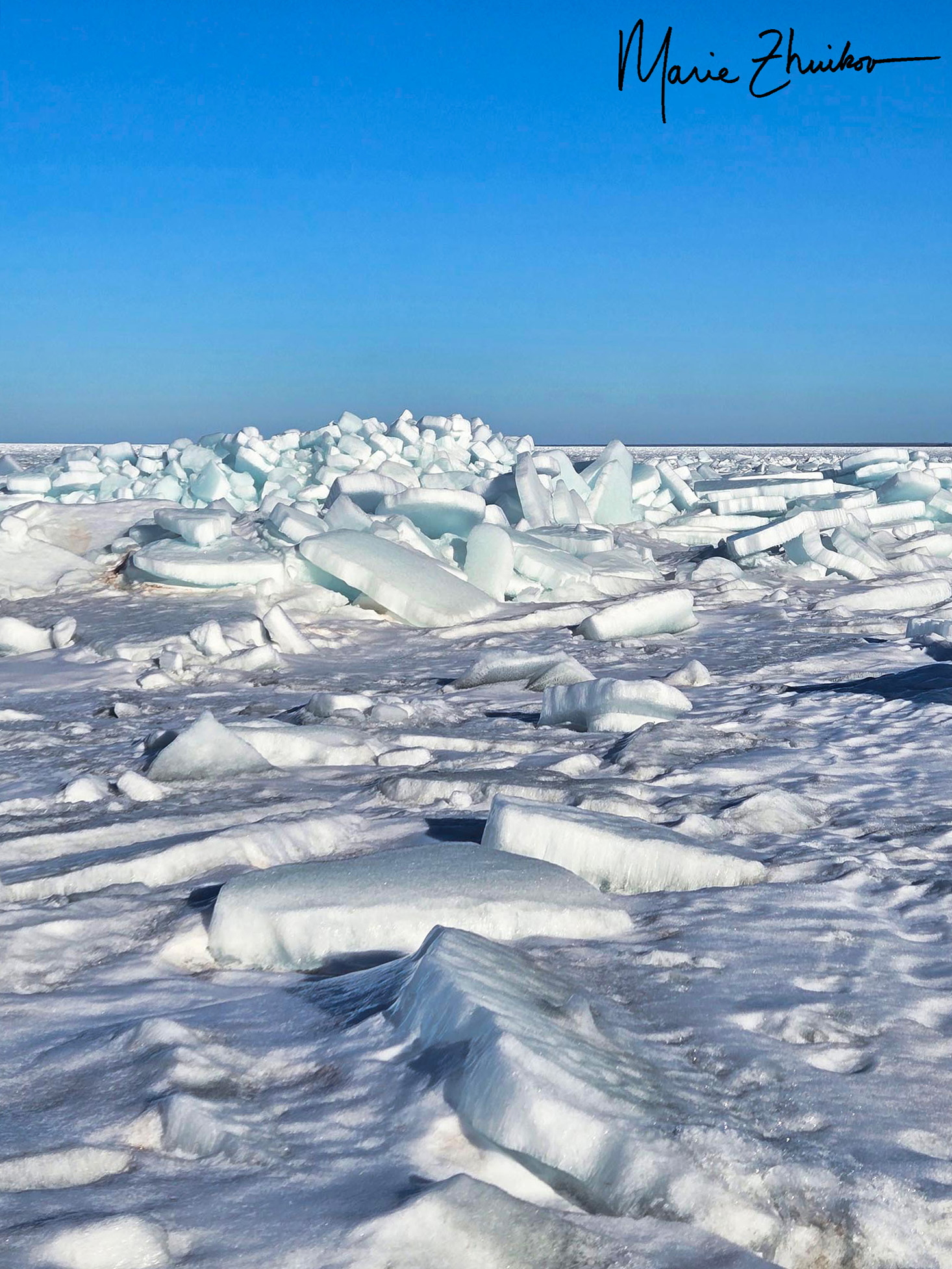
Ice off of Minnesota Point in Duluth. Each of those slabs in the foreground is the size of a person lying down. The ridge behind it is about fifteen feet tall.(I popped a squat to obtain this viewpoint.)
On the Dunes By Sara Teasdale
If there is any life when death is over, These tawny beaches will know much of me, I shall come back, as constant and changeful As the unchanging, many-colored sea.
If life was small, if it has made me scornful, Forgive me; I shall straighten like a flame In the great calm of death, and if you want me Stand on the sea-ward dunes and call my name.
I recently stumbled upon this poem while leafing through a stack of old, yellowed pages—poems I had once painstakingly typed on a clattering Underwood typewriter during my high school days. Back then, before the convenience of photocopiers, I’d wander the library aisles, selecting poetry books that called to me. I would borrow them, then sit for hours, as I copied lines that stirred my soul. I imagined that I’d refer to these pages often, though, they have gathered more dust than fingerprints. Now, rereading them, I’m flooded with nostalgia, peering through a window into what once moved my younger heart.
Poet Sara Teasdale lived from 1884 to 1933. She is characterized as “neurotically intense,” and it’s said she moved in the company of poets like a “recessive flame.” She had a tempestuous affair with poet Vachel Lindsay. Later, she married a businessman but then divorced him, retired to seclusion, and in the end, died from an overdose of sleeping pills.
Her poem struck me because I’d just meandered to the beach in Duluth with Russ. If you’re not familiar, we are blessed with a long sandbar at the mouth of Lake Superior. Of course, the beach was snow-covered. The lake’s power was on full display in the form of huge piles of ice piled high about ten yards offshore. I had my phone with me and was tempted to brave the ice to take some photos, but I hesitated, not knowing if the ice was safe. I am well acquainted with the vagaries and dangers of this Great Lake.
However, two other people walked out to an ice ridge in front of me. They survived, so I figured I’d be okay if I followed in their footsteps. I ventured out, and these photos are the result. I was glad I braved the ice to share them with you! Russ wisely remained onshore. I’m also glad that the little adventure didn’t hasten my death so that Russ would need to stand on the dunes and call my name when he wants me. 😊
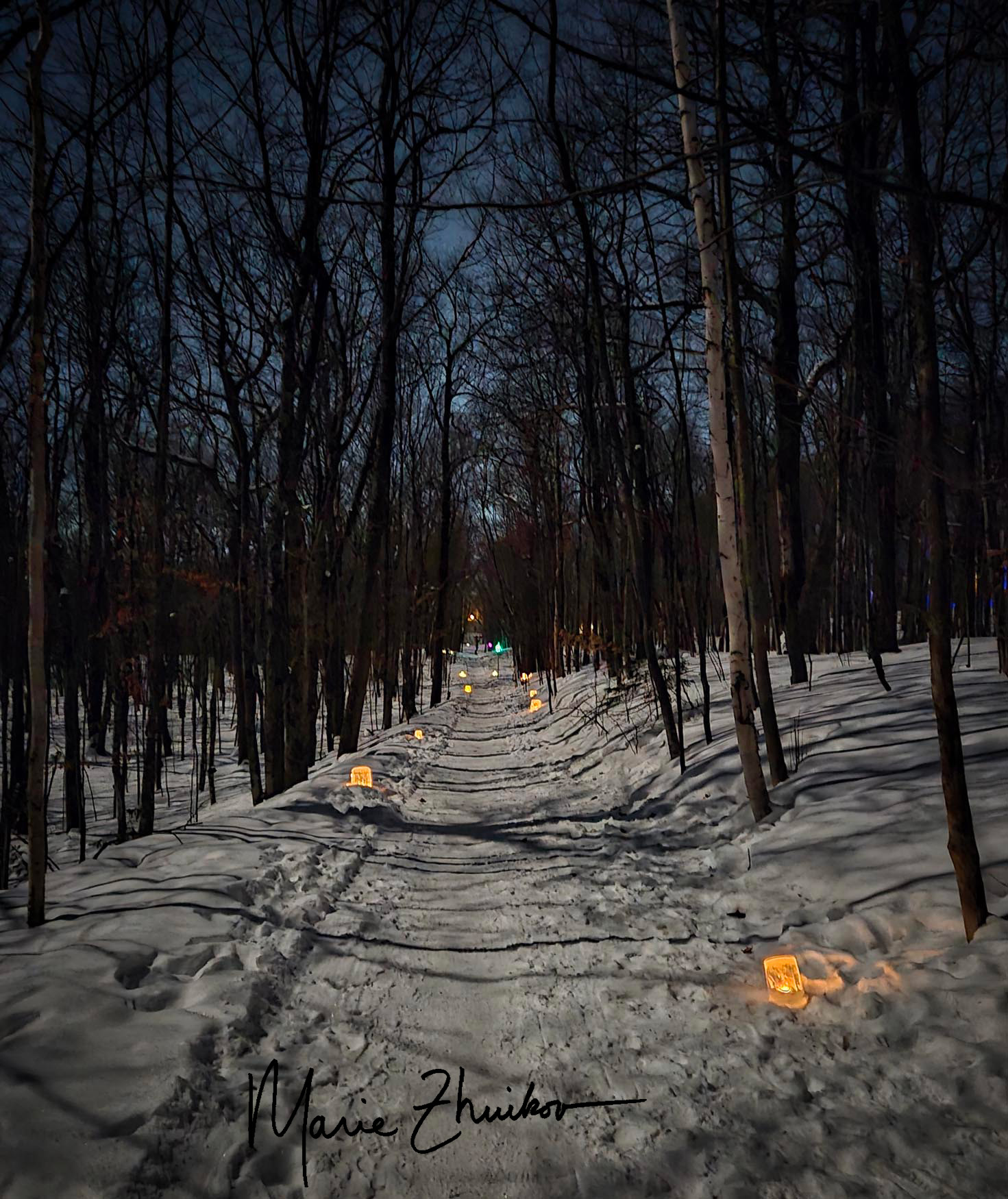
Inside our mailbox was an invitation on a slim, hand-cut piece of paper: Luminary Walk. It contained a date, time, and location, which was a short woodland trail in our neighborhood. On the bottom were the words: light, warmth, hope, welcome, neighbors.
How could we resist? We waited until dark and ventured out into the calm night. An almost-full moon watched our progress, casting shadows on the snow. That was all the light we needed. We didn’t even consider bringing a flashlight.
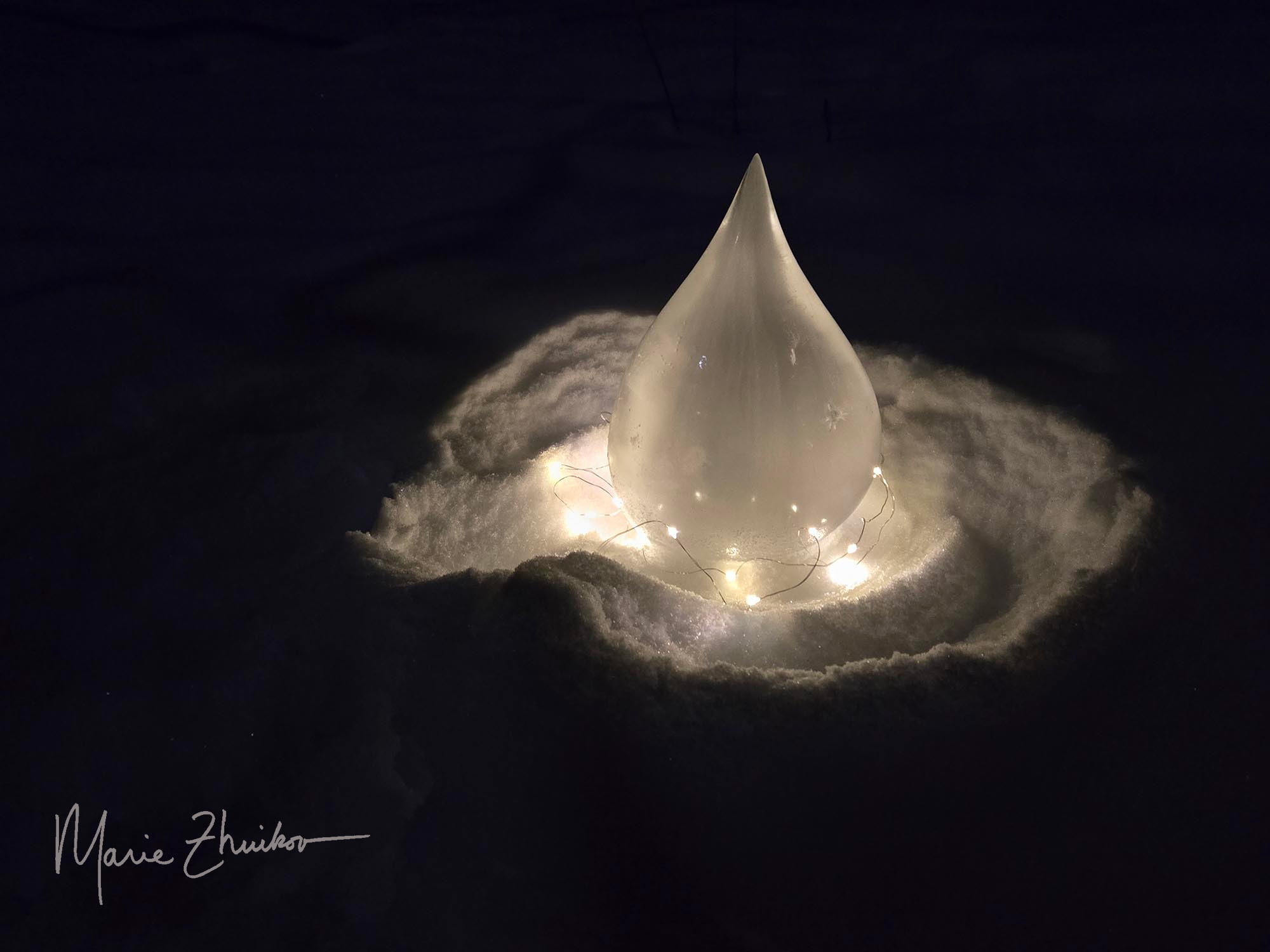
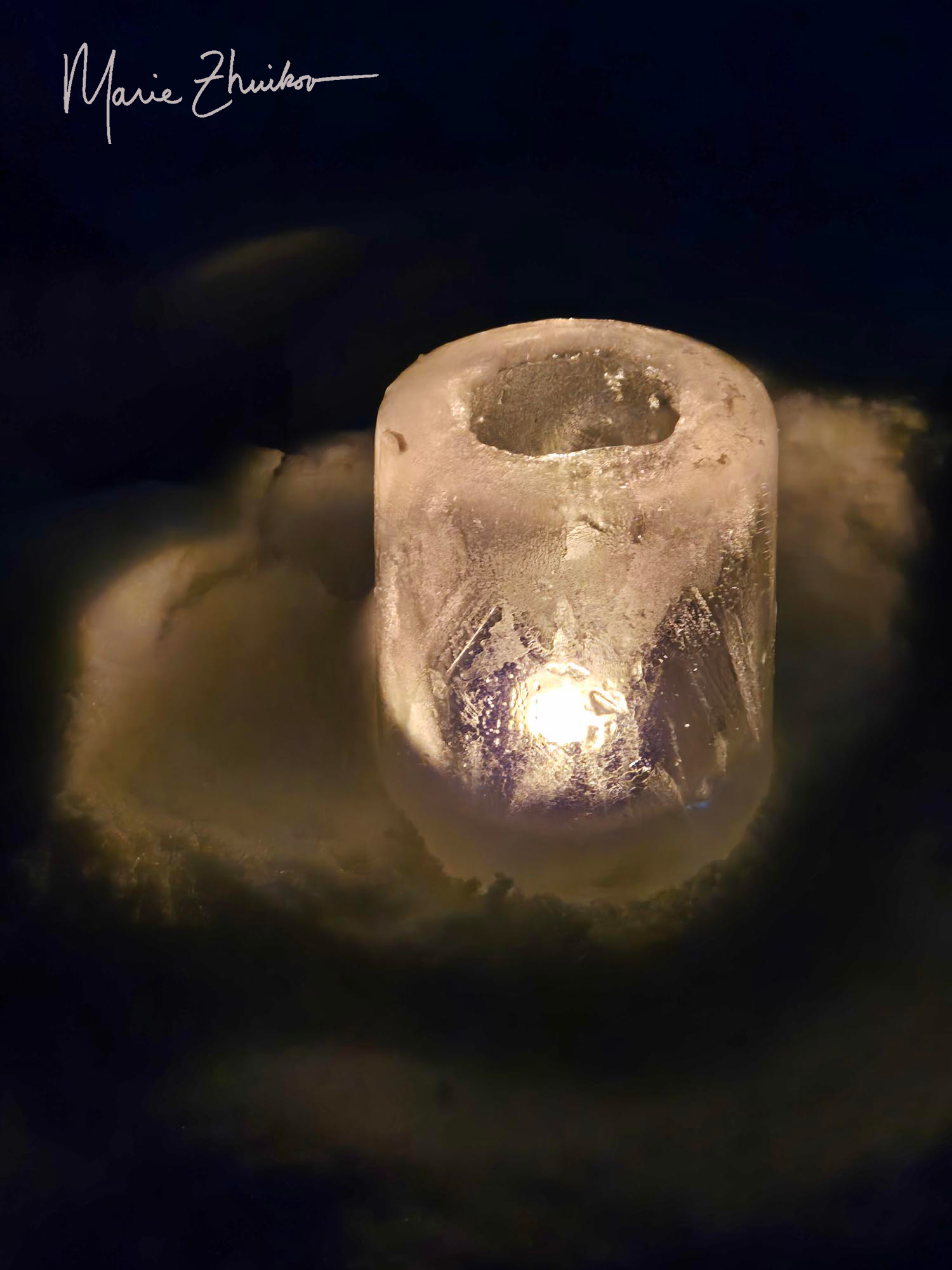
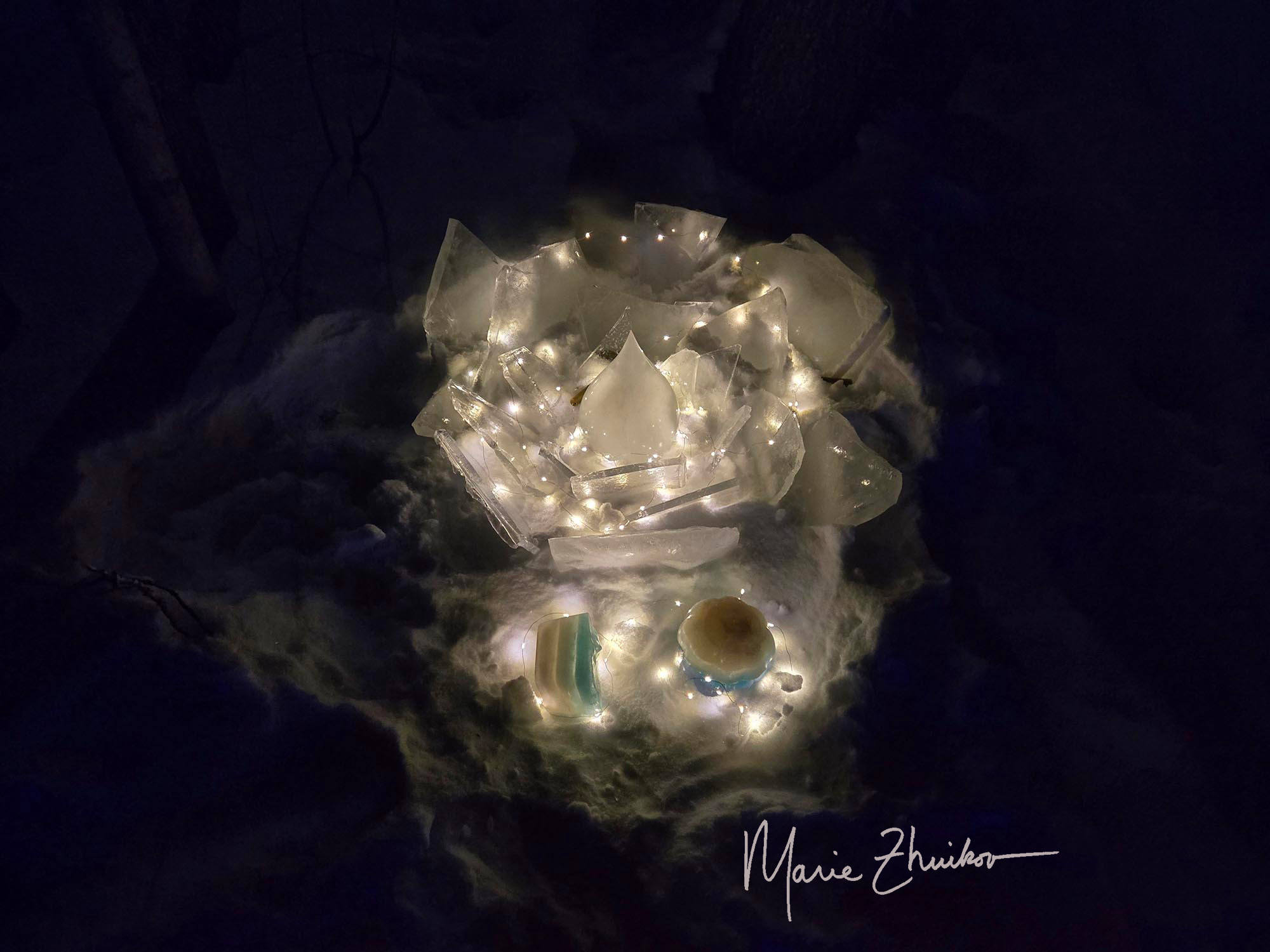
When we arrived at the trailhead, an alternating path of ice luminaries glowed softly down the length of the trail. As we walked, we noticed some were lit with candles and some with LED lights. Most glimmered with soft, natural light. Others swirled with a riot of color. There were round and rectangular clear ice luminaries, colored square ones, and huge raindrop-shaped ones.
We weren’t sure who was responsible for creating this magic, but it must have been several families, given all the work involved. Halfway down the trail, we met other neighbors enjoying the scene with their dogs. We greeted each other and marveled over the view.
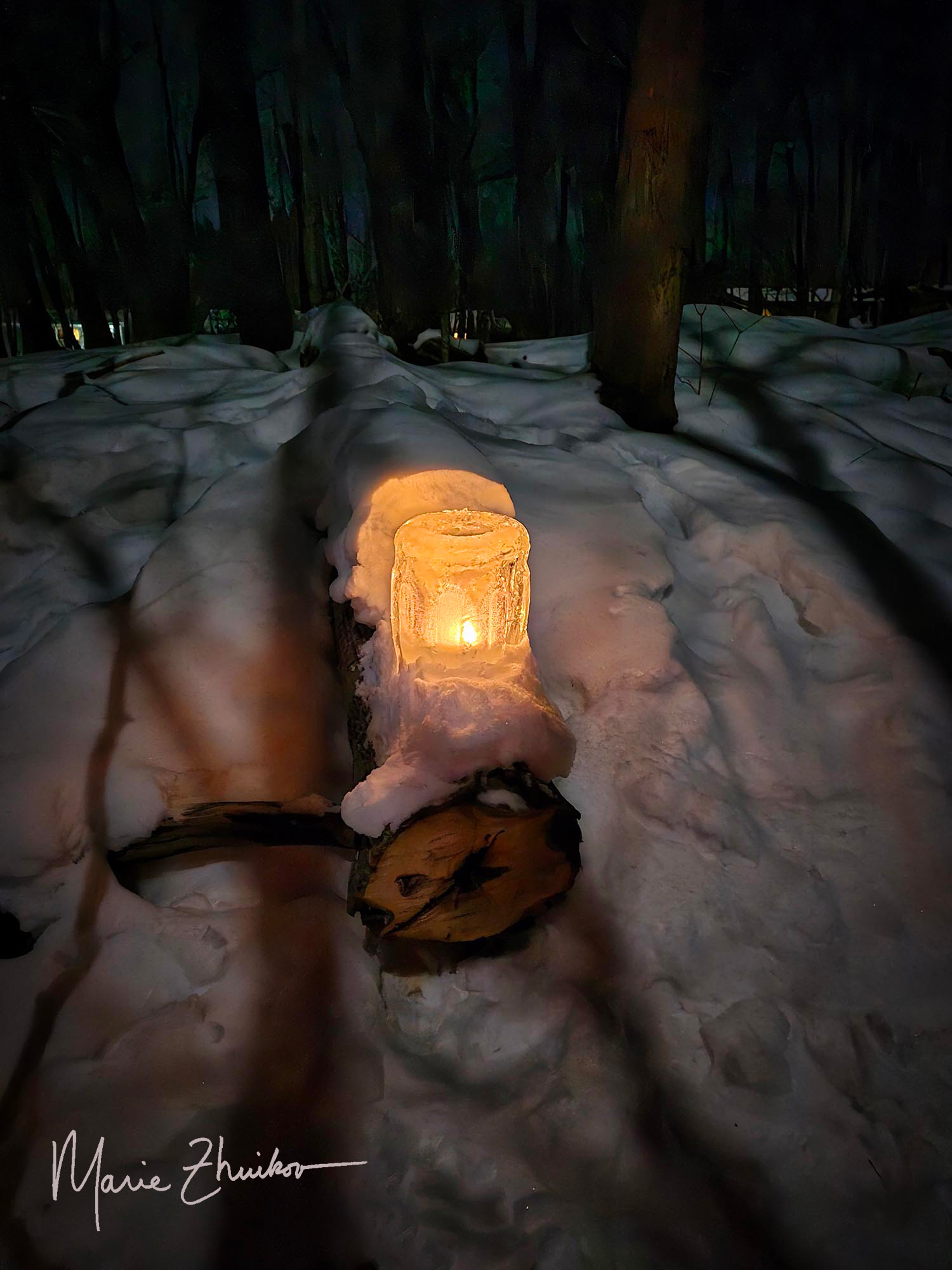
One display looked like a snowy rose: a raindrop luminary in the middle, surrounded with icy petals and lit with a string of white lights. Orange slices, cranberries, and pine needles were embedded in another. Most lay on the snow. One was perched on a log.
We left the trail and walked back home with these words echoing in our heads: light, warmth, hope, welcome, neighbors.
Just a few of the grocery bags we filled with food for victims of an apartment fire.
Background
I haven’t mentioned this, but one of the first things I did when I retired last spring was to sign up as a Red Cross volunteer. I’d long been familiar with the organization, ever since my first job as a lifeguard. (We had to take Red Cross classes for certification.)
Once Hurricane Katrina struck Louisiana in 2005, I felt the call to help, but I didn’t know how. I was working for the University of Minnesota at the time and ended up joining an emergency response group to help with communication. But it seemed the only type of communication assistance they required was telecommunications, not public/media communications. Sitting around when people were in dire need was frustrating.
In the years since, I noticed how the Red Cross helped local people who experienced house fires, and towns that were struck by wildfires, floods, and hurricanes. I also became acquainted with the director of the local Red Cross chapter and learned that the organization actively seeks volunteers.
So, I put volunteering for the Red Cross at the top of my “Things to do When I Retire” list. Immediately after I retired, I visited their website and signed up to help during a crisis. There are two volunteer categories for that: Disaster Services and Disaster Action Team.
Disaster Services helps with mass feeding and sheltering of people impacted by major disasters (fires, floods, hurricanes). Disaster Action Team members help with single-family disasters like housefires. I submitted my information online, and it wasn’t long before I was contacted. Eventually, I had a short phone interview with someone from the Twin Cities, and I was in!
The interviewer wanted to add me to the Red Cross’s public information team, but I wasn’t ready for that yet. I wanted to help more directly, and also to get a feel for the organization before I began representing it to the news media. It also felt too much like the work I just retired from, and I wanted a break. So, I put that opportunity on hold, but I can revisit it once I gain more experience.
I took a series of online courses, which required about a month to complete. I also attended an in-person (virtual) class that took up one afternoon. As of now, I’m certified in Disaster Services, but I still have a few more classes to take for the Disaster Action Team.
Calls to Action!
My first opportunity came the day we returned from our retirement celebration trip to Grand Cayman Island. A fire was burning north of Duluth (very near our cabin!), and the Red Cross was setting up a drinking water and info station in a community center.
Saying “no” frustrated me because I really wanted to help, but we had a small “disaster” on our hands ourselves with no food in the house and piles of laundry to do!
I missed that opportunity, but the next one came about a week before Thanksgiving. A fire at the end of October in a large apartment building in St. Paul displaced 1,200-1,500 people, many who were immigrants. Most were housed in hotels across the city. The Red Cross was feeding them lunches and dinners (breakfasts were provided by the hotels).
Due to the long timeline of the operation and the impending holiday, there was an urgent need for new volunteers. I raised my hand, so to speak, and was soon set up with a Red Cross credit card for my food and a hotel room. I expected to be gone from home for two weeks. We weren’t planning anything special for Thanksgiving, so this was okay by me.
The first day of my deployment, I fed people “virtually.” I was assigned to the Minneapolis Red Cross Office with several other volunteers to help fill hundreds of grocery bags with food for the disaster victims who had kitchenettes in their hotel rooms. We were instructed how many of each item to put into the bags (2 cans of peas, 3 granola bars, etc.) and formed an assembly line, each of us filling one bag at a time. Then we placed the bags on tables and the floor for other volunteers to cart out to trucks for transport.
We rocked that assembly line! The leader said we were the best group ever. But I bet she says that to all the groups. 😊
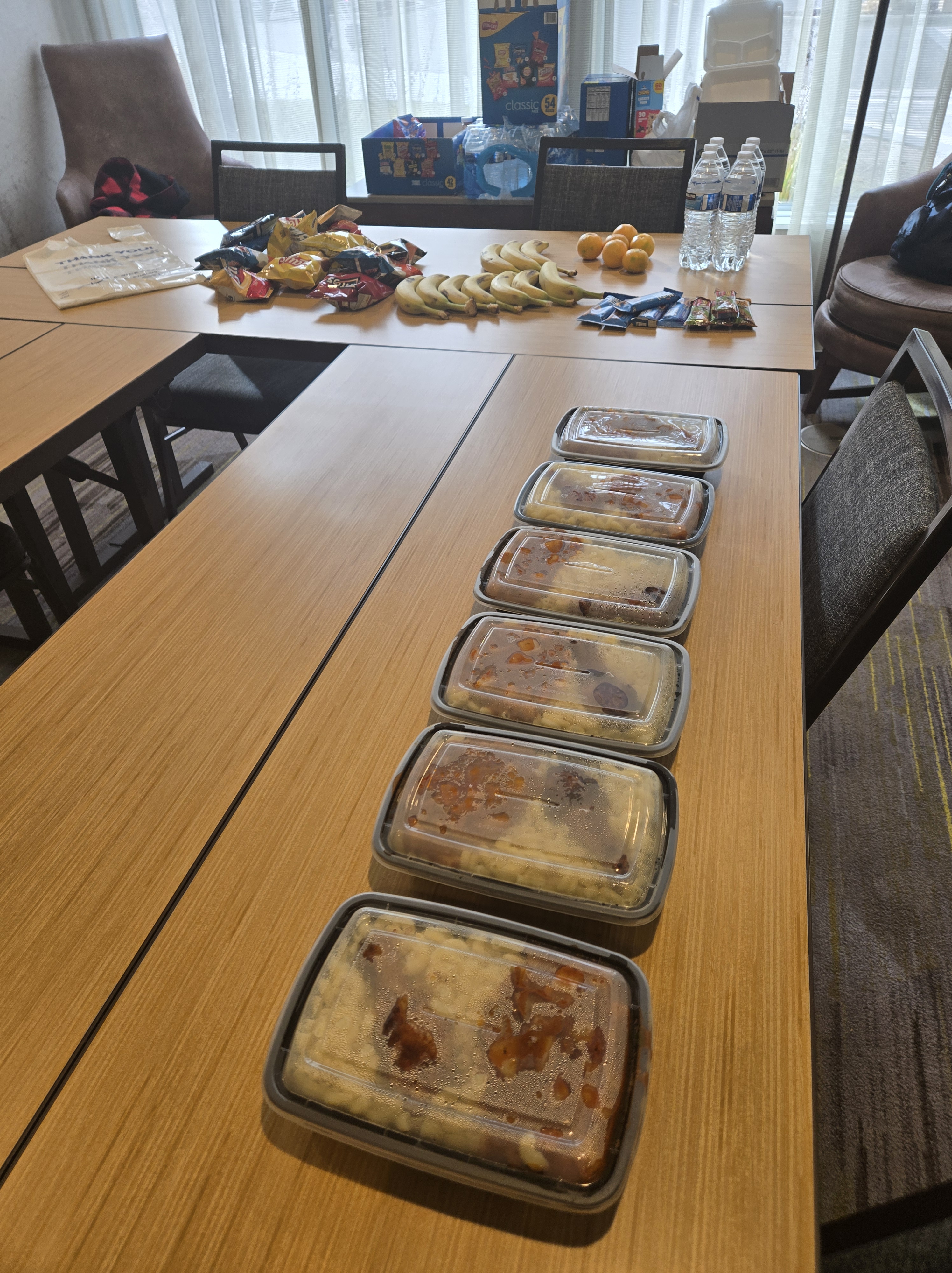
The next two days, I fed people in a hotel in a suburb about a half-hour away. I worked in a room off the lobby with another volunteer who was from the Twin Cities area. The Red Cross usually has people work in pairs for safety and to help with information exchange. My partner showed me the ropes. We arrived before lunch and got the room ready for the meal distribution by putting out supplies stored there (like fruit, water, granola bars). When the hot meals were delivered (in to-go containers), we’d set them out and open the room doors so that residents knew meals were available.
Many of the residents had found other food sources, so we only gave out about twenty meals each time. This was far fewer than I was expecting, but I suppose that’s a good thing. Between meals, we hung out in the room, read books, and chatted. I had my evenings free and was able to enjoy dinners with Twin Cities friends and relatives.
Some of the dinners we offered.
The next day was the last day feeding was scheduled. Many of the victims were able to move back into their apartments, or they were given food vouchers by the apartment managers. I worked at a different hotel with a different partner. As we served their last meals, many victims expressed their thanks. Most were Somali or Asian. I should mention that the Red Cross went to special lengths to provide culturally acceptable food (Halal dishes). I did not hear one complaint!
Wrap-Up
Because things were wrapping up by the time I arrived, my deployment only lasted five days instead of fourteen. I was able to spend Thanksgiving at home, which was good because my stepdaughter and our grand dogs came for an impromptu visit.
Overall, I felt the assignment was cushy. I was in a city that was intact and functional (versus a community ravaged by a hurricane or fire). I had my own hotel room versus sleeping on a cot in a shelter. The people we helped seemed comfortable with their surroundings. The volunteers I worked with were similar to me (retired do-gooders who like to read), and I had time to visit friends I wouldn’t have seen otherwise.
On the day I left, there were rumors of ICE agents present in the city. I was glad I was departing for Duluth. We all know how that turned out. ☹ The Red Cross has since issued guidance on how to react if agents arrive at a Red Cross operation.
It was a good introduction to how the Red Cross works. I’m looking forward to my next experience!
For the first nine months of 2025, my chapter alone (Northern and Central MN) helped 267 families affected by disaster. They trained 10,700 people in lifesaving skills, and were supported by 464 volunteers who gave over 32,000 hours of service. If you’re feeling the need to do something positive, consider volunteering.
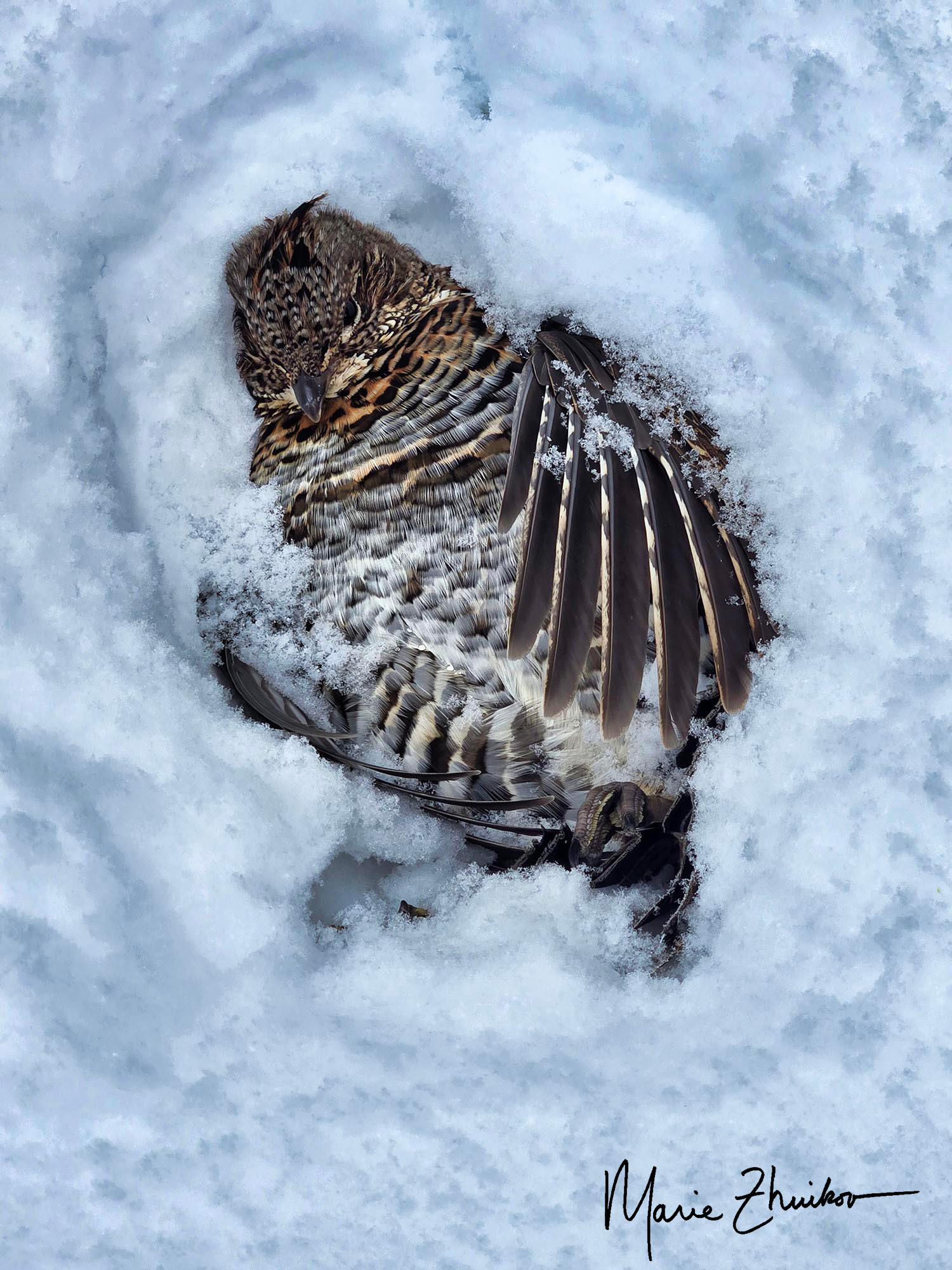
I came upon this scene at our cabin. The grouse must have hit the window on our garage, even though it’s on the second story. I’ll have to do something about that — close the curtain, perhaps? At least the bird had a soft landing in new snow. It looked so peaceful, I was moved to take a photo. We left it where it fell. Some fox has probably already made quick work of it — returning its energy to the world.
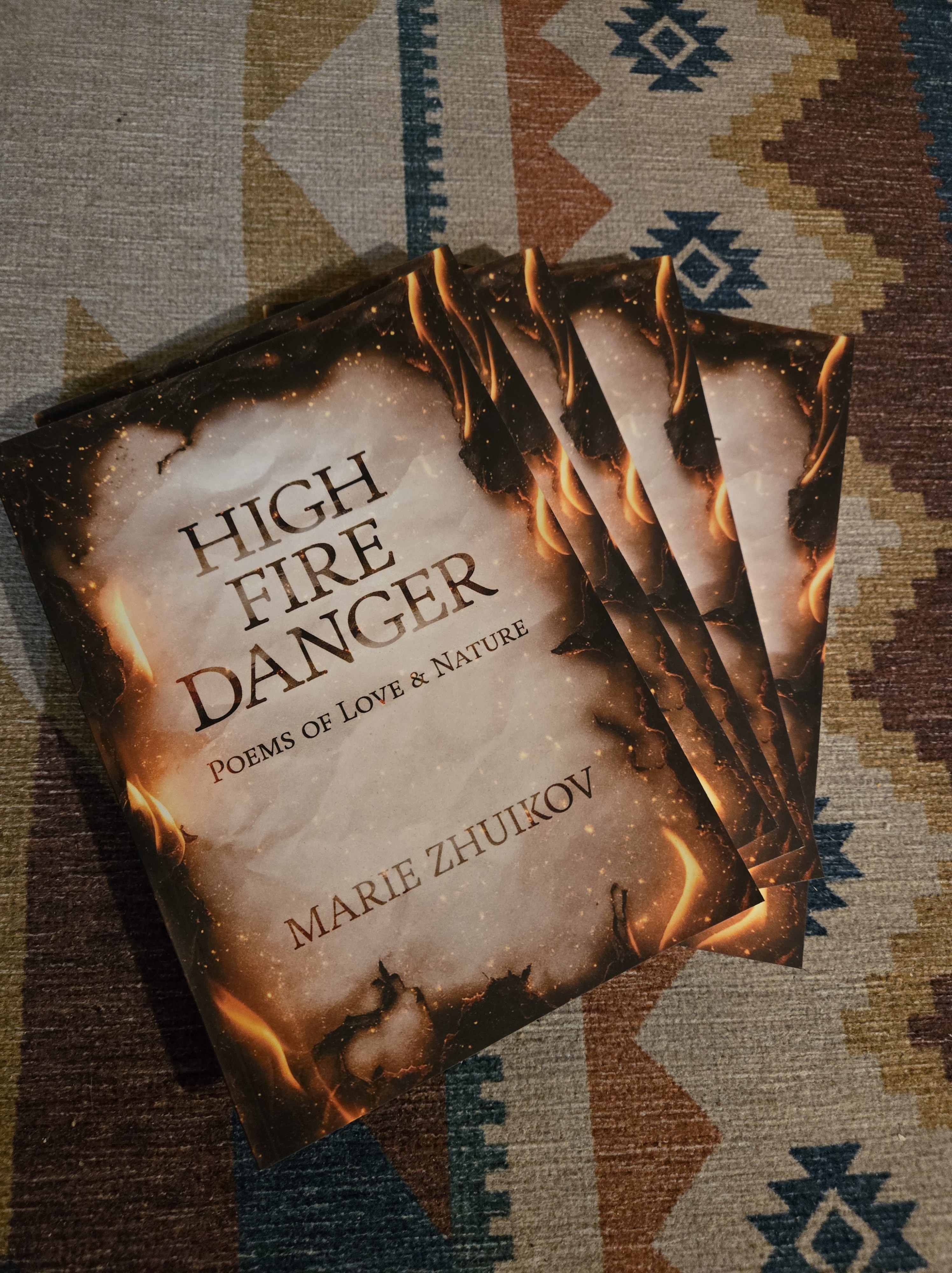
I love my book cover. Doesn’t it look like it’s really on fire?
I made it onto the local ABC channel affiliate’s lifestyle show recently to promo my poetry collection, High Fire Danger. The hostess, Baihly, does a great job of making interviewees feel comfortable in what can be a nerve-wracking, live-interview situation. You can watch the story here.
This year, I received many bogus author promotional opportunities that I’d like to warn you about. Most involve book clubs. The first was an email I received from someone purporting to lead a silent book club in New York City. They said my book was getting some “buzz” among their members and they’d like me to be a featured author for the group.
Of course, this surprised and delighted me. I have a couple of friends in NYC, so it’s possible that one of my books could have found its way around the city. I looked up the group online and found a Meetup page for them, so it seemed legit. I replied, saying I was interested and asked for more information. I didn’t hear back, so after a week, I pinged them again. I received an automated message that the email address no longer existed. That made me figure it was a scam, so I put it out of my mind.
A few days later, I received another message from them from a slightly different email address. They apologized for the delay in response and offered a revised date for my book’s promotion. I replied, just to see what would happen. I soon received a response that said I wouldn’t actually need to appear in person. They would set up a display for my book, and that would cost $216.
This spurred me to investigate them further. I input the search terms, “New York City Silent Book Club author scam,” and was led to this website, which solidified my hunch that it was a scam. So, authors, don’t fall for this one!
The second “opportunity” took the form of book club publicists who reached out to me separately about four of my books. They praised the books extensively (and excessively!) and offered to bring them to the attention of thousands of book groups. The emails come from gmail addresses. Although the praise was ego-affirming, I could tell that it was based solely on the books’ descriptions. The “publicists” had obviously not read the books. Their email text was probably AI-generated.
Here’s an example for my poetry book:
High Fire Danger is an exquisite collection that embodies how love and nature mirror one another, both capable of tenderness and destruction, both powerful enough to transform us entirely. From the first page, it’s clear that this is not merely a collection of poems but a lifetime’s reflection distilled into verse that burns with emotional clarity and elemental force.
The range of your imagery is breathtaking. You take readers from the cool expanse of Minnesota’s lakes to the windswept coasts of Scotland, and even beyond the bounds of Earth itself, yet the emotional truth in each poem keeps us grounded. This interplay between vast landscapes and intimate feelings gives your work both a cosmic and deeply personal resonance.
I was particularly moved by how humor and humility are woven into the meditations on love. There’s an unflinching honesty of voice, one that acknowledges the beauty and peril of connection, whether with another person or with the natural world. The poems don’t shy away from the scorch marks left by passion or the quiet ache of solitude, but instead, turn those experiences into sources of illumination.
The title High Fire Danger feels perfectly chosen. It speaks to the tension running through the collection, the balance between awe and fear, creation and destruction, desire and loss. Each poem feels like a spark that could either warm the heart or set it aflame. This duality is what gives your writing such emotional weight and timeless appeal.
What also stands out is your mastery of accessibility. Despite the scope of the themes, every poem feels intimate and inviting, like a conversation held beside a campfire or on a shoreline at dusk. The poems make the profound feel personal, and the personal feel universal.
High Fire Danger will resonate deeply with readers who are drawn to works that celebrate the natural world while exploring the human heart with honesty and lyrical grace. It’s a rare collection that appeals to both poetry lovers and those new to the genre, offering moments of reflection, passion, and healing in equal measure.
There were actually a few descriptive lines in this that I liked. If you watch my television interview, I stole the one about the poems feeling like “a conversation held beside a campfire or on a shoreline at dusk.”
Ha! The scammers wanted to use me, but I ended up using them! A fellow author said he replied to one of these emails just to see how much money they wanted, and it was several hundred dollars. I’m sure they’d just take the money and run.
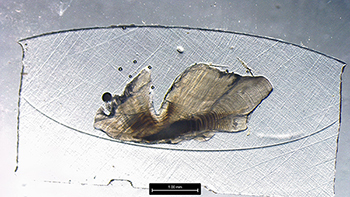
The oldest lake trout yet discovered in Lake Superior, also known as “Mary Catherine.”Image courtesy of the Michigan DNR.
The Michigan Department of Natural Resources (DNR) published a story a few days ago that made many people upset. As someone who has her feet in both natural resources management and public relations/science communication it offers an interesting case study. The DNR was trying to highlight an interesting fact about how fish can reach old ages, but some mistakes got in the way of this message.
The ear bone of one fish they caught in a special survey done in 2023 to study the different forms of lake trout and their reproductive biology was recently analyzed and the DNR discovered that the fish was as old as I am! (62 years) They caught the lake trout on a reef in the southeastern part of Lake Superior (40 miles north of Grand Marais, Michigan) and this lake trout is the oldest one currently on record.
The ear bones of fish show annual rings much like a tree, and that’s how the DNR can tell the age of the fish. It’s the only way they can do this, and they have to kill the fish to extract the ear bone, also called an otolith
Mary Catherine’s otolith shows 62 years of growth.Michigan DNR image.
One mistake the technicians made was naming the fish. They picked the era-specific moniker of Mary Catherine because Mary was one of the most common names in 1961 when the fish was hatched. People who heard news reports were excited that such an old fish was found, and that it even had a name, only to be crushed when they learned later that the fish was killed in the process of discovering its age.
One Facebook commenter said, “Hey we just killed Mary Catherine, but the upside is we now know that she was 62 years young, much like many grandmothers and recently retirees. There’s one less on Social Security now, and that should help keep it solvent.”
Another said, “Sad that they killed a fish who is probably older than the combined ages of some of the researchers, but it is interesting information.” Another commented that the fish might have lived another 20 years if not sacrificed for science.
You might think that such an old fish would be very large, but she wasn’t. Mary Catherine weighed 2.1 kilograms (4.62 pounds) and was 627 millimeters (24.7 inches) long. That’s because Lake Superior doesn’t have much food in it and animals grow slowly. The typical lifespan for a lake trout is 25-30 years.
The story gained wide media coverage, so it was successful that way, but even some of the reporters were dismayed that Mary Catherine was a goner. People already love to hate the DNR, and this well-intentioned science story just gave them another reason.
I’d say the main lesson is not to name your research subjects in newsworthy stories, especially if they’re dead.
The researchers were mum about whether they were inspired by the Saturday Night Live character, Mary Katherine Gallagher.
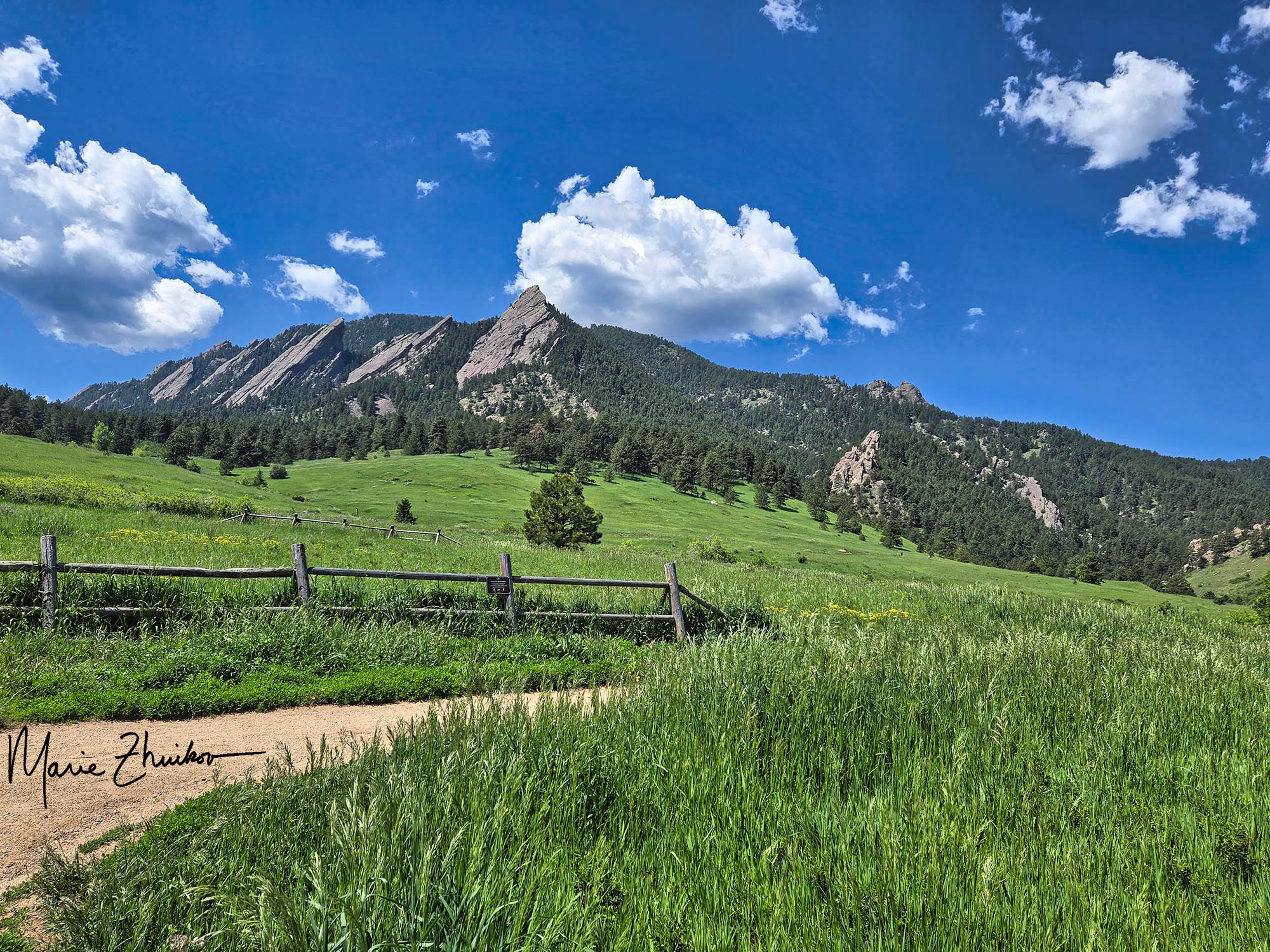
The Flatiron Mountains as seen from Chautauqua Park in Boulder.
When Russ and I were Scamping in Colorado last month, we visited Boulder with my son and his friends. One site was a local park that’s home to the Flatiron Mountains, which are a series of five impressive flat-sided peaks. The destination is popular with hikers and climbers.
I almost went to college there at the University of Colorado in Boulder, so that was one reason for our visit. Back then (and maybe even now) its biology program had a good reputation, which attracted me. I was even assigned a roommate. But at the last moment, I decided to attend the University of Minnesota instead for financial reasons. The university wasn’t far from the park we visited, and as we drove past, it was fun to ponder how my life might have been different if I’d stuck with my first choice of college.
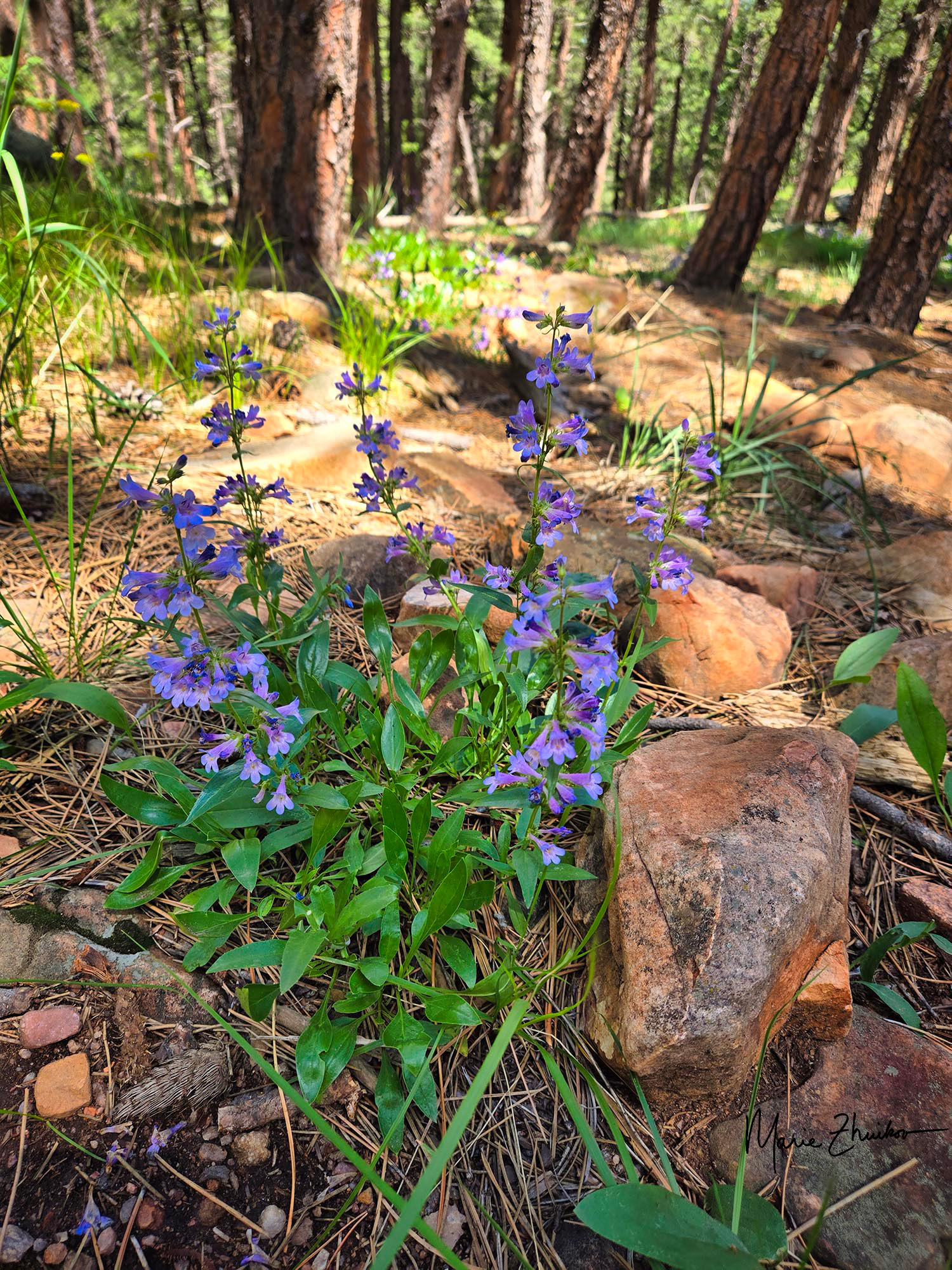
Anyway, back to Chautauqua Park. We hiked 1-1/2 miles UP and DOWN the base of the Flatirons. The spring flowers were out, which added cheerful color to our high-altitude breathlessness. My son’s friend went to college in Boulder and had climbed the mountains and he regaled us with tales of his adventures.
Afterward, we ate lunch at a Vietnamese restaurant. As our meal wrapped up, we discussed the agenda for the rest of our day. Originally, we’d planned to shop at the Pearl Street Mall in downtown Boulder, but nature won out when we decided we didn’t have enough time and would rather stop at Golden Gate Canyon State Park for a short hike. As we rose from the table to leave, emergency vehicles raced down the road. We wondered what was going on, but didn’t give it much thought until the next day when we learned about the Pearl Street Mall hate-crime attack.
Every Sunday since the Hamas-led attack on Israel in the fall of 2023, pro-Israel people have walked at 1 p.m. through the mall toward the courthouse to remind people of the hostages taken. Sometimes they sing the Israeli national anthem. It’s a peaceful demonstration.
On the day of our visit, a man yelled “Free Palestine” and threw a Molotov cocktail into the crowd of demonstrators. You can read national news accounts for a description of what happened next. In the end, eight people were badly burned and four had to be airlifted to Denver. One later died. The suspect (a recent transplant from Egypt) was quickly arrested and now faces a possible death penalty.
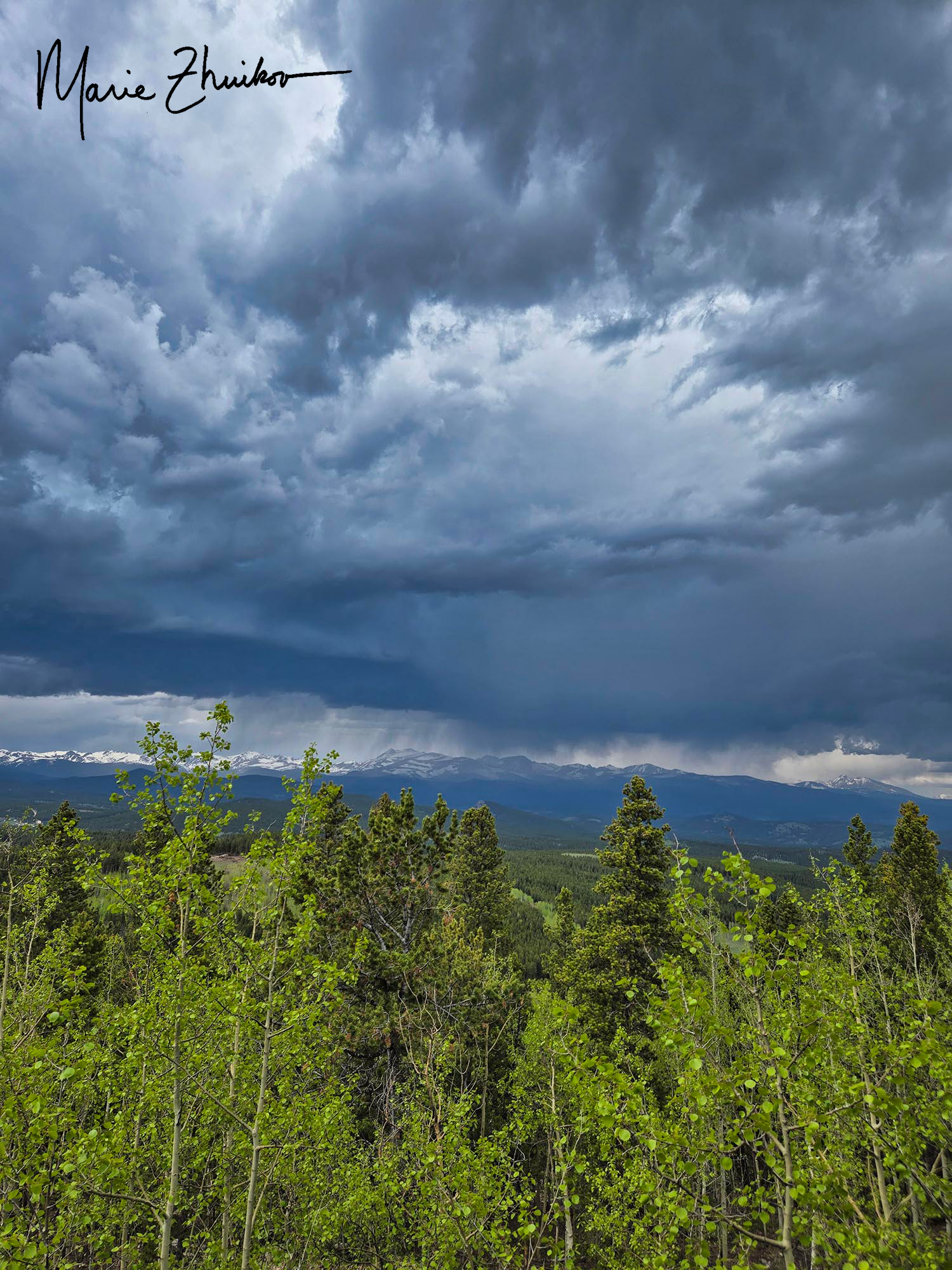
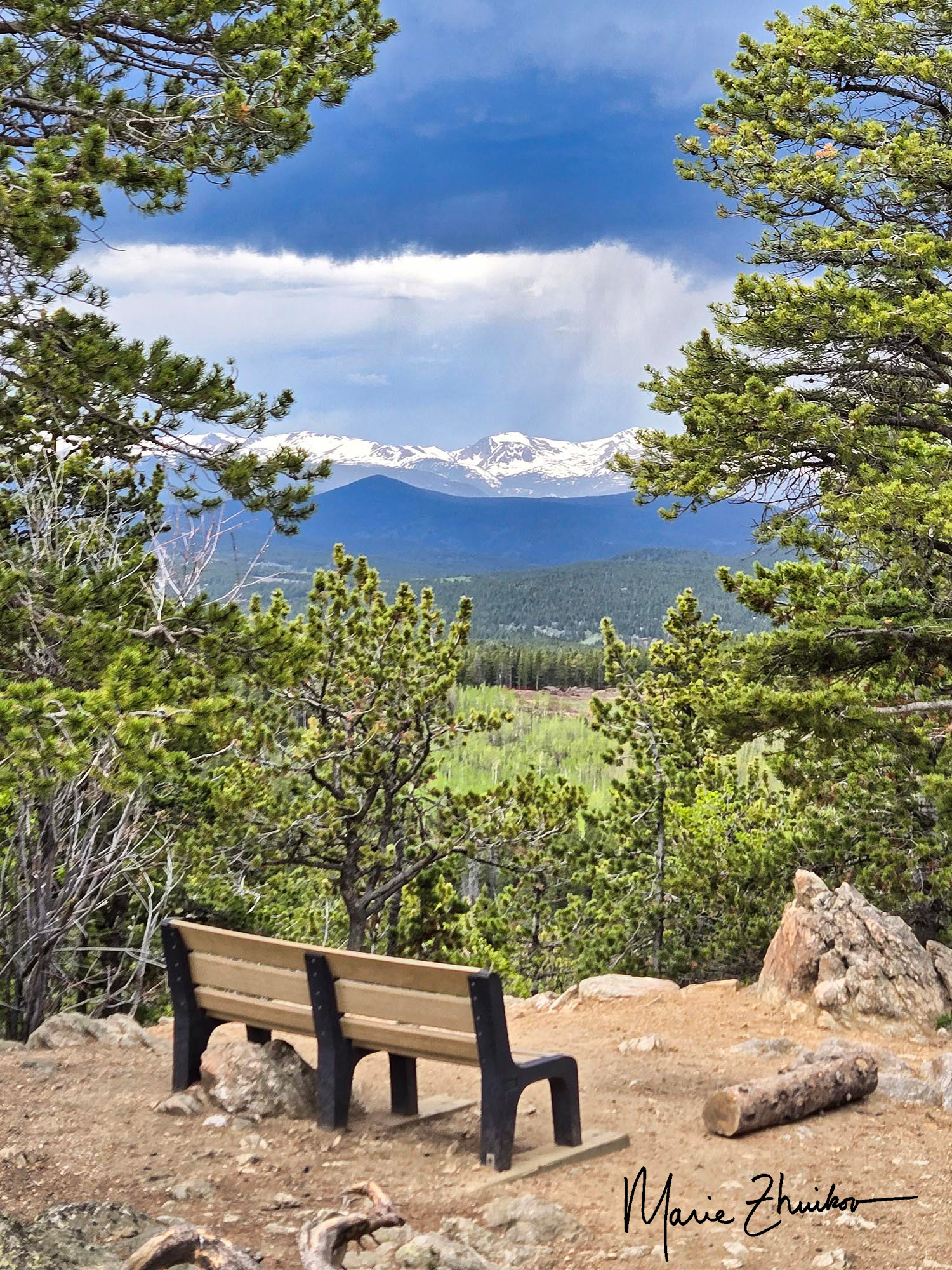
The view from Panorama Point, Golden Gate Canyon State Park, CO.
Blissfully unaware of these circumstances, and as more emergency vehicles passed us going the other direction toward downtown, we drove to Golden Gate Canyon State Park on our way back to Denver. The park was recommended for hiking by my cousin who lives in Golden. We stopped at Panorama Point and enjoyed watching a dramatic thunderstorm roll past. As the storm turned toward us, we parted ways.
The next day when we learned about the Pearl Street Mall attack, we felt for the injured people, but also felt lucky that we had changed our minds about a mall visit and didn’t end up as collateral damage. The restaurant where we had lunch was only 10 blocks away from it.
What if I had gone to Boulder for college? What if we had eaten our lunch faster and decided to visit the Pearl Street Mall? I guess we’ll never know answers to the questions raised by these two close calls.
I dedicate this post and these images to the victims of the Pearl Street Mall attack.
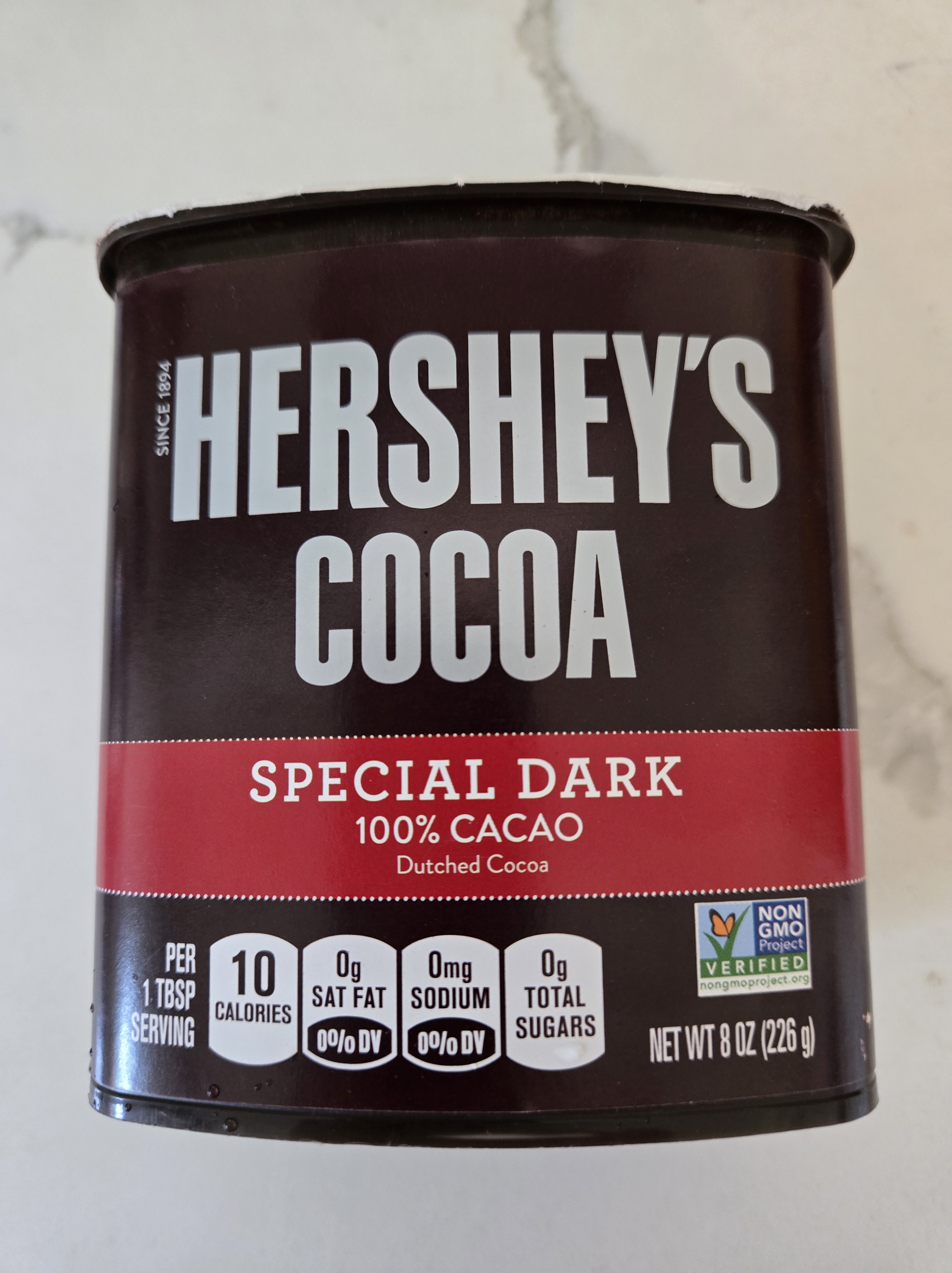
I discovered recently that conditions half a world away have disrupted my morning routine. Instead of drinking coffee like many of you out in the blogosphere do, I drink cocoa. I make it myself because most of the commercial brands have ingredients I can’t tolerate. I use dark cocoa, pure cane sugar, milk, some decaf coffee crystals for extra flavor, plus cinnamon and nutmeg for zip. I drink it hot in winter and iced in summer.
However, for the past few months, I haven’t been able to find dark cocoa on the grocery shelves anywhere in my town. I can only find regular cocoa, but not much of that, either. I finally turned to the internet to discover why.
I learned there’s a global cocoa shortage that’s affecting the entire chocolate industry. I was aware there was a chocolate shortage, but I never thought of that affecting cocoa, for some strange reason. Cacao crops in Ghana and the Ivory Coast of Africa (which produces 60% of the world’s cocoa) are being destroyed by weather and an insect-borne disease with the worrisome name of Cacao Swollen Shoot Virus Disease (CCSVD). This and other factors are causing shortages of cocoa and chocolate, increases in prices, and supply chain issues. According to one blog, it’s even encouraged a cocoa smuggling business.
I began drinking dark cocoa because I thought it was “healthier” – containing more antioxidants than regular cocoa, just like dark chocolate contains more antioxidants than regular chocolate. Later, I discovered this is not true! Regular Hershey’s cocoa actually contains more antioxidants. But I kept drinking dark cocoa for the taste.
I guess that for now, I’m forced to drink regular cocoa and be “healthier.” I’m just glad I can find that on the shelves.
Here’s what AI suggests for finding Hershey’s dark cocoa if you just can’t live without it:
Check online retailers: While some stores may be out of stock, it might be available on websites like Amazon.
Consider other brands: If you can’t find Hershey’s, you might consider other brands of cocoa powder.
Use product locators: Some retailers may have online tools to help you find stores that have the product in stock.
What is it about possessing things? Why do we feel the need to own what we love? And why do we become such jerks when we do? We’ve all been there. You want something, you possess it – and by possessing it, you lose it. – Chris Stevens (Chris-in-the-Morning), “Northern Exposure” TV series
When we returned home from Grand Cayman, northern Minnesota was on fire. Three wildfires from natural causes were burning, adding to the smoke from Canadian fires. During our vacation, the smoke blanketed Duluth, causing air quality warnings. Thankfully, we missed that, but once we were home evacuation warnings sounded for areas near our cabin.
What could we do against a wildfire if it chose to overrun our cabin? We live an hour away and weren’t sure how worried we should be. One of my relatives called me and suggested we stand outside our cabin with garden hoses. Luckily, a cabin neighbor was fighting the fire and was able to give us a clue about the conditions. He thought we’d be okay. But out of an abundance of caution, a few days later when the fire had crept within two miles of our cabin, we decided to evacuate some belongings “just in case.”
Deciding what to evacuate was an interesting exercise. It wasn’t easy, but we were thankful that we weren’t like many people who only had minutes to evacuate. Eventually, we decided on bringing our Scamp trailer camper home, which was stored in our cabin garage. We needed it in the next few weeks for a trip to Colorado, and it would have been very inconvenient to have it burned to a crisp!
My photos were the other things we saved. We decorated the cabin with many canvases and metallic prints of images that you’ve probably seen in past blog posts. I have a photo show coming up in July, and it would have been a bummer to have those all burned up. Not to mention, expensive to replace. (To see my online photo collection, visit my website.) We decided to leave the furniture until a more imminent threat arose. Some of our good friends volunteered the use of their truck if we needed it and we felt lucky to have such support.
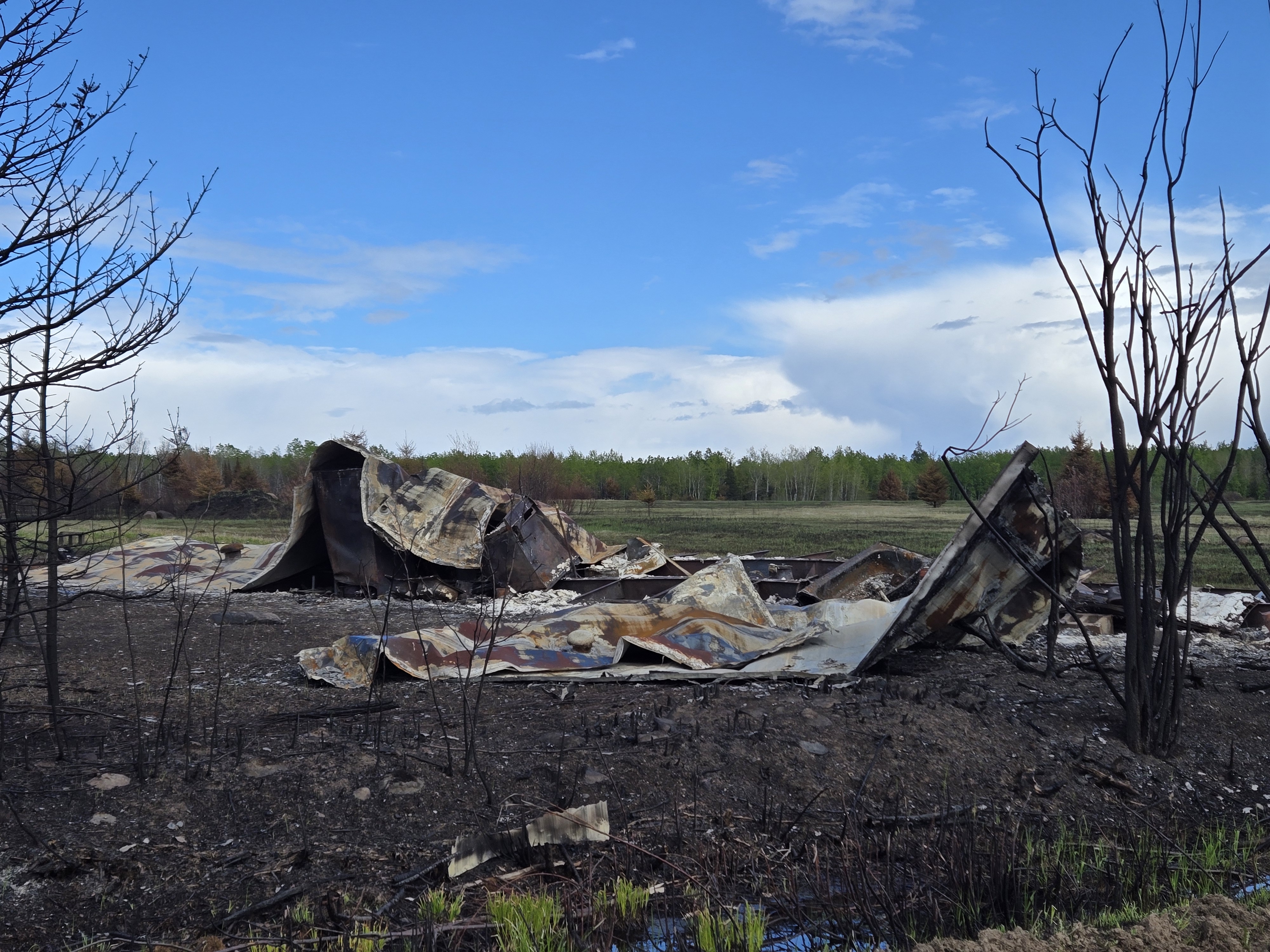
I think this used to be a mobile home, located near where the fire began.
Thankfully, we didn’t need their help. Due to the efforts of state and local fire folks, the blaze was stopped soon after we evacuated our belongings. I’m glad our cabin survived and I’m glad no lives were lost in the blaze. Our firefighter friend told us the fire began due to a spontaneous combustion of a hay bale on a farm.
Once it was over, we drove down the road that flanked the fire. Several trailer homes were lost and possibly one “regular” home, plus many trees. The damage was sobering, and I was glad that we took the measures that we did. However, we would have been much more nervous if the fire had threatened our primary home.
Besides people and pets, what would you save if a fire came for your home? It’s something to consider.




 Marie's Meanderings