Getting my Blue Mind on — Part 2 of 2: Stuck Inside a Psychedelic Washing Machine

20180328_185852

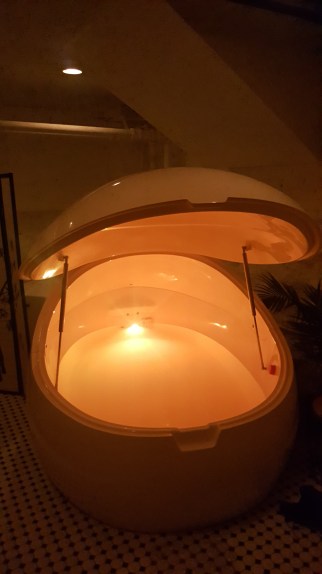
The float pod in purple. Would you get in this thing?

At the suggestion of Wallace Nichols, I made an appointment for a sixty-minute session at my local flotation pod. The pod was in a room in the basement of a yoga studio, and it’s the only one in these here parts of northern Minnesota.

The pod technician led me to the room, which contained the pod and a shower. He gave me the choice of silence for my impending pod experience or four types of music. I chose piano music. He explained that he would have to program that into the computer, which was upstairs in the reception area.

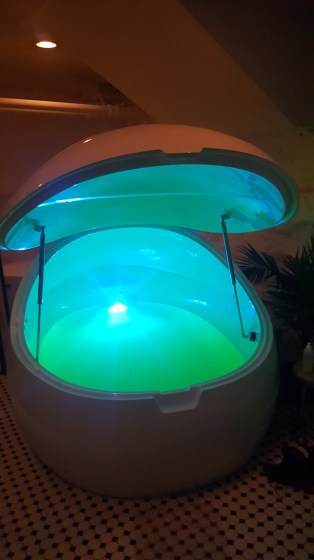
The pod was about ten feet by eight feet. It featured a large hatch, which was open, and rotating, pulsating colored lights that illuminated the ninety-eight-degree water.

The technician explained that all the Epsom salt in the six inches of water is what makes a person float. A bottle of fresh water stood nearby to rinse the salt out of your eyes in case some happened to get in, plus a towel, and a small floaty tube if a person wanted it for head and neck support in the water. Earplugs were also available, to keep the excessively salty water out of one’s ear canals.

20180328_185838

The float pod in its yellow phase.

I asked the technician how I would know when my session was over. He said that the music would stop and a voice would say, “It’s time to exit the pod.” (Somehow this struck me as funny, and I almost giggled.) Then the filtration system would come on, which he said was rather loud and was bound to wake me up if, by chance, I fell asleep in the pod.

He mentioned that after the session, since it was late in the evening, he probably wouldn’t be at the desk once I finished, so I could just get out and head out on my own. I asked him how I should pay for my session because I hadn’t done that yet.

This seemed to surprise him and I ended up giving him my credit card, which he was going to process while I was in the pod. He said he’d leave the receipt and card for me on the front desk and I could get it on my way out. (Damn, why did I say something? I could have had a free session!)

Details done, he left me to my experience.

I was expecting soft piano music during my pod float. I expected to emerge totally blissed out. That didn’t quite happen.

After showering and putting in the ear plugs, I entered the pod wearing only my birthday suit. I wondered when the music would start. It never started. I suspect the technician was so distracted by processing my payment that he forgot to turn on the music.

I laid there in the water (which is weirdly buoyant), and decided I didn’t need no stinkin’ music. I even got brave and turned out the psychedelic lights. As I lay there in the silent dark, suddenly a jet of water came on. My body started spinning slowly around in the pod.

20180328_185825

The float pod in green.

The filtration system! Hey, I thought that wasn’t supposed to come on until my session was over. Surely, sixty minutes hadn’t passed yet? It only felt like ten minutes. Now what to do?

I could push the red button in the pod, which the technician said would cause an annoying sound to come from the computer in the reception area. But would that work since the music wasn’t working? Would anyone even be there to hear the annoying sound?

I didn’t feel like getting out of my warm pod and running upstairs in a towel to complain to the technician. Besides, that wouldn’t be very Zen.

So I stayed where I was, getting pushed in slow circles by the filtration jets. At some point, I turned the lights back on because it was just too weird having all this stuff happen to me in the dark.

Then I started giggling. This was like being stuck inside a giant psychedelic washing machine. Yes, I could always raise the hatch and get out if I wanted. But I didn’t want to. Besides, that wouldn’t make for a good story.

After about five minutes, the filtration system turned off. Although I wasn’t sure when it would strike again, I was finally able to relax and get into the floatation groove. It was very blissful. I could hear my heartbeat and my breathing.

Pods are supposed to inspire creativity and help with pain management. I didn’t have any pain. Mostly, what I thought about during my session was how to describe it in this blog post.

My bliss was shattered after about a half hour when the filtration system came on again. I floated around and around in more slow circles. As before, the system eventually shut off. I laid there until I thought my session was over and I emerged from the pod, checking my watch. I was only about ten minutes over my time.

I took another shower to rinse off the salt and got dressed. My credit card was waiting for me at the reception desk. Nobody was there. I debated again whether to find someone to complain about my expectations not being met.

Nah, that just didn’t seem very Zen. Besides, it was all kind of fun.

Would I try it again? Maybe, if I was really stressed out. But I don’t see it as something I would need regularly.

I picked up my card and walked into the night, peaceful.

***

Update: The owner heard about my experience and offered me a free float as compensation for my interrupted experience. I told him that I wasn’t dissatisfied at all by the experience and didn’t feel like I really needed another float. But I have a friend who is very stressed out lately. I asked him if my friend could have the float instead, and he said yes. How nice of him! Bliss all around.

Getting my Blue Mind on: Part 1 of 2

J Nichols ORIGINAL Headshot_c_JeffLipsky_preview

Wallace Nichols

I had Dr. Wallace Nichols, author and marine biologist, captive in my car for forty minutes over the course of two days. Far from kidnapping him, he was in my car willingly because I was his morning chauffeur for a local science conference about the St. Louis River (the one in Minnesota, not the one in Missouri).

Nichols was the conference keynote speaker, talking about concepts described in his book, “Blue Mind: The Surprising Science That Shows How Being Near, in, on, or Under Water can Make you Happier, Healthier, More Connected & Better at What you do.”

As a watery kind of person myself, I relished this opportunity to learn more about the whole Blue Mind thing. Basically, it’s this: Being by or in water can calm people down and make them more creative. This idea is nothing new, it’s just that now it has a champion in the form of a Kevin Costner-esque man with a Ph.D. And it’s a nice side benefit that this man seems very humble and down-to-earth (down-to water?).
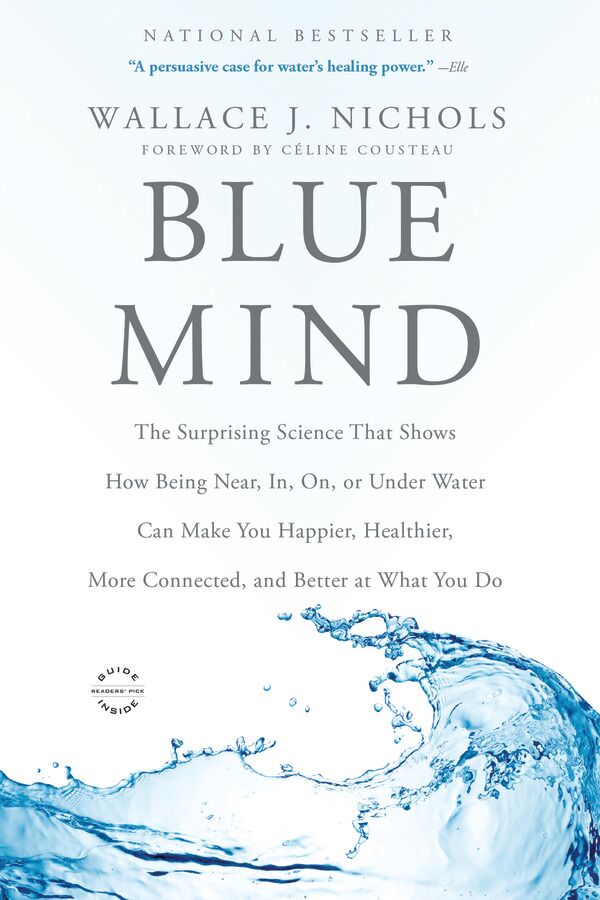
Book CoverThis is my rather jumbled account of things I quizzed him about in my car, things he said at the conference, and things I recall from reading his book. I tried to separate all the information out according to when I heard him say it, but it was useless. I guess I’m too holistic for that.

Although Nichols’s ideas may seem rather surfer-dude-ish — like they come from California, which indeed is where he lives — Nichols refers to himself as a Native North American. He grew up on the East Coast, but has lived various places in the Midwest and Southwest while on his eventual way to the West Coast.

In fact, Nichols credits the Apostle Islands National Lakeshore for focusing his love of water and inspiring his career as a sea turtle biologist. He visited the area for ten days when he was in high school.

I wish I would have had time to ask him exactly what happened during his experience to inspire him, but in his speech he said his time in the Apostles led to his realization that water was, “. . . Where you feel like the best version of yourself. You are surrounded by nature, you’re in the elements. You’re where you should be.”

Something he didn’t mention in his speech was that he used to stutter as a child. I would expect that being in the water helped with that. “Just to be quiet in or near the water. To learn a new activity, learn to surf or to swim – those are very often the highlights of our childhood or adulthood,” he said.

His goal at the conference was to encourage the audience to bring science and emotion together in their work. He used a mixture of personal stories and research results to highlight how important water is to people from emotional, psychological and spiritual standpoints.

I read the Blue Mind book a few months ago. What struck me was that Nichols cited many studies, but most of them were associative – there weren’t many you could point to that were specific to how people react in and near the water.

I asked him if he was doing any more specific studies or if he was cooperating with any neuroscientists who were. He said that since his book was published in 2014, other studies have been published, and in his conference speech he described them.

Also, to the audience he said, “We talk a lot about the ecological, the economic and educational benefits of our work. We’re pretty good at quantifying this stuff, these 3 Es. We’re not so good at talking about or even including this emotional connection, the emotional benefits of healthy waterways. I would say, that should be switched to the top of the list. These are the benefits that grab people and bring them into the conversation.

”From a strategic perspective, first let’s not leave them out, and second, let’s prioritize them so that we’re fulfilling a larger movement. The emotional connection supercharges our understanding of ecological, economic and educational benefits of healthy waterways. By the way, emotion is something we can study. It can be as quantitative as you want it to be. It is hard science. Increasingly, organizations are using emotions as a tool to advance their advocacy work.”

Nichols offered this criticism and advice for environmental groups: “The environmental movement has used fear and anger to communicate about their issues. Guilt and shame are other motivators, and lots of facts — until they are confused. We talk about ecosystem services, we talk about the crisis. We blame you. It’s your fault. It’s terrible. The future is bleak. And by the way do you want to join my club? Sound familiar?

“Is that effective? We think it is. But we’ve proven time and time again, not so much. Maybe gratitude is another tool we can use. Love, what about that as a motivator?”

He left the conference attendees with this thought: “Water is life that makes life worth living as well. When we undervalue water, we lose that. When we undervalue anything or anyone, bad things happen. Water is our first medicine, for both physical and mental health. Bring the science of emotion to your conversations, do not ever leave it out.”

If you’d like more information, please check out his book. You can also read this blog post I wrote for my job.

Think about your own life. Are you stressed out? What helps you deal with that? Is it working for you? If not, remember the water. Remember music. Remember nature in general. Get out there. And don’t forget to breathe.

*

Another conversation I had with Mr. Nichols dealt with floatation tanks. You know, those are the tube tub things you can go in that are filled with warm salt water and silence.

They strike me as sort of scary, but Nichols He recommended them for dealing with stress or to inspire creativity.

A business in my town recently opened a flotation tank. I decided to live on the wild side and give one a try. My appointment is tonight. That’s what Part 2 will be about.
Congratulations, You’ve Been Spied Upon

Russian hacking statsThe recent indictment of Russians who were part of the notorious Russian internet “troll farm” that interfered with the U.S. elections hit close to home for me. I have suspicions that my little ol’ author web site (and perhaps this blog, which is featured on my site) may have been an information source for them. Then again, maybe not. But here’s what I know:
I opened my author website to the world in March 2014. The world paid it no attention, but just having it up felt good at the time.

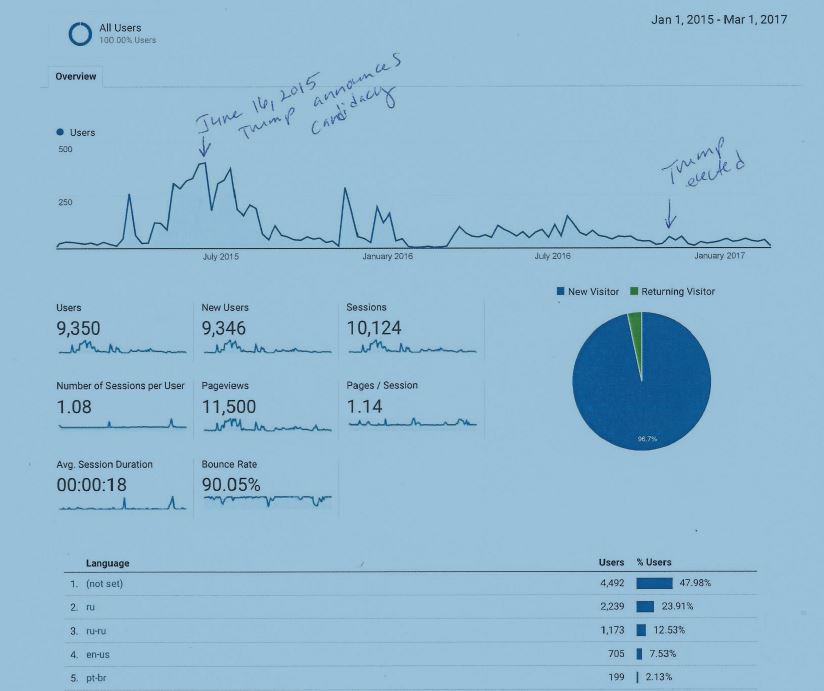
About a year later my site, which only got a couple of views per day, started receiving hundreds of views. By summer 2015, it was receiving over 400 views per day. Who were these people? Google Analytics tells me they were mostly from Russia, but the majority could not be tracked to a specific country because they didn’t have a language set on their computer.

Hmmm. Mysterious. I thought at first that maybe it was Russian schoolchildren who had to do an assignment on a famous Russian general who has a last name similar to mine (General Zhukov). Maybe they found my site by accident while they were looking for information about him.

My other thought was that maybe someone posted my web address in an online forum or a Russian dating site without my permission, and that’s what drew people. Nobody asked me for a date, though. (Darn it!)

My site grew so popular, and I was so concerned that I called my website hosting company and asked them to check if anything strange was going on. Nope. Everything was okay, they assured me.

I even checked all the links on my site to ensure they weren’t going somewhere unintended. Every link went were it was supposed to go.

And it’s not like my books were hugely popular, so it didn’t seem like the viewers were people hungry for eco-mystic-romance. (Darn!)

I started to breathe easier in the fall of 2016, when the traffic on my site dwindled to more reasonable levels – only 10 or 15 views per day.

Imagine that, I was relieved when fewer people visited my website!

Then came the suspicions and the news of the Russian hackers interfering with the U.S. election. When the indictments were handed down last week, I decided to do some research of my own to see if there were any correlations between the traffic on my web site and Trump’s candidacy and election. What I found disturbed me, and I will post the metrics here, so you can make up your own mind.

As you can see from the data graph, the surge in traffic to my website began around March 2015, just a few months before Trump announced his candidacy. Could the Russians have been doing research in support of Trump’s run for office? The number of hits to my site peak on June 16, 2015, which is the same day that Trump announced his candidacy. Then there’s an abrupt decline until a week or so later.

When I told one friend about this pattern, they suggested that maybe the Russians thought that I’m an opinion leader and they were checking my site (and blog) to gather information on American opinions to better craft their disinformation campaigns and political messages. Hmmm, could be?

Visits to my site jumped up and down, but stayed higher than normal until Trump was elected. Then they dropped off to the measly numbers – only a couple of views per day, which it is still experiencing today. Hardly any of those viewers are Russian. The majority are American. And all those mysterious viewers from an unknown country are gone.

As another part of my research, I looked at a timeline of 2016 presidential campaign hacking fast facts. It begins in September of 2015, when the FBI contacts the Democratic National Committee to warn them about their computers being compromised by Russian hackers. One would expect that the hackers did their work earlier than September, which coincides with the rise in views to my web site.

A couple of weeks ago, my former Russian language professor gave a talk about how Russians think. After his talk, I decided to bounce this info off of him because I knew he used to work for the CIA. After I described the pattern of visits to my website, his verdict was, “Congratulations, you’ve been spied upon.”

I’m not sure what to do with this information. I guess for now, I’ll just feel really creeped out.

If I disappear suddenly, you’ll know the Russians did it.

Taking an Old-School Snowshoe

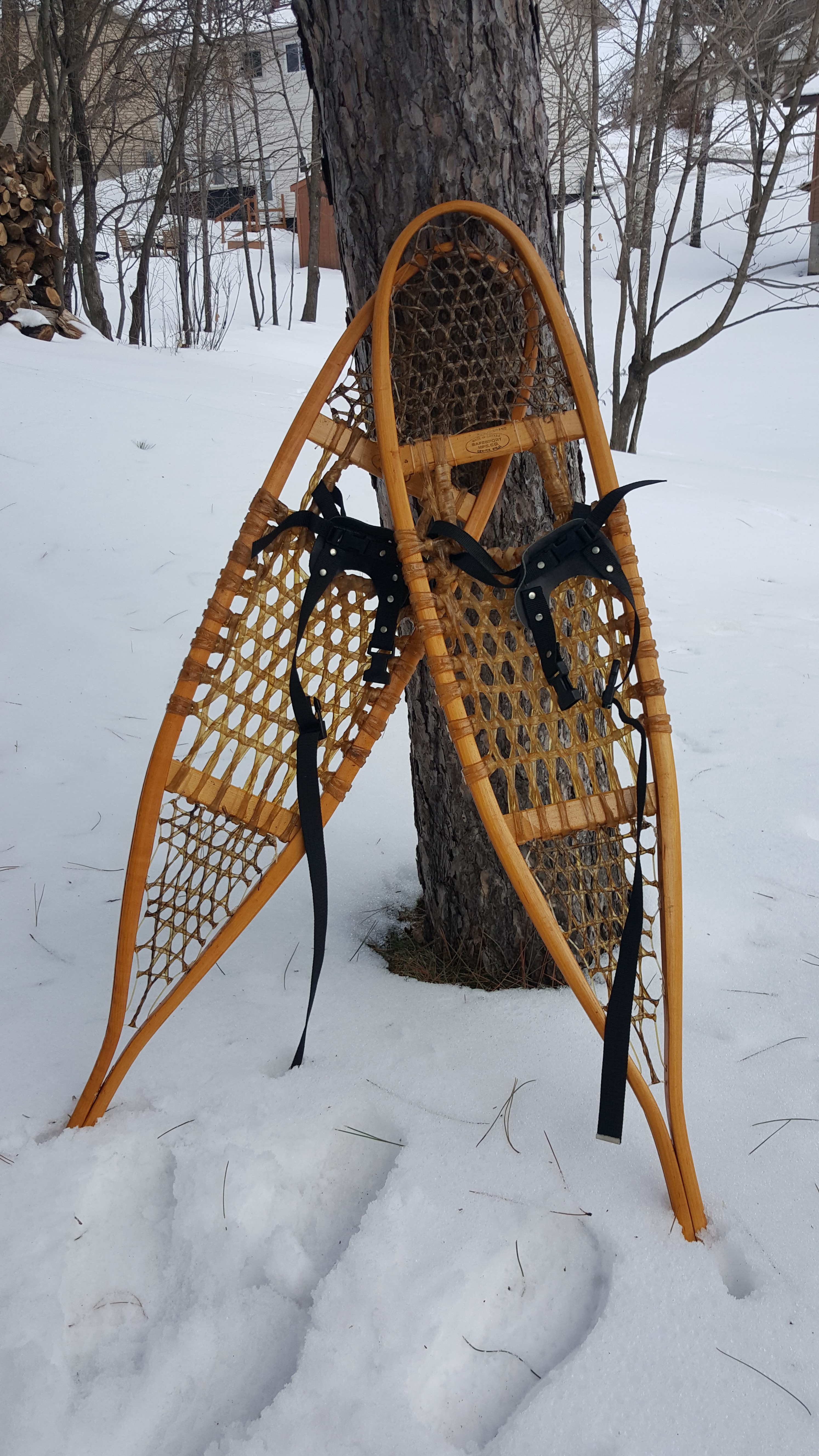
20180120_121621It’s been about twenty years since I used my own snowshoes. I had the chance this week to dig them out and tromp around the grounds of a local mansion that’s open to the public for nighttime outdoor tours.
It was an expansive experience. What do I mean by that? Well, please, read on.

My snowshoes are old-school — made in Canada of wood with rawhide lacings. Tapering from a rounded nose to an elongated straight tail, they are four feet long. Their only nod to modernity are the plastic buckles and synthetic foot straps.

Not familiar with the various types of snowshoes, I looked mine up so I could describe them to you. I discovered they are an Alaskan snowshoe, which is supposed to work well on flat and rolling country with a deep snow pack. However, their length makes turning difficult.

My snowshoes were a Christmas present. I used them several times, but then my circumstances changed and I just didn’t have the motivation or opportunity to get out on them. But this nighttime snowshoe excursion sounded like fun, so off I went. It was held on the grounds of Glensheen Mansion, which is in Duluth, on the shores of Lake Superior. A group of about thirty people met and were divided among two tour guides who led us onto the grounds.

The quiet night air was about 20 degrees with little wind. Stars twinkled overhead as we shuffled over land that, in bygone days, held greenhouses where banana trees grew.

What I had forgotten about snowshoes is that they are like the land rovers of winter gear. You can walk up or down any kind of snowy slope with those things without worrying about slipping. That is, except for stairs. I don’t recommend their use on stairs!

At one point, we arrived on the shore of Lake Superior. We stood, rooted, listening to ice slush tinkling and crunching with the motion of low waves. The constellation Orion shown overhead, his slanted belt seeming to point down directly at us.

The sky was dark and huge over the lake. Even though we were within the city, we might as well have been miles away in a wintery wilderness. Almost immediately, a calmness descended on the group and we stopped talking, except for some exclamations of beauty.

I’ve been reading lately about how people’s brain wave patterns and emotions change when they view vistas like a great lake or an ocean, or even an empty desert landscape. We have a primal need for these wide-open natural places as much as we need the comforts of civilization.

A Northern Minnesota writer, Sigurd Olson, described these effects so well in his books about wilderness that I won’t even try to match him. But, as we stood on the shore, our hearts and our minds expanded — just for a moment — until it was time to catch up to the tour guide again.

20180117_190232

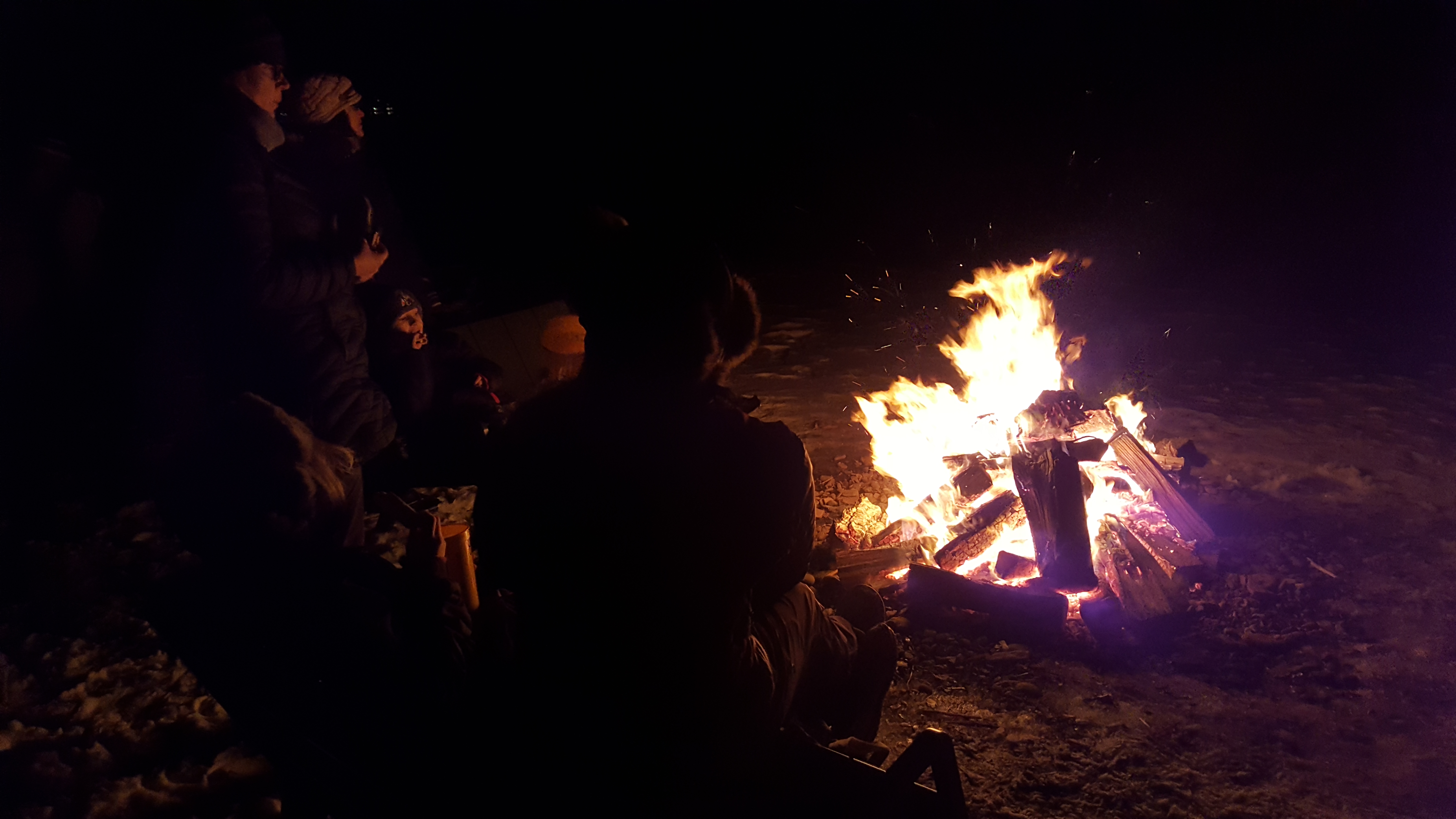
The snowshoe hike ended at a cozy bonfire.

The Year in Blogging, 2017

20170422_100312

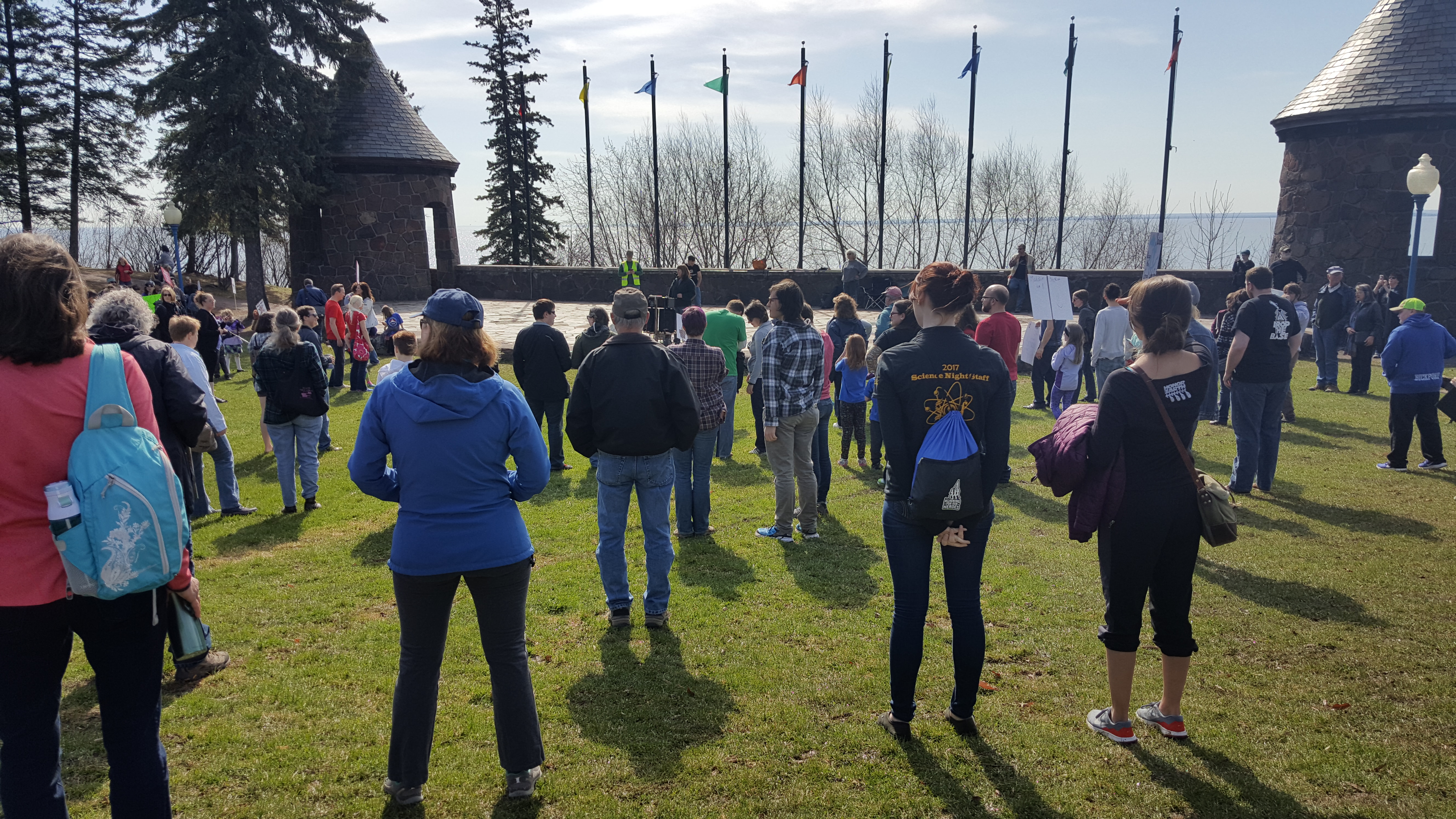
This was my favorite image from 2017. I took it at the beginning of the March for Science, which happened in Duluth, Minn. I call it “Standing Strong for Science.”

My fifth year as a blogger has come to a close. I hear in the blog-o-sphere that such longevity is unusual. Most bloggers only maintain their efforts for a year or two. What can I say?  I keep doing it because I keep coming up with stories to tell and places to visit. I don’t have any goals other than sharing my stories. Well, there might be a bit of book promotion in there, but I try to keep that to a minimum. Oh, and there’s also that time I tried to save my job, but more about that later…

In 2017, my blog saw the most traffic so far. It had over 4,500 visitors and over 6,100 views. I’m sure part of that is because there’s more content so my blog shows up in more searches, but I’d also like to think it’s because people find what I have to say of interest and of use.

I’m sure if I was active on more social media channels, I could up those numbers. But upping numbers is not my goal, it’s just a nice side-benefit of telling stories.

Here are the most popular stories for the year:

# 1 Why Sea Grant is a Kick Ass Program (And Not Just Because I Work There) – This was my plea for people to contact their congressional representatives to save the federal program that employs me. The post got shared widely among my colleagues and friends, and guess what? It worked! We all still have our jobs with an organization that works to study and protect one of our most basic requirements of survival: water.

Not only was this post the most popular for 2017, but for the entire time I’ve been blogging.

Congress ignored the President’s budget cut for us, and even gave us a little bit of a raise. It’s nice to know that your country values you. Alas, the president has zeroed out our budget once again for next year, but I’m not freaking out because the Sea Grant leadership suspects that congress will keep us in the budget as before.

Anyway, thank you for the support you all provided!! It means a lot.

#2 Iams Dog Food Alert!—This story didn’t take off right away like the Sea Grant one did. Its popularity is unfortunately based on the fact that many dogs other than mine have had bad reactions to the sneaky changes this company made in the recipe of their dog food. This is one story I wish wasn’t popular, but more and more people keep finding it though searches. I am glad the story is providing them with answers, but sorry that their dogs are having problems.

#3 Minnesota Singer/Songwriter Jacob Mahon – This is a short post that I whipped out in about 10 minutes after seeing a new Duluth-based musician. I suspect part of its appeal is that it was short and to the point, plus the guy is good! The story was shared by several people, which helped lead to its popularity. Go Jacob!

#4 and #5 The Lake, it is Said, Never Gives Up Her Dead and Remembering Black Sunday in Duluth – I group these two together because they are about the same topic, and because they follow each other in popularity. Fifty years ago, three of my cousins drowned in Lake Superior. The stories are about the incident and a special ceremony that was held on the lake in their honor and to remember the people who tried to rescue them. They serve as a reminder of how powerful this lake can be.

#6 Challenge: Describe Your Community in One Word – This story, which I wrote in 2014, describes the efforts of myself and a friend to find one word that describes the people who make up Duluth, Minnesota. I’ve noticed that this story pops up in a lot of searches, especially from the Philippines. I suspect there’s a school teacher there who is giving his/her students the assignment of coming up with one word for their city or country. My blog has probably been plagiarized for many a school paper, but that’s okay with me!

Thank you for meandering with me, and Happy New Year wherever you may be . . .

Grand Canyon Joy

20171208_143044

“Wherever you have friends, that’s your country, and wherever you receive love, that’s your home.” A Tibetan saying.

20171208_121345

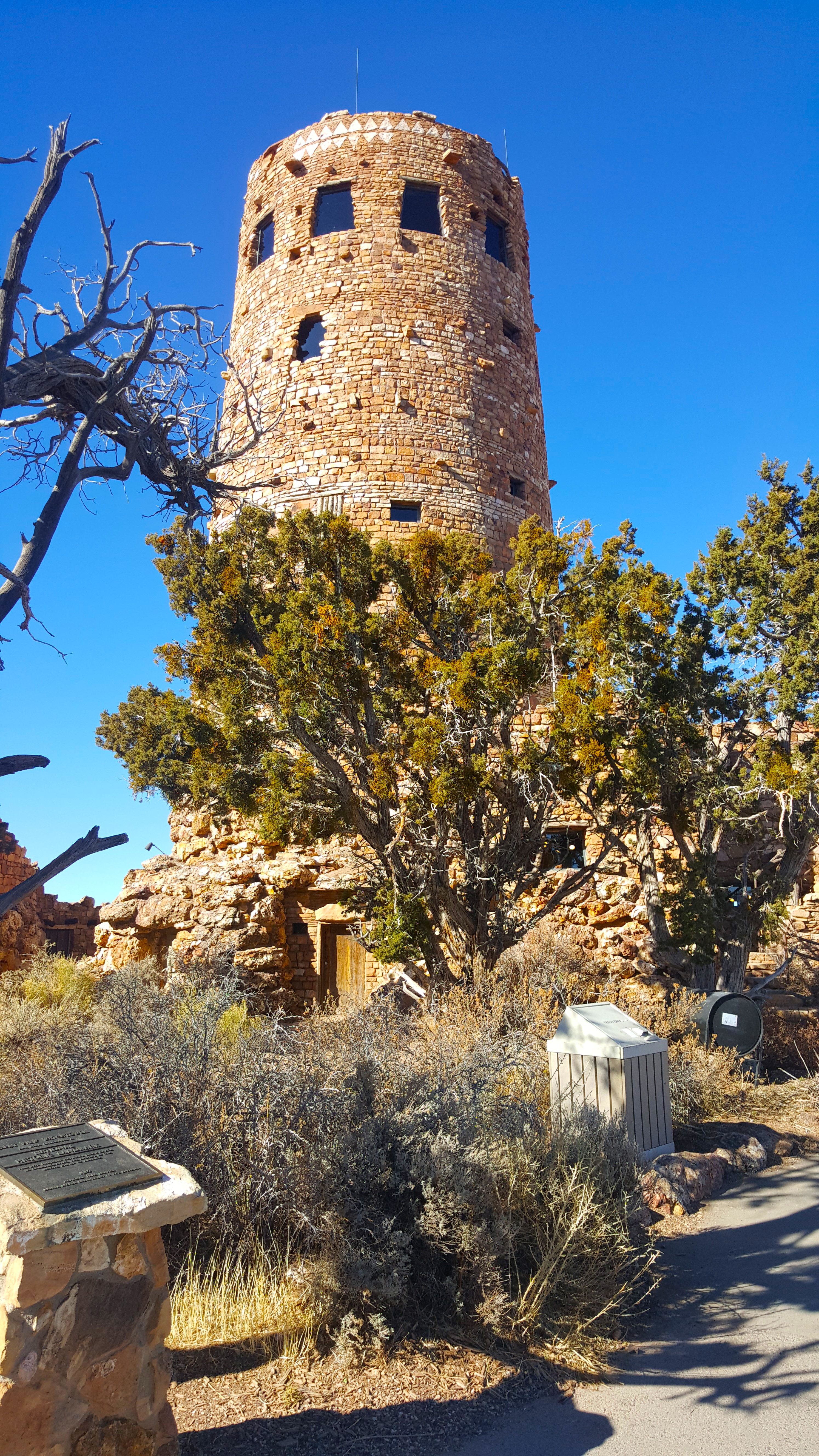
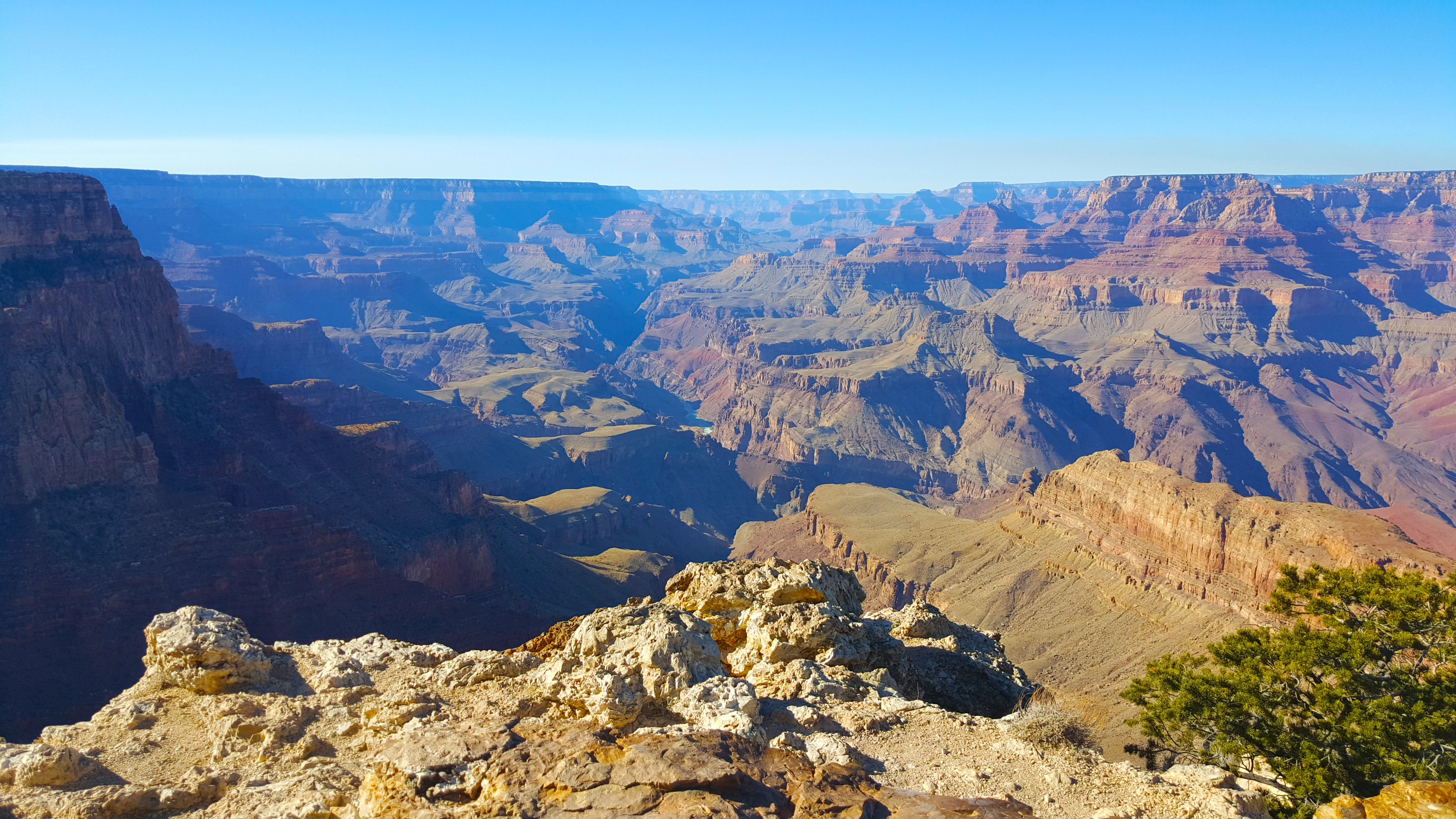
The Observation Tower on the South Rim of the Grand Canyon.

“Pain is inevitable; suffering is optional.” Dali Lama.

“Whoever gives you love, that’s your parent.” Dali Lama

“The brave man is not he who does not feel afraid, but he who conquers that fear.” Nelson Mandela

These quotes, which are worthy of pairing with Grand Canyon scenery, came from “The Book of Joy.”

20171208_135431

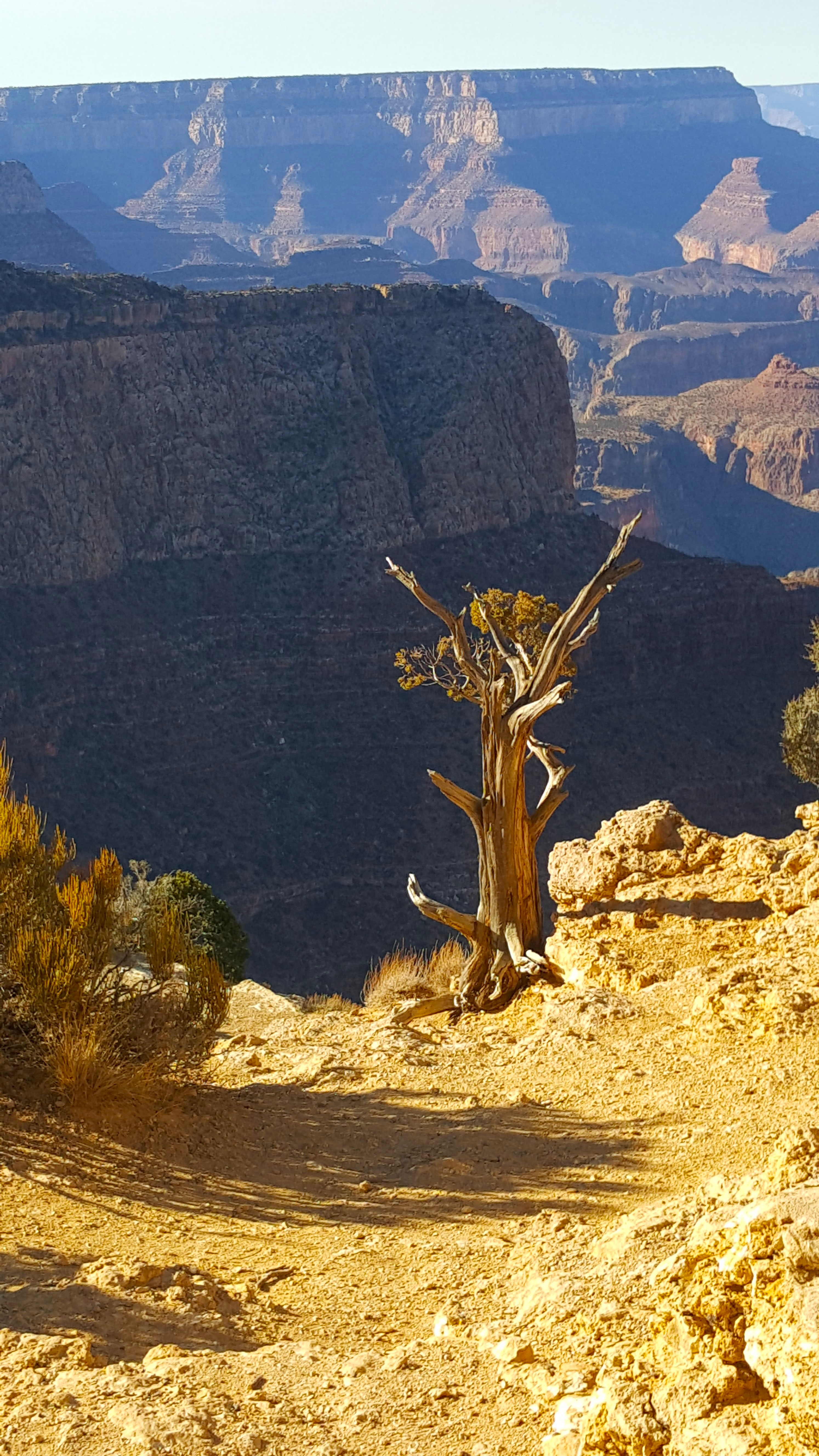
The Grand Canyon in Arizona.

The Vortex Made Me Do It: Adventures in Northern Arizona, Part 4

Sedona 2017 016

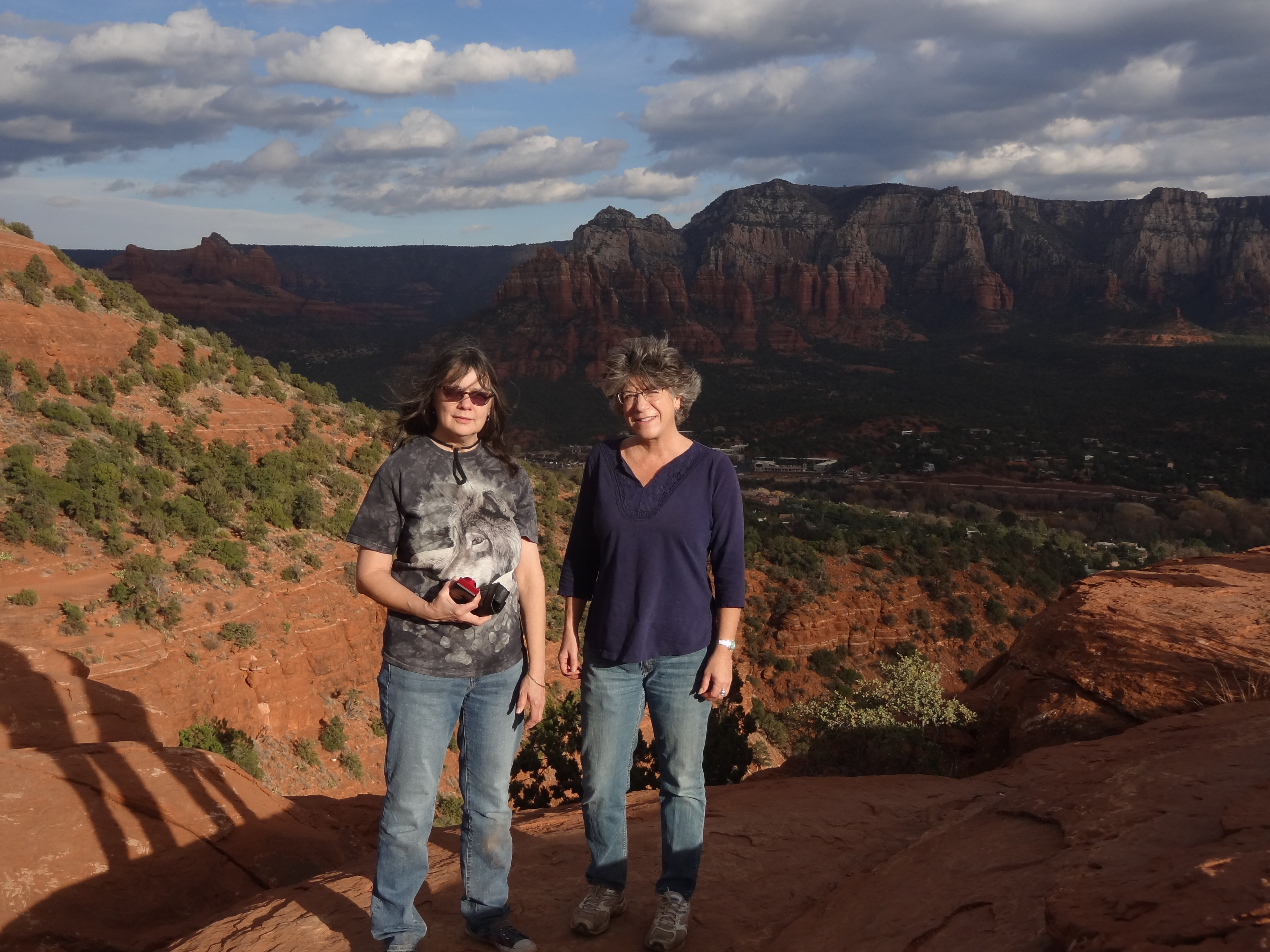
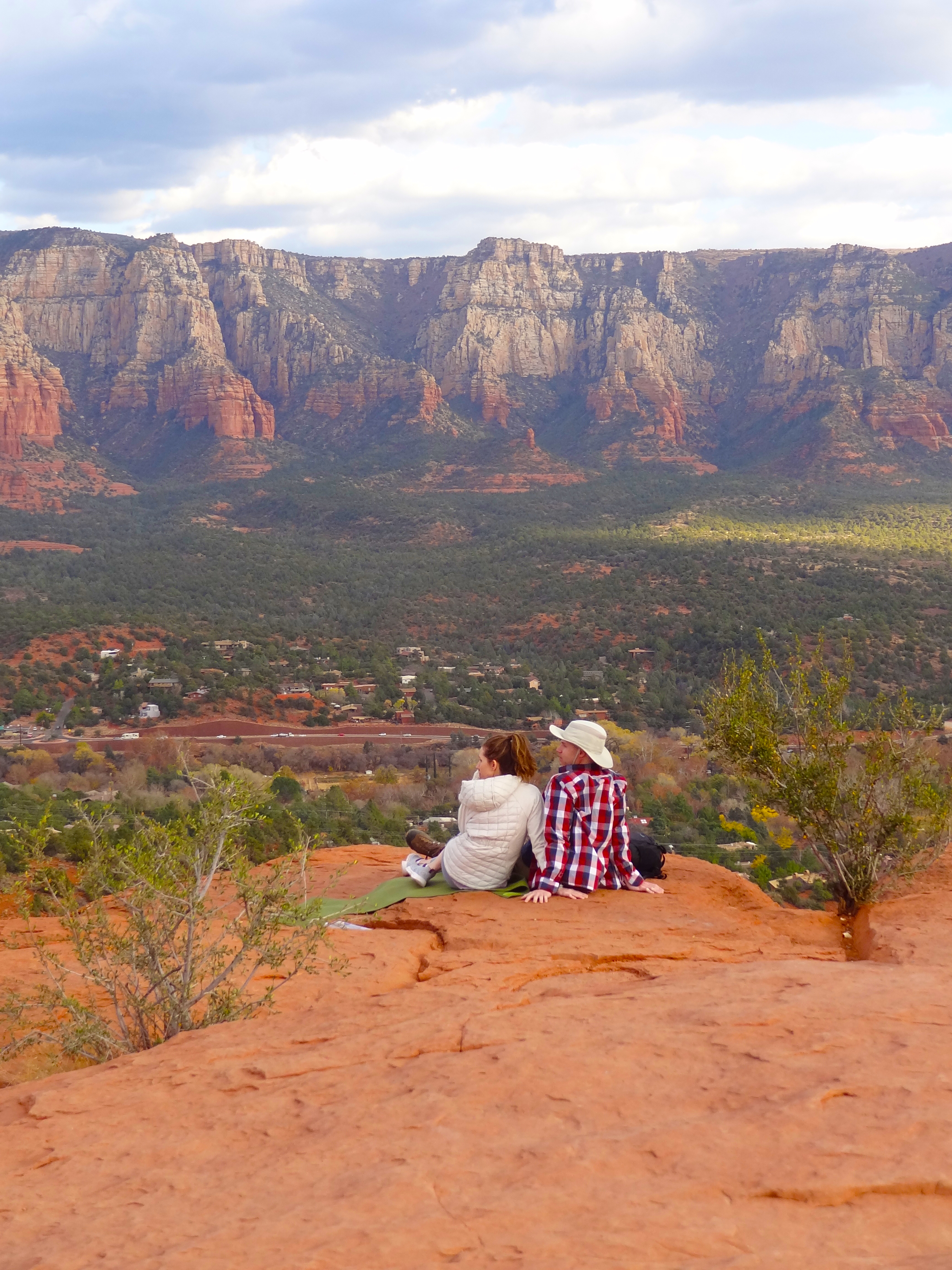
Linda (left) and I on Airport Mesa, before we knew it was a vortex area.

You know how, when you go on trips, you sometimes end up with a running joke in your conversations? The joke can be related to an event, a person you met, or a hapless comment made along the way. Well, for Linda’s and my Sedona trip, our running joke was The Vortex.

Because Linda and I are from Minnesota, we were mainly familiar with Polar Vortexes. You know, that’s when all the cold air comes down from the arctic and tries to freeze everything in its path. Although we had heard of Sedona’s reputation as a vortex center before we began our trip, we didn’t know any specifics.

Personally, I just thought the whole place was the site of mysterious energies. Little did I know that there are specific locations and different types of energies to be had.

Let me back up and define the word vortex (plural = vortices or vortexes). Merriam Webster says that a vortex is something that resembles a whirlpool. I assume all of you, dear readers, have watched water swirl down a drain. That’s a whirlpool — except that in Sedona, the swirling involves invisible energy more than it does water or freezing arctic air.

Our Vortextual Education

Our resort offered various programs for its patrons. Among the classes, which had titles like “Crafting a Festive Wine Glass for Christmas,” was one about vortexes. We decided we had to attend to learn more about this phenomenon. The presentation was given by a local Reiki healer.

She described the concept of vortexes and said the energies involved come from the rocks because of their mineral composition. She passed out a sheet that listed eight locations that are thought to be vortices and it described their different kinds of energies.

Some of the energies come out of the rocks (upflow), some flow into the rock (inflow), some are combinations of upflow and inflow, and some are horizontal (lateral). The lateral flow places involve the energy from nearby rivers and streams.

The sheet she gave us was an excerpt from a book entitled, “Scientific Vortex Information,” which was written by an author who claims to have been educated at the Massachusetts Institute of Technology.

I don’t know. The title seemed like an oxymoron. “Science” and “Vortex” don’t really go together in my world, where I move among scientists every day. I suspected there wasn’t that much science behind the information — more like wishful, imaginative thinking.

Once I got back home, I looked inside the first few pages of the book on Amazon, hoping to see proof that scientific instruments were used to actually measure electromagnetic fields at these locations, but all I saw were explanations of inflow and outflow, with nary any hard proof in sight.

But that’s okay. We weren’t in Sedona for the science. We were there for the experience. We were there for . . . The Vortex!

Our Vortextual Experiences

Sedona 2017 026

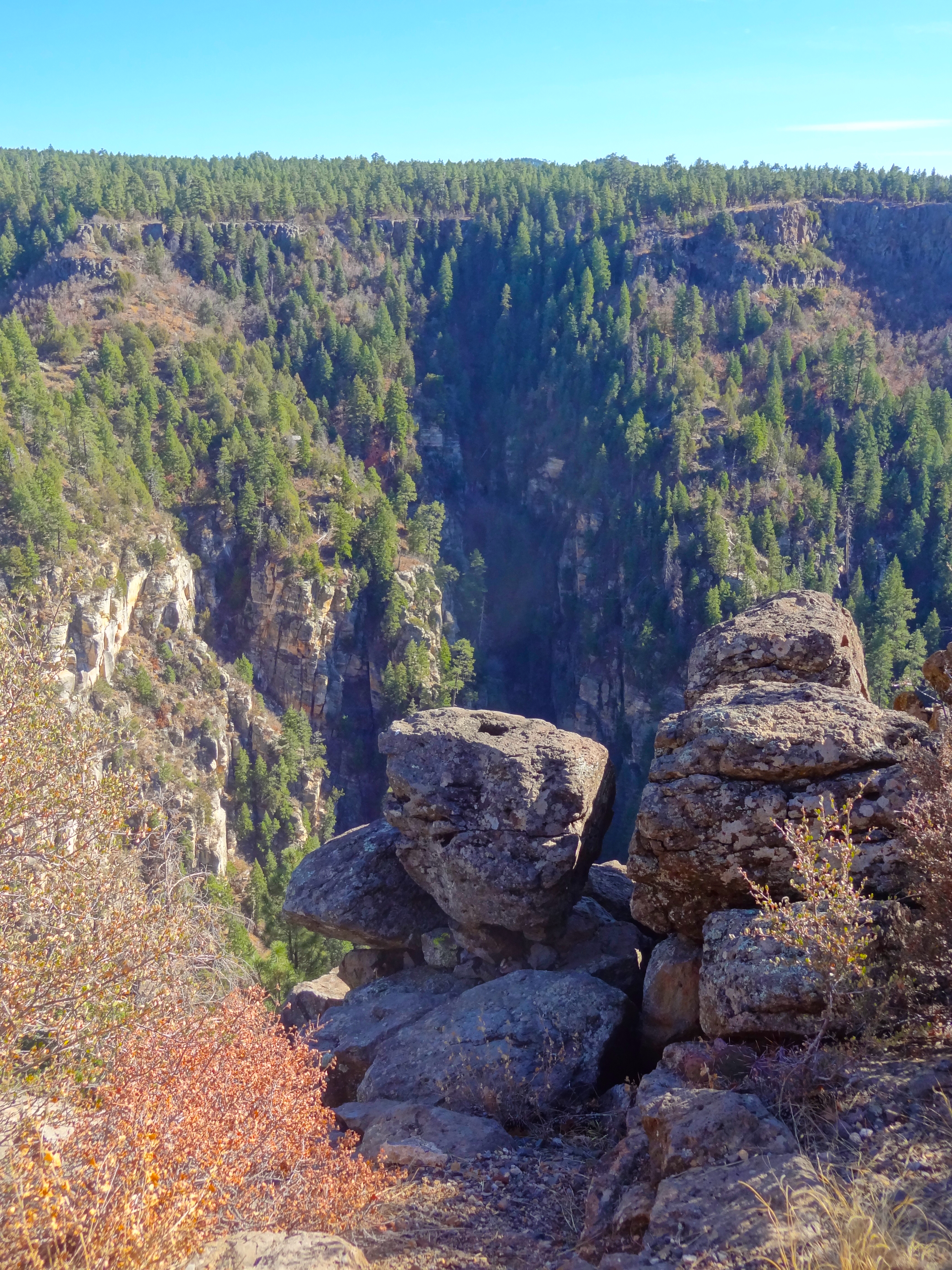
Oak Creek Canyon.

While looking at the list of locations, Linda and I discovered we had already visited a vortex the previous day. The site was Airport Mesa, which is easy to access because it’s right in town.

While we were enjoying the view there, we had noticed a couple of people sitting on the rocks in a lotus position. We didn’t think much of it – maybe they were just doing it because the scenic view inspired meditation. But after reading the list, we knew better. Those lotus people were trying to feel The Vortex.

We decided we needed to try that. Our journey the next day involved a trip north to Flagstaff, so we made plans to stop at the Oak Creek Canyon Overlook, which is on the way. The overlook scenic vista is located at the top of the switchbacked road at the end of the canyon about 15 miles from Sedona. A short walk on a paved path leads to an impressive overlook.

I sat on a bench near the overlook and Linda stood near the wall. Neither of us were hard core enough at this point to get into a lotus position (which is sort of hard on a bench, after all). So we just closed our eyes and tried to feel the feels.

I felt my own internal vortex more than any external one. My heartbeat rocked my body and made it sway a little. The Arizona sun felt good on my face and the breeze whispered its secrets.

After having our moments, we conferred. Linda said she didn’t really feel anything. We walked back to our car, but along the way, we stopped to look at some Navaho jewelry being sold at stand along the walkway. I was drawn like a magnet to one ring that featured a bright blue opal. I picked it up and it fit perfectly. I had to buy it.

We joked later that The Vortex made me do it. Who knows, maybe it did? It was like the ring was calling to me.

20171207_153459

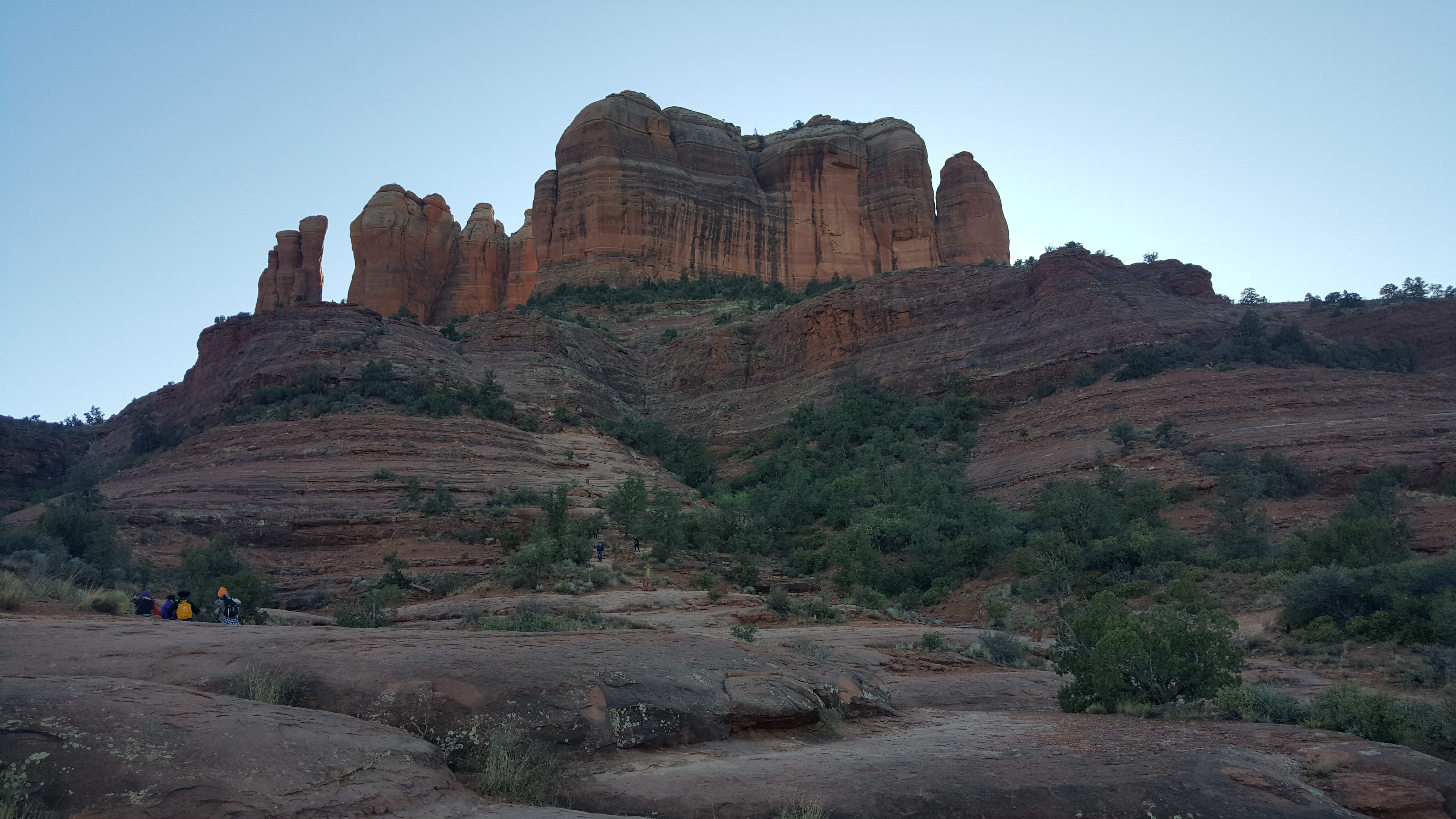
Cathedral Rock

A few days later, after a day of hiking, we visited Cathedral Rock, which is thought to be home to an upflow/inflow combination vortex. We hiked up to the flat rock plateau below the formation.

Someone had scratched two spirals into the rock about ten feet away from each other. Linda and I thought they looked like logical places to sit for people like us who were trying to find a vortex, so we sat with legs crossed and eyes closed.

The day had been breezy, but not particularly so. A few moments after we got into position, big gusts of wind started buffeting us. They were so powerful that Linda’s hat flew off.

We opened our eyes and quickly stood, spooked. The wind stopped.

We headed down the rock toward our car. We didn’t joke as much about vortexes after that.

The Beauty Way: Adventures in Northern Arizona, Part 3

Sedona 2017 015

Young lovers on Airport Mesa, Sedona.

These words from the Navaho prayer, The Beauty Way, kept going through my head during a hike among the red rocks in Sedona. It’s hard to get exercise when all you’re doing is gawking all around you. But perhaps that offers exercise of a different sort….

I walk with beauty before me. I walk with beauty behind me.
I walk with beauty below me. I walk with beauty above me.
I walk with beauty around me. My words will be beautiful.

20171207_123728

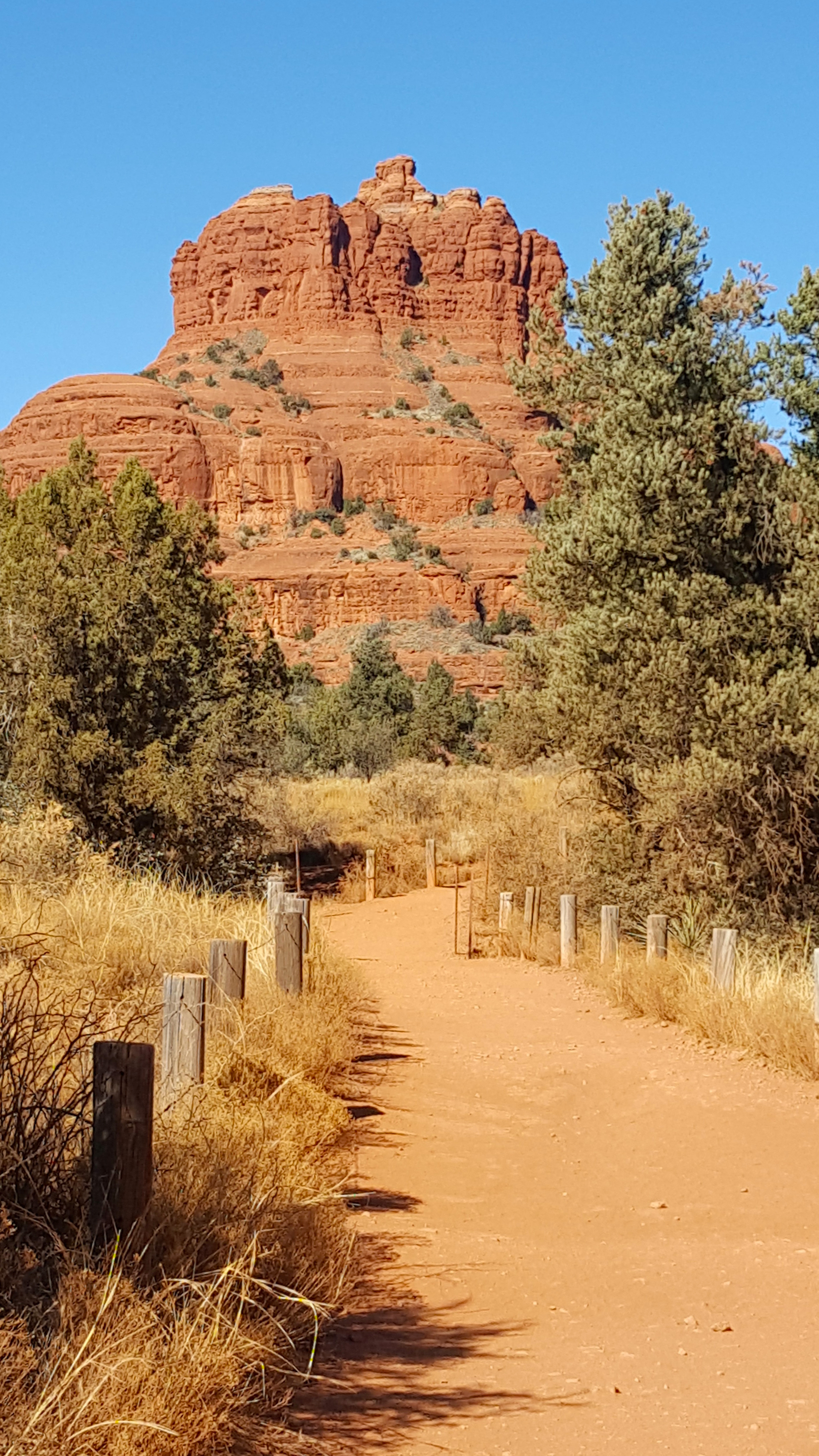
Bell Rock as seen from the Bell Rock Pathway.


20171207_140144

20171203_140249BW

20171205_143734

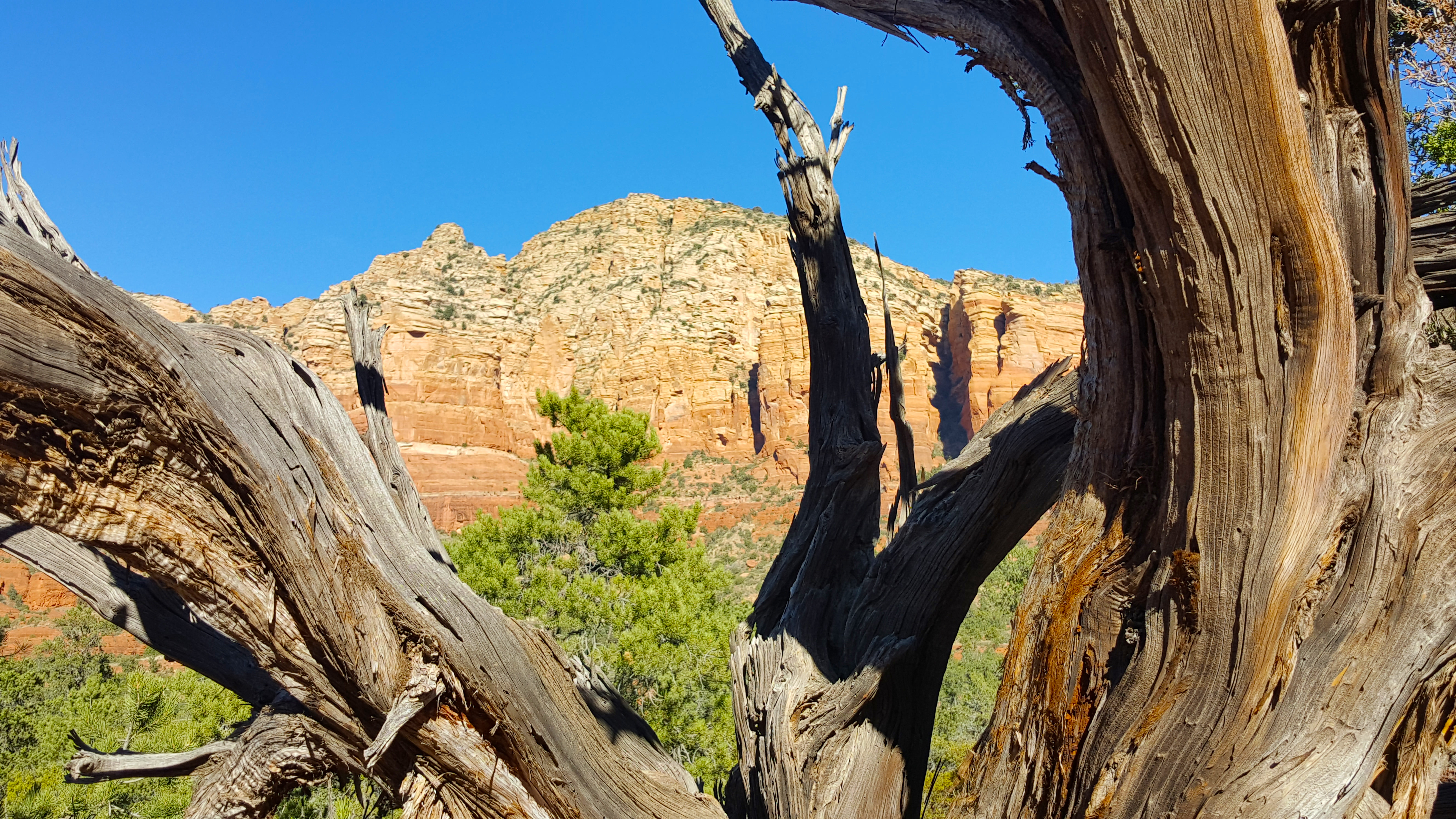
Red rock, white trees, Red Rock State Park.

Sedona 2017 049

May you walk in beauty…

How My Dog Got Me Out of a Traffic Ticket

BuddyNose

Buddy. Image by Amanda Jo Dahl Sales.

Two springs ago, I decided to go to Duluth’s (Bob) Dylan Fest musical gathering at a bar downtown. I wanted to arrive early to ensure nabbing a chair to sit on. I had hurt my foot or hip or something, I don’t recall now, and knew there was no way I could stand up and listen to music for several hours without pain.

I rushed out of the house and made it to the bar in plenty of time. As I walked from the parking lot to the building, I realized that I had left my Dylan Fest tickets at home. Cursing, I got back in my car and raced home.

Apparently, I raced a little too fast, because a cop stopped me a few blocks from my house.

“Do you know how fast you were going?” he asked.

“Um, about 43 mph?” I admitted.

“Yep. This is a 30 mph zone and you were going over the speed limit.”

I explained about leaving my tickets at home and not wanting to be late to the event. (I didn’t get into my medical reasons, though.)

The policeman took my license and went back to his patrol car to run a check. When he returned to my driver’s window a few minutes later, he said, “Hey, aren’t you Buddy’s mom?”

I looked at him, dumbfounded for a few seconds. Then I realized he must be the cop who lives in my neighborhood. I had spoken to him and his wife a few times while I was out walking my goldendoodle, Buddy. They LOVE goldendoodles.

I smiled and answered in the affirmative. I told him it was nice to see him again.

“Buddy’s a great dog,” he said. “I’ll let you off with a warning.”

I drove to my house, thankful, yet a little chagrined that I got let off from a ticket not because the cop knew me and thought I was a great person, or even because I am a world-famous blogger, but because of my dog, who is way more famous than I am. 🙂