My Obituary

I was digging through an old grocery bag of papers and artwork from my school days when I found a news story that detailed my death. I must have written it for English class. Here it is:

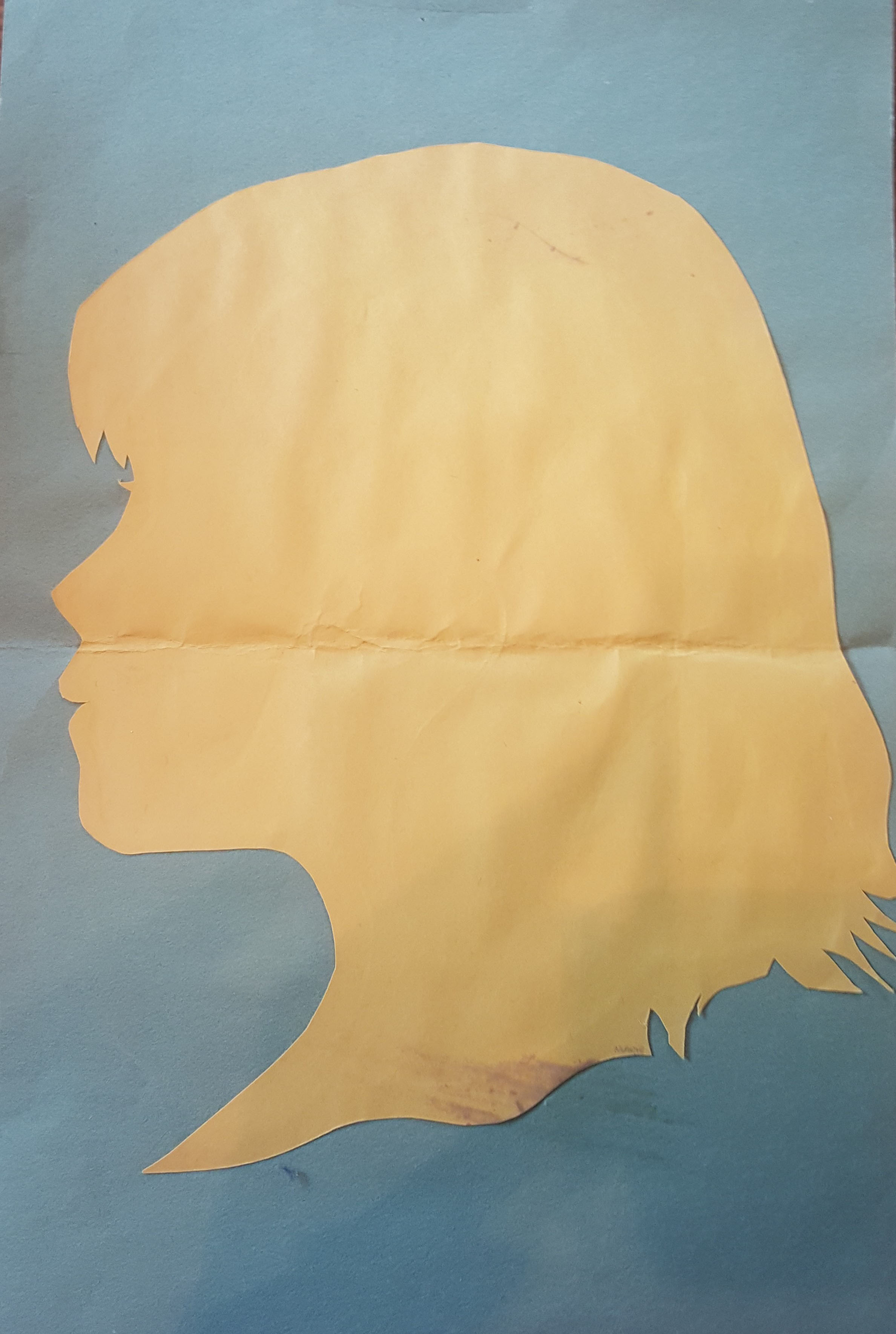
Another schoolwork bag find: my shadow portrait from sixth grade.

Another schoolwork bag find: my shadow portrait from sixth grade.

Marie, 16, died today after saving five girls from drowning. She was lifeguarding at the YWCA girl’s camp, Camp Wanakiwin. The girls were having trouble swimming to shore from an airplane that crashed in the lake near the camp.

Said one of the rescued girls, “She was going back to the plane to get a sixth girl when the plane blew up.”

Marie had completed her sophomore year at (specific school name deleted to protect the innocent). Her anatomy teacher said that she was witty and smart. “I used to give her a hard time,” he said. “Her presence will be sorely missed in school.”

Marie was one of the top swimmers and cross-country skiers at (school name), holding the city titles for 100-yard breaststroke and girl’s senior high cross-country skiing.

The funeral will be held at First United Methodist Church, 10 a.m., this Wednesday.

I’m sure I wrote the story tongue-in-cheek (delusions of grandeur, much?!), but it gives a glimpse into the things that were important to me at the time: mainly, my lifeguarding class and athletics. My anatomy teacher was my favorite because he was always cracking jokes and made learning fun. And what better way to leave this world than in an effort to help others, combined with a big explosion!

Later, after I became a mother and wrote a relative’s obituary, I wrote a serious obituary about myself. Motherhood and my relative’s death reminded me of my mortality, and the journalist in me wanted to know that the last words written about me would be somewhat accurate. That obituary has been lost to the winds of time, but I recall it focused on my career and role as a mother.

Lately I’ve been considering taking a stab at another one. Not to be morbid, but because I’m not sure that my kids or relatives know enough to do it justice. I mean, think about it. Good obituary writing is an art. And for some people, it’s the only time they’ll ever get in the newspaper other than their birth announcement. I’d really rather have my obituary say more than I liked knitting and was a good speller.

I’ve saved a couple of friends’ obituaries I thought were well written. But I suppose that even after I rewrite mine, I’ll have to update it — sort of like a resume or a will. Things change the longer you live. Accomplishments that were important to you in high school no longer matter as much when you’re in your fifties.

From my past efforts I know that writing your own obituary causes you to take stock of life. It makes you ask: Is what I’m doing really important? (To yourself or to society.) Is this how I want to be remembered? Do I need to change something?

Who will write your obituary after you die? Do you think they’ll get it right? Does it matter or is it all vanity? It’s something to consider.

The Spot Where my Phone Used to be

The spot in question.

The spot in question.

So I got rid of my landline phone this week. I have never been without an old-fashioned phone in my house. But the only calls I ever received on it were telemarketing calls (even though I’m on the “Do Not Call” registry), and over the past few months, I’ve been preparing for this change by updating my phone number to my cell number with all the organizations that need to know.

Plenty of people I know have done this same thing and survived. But what if I forgot to notify an important organization? What if someone local is trying to reach me and doesn’t have my cell number? What if cell service goes out and I simply MUST make a call? What if I need to call 9-1-1 and they can’t locate me correctly through my cell signal?

It will be okay, right? Right??!

I do not need Halloween to be scared this month. I only need to look at the spot where my phone used to be.

The Purge (or When a Trip to the Dump can be Good for the Soul)

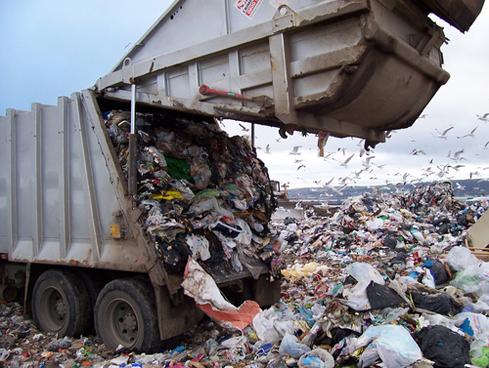
Image courtesy of St. Louis County, Minn.

Image courtesy of St. Louis County, Minn.

Today I got rid of some dead weight and made a new friend along the way.

It was time for fall cleaning, if you will. I got rid of some household hazardous waste (fluorescent light tubes and used snow blower oil) and detritus accumulated over several years — both mine and my parents.

My family moved our aging parents twice in the past several years — from their home to an assisted living facility, and from there to another facility in a different town. I kept some of their things on the chance they might need them, but now that it’s been several years and they live out of town, I realized that ain’t gonna happen. So it was time for a purge.

How it works at our self-service dump is you tell the attendant what you’ve got in your (car, truck or trailer) load and they assess you a charge. Then you drive up a hill. Below the hill are large dumpsters either for metals, cardboard, wood, or miscellaneous waste. You park on the dumpster hill and then toss your junk down into the appropriate container. After that, you drive down the hill and loop back to the entrance to a shed where electronics are collected.

The last time I visited the local dump (now called the more politically correct “Materials Recovery Center”) was about a year after my divorce. I loaded all the junk my ex (who was sort of a hoarder) left into my then-boyfriend’s truck and we made a date of going to the dump. Hey, don’t knock it until you’ve tried it!

Let me tell you, throwing your stuff into the dumpster abyss is a rush. You’re flinging off your old world to make room for the new. It can get addicting. My boyfriend and I laughed as we did it — the feeling was so freeing. This time, I felt rather sad because some of my parents’ discarded items meant their lives would never be the same, but still it felt good to get the stuff cleaned out of my house and garage.

And I made a new friend in the form of the lady attendant who assessed my load. We happened to have the same type of vehicle, so while I was showing her the stuff in my trunk, we talked about the merits of our cars. I paid and when she came back to give me the receipt she asked more questions about my car.

I thought having a dump worker who wasn’t a stressed out robot was a nice change of pace. But the guy in the truck behind me did not. He yelled at the woman to hurry up. Ignoring him, she replied to me, “It’s my job.” (With the unspoken, “And I can do what I like to make it bearable.”) We exchanged a few more words and then I went on my merry way up dumpster hill.

After my cathartic dump (smile), I waved to her as I left.

So, that’s life in northern Minnesota. We make friends at the dump and get our kicks tossing stuff away. What can I say?

Try visiting your local dump someday. It could be good for your soul.

Boston may be Strong, but Cambridge is Fit

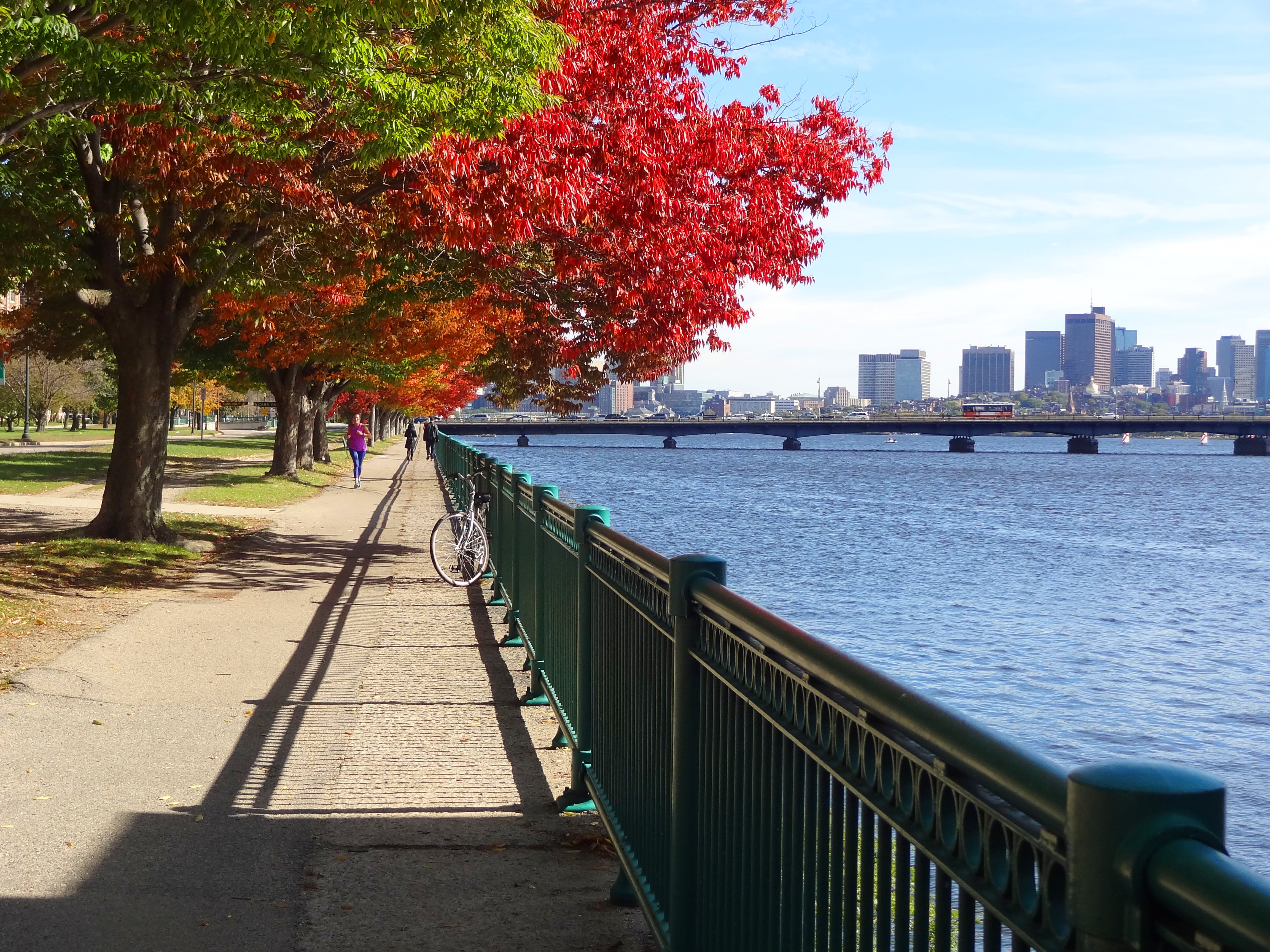
Jogger approaching (wearing spandex) along the Charles River in Cambridge, Mass.

Jogger approaching (wearing spandex) along the Charles River in Cambridge, Mass.

I meandered over to Cambridge, Mass., last weekend for a national science writers convention (believe it or not, there are such gatherings). My hotel was on the Charles River, with Cambridge on one side and Boston on the other.

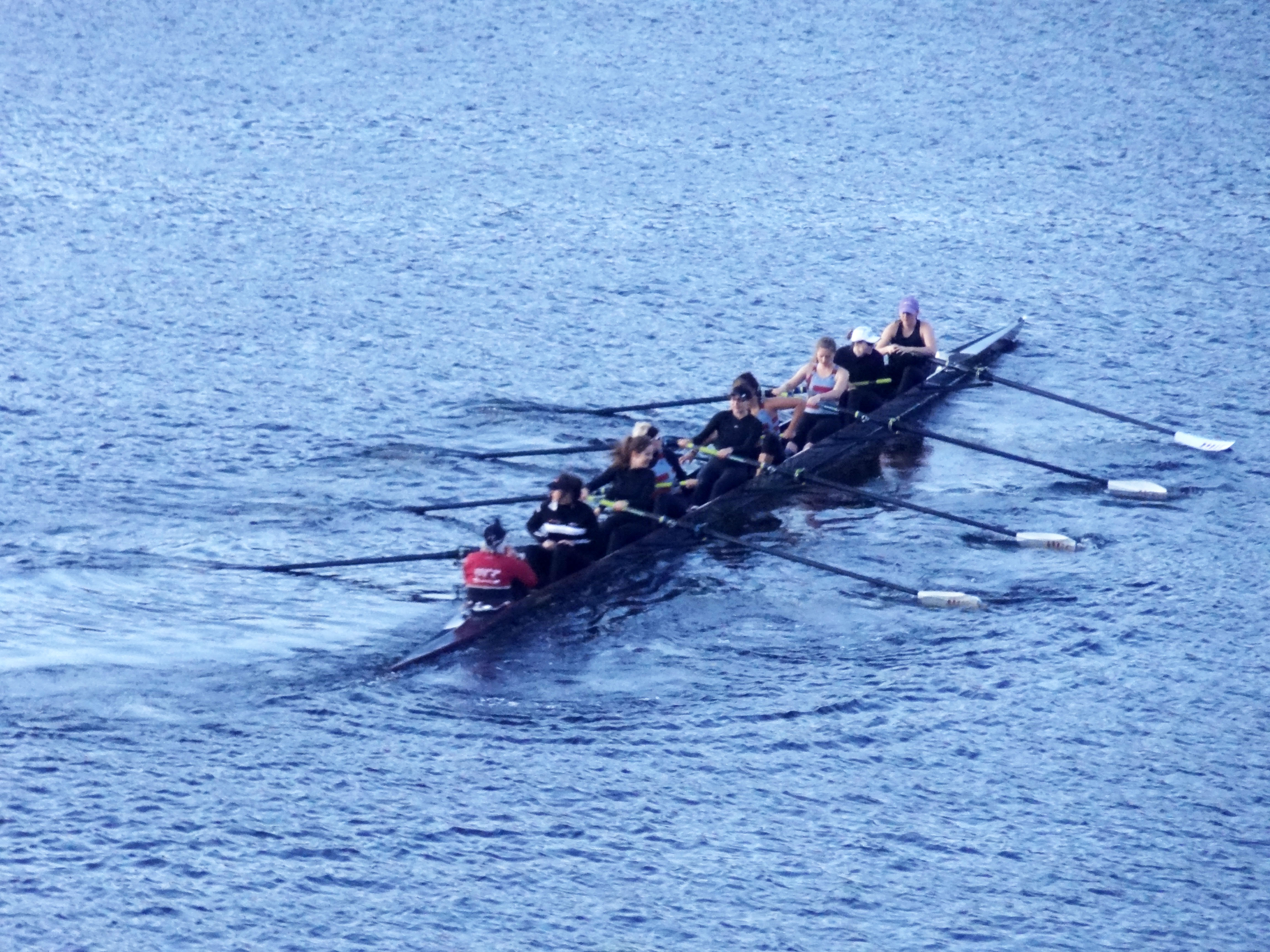
Cambridge 2015 008Boston University, the Massachusetts Institute of Technology, and Harvard all have boathouses and yacht clubs on the Charles. I awoke every morning to instructions yelled from coaches to rowers, and to the sight of sleek single and multiple sculls skimming the water. (How’s that for alliteration? Couldn’t help it.)

Cambridge 2015 023I was able to take a long walk by the river. Besides the rowers and sailboaters, what impressed me on my stroll was the shear volume of runners, bikers, and walkers. And every one of them was wearing spandex no matter if they were short, tall, wide, narrow, young or old. I, however, did not get the spandex memo, so trod along in my jeans and canvas jacket.

Morning, noon, and night the asphalt trail along with river was crowded with exercisers. Although Boston is known for its post-marathon bombing emotional strength (Boston Strong!), Cambridge will be forever burned into my mind for the fitness of the people I saw during my walk and from my hotel window.

If you ever travel to Cambridge, don’t be like me. Get the memo. Pack your spandex.

Cambridge 2015 028

My Politically Correct Pin

Fish 002
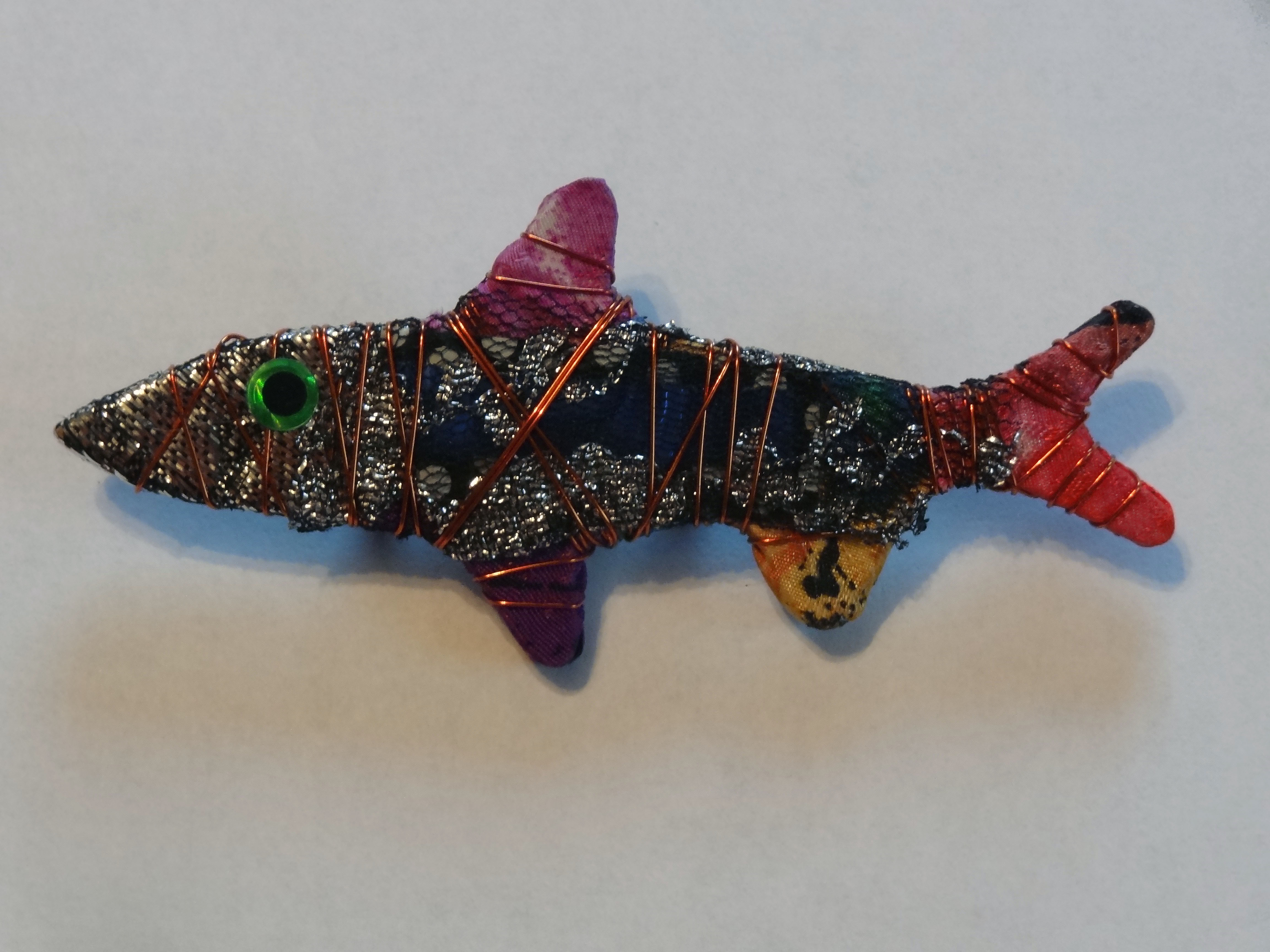
Perhaps you own something that’s so politically and socially correct, it’s almost funny. My thing is a multi-colored fish pin (pictured here) that I bought in New Orleans many years ago, when Hurricane Katrina was only a gleam in the weatherman’s eye.

I can’t remember what store I bought it in, but I do remember it was made from recycled Mardi Gras gowns and television set wire by homeless, disabled (and probably starving) artists. Now, since Katrina, I can only imagine what kinds of politically and socially correct trinkets must be for sale in New Orleans.

Since I work for a water-related organization, I have opportunities to wear my pin sometimes, and to expound upon its virtues when asked. But mostly, I just like how it looks. The whole correctness thing is just a side benefit. Do you have a similar thing?

Bobcat Fog

Fog

Buddy and I went for a walk along the lake in the fog this evening. I love fog. It’s so . . . atmospheric. Makes you feel enveloped, safe in a wall of mist, moving mysterious through the world. Of course, Lake Superior was gray, too – water and sky indistinguishable, quiet.

As a fog-lover, I live in the right place. The dynamics of the lake and the hillside in Duluth make for a larger than usual number of foggy days.

During my walk, I was reminded of the Carl Sandburg poem about fog – how it comes in on little cat feet. He wrote that about Chicago – seeing fog in the harbor. But cat feet just don’t cut it for Duluth. Our far north fog is less domesticated, a bit more dangerous. If I were to write a haiku about fog in Duluth, I would describe the fog as coming in on bobcat feet.

My Good Deed for the Day/Week/Month

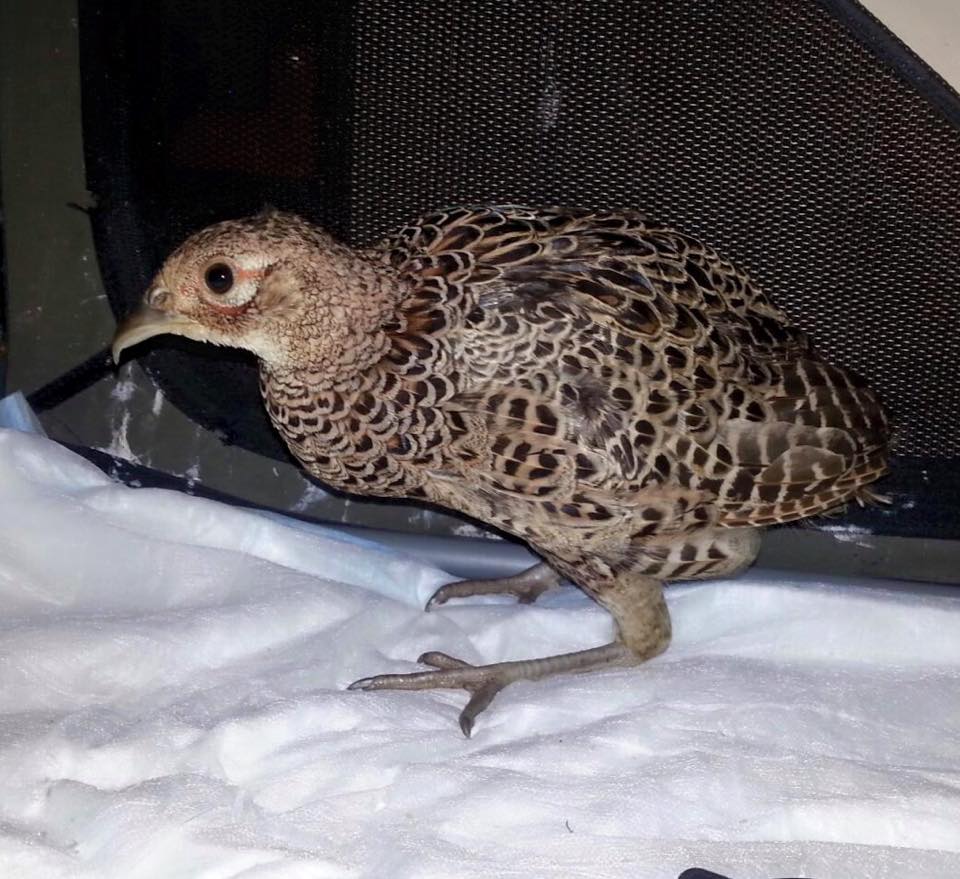
The ring-necked pheasant I transported last week. Photo courtesy of Wildwoods Rehabilitation Center.

The ring-necked pheasant I transported last week. Photo courtesy of Wildwoods Rehabilitation Center.


When I was growing up, my mom used to encourage us to look for helpful things to do for others or the community. Sometimes it was picking up trash along a roadside, sometimes it was giving directions to lost tourists. Opportunities to help are all around, and she wanted us to be aware and take action when we could.

Last week my opportunity came when a local wildlife rehabilitation center was looking for someone to transport a female ring-necked pheasant to its “forever home” a couple of hours away. I just happened to be going that direction, so I volunteered to have an avian passenger along for the ride.

The pheasant was found by someone’s dog. She had wounds on her side and her foot was clenched into a ball and not usable. The center fixed her up with two weeks of wound care and an orthotic to open up her foot. They suspect she was being used to train a retrieving dog. Pheasants are an introduced species and are not commonly found in this area.

A farm sanctuary that specializes in domesticated birds and deer offered to take her, so that’s where I came in. I picked her up in a carrier from the center and put her in the back seat. She must have liked listening to my book on CD because I didn’t hear even one literal peep from her the whole trip. I met the farm people at a highway exit gas station and we made the transfer.

Yay – good deed done. My mom would be proud. Sometimes opportunities for these deeds are few and far between, but keep your eyes open and you might be surprised by how many come to your attention.

“H is for Hawk” Book Review: The Value of Animals Apart from Us

A northern goshawk. Image by Norbert Kenntner.

A northern goshawk. Image by Norbert Kenntner.


I gave this memoir five out of five stars on Goodreads not because I agreed with everything in it but because I found it thought provoking and well written. It’s the story of Helen Macdonald, an Englishwoman who is dealing with the death of her father.

To help her get through her grief, Macdonald decides to train one of the most difficult of hawks: the goshawk. She names hers Mabel. She contrasts her experience with that of Terence White, author of the childhood classic, “Sword in the Stone,” and an avid falconer who wrote about his experience in “The Goshawk.” I listened to the audio version of the CD, read by the author in her classic British accent.

So many things to say. Where to begin? To start, it’s ironic that Macdonald chose to deal with death by training an avian killing machine. It’s kind of like dealing with a job loss by helping other people get fired from their jobs over and over again. But this technique worked for Macdonald, who wanted solace by forming an attachment to an animal, and by coming closer to the wild.

However, by the middle of the book, I found myself thinking how unfair it was to burden the bird with the owner’s grief and mental health issues – both for Macdonald’s and White’s goshawks. I mean, they are birds, not people. They are separate beings, but both authors are so caught up in themselves they don’t see this. It’s a lesson I learned years ago from living in the wilderness, and something I suspect most people, who are used to having animals around as pets or for food, don’t have an opportunity to realize.

Macdonald’s attitude of animals being defined in the world by the meanings given to them by humans came to light in a section where she attended an art exhibit about California condors. She says, “I think about what wild animals are in our imaginations and how they are disappearing, not just from the wild but from people’s everyday lives – replaced by images of themselves in print and on screen. The rarer they get, the fewer meanings animals can have. Eventually, rarity is all they are made of. The condor is an icon of extinction . . . How can you love something, how can you fight to protect it if all it means is loss?”

My argument is you fight for endangered animals because they have value apart from us. It’s perhaps the ultimate hubris to think the world revolves around us and our meanings. Most wild animals don’t need us to survive. In fact, they would probably do much better if humans were out of the picture. And why did the condor nearly go extinct in the first place? From human actions (poaching lead poisoning, etc.) It seem so unfair for humans to cause these problems and then to complain that thinking about these animals is depressing. What’s really depressing is what we do to some animals.

Toward the end of the book Macdonald finally realizes that people are more fitting agents for emotional support than animals. While animals provide great solace, they are no substitute for a pair of human arms around you. And she realizes that animals have intrinsic value apart from humans.

She writes, “Of all the lessons I’ve learned in my months with Mabel this is the greatest of all: that there is a world of things out there – rocks and trees, stones and grass, all the things that crawl and run and fly – they are all things in themselves. We make them sensible to us by giving them meanings that shore up our own views of the world.”

Right on. She says she learned with Mabel how to “feel more human once you have known, even in your imagination, what it is like to be not.” She could have ended the book there and I would have been happy but she continued on with White’s story, which at times, overshadowed her own. I could have done without much of the detail of his story and the book would have been stronger for it. I also found myself getting tired near the end from hearing mini dramas about how she was always losing her hawk. But I still gave it five stars, so it these things must not have bothered me too much!

One thing I thought was funny was how, once Macdonald started using antidepressants, she described the hawk as looking much happier, too. I think this was when she was still caught up in the hawk being an extension of herself.

And I was happy to see that Macdonald delved into the “conversation of death” described in Barry Lopez’s book, “Of Wolves and Men.” This is an exchange that happens between wolves and their prey that either triggers a chase or diffuses the hunt. If you’ve read my novel “Eye of the Wolf,” you know that I delved into it, too.

As I was thinking about writing this review, I came across a quote from Henry Beston (“The Outermost House”) that sums up my philosophy and what I think Macdonald was trying to say with her memoir well:

“We need another and a wiser and perhaps a more mystical concept of animals…. For the animal shall not be measured by man. In a world older and more complete than ours they move finished and complete, gifted with extensions of the senses we have lost or never attained, living by voices we shall never hear. They are not brethren, they are not underlings; they are other nations, caught with ourselves in the net of life and time, fellow prisoners of the splendour and travail of the earth.”

Agree? Disagree? Am I some psycho loony? (Smirk.)

Strange Goings-on at the Office (A.K.A. A Missed Opportunity with the Inventor of the Post-it Note)

A coyote seen crossing the ice outside of my office.

A coyote seen crossing the ice outside of my office.

I’ve had the privilege of working in some unusual office buildings. They range from an historic federal building of imposing gray stone, a renovated college dorm with stone stairways grooved by the trodding of many feet, sterile medical center cubicles, a building with intricately carved panels on heavy brass doors and bathrooms with floors and stall dividers made of marble, a building in a tourist district that shared space with shops where my office was above a popular restaurant, and a basement newsroom filled with clacking typewriters.

But my most recent office building is the most interesting in several ways. It’s situated on an island in the Duluth-Superior Harbor in what was once was my favorite restaurant for Lake Superior fish. It features a deck that’s just steps from the water and from public docks. The building is in a city park that draws people for recreation.

When I was eating at the restaurant, never in my wildest dreams did I think I would one day work in the building, but as fate would have it, here I am, right in the spot where I ate lake trout with friends. I have two banks of windows that look out on the water. Although I assure you I spend most of my time staring at my computer screen, the windows have afforded plenty of opportunity to see other things in my three years here – like the coyote who crossed the ice from the mainland one spring, or the fox who heard a mouse underneath the deck and kept trying to pounce on it (see video here), or the family of otters cavorting in the water, or the disabled gull , or a young common tern begging its parent for food, or woodchucks sunning themselves on the deck, or the bear who walked through the parking lot.

Humans have also created distractions — like the guy who walked backwards past my office for several mornings in a row, only to pass by walking forwards minutes later in what must have been an exercise ritual. (Now he bikes past). Then there was the man who swam past my office. I read later in the newspaper that he was a long-distance swimmer who traveled from the Duluth to the Superior ship entries. My office is along the way. Then there was the man who drove a Zamboni down the road, and the man who wanted to build a world-record ice sculpture .

We get all sorts of people wandering inside our office as well, looking for public restrooms and tourist attractions that haven’t operated in the park for years. There was the tour busload of people who were looking for Wisconsin cheese, people who want to buy harbor boat tour tickets, people who think we’re the office for the historic ship that’s parked next door.

But sometimes we actually have visitors who take time to read the signs outside our office and want to know what kind of research we do. (For those of you who have not paid attention over the years, I work as a writer for a water research organization.) Sometimes these visitors are scientists, sometimes they are crackpots who want us to publish their theory to the universe and everything. But sometimes they’re the inventor of the Post-it Note.

Yes, you heard me right.

This week, the real live, honest-to-god inventor of the 3M Post-it Note dropped by the office on a whim to learn about what we do. He came in with his wife and talked with our receptionist, whose office is right outside mine. I couldn’t help but overhear the conversation and recall thinking the duo asked intelligent questions. It was just as they were leaving that the wife told the receptionist that her husband was Arthur Fry, inventor of the Post-it Note. After a moment’s hesitation in disbelief, I rolled my chair over to my doorway just in time to see the retreating back and profile of the purported inventor.

Arthur Fry. Image courtesy of Wikipedia.

Arthur Fry. Image courtesy of Wikipedia.

I shrugged and went back to my task, but started thinking later in the day: what if he really was the inventor of the Post-it Note? What does the inventor of the Post-it Note look like, anyway? I looked him up on Wikipedia, and by Jove, our office visitor was a dead ringer.

It was then that I metaphorically kicked myself for not taking advantage of the opportunity. I should have run after him with my camera and new fancy digital voice recorder and interviewed him for my world-famous blog! He seemed like a very nice man, I’m sure he would have obliged. It’s just that I had spoken with one of the crackpot people only the day before and I wasn’t in the frame of mind to believe that a genuine inventor could just walk in off the street.

Next time, I assure you I’ll be ready. Now I’m just waiting for the person who invented the coffee cup sleeve to walk into my office.

I’m an Isle-ophile. Are You?

St. Martin Island, West Indies.

St. Martin Island, West Indies.

An island doesn’t have to be very far away from shore or very big to accomplish its true work: to surround you with imminent water, and to unhitch you from the grappling hooks of your own life for a while. – Minnesota Author Bill Holm, Eccentric Islands

I love islands. I’ve known of this affliction for quite a while, even before I heard the term for it: isle-ophile. Some of my most intense experiences have happened on islands. I like how islands make me feel and how they make other people behave (unless they are deserted islands, then it’s not so pretty.)

I first got a feel for islands when my parents took us camping. I have hazy young memories of Mackinac Island in Lake Huron; Prince Edward Island in Canada; the U.K.; and Madeline Island, Stockton Island, and Isle Royale in Lake Superior.

My exposure to Isle Royale led me to work there during college for two summers at the rustic resort. Then there was Grand Manan Island off New Brunswick, Newfoundland, Gero Island in Maine, Cumberland Island Georgia, Key Largo Florida (and eventually all the keys), Puerto Rico, Catalina Island in California, Ludlow’s Island in Minnesota, Orcas Island of the San Juan chain in Washington, St. Martin in the West Indies, and Brigantine in New Jersey.

Each place has provided intense experiences — unlike those a person can have on the mainland. Islands have offered: opportunities to form and intensify friendships, crazy experiences with animals, cold refuge from storms, hot refuge from heartbreak, family vacations, work conferences, romantic vacations, and immersions in local culture.

Islands force people to depend on one another more than they do when on the mainland. Usually, you’re more at the whims of nature because you’re in the middle of a body of water. Communication with the outside world is sporadic and takes more effort (although it’s a lot easier now, with computers). You’re living on the edge, but that edge is defined and it’s hard to get lost.

I’m irresistibly drawn to islands. Are you?

Here’s another reason to ponder about why islands draw people, offered by Mr. Holm:

In one way, all islands are female, surrounded by female water. John Fowles, in his book, “Islands,” says, “The domain of the siren had been where sea and land meet; and it is even less for nothing that the siren is female, not male.” Islands are secret places where the unconscious grows conscious, where possibilities mushroom, where imagination never rests. “All isolation . . . is erotic.”