On the Edge

I snapped this while waiting for an appointment at my clinic. (Just a routine appointment.) I spent my time watching the progression of these window washers who were working on the hospital across the way. As you can see, the window that I took the picture out of could also use a wash. Maybe our building was next?

Their job was impressive not only due to the height but because it’s the dead of winter . . . in Duluth. That’s Lake Superior below/behind them. It was a calm, sunny day but nowhere near warm.

Everyone who walked through the waiting room and noticed the workers stopped to admire their bravery and derring-do. I don’t think any of us would have traded places, however.

Having Fun with Trolls

Marie and her troll friends.

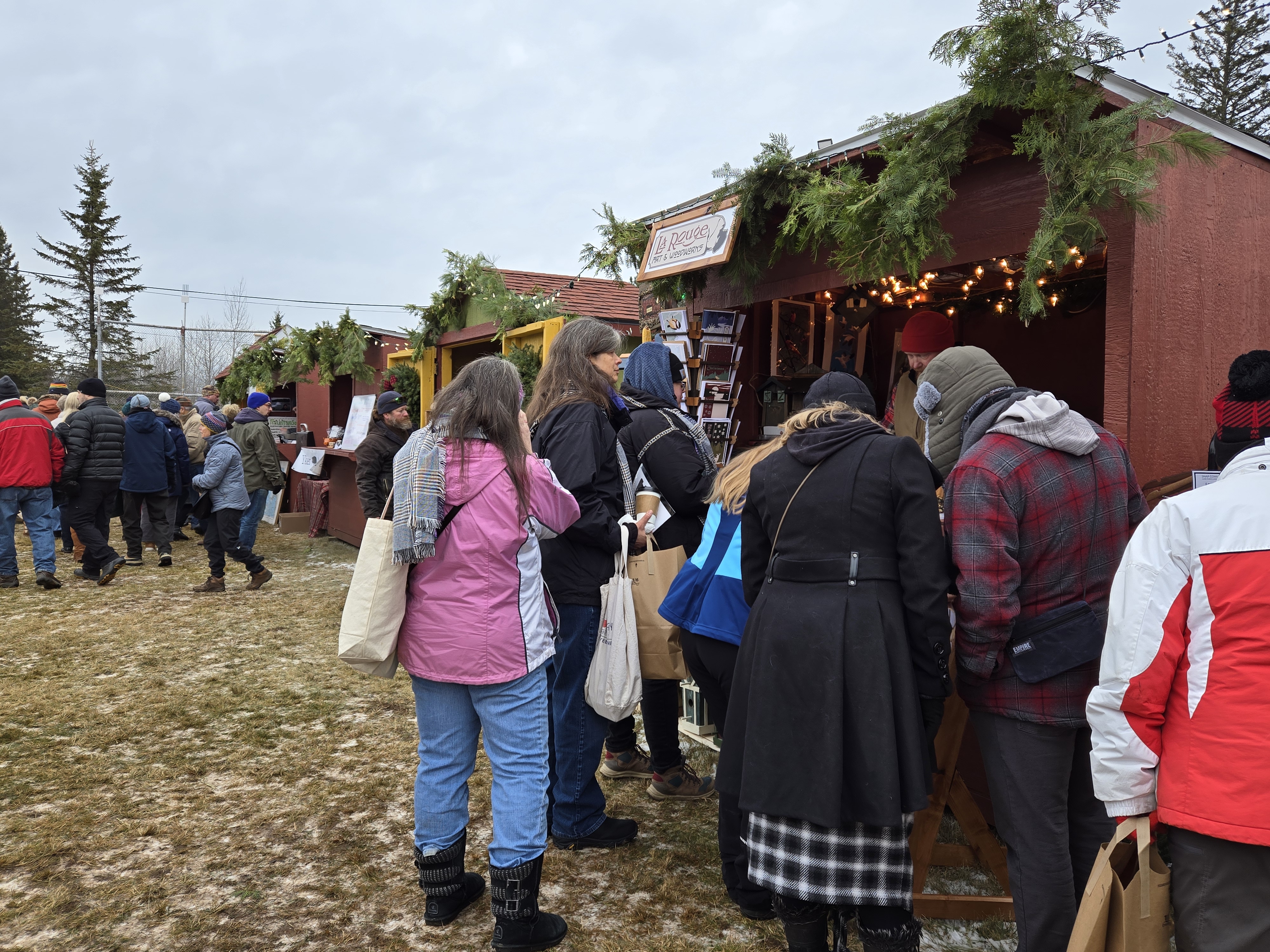
Russ and I went to one of those outdoor Christmas villages for this first time last weekend. It was in Knife River, which is about 20 miles north of us along the shore of Lake Superior. The village is called Julebyen (pronounced YOOL-eh-BE-en), which (appropriately) means Christmas village in Norwegian. The quaint former fishing village that it’s located in has Norwegian roots. Proceeds from the event support the community.

Outdoor stalls at Julebyen in Knife River, Minnesota.

 Julebyen features ethnic foods (like lefse and krumkake), crafts, holiday decorations, and music. There are also food trucks from local eateries. A train brings visitors up from Duluth and Christmas-themed buses travel from the Twin Cities. We quickly learned that the event is HUGE. Lots of people and lots of fun. Shopping takes place in outdoor stalls and indoors under a couple of large tents. There are candles, pottery, clothing, teas, notecards, wooden sleds, fish, wreaths, honey, jewelry, mittens and honey.

My favorite thing, however, were the trolls. Two men in costume posed for photos and make troll-like comments and jokes with passersby. As you can see, I took advantage of the photo op. In Scandinavian folklore, trolls are supernatural creatures who are dangerous, evil, and hostile to humans. These ones weren’t, though. Trolls are thought to be able to transform themselves, offer prophesies, and steal human maidens. When exposed to sunlight, they explode or turn to stone. This is helpful to know if you ever meet one. Also helpful to know is that lightning kills them instantly.

I assume this is a Norwegian-style fishing boat, with a festive sail for the holidays.

The village also offered a sledding hill, but there wasn’t enough snow yet for that. I’m glad we got to enjoy Julebyen and get into the holiday spirit. I think it’s helping us through some hard times. I just learned by happenstance that my friend Yooper Duane died this year, on my birthday, no less. He was a special soul. We met on Isle Royale National Park in Lake Superior when I was in college and corresponded for years. I’d make a point of visiting him when I traveled across Michigan’s Upper Peninsula. The last time we touched base was by phone when I was on Isle Royale a couple of years ago. He was impressed by the phone call, since such contact was not technologically possible when we both worked on the island. Duane died at the ripe old age of 80. I’ll miss him!

The Knife River, which flows through the town.

Also, this week a family member was hospitalized. That’s all I’ll say about it to preserve this person’s privacy. But it’s a stressful situation that’s difficult for everyone.

Be sure to give your loved ones a hug this holiday season. You never know what the future holds.

It’s a Lego Kind of Christmas, Sort of

I ordered my son a Lego “toy” for Christmas last year. At 25, he’s not a kid anymore, but he has fond memories of putting Legos together in Christmases past. The Lego was a design of the universe with a “you are here” pointer.

That must be how I got back on the Lego mailing list. I received their catalog in the mail last month and noticed it featured some Christmas decorations that could be made from Legos. Russ and I like to put together puzzles in winter. This would be like a three-dimensional puzzle.

How fun! I thought. What a cool holiday activity that we could do. Plus, the grandkids will love seeing it.

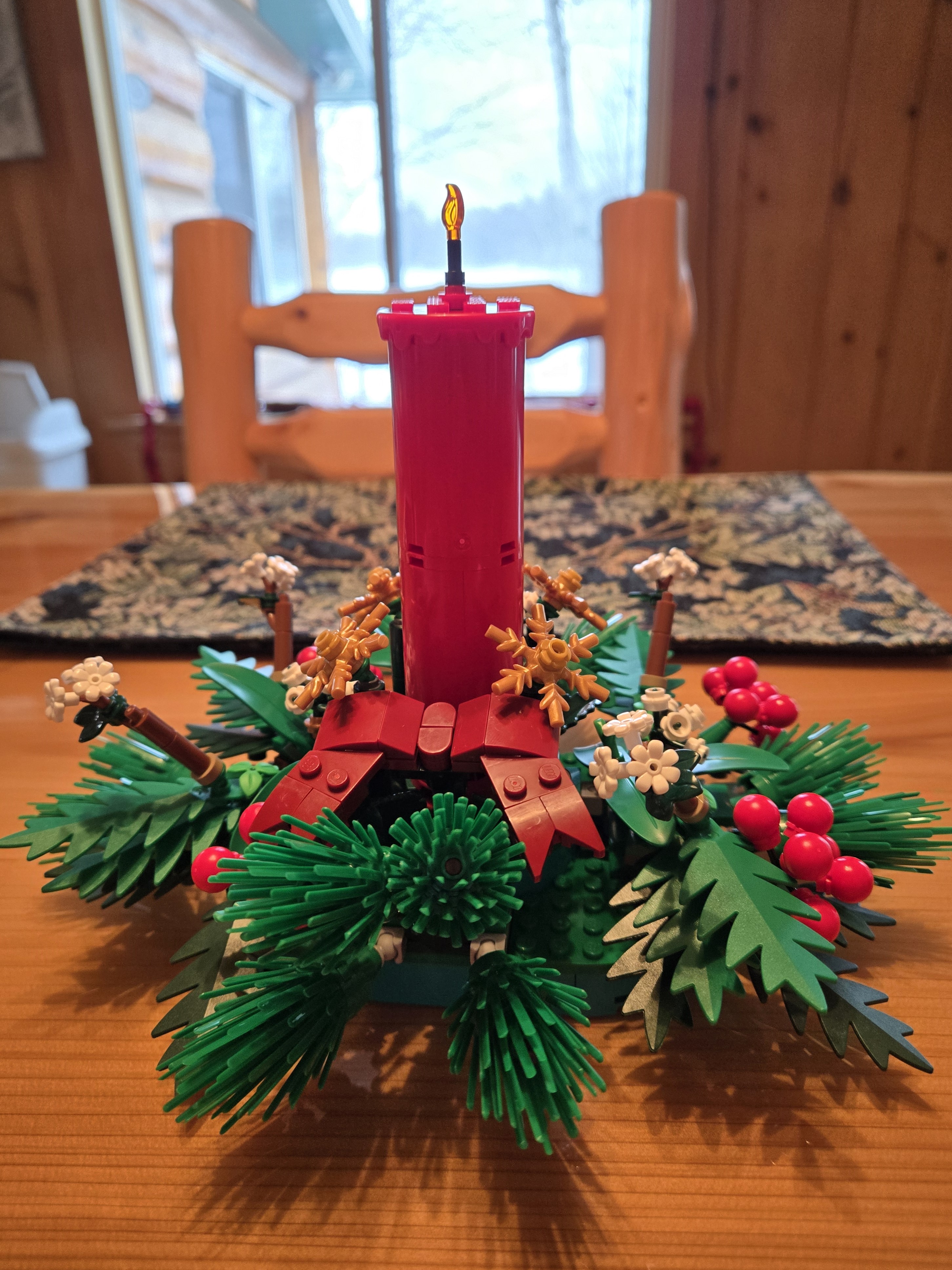
I ordered a table decoration that looks like a red candle with a pine wreath around it. It arrived just fine. Russ and I waited until the weekend after Thanksgiving to begin working on it. (I’m one of those people who rails against the encroachment of Christmas on Thanksgiving, so there’s no way we would have done it sooner.)

We started it late one evening when we were already tired, so only made it a few pages into the instructions before we stopped. It was fun. As we built it, I marveled at this engineering feat that would soon turn into a Christmas decoration. We decided to save the rest for the next day when we had more time and energy.

This was where the going got tough.

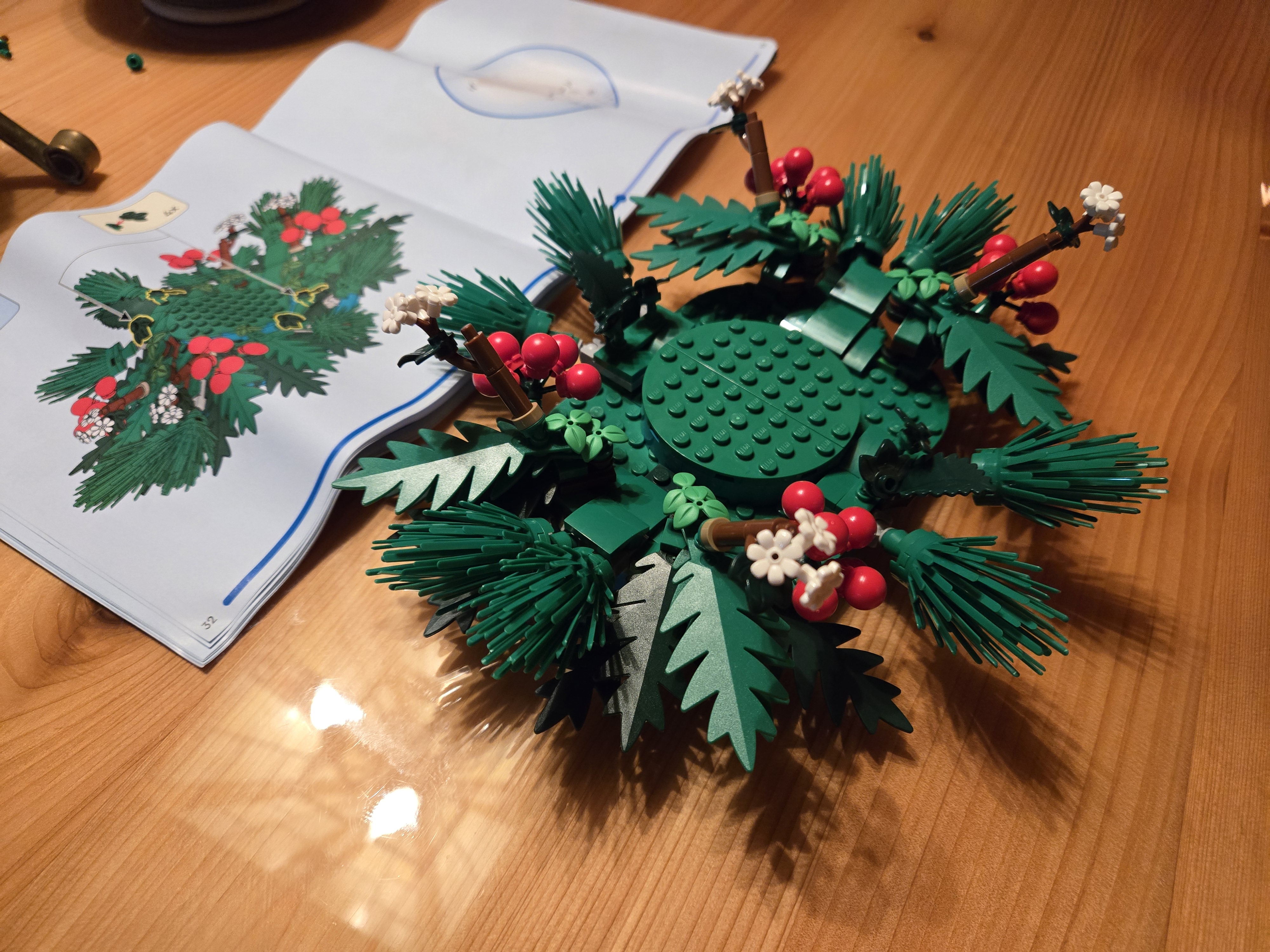
The next day, building the Lego was fun up until we realized it was built for people with smaller fingers and better eyes than we have. There came one point when every time we added a new element, another one (or two, or three) would fall off. Before long, much festive swearing ensued as our frustration mounted. Oh, and did I tell you the Lego was rated for ages twelve and up? We had to stop working on it to avoid violence. (To the Lego, not to each other.)

The next day, we carefully and slowly approached the Lego decoration again. It was looking nice, but we dared not touch it for fear something would fall off. We did have more mishaps of that sort, but not as many as the day before. Still, at one point I had to excuse myself because I was getting too frustrated. Russ worked on it by himself (he’s much more patient than I) and made good progress. By the time I dared return, we were working mostly on the candle, which was much easier than the foliage and the berries. We ended up needing to make some modifications to the parts so that the candle would fit properly but finally, after three days, we finished!

Much rejoicing ensued, but we were careful not to touch the decoration for fear it would collapse in a heap. I’m thinking we might need to cover it with a glass case so that the grandkids don’t touch it when they visit. 😊

Russ brought up the idea of taking it all apart once the holidays are over so that we could try to build it “properly” next year. I told him there’s no way I’m building that thing again. Besides, I’m pretty sure we followed the directions correctly. Maybe we should just coat it in superglue so that it will last for a few years . . ?

Rez Dogs, Shogun, and Cross-Cultural Connections

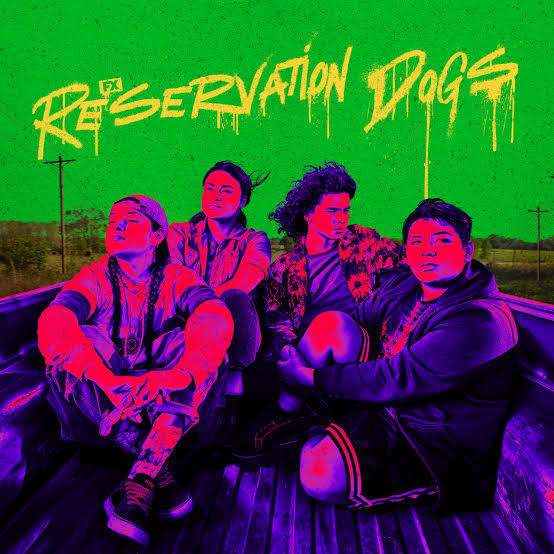
Russ and I just finished watching the Hulu television series “Reservation Dogs.” It’s about four teens who live on the Muscogee reservation in Oklahoma. The gang’s dead friend’s wish was to travel to California and see the ocean, so the teens try to raise money for a commemorative trip any way they can, including via crime (i.e., stealing a flaming-hot potato chip truck). During their adventures, they are guided by spirits and tribal elders.

The three-season series is classified as a comedy, but it’s so much more than that. I think it’s the best thing currently on television. Even better than “Outlander.” (Gasp!! I can’t believe I just said that, but it’s true.) Although there are supernatural happenings, the series is the most real thing around. The acting is totally believable and the situations the young ones find themselves in could happen anywhere, but especially on a Native American reservation. I’ve spent a few weeks living on reservations, enough time to soak up the atmosphere, and recognize an accurate representation when I see one.

The funniest character is probably William “Spirit” Knifeman, a self-proclaimed warrior who died at the Battle of Little Big Horn, even though he didn’t actually fight. He had Custer in his sights but before he could do anything, his horse stepped in a gopher hole, fell, rolled over, and squashed him. He’s a spirit guide for one of the teens (Bear), and always shows up at the most embarrassing times and places, including bathrooms. In one such scene, Bear complains to Knifeman about his new construction job. He doesn’t know what he’s doing and nobody’s showing him anything. Knifeman says, “That’s the Native way of learning. We have this traditional pedagogy of ‘just get out there and learn, fu*cker.’”

I also noticed that, like the Ojibwe in Minnesota, the Muscogee point with their lips, not their fingers. That’s not something you’d ever see if the series was produced by non-Natives.

My favorite episode is called “This is Where the Plot Thickens” (Season 2, Episode 8). A smallish tribal cop named Big investigates several stolen shipments of catfish that never made it to a local restaurant. His ensuing adventure involves LSD, running around in the woods, bigfoot, and a “take back the land” cult of white supremists. The episode is a combination of movies like “The Wicker Man” and “Midsommar.” Besides its humor, what I appreciated is that it combined Natives and sci-fi/horror themes. That seldom happens and is something I know that Native authors are working to rectify. It also has bigfoot in it, which I love because I recently finished a story about him. Hint – you need to watch this episode all the way to the end to fully appreciate it.

Anyway, I love the humor in this series. It’s the humor of the oppressed. My Native acquaintances call it survival humor.  Their experiences of cultural oppression have made them sympathetic to other oppressed cultures, as well, such as the Irish. When we were recently in Ireland, one of  our tour guides told us that the Choctaw Nation donated money to help the Irish during the Great Famine. There’s even a statue in County Cork to honor the Choctaws.

“Shogun” is another Hulu series we recently watched. It’s about an Englishman who is one of the first to make it to Japan in 1600 during the start of a civil war there. I watched the original series years ago. Although the current actor who plays John Blackthorne is no Richard Chamberlain, he won me over by the end.

A cultural connection that struck me about this series was the similarity of the Japanese clan system and politics to that of the Scots. Alliances were formed and battles fought along the lines of the clans in a manner like the Scots. The clan that Blackthorne was taken in by was oppressed like the Scots were by the English.

I’m not sure why I’m paying attention to oppression across cultures. Maybe it’s due to the power shift occurring in the U.S. right now. Perhaps I’m looking for clues on how to survive it myself.

That Time I Lost a Canoe in the Wilderness

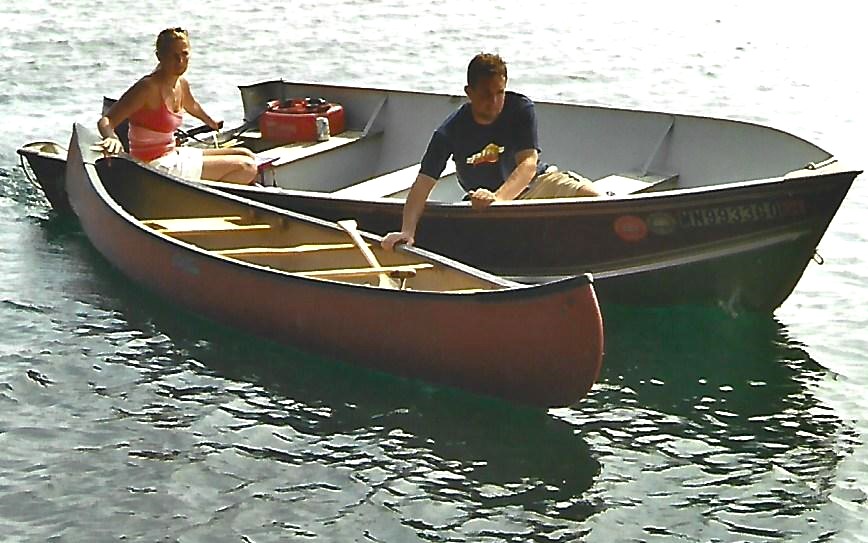
Me and my boys in our Old Town canoe, Clearwater Lake. Photo by Sharon Moen.

It was August 2003 and my friend Sharon and I decided it would be fun to do a mother/children canoe trip in Minnesota’s Boundary Waters Canoe Area Wilderness. At the time, my boys Hunter (4 yrs) and Logan (11 yrs) had been camping but I don’t think they’d been in the wilderness yet.

We planned to stay on Clearwater Lake, which I became familiar with years ago when I was a volunteer wilderness trail crew member for the Forest Service. I had fond memories of the clear water and impressive rock ledges on the campsites there. I used to work for the Forest Service and had been in the wilderness many times, so I was quite comfortable taking my children there in our red Old Town canoe without their dad.

Marie, Hunter, and Logan. Photo by Sharon Moen

Sharon brought along her two girls, Sierra and Savannah, and their dog. I can’t recall exactly how many days we camped – maybe two or three. The weather was great, and the water was warm enough for swimming. A submerged log lay not far offshore from our campsite and provided endless hours of entertainment for our children as they swam. They could stand and bounce on it, which made it seem like a wilderness theme park ride. A downed tree near our campsite also fascinated them.

Marie camp cooking. Photo by Sharon Moen

We spent evenings around the fire regaling each other with tales of our wilderness exploits and prowess. One afternoon, we decided to canoe to a campsite farther down the lake that I recalled was a good fishing spot. A large rock ledge with a deep drop off was also the perfect place for a picnic lunch. We beached our canoes on the small sandy beach at the empty campsite and the festivities commenced.

Sharon about to help Logan unhook his fish.

Later, Logan caught a fish. As Sharon was trying to unhook it for him, the hook went into her finger. I performed minor surgery to get the hook out and all was well. That was, until I noticed a red canoe floating across the lake.

“Huh, that canoe looks the same as mine,” I said to Sharon.

She looked at the beach where her canoe sat all by itself. “That IS your canoe!” she said.

What I, Miss Wilderness Expert, didn’t count on was the wind switching. Part of my canoe had still been in the water, enough so that it floated away.

I panicked. Losing a canoe in the wilderness is like losing your car in the city; maybe worse than losing your car because there’s no public transportation in the wilderness. I was ready to swim out and grab it. I’m not sure why I didn’t think of paddling to it in Sharon’s canoe with one of my children and having them hold onto the canoe so we could tow it back. Anyway, swimming was what made sense at the time. And time was of the essence before the canoe drifted farther away.

I was ready to jump into the lake when a couple in a motorboat happened by. Although motors are not allowed in most of the wilderness, there are a few lakes like Clearwater where they are allowed. I think it’s because there’s a resort on this lake.

“That your canoe?” One of them asked. When we responded in the affirmative, they followed up with: “Want us to get it?”

That earned an enthusiastic “Yes, please!”

Helpful motorboaters return my canoe. Photo by Sharon Moen

They grabbed the canoe, no problem, and brought it back to us. We thanked them profusely and I made sure that sucker was totally out of the water when I beached it this time.

Over the years, Sharon has made sure I don’t forget this incident. We trotted it out just last week when having lunch with a new coworker who wanted to know how long we’d been friends.

Although it was incredibly embarrassing at the time, losing my canoe was a good lesson about not getting too complacent in the wilderness or in life. You never know when the wind might switch.

The whole crew.

End of Season Paddle

Russ and I took our kayak and paddleboard to a river near our cabin in northern Minnesota. We’d been on this stretch once before in a canoe. It was so calm, I vowed to return with my paddleboard some day. This was that day.

The fall colors were turning but not quite at their peak. We’ve had an usually warm fall and this day was no exception.

We paddled past beaver homes, some derelict, some not so derelict. Three Canada geese, disturbed by our approach, flew downriver to escape us several times. Fluffy white down feathers littered the backwaters where they must have spent the night.

Rain threatened, but never fell. After an hour paddling, we turned around to head back to the landing. We were going with the current this time, so the return trip was faster. My legs were quaking with fatigue when we reached the end of this long, end of season paddle. But my heart sang.

Sapelo Island Salt Marsh

Lime-green trees, water weeds
surround the marble-white egret.
Chocolate-brown muck lines the shore.
The sun glows like a lighthouse.

The bird hunches
springs
off the log
hot, humid
into flight.

This bird eats gray fish, brown bugs,
tiny translucent shrimp.
How does it grow them into
the snowy feathers
of an angel?

Savannah, Georgia, and Sapelo Island

Forsyth Park, Savannah

I meandered down to Savannah for a work trip last month. I’d visited the city once before, but that was a long time ago, and I didn’t stay long. I must say I enjoyed spending four days in this southern gothic berg, even though most of the time I was in an air-conditioned hotel listening to presentations.

When I did get outdoors, I loved walking along the Savannah River down historic cobblestone streets. Live oaks draped with Spanish moss lined the route and historical sites seemed to emerge around every corner.

One morning, I managed to take a guided trolley tour around the city. It was one of those tours where you can hop on and off to explore the sights more closely. The trollies run every 20 minutes, which makes exploring very convenient. (Note: There are two trolley companies, so make sure you’re at the correct stop to board!)

I’d heard that Forsyth Park was picturesque, so I hopped off there and meandered around. The park offers wide sidewalks, those wonderful live oaks, and a large fountain. Near the fountain, a sidewalk trumpeter played a mellow tune. Even so, children walking by danced and hopped around to the music.

For the hungry, there’s a restaurant (Collins Quarter) in the park that offers takeout and sit-down dinners. People were lounging outside, dining under umbrellas on the patio of the Greek Revival building. I wasn’t hungry but didn’t want to pass up such a quaint place, so I ordered an iced spiced lavender mocha (decaf) from their takeout window. It was divine! The drink contained espresso, Condor chocolate, cinnamon, ginger, nutmeg, and lavender. I would rate it as one of the best mochas I’ve ever had. I sipped this purple cinnamon flower elixir as I walked to the trolley stop. It made the short wait more enjoyable.

The fountain in Forsyth Park.

Besides the mocha, another thing that impressed me about Savannah was the way they remember the different ethnic groups that helped found the city. About a tenth of the original settlers were Irish, so a Celtic cross stood in the park by my hotel. On the trolley ride, the driver pointed out a marker honoring Scottish Highlanders. Since I was just in Ireland and Scotland, this warmed the cockles of my heart and made me feel at home.

Once I was back near my hotel it was lunchtime. I decided to check out The Pirate’s House Restaurant. The building was first opened in 1753 as an inn for seafarers and then, as its website says, it “fast became a meeting place for pirates and sailors from the Seven Seas.” The building fell into disuse after World War II, but has been restored and is now considered a house museum.

I ordered the soup, salad, and sandwich, which featured she crab soup and a chicken salad croissant. Delish! As I ate, I realized that the building, with its uneven floors and clapboard siding, had a familiar feel – like I’d been there before. As I read about the restaurant’s history on my placemat, it struck me. I’d imagined this place while reading the book, “Treasure Island,” by Robert Louis Stevenson! Stevenson had visited Savannah and the house was thought to be his inspiration for the inn where Captain Flint died, uttering his last words: “Darby M’Graw, fetch aft the rum.”

The Sapelo Island National Estuarine Research Reserve Visitor Center on the mainland.

The next day was field trip day for my conference. I had selected a trip to Sapelo Island off the Georgia coast. The island is a National Estuarine Research Reserve, part of the same national network dedicated to environmental research, education, and stewardship that the coworkers in my office back home work for. As you may recall, I’m an isleophile (I love islands!), so that, combined with the whole Reserve thing, is why I chose this particular field trip.

Not just anyone can visit the island. No roads lead to it—you have to take a ferry. Also, you need to be invited by the Reserve or one of the residents of the small island community of Hog Hammock. Many of the residents in Hog Hammock are Gullah—descendants of former slaves with their own unique culture.

Gullah ring shouters.

A few days earlier, our conference had kicked off with a stirring performance by Gullah ring shouters. They shuffled in a counterclockwise circle while singing, dancing, clapping, and stomping. Ring shouting is an African tradition that the slaves brought with them and is still part of the Gullah worship services. Hog Hammock is one of the last remaining Gullah communities in the U.S., and is under threat due to land development and zoning.

We boarded the ferry and traveled through the salt marshes to the island, where a flock of terns greeted us, sitting on the dock railings. Our first stop was the Reserve office where one of their naturalists oriented us to the island. Then we traipsed outdoors for a service project. The thirty of us weeded a native plant garden and transplanted live oaks into larger pots. The oaks were being grown to help rehab a former airstrip on the island. The island used to be owned by tobacco magnate, R. J. Reynolds. He built a mansion there (which sports a bowling alley and tennis courts and is now available for rent to large groups), a dairy barn and outbuildings. He wanted his compound on the island to be self-sufficient.

After the trees were all transplanted, we headed to the dock to collect some tiny salt marsh critters to bring back to the office lab and look at under microscopes. We found crabs, small fish, and barnacles.

A beach on Sapelo Island. I loved how natural it was.

After eating lunch under a shelter at the beach, our next stop was the University of Georgia Marine Research Institute. After Reynolds died, his widow donated the dairy barn compound to the university for that purpose. Students spend the summer on the island conducting research projects, and we saw several in progress.

The marine research institute on Sapelo Island.

A film screening studio is one surprising thing that Mr. Reynolds built into the dairy barn. Apparently, he had many friends in Hollywood who would fly out to the island to screen movies. He even had two extra-wide chairs built to accommodate his heftier movie mogul friends. We sat in the room and watched a movie about the research institute. But I must admit I was distracted by wondering if any famous movies were screened in that remote barn.

The turkey fountain on Sapelo Island.

Another surprising decorative feature at the institute was an outdoor fountain that features cement turkeys. Yes, you heard me, turkeys. Why? Conflicting stories abound. Some say it was R. J. Reynold’s idea. Others say it was his wife’s idea. It’s certainly not something you see every day, especially at a marine institute. When I first noticed the fountain from a distance, I assumed the turkeys, with their fanned-out tails, were large scallops or oysters. Huh.

Our last stop was the Sapelo Island Light Station. But on our way, we drove through Hog Hammock and were able to see where the ring shouter performers lived. The homes are very modest but some Gullah are selling their land to mainlanders who want to build larger homes, which would drive up property taxes.

The lighthouse is a red and white striped affair that rises 80 feet into the saltmarsh air. A tiny museum in a building alongside it offers bits of history and memorabilia. Others on our tour climbed the tower for the view from the top. I opted out. This northern lady was pretty sapped by the southern heat by then. Climbing a spiral staircase in a tower without air conditioning just didn’t appeal to me at that point.

Sapelo Island Light Station.

Then it was back to the ferry for us and a long bus ride back to Savannah. I felt privileged to have the opportunity for this special trip to the island and to learn more about Georgia’s environment and culture. It was fun to give back a bit, too, by transplanting those baby live oaks.

Savannah’s “Waving Girl” statue at night, waving hello (or is it goodbye?) to my blog readers and ships that pass on the Savannah River.

Listening to the Savannah River

The Savannah River spoke to me as I walked its banks at night. Stark white and neon purple lights reflected across its surface, and it whispered, “I’ve been widened, deepened, and dirtied. Cargo ships ply through me. Tourists in paddlewheel boats churn atop me. Factories have dumped their pollution in me. I am ancient, older than those who use me. Once you are gone, I will remain. I will become whole again.”

Two Nature Encounters

Painted turtle photo by Andrew Patrick on Pexels.com

I usually take two walks every day. Recently, on one of my walks, I saw a painted turtle crossing the gravel road. It was headed in the direction of a small lake and had already made it across most of the road. But was now it had stopped. I worried it might get run over by an inattentive driver. I was tempted to pick it up and move it in the direction it was traveling, yet didn’t want to overly disturb it.

Luckily, as I stood behind the turtle, pondering, it began to move closer to the road’s edge. I slowly stepped forward and kept encouraging it to move in this way until I was sure it would be safe.

I wondered whether it was a late hibernator emerging from an inland pond or if it had laid its eggs somewhere and was now making its way back to the lake. I often see multiple painted turtles hanging out on a log at the end of the lake or swimming with their noses just above the water on quiet evenings.

After I walked a few more yards, a drizzle began. Then the drizzle became a shower. I wasn’t wearing a raincoat, so I cut my walk short and began quick-stepping my way back home. About a hundred yards past the first turtle, I saw another one that was almost the entire way across the road. It was moving quickly, so I didn’t worry about it like I had the first turtle.

Curious at seeing the two turtles crossing the road at nearly the same time, once back inside, I searched online for a possible explanation. Google said: “Every year, in mid to late spring, turtles start to move. The males are looking for partners and the females are looking for a good place to make a nest for their eggs. Unfortunately, for a lot of them, this means crossing busy roads and many don’t make it.”

In addition, Mississippi State University said that in the South, a legend says that rain is on the way any time you see a turtle cross the road. They continue, “There’s very little truth to this myth, even though it does seem like rain is in the forecast after we see one of these creatures slowly making its way across the street.”

Given my experience that day, I’m inclined to believe this legend!

Then I looked up the spiritual meaning of a turtle crossing your path. Google said it’s a sign of good fortune to come. Turtles are also omens of good health and symbolize a long, prosperous life.

If that ends up true, I’ll let you know in about thirty years.

My second wildlife encounter happened the next day. The moment I stepped out the door for another walk, I felt something land in my hair. I thought it was a bug and tried to brush it away. Out fell a five-inch black feather!

I looked around but whatever bird had lost the feather was long gone. However, a crow sat in a tree not far away. The feather certainly looked like it could be a crow feather.

While I’ve come across feathers on the ground before, I’ve never had one actually fall on me. The event was rather surprising and noteworthy (thus this blog post).

The feather that fell on my head.

I seemed to be a roll with interesting animal encounters. Once again, I consulted the wise and wonderous internet for interpretation. I searched for “meaning of crow feather falling on your head.”

Nothing came up under that specific heading, but there were lots of entries about the “meaning of coming across a crow feather in your path.”

Apparently, like with the turtles, this is a good omen. A woo-woo yoga site said, “When a crow feather lands at your feet, it is a positive omen, meaning your calls have been heard and answered. If a feather comes to your path magically or surprisingly, it means a spirit is supporting or guiding you.”

Since the feather fell on my head, I must really be protected and supported!

Another site said it can also signify a visitation by a male loved one who has passed.

For several months, I have been working on a nonfiction story about a male relative. Although I was not born when he died (tragically and suddenly), I’ve found myself wondering if I haven’t conjured up his ghost with all my recent attention.

If he is watching over me, I’m okay with that. He was a good guy and I wish I would have had a chance to know him. Even if he’s not, these natural encounters have been interesting.

When I told Russ about the mysterious crow feather atop my head, he said, “At least it was a feather and not something else that birds usually let drop!” That’s my guy.

I think I’ll take another walk and see what happens next.