Nantucket Sleigh Ride Via Loon

Loons dancing in the morning mist on Tuscarora Lake in the Boundary Waters Canoe Area Wilderness. (Photo taken by me in the mid-1980s.)

Loons dancing in the morning mist on Tuscarora Lake in the Boundary Waters Canoe Area Wilderness. (Photo taken by me in the mid-1980s.)

Strange things happen sometimes in the Northwoods – this land where humans and animals live so near each other. When I was young (8? 9?) my family went fishing on a lake north of Duluth. While casting our lines, we noticed a loon swimming nearby, calling in an unusual manner. As outdoorsy types, we had heard many loons before, but this one sounded more plaintive than normal, like it was in distress.

The loon kept circling — swimming near us, which was also odd for this rather stand-offish species. My dad said something like, “I think that loon needs help,” so we canoed toward it. Soon we saw the problem. A homemade fishing pole crafted from a large branch trailed about fifteen feet behind the bird. My dad grabbed the pole, thinking he could just pull the loon toward us and find where the fishing hook was lodged in it.

Ha! He underestimated the power of the loon. Upon feeling the tug of the line, the loon took off and dove underwater. My dad kept his grip on the pole, and the loon proceeded to pull our canoe (and the three or four of us in it) through the water at a good clip.

Now, a Nantucket sleigh ride is what used to happen to whalers after they harpooned a whale. The whale would take off, towing the whaling boat and its occupants through the sea until the whale tired and surfaced. That’s what was happening to us, only our whale was a loon.

Soon the loon tired and my dad was able to pull it close enough to capture in his gloved hands. This in itself was a feat of daring. Adult loons are about the size of a goose, and their bills are long and sharp.

After my dad wrestled it onto his lap, we discovered the hook embedded in the bird’s neck. Imagine — all that force from our lake sleigh ride concentrated on such a fragile body part. But that hadn’t stopped the loon.

My brother handed my dad the pliers and he was able to remove the hook. We released the loon back into its watery home. As the loon departed, its call was different. Happier.

Was it saying thank you? I’d like to think so.

Spending the Fourth of July in . . . the Twilight Zone

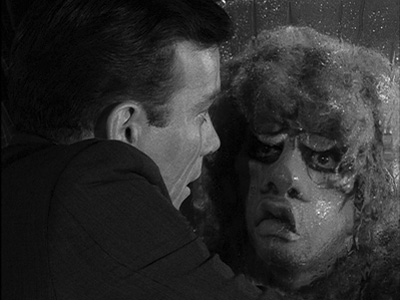
William Shatner and the gremlin in

William Shatner and the gremlin in “Nightmare at 20,000 Feet.”

While most people in Duluth were finding their way to favorite spots on the hillside or waterfront to watch the night’s fireworks display, I got distracted by the SciFy channel’s Fourth of July Twilight Zone Marathon. I had socialized and visited the beach earlier in the day, and was watching a bit of television before leaving for the fireworks. Problem was, an episode was airing that scared the bee hooosis (Minnesotan for bejesus) out of me when I was young.

I hadn’t seen “Nightmare at 20,000 Feet” since that fateful night my parents were out and I watched a scary television show despite their instructions to the contrary. Would the episode be as frightening to now? Would the face that appears in the airplane window when the passenger draws back the curtain make me hide behind the living room curtains like when I was little?

I had to watch it. Fireworks be dammed. Cue Rod Serling’s opening narration:

Portrait of a frightened man: Mr. Robert Wilson, thirty-seven, husband, father, and salesman on sick leave. Mr. Wilson has just been discharged from a sanitarium where he spent the last six months recovering from a nervous breakdown, the onset of which took place on an evening not dissimilar to this one, on an airliner very much like the one in which Mr. Wilson is about to be flown home – the difference being that, on that evening half a year ago, Mr. Wilson’s flight was terminated by the onslaught of his mental breakdown. Tonight, he’s traveling all the way to his appointed destination, which, contrary to Mr. Wilson’s plan, happens to be in the darkest corner of the Twilight Zone.

Robert Wilson is played by a young William Shatner. His wife sits beside him on his plane ride home from the sanitarium.

I marveled at the 1960s clunky airplane backdrop, made with cheap wood paneling, the airline seats with so much room on either side they looked like today’s first-class seats, and the quaint plaid curtains covering the plane windows.

Was I was scared watching the show now? Of course not. I’ve been too jaded by the likes of “Jaws,” and “The Exorcist,” and “Amityville Horror,” and dozens of other horror movies for a little Twilight Zone to scare me. But I understood why the story was so frightening when I was younger; it was the feelings that Mr. Wilson was alone in his belief that someone was out on the airplane wing. The plane is in peril from this person outside. Only he knows this, but he can’t make anyone else believe him because the humanoid (which we later learn is a gremlin) hides when anyone else tries to see him. That kind of emotional tension must have been unbearable to me as a child.

Plus there’s the tension and surprise when Mr. Wilson closes the curtain after seeing the gremlin the first time, but then wants to open it up later, just to check if anything is really out there. His hand hesitates above the curtain as he struggles with his feelings. When he draws back the curtain, the gremlin’s morose yet curious face fills the entire window. (I suspect this is the point where I fled behind the curtains.)

Nightmare_ar_20,000_Feet_GremlinThe gremlin’s appearance in the window is scarier than the appearance of the gremlin itself. He’s more like a wooly clown with a bad make-up job. But it’s all the peril and tension that made this episode so memorable.

This little trip down horror memory lane was worth missing the fireworks show. Even after all these years, it reminded me what makes a good horror story: tension, surprise, peril, and emotional isolation.

Now, if I could just remember that the next time I write a horror story. Who knows? Maybe I will scare the bee hooosis out of a seven-year-old.

A Technological Leap

Old vs. new technology.

Old vs. new technology.

Last week at work I made the leap from my thirty-year-old tape cassette recorder to a digital voice recorder. What took me so long, right? The thing was, my cassette recorder worked just fine. I bought it for my first job as a reporter when I was in college (for the Minnesota Daily – best college newspaper in the nation! Smile.)

I bought it at a Radio Shack store on campus for $40, which was a lot for a poor college student. My trusty Panasonic has captured the voices of so many people – I can’t even begin to count them: wolf researchers, medical researchers, the MN law team that represented the government of India in the Bhopal poison gas lawsuit, tall ship captains, animal behaviorists, state legislators, water scientists, and guys who just wanted to sell fitness equipment.

What prompted my foray into this century’s technology was the need for a digital sound file for a project I’m working on. I suppose I could have figured out how to do that with my cassette recorder, but it seemed like it was time to switch. Besides, cassette tapes are getting hard to find and the digital recorder is so small and easy to carry around.

I admit – it took me several tries to get up enough energy to read the instructions (yes, I actually did that) and to make the switch. The recorder sat on my desk for about a week with several aborted attempts before I got serious about figuring it out. I suppose that’s a function of age. Young people seem to absorb new technology by osmosis. For us oldsters, it takes the right mood and amount of energy. We’ve updated so many things in our lives, we run out of steam and enthusiasm – at least I do.

But I’m excited to imagine how many interesting people this digital recorder will have in its files, and hopefully, I won’t have to upgrade again in this respect during the rest of my career. But the way things are going, I’m sure there will be some other form of technology that will require a similar effort.

Farmers’ Market Find

bacon jam spread

I have been quiet for a while because I have been meandering. And what did I find during my jouney? Bacon jam! I made the discovery at a farmers’ market in Brigantine, New Jersey. At $15 a jar, it’s a bit pricey, but as the seller lady said, each jar contains a half pound of bacon. I couldn’t resist. I have a bacon-lover in my family, so the purchase was a foregone conclusion.

It’s made in Pennsylvania and according to the product’s website this bacon spread makes a great topping for scallops, cheese-based appetizers, sandwiches, and as a mix-in for sauces. Although there are different varieties (black pepper, red chili & garlic), I opted for the original, which features just plain bacon.

Who knows what other wonders await in the world?

My Favorite Tree is Gone

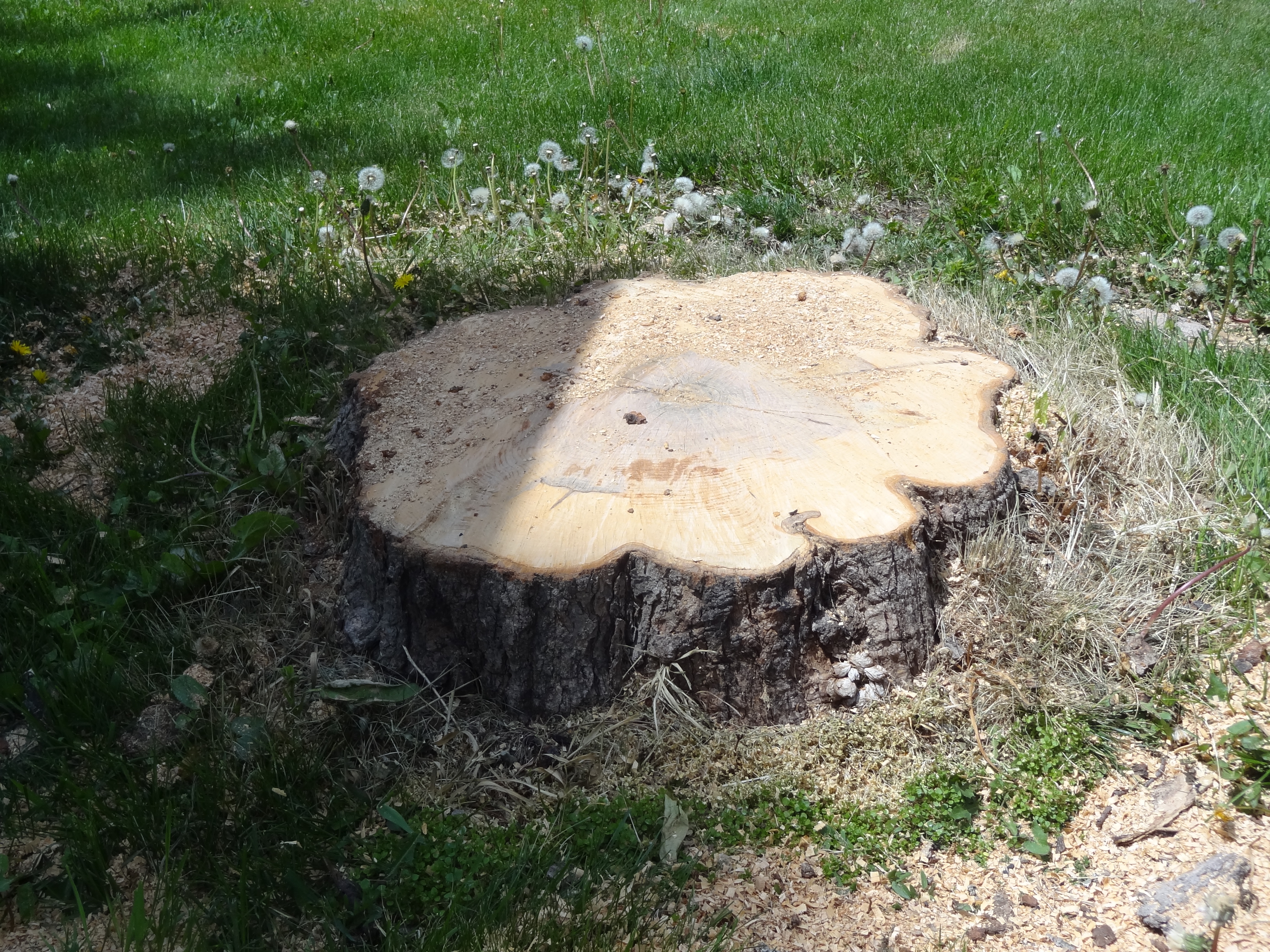
My favorite tree is now a stump.

My favorite tree is now a stump.

It took a long time for me to come to terms with cutting down a maple tree in my yard that was dying (see “Tribute to a Tree” from 2013), but I did it. The pileated woodpeckers had continued their pounding until the branches sported several foot-high holes (which, by the way, were not used for nesting). This spring, its leaves were sparse.

My tree was suffering and it was time to go before a strong wind or ice storm broke its limbs and endangered my shed, garage, or house. After procuring several price quotes, I chose a local company, which came sooner than I expected. I arrived home one day for lunch to see chunks of it carted away on a flatbed truck, the core of it as brown and rotten as a criminal’s heart.

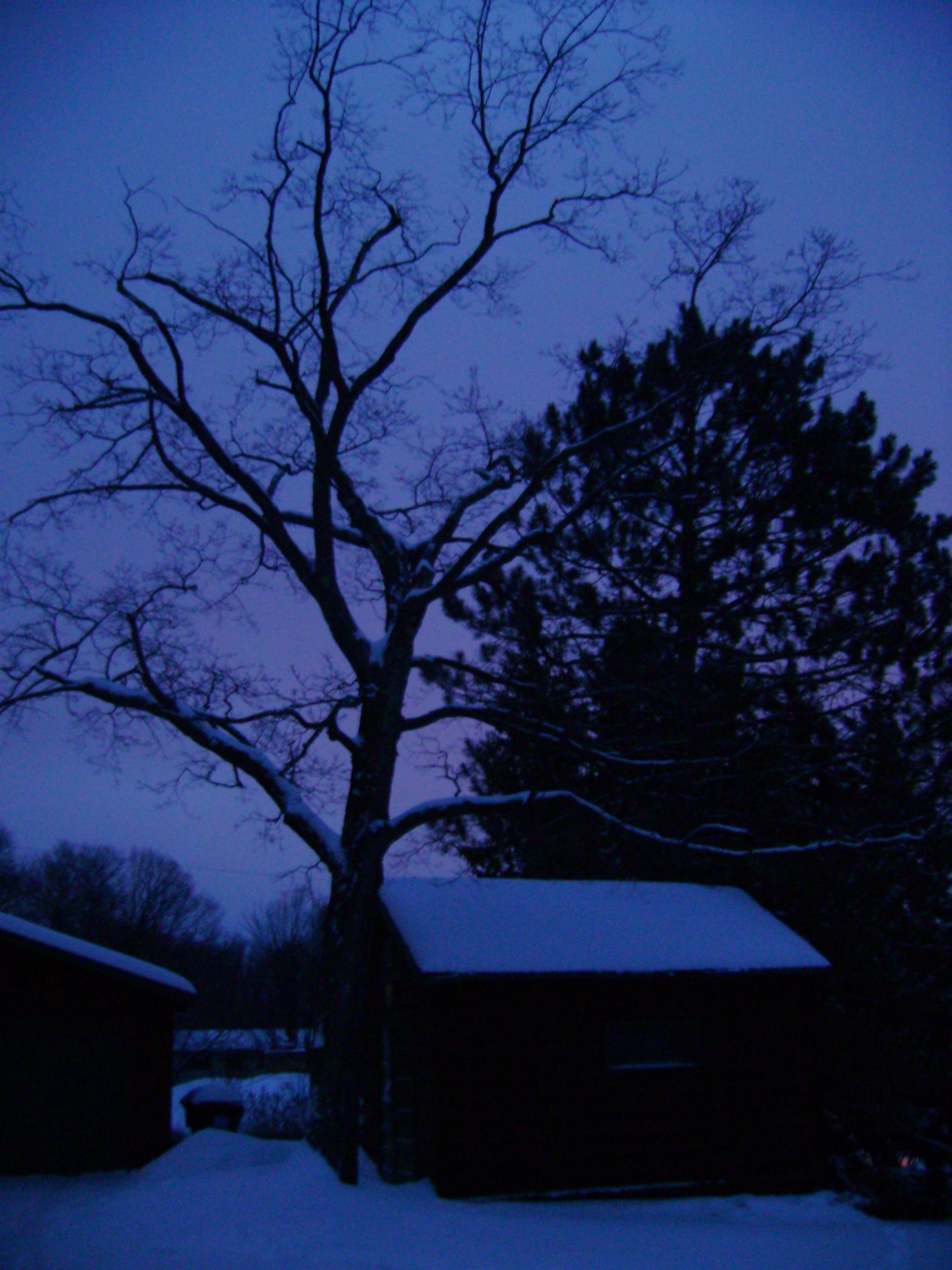
What my tree used to look like.

What my tree used to look like.

I thought about making the trunk into some sort of statue or using the wood for a memento, but just the disposal of the tree was so expensive, I couldn’t think of doing anything so fancy. Plus the wood was rotten, so whatever was made from it probably wouldn’t have lasted. I counted the rings on the stump before it was ground up. The tree was at least 90 years old. I said a few words over the stump in remembrance.

Good-bye, favorite tree. I’m going to plant two young trees in the yard in your honor.

The Moon Lodge

MoonLodge

I often think the Native American practice of separating women who were having their periods from the tribe for four days or a week in their own tent was misguided. They should have separated them the week BEFORE their periods to limit the emotional carnage caused by PMS!

Then again, can you imagine what things would be like inside a tent of PMS-ing women? All closed in, together?

Maybe that’s not such a good idea.

In Broad Daylight

Fishing Field Trip 2012 017 (2)I don’t like to admit this, but I yell at the TV sometimes — usually during newscasts when it comes to word usage (or over usage). You may remember my rant about shallow graves. My latest rant regards crimes committed “in broad daylight.”

It’s not that the news writers are using the term incorrectly. One of the less common definitions of “broad” is “open or full.” So to commit a crime in broad daylight means to commit a crime in full daylight.

What I object to is the value judgment surrounding the phrase. The newscasters say it as if crimes committed during the day are so much more serious or brazen than crimes committed in the dark of night. A hint of admiration tinges the announcer’s voice because goodness knows, all proper criminals wait until the cover of darkness to do their dastardly deeds. To commit a crime during the day goes against the rules and expectations of society. And it’s funny, but you never hear about crimes being committed in narrow daylight – like evenings or mornings. It’s either “under the cover of darkness” or “in broad daylight.”

Call me an old fuddy-duddy if you will, but to me, a crime is a crime, no matter what time of day it is committed. Crimes are not to be admired, even massive jewelry heists in broad daylight. They are assaults on businesses and persons. When crimes happen doesn’t matter as much as the fact that they happened at all.

I’d rather the news writers stopped making a big deal over when crimes occurred and paid more attention to the true impact of the offenses. But I suppose that’s too much to ask.

Okay. Latest rant over.

How I Left My Appendix in London

My hospitalmates in London: Steve, red-haired Steve, and little Robert. I'm pushing red-haired Steve's chair.

My hospitalmates in London: Steve, red-haired Steve, and little Robert. That’s me pushing red-haired Steve’s chair.

When I was ten, my parents took me and one of my older brothers on a two-month trip to the U.K. and Europe. It was going to be my first plane ride. I was bit apprehensive about the whole flying in the air thing, but looked forward to the trip. We were going to camp most of the time in a rented Dormobile – it’s like a Volkswagon campervan. My mom was planning to meet her Welsh pen pal of thirty-five years for the first time, and we were searching for relatives.

About three months before we left, I started having trouble with my guts. I ended up having a proctoscopic exam, which, by the way, was extremely traumatic because the medical personnel did not explain what was going on, and I was awake during it. The findings were inconclusive and I was sent on my merry ten-year-old way.

A Dormobile, circa 1972 - about the same time we used one to travel Europe. Image credit: By Charles01 (Own work) via Wikimedia Commons

A Dormobile, circa 1972 – about the same time we used one to travel Europe. Image credit: By Charles01 (Own work) via Wikimedia Commons

My intestines, perhaps too freaked out by the exam, laid low until we landed in London. But I don’t blame them for acting up when they did. The plane ride was rather stressful.

The first leg of our journey was fine. We flew from Minnesota to Detroit, where the plane picked up additional passengers. I got the window seat in our row of three. My mom sat next to me, and next to her in the aisle chair was an elderly man who boarded in Detroit.

The pull of gravity on takeoff and the feel of the breaks upon landing impressed me. There were a few air bumps, but nothing too bad. I was enchanted by the “cloud castles” we passed – the tops of storm clouds reaching high in the air above the other clouds.

We continued to England. When we neared London, air traffic was backed-up and we had to circle Heathrow for two hours. All the circling proved too much for the gentleman from Detroit, who started moaning, turning green, and throwing up. I was left alone with him while my mom searched for a doctor.

It seemed to take forever for someone to attend to the man. In the meantime, I resorted to plugging my ears and closing my eyes to escape the scene. I had never seen anyone turn green before. Eventually, a doctor who happened to be on the plane helped the poor man. I don’t recall my mother returning to her seat – perhaps she stayed away to allow the doctor room to work.

Like the proverbial three monkeys who see no evil, hear no evil, speak no evil, I kept myself blind, deaf and mute. We heard later that the Detroit man had a heart attack, but that he survived and was able to return to the U.S.

Once we landed, although I was glad to be on the ground again, I didn’t feel so well myself. We were scheduled to camp for several days outside of London. I don’t recall much else except lots of bathroom visits (and being impressed that the toilet water tank was on the wall above the toilet, not attached to the toilet bowl like back home.) After maybe two nights, I was throwing up green bile and I was out of it. I told my parents I thought I was dying. They called a doctor, who called for an ambulance. I was whisked away to Sydenham Children’s Hospital (which I hear is no more.)

I passed out in the ambulance. When I awoke in the hospital, I threw up again. I remember my mom sitting outside the exam room, crying. I don’t remember anything else until I woke up after surgery, feeling much better. They had taken out my appendix and explored around the rest of my intestines, which made for a larger scar than usual. The doctor said my appendix probably didn’t need to be removed, but that my intestines were inflamed. The pain was gone – that’s all I knew.

I spent the next two weeks in the hospital, screwing up my parent’s travel plans and pen pal visit. I was in a ward with maybe ten other children, and made great friends with Steve, red-haired Steve, and little Robert. We talked a lot from our beds and I tasted my first orangeade and learned British phrasing for food. With no television for distraction, we children shared what our home lives were like.

One phrase endures, which I have passed to my children. Little Robert would talk about how he’d say to his mum, “I have to go pee.” She would answer back, “Go on then, I’m not stoppin’ ya!” We would all laugh, so he would repeat it again, and again. What can I say? There wasn’t much else to do.

I developed a crush on red-haired Steve. I don’t recall why he had casts on both of this legs, but he seemed the nicest. Alas, we parted when I was well enough to travel again.

My parents managed to salvage the pen pal meeting. I missed travelling to Loch Ness, but hope to make up for that someday. Eventually, we crossed the English Channel to Amsterdam and visited Germany, Belgium, and Switzerland. The flight home was uneventful, and I appreciated the familiar foods and smells of home.

That, my friends, is the story of how I left my appendix in London. Want to see my souvenir? (Grins and lifts shirt.)

Five Pieces of Glass

Today's five pieces of glass.

Today’s five pieces of glass.

As my youngest son and I walked our dog in the woods near our house, he noticed me picking up pieces of glass that litter part of the trail. Neighbors who have lived in the ‘hood longer than I told me the glass pieces are remnants of an abandoned car that used to rest there.

My son asked me what I was doing. I explained that for years, I’ve pick up five pieces of glass every time I walk the trail in a long-term effort to clean it up. I do it as long as the trail’s not covered by snow. My son said something like, “You should get an award for that.”

“I’m not doing it for recognition,” I told him. “I’m doing it to make our neighborhood a nicer place to live.”

That gave him something to think about.

So it is with interest I read the story circulating in the news lately about a man from the Netherlands who is doing something similar for a river that he walks along on his way to work. He picks up one bag of trash there every day.

He took photos of his progress and made a Facebook page about it (Project Schone Schie – which means the project to clean the River Schie). Eventually, neighbors noticed and began to help. The project went viral and he started a movement where other people are cleaning up trash on their daily routes. The news stories say people all over the world have been inspired.

I’m glad people are caring about the environment and their neighborhoods. As a kid, I used to organize neighborhood clean-ups of the vacant lot across from my house. A budding public relations professional, I even had a name for the campaign – the Kit Kat Kleanup Klub. I’m not sure my parents appreciated the increased garbage bill, but the work felt good and it was fun. Throughout my career, I’ve organized annual beach sweeps and helped with other clean-up efforts.

But now that I am older, I am content with quietly picking up my five pieces of glass. It’s meditative. It’s slow. It takes discipline to limit myself to only five pieces. I guess I don’t want the job to be over too soon.