Fun With Words

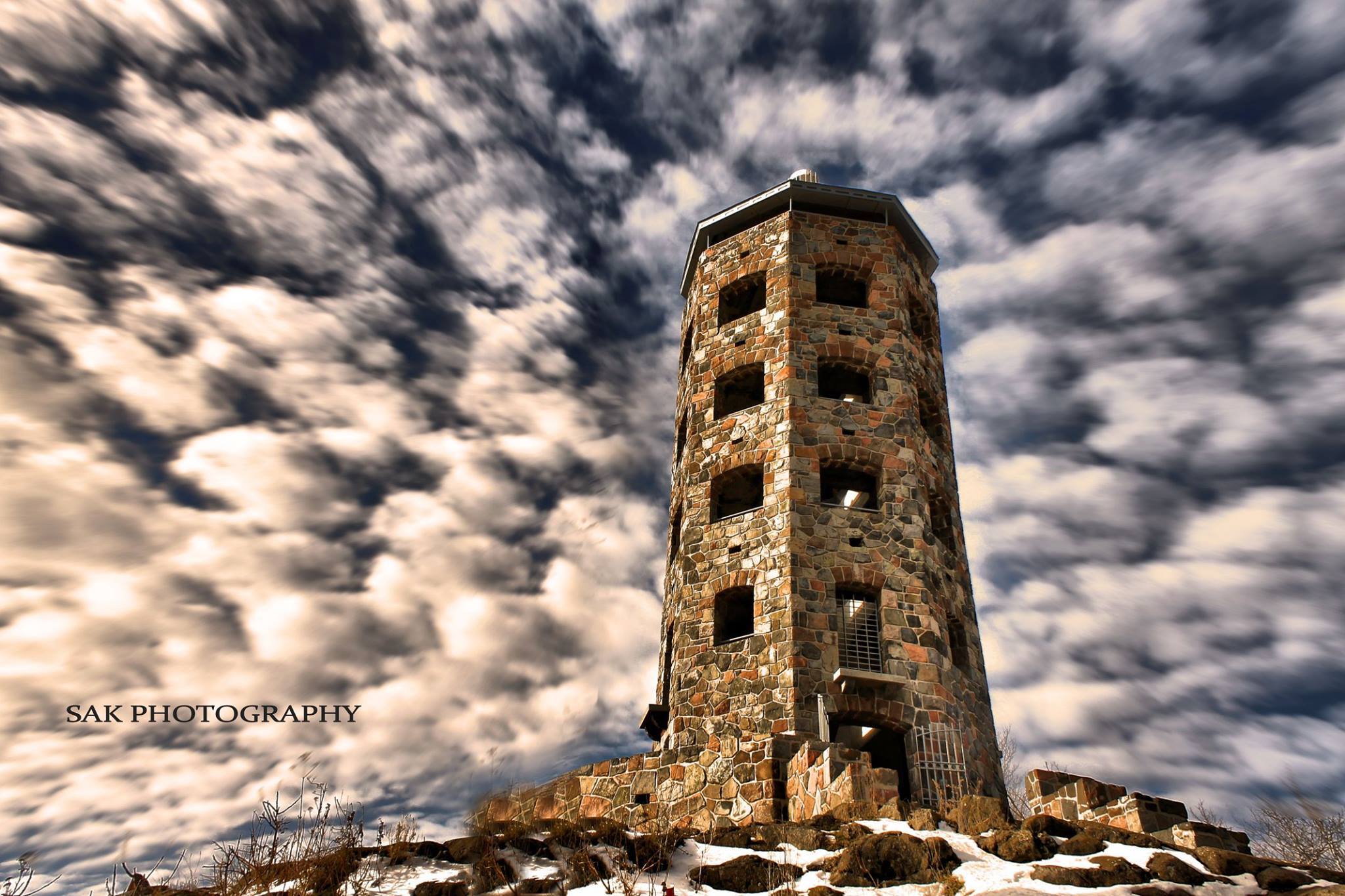
“Anger Tower” in Duluth, Minn. Photo by Sak Photography.

I bought my teenaged son a piece of furniture this weekend, and realized to my horror, that I had been mispronouncing the name of it in my head forever. I bought him a chest of drawers, which I had been thinking of as “chester drawers” since I was young. The salesman tactfully corrected my pronunciation.

Chester drawers — that’s what we called it in my house. I can blame my parents, I guess. Somehow, I’d made it into adulthood without ever needing to buy this particular piece of furniture because there were always plenty of chester drawer hand-me-downs from relatives.

This incident reminded me of two other tricky words. When I was in elementary school, I used to call the library a “liberry,” until some neighbor kid corrected me. Although I went to the liberry a lot, apparently it wasn’t often enough to learn its true name.

Then there’s the iconic local landmark of “Anger Tower.” The foreboding dark stone tower was built atop one of Duluth’s tallest hills. We could see it from my neighborhood before the trees grew and blocked the view. Because it seemed the kind of place where a person would be locked up if they got others angry, it made total sense in my child’s mind to call it Anger Tower. Or maybe it was where angry people lived. But I learned later in junior high school that its real name was Enger Tower after a local business man.

I don’t know. Enger Tower just doesn’t have the same ring. Sometimes real names aren’t as good as the made-up ones. Are there any word pronunciations that surprised you as you grew older?

Oops!

The Lake Superior Ice Project came crashing down on Tues., Feb. 3 at 10:06 a.m.

The Lake Superior Ice Project came crashing down on Tues., Feb. 3 at 10:06 a.m.

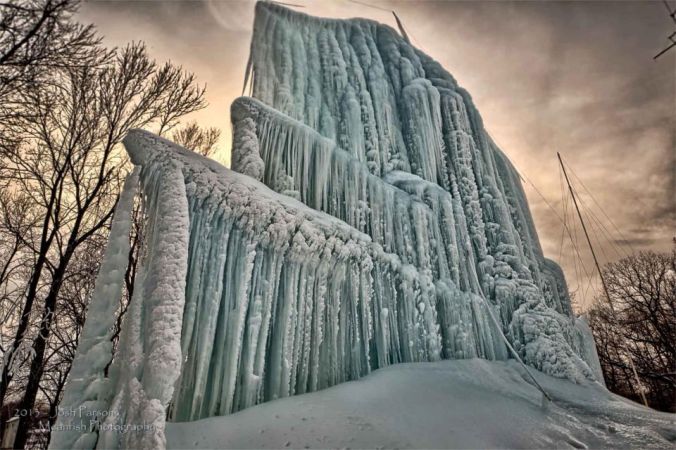
An attempt at a world-record-tall ice sculpture came crashing down a few days ago on Barker’s Island in Superior, Wis. Of all times – it happened right when the “sculptor,” Roger Hanson, was being interviewed and photographed by the New York Times. In fact, because Roger is hard-of-hearing, the reporter had to alert him that something was amiss. Roger turned around from the interview just in time to see his creation fall in upon itself.

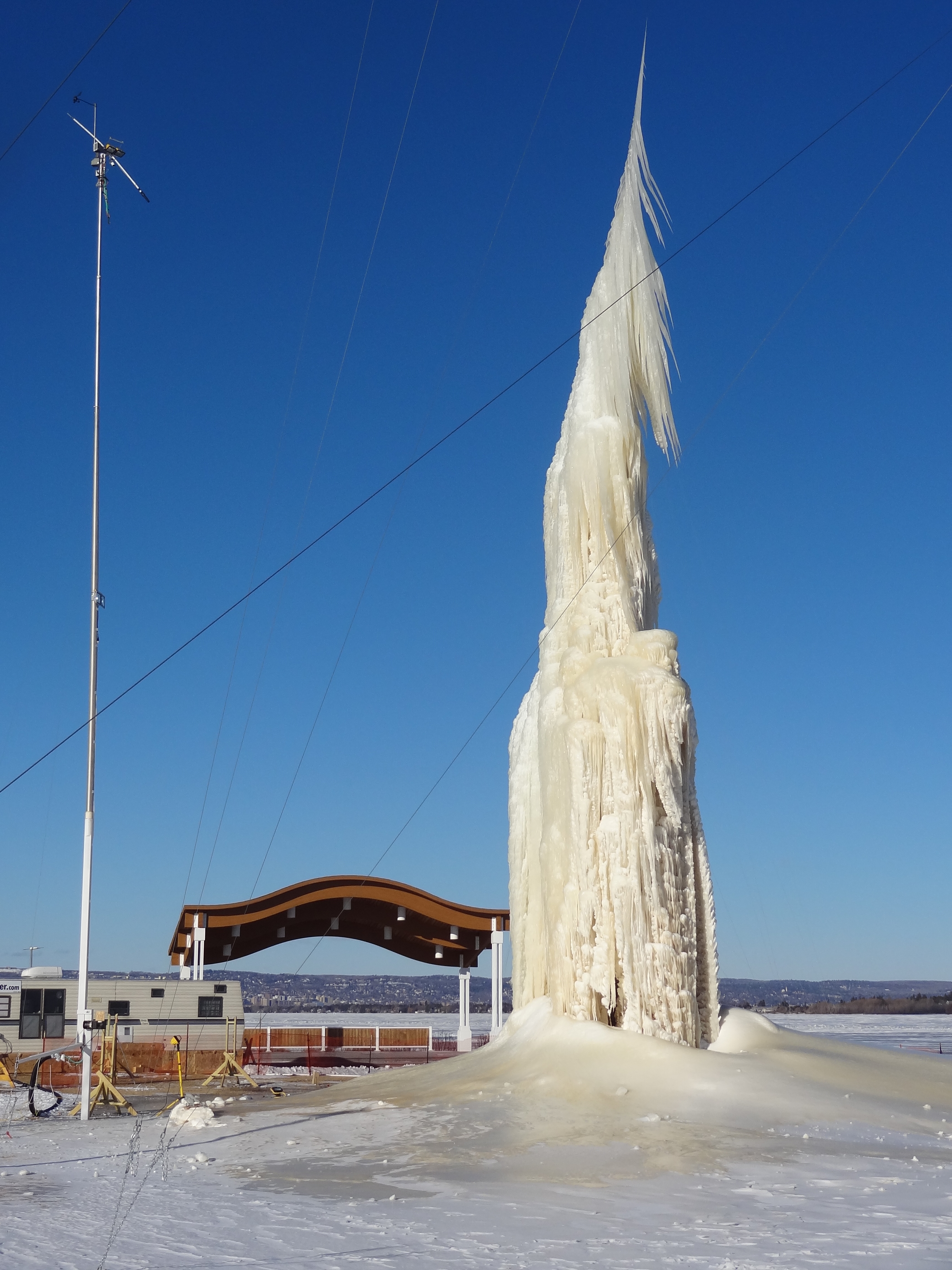
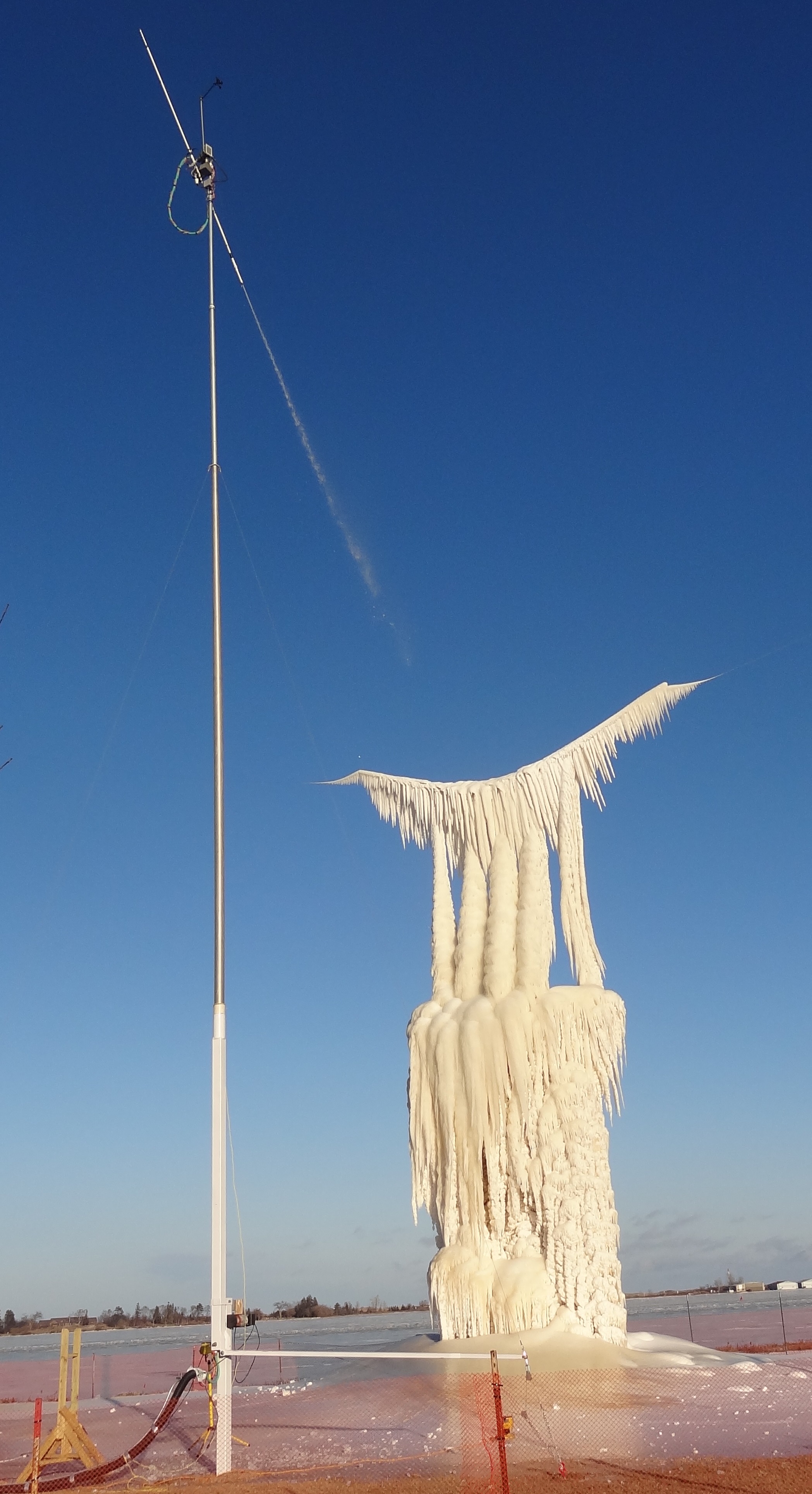
What his creation looked like before the collapse was a point of discussion between me and my office mates, who work in a nearby building. Before the crash, it rose 66 feet and had wing-like protrusions coming off either side (see my previous blog posting for photos). It struck me as vaguely menacing, so I called it the “ice wraith.” Others thought of it more benevolently and called it a “sentinel” – they thought it was guarding the estuary and harbor. Others called it a “blob.” Calling it a “sculpture” like the news stories do, just seems wrong. It is a creation, but it’s not like Roger is carving it. He’s squirting it.

Well, it’s clear that it is a pile now.

The crash is blamed on a thaw we had a while back. Although the temperatures dropped again enough for ice formation, I suppose the structure got brittle at that point. Roger started adding more water to the top of it instead of making it wider. Even to my unschooled ice sculpture eyes, it seemed precarious – like it needed more width instead of height. (But I speak from the benefit of hindsight.)

Although some are rejoicing at the crash of this hubristic endeavor, others in the community are upset. The project was drawing a crowd and even sported a gyros stand, and people seemed to enjoy watching the progress. Roger is such an earnest man, you can’t help but feel sorry for him. The city of Superior planned light and music shows, presentations, and even a fireworks display around the project for the next three weekends. (Feb 14, 21 and 28 at 6, 7, and 8 p.m.)

After the crash, the big questions were whether to build again and whether to hold the celebratory events. The answer? YES! Roger says he is going to rebuild, and has already started doing so upon the pile that was once his “sculpture.”

Poor Superior always seems the underdog next to the more populous and tourist-friendly Duluth across the bridge. This is yet another example of how the city just can’t win. But perhaps it’s also an example of perseverance and making lemonade out of lemons.

In my first blog entry about this project, I asked, “What could possibly go wrong?” Well, now we know! But at least nobody got hurt. And it makes for a good story. And looking at an ice pile IS sort of interesting. Especially when it’s lit up at night. (Grin.)

Three Wishes

My new magic slippers.

My new magic slippers.

I was granted three wishes last week, but didn’t realize it until they were over. Have you ever had one of those weeks when things randomly and mysteriously work out?

It began with a pair of slippers. My house slippers were held together by pink duct tape that was slowly eroding (long story). When I put them on every morning, I felt a bit like Reese Witherspoon in the movie/book “Wild” where she loses her hiking boots and makes do on the Pacific Crest Trail with her feet and sandals wrapped in duct tape.

I decided it was time to class up my act, so I bought some new slippers during an after-holiday sale. I didn’t have time to try them on in the store, and I forgot that sizes run small for this brand. Once at home, I found they were too small. A few days later I returned to the store only to discover they were out of larger sizes in that style. Resigned, I chose a different style that I was less enthusiastic about, and brought them to the counter for exchange.

As I was explaining my plight to the cashier, I noticed a pair of the original slippers on the counter behind her. Might those be the right size? She said someone had just returned them and she checked the size. They were my size. Score! How lucky was that?

My second wish involved a shared lunch. It was Thursday and all my regular lunch people were otherwise occupied. As I sat in my office, wishing I had someone to go to lunch with, in popped a co-worker who asked me if I wanted to eat out. She and I had never lunched without others along, so this was a new thing. But now I had someone to eat with. Score!

My third wish involved my son’s indoor soccer game. The day of the championship game, I noticed I had an appointment that conflicted with it. I didn’t think there was any way to change the appointment, so I was resigned to missing the game. Soon afterwards, the phone rang and it was the appointment people. They wanted to know if I could come later. Scooooooore!

If I had known I was receiving three wishes last week, I probably would not have wasted one of them on slippers. I would have chosen world peace or a vaccine for Ebola. But having company for lunch and being able to see my son’s soccer game were pretty darn worthwhile.

It’s Growing . . .

DSC019362The weather continues to cooperate for the Lake Superior Ice Project on Barker’s Island in Superior, Wis. “Ice Man” Roger Hanson from Big Lake, Minn., has added a third tier to the formation and it now stands about 52 feet tall and 20-something feet wide.

Roger had some troubles previously with the formation leaning due to the soft ground it’s built on and the prevailing winds, but he has since adjusted for that. Roger lives in that little trailer you can see in the side-view photo of formation. I don’t envy him. Barker’s Island is a desolate place in winter. No trees block the wind coming off frozen Lake Superior and the comforts of the mainland, although in view, might as well be miles away.

For more information, please see my two previous posts (1) (2) on this topic.

DSC01938

A side view of the formation, along with the spraying apparatus and Roger’s trailer home.

What is That Thing?

DSC019352

I braved the sub-zero wind chills coming off the harbor to snap some photos of the Lake Superior Ice Project. The weather has finally cooperated, so Mr. Roger Hanson has been able to start making his creation on Barker’s Island in Superior, Wis. It stands about 22 feet tall now and it looks like . . . what do you think it looks like? Perhaps a long-legged dinosaur or Afghan hound? A strange Chinese pagoda?

He told my co-workers and me that it would be 70 feet tall, but now I see in news stories that he has upped that to 75 feet. Either way, if it gets that tall, it would be a world record.DSC01934

In one of the images, you can see a shot of water spraying onto the formation. Roger has a computer set-up that sprays water every four seconds, which forms the ice. People have started frequenting the parking lot to take a look, but so far, no traffic control is needed. I suppose that will change as it gets larger.

See my previous post for more information.

The Banned Words of Bleak Mid-Winter

lssubanishtoon_AdamRaffaele

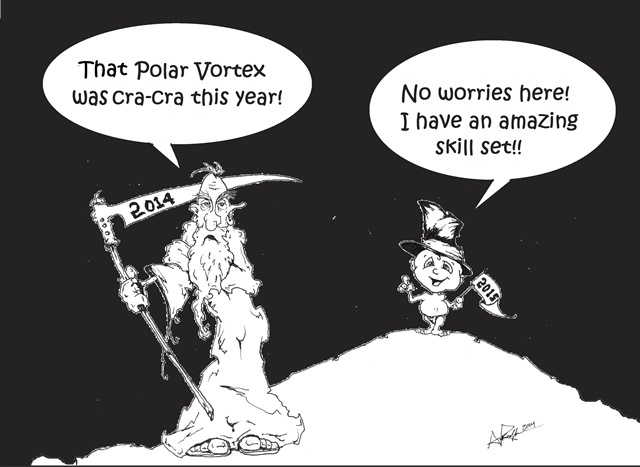
Cartoon by Adam Raffaele

I look forward to this time of season every year. What’s to like about bleak mid-winter – especially since the temperatures are below zero and I have a head cold that’s producing enough mucus to irrigate a small farm field? Why, the “List of Words Banished from the Queen’s English,” of course! The list is distributed annually by fellow northerners over at Lake Superior State University in Sault Ste. Marie, Mich.

At only 2,500 students the university is small, but its influence on writers looms large with a forty-year tradition of publicizing words that are misused, overused, or generally useless to society. The tradition of listing words everyone loves to hate started at a New Year’s Eve party in 1975 and has enjoyed worldwide fame and attention since then.

This year’s list includes several entries that I totally agree should be banned, such as SWAG. Around my house (which contains a highschooler and his friends) this means that someone is “cool” more than it implies a “free gift.” I have heard this word enough times to last a lifetime. Yes, it should be banned for the sake of parental sanity.

Another term that should never be uttered is ENHANCED INTERROGATION, or as the head of the CIA would say for short, EIT (for Enhanced Interrogation Techniques). The term hit the national spotlight last month with the release of the U.S. Senate report on the CIA’s intelligence-gathering tactics under former President George W. Bush. Torture is torture, people. Let’s not sugar-coat it with a lot of extra syllables.

The top word on the list, however, I’d never heard of. It’s BAE, which stands for “before anyone else.” I suppose it could also be a shortcut word for “babe.” Perhaps I’ve never heard this term because I am nobody’s bae (maybe it’s the mucus). But my Facebook friends and my highschooler assure me the word is alive and well among the middle school and highschool crowds, and apparently, people are sick of it.

The other word of note is NATION used as a suffix to denote fans of a team, celebrity, or the like. I thought it was entirely and appropriately ironic that Lake Superior State University encourages people to join the “Laker-Nation” in the standard institutional blurb that’s included at the end of the banned word list story. I hope they did that on purpose.

Some of the other words are featured in the cartoon above. If a word strikes you during the year as one that should be banned, go here to list it with the university and see how it fares in next year’s list. They also have a Banished Words Facebook page that you can join.

Now, if you’ll excuse me, I have to go blow my nose again.

Year End Review (or is it Rear End View?)

Photo credit: Heather Cowper

Photo credit: Heather Cowper

The end of the year calls for a review of the second year of this blog. Since last April, when I did my rather tardy year-end review for 2013, the number of my followers and views has grown, which is heartening. It’s always nice to know that the effort is worth it. Marie’s Meanderings received 3,000 views in 2014 (out of a total of 5,100 views), and has 126 followers.

I continue to receive the most feedback by sharing my blog stories with my Facebook friends. Between them and my followers, each story has the potential to reach almost 300 people.

The most popular post that I wrote since April was my social commentary on our local Christmas City of the North Parade. The story was shared among several of my Facebook friends who perhaps feel the same way – that sending our kids parading down the street in the dead of winter is a form of socially sanctioned child abuse. (Smirk.) And I can’t forget to say it was mentioned by fellow blogger Colette on her blog, WriterInSoul. Her humor is even quirkier than mine. I especially enjoy her “Things Men Have Said to Me” postings. Check it out!

Next comes “Why I am a Zumba Failure,” perhaps because there are many others out there who do not like to gyrate their hips in public.

Finally, is “The Planet Where They Don’t Give Christmas Presents” poem. My guess is its popularity has to do with the appeal of mild profanity among my Facebook friends.

But (or I should say, Butt) the most amusing aspect of my blog continues to be the international appeal and usefulness of the image that conveys the message “don’t flush toilet paper down the toilet.” It accompanied a post about my temporary roommate who had an obsession with toilet paper. That’s why I’ve chosen the image to decorate this post. It has received 69 clicks and downloads this year from many a country that must have sub-standard plumbing, including: Greece, the United Arab Emirates, India, Turkey, Romania, Pakistan, Cambodia, Kuwait, Malaysia, and the Philippines. I am proud that my blog serves such a purpose to the world, and hope to continue to be similarly useful in 2015.

Thank you, my friends, for reading!

If You Build a Seventy-Foot-Tall Hunk of Ice, Will They Come?

Photo by Josh Parsons

Photo by Josh Parsons

So this winter, as a tourist attraction, someone wants to create a seven-million-pound, seventy-foot-tall block of ice right near the building where I work. What could possibly go wrong?

Said person is Roger Hanson, a computer software developer who hails from Big Lake, Minn. He’s been forming huge hunks of ice in his back yard since 2007.

Perhaps hearing that we were nervous, Roger recently came to our office bearing donuts and information. He said he started his hobby because he’s a hoarder. He has a geothermal heating system at his house that creates wastewater. He didn’t want to just dump the water into the river that runs nearby, so he got the idea of using his computer and technical skills to build an ice formation with it. He’s built some impressive ones that have garnered local and national media attention.

He uses a computer-controlled robotic water sprayer and metal cables to create the structures. And like any good hoarder, his piles of ice keep getting bigger every year. I think he reached 64 feet last year.

This year, he’s moving outside of his back yard for the first time, onto Barker’s Island in Superior, Wis. The island is man-made, composed of sand and soil dredged from the harbor in the late 1800s. The City of Superior, inspired by the unprecedented popularity of the natural ice caves at the Apostle Islands in Lake Superior last year, thinks Roger’s artificial ice formation will make a good tourist attraction. Roger explained that he wasn’t the city’s first choice – they wanted an ice castle builder instead. But those folks had scheduling conflicts. The city has committed Roger to a three-year, $135,000 contract and is advertising for vendors to provide hot chocolate and the like for the masses it hopes the ice will draw.

One of Roger's previous creations by his house.

One of Roger’s previous creations by his house. Photo by Roger Hanson

Roger plans to build his largest formation yet at ninety feet wide and seventy feet tall. Already, he’s learning things and overcoming obstacles. For this endeavor, which he calls the Lake Superior Ice Project, Roger is pumping water out of the Superior Harbor. Although he thought he’d only have to lay one hundred fifty feet of tubing, he laid two hundred fifty feet out into the harbor in order to reach an eight-foot depth of water to be safe from a deep freeze. In the process, he ended up tripping on the tubing and got the cold shock of a dunk in the harbor.

He’s spent the past month setting up. Now the wind and the weather just need to cooperate. He explained that he designed the computer system for the prevailing wind direction for this area. Darn wind has been blowing from elsewhere, and the air temperatures have been too warm for him to begin spraying water for ice.

Roger also mentioned he dropped one of the seismic sensors he brought along that helps him predict when the structure will break up in the spring. He described how huge chunks of ice fall off the formation when it starts to melt. The stress on the structure can be measured with seismic sensors, and when the time between fractures starts getting too short (like labor contractions), Roger knows the thing’s going to blow – something very useful when there may be onlookers who need to be moved away for safety. But never fear, Roger was able to fix the sensor with some ingenuity and PVC pipe.

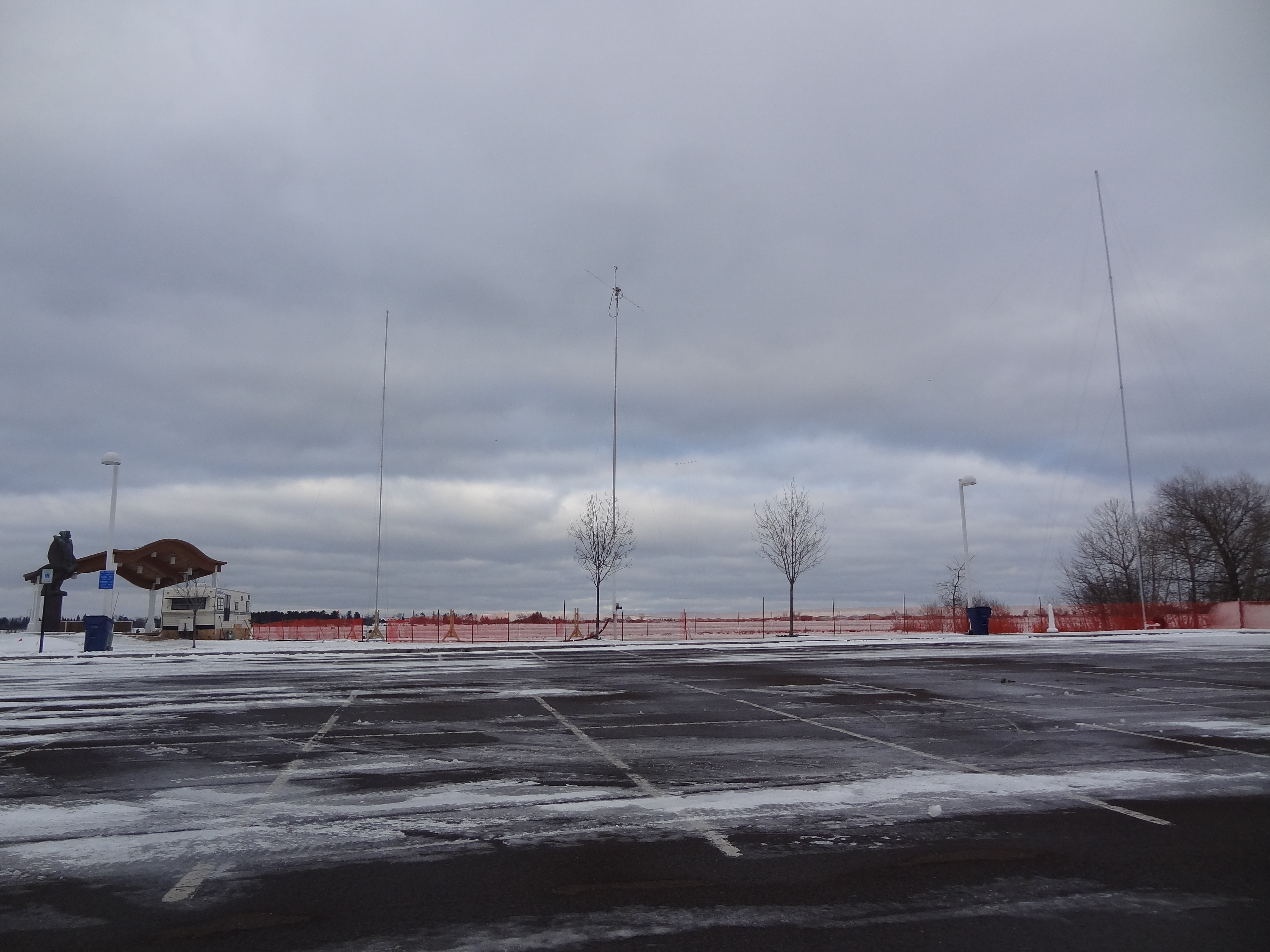
What the ice formation on Barker's Island looks like now (because the weather is not cooperating).

What the ice formation on Barker’s Island looks like now (because the weather is not cooperating).

If nature cooperates, he hopes to have the formation built by mid-February. He will light it up at night and give periodic tours. The city has a traffic flow plan in place. And although the city is spending thousands of dollars on this project, a city staffer who visited us admitted they have no advertising budget. As was the case with the Apostle Islands ice caves, the city hopes that social and news media will do the advertising for them. Also, the ice formation will be visible from a nearby highway and the city hopes that people driving by will see it and be drawn to it.

So we have a new location, finicky weather, seven million pounds of pressure atop a sandy island, no ad budget, huge blocks of ice calving off the formation, and massive amounts of meltwater come spring: what could possibly go wrong? Nothing, I hope, but stay tuned . . . .
Challenge: Describe Your Community in One Word

Duluth city lights as seen from the water at night.

Duluth city lights as seen from the water at night.

In a short chapter in Elizabeth Gilbert’s Eat, Pray, Love, (Chapter 33) Gilbert and her friend discuss how every city and its inhabitants can be defined in a single word, and that each community is different. For instance, their word for New York City was ACHIEVE. Their word for Stockholm, Sweden, was CONFORM. For Naples, Italy, it was FIGHT.

During a lunch outing a few years ago, my girlfriend and I decided that the word REMOTE fit our city of Duluth, Minn., not only for geography but for the people. Duluth is often the butt of jokes from the rest of civilization as being at the end of the world. This since it is so far north, and it serves as the end of the line (or beginning?) for highways, railroads, and shipping routes. If traveling north, we are a last bastion of goods and services before one reaches our friends in Canada.

As for the people, although we are “Minnesota Nice,” we can be hard to get to know. Some of us have lived here for several generations and we have our own cliques – like in the state of Maine, there are those from “here” and those from “away.” And you’re not really from “here” unless your grandparents were born here.

The harshness of the long winter can also make Duluthians seem remote – it’s too damn cold to shoot the breeze when you meet someone on the sidewalk, or we’re too tired from shoveling snow to have energy to socialize. It can take time for new residents to break through and find connections.

Imagine my interest when I saw an article, “Remote Minnesota: Where is the most far-away spot in Minnesota?” in the latest Minnesota Conservation Volunteer magazine (produced by the Minnesota Department of Natural Resources). The author describes his quest to find the most remote and primitive spots in the state. He defined remote as a place farthest from any type of road, including Forest Service roads and private driveways.

Of course, with so many roads and driveways, it wasn’t Duluth. With the help of a Geographic Information System specialist, the author finds the spot on the shores of Knife Lake in the Boundary Waters Canoe Area Wilderness in northern Minnesota — twelve miles from a road.

The most primitive spot in the state is the bog country north of Red Lake. The author and his wife visited both places and described their experience. They found these wild spots “places where our imaginations can simmer.”

Now that the most-remote place in the state is official and it’s not Duluth, maybe I should change the defining word for the city. Also, several years have passed since my girlfriend and I defined it, and in the meantime, Duluth has earned national accolades, such as “Best Outdoors City” to live in. Not to mention all the microbreweries popping up everywhere. Perhaps we are getting too hip for REMOTE.

Duluthians, what do you think our defining word should be now? Readers outside of Duluth, what word would you use to define your community? I’d be interested to hear!

The Christmas City of the North Parade: Socially Sanctioned Child Abuse or Festive Community Event?

Huddled masses watch the Christmas City of the North Parade.

Huddled masses watch the Christmas City of the North Parade.

It only took me fifty years to figure out how to stay warm while watching Duluth’s local winter parade in person. One could watch it on the television and stay warm, but that doesn’t count. I needed to watch the parade in-person because my son was marching in it for the first time as part of the high school band. This Northland rite of passage requires parental attendance. I did so for my oldest son, thus for my youngest, too.

It’s almost always below freezing for the parade, which challenges both marchers and spectators. I marched in the parade myself for at least four years for various school bands, and due to this, have little love for it. I recall the numbness of cold appendages, frozen valves on my French horn (which my boyfriend thought could be solved by pushing down hard on all the keys, thus breaking the strings and rendering the instrument tuneless) miserable school bus rides to and from the staging area, and the pain of thawing fingers and toes. (This was before the time of hand warmers.)

But we band rats didn’t have it as bad as the cheerleaders. Back then, before someone got wise and invented flesh-colored thermal tights, they danced in short skirts and skimpy nylons. I am half serious when I say that I thought then and still think now that the Christmas City of the North Parade, far from being an event that brings the community together, is just a case of socially sanctioned child abuse.

Truly, most of the participants are children — from dance schools, high schools, and community groups. Only in Duluth does it seem like a good idea to make our progeny travel a mile-and-a-half down a frozen road, performing for our amusement and joy. Even the television anchors from the station sponsoring the event stay indoors now, much to the disgust of the hardy spectators.

Pleasant parade memories aside, this year, I did it right. The parade route changed so that it passed several eating establishments. I met some friends (thanks Charlotte and Katie!) at an arts café over an hour before the parade began. That way there was still plenty of parking (found a nearby free spot on my first try) and ample time to eat before the parade. I had eaten at home, so I just drank some wine.

Wine! Silly me. Why had I never thought of combining alcohol with parade watching before? The beverage filled me with warmth and goodwill toward this thinly veiled community child abuse event.

Our kids are in there somewhere . . . .

Our kids are in there somewhere . . . .

When the parade started, we stood outside on the curb, waving to the passing floats, facing the cold wind blowing down the street. When we got chilled, we went inside the café lobby and watched the event on television and through the café windows, which fronted the street. All of us had sons in the same band, so once we saw the band approaching on the television, we worked our way to the curb to see it pass by in person, and to wave vigorously to our sons.

Then I headed for my car. Why stay and watch the whole event if I didn’t have to? As I passed the café windows, I noticed an empty table in a prime parade viewing spot. I thought, “Next year, that’s where I will sit.” Although my son will be in the parade then, too, since his maiden voyage is over, I can get by with even more comfortable viewing arrangements in the future. Just look for me and my friends at the center table, sipping our wine and staying warm, while the rest of the world marches by.