Half-Empty Nest Syndrome, Part II

English: a bird nest Français : un nid d'oiseau

A bird nest  (Photo credit: Wikipedia)

Here’s an update for those of you just dying to know. The lady I’m thinking of helping looked at my son’s former room last week. She liked it, but even more important, she liked my dog, so she’s planning to move in sometime in the next week or two.

We both disclosed our quirks so that we shouldn’t be too surprised by each other. I also explained to her my youngest son’s worries, and we discussed those. I’m sure other things will come up as we go along (don’t they always?) but I feel fairly confident that it will be an okay thing on a temporary basis. I have yet to speak with the people she is currently living with – I’m sure they’ll have some useful insights – but the move is a “go.”

I don’t intend to turn this blog into a blow-by-blow account of the experience, but I will write about any pertinent issues that arise. To protect my roommate’s privacy, I shall hereby call her by the name Rachel.

In the meantime, the weather here in northeastern Minnesota is wonderful. Hope you can get out and enjoy it wherever you are!

Half-Empty Nest Syndrome

An Osprey landing in the nest at Boy Scout Cam...

Osprey nest (credit: Wikipedia).

My oldest son moved out a few weeks ago. Although I’m happy that he’s fledged from the parental nest, it happened a bit sooner than I was expecting and it’s left me adrift, floundering, unanchored, if you will.

My youngest son is with me every other week, which leaves me alone (except for my dog) during those times. The thing is I have not been alone on a regular basis for 21 years. Just like becoming a parent takes adjustment, becoming an un-parent takes adjustment, too. And both seem to happen just as suddenly.

I am finding that I don’t like being alone at home. I am too used to helping other people and having someone around. Granted, I like my privacy and I am an introvert, so I don’t usually seek out crowds, but family is different. They are meaningful people and I like to surround myself with meaning.

So I’ve decided to open my home to a stranger. “Okay,” you’re saying, “does not compute.” How is opening my home to a stranger like living with a family member? Well, it does have some meaning. We both go to the same church so we have the same philosophy in that respect. And she is in a bind. She needs a temporary place to stay while awaiting a place of her own.

Will it work? I hope so. I rented a room in someone’s house once for 8 months, so I am familiar with the logistics. It was not a harmonious home – the mom was not a happy person and liked to criticize the teenage daughter harshly. And I found out toward the end that the house wasn’t even hers. She was renting it from somebody else. Yuk. I could not wait to get out of there after a while.

I’d like to think that my home is pretty mellow and happy. And this lady likes big dogs, so that part should work out well. But I suppose there are all sorts of opportunities for disaster and conflict. This person is coming to look at my son’s room later this week. If she doesn’t like it, so be it. If she does, my nest will no longer be half-empty. And if we end up disliking each other, it’s only temporary. Stay tuned . . . .

Touring the Tall Ships on a “Short” Ship

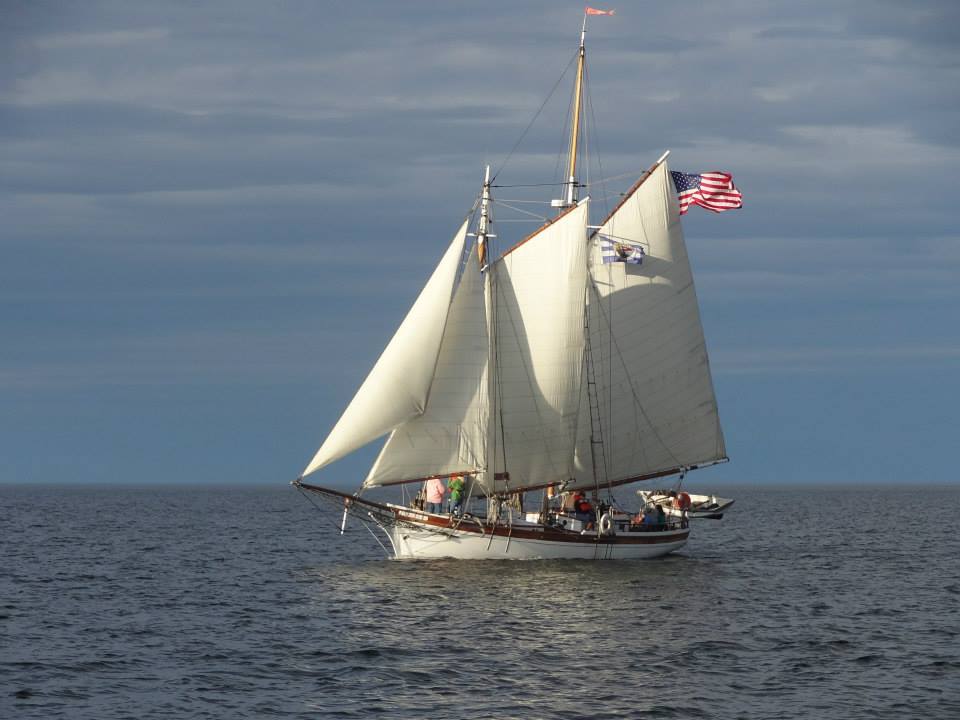
The Schooner Coaster JJ

The Schooner Coaster JJ

I arrived at the Duluth Tall Ships Festival just when it was closing. Workers were pounding and pulling stakes out of parking lot asphalt once covered by tents, and festival T-shirts were being offered for half-off by a desperately vocal vendor.

But the nine tall ships were still in port and that’s what I was after. I was looking forward to a close-up view of the tall ships via a short, regular sailboat berthed in the ship canal in downtown Duluth. However, the craft was neither short nor regular but a gorgeous 42-foot Beneteau with cabin floors varnished so thickly it was like walking on water, and a nimbleness of handling that belied its more than adequate size. Named the Makena, the craft was one of two in the Moon Shadow Sailing fleet, which offers tours of Lake Superior and the harbor.

Joining me were a couple from Rochester, Minn., and a couple from Duluth who were friends of the captain. The sun finally smiled upon the festival, a light breeze blew; it was a perfect night for sailing. With a warning ring, the Canal Park pedestrian bridge raised and we were off.

Pictures will probably do more justice to the experience than words. Let me just say that the company was outstanding and it was an experience I won’t soon forget. Happy Sailing!

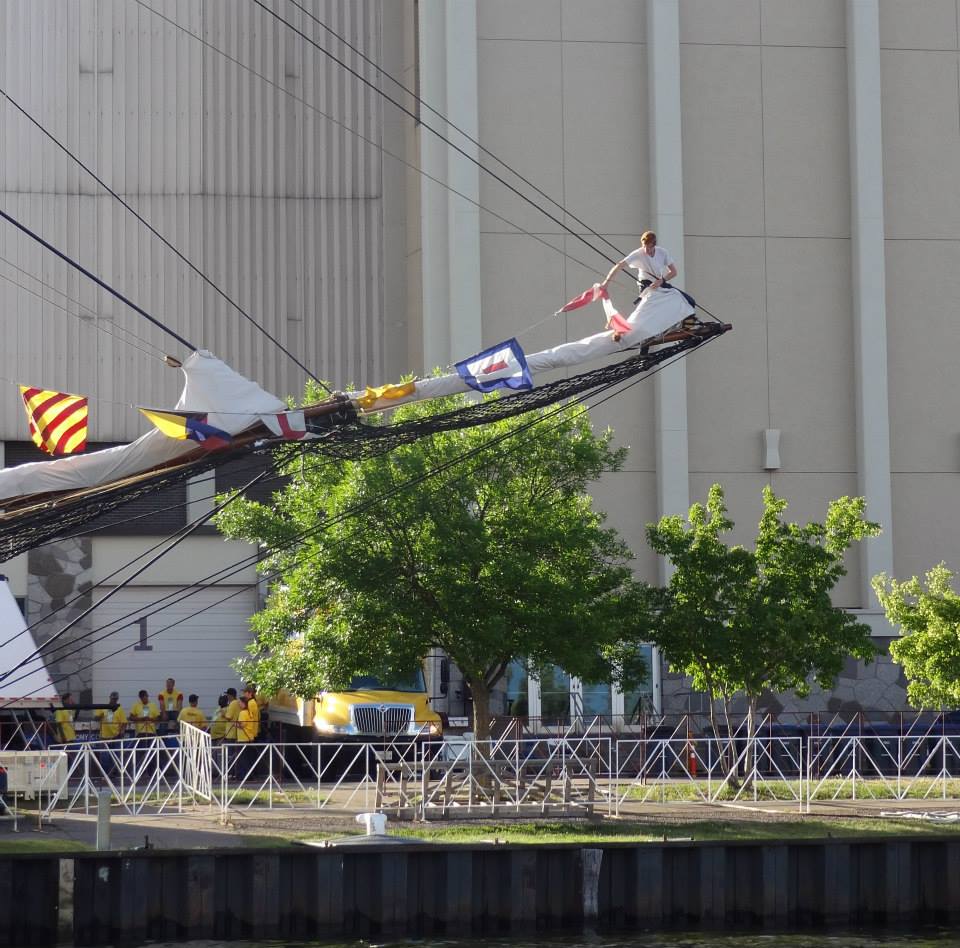
A sailor out on a (sailing) limb.

A sailor out on a (sailing) limb.

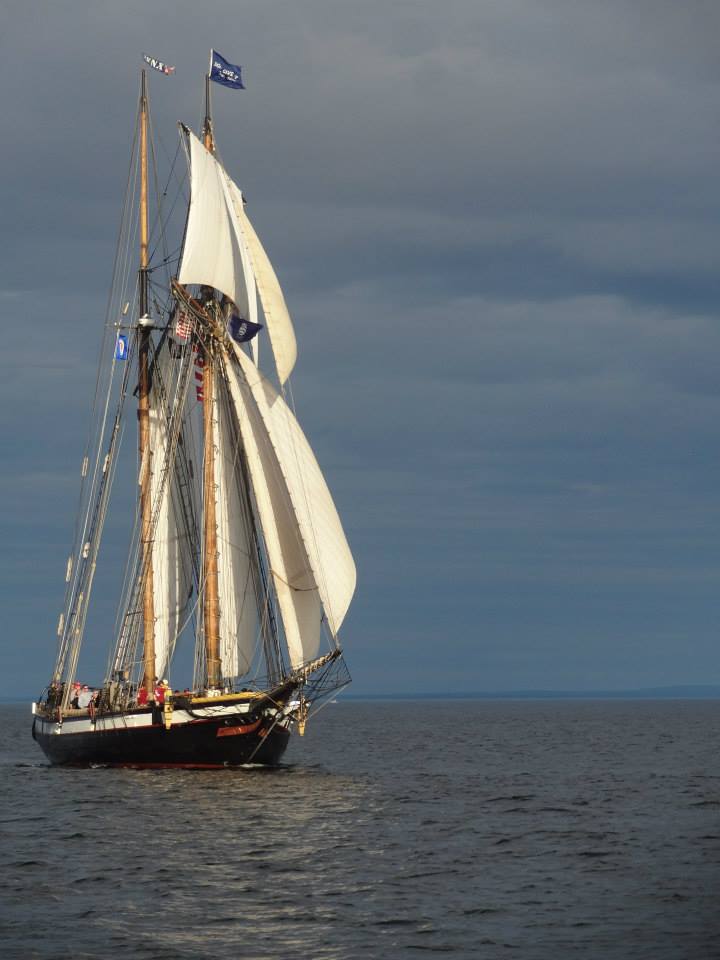
The Privateer Lynx


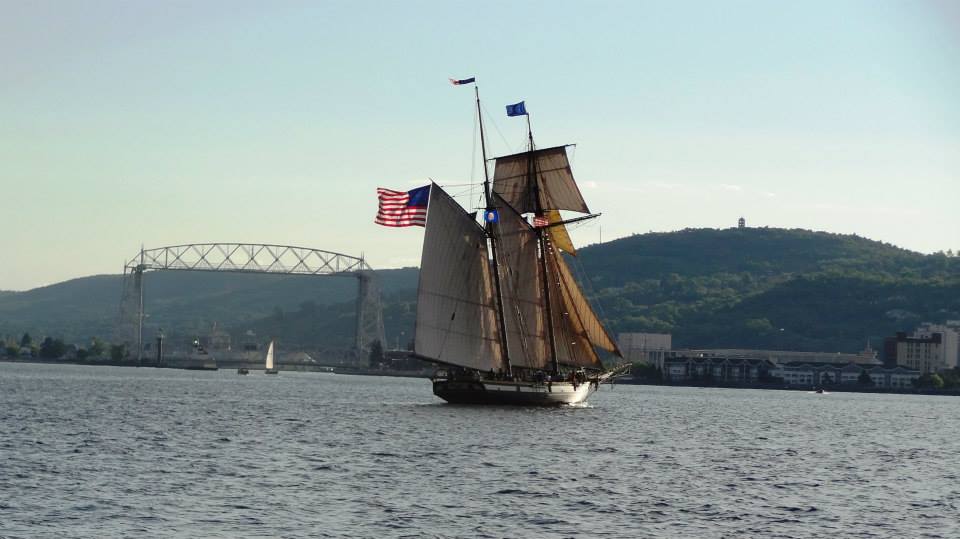
The Privateer Lynx and the Aerial Lift Bridge

The Privateer Lynx and the Aerial Lift Bridge

Captain Marie (and friend)

Captain Marie (and friend)

The Aerial Lift Bridge welcomes us back.

The Aerial Lift Bridge welcomes us back.

Why I Miss Wildland Fire Fighting

Me getting ready to go to Yosemite National Park to fight fires, 1990.

Me getting ready to go to Yosemite National Park to fight fires, 1990.

The tragedy of the Prescott hotshot crew has me remembering my short stint as a wildfire-fighting “hero.” It started when I worked for the U.S. Forest Service (Superior National Forest in MN). I began my Forest Service career as a volunteer, first on the ranger district in Grand Marais (wilderness trail crew) and then on the district in Cook (photojournalist).

When I was in Cook, I got my first taste for what wildland firefighters do by delivering lunches from town to the fire camp as a driver. I enjoyed the obvious camaraderie of the camp and hearing the fire fighters’ stories. A few years later when I got a paying job with the Forest Service and the annual call came out for Fire Guard School, I was eager to sign up. I attended a week-long training camp conducted by Forest Service and Minnesota DNR staff. Notable among my classmates was Minnesota-based writer Peter Leschak, who went on to write several books about his later experiences. We learned how to dig trenches and sat in a lot of classes about fire behavior and the function of the fire organization.

We also learned how to deploy our ‘shake-and-bake’ fire shelters. These are the devices that every fire fighter carries in case they get caught by the fire and have no other options. You shake it open, climb into it, and drop to the ground on your stomach with the shelter over you (at least that’s how we were taught back then, it might be different now). If the fire passes over you, that’s where the baking begins. The shelters are better than nothing, but truthfully, not by much.

A few months later Yosemite National Park in California started burning. It was my first, and only, on-the-ground firefighting experience. Our first job was to allay the fears of the residents of Foresta, Calif., whose town had been partially burned by the fire. Several trees still smoldered on a blackened hillside above the town and it was our task to put them out . . . at night in the dark, despite the possibility of hidden mine shafts and unexploded dynamite. After a few hours of hiking up the 90-degree incline, we found the snags and put them out. We “skied” down the loose dirt only to hear that the day crew had been called off the mountain because conditions were “too dangerous.” Maybe the fire conditions were worse during the day, but we found it ironic.The crew and I resting during our stint in a spike camp in Yosemite. I'm to the right.

 
The crew and I resting during our stint in a spike camp in Yosemite. I’m to the right.


My recollection of most of the rest of the experience centers around trudging through a foot of soot, which collected under my fingernails, in my pores, and despite wearing a bandanna — in my nose, and more worrisome, in my lungs. Morning in the fire camp was a cacophony of coughing and hacking. A few days later, I ended up in a clinic with a fever and a racing heartbeat. I was diagnosed with bronchitis and instructed to rest for a day and take medication. I rested in a spike camp that my crew was helicoptered into, high on the mountainside. Wouldn’t you know it, that was the day our crew built a fire line right next to the flames, and I missed it.

We worked out of the spike camp for a few more days (I did get to see some flames) and then we were ‘coptered back to the main camp, where we got a day of R & R (rest and relaxation). We took our first showers in 5 days and got a bus tour of Yosemite, which had been closed because of the fire, but recently reopened for tourists.

As we walked around the park attractions in our distinctive yellow and olive green fire clothes, people shouted their thanks to us for working on the fires. They wanted to shake our hands and pat us on the backs. With a start, I realized they considered us heroes. We certainly didn’t feel like heroes, we were just doing the job we were trained for.

Because I’m susceptible to pneumonia, I figured I’d have trouble with my lungs if I kept fighting fires directly, so after Yosemite, I started training to be a fire information officer. These are the people who work with the media and local organizations to get news about the fire out to the public. That way, I had all the fun of the fire camp but none of the soot. I ended up helping with fires in Colorado and Minnesota, but when I left the Forest Service for another job, my fire career ended.

I miss it. I like working in small groups to get things done. And I’ll probably never be recognized as a hero again. But the hero thing is not why I, or I assume, the Prescott hotshot crew fought fires. You do it because you like it, you do it to be part of a team, it’s exciting, a bit dangerous, and sometimes even fun. You wouldn’t want to be anywhere else. Rest in peace, guys.

Me and the flames. I'm smiling behind my bandana.

Me and the flames. I’m smiling behind my bandanna.

God loves stories so much; he created people so there would be an endless supply.

Kevin Kling – author, storyteller, playwright
Northeastern Minnesota Book Awards ceremony, May 23, 2013 in Duluth, MN

A River Runs Through My Bucket List (or Learning How to Fly Fish Before It’s Too Late)

English: Green Highlander salmon fly. The hook...

English: Green Highlander salmon fly. (Photo credit: Wikipedia)

I have to admit, I like creating lists. They help me remember things and when I cross something off one, it gives me a straight-lined sense of accomplishment. A few years back I started a “Things to Do When I Retire” list; not really a bucket list (things to do before I die), but a similar concept. The list contains things like volunteering for the Red Cross, taking painting lessons, taking classes at a local folk arts school, and doing more photography.

I was content to delay the activities on the list until I had time during retirement, which was probably about 15 years away. That was, until one of my friends died unexpectedly in his early 40s. A sense of mortality smacked me in the forehead and I realized how much I’d been putting off really living and making the most of the present. In my friend’s honor, I decided to stop PLANNING and start DOING.

One of the activities on my retirement list is fly fishing. I suspect the inspiration for that came from watching the 1992 movie “A River Runs Through It.” Directed by Robert Redford and featuring Brad Pitt, the movie centers around fly fishing scenes in Montana. It was also around that time that I visited Montana and helped fight a wildfire on the White River National Forest in Colorado. I saw people fly fishing on rivers in these places and it looked so idyllic, I knew I had to try it someday. Plus, the biological aspect of the sport appeals to me. You have to know how to think like a fish and be aware of what’s going on with the local bugs to be successful.

Well, “someday” came last week. Rogue, non-retired list-breaker that I am, I took a fly fishing class with a group of women along the banks of a river on the outskirts of town. The opportunity was organized by one of my women friends and taught by Katherine Lansing, a local fly casting instructor certified by the International Federation of Fly Fishers.  

Katherine Lansing

Katherine Lansing

Lansing became an instructor by accident. She had been fly fishing for a few years, then she signed up for a class she thought was about how to learn to cast better. Turned out it was about how to learn to teach other people to cast better. Although hesitant, she took the class, which led her on the path to becoming one of only 80 female certified fly fishing instructors in the U.S. at the time.

We met under a picnic shelter at a local city park on a 40-degree evening. As the five other women described how they became interested in fly fishing, I realized I was the only one there not introduced to the sport by a man. Everyone else had been introduced by a boyfriend, husband, brother or father. Not sure what that says about me. I do admit I had been hoping “some man” would take me fly fishing, but it just never happened.

Lansing started the class by giving us an overview of the various fly fishing equipment and showing us how things worked. Then she introduced us to knot tying. We learned two knots, practicing first on chunks of nylon rope, and then on the more challenging fishing line. Tying the knots became more difficult as the cold temperature took its toll on our fingers. But it wasn’t long before we were up and moving, practicing our casts on the lawn beside the river, which was roaring with melt from spring runoff.

Casting was fun, and people kept remarking that I’m a natural at it (preen, preen). If I am a natural it’s from a lot of practice casting regular fishing lures and maybe from throwing an atlatl (a prehistoric throwing spear), which is a story I’ll perhaps tell another time. As we casted, Lansing went around and gave us tips in her no-nonsense and helpful manner.

After about 2-1/2 hours outdoors, I could no longer feel my toes, so I decided it was time to head home. But I enjoyed the experience and I’m looking forward to actually getting out on the water to fly fish next time. Then I’ll be able to officially cross that one off my list, and I’ll have a new hobby NOW instead of waiting for my retirement or until I’m dead, whichever comes first. (Smile.)

Vinny with a Y not an IE

grey wolf

grey wolf (Photo credit: Wikipedia)

I was walking my dog through the local forest the other day when I met a 12-year-old neighbor boy for the first time. His name is Vinny; spelled with a Y on the end, not an IE. “People mix that up all the time,” he said. He was walking a chocolate lab who was also 12 years old. His lab got along well with my goldendoodle so we let them off their leashes to romp.

Vinny was the talkative sort. I’m always amazed at how much kids unknowingly reveal about their lives and their parents’ lives to strangers. While on the one hand, I’m glad children are still trusting, on the other hand, I shudder to think what could happen if the information made it into the wrong ears.

During our short walk, and with hardly any prompting from me, I learned about all of Vinny’s former and current pets, that Vinny’s parents are hiring a nanny for the summer to drive him to his soccer games, that he has a sore knee but his mom said that some exercise walking the dog would probably be good for it (I had to smile at that one), and that Vinny’s dad shot a wolf.

Of course, as a wolf novelist, this last bit of news gave me pause. I can’t even remember how the topic came up, but suddenly, there it was, as unexpected and pungent as blood on leaves. I do remember that Vinny was explaining how he likes to deer hunt. He was in his deer stand when he was 7 and a wolf appeared and scared him. From questioning and further conversation, I got the impression he was in the stand alone, but that his dad was nearby, possibly in a different stand. Vinny ended up meeting up with his dad and telling him about the wolf. That’s when he told me his dad shot the wolf.

Oh, there were so many things I could have said and so many routes our conversation could have taken. My first instinct was to trot out the fact that wolves have not been documented to kill a human in the U.S. but once in recent history; that they are shy and normally do not approach humans. But I didn’t. I wasn’t there in the forest in a deer stand with a scared young boy. Obviously, something the wolf was doing scared him and concerned his dad enough that he decided to kill it. And during my book signings in northern Minnesota and Michigan, I’ve heard many stories from people about wolves. I understand that they are capable of all sorts of behaviors, many of which are seen as threatening by humans.

Instead, I said something about wolves usually being curious more than anything else. I wanted to ask him if his dad reported the shooting, because I’m sure at that point in history (5 years ago) the wolf was still considered an endangered species and thus illegal to kill. But I really didn’t want to know.

Vinny then went on to describe a plan he and his dad made in case Vinny ever felt threatened by a wolf again. He told me the special kind of ammunition they would use, which would hurt/scare the wolf but not kill it. This gave me a bit of consolation. At least they knew that killing the wolf was wrong and either got the special ammunition idea from a conservation officer or his dad had thought about it enough to figure it out. I doubt that shooting a wolf with anything is a good idea because the wolf could die of an infection, but I kept my mouth shut about this, also. I didn’t want to criticize Vinny’s dad because that could shut Vinny off for future conversations about wolves.

Our conversation ended with Vinny asking me if my youngest son likes to hunt. I told him we weren’t hunting people, but that my son enjoys fishing. By that time, we were at a crossroads and we separated, each to our own homes. I hope I meet Vinny again. Maybe I’ll have another chance to educate him more about wolves. I sure hope so.

Vinyl Memories

Vinyl Memories 001
Two records remain from my childhood collection: The Monkees first album and an autographed copy of Fleetwood Mac’s Rumors (“To Marie – To a very special person. Lindsay Buckingham”). If I recall correctly, I inherited the Monkees album from one of my brothers. The Rumors album was a gift from my sister (who was dating Lindsay Buckingham’s brother at the time). I gave away the rest of my collection to a store downtown during a cleaning fit several years back.

I was able to hear the albums this weekend at a friend’s house. She recently bought a turntable and had a party to celebrate, inviting everyone to bring their records. Although the stile arm rode small waves of warpage, I was so pleased and relieved to discover my records were still playable! It has been so long since I even looked at one, I had forgotten that records are two-sided. I blame time and compact discs for that.

I used to love watching records spin, getting almost hypnotized while the music played; staring at the stile as it progressed slowly toward the record’s middle. Try and do that with a CD! I’d lean on the console and sing along to Neil Diamond, Jethro Tull, Heart, Jesus Christ Superstar, The Sound of Music – we had quite the eclectic collection.

Of course, after records came cassette tapes. I would record my favorite songs off the radio when I wasn’t listening to my very first cassette album – Cat Steven’s Tea for the Tillerman. But somehow, I totally missed the 8-track era.

Although now I appreciate being able to burn my own CDs with individual songs through I-Tunes and creating personalized radio stations through Pandora, listening to records at my friend’s house reminded me of what’s been lost with the evolution of the music industry. I don’t claim to be a music industry expert, but it’s obvious to anyone paying the least bit of attention that a whole generation of children has grown up with a different music listening experience. No more self-hypnosis to the red Columbia label.

Instead of the 33-1/3 rpm LP (for the younger set, that’s a 33-1/3 revolutions-per-minute long-playing record), we now have the I-pod. It’s not bad, just . . . changed. Who knows what we’ll have next? But one thing’s for sure, we’ll always have music of some sort. It seems hardwired into our beings.

Since I only have two records, I don’t think I’ll go so far as to buy my own turntable, but it sure was fun to recreate the childhood experience of listening to music, if only for one evening.