Boundary Waters Adventures

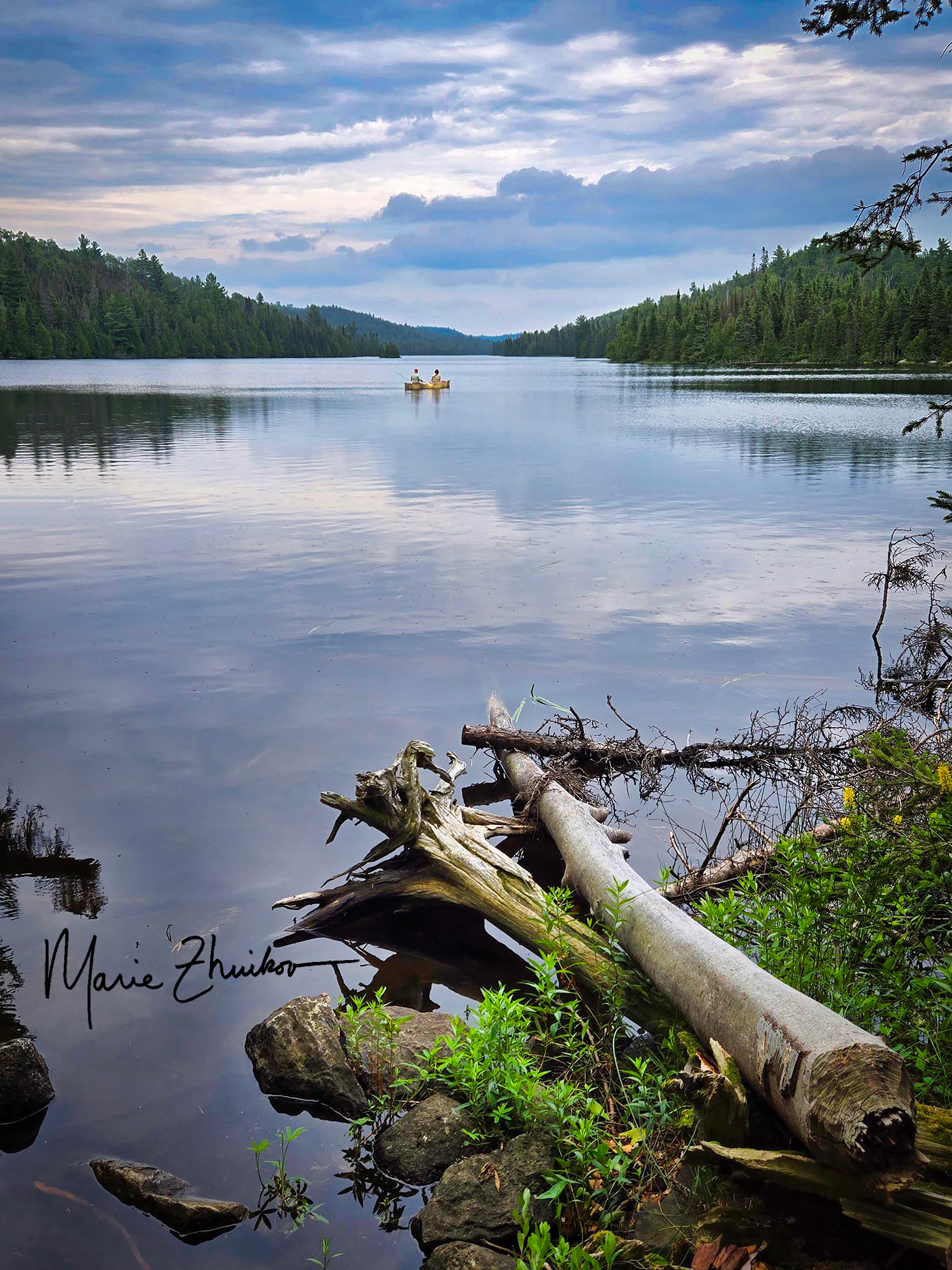
Our canoe at our campsite on Brule Lake.

Russ and I sacrificed a 40-day winning streak on the NY Times Connections word game to head to the Boundary Waters Canoe Area Wilderness where there is no phone or internet service. We traveled with our friends Sharon and Mike to Brule Lake – a place I last visited 35 years ago.

To go easy on our aging bodies, we decided to do a canoe trip without any portages. (Portages are where you carry your canoe overturned atop your shoulders on a rugged trail to the next lake.) Brule Lake is large enough to spend several days there without needing to go anywhere else.

We were partially successful in meeting our goal. The only “failure” came on our third day of tent camping when Sharon and Mike decided to portage to a small lake for better fishing. We hiked the portage without our canoe to see if the lake was worth the effort of hauling it there. With forested hills and a cute island, the beauty of the new lake and the short length of the portage convinced us to bend our no-portage rule. It was a true wilderness lake with no campsites or other signs of human habitation.

To share the pain of portaging, we opted for a two-person carry, where we carried the canoe over the portage with one of us on each end of the watercraft – no hefting it up onto one person’s shoulders.

We were glad we did; canoeing on the lake offered views of a loon and its baby. We found the loon’s nest on the small island, where we ended up eating lunch much to the delight of the ants there. Our presence was probably the most exciting thing to happen to them in years! Sharon and Mike caught enough fish to feed us all dinner that night.

After we spent several hours on the lake (which I am purposefully not naming because Minnesotans don’t do that with good fishing lakes), the sky began to darken. We decided to head back to our campsite on Brule Lake. We couldn’t relay this to Sharon and Mike because they were at the far end of the lake.

We made it across the portage and out into the bay when the storm broke. The first drops of rain were huge and cold. We were wearing our swimsuits because we expected rain, so we didn’t mind being wet. What we did mind was the wind and the thunder/lightning! Yelling through the gale, we briefly considered riding out the storm on land, but we were so close to our campsite and the lightning was far away enough that we decided to power through and hope we didn’t get struck. (That was reckless of us, I don’t recommend staying on the water in a thunderstorm. Don’t try this at home!)

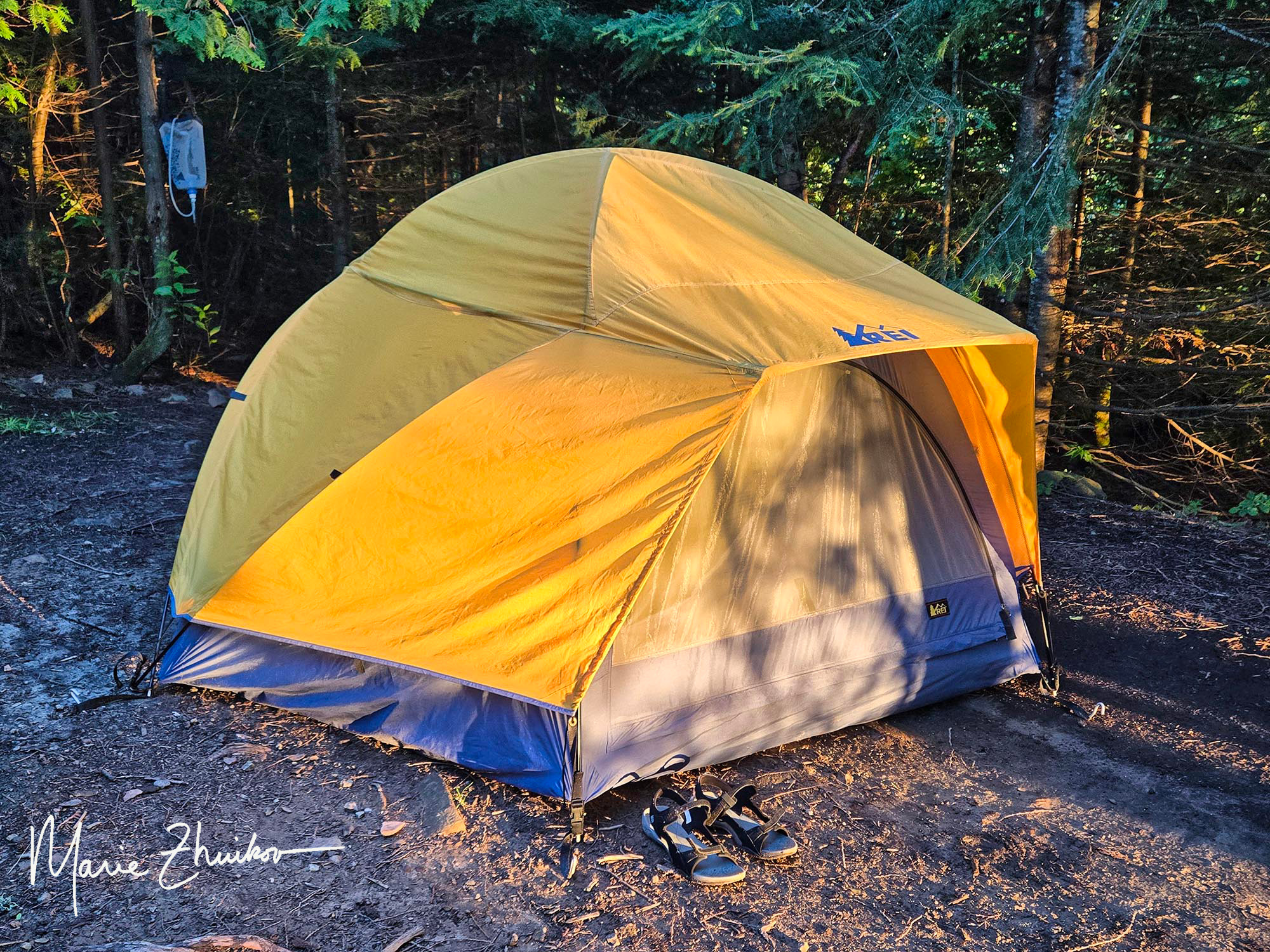
Our cute tent in dryer times.

We made it to camp and I quickly climbed into the tent to get into dry clothes. Russ was already so wet, he stayed outside. Once I changed clothes, the wind picked up even more. Russ had to tie down our lightweight Kevlar canoe to keep it from blowing away. From inside the tent, I held down the side the wind was hitting so that the stakes wouldn’t pull out of the ground. After what seemed like hours, the storm abated.

Our tent bottom (and a sleeping pad), drying out in the sun after the storm.

We were a little worried about Sharon and Mike, but this wasn’t their first BWCA Wilderness trip, so we assumed they’d be okay. But as the hours ticked by and the sun lowered, we began to discuss how long to wait until beginning a search for them. Not long afterwards, we heard them paddling back to our campsite. We greeted them with shouts of “You’re alive!”

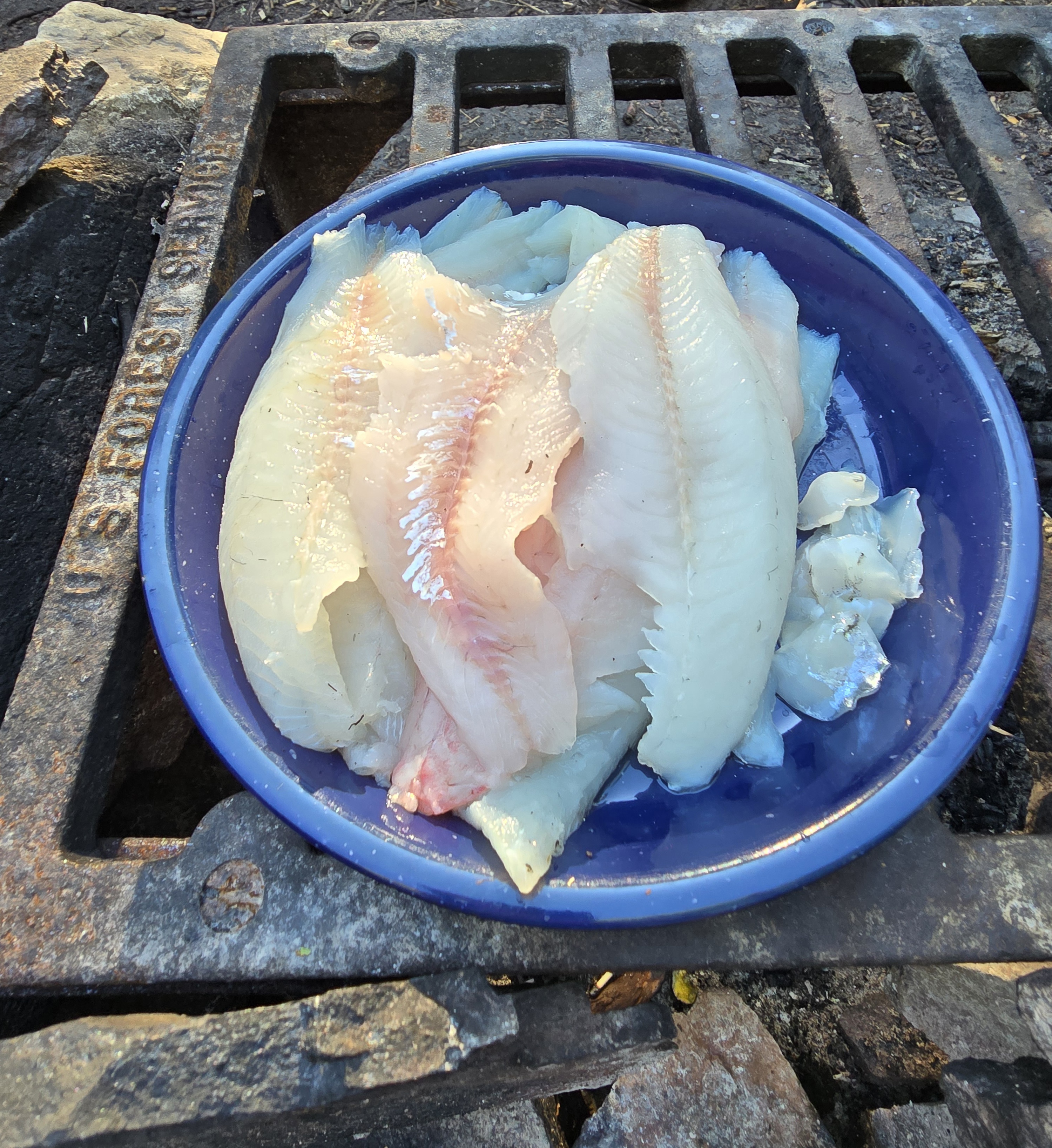
They explained that they also stayed on the water during the storm, riding it out next to shore. (That was reckless of them, I don’t recommend staying on the water in a thunderstorm. Don’t try this at home!) Then they stayed on the unnamed lake to fish more. We ate the fruits of their efforts with relish that night – the first non-freeze-dried dinner Russ and I had eaten in days.

Mmmmm, wilderness walleye filets!

The next morning, our final morning, another thunderstorm rolled through, but it wasn’t as strong as the previous one. Once it stopped, we packed up our soggy gear and headed to the canoe landing, wanting to cross Brule Lake as quickly as possible in case another storm was gathering. Sharon and Mike planned to leave later.

We made it back to the landing. Driving home, we appreciated the gradual return to civilization. Backwoods gravel roads gave way to pavement that led us past homes and eventually to the small town of Lutsen. The day turned hot and muggy, so we stopped for ice cream on the way home to Duluth.

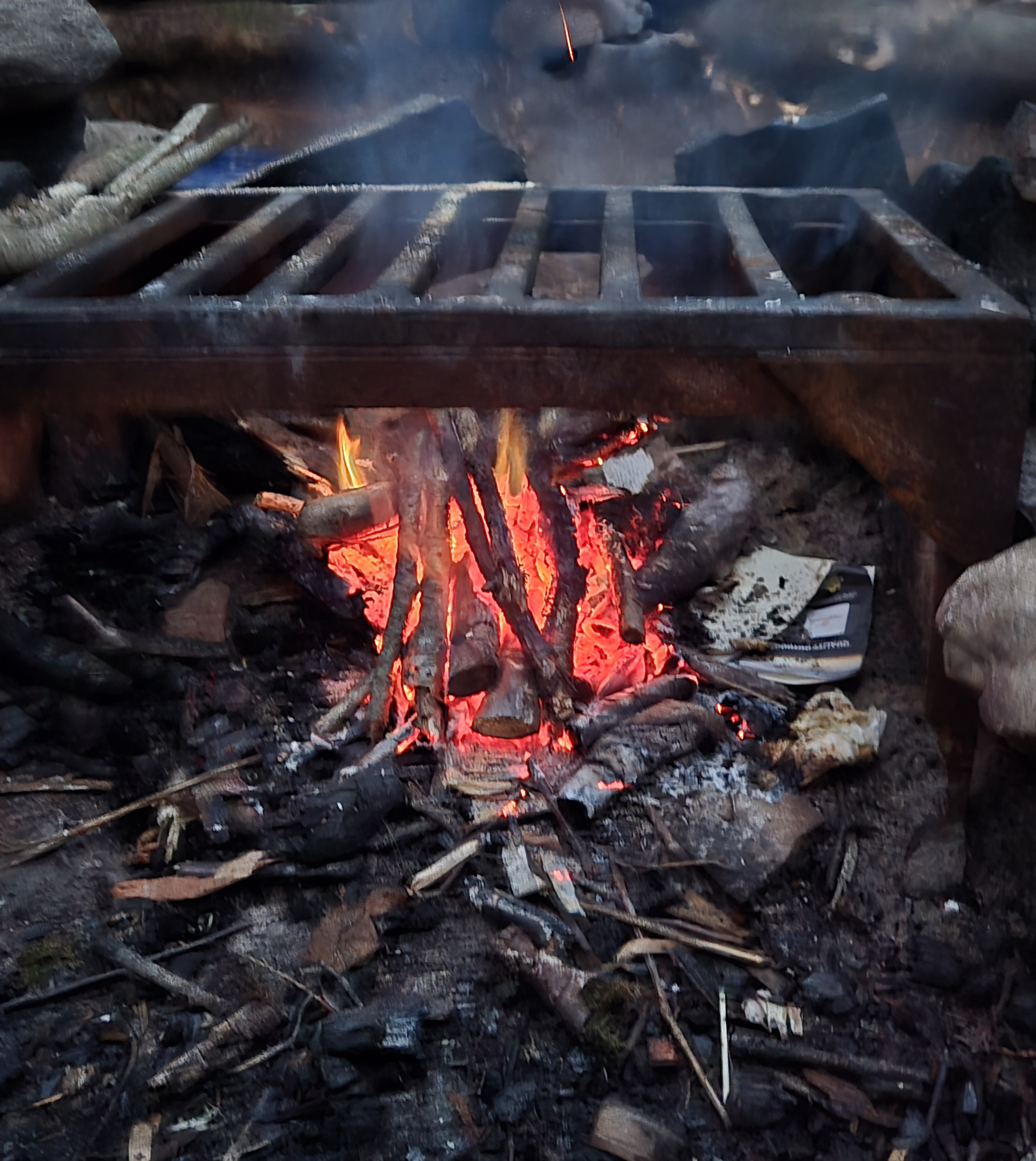
Our campfire on Brule Lake.

Now we’re back winning Connections again: 6 games so far. But we both agree this wilderness trip and the memories of spending time with good friends, listening to loons yodel, telling stories around the fire, and surviving thunderstorms were more than worth breaking our streak.

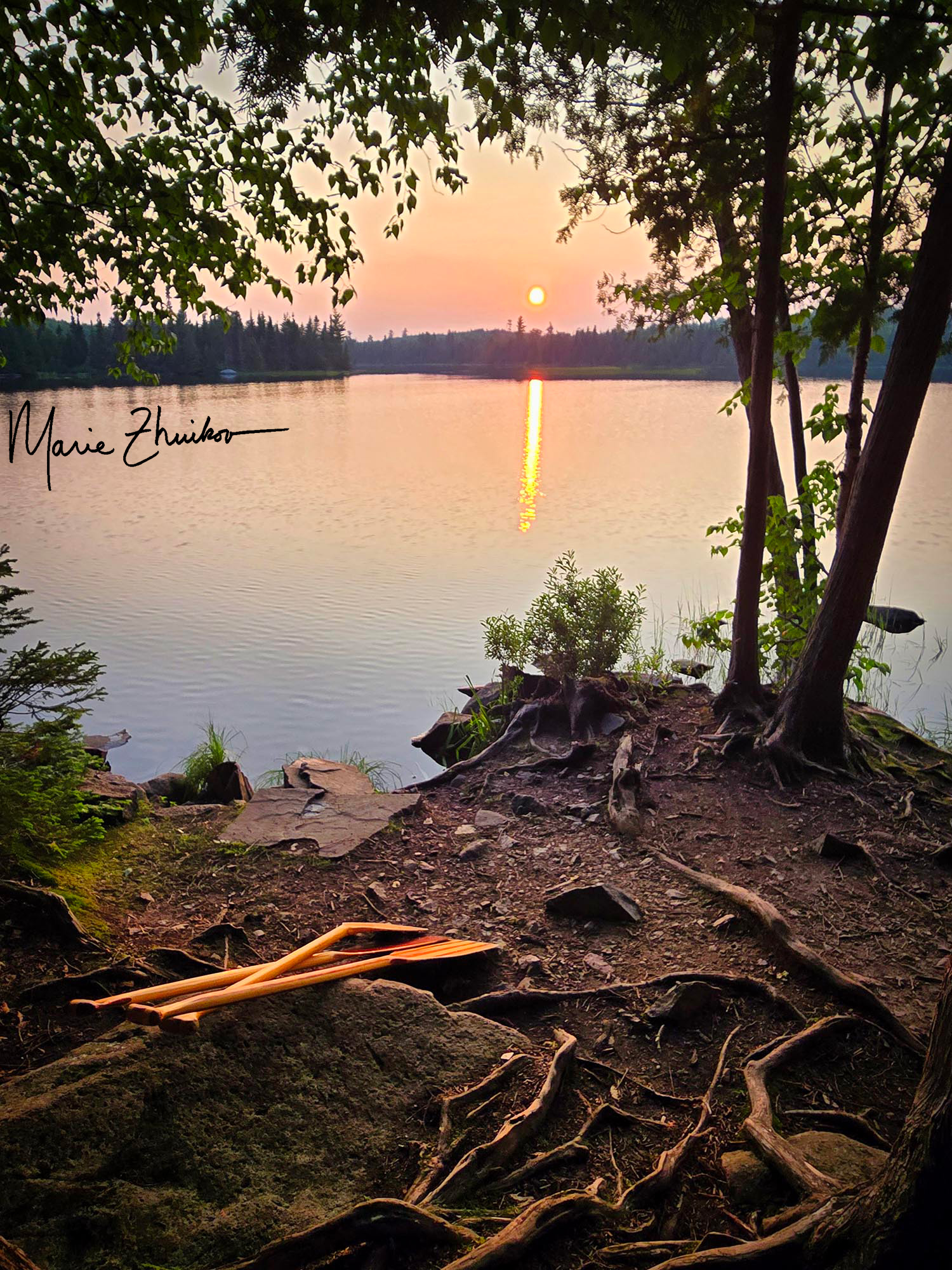
Paddles and sunset on Brule Lake.

‘Murica!

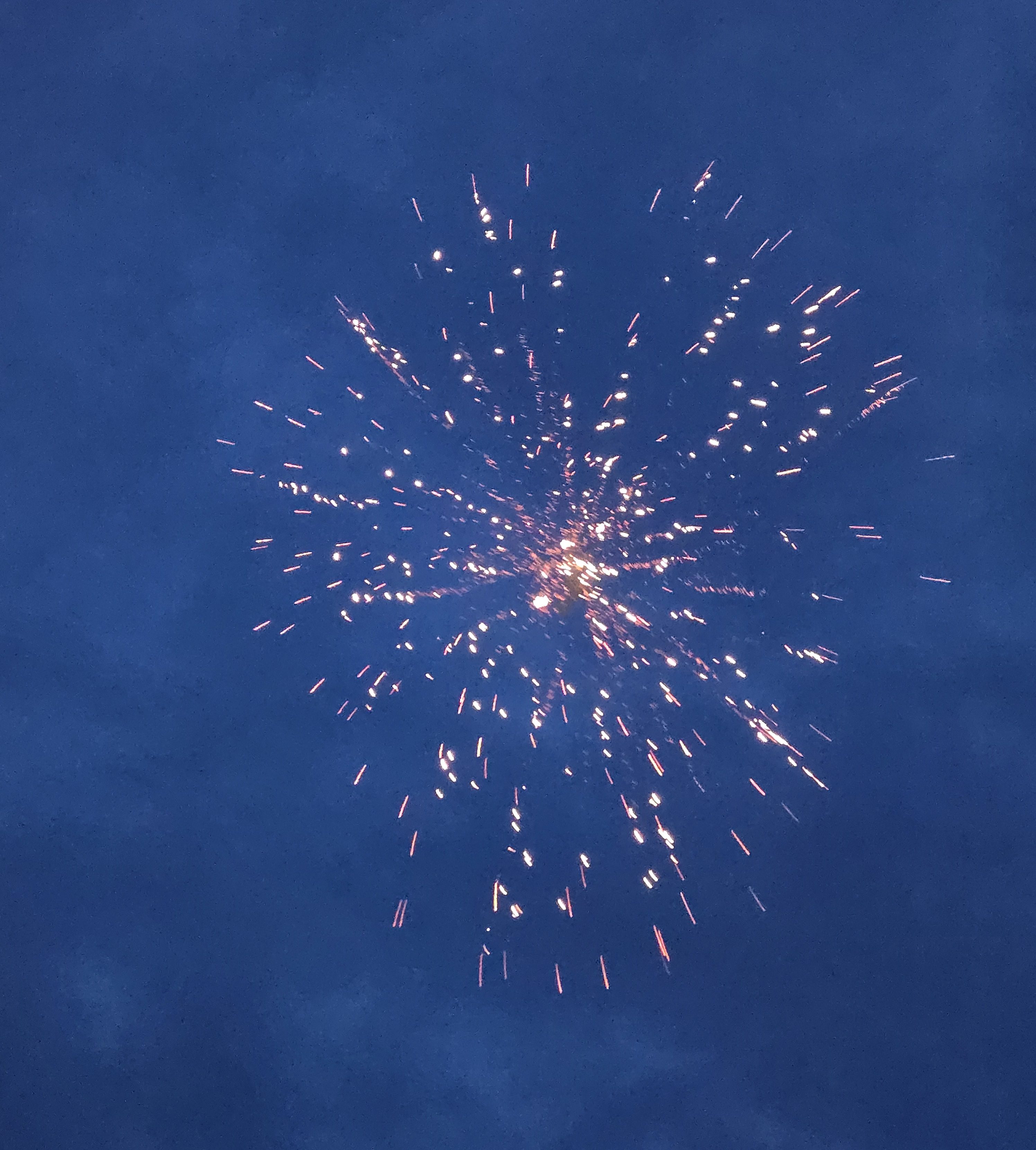
The weather for Independence Day in northern Minnesota was perfect: hot and sunny. I thought I’d share some images from it.

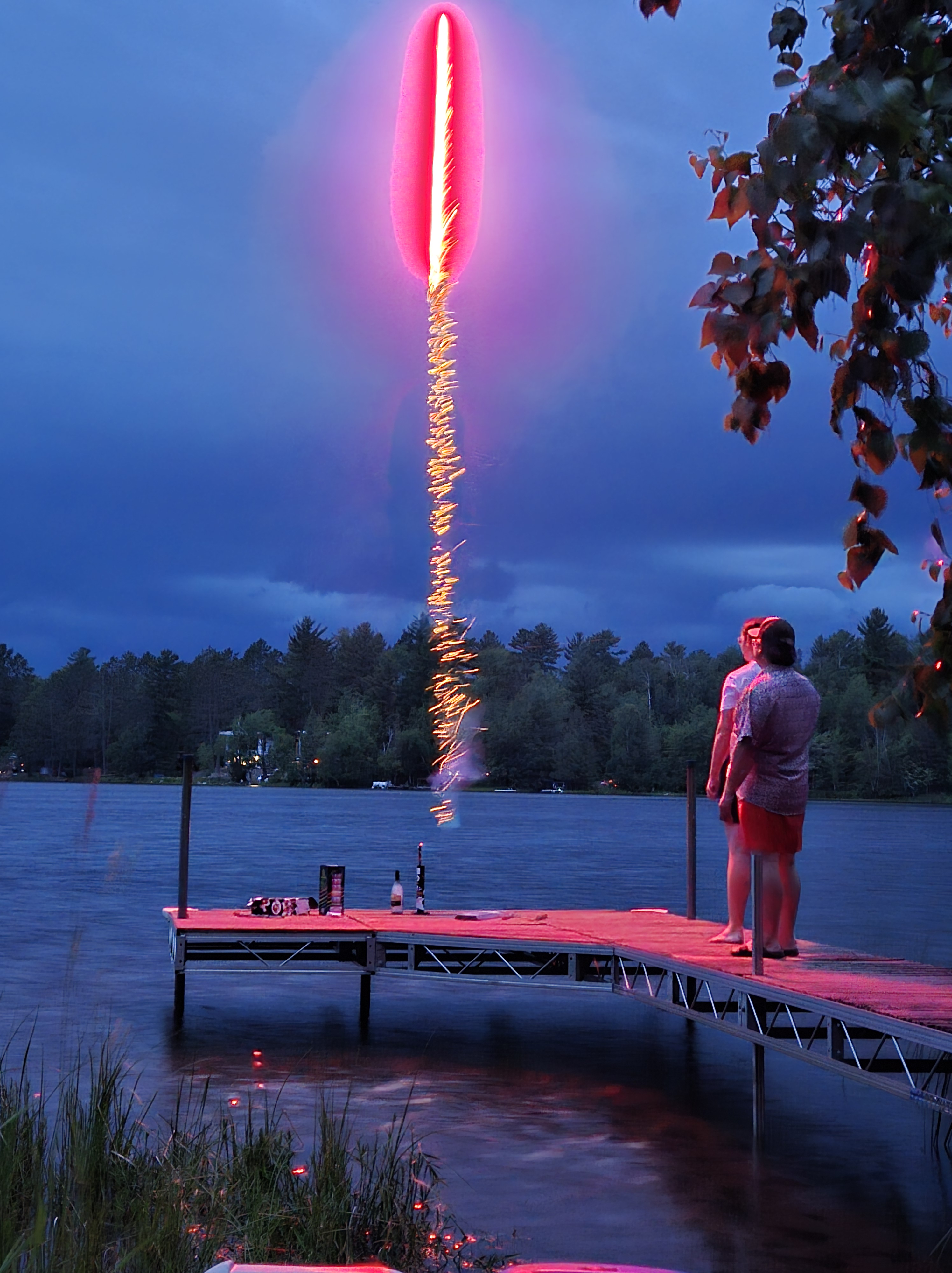
I can’t believe that my phone camera caught this firework on its way into the sky, looking like a space rocket. An empty brandy bottle served as a fine launch pad.

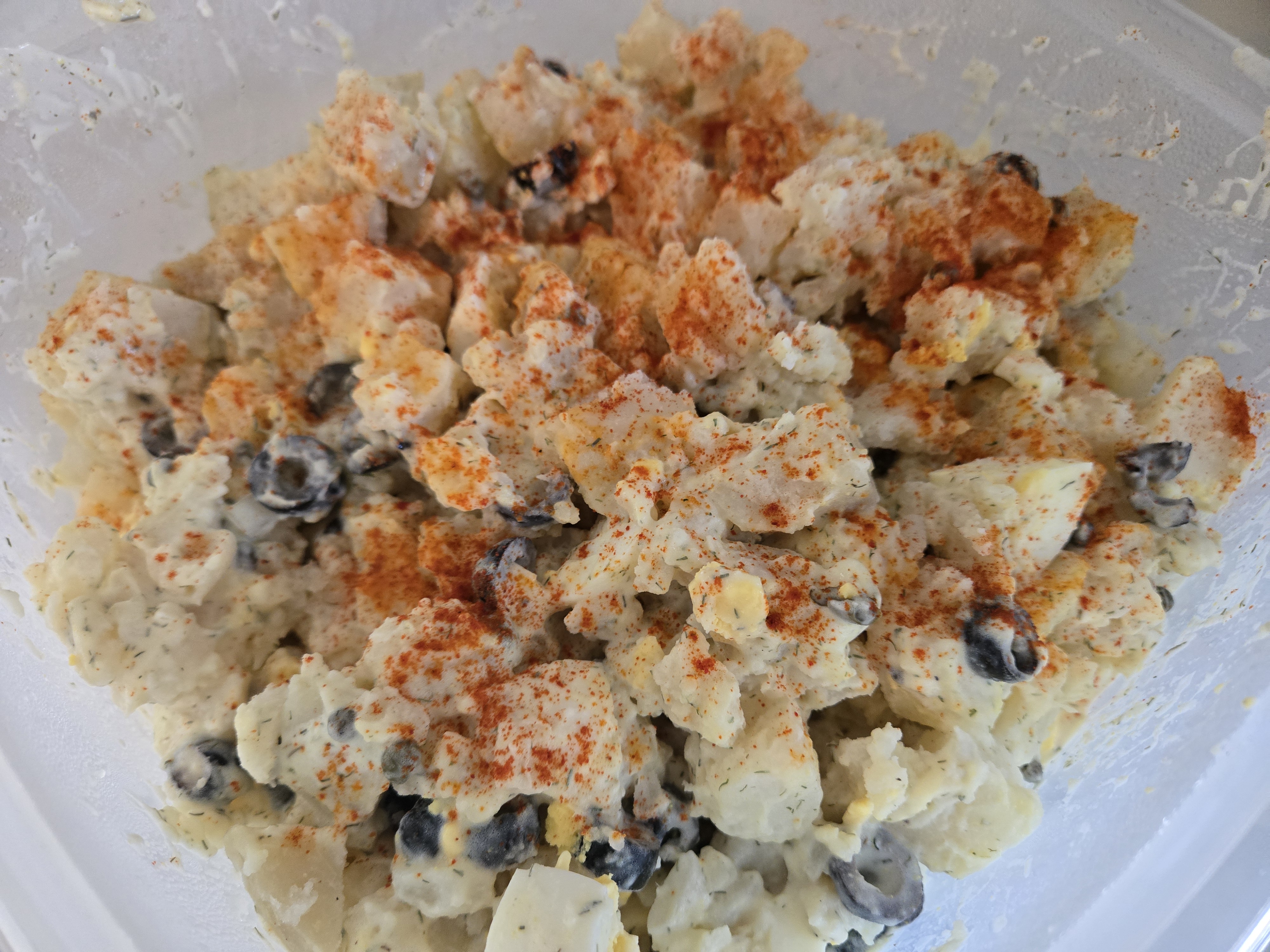
No 4th of July is complete without my mother’s potato salad recipe. It features extras like black olives, hard-boiled eggs, mustard, onion, dill, and paprika. I made enough to last our crew for several days!

Back in Colonial days, cakes used to be a “thing” for Independence Day. As for us, we devoured a fruit pizza, which is basically a huge sugar cookie covered in cream cheese, whipped cream and fruit that matches the day’s color scheme (red, white and blue).

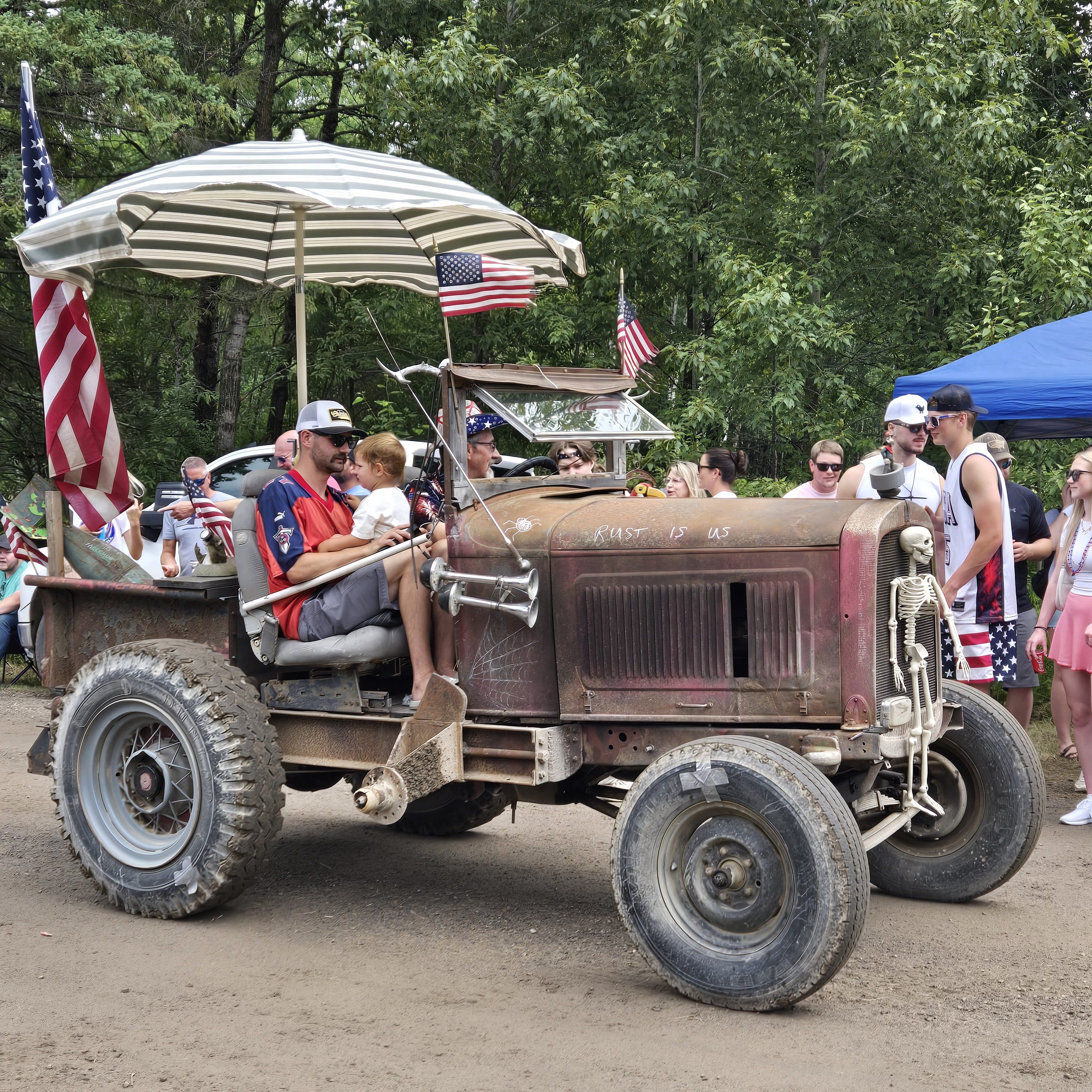
We ended the day at a community parade. I’d never been to it before and was surprised by the number of people who attended, especially since there aren’t that many people who live in the area. The parade was filled with ATVs, floats from local businesses, and people tossing candy to children. One guy was even handing out fireball whisky shots! There were also a few disturbing “Don’t Tread on Me” flags on the ATVs (a symbol for the alt-right) and much Trump paraphernalia in sight, but that’s the politics of this rural area, as it is in many small towns across the country.

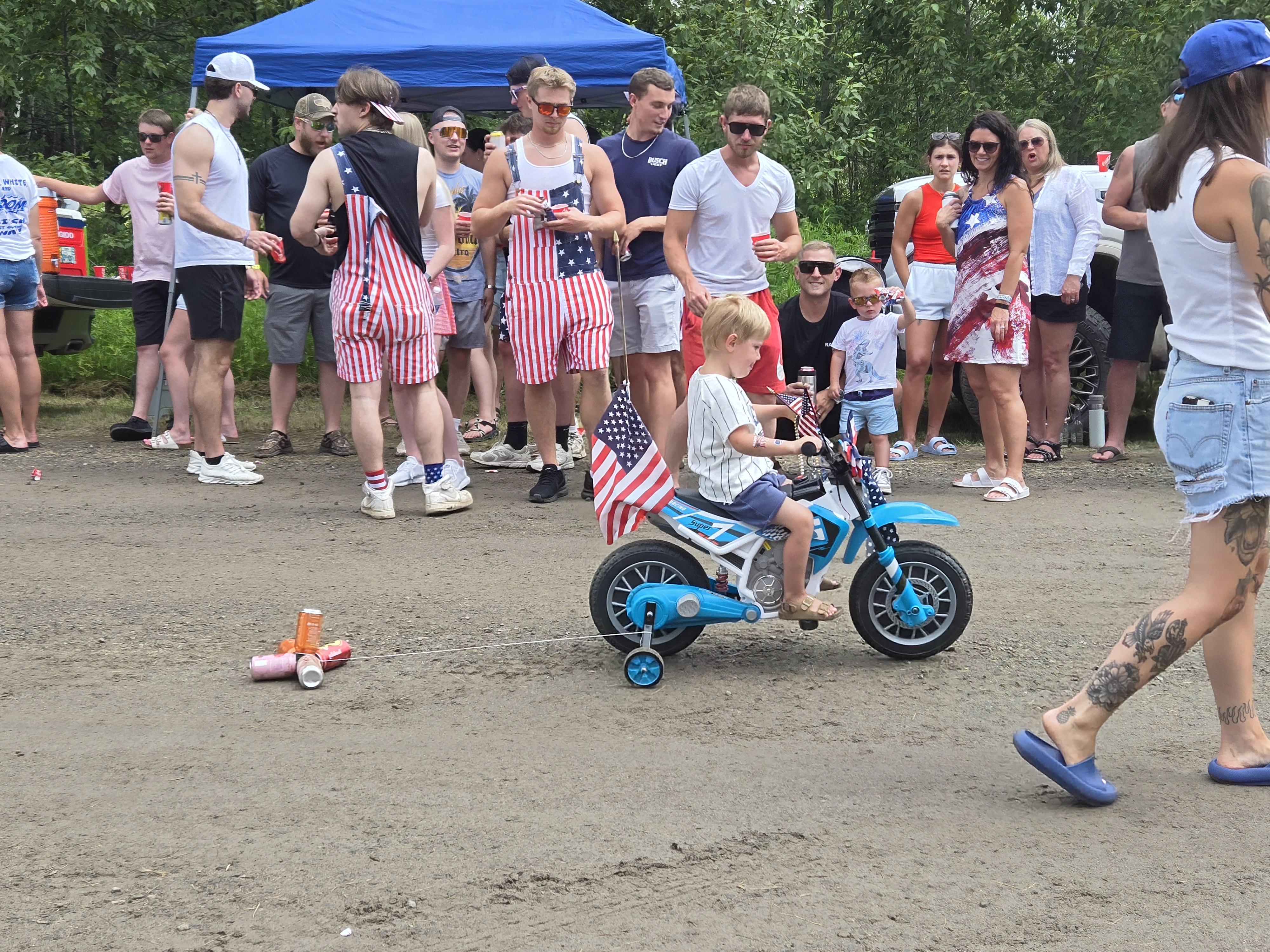
This was the cutest float in the parade. While many of the ATVs were trailing beer cans, he chose pop cans. Note the patriotic dudes in the background.

We had a great time with family and friends. I hope your 4th was memorable, as well. What are your traditions?

World on Fire

Results of the fire near our cabin.

What is it about possessing things? Why do we feel the need to own what we love? And why do we become such jerks when we do? We’ve all been there. You want something, you possess it  –  and by possessing it, you lose it. – Chris Stevens (Chris-in-the-Morning), “Northern Exposure” TV series

When we returned home from Grand Cayman, northern Minnesota was on fire. Three wildfires from natural causes were burning, adding to the smoke from Canadian fires. During our vacation, the smoke blanketed Duluth, causing air quality warnings. Thankfully, we missed that, but once we were home evacuation warnings sounded for areas near our cabin.

What could we do against a wildfire if it chose to overrun our cabin? We live an hour away and weren’t sure how worried we should be. One of my relatives called me and suggested we stand outside our cabin with garden hoses. Luckily, a cabin neighbor was fighting the fire and was able to give us a clue about the conditions. He thought we’d be okay. But out of an abundance of caution, a few days later when the fire had crept within two miles of our cabin, we decided to evacuate some belongings “just in case.”

Deciding what to evacuate was an interesting exercise. It wasn’t easy, but we were thankful that we weren’t like many people who only had minutes to evacuate. Eventually, we decided on bringing our Scamp trailer camper home, which was stored in our cabin garage. We needed it in the next few weeks for a trip to Colorado, and it would have been very inconvenient to have it burned to a crisp!

My photos were the other things we saved. We decorated the cabin with many canvases and metallic prints of images that you’ve probably seen in past blog posts. I have a photo show coming up in July, and it would have been a bummer to have those all burned up. Not to mention, expensive to replace. (To see my online photo collection, visit my website.) We decided to leave the furniture until a more imminent threat arose. Some of our good friends volunteered the use of their truck if we needed it and we felt lucky to have such support.

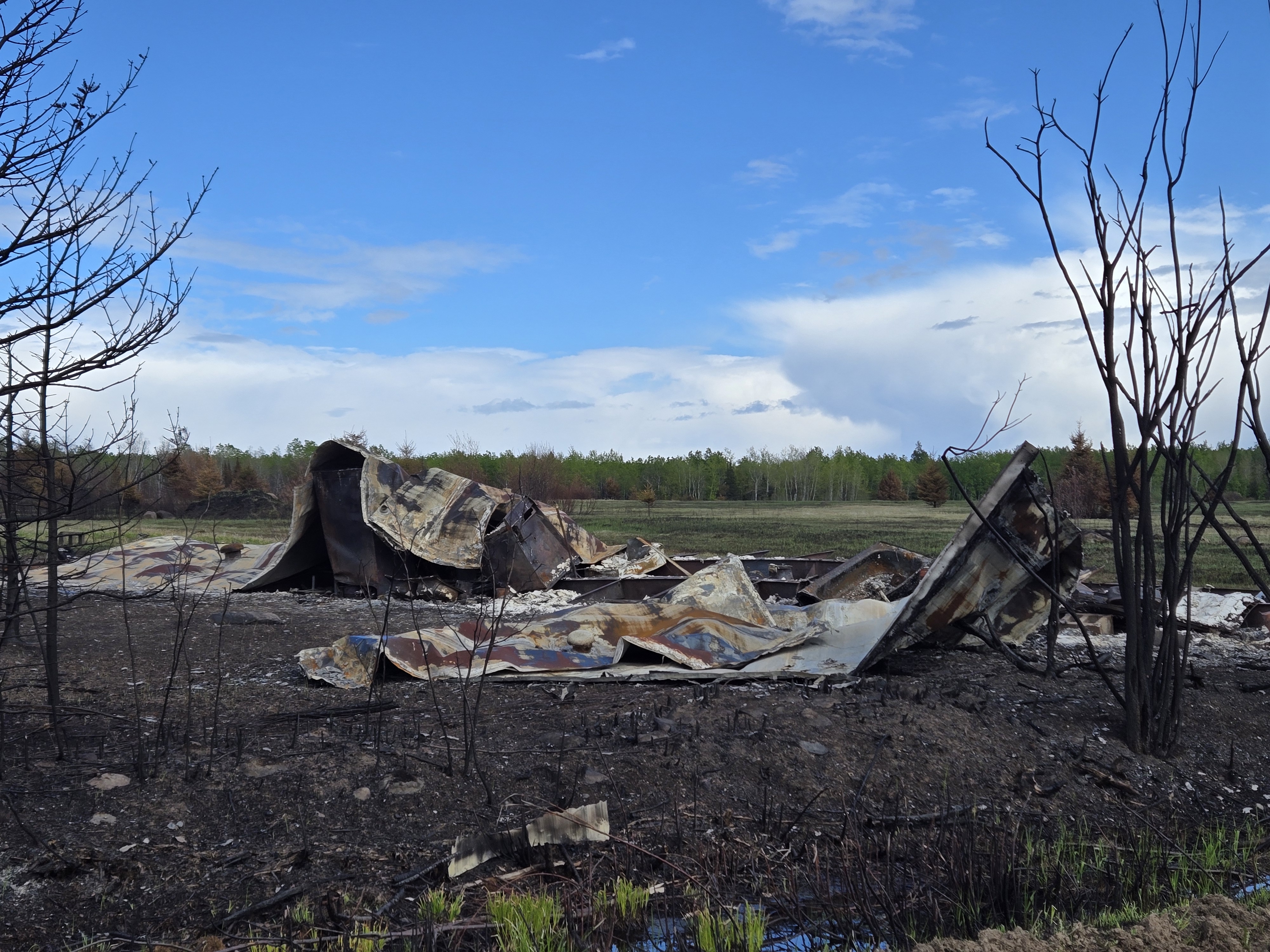
I think this used to be a mobile home, located near where the fire began.

Thankfully, we didn’t need their help. Due to the efforts of state and local fire folks, the blaze was stopped soon after we evacuated our belongings. I’m glad our cabin survived and I’m glad no lives were lost in the blaze. Our firefighter friend told us the fire began due to a spontaneous combustion of a hay bale on a farm.

Once it was over, we drove down the road that flanked the fire. Several trailer homes were lost and possibly one “regular” home, plus many trees. The damage was sobering, and I was glad that we took the measures that we did. However, we would have been much more nervous if the fire had threatened our primary home.

Besides people and pets, what would you save if a fire came for your home? It’s something to consider.

Three Neighborhood Bear Fiascos

Photo by Tomu00e1u0161 Malu00edk on Pexels.com

My home on the shores of Lake Superior in Duluth, Minnesota, lies next to a large and wild city park. We’re often blessed by visits from local wildlife. While I was on a walk earlier this week, I learned a new bear story from one of my neighbors, and it reminded me of two other stories about neighborhood bears.

The story my neighbor told me happened years ago at the house next to mine. The incident involved honey, a black bear, and guns. Warning: things do not end well for the bear.

My neighbor said that the event even got written up in the newspaper, so when I returned home, I began a search. I found it! The headline from the Sept. 25, 1958, Duluth News Tribune reads: “Honey-Loving Bear Killed. Elaborate Trap Ends Bee Hive [sic] Raids.”

Ole Martinson used to live in the house next door. He was a beekeeper and had several hives. Oak trees also grace the yard, and bears are drawn to the acorns. That fall, a 250-pound bear was bulking up for winter and raided the hives. Martinson complained to his neighbors, who decided to help him with his plight. The article says that the residents, “had fired about 15 shots at the bear in three days, but never were successful in hitting the animal.”

Can you image people discharging firearms within city limits like that now? (Currently in Minnesota, it’s illegal to discharge a firearm within 500 feet of a dwelling or occupied building unless you have written permission from the owner or occupant.)

After the unsuccessful hunt, a policeman who lived at the end of the road (Royce Hanna), and another neighbor concocted a plan with Martinson. They strung a line of light bulbs from a garage to a field and a lookout was posted to whistle when the bear approached in the night. The whistle was the signal for the lights to be switched on.

According to my neighbor, who witnessed the event, the first night they tried this scheme, the lookout mistook moonlight glinting off the lightbulbs for the bear’s eyes and Hanna shot out a lightbulb instead of a bear. (Apparently, they didn’t turn the lights on before Hanna shot!)

The second night, the bear walked into the trap “with 35 to 40 spectators hidden nearby. . . Someone whistled at the right time, the lights flashed on and Hanna opened fire. The policeman’s first shot wounded the bear. His second killed the animal.”

My neighbor told me that Hanna almost lost his job because he had called in sick that day and then his boss read about it in the newspaper. I guess the lesson is, don’t give interviews to newspaper reporters when you’re supposed to be sick! He also said that someone else in the neighborhood had skinned the bear and kept the hide.

The second story happened last fall. The people who now live in Martinson’s house had multiple bear raids on their garbage can, which they unwisely left outside all the time. I could tell the culprit was a bear by the scat left behind. Have you ever seen bear scat? It can look like a pile of chocolate soft serve ice cream in a pile as large as a dinner plate, depending on the size of the bear.

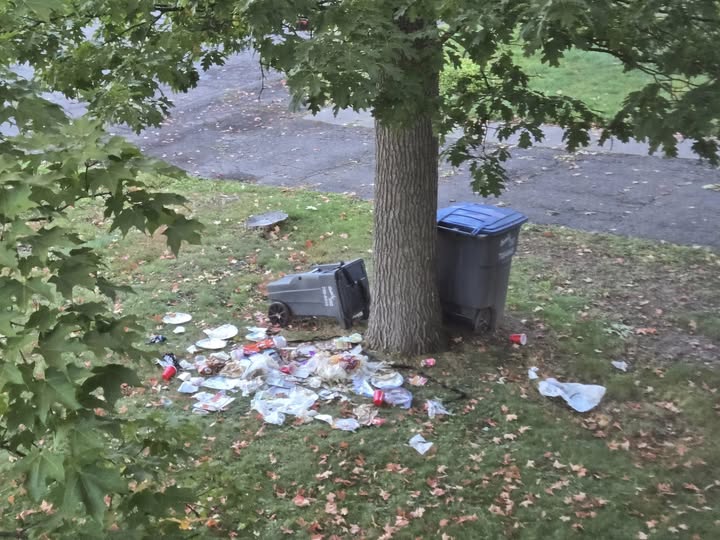
To deter the animal, they rigged the garbage can lid with straps to hold it down, plus tied the container to a tree in their yard. I just laughed when I saw this. Like a few little straps would deter a huge bear! Here’s a photo of what their container looked like the next morning.

Score one for the bear! After this, my neighbors cleaned out their garage enough that they could fit their garbage and recycling containers in it. I’m not sure why they didn’t do that in the first place. Must be slow learners. Or maybe they thought it was only a racoon.

Anyway, knowing that the house next door has been a bear target for years is sort of fun. At least this time, the bear got away with its life.

The third story happened in my own back yard about fifteen years ago. We were eating breakfast when we noticed the bear. My former husband was so excited, he burst out of the house clutching some doughnuts AND RAN TOWARD THE BEAR. I ran after him, asking what he was doing. “I want to feed the bear!” he said. I must mention that my former husband was from Russia. I guess that’s just what they do.

The bear took one look at this crazy Russian running toward him and promptly turned tail. He climbed a tree in a yard a few houses away. Disappointed, my husband left the doughnuts at the base of the tree for the bear once he climbed down.

I don’t recall if the bear ever ate the doughnuts, but this story was forever cemented in the annals of family history. Remember that time your dad chased a bear?

Iceout

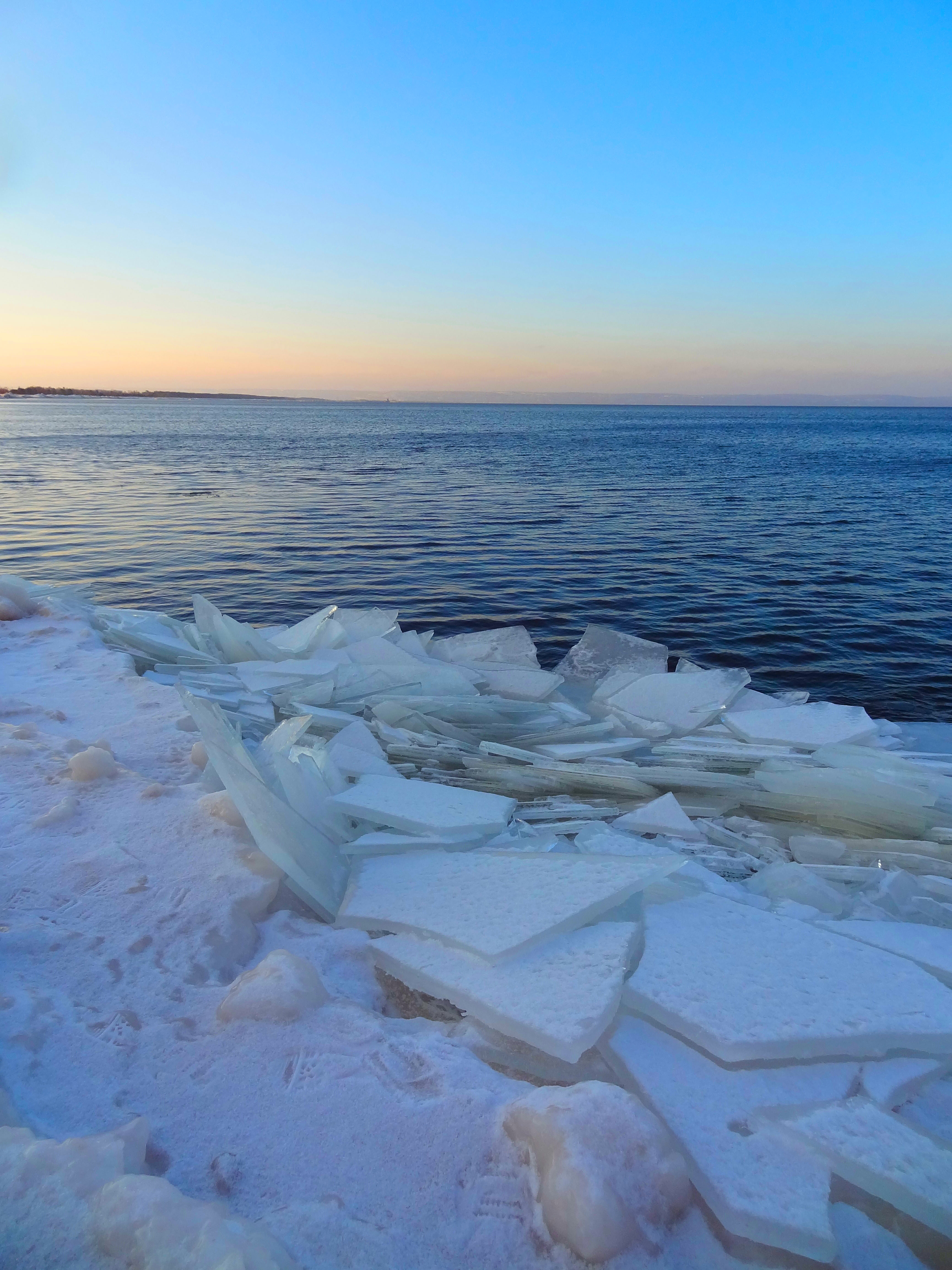
Iceout is happening.

In the North, we stand on the shore in spring and yearn, with a visceral longing, for a break in the smooth white face of the lakes. All winter, they have been a study of white, defined by the absence of blue.

As my acquaintance, former National Geographic magazine photographer and writer, Jeff Rennicke says so well, winter iceover is like an “annual sensory deprivation experience—the specter of negative space—a long, white poem of silent syllables.”

Now, that silence has been broken. As I stand on the frozen grass of our cabin lakeshore, air bubbles underneath the ice gurgle and emit otherworldly moans like the cries of a mystical animal. Blowing wind shifts the ice and I watch cracks form in the thin nearshore skim.

As Rennicke says, soon the ice will crinkle and clash, ringing like bells. Leads of open water will scroll across the blank white page like exuberant cursive. The lakes will awaken, announcing again the spin of the planets, the truth of the changing seasons.

No, the world hasn’t frozen permanently. Spring is coming once again to the North. And it is written in the iceout.

AI and Winter

He who marvels at the beauty of the world in summer will find equal cause for wonder and admiration in winter. — John Burroughs

I’ve been circling artificial intelligence for a while now, like it’s a dangerous wounded animal. When AI results first showed up for my Google searches, they were pretty bad. But I’ve got to admit, the responses to my esoteric search queries (like “Literary quotes about Minnesota winters”) have gotten better lately. I guess the beast is learning.

Some high school students recently asked me if I used AI in my writing. I told them that I don’t, and that I can tell when blog posts are created with AI because the writing is generic. However, I admitted that I have considered using AI to generate ideas.

Today, I took the plunge on the idea front because I didn’t have a good winter quote already in my head. I typed in that search term above about Minnesota winters. This came back: While there might not be a specific literary quote explicitly mentioning “Minnesota winter,” quotes that capture the essence of a harsh, snowy, and solitary winter landscape could be applied to a Minnesota winter experience.

In the spirit of full disclosure, one of the quotes from my search is at the beginning of this post. Maybe AI isn’t so bad? And while I’m disclosing everything right now, I might as well say that my photo editing software uses AI to enhance images. I used it on the images that accompany this post, except for the bottom one. The photography teacher who introduced me to this software said that cameras can’t capture everything our eyes see. The editing software brings the photos closer to that ideal. I admit to loving the subtle changes the software makes to the original image. I’m not going to disclose what that software is here, however. I need to keep some secrets to myself. 😊

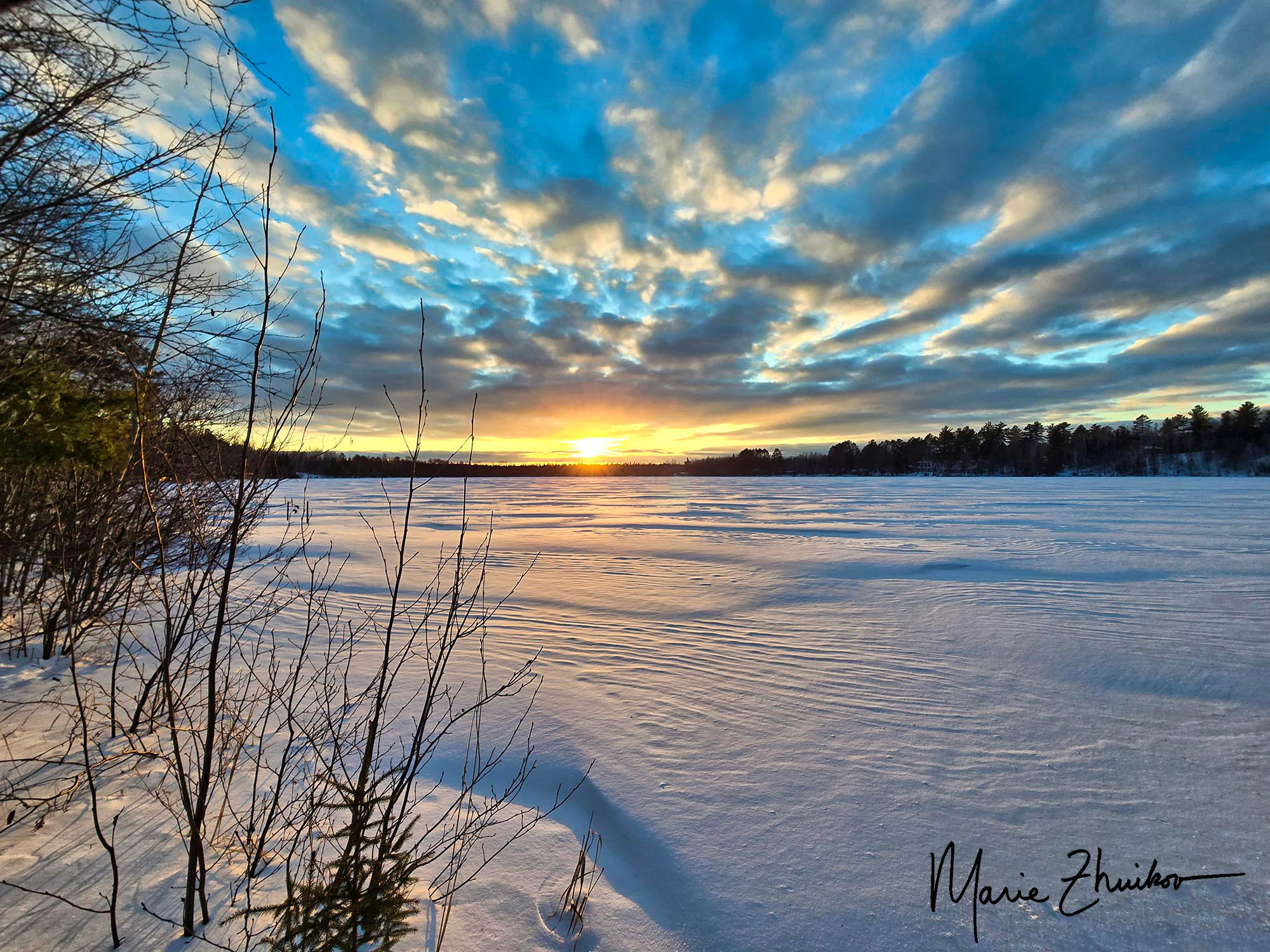
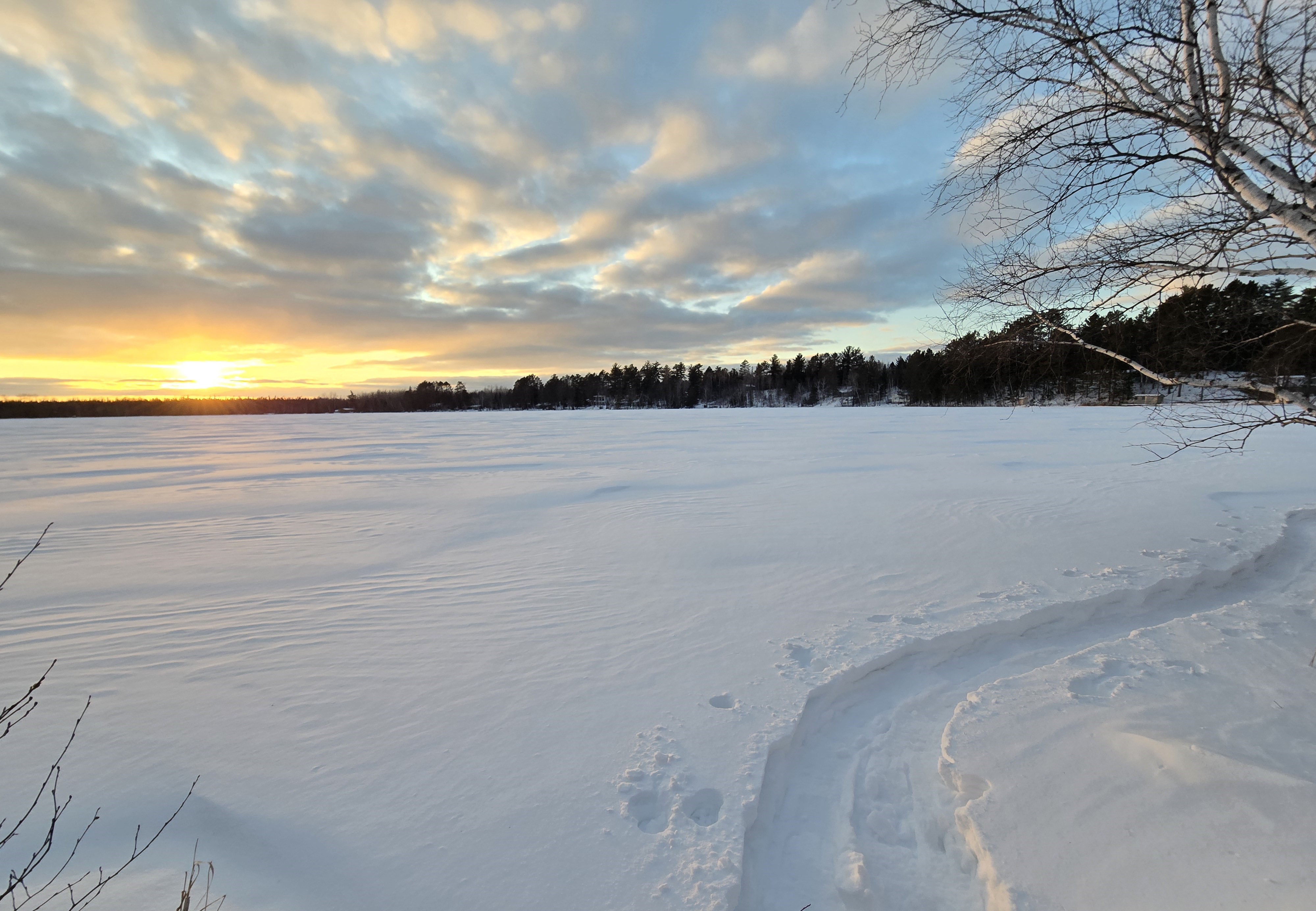
But I don’t want this post to be about AI. I want it to be about winter. I took these photos at our cabin, which is on a small lake in northern Minnesota. The sun was setting as Russ and I cooked dinner. As with this summer sunset from a few years ago, I had to neglect cooking duties to run outside and capture the light before it disappeared. Luckily, earlier in the day we’d gone snowshoeing and had packed a path down to the lake through the deep snow. I was able to pop on my Sorrels and jog through the cold to the frozen lakeshore with ease.

As I snapped a few photos, I marveled at the still, white landscape and the way the sun tinged the small ridges of snow collected on the lake a dull orange. My camera couldn’t capture those ridge colors very well, but AI helped bring them out a bit.

Normally, we’d be travelling somewhere beachy and warm this time of year to soak up the sun and Vitamin D. We decided not to do that this winter because I am . . . drumroll . . . retiring this spring. I only have two-and-a-half weeks of workdays left! I have too many projects to wrap up before then for a vacation. We are saving our beachy-warm trip for this May.

It’s been good, so far, to stick out the winter here this year. We’ve ridden the temperature swings, complained with our neighbors about the cold, shoveled roughly a ton of snow off our cabin deck, and gotten out cross-country skiing for the first time since the winter of 2022-23. (The snow conditions were too poor after that.) Besides, if we travelled to where the temperature is eighty degrees, we’d have to worry about sunburning our Minnesota-white skin, and then reacclimatizing once we got off the plane. I have not-so-fond memories of walking to our car in the Minneapolis airport parking lot without winter coats or gloves in minus-ten-below temps, since we left our winter outerwear in the car.

To sum it all up: I’m enjoying winter in Minnesota, and I’ve prodded the AI beast. Maybe it’s friendly?

Our lake and snowshoe path. This photo was not edited using AI. Maybe you can tell that it’s not quite as sharp as the others in this post.

My Book Comes out this Week!

My collection of shorts stories, “The Path of Totality,” is being published this week by Cornerstone Press. It will still be on sale for a few more days for 20% off until the publication date, which is Feb. 11. You can order it from Cornerstone here.

I’m having a launch event Feb. 18th, 6:30 p.m., at one of my favorite cafes in Duluth—Wussow’s Concert Cafe. It’s being hosted by Zenith Bookstore. I’ll also be doing a reading/signing at Foxes and Fireflies Bookstore in Superior on March 1 from 1-3 p.m. If you’re in the area, please stop by!

Noted Superior, Wisconsin, author, Carol Dunbar is helping me with the Feb. 18th event. She is way more well-known than I am, having had two books published by a national publisher. She was nice enough to write a blurb for my book, which appears on its cover. She was also nice enough to volunteer for a question and answer discussion with me of our books and careers. We deal with many of the same themes in our writing, so it should be a cool event!

“Booklist,” which caters to libraries, recently reviewed “The Path of Totality.” Here’s what they said:

Love, in its numerous forms: romantic, parental, devotional, inspirational, and desperate, has a lingering presence in Zhuikov’s collection of tales. The title story describes a young couple’s emotional struggles after the devastating loss of a premature baby boy. While viewing the 2017 total solar eclipse, healing suddenly sprouts as something “flipped a reset switch” inside the wife. “Bog Boy” is a comically creepy tale illustrating that love truly has no limits. A teenage girl discovers the long-dead body of a young man entombed by peat in the woods, and the preserved corpse becomes her de facto boyfriend. “The Shower Singer” is a feel-good story about an aspiring musician who receives more than just a much-needed jolt of creativity when he hears a woman in the adjacent apartment singing lovely melodies in the shower. Other characters include a sleuthing widow obsessed with the strangeness of a house who ultimately pays a steep price for her curiosity, a hungry alien life form that stalks a college student in Biosphere 2, and a reference librarian with an extraordinary connection to sentient trees.

Finding Your Voice Through Writing

Last week, I had the privilege of hearing a nationally known poet read at a local college. Kimiko Hahn was flown out from New York City by the college’s English Department to be part of its annual Rose Warner Reading Series. The college brings in a poet for a day who performs a morning reading and discussion with local high school students and an evening reading for the public. After the morning reading, the students break into groups where a “Northland Writer of Distinction” talks to them about writing and how to find their voice through it.

Poet Kimiko Hahn reads at the College of St. Scholastica.

I was one of three so-called writers of distinction. The other two were Sheila Packa, a former Duluth Poet Laureate, and Nick Trelstad, a published poet and high school English teacher. Having never done this event before, I was a bit nervous. Both the other writers were repeaters; they were also both wearing plaid. I had not received that memo! But now I know in case I get invited back.

I was not familiar with Hahn’s poetry, so I was looking forward to hearing her read for the students. Hahn’s mother died in a tragic car accident, so many of the poems she read in her soothing voice were about that. She also read political poems. But, since I am a science communicator, the ones that caught my attention most were pieces she wrote based on science stories in the New York Times. Hahn commented that she’s bad at science but is fascinated by it, especially entomology (bug science). She often takes a science news story and makes it into poetry.  She does this through typical fashion but also using a technique called erasure poetry.

This was a new one on me. In erasure poetry, which began in 1965, writers take an existing text – like a newspaper story or the Declaration of Independence – and blackout or erase words to create a poem. Sometimes they leave the words in their original formatting (with lots of blank space in between) or sometimes they reformat them. Visual artists use the technique, too. Hahn read the students her poem, “Erasing Love.” Then she asked them to figure out what original article’s topic was. Several students mentioned that it was a science or medical story, but I think everyone was surprised when Hahn said it was about a giant fish called an oarfish and that the professor studying it had the last name of Love. (At the end of her poem, she links to the original article.) I enjoy creating found poems (like this one based on Chinese scooter instructions) so I’m definitely going to try erasure poetry sometime soon.

Hahn’s poems delved into grief, love, and science, often containing subtle and not-so-subtle humor. She said she gains inspiration from writing prompts and that she writes as an outlet for her opinions and rambunctiousness. Her reading persona is not rambunctious, but during the q & a afterward, more of her personality shone through.

Then the students were split into groups with their respective local writer. Hahn was a tough act to follow! For my presentation, I told the students about my professional and creative writing careers. The students were from the same high school that I went to, and I wanted to show them that a career in writing is possible. I described my books and talked about how this blog helped me find my voice. I read them two posts that offer good examples of opinion writing, which I can’t do either in my day job or my novels. These were “The Jayme Closs Case and the Importance of News Headlines,” and “The Christmas City of the North Parade: Socially Sanctioned Child Abuse or Festive Community Event?

There was no clock in the room. For the first group of students I spoke with, I blathered on about myself for so long, I ran out of time to read the Jayme Closs story, but I made up for that with the second group.

A few writer nerds were in the audience and asked good questions. After my talk, one girl introduced me to Dark Romance. If you haven’t heard of it, either, Dark Romance features kink and violence – darker themes that don’t sound all that romantic to me. I don’t think I’ll be pursuing it in any way.

My main points to the students were to write what they enjoy without worrying about what other people will think, to practice, and get feedback from people they trust. Of course, I encouraged them to start blogs since it’s a good way to practice and to get feedback from a supportive community.

Have you found that your blog is a good way to develop your writing voice?