Reading for “Writers Read” and the Lake Superior Zoo

82125457_10157171657572476_4269917595030781952_oI recently had the privilege of reading a poem for Northland College’s “Writer’s Read” 10th anniversary event in Ashland, Wisconsin. This is the second time my work has been chosen for this contest. The first time was an essay I read in 2018.

The theme this year was “Awakenings.” My poem, “Solastalgia,” dealt with my awakening as an environmentalist. As with the previous contest, readings by local authors were broadcast on Wisconsin Public Radio. You can find the program on the web here. My poem airs between the 1 hr 19 min and 1 hr 22 min marks.

20200124_175156We were not offered cash for our winnings, rather the comradery of other writers, instant fame the reading provides (ha ha), and some great food! They fed us Mediterranean-style dishes prepared by a student chef, including homemade marshmallows cooked over a fireplace. Okay, the marshmallows probably weren’t Mediterranean, but they were still impressive on ‘smores.
My next event will be an animal-related reading (poetry, fiction, children’s story) and book sale for World Wildlife Day at the Lake Superior Zoo in Duluth on February 29. The event is called “Leap Into Action for Australia.” One dollar from every zoo ticket sold will be donated to an emergency wildlife fund for the Australian brush fires. Find more info here.

Three other poets will be reading during the event. We each get a half-hour, which is HUGE! Hope to see you there.

20200124_190049

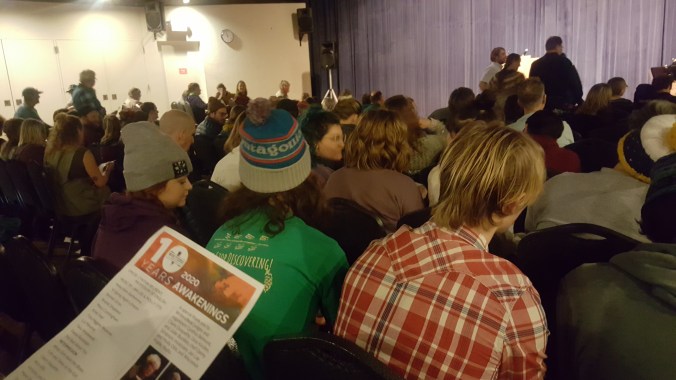
The audience for Writers Read — a full house!

Two of the Coolest Spots on Madeline Island

IMG_6082

The bridge across Big Bay Town Park lagoon. Look at that beautiful water!

My friend Sharon and I meandered onto this island in Lake Superior a couple of weeks ago. We’d both been there before, but found two cool new places to explore this time. And I mean “cool” as in awesome and interesting.

20190713_141046

The lagoon.

The first was Big Bay Town Park, which friend recommended to us. Unlike with the state park on the island, the town park has a free-will donation fee. A short walk down a stairway from the parking lot leads you to a bridge across a stunning lagoon that enters Lake Superior. On the other side of the lagoon is a public beach studded with white pines. The water is crystal clear and inviting, although as always with Lake Superior, temperatures may be a bit cool.

Canoes are available to rent via self-service onsite, or you can rent watercraft, including paddleboards from a place in town. The kayaks, canoes, and paddleboard are all onsite, and the businesses will give you a key to unlock them.

I brought my own blow-up paddleboard and Sharon rented one for two hours. We cruised the lagoon, watching painted turtles walk across the sandy bottom and startling a fish here and there. The water is so clear, it felt like we were flying through it.

IMG_6099The second place is Tom’s Burned Down Café. I’d seen it from afar before and heard about its, shall we say, counterculture reputation. Maybe it once was a café (before it burned down?) but now it is a bar. No food is available.

The place is a hodgepodge of homegrown-construction seating areas held together with signs with sayings like “It’s not premaritial sex if you don’t plan on getting married,” and “Be the rainbow in a world full of rain.” The top is covered by several tents.

20190714_132120Filter

Tom’s Burned-Down Cafe

Sharon and I sat down, thirsty after our paddleboard, and ordered margaritas. The friendly bartender asked us if we’d like to try beet-infused tequila in our margaritas, pointing to a large glass container of mysterious red liquid behind him.

20190714_133432

My beet-infused margarita with the hand-written menu behind it.

We hesitated for a few beats, and then agreed. We were already brave enough to come into the bar, why not be even braver and try something new? The beet margarita was definitely drinkable, but it didn’t have as much lime in it as we were craving.

Also of note is that the place is cash-only. If you don’t have any, an ATM is available (under its own small tent) in the bar.

Tom’s was named the Number 2 Best Beach Bar in America in 2013 by Maxim Magazine, no doubt, for its unusual ambiance. If you go there with a sense of adventure, you won’t be disappointed!

The Jayme Closs Case and the Importance of News Headlines

jaymecloss

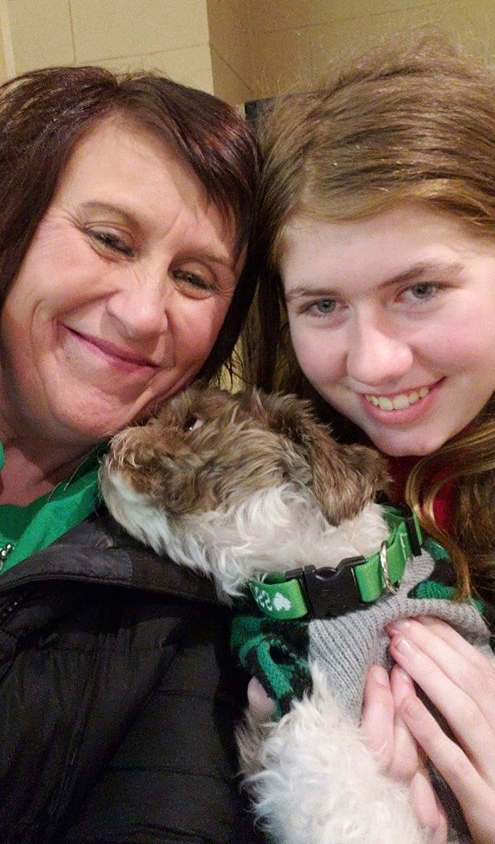
Jayme (right), her aunt, and doggie, safe at home. Credit: Jennifer Smith

I was in the bathroom, putting on my makeup with the door open when the television news story came on about Jayme Closs. She’s the 13-year-old girl who was kidnapped in northern Wisconsin. This was the morning after she was “found.”

The newscasters were going on about how she had been “found alive.” Of course, this was wonderful and superb. News of her kidnapping had filled newspapers and airwaves for weeks, and it seemed that, especially during the holidays, her photo and identifying information appeared often in an attempt to keep public awareness keen.

The reporter on the news show was interviewing Jayme’s aunt over the phone and was asking for details about how Jayme had been found. Since there had been such a major search effort put on for her in the area where she disappeared, I think most people assumed that volunteers or the authorities had found her. Part of the inherent definition of “found” is that it’s something that somebody else does.

Then Jayme’s aunt said that Jayme had escaped from the house where she was held. I popped my head out of the bathroom and walked over to the television. This was new information. This wasn’t just a damsel in distress being found. This was the damsel slaying the dragon and saving herself!

I watched the interview for a few more minutes, but then had to leave for work. During my drive, I heard a radio story about how Jayme had been “found.”

By the time I got to work, the writer in me and the MeToo woman-power feminist in me was dismayed by the passive and inaccurate role these newscasts were putting Jayme in. I wrote this quick post to my recent (personal) Twitter account:

I’m happy and relieved to hear that Jayme Closs is alive! However, it bugs me that the media keeps saying she was “found” alive. She freakin’ escaped her captor and saved herself. #JaymeCloss

I’ve only written a few tweets before then, and I’d never used a hashtag before. I didn’t expect much to come of it.

Holy moly, the thing went viral! As of this writing, my little tweet made 209,000 impressions. It had 4,400 engagements, 2,270 likes, 372 retweets and 78 replies. At one point as I sat watching the stats rise, 20 people per second were viewing it.

That was scarily overwhelming for a person whose most popular tweet to date only had six likes. Handling the comments was also overwhelming. Obviously, many people agreed with my sentiments and said they thought the same thing. Others were upset because they thought I was criticizing law enforcement personnel. I explained I was criticizing the news media, not law enforcement.

Others asked me what words would be better to use instead. I said, “Missing Girl Escapes.” Better yet is the headline I saw a few days ago that said, “She’s the Hero!”

Others jumped on my semantics bandwagon and criticized the use of the word “miracle” in connection with her escape. “It’s called self-preservation and bravery,” one tweeter said.

Then the authorities held their first news conference after her escape and commenters to my tweet started dissing them for the self-congratulatory tone of the event. Yes, these agencies did stellar work in trying to find her, and yes, they found her captor soon after Jayme escaped, but to many, it seemed as if the law enforcement agencies were taking all the credit and not giving enough to Jayme. This incensed one commenter so much that she said she called the sheriff’s office and complained about the way they handled the press conference.

Others criticized me for making a big deal out of word choice when this was such a joyous occasion. All I can say is that words matter. Accuracy matters. I have a journalism background and master’s degree in journalism. Words are part of who I am and I’m not going to apologize for that. And it’s obvious my words struck a chord because a heck of a lot of the commenters agreed with me.

This issue makes me wonder, if Jayme had been a boy, would the news media and the authorities have characterized her escape so passively at first? Comparing headlines (passive vs. active) for kidnap victims who escape would be a good PhD journalism research project to see if gender plays a role. PhD students feel free to steal this idea!

Lately, the news conversation has been about who should get the $50,000 reward in the case. Everyone – even the people who first saw Jayme – are saying the reward should go to Jayme because she saved herself. I think that’s very fitting. Jayme’s parents were both killed by her attacker/kidnapper. She’s going to need all the emotional and financial help she can get in the future. I hope that happens.

But I’m not going to tweet this opinion. 🙂


P.S. If you want to write or donate to Jayme, the address is: Light the Way Home for Jayme, PO Box 539, Rice Lake, WI, 54868.

Old Wood: A Love Story, Part 3

20181217_161210

A screenshot of the Globe Elevator fire, courtesy of WDIO-TV.

Sometimes I shiver at the prescience of my past blog posts. Like the time I wrote about the “ice castle” that was being built outside of my office and said, “What could possibly go wrong?” (It collapsed while its creator was talking to a reporter for the New York Times.)

I got the same shiver when I read my 2013 “Old Wood” series about the historic Globe Elevator in Superior. (See Part 1 and Part 2.) The owners were trying to save their wood reclamation business from bankruptcy. The last line of my story was, “These pieces of history should not go up in smoke.”

Guess what? Unfortunately, the old grain elevator, some equipment, and a couple million dollars of wood burned in an accidental fire last month.

dsc05093

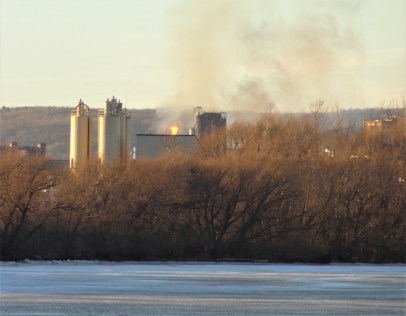
The view of the fire from my office window.

The sight of flames and a plume of smoke out my office window alerted me to the fire. My coworkers and I immediately felt the lingering trauma of the Husky Energy Refinery Fire that happened this spring near our office and required a community evacuation. We made frantic calls to assess the danger and whether we should leave again.

Thankfully, no explosive chemicals were involved in this fire, just some really dry and valuable old wood, so we didn’t need to evacuate. The people I interviewed for my previous posts no longer owned the site – others were working to salvage the wood. News reports blame a spark from a piece of equipment for starting the fire, which quickly engulfed the elevator.

Another thing to be thankful for is that the elevator was out on a spit of land in the harbor away from other structures, so there wasn’t much danger of the fire spreading elsewhere. The location did make firefighting a challenge, however, because it was a long way away from a hydrant. Once the flames calmed down enough, fire crews were able to pump water from the harbor to put out the fire.

Anyway, now I’m rather paranoid to write about anything for fear of encouraging mayhem. I learned during Christmas gatherings with my relatives that I am now known as “the cousin in the middle of all the disasters.”

Of course, I know I don’t really have the power to write disasters into existence, but you’ve got to admit, my record is rather uncanny!

Marten Mania

DSC05086Edited

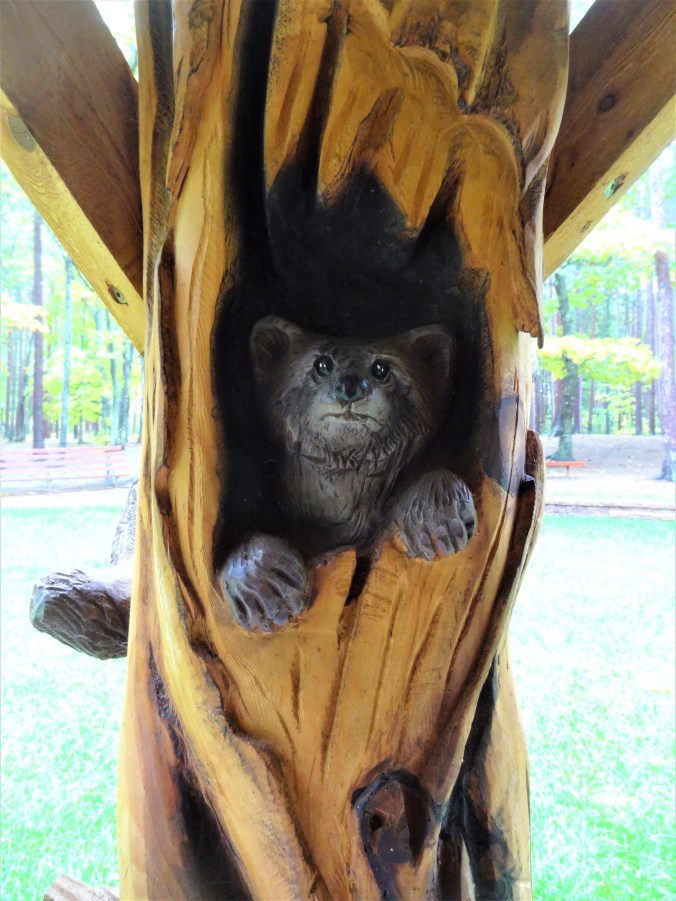
A marten carving graces the post of a Keweenaw Bay Indian Community pow wow shelter in Michigan’s Upper Peninsula. The marten is one of the Ojibwe clan symbols.

I’m in the planning stages for my third eco-mystic-romance novel. In my previous novels I’ve focused on endangered animals from the Lake Superior region, like the wolves of Isle Royale or piping plover shorebirds.

During a trip I took to the Apostle Islands a few years ago, the American marten (also referred to as the pine marten) came to my attention. It’s the only endangered mammal in Wisconsin and has mysteriously started showing up on Lake Superior islands where it was once thought extinct.

Sounds like a good topic for an eco-mystic-romance novel, right? To beef up my knowledge about martens (Martes americana), I attended the 7th International Martes Symposium in Bayfield, Wisconsin, this past fall. I was able to speak with marten researchers from all over the world and to interview ones who are doing local projects. I also took a field trip out to the Apostle Islands with the Wisconsin researchers and learned more about their methods.

45400919_10155548206416386_4915007419303591936_nTo cover the cost of the symposium and field trip, I wrote two magazine articles about martens. They are both out on newsstands now. The first ended up as the cover story for the December/January issue of Lake Superior Magazine. It focuses on the Apostle Islands martens and other populations found around the lake.

The second is in the “Around the Shore” section of the November Northern Wilds Magazine (on page 6). It focuses on the Isle Royale martens.

Take a read about these magical and mysterious animals of the north!

thumbnail_IMG_0294Cat Is

A marten climbs a tree on Cat Island of the Apostle Islands National Lakeshore. Trail cam image courtesy of Northland College, the University of Wisconsin-Madison, and the National Park Service.

End of Season Sail

DSC05076

Basswood Island dock, Apostle Islands National Lakeshore in Wisconsin.

I had the privilege of another sailing trip on Lake Superior this year. The season is ending — the wind cold, the sky gray, and the leaves turning.

We sailed from a marina outside of Bayfield, Wisconsin, and went to Oak Island in the Apostle Islands National Lakeshore. We anchored off its shore and hiked a long loop on the island among giant hemlocks and oaks, and then spent the night offshore. The next day we traveled to Basswood Island for a hike to the quarry there before sailing back to the mainland.

The sailing season is short, but oh so worth it!

DSC05070

Oak Island sandspit, Apostle Islands National Lakeshore

DSC05063

Guess which island we found these on?

DSC05081

Basswood Island brownstone quarry pond.

Of Lighthouses and Books

20180801_161517

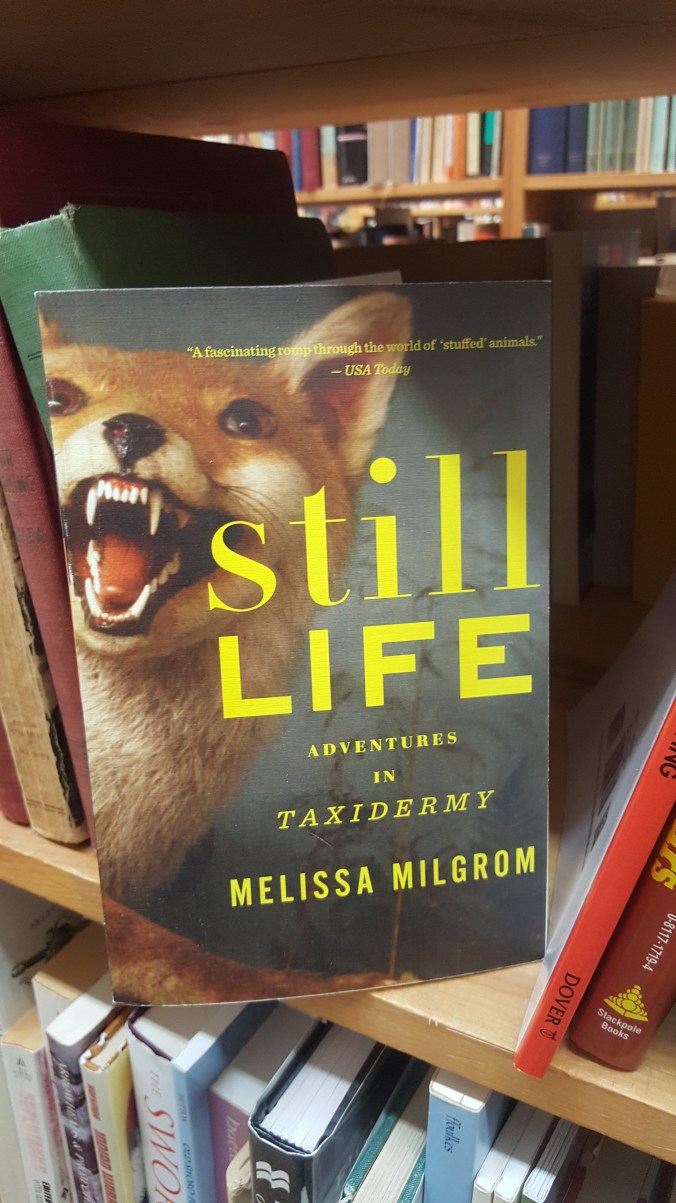
I found this gem of a book at Chequamegon Books in Washburn, Wisconsin. Would you read it? I especially like its promo blurb by USA Today: “A fascinating romp through the world of ‘stuffed’ animals.”

Somehow the phrase “fascinating romp” has never combined in my mind with the topic of taxidermy.

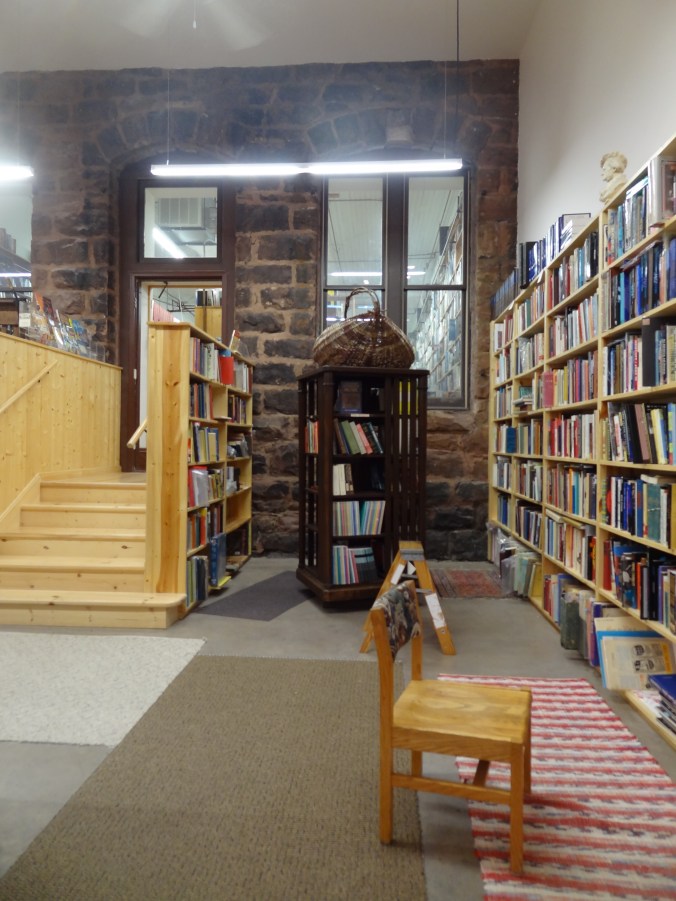
I did not buy the book. But I was impressed with the bookstore. The last time I visited years ago, the store looked like the kind of place where books go to die. It’s been spiffed up recently, with better lighting, ventilation, and a new back room that makes space for lots more books!

The topics are all well-organized and easy to find. It’s a book nerd’s dream. Stop in if you’re ever in Washburn.

DSC04840

The back room in Chequamegon Books in Ashland.

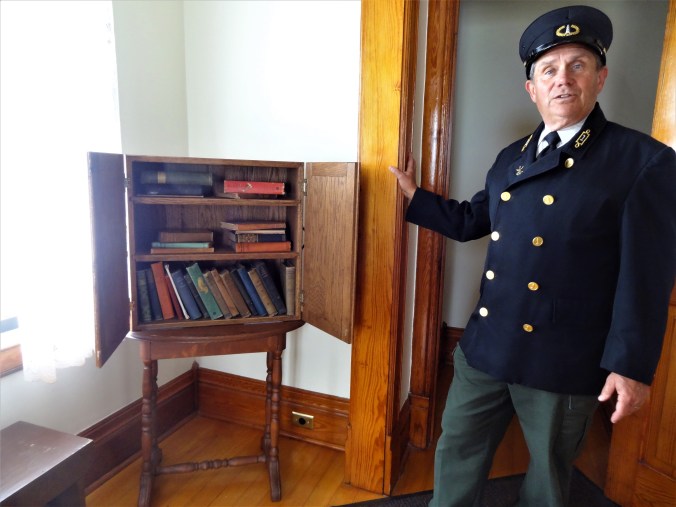
While I was in the area, I had the chance to visit Raspberry Island in the Apostle Islands National Lakeshore. My bookish theme continued when the lighthouse keeper on the island showed me the traveling bookcase that the lighthouse service used to provide to help entertain the keepers and their families.

And I really do mean that he only showed me the traveling bookcase. Of our group that visited the island, I was the only one who opted for the $5 lighthouse tour, so I got personal service!

DSC04862

DSC04870

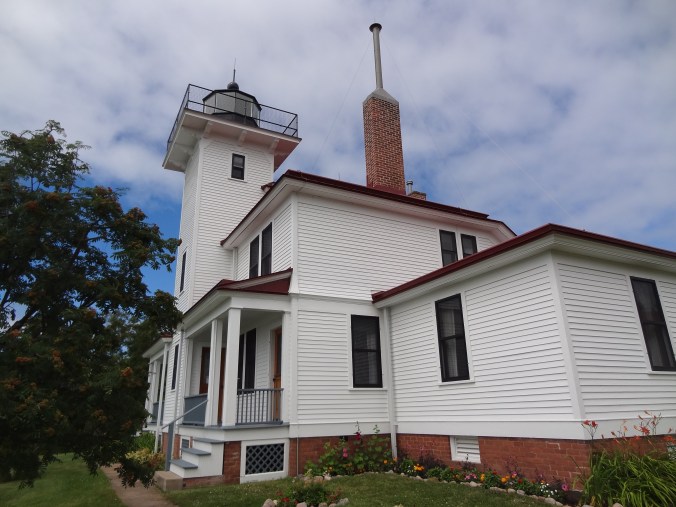
Raspberry Island Lighthouse in the Apostle Islands National Lakeshore.

DSC04866

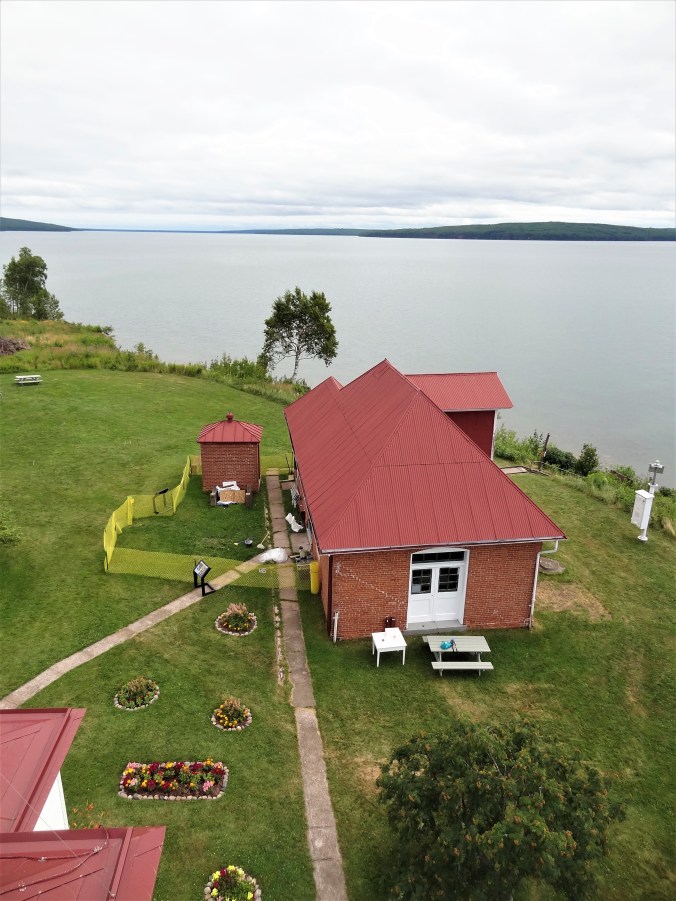
The view from the top of the Raspberry Island Lighthouse.

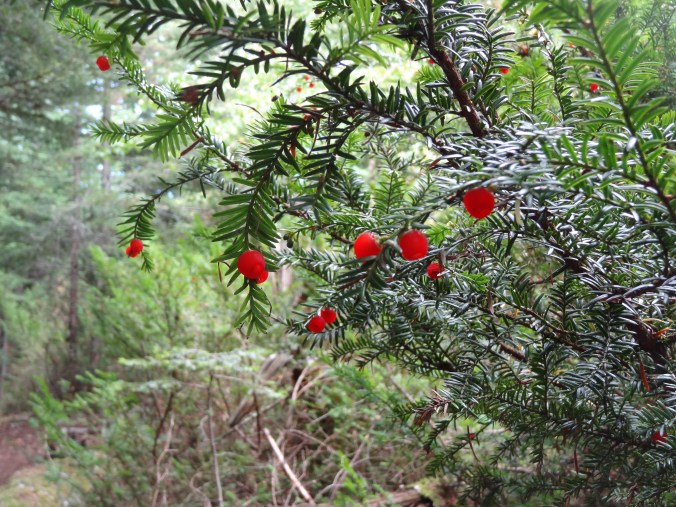
After the tour, I took a hike to an overlook along the coast of the island. On the way, I found this fine example of Canada yew.

DSC04872

Christmas colors in August! Canada Yew is an important shrub for wildlife. Not often found on the mainland because it gets eaten by deer, it sometimes thrives on islands like Raspberry Island, which have few, if any, deer.

Books and lighthouses: a good combination for an outing….

Beauteous Billings Park

20180729_211258

People who live in Duluth are sometimes snobbish about their city parks and trails. They think they’re the best in the Twin Ports. I know, I have been guilty of such civic offenses.

Well, I had my eyes opened when I attended a recent after-work picnic in Billings Park across the bridge and the state line from Duluth in Superior, Wisconsin. In all my years of living in the area, I had never been to this gem of a park. It’s gorgeous!

20180723_173953

The park features several picnic areas, a playground, grills, a volleyball pit, and trails along the bay. I’ve been back the the park twice more to walk Buddy and to paddleboard. With a public water access and calm bays to explore, the park is great for human-powered watersports.

20180723_191415I urge fellow Duluthians to put aside their prejudices and explore Superior. Get out there and get your Blue Mind on!

20180729_211208

A Lake Superior Sailing Experience, Part Two of Two: In Which I Become a Winch Wench

20180704_181011Vignette

We sailed in a 32-foot Westsail.

When our sailing captain was hoisting the genoa sail during my recent trip (see Part One), the block for it broke off the top of the mast. A block is a pulley that the line (rope) for the sail goes through. Let’s just say it’s a rather necessary piece of equipment if one wants to use a sail.

We had other sails up, however, so we were able to voyage to our desired destination without the genoa. But the issue needed to be addressed. So after we anchored off Outer Island in the Apostle Islands (the most remote of all the islands), our captain decided on a daring and strenuous plan.

DSC04744.JPGMy friend Russ was to hoist him up to the top of the mast so he could replace the block with a spare he happened to have on board. This feat would involve several ropes and climbing gear, along with the help of a winch. Russ was supposed to pull the rope by hand, which was wrapped around the body of the winch spool several times for support.

My job was to take pictures of the event and pray that our captain did not fall and hurt himself in the process. If that happened, let’s just say we would have a questionable chance of making it back home. So I felt I had a rather important job.

The captain donned his harness and got all the ropes in place. Russ started pulling, I started taking photos, and the operation commenced.

Now, you should understand that masts are tall. I’m not sure exactly how tall, but they seem even taller when you’re on a boat that’s rocking in the water, even if the rocking is gentle.

DSC04773

Captain on his way up the mast…

Russ was able to get Captain about a quarter of the way up the mast when his progress slowed and it became obvious that more person-power was needed. So I pocketed my camera, put the handle in the winch, and hauled away. Between my winching and Russ’s pulling, we were able to get Captain half-way up the mast where he had a different job to do, fixing something else that had broken a while ago.

We rested while he worked, but soon he was ready to go to the top. Man, we winched and pulled as hard as we could, and slowly, steadily hoisted Captain all the way up. Thankfully, the waves and winds remained calm, and he was able to do his work.

Then his legs started going numb from the pressure of his harness. And clambering up a mast is hard work, even if you’re being hoisted. And I suspect it’s a bit scary up there.

DSC04780

All the way to the top!

Before he had the job completed, he wanted to come down. So we lowered him, with me standing behind Russ and holding the rope as a backup in case another set of hands was needed to steady his descent.

When Captain’s feet touched the deck, we all breathed secrets sighs of relief, even if the job was incomplete. We couldn’t sail as fast without the genoa, but suddenly, that seemed all right for now.

And I gained yet another new sailing skill on this trip, that of a Winch Wench.

DSC04796

Outer Island sand spit, Apostle Islands National Lakeshore.

Other things I learned as a Lake Superior sailing newbie:

-You need to be willing to take orders.

-You have to be willing to be taught everything, even how to go to the head (the boat had a compostable toilet).

-Bring your winter clothes, even in the middle of summer.

-Pay attention all the time to everything.

-The captain is the boss of the ship, but the lake and the winds are the boss of the captain.

-Bring along good food, good music, and good scotch. They can go a long way to make up for any uncomfortableness.

Anyone else out there have more to add?

20180704_200455

Sunset in Grand Marais Harbor, Minn.

A Lake Superior Sailing Experience, Part One: Chocolate Milk and Biting Flies

DSC04737

I recently meandered out onto Lake Superior on my first extended sailboat trip across it with some friends. We left Duluth, Minnesota, and headed to Wisconsin’s Apostle Island National Lakeshore, and then traversed the western arm of the lake to Grand Marais Harbor in Minnesota.

Since I am writing this, you know I survived the three-day trip. If fact, I would like to think I thrived, despite turning green with seasickness once (I avoided hurling, though!) and having to wear all my winter gear, plus hand warmers, on the 4th of July.

I learned a lot about sailing, but still have more to know. And I got a firsthand look at conditions on the lake, which is useful for my job, since we fund research projects on Lake Superior.

Two things struck me and my sailing companions. The first was the color of the water. Almost all the way to the Apostles it was the hue of chocolate milk. The large extent and persistence of the coloring was unusual. There were also floating logs to watch out for.

According to a news story I read upon returning home, the condition is due to a series of recent heavy rains that have sent thousands of tons of silt into the lake. Chequamegon Bay, on the other side of the Apostles, is also experiencing heavy sedimentation.

Usually, the chocolate milk dissipates within a few days, but this round of it is lasting longer than usual because we kept having downpours every few days. Most of the sediment comes from the Nemadji River and its red clay banks, along with the St. Louis River.

We also had more than double the amount of usual rainfall for the month of June. Anglers and charter captains are having to travel farther than usual out into the lake to find clear water for fishing.

DSC04795

Stable flies covering jeans during a beach walk. Good thing they can’t bite through denim!

The second notable thing were the flies. Known locally by the name of “ankle-biters” or sand flies, stable flies look like a common housefly but they are meaner because they bite – usually a person’s ankles. I can attest that there are roughly a gazillion of them out on the lake and its shores this summer.

The only thing that saved us from certain insanity on a shore trip to Outer Island was the fact that we were wearing jeans, which they couldn’t bite through.

The flies congregated in seething clusters from our knees down, rarely venturing farther up our legs. Thank goodness they had no interest in our bare arms or we would have had to run screaming back to our dinghy!

According to a story on National Public Radio, researchers have figured out how and why the flies and other biting insects like mosquitos do this. They think these biting bugs target feet and ankles because we are less likely to notice (and therefore kill) them. They hone in on their target by smell, and apparently, the sweat and skin on our ankles smells different from that of the rest of our body.

Besides wearing jeans, we found it helpful to elevate our feet off the ground while we were on the boat. They didn’t seem to be able to find our ankles if they were level with the rest of our legs. Conditions on the boat never got bad enough that we needed to apply repellant, but we were glad we had some along, just in case.

Although the water wasn’t its typical crystal-clear blue, and we had many insect stowaways aboard our sailboat, Lake Superior was still magical. I greatly enjoyed spending time on it, and hope to do so again someday.

DSC04785

DSC04790

A bear got to this beach before we did.