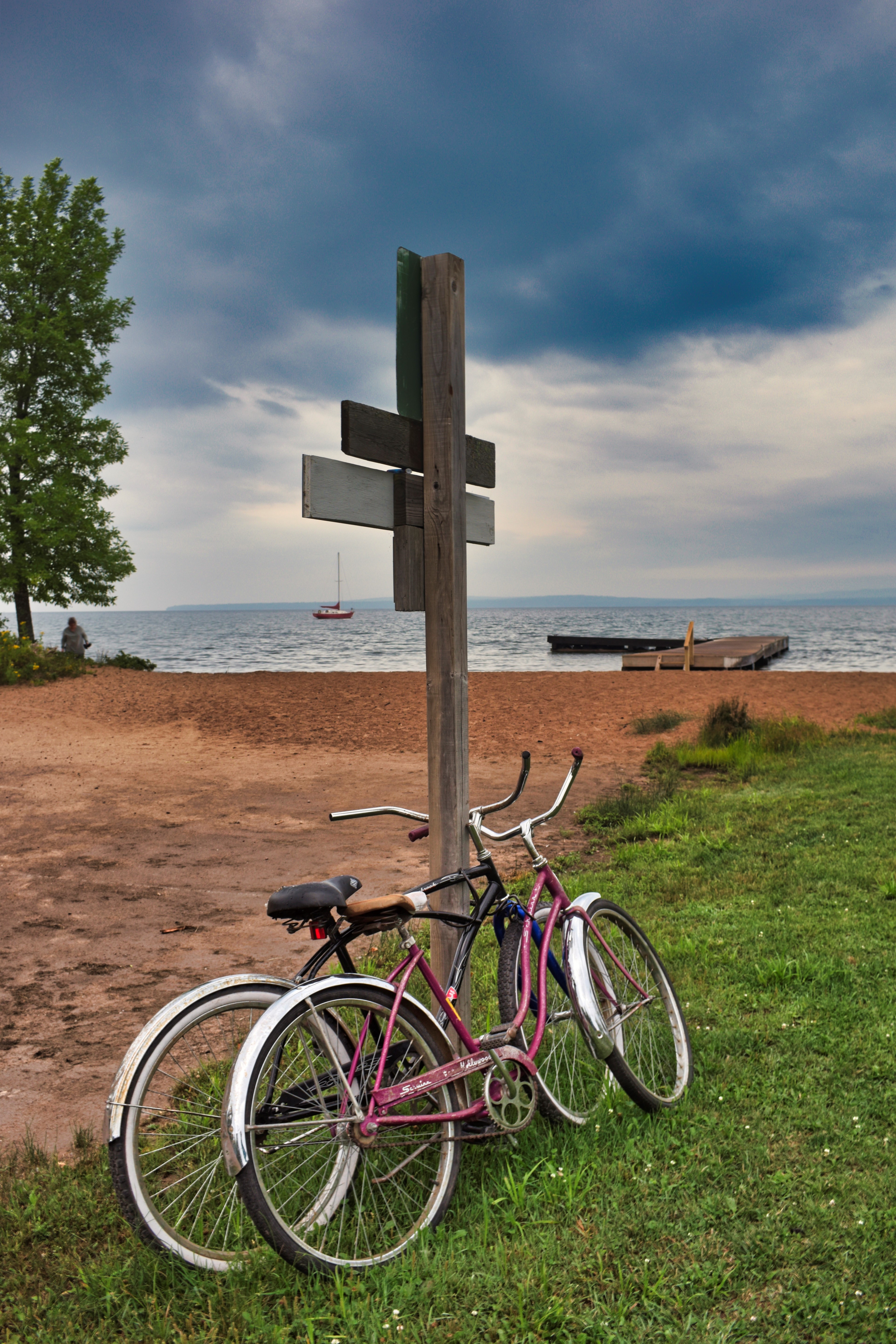
“Bikes Before the Storm,” taken at Joni’s Beach on Madeline Island in Lake Superior.
A photo I took last summer earned an honorable mention in a national “Coastal Love” contest organized by the National Oceanic and Atmospheric Administration’s Office for Coastal Management. The images chosen celebrate America’s coastlines – both salt and freshwater.
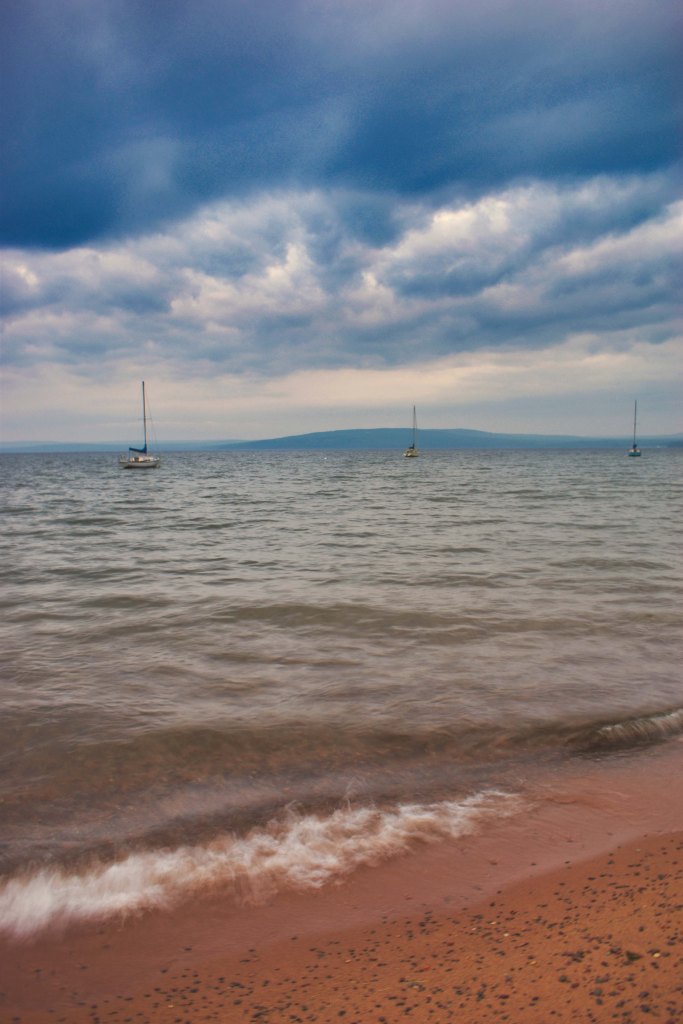
Sailboats moor off the beach and I suspect the bikes were there for boaters to use to get around town after they row ashore in their dinghies. I was on the beach for a sunrise shoot, but as you can see, the sun was not cooperating.
This is a post I wrote for work, but I thought you might enjoy it, too. During the latest St. Louis River Summit, I had the chance to meander over to the library in Superior, Wisconsin, for field trip . . . .
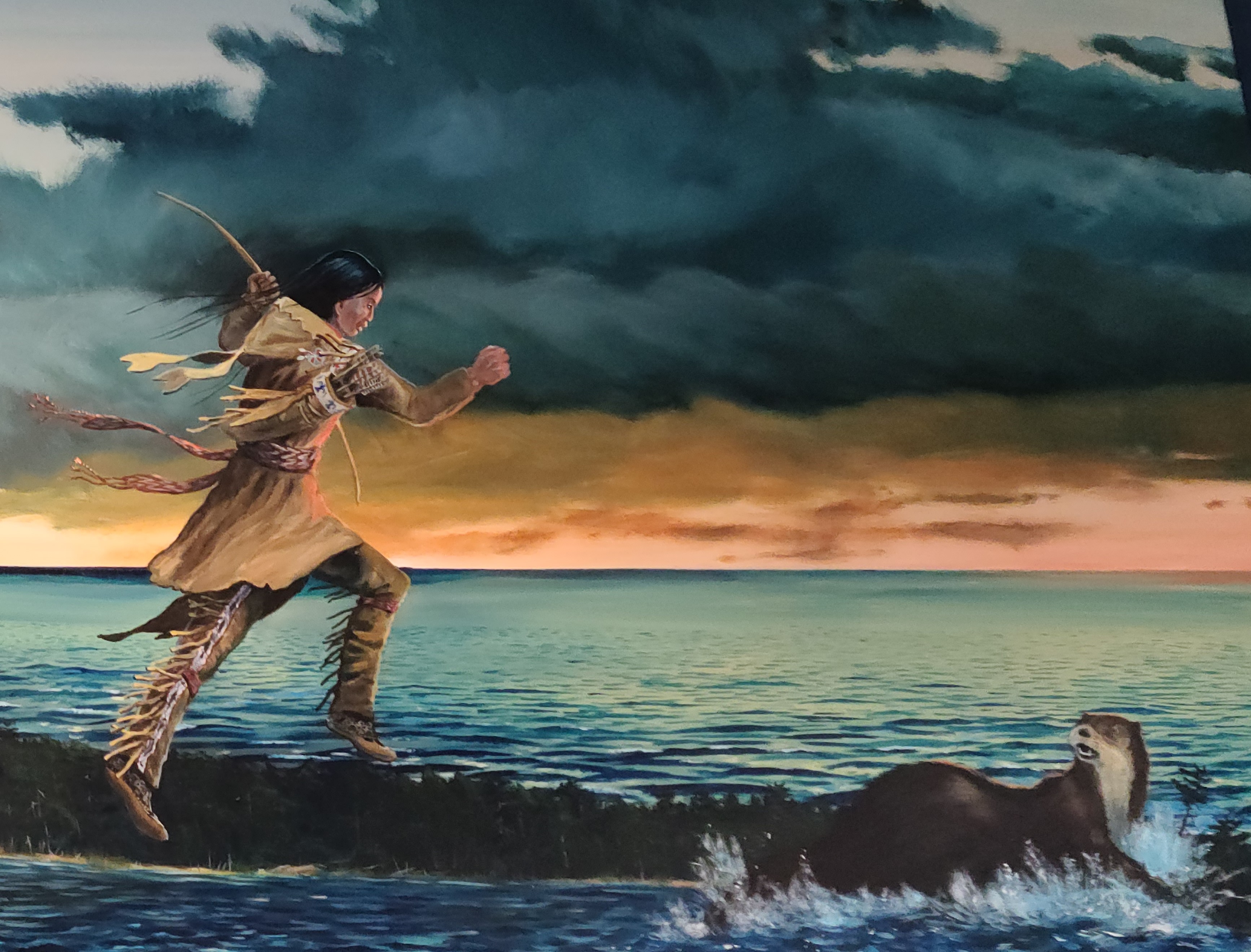
Mural #2 in the Superior Public Library by Carl Gawboy. It shows the area where the Ojibwe people settled on Wisconsin and Minnesota points on Lake Superior and how the points were separated by a giant otter. Image taken with permission by Marie Zhuikov, Wisconsin Sea Grant.
What’s in a library that could relate to a river summit? A series of 35 murals line the Superior Public Library walls, showing the history of the area. Many feature the St. Louis River, Duluth-Superior Harbor and Lake Superior.
The murals were painted over 10 years by artist Carl Gawboy, an Elder enrolled in the Bois Fort Band of Chippewa. The murals begin with the Ojibwe creation story and continue through the 20th century, reflecting how people have interacted with the landscape through time.
Local historian and retired librarian Teddie Meronek led the tour. “I like to say I was here at the birth of the murals, but that started long before any paint went on canvas,” Meronek said. She described how Paul Gaboriault, the library director who commissioned the murals, was a former co-worker of Gawboy’s. Gawboy was born in Cloquet, Minnesota, and grew up on a family farm outside of Ely. He eventually taught at Ely High School, which is where he met Gaboriault. The friends both ended up back in the Twin Ports.
To research the murals, Meronek studied Gaboriault’s and Gawboy’s correspondence. She said the library used to be a Super One grocery store. “If you really look at this building it was just a big warehouse. It wasn’t built for a library. Dr. Gaboriault knew, in his way, that it needed something, and the first thing he thought of were murals.”
The second mural in the series shows the story of how the Superior Harbor opening was created through Wisconsin Point. A giant otter digs as a Native man approaches.
“The great otter represents the Ojibwe religion,” Meronek said. “He is breaking an entryway from Lake Superior into the harbor. The human figure is Nanabozho. He is bringing arts and fire to the land. That was Carl’s interpretation of the legend. The otter is pictured as being so large because it’s representing power.”
According to Gawboy, Lake Superior ties all the murals together, Meronek said. “You can’t always see it in every mural but it’s there. It influences what is going on, which is very true. I’ve lived three blocks from the bay of Lake Superior every day of my life and I can tell you there’s not a day that goes by that the lake doesn’t influence you in some way.”
The location of the horizon line also links the paintings. Meronek said it’s in the same place in each image. As she walked past the murals, she described each one, sharing her impressive knowledge of local history along with personal observations. Other murals include notable buildings and personages, as well as historic events.
Meronek ended the tour on a somber note at a mural of the Edmund Fitzgerald. She often listens to Gordon Lightfoot’s song about the ill-fated ship. “There’s one line in it that always makes me cry: ‘Does anyone know where the love of God goes when the waves turn the minutes to hours.’ Always beware of Lake Superior, right? I can’t even put my foot in it, it’s too cold! What a beautiful thing though, isn’t it? It’s the greatest of the Great Lakes, right? An inland ocean.”
If you’re ever in Superior, stop in the library and take a look. Of course, if you’re not a Superior resident, you can’t check out a book, but you can check out the murals, so to speak. Not planning a visit soon? You can also see the murals online.
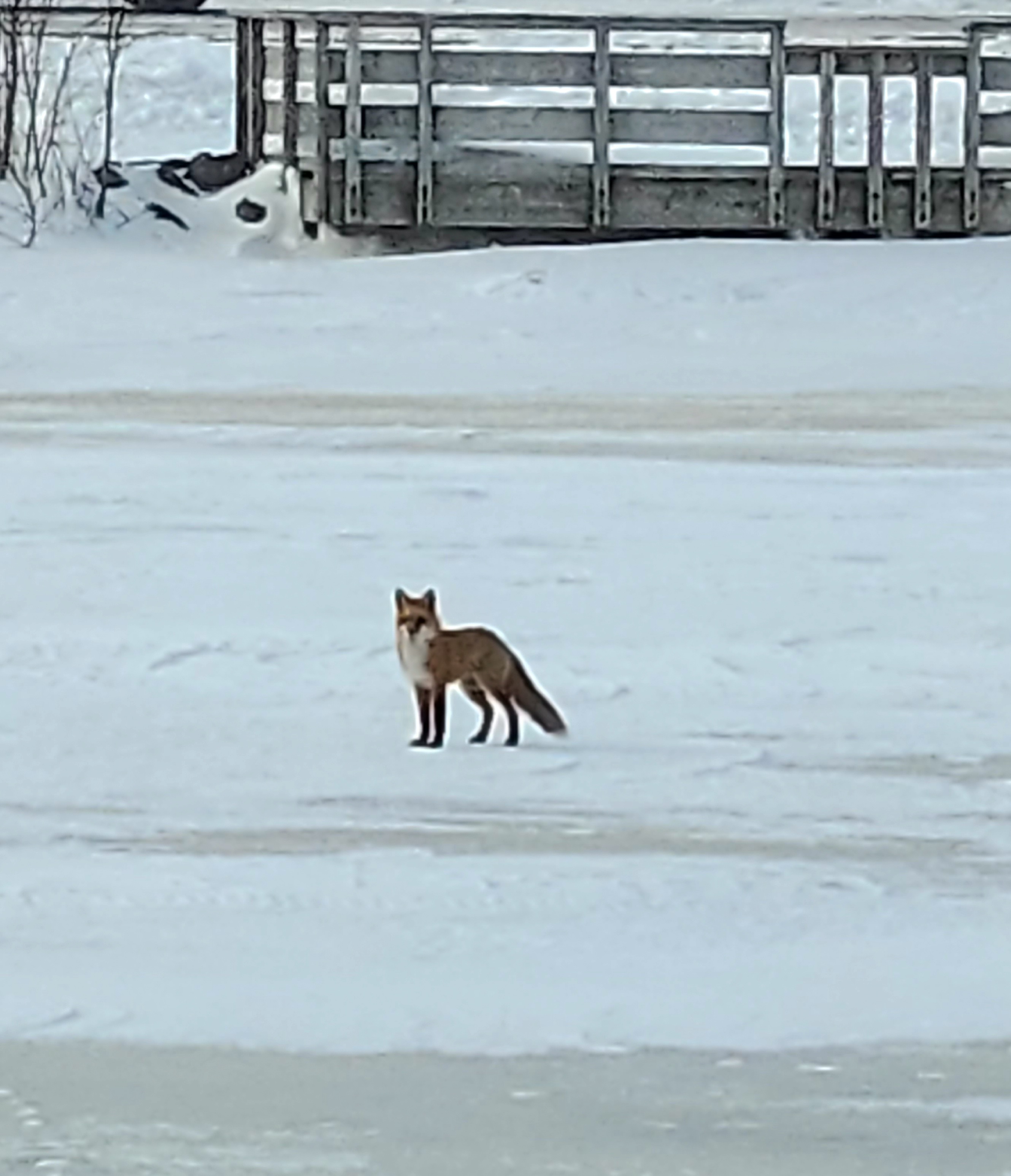
The curious fox after I crouched down. No, it did not obey the “Danger Thin Ice” sign.
My office sits on a manmade island in the Duluth-Superior Harbor. Its windows overlook a stretch of water that leads to the mainland. In addition to water, sky and ice, the view sometimes includes animals like coyotes, bears, groundhogs, birds (lots of waterbirds!), otters, rabbits, and foxes.
This winter, a fox has been frequenting the island. I don’t think it lives here – I don’t see its tracks that often, but maybe the island is one of its winter getaways.
The other day as I was transcribing an interview, I saw the fox pass my office window. It was headed toward the slope along ice and snow-covered water. I leapt out of my chair and grabbed my phone to take pictures. It was cold that day, in the single digits, so I remembered to take my jacket but not my gloves (can’t take pictures with gloves on).
I trotted out the office door and carefully looked around the corner toward the harbor. The fox was far out on the ice by now, but as I stepped away from my office building, it must have noticed my movements and it stopped, looking at me intently.
I took a few photos, but (as you can see) the fox was too distant for anything good. My hands were getting cold, so I put them into my jacket pockets along with my phone. I waited to see what the fox would do. It just stood, watching me.
I wished the fox would come closer. Inspired, I crouched down so that the fox couldn’t see me because of the small hill of snow that lined the slope leading down to the ice. Soon, the fox’s head popped up above the snow hill, his/her eyes still trained on me. Appealing to the fox’s curiosity worked!
I took a few more photos from that vantage. The fox was still too far away. I knew that food was the only thing that might lure it closer. I didn’t have any and don’t really like the idea of feeding wild animals, so I just stayed in my crouch, enjoying the fox’s undivided attention. Its fur was fluffy and full, its color a rich red – quite a handsome animal.
Putting my phone and hands back into my pockets was awkward at this angle so, my icy hands soon told me it was time to go back inside. Besides, I also realized the fox probably thought I was going to give it a handout. I’m sure other people must have. I didn’t want to tease it any longer, so I stood and went into the office.
When I looked out my window again, the fox had moved back onto the ice, but it was still staring intently at the office door. Maybe it thought I was going to come back out with some food. Maybe it missed me, ha ha. It waited a few minutes, walked further, stopped and stared again. This went on several more times before the fox gave up and trotted back to the mainland shore.
Despite the interruption in my work for pay, I felt like I accomplished a lot that day during a few minutes spent communing with a fox.
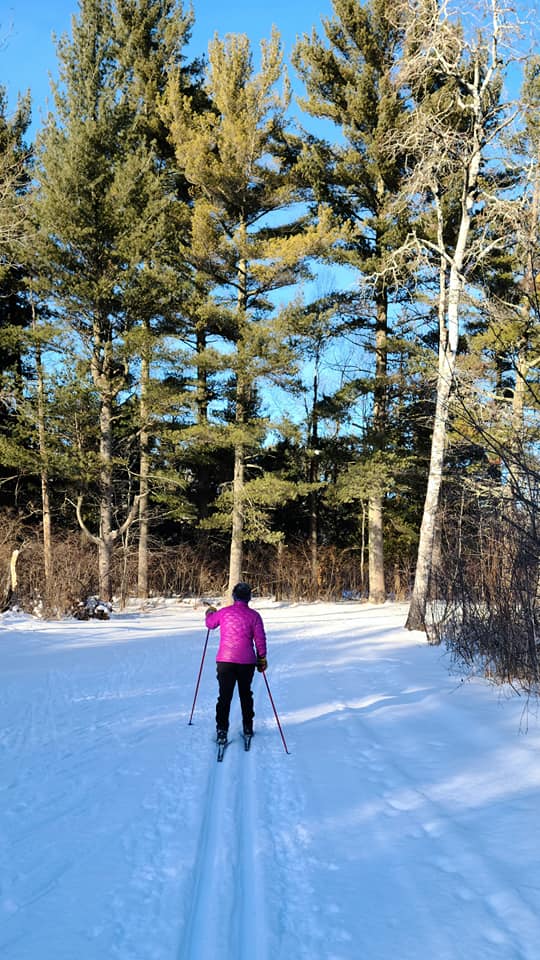
Marie skiing on one of the trails in the Superior Municipal Forest.
If, like me, you live in Duluth and you’ve cross-country skiied every trail and want something new, consider meandering across the bridge to the Superior Municipal Forest for some “superior” skiing in Superior, Wisconsin.
Russ and I tried the ski trails there for the first time this weekend. Since Russ doesn’t quite have his ski legs back yet (after not skiing last season due to an injury) we stuck to the easy red trail, going around both the outer and inner loops for a total of 4.1 kilometers.
The trail lives up to its beginner status. It’s fairly flat the whole way, sporting both classic and skating tracks. The trail winds through a forest filled with big ol’ white pines and birch/aspens. The views are inspiring, especially as the sun starts to slant through the trees in the late afternoon.
One thing to note is that you’ll need a ski pass to go on these trails. You can either purchase a seasonal one or a day pass. We purchased a day pass at the self-service kiosk at the trailhead for $5. See the web link in the first paragraph of this post for details. I hear that the city grooms the trails every day, so they are usually in good condition.
And, if you need a dog fix, this is the place for you. The city dog park is right at the trailhead, so you can visit with the dogs as you come and go. You don’t get that with just any old ski trail. Truly superior!
Once upon a time on Outer Island in Lake Superior, a lumber company cut much of the remaining old growth hemlocks and other trees to make baby furniture. The lumberjacks lived in a camp near sandstone ledges on the shore. They used a railroad built by previous loggers through the middle of the island to haul the heavy logs to a dock for shipping to shore. Eventually, the crew built an air strip so they could go home on weekends.
The company that used the wood was Lullabye Furniture of Steven’s Point, Wisconsin. By the 1960s, logging on the island cost too much, so the men left their camp. They also left behind the buildings, old trucks, a stove, a water tank.
Slowly, the forest took its revenge. Snow knocked down the buildings, the trucks rusted, animals carried away seat cushion stuffing for their nests. The forest regrew, swallowing the lumber camp and reclaiming the land as its own.
Last month, I meandered out to the most remote spot in Wisconsin: Outer Island in the Apostle Islands National Lakeshore in Lake Superior. Now, the folks on Washington Island off the Door County Peninsula in Lake Michigan might argue that they live in the state’s most remote spot. I guess it’s all in how you define “remote.”
The Milwaukee Journal gives Outer Island this distinction. However, the rest of the internet says it’s Washington Island.
To check on which place is really the remotest, I consulted with the Wisconsin State Cartographer’s Office. Jim Lacey, associate state cartographer, said he has not tried to define such a spot in the state yet. Is it defined as the farthest outpost of civilization that a person can easily reach, or is it the place farthest from any roads and the hardest to reach?
We went back and forth a couple of times about a worthy definition. Lacey agreed that it wasn’t very hard to get to Washington Island – all a person needed to do is pay for a ferry, drive their car onto it, and they’re set.
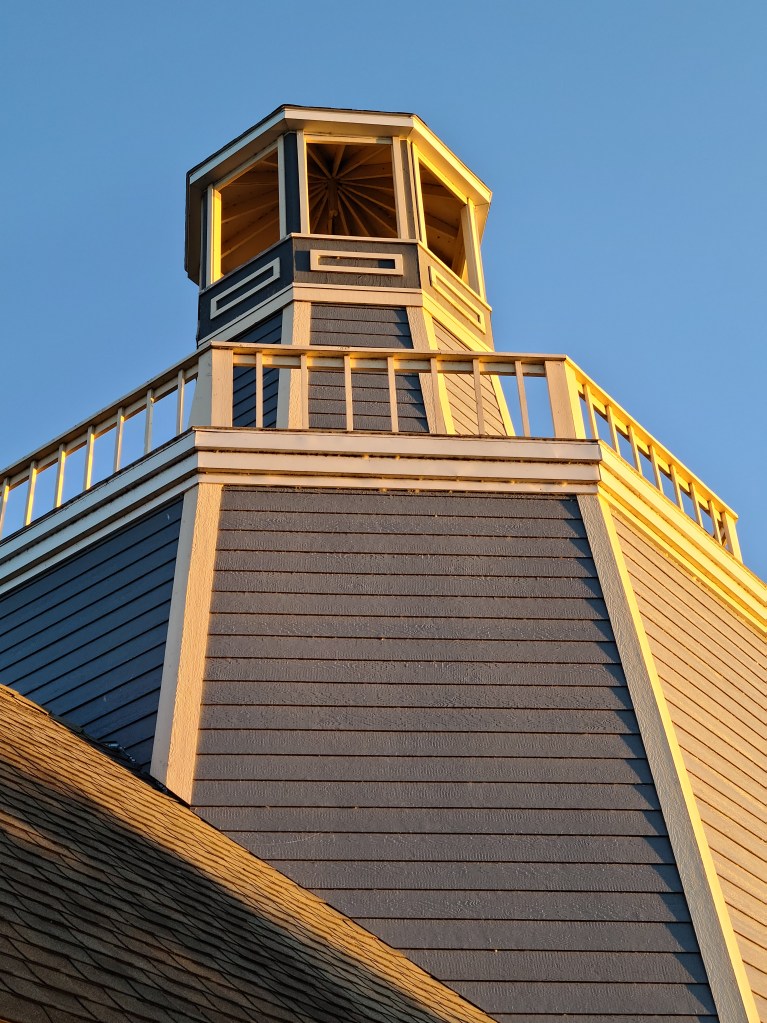
The spiral staircase that leads up to the top of the tower.
Outer Island, on the other hand, is twenty-eight miles from the port of Bayfield, Wisconsin, has no ferry and no roads. To get there, a person either needs to have their own boat, spend a couple days paddling a kayak, or pay a small fortune for a water taxi. A water taxi is basically a private motorboat ride. That’s how I traveled to the island last month.
Lacey said, “To sum it up, I’m afraid I don’t have a very satisfying answer for you! I think this is one of those situations where a deceptively simple question gets very complicated, very quickly.”
But, to my way of thinking, the difficulty of access and the lack of civilized conveniences makes Outer Island the “winner” for the remote spot title.
Anyway – I had a great time camping on the island. Visiting the place again reminded me of a research project, which never quite worked at the lighthouse, in part, due to the island’s remoteness.
Nine years ago as part of my job with Wisconsin Sea Grant, I accompanied Chin Wu, a researcher from the University of Wisconsin-Madison, to Outer Island. His goal was to install a webcam atop the lighthouse to track the development of rogue waves and wave patterns off the island’s coast.
Hooking the webcam up to the solar power grid on the lighthouse.
The National Park Service was cooperating with the project, so they drove our small research team out to the island for the installation. Once at the island, the park service staffer let us into the lighthouse and led us to the top of the tower.
We installed the camera and plugged it into the solar power system atop the lighthouse. Thankfully, the day was calm and warm, so hanging around outside ninety feet in the air wasn’t too scary.
I took some great photos, but they were never published because the project didn’t pan out. Why? The webcam needed a cell phone signal in order to transmit the photos. Back then, the cell phone system wasn’t powerful enough on the island for this to work.
The doomed webcam.
Even smart people need to learn things the hard way, sometimes, I guess. It just goes to show that science doesn’t always work out despite the best of intentions. But these photos are too cool to waste, so here you go. Mr. Wu has since gone onto conduct other projects in the Apostle Islands, which were much more successful, such as this WISC-Watch website, which provides tons of info about wave and wind conditions.
Russ and I meandered to the Apostle Islands National Lakeshore last month. We had the privilege of camping on Outer Island for two glorious, warm nights. Lake Superior was so calm, we could hear ore boat engines quietly throbbing even though they were dozens of miles away as they passed the island.
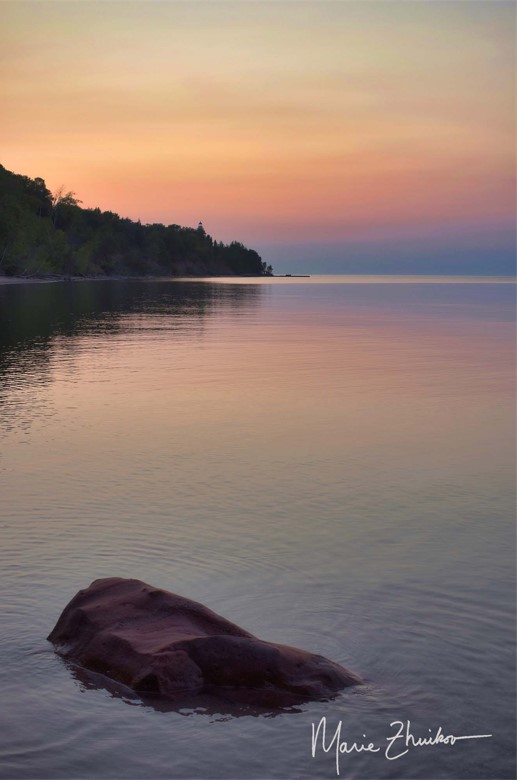
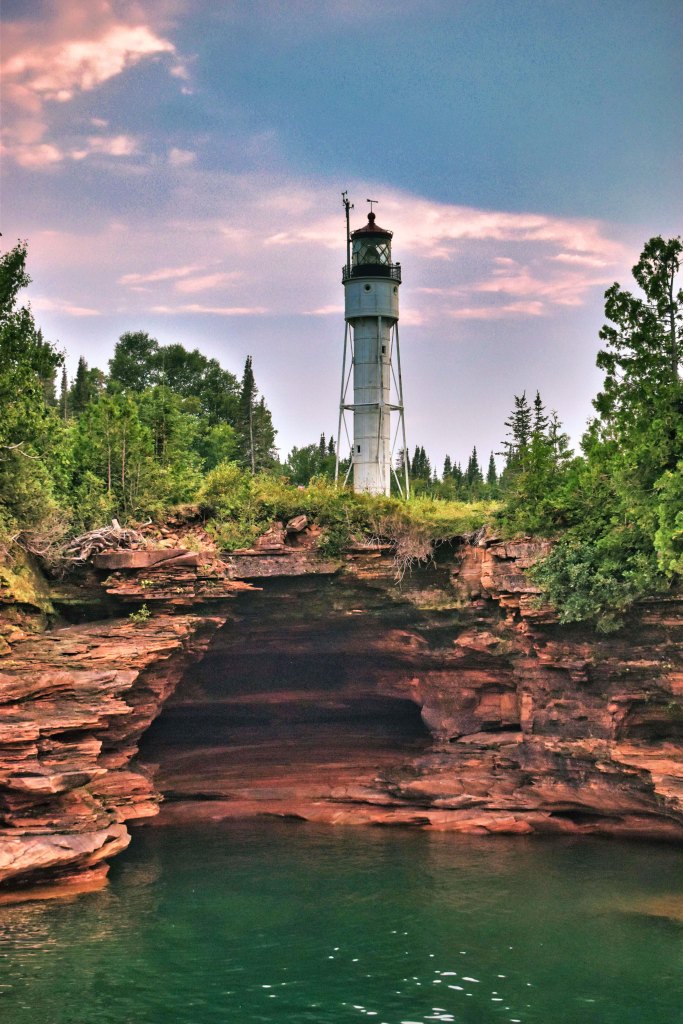
I took this shot from the beach near the lighthouse. You can just see the lighthouse over the tops of the trees by the dock. A wave-worn rock provided a perfect foreground. Can you feel the peace?
I’ve never had time to just hang out somewhere and take photos for a week. That’s what I was able to do (thanks to my awesome workplace) earlier this month. I took a landscape photography class at the Madeline Island School for the Arts.
Madeline Island lies off the Bayfield peninsula in northern Wisconsin. It’s adjacent to (but not part of) the Apostle Islands National Lakeshore.
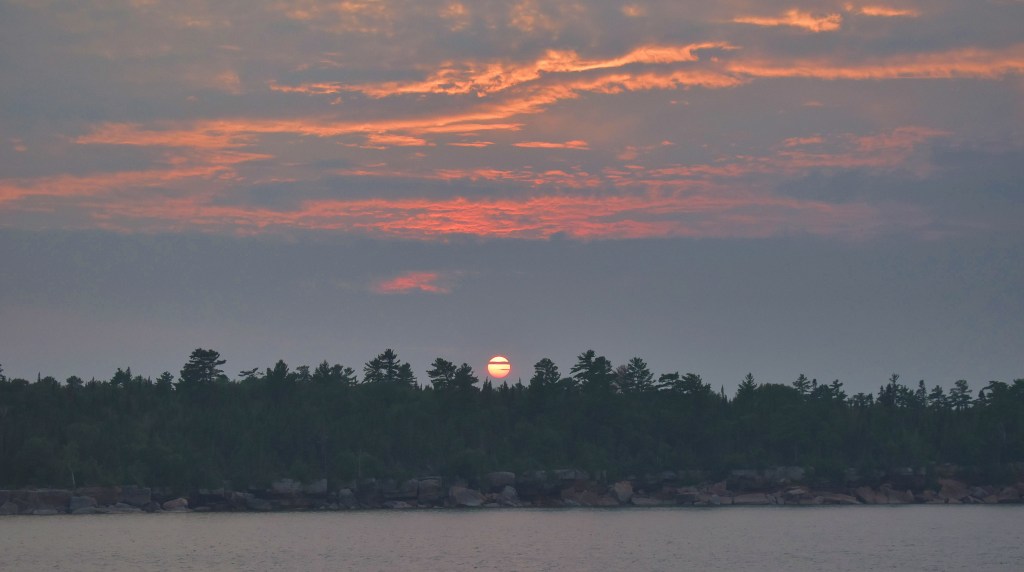
The class focused on sunrise and sunset photography. This made for long days, but it was worth it. The class was life-changing and life-affirming. I knew I had a good eye — I told my fellow students I learned photography “by osmosis” from my mother — but I’ve never had any formal training in it. An F-stop? ISO? What are those? I got a crash course and affirmative feedback, but am still learning.
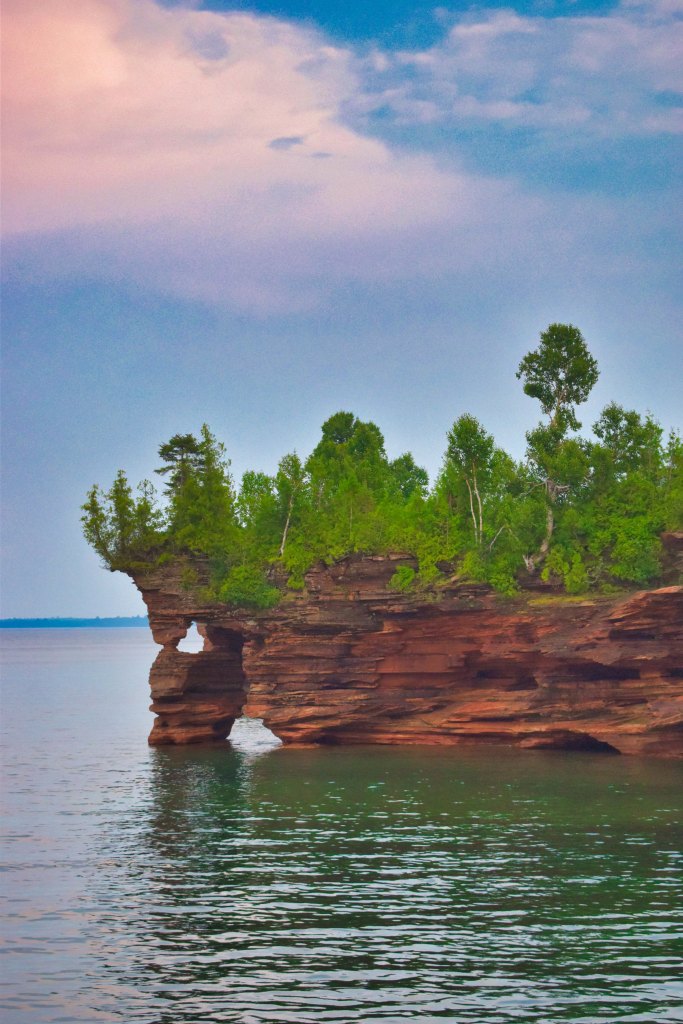
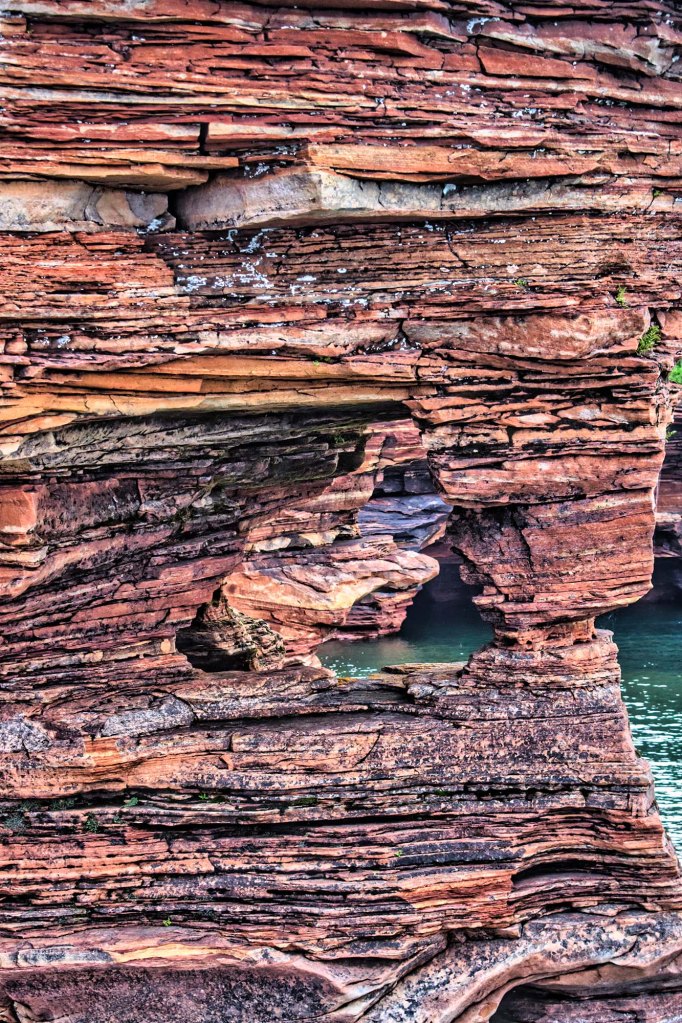
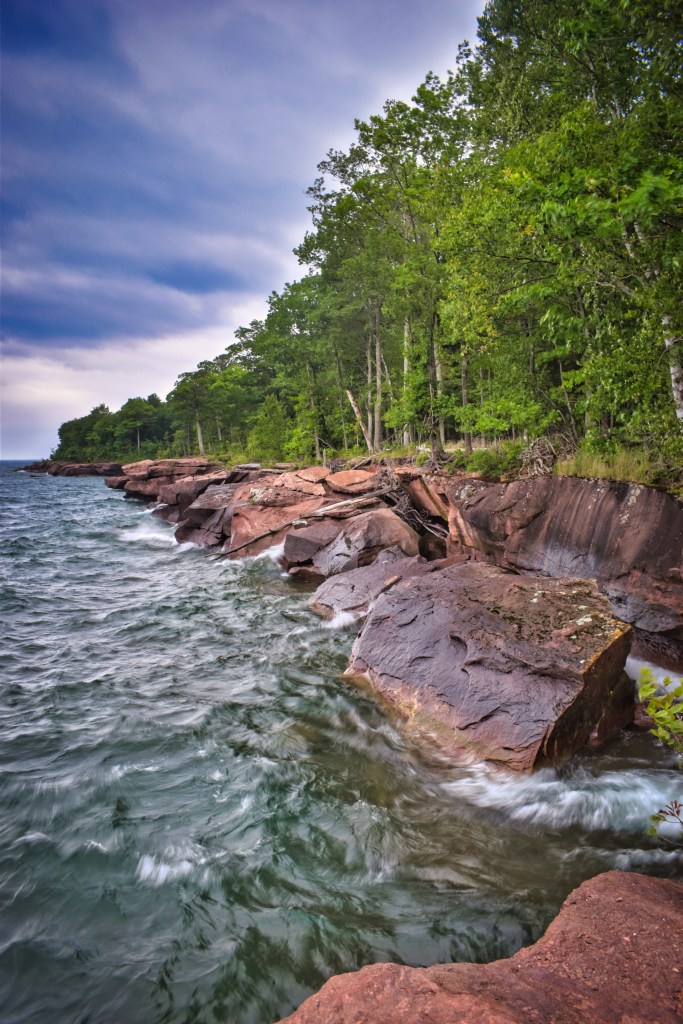
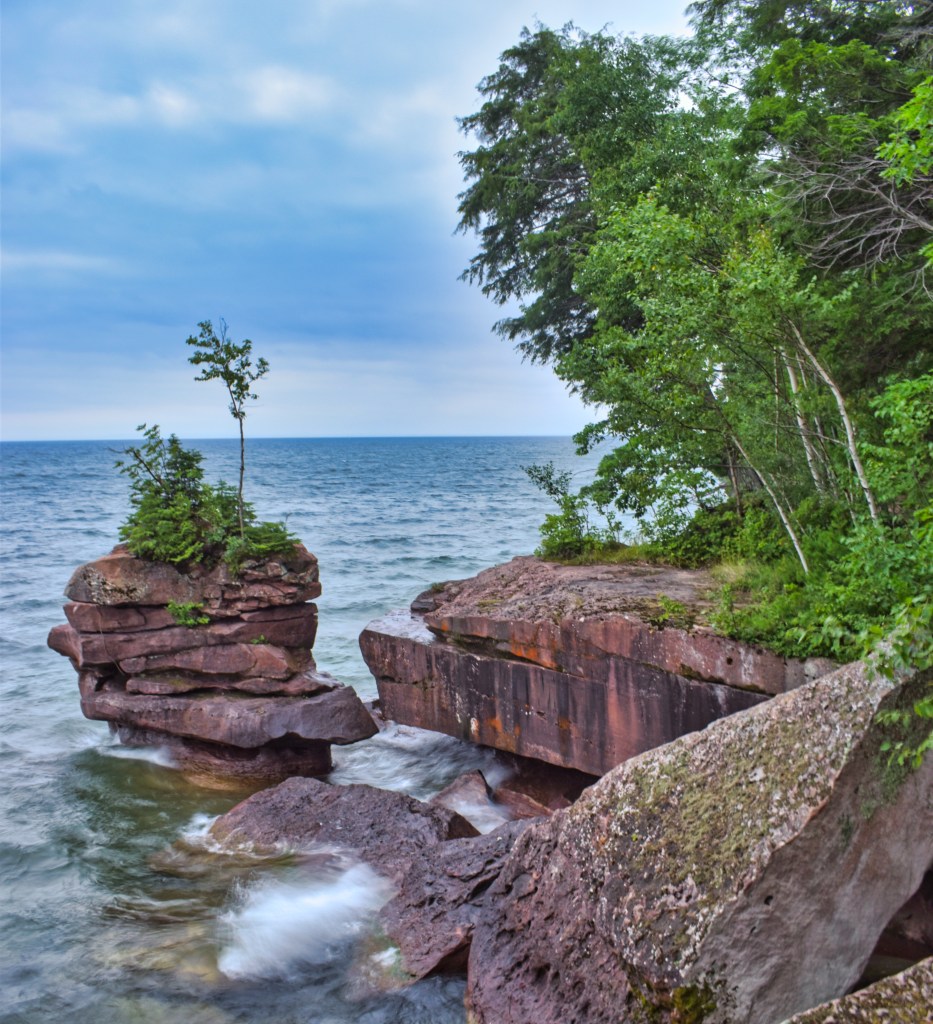
I’d like to share some of my favorites from the week with you. Locations include Joni’s Beach, Grant’s Point, Big Bay State Park, Black Shanty Road wetlands, the art school grounds, and Devil’s Island.
As always, feel free to use my images, but please give me (Marie Zhuikov) credit.
I’ve been a member of an all-women book group for many years. This past fall, we read “The Wolf’s Trail: An Ojibwe Story, Told by Wolves” by Native American author, Thomas D. Peacock. Like my novel, “Eye of the Wolf,” Peacock’s story is told from the viewpoint of wolves. Set in northern Wisconsin and Minnesota, it details the long parallel relationship between wolves and the Ojibwe people.
Peacock is a retired associate professor of education who taught and served as an administrator at the University of Minnesota Duluth for thirteen years. Several of his books are Minnesota Book Award winners. He’s well-respected in academic and literary circles, plus, he’s a member of the Fond du Lac Band of Lake Superior Chippewa.

We enjoyed “The Wolf’s Trail” so much, we invited Tom to speak to our group. Despite the pandemic, he and his wife Betsy came out from their home in Duluth on a cold wintry evening and met with us outside around a backyard fire.
I wish I had taken notes about our discussion then, but I was too busy tending the fire. Lucky for me (and you), after our meeting, Tom and Betsy invited us to their other home in Red Cliff, Wisconsin, in the spring for a potluck dinner and discussion of another book of his, “Beginnings: The Homeward Journey of Donovan Manypenny.” Tom offered to show us some of the locations where the novel is set on the Ojibwe reservation there. We readily agreed to this generous offer.
The Donovan Manypenny book is a poignant coming-home story. It’s about a boy who lived with his Ojibwe grandparents near Red Cliff until they died when he was ten. Shunted into the foster system, abused and rejected, Donovan is finally adopted by a loving white couple who ultimately moved to Boston, where he remained for forty-three years until the whispers of his beginnings lured him back home to the reservation. During his journey, Donovan followed the same historic westward migration trail that the Ojibwe travelled in their search for a new land “where food grows on the water.” (This refers to wild rice.)
Finding a date that worked for my book group members pushed our meeting until after the solstice. The weather was beautiful for a drive along the South Shore of Lake Superior to Red Cliff. Tom spent his summers with a great uncle and aunt in Red Cliff, and Betsy is a Red Cliff band member, so that’s what drew them to live there.
Here’s what happened.
Blueberry Road
Blueberry Road winds its gravelly way through the Red Cliff Reservation woods, dotted with FEMA trailer homes and other modest dwellings. After meeting at Tom’s home, we caravanned down the road, stopping at the trailhead for the new Frog Bay Tribal National Park after Blueberry Rd. veered and turned into Frog Bay Road.
Tom explained that his great uncle and aunt lived on Blueberry Road, which served as his inspiration for the setting of Donovan’s grandparents’ home. “My aunt and uncle seemed ancient to me, but I was only ten at the time. They didn’t have any running water, no electricity. They had an outhouse. Like many homes at that time, they had lilacs and weeping willows in the yard. That was the setting I thought of for my book,” he said.
The house where Donovan grew up on Blueberry Road isn’t actually on that road but is off busy Highway 13 a few miles away. Tom showed us that later during our tour.
An older couple who Tom met while he was teaching an Ojibwe language class in Bemidji years ago served as inspiration for Donovan’s grandparents. “They were just old-time native people who spoke the language and ended up teaching the language. The husband would drive the wife and then he’d sit with her in class. They always sat in the back.”
Tom said people who are familiar with the area often think he named Donovan Manypenny and his grandparents after the street in Bayfield called Manypenny Avenue. “But I didn’t,” he said. “There’s a lot of native people from the White Earth Reservation with that last name. I just liked it.”
While driving to our next stop, I had the luck (or was it planning?) to be in Tom’s car with a couple other book group ladies. We discussed different parts of the book that struck us. One I particularly liked was the conversation that Donovan’s grandparents have after they’re dead. The grandmother died first and after the grandfather dies, he apologizes to her for not being able to take care of Donovan anymore. But he’s so matter of fact about being dead – no wailing, no gnashing of teeth, just, “I’m dead, that’s all, I guess . . . maybe we’ll just have to help him from here.”
Tom said, “I wondered about putting that in there. But I wanted to write it, so I did. I took it out at one point, then I put it back in again. I worried that maybe people would think it was too weird.”
We told him we were glad he included it. Plus, it set up a pattern for other (living) characters to offer their viewpoints later in the story. That brought our conversation around to “Chapter 7, Ramona of the Wolf Clan.” This was another section Tom thought twice about including because Donovan, who is married by this time and is on his solitary westward migration, finds himself attracted to Ramona, gets drunk, and almost has an affair with her.
“Some people wonder why I put the Ramona chapter in there. It seems out of character for Donovan. I thought it was important that he be tempted, challenged, to show his humanity and that he isn’t a saint. And the chapter does explain, too, the difficult position that a lot of native women are put into.”
By this time, we reached our next stop.

St. Francis Catholic Church
The quaint red and white church in town was the inspiration for the church that Donovan and his grandparents attended, and the cemetery where Donovan’s relatives are buried. Tom said the church was familiar to him as a child. “I’ve gone to a million funerals in that church.”
Across the street sits a decrepit school building that he envisioned as Donovan’s school.
Standing in the church parking lot, we discussed Tom’s own westward migration, which he took thirty-five years ago when he finished college in Boston. (He graduated from Harvard with a master’s and doctorate in education.) At the time, he did not know he would write a book about his travels – he just needed to go home.
“After school, I had to pack up everything and leave. The route west just seemed like the logical thing to do. One of my brothers came out and helped me pack up. I had an old rez car and he works on cars, so he helped me fix it up enough that I’d make it home.”

Shore of Lake Superior with view of Sand Island
Our next stop was at the end of a road near Tom and Betsy’s home. We gathered at a parking area near a small beach with a view of the nearby Apostle Islands. Near the end of the novel, Donovan, his wife, and daughter visit Lake Superior one morning to offer tobacco. They prayed and Donovan thanked the Creator for everything, “For our lives and all the blessings we have had. Just then when I prayed a slight breeze came up and caused ripples on the water. I know it was our Creator answering,” Donovan said.
Tom explained he was thinking of this beach during that scene. It’s also the same beach where he and Betsy married.
The Peacock’s Living Room
After our potluck dinner, we sat down for an extended conversation. Tom let us in on some other changes he made to the story before it was published and gave us insights into its main characters.
He explained that in his original version, Donovan discovered he had Stage Four pancreatic cancer, which is basically a death sentence. “So that’s why he made his journey home – to die. But my publisher, Jim Perlman, liked Donovan so much, he didn’t want him to die, so I had to rewrite it.” (Perlman is the publisher for Holy Cow! Press.)
When he reached Red Cliff, Donovan discovers he has a sister, Maggie. Tom said she is a character in a previous story he published, where he described her journey from the foster care system in Minneapolis to Red Cliff. I was glad he mentioned that because I noticed the lack of her backstory in the Donovan Manypenny book. I will have to find that story and read it!
The character of Uncle Eddie, who orients Donovan to Red Cliff and his past, has been featured in many of Tom’s short stories. He is also the main character in Tom’s next book, which is coming out soon from Dovetailed Press.
“Eddie is 86 years old and the story is written in first person like a memoir. Eddie’s been my favorite character. Donovan is also in the story, but more as a cameo,” Tom offered.
I’ll end this extended post (thanks for sticking with it!) with some Q & As from our living room conversation. The second question was especially enlightening, and Tom’s response seemed out of character for this soft-spoken, mild-mannered author:
Growing up, did you experience the same disconnect with your heritage that Donovan did?
“No. I grew up on the Fond du Lac Reservation and I’m very comfortable there. Even when I was out East, I hung out with native people. I think when you’re educated you can be comfortable in both worlds (the white world and native world). I feel safe on Fond du Lac. Those people who are shooting each other are all my relatives. But because I was blessed with an education – I feel comfortable in the academic world, too.”
So, you didn’t find education to be a barrier between you and your native heritage, similar to the main character in Sherman Alexie’s “The Absolutely True Diary of a Part-Time Indian?”
“I think I was kind of an enigma because I liked to drink, fight, and raise hell. During prom, I was out stealing gas from all the cars and getting straight A’s at the same time. I could do that and get away with it. I didn’t feel stigmatized at all – because if they did, I’d beat the crap outta them!”
Do you think things really got better for the little boy that Donovan comforts on Manitoulin Island after they went to the police?
“No, I don’t think so. That’s a really common thing with a mom and her boyfriend – the kid kinda takes all the crap. I had to leave it at that. There are a lot of native kids who are of mixed race, black and native, and I wanted to have that in a character. It’s hard for them. They get picked on by everybody and they’re never accepted anywhere.”
What’s your writing process?
“When I’m writing, I’ll write a chapter a day. I’ll get up at five in the morning and write until seven or eight at night. Then I’ll ‘force’ Betsy to read it before we go to bed because I want someone to read it. (Laughs) And then I’ll work on it for about a week, editing.”
Do you know many people who have come back to the rez?
“In Fond du Lac, I had a nephew who showed up right around his eighteenth birthday from California. He just came and banged on the door one day. He was the spitting image of one of my brothers who passed away 20 years ago. He scared the crap out of all of us!
“One of our nieces showed up when she was eighteen, too. Then when they were sniffing around for someone to date, we had to set them down and tell them who they shouldn’t be hanging out with because, ‘That’s your first cousin.’ We had to do that with both of them.”
Why didn’t you describe Donovan’s physical characteristics much in your book?
“I couldn’t visualize what he looked like. That’s one thing I had to add in as an edit. Same thing with Maggie. I couldn’t visualize her. The characters often appear to me as voices rather than a physical presence.”
And so, sated on Betsy’s fry bread, filled with a new appreciation for Tom’s work and a deeper understanding of native issues, we said our goodbyes and each began our own journeys, homeward.
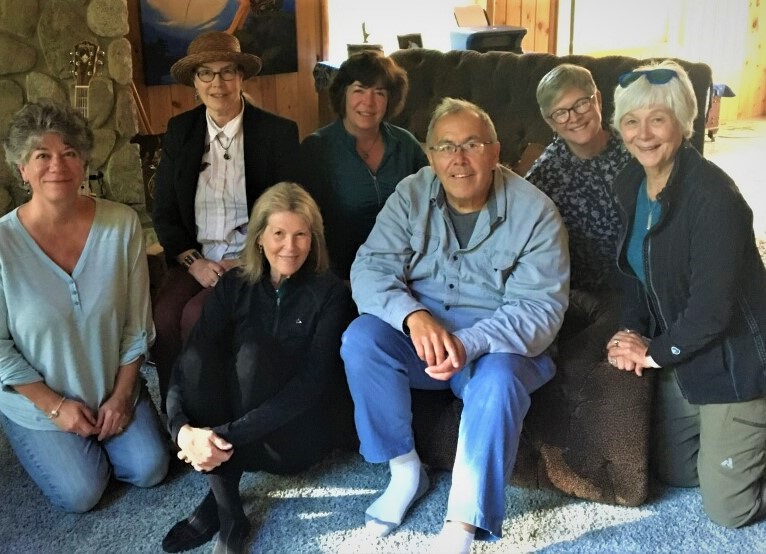
My book group with Tom in his living room. From left to right, me, Konnie, Sherry, Sharon, Tom, Judy and Diane.
We expected only a few local poets would be interested. We thought they’d offer poems about the St. Louis River on the Minnesota-Wisconsin border.
That was our mindset when the River Talk planning team at my workplace first developed the theme for the public poetry reading to be held in conjunction with the St. Louis River Summit as an evening program in March 2021. We were mistaken, but in the best possible way.
In reality, our call for river poems through the literary submission management platform Submittable garnered interest from 76 poets from across the U.S. and around the world. They submitted 148 poems for consideration.
“As it turns out, a lot of people like to write about rivers. That’s because they are really important in our communities and in our lives,” said Deanna Erickson, director of the National Lake Superior Estuarine Research Reserve, which co-sponsors the River Talk series with Wisconsin Sea Grant.
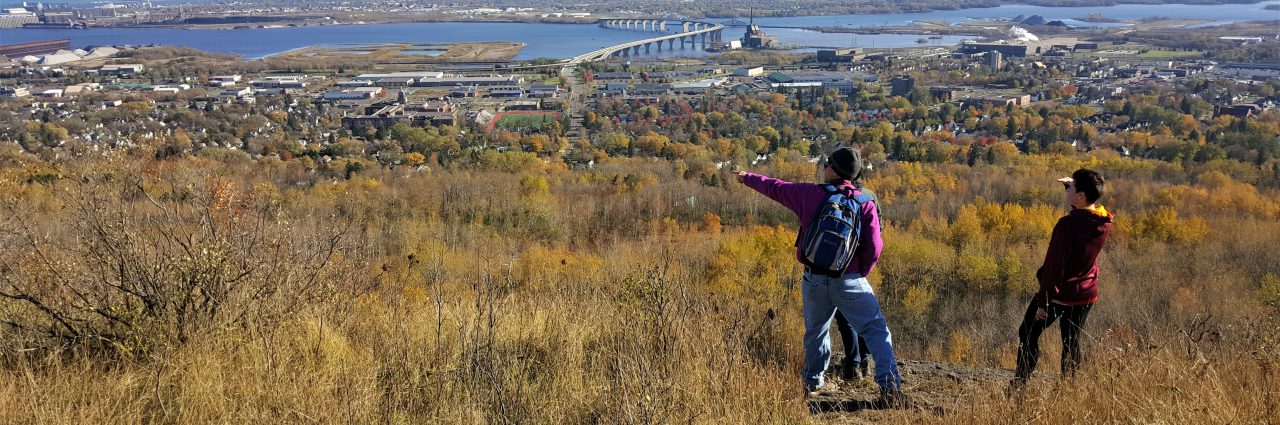
An overlook above the St. Louis River in Duluth, Minn.
We quickly realized we were going to need more judges. In the end, we gathered six who represented a good cross-section of the audience we expected to attend the summit.
The judging was “blind,” which means the poets’ names were not associated with their poems. After two rounds, the judges narrowed the number of poems down to a dozen, with a few for backup in case any of the chosen poets could not be reached.
Although communication was sometimes a challenge, all 12 poets were enthusiastic about participating in the reading. They represented a wide diversity of ages and ethnicities.
The River Talk was a couple of weeks ago, but the warm fuzzy feelings it engendered remain with me. I could use many adjectives to describe it: powerful, beautiful, stark, raw, funny — but it’s really best if you listen to the poems and feel all the feels for yourselves. The reading drew 85 Zoomers, a record attendance.
The Lake Superior Reserve, our partner in the talks, recorded the reading and it’s available on their YouTube channel. Here’s a list of the poets (in the order they read) and the names of their poems:
Tyler Dettloff (Michigan) “My Stars” Heather Dobbins (Arkansas) “I Held us on for 36 Hours after the Levee Broke to hell” Ben Green (New Mexico) “Immersion: A Prayer of Intent” Lorraine Lamey (Michigan) “Catching Your Drift” Joan Macintosh (Newfoundland) “The Current Feels” Kate Meyer-Currey (England) “Timberscombe” Rebecca Nelson (California) “Of the St. Louis River” Stephanie Niu (New York) “To the Beaver’s Eyes” Diana Randolph (Wisconsin) “Knowing the Way” Ron Riekki (Florida) “It Took a Long Time to Discover” Derold Sligh (South Korea) “Rouge River” Lucy Tyrrell (Wisconsin) “Talking Water”
Ironically, the one poem specifically about the St. Louis River was written by someone who had never visited it. Rebecca Nelson said her poem, “Of the St. Louis River” was inspired by the spiritual experiences she’s had while watching water. She grew up in the Midwest and said she wrote the poem thinking of the rivers she knew from childhood. “I would love to visit sometime after the pandemic!” Nelson said.
Barb Huberty, St. Louis River Area of Concern coordinator for the Minnesota Pollution Control Agency, offered this comment in the Zoom chat, “I never knew that poetry could unite people across the globe.”
Sharon Moen, Eat Wisconsin Fish outreach specialist for Wisconsin Sea Grant, offered, “Thank you to all the poets and organizers! I am inspired by the depth of your thoughts and stories.”
Remaining River Talks will be held on April 14 and May 12. For more information, visit the River Talks page: go.wisc.edu/4uz720.