
When the stone
of the world
is upon you,
open it to ice;
release it
in stillness.

When the stone
of the world
is upon you,
open it to ice;
release it
in stillness.

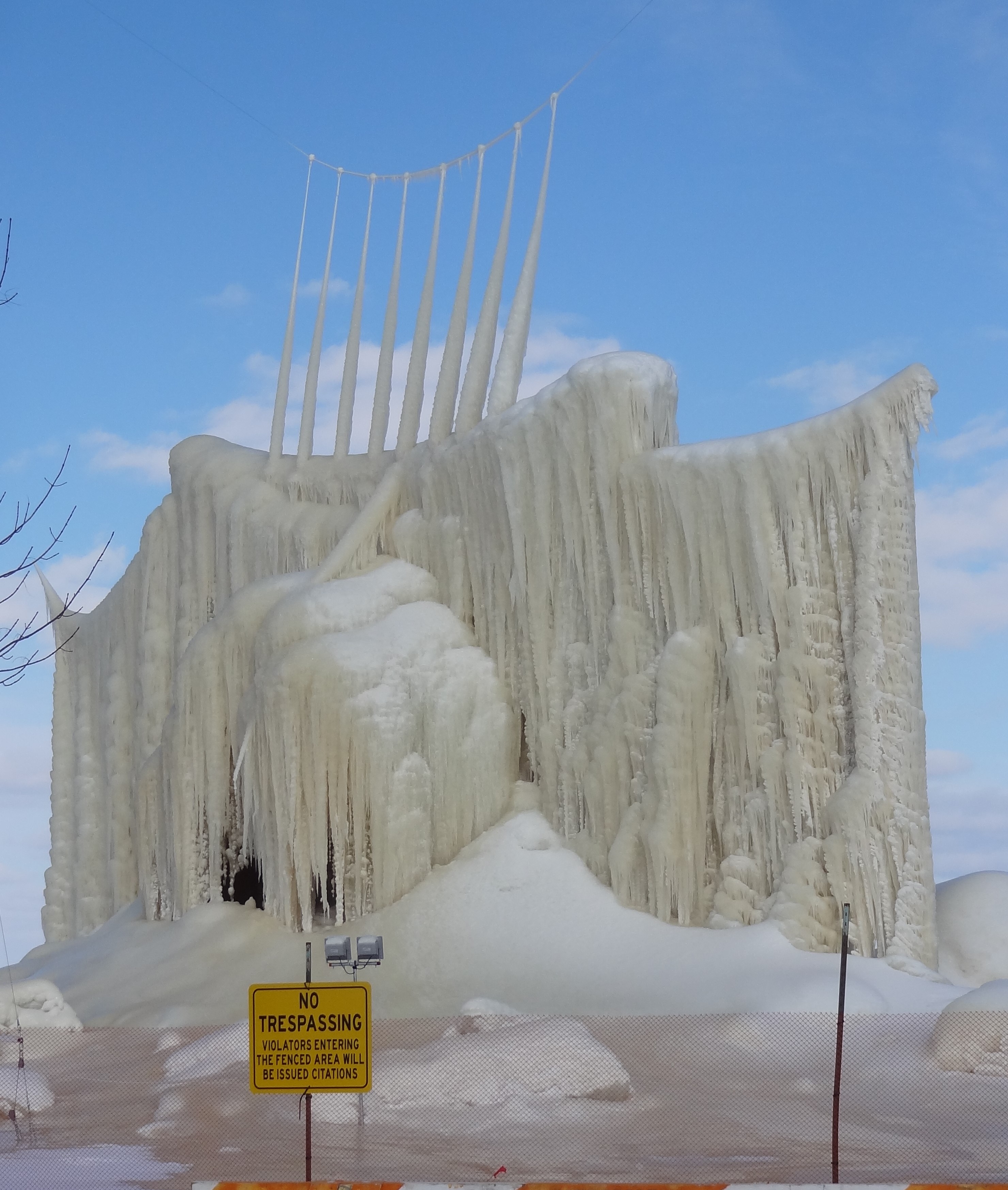
The ice formation, viewed from behind. Above it is one of the four towers that sprays water to create the structure.
A European-style castle is being built a few steps away from my office. The building materials? The reddish brown water from the Duluth-Superior Harbor.
From the four blog posts I wrote last winter, you may recall “Ice Man” Roger Hanson’s adventures trying to build a world-record ice sculpture on Barker’s Island in Superior, Wis. (To read the posts, type “Roger Hanson” into the search box on my blog.)
Let’s just say he learned a lot from that experience, and is at it again. Roger has a contract with the City of Superior to provide ice sculptures as a tourism attraction for three winters, and this is his second.
Last year, Roger was going for height, but a February thaw and shifting ground toppled his world-record attempt. This year, he’s going for width and mass. Plus he has a heckofa large supporting ice base on his formation that looks like it might not melt until July.
Roger builds his creations with the help of towers that periodically spray water he pumps from the harbor. He controls the actions of the towers through a computer set-up he has in the trailer he lives in near the sculpture.
He plans to spray a ninety-foot-wide, seventy-foot tall, eight million-pound structure, complete with castle turrets and a doorway in the middle.
He had one small set-back a few days ago when high winds blew apart part of the formation. Roger has since recovered, and the structure is now sturdy and thick enough that winds should not be an issue. But it’s an El Nino winter, which typically means warmer temperatures for this area. The weather has been cold enough lately for ice formation. Who knows what the rest of the winter may hold?
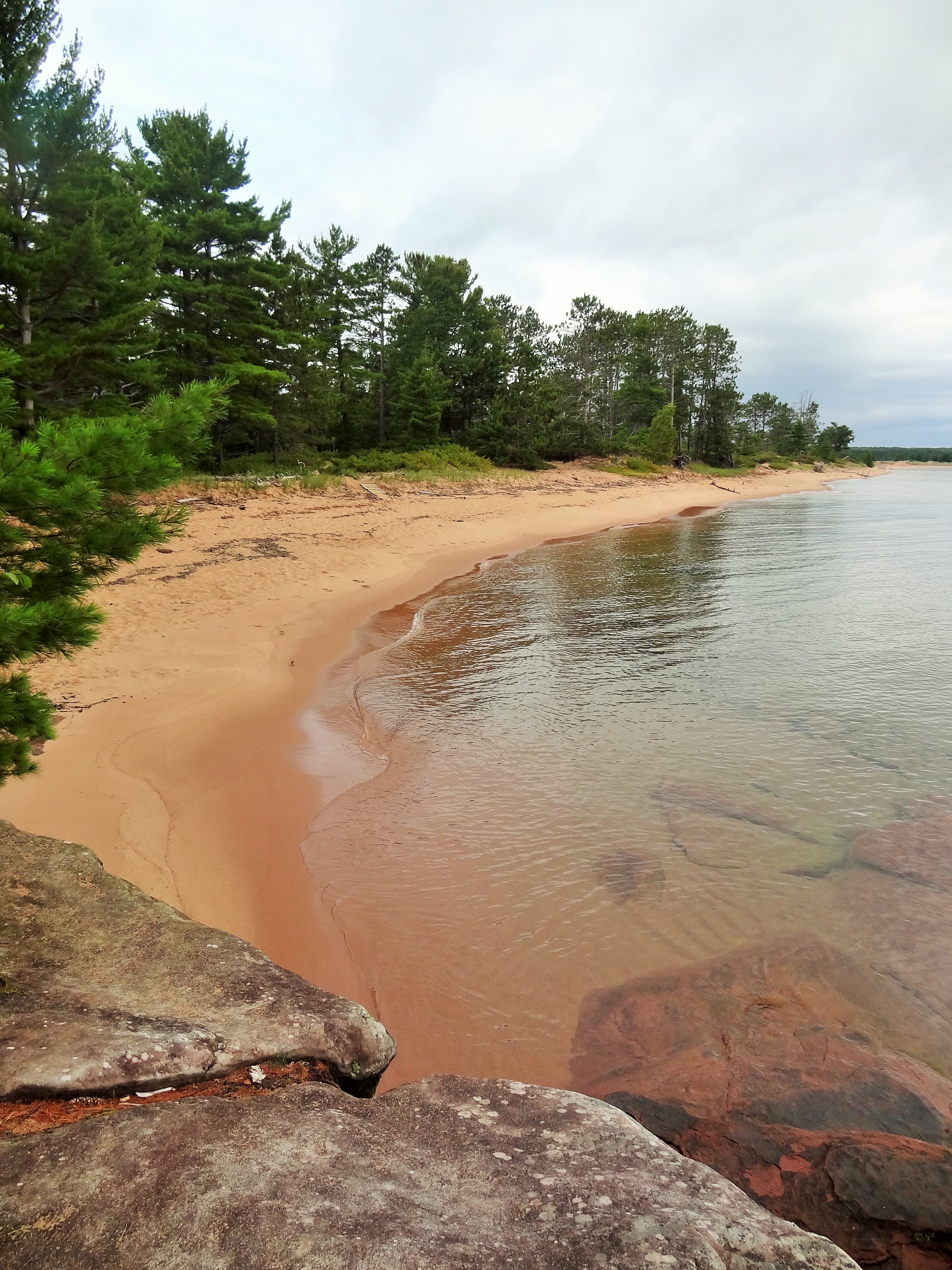
Julian Bay on Stockton Island in the Apostle Islands National Lakeshore.
I recently meandered to the Apostle Islands National Lakeshore in Lake Superior. The Apostles are a group of islands scattered off the end of the Bayfield Peninsula in Wisconsin. Unlike the name would suggest, there are more than twelve.
No roads or stores exist on the islands. They offer a primitive camping experience – not quite as primitive as the boundary waters, but close to it. Madeline Island, where I also travelled recently, is part of the formation, but it’s not part of the lakeshore because it’s so developed.
My friend and I had reservations to camp for four nights on Stockton Island, the largest in the park. The weather forecast couldn’t get much better – 75 degrees and sunny every day, so I Ieft my hat, gloves, and warm jacket at home even though I knew better.

Pretty nice campsite view, eh?
Our first day was gorgeous – sunny and warm. Setting up a tent in such calm conditions was a novelty. I should back up and mention that although people can reserve a campsite on Stockton, they can’t reserve a specific site. Instead, after the boat drops campers off, a free-for-all sprint is required to beat others and snag your desired site.
Such athletic prowess is not required every day – just the more popular ones for travel, such as Friday. Nineteen sites are scattered along about a mile of shoreline, so the sprint (okay, perhaps it was more like a jog) can get a bit long. I don’t recommend carrying anything heavy during this process!
Another friend told me which sites had the best beaches, and of course, these were the ones farthest from the boat dock. While my camping friend stayed on the dock with our gear, I successfully staved off a woman about my age who was carrying a backpack to bag a site that offered a view and private beach. It’s dog-eat-dog in the wilderness, you know.

Brownstone quarry, Stockton Island.
The next day was a little windy, but still sunny. We chose to hike to an abandoned brownstone quarry on the island. Once we returned to our campsite, the wind picked up to gale intensity and stayed that way until our last evening. In the ensuing days, to escape the wind we crossed the island to Julian Bay and Anderson Point. Julian Bay boasts a protected, beautiful beach, and Anderson Point features a mossy primeval forest.
Thankfully, the temperatures stayed in the 60s, so although the wind was a nuisance, it was not bone-chilling. But having a hat and warm jacket along would have made for more comfortable camping. Lesson learned? Don’t believe the weather report. As the park people like to say, “The Lake is the Boss.” It (and its weather) will do what it wants. Bring warm clothes, even in August.
Another lesson we learned was to guard your gear on the dock. We had piled ours there in anticipation of the cruise boat back to the mainland. Unbeknownst to us, several families had just arrived and were all camping together. They had a few kayaks left on the dock that they came back to move. But because their group had so many people, they weren’t sure what gear was whose, and they started to grab our packs to float them back to their campsite in their kayaks. Luckily, I happened to be watching. I ran to the end of the dock and let them know they were taking our stuff.
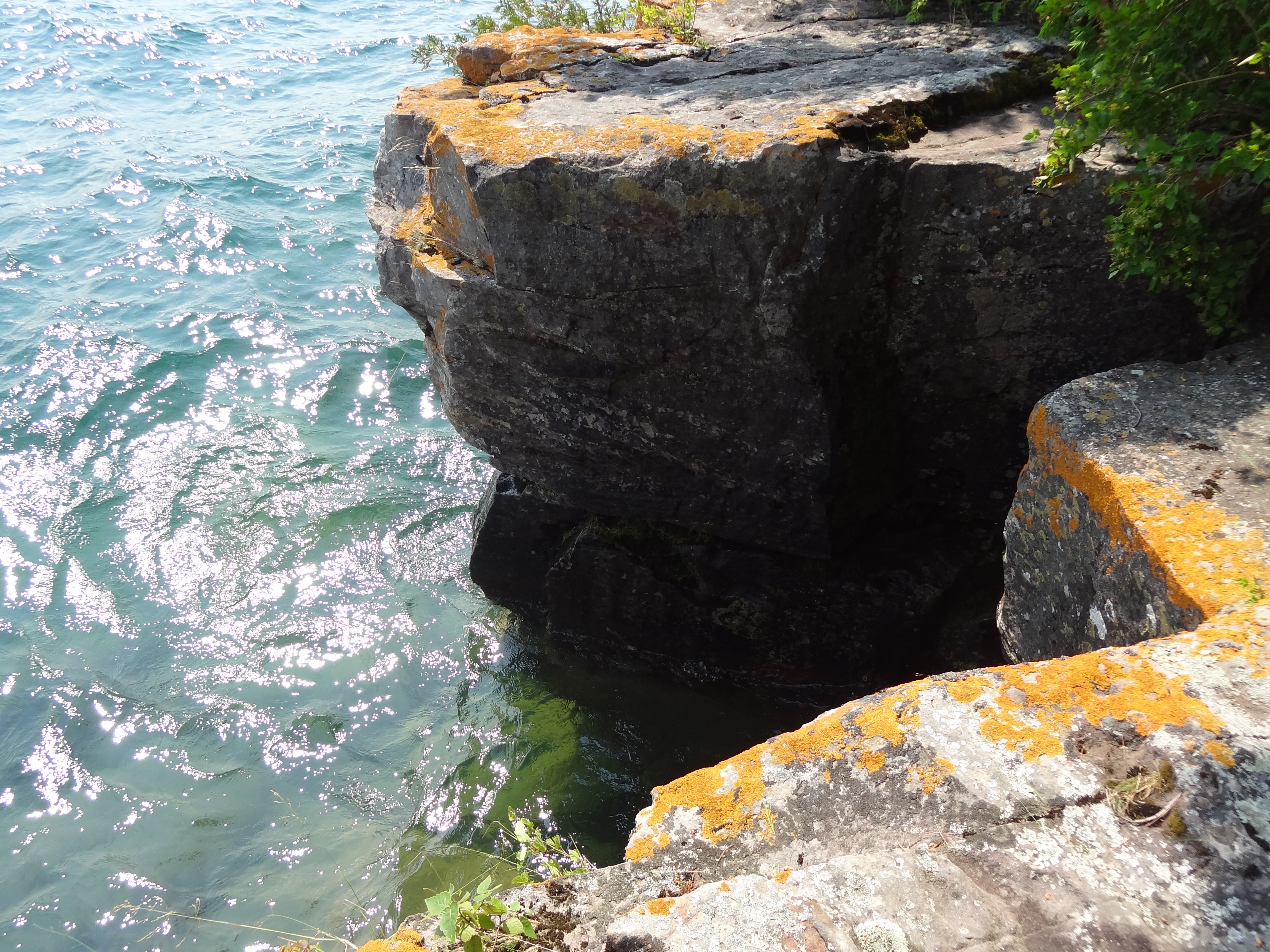
Anderson Point rocks, Stockton Island.
The same thing happened about an hour later when other members of the group made their way to the dock. This time, I was distracted. I was talking to my friend about how I had saved our stuff from being carted away. We walked back toward the dock and looked at the spot where our stuff should be. It wasn’t there!
As we approached, we ran into several people carrying our gear off the dock. Again, we explained that it was our stuff. They were appropriately sheepish and apologetic, and probably secretly thankful they didn’t have anything more to carry.
Despite the would-be gear thieves and gale-force winds, the island worked its magic. I was able to exchange my everyday worries for worries about basic survival, which was somehow refreshing. I read a book, hiked a lot, swam (well, almost) in chilly Lake Superior, breathed in the scent of pines and cedar, stretched out on the beach, attended evening ranger talks, and learned more about a new place and a new person.
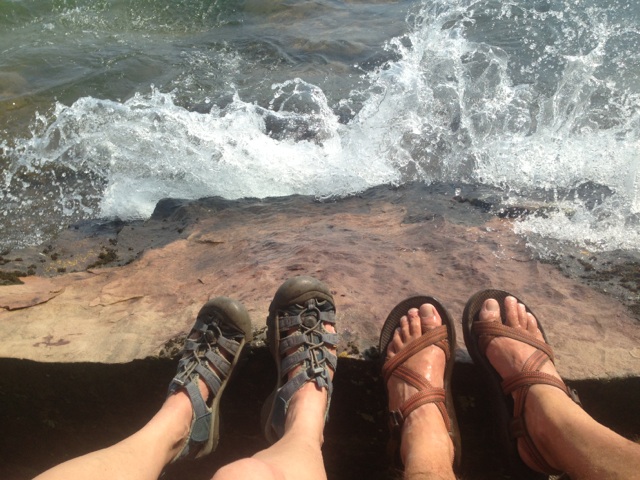
Lake Superior thrill ride.
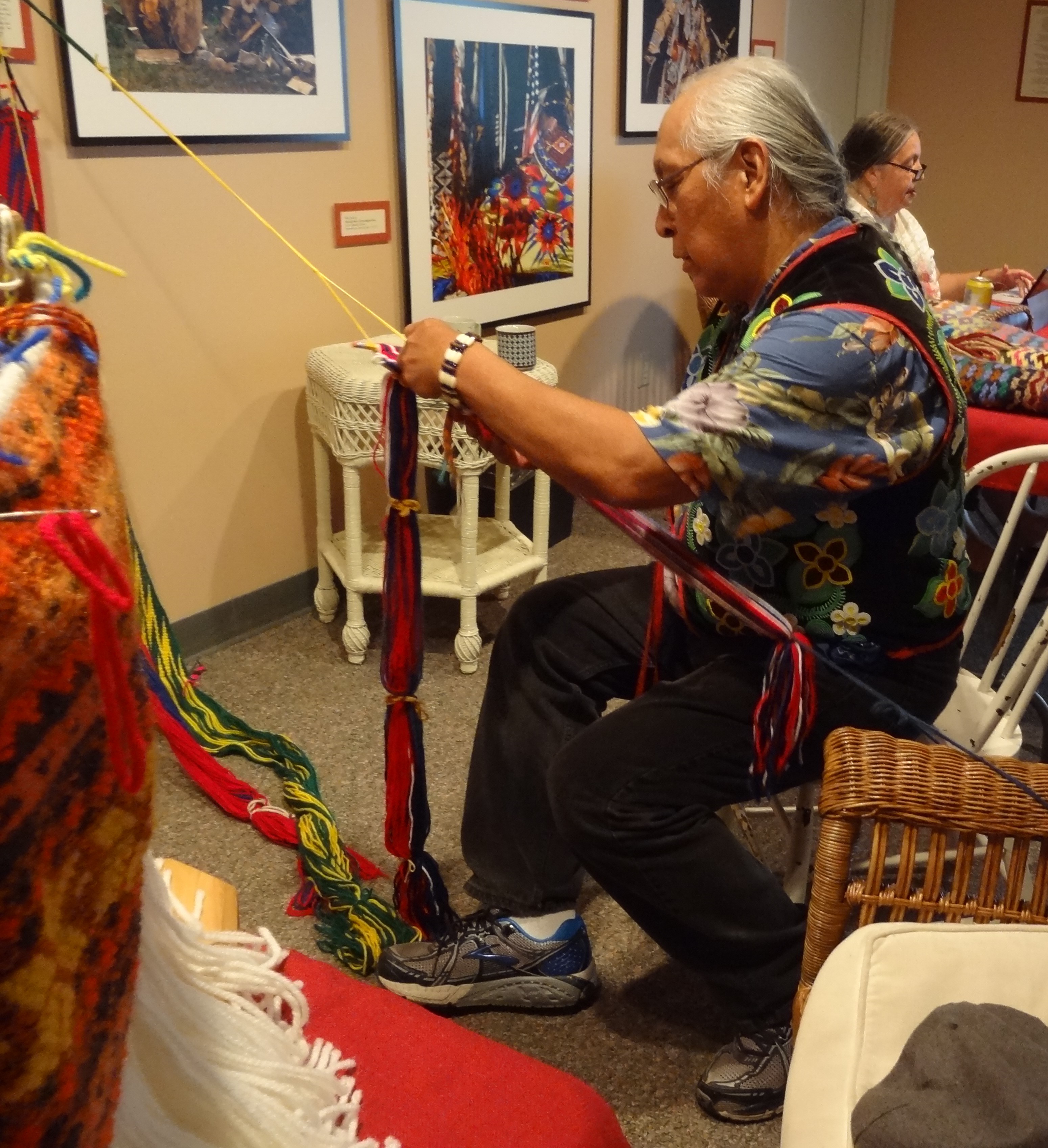
Dennis White demonstrates finger weaving in the La Pointe Museum.
Last weekend I had the chance to revisit Madeline Island in Lake Superior – my latest island love. This time I brought my family along and was able to spend more than an hour on the island – more like five hours – but it still wasn’t enough!
The most noteworthy experience was a visit to the museum in La Pointe, the town on the island. The museum is a compendium of historic and modern buildings. Although the dusty artifacts were interesting, the coolest thing was an actual live human being named Dennis White. He was demonstrating finger weaving, a Native American craft.
Finger weaving is new to me. Dennis explained it’s like weaving without a loom. He described two methods to us, one that uses a single stick as a frame for the weaving and another that uses the doubly complicated equipment of two sticks. For the two-stick method, Dennis had some custom-made wooden frames, but explained that a person could just as easily poke two sticks into the ground for the same effect. I loved that the technique was so primitive and portable.
He weaves sashes for ceremonial purposes, bags, and small pouches that people are now commandeering to carry their cell phones. To allay the boredom that can come from working on a single design, Dennis usually works on multiple weaving projects at a time (eight or more). It takes him about 10 hours to weave a sash. The longest amount of time he spent on a project was 100 hours.
Dennis is an Ojibway from Hayward in northern Wisconsin. He’s so accomplished at his craft that he was invited to do an artist’s residency at the Smithsonian Institute. One of his weavings is featured in the Tweed Museum of Art in Duluth. Dennis also has a master’s degree in mathematics and is a retired math teacher.
We got into a philosophical conversation about the links between math and art, and how people with a talent for one of these things often possess a talent for the other. I wish I could better remember his words. In any event, they were deep and true. Just from our short exchange I could tell he was kind, wise, patient, and proud of his heritage. His sense of humor was delightful, too.
An elementary school art teacher happened to be standing next to me during our conversation and told me she hopes to invite Dennis to her class someday. I get warm fuzzies knowing that this chance encounter could lead to young minds being instructed and inspired in an ancient craft.
For more information about Dennis, read this story from “On Wisconsin” magazine.
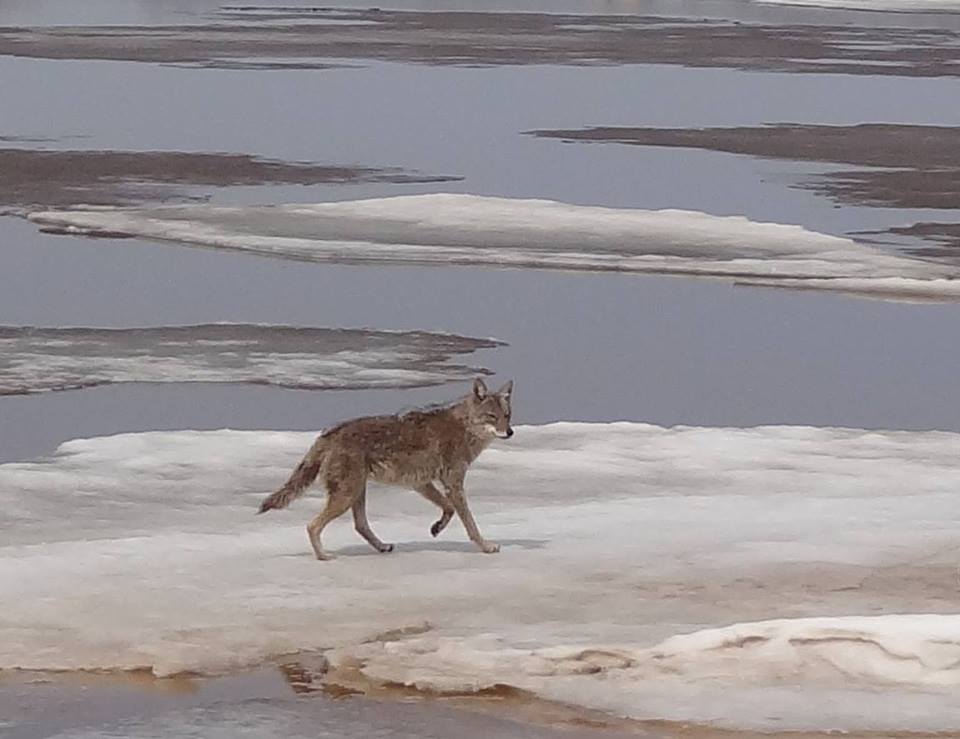
A coyote seen crossing the ice outside of my office.
I’ve had the privilege of working in some unusual office buildings. They range from an historic federal building of imposing gray stone, a renovated college dorm with stone stairways grooved by the trodding of many feet, sterile medical center cubicles, a building with intricately carved panels on heavy brass doors and bathrooms with floors and stall dividers made of marble, a building in a tourist district that shared space with shops where my office was above a popular restaurant, and a basement newsroom filled with clacking typewriters.
But my most recent office building is the most interesting in several ways. It’s situated on an island in the Duluth-Superior Harbor in what was once was my favorite restaurant for Lake Superior fish. It features a deck that’s just steps from the water and from public docks. The building is in a city park that draws people for recreation.
When I was eating at the restaurant, never in my wildest dreams did I think I would one day work in the building, but as fate would have it, here I am, right in the spot where I ate lake trout with friends. I have two banks of windows that look out on the water. Although I assure you I spend most of my time staring at my computer screen, the windows have afforded plenty of opportunity to see other things in my three years here – like the coyote who crossed the ice from the mainland one spring, or the fox who heard a mouse underneath the deck and kept trying to pounce on it (see video here), or the family of otters cavorting in the water, or the disabled gull , or a young common tern begging its parent for food, or woodchucks sunning themselves on the deck, or the bear who walked through the parking lot.
Humans have also created distractions — like the guy who walked backwards past my office for several mornings in a row, only to pass by walking forwards minutes later in what must have been an exercise ritual. (Now he bikes past). Then there was the man who swam past my office. I read later in the newspaper that he was a long-distance swimmer who traveled from the Duluth to the Superior ship entries. My office is along the way. Then there was the man who drove a Zamboni down the road, and the man who wanted to build a world-record ice sculpture .
We get all sorts of people wandering inside our office as well, looking for public restrooms and tourist attractions that haven’t operated in the park for years. There was the tour busload of people who were looking for Wisconsin cheese, people who want to buy harbor boat tour tickets, people who think we’re the office for the historic ship that’s parked next door.
But sometimes we actually have visitors who take time to read the signs outside our office and want to know what kind of research we do. (For those of you who have not paid attention over the years, I work as a writer for a water research organization.) Sometimes these visitors are scientists, sometimes they are crackpots who want us to publish their theory to the universe and everything. But sometimes they’re the inventor of the Post-it Note.
Yes, you heard me right.
This week, the real live, honest-to-god inventor of the 3M Post-it Note dropped by the office on a whim to learn about what we do. He came in with his wife and talked with our receptionist, whose office is right outside mine. I couldn’t help but overhear the conversation and recall thinking the duo asked intelligent questions. It was just as they were leaving that the wife told the receptionist that her husband was Arthur Fry, inventor of the Post-it Note. After a moment’s hesitation in disbelief, I rolled my chair over to my doorway just in time to see the retreating back and profile of the purported inventor.
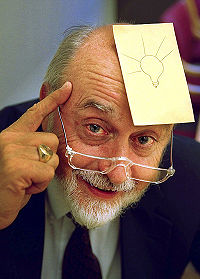
Arthur Fry. Image courtesy of Wikipedia.
I shrugged and went back to my task, but started thinking later in the day: what if he really was the inventor of the Post-it Note? What does the inventor of the Post-it Note look like, anyway? I looked him up on Wikipedia, and by Jove, our office visitor was a dead ringer.
It was then that I metaphorically kicked myself for not taking advantage of the opportunity. I should have run after him with my camera and new fancy digital voice recorder and interviewed him for my world-famous blog! He seemed like a very nice man, I’m sure he would have obliged. It’s just that I had spoken with one of the crackpot people only the day before and I wasn’t in the frame of mind to believe that a genuine inventor could just walk in off the street.
Next time, I assure you I’ll be ready. Now I’m just waiting for the person who invented the coffee cup sleeve to walk into my office.
Say you have an awful terrible job like mine (smile) that requires travel to a picturesque lakeside (as in Lake Superior) town (as in Bayfield, Wis.) for a meeting. Let’s say that after the Bayfield meeting your coworker has another meeting that requires travel by car ferry to a nearby island. He invites you to use the car while he’s in his meeting so you can tool around the island and take scenic photos for the various publications produced by your organization.
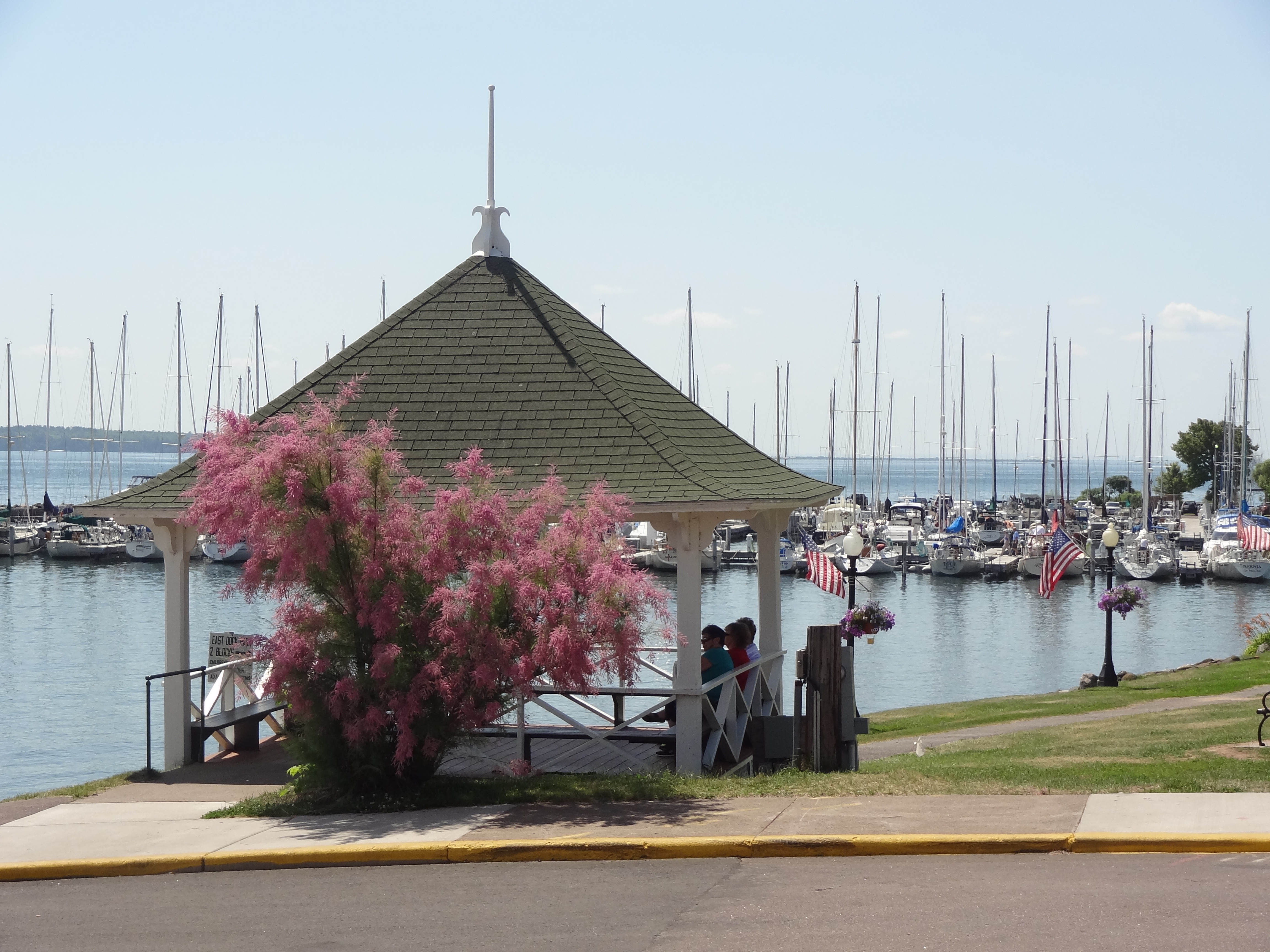
Bayfield, Wis.
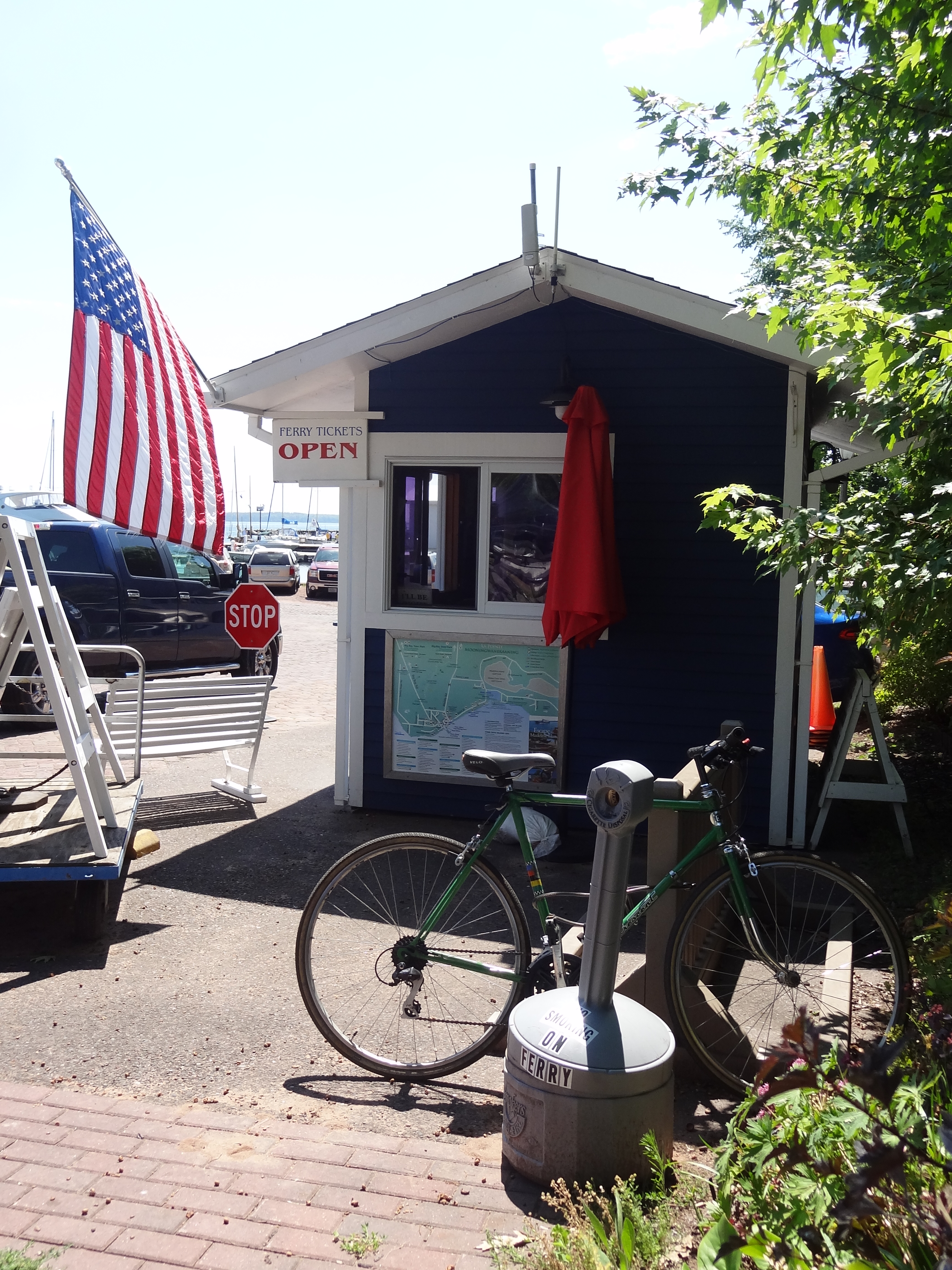
Let’s say you only have an hour to spend on the island before your coworker’s meeting is done and you have to ferry back to the mainland. Where would you go on the island? Why, you would go where the ferry worker recommends, that’s where!

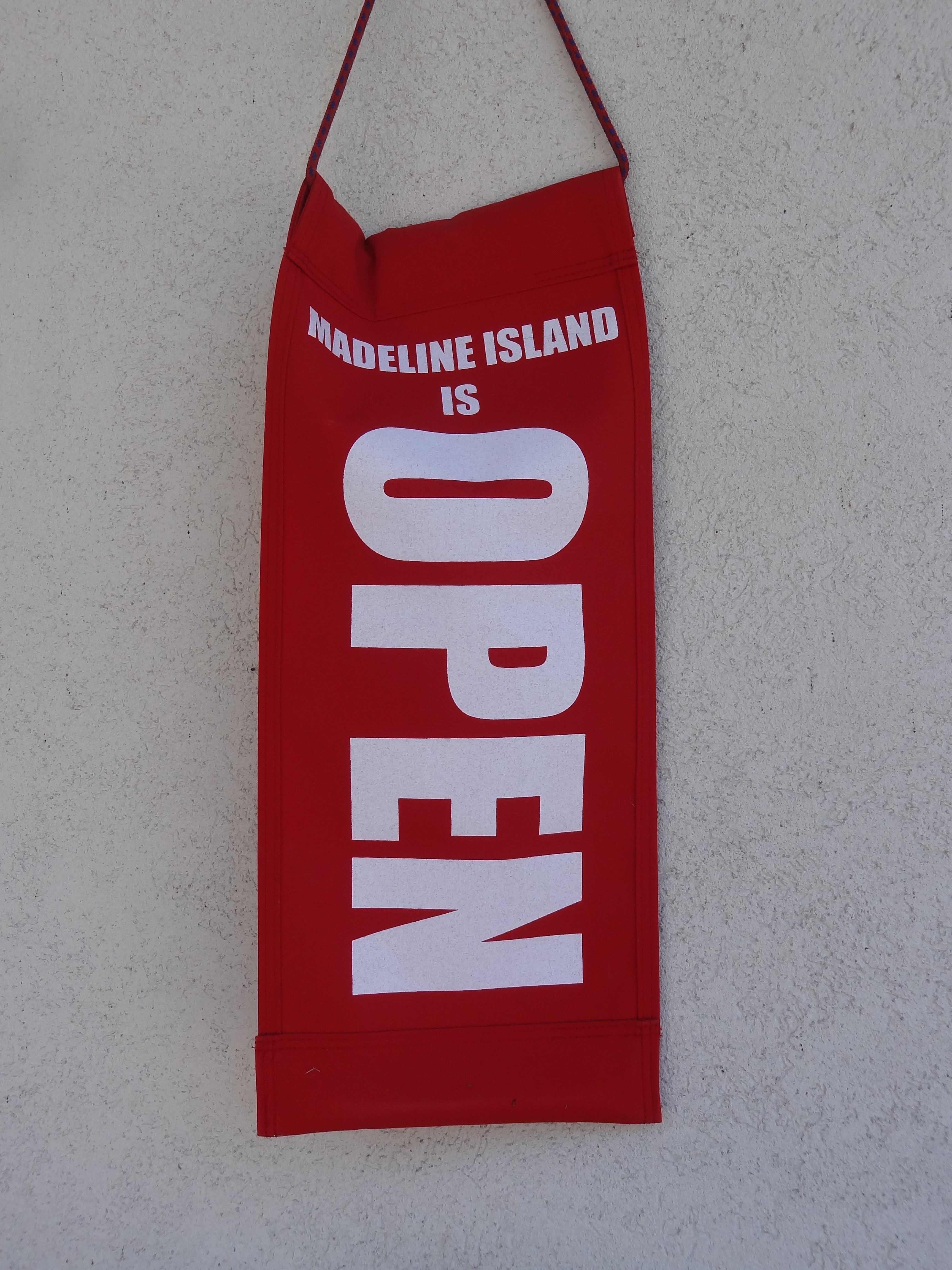
I recently meandered over to Madeline Island on the south shore of Lake Superior under such circumstances. Without prompting, the lady selling ferry tickets pointed to a sand spit in Big Bay State Park on a map and said, “If I was going to Madeline Island today, that’s where I’d head.”
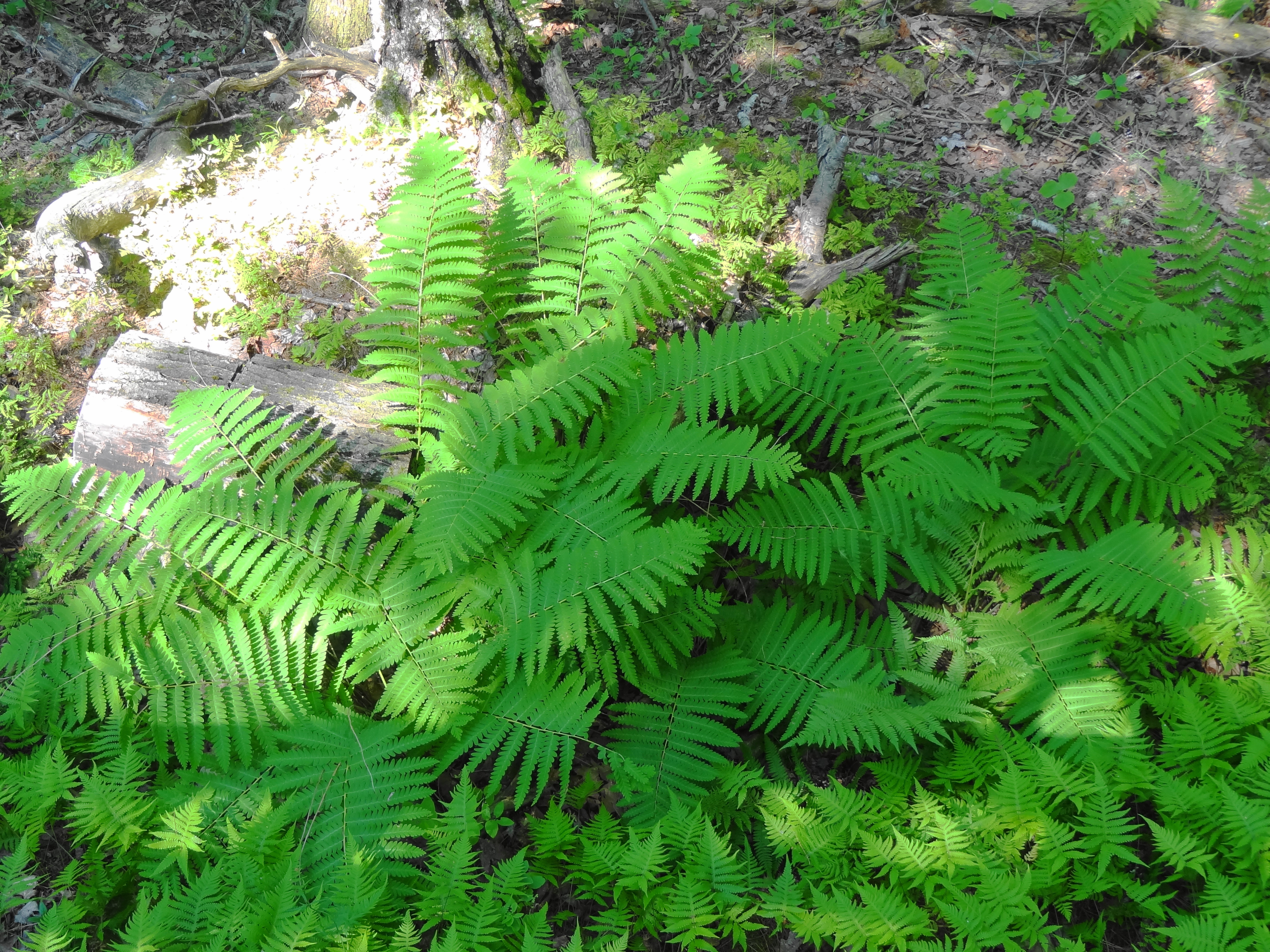
I figured she knew what she was talking about. While my coworker was in his meeting in the quaint town of LaPointe on the island, I drove to the park which, like any good cheap hotel, included an option to just pay for an hour. I located the trail to the sandspit and enjoyed a short hike through a verdant ferny forest…
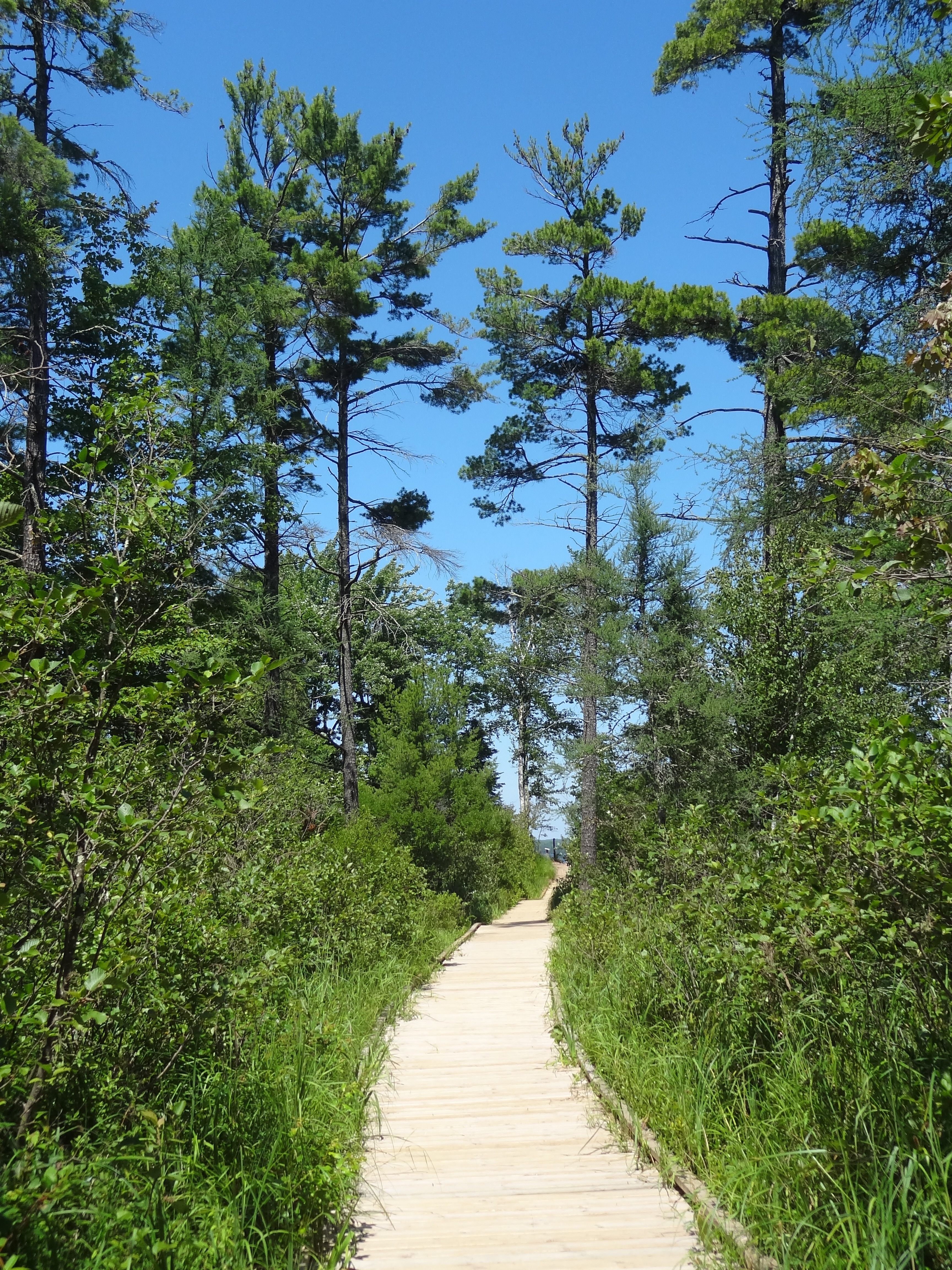
…that gave way to a grove of white pines just before the beach.

Dozens of swimmers enjoyed the cool waters of Lake Superior.

I had just enough time to take off my sandals and wade in.
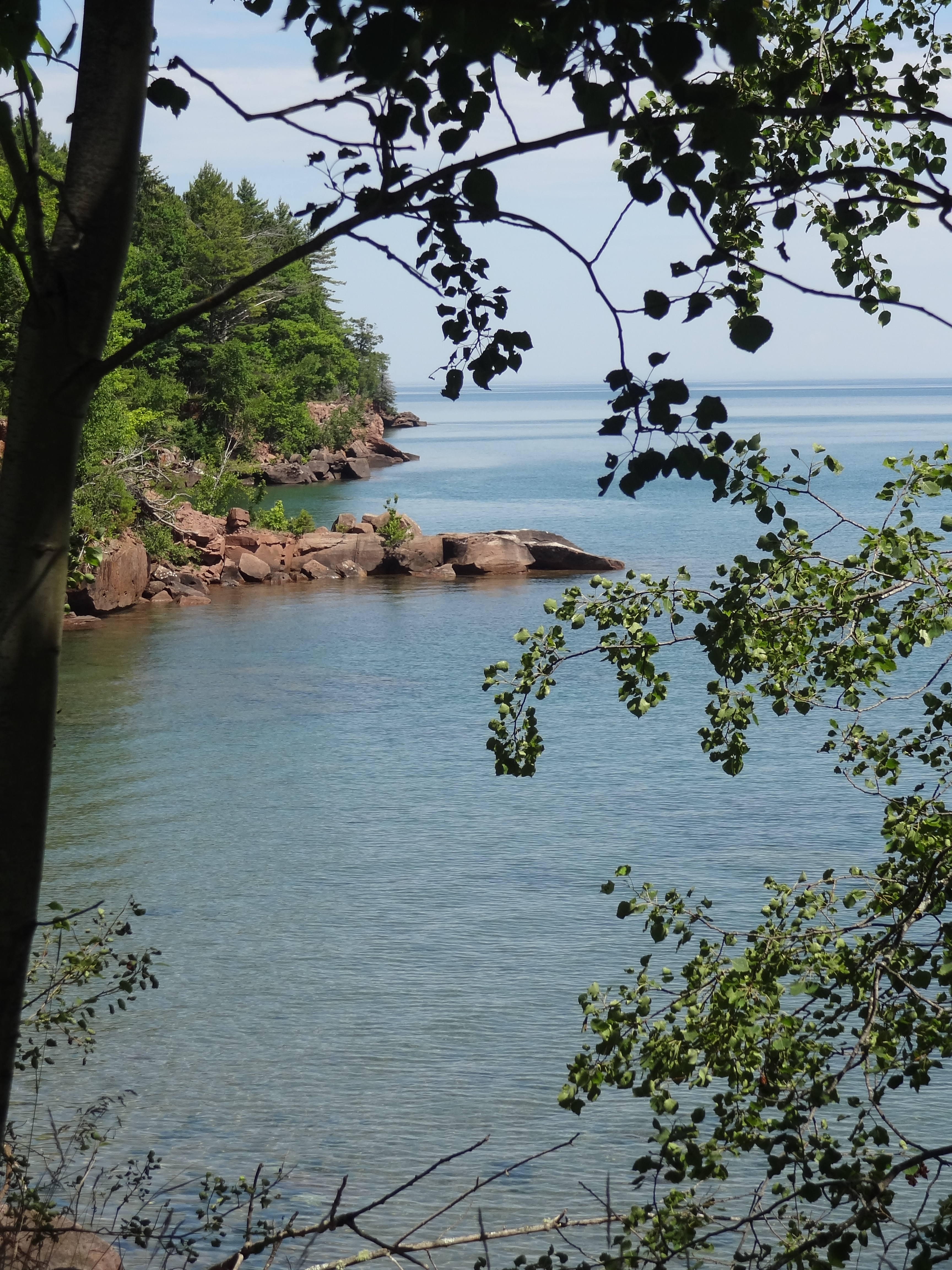
Then I departed and looked for a scenic overlook I noticed near the park entrance. The view was all right, but the beach was better.
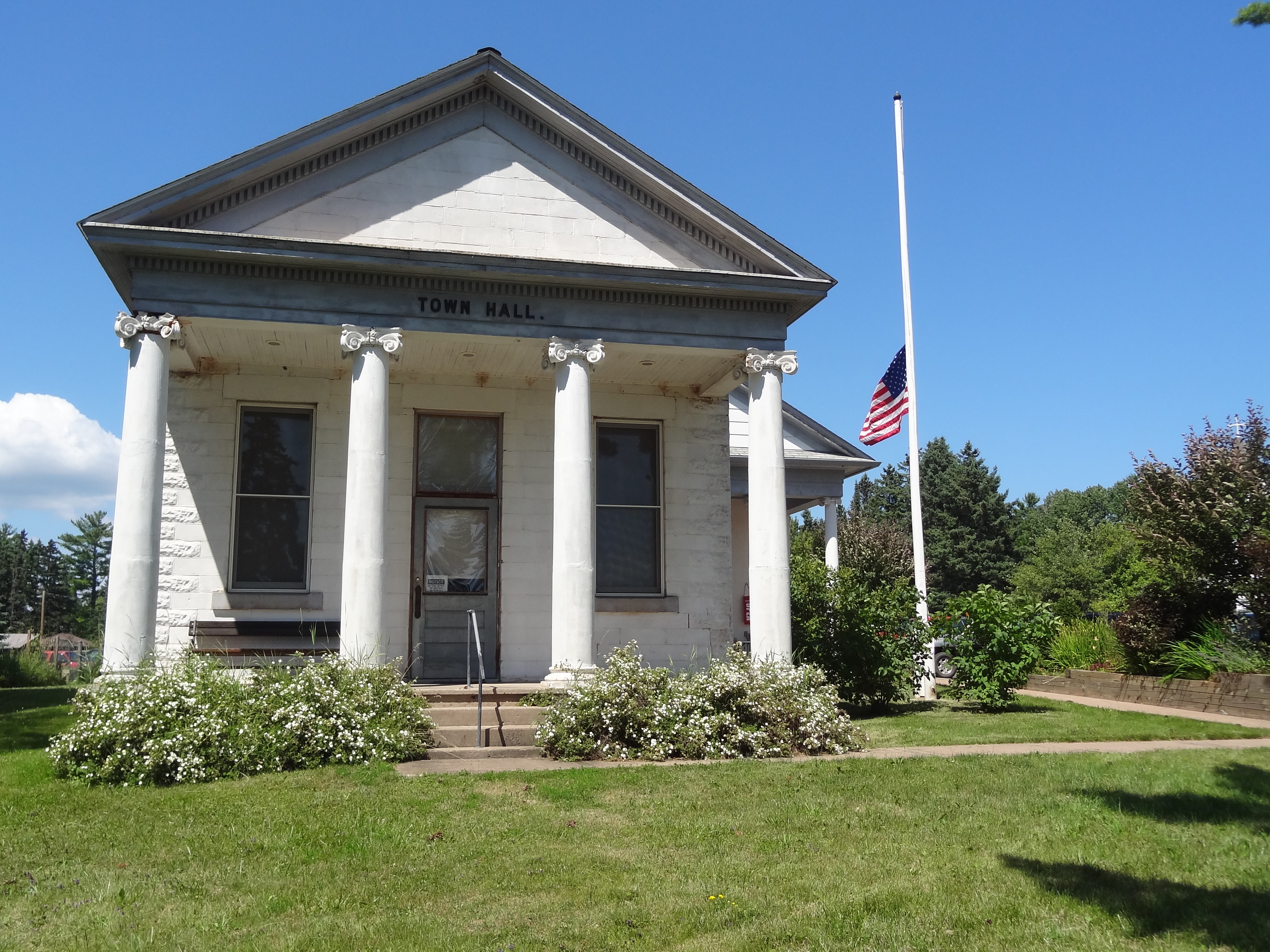
By now, I had fifteen minutes left to drive back to LaPointe. Once in town, I had time to snap photos of a few local landmarks before rejoining my coworker and heading for the ferry back to Bayfield.
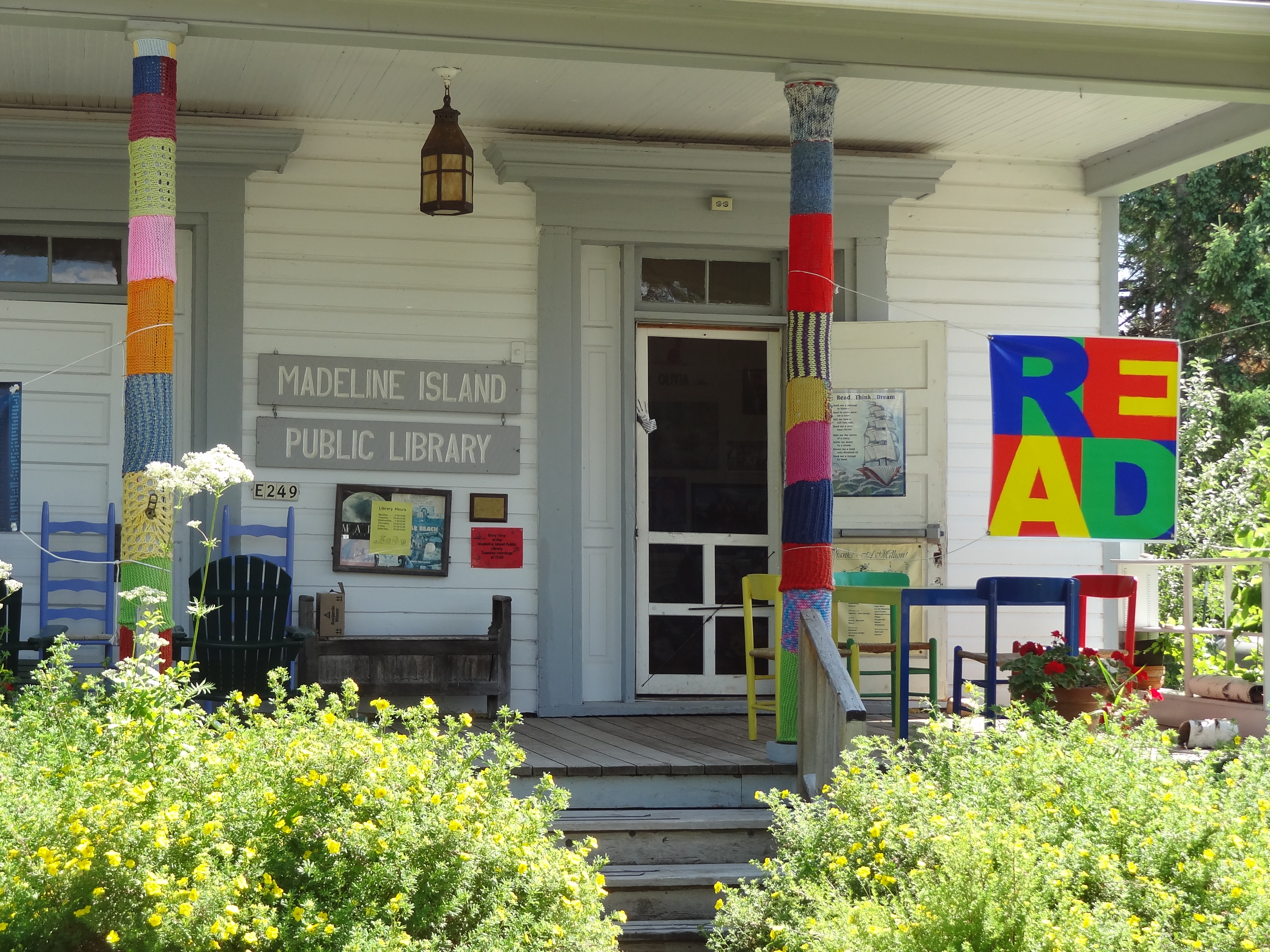
I think I’m in love. Seriously. I will return someday when I have enough time to do Madeline Island justice. Much more awaits.
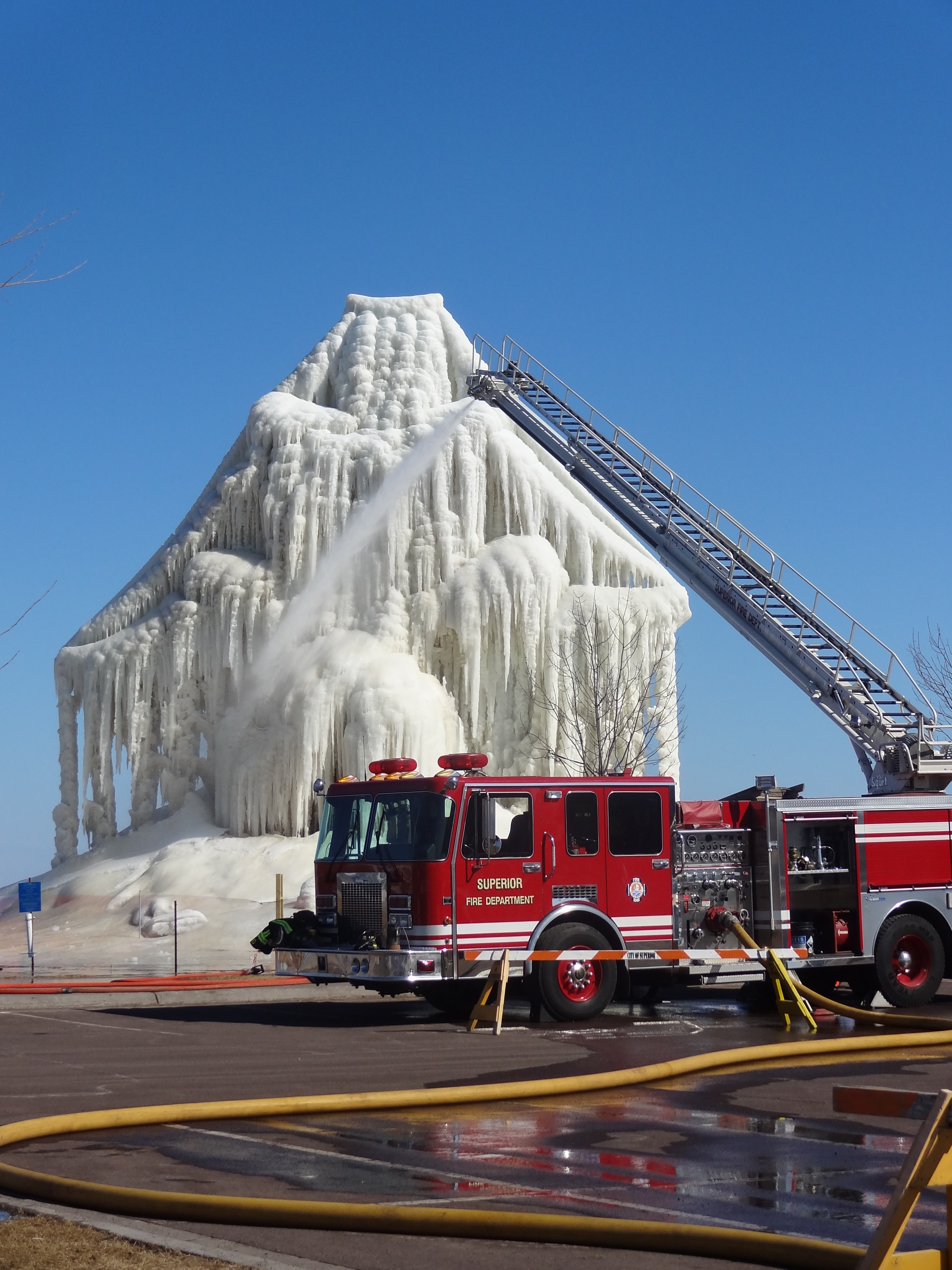
The Lake Superior Ice Project yesterday.
I’ve been chronicling the rise and fall, and rise again of the Lake Superior Ice Project on Barker’s Island in Superior, Wis. Efforts have now begun to dismantle it for the season. I suspect this was spurred a bit earlier than planned due to the high temperatures (40s and 50s!) we are experiencing and that are in the forecast for the next week.
Yesterday, crews from the Superior Fire Department sprayed the formation with a hose to knock it down. Funny thing was, although the formation seemed to get skinnier, no knocking occurred. Ice Man Roger Hanson apparently did his rebuilding job too well, and now his creation can’t be destroyed!
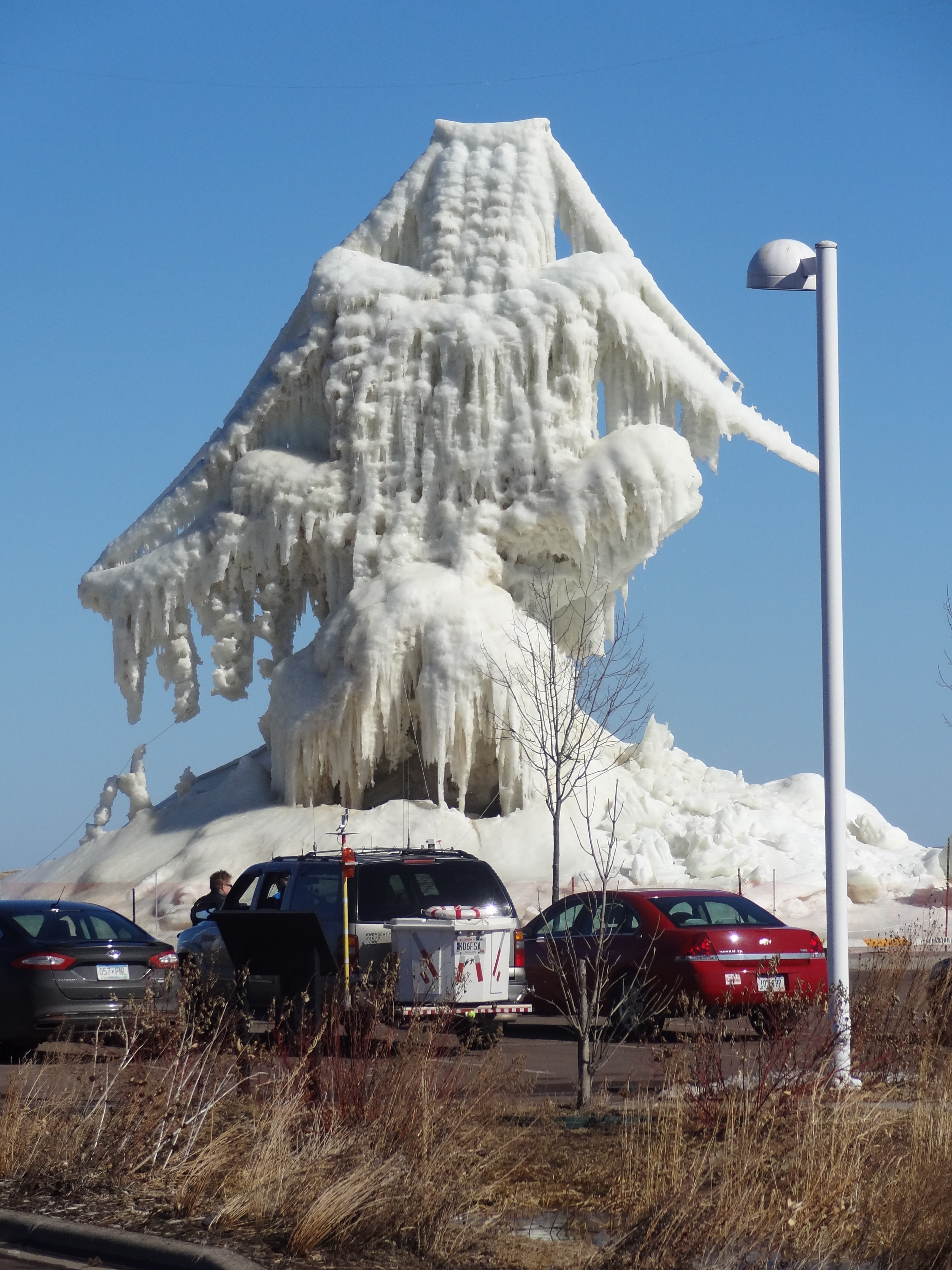
The Lake Superior Ice Project today.
However, this morning, the lower sides of the thing have disappeared, so it’s on its way to destruction. The shape reminds me a bit of a Madonna, spreading her robed arms in a benediction upon the parking lot.
The snow is melting fast. Between the sculpture dismantling and the Apostle Islands Ice Caves closing for the season, dare we hope that spring is coming?
The Lake Superior Ice Project.
The ice formation on Barker’s Island in Superior, Wis., is slowly “regrowing” after its collapse a few weeks ago. I took this photo yesterday. The formation (which reminds me a bit of the Crazy Horse sculpture in the Black Hills) is functioning as a tourist attraction, and is the subject of weekend light and music shows.

The Lake Superior Ice Project came crashing down on Tues., Feb. 3 at 10:06 a.m.
An attempt at a world-record-tall ice sculpture came crashing down a few days ago on Barker’s Island in Superior, Wis. Of all times – it happened right when the “sculptor,” Roger Hanson, was being interviewed and photographed by the New York Times. In fact, because Roger is hard-of-hearing, the reporter had to alert him that something was amiss. Roger turned around from the interview just in time to see his creation fall in upon itself.
What his creation looked like before the collapse was a point of discussion between me and my office mates, who work in a nearby building. Before the crash, it rose 66 feet and had wing-like protrusions coming off either side (see my previous blog posting for photos). It struck me as vaguely menacing, so I called it the “ice wraith.” Others thought of it more benevolently and called it a “sentinel” – they thought it was guarding the estuary and harbor. Others called it a “blob.” Calling it a “sculpture” like the news stories do, just seems wrong. It is a creation, but it’s not like Roger is carving it. He’s squirting it.
Well, it’s clear that it is a pile now.
The crash is blamed on a thaw we had a while back. Although the temperatures dropped again enough for ice formation, I suppose the structure got brittle at that point. Roger started adding more water to the top of it instead of making it wider. Even to my unschooled ice sculpture eyes, it seemed precarious – like it needed more width instead of height. (But I speak from the benefit of hindsight.)
Although some are rejoicing at the crash of this hubristic endeavor, others in the community are upset. The project was drawing a crowd and even sported a gyros stand, and people seemed to enjoy watching the progress. Roger is such an earnest man, you can’t help but feel sorry for him. The city of Superior planned light and music shows, presentations, and even a fireworks display around the project for the next three weekends. (Feb 14, 21 and 28 at 6, 7, and 8 p.m.)
After the crash, the big questions were whether to build again and whether to hold the celebratory events. The answer? YES! Roger says he is going to rebuild, and has already started doing so upon the pile that was once his “sculpture.”
Poor Superior always seems the underdog next to the more populous and tourist-friendly Duluth across the bridge. This is yet another example of how the city just can’t win. But perhaps it’s also an example of perseverance and making lemonade out of lemons.
In my first blog entry about this project, I asked, “What could possibly go wrong?” Well, now we know! But at least nobody got hurt. And it makes for a good story. And looking at an ice pile IS sort of interesting. Especially when it’s lit up at night. (Grin.)
 The weather continues to cooperate for the Lake Superior Ice Project on Barker’s Island in Superior, Wis. “Ice Man” Roger Hanson from Big Lake, Minn., has added a third tier to the formation and it now stands about 52 feet tall and 20-something feet wide.
Roger had some troubles previously with the formation leaning due to the soft ground it’s built on and the prevailing winds, but he has since adjusted for that. Roger lives in that little trailer you can see in the side-view photo of formation. I don’t envy him. Barker’s Island is a desolate place in winter. No trees block the wind coming off frozen Lake Superior and the comforts of the mainland, although in view, might as well be miles away.
For more information, please see my two previous posts (1) (2) on this topic.
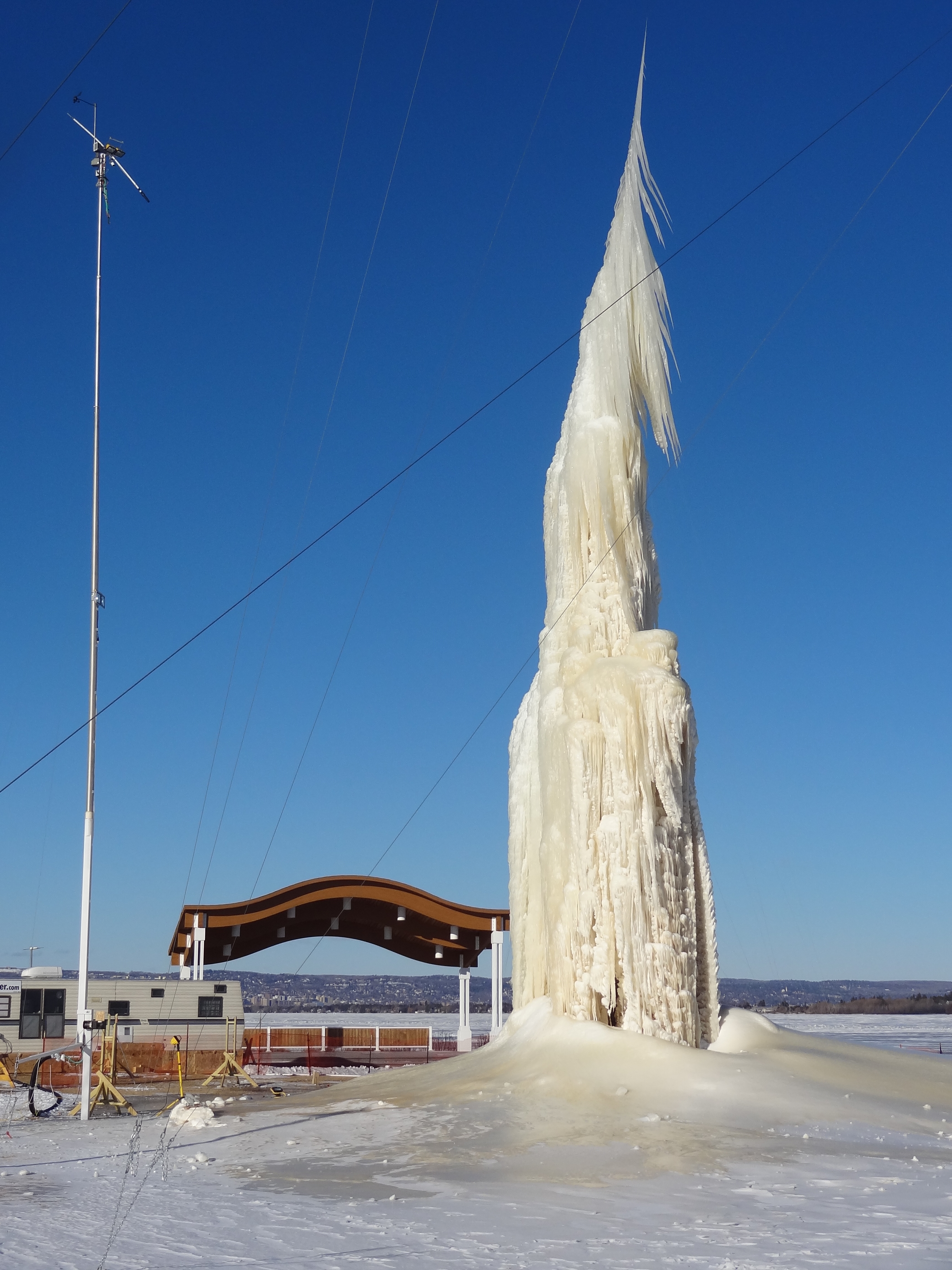
A side view of the formation, along with the spraying apparatus and Roger’s trailer home.
 Marie's Meanderings