I recently meandered to Cleveland, Ohio, for a work trip. We stopped for lunch at the West Side Market. If you’re ever in Cleveland, it’s worth the experience. For a fully balanced diet, fruits and veggies can be found in the building next door.


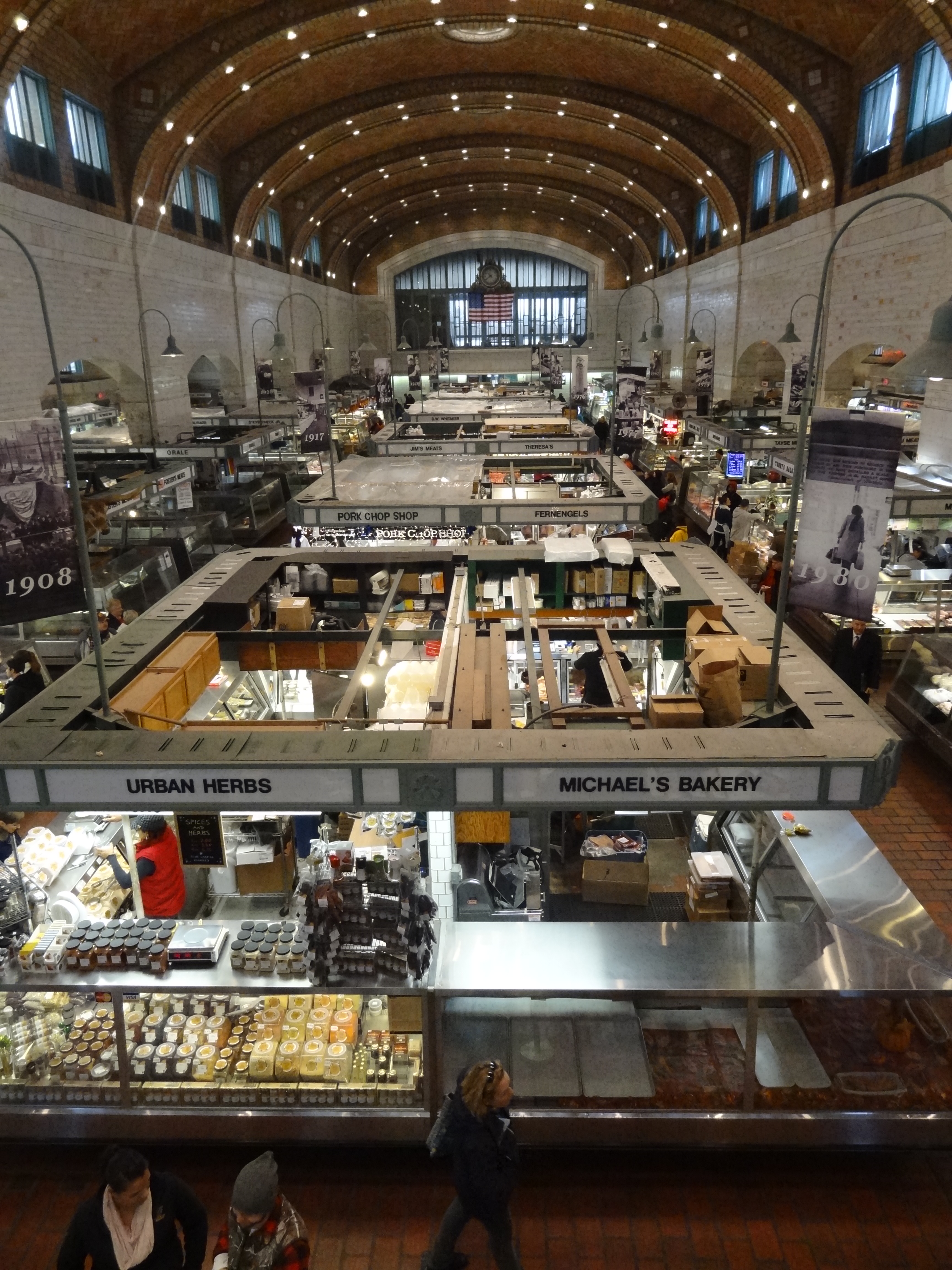

I recently meandered to Cleveland, Ohio, for a work trip. We stopped for lunch at the West Side Market. If you’re ever in Cleveland, it’s worth the experience. For a fully balanced diet, fruits and veggies can be found in the building next door.
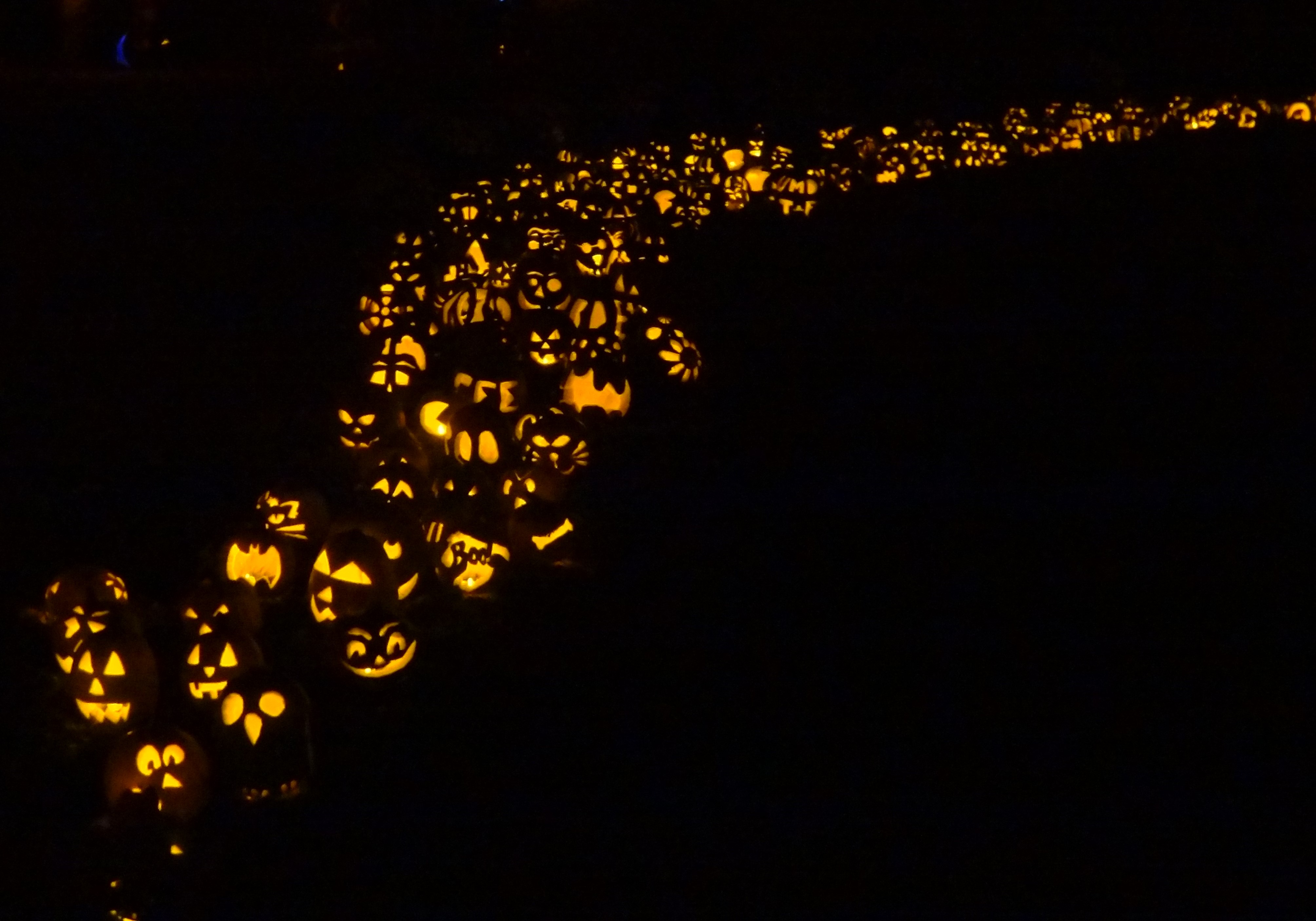
A river of jack-o-lanterns on the grounds of Glensheen Mansion in Duluth, MN.
Dozens of volunteers carve what must be hundreds of pumpkins that decorate the grounds of a local mansion on the shores of Lake Superior that is open for public tours. I checked it out last night and brought my camera along. Happy Halloween!
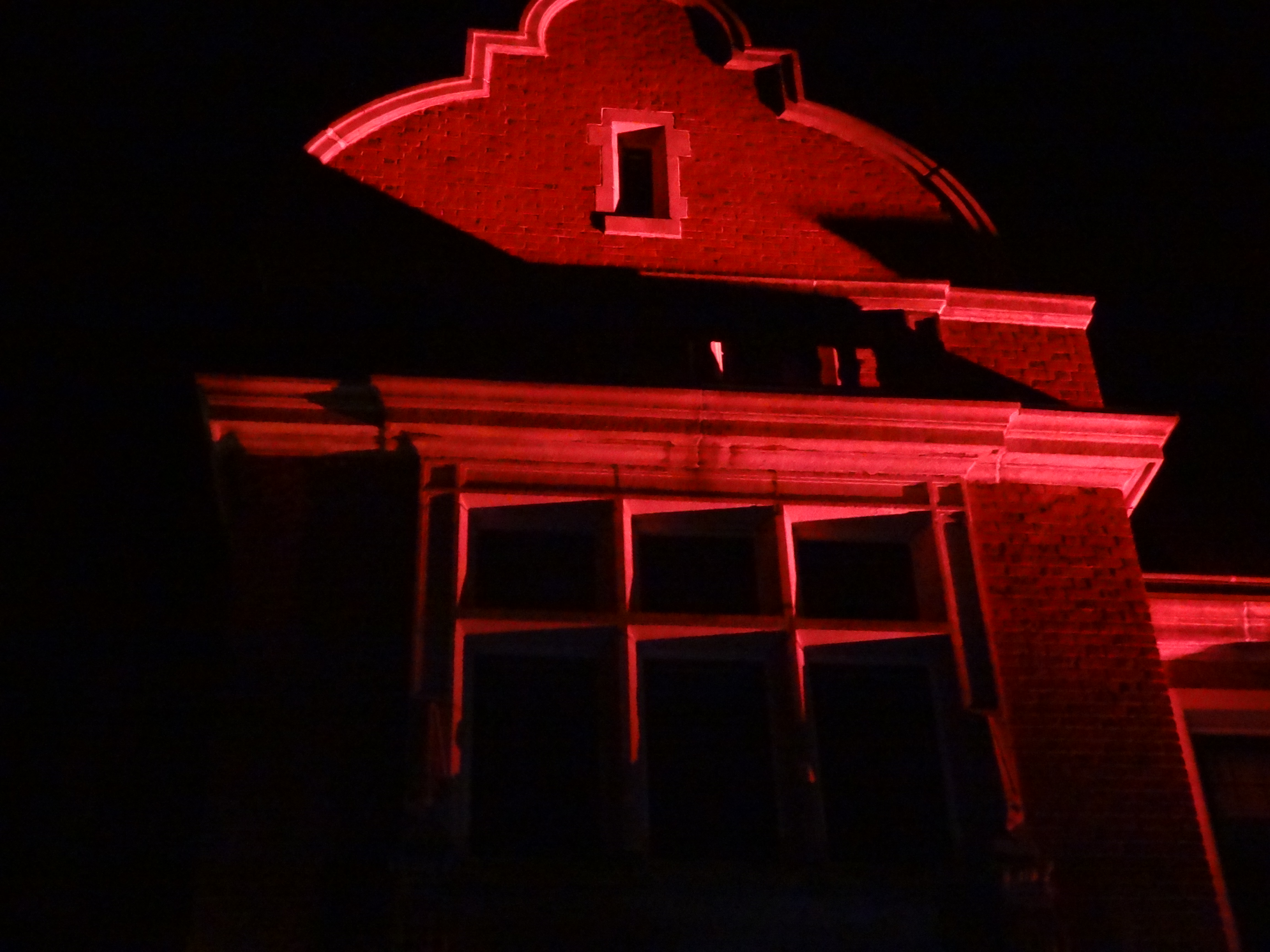
Glensheen Mansion.

An eerie blue light illuminates the room where the murder occurred of the last owner of the mansion.
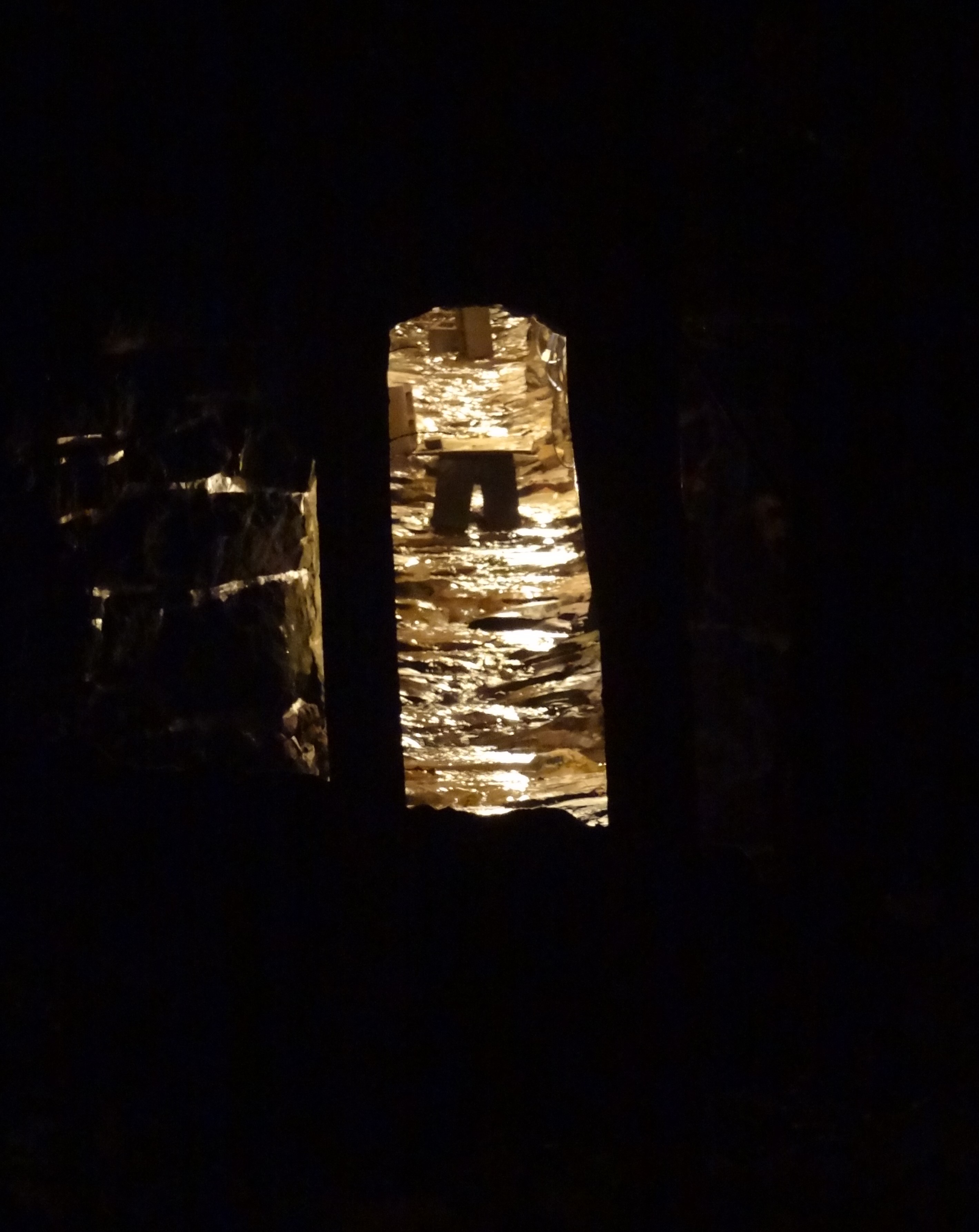
I don’t think this was part of the tour, but I thought it was spooky: looking into a tunnel that runs under the road. Who is that bench for?
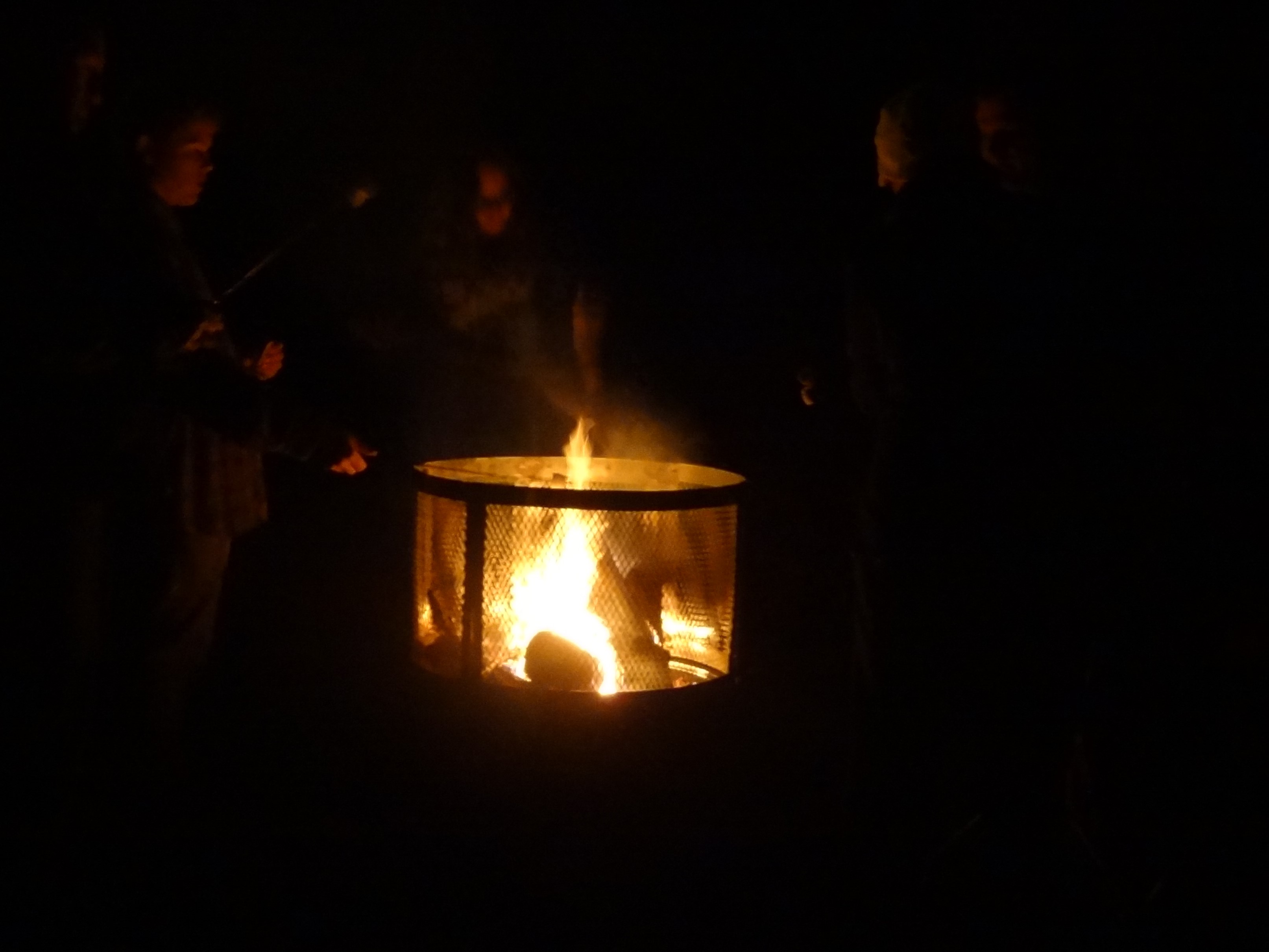
Ghosts making s’mores.

A sailboat off Park Point Beach in Duluth, Minn.
I saw the bench in passing as I was hauling a box of my novels into a local community center where I was to take part in a local arts sale and book signing. My first thought was that the bench offered a nice place to sit if someone got tired on the walkway up to the center.
On my second trip, I noticed the red crabapples that had fallen onto the weathered wooden slats of the bench from the tree that sheltered it. On my third trip, I saw the small sliver plaque that had tarnished beyond readability and how the main metal support on the bottom of the seat was hanging askew. That bench had been there for a while, and no one was taking care of it.
On my fourth trip, I realized I was having all these reactions to the bench, and that I should pay attention. It’s funny and sad sometimes how intent we get on what we are doing (in this case, setting up my book table) that we miss creative fodder that’s right along the path.

Where will the path of life take you? To the beach!
After I was done hauling books and moving my car across the street to allow arts sale patrons the best parking spots, I took time to appreciate the bench. I unpocketed my camera and shot some photos of it and the surrounding beach. The bench photos don’t do it justice. I think my words describe it better, but I got some good beach shots.
I’ve been thinking a lot about mortality lately, what with “shallow graves” occupying my mind, and attending a visitation for a fallen media comrade. This bench spoke to me of a life remembered. It served as a token of respite and peace in a busy world, but a token now forgotten and in disrepair. How fragile human memory is! How fleeting! Yet the bench stands in testament that someone once cared.
Like any good, self-absorbed artist, I wondered if anyone would care enough about me to dedicate a bench in my name, and if they did, how long the intent would last to keep it in good repair. And in the big scheme of things, does it really matter? Dust to dust, ashes to ashes, and all that.
I suppose a poem is in that bench somewhere. I wonder if I will have the opportunity to step off the path of my busy life and write it.

Okay, I changed my mind. Here’s the bench.
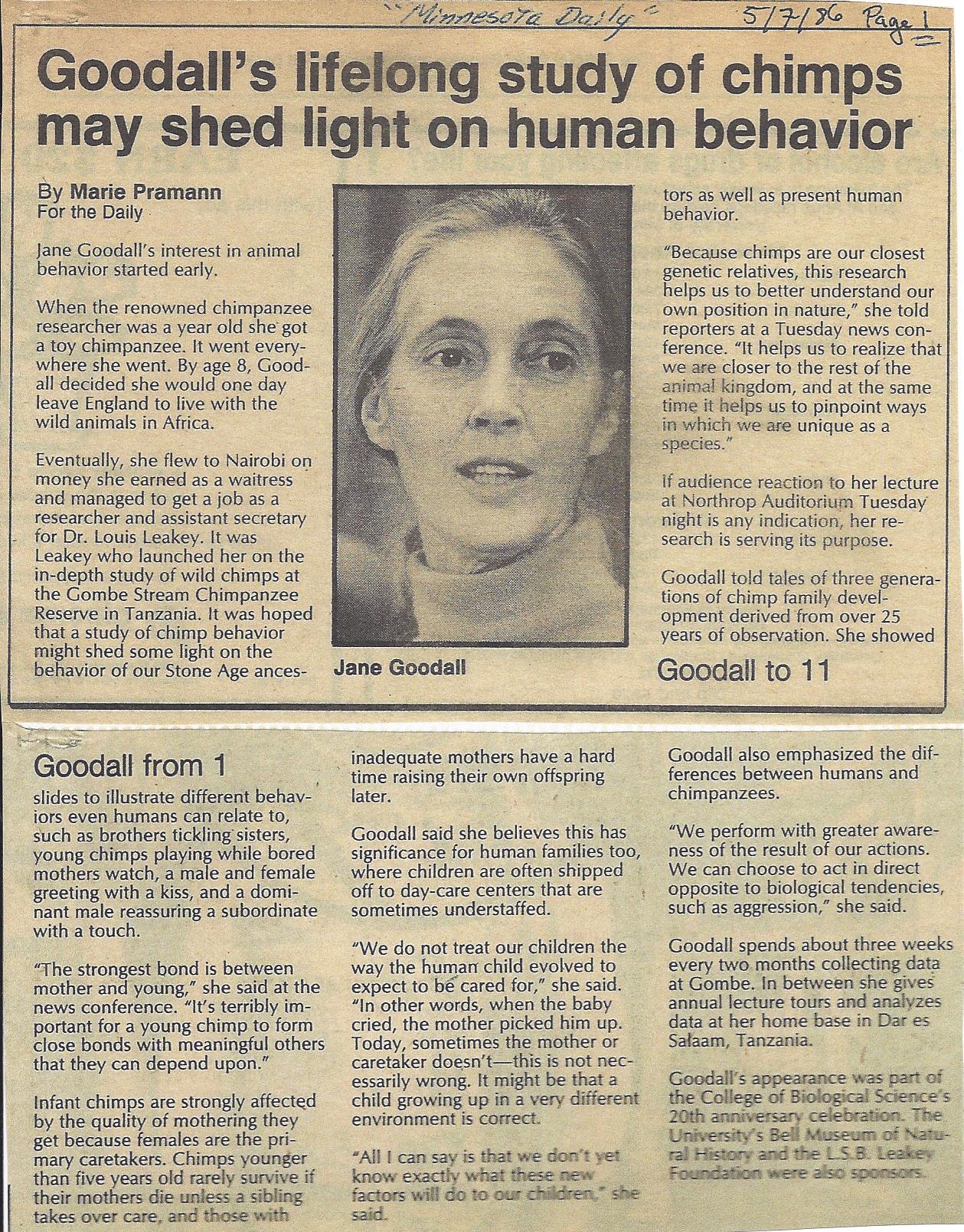
My story from the Minnesota Daily, May 7, 1986, page 1.
A recent news story about chimpanzee researcher Jane Goodall reminded me why she’s one of my favorites of the scientific glitterati. Here’s a link to the Huffington Post video story. Basically, she’s saying that researchers need to have empathy with their subjects in order to conduct ethical and meaningful science. I agree!
I had the chance to meet Jane (I don’t think she’d mind if I call her by her first name – she’s that kind of a person) back in my glory days as the environmental reporter for my college newspaper, the venerable “Minnesota Daily” (best college newspaper in the country!) Jane came to town to give a talk on chimpanzee behavior and DNA, and how similar they are to our own.
She presented to a packed auditorium and afterwards, hosted a news conference. I sat in the front row along with a photographer for the paper. I don’t remember what questions I asked, but I do recall being impressed by Jane’s seeming kindness and approachability.
During the news conference, the photographer and I surreptitiously discussed good locations in the room to take her photo afterwards, both agreeing (with the logic of college students) that the potted palm next to her podium would be ideal. She did work in the “jungle,” after all! However, the thought of asking Jane Goodall to stick her head among palm fronds filled me with anxiety. Would she be insulted? Have us thrown out of the room? Turn around and walk off in a huff?
Once the news conference was over, no other reporters seemed to want to talk to Jane, so I approached – probably gushed about what a big fan I was – and put forth to her the photographer’s plight of getting her photo against an interesting background. I couldn’t believe our luck when she pointed to the palm and said, “Well, why not here?”
Amazed and relieved, I agreed. Unfortunately, the palm tree photo did not run with the story — the photo editors ran a boring head-shot instead. But I will always remember how gracious and accommodating Jane was, and how willing she was to stick her head in a potted palm for a college reporter.

My garden statue has been reading for a long time!
This sight greeted me this morning on the way to the mailbox. The only camera I had on hand to capture it is my crappy old Sony DSC-S500 Cyber Shot. I was glad it was able to show the detail of the spider web. Please have a wonderful day, even if it’s rainy!
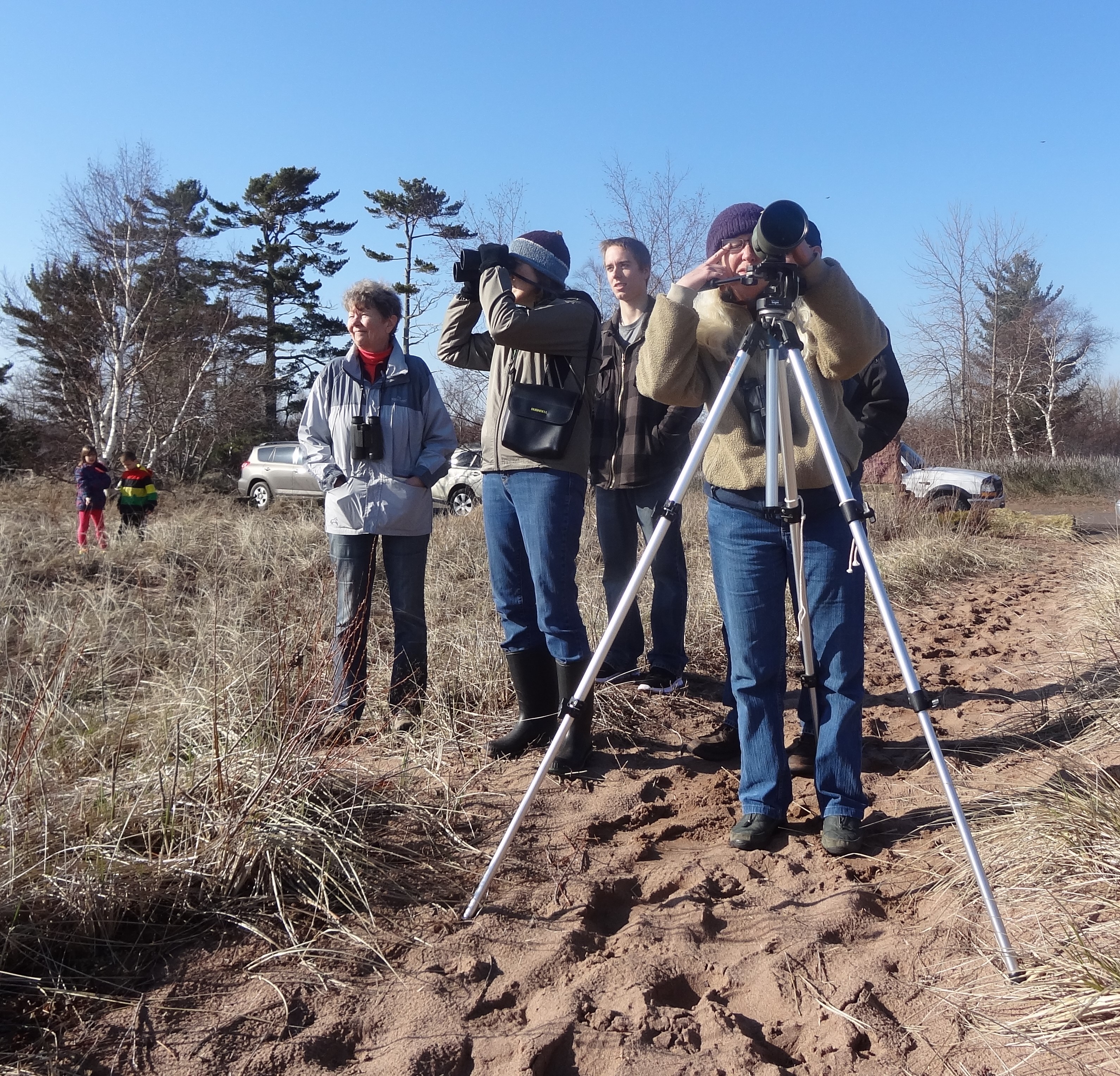
Birders on the shore of Lake Superior, Wisconsin Point.
No, I’m not writing about Mother’s Day, but about a lesser known and newer commemorative event that celebrates birds. Yesterday, I participated in the second annual International Migratory Bird Day, held in Superior, Wis.

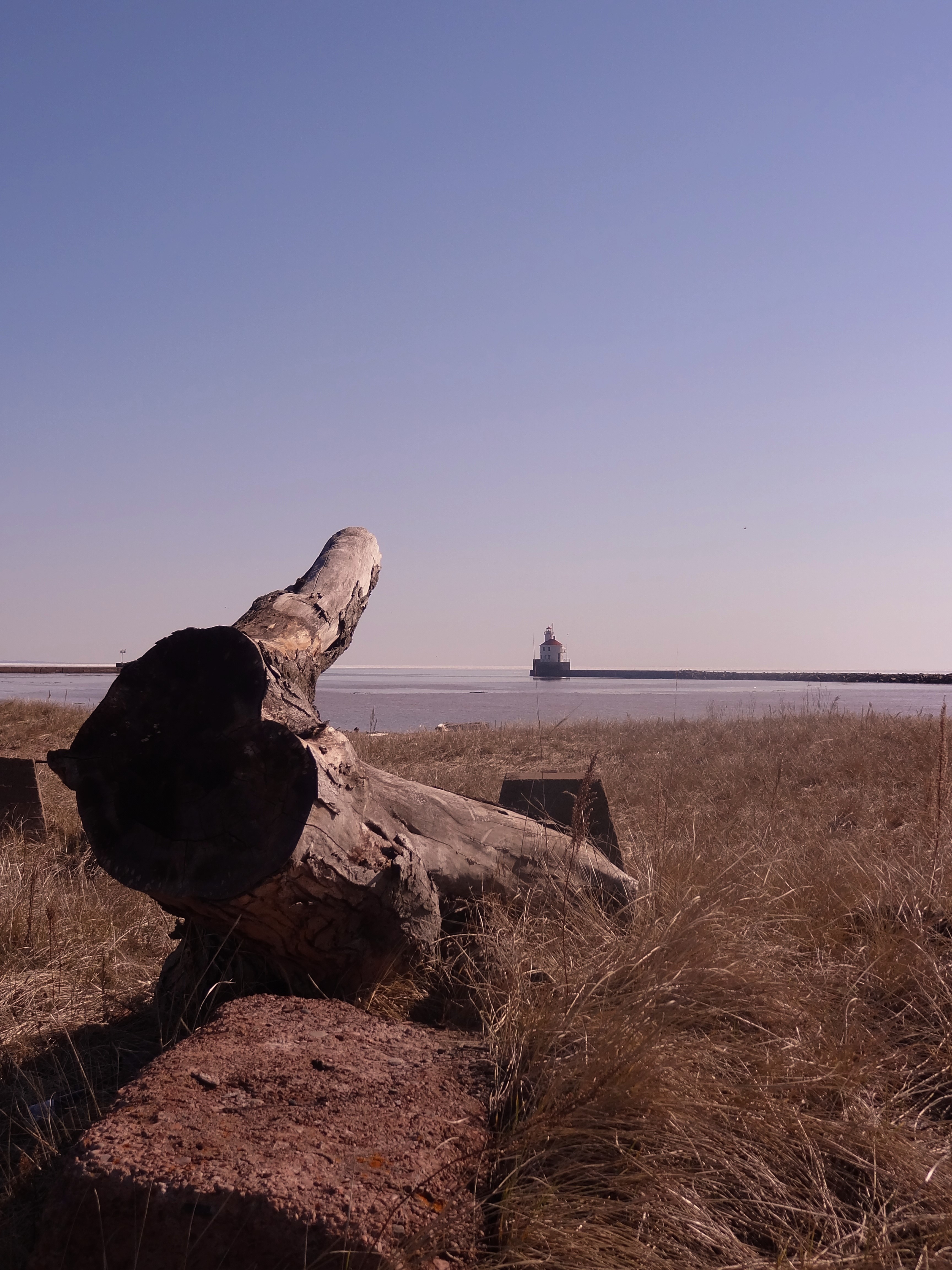
White pines on Wisconsin Point.
I haven’t been to a birding event in years, partly on purpose and partly due to other demands in my life. I like to think of myself as a recovering birder. I took up bird watching in seventh grade and was active in the birding community through my twenties – even participating for a year on the Audubon Expedition Institute, where I travelled across the country in a yellow school bus for a year with 24 other people interested in birding and the environment for master’s degree studies.
It was during that experience that I overdosed on birding. I came to realize that people stopped looking at birds once they had identified them. I rebelled against the obsession to name everything with feathers that I saw or heard. I rebelled against using eyesight aids like spotting scopes and binoculars – wanting to view the birds instead as part of their surroundings.
But I still feel an affinity with birds. My upcoming novel is about them, after all, and this event seemed a good excuse to get outside on a rare warm spring day. We met at Wisconsin Point, a long sandbar just outside the city. A small group of us spent three hours birding. We didn’t see very many birds but there were bald eagles, chickadees, scaups, red headed ducks, lots of blue jays passing through, and the requisite ring-billed gulls. I do admit to looking through a spotting scope (and the world did not end!), but I tried to keep it to a minimum to allow others the opportunity. After birding, we went to a local inn to listen to some presentations about migration.
My camera isn’t built for bird pictures, but I do love the lighthouse and the white pines on the point, so I thought I’d share photos of them with you.

The Wisconsin Point Lighthouse.

Icicles hanging down from the ceiling of a sea cave.
Icelanders resembled Minnesotans (at least of the last generation) in this regard: if nature has condemned you to life in a continuously foul climate, you have no choice but to ignore it and proceed with your plans. If you wait for the weather to improve before doing anything, your bones will have crumbled to fine dust. – Minnesota author Bill Holm
Despite the National Park Service urging people to visit another day because the wind chill was twenty-five below, my son and some friends traveled to the sea caves in the Apostle Islands National Lakeshore last weekend. We weren’t the only ones disobeying the feds to see this natural wonder on the south shore of Lake Superior. Since the parking lot was full, a line of cars was already parked on the main highway. This added ten minutes to the twenty-minute walk we were expecting across the ice to the sea caves.
 It was no mean feat just to get this far. My son, who is a teenager, and his friend, would have much rather stayed home on the couch, little balls wrapped in comforters, playing computer games. “Why do we have to go?” They challenged more than once. After about the fifth round of such questioning, I was reduced to, “Because you’ll have fun, dammit!”
Once they were off the couch came the trial of getting them to wear more than one layer of clothing. Exhortations about how cold it was were met with more, “Then why do we have to go?” Somehow, the mother of my son’s friend (Charlotte) and I got the boys dressed and into the car. The wind direction made the walk from our car to the lake the coldest part of the trip. Charlotte and I were surreptitiously looking at each other, questioning whether this adventure was wise, and, although they would never admit it, I could tell the boys were happy they had been forced to wear so many layers.
Once we got to the lake, we joined the others on a hard-trodden snowy path along the shore. With the wind at our backs, the sunshine helped us feel warmer in spirit than perhaps in body. After about half-a-mile into the mile-long walk, I marveled at how warm my feet were. I thought my toes would be the first to go.
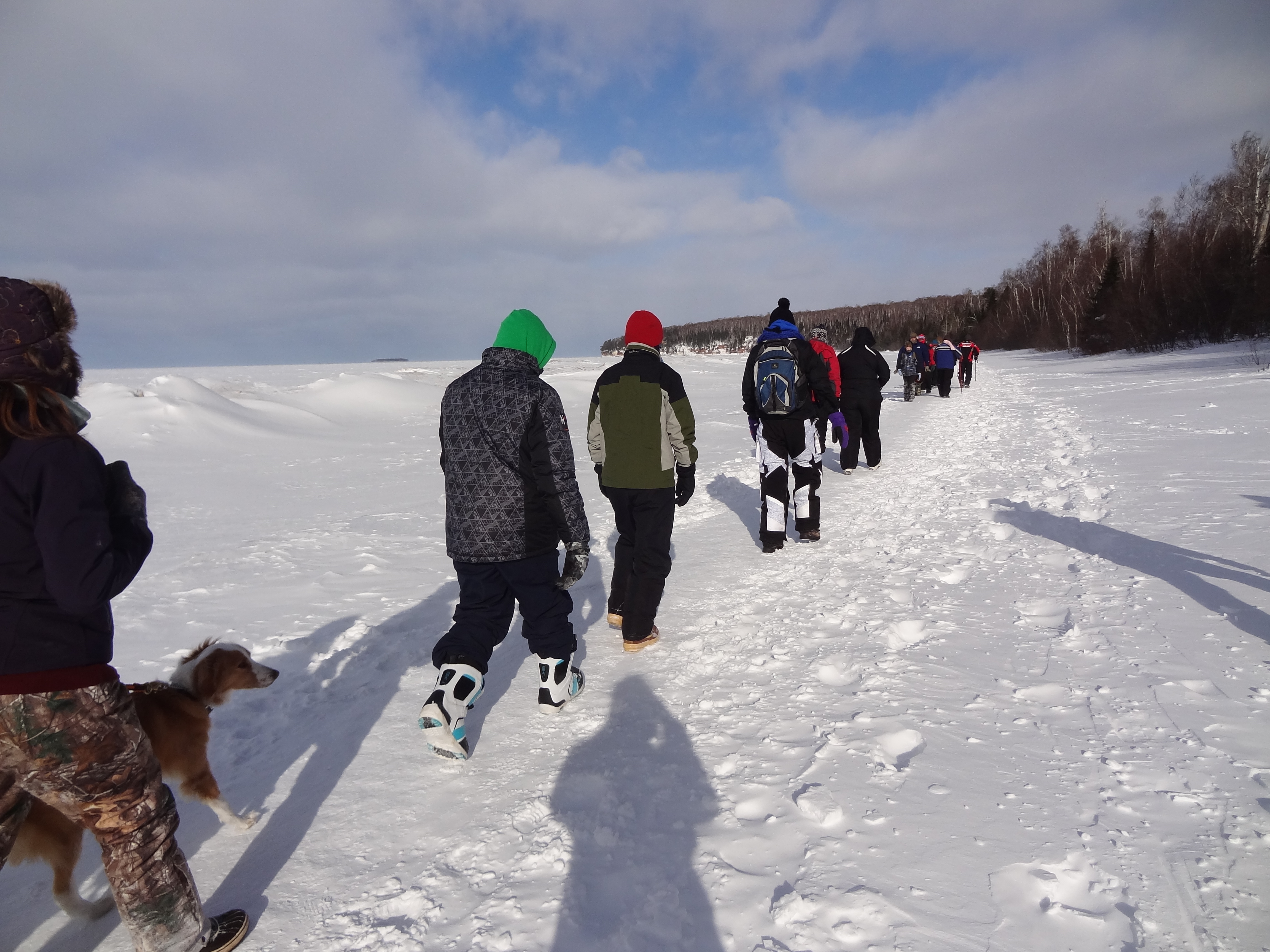 We were joined by snowshoers, skiers, dog walkers, and people pulling sleds containing mounds of blankets, which, from the hats sticking out of them, must have contained children. For the most part, it was too cold to talk, so we walked in silence – pilgrims on our way to see a natural wonder denied us for five years due to poor ice conditions.
Walking on the winter ice is the easiest way for most people to see the caves. In the summer, it requires kayaking or canoeing skills, or paying the price for a tour boat. A hiking trail runs along the top of the caves, but the view is nowhere near as spectacular as from the water.
I had seen the caves from water level, but never in winter. This year, the formations were more intricate and extensive than most, prompting widespread media coverage that piqued interest by the masses, including Charlotte and me.
Before you venture to the caves, it’s a good idea to check with the Lakeshore’s Facebook page and check the Sea Cave Watch website, a Wisconsin Sea Grant project. The site features real-time images of the ice conditions at the caves, although the wave sensor has been pulled for the season.

A frozen waterfall.
When we reached the start of the caves, the boys were quickly taken in by opportunities to explore. Icy nooks, frozen waterfalls, tunnels, slides, and hidden alcoves proved irresistible. When it came time to go due to a commitment back home, they protested, saying they wanted to stay longer. I couldn’t help but smile, noting their change in attitude. Nature had worked its subtle magic.
I hope the lesson is lasting and that next time, it will be easier to tear my son or his friend away from their comfortable couches and computers to experience real life.
One thing I want to mention if you go: please don’t break off the icicles from the caves. The conditions that formed them are not likely to happen again this winter, and it ruins the formations for those who will come after you. Take away memories, not icicles!
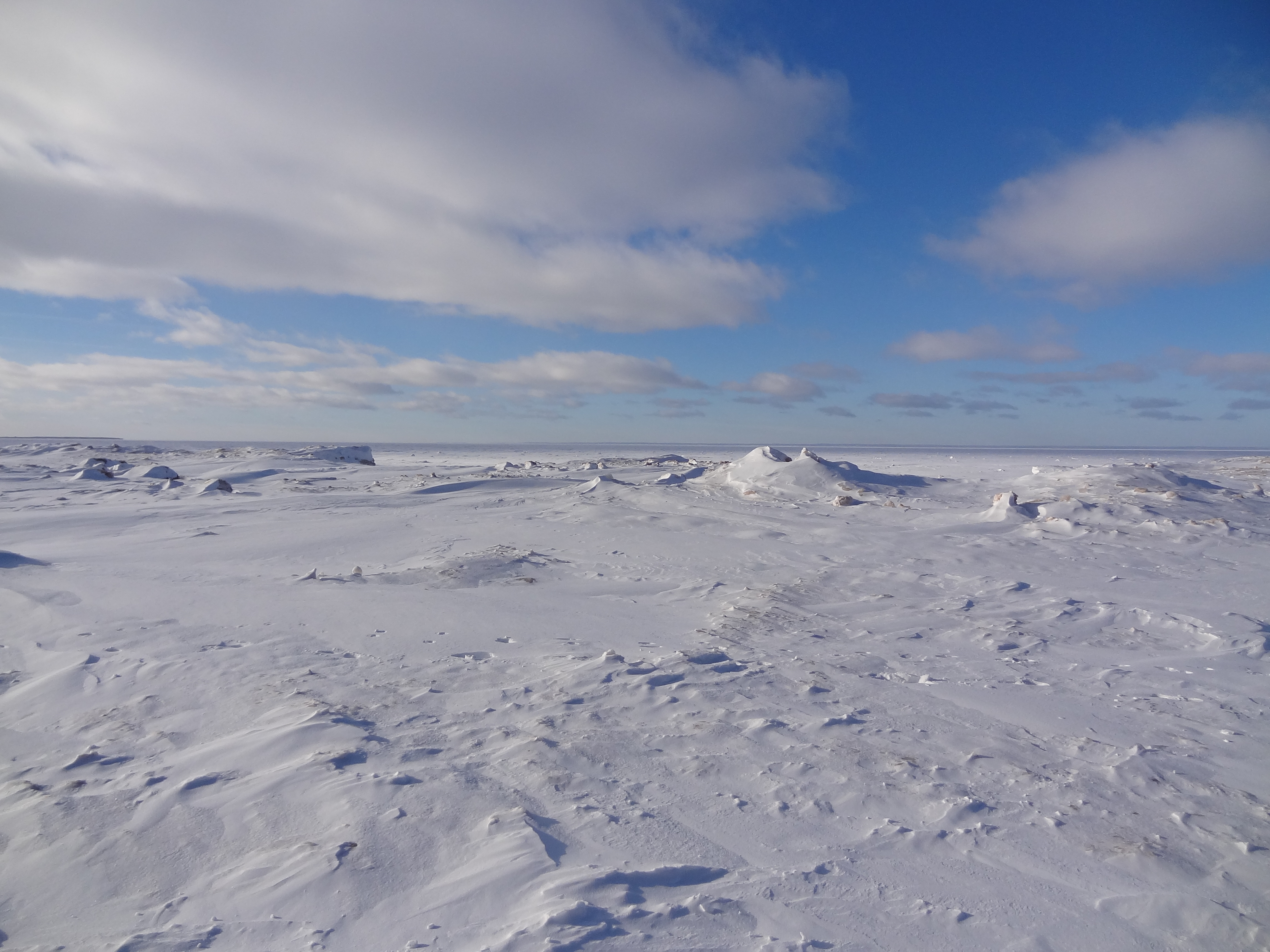
The view of Lake Superior when you turn away from the caves.

I took this shot one early morning last week when I was visiting Lake Michigan for a conference. All I had to do to get it was walk out the patio door of my room in Sheboygan. Actually, I ran — the sun was rising fast.
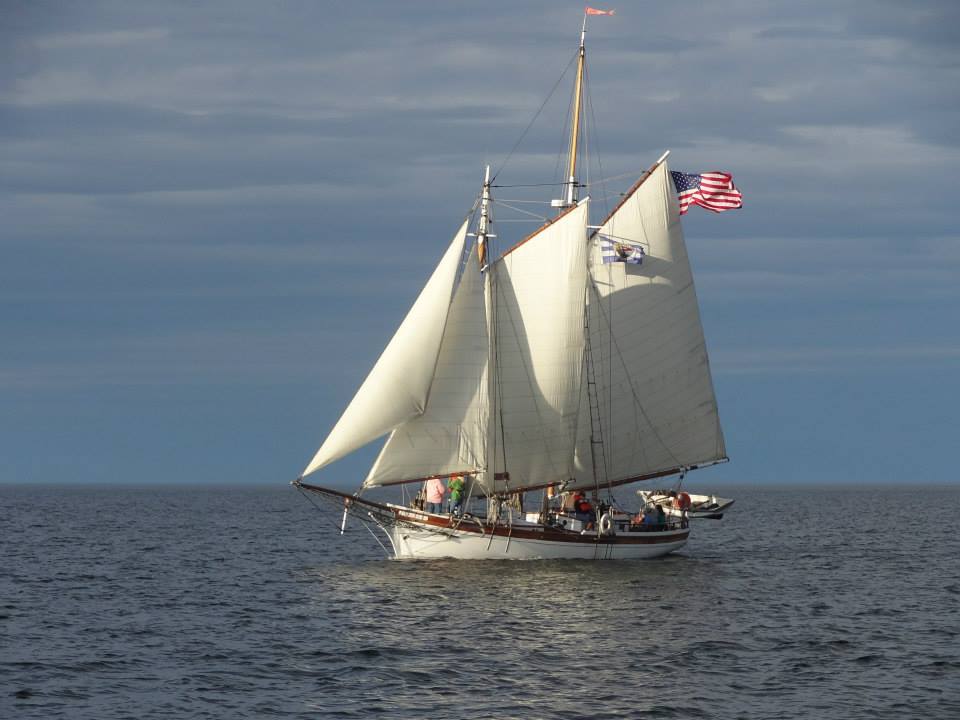
The Schooner Coaster JJ
I arrived at the Duluth Tall Ships Festival just when it was closing. Workers were pounding and pulling stakes out of parking lot asphalt once covered by tents, and festival T-shirts were being offered for half-off by a desperately vocal vendor.
But the nine tall ships were still in port and that’s what I was after. I was looking forward to a close-up view of the tall ships via a short, regular sailboat berthed in the ship canal in downtown Duluth. However, the craft was neither short nor regular but a gorgeous 42-foot Beneteau with cabin floors varnished so thickly it was like walking on water, and a nimbleness of handling that belied its more than adequate size. Named the Makena, the craft was one of two in the Moon Shadow Sailing fleet, which offers tours of Lake Superior and the harbor.
Joining me were a couple from Rochester, Minn., and a couple from Duluth who were friends of the captain. The sun finally smiled upon the festival, a light breeze blew; it was a perfect night for sailing. With a warning ring, the Canal Park pedestrian bridge raised and we were off.
Pictures will probably do more justice to the experience than words. Let me just say that the company was outstanding and it was an experience I won’t soon forget. Happy Sailing!
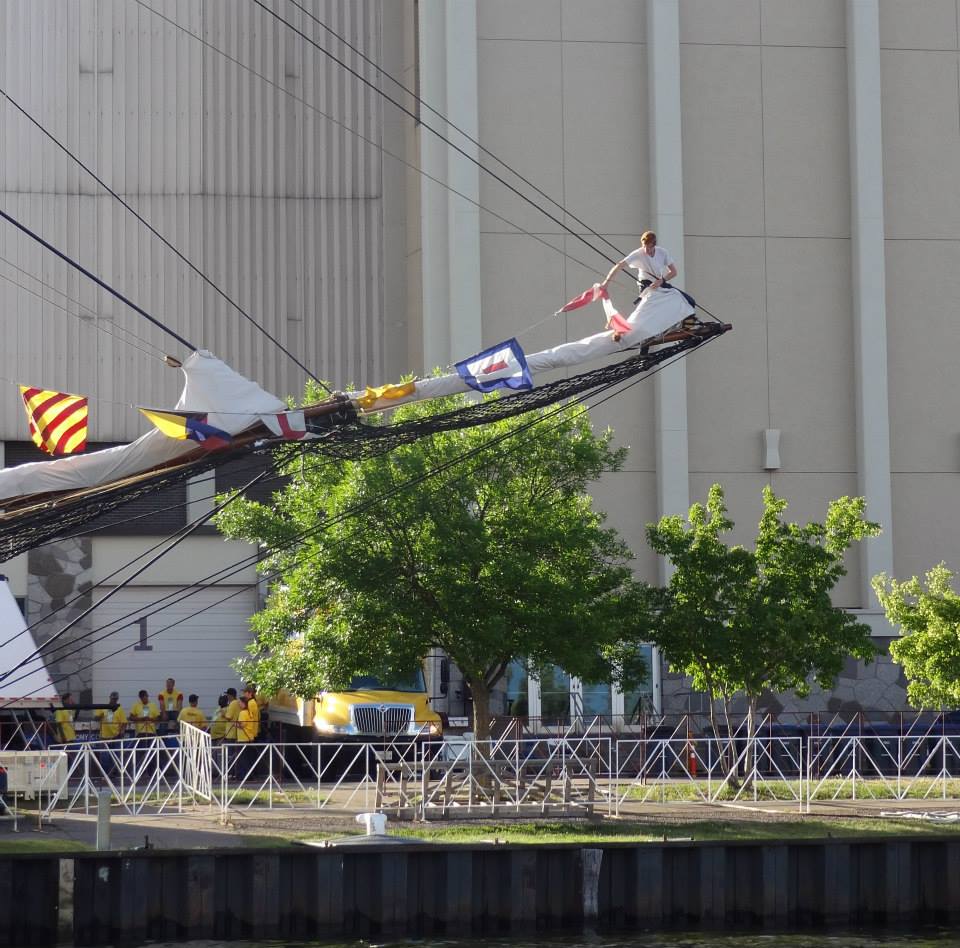
A sailor out on a (sailing) limb.
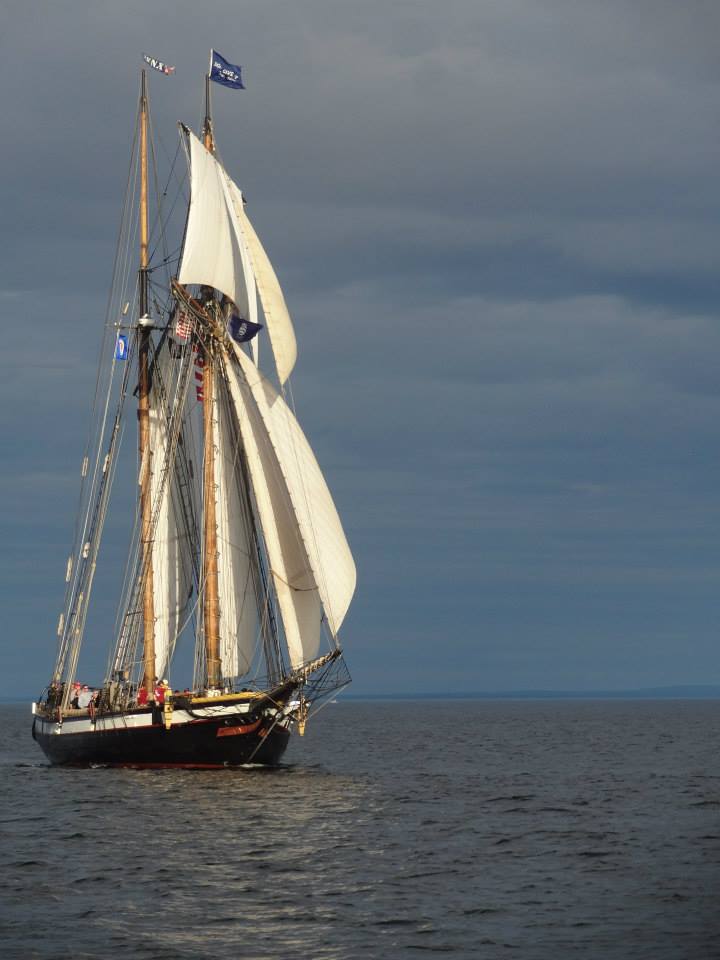
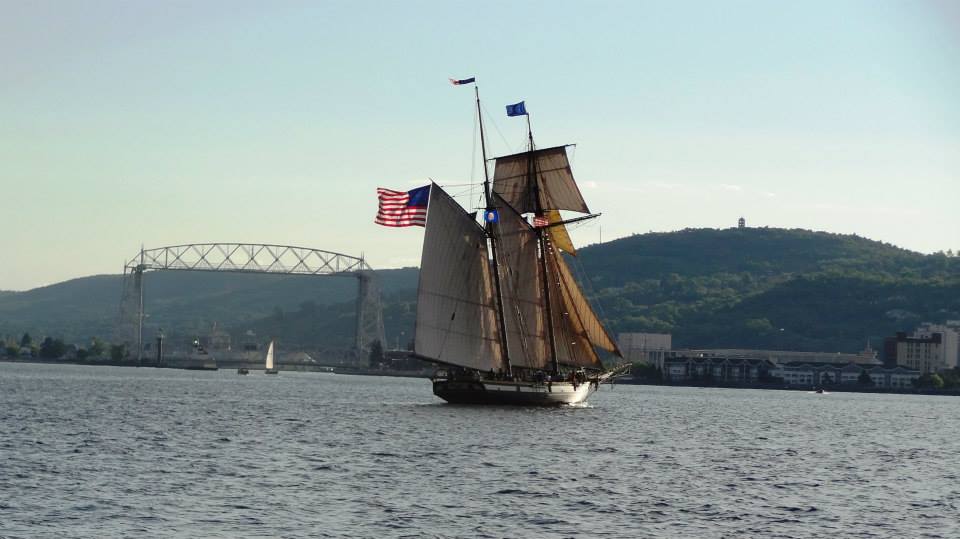
The Privateer Lynx and the Aerial Lift Bridge

Captain Marie (and friend)

The Aerial Lift Bridge welcomes us back.

I wanted to share some photos I took this weekend at the “Lark O’ the Lake” Festival, which was held in Duluth. The Lark is a replica of a seaplane that was first flown in Duluth 100 years ago. It was called a flying boat back then. During the winter the original Lark was transported to Florida where it served as the world’s first airliner – transporting passengers between St. Petersburg and Tampa.
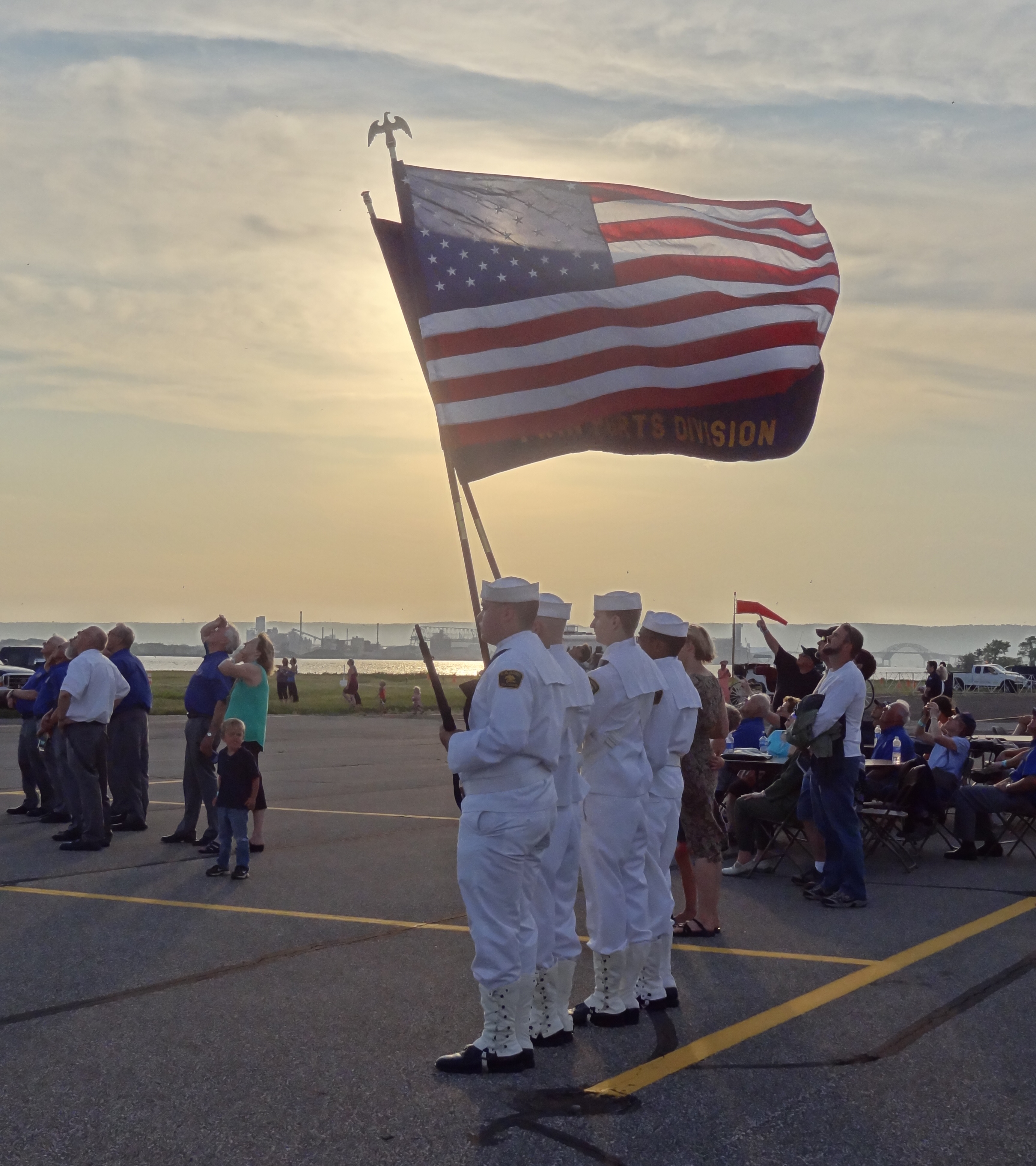
Several of my friends were involved in rebuilding the Lark, a labor of love and ingenuity. The builders worked from photos, written descriptions and studying other similar seaplanes. Last weekend’s festival was held to remind Duluthians of their place in aviation history and to show off the flying boat. I attended the opening ceremony of the three-day event, which was complete with skydivers (including the intrepid Mayor of Duluth), spectators in vintage clothing, a band, and carriage rides. The skydivers in my pictures all landed safely, however, later in the weekend, a couple of them ended up landing in Lake Superior. Only in Duluth!
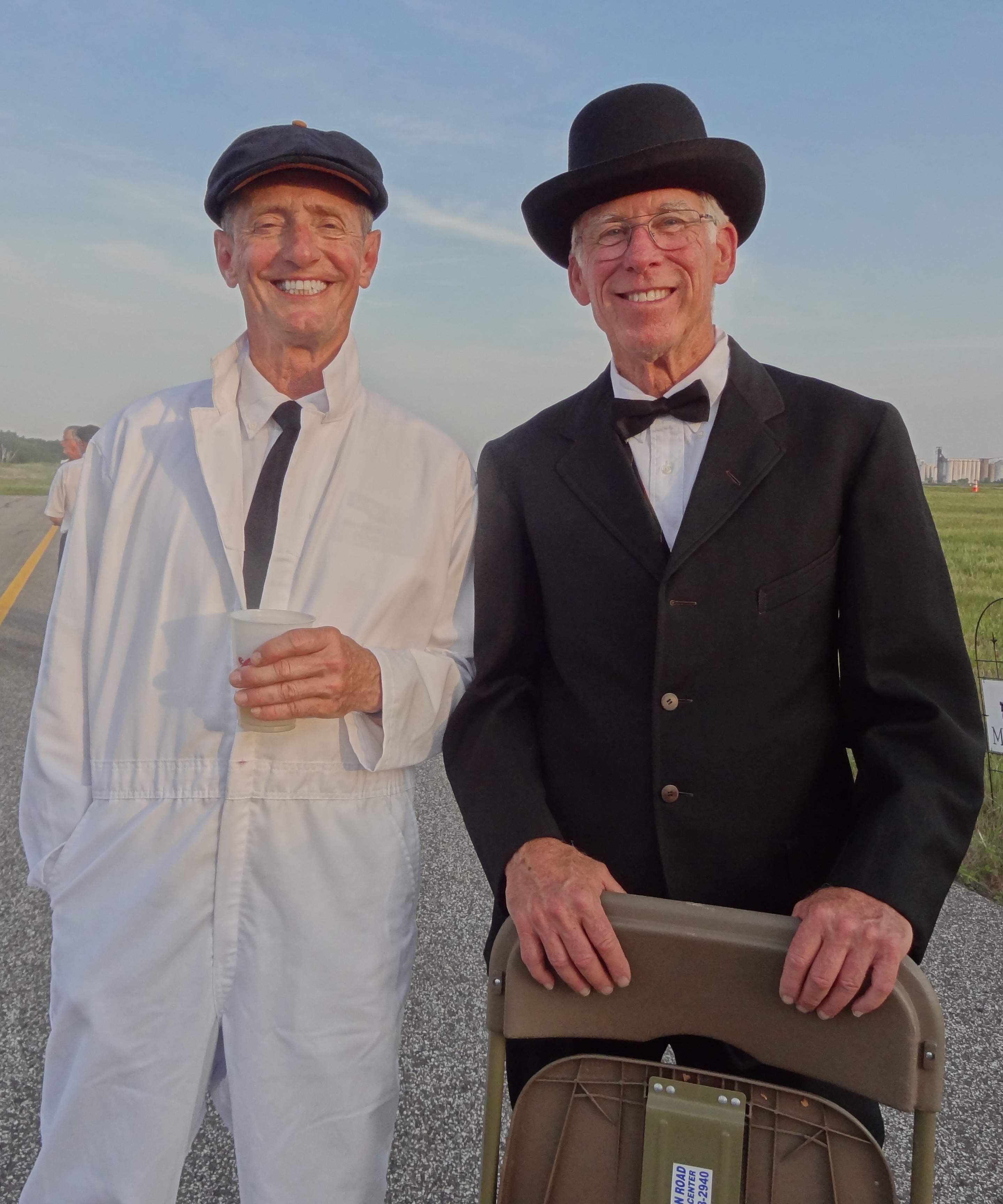
Mr. Gardonio and Mr. Betts were among the builders of the Lark.
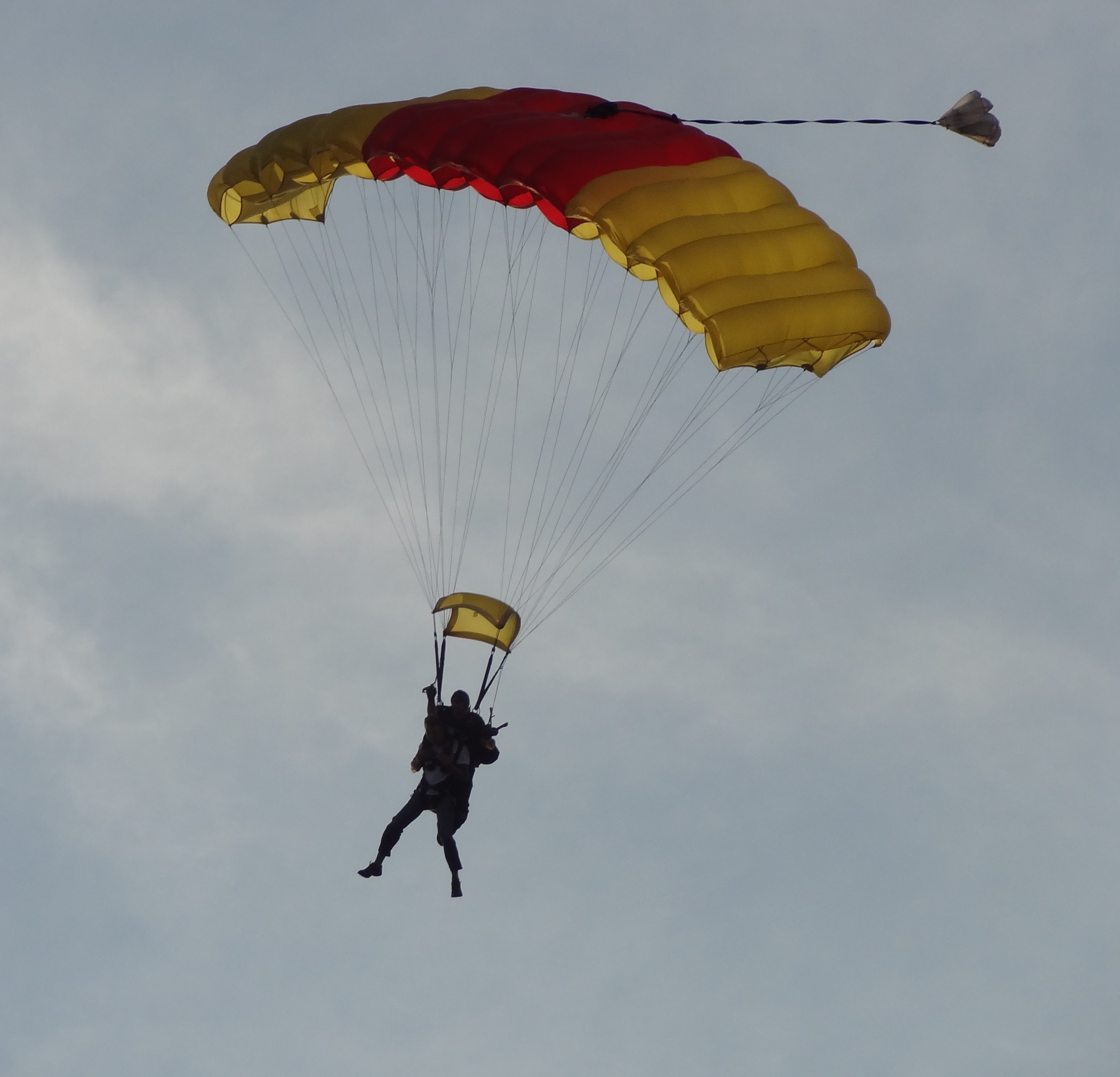
Duluth Mayor Don Ness in a tandem sky dive for the opening ceremonies of the Lark O’the Lake Festival.
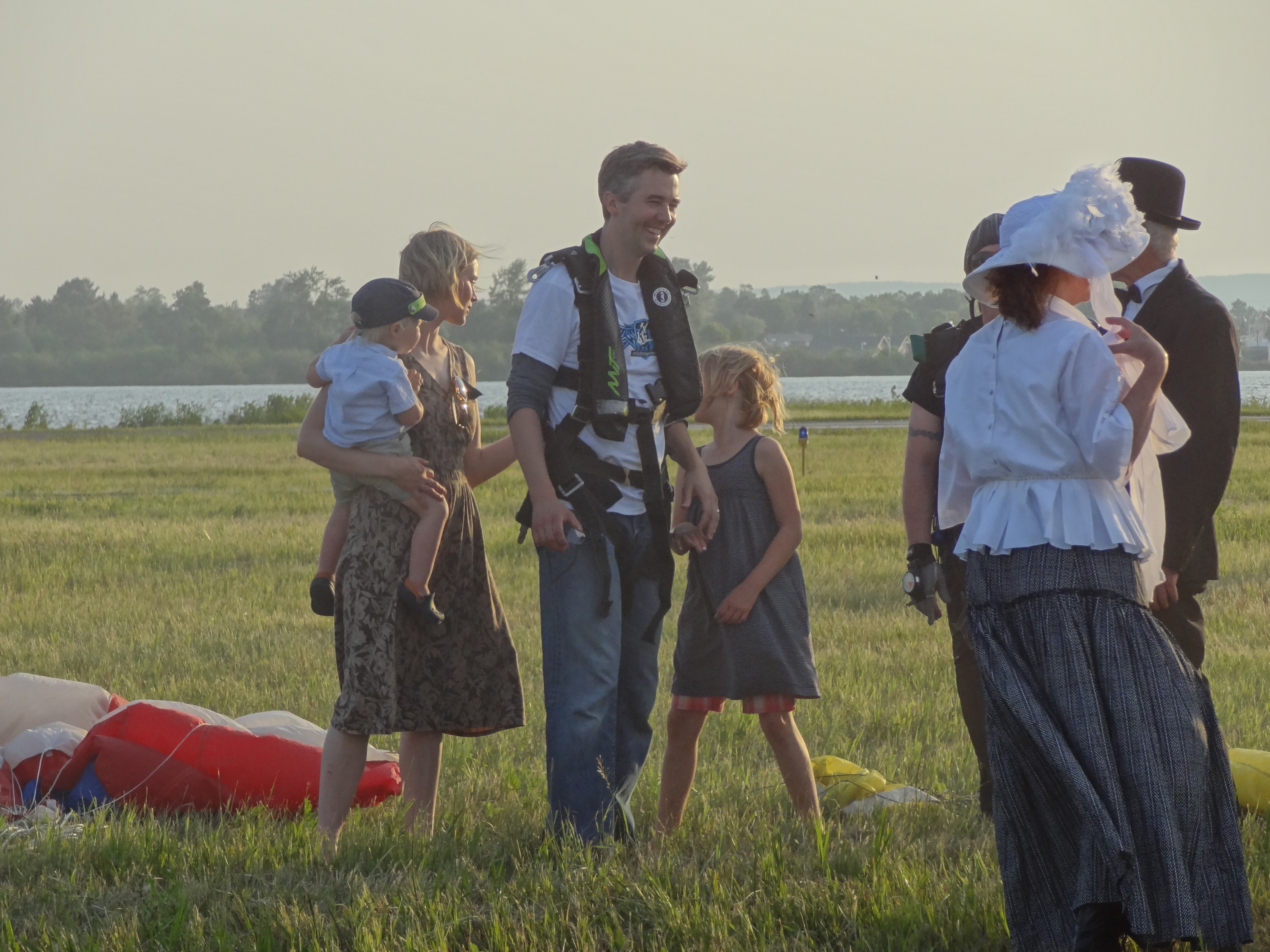
Duluth Mayor Don Ness, glad to be alive after his skydive. His family is behind him.
 Marie's Meanderings