Russ and I took a long-awaited and several times cancelled trip to warmer climes earlier this month. We orginally planned to meander to Grand Cayman Island, but our timing was unfortunate. Twice our reservations coincided with times the island was closed due to COVID restrictions. We gave up on trying to go to a U.K. territory and opted for a Dutch/French one instead, the island of St. Martin.
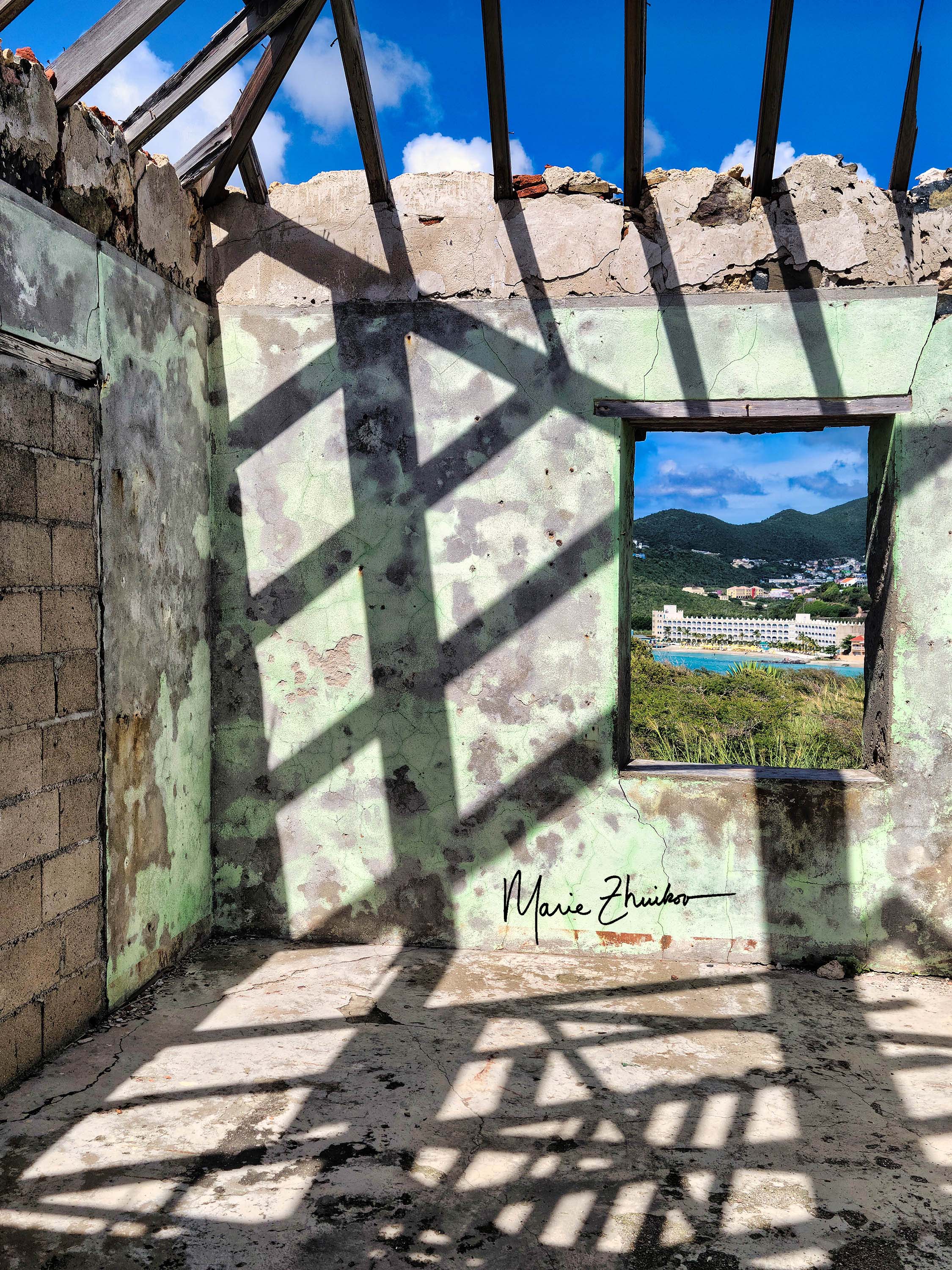
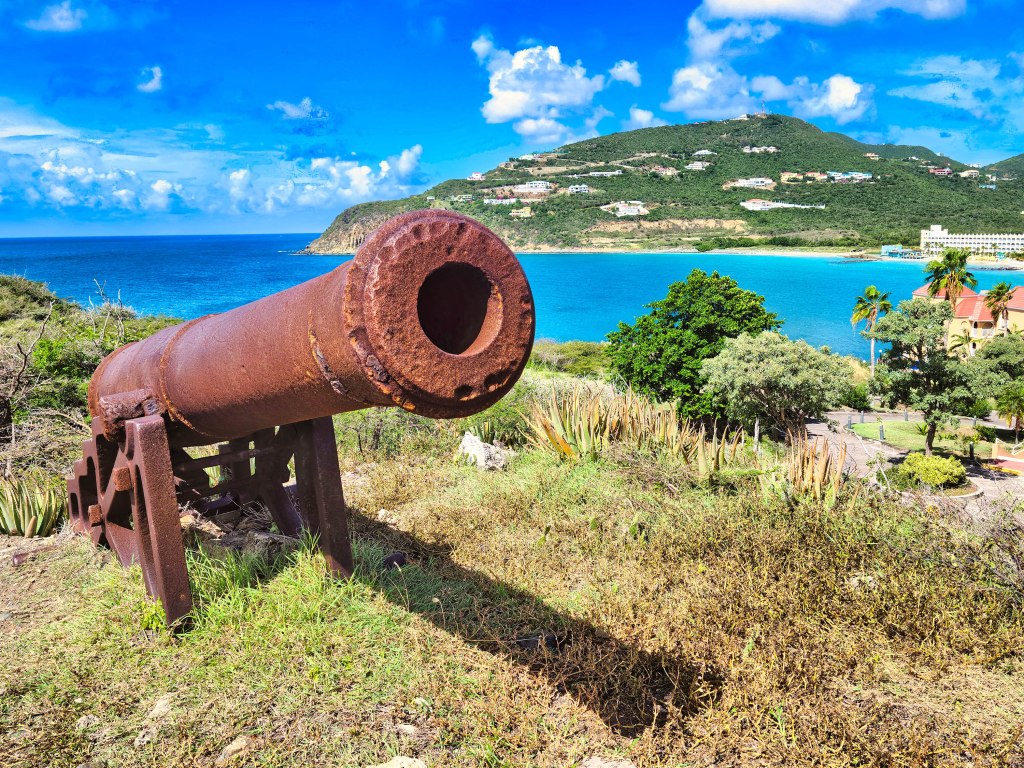
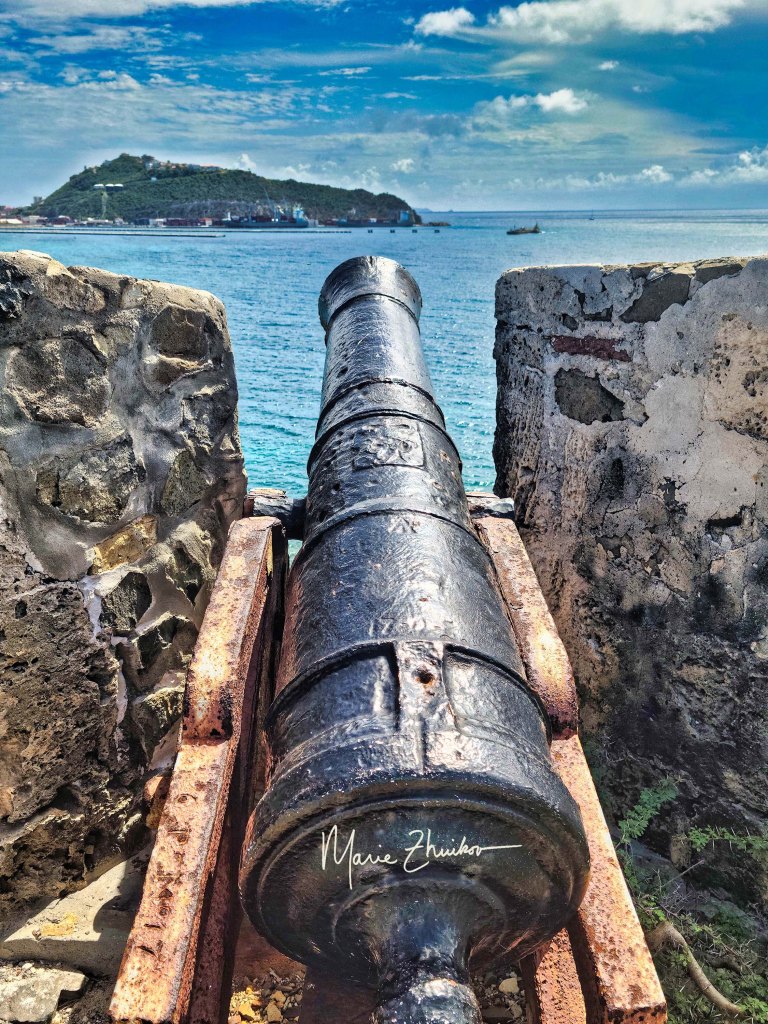
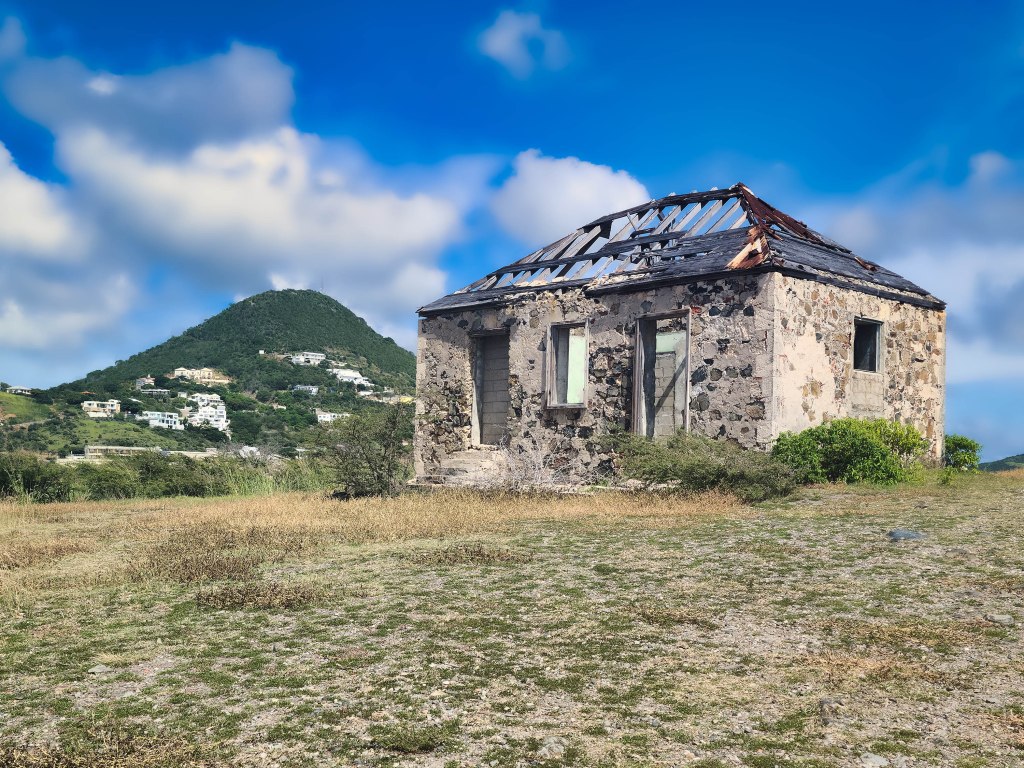
This was my second time there (for photos from the first time, see St. Martin Island – Where Nothing is Better). Sitting here in the snow of Minnesota, I am dreaming of the 85-degree (F) temps and warm turquoise ocean. In my next few posts, I plan to share images from our trip. The image above is from a fort that was near our resort. Fort Amsterdam was built by the Dutch and later the Spanish to protect the salt trade on the island. Several buildings and bastions comprise the fort, which is located on a dramatic point. My favorite was the signal house. It was built in the late 19th century for signal tower communications and was later used to house a radio station.
Its roof is missing, from Hurricane Irma, I suspect. The inside tells the tale of many layers of paint. Several windows look to the ocean or to our resort. Here are some of my favorite images.
A gallery of images from the rest of the area around the fort. Pelicans nest nearby and I caught one resting on rocks below the fort.
A view of Lake Michigan along the Eagle Trail in Door County’s Peninsula State Park.
Russ and I have been meandering around a lot. I am so far behind with my blog! Where to start?
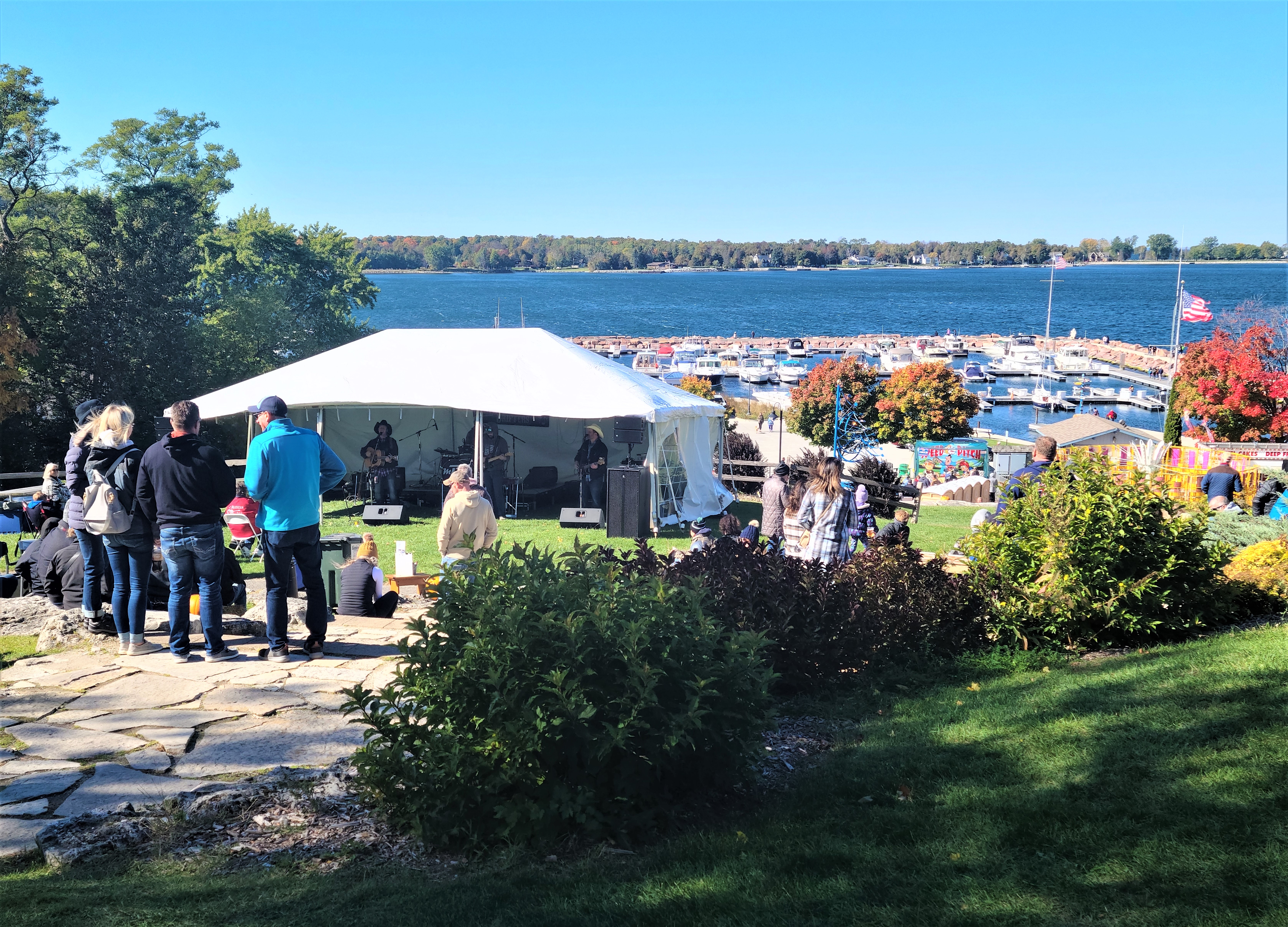
I will start in Door County, Wisconsin, where I needed to spend a weekend for a work event. This necessitated a stay in Egg Harbor on the shores of Lake Michigan. My event coincided with the town’s annual Pumpkin Patch Festival.
As a comparison for northern Wisconsin and Minnesota people, this festival rivals Bayfield’s Apple Festival. It lasts the weekend and gobs of people converge on the small town from all over. But instead of apple-everything (apple pies, apple jam, etc.) there’s pumpkin-everything.
Pumpkin Patch Festival-goers near the Egg Harbor Marina.
I had time to kill before work, so Russ and I were able to go on a little adventure. We drove about 10 miles away from Egg Harbor to Peninsula State Park. This park has a lot to offer and is very popular. It encompasses eight miles of Green Bay shoreline, northern hardwood forests, wetlands, meadows, and 150-foot high dolostone cliffs.
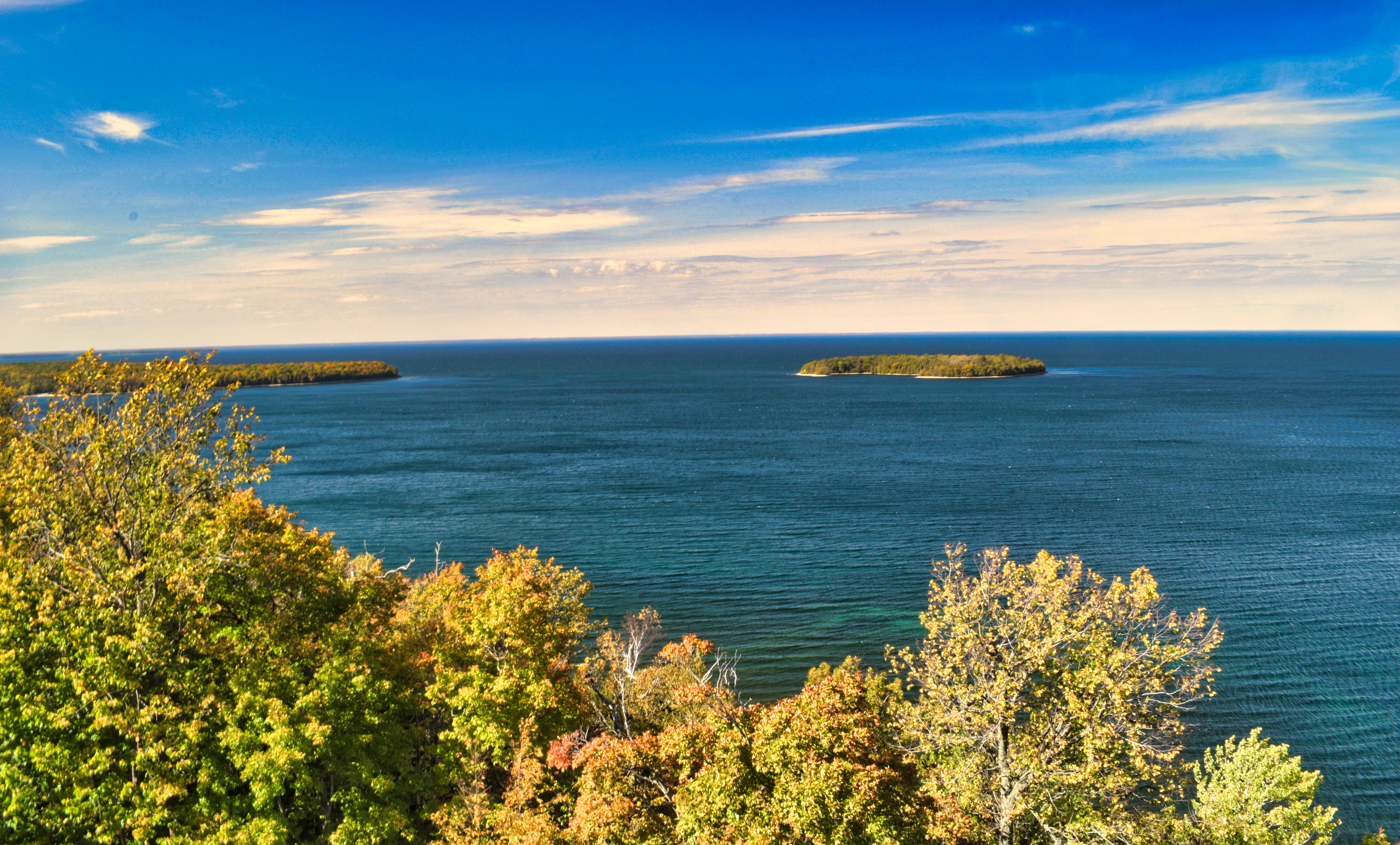
The view from atop Eagle Tower, Peninsula State Park.
We meandered over there on the advice of the guest book in our Airbnb. Some other Minnesotans had stayed there a few days before us and highly recommended the park and a trip to Eagle Tower within it. They were right! Eagle Tower is a newly rebuilt impressive structure that provides views of Lake Michigan and nearby islands. Visitors can either climb several stories of stairs or take an impressive ramp, which offers a more gradual ascent. Interpretive signs along the way offer insights into the views.
We were also hankering for a hike, so we chose Eagle Trail. It’s not far from the tower and parallels the shoreline for about two miles. The trail was rated “difficult,” but we scoffed a bit at this. Surely Wisconsin’s version of difficult couldn’t be that bad.
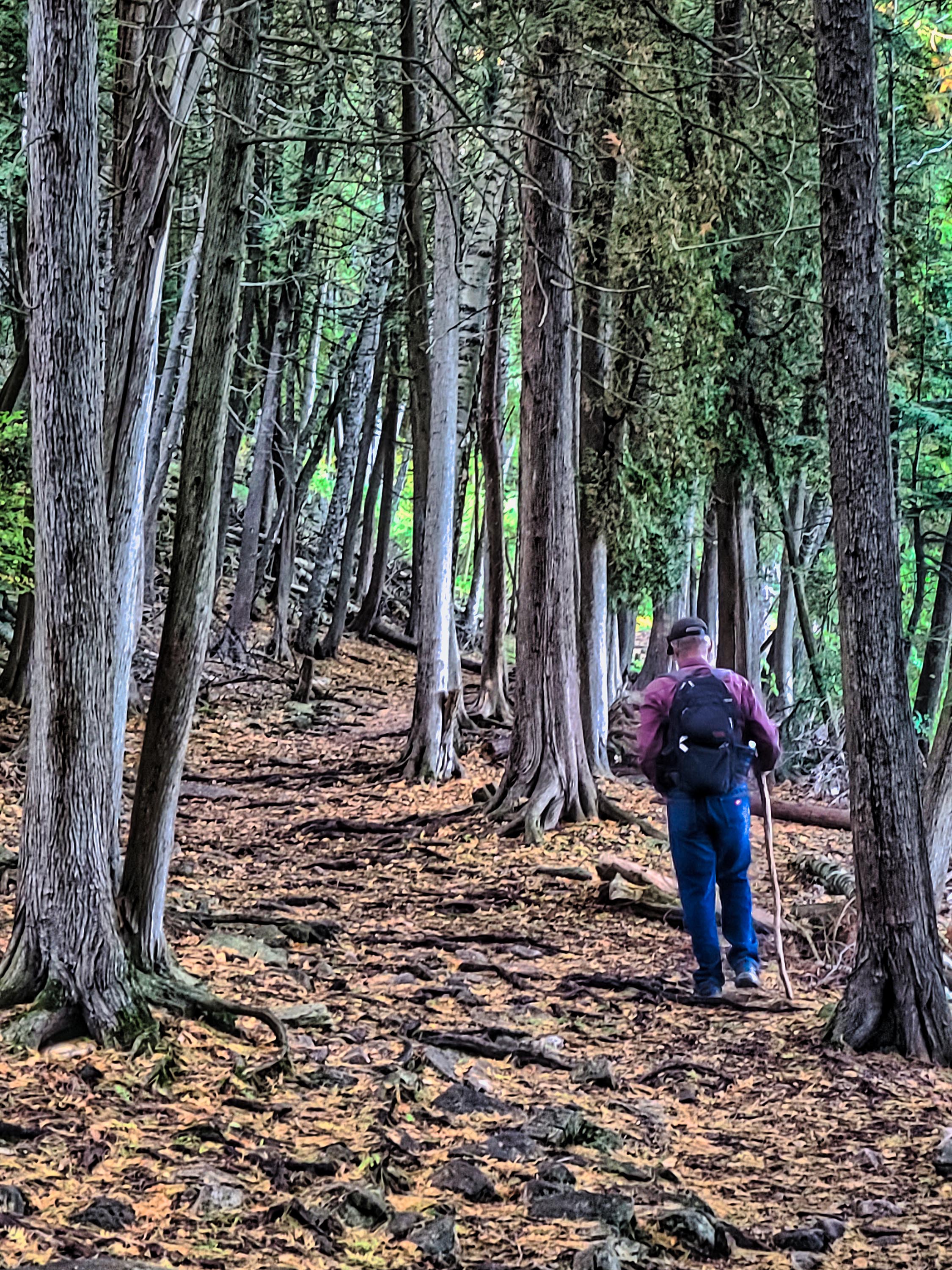
Russ hiking on Eagle Trail among the cedars.
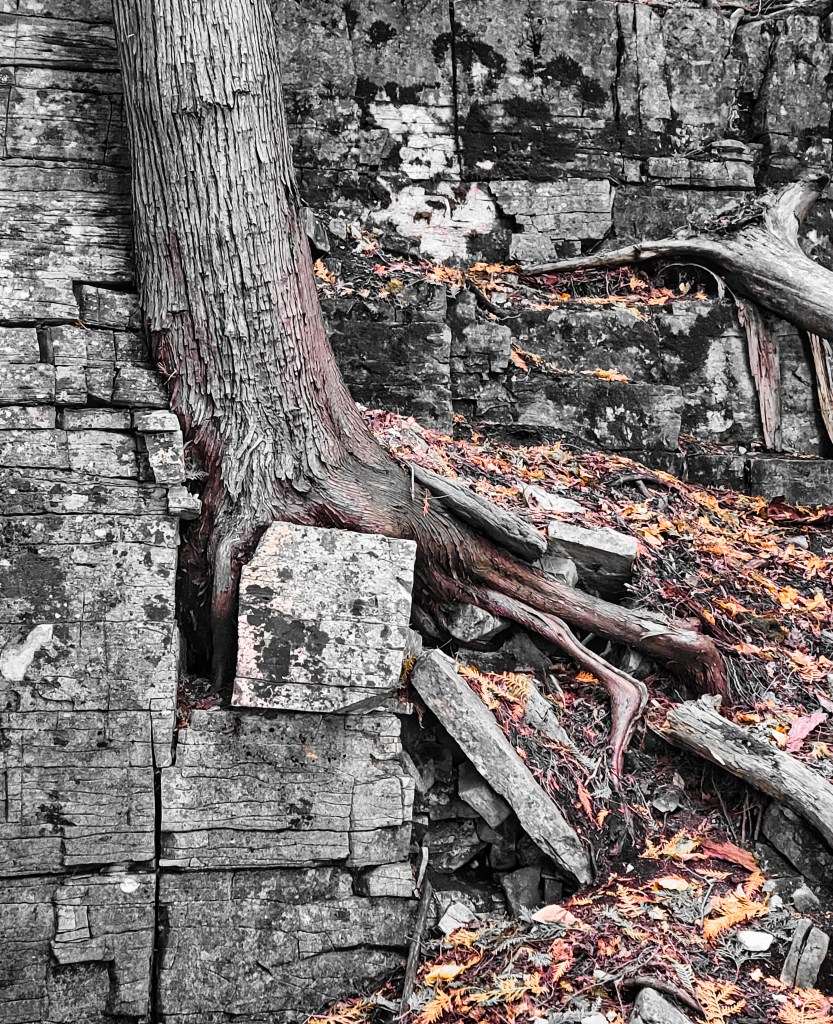
Will we never learn? Apparently not. Eagle Trail was indeed “difficult.” Not all of it, but there were parts right along the shore that were eroded, which required scrambling over rocks and downed trees. Then there were the steep descent and ascents. The trail even has several “emergency access” locations. These are spots where it’s easy for emergency crews to evacuate hikers who have turned their ankles or worse. But we managed to avoid the need for a medical evacuation. Russ found the use of a hiking stick helpful. Although the trail was challenging, the views of the lake, cliffs, and cedar forests were worth it.
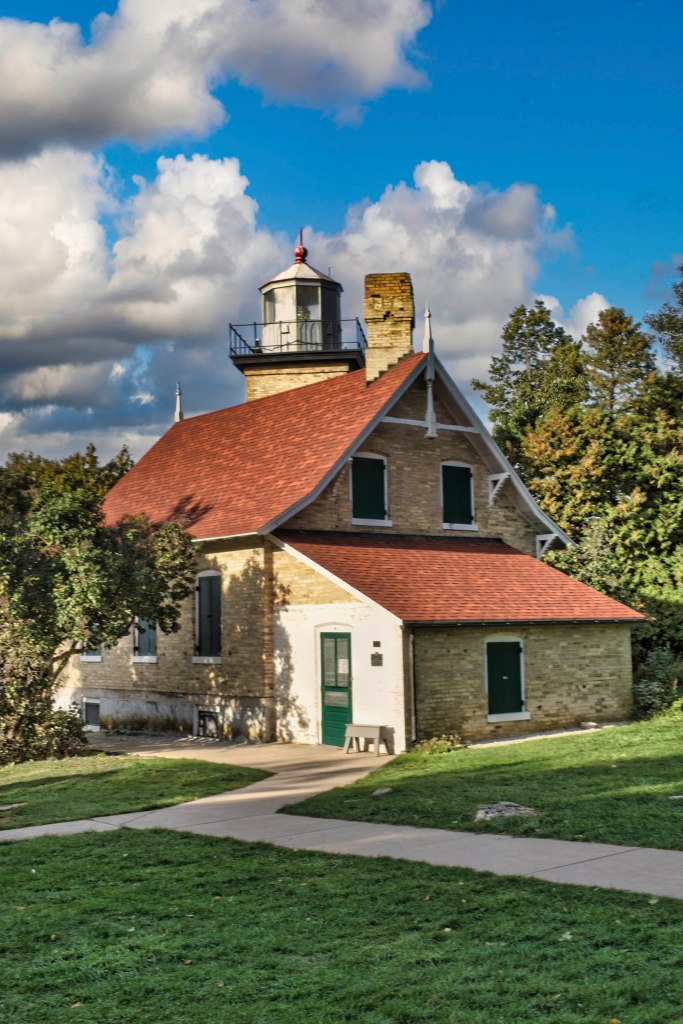
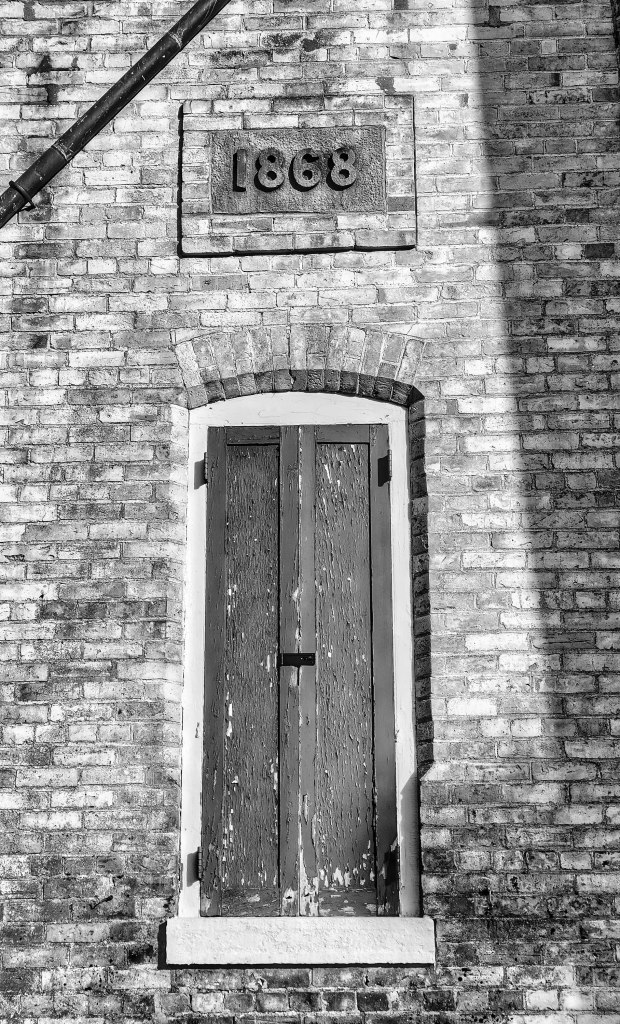
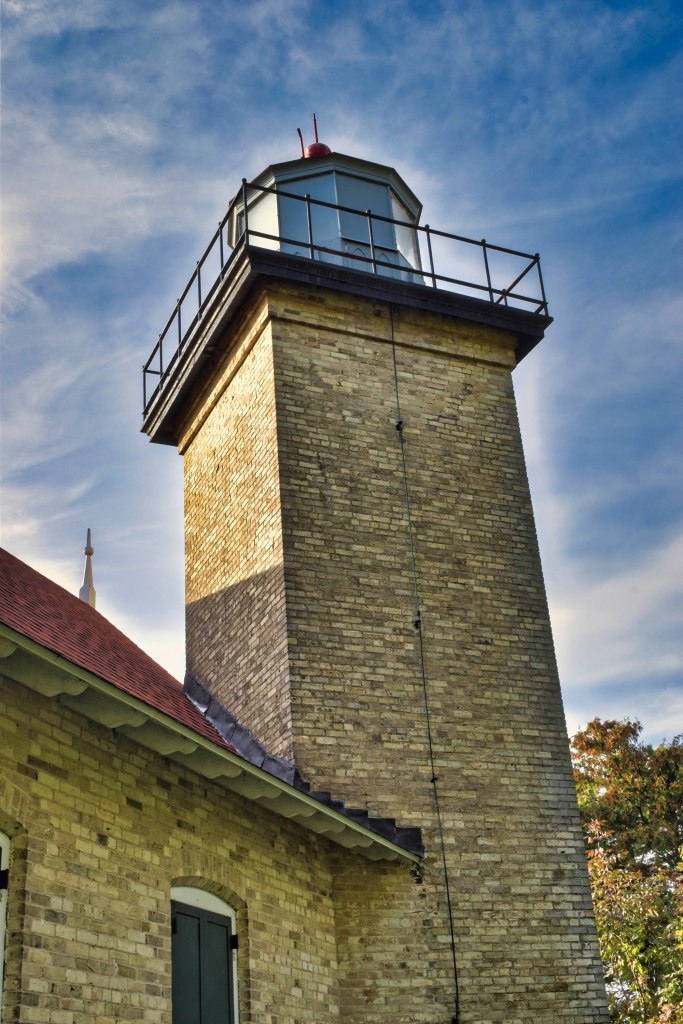
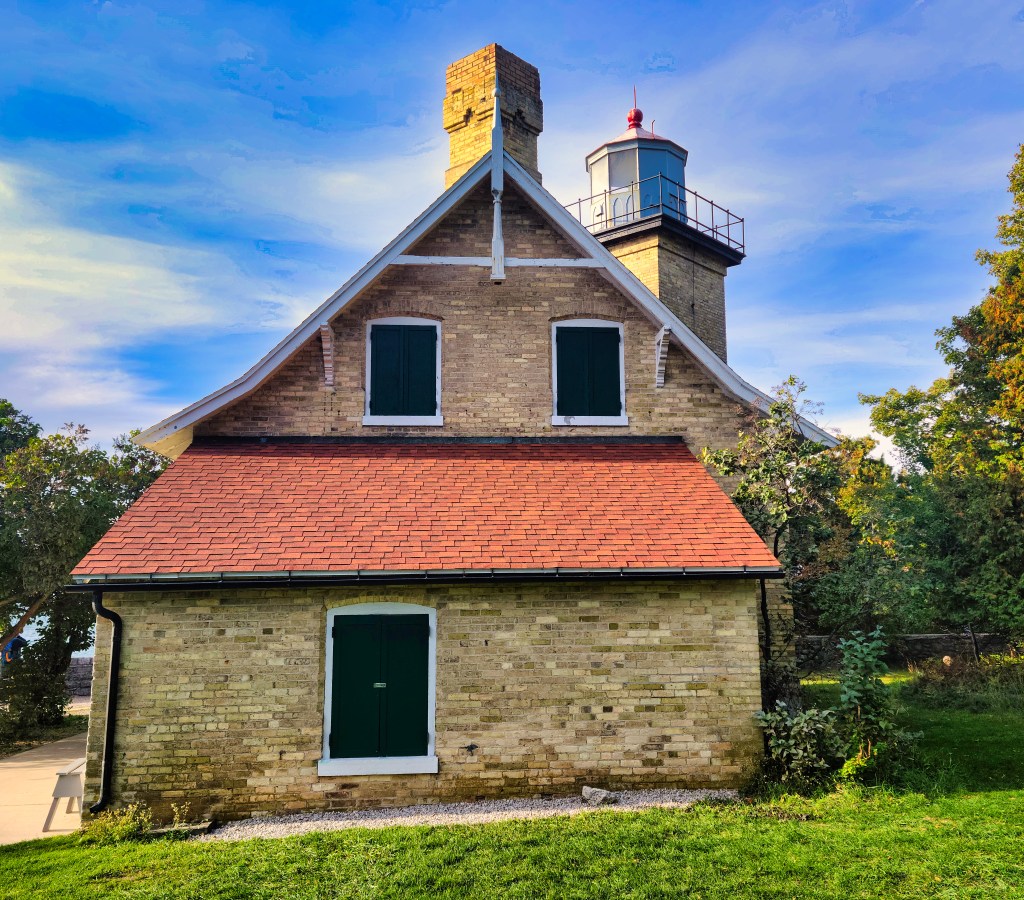
After our hike we drove a short way to visit the Eagle Bluff Lighthouse. Built in 1868, the lighthouse is perched on a cliff above Lake Michigan. A museum is inside it, but this was closed by the time we arrived.
The park also offers several campgrounds, a golf course, a nature center, amphitheater and twenty miles of bicycle trails. If we return someday, we hope to bring our bikes along.
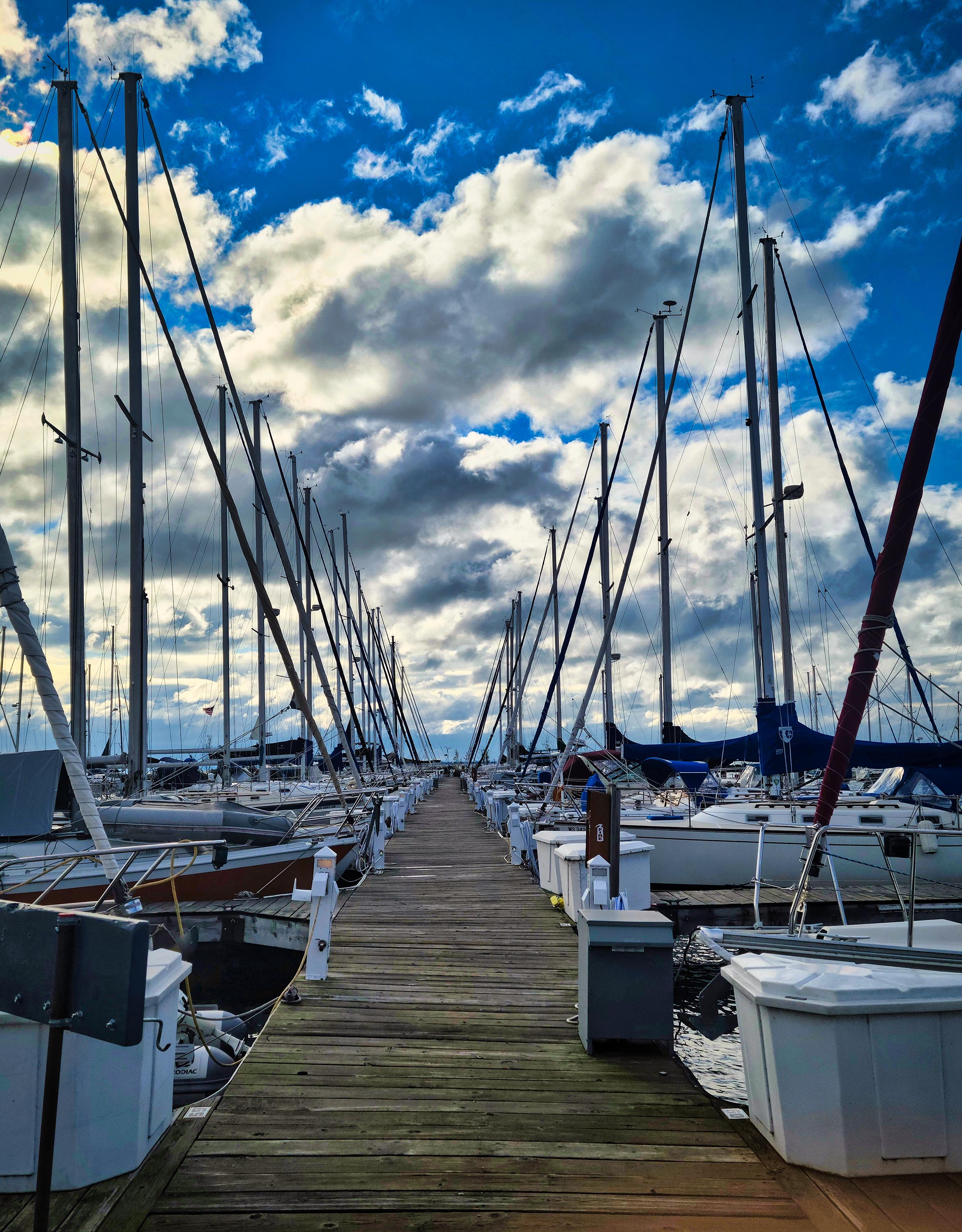
The “Neverland” anchored in Presque Isle Bay, Stockton Island.
Russ and I meandered east a few hours to the Bayfield Peninsula in Wisconsin last week. We met our sailing friend, Captain Dave, at the Port Superior Marina for a trip to the Apostle Islands National Lakeshore on Lake Superior.
We hadn’t been sailing since before the pandemic. We were apprehensive because we were sure we’d forgotten what skills we had gained, but we were more than ready for an adventure. Our plan was to sail around Stockton Island and Madeline Island over the course of four days.
Although I’d been to both places many times, this would be the first time I’d be doing it by sail, and the first time in the off-season: appealing prospects.
We met in the evening at the marina. After loading our gear onto the “Neverland” (a 32-foot Westsail), we headed down the long pier dock to our car in the parking lot so we could go into Bayfield and find an open restaurant – not an easy task on a Sunday evening after tourist season is over.
Ominous clouds had filled the sky. They chose the “perfect” time to unload their watery burden once we were too far down the pier to seek shelter back on the Neverland. We did not have our rain gear on and got soaked before we reached the car. We were immersed in nature immediately, whether we wanted to be or not.
The Port of Superior Marina near Bayfield, WI.
The squall passed by the time we reached Bayfield. Our goal was to eat at the Pickled Herring. We heard they made an awesome whitefish liver appetizer. Captain Dave had eaten there and raved about it. Alas, they were closed, so we chose to eat at Greunke’s Restaurant instead. This would also be a new experience.
We were seated at a table that featured John F. Kennedy Junior memorabilia on the wall. I was not aware that he had visited Bayfield, much less dined at Greunke’s. The restaurant had saved his receipt; he spent $104 on his meal. I hope he didn’t eat all that food by himself!
We noticed that they also offered whitefish livers on the menu. We decided to order them so that Capn Dave could tell us if they measured up to the Pickled Herring’s dish. They come either fried or sautéed with green peppers and onions. We ordered the latter version.
I thought they were passable fare, but Dave said they weren’t as good as their competitor’s. He said the Pickled Herring put some sort of extra spice on theirs that made all the difference. The rest of our food was excellent. In keeping with the theme, I ordered broiled whitefish, which was prepared just right – not too dry/overdone.
Our whitefish liver appetizer. Yum!
We, on the other hand, were not quite dry by the time we returned to the marina. We changed out of our rain-soaked clothes and spent the night in the belly of Neverland, lulled asleep by the creak of dock lines. In the morning, we awoke to the xylophone of sail lines banging on masts in the stiff wind. It was gusting to 25 knots and the sky was overcast — an exciting day to sail!
It only took us a few hours to get to Stockton Island. The Neverland reached its top speed, which is a little over 9 knots. That isn’t as fast as most sailboats go – Capn Dave explained that Westsails are considered “Wet Snails” when it comes to speed, but they are a very safe, heavy boat.
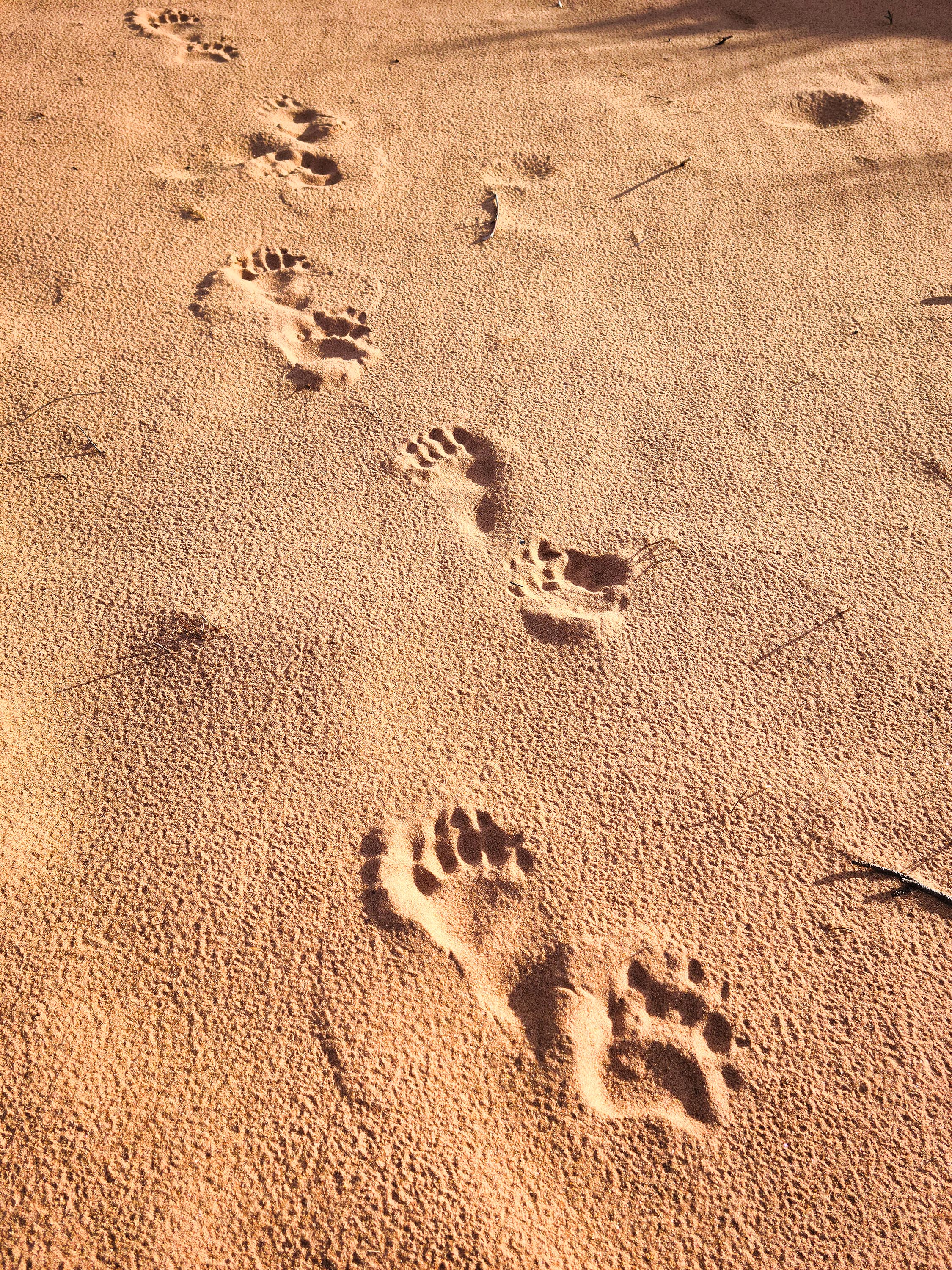
Black bear tracks on Julian Bay Beach, Stockton Island.
We anchored in Presque Isle Bay on the island and rowed ashore in the dinghy, appropriately named “Tinkerbell.” We beached at the end of the park service campground. I was used to seeing people in the campground, so walking past the deserted sites was strange, a little unnerving. We continued onto Julian Bay where we hiked down the beach of the singing sands to the lagoon. We saw a long trail of black bear tracks on that beach as well as the one where we landed Tinkerbell. The island bears were probably roaming far and wide to find enough food to fatten up for winter. A bald eagle flew overhead. A partial rainbow seemed to end over the neighboring island across the lake.
The rainbow ends on Michigan Island.
Back on the Neverland that night, the sky was painfully clear and cold. The Milky Way was easy to see, split by the occasional falling star. Capn Dave fired up the small wood stove inside Neverland, which kept us cozy for an evening of gin rummy and reading.
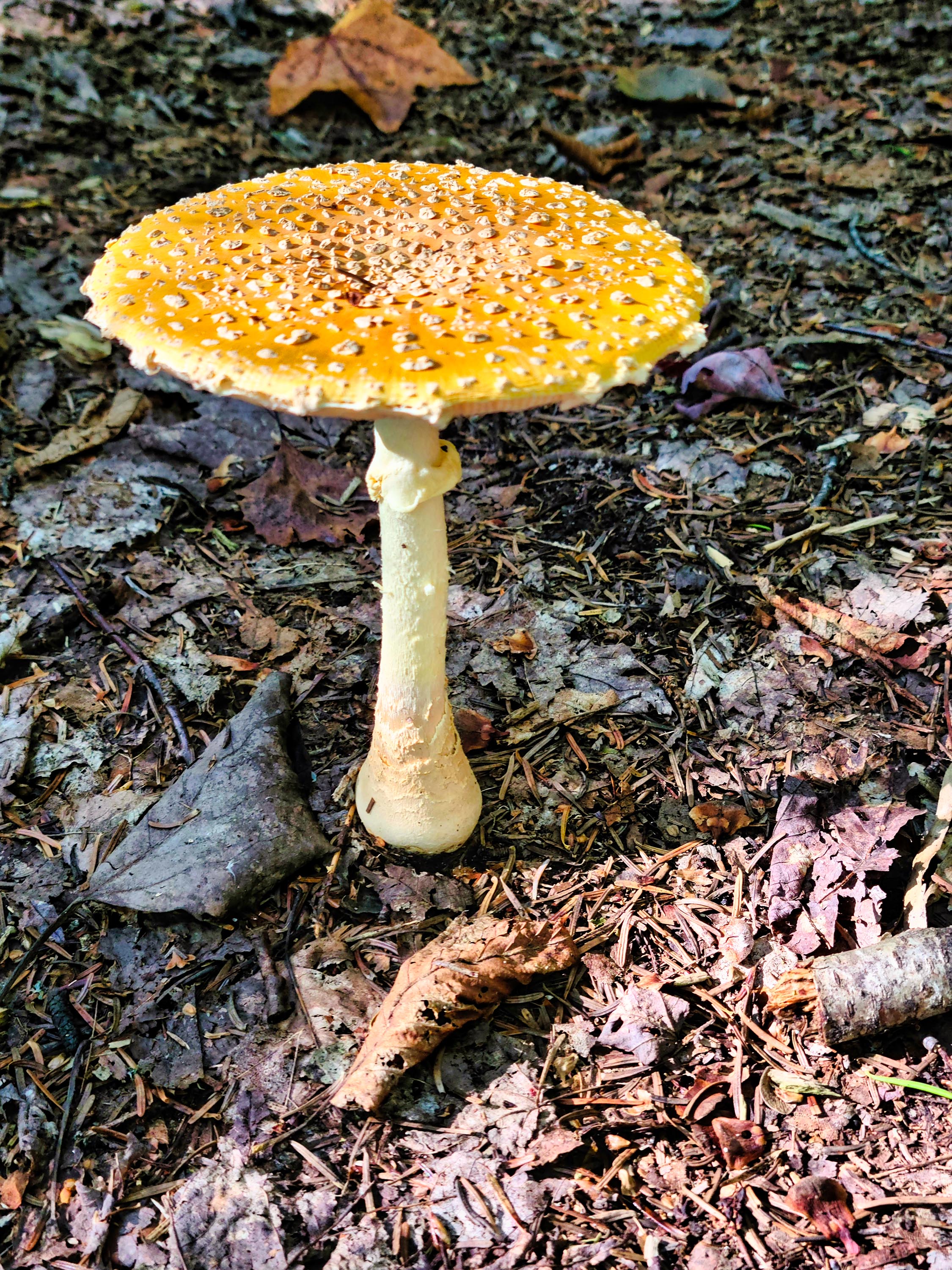
Fortified in the morning by a breakfast of haggis and eggs, we rowed back ashore and hiked the Quarry Trail, which eventually leads to an old brownstone quarry (no longer in service). We stopped before the quarry and spent and pleasant time on a sandstone ledge, enjoying sun on the lakeshore. Hundreds of colorful mushrooms piqued our interest during the 6-1/2-mile stroll – purples, oranges, reds, yellows, browns. It’s a good fall for mushrooms around here.
A fly agaric mushroom, toxic but not lethal if ingested. Found along the Quarry Trail, Stockton Island.
After another chilly night, we left the following day for Madeline Island. More on that in my next post.
The Neverland anchored in Presque Isle Bay, Stockton Island.
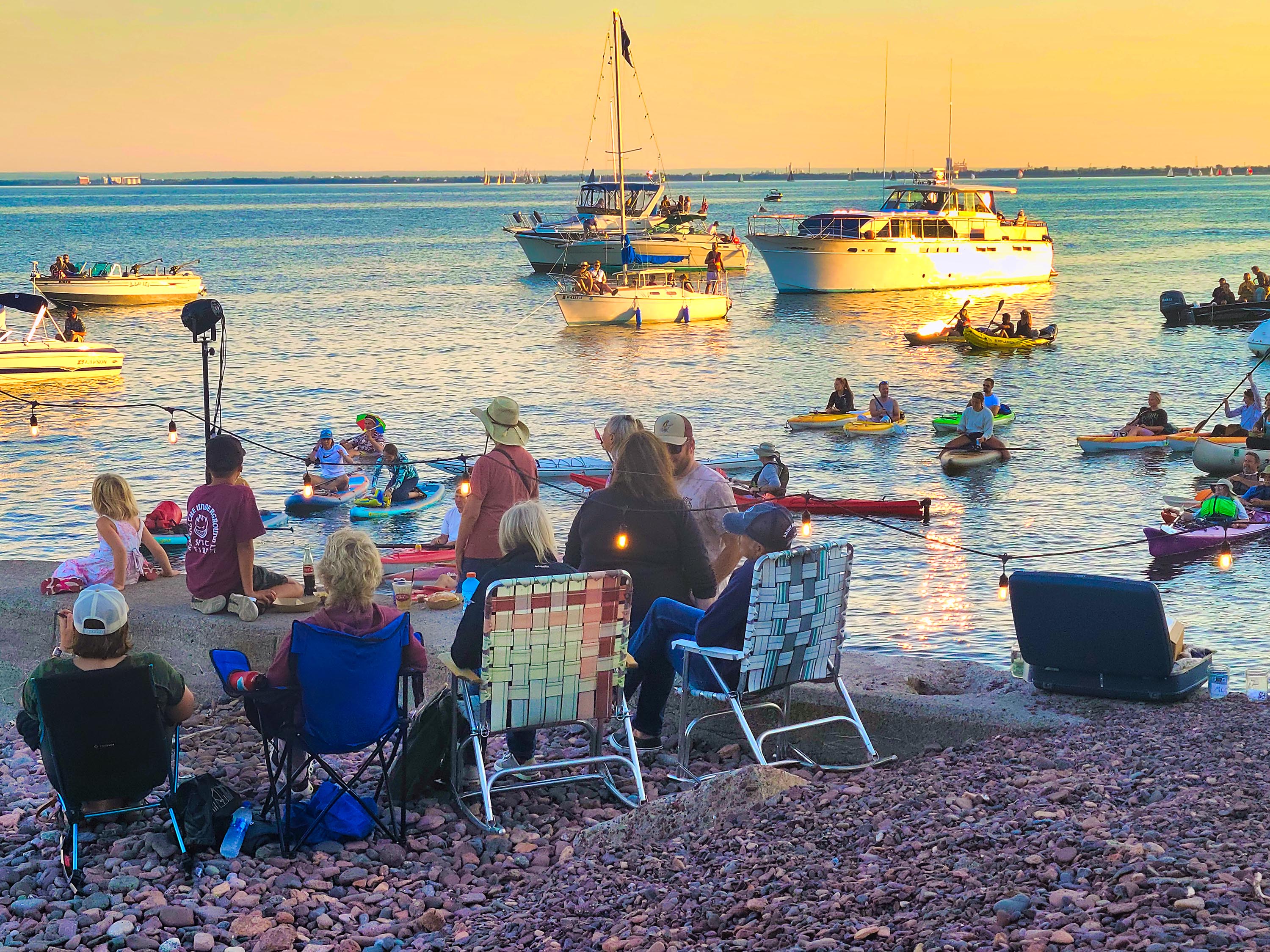
Boaters and landlubbers alike gather on the shores of Lake Superior for a “Concert on the Pier.”In the far background, you can see sailboats doing their Wednesday night races.
A historic mansion on the shores of Lake Superior in Duluth, Minnesota, offers free concerts on Wednesday evenings during summer. Local musicians play on a pier that juts out into the lake as hundreds of listeners lounge on blankets on the Glensheen Mansion grounds and the rocky shoreline. Boaters take advantage of the concerts as well, anchoring just off the pier. I should explain that all manner of watercraft people show up to listen: paddleboarders, kayakers, canoers, sailors, inner tubers.
I had never been to one of these concerts before. It was the last of the season, the weather was warm and calm, and some of my favorite musicians were playing – Jacob Mahon and Teague Alexy – in Teague’s “Common Thread” band. So, Russ and I grabbed our folding chairs and headed to the shore.
Since these events are so well-attended, parking space is at a premium. We parked in a neighborhood about a quarter mile away and walked onto the mansion grounds. We got there about an hour early so we would have a chance to sit in a good location.
The view from our concert spot on the beach. That’s the moon rising.
The best spots with direct views of the pier were already filled with picnickers. We noticed a small rocky hill on the beach behind the pier and decided to head there. We soon discovered that getting to the hill required fording the end of a creek (Tischer Creek) that runs through the property into the lake. Luckily, water levels were low enough that this was a simple task, requiring only a few steps on some well-placed rocks.
We planted our chairs to stake our claim and then headed out to investigate the food trucks, ice cream stand, and adult beverage purveyors on the grounds. We had just enough time to obtain some treats and return when the music began.
Teague’s songs have been described as “an inviting style of laid-back roots music” with a few Irish ditties sprinkled here and there. It was perfect for listening as the sun set in pinks and periwinkle blues over the lake.
More boats arrived until a minor flotilla floated in front of the pier. The boaters had the best seats!
Neighbors greeted neighbors. Former soccer moms reunited. Children continued their never-ending, generations-long quest to fill up Lake Superior with rocks.
A moonlit path on Lake Superior
Soon, an almost-Harvest-Moon rose, its light trailing a glowing path on the water. The disappearing sun had taken its warmth along with it. Although we wore jackets, a chill from the lake began seeping through. We stayed until we became too uncomfortable, leaving a few songs before the concert’s end.
As we walked back to our car serenaded by the band, the Lake Superior cold in our limbs was offset by warmth toward our community for providing this perfect way to spend a Duluth evening. Glensheen’s Concerts on the Pier are a unique experience. So glad we got our butts down to the shore to enjoy one.
Hidden Lake with a low fog, Isle Royale National Park.
When we last checked in, Russ and I were on Isle Royale, a wilderness national park in Lake Superior. It was our final day. Before we had to catch our boat back to the mainland in the afternoon, we had plans to canoe across Tobin Harbor to a rugged trail that leads to Hidden Lake, Monument Rock, and an overlook high on the backbone of the island with the prosaic name of Lookout Louise.
A boardwalk over a wetlands near Hidden Lake.
The weather had other ideas for us, however. A gray sky and drizzle greeted us as we carried our friends’ canoe down to the harbor. To me, it didn’t feel like we were in for a downpour, just a steady drip, so we decided not to let a little rain keep us from my old haunt and one of the most spectacular overlooks on the island. On a clear day, a person can see the other side of the island and all the way to Canada.
After about a half-hour paddle from the sea plane dock on the crystal-clear waters of Tobin Harbor, we reached the Hidden Lake dock. We hauled our canoe ashore and began the mile-long hike to the lookout. While the beginning part of the trail at Hidden Lake is flat, the grade gradually rises until it reaches a steep pitch on the way to Monument Rock and the lookout. Because of this, the difficulty is considered moderate to difficult.
Fog shrouded part of Hidden Lake, adding to its mystery. We found a pile of super-fresh wolf scat next to the trail along with lady slipper orchids.
For entertainment one evening earlier on our trip, we attended a park ranger talk at Rock Harbor. The topic was the fire that occurred on this part of the island last year (2021). Named the Horne Fire, it began as a lightning strike and ended up burning 335 acres and threatening cabins on Tobin Harbor. People were evacuated, tourism was disrupted, and a fire crew was brought in to fight the blaze.
Russ by Monument Rock, which was in the path of the Horne Fire in 2021.
From attending the talk, we knew that the Lookout Louise Trail would take us right through the burned area, so we were ready for the black chaos when we found it. Huge trees were uprooted, soil was blackened. Dead trees, denuded of branches, reached toward the gray sky like iron spikes. But some greenery was returning in scattered patches.
One unexpected benefit of the Horne Fire was that the view of Monument Rock – a large sea stack that sticks up from the hillside – was easily visible. Usually, it’s shrouded by trees. Reaching the landmark means you’re over halfway to the lookout. Once past the rock, the trail becomes a bit less steep.
We didn’t have much time to enjoy the view at the lookout for fear we would miss our boat home, but our gazes drank in what they could of Duncan Bay and Lake Superior. On a clear day, Pie Island, the Sibley Peninsula and Edward Island in Canada are visible.
I heard two days ago that Isle Royale is on fire again. Visitors were evacuated from Three Mile and Lane Cove campgrounds. Those campgrounds are currently closed as are some trails in that area. For more details, please see news article(s) about the fire. Of course, fires are natural on the island, but it is distressing to see the destruction they leave behind and how they impact the lives of the people who live and work on the island in summer.
The view from Lookout Louise.
According to the park service, the lookout was named for Louise Savage of St. Paul, Minnesota. Her family owned one of the cabins on Tobin Harbor before the area became a park.
As we hiked back to the dock, the drizzle grew into a light shower. But we didn’t mind. We had accomplished our goal and were feeling good. The fresh rain seeped into our jeans and into our bones, a reminder of our closeness to nature. We were able to return to Rock Harbor in plenty of time to catch our ride home.
Hidden Lake, Isle Royale. You can see evidence of the Horne Fire on the hillside in the upper right.
I left the island feeling peaceful. I was glad to see that lodge employees still gather on the sea plane dock to watch the sun set every evening like I used to back when I worked there decades ago. It’s obvious that the island still works its magic on employees and visitors alike.
I was taking sunset pictures on the dock during the final island evening of our trip. As oranges and pinks filled the sky, we could hear the rattling trumpet calls of distant sandhills cranes. These birds were not on the island when I worked there in the 1980s, but I guess they are more common now.
Then, right when the sun dipped behind the island’s Greenstone Ridge, a lone wolf howled somewhere near Lookout Louise (was it his/her scat we found the next day?) The small group gathered on the dock all looked at each other in wonderment, as if asking, was that a wolf we just heard? The wolf’s mournful, long howl was followed by a second. No other wolves replied.
As I stepped off the dock onto the land with my camera gear, a man sitting on a bench said, “I’ve been coming here for thirty years and that’s the first wolf I heard. That’s pretty special.”
Darn right it is! I told him the howls were also a first for me. That’s one of those mystical Isle Royale moments I won’t forget.
Isle Royale visitors take time to watch the sunset on the sea plane dock in Tobin Harbor.
This meander was two summers in the making. I tried to reserve a house keeping cabin at Rock Harbor Lodge on Isle Royale in early 2021, but they were booked already!
I longed to return to this national park in Lake Superior because I worked there as a waitress at the lodge for two summers in the 1980s. I hadn’t been back in over 25 years and decided it was time. I needed my Isle Royale wilderness fix.
I didn’t want to primitive camp, however. Been there, done that. During my college waitress days, I had dreamed of someday staying in one of the quaint cabins that line a protected harbor on the island – sleeping in a real bed, bringing my own food, and cooking in a kitchen complete with stovetop and mini-fridge. (Beats a camp stove and no fridge, any time.)
Now was that time. But the only openings were in the summer of 2022. I sighed and made the reservation for this distant date. I was also able to talk Russ and a couple of my friends into accompanying me.
I consider Isle Royale my spiritual home. I’ve had some of my most meaningful experiences there and it’s where I’ve met lifelong friends. My two novels are set on the island. I wasn’t sure how so much time passed off-island, but it probably had something to do with life, responsibilities, and distractions.
Lake Superior is cold this summer! Image courtesy of KBJR-TV, Duluth, MN.
As our departure date neared, my heart sank as I looked at the weather forecast for the four days we’d be spending in the park. The water temperature for Lake Superior has been at record lows this summer – its coldest in 25 years! (Lower-to-middle-40s.) It has to do with prevailing westerly winds, which caused colder waters to upwell from the depths.
As such, we were resigned to the yucky weather forecast for our stay, which predicted highs in the 60s and overcast skies. This magical and mercurial island had other things in mind for us, however; treating us to highs in the mid-70s, sunny skies, and sporadic fog.
One of my fellow travelers was prone to seasickness, so we took the shortest boat route possible, aboard the Queen from Copper Harbor in Michigan’s Upper Peninsula. The passage couldn’t have been better, and we spent our 3.75-hour unusually calm ride in pleasant conversation and card games.
Our house keeping cabin.
After we arrived at Rock Harbor, we had a few hours before our cabins were ready. We spent the time getting reacquainted with my old haunts: the snack bar (now named the Greenstone Grill after semi-precious stones only found on the island) and the America Dock – named after a ship that used to service the island but sunk. I was distressed to see the dock in ruins from ice damage. The employee dorm looked much the same, as did Tobin Harbor and the sea plane dock, next to where our lodgings would be.
The lodge is run by Kim Bob Alexander, who worked on the island when I did. He was a charter captain then and has been managing the lodge concession for many years. It was good to see a familiar face since all the rest are gone. He seemed to remember me, and we discovered that his daughter Marina would be our charter captain the next day for our lake trout fishing trip onto Lake Superior.
I was worried about how the loon population was doing on the island. I fondly remembered falling asleep to the mournful sound of their calls at night and hoped that hadn’t changed. I needn’t have worried. The moment Russ and I checked into our cabin, a pair of loons called from Tobin Harbor, as if in welcome.
The next morning, we rose early and headed to the docks for our charter fishing excursion. Marina and her co-captain Cole greeted us, giving us the rundown of where we would travel and how things would work. I had never been charter fishing before, so I was especially intrigued. (This was yet another former-Isle-Royale waitress’s dream experience.)
We headed out in the fog along the eastern side of the island toward Passage Island, which lies about three miles off its tip. We fished for a couple of hours, unsuccessfully. Or, I should say that Marina fished for us and we just lollygagged around, trying to stay out of her way.
Our lake trout catch.
As the fog began to lift, we hoped our luck would change. To hedge our bets, we decided to offer a little sacrifice to Lake Superior. My friend Sharon poured a little bit of leftover coffee into the lake, saying a few words.
Soon after, she was reeling in her line according to Marina’s instructions, with a four-pound lake trout on the end of it. Not long after, I caught a five-pounder. I was especially impressed by how cold my fish was when I held it, pulled from Lake Superior’s icy depths.
There was another lull during which Russ lost a fish or two. We decided it was time to offer another sacrifice. Sharon and I eyed our men, as if deciding which one to throw overboard, but then opted for a pinch of tobacco that one of them carried.
It worked again! Sharon’s partner Mike caught a trout and Russ finally did, too.
That night we dined on our trout, pan-seared by the lodge chef, along with all the fixings. We felt truly fortunate to eat these fresh gifts from the lake, much to the envy of our fellow diners, who also wanted fish, but it was not on the grill’s menu.
Our lake trout dinner.
Passage Island Lighthouse.
The next day, fog scuttled Russ’s and my plans to canoe in Tobin Harbor, so we opted to hike to Scoville Point instead. The point is about a four-mile round-trip from Rock Harbor. Along the way, we saw a snowshoe hare, which I had never seen before on the island, and an eagle’s nest, complete with eaglets. A mother merganser carried several of her brood on her back along the shore, followed by at least half a dozen other babies.
Our final full day on the island, Russ and I took a half-day trip aboard the lodge’s tour boat, the M.V. Sandy, to Passage Island. The weather cooperated. The park ranger who was supposed to interpret the rugged hike to the island’s lighthouse contracted COVID, so I ended up acting as an impromptu guide for part of the trip, pointing out plants not found on the main island (due to moose browsing) like the devil’s club and huge yew shrubs. We were also treated to views of peregrine falcons flying from their cliff face nest. The lighthouse has aged and decayed since I last saw it, but it still stood as a stalwart presence on the end of the island.
Our final morning dawned foggy and drizzly. Russ and I spent our time canoeing and hiking to Monument Rock and Lookout Louise. More on that in my next post…..
Mystical Scoville Point, Isle Royale National Park.

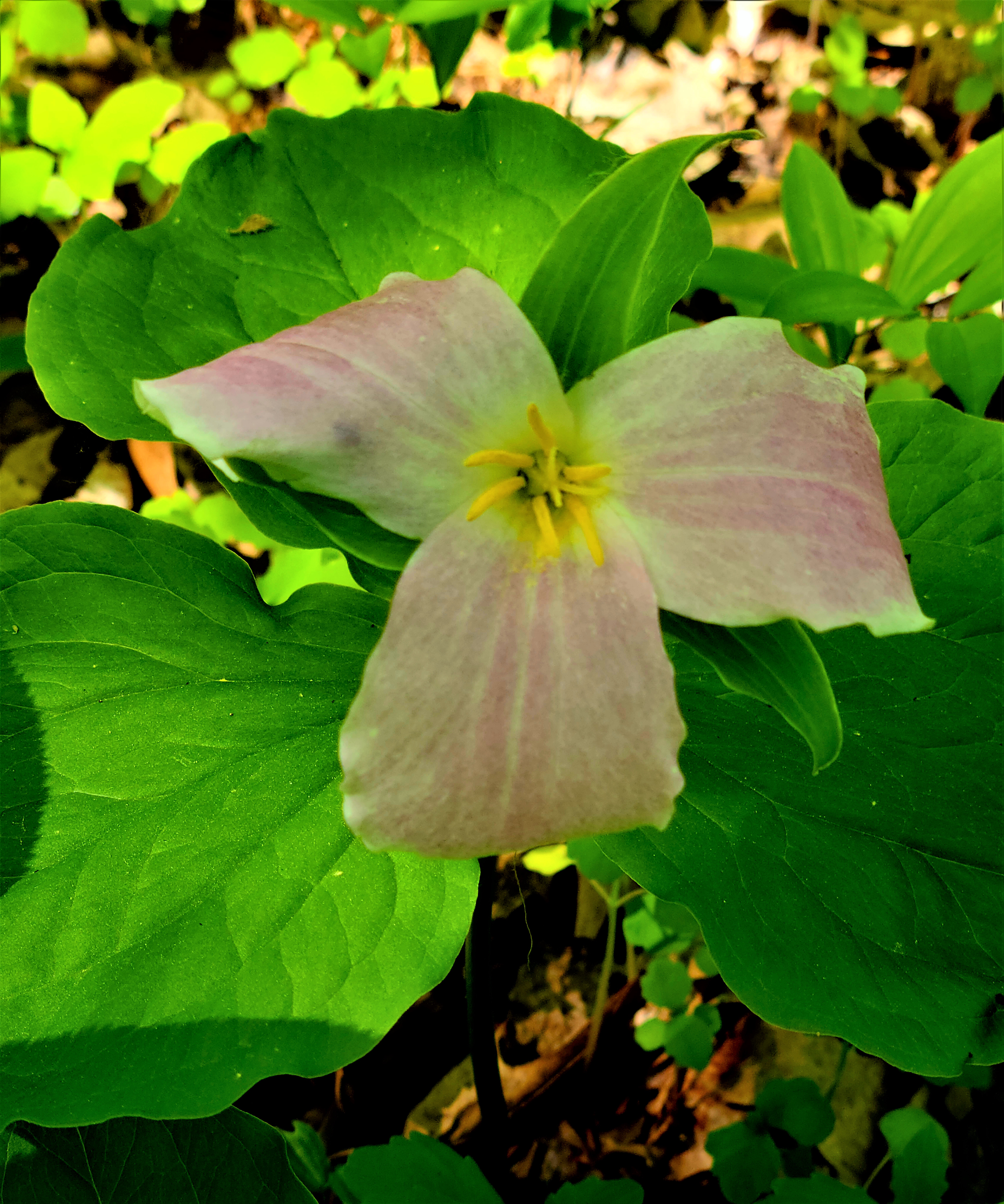

When Russ alerted me to the presence of trillium wildflowers as we cycled along the Munger Trail near Duluth, I leapt off my bike, dug my phone camera out of the seat pack, and haphazardly laid my bike on the shoulder as I scampered to get a closer look at the white beauties.
Russ was probably having a minor heart attack at my treatment of my bike, but the sight was worth a little equipment abuse. You see, trillium blooms only last for a short window of time each spring. Because I’ve missed seeing them the past few years, I didn’t want to miss the spectacle this year.
The flower’s three white petals make it easy to recognize. Sometimes they turn pink when stressed by cold or aging. They don’t have a scent, but for me they epitomize the North and the glories of living life here. They grow in maple or beech forests in eastern North America, as far west as Minnesota. It’s also the official symbol of Ontario Canada.
A pink trillium, which means that it’s stressed out.
This is one flower species best left alone in its natural habitat. If you want some for your garden, make sure you purchase cultivated trilliums, not wild ones that have been dug up. There’s some controversy over whether there are actual cultivated trilliums. If anyone knows a reputable source, let me know!
Trilliums sprout from bulbs and take seven to ten years to bloom in the wild. So, think twice or even three times before you go picking that pretty white flower. It’s really better just to take photos and enjoy them that way.
I took a few pictures of the flowers along the trail, then we continued our ride. Eventually, we turned around and took a bit of a different route back.
After being so excited to see a few trilliums, imagine how excited I was on our return trip to see whole hillsides covered with them! To get close enough for photos, I had to scale a ravine and fend off a million mosquitoes. But it was worth it because I saw a pink trillium close-up as well as trillions of trilliums on the hillside. Note: I did not step on any trilliums in the process.
I ended the ride feeling replete with trilliums, and that’s a rare feeling indeed.
Trilliums as far as the eye can see makes for a happy Marie.
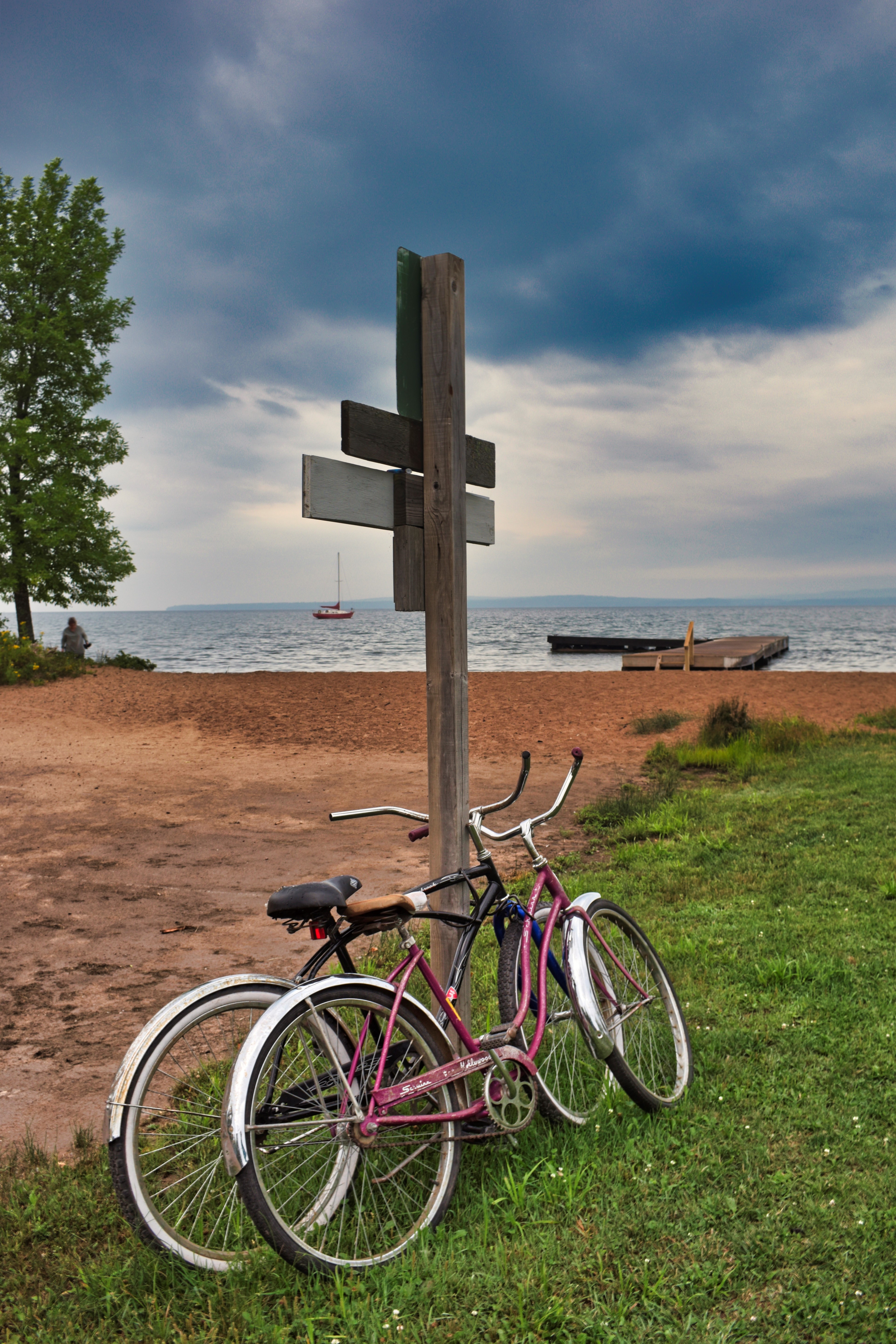
“Bikes Before the Storm,” taken at Joni’s Beach on Madeline Island in Lake Superior.
A photo I took last summer earned an honorable mention in a national “Coastal Love” contest organized by the National Oceanic and Atmospheric Administration’s Office for Coastal Management. The images chosen celebrate America’s coastlines – both salt and freshwater.
Sailboats moor off the beach and I suspect the bikes were there for boaters to use to get around town after they row ashore in their dinghies. I was on the beach for a sunrise shoot, but as you can see, the sun was not cooperating.
A few of my photographs are featured in an art show that’s currently on display at my church. The show is open to the public. If you are in Duluth this summer, pop in and take a look! (Unitarian Universalist Church of Duluth, 835 W. College St.) The show will be up until Fall.
This post is a presentation I gave along with other artists for a service today that was centered on the show and the theme of “cultivating beauty.”
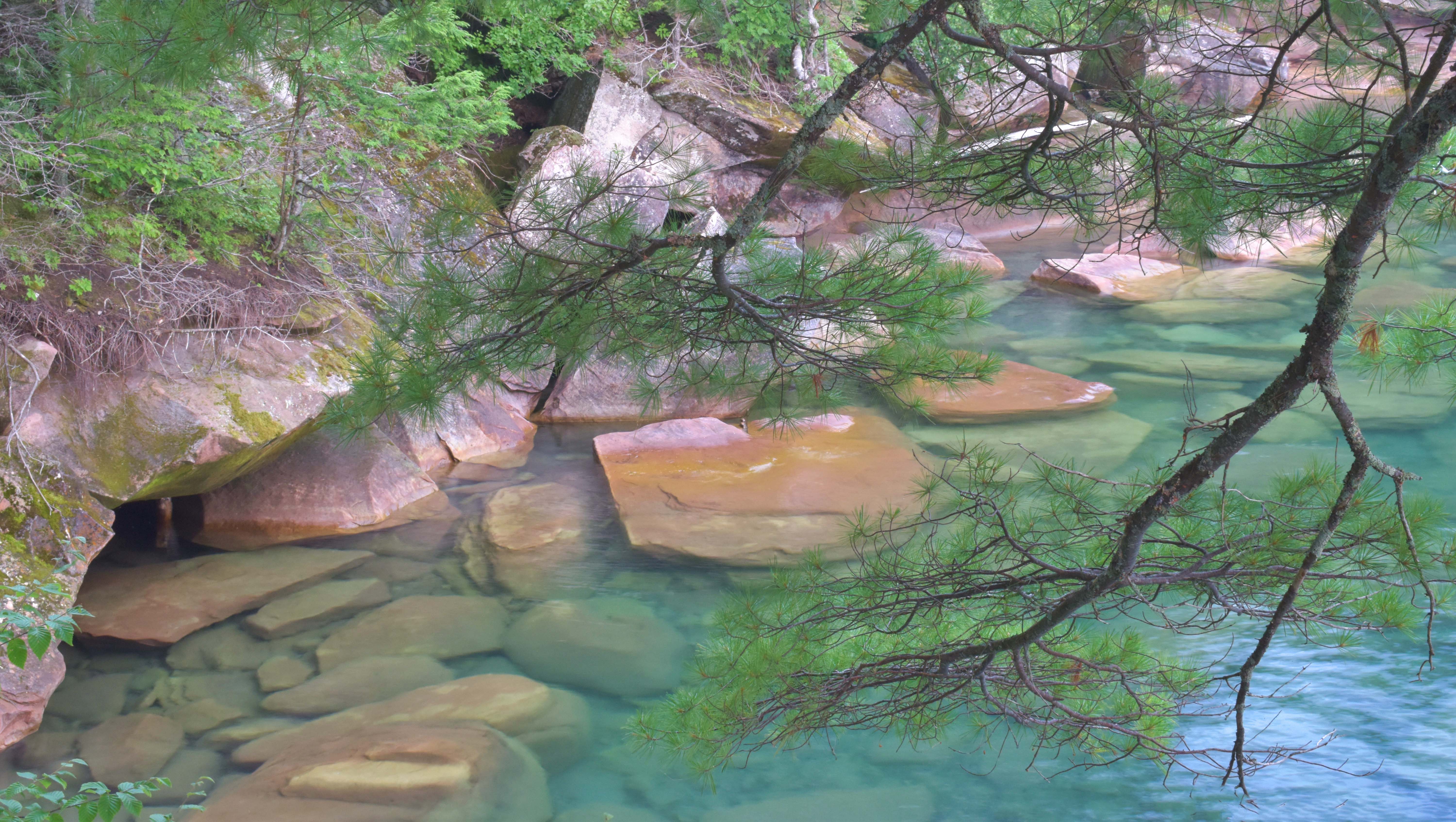
The image that started it all (my first image that was critiqued in my photography class). Big Bay State Park, Madeline Island, Lake Superior.
During Christmas when I was a freshman in college, my parents gave me an Instamatic camera. I suspect my mother was the driving force behind this gift, as she had begun dabbling in photography. She was a member of the Duluth Camera Club and was starting to take classes with the likes of Les Blacklock and later, his son Craig.
I had fun with the camera and even used it for a visual communication class I took for my journalism studies. Then, when I graduated college, I graduated cameras. My parents gave me an Olympus 35 mm film camera. My mother showed me how to use it, thinking it would be a great way to document my next adventure, which was grad school through the Audubon Society’s Expedition Institute – a traveling school bus classroom that focused on the outdoors and environmental education.
How that camera survived a 20,000-mile journey across America without a camera bag, I’ll never know. But I used it to capture the beauty of the rugged landscapes we traveled through all those years ago.
Once I got into the workaday world as a science writer, the camera came in handy for stories I needed to cover. Eventually, it malfunctioned and, having to buy a camera by myself this time, I downgraded back to the point-and-shoot type.
After I had children, I noticed that my youngest son was interested in photography. He was only 6 or 7 when we went to Yellowstone. We bought him one of those disposable Kodak cameras so that he could take his own pictures on the trip. He enthusiastically clicked away at geysers and majestic elk. Then, when he went to college, I continued my mother’s tradition and helped him buy a Nikon digital camera, since he was interested in taking a photography class. He loved this beginner-level camera and soon bought his own, more advanced Nikon. He’s since started a side business in portrait photography.
I was interested in getting a more serious camera around that time, so I bought out his part of the original Nikon and it became my own. He showed me how to use it, but my phone camera was so much easier, that Nikon mostly stayed in its bag.
Then came the day when my boss at work suggested I take a photography class instead of the typical writing classes I take every year. She liked the images I was able to capture with my phone and wondered what I could do with more formal training.
I was taken aback by her suggestion. After all, I’m a writer, not a photographer. Taking photos was always just a side dish in my life – something I did while doing something else – never the main course.
The idea stewed during the pandemic until last summer when I felt it might be safer for such an endeavor. I found a week-long sunset photography class through the Madeline Island School for the Arts in Lake Superior. My job deals with communicating water research, so I figured I’d get some photos that would come in handy.
I already knew how to frame a photo, but an F-stop? ISO? What are those?
The class was a crash-course in camera settings. Each day, we offered up one image for critique by the instructor and our classmates. I’d never had an image critiqued before. With trepidation, I submitted my first – it was a greenish photo with pine branches against rocks and water. The instructor said, “This photographer knows what they’re doing. Who took this photo?”
I thought, “I know what I’m doing?” I identified myself and listened to his suggestions for a few improvements, glowing inside all the while. None of the other students had been moved to take a photo of that particular scene, and the instructor discussed how everyone sees beauty differently. He said, “You can take a dozen photographers out to a park and they’ll all come back with different images.”
Maybe there really was something to this photography hobby? Maybe I could be both a writer and a photographer?
I returned home with a big confidence boost, new knowledge of my camera and of the photo editing software. I loved having another way outside of words to capture the grandeur of nature that I see around me. Of course, the camera is much more limited than our eyes, but the photo editing software gets things a bit closer to what our eyes actually see.
I have my mother to thank for getting me started in photography and I am glad that my son continued this family art. I’m excited to participate in the UU Art Show – it’s my first one!
Russ and I recently returned from a trip to California that was centered around photography. My photographer son was along, and we had the chance to meet a distant cousin for the first time. As we discussed our lives with our cousin over breakfast, we discovered that she’s a portrait photographer, too, focusing on babies. On a hunch, I asked her what brand of camera she uses.
My son and I exchanged meaningful looks when she uttered, “It’s a Nikon.”
The view from the Tunnel View pulloff in Yosemite National Park. Bridalveil Falls is on the right, Half Dome is in the middle and El Capitan is on the left.
The last time I was in Yosemite National Park, it was on fire. I was there to put help put it out. That was 32 years ago (!) when I worked for the Forest Service. (See that story in “Why I Miss Wildland Fire Fighting.”)
I journeyed to the park this time to be a photographer-tourist.
As Russ and I planned a long overdue (due to Covid) vacation to Lake Tahoe, we discussed what to do there. It came to light that Yosemite was within driving distance and that Russ had never been there before. Well, that would never do.
A sequoia near Mariposa Grove.
“You’ve got to see it!” I said. Wise man that he is, we made plans to begin the first few days of our trip in Yosemite and then drive to Tahoe. Thus, began our Westward Ho adventure.
In late April, we flew into Fresno, CA, and then drove about 90 mins to our lodge just outside the park. Our first foray on the day we arrived was to Mariposa Grove, which wasn’t far from the lodge. We eagerly hiked two miles to see the grove, only to be mystified when we discovered it was closed!
How can a grove of ancient sequoia pines be closed, you ask? Well, you’ve got me on that one. There were no signs at the trailhead giving hint of this closure, nor did we see anything obvious online. But after we made it back to the (closed) visitor center near the grove, we did see a small sign that explained the grove was closed until 2023 so that the trail could be rehabbed.
The grove had a fence all around it, which prohibited people from using the trail that runs through it. Thankfully, we were at least able to view the trees from outside the fence on the road that runs past it. Disheartened, we walked back to our car on the road, which was much easier than the trail. Positive points are, we saw a mule deer (see photo) and a cool rock cut alongside the road (see the other photo).
Another closure to be aware of is that Bridalveil Falls – the iconic waterfall that’s the first thing tourists see from the Tunnel View overlook and when they approach the park from the south, is closed. This is another closure that’s not very well publicized by the Park Service. But you can still get close to the base of the falls if you are a bit intrepid.
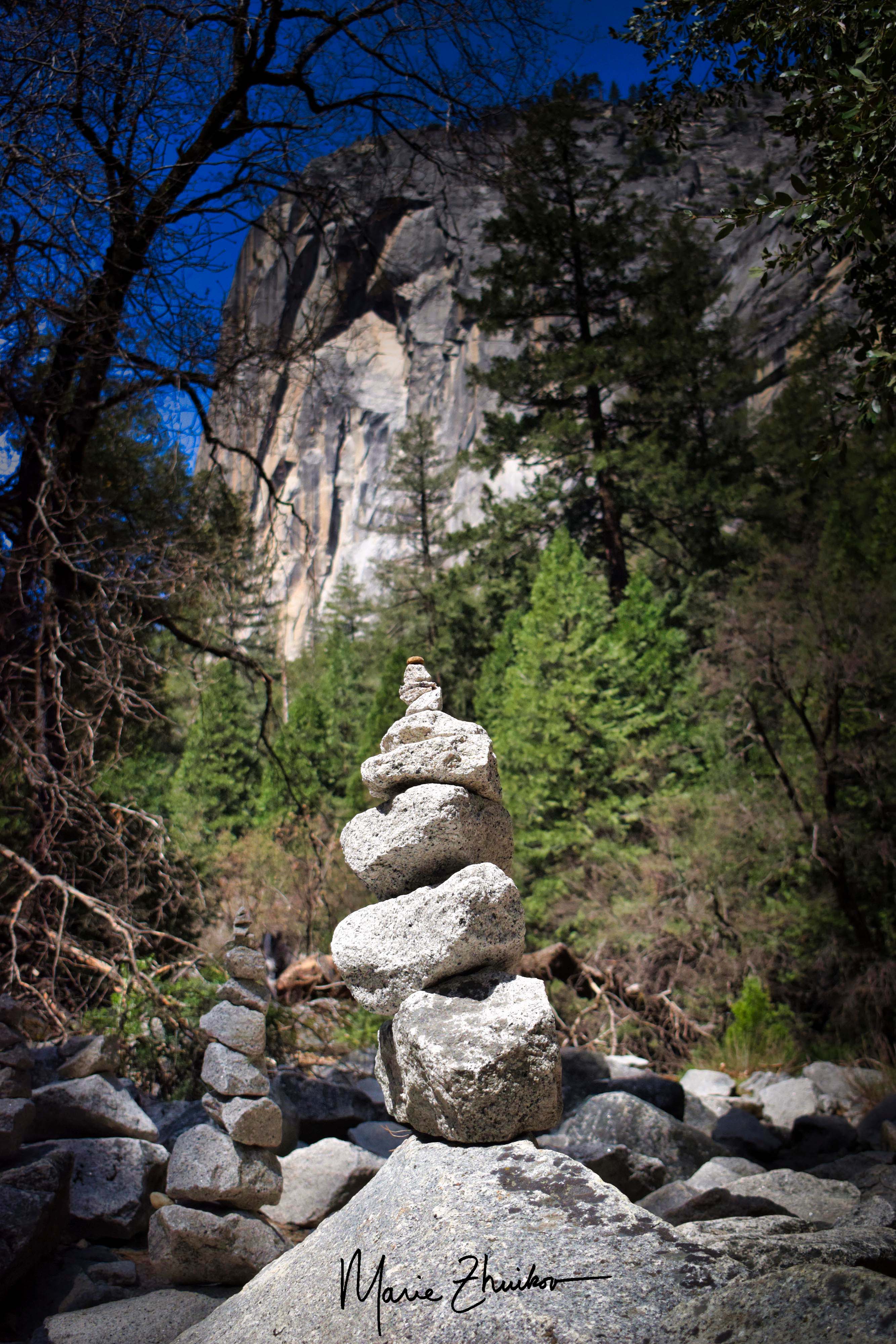
We spent the next few days driving through the park and doing more hiking. We visited Yosemite Falls, Mirror Lake (an easy two-mile round-trip hike on a closed paved road), Cathedral Beach, and Valley View. Valley View was hard to find because there were no signs that designated it, just so you’re aware. We tried unsuccessfully to find it our first full day but figured it out by the second day. We also ate lunch one day at the historic Ahwahnee Lodge, which is in the park.
Russ’s favorite experience was visiting Yosemite Falls. There’s an upper and lower part of the falls, and he appreciated the aesthetics of the approach as you walk toward the falls. I think mine was Mirror Lake. As you can see from the photos, the reflections of the backside of Half Dome in the water were stellar, and I enjoyed the scenes available along Tenaya Creek.
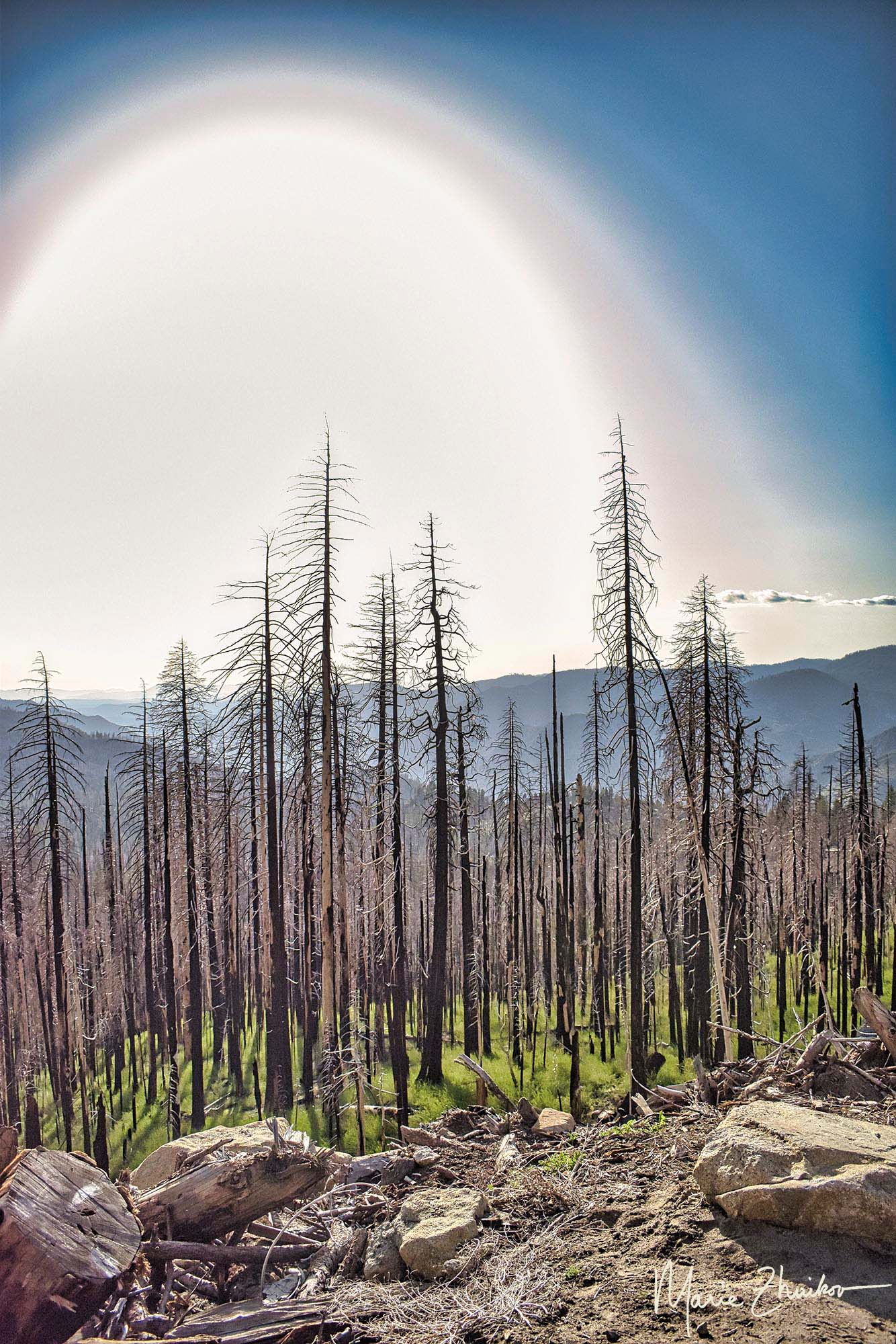
One thing that struck me was how rough the forest looked. Wildfires had obviously burned all the way into the Yosemite Valley floor. That must have been nerve-wracking for the park service. And many areas on our drive to the park were burned or showed evidence of wind damage. California has been experiencing a drought for the past three years and it sure showed. Perhaps the fire that I worked on so many years ago was only the beginning?
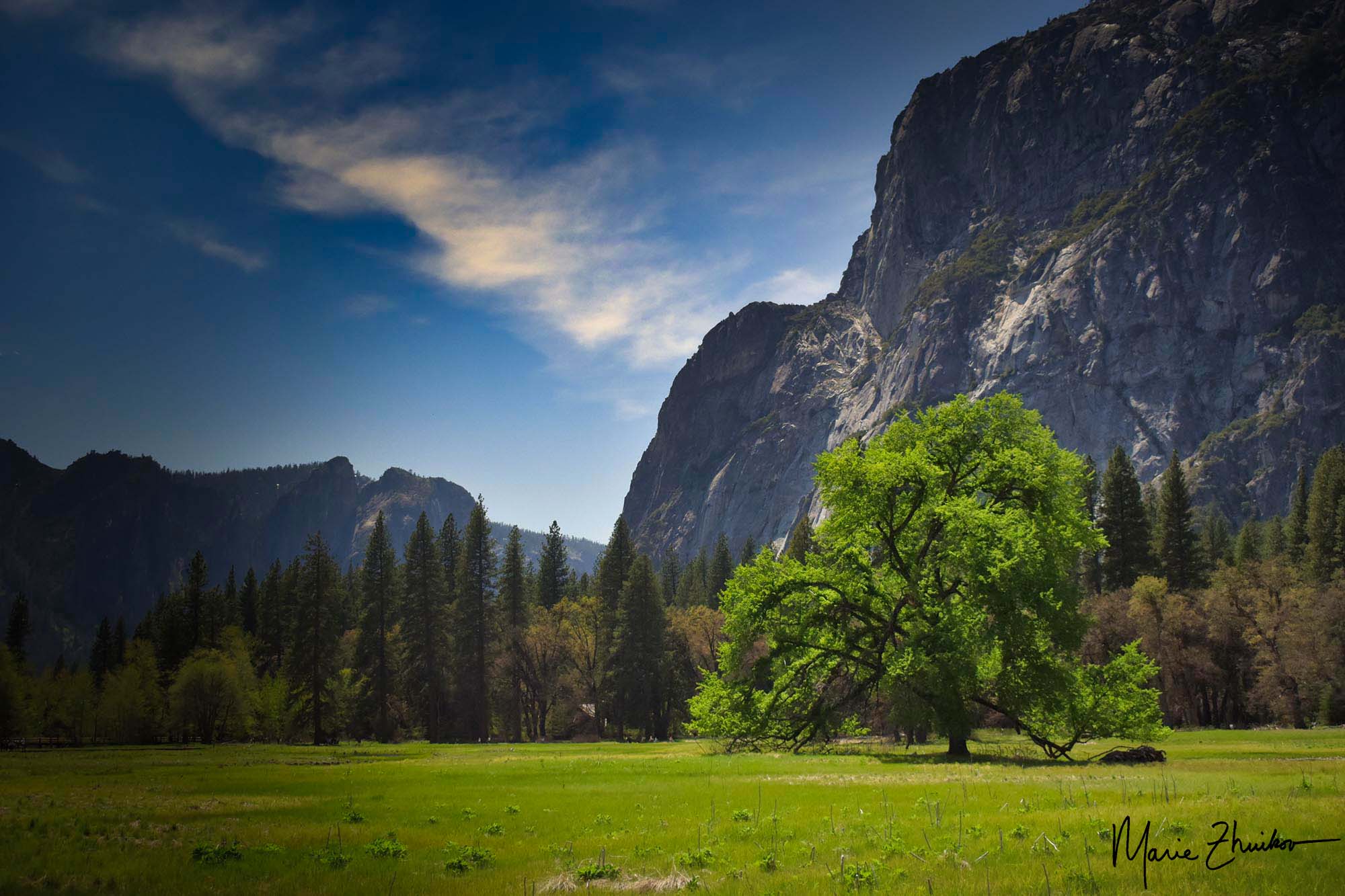
Timber salvage operations were taking place in the burned areas of the valley when we were there, necessitating some traffic disruption. BUT it was Spring, and the waterfalls were full, conveying runoff from the High Sierras. The water-full bounty a glorious sight to see, as John Muir would have said.
I hope you enjoy my photos. Next up: Lake Tahoe or maybe a post about my first art exhibit. I’m not sure which I’ll finish writing first.
As always, please do not use photos that have my signature on them. Others you may use with permission.
Lower Yosemite Falls in black and white and green.




















 Marie's Meanderings