Break Open This File in Case of Depression Emergency

20190330_122431

Last night on the radio I heard the deejays talking about the value of writing yourself a ‘love letter’ to read when your mood needs lifting up. It reminded me of a blog post I had been saving for times when I ran low of bloggy ideas. Since I seem to be in that state (running low of ideas, not feeling bad), I thought this was a good time to share it.

*

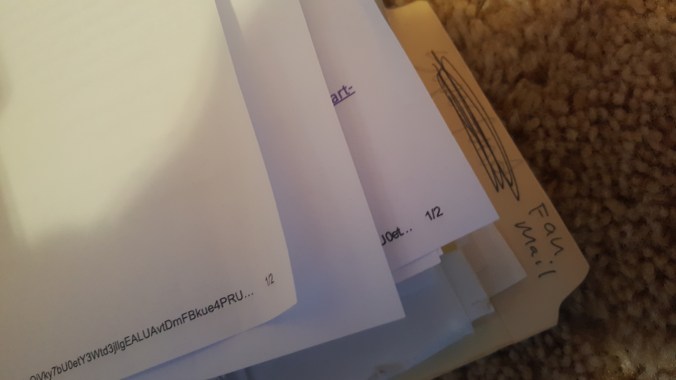
New Years is a hard holiday for me for several reasons. None of which I will go into over the Internet. To cope, I found myself breaking out my “fan mail” folder for the first time ever. It’s a folder about three inches thick where I’ve stored cards and letters over the years from my children, friends, colleagues, ex-husbands (when times were good!), and ex-lovers.

I had never broken it open before. I got half-way into the stack of papers before I had to stop. I was filled to overflowing with the love given me by the people I love.

I highly recommend it – a fan mail folder. Use only in case of emergency…. It works.

The Neighborhood Rezoning Zombie Apocalypse

WalkingDead-963583AMC

Image from The Walking Dead television series, courtesy of AMC.

One of my blog readers warned me it might not be dead, but I didn’t want to hear. I plugged my ears, closed my eyes and started singing (“La la la la la…”)

But he was correct. The rezoning issue for my neighborhood wasn’t dead. It rose, like a zombie, from the Duluth City Planning Department even though the planning commission voted it down. (See Part 1, Part 2, and Part 3 for more info about this six-month-long saga.)

As it turns out, this is common practice in my city. The planning commission actions are just considered “recommendations,” not the final word. I wish someone had explained this to us from the beginning.

Thinking you’ve won a fight only to find you need to fight it all over again is disheartening. It also seems like a waste of effort to have every zoning issue heard by two civic groups. Why even have a planning commission then?

Anyway, once I heard that the proposal to rezone our Duluth residential neighborhood for commercial development was going before the city council, I admit, I tucked my head and legs inside my shell and hid for a while. However, in hiding, I regathered my gumption and eventually fired off yet another letter of protest to the city council. But that, and writing blog posts, didn’t seem like enough.

The city council heard the issue during two meetings. I couldn’t make the first hearing (because it happened while I was being a turtle). The same couple of neighbors who spoke before the planning commission spoke before the council. I decided it would be good to add a new voice for the next meeting, and that voice should be mine. If I was going to come out of my shell, I might as well do it up good.

The city council chambers was packed – standing-room-only. Most people were there for another contentious issue that involved a proposal for a new downtown apartment building that did not have any affordable housing units included. Along with a lack of single-family homes (like those in my neighborhood), a lack of affordable housing is a big issue in our city.

The hearing for the apartment building and other city council issues took 3-1/2 hours. We sat there at 10:30 p.m., boiling in our long johns, awaiting our turn. Once the affordable housing protesters left, a good number of my neighbors remained in the chambers.

I ended up as the first signed up to speak for our issue. When my name was called, I took a big gulp, stood, and did my thing. I was too nervous to speak without notes, so I used those as an aid. They also helped me stay within the three-minute speaking limit. My speech went fine, and I was sure glad once it was over! Several other neighbors also spoke.

The city councilors asked questions and a few explained their positions. In the end, they voted UNANIMOUSLY (7-0) to reject the proposal to rezone my neighborhood. I am so thankful that they listened to us and to the planning commission.

Is the zombie rezoning war over? Not if the planning commissioner has his way. He said he plans to bring it up again in a few years because he wants to see “orderly development” of my neighborhood. We neighbors would rather see no development. We are a neighborhood that works. Like I said in my speech, our neighborhood ain’t broke, and this won’t fix it.

This fight seems to have renewed people’s appreciation for our neighborhood. This Christmas, for the first time, carolers came to my door. Another neighbor made luminaries (ice candles) and placed them all along the road to her house, providing a special festive touch.

The zombie is dead for now, but it seems as if the issue is biding its time, waiting for another chance to strike. I hope we’re ready to rally then.

Let’s have some fun with this. Feel free to comment with your favorite zombie-killing techniques. They could come in handy later!

My Neighborhood Rezoning War is OVER!

20181113_174853

One of my neighborhood warriors testifies at a planning commission meeting.

We’re having a party in Marie’s Meanderings Blog world tonight. I just returned from a Duluth Planning Commission meeting where the motion to rezone my residential neighborhood for development was denied.

If you’ve been following this issue on my blog and in the news, you know that this is GOOD NEWS for my neighbors and myself.  (See Part 1 and Part 2.)

It’s been a long five-month haul. I went into this latest planning commission meeting feeling downtrodden and doomed because the planning department had changed their original plans to include even more of my neighborhood in the rezoning. They went from impacting only eight or nine houses to over thirty homes!

I was like, WTH? And one of the new homes included in the rezoning was mine. Before, I was just a few houses away from the proposed rezoning area. Back then, I was protesting on behalf of my neighbors who were directly affected. Now, as if in payback for my squawking, my house was included, too.

So I did my due diligence and wrote another letter urging the commission to deny the rezoning plan. One of the arguments I used was that there is already a shortage of affordable single-family homes in our city. Why potentially remove so many of them? I also repeated my previous argument that the neighborhood is a strong, well-functioning community.

When I arrived at the commission chambers, I was heartened to see it full of my neighbors again. Several spoke well-reasoned and impassioned arguments against the plan. I was so proud of them!

Only one person spoke in favor of the plan, and he is a developer who owns property in the neighborhood.

After some strategic moves and hemming and hawing, which made me wonder if the commission really knew what it is doing, the vote was taken. All but one commission member was opposed to the rezoning plan, so it was denied. Everyone applauded, just like we were in a freakin’ movie. (One with a happy ending.)

The reasons the commissioners gave for the denial were that when the plan was developed that recommended rezoning of my neighborhood, it was in a time before many of the current apartment buildings and business existed. They heard us that “enough development is enough.” The commission didn’t feel the neighborhood could sustain more development without even more traffic problems and other issues occurring.

Another reason given was that my neighborhood is a socially strong, well-functioning place. Why fix what isn’t broken? They also were impressed by the numbers of us who turned out to protest the plans and they wanted us to feel like they were listening.

I am so proud of our planning commissioners! I raise a toast to everyone.

I’m glad this is over and sure hope it doesn’t rear its ugly head in another form.

Autonomous Sensory Meridian Response: A Morning TV Breakthough

800px-Molly_Shannon_by_David_Shankbone

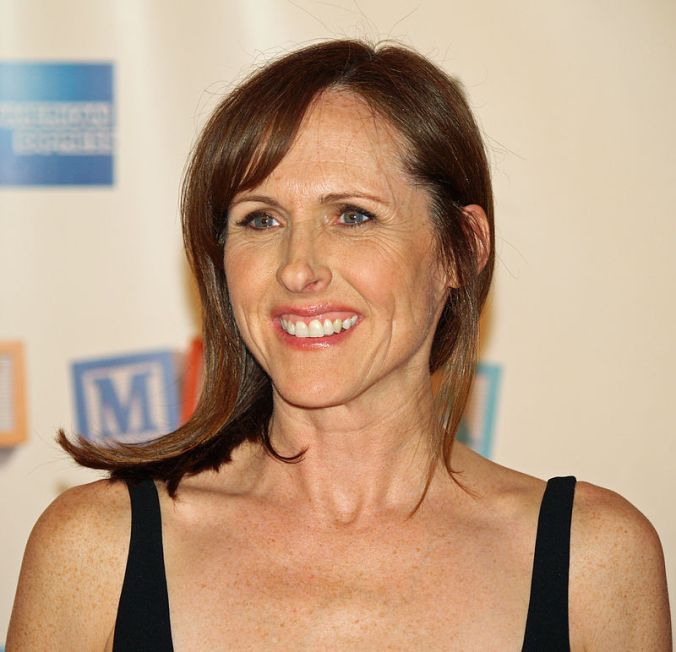
Molly Shannon image by David Shankbone.

I owe Molly Shannon (formerly of Saturday Night Live) a fathomless debt of gratitude.

I saw her on Good Morning America the other day. She was being interviewed about her new movie, “A Private Life.” In the beginning, she mentions how she loves being checked and patted down by airport security. It gives her a relaxed, spine-tingling feeling.

This captured my attention because of a blog post I wrote in 2015 about “A Scalp-Tingling Feeling” I get when someone writes on a chalkboard or I’m at a bookselling event and there’s the white noise of peaceful conversation in the background. It zones me out and is very pleasant.

I called it scalp-tingling contentment. Some of my readers called it “flow” or bliss, but thanks to Molly Shannon, I now know the syndrome is more properly defined as ASMR, which stands for Autonomous Sensory Meridian Response.

It’s an actual thing! I’m not crazy! There’s even a Facebook group for it!

People started working in 2007 to define it and by 2010, an organization was founded called the ASMR Group to support people who experience this feeling and to investigate it further.

Wikipedia says that, “ASMR signifies the subjective experience of “low-grade euphoria” characterized by “a combination of positive feelings and a distinct static-like tingling sensation on the skin.” It is most commonly triggered by specific auditory or visual stimuli, and less commonly by intentional attention control.” (Whatever that is.)

It’s amazing what you can learn from morning TV sometimes.

Lean Into Your Fear: Whitewater Rafting on the St. Louis River

pebd794cc-6d1a-4b89-a8a0-43eaca9722a7_c41a24d2-f4b0-4067-a203-838e20a4a2f3_m

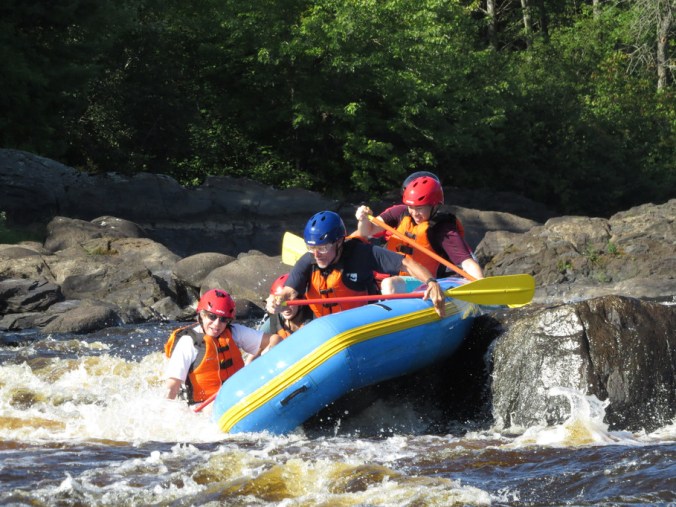
Me (on the left in the red helmet) leaning into my fear on the St. Louis River.

When I write a travel post, because my blog’s name has the word “meander” in it, I usually open by saying I “meandered” here and there.

Well, I can’t use that term this time. It’s more accurate to say that I reluctantly agreed to go on a whitewater rafting trip down the St. Louis River this past weekend, and promised to scream all the way!

It all started when my friend Russ, who is an experienced kayaker, won a silent auction item at a fundraiser for the St. Louis River Alliance a few months ago. He won two tickets for whitewater rafting through Minnesota Whitewater Rafting, a local company that operates out of Scanlon, Minnesota.

Upon my insistence, we agreed to wait for the trip until the water was warm, to make it a more comfortable experience. Now it was August, month of warm weather and water, and I was out of excuses not to go. We gathered everything the company’s information sheet instructed rafters to bring: a dry change of clothes, snug-fitting footwear, windbreaker, towel, etc. And off we went.

Once we arrived, I was surprised by the number of other people who wanted to fling themselves into an inflatable raft at the mercy of the river – twenty-eight of us, to be exact, of all ages and fitness levels.

We started our three-hour journey by choosing one of the seven blue-and-yellow rafts lined up on the shore. Russ and I ended up paired with a young couple from St. Paul. A guide was assigned to each raft. Ours was named Logan.

To us oldsters, all of the guides looked like they were about twelve, but we hoped they knew what they were doing or they wouldn’t have been hired. Thankfully, this proved true!

The ensuing safety talk by the operations guy, named Blu, included instruction to ignore your instincts and “lean into” whatever fearful obstacle the raft encounters. He explained that if you lean away from the rock or high wave, you are more likely to lose your seat and fall out of the raft. Not that falling out of the raft is the worst thing that can happen, but most people like to stay with their group.

The other useful instruction was to keep your feet up if you fall overboard. This is helpful in avoiding sharp rocks and logs, etc., that are on the bottom. Plus, most people aren’t strong enough to withstand the current standing up, so you might as well just go with the flow until one of the kayak patrollers (who go with every trip) retrieve you.

Blu said that in a group our size, it’s common for at least one person to fall overboard. I sure hoped it wouldn’t be me.

I thought the “lean into” rule was particularly deep. Psychologically speaking, sometimes facing your fears is the best way to overcome them. Also, it reminded me of the book “People of the Lie” by M. Scott Peck, who says that most people’s psychological problems arise from trying to avoid emotional pain instead of addressing (leaning into) it.

I decided then and there to change my attitude about the trip – to stop seeing it as something fearful, and instead see it as something to relish, and an opportunity to know the river better. I mean, I’ve lived by it most of my life. I’ve canoed on it, paddleboarded it, boated on it, but I’d never immersed myself in it.

As the company’s website and instruction sheet promised, you will “see the river, feel the river, ride the river,” and you will get wet! On this sunny warm day, I was up for that.

Blu explained we’d encounter six sets of rapids ranging from Class I to III, and two sets of riffles. Each set of rapids would get more challenging along the four-plus-mile stretch until we reached the quiet-water reservoir formed by the Thompson Dam.

Safety talk over, we set out upon the water. Our first task was to run through a “slalom” course between the pylons of the freeway bridge that goes across the river. This let us practice paddling different directions and experience what it feels like when the raft bumps into things.

Then we paddled through a set of riffles called “Warm-Up Rapids.” Everyone came through unscathed and, after stopping for an orientation, we continued to a set of surfing waves at “First Hole” rapids.

Have you ever seen standing waves that form behind an underwater rock in a river? That’s what we surfed on – if your idea of surfing involves your raft filling with water, which ours did. We surfed several times, bailing out between sessions with the handy bailers provided in each raft.

p9091eedc-1216-426c-9429-98f3600b2324_671929cc-bda5-4d31-b3db-2344e2e28a00_m

Surfing the hole and having fun!

After another group orientation session, we were onto “Two Hole” rapids. I think it was this one that had a big rock in the middle of it. Logan, our guide, thought it would be a good and fun idea to smash our raft into the rock.

On purpose.

Why he thought this was a good idea, I’ll never know! I always thought the whole idea of river rafting was to avoid the rocks. I guess I’ve been wrong all this time.

Granted, he did give us a choice, so we were complicit in the decision. I blame it on the adrenaline rush.

Paddling as hard as we could, our raft went up and over the rock, then started sliding sideways. I was on the outside side – the tippiest side – and remembered to lean into the rock to avoid falling out of the raft. I almost floated out, but managed to stay in by the skin of my teeth. Rather like dental surgery, it felt so good once it was over!

Our next stop was a canyon that featured a couple of small beaches in a slow section of the river. We grounded our rafts and had the chance to swim for a while, clothes, lifejackets and all.

Russ went all the way in. I was fine going waist deep, not because I was worried about polluted water or anything, but because the water was rather chilly to me even for a warm day.

At this point I realized I had never been this far into the river before; me—who had even worked for the St. Louis River Alliance whose sole purpose is to protect the river. I marveled at the brown water – tea stained from the many wetland plants steeping at its headwaters and along the way. The white pines and bare rock faces along the shore looked primeval, like we could have been miles into a wilderness. The beauty filled me  and gave me a new sense of appreciation for the river.

Our rest stop over, it was time for the big guns in terms of rapids. We made it through “Hidden Hole” just fine, then it was onto “Electric Ledge,” which is a Class III rapids that consists of a four-to-six-foot drop.

I had heard the name of this rapids whispered in awe among my kayaker friends for years. Now we were about to go over it! And we were about to go over it before any of the others. Logan explained that our raft had the first aid kit in it, and we needed to go first in case the other rafts needed assistance once they ran the ledge.

Not only were we in the first raft, but Russ and I were sitting in the FRONT of the first raft. Oh, lucky us.

We didn’t have much time to wonder at our luck as the ledge was approaching. I repeated all the rules: lean into your fear, keep your feet up. Then we slid over it, sideways and steep. Russ grabbed onto my arm for support.

Luckily, that steadied him and we both stayed in the boat. So did the rest of our crew, but I can’t say that for one of the other rafts, which did indeed lose one person over the ledge. The person remembered the rules, however, and they were uneventfully picked up not far downriver.

The final set of rapids, “Little Kahuna,” is more technical than terrifying. After some twists and turns, we made it through just fine. From there, a somewhat longish paddle across peaceful water (known as the Boundary Waters to the staff) took us to the end of our journey and a bus that was waiting to drive us back to our starting point.

So, in summary, I did scream as initially promised, but it was from fun, not out of fear. I think this was due to the great job the staff did at letting us know what to expect from each set of rapids. I hadn’t had that on other rafting trips.

I would totally do it again on some warm day (although they do provide wet suits if it’s cold and you want one). And I would totally bring family members on such an adventure. Don’t let a little fear stop you if you have a hankering for some whitewater!
pb4537e2e-9595-42bc-b3f2-dbdd9d761701_cddf1de5-0eef-4962-8d2c-b16f78487c4b_m

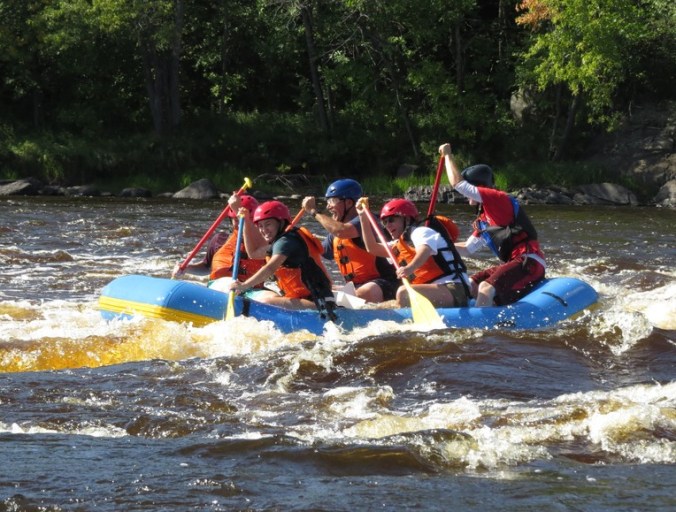
Yee haw!

Still Living in a War Zone

Planning Comm Mtg KBJR-TV

The Duluth Planning Commission. Image by KBJR-TV.

The rezoning plans for my neighborhood in Duluth are still alive. (For background info, see my previous post.)

The process is dragging out. Plans to rezone parts of Kenwood from Traditional Residential to Mixed Use Neighborhoods (and thus open them up to commercial developments) were supposed to be voted on at a planning commission meeting last month. But that meeting got postponed until this month.

In some ways, the delay is good because we were able to notify more neighbors about the plans. I drafted a form letter and distributed it to help give my neighbors ideas on how to respond to the commission, and they distributed it to other neighbors who were interested. We also had neighborhood meetings as part of National Night Out, and invited our city councilor to attend and offer advice on how to organize. (He is not in favor of the plans.)

In other ways, the delay is bad because it just drags out the uncertainty longer. At least one home on my street has been put up for sale because of the impending rezoning. I have delayed a much-needed backyard landscaping project because I don’t want to invest a bunch of money in a house that might one day overlook a parking lot or a bunch of business dumpsters instead of the current nicer view of my neighbors’ homes and large trees.

The fight also wears people down, so I’ve been careful not to let it consume me too much. I only pay attention to it when I have to. I’d much rather pay attention to Duluth’s ephemeral summer outdoor activities.

Things came to a head earlier this week when the rezoning plan was brought before the planning commission for a vote. Dozens of my neighbors packed the top floor of Duluth City Hall in the city council chambers, which are not air conditioned and were easily ninety degrees. Lucky me had the joy of hot flashes added on top of that.

True to form with this process, the first part of the meeting dragged out. We sat on the hard wooden benches for two hours before our rezoning issue was brought forward. It took so long that our city counselor had to leave for another engagement and wasn’t able to speak on our behalf. I was so disappointed in that!

The meeting was also held on primary voting night. Who does things like that? It almost makes one wonder if the planning department was trying to bring up the issue on a night when people had conflicts.

In the letter we received informing us of the delay in the meeting date, the planning commission threw us a bone, perhaps because they were receiving so many letters in opposition to the rezoning. They offered to “downzone” two outer areas in our neighborhood that currently could feature commercial development, in effect, making them Traditional Residential Neighborhoods in exchange for “upzoning” my neighborhood and several surrounding areas.

This downzoning was the first of our neighborhood issues brought before the council. During the public hearing time, nobody spoke in opposition to this move, although one planning commissioner was concerned that approving it would “tie the city’s hands” in terms of future development options, depending on what happened with the discussion of “upzoning” our neighborhoods.

So the issue was combined with the discussion of our neighborhoods. The commission gave first speaking rights to those in favor of the rezoning. Only one person spoke: Dave Holappa, a realtor who owns a house in the rezoning area. He whined (it’s my blog, so I can have opinions!) that when he bought the house in 2006, comments by city staff gave him the impression that rezoning would happen faster than it has. It’s pretty obvious that he wants to buy more properties in the neighborhood so that he can sell them to a developer because “developers want a significant land parcel in place.”

Then came the time for those opposed to the project to speak. Five people did so. The first was Jim P. who lives in my neighborhood. He eloquently said that it makes no sense to allow for the possibility of commercial development in a healthy, functioning neighborhood with families. He stressed the city’s need for single-family housing, of which our neighborhood has plenty.

“Development would totally change the neighborhood,” he said. “Why take an achieved goal to try and reach another goal? You’re telling our neighborhood that our homes are not as important as more commercial development.” He stressed that our neighborhood already has enough such developments (Kenwood Village, the shopping mall, a Walgreens, etc.)

As Jim left the podium, he asked all of those in the room who agree with him to stand. In a moving show of solidarity, almost everyone did. I suspect those who didn’t were in the room for other issues on the agenda. (Oh, and I bet Dave Haloppa didn’t stand.)

The next speaker was Tom B. He said that there’s already a lot of apartment buildings in the neighborhood and that it can’t sustain more. Right now, the area has many good neighbors and that the rezoning proposal would not make for good neighbors.

The third speaker was Chad R., who lives in a street behind Kenwood Village, a new apartment development. He listed all the problems that the new development caused for residents of his street, punctuating each one with a tap of his finger on the podium. He argued that the issues caused by previous developments need to be solved before new developments are built. The audience applauded him when he was done.

Another speaker made the point that traffic in the neighborhood is so bad it already takes him ten minutes every day just to get out of his driveway. Because there’s no development project pending for the rezoning area, he didn’t see the necessity of pre-emptive rezoning.

After a lengthy discussion, the planning commission decided they needed more information to make their decisions. They tabled both rezoning issues as topics for a “brown bag discussion.” They will be taken up again next month.

So, the good news is that after we all passed three hours sweating and gaining sore butts from sitting on those hard benches, the rezoning didn’t pass. The bad news is that the war will be dragged out even longer. But at least the commission is taking the matter seriously and is putting time into it.

As I left the building, one of my neighbors commented, “If this is government at work, then it’s obvious that government needs a better budget for air conditioning!”

That, at least, I can agree with. And I’m going to bring a pillow to the next meeting.

Creativity, Motherhood and Rats: How They All Go Together

Mom rat and baby

Image by Howcast.com.

I was asked to give a short talk today on creativity and motherhood for a local organization. Here’s the result:

When I became pregnant with my first child 26 years ago, I started to panic. It wasn’t that I was afraid something would be wrong with my baby or that I was afraid of the labor process — although these are justified fears and I did think about those things.

The real issue was, I was afraid that the idea I had for a novel would be subsumed by the demands of a newborn. Having a child would strike a death-knell for my creative dreams. My story would never see the light of day. I had floundered around with writing it, and had come to the realization that I needed help. This fear was foremost in my mind when I signed up for a novel-writing correspondence course offered by Writer’s Digest Magazine soon after I found I was pregnant.

I had heard all the cultural messages that tell women that being creative and having children are incompatible, and I believed them.

The novel-writing course provided me with structure that saw me through the rest of my pregnancy and motivated me to keep working on the story once I had my baby boy. The instructor’s encouragement also helped.

Even so, it took me a long time to finally finish my novel and to get it published — as long as it takes to grow a child into adulthood.

The thing that held me back wasn’t motherhood, it was waiting for the right moment to feel creative – the moment when I wasn’t busy, stressed, or emotional. I was too much at the whim of my outside life. I hadn’t learned yet how to control my inner life and allow room for the creativity to flow no matter what was happening “outside.”

A recent article in The Atlantic Monthly magazine backs up the premise that having children does not harm creativity. In fact, it can change the biology of the mother in ways that can allow for even greater creativity.

Kelly Lambert, a professor of behavioral neuroscience at the University of Richmond, studies the maternal brains of rats. Yes, on Mother’s Day, I am going to talk to you about rats, and their brains, no less. Lambert found that when rats become mothers, their brains, which are closer in structure to a human’s than even those of mice or dogs, start reprogramming themselves.

Their sensory and motor systems sharpen. Their circuitry becomes more efficient. Maternal rats are more direct and lethal hunters, catching their prey four times faster than non-mom rats.

Even after having their babies, the changes persist. Lambert found that the mother rats experience less memory decline in old age and have quicker navigation skills than non-mothers, outsmarting them in mazes.

Although neuroscientists do not yet understand what direct impact pregnancy and childbirth have on the human maternal brain and creativity, I am here to testify that, yes, it is possible to be a mother and be creative, too. And I’m sure plenty of other women can testify to this. It’s just that sometimes when you’re a parent, you have to find more creative ways to allow for that creativity.

If you have a partner, have them take care of the kids for a while so that you can go on a writing retreat. Don’t allow your creativity to take a back seat to the other demands of life. Try different things until you find something that works for you.

I learned how to make this inner creative space while I wrote my second novel. Even though I had a second child by this time, after reading a story about right-brain, left-brain thinking and how to make both sides of your brain work together to foster creativity, I learned how to put myself in that elusive creative mind zone, instead of waiting for the zone to come to me. Thanks to this, it only took me two years to write and publish the second one.

You don’t need to be superhuman to have children and to be creative. Mothers have been doing it forever. As the magazine article said, creativity takes time and periods of reflection, and a willingness to let go of ideas that don’t work and move on to better ones.

Learning to look at the world through the eyes of your children, be they yours biologically or children of your heart, is not a bad way to make your own thinking more flexible.

Getting my Blue Mind on — Part 2 of 2: Stuck Inside a Psychedelic Washing Machine

20180328_185852

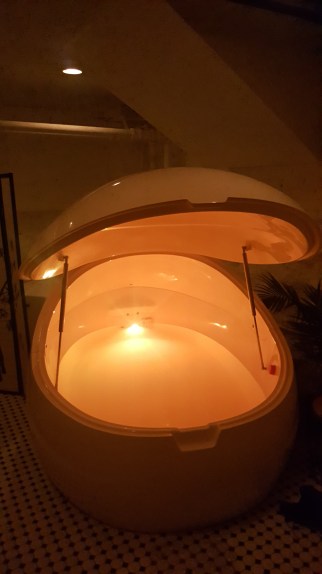
The float pod in purple. Would you get in this thing?

At the suggestion of Wallace Nichols, I made an appointment for a sixty-minute session at my local flotation pod. The pod was in a room in the basement of a yoga studio, and it’s the only one in these here parts of northern Minnesota.

The pod technician led me to the room, which contained the pod and a shower. He gave me the choice of silence for my impending pod experience or four types of music. I chose piano music. He explained that he would have to program that into the computer, which was upstairs in the reception area.

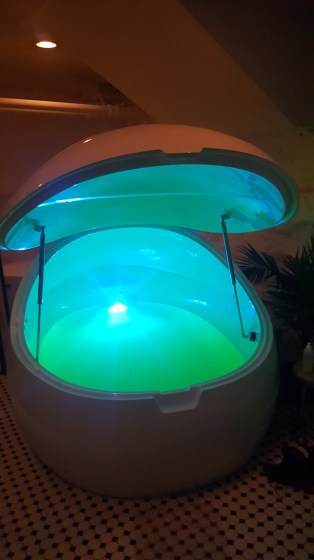
The pod was about ten feet by eight feet. It featured a large hatch, which was open, and rotating, pulsating colored lights that illuminated the ninety-eight-degree water.

The technician explained that all the Epsom salt in the six inches of water is what makes a person float. A bottle of fresh water stood nearby to rinse the salt out of your eyes in case some happened to get in, plus a towel, and a small floaty tube if a person wanted it for head and neck support in the water. Earplugs were also available, to keep the excessively salty water out of one’s ear canals.

20180328_185838

The float pod in its yellow phase.

I asked the technician how I would know when my session was over. He said that the music would stop and a voice would say, “It’s time to exit the pod.” (Somehow this struck me as funny, and I almost giggled.) Then the filtration system would come on, which he said was rather loud and was bound to wake me up if, by chance, I fell asleep in the pod.

He mentioned that after the session, since it was late in the evening, he probably wouldn’t be at the desk once I finished, so I could just get out and head out on my own. I asked him how I should pay for my session because I hadn’t done that yet.

This seemed to surprise him and I ended up giving him my credit card, which he was going to process while I was in the pod. He said he’d leave the receipt and card for me on the front desk and I could get it on my way out. (Damn, why did I say something? I could have had a free session!)

Details done, he left me to my experience.

I was expecting soft piano music during my pod float. I expected to emerge totally blissed out. That didn’t quite happen.

After showering and putting in the ear plugs, I entered the pod wearing only my birthday suit. I wondered when the music would start. It never started. I suspect the technician was so distracted by processing my payment that he forgot to turn on the music.

I laid there in the water (which is weirdly buoyant), and decided I didn’t need no stinkin’ music. I even got brave and turned out the psychedelic lights. As I lay there in the silent dark, suddenly a jet of water came on. My body started spinning slowly around in the pod.

20180328_185825

The float pod in green.

The filtration system! Hey, I thought that wasn’t supposed to come on until my session was over. Surely, sixty minutes hadn’t passed yet? It only felt like ten minutes. Now what to do?

I could push the red button in the pod, which the technician said would cause an annoying sound to come from the computer in the reception area. But would that work since the music wasn’t working? Would anyone even be there to hear the annoying sound?

I didn’t feel like getting out of my warm pod and running upstairs in a towel to complain to the technician. Besides, that wouldn’t be very Zen.

So I stayed where I was, getting pushed in slow circles by the filtration jets. At some point, I turned the lights back on because it was just too weird having all this stuff happen to me in the dark.

Then I started giggling. This was like being stuck inside a giant psychedelic washing machine. Yes, I could always raise the hatch and get out if I wanted. But I didn’t want to. Besides, that wouldn’t make for a good story.

After about five minutes, the filtration system turned off. Although I wasn’t sure when it would strike again, I was finally able to relax and get into the floatation groove. It was very blissful. I could hear my heartbeat and my breathing.

Pods are supposed to inspire creativity and help with pain management. I didn’t have any pain. Mostly, what I thought about during my session was how to describe it in this blog post.

My bliss was shattered after about a half hour when the filtration system came on again. I floated around and around in more slow circles. As before, the system eventually shut off. I laid there until I thought my session was over and I emerged from the pod, checking my watch. I was only about ten minutes over my time.

I took another shower to rinse off the salt and got dressed. My credit card was waiting for me at the reception desk. Nobody was there. I debated again whether to find someone to complain about my expectations not being met.

Nah, that just didn’t seem very Zen. Besides, it was all kind of fun.

Would I try it again? Maybe, if I was really stressed out. But I don’t see it as something I would need regularly.

I picked up my card and walked into the night, peaceful.

***

Update: The owner heard about my experience and offered me a free float as compensation for my interrupted experience. I told him that I wasn’t dissatisfied at all by the experience and didn’t feel like I really needed another float. But I have a friend who is very stressed out lately. I asked him if my friend could have the float instead, and he said yes. How nice of him! Bliss all around.

Getting my Blue Mind on: Part 1 of 2

J Nichols ORIGINAL Headshot_c_JeffLipsky_preview

Wallace Nichols

I had Dr. Wallace Nichols, author and marine biologist, captive in my car for forty minutes over the course of two days. Far from kidnapping him, he was in my car willingly because I was his morning chauffeur for a local science conference about the St. Louis River (the one in Minnesota, not the one in Missouri).

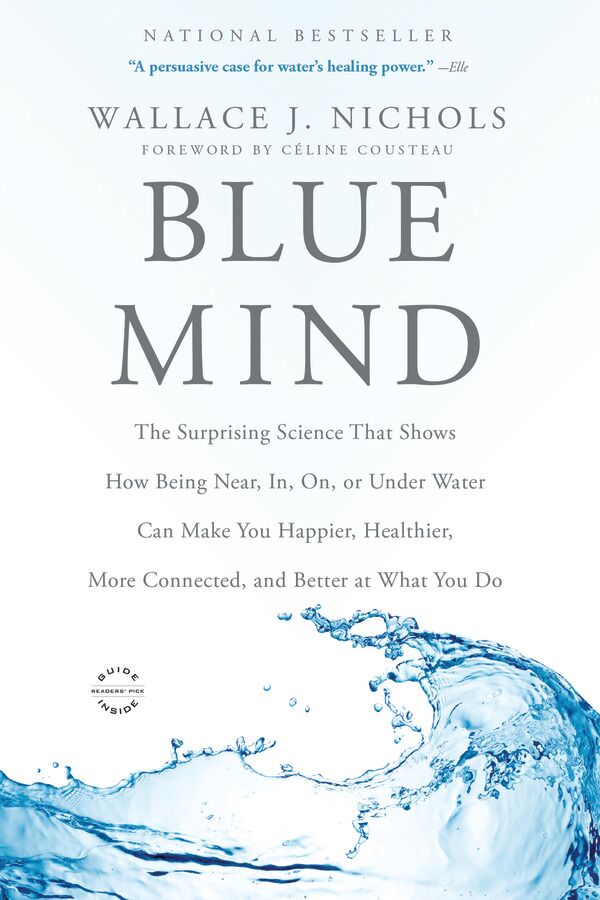
Nichols was the conference keynote speaker, talking about concepts described in his book, “Blue Mind: The Surprising Science That Shows How Being Near, in, on, or Under Water can Make you Happier, Healthier, More Connected & Better at What you do.”

As a watery kind of person myself, I relished this opportunity to learn more about the whole Blue Mind thing. Basically, it’s this: Being by or in water can calm people down and make them more creative. This idea is nothing new, it’s just that now it has a champion in the form of a Kevin Costner-esque man with a Ph.D. And it’s a nice side benefit that this man seems very humble and down-to-earth (down-to water?).

Book CoverThis is my rather jumbled account of things I quizzed him about in my car, things he said at the conference, and things I recall from reading his book. I tried to separate all the information out according to when I heard him say it, but it was useless. I guess I’m too holistic for that.

Although Nichols’s ideas may seem rather surfer-dude-ish — like they come from California, which indeed is where he lives — Nichols refers to himself as a Native North American. He grew up on the East Coast, but has lived various places in the Midwest and Southwest while on his eventual way to the West Coast.

In fact, Nichols credits the Apostle Islands National Lakeshore for focusing his love of water and inspiring his career as a sea turtle biologist. He visited the area for ten days when he was in high school.

I wish I would have had time to ask him exactly what happened during his experience to inspire him, but in his speech he said his time in the Apostles led to his realization that water was, “. . . Where you feel like the best version of yourself. You are surrounded by nature, you’re in the elements. You’re where you should be.”

Something he didn’t mention in his speech was that he used to stutter as a child. I would expect that being in the water helped with that. “Just to be quiet in or near the water. To learn a new activity, learn to surf or to swim – those are very often the highlights of our childhood or adulthood,” he said.

His goal at the conference was to encourage the audience to bring science and emotion together in their work. He used a mixture of personal stories and research results to highlight how important water is to people from emotional, psychological and spiritual standpoints.

I read the Blue Mind book a few months ago. What struck me was that Nichols cited many studies, but most of them were associative – there weren’t many you could point to that were specific to how people react in and near the water.

I asked him if he was doing any more specific studies or if he was cooperating with any neuroscientists who were. He said that since his book was published in 2014, other studies have been published, and in his conference speech he described them.

Also, to the audience he said, “We talk a lot about the ecological, the economic and educational benefits of our work. We’re pretty good at quantifying this stuff, these 3 Es. We’re not so good at talking about or even including this emotional connection, the emotional benefits of healthy waterways. I would say, that should be switched to the top of the list. These are the benefits that grab people and bring them into the conversation.

”From a strategic perspective, first let’s not leave them out, and second, let’s prioritize them so that we’re fulfilling a larger movement. The emotional connection supercharges our understanding of ecological, economic and educational benefits of healthy waterways. By the way, emotion is something we can study. It can be as quantitative as you want it to be. It is hard science. Increasingly, organizations are using emotions as a tool to advance their advocacy work.”

Nichols offered this criticism and advice for environmental groups: “The environmental movement has used fear and anger to communicate about their issues. Guilt and shame are other motivators, and lots of facts — until they are confused. We talk about ecosystem services, we talk about the crisis. We blame you. It’s your fault. It’s terrible. The future is bleak. And by the way do you want to join my club? Sound familiar?

“Is that effective? We think it is. But we’ve proven time and time again, not so much. Maybe gratitude is another tool we can use. Love, what about that as a motivator?”

He left the conference attendees with this thought: “Water is life that makes life worth living as well. When we undervalue water, we lose that. When we undervalue anything or anyone, bad things happen. Water is our first medicine, for both physical and mental health. Bring the science of emotion to your conversations, do not ever leave it out.”

If you’d like more information, please check out his book. You can also read this blog post I wrote for my job.

Think about your own life. Are you stressed out? What helps you deal with that? Is it working for you? If not, remember the water. Remember music. Remember nature in general. Get out there. And don’t forget to breathe.

*

Another conversation I had with Mr. Nichols dealt with floatation tanks. You know, those are the tube tub things you can go in that are filled with warm salt water and silence.

They strike me as sort of scary, but Nichols He recommended them for dealing with stress or to inspire creativity.

A business in my town recently opened a flotation tank. I decided to live on the wild side and give one a try. My appointment is tonight. That’s what Part 2 will be about.

The Hardest Thing I Do All Day

closed-eyesruiizu-chan

Drawing by Ruiizu-Chan.

I have an eye condition that requires me to put drops in them every morning and evening. To help the drops work better, I’m supposed to keep my eyes closed for about two minutes each time.

Being a good rule-follower and because I really do want relief from my condition, I do it, standing in my kitchen with the oven timer on. But I’ve come to think of it as the hardest thing I do all day (after getting out of bed, that is).

How can standing still with eyes closed for two minutes be so bad, you ask? Because it requires mind control. During those two minutes I think of at least a dozen things I should be doing rather than standing still: I should turn on my computer. I should unload the dishwasher. I should write a check for my son’s lunch money. I need to write down that appointment in my calendar. I need to change a word in one of my stories to something better. I wonder what the weather’s going to be like this week?

At first, I often gave into into these impulses and turned on the computer or wrote in my calendar. I’d close my eyes again later, but it felt like cheating. It wasn’t long before I took the two-minute task as a challenge. Let’s see if I can keep my eyes closed the whole time this time.

You know what happened . . . I tried to do all those same things with eyes closed. This had mixed results along with some bumps and bruises. (Smile.)

So, taking a cue from author Elizabeth Gilbert’s first experiences with meditation in “Eat, Pray, Love,” I challenged myself to keep my mind quiet so that keeping my eyes closed wasn’t such a hardship.

If you’ve ever tried mediation, you know it’s hard. An untrained mind is an unfettered being. It resists control. It wants to float around at will. You, dear blog readers, know how my mind loves to meander.

But by practicing twice a day, every day for a huge total of four minutes, I’m getting better at it. When I feel the urge to do something, I recognize it and deflect it. I give myself permission to do nothing. I concentrate on my breathing or on the sounds around me. I file away impulses for action until after my time is up. I try to be present.

I’d like to think the practice not only helps my eyes, it’s helping me master myself.

So if you ever want to try something really hard, try standing still with your eyes closed for two minutes. I dare you!