Skiing (and Waxing) Nostalgic

korkkinordic1977

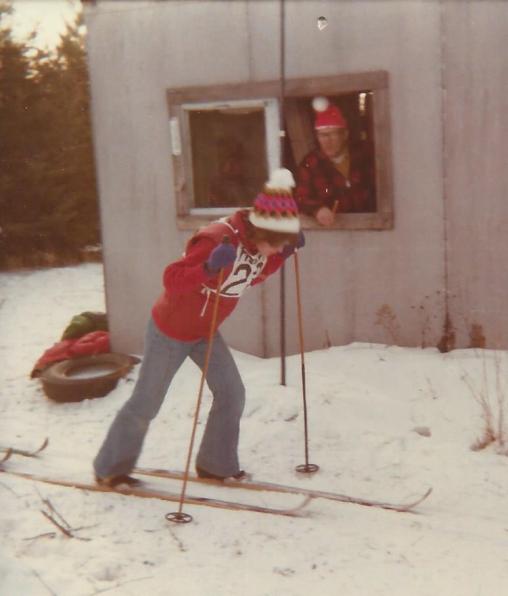
Marie at the start of her first cross-country ski race, waiting for Charlie Banks to signal the start.

Last weekend, a friend and I revisited the Korkki Nordic Ski Trail, where I competed in my first cross-country ski race forty years ago. The year was 1977 and I was in eighth grade, part of my junior high school’s ski team. My equipment included wooden skis and bamboo poles with black rubber baskets. Clad in bell-bottom jeans and a ‘fashionable’ down vest, my head protected from the cold by a knit hat with a huge ball atop it, I ended up winning the race and the city championship for my grade.

Winning the first race I ever entered – you would think it would be a good experience and I’d return to the same trail dozens of times to relive the glory. But I didn’t. Why did it take me four decades?
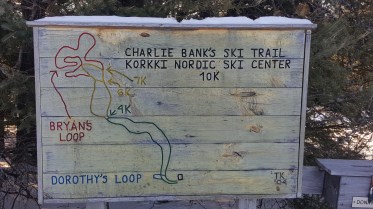
20170116_145524That’s what I was trying to figure out as I shooshed down the trail on my fiberglass skinny skis (waxable ones) last weekend.

Now, the thing you need to understand is that Korkki Nordic is Old School. Only one track winds its way through pines on land tucked in the highlands along Lake Superior’s North Shore. And the trees are close enough to lean over and kiss as you go by – not ten feet away on either side like most ski trails. Classic skiing only; none of that fancy-schmancy skate-skiing.

20170116_143519

My friend, on the trail.

The trail system is maintained by a nonprofit organization and was started by the very man who kept time during my first ski race. Charlie Banks is no longer with us, but his legacy lives on.

The trail is sort of out of the way. With so many good ones in Duluth, that could be one reason why I didn’t come out here. It wasn’t a place my parents usually skied, and they were the ones driving the car when I was young. But still, why didn’t I come here when I was older?

As my friend and I started skiing, I noticed the timekeeping house was still near the trailhead. After we traveled down the trail a ways, I recalled how clueless I was during my race. Our “coach” didn’t even ski himself, and he did little to prepare us. I only knew that racing meant going as fast as you could until you reached the finish line, so that was my strategy after the staggered start. This led to overtaxed lungs and leaden arms and legs. But I kept going, although I was alone and scared by this new experience and unfamiliar trail. Finally overcome, I paused a time or two to catch my breath on the uphills, terrified that another skier would pass me, but I never saw anyone.

My friend and I continued skiing and I recognized the feel of the trail – lots of small hills, nothing too scary — especially if you take the easy route options, which I did, having nothing left to prove. We skied four kilometers, which I suspect was the same distance as the race. The finish line banner we crossed under looked suspiciously like the exact same one from my stressful race.

Was that it? Even though I won the race, was the stress of it so unpleasant that I had no desire to return to the scene until forty years later? Could be. I recall that in subsequent ski races, somehow I learned more about pacing and didn’t get as burned out.

As I crossed under the banner last weekend, I realized that whatever kept me away for so long, I’m finally over it!

I’m gonna return soon to this little woodland ski trail gem.

Two other local writers have written about their memories of Korkki Nordic, read here for Eric’s and here for Eddy’s.

20170116_145545_001

Just Call Me Mahatma

myersbriggstypes

By Jake Beech – Own work, CC BY-SA 3.0, https://commons.wikimedia.org/w/index.php?curid=30859659.

All these years, I’ve somehow avoided taking the Myers-Briggs Personality Test. Then a potential manfriend showed me his results, so I felt obliged to take the free online test and show him mine. I was surprised to discover that I have one of the rarest personality types. No wonder why it takes a blog to explain myself to the rest of the world!

According to the test, I am an INFJ, which means I approach the world in an Introverted (we knew that already), Intuitive, Feeling, Judging manner. The description of this type says that only one percent of the population has this personality. INFJs are warm and caring, organized, highly intuitive, creative and imaginative, nurturing, and patient.

The description also goes into the weaknesses of this personality type and what INFJs look for in romantic relationships. Many of the traits described struck me as accurate and I learned some new things about myself.

The results also listed notable INFJs. Mahatma Gandhi is one of them. I think I have a new nickname!

Poor Zika Babies

It happened again tonight. Every time I see a TV news report about the Zika virus and the babies it affects with microencephaly (small brains), they are crying. Surely the babies don’t cry all the time, do they?

I suppose it’s more dramatic to show a crying baby, especially one that has been born with such a harmful defect. But in showing the crying babies in every newscast about the disease, I fear that news editors are stereotyping the babies forever in viewers’ minds as always crying.

At first I was going to rail that nobody’s produced or written a story about the quality of life these babies have, but I did a search and found that is not the case. There are balanced stories out there, but I doubt the average person will ever see them.

Poor Zika babies. They not only have brains that work differently, they will also have to overcome the stereotypes these newscasts are creating.

How I got a job at Mayo Clinic

PlummerHallway

A hallway in the Plummer Building at Mayo Clinic.

As I sat at the graduation ceremony for my oldest son recently (he has a master’s degree now, yay!), I surveyed the vast audience of new graduates, wondering how the economy can absorb so many people seeking jobs. And to think, new graduates are being let loose on the country all over. So many of them, swarming across the spring landscape. I know not all will slip seamlessly into the perfect jobs. It might take a while. For some, it might take a long while.

It reminded me of a job I had once that was a great fit. As a public service, I’d like to offer some job interview secrets that might help new grads, and employers, too. I am not doing this to show how great I am or because I am a chocolate-covered narcissist with narcissistic filling. Well, maybe I’m a little narcissistic. (Said the woman with a blog about herself.)

Seven years ago, I started feeling overworked and underpaid at my job. I also had a relatively recent master’s degree. Armed with that, and with the restlessness that seems to go with mid-life, I decided to look for a different job.

The first one I applied for was a public affairs consultant position with Mayo Clinic in southern Minnesota. The very next day I received a call for an interview. I figured that meant either they were desperate to fill the position, the timing was right, or they were excited by my application. Turns out, it was a combination of all three.

They paid my way for the interview, which included an overnight stay in a hotel. The next morning, I hoofed it through a winter’s chill over to the historic Plummer Building, walking through its ornate brass doors and trying not to be too impressed and overwhelmed by the hallway chandeliers and bathroom stalls made out of marble.

I met the chair of the search committee and the administrative assistant who would be guiding me to other buildings to fill out human resources paperwork and for an informal interview with the head of the Public Affairs Department. Then the search committee chair (who later became my boss) did something for which I will be eternally grateful. She gave me the interview questions ahead of time and allowed me a few minutes to think over my answers.

Why don’t more employers do this? I had never had that happen before, or since (even when I asked). It cut my nervousness by about 85% and it made my answers more cogent, thus making better use of the committee’s time. I mean, half the battle with job interviews is the fear of the unknown. You don’t know what they’re going to ask you, so go into flight or fight mode and freak out. As it was, I had just enough time to write a little outline of my answers for each question.

PlummerDoorPanel

Just one of the many panels on the brass door to the Plummer Building.

The interview went well. Then I was given over to the administrative assistant for the trek to the other buildings. In case you’re not aware, Mayo Clinic is comprised of many buildings, taking up a good chunk of downtown Rochester, Minn.

I decided to make use of my time with the assistant. I figured she would be a good person to talk to about how she liked working for Mayo. So we talked as we walked. Sometimes I opened building doors for her, sometimes she opened them for me.

My interview with the department head was conducted as we sat in a hallway. Keeping from laughing was the hardest part for me because a bunch of boisterous ladies wearing purple dresses and red hats kept passing us. (For the uninformed, see the Red Hat Society.)

That interview seemed to go all right, too. Then we were off to human resources and back to the Plumber Building. When we got back to the room where we started, the administrative assistant took off her coat. I saw she was pregnant, so we had a typical “Oh, when are you due?” chat about that.

Experience over, I was free to go. A week later I had a phone interview with the PA Department head’s boss. That went okay, too. Soon after, they offered me the job, and I ended up accepting. Months later, I found out that the reasons my boss reacted so quickly to my application was that a hiring freeze was looming (this was during the 2009 recession) and because she was excited to see my qualifications.

She also said one of the reasons I got the job and the five others they had interviewed before me didn’t, was that I was nice to the administrative assistant. She said the fatal errors by the others were that they were arrogant and treated the assistant as an underling. An organization like Mayo runs on teamwork and compassion, so that was her secret test to see if the job candidates would fit into the work culture.

So, the message I have for employers is to give job candidates a few minutes to review the interview questions beforehand. It will help both them and you.

To job candidates, my message is to study the mission and vision statements for the organization you’re being interviewed by, and try to demonstrate those values. (And just be a good person!)

I am no longer working for Mayo Clinic, but I loved the job. I’m glad I took the chance and made the change. The aftermath wasn’t easy to deal with, but it’s led me to where I am today, which is also a good place.

Good luck grads!

A Mind of One’s Own

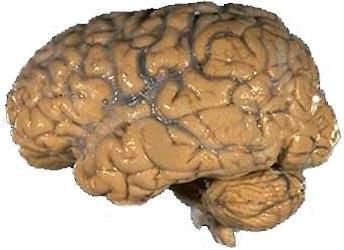
Human_brain_NIH

Credit: National Institutes of Health.

I’ve written about my father a few times in this blog. It’s time to give my mother some attention.

My mom is 91, and she and my dad are still together, living in a memory care facility in the Twin Cities area. When my brothers and I moved our parents from my city to their current home last fall, I inherited a hope chest, of sorts, in which my mother stored blankets.

Once I got home and was cleaning it out, I discovered the chest was where she also stored some of her journals. I never knew she kept journals. And to think, all those times I was writing journals and squirreling them away at home, she was doing the same thing!

To ease some of my parental separation pangs, I read her journals, which spanned a period of over thirty years. Recently, I went back into one to look up a piece of information. I found the info, but also got caught by a short comment, where my mother mentioned that an acquaintance of hers complained that my mother was “willful.”

This is true. My mother is the sort who puts her foot down on a decision, and that is that. The problem is, she’s not good at explaining why she made the decision. She makes up her mind, and that is how it is going to be, gall dang it all to heck.

However, instead of her acquaintance’s comment eliciting self-reflection, my mother went on the offensive in her journal. (A good offense is the best defense, right?) But she didn’t go on the offense against the acquaintance who made the comment. Instead, her next entry was a complaint about how I had a mind of my own.

Now, I take that as a compliment. Why would I want anyone else’s mind, anyway? (Smirk.) I suspect my mom wanted my mind to be the same as hers.

Anyone who’s been reading this blog for a while could tell you that I think a bit differently from most. The world needs different viewpoints, and as long as I’m not getting into huge conflicts and arguments over it, I think that’s okay.

The problem is, my mom’s style generates conflict, and she is too stubborn to change her mind once she makes it up.

This all reminds me of something I read recently, which described how people who don’t fit into groups shouldn’t necessarily feel bad. It might mean that they are leaders rather than followers. That gave me some comfort. There have been instances where I’ve felt on the fringes of groups, and maybe that’s why. (Besides the fact that I’m 60% introverted. Grin.) I have also successfully led groups, but it takes a bit of prodding to convince me to do so.

In any event, I love my mother, even if she is willful. And as for myself, I wouldn’t have it any other way than to have a mind of my own.

My Recent Embarrassment with White Culture

NativeWhite

Nothing says Native American better than a white girl in a headdress.

Native Americans are the largest non-white population in my northern Minnesota county, coming in at just over two percent. Even though they are the largest “minority” population, in my experience, the “majority” community still struggles to remember to represent Native Americans on decision-making and natural resource committees. But I recently participated in two events where natives were remembered and asked to take part. However, the events reflected poorly on us white folks.

The first event was a journalism panel for a project (One River, Many Stories) that’s trying to bring journalists together to write about a major river that flows through our community. The river, which has been a dumping ground, is being cleaned up and is the focus of major restoration and community planning efforts.

The three journalists on the panel were speaking about collaboration for this project. One was Native American and the others were white. Granted, getting media types — who have been trained to compete with each other — to cooperate is a tall order to begin with, but as the discussion and Q&A session progressed, I felt increasingly chagrined. The native journalist was giving the audience tips on how to find story sources through old records and by talking to people. The white journalists were spouting the corporate line and jumping on chances for exclusive stories. Hello. The whole point of the discussion was collaboration, which the white journalists just didn’t seem to grasp.

Even the audience (mostly white from what I could tell) ended up grand-standing and sniping about which media outlet was the better storyteller. I left the event embarrassed by the blatant blindness to the benefits of collaboration by the white folks.

The second instance was an open mic poetry/prose reading last night at a local coffee house. Although anyone is welcome to read at these sessions, each features an established writer who is given extra time to showcase their work. The featured reader last night was a Native American. His reading concluded with a song he sung in Ojibway. Once done, he invited a lady on stage to read, who also looked native.

Their poems were moving and heartfelt, raw and sentimental. They worked for me. What didn’t work was the lady who read last. She was a blonde older woman who ended her set with a song from a play she wrote. She said she decided to sing in appreciation of the featured reader. But as she belted out several times that she was a “full-blooded Indian” and had endured repression as a native, I began to squirm.

Now, I know that Native Americans come in all colors, but this lady was definitely not native. And I understand that she was trying to honor the culture in an artistic fasion. But I don’t think she realized how farcical it is for a native to see a white person trying to “be” native. It made about as much sense as a Nigerian singing onstage about being Swedish, even if that Nigerian really digs and honors Swedish culture.

I’m sensitized to this issue from recently reading Alexie Sherman’s “The Absolutely True Diary of a Part-Time Indian,” but also because over the years I’ve spent time on reservations around the country, in kiva ceremonies and at pow wows, and with Native American medicine men. Besides, don’t forget that I am a whopping 0.4 percent Native American myself (smirk).

I realize I’ve opened a can of worms with this post. I guess what I am trying to say with it is, please, please, please white people – there are better ways to honor Native American culture than by trying to pass yourself off as something you are not. And please learn how to collaborate, a trait that seems to come so much easier to native peoples. I worry about white culture’s ability to survive on several levels unless we do so.

A good blog post about Native American cultural appropriation can be found here.

As I left the coffee house last night, the two native poets happened to walk out behind me. I casually held the door open for them. It was the least I could do.

That Scalp-Tingling Feeling


001cropped

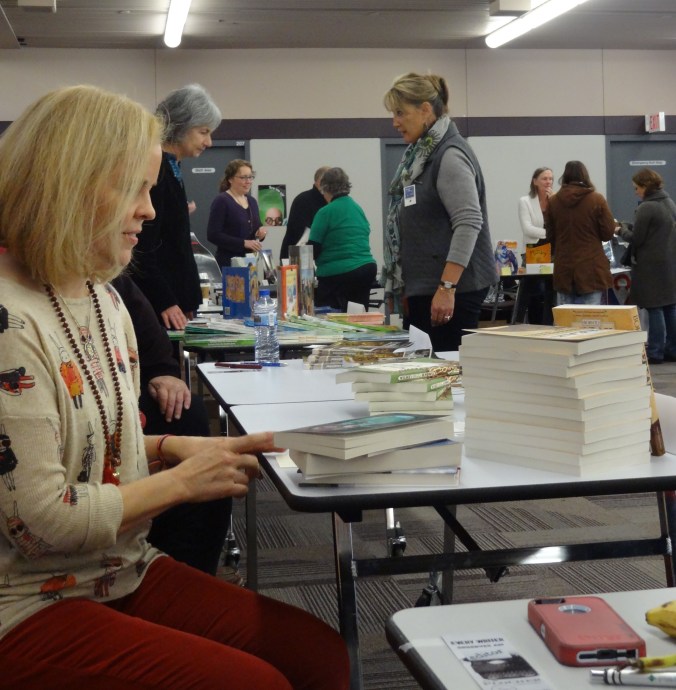
People at one of my recent book events (but not the one I describe here).

While I was sitting at a bookselling event today, waiting for someone to come to my table, I experienced a feeling I’ve had only a few times in my life: a tingle that travels from the back of my neck up to my scalp, and I kind of zone out.

It’s a pleasant feeling – one I first felt in elementary school when the rest of the class was bent to their work and the teacher was writing on the chalkboard – the chalk rasping softly on the board. It was peaceful, and then the tingling began in my neck and travelled up my scalp. My eyes unfocused and I was just living and feeling in the moment.

Today it happened while there was a large crowd at my bookselling event. People were visiting various tables where artists were displaying their wares around me. Their talk was a low hum, everyone was busy looking at the artists’ offerings or in conversation. I observed the scene and the tingling began.

I realized that in all the books I’ve read or conversations I’ve had, I’ve never heard anyone else describe a feeling like this.

I tried to figure out just what it was. It’s peaceful and fuzzy. Dare I say I was contented????

Maybe that’s it: scalp-tingling contentment. Has anyone else ever experienced this, or am I just weird? By the way, I had sold a lot of books by this time, so I was content in that respect. (Smirk.)

My Obituary

I was digging through an old grocery bag of papers and artwork from my school days when I found a news story that detailed my death. I must have written it for English class. Here it is:

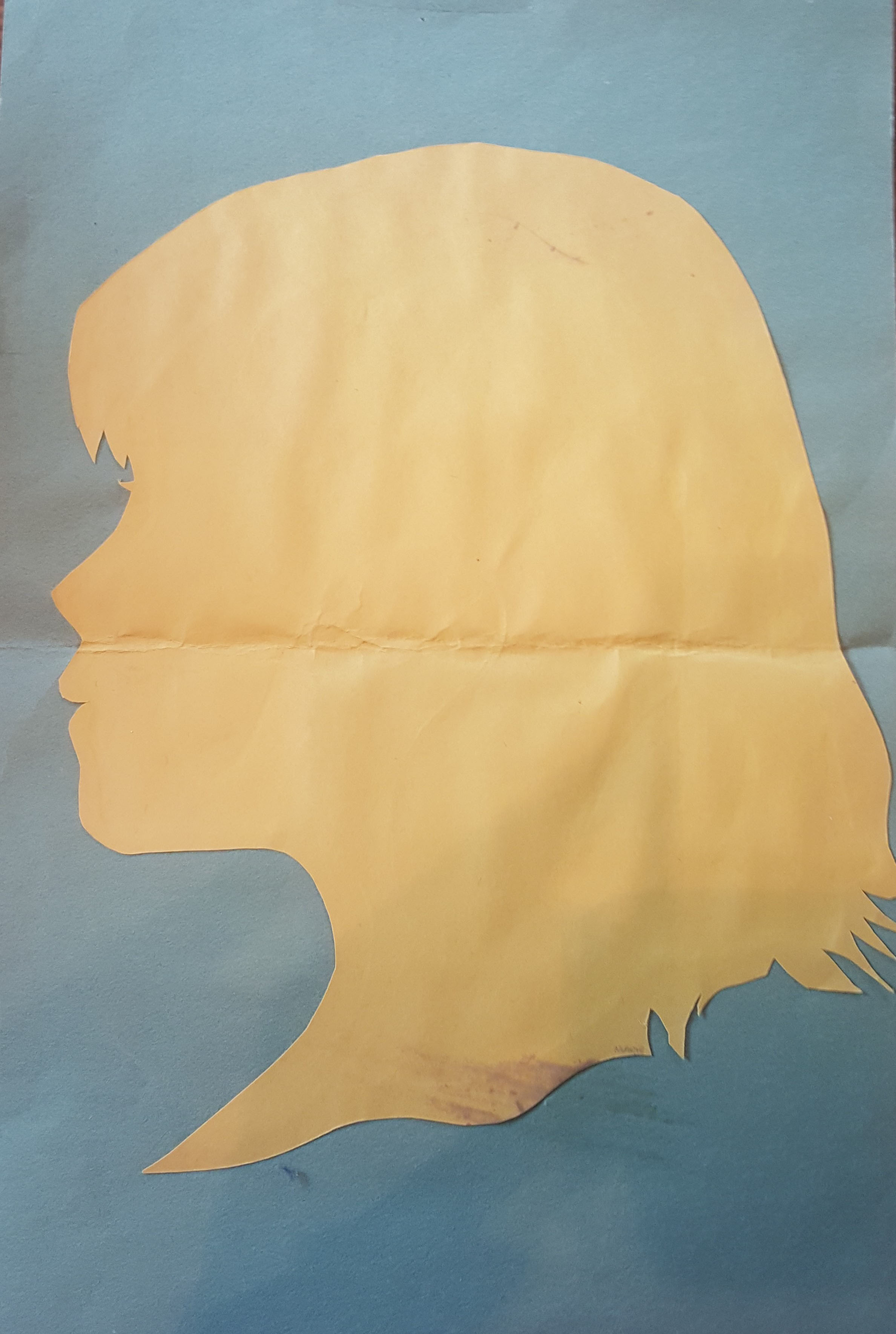
Another schoolwork bag find: my shadow portrait from sixth grade.

Another schoolwork bag find: my shadow portrait from sixth grade.

Marie, 16, died today after saving five girls from drowning. She was lifeguarding at the YWCA girl’s camp, Camp Wanakiwin. The girls were having trouble swimming to shore from an airplane that crashed in the lake near the camp.

Said one of the rescued girls, “She was going back to the plane to get a sixth girl when the plane blew up.”

Marie had completed her sophomore year at (specific school name deleted to protect the innocent). Her anatomy teacher said that she was witty and smart. “I used to give her a hard time,” he said. “Her presence will be sorely missed in school.”

Marie was one of the top swimmers and cross-country skiers at (school name), holding the city titles for 100-yard breaststroke and girl’s senior high cross-country skiing.

The funeral will be held at First United Methodist Church, 10 a.m., this Wednesday.

I’m sure I wrote the story tongue-in-cheek (delusions of grandeur, much?!), but it gives a glimpse into the things that were important to me at the time: mainly, my lifeguarding class and athletics. My anatomy teacher was my favorite because he was always cracking jokes and made learning fun. And what better way to leave this world than in an effort to help others, combined with a big explosion!

Later, after I became a mother and wrote a relative’s obituary, I wrote a serious obituary about myself. Motherhood and my relative’s death reminded me of my mortality, and the journalist in me wanted to know that the last words written about me would be somewhat accurate. That obituary has been lost to the winds of time, but I recall it focused on my career and role as a mother.

Lately I’ve been considering taking a stab at another one. Not to be morbid, but because I’m not sure that my kids or relatives know enough to do it justice. I mean, think about it. Good obituary writing is an art. And for some people, it’s the only time they’ll ever get in the newspaper other than their birth announcement. I’d really rather have my obituary say more than I liked knitting and was a good speller.

I’ve saved a couple of friends’ obituaries I thought were well written. But I suppose that even after I rewrite mine, I’ll have to update it — sort of like a resume or a will. Things change the longer you live. Accomplishments that were important to you in high school no longer matter as much when you’re in your fifties.

From my past efforts I know that writing your own obituary causes you to take stock of life. It makes you ask: Is what I’m doing really important? (To yourself or to society.) Is this how I want to be remembered? Do I need to change something?

Who will write your obituary after you die? Do you think they’ll get it right? Does it matter or is it all vanity? It’s something to consider.

The Purge (or When a Trip to the Dump can be Good for the Soul)

Image courtesy of St. Louis County, Minn.

Image courtesy of St. Louis County, Minn.

Today I got rid of some dead weight and made a new friend along the way.

It was time for fall cleaning, if you will. I got rid of some household hazardous waste (fluorescent light tubes and used snow blower oil) and detritus accumulated over several years — both mine and my parents.

My family moved our aging parents twice in the past several years — from their home to an assisted living facility, and from there to another facility in a different town. I kept some of their things on the chance they might need them, but now that it’s been several years and they live out of town, I realized that ain’t gonna happen. So it was time for a purge.

How it works at our self-service dump is you tell the attendant what you’ve got in your (car, truck or trailer) load and they assess you a charge. Then you drive up a hill. Below the hill are large dumpsters either for metals, cardboard, wood, or miscellaneous waste. You park on the dumpster hill and then toss your junk down into the appropriate container. After that, you drive down the hill and loop back to the entrance to a shed where electronics are collected.

The last time I visited the local dump (now called the more politically correct “Materials Recovery Center”) was about a year after my divorce. I loaded all the junk my ex (who was sort of a hoarder) left into my then-boyfriend’s truck and we made a date of going to the dump. Hey, don’t knock it until you’ve tried it!

Let me tell you, throwing your stuff into the dumpster abyss is a rush. You’re flinging off your old world to make room for the new. It can get addicting. My boyfriend and I laughed as we did it — the feeling was so freeing. This time, I felt rather sad because some of my parents’ discarded items meant their lives would never be the same, but still it felt good to get the stuff cleaned out of my house and garage.

And I made a new friend in the form of the lady attendant who assessed my load. We happened to have the same type of vehicle, so while I was showing her the stuff in my trunk, we talked about the merits of our cars. I paid and when she came back to give me the receipt she asked more questions about my car.

I thought having a dump worker who wasn’t a stressed out robot was a nice change of pace. But the guy in the truck behind me did not. He yelled at the woman to hurry up. Ignoring him, she replied to me, “It’s my job.” (With the unspoken, “And I can do what I like to make it bearable.”) We exchanged a few more words and then I went on my merry way up dumpster hill.

After my cathartic dump (smile), I waved to her as I left.

So, that’s life in northern Minnesota. We make friends at the dump and get our kicks tossing stuff away. What can I say?

Try visiting your local dump someday. It could be good for your soul.

Spending the Fourth of July in . . . the Twilight Zone

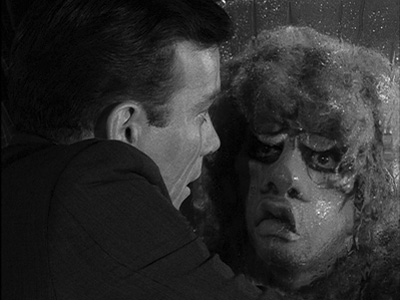
William Shatner and the gremlin in

William Shatner and the gremlin in “Nightmare at 20,000 Feet.”

While most people in Duluth were finding their way to favorite spots on the hillside or waterfront to watch the night’s fireworks display, I got distracted by the SciFy channel’s Fourth of July Twilight Zone Marathon. I had socialized and visited the beach earlier in the day, and was watching a bit of television before leaving for the fireworks. Problem was, an episode was airing that scared the bee hooosis (Minnesotan for bejesus) out of me when I was young.

I hadn’t seen “Nightmare at 20,000 Feet” since that fateful night my parents were out and I watched a scary television show despite their instructions to the contrary. Would the episode be as frightening to now? Would the face that appears in the airplane window when the passenger draws back the curtain make me hide behind the living room curtains like when I was little?

I had to watch it. Fireworks be dammed. Cue Rod Serling’s opening narration:

Portrait of a frightened man: Mr. Robert Wilson, thirty-seven, husband, father, and salesman on sick leave. Mr. Wilson has just been discharged from a sanitarium where he spent the last six months recovering from a nervous breakdown, the onset of which took place on an evening not dissimilar to this one, on an airliner very much like the one in which Mr. Wilson is about to be flown home – the difference being that, on that evening half a year ago, Mr. Wilson’s flight was terminated by the onslaught of his mental breakdown. Tonight, he’s traveling all the way to his appointed destination, which, contrary to Mr. Wilson’s plan, happens to be in the darkest corner of the Twilight Zone.

Robert Wilson is played by a young William Shatner. His wife sits beside him on his plane ride home from the sanitarium.

I marveled at the 1960s clunky airplane backdrop, made with cheap wood paneling, the airline seats with so much room on either side they looked like today’s first-class seats, and the quaint plaid curtains covering the plane windows.

Was I was scared watching the show now? Of course not. I’ve been too jaded by the likes of “Jaws,” and “The Exorcist,” and “Amityville Horror,” and dozens of other horror movies for a little Twilight Zone to scare me. But I understood why the story was so frightening when I was younger; it was the feelings that Mr. Wilson was alone in his belief that someone was out on the airplane wing. The plane is in peril from this person outside. Only he knows this, but he can’t make anyone else believe him because the humanoid (which we later learn is a gremlin) hides when anyone else tries to see him. That kind of emotional tension must have been unbearable to me as a child.

Plus there’s the tension and surprise when Mr. Wilson closes the curtain after seeing the gremlin the first time, but then wants to open it up later, just to check if anything is really out there. His hand hesitates above the curtain as he struggles with his feelings. When he draws back the curtain, the gremlin’s morose yet curious face fills the entire window. (I suspect this is the point where I fled behind the curtains.)

Nightmare_ar_20,000_Feet_GremlinThe gremlin’s appearance in the window is scarier than the appearance of the gremlin itself. He’s more like a wooly clown with a bad make-up job. But it’s all the peril and tension that made this episode so memorable.

This little trip down horror memory lane was worth missing the fireworks show. Even after all these years, it reminded me what makes a good horror story: tension, surprise, peril, and emotional isolation.

Now, if I could just remember that the next time I write a horror story. Who knows? Maybe I will scare the bee hooosis out of a seven-year-old.