Rounding Off the Rough Edges of Torment and Desire

Kevin Kling

Kevin Kling

I didn’t mean to start taking notes during the keynote speech at the Northeastern Minnesota Book Awards when they were held last week in Duluth, but I couldn’t help it. When a speaker quotes Johnny Cash: “Talent is God-given; style comes from our limitations,” and starts talking about writing, well, it’s hard not to . . . start writing in every open space on the back of the program.

But I also need to let you know that there was pie at this event; five kinds of free pie provided by the Rustic Inn up the North Shore of Lake Superior. I wrote my notes under the sugar-rush influence of a raspberry cream variety, so keep that in mind as you read this.

The speaker was Kevin Kling, noted playwright, speaker, author and storyteller who I am ashamed to say, I’d never heard of before. But hey, I live in Duluth. That’s my excuse and I’m sticking to it. Kling is almost as cool; he hails from Minneapolis. He talked a lot about why people write and how the process helps people deal with emotions, tensions and physical difficulties.

Kling’s physical differences are more apparent than most. Although he was born with a short left arm that has no wrist or thumb, audience members couldn’t help but notice it because it’s the only arm he can use. His right arm (which he used to depend on) was rendered pretty much inoperable by a motorcycle accident over a decade ago.

Kevin Kling as a Minnesotan.

Kevin Kling as a Minnesotan.

Despite a shorter than usual appendage with which to make his point, Kling made his point clear, even to the sugar-impaired. He told us a condensed story about his accident and used it to illustrate how, when he tells a story, it doesn’t control him anymore. “By the telling and the asking, we know we’re not alone.” Kling was in therapy after the accident and described how retelling the story of his accident so that he didn’t crash lessened the hold the experience had on him. By rewriting it in his mind, he took away its power.

Other notes I scribbled include: stories are tension – things that need to be worked out. And, “God loves stories so much; he created people so there would be an endless supply.” (Love that quote!) And Kling discussed how stories “round off the rough edges of torment and desire.” Now, as an eco-mystic romance writer, I know a bit about desire and torment. I lived with it for the 17 years it took to write my first novel, and I’m living through it now while writing the sequel (which I hope will take me less than two years). I suspect the thing that kept me going that long on the original (other than to eventually prove I could finish it) was to work out the feelings that inspired it. Did all that writing help? Yes, I think so. The feelings aren’t locked inside me anymore. They are loose upon the world, for better or worse.

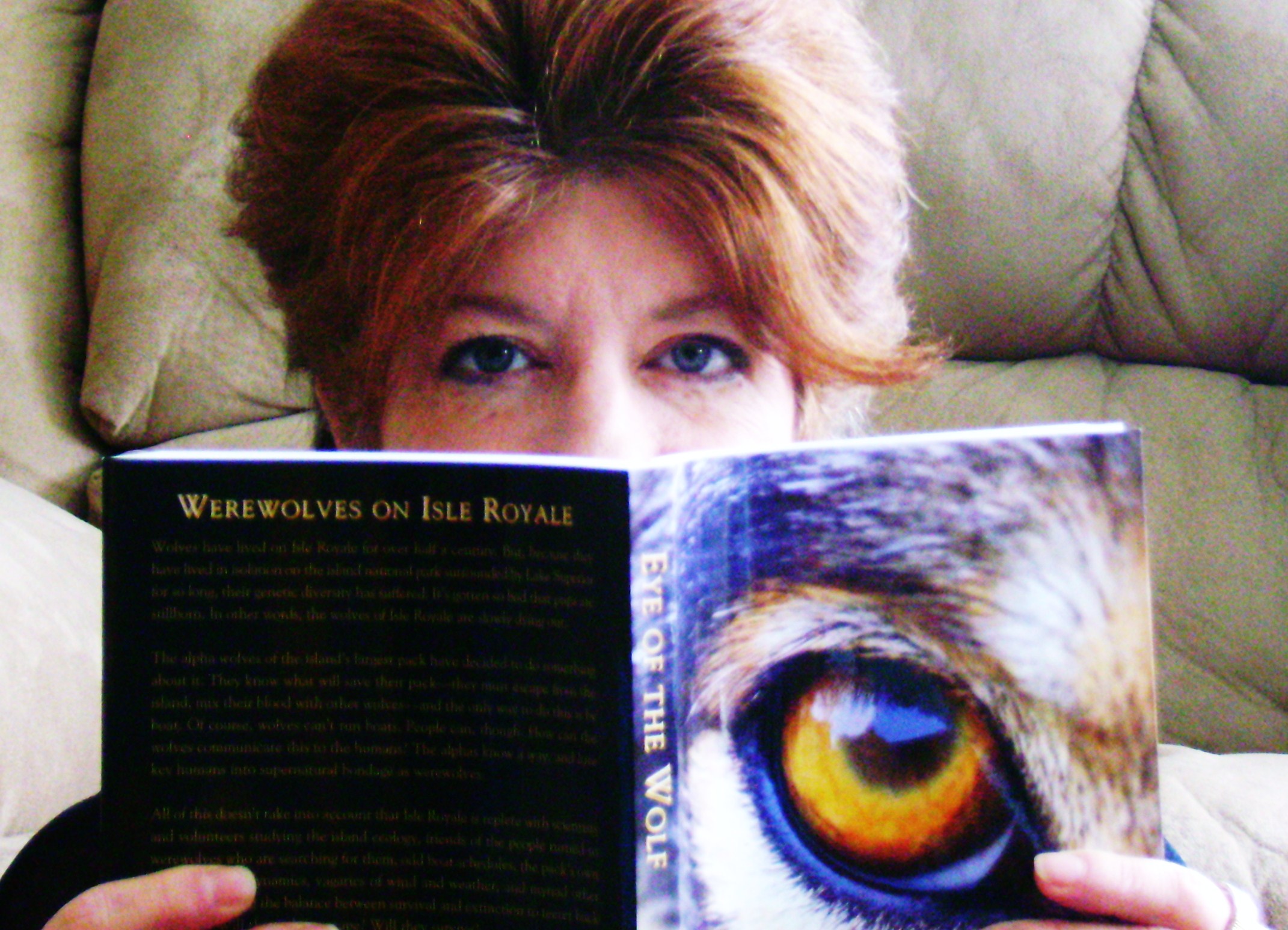
By the way, my novel was not up for consideration in the competition, since it was set on Isle Royale, which is technically an island in Michigan (not Northeastern MN), and it was published in 2011. The stories under consideration for this ceremony were published in 2012. I attended the event to just to enjoy hob-knobbing with bookish folks in hopes it would help me stay inspired.

My first novel did not have a happy ending for the human protagonists. I’m a sucker for a happy ending, so I’m working to find them one in the sequel – so that some of their desire and torment can be lessened; and in doing so, lessen mine.

But right now, I’m desiring more of that pie. . . .
An Aversion to Introversion

MarieBook 005

I’m listening to the book “Quiet: The Power of Introverts in a World that Can’t Stop Talking,” by Susan Cain. As about a two-thirds introvert and one-third extrovert, I’m finding the information useful to better understand myself, and I recommend it to all who are introvertedly inclined.

What are introverts? People who would rather read a book than go to a party; people who tend to study social situations before entering into them; people who are more comfortable writing than talking; people who are slow but creative thinkers; people who don’t like violent, gory movies. And did you know there are ambiverts? Those are people with an equal mix of introversion and extroversion.

The main thing this book does is dispel the societal myth that it’s bad to be an introvert. Introversion is seen as unnatural in our current society, which values sociability and boldness. Cain explains how the condition is biologically based (in the brain’s amygdala and elsewhere) and how it is valuable from an evolutionary and societal point of view.

I recall my parents pushing me many times as a child to be more assertive. I was urged to make my way to the front of the crowd, speak up for what I wanted, and criticized for my shyness. I don’t blame my parents. They were just trying to help me fit into our extrovert-loving society, and it is good to go beyond your comfort zone sometimes.

But their actions did make me feel like I was lacking. This book helps people understand that introversion is just a different and natural way of relating to the world and all the sensory input we receive.

“Quiet” gives various suggestions about how work environments can be modified so they are more introvert-friendly, from group brainstorming sessions to the physical layout of offices. I shared these ideas with my son (who is also rather introverted) as considerations when he takes a job after college.

And Cain’s tips for finding your “sweet spot” (the best emotional place for one’s self, offering a balance of stimulation and relaxation) really resonated. Even though I am introverted, I enjoy being around people and need it to feel happy, perhaps more than other introverts. I gained ideas on how I can change my environment to make that so.

As for a criticism: I couldn’t figure out why the topics were organized like they were, but that could be an artifact of listening to the book on CD instead of reading it.

“Quiet” covered a lot of ground. However, I found three things I wished it addressed. 1) The author cites a lot of brain research, but I would love to hear if there’s a link between right- and left-brain thinking with introversion/extroversion. The section on “flow” comes close, but not quite. 2) The nervous system research on babies made me wonder about the mysterious condition of colic and whether there’s any link between it and intro/extroversion. 3) I wonder if there’s any link between introversion and post-traumatic stress disorder. It seems likely that introverts would be more susceptible to PTSD, given their natural aversion to violence and its deep impact on them. If there is a link, perhaps only extroverts should go into battle??!

I’ve worked hard to develop more extroverted traits over the years – studying assertiveness techniques, taking public speaking classes, chairing national committees (on communications, no less!), even organizing and participating in conference panels. I’ve learned coping mechanisms, which have allowed me to become what the book describes as a “socially poised introvert.”

Even so, I’d still rather sit by a fireplace and read a good book. And you know what? That’s okay!