A Glimpse Into the Northern MN Inner Sanctum

The "Pioneers."

The “Pioneers.”

I spoke with THE most delightful group of fifty elders yesterday about my books. They meet monthly along the shore of Lake Superior north of Duluth. For the sake of anonymity, I’ll call them the “Pioneers.” I spoke in a church basement after their business meeting but before lunch. The rituals and small-town nature of the event made me feel like I was in an episode of the Red Green Show or Northern Exposure, which are some of my favorite television shows, so this was a good thing.

The meeting began with the pledge of allegiance. O.M.G. I haven’t said the pledge since grade school. I was surprised I still remembered it. Then came opening jokes. Several were shared, including a priest/rabbi joke and an Ole and Lena joke (a Minnesota favorite). The latter dealt with Lena reading “one of dem romance novels,” and the former dealt with “the pleasures of the flesh” – all of which provided perfect unintended lead-ins to my presentation.

But it wasn’t time for that yet. After introducing visitors (which was only me — introduced as a writer of “one of dem romance novels”) the meeting moved onto birthday announcements (complete with song), anniversaries, minutes of the last meeting, a moment of silence for the deceased, a treasurer’s report, and committee reports. At this point we learned which of the Pioneers were absent due to recent heart attacks. Much discussion ensued about next month’s picnic meeting and how to procure and handle the industrial-sized cans of baked beans.

The formal part of the meeting ended with a prize drawing. I don’t recall what the prize was because I was getting ready to talk, which induced momentary panic and a memory lapse, but I’m sure the prize was fabulous.

This was the first opportunity I’ve had to talk about both of my novels at the same time, so it was good practice. And I was surprised by how many Pioneers had heard about recent sightings of piping plovers on a local beach. (Plovers are the topic of my second novel.) The audience asked lots of questions. In the tradition of “Minnesota Nice,” we managed not to get into any fights over wolf management or the existence of climate change (other novel topics).

Afterwards, people were almost throwing their money at me to buy books – another good thing. We ate “a little lunch,” which consisted of finger foods like homemade pickled devil eggs, half sandwiches, and dessert bars. LOTS of bars.

The event was punctuated with much laughter and good humor. The structure reminded me of my family reunions, which are conducted every two years in central Minnesota. While we don’t have jokes or prizes or as much laughter, we do have ice cream, which makes up for a lot.

Although this glimpse of northern Minnesota social heaven was a privilege, I left the church feeling bittersweet. In our current era of online meetings and cyber conversations, I fear that social groups like the Pioneers are a dying tradition. Will the teenagers of today gather in church basements or town halls on a regular basis when they are senior citizens? Or will they invent some new form of support group? If they do, will it be as fun? More important, will they have bars?

Only time will tell.
How NOT to Deal With a Bad Relationship: Lessons from “Gone Girl” and “Anna Karenina”

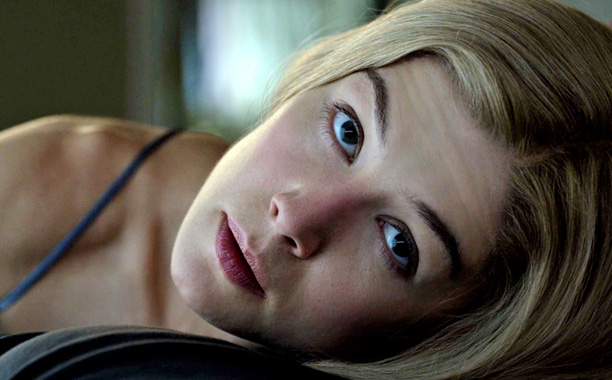
Amy Dunne from "Gone Girl."

Amy Dunne from “Gone Girl.”

Anna Karenina

Anna Karenina


I had the serendipitously synchronistic experience of reading Gillian Flynn’s “Gone Girl” and Leo Tolstoy’s “Anna Karenina” at the same time. Although the stories take place in different eras, I was amazed by the similarity of some parts — especially if you just ignore most of Tolstoy’s ramblings about farming and equality for the peasant class. (I know, how dare I say that. Insert gasp from literary community here.) Both are about bad relationships and various ill-advised ways to deal with them.

In Gone Girl, Amy (the wronged wife) decides to deal with her husband’s infidelity by faking her death and framing him for it. But she still really loves him in her twisted way, so they patch things up (sort of) and resume living together, trying to recapture the magic of their early years. But their situation is not sustainable because it’s based on manipulation and power struggles. And Amy’s husband Nick only buys into it because she leaves him no choice. Especially after she announces she’s pregnant with his child.

(I hope there’s a sequel because something’s going to blow, and it’s going to blow big! Maybe their child will be the instrument of the familial explosion. I can’t imagine a baby raised in such a twisted environment would come out unscathed.)

Anyway, in Anna Karenina, Anna is the one who has an affair, and it’s her husband Karenin who thinks that remaining together in the same house is a good idea. As long as her lover stays away and she keeps things discreet, he’s all right with Anna continuing the affair, but he wants to keep up appearances for the sake of his career and social status. Like Amy, Anna also becomes pregnant. But it’s with her lover’s child, not Karenin’s.

Of course, it’s not a sustainable situation, either, and Anna keeps looking for a solution. She thinks she’s found one when she has a premonition that she will die during childbirth. Yes – that’s the answer – don’t deal with the situation, just die and get out of it! Although she comes close to death, she survives. Then it’s her lover’s turn to think about death, but he botches his suicide and survives also.

In Gone Girl, Amy’s original plan was to commit suicide as a final act of vindictiveness after successfully framing her husband for her death. But ever the narcissist, she decides he’s not worth killing herself over.

In Anna Karenina, Anna does eventually commit suicide as the solution, even though she and her lover Vronsky are at last free of Karenin and living the high life together with their daughter. Why does she do it? Out of vindictiveness and fear. She feels the romantic love between her and Vronsky slipping. He’s actually asserting some independence and (gasp!) doing some manly things without her. She can’t handle it and throws herself under a train – mimicking an incident that happened when they first met. Thus, despite overcoming many societal struggles, their relationship implodes from within.

As mentioned parenthetically already, I expect the relationship in Gone Girl will also implode. But only if the author gets on it and writes a sequel! Does anyone know if a sequel is planned?

I suspect that a creative writing graduate student could make a good thesis topic out of comparing these two novels. And that they could do it much more thoroughly than I. Feel free to use my blog story as an outline and go for it! I just thought it was amazing that these two authors spanning so many years were essentially writing about the same thing: human nature. It apparently hasn’t changed much, although if Gone Girl is any indication, human nature may have gotten even worse.

The Bench

A sailboat off Park Point Beach in Duluth, Minn.

A sailboat off Park Point Beach in Duluth, Minn.

I saw the bench in passing as I was hauling a box of my novels into a local community center where I was to take part in a local arts sale and book signing. My first thought was that the bench offered a nice place to sit if someone got tired on the walkway up to the center.

On my second trip, I noticed the red crabapples that had fallen onto the weathered wooden slats of the bench from the tree that sheltered it. On my third trip, I saw the small sliver plaque that had tarnished beyond readability and how the main metal support on the bottom of the seat was hanging askew. That bench had been there for a while, and no one was taking care of it.

On my fourth trip, I realized I was having all these reactions to the bench, and that I should pay attention. It’s funny and sad sometimes how intent we get on what we are doing (in this case, setting up my book table) that we miss creative fodder that’s right along the path.

Where will the path of life take you? To the beach!

Where will the path of life take you? To the beach!

After I was done hauling books and moving my car across the street to allow arts sale patrons the best parking spots, I took time to appreciate the bench. I unpocketed my camera and shot some photos of it and the surrounding beach. The bench photos don’t do it justice. I think my words describe it better, but I got some good beach shots.

I’ve been thinking a lot about mortality lately, what with “shallow graves” occupying my mind, and attending a visitation for a fallen media comrade. This bench spoke to me of a life remembered. It served as a token of respite and peace in a busy world, but a token now forgotten and in disrepair. How fragile human memory is! How fleeting! Yet the bench stands in testament that someone once cared.

Like any good, self-absorbed artist, I wondered if anyone would care enough about me to dedicate a bench in my name, and if they did, how long the intent would last to keep it in good repair. And in the big scheme of things, does it really matter? Dust to dust, ashes to ashes, and all that.

I suppose a poem is in that bench somewhere. I wonder if I will have the opportunity to step off the path of my busy life and write it.

Okay, I changed my mind. Here's the bench.

Okay, I changed my mind. Here’s the bench.

On the Ice Bucket Challenge and Apologizing for Happiness

Smileyes By Ramesh NG via Wikimedia Commons

Smileyes By Ramesh NG via Wikimedia Commons

My youngest son wanted me to video his friend dumping a bucket of cold water over his head, joining the masses participating in the ALS Ice Bucket Challenge. This was back a couple of weeks ago when it was all the rage. I agreed and probably laughed about it. My son then proceeded to make a snarky comment and went outside to join his friend who was waiting in our driveway with the bucket.

Stunned by my fifteen-year-old’s comment, I stood in the kitchen, at war over whether to call him out on it, but also feeling pressure to go outside and take the video. He doesn’t usually say such things, but the past few days, I’d noticed an edge to him that hadn’t been there before.

When he came on the porch looking for me, I motioned him into the house. I told him that if he wanted me to do something nice for him (take the video), he needed to be nicer to me and apologize for his comment (the words to which I can’t even recall any more).

He apologized and we had a rather heated discussion about what was wrong. It turns out, it’s all my fault. I was laughing too much. It annoyed him.

Now, even if I do say so myself, my laugh is not annoying. In fact, back when phone contact was the norm, my Allstate agent used to call me and crack jokes just to hear me laugh. He actually admitted this to me. My laugh is hearty, yes, but not unusually frequent. And I’m not one of those people who goes around smiling all the time. But, as you can probably tell from this blog, I do have an easy and strange sense of humor, and enjoy laughing when I have the chance.

Before I knew what was coming out of my mouth, I apologized to my son for being a happy person. In part, I did it to show him the absurdity of his complaint. I also did it because he had apologized to me and I was trying to move the discussion forward. Other parts of our conversation revolved around the need for him to find a way to deal with hearing his mother laugh. I have many things I could be sad about. I’m nowhere near as resilient as I used to be, but I’m not about to stop laughing any time soon. Afterwards, we went outside and commenced with the icewater dumping.

Last night, we had an airing out session about several things, and we talked more about the Terrible Awful Problem of having a happy mom. I told my son it’s rather normal for teenagers to get annoyed, especially when they are sleep-deprived. The day before the annoyance incident happened, he had his friend over for a “sleepover,” which usually involves almost anything but sleeping. We also talked about how annoyance over little things can be a waste of time and energy, and we both laughed about how silly it was to be annoyed by happiness. He assured me his annoyance wasn’t because he was unhappy, but because of hearing my laugh so often lately.

If having a happy mom is the worst issue for my son, I’d say we are doing all right.

The Planet Where They Don’t Give Christmas Presents

"Mars Hubble" by NASA and The Hubble Heritage Team. Licensed under Public domain via Wikimedia Commons.

“Mars Hubble” by NASA and The Hubble Heritage Team. Licensed under Public domain via Wikimedia Commons.

I wrote this poem about two years ago after a break up with a manfriend. I performed it at a public reading earlier this year. I didn’t know it going in, but the reading was judged. I was just performing the poem for practice. Although I didn’t win, if there had been an applause-o-meter on the premises, I would have won the popular vote based on that.

Caution: this entry contains mild profanity. Read at your own risk. It’s really best not to make me angry. I get my revenge in the most dangerous way: through poetry.

The Planet Where They Don’t Give Christmas Presents

This planet is mainly populated by men
who think it’s OK to date a woman for ten months
and NOT give her a Christmas present.

What is the name of this planet?
Planet Idiot.
Planet Asshole.
Planet I don’t want to live on this planet.

The inhabitants of this planet often
don’t want to spend New Year’s Eve
with their ladyfriend.
Or introduce them to their families.
Or sleep over at her house.
Or play with her dog.

I don’t want to live on this planet.

©2012 Marie Zhuikov

Night Bird

Graduation
As I watched my oldest son walk across the stage and pick up his college diploma last weekend, an image from memory flashed through my mind. It was a tiny sparrow, fluttering outside a window in the middle of the night at the attic apartment where we lived when my son was born.

If you’re squeamish, you might not want to read this next part because it deals with things that new mothers do. One last chance not to read. Okay: I had arisen to pump milk for my son, who, after a difficult birth, lay in an incubator in the intensive care unit. He had experienced some “dusky” episodes, where he turned bluish due to lack of oxygen. After a long (and screaming) labor, he had been born about ten days before his due date – just early enough that his systems needed extra time to kick in. I had recovered enough to be sent home, but had to leave the hospital without him.

The night of the sparrow was my first one home — my first away from my new son. As I pumped, the bird hovered outside in the dark, pecking at the window as if trying to come in. In my post-partum midnight haze, I felt like the bird was the spirit of my son, trying to come home. I can’t explain how that made me feel except to say it was a strange mixture of desolation and joy.

I was an emotional wreck for the next few days. Eventually, our son came home, but not before we learned infant CPR and how to attach the tentacled wires of a heart monitor to him, which he would wear for several months. Even though I was awake with him many other times in the night, I never saw another bird behave like the one that first night home.

Twenty-one years later, as I watched my son walk across that stage, I thought about all we’ve been through. He’s come so far from being a helpless infant in an incubator. He’s grown so tall and strong, smart and stubborn, determined and thoughtful.

I couldn’t be prouder of him, my little night bird.

Connecting (or not) with Pets

RIP Sparky, 2007-2014.

RIP Sparky, 2007-2014.

Sparky the Guinea Pig died a few days ago. Actually, I had her euthanized. Her back legs stopped working. She didn’t seem in pain or anything – was still eating and drinking as usual. She just couldn’t move very well.

Sparky is a girl piggy that we bought almost seven years ago at the insistence of my youngest son, who wanted another pet. She’s been healthy and sweet for all that time, except for her recent development. Since Sparky was ancient for a guinea pig, and because I am the one who has been caring for her all that time, I wasn’t keen on going to heroic measures to save her. I did spend time doing Internet research on her condition and discovered it could be caused by many factors but a calcium deficiency was the most likely in our case. By the time I discovered that, she had been ill for about four days — it took a while to figure out what was going on because she didn’t move around much to begin with.

The instructions described use of a liquid form of calcium designed for human consumption. I called around all the local pharmacies, but couldn’t find any available. I found some through mail order, but that would have taken several days to arrive, and I wanted something soon. I described Sparky’s plight to a friend and she found that Pet Co had liquid calcium, so I went there the same day. But when I got to the store, the supplements they had for guinea pigs didn’t have any calcium in them, so I ended up buying one designed for lizards. I mean, calcium is calcium, right?

We did the three-day course of treatment, but it didn’t seem to make a difference. And now, Sparky was moving around even less, so that she wasn’t getting enough water to drink unless I moved her over to her bottle. That’s no way for her to live, so, call me heartless, I made the appointment to have her euthanized.

When the time came, I packed her in a box filled with a deep comfy layer of bedding and went to the vet. I filled out the paperwork and handed her over without a fuss or any desire to see her through the procedure. The experience was markedly different from when I had to have my cat of 14 years euthanized. For that, I was a blubbering pile of Marie goo. It got me thinking about what made the difference.

I suspect one reason is that I never really connected with Sparky. I’ll be the first to admit, I don’t “get” guinea pigs. I had never had one before, and although we read books about them, the emotional connection wasn’t there. The cute “popcorn” jumps they do just seemed spastic. In the beginning, we took Sparky out to cuddle and let her roam around, but she had a habit of peeing in one’s lap and she nipped hard with her beaver-like teeth. So that didn’t help. About a year after we got Sparky, we got our dog, Buddy. We were worried about his reaction to her, so we took Sparky out less often after that.

Another reason is that she was my son’s pet, so I felt like it was his responsibility to connect with her more than mine. And he did try, but as he got older and busier, that fell by the wayside and Sparky’s care fell to me. She became an obligation, not a joy.

I feel bad that I never connected with Sparky. I can connect to dogs, cats, birds, and even fish. (I taught my catfish to wink at me.) We had a hamster once, and I never connected with him, either. Maybe I’m just not a rodent person. Have you ever had a pet you didn’t connect with? Do you think there are just some types of pets you aren’t designed for? I’d be interested to hear.

Living for the Dead

Matthew Link

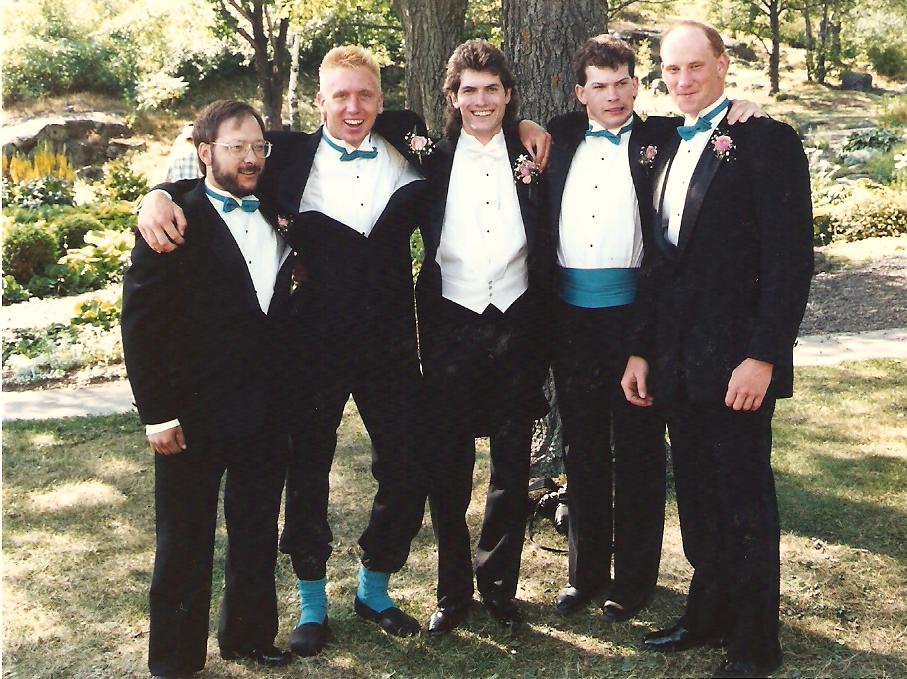
It’s easy to spot Matt among the groomsmen in this photo.

So I’m going to write about another dead person. I’m not trying to be morose or anything – it’s just that the events honoring these two men happened back-to-back. The previous event honored journalist Larry Oakes and was the subject of my last blog. Last night’s event was in memory of Matthew Link, a friend who died twenty-five years ago.

Matt’s father and stepmother gave a presentation at the Duluth Pack Store as part of its Tuesday night Outdoor Adventure series. They spoke about their trip to New Zealand – both the sights it provided and the closure it gave them regarding Matt’s death. He died in a kayak accident while participating in an outdoor pursuits school there.

Matt was my then-husband’s best friend. Four months before he died, he was best man in our wedding, and we ended up naming our son after him. A modern-day Viking, Matt was big, blond, and strong. He was always ready for adventure, sociable, and he was a good friend to my husband. Matt grew up at a nature center his parents directed in Minnesota, so he was no stranger to the outdoors, and he sought that type of life as a future profession.

The phone call in the winter of 1989 telling us that Matt died was surreal. It was one of those events that mark your life; there was the time when Matt was alive and the time when he was not. The world would never be the same for his friends and family. Many of us have struggled to find a way through life without his commanding physical presence. Making things more difficult was the postcard we received from Matt a week after he died. He must have mailed it from New Zealand just before his fateful kayaking trip.

Matthew Link

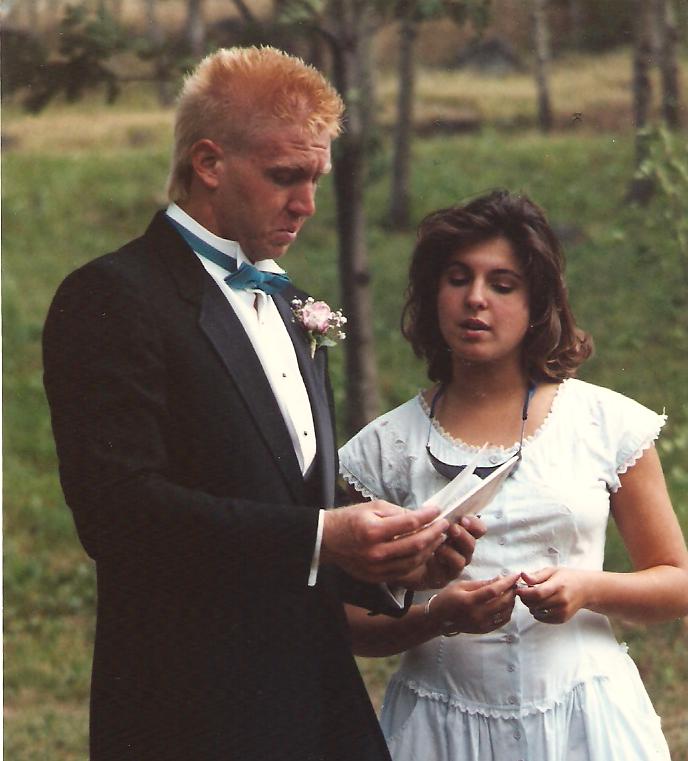
Matt and his girlfriend Beth discuss the confusing intricacies of my marriage certificate.

His father and stepmother couldn’t afford to go to New Zealand at the time, which is what made their current trip all the more meaningful and necessary. Instead, Matt’s ashes were flown back and his family, including his biological mother, hosted several ceremonies for him. I recall a bonfire and Ojibway pipe ceremony on Park Point in Duluth, and a church service. After the service, we trudged through the cold snow to free his ashes into the St. Louis River, one of his favorite kayaking waterways.

Matt’s funeral was the first one I attended where I was emotionally invested in the person who died. The service befitted him, which made it all the harder not to bawl. After a point, I just gave up trying to hide the tears. And when they played one of Matt’s favorite songs, “It’s a Wonderful World,” by the gravelly voiced Louis Armstrong, I just totally lost it. To this day, that song is my trigger – tears for every occasion. So if you’re ever in an airport when a Wonderful World comes over the Muzak system and you notice a woman sobbing as you walk by, that’s probably me!

On their trip, Matt’s dad/stepmother visited the school he was attending and met some of the people who knew him. They got to see his dorm room and Matt’s father even had the guts to visit the site where he died. His father explained that the hole that Matt left is too large for total closure but that he did find partial closure through their journey.

His parents, including his mother who lives in Alaska now, strive to live lives worthy of Matt’s spirit and I guess that’s something we can all do to honor departed loved ones. Assuming your departed was as cool as Matt: would they be happy with how you are living now? Are you living up to your best potential? It’s something to think about. If living for yourself isn’t working, consider living for them.

Ding, Dong, Rachel’s Gone! The Rachel Files: Weeks 12-14

English: George Clooney at the 2009 Venice Fil...

Sorry George. I wouldn’t even live with someone like you until I recover from my last roommate. (Photo credit: Wikipedia)

I drove my temporary roommate, Rachel, to the airport at 5:45 this morning, to visit her ailing mother in another state. She’ll return in three weeks, but plans on moving somewhere else then. The separation has taken much longer than I hoped, but it’s finally happening!

I will miss her help walking my dog, doing dishes, and assisting with housework (except when she was overzealous). But I will not miss her clogging up my plumbing (which happened again during this most recent time period), and the general weirdness that goes with her condition. I will also not miss finding her used floss on my living room floor, and, I hate to say it, she was starting to ruin my furniture with her bulk.

On the way to the airport, she apologized for her “inconsiderate and inconsistent” behavior. I tried not to discount her statement (because it’s true!) but I didn’t want her to leave feeling bad. I told her it was a learning experience for me and my son. It helped open our eyes to the challenges that some people face.

After I took Rachel’s suitcase to the ticket counter, I gave her a hug and wished her a good trip. I’m so glad she found a way to make her trip happen. I hope it will be a good experience for her, and that it will provide some closure for her with her mother.

I figure three months is a very respectable amount of time to share one’s home on a volunteer basis. My son and I are looking forward to having our home back to ourselves. I think it’s given us a new appreciation for one another, and, as I mentioned in previous entries, the experience totally cured me of the half-empty nest feelings I was having when my oldest son moved out.

Now I am likely to enjoy and guard my privacy much too fiercely. One of my girlfriends asked me if I would let George Clooney live with me if he wanted. I replied, “Not even George Clooney.” Sorry guys! (Smirk)

The Rachel Files: Weeks 10-11 and the voicemail message

Answer machine

Answer machine (Photo credit: Insight Imaging: John A Ryan Photography)

It began with a voicemail message from Rachel’s husband. He mentioned it was important that Rachel call her mother’s conservator in another state. Unfortunately, Rachel found out her mother is dying.

But there’s another worrisome thing about his voicemail: it means her husband knows where Rachel is staying. He has anger management issues, which is one of the reasons she left him. From what I can tell, it seems to be more emotional than physical abuse – that’s why she’s not at a women’s shelter or something. Even so, the jig is up and it’s more urgent than ever that Rachel find another place to live.

When she and I talked about her moving in, she had been living with someone else for two months after escaping her home. I asked if I had to worry about her husband coming to my house. She assured me that although her adult daughter (who lives with her husband) knew where she was staying, she would not divulge that information to her husband. After all, she hadn’t done so for her previous address.

Guess what? Rachel says her daughter got mad at her and spilled my phone number. It’s not hard to find my address from that. It’s safe to assume if he has the number, he knows where we live. So, we are working to find her other living quarters as soon as possible, and looking for ways to get her out to California to see her mother with the help of our church. What a mess.

I’m not really that fearful. Maybe I should be. But that doesn’t mean we aren’t taking precautions. (Sorry for the double-negative.) Who knew a simple voicemail message could bring such drama? Let’s hope things don’t get any more dramatic.