A Lake Superior Sailing Experience, Part One: Chocolate Milk and Biting Flies

DSC04737

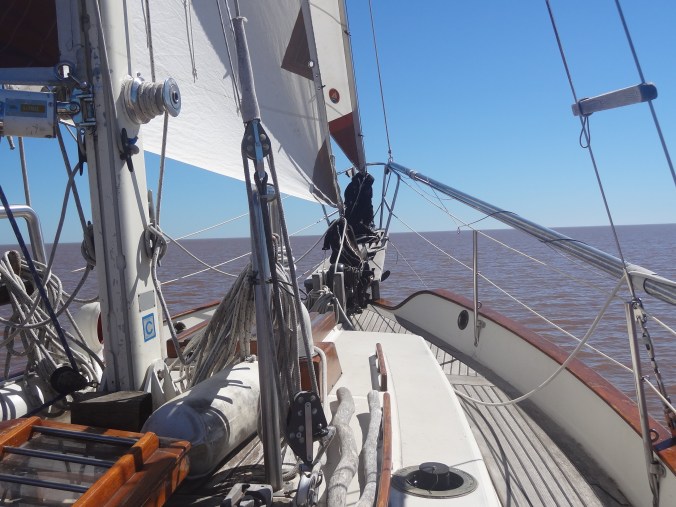
I recently meandered out onto Lake Superior on my first extended sailboat trip across it with some friends. We left Duluth, Minnesota, and headed to Wisconsin’s Apostle Island National Lakeshore, and then traversed the western arm of the lake to Grand Marais Harbor in Minnesota.

Since I am writing this, you know I survived the three-day trip. If fact, I would like to think I thrived, despite turning green with seasickness once (I avoided hurling, though!) and having to wear all my winter gear, plus hand warmers, on the 4th of July.

I learned a lot about sailing, but still have more to know. And I got a firsthand look at conditions on the lake, which is useful for my job, since we fund research projects on Lake Superior.

Two things struck me and my sailing companions. The first was the color of the water. Almost all the way to the Apostles it was the hue of chocolate milk. The large extent and persistence of the coloring was unusual. There were also floating logs to watch out for.

According to a news story I read upon returning home, the condition is due to a series of recent heavy rains that have sent thousands of tons of silt into the lake. Chequamegon Bay, on the other side of the Apostles, is also experiencing heavy sedimentation.

Usually, the chocolate milk dissipates within a few days, but this round of it is lasting longer than usual because we kept having downpours every few days. Most of the sediment comes from the Nemadji River and its red clay banks, along with the St. Louis River.

We also had more than double the amount of usual rainfall for the month of June. Anglers and charter captains are having to travel farther than usual out into the lake to find clear water for fishing.

DSC04795

Stable flies covering jeans during a beach walk. Good thing they can’t bite through denim!

The second notable thing were the flies. Known locally by the name of “ankle-biters” or sand flies, stable flies look like a common housefly but they are meaner because they bite – usually a person’s ankles. I can attest that there are roughly a gazillion of them out on the lake and its shores this summer.

The only thing that saved us from certain insanity on a shore trip to Outer Island was the fact that we were wearing jeans, which they couldn’t bite through.

The flies congregated in seething clusters from our knees down, rarely venturing farther up our legs. Thank goodness they had no interest in our bare arms or we would have had to run screaming back to our dinghy!

According to a story on National Public Radio, researchers have figured out how and why the flies and other biting insects like mosquitos do this. They think these biting bugs target feet and ankles because we are less likely to notice (and therefore kill) them. They hone in on their target by smell, and apparently, the sweat and skin on our ankles smells different from that of the rest of our body.

Besides wearing jeans, we found it helpful to elevate our feet off the ground while we were on the boat. They didn’t seem to be able to find our ankles if they were level with the rest of our legs. Conditions on the boat never got bad enough that we needed to apply repellant, but we were glad we had some along, just in case.

Although the water wasn’t its typical crystal-clear blue, and we had many insect stowaways aboard our sailboat, Lake Superior was still magical. I greatly enjoyed spending time on it, and hope to do so again someday.

DSC04785

DSC04790

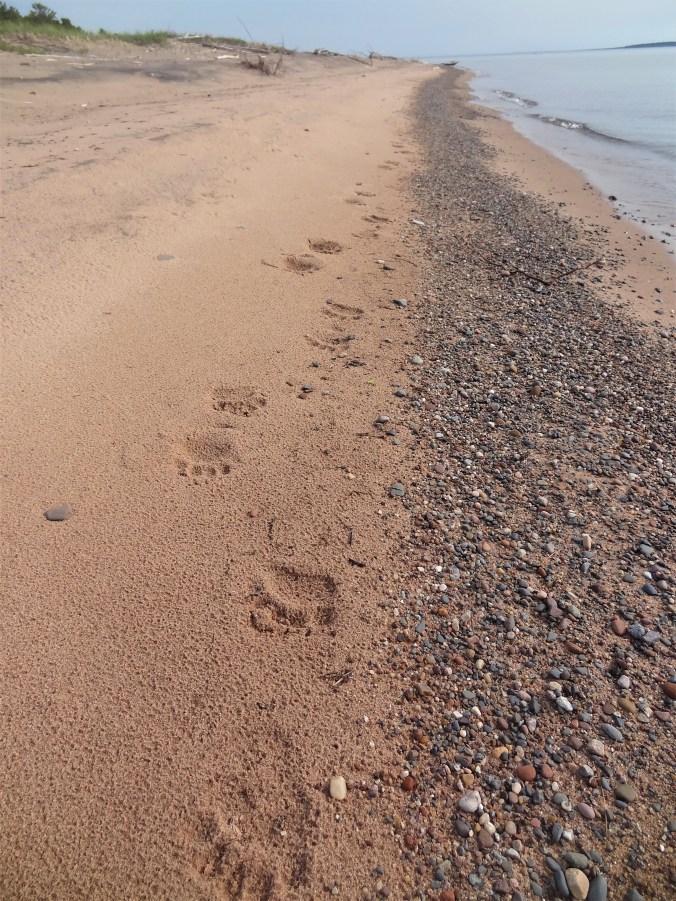
A bear got to this beach before we did.

A Visit to the Birthplace of the Ice Cream Sundae

DSC04716Last week, I meandered over to Two Rivers, Wisconsin, birthplace to the ice cream sundae. We arrived at the Historic Washington House Museum and Ice Cream Parlor at noon, just in time to have ice cream for lunch!
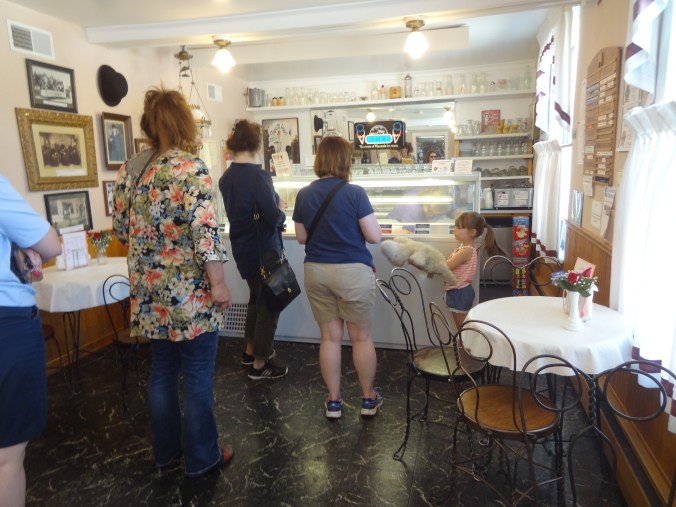
The Washington House is not the original place where the first sundae was served in 1881, but the original bar is in the building, which also features artifacts from that time, up to more modern times. A more modern parlor in a separate room offers the creamy confection to hungry travelers today.

DSC04718We were met by a little girl who seemed to be related to the parlor manager. As she stood next to the counter, hugging her fluffy teddy bear, she gave us recommendations for the best flavors, extolling the virtues of each.

DSC04720She tried to talk me into strawberry ice cream, but once I saw they had coconut, I begged her permission to have that instead. She graciously granted my request, so my lunch consisted of Coconut Joy ice cream (with coconut flakes, chocolate chunks and almonds), topped with hot fudge sauce.
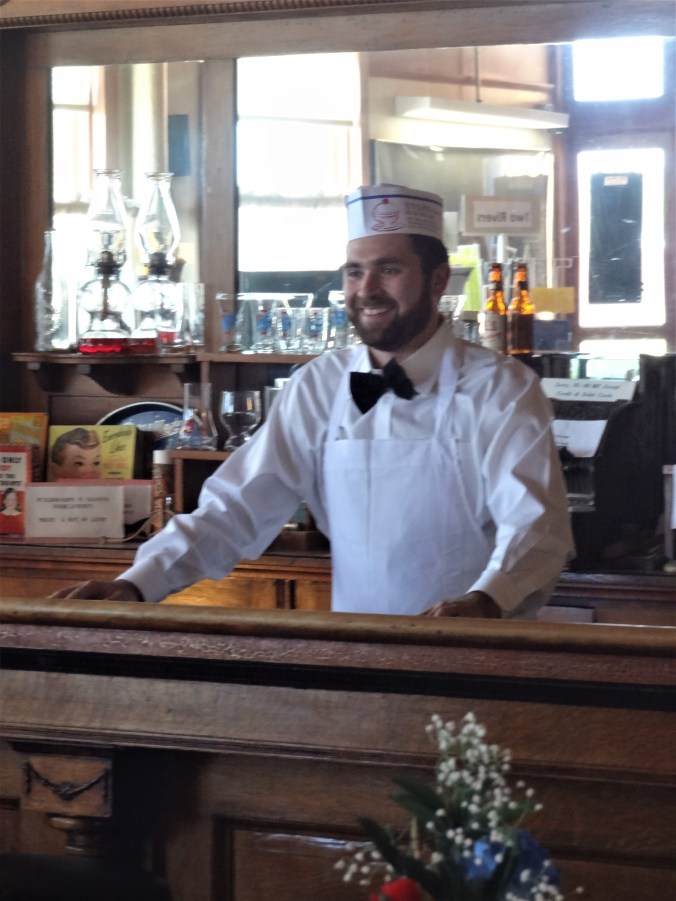
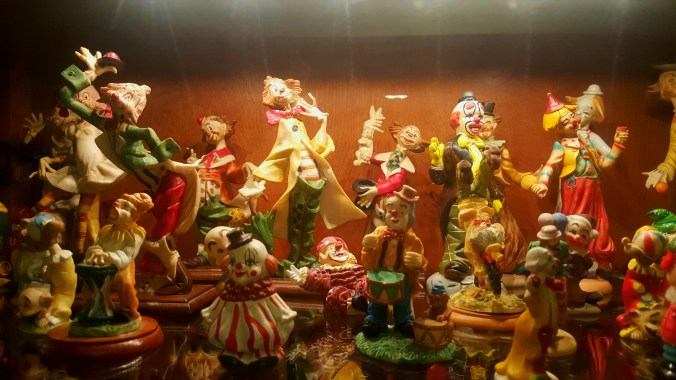
OMG, so good! Sated, we then toured the rest of the building, which houses different historic collections of clothing, clowns, typewriters, etc. A film crew from Chicago was interviewing a man who was dressed in a soda jerk uniform behind the original bar as we left. I took his photo between takes, and he gave me a wave and a big smile. One of the historical volunteer ladies told me that several television stations had been to the parlor recently to do stories. I guess it’s that time of year.

DSC04724Although some other towns make rival claims for the origin of the sundae, the place in Two Rivers is the only one recognized by the National Register of Historic Places. Read here  and here for more info.
20180628_183943

Romancing Las Vegas

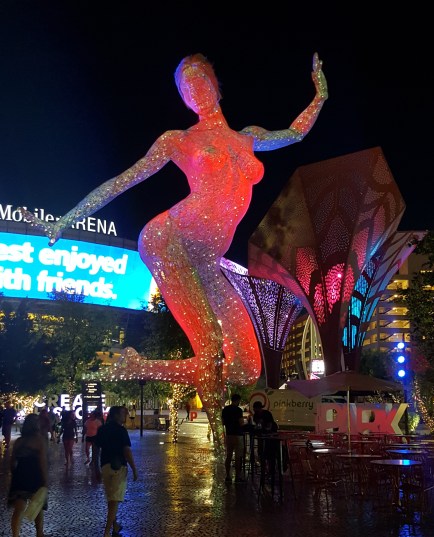
20180529_204220

I just returned from four action-packed days in Las Vegas. I travelled with my new manfriend, Russ, so it was a chance for us to get to know each other better. We chose activities with an eye toward the romantic. Here’s a quick rundown.

The Nature

20180530_092342

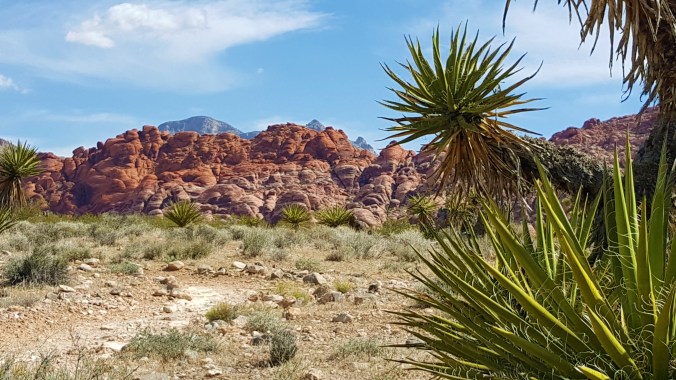
Red Rock Canyon

What could be more romantic than the color red? Lucky for us, the Red Rock Canyon was just a short drive outside of Vegas. It offers plenty of trails for hiking, but if you don’t have time for that, you can drive on the one-way, thirteen-mile road through the reserve to see the spectacular scenery.

20180530_121932

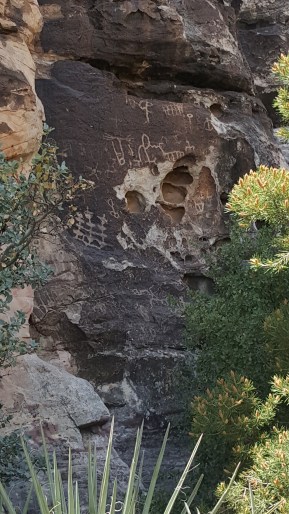
Pictographs at Red Rock Canyon

We hiked two trails and saw lizards, cacti, colorful rocks, kangaroo rat dens, soaring vultures, and even some ancient Native American pictographs.

Tip: Hike in the morning, before it gets hot! During our stay, it was in the upper 90s every day with sun. Bring plenty of water.

Sharks may not be romantic, but they could make your loved one hold onto you for dear life. We visited the Shark Reef Aquarium in the Mandalay Bay Casino. Plenty of rays, sharks, and jellies.

Entertainment

Get up close and personal with your fantasy partners at Madame Toussand’s Wax Museum in the Venetian Casino. Russ and I temporarily ditched one another in favor of Brittany Spears, Celine Dione, Bradley Cooper, and George Clooney. Sigh.

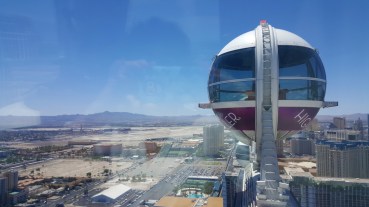
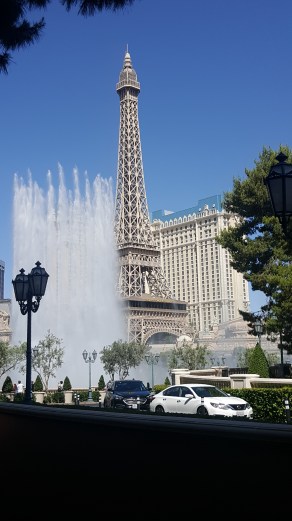
20180531_115559The High Roller Observation Wheel will take you and your date to new heights on a slow spin five-hundred feet above the city. The wheel is so huge, it takes a half-hour for one rotation. Day or night, it’s a great way to get your bearings in a city with so many landmarks. Likewise is the Eiffel Tower Replica at the Paris Casino. Take an elevator ride to the top for a spectacular view.
Any of the Cirque du Soliel performances are romantic since they are French, after all. I would recommend the watery one called “O.”20180530_212209


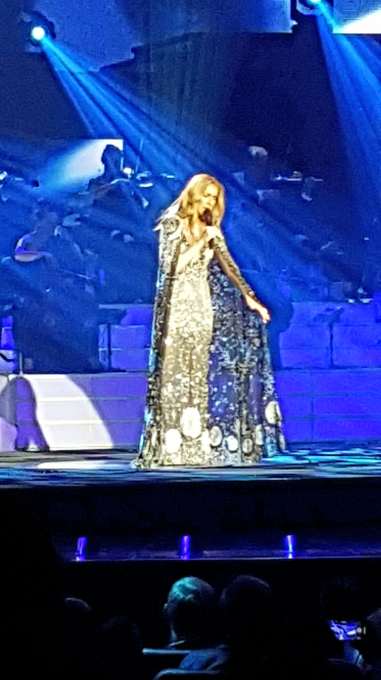
Celine Dione has recovered from her ear surgery and is back giving concerts at the Colosseum. Somehow, we scored big on our seats. We were supposed to be in the second balcony, but got upgraded to seats on the main floor, only twenty-five rows away from her! How romantic to listen to “My Heart Will Go On” from that vantage point.

Tip: If all our nights hadn’t already been booked with shows, we would have tried a gondola ride outside the Venetian Casino. Don’t make our mistake!

Best Romantic Food

Vegas offers every type of food imaginable. But the most romantic we found was at the Eiffel Tower Restaurant. It is French, no?

If you reserve your table for two at 4:30 p.m., they will automatically seat you at the front window where you can watch the fountain show across the street at the Bellagio Casino. As with the Celine Dione concert, somehow, we mysteriously scored big on our seating. We were shown to the corner table at the front of the restaurant with a 180-degree view.

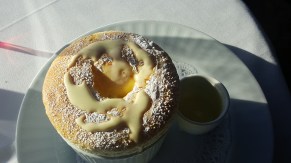
20180601_162112The food and wine is pricey, but oh so worth it! I had the lemon sorrel soup appetizer and veal medallions with morel mushrooms and fiddlehead ferns. So good! Russ had the roasted beet salad and bison with an asparagus add-on. For dessert, we romantically shared a Grand Marnier soufflé. Words fail me.
20180601_175946

Grand Marnier souffle

Communing with Vultures on Ely’s Peak

20180428_180725

One of the views from Ely’s Peak.

Last weekend, a friend and I meandered up 200-300 feet in elevation to the top of Ely’s Peak near Gary-New Duluth. I don’t have a more specific elevation to give you because the different trail guides that I consulted are inconsistent on that point. But I can say that for my 50-something-year-old legs, it felt more like 300 feet. Also, some of the guides say it’s a 1.5-mile round-trip hike. Others that it’s 1.8 miles. I vote for the latter.

20180428_181031We chose the trail to see a new place and because the crisp and sunny spring air seemed to demand it. We didn’t go seeking a vision quest like Native Americans are said to have done on the peak, nor to seek our spirit animals, but we just might have had a dose of both of those things along the way, too.
The trailhead is off of Becks Road. On this particular day, the trailhead parking area was easy to find from the many other cars gathered there.

I followed the directions given on this website, although I would argue that the “beginner” level trail classification is not accurate. I would rate it as “moderately hard” because near the peak, I found myself thinking it would have been helpful to be part mountain goat. And a young mountain goat at that.

(I would say that this trail is not for 80-year-old mountain goats, but for all others it should work as long as you are reasonably fit and coordinated.)

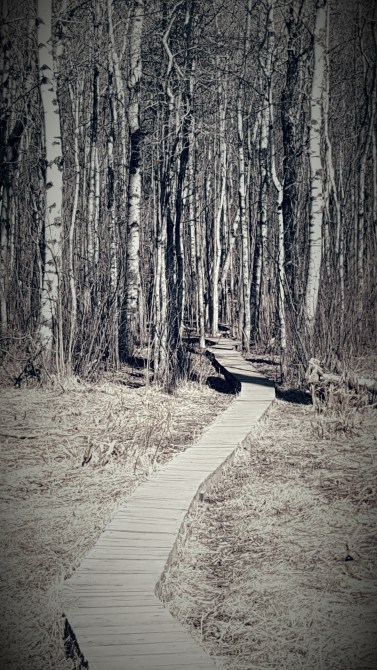
At the start, a boardwalk invites you into a spindly birch forest. The boardwalk gives way to a muddy climb up an incline to an old railroad bed for the Duluth, Winnipeg and Pacific Railway.

20180428_155924

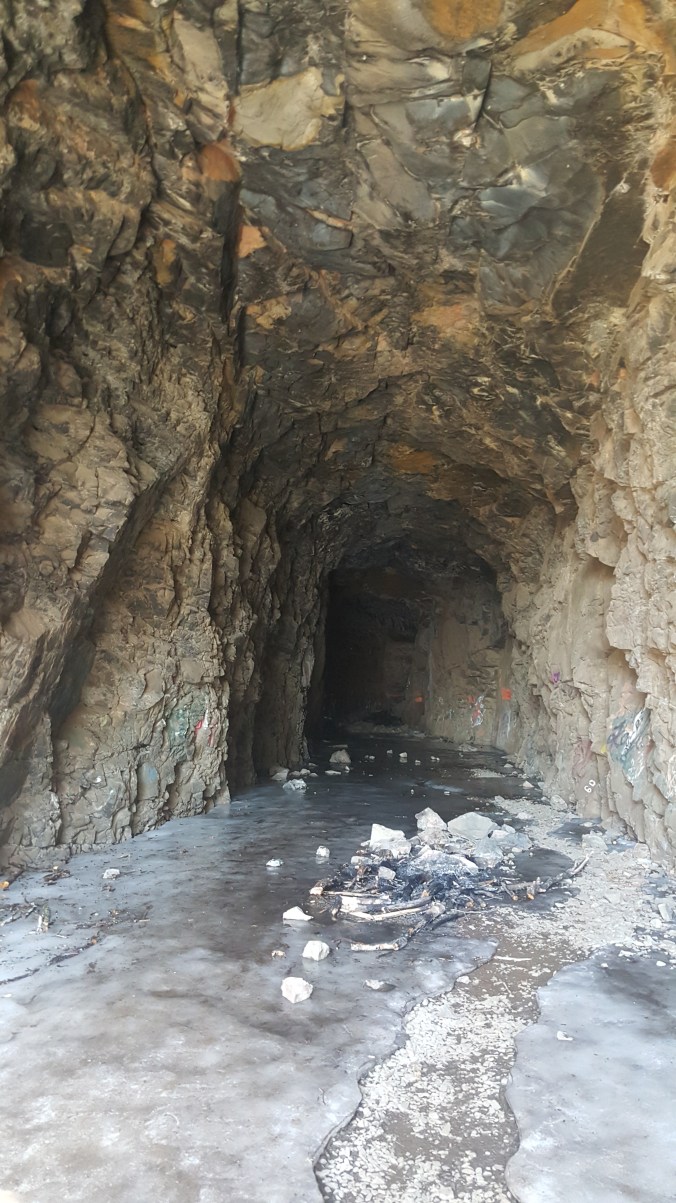
Inside the railroad tunnel.

Follow the railroad bed to the right until you come to a rocky tunnel. The tunnel was built for the railway in 1911. There are trails on the other side of it, but we did not attempt to go through the tunnel because of the sheet of ice layering the way. You may run into some rock climbers, who practice on the craggy basalt in the tunnel.

Although it may seem counter-intuitive, from the tunnel, you should follow the main trail, which goes down the hill to the right. Don’t take the spur that goes up along the side of the tunnel, unless you really are a mountain goat and want to test your mettle.

Don’t be impatient, you will come to an incline soon enough. You are now on the Superior Hiking Trail, which is marked by blue blazes on the trees and rocks. Keep to the left and follow the blazes up the blazing &!*()%$ hill.

Soon enough, wide vistas will offer views of the St. Louis River and the Gary-New Duluth neighborhood.

20180428_162157(0)

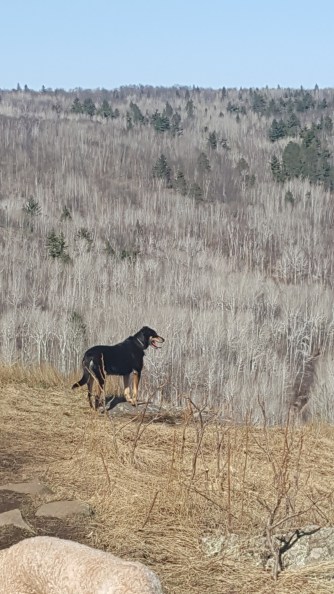
Dogs like the Ely’s Peak Trail, too.

No leaves were out on the trees yet – everything looked stark and clean.

The peak offers breath-taking 360-degree views. It was named after Edmund Ely, a Presbyterian missionary from Massachusetts who began teaching the Fond Du Lac Native American community in 1834. Local lore says that this was one of his favorite spots.

As we sat, resting, we noticed several turkey vultures lazily circling the thermals below us. The more we watched, the more vultures seemed to appear from nowhere. Eerily quiet and patient, they circled and circled. We joked that they were probably looking for hapless hikers who fell down the trail.

There’s a school of thought that says if you sit out in nature long enough, an animal will appear that has a lesson to impart. Were the vultures trying to tell us something?

Once back home (and safely out of a vulture’s gullet), I looked up what vultures symbolize. Here’s what I found: the vulture is considered a symbol of cleansing, renewal, and transformation. Vultures are viewed as fearless of death – they stare it in the face and eat death for breakfast (literally)!

I did feel cleansed after that hike. It was like the sunshine and clear air burned off all the old gunk. Perhaps it’s only to make way for more new gunk (ha ha), but I’d like to think I’ll have some time before I get clogged up again.


A Funny Thing Happened at Bent Paddle Taproom . . .

20180424_203354

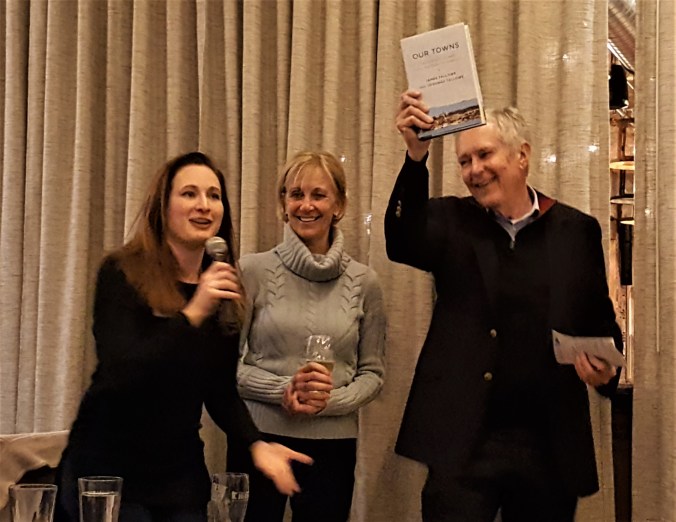
Laura Mullen, co-owner of Bent Paddle Brewery, introduces Deborah and James Fallows to writers in Duluth, Minnesota. James holds up their new book, “Our Towns.”

Yesterday, I meandered over to the new taproom of one of Duluth’s noted microbreweries, Bent Paddle, even though I don’t like beer (I know, gasp).

Amongst other local literati, I listened to a panel discussion in the brewery’s back room about how to apply for arts grant funding. The event was hosted by Lake Superior Writers, a group that fosters the literary scene in these parts.

The panel was sooooo interesting. Four writers and one person from an arts granting agency shared their experiences and insights. I now feel less intimidated by the idea of applying for one of these grants, should I ever be so inclined.

During the intermission, the coolest thing happened. Just by chance and happenstance, James Fallows, a long-time writer for The Atlantic Magazine was in the taproom, filming a segment for CBS News Sunday Morning. The segment will promote a new book he wrote with his wife Deborah, called “Our Towns: A 100,000-Mile Journey into the Heart of America.”

Deborah was with him, too, and when they heard from the owner (Laura Mullen) that a bunch of writers were in the back room, they HAD to come speak with us. Although it was hard to hear them over the din of the taproom, here’s what I gleaned.

James first came to Duluth to do a story about Cirrus Aircraft, a local company that makes private planes, which deploy their own parachute in times of peril. He also became familiar with Bent Paddle Brewery, which was just starting up at the time. Then he and Deborah had an idea for a book project that would allow them to take the social pulse of America as it stands now. In their own Cirrus plane, they flew to a dozen cities for their research, concentrating on ones that weren’t too large like Greenville, South Carolina; Columbus, Missouri; Burlington, Vermont; Fresno, California; and Duluth, of course.

When asked, James and Deborah said their favorite cities on their tour were the ones with “heart.” They included Duluth in this list. And they said they were so glad to see that the brewery was thriving. James offered us intel on what the Atlantic is publishing these days and even gave us his email address in case we have story ideas to pitch.

How cool is that?!

In preparation for the book’s release on May 8, they had decided to come back to Bent Paddle to film the promo segment. They also filmed in Greenville. The segment will air on CBS Sunday Morning on May 6.

I suspect I unwittingly got filmed for it earlier in the evening when I followed another writer to where the taproom offers three different kinds of water on tap (sparkling, ambient and chilled). We were talking about short stories. When we turned around from the water taps, we were met with the glare of camera lights and shadowy cameramen behind them.

We didn’t think much of it, continuing on our writerly ways, trying to look nonchalant. But after the event was over, I excitedly told my writer friend that our backs might be on national television! Can’t wait to see if we made the cut.

It just goes to show, you never know what can happen when you follow your passions, and that good things can happen in a brewery, even for people who prefer wine over beer.

Spending Time in Front of Minnesota’s Largest Stone Fireplace

DSC04597In conjunction with my trip to see Minnesota’s Tallest Waterfall, I also got to spend time with the state’s largest stone fireplace, or so the claim goes. The structure is located inside the dining room of Naniboujou Lodge on Lake Superior, near the Canadian Border.

Now, if you’ve read my novel, “Eye of the Wolf,” the lodge’s name might sound familiar. That’s because I describe Native American stories about Nanabozho in it. Naniboujou or Nanabozho is the trickster god, the god of chaos and practical jokes, a mythical figure of the outdoors and even creation itself.

DSC04602The trickster god myth “belongs” to more than just one tribe. The lodge gets its spelling and images from the Cree version. In my book, I concentrate on the Ojibwe version. Nanabozho’s mother was human and his father was the west wind. He’s a shapeshifter, often appearing as a rabbit or a human with rabbit ears and legs.

A wonderful local painter, Rabbett Before Horses Strickland, centers his work around Nanabozho. You MUST see his work if you ever get the chance!

Anyway, back to the lodge. You know you’re in for something different when first setting eyes upon it. Only two stories high, the building is long and low, covered in shaker shingles with windows outlined in bright orange red.

After checking in at the lobby, your eye will be immediately drawn to the adjacent dining room, which features a high ceiling and walls painted iridescent red, yellow, orange, and blue designs.

DSC04636

The record-breaking stone fireplace anchors the end of the hall, its neutral colors providing a respite for the eye. It looks like the stones could have been collected from the rocky Lake Superior beach, which lies only a few yards away.

The lodge, which is on the National Register of Historical Places, was built in the 1920s as a private hunting club, just before the stock market crash. The club was sold and the building became a public hotel, owned by a series of different people and organizations.

Although the lodge is closed to the public during the winter, it is open for private group events, and that’s how I had the opportunity to see it for a weekend stay. One thing to note is that alcohol is not sold on the premises, but you can bring your own.

The lodge will open back up in the third week of May, when guests can once again experience the dreams of the lodge’s founders, which were to:

Live and learn. Learn why the raspberry follows the fireweed; learn how the fern seed clings to its fronds; learn the ways of the kingbird, the haunts of the wood thrush; learn the pasturage of moose and deer and the home life of the beaver.

If you ever meander up Lake Superior’s North Shore, be sure to check it out!

DSC04594

French artist, Antoine Goufee, painted the lodge’s dining room. This is his version of the lodge’s namesake, Naniboujou.

A Visit to the Tallest Waterfall in Minnesota

20180324_155408Filtered

The High Falls in Grand Portage State Park, Minnesota.

My traveling companion and I meandered north along Lake Superior with migrating bald eagles toward the Canadian Border last weekend. Although temps are still freezing, the long spans of daylight and slackening snows have a feel of spring about them.

We decided to cover some new territory by visiting the High Falls at Grand Portage State Park along the border. The 120-foot falls are the highest in Minnesota, so, in order to be proper Minnesota residents, we figured it was about time we saw them.

A short and slippery hike (wear your Yak Trax!) brought us to a giant white-frosted wedding cake of a waterfall. Most of the falls were encased in ice, but underneath, the Pigeon River flowed with unstoppable abandon. A large crack across the middle foretold of the eventual cutting of the cake once temperatures rise.

Once done with this quest, we drove back south to our resort (the Naniboujou Lodge, which I will write about separately). We vowed to stop at the intriguing and picturesque harbors we had seen on our way up, but were too goal-oriented to explore.

20180324_160746VignetteWe stopped several times along the highway, but the best place was one without a ready-made scenic parking lot. We glimpsed a bay that whispered of Norway and ice and stillness. We drove back and forth, looking for the best access road. There were no roads, only private driveways.
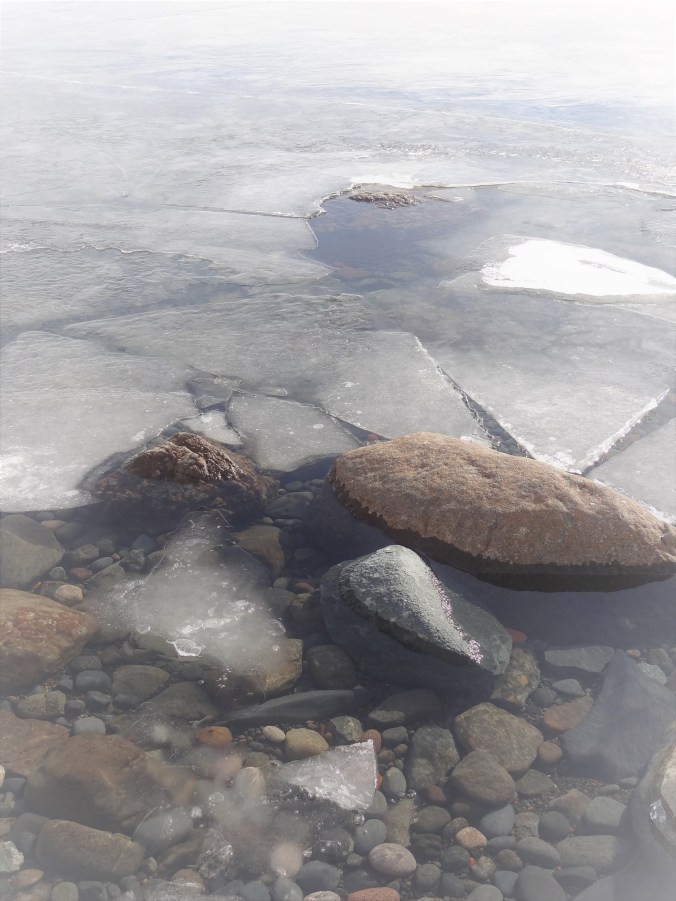
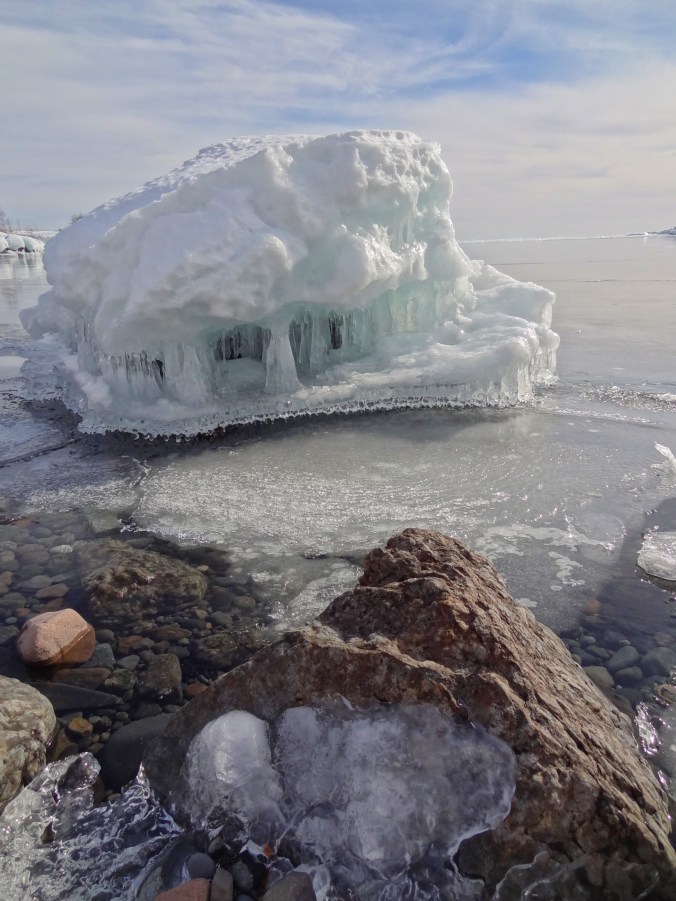
Finally, we chose one that looked the closest to the bay. As we pulled in, we could see from the untrammeled whiteness of the driveway that no one had driven on it for most of the winter. However, there was a foot trail through the snow that we could follow. So, after some hemming and hawing, and getting out of the car, we did.

A short crash through the underbrush brought us out to the view, which now SHOUTED of Norway and ice and stillness. Oh, it was gorgeous and well-worth a little harmless trespassing! Please enjoy these images of our “Secret Cove.”

20180324_160813Zekefilter

DSC04625Soft

DSC04628

Echoes of the Past: A Sneak Peek Into the Hotel Chequamegon

DSC04555

The Hotel Chequamegon

I had the opportunity recently to stay at the Hotel Chequamegon (Sheh-wa-meh-gone) in the northern Wisconsin town of Ashland. I’d driven by the hotel many times on Highway 2, and always thought it looked like an interesting place to stay. I was happy to have this chance.

From the outside, the building and its white mansion-like expanse is reminiscent of the grand hotels of the past. In fact, it’s patterned after the Grand Hotel on Mackinac Island in Lake Huron. Inside, it has a whiff of the fictional Overlook Hotel from “The Shining,” but without the requisite creepiness.

DSC04553Although it looks like it’s been on the site forever, the hotel is young. It opened in 1986 only about a half-block away from the original hotel. According to a helpful historical fact sheet provided to me by the desk clerk, the original hotel was built in 1877 by the Wisconsin Central Railroad when Ashland was a transportation hub for lumbering, quarrying, and mining.

DSC04549

This chair in the hotel parlor is from a castle in France, 1880-1890.

The original hotel met its demise by fire on New Year’s Day in 1958. To build the current hotel, wood salvaged from the nearby ore docks was used. Although many of the Victorian antiques look like they came from the original hotel, those were burned, except for the lobby clock, which sits in the Ashland Museum. Apparently it was a “thing” in the past to save lobby clocks from burning hotels. The antiques were either donated or gathered from far-flung places with the help of eBay.

My quiet room had tall ceilings and a view through equally tall windows, which looked out on the Lake Superior bay that gives the hotel its name. The word “Chequamegon” is an Ojibwa term that means “spit of land.” There used to be a narrow spit visible from the hotel, but it was eroded by wave action in the 1800s.

DSC04551The basement level is home to Molly Cooper’s Bar and Grill. It was closed in the morning when I was snooping around, but looked like it would be a fun place to eat, with views of the lake.
Although there are rumors the hotel is haunted, I had no notable experiences in my first-floor room, other than a bathroom door that closed unexpectedly. Alas, the floor was just crooked. No spooks.


DSC04558

A mural in “downtown” Ashland that honors the lighthousekeeping history of the area.

A Winery Tour in . . . Wisconsin?

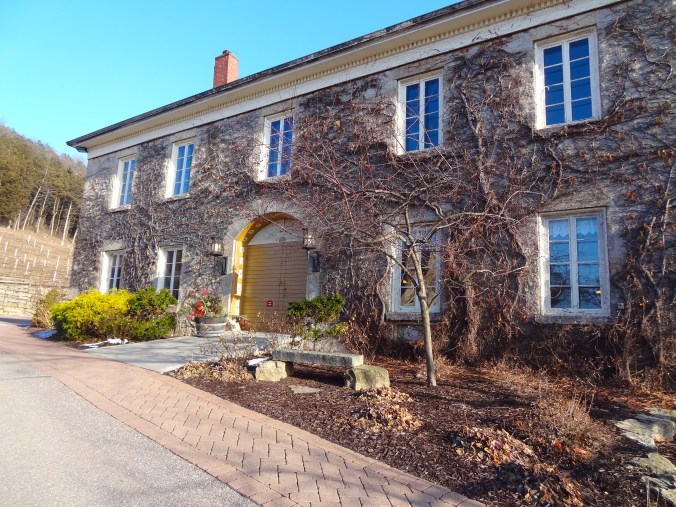
Wollersheim Winery 023Wisconsin is known best for its beer and cheese. The state offers wineries, too, and I took a tour of the most productive facility this past week. Wollersheim Winery sits on the banks of the Wisconsin River in Prairie du Sac, just north of Madison, Wis.
The winery first came to my attention a handful of years ago when I attended a retirement party. At the bar, I decided to be adventurous and try a white wine I had never heard of before, a Prairie Fumé. When the fruity, citrusy wine hit my tongue, the heavens opened wide and I heard angels sing.

I knew I had found a new favorite. I asked the bartender who made the wine, and she told me about Wollersheim Winery. I made a mental note to visit it someday.

A Fumé wine is a close relative of a Sauvignon Blanc. They’re basically the same thing, both made with the same type of grapes and semi-dry, just with different names for marketing purposes. (For the curious, see the story here.) But to me, a Fumé is a bit mellower and melon-y.

Apparently, my taste buds have a lot of company because the Prairie Fumé is Wollersheim’s most popular wine and one of the most popular in the state.

Wollersheim Winery 018The land the winery sits on has grown grapes on and off since the 1840s, whenever the weather has allowed. The vines on the property now were planted in 1972 when the Wollersheims bought it.
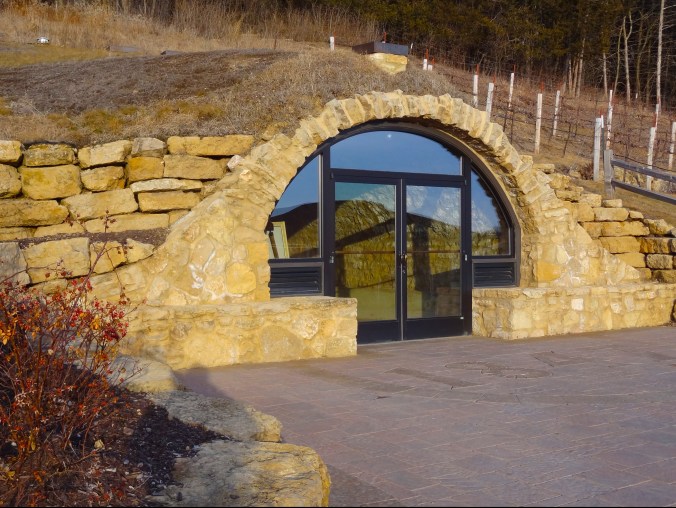
Wollersheim Winery 020I found the winery easily and parked in the lot below. The winery’s website says it takes 10 minutes to walk the path from the lot to the winery (which is uphill, BTW), but I estimate it would only take any relatively able-bodied person a couple of minutes. However, I suppose if you stop to read the historical sign along the way that would add more time.

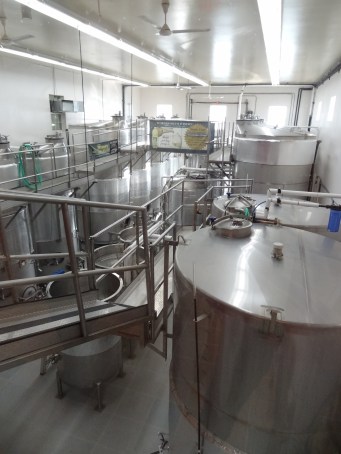
I entered the winery, and to my delight, discovered I was the only one signed up for a tour. My private session commenced with a video that described the history of the winery. Then the tour guide took me to a window overlooking the huge wine vats, where we spoke more and had plenty of time for questions and discussion.

I watched another short video that featured Phililppe Coquard, a Frenchman who married into the Wollersheim Family and now co-owns the business. I had the fleeting thought that it would be fun to meet him while I was here, similar to the chance encounter my friend and I had with the master distiller of Glendronach scotch when we took a distillery tour in Scotland. Although I thought I glimpsed Philippe in the distance during my time on the grounds, I did not get to meet him.

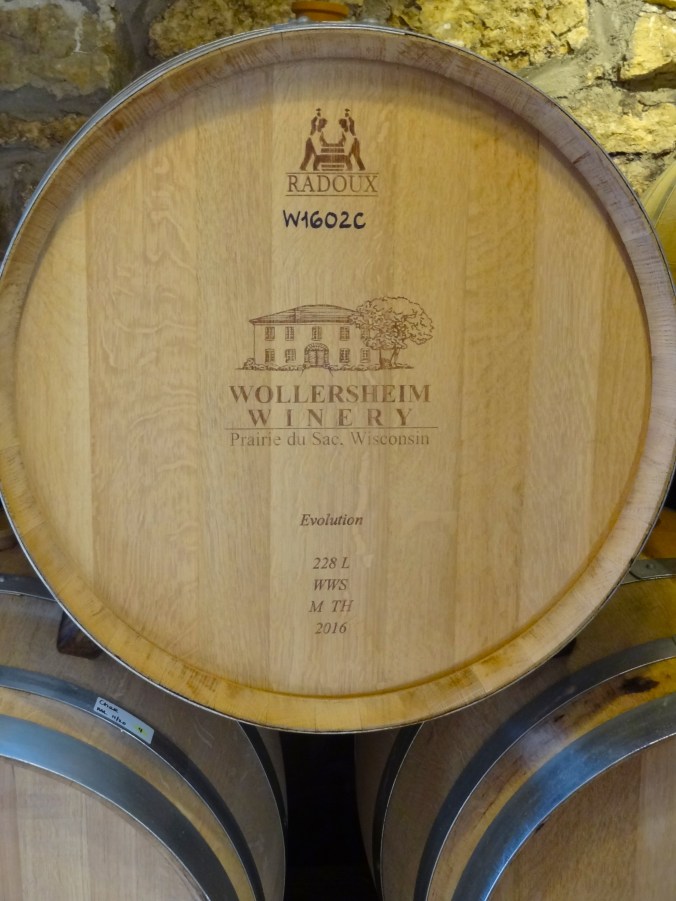
Wollersheim Winery 036I learned that the Prairie Fumé is made from grapes not grown on the property. The grapes come from the Finger Lakes region of New York and are trucked in juice form to the winery, where Philippe works his magic on them.
Another thing I learned is that the term “reserve” on a wine label means the wine is grown from the oldest vines in the vineyard.

After the tour came the tasting. I sampled a flight of whites since I have a problem with reds. I asked to try varieties I hadn’t already experienced, so that left out the Prairie Fumé and the River Gold White, which is also quite good.

I sampled their White Port, Dry Riesling, White Riesling, and Eagle White. Notable about the Eagle White is that it is grown on the property, and that part of the sales go toward habitat protection for bald eagles that frequent the area.

Of these, my favorites were the White Riesling and the Eagle White, so I bought a few bottles to bring home. Although I’ve found a source for Prairie Fumé in my area (President Bar and Liquor in Superior), I bought a bottle just because, despite exposure to these new wines, it’s still my fave.

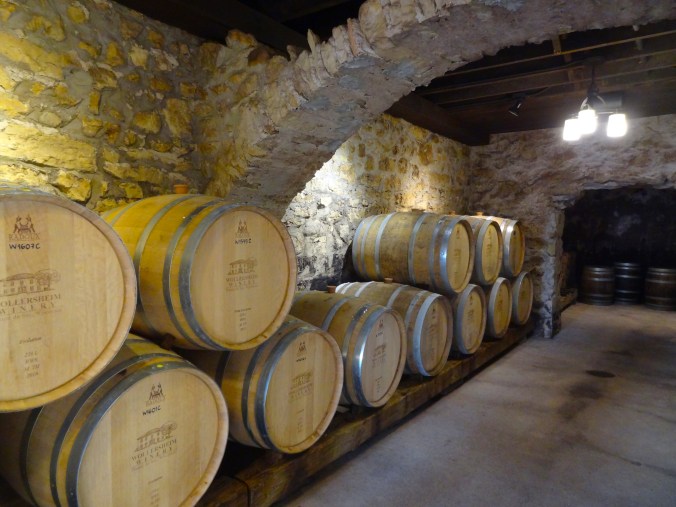
Wollersheim Winery 030

The historic wine storage cave.

Before returning to my car, I meandered around the property. There’s an old cave dug into the hillside where wine used to be stored, which the current owners have preserved and filled with historical placards and implements. I also took a peek into the wine bar on the second floor of the main building, which used to be a ballroom back in the day.

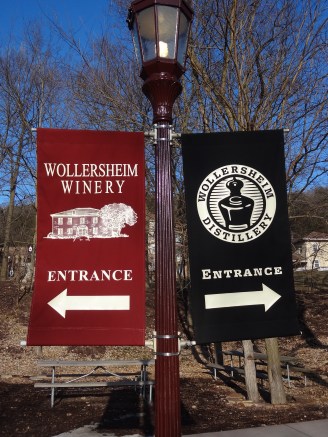
There’s also a distillery on the property, and I made a note to visit that next time I’m in the area.

Wollersheim Winery 017Alas, it was time for me to continue onto my ultimate destination, which was Madison. I was expecting to eat dinner alone there, but things worked out so that a friend from high school was able to meet me. Plus, it was her birthday, so I brought along the bottle of Prairie Fumé for her.
We met at Lombardino’s, an Italian restaurant that’s one of my favorites. As I waited for my friend and for seating, I noticed someone who looked suspiciously like Phililppe Coquard at a table near the back. As fate would have it, the host seated me and my bottle of Wollersheim wine right next to the Philippe look-alike.

While I waited for my friend, I snuck some glances and determined that fate was smiling upon me this day. It was indeed Philippe and part of his family dining at the table next to mine. What are the chances of that?! (I guess I could figure it out if I knew how many restaurants are in Madison and what the population is, multiplied by how many days are in a year.) But I guess it’s a one-hundred-percent chance when you’re following your bliss . . . .

Anyway, I knew I HAD to take advantage of this opportunity. So I mustered my introverted courage and stepped over to their table. They were gracious at my interruption. I let them know I had just visited their winery and then I gushed about how much I love their wine. Philippe mentioned he is giving a presentation at a Minneapolis wine convention soon.

It was all good, and I was so tickled and amazed by meeting them. Soon my friend arrived, and I pointed out who our dining neighbors were. She can vouch that this really did happen!

I look forward to visiting the Wollersheim Distillery in the future, but after this experience, my expectations are probably entirely too high for a fateful experience afterward.

Wollersheim Winery 024

Heavenly Food: Adventures in Northern Arizona – Part 5

20171208_154644

The Cameron Trading Post Restaurant near the Grand Canyon. Note the pressed tin ceiling.

This will be my last installment about Sedona, and it deals with the next best thing to the scenery: the food!

Our first morning in town, we made our way to Creekside Coffee after seeing it advertised on television. What a way to wake up! Perched on the edge of a hill on the second floor of a galleria, the café offers a stunning view along with just about any kind of coffee one would want, plus pastries and organic fare. Wine is also available.

Another great place for breakfast is the Coffeepot Restaurant (near Coffeepot Rock). I didn’t eat there, but my traveling partner did and said it was great. They offer 101 different types of omelets!

We usually ate lunches we packed ourselves. But the one time we ate a restaurant lunch was at the English Kitchen in Jerome. See my previous post about that divine and spooky BBQ experience.

20171207_183824

The mussels and chorizo appetizer from the Mariposa.

We saved the piece de resistance of dining for after a full day of hiking near the end of our trip. We made dinner reservations at Mariposa, a Latin-inspired grill. We chose partly for the scenery — the restaurant has a wall of windows that look out to the red rock hills. The only glitch in our plan was that it was dark by dinner time! Duh.

But our view of the food more than made up for the lack of an outdoors view. And even though something went wrong with our reservation through Open Table, the hostess was able to find a spot for us.

We started off with cocktails. After hiking past juniper trees all day, I opted for a drink made from juniper berries (in the form of gin) called a juniperita. Other ingredients include St. Germain liquer, lemon juice, and agave. The lemony sweetness was the perfect refresher for my desert-worn pallet.

For an appetizer, we shared mejillones con chorizo, a mussel and sausage dish served in a white wine bouillabaisse with charred corn. O.M.G. – the sauce was divine! We dipped our bread in it, and could have been happy just with that. The sausage complemented the mussels surprising well.

20171207_185214

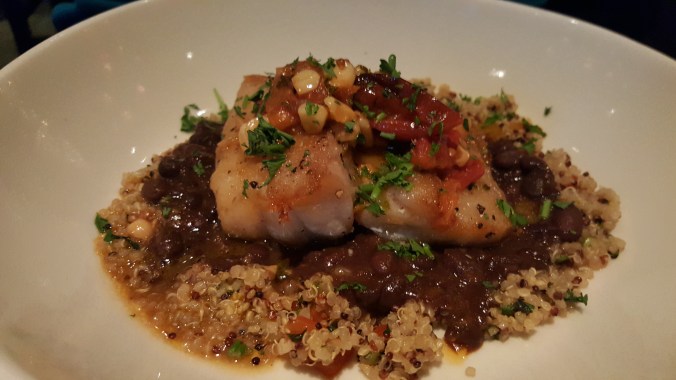
The grouper.

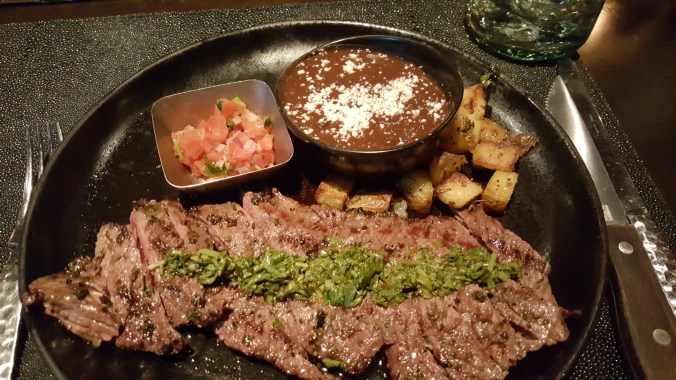
For entrees, Linda had grouper, which was the fish of the day. It was served with Campari fire-roasted tomatoes, charred corn, white wine and herb butter, frijoles negros and quinoa pilaf. She allowed me a wonderful taste. I had skirt steak served with roasted rosemary potatoes and frijoles negros.

Have you ever had a steak that melts in your mouth? It’s a rare thing, and that’s what this was. I had a hard time eating it because I kept making noises of gustatory satisfaction.

20171207_185234

The skirt steak.

Although tempted, we opted out of dessert because we had a plan, and we made our way back to our resort. Although it was only 43 degrees outside, a hot tub awaited steps away from our unit. We hearty Minnesotans donned our swimsuits and ran out to the hot tub with wine, chocolate truffles and mint fudge in hand.

The candy was from the Sedona Fudge Company. Life doesn’t get much better than when it’s spent in a hot tub under the Arizona stars, accompanied by chocolate and alcohol. I truly felt like I was on vacation.

20171208_160219

The Navaho taco (front) and other fare from the Cameron Trading Post.

The last notable eating spot we had a chance to sample was the Cameron Trading Company Restaurant near the Grand Canyon. Want a Navaho taco that’s bigger than your head while viewing Navaho blankets worth thousands of dollars? This is your place then.

Established in 1916, the trading post was the place where Hopis and Navahos bartered their wool blankets and livestock in exchange for dry goods. The restaurant’s ceiling of pressed tin is flanked by walls featuring cabinetry and stained glass from years past. A huge stone fireplace decorated for Christmas warmed us while we ate.

I had a Navaho taco, which is the most popular thing on the menu. It’s composed of a large round piece of fry bread, smothered with a combination of ground beef and beans, topped with lettuce, tomato, cheddar cheese and crowned with chopped green chilies. Spicy salsa is served on the side, but it was too much for my bland Minnesota taste buds.

So ends my accounting of this meander. I would go back in a heartbeat. There are more rocks to see, trails to hike, places to eat, and energy vortexes to experience. Thank you for journeying with me through words.

20171208_154613

The Cameron Trading Post Restaurant fireplace.