A Wisconsin Idea Adventure: Part 2

This post is reblogged from the Wisconsin Sea Grant blog, which I write for work. This is the second (and final) story in a series about my weeklong trip around Wisconsin as part of the Wisconsin Idea Seminar. Part 1 described our experience on the University of Wisconsin-Madison campus learning about Ho-Chunk history. This part will describe the rest of the trip in general, focusing on a tour of the Green Bay Packaging Co.

A Wisconsin Idea Seminar participant contemplates Black Smokey Falls on the Wolf River in the Menominee Reservation.

Continuing the first day of our tour, a Badger Bus took us to Portage, where we visited the Historic Indian Agency House, which is where the Ho-Chunk people came to collect their government allotments once they were displaced from their lands by settlers. Reading the names of the Native families on the outdoor plaques was a poignant reminder of this traumatic time in history.

Then we traveled to Appleton, where we took a walking tour of the town, learning about Black history. When the area was first settled, some land and businesses were owned by Black people, but by the 1930s, the town was entirely white due to organized, unofficial harassment that drove Blacks away. That has thankfully turned around so much that there’s even a soul food restaurant in town, which is where we ate supper.

Loblolly pine seedlings in the Green Bay Packaging Co.’s conference room. The company’s Arkansas plant uses loblollys when they need virgin wood fiber to make paper.

On Day 2, we drove to Green Bay where we toured the impressive Green Bay Packaging Co. There was a rumor floating around on the bus that this was the business that the Green Bay Packers football team was named after. Later, I discovered through my own research that this wasn’t true. The Packers were named after a meat-packing plant, which was one of their first sponsors. See, this Minnesotan really is learning about Wisconsin culture!

Green Bay Packaging makes paper from recycled materials. That paper is then used to make boxes. They don’t make the boxes on-site – they ship their paper elsewhere for that. Two years ago, they expanded their facilities on the same land by the bay. Much of the process is automated. Even so, the company employs more workers than before. In the early 1990s, this mill was one of the first in the world to become totally effluent free (zero discharge of wastewater).

We were led through the plant by Olivia Durocher, project development specialist, and Andrew Stoub, environmental manager. Durocher said that 50% of their recycled materials comes from “big box” companies like Target and Walmart and the other 50% comes from consumers. They produce about 550 tons of paper per year.

“Wisconsin has been a top producer of paper for a long time,” Durocher said. “We’re happy to have a hand in that.”

She explained that a paper fiber can be recycled seven times before it becomes too short to be used any more. That’s why other mills still use trees to make paper. “If you stopped introducing virgin fiber into the system, the entire country would run completely out of boxes in about six months or less. That’s why it’s important to continue to plant trees and use virgin fiber to produce kraft paper. It introduces that virgin fiber into the system. That’s why we can’t have all the mills be recycled mills,” Durocher said.

A map of all the communities we visited during our tour. Image credit: University of Wisconsin-Madison

Stoub said the water used in the plant does not come from the bay. About half of the water is recycled from treated water the mill has already used and half comes from treated wastewater from the city of Green Bay. The company uses the methane gas produced by their wastewater digestor to feed their boilers instead of burning the gas off, which many facilities do. Plus, the gas fuels a generator that produces enough electricity to power the mill’s wastewater treatment plant. “It’s a pretty cool sustainable system,” Stoub said.

During our tour of the plant, most impressive to me was its automated 100,000-square-foot paper warehouse. According to Durocher, it’s the largest vertically stacked paper warehouse in the Western Hemisphere. It holds 8,000 rolls of paper, which is the equivalent of 26,000 tons of paper – about 22 days of inventory. No people are allowed in the warehouse because of the danger of a huge tower of paper falling on them. As you can guess, when they built the floor for the warehouse, they took pains to ensure it was totally level!

We were able to view the warehouse through indoor windows. The paper is moved around by four vacuum cranes (Konecranes), which each employ 14,000 pounds of suction. Compared to mechanical cranes, the vacuum cranes allow workers to store the rolls closer together and move them around faster. Paper from the warehouse is shipped out by rail and trucks. Alas, I don’t have any photos of the warehouse or the inside of the mill because we weren’t allowed to take them.

Stoub said you can tell that a box came from the company’s materials because it will have their logo on it.

Highlights from the rest of the five-day trip included a visit to the Menominee Reservation where we learned about their sustainable timber harvesting practices and sawmill operation. We also visited Big Smokey Falls on the Wolf River on the reservation, where we had a chance to get a feel for the land and contemplate what we’d learned so far. That day ended with a tea-making workshop led by Menominee Elder Bonnie McKiernan. We made a mixture that’s good for colds, with bee balm (which I have a ton of in my yard; I did not know it was edible), peppermint and mullein.
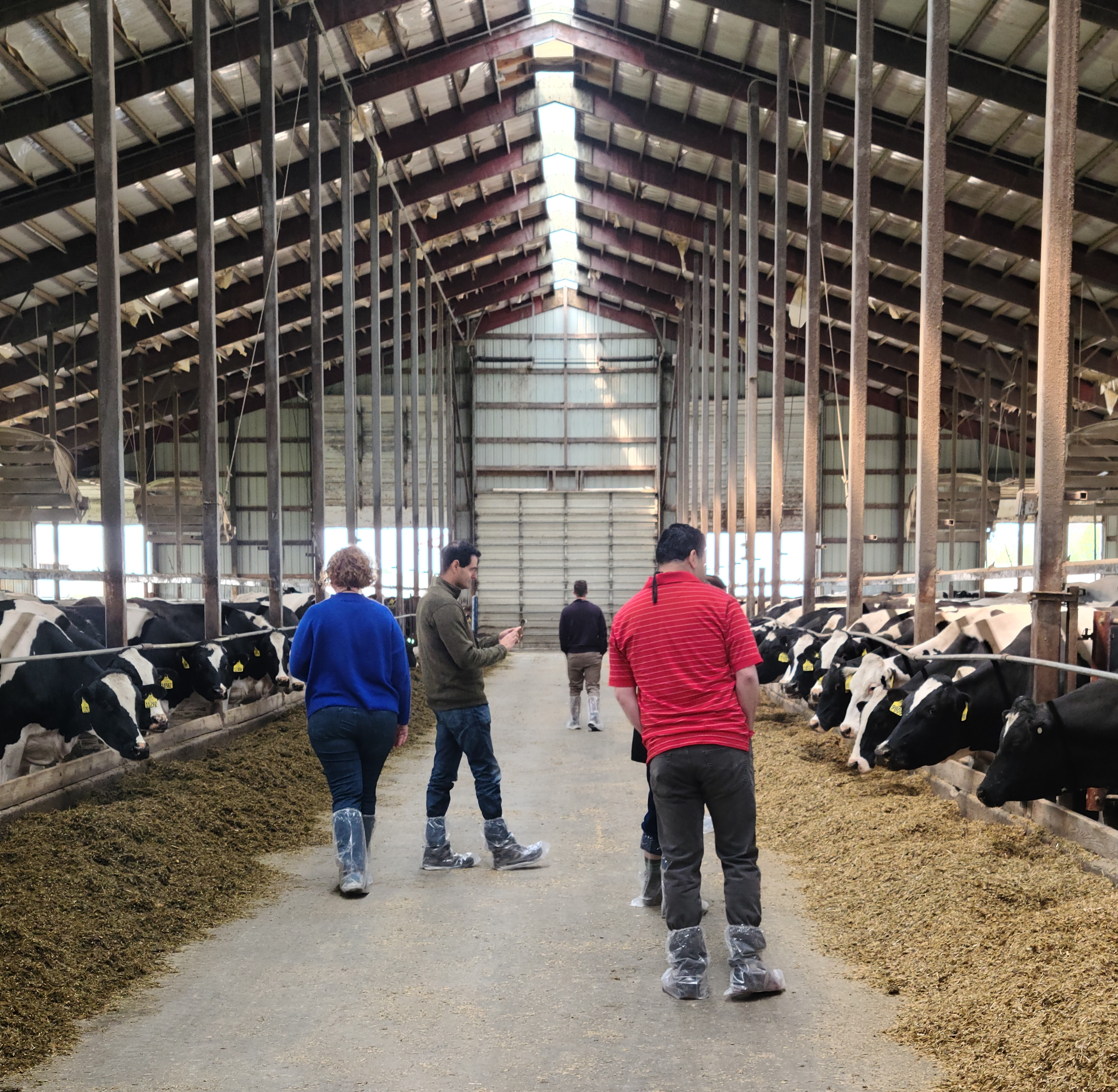
Getting friendly with some dairy cows at Soaring Eagle Dairy.

On Day 4, we visited Soaring Eagle Dairy in Newton, a woman-run business. I learned more than I ever wanted to know about how that industry runs. Their milk is used by Land-O-Lakes Inc.

During the final day, we took a walking tour of Milwaukee’s South Side and visited Escuela Verde, a charter school. The tour ended with an art project where we were able to reflect on our experiences.

Through it all, our bus driver Bob was with us. He literally held our lives in his hands, and we respected him greatly. He became a favorite among us.

I came away from the experience feeling more familiar with Wisconsin. This Minnesotan still has a lot to learn, but I feel a bit more confident in my knowledge base now.

A Wisconsin Idea Adventure: Part 1

This post is reblogged from the Wisconsin Sea Grant blog, which I write for work.

The Wisconsin Idea Seminar tour bus.

I’m a born and bred Minnesotan. I’ve lived there almost my whole life. Sometimes, that can make working for Wisconsin institutions like Sea Grant and the University of Wisconsin-Madison challenging. While I am technically a UW-Madison employee, I live in Duluth, Minnesota, and my office is just across the border in Superior, Wisconsin. Although I’ve worked for Wisconsin Sea Grant 10 years, I’m not as steeped in my workplace’s culture and geography as I am in my home state’s.

This can lead to some interesting mistakes. One happened a few months ago when a co-worker said they grew up on Wisconsin’s Fox River. I only knew the part of the Fox that connects to Green Bay so, in the story I was writing at the time, I put that person’s birthplace near Green Bay. I was chagrined to learn she actually grew up near Oshkosh on a branch of the river 50 miles away from where I originally placed her.

I hate making mistakes in my stories. Even if it’s just during a draft. So, when I saw an announcement for the Wisconsin Idea Seminar in the UW employee newsletter, I jumped at the chance to apply.

The seminar is an annual five-day immersive study tour of Wisconsin culture and geography for UW-Madison faculty and staff. It’s designed so that participants:

  • Gain a deeper knowledge of the cultural, educational, industrial, social and political realities of Wisconsin
  • Learn firsthand about the social and cultural contexts that shape the lives of many UW students
  • See and experience the University’s connections to the state
  • Understand the public service mission of the University
  • Nurture an increased mutual understanding between the University and the people of Wisconsin

What this looks like in real life is about 40 people on a big red Bucky Badger bus riding around the state, talking to people and to each other, participating in activities and drinking in the landscape. The theme this year was Forest + River, which was right up my alley as a water research storyteller who is also a Wisconsin geographically challenged person.

This post focuses on just one of our experiences during the seminar’s first day. I plan to write another post later about the rest of the trip and a visit to the Green Bay Packaging Plant, which makes recycled paper used in boxes.

*

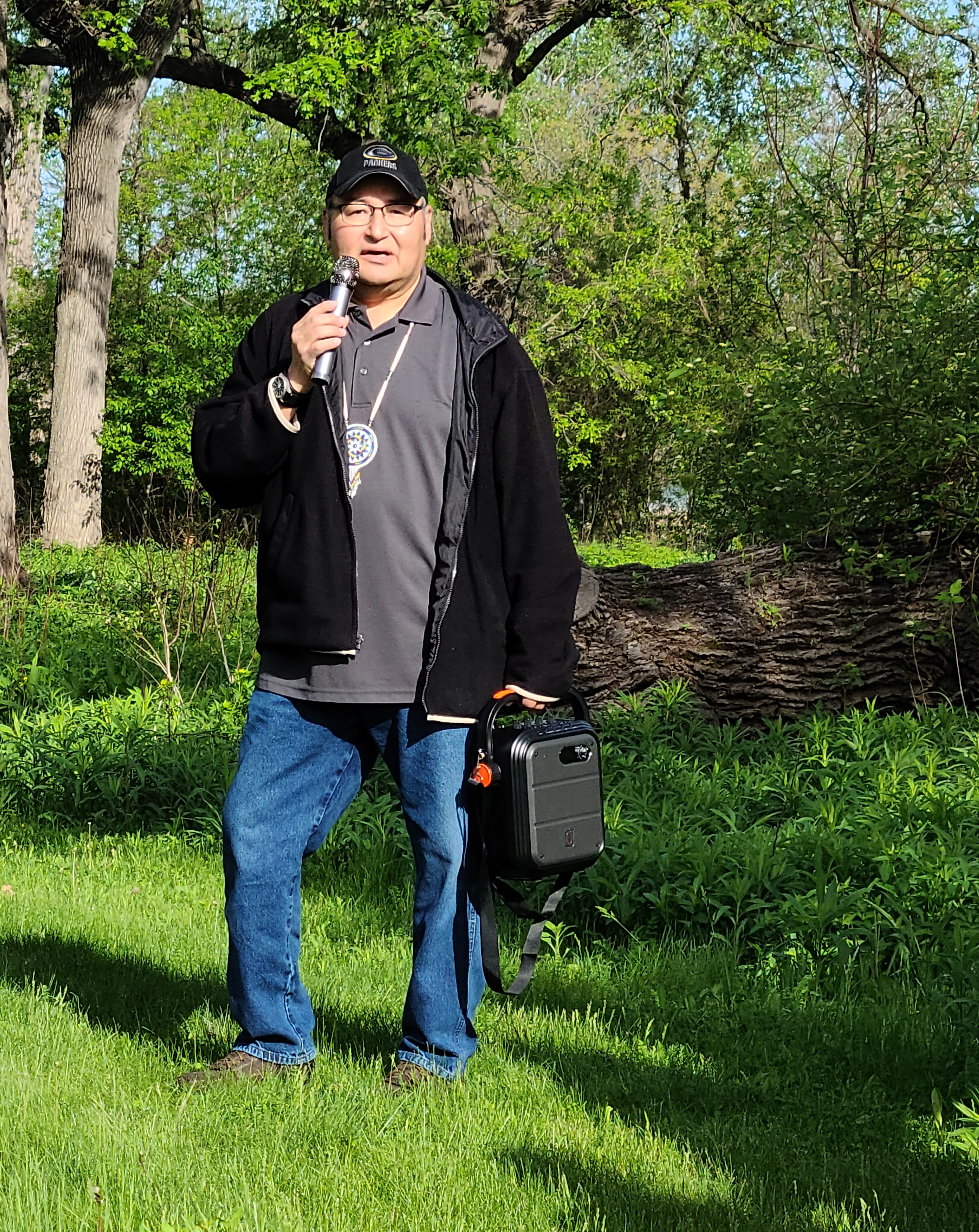
Our experience began on the Madison campus with a walking tour of Ho-Chunk sites. Amid a cacophony of spring birdsong, Bill Quackenbush, tribal historic preservation officer for the Ho-Chunk Nation, took us to several effigy mounds. These are ancient burial mounds formed in the shape of animals — birds, in the case of the two that we viewed.

Bill Quackenbush, Ho-Chunk tribal historic preservation officer.

The Madison campus is home to more of these ancient earthen monuments than any other university or college campus anywhere in North America, and probably the world. There are 38 burial mounds. At least 14 others have been lost to development. They are several thousand years old, perhaps as ancient as Egypt’s pyramids.

I learned something new right off the bat, mainly that there is a goose-shaped effigy mound right outside the Sea Grant office in Goodnight Hall. Granted, I don’t work on campus, but you’d think I would have heard something about that during my career here! Quackenbush said a Ho-Chunk village used to be where the office building is now located on the shores of Lake Mendota.

He explained how the Ho-Chunk are working to reclaim their culture. “These earth works are one small example of a portion of our life. We are no different today then we were back then. We humans like to take care of not only our babies and our children, but also our ancestors,” Quackenbush said.

The goose effigy burial mound near the Sea Grant office on the UW-Madison campus.

He criticized a stone marker on the mound not only for disturbing the site but for the text on it, which gives the impression that the mound is a thing of the past. “It isn’t a thing of the past at all,” Quackenbush said. “This is ever-present. It’s living and it’s here. Our ancestors are buried in this ground. They’re living, breathing things to us like that tree over there. Their bones have probably returned to the earth by now, but it’s the ground that is sacred to us.

“However, I don’t want to be all doom and gloom. There’s a lot of good things that have come from protecting these mounds,” Quackenbush added.

The mound site was designated on the National Register of Historic Places a few years ago. The University is working to restore an oak savannah that used to exist there.

The Ho-Chunk Clan Circle.


A short walk took us to the Ho-Chunk Clan Circle, a series of 12 metal sculptures that was dedicated earlier this year. Each depicts a clan symbol. Quackenbush said the circle represents the Ho-Chunk people as a whole.

Fitting my Sea Grant employment, I found myself standing near the Water Spirit sculpture. Quackenbush said the tribe was involved in the process of creating the circle and that the sculpture offers opportunities for him to meet and speak with more groups such as the Wisconsin Idea Seminar participants. He explained the various clan roles and how they fit into the tribe’s governmental system.


Next, the group was able to view a dugout canoe that Quackenbush built with the help of Ho-Chunk youth. They built it in much the same style as the ancient canoes that were recently discovered in Lake Mendota.

Quackenbush’s dugout canoe.

“This canoe doesn’t look very exciting, but the journey it’s been on is,” Quackenbush said. “When I saw that the historical society discovered the dugout canoes in the lake behind you as I was drinking my cup of coffee, it shot out of my nostrils! It was amazing to me because we had aspirations of putting one of them together.”

He worked with Dane County to find a suitable cottonwood tree that was going to be removed for a trail project. The county delivered the tree to a youth education center, which is where Quackenbush and the students worked on it. Everything came together and, like the clan circle, the canoe is a great educational discussion piece.

Amy Rosebrough, interim Wisconsin state archeologist, joined us and described how the historic dugout canoes were found. She also detailed the significance of the new canoe. “These lakes remember. With the canoes, they’re telling the story of the Ho-Chunk presence here.”

Her office’s goal has been to work with Quackenbush and other partners to keep that story alive, “…To let people know that when they’re out there fishing, this isn’t something new. This is something that’s been going on for thousands of thousands of years. It’s not just the mounds, it’s this whole landscape. And to have Bill and his team come through with this new dugout, that was a wonderful thing – to sort of bring that back,” Rosebrough said.

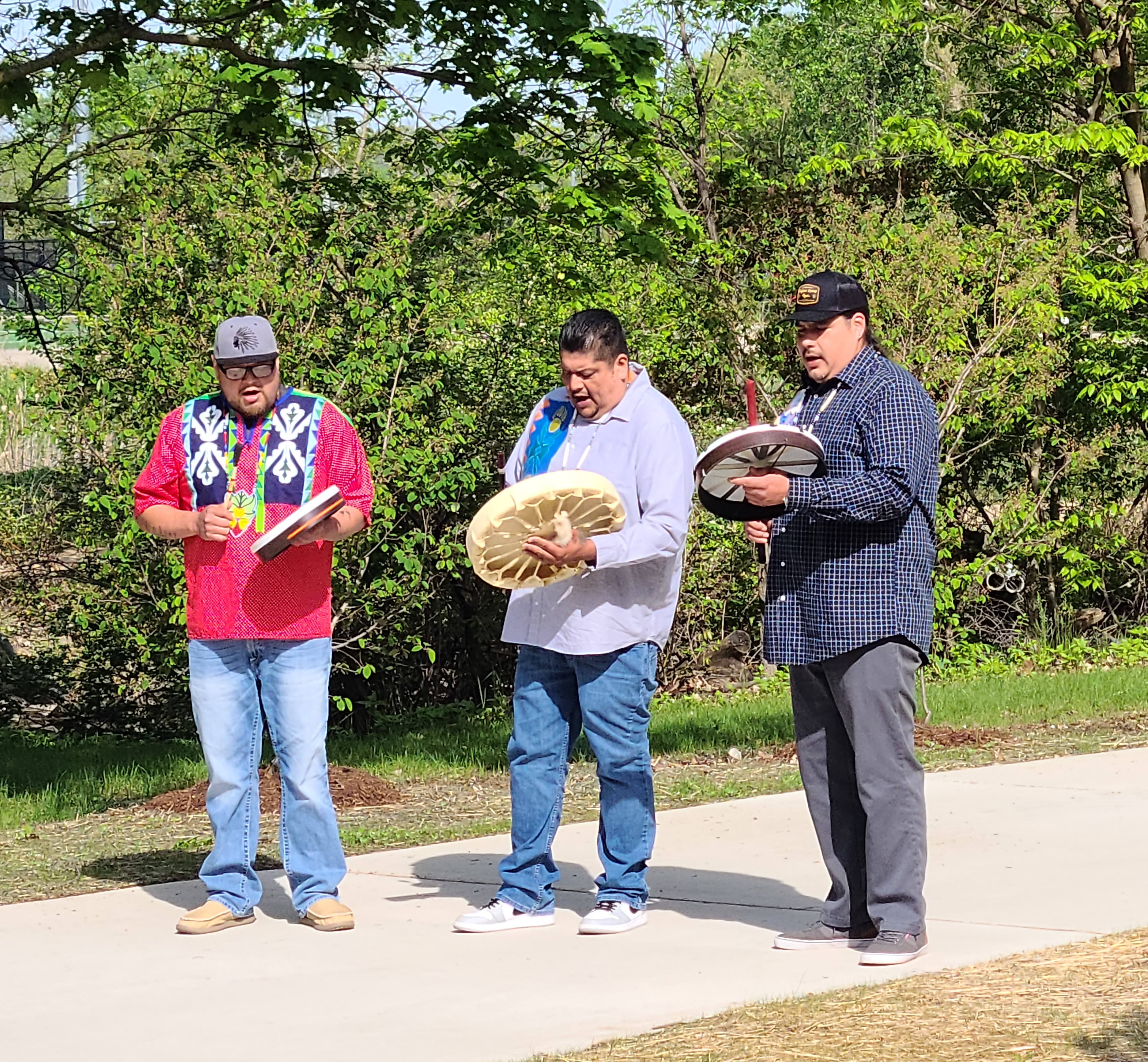
Our visit ended with a Ho-Chunk drum ceremony by the Iron Mound Singers. Listening to them was like hearing the heartbeat of the Earth. That is definitely not something I get to do everyday in my job as a science writer. As we walked back to the bus to head to Portage and Appleton, I felt privileged to learn more about Ho-Chunk culture and the history of the land where the university stands.

The Iron Mound Singers.

Meandering Through David Copperfield

I’m reading “David Copperfield” by Charles Dickens in preparation for reading this year’s Pulitzer Prize-winning novel, “Demon Copperhead” by Barbara Kingsolver. Although it’s not a requirement to be familiar with Copperfield before reading Copperhead, the latter is based on former so I figure it can’t hurt.

Given my blog’s name, imagine my delight when, in the opening of Copperfield, I found a short treatise on meandering. David Copperfield was born with a caul (amniotic sack) around him. Back in the day, cauls were thought to have mystical properties, one of which was to protect whoever possessed it from death by drowning. They had value. David’s family sold the caul in a raffle. It was won by an old lady who died triumphantly in her bed years later at the age of 92. She was triumphant because she did not drown. But drowning would have been difficult for her even without a caul since she never went in or near the water except to cross a bridge.

Copperfield says, “Over her tea, to which she was extremely partial, she, to the last, expressed her indignation at the impiety of mariners and others who had the presumption to go ‘meandering’ about the world. It was in vain to represent to her that some conveniences, tea perhaps included, resulted from this objectionable practice. She always returned with greater emphasis and with and an instinctive knowledge of the strength of her objection: ‘Let us have no meandering!’”

That made me laugh. Good thing the dear departed lady is not alive to read my blog. She would surely find it objectionable.

I have been doing my share of meandering lately, thus my absence from this blog. I hope to write more soon about my adventures traveling around the state and culture of Wisconsin.

Nicollet Island: A Story of Renewal and Friendship

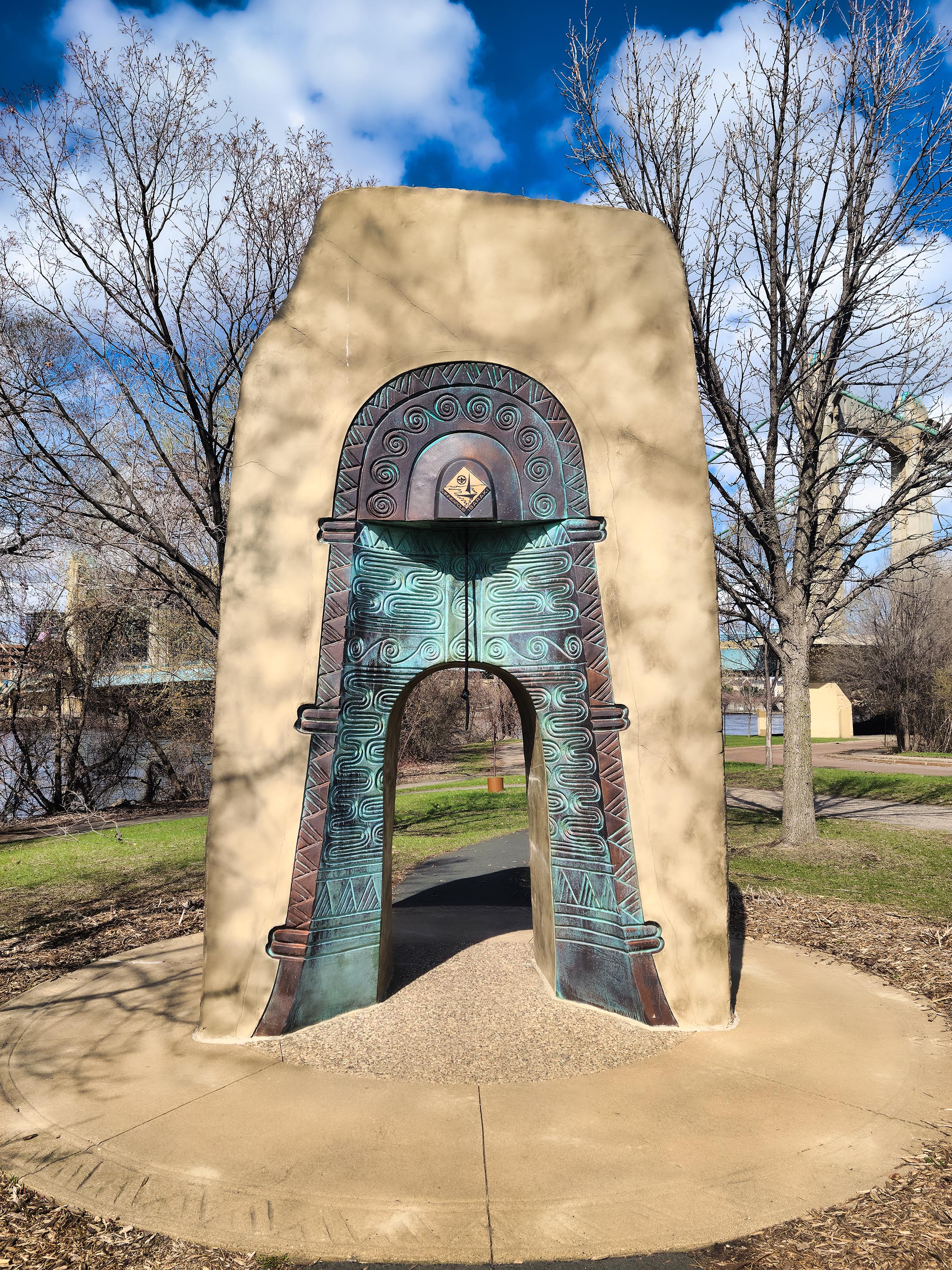
This is the Bell of Two Friends on Nicollet Island in Minneapolis. We came across it during an impromptu walk around the park pavilion. See the rope hanging down over the archway? Ringing the bell it’s attached to signifies a prayer for world peace and continued friendship between the people of Minneapolis and their sister city, Ibaraki, Japan.

The sculpture was inspired by a 2,000-year-old terra cotta mold of a bronze bell, discovered in Ibaraki. We didn’t know all this when we rang the bell, but we could feel the friendship somehow.

Nicollet Island is supposedly the only inhabited island in the Mississippi River. I’ve had the chance to visit it on several occasions. Each time, I come away thinking that if I was forced to move from Duluth (probably at gunpoint, which is what it would take) and reside in the Twin Cities, I might be able to be happy on this island.

I love the historic feel of it, the energy of the river that runs on both sides, the roar of St. Anthony Falls, the green spaces, and old homes. My latest visit prompted me to read a book about the island (“Nicollet Island” by Christopher and Rushika February Hage). I learned that there used to be five other islands near it but once settlers arrived, two were filled in so that they joined the riverbank, two were destroyed when a lock and dam was built, and one eroded.

The view from underneath the Hennepin Avenue Bridge on Nicollet Island.

Before it was named for explorer Joseph Nicollet, the Dakota people called it “wita waste,” meaning beautiful island. They fished from its banks and tapped maple trees that covered it. Rites of transition from childhood to manhood were carried out there and the island was considered as a safe place for women to give birth. Plus, it had the added benefit of the sound of the falls to drown out the screaming. 😊

Waterpower from the falls proved irresistible to the settlers, who used it to run sawmills and flour mills. Once the home of the most fashionable and prominent Minneapolitans, the island changed drastically after a fire in 1893 that began by boys smoking at a Wagon Works. Eventually, rebuilding occurred in the form of a Catholic high school and a monastery. Once-elegant apartments were subdivided and occupied by pensioners and veterans. As the economy tanked during the Depression, the island became home to the homeless.

The Hennepin Ave Bridge in black and white.

In the 1950s, the city razed many buildings in the nearby Gateway District, forcing even more homeless people to the island. Then the razing eyes of city government turned toward the island, but the residents resisted.

In the 1960s and 70s, the island was a favorite with the counterculture. Musicians, artists, (dare I say writers?), and drug-users coexisted with the poor island residents. They did not want to be “improved” upon by city planners.

In 1971, St. Anthony Falls and the island were designated in the National Registry of Historic Places. A city preservation commission helped with a movement to preserve the island’s historic homes. Eventually, a city park was established on the site of vacant industrial land.

Now, people like Russ and I enjoy walking, biking, and running on the island. And we ring a bell in world friendship.

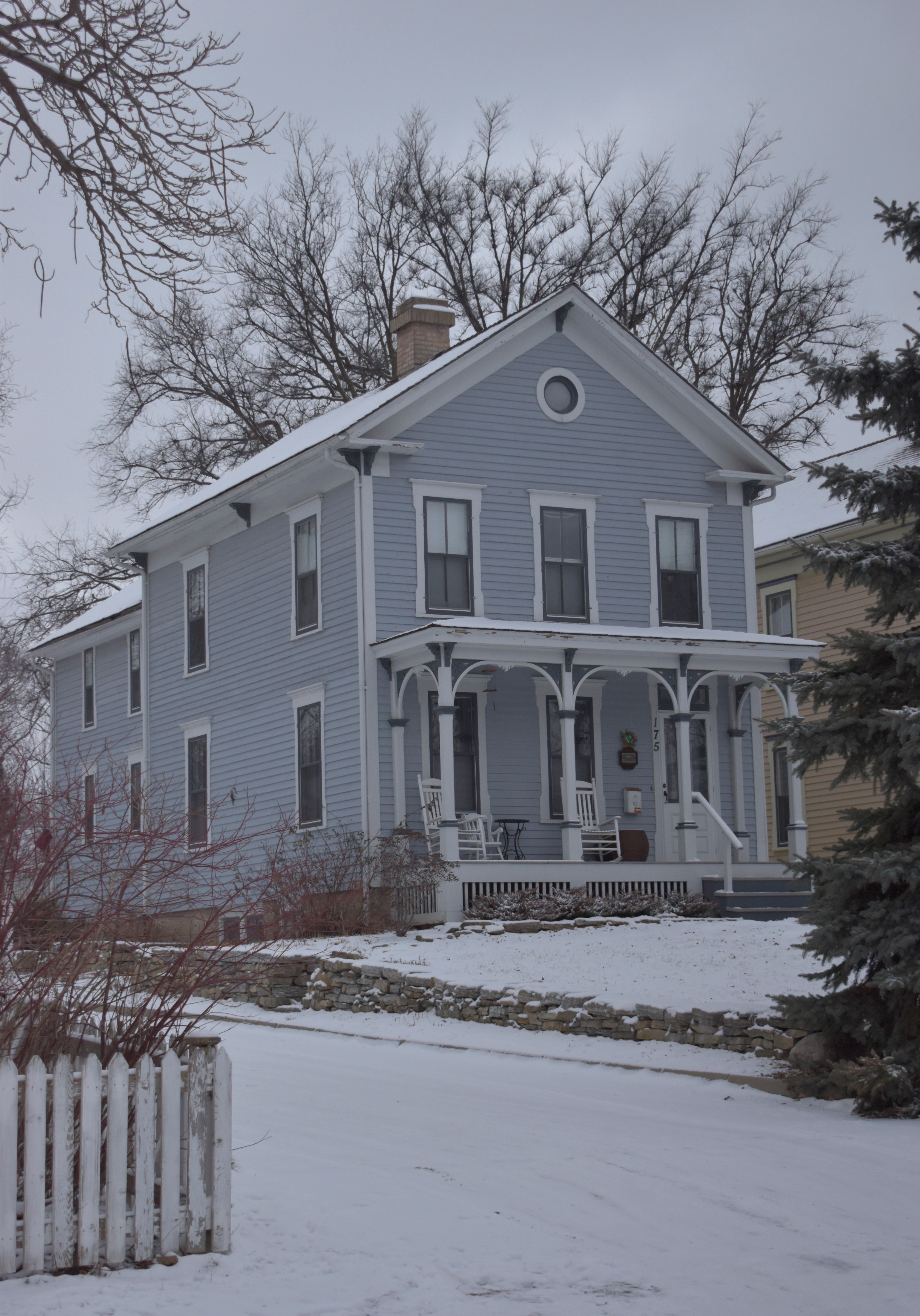
One of the island’s historic homes.

Wabasha Street Caves: Gangsters, Mushrooms, and Cheese

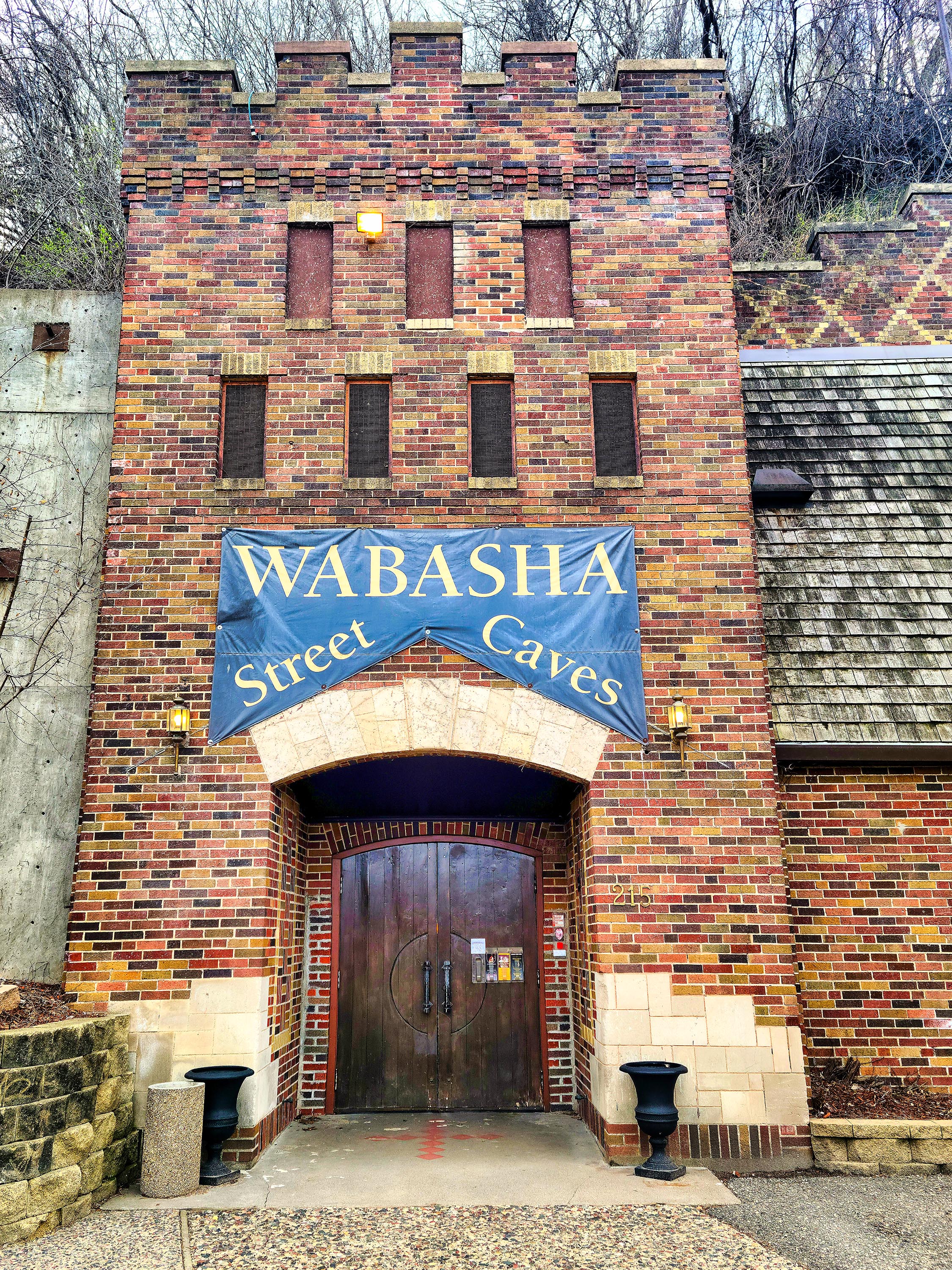
Russ and I meandered to the big city recently: i.e., the Twin Cities, i.e., Minneapolis and St. Paul, Minnesota. One of our stops was a tour of the Wabasha Street Caves in St. Paul.

This series of seven caves are in a sandstone/limestone bluff not far from the Mississippi River. They were dug in the 1850s to mine silica for making glass.

Our tour guide was named Lois. She began our tour not in the fancy entrance that leads to a refurbished part of the cave, but in a more primitive entrance, where we could see what the unfinished, original walls look like. While we stood in front of an entrance to a side cave, Lois explained that once the silica mining was over, the caves were used to store produce from off the river boats. Temperatures range from 50 to 55 degrees, which makes the caves ideal for storing veggies, growing mushrooms, and aging cheese.

The Wabasha Street Caves were once home to the largest mushroom growing operation in the United States. An immigrant Frenchman and his wife saw the cave’s dampness, darkness, and cool temperatures as the perfect environment for growing the delectable fungi. Plus, the streets of St. Paul provided a free source of growth medium in the form of horse manure.

Although that operation eventually ceased, the mushroom company lives on today in the form of Lehman’s Farm in Lakeville, Minnesota, which sells its marinated mushrooms to high-end food outlets like Lunds & Byerlys. The caves were also used by the Land O’Lakes Company to age Roquefort cheese.


In the 1950s, the caves fell into disuse until a flood caused massive damage to St. Paul. Lois said the caves were seen as the perfect place to store all that untidy debris. She shined a light down a side entrance where she stood to show us it was filled with old tires and dirt. But, before the flood, in the 1920 and 30s the cave was modified as a speakeasy, casino, and a nightclub. The debris-strewn side tunnel was thought to once lead to the speakeasy.

Tour guide Lois tells us spooky tales of nefarious doings in the Wabasha Street Caves.


From there, our tour moved into the refinished part of the cave. We saw the long bar, which was rebuilt based on old photos. Stucco covered the ceiling and water pipes and electricity ran through the walls. A separate section contained a dance floor, fireplace, and a stage. Lois said that famous jazz bands used to perform in the cave’s Castle Royal Nightclub.

The nightclub and casino were favorites with local gangsters. St. Paul had the reputation as a safe haven for them. The police wouldn’t arrest gangsters as long as they didn’t commit any crimes in St. Paul, although Minneapolis was fair game! The gangsters also shared their ill-gotten gains with the police department. This was called the Layover Agreement.

Despite this agreement, one notable crime happened in the caves. Four gangsters were gambling after hours. One of them apparently took umbrage at the conduct of the others and shot them all dead with his Tommy gun. At the noise, a cleaning lady ran in from another room to find three of the gangsters lying dead in pools of blood. She alerted the police who came to investigate.

Suffice it to say, with the cozy relationship between the gangsters and the police at that time, justice was not served. The police cleaned up the scene and chided the cleaning woman for filing a false report. It’s thought the bodies of the three gangsters still reside in the caves somewhere. Despite the protestations of the police, evidence of the crime can be seen in bullet holes on the cement fireplace.

Now the caves function as an event center and tourist attraction. They offer swing dancing and special ghostly tours. We were fascinated to learn about the caves and the shady history of the city of St. Paul.

Part of the fancy event center in the caves.

Still Chased by Snow in Arizona

When last you heard about us, Russ and I were having past life regression sessions in Prescott. That done, we left Prescott a day early under the impending threat of ten inches of snow. We drove across the mountains to the funky mining town of Jerome. Russ had not been there before and we were so close, it seemed a must-see.


Like on my previous trip, we ate lunch at Bobby D’s BBQ. This time, it was Russ’s turn to sit in the “haunted booth” where a former restaurant owner died. Despite this unappetizing tale, we heartily enjoyed our lunch of BBQ chicken, ribs, onion rings, and zucchini fries. They make the BBQ sauce on-site. Our favorite of the four was the jalapeno, molasses and brown sugar one. Zippy but not too spicy, even for us Minnesotans.

Sated, we searched for Nellie Bly’s kaleidoscope shop, which I’d visited last time. Then, I did not purchase any of these tubular wonders. Now, I had some relatives’ birthdays as an excuse. I even bought a small polished wooden one for us. Sometimes, you just need to look at the world in multiple triangles.

A kaleidoscope image I took with my phone camera, looking through the scope when back at home.

After some more browsing, we decided it was best to hightail it to lower elevations before the snowstorm came. We drove to Phoenix where we stayed overnight. The next day we visited the Heard Museum, which specializes in Native American art. From the sculptures outdoors to the paintings indoors, it was all marvelous. But my favorite exhibit was “Stories Outside the Lines: American Indian Ledger Art.” Hidden in several upper floor hallways, the drawings show events and past achievements that Native artists recorded in ledger books.

According to the museum, this art form began in the late 19th century when several Great Plains tribes were relocated to reservations by the U.S. Government. Many of their cultures had traditions of recording events on animal hides using natural pigments. Faced with imprisonment for practicing their cultural traditions, the Natives turned to the materials they had at hand, which were ledger books and colored pencils, provided by traders and government agents.

What struck me was their two-dimensionality. They looked like something a school child would draw except for the subtle sophistication of the topics they depict.

Russ and I are both big “Outlander” book and TV series fans, so our next stop was in the suburb of Phoenix at the Poisoned Pen Bookstore. The bookstore is near Outlander author Diana Gabaldon’s home and she sometimes does events there. We found that we missed Diana by a mere day – she was going to be speaking the next evening. Although tempted to stay, we had relatives waiting for us in Tucson, so we had to content ourselves with buying a few books instead. (After I got home, I discovered that one was autographed by Diana!)

An example of ledger art, courtesy of the Heard Museum.

Later, we drove south to Tucson and stayed at a relative’s home. We awoke the next morning to, you guessed it, a few inches of snow. It was the first snow the city had experienced in several decades. It seems we just could not escape it. However, the white stuff quickly melted.
We saw my son in Tucson and toured the Sonoran Desert Museum. Both Russ and I had been there before, but my son hadn’t. It had been years since we’d been there – the exhibits seemed more numerous and larger than I recall, but I suppose some had been added since the 1980s!

Our trip capped off with a hike in Madera Canyon, which to me seemed more like a valley than a canyon in the national forest nearby. The area is known for its birds, so we made sure to take in the bird-feeding station at the Santa Rita Lodge after our hike. We saw a lot of turkeys and Mexican jays.

Thus, ended our trip to Arizona to escape the snow. We failed in that regard, but the experience was successful in so many other ways.
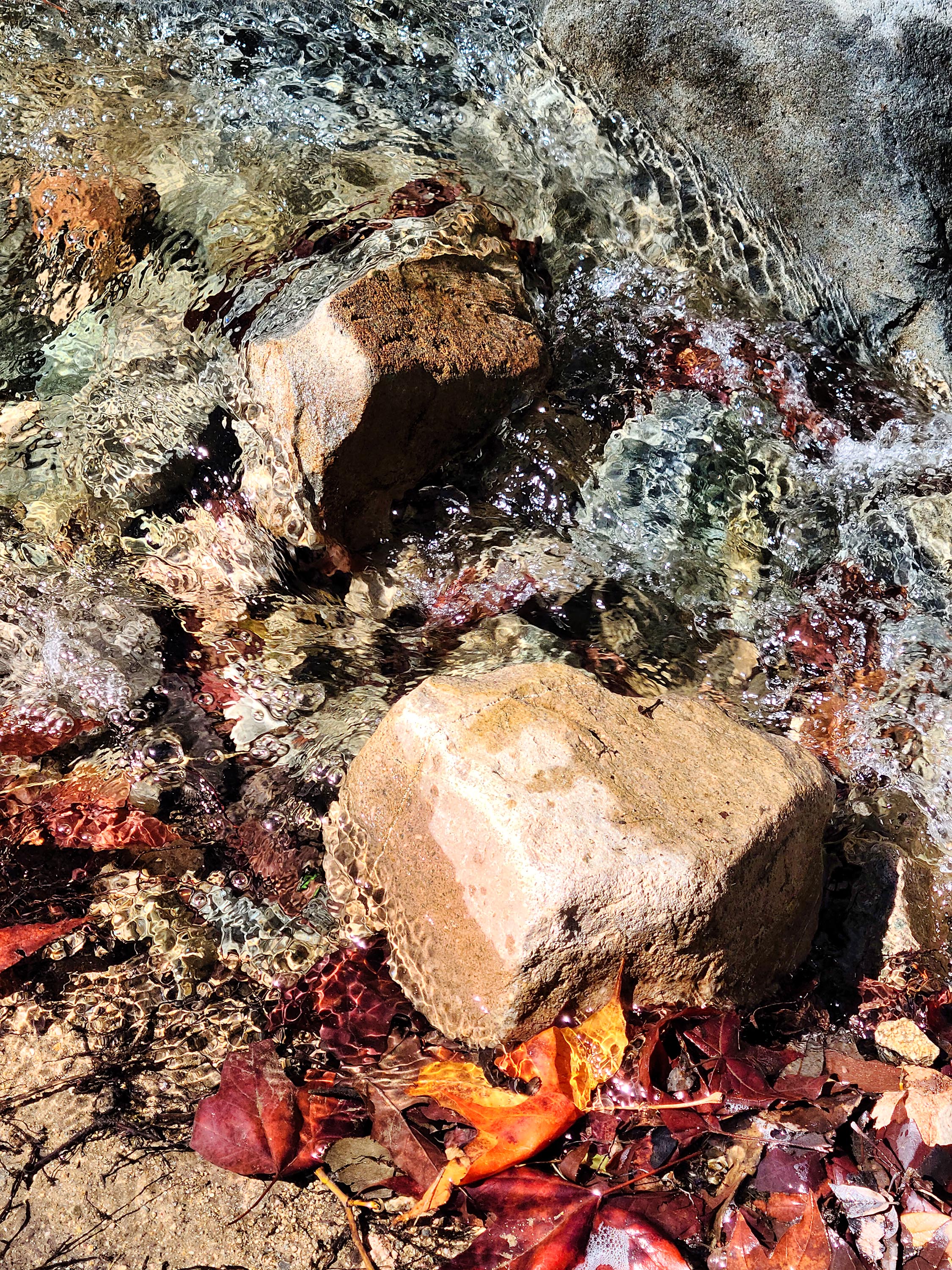
A stream in Madera Canyon

Regressing in Prescott

Image courtesy of Deva.

When Russ and I travel, we usually do many “outward-looking” things like hiking, biking, seeing the sights, etc. For our recent trip to Arizona, we decided to go on a more inward adventure. We contacted a local psychic for past life regression sessions.

I’ve never shopped for a psychic before, but I figured the internet was a good start. A search of psychics in the Prescott area came up with three hits. The one that looked the most legit to me was “Psychic Readings by Deva.” Deva does readings by appointment only. She lives in a lovely home on the outskirts of Prescott.

We corresponded by email to set up the appointment. That went fine, except on my end. I was so distracted by dealing with the details of our impending trip that I sent Deva the incorrect dates of our visit. I thought I was setting our sessions up for the end of February and she thought they were going to be at the end of March!

When we showed up a month early, of course, she wasn’t home. Her husband was, though, and we were able to set up a session with Deva for the following day. Deva was very accommodating about this and I am forever grateful. I’m usually not such a scatterbrain. Was I unconsciously trying to sabotage the experience? Only Carl Jung can answer that!! (Get it? The famous Swiss psychoanalyst? Anyway…)

Besides past life regressions, Deva does tarot card readings, hypnosis, and energy work. She’s originally from Germany and has an accent that fits a session on a couch, which is where we laid during our separate hour-long regressions in her basement.

But first, while we were still sitting upright, Deva asked why we wanted the sessions. We basically just said we wanted a different vacation experience. Deva explained that in past lives, we could be different genders and races. There could be some violence involved since human history is so full of wars and conflict.

Russ went on the couch first while I waited upstairs, reading a book.

I was looking forward to the experience. I can’t say that I’m a true “believer” in past lives, but I am open and curious. I was bummed when I feared I had messed up our opportunity with the date snafu and was so glad that it worked out, after all.

A past-life regression is definitely not something I would have ever considered doing at home, where life is so busy. However, years ago, I bumped into a group past life session that was going on once down the hall from a meeting I had in the same building. A bunch of handouts entitled, “Tips for a Group-Guided Past Life Regression Experience” lay on a table, beckoning me. I picked one up.

One of the tips was to ignore your critical thinking so you can be fully present in the experience. This is very hard for me because I’m judgmental and critical by nature. Another was to trust that the information that drops into your mind during the regression is exactly what you’re supposed to see, even if it feels like you’re making it up.

When it was my turn, Deva spent about 20 minutes of the session on relaxation – taking me from the tip of my toes to the top of my head. Then came some imagery work that prepared me for exploring my past life/lives.

I ended up describing three lives. I really did feel like I was just making it all up, but thanks to that handy stolen tip sheet, I realized that was okay. I was male in two of the past lives, and female in one. One of the lives had a lot of violence and loss, but the other two were rather tame, except for a prairie fire and an absent husband.

In each life, I learned a lesson. None of the lessons were things that particularly resonated with me currently, and I didn’t really see anyone in my past lives that is in my current life. But I did end the session with a deep feeling of loss. Tears welled into my eyes and streamed down my cheeks. Deva found some tissues for me. 😊

I felt like I’d been through a ringer afterwards. It felt like one of those vacation experiences I often tend to get myself into — like a trail that’s way more difficult than the guidebook described.

On our way back to our hotel afterwards, Russ and I exchanged notes. He explored one life during his session. It seemed like it was in greater detail than my lives. But there were many similarities in it to the life of mine that had a lot of violence and loss. We were even the same ethnicity, although we were in different time periods. The lessons learned in these separate lives were eerily the same.

The session helped me understand some of my passions and dislikes and why I seem to have lost my green thumb.

In summary, Deva was great. The experience was unique, but if you do a past life regression, don’t expect a flippant jaunt down a flat trail, even if the guidebook classifies it as “easy.”

Chased by Snow in Arizona – Prescott

Russ and I wanted to escape Minnesota’s snowy winter and cold. We also wanted to visit my son who’s in college in Tucson, so we hoofed it south a couple of weeks ago.

Our first stop was Prescott, a small historic town in north western Arizona roughly between Phoenix and Flagstaff. I’d visited the town as a child. The tall pines and bright sun (due to the 5,000-foot elevation) had piqued my interest.

I must convey the correct pronunciation for Prescott. The locals say “Preskitt.” If you call it Press-Scott, they might shoot you with their open carry pistols.

We drove up the mountains from Phoenix at night, missing views of the saguaro cacti that stand as sentinels on the landscape. As we neared Prescott, a light rain began to fall. We checked into the Hassayampa Inn, which is on the National Register of Historic Places. We chose it for this reason and because it’s within easy walking distance of the town’s many attractions. Also, it has a coffee shop, bar, and art deco restaurant (the Peacock Room).

The inn’s name is derived from Apache and is named for a nearby river. Hassayampa means “the river that loses itself”— fitting for a mysterious stream that often disappears beneath the earth and reappears elsewhere. The inn’s promotional language says that the inn has the same effect on its guests, “who often come for a chance to lose the tensions of hectic urban life and emerge restored.”

Our plane got delayed, so we didn’t arrive at the Hassayampa until near midnight. A cheery fire in the lobby welcomed us and did the night clerk, who gave us (and our luggage) a ride in an old-fashioned cage elevator up to our floor.

When we awoke in the morning, the rain had turned cold. The view out our window included about four inches of snow covering the land. So much for our grand plan to escape the white stuff!

After breakfast in the Peacock Room (excellent, plus friendly staff), we walked around town picking up supplies. The historic district was only a couple of blocks away. Alas, the museums (the Sharlot Museum was one) we had hoped to visit were all closed due to snow, but many stores were open as were the saloons and restaurants on Whiskey Row. This historic district developed after a fire in 1900. When rebuilt, the area featured an “inordinate” number of bars (40), built to quench the thirst of gold miners and settlers drawn to the town.

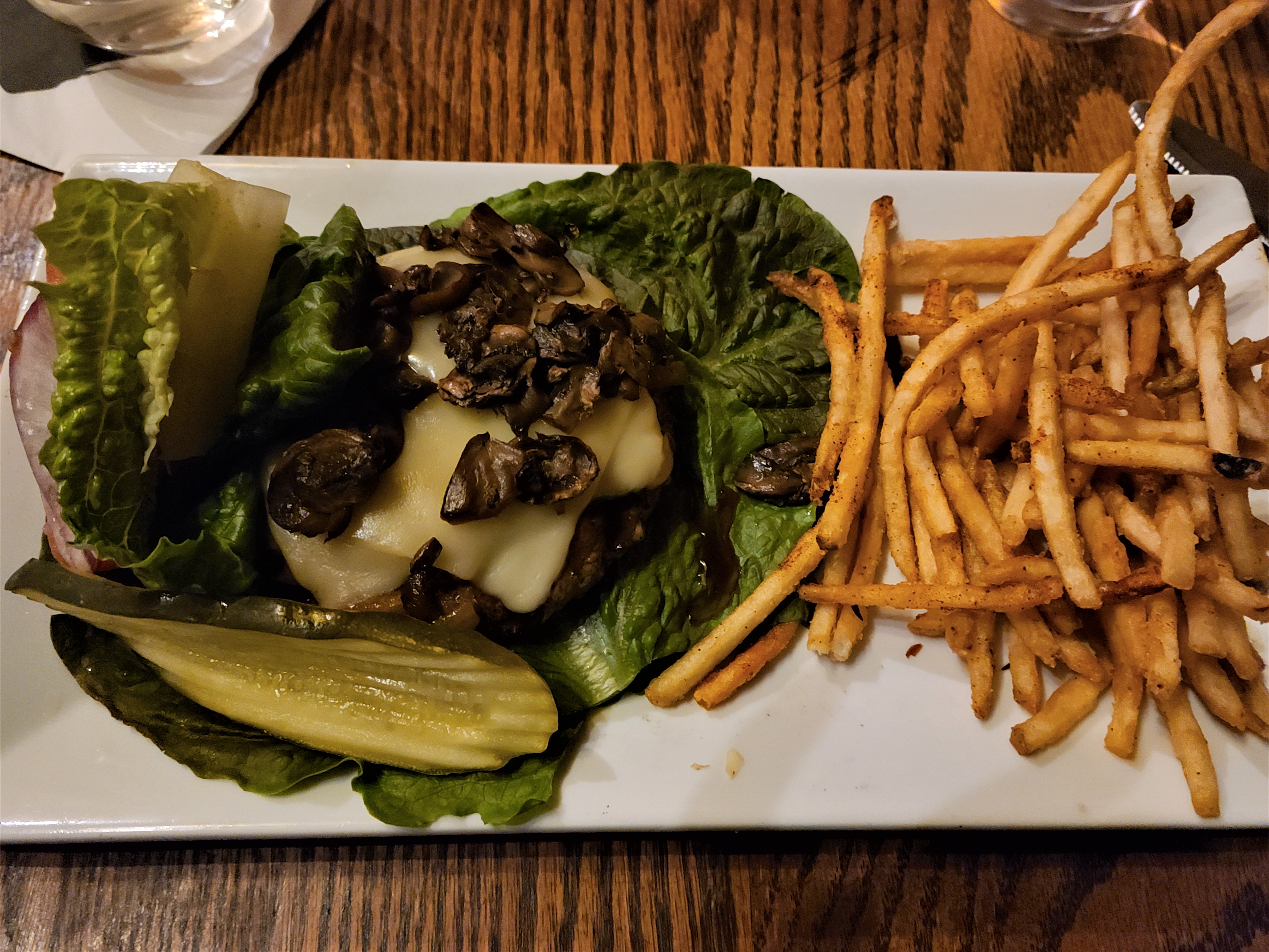
For supper that first day, we ate at one of the original saloons: The Palace. In addition to imbibing scotch whisky (how could we visit Whiskey Row without it?), I had a scrumptious burger called “the beast,” which is made from a mix of meats including boar and elk. I heartily recommend it!

Unlike in our hometown of Duluth, MN, the snow in Prescott melted fast. Most of the streets were clear by the afternoon.

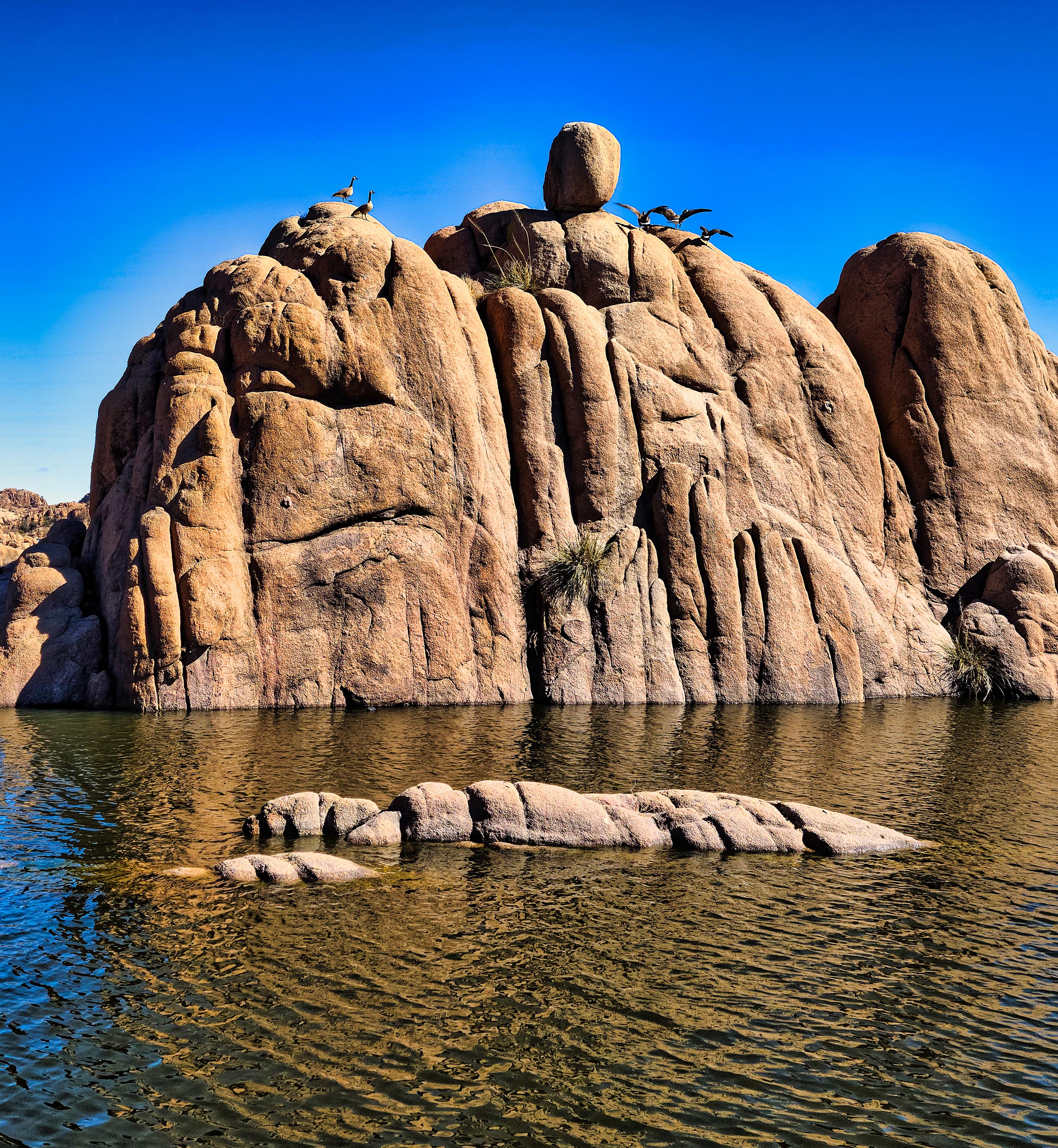
We spent our second day hiking around Watson Lake and visiting the Heritage Park Zoo, which is in the same vicinity. Watson Lake was especially dramatic, with rocky dells rising straight out of the water. We saw lots of Canada Geese and other waterfowl there.

While on our hike, we also saw an interesting warning sign. It alerted us to the presence of flying discs, since the lake has its own disc golf course. That’s not a sign we see every day!

We had intended to stay in Preskitt for another day, but an impending snowstorm, which was supposed to drop a foot of the vile white stuff on the town, chased us out early. The hotel manager was supremely understanding and promised to refund our aborted night’s stay. So, the next day we headed out of the mountains for the historic mining town of Jerome, and then Phoenix.

But before we left Prescott, we had one more adventure planned: past life regression sessions with a local psychic. More about that in my next post!

An Unexpected Wander of Cornucopia Harbor

A coworker and I meandered over to Cornucopia, Wisconsin the other day. This is a small town (more officially known as a census-designated place) on the South Shore of Lake Superior, population 98.

Our goal was to speak with some of the good folks with Halvorson Fisheries for our “Fish Dish” podcast. Our next episode is about burbot – a slimy bottom-feeder of a fish that tastes great and is under-appreciated. Halvorson’s is a fifth- or sixth-generation commercial fishery in Cornucopia and they know their burbot and other, more typical Lake Superior fish like lake trout and whitefish.

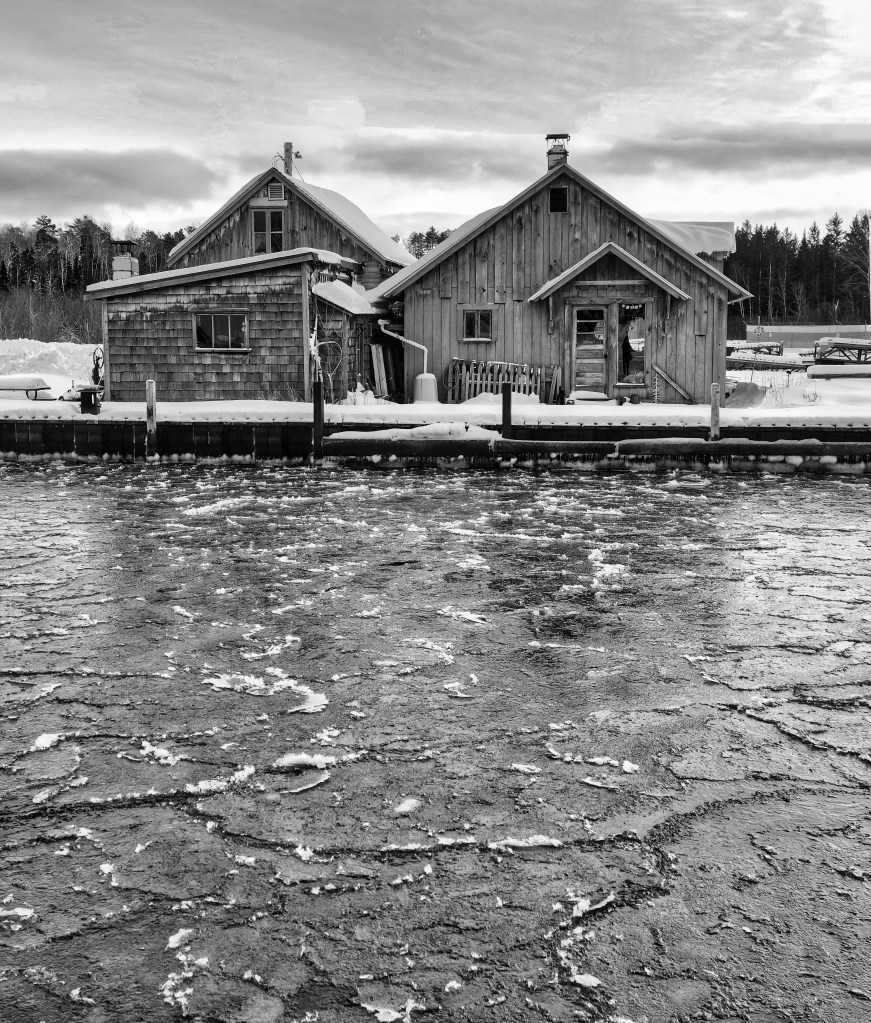
We arrived at their business on the harbor, but nobody was around. While my coworker made some calls and wrote texts, I had a chance to wander and take photos of the icy harbor and boats. These are the results. I felt like it was time well-spent!

After cooling our heels in the only open restaurant in town (along with about 40 snowmobilers), we were able to meet with the Halvorsons, do our interview, and get burbot. The problem was they had decided to stop fishing for the season but hadn’t anticipated that when my coworker made arrangements to speak with them a few days previously. But that’s life on the lake. You gotta go with the flow.

We haven’t cooked the burbot yet. That comes this week. I’ve never eaten burbot before, so am looking forward to the experience. I’ll include a link to our podcast in this post once it’s available.

In the meantime, please enjoy the scenery.

Update: You can hear all about my burbot-eating experience on “The Fish Dish” podcast. The eating part comes at about 18:18. It was great! Today I’m going to make burbot chowder – substituting burbot for steelhead in my chowder recipe you can find here.

Ringing in the New Year in an Historic Inn

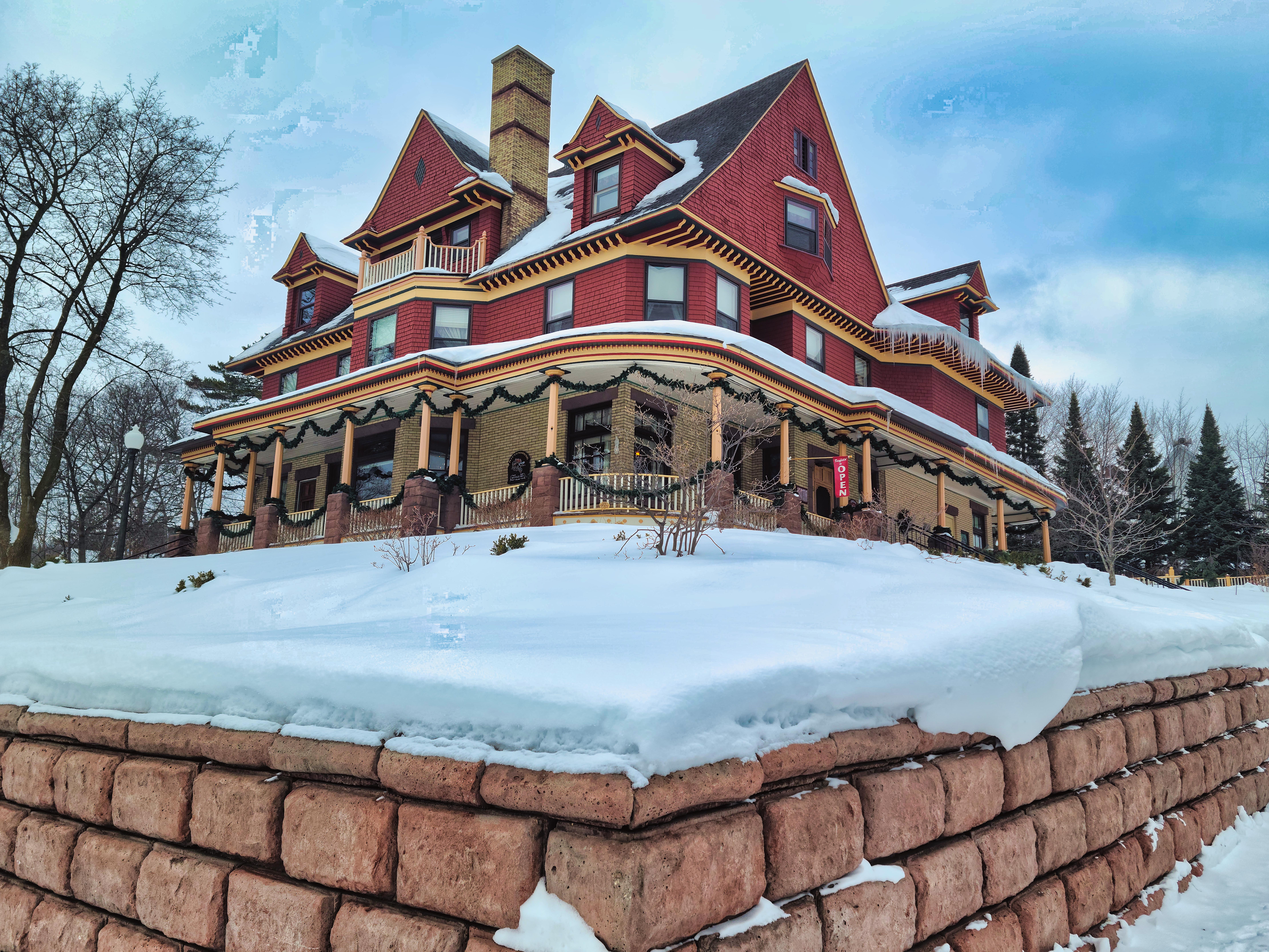
The Rittenhouse Inn, Bayfield, Wisconsin.

For the end of 2022, Russ and I meandered over to Bayfield, Wisconsin, to stay at the Rittenhouse Inn. If you’ve ever been to Bayfield, you’ve seen the place: a huge maroon-red mansion on the left side of the main street as you head toward Lake Superior in this northern town.

This was Russ’s first stay at the inn and my fourth, but it had been years since I’d been there. For my birthday last spring, Russ gave me the choice of two local trips, and this was the one I chose. So, we combined two occasions into one: my birthday and New Year’s Eve.

Built in 1890, the Rittenhouse is a Queen Anne Victorian home. It’s one of three properties in Bayfield owned by Mary and Jerry Phillips. But it was the first one they purchased, back in 1973. Check out their website (link in the first sentence of this post) to learn more.


The Christmas tree at the Rittenhouse Inn.

We checked in on the afternoon of New Year’s Eve and had just enough time to change into clothing befitting a six-course dinner at the Inn’s Landmark Restaurant, which is on the first floor of the inn. Our room was on the third floor in Suite #10. This was originally the home’s ballroom. I got a glimpse of it during a tour on one of my first stays at the inn and was impressed by its spaciousness, double-sided fireplace, and view of the lake. I vowed to stay there one day.

Descending the floors on the stunning cherry staircase in my emerald-green velvet dress, I felt like I belonged to the place. Russ looked dapper in his khakis and pressed blue and white shirt. We were seated by the hostess in one of three rooms used for dining. There’s a green room, a red room, and a blue. We were shown to the red room, which features ornate wallpaper, lavish holiday decorations, and a fireplace. Actually, all the dining rooms feature that, just in different colors!

The special New Year’s dinner featured an appetizer (I had mussels in cream sauce), soup (I had oyster soup – sense a theme here?), salad (kale and pomegranate in the shape of a wreath), a palate cleanser of cranberry sorbet, main course (champagne chicken), and dessert (crème brulee with whipped cream and blueberries). It also included a champagne cocktail with a sugar cube in the bottom of the glass and an orange peel curlicue.

The meal was exquisite. Although the portions were reasonable, I’m not used to that much food anymore and have since sworn off all multi-course dinners! But it made for a memorable and tasty evening.

Afterward, we retired to our room and played a rousing game of Mexican Train Dominoes (I won, as usual). We brought our own bottle of champagne and Chombard liqueur (raspberry). We mixed them together and rang in the New Year.

Some things have changed about the inn since my last stay. For instance, they no longer use real wood in their fireplaces. Instead, they offer those fake logs you can buy at the grocery store, which are easy to light. This was disappointing – I wanted the crackle of a real fire – but it was better than an electric fireplace.


The fireplace in our suite.

They also no longer recite the menu orally. This was a thing on my first visit in the 1990s. The waiters, who all seemed trained in voice or drama, would recite the menu options from memory, adding luscious words and embellishments – so many that it felt like you had eaten a meal by the time they completed voicing the options. That left a lasting impression on me and I discovered the instigator of that past practice was still working at the inn. We met him the next morning at breakfast (which is included in the cost of your room). His name is Lance and he’s worked at the inn since 1974, just a year after it opened.

When I bemoaned the lack of an oral menu, he admitted that the recitation was one of his schemes. I didn’t get to ask him what stopped the practice, but I suppose it was hard to keep up over time, especially if new hires didn’t have talents in those areas.

Not much was stirring in Bayfield on New Year’s Day. Russ and I walked down the main street (Rittenhouse Ave.) and only found one store open, besides the grocery store and coffee shop. But that one store was enough, because I found a birthday present for a friend of mine who was born on January 2. What an awful time to have a birthday! Everyone is “presented” out by then from Christmas. But this year, I revived my present-finding skills quickly, and acquired something I think my friend would like.

The inn’s restaurant was not going to be serving dinner that evening, and we were staying another night, so we asked around and found out which other places in town would be open. We had two options to choose from: a bar and a bistro. We chose the bistro.

But before dinner, we exercised off some of our six-course dinner and scrumptious breakfast calories by cross-country skiing at Mt. Ashawabay Ski Area just outside of town. Besides downhill runs, the ski area offers 40K of ski trails. Because I’m recovering from a broken ankle, we stuck to the easy trails. They were perfect, although the tracks were a bit icy and I could have used a warmer (sticker) wax. But we made of the best of it for 1-1/2 hrs, and I did not reinjure my ankle.

We skipped lunch, so were hungry once we returned to Bayfield. We ate at the bistro and spent our evening curled up by the (fake log) fireplace, reading. Heavenly! The next morning, we had another lovely Rittenhouse Inn breakfast and then headed home to Duluth.

I felt fortunate to have finally stayed in Suite #10 and to spend such a peaceful New Year’s in elegant surroundings. The Rittenhouse or one of its other properties are definitely the pinnacle of places to stay in Bayfield, should you ever have the chance.

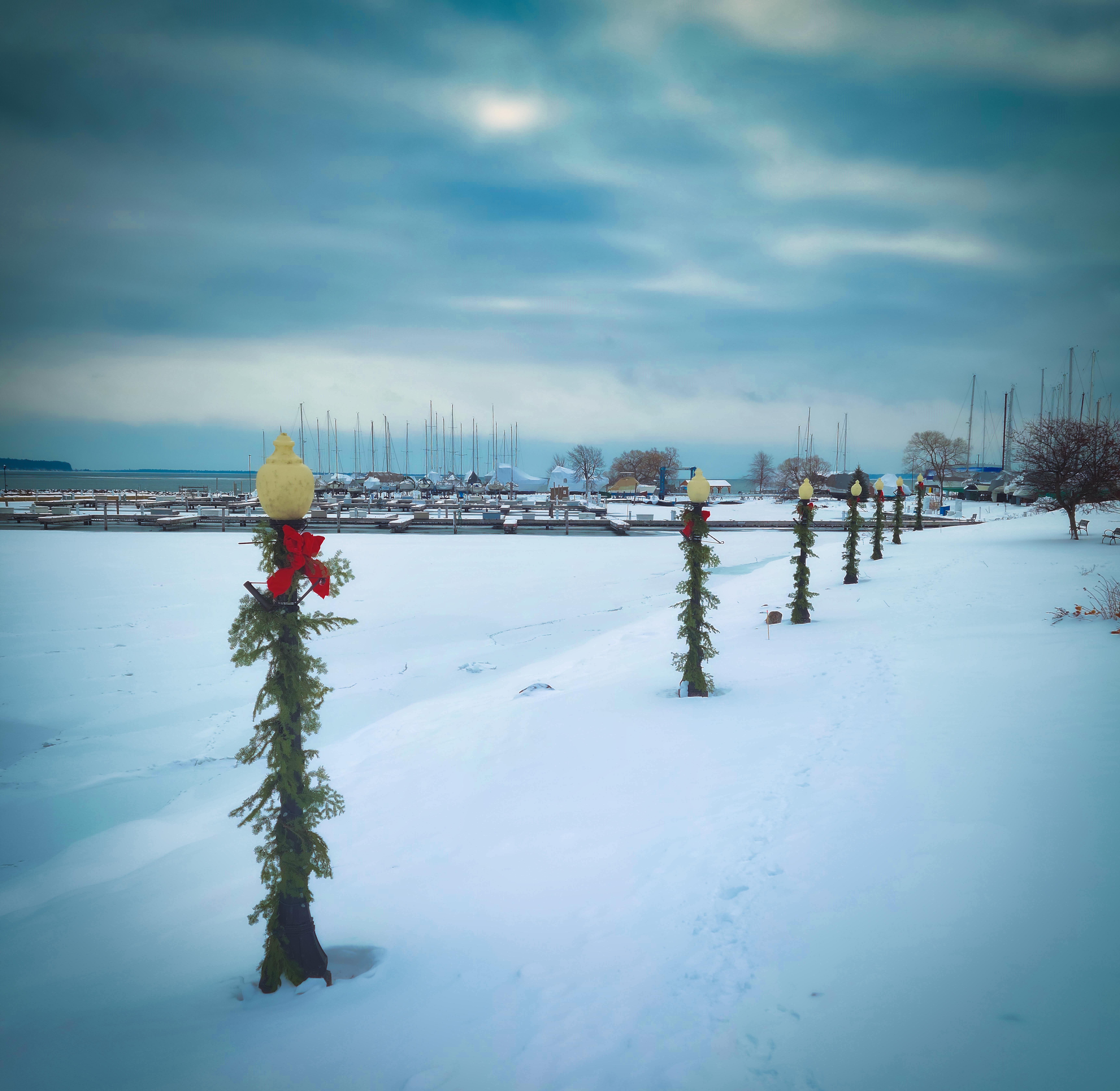
The Bayfield waterfront, decorated for the season.