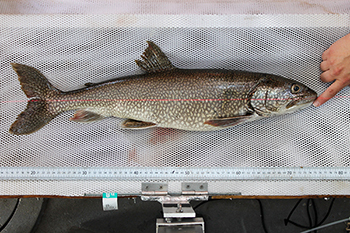
The oldest lake trout yet discovered in Lake Superior, also known as “Mary Catherine.”Image courtesy of the Michigan DNR.
The Michigan Department of Natural Resources (DNR) published a story a few days ago that made many people upset. As someone who has her feet in both natural resources management and public relations/science communication it offers an interesting case study. The DNR was trying to highlight an interesting fact about how fish can reach old ages, but some mistakes got in the way of this message.
The ear bone of one fish they caught in a special survey done in 2023 to study the different forms of lake trout and their reproductive biology was recently analyzed and the DNR discovered that the fish was as old as I am! (62 years) They caught the lake trout on a reef in the southeastern part of Lake Superior (40 miles north of Grand Marais, Michigan) and this lake trout is the oldest one currently on record.
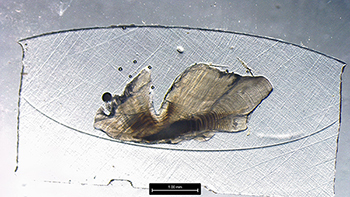
The ear bones of fish show annual rings much like a tree, and that’s how the DNR can tell the age of the fish. It’s the only way they can do this, and they have to kill the fish to extract the ear bone, also called an otolith
Mary Catherine’s otolith shows 62 years of growth.Michigan DNR image.
One mistake the technicians made was naming the fish. They picked the era-specific moniker of Mary Catherine because Mary was one of the most common names in 1961 when the fish was hatched. People who heard news reports were excited that such an old fish was found, and that it even had a name, only to be crushed when they learned later that the fish was killed in the process of discovering its age.
One Facebook commenter said, “Hey we just killed Mary Catherine, but the upside is we now know that she was 62 years young, much like many grandmothers and recently retirees. There’s one less on Social Security now, and that should help keep it solvent.”
Another said, “Sad that they killed a fish who is probably older than the combined ages of some of the researchers, but it is interesting information.” Another commented that the fish might have lived another 20 years if not sacrificed for science.
You might think that such an old fish would be very large, but she wasn’t. Mary Catherine weighed 2.1 kilograms (4.62 pounds) and was 627 millimeters (24.7 inches) long. That’s because Lake Superior doesn’t have much food in it and animals grow slowly. The typical lifespan for a lake trout is 25-30 years.
The story gained wide media coverage, so it was successful that way, but even some of the reporters were dismayed that Mary Catherine was a goner. People already love to hate the DNR, and this well-intentioned science story just gave them another reason.
I’d say the main lesson is not to name your research subjects in newsworthy stories, especially if they’re dead.
The researchers were mum about whether they were inspired by the Saturday Night Live character, Mary Katherine Gallagher.
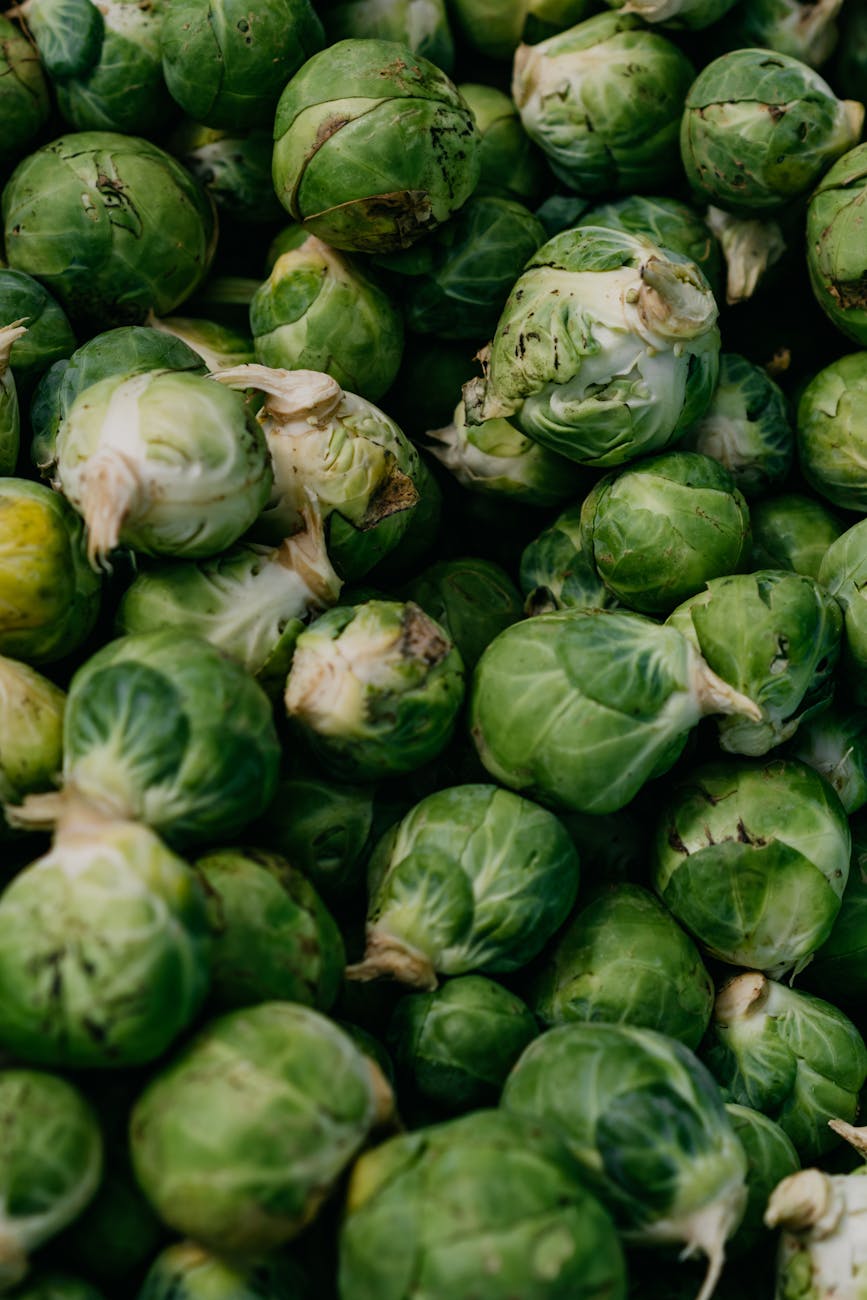
My husband’s nickname is Russell Brussel. He has a fondness, some might call it an obsession, with Brussels sprouts. We were cooking supper the other night: caramelized Brussels sprouts pasta with toasted chickpeas – a great vegetarian meal that we’ve cooked before – and I noticed a curious thing. The day was warm, so we had the kitchen windows open. Gradually, gobs of large black flies collected on the screens. They not only collected, they swarmed. In a spontaneous, miniature airshow, they divebombed the screens, as if trying to get inside.
Curious about whether this was happening elsewhere around the house, I checked other windows. No. The phenomenon was only happening at the kitchen windows. Thank god for the screens or we would have had an invasion on our hands!
We were busy cooking and then eating, so I didn’t think much more about it, although I noticed that the flies dispersed once the cooking was done.
The next morning, I did an internet search about whether flies are attracted to the smell of cooking Brussels sprouts. As you can probably guess, YES, they are!
Here’s why:
Odor Amplification:
Cooking can intensify the smells of food, making them more noticeable to flies, which have a highly developed sense of smell.
Volatile Compounds:
When heated, Brussels sprouts release various volatile organic compounds, some of which might be similar to those produced during decomposition, a known fly attractant.
Opportunistic Feeders:
Flies are attracted to a variety of food sources, including those that are decaying or decomposing.
The process of cooking, especially when done with heat, can amplify the odors of food and make them more appealing to flies. Brussels sprouts, like other vegetables, can release volatile compounds when cooked that are similar to those found in decaying organic matter, which is a common attractant for flies. This is due to the presence of methyl eugenol, which is also found in other fruits and vegetables such as cherries, raspberries, and basil. When this compound is present in high concentrations, it can be intoxicating to flies and other insects.
Now you know! Plus the next time we have Brussels sprouts I can joke to Russ that he’s cooking carrion again.
Our fourth day on Grand Cayman Island dawned hot and beautiful, just like all the previous days. Our first adventure was a visit to Queen Elizabeth II Botanic Park on the island’s North Side. Besides lush and gorgeous foliage, what drew us to the park was its unique mix of culture, natural history, and endangered blue iguanas.
You heard me: blue iguanas. This special species is only found on Grand Cayman Island. The park has a conservation facility where they breed iguanas – some for release in other parts of the island. If I would have been quicker writing this post, I could have had it done on May 8, which is National Blue Iguana Day on the island. As it was, we were still traveling around the island with no time to write!
Pretty border foliage on the Woodland Trail.
We bought our tickets and then meandered toward the Orchid Boardwalk. Not far down the path, I spied a small humpbacked brown animal that looked somewhat like a prehistoric horse. As it ran into the undergrowth, I realized that I had the good luck to see an elusive agouti. These rodents were introduced to the island years ago and eat fruit, leaves, and roots. That was worth the admission, right there.
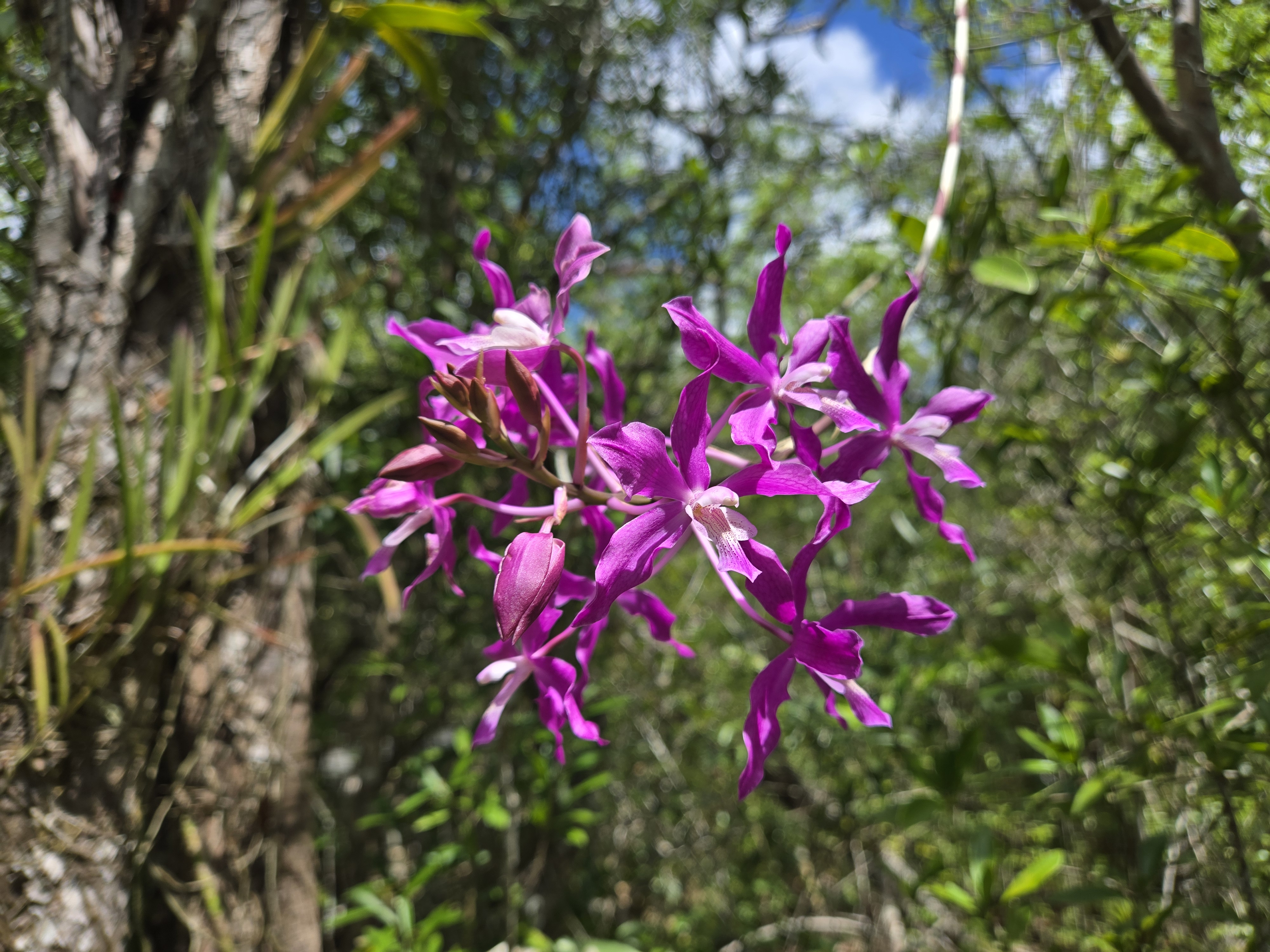
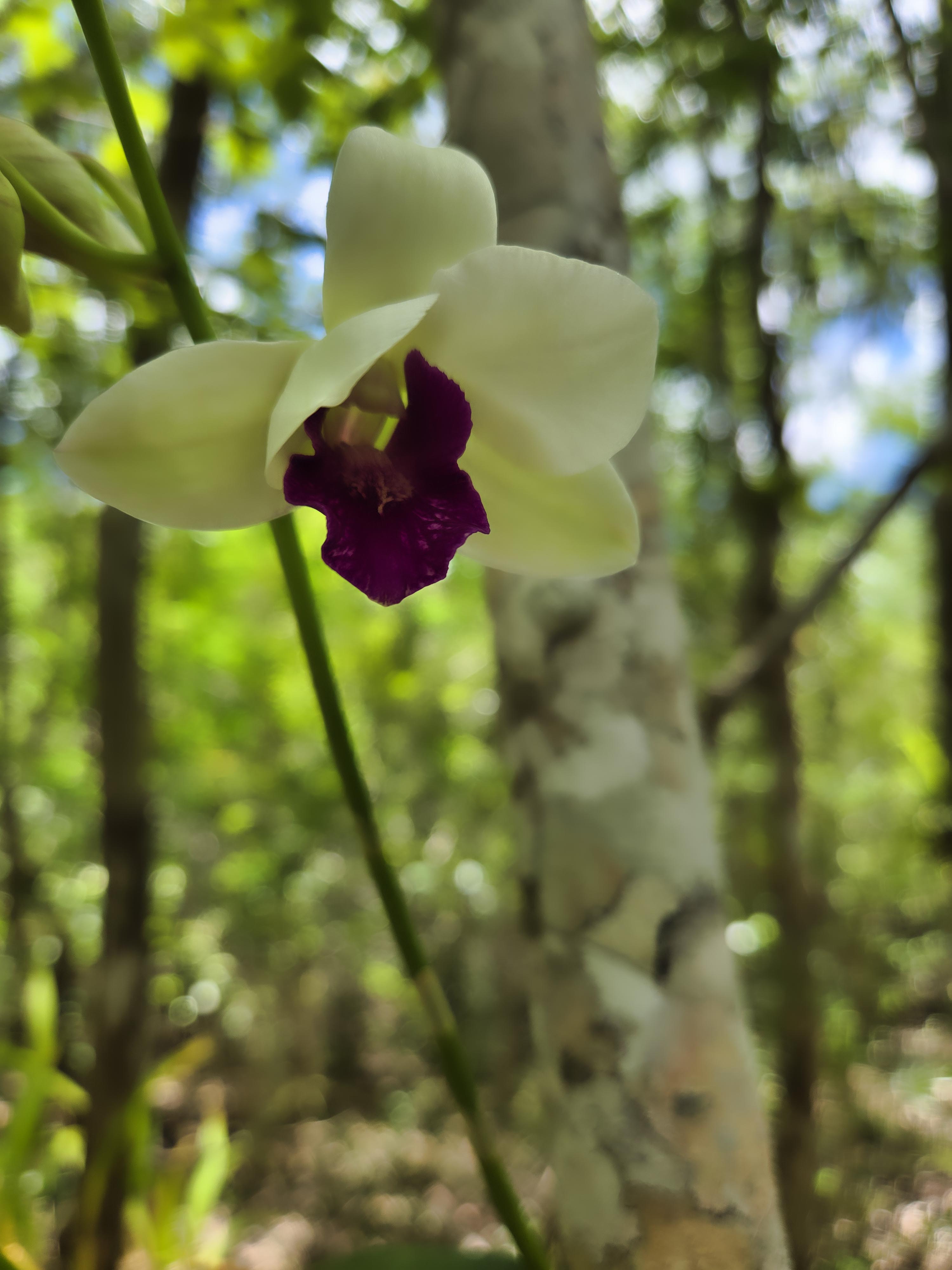
An orchid on the Orchid Boardwalk.
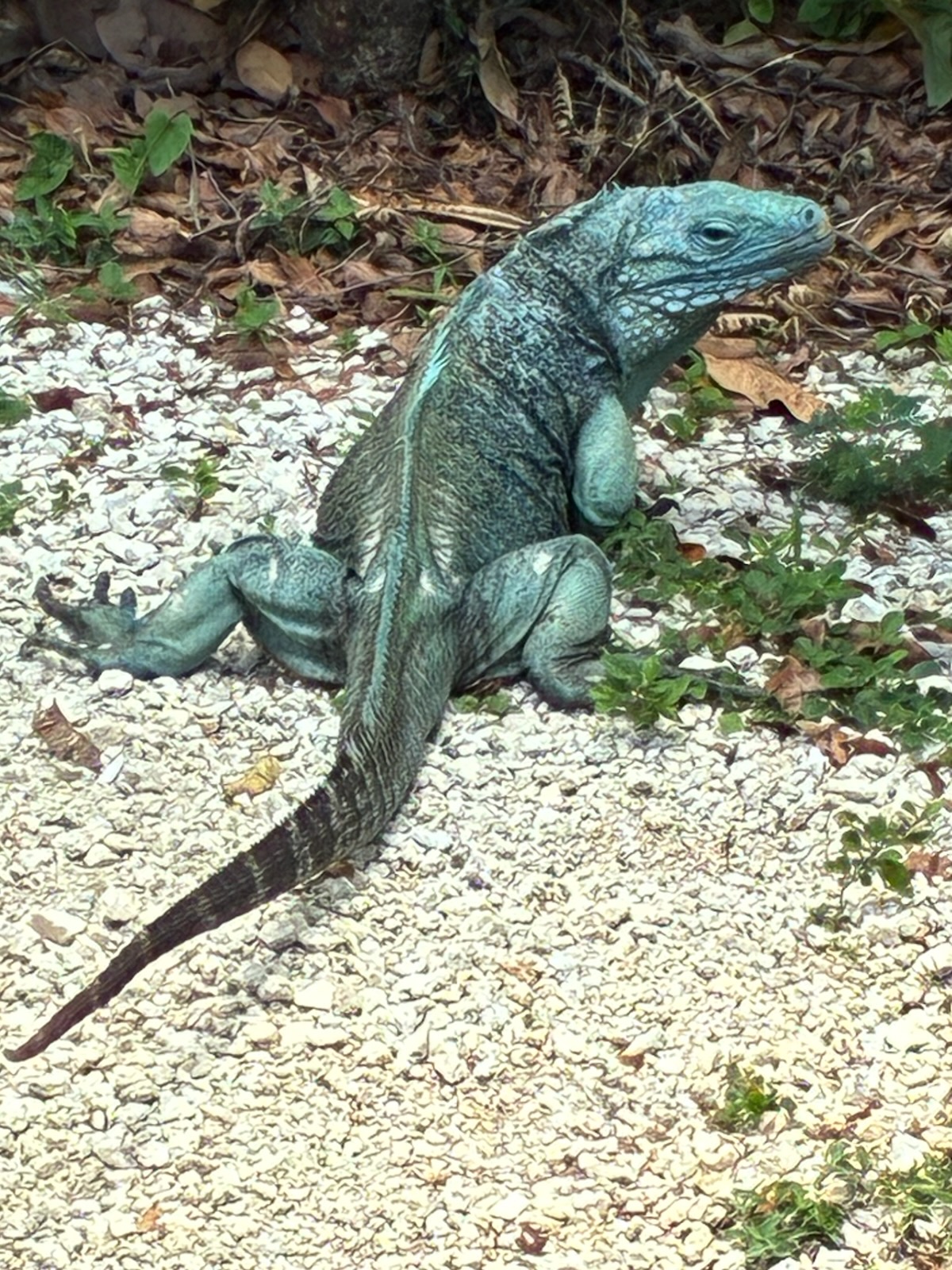
When we arrived and walked toward the park visitor center, a wild blue iguana greeted us on the lawn. We joked that it had been placed there just for us, or that maybe it was a statue. But no, it had moved by the time we finished our visit, so I guess it wasn’t fake.
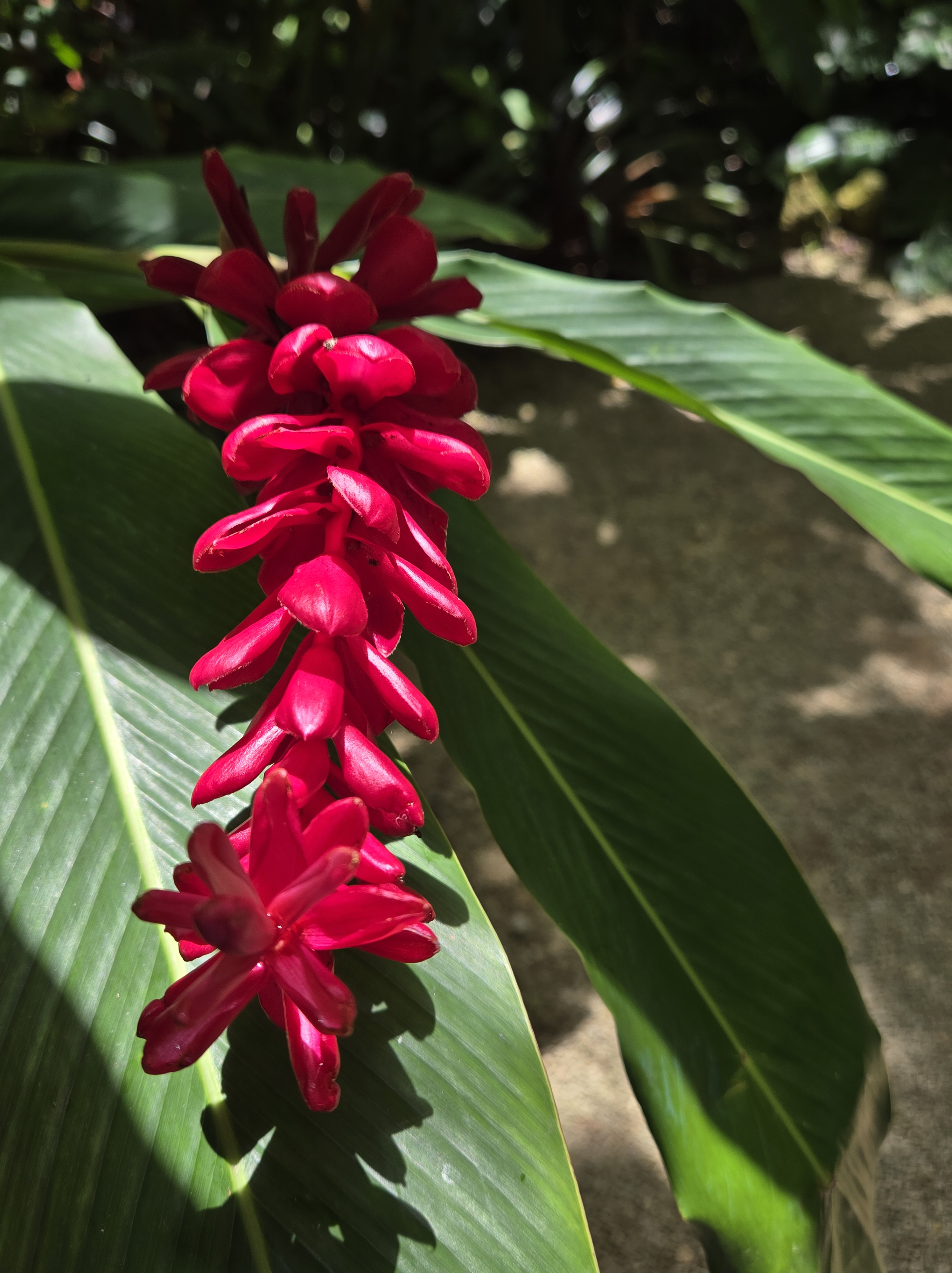
The park’s Orchid Boardwalk takes you through a jungle of epiphytes (air plants) and orchids, some of which are only found on the island. Our next stop was the Heritage Garden, which sports a traditional homestead and garden. By this time, we were pretty hot, so we hung out in the shade of the home for a while. Across from that was a Xerophytic Garden, which features plants that require little water. We also toured a Lily Pond and a Palm Walk. My favorite was the Color Garden, which offers flowering plants arranged by color.
A flower in the Color Garden.
Our final stop after a long (and hot) walk on a woodland trail was the iguana conservation area. Here the blue iguanas are housed in outdoor natural habitats and cages. Most of the captive iguanas were hiding but a large wild iguana wandered the pathways, and Russ was able to get a good picture of it without fencing in the way. From the interpretive signs, we learned that blue iguanas can live for 50 years, that 1,000 have been released into protected areas on the island, and that they only turn blue during mating season. Apparently, it was mating season because many of them were blue.
The Lily Pond in the Botanic Park.
Pedro St. James Mansion was our next destination but before we toured it, we enjoyed lunch and a view of the sea at its Thatch and Barrel Restaurant. Russ had bruschetta burrata flatbread, with tomato, burrata cheese, garlic, and a scotch bonnet pepper-infused balsamic reduction that looked outstanding! The restaurant is known for its locally sourced ingredients and cocktails that use 1780 rum, which is blended onsite. I had a refreshing 1780 colada and a luscious castle burger, which featured onion jam, brie, local red pepper jelly and greens, garlic jalapeno aioli, and truffle fries.
Russ’s flatbread dish from the Thatch and Barrel Restaurant.
Thus fortified, we bought our tickets to the mansion. The docent led us into a multimedia theater for an orientation. We were the only ones enjoying the show! The theater uses creative lighting, wind, water, and vapors to transport viewers into the early lives of Caymanian settlers. After that, we were free to wander the grounds and tour the three-story mansion. You can opt for a guided tour, but we chose self-guided.
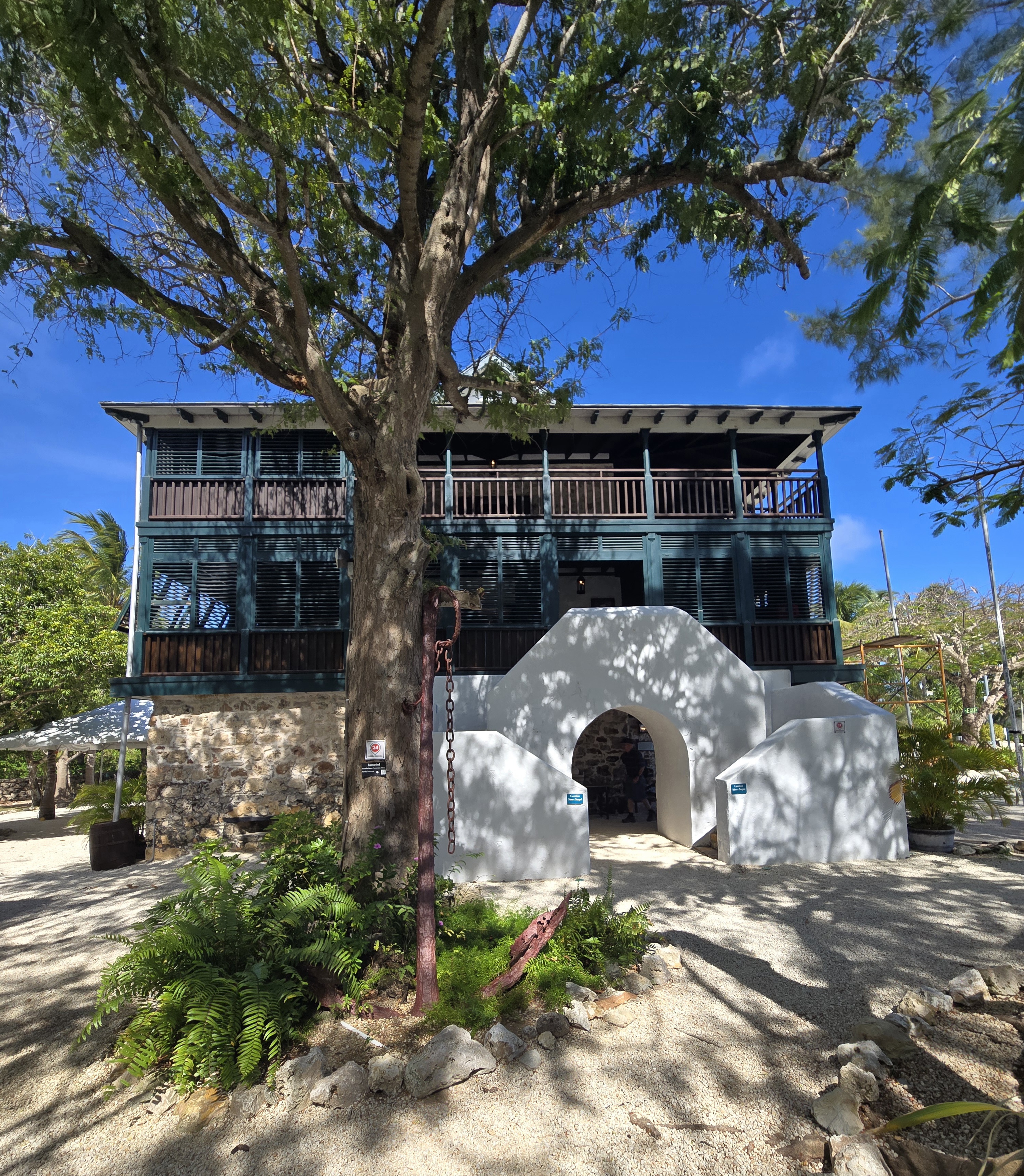
Pedro St. James
Pedro St. James is the oldest surviving stone structure in the islands. Its verandas and shuttered windows reminded me of Earnest Hemingway’s house in Key West. The elaborate construction made it the Caymanian equivalent of a European castle, so locals often refer to it as Pedro Castle. The mansion has had its ups and downs and has seen its share of historic events. The first island parliament was held inside, and a proclamation ending slavery was read from its front stairs (somewhat ironic, since the mansion was built with slave labor). Once again, we were the only people touring the mansion.
There’s also an interesting International Scuba Diving Hall of Fame at Pedro St. James. It’s worth a look.
On the way out, I bought a small bottle of the 1780 rum to bring home. I’m here to tell you, it’s gone all ready! I’ve never tasted a rum so smooth – dark and rich, almost root beer-y. If you get the chance, buy this rum.
On our way back to our resort, we stopped at the Blowholes. These are holes in the rock along the ocean shore where the water sprays high into the air. There are only a few blowholes, but they were fun to see; kind of like the Grand Cayman version of Old Faithful.
A blowhole blowing.
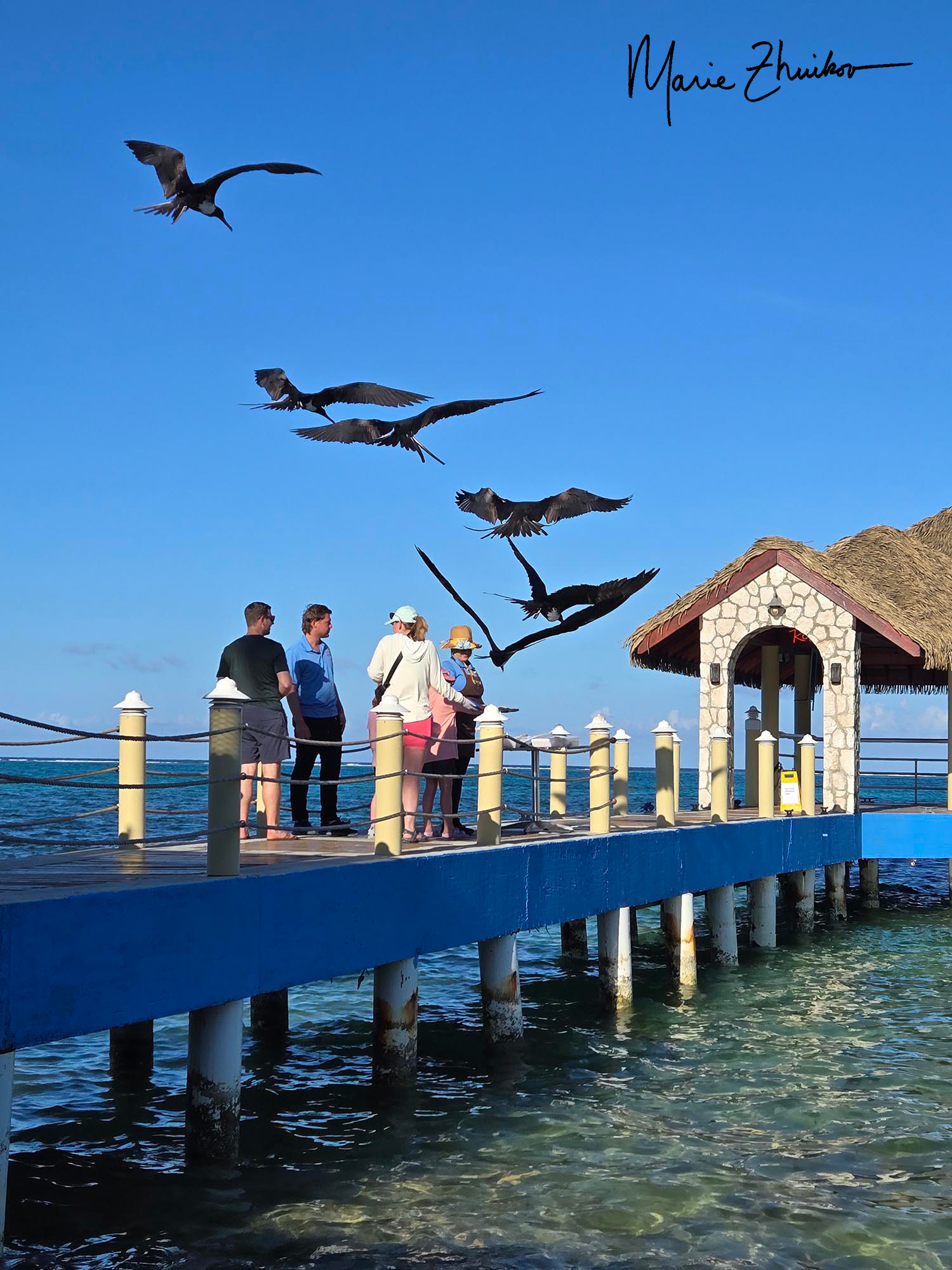
We happened to be passing Tukka Restaurant (where we ate the previous day) at 5 p.m., when they feed the frigatebirds. We hung out in hammocks on the shore and watched the large and acrobatic black birds swoop down for restaurant scraps. Recycling at its finest!
Frigatebirds hover, awaiting handouts.
We cooked our own dinner that night in our resort room kitchen. We purchased king mackerel steaks, which I had never cooked before. But I found a simple recipe online and they came out pretty good – reminded me of a cross between tuna and shark – a firm, oily meat.
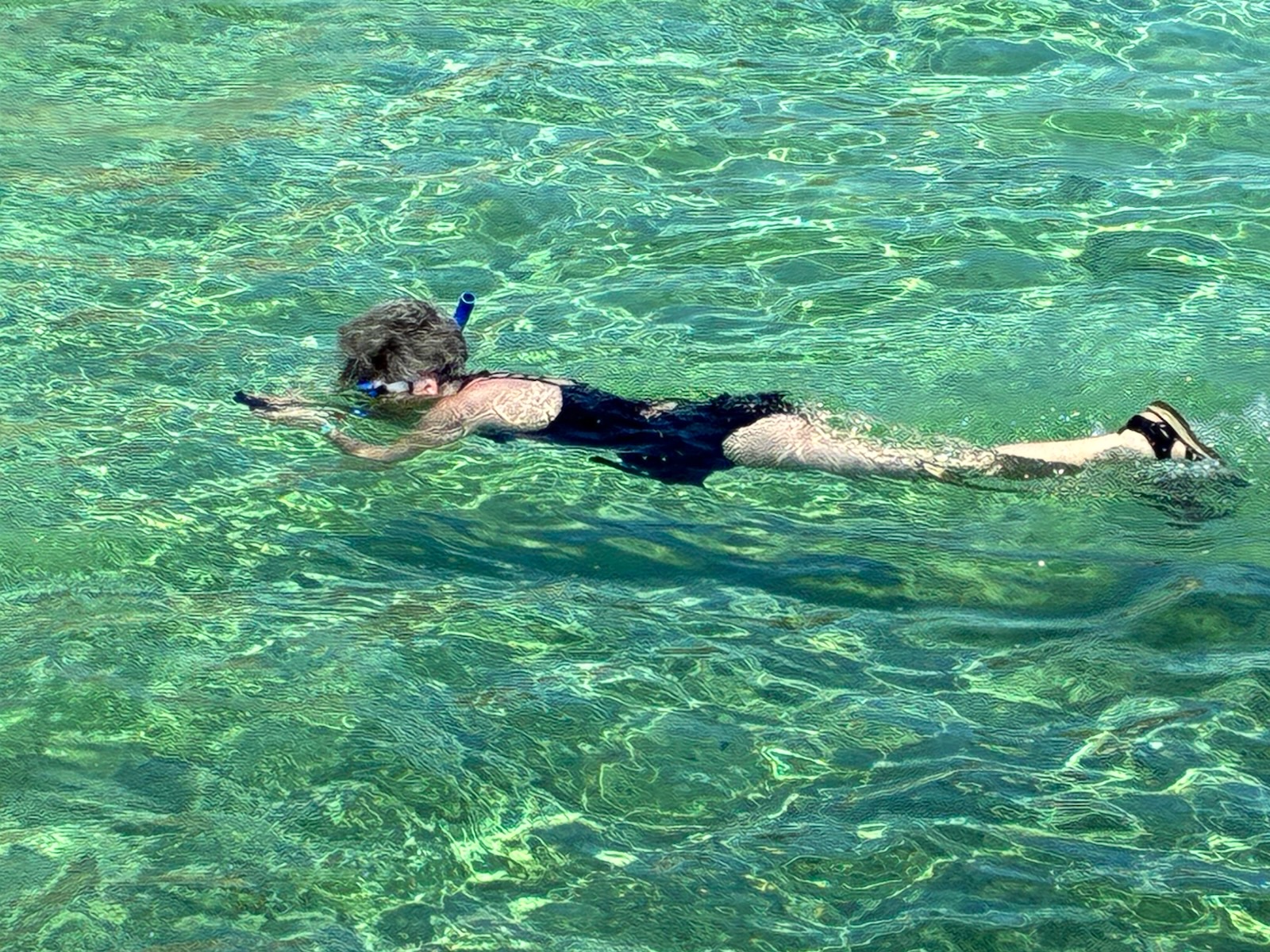
At dawn on our next day in paradise, I jumped into the water off the resort dock and cavorted with three-foot-long tarpons and other smaller tropical fish during the resort’s daily fish feeding time.
Why would I put myself in the middle of a feeding frenzy with tarpons, a prehistoric fish with sharp teeth? I’ve always wanted to try underwater photography. In preparation for this trip and as a retirement present, I bought a GoPro Hero camera. It’s on the lower end in terms of price and bells and whistles, but it looked easy to use for a beginner like me. Plus, it’s small and perfect for traveling. Fish feeding time seemed like a good test run for the camera before more serious underwater adventures.
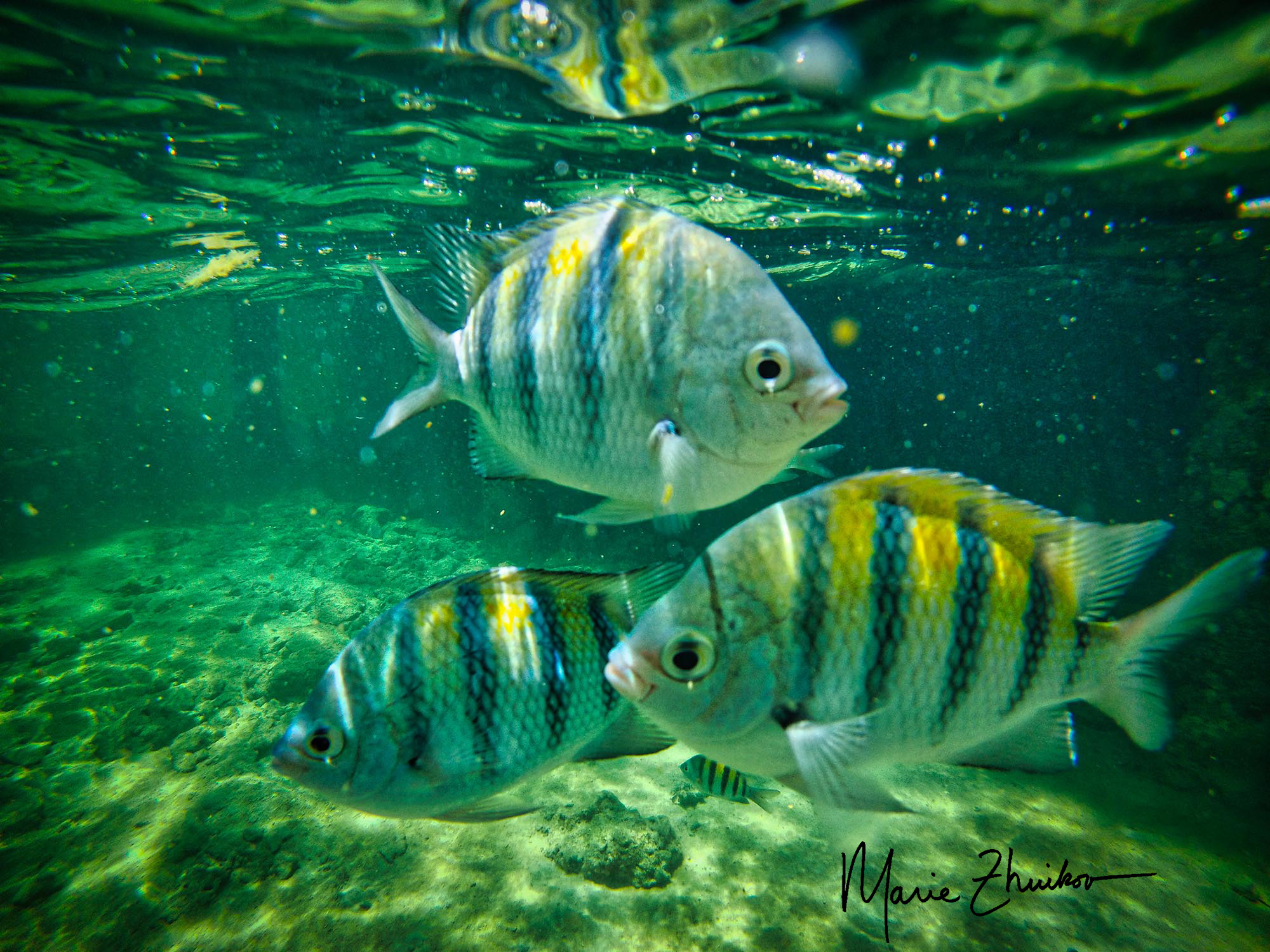
Sergeant major fish
One of my kickboxing trainers back home had experience with a GoPro and suggested I attach the camera to something that floats because, “Once you drop it, it sinks.” I immediately had visions of my camera, thirty feet below me on the bottom of the ocean – close enough to see but too far to reach with snorkel gear and ears that don’t equalize water pressure well. So, along with the camera, I purchased the Swim+Snorkel kit, which features a floating tube mount with a wrist strap and a small carrying case. On my morning outing, I was glad to discover that the camera did indeed float when attached to the tube mount.
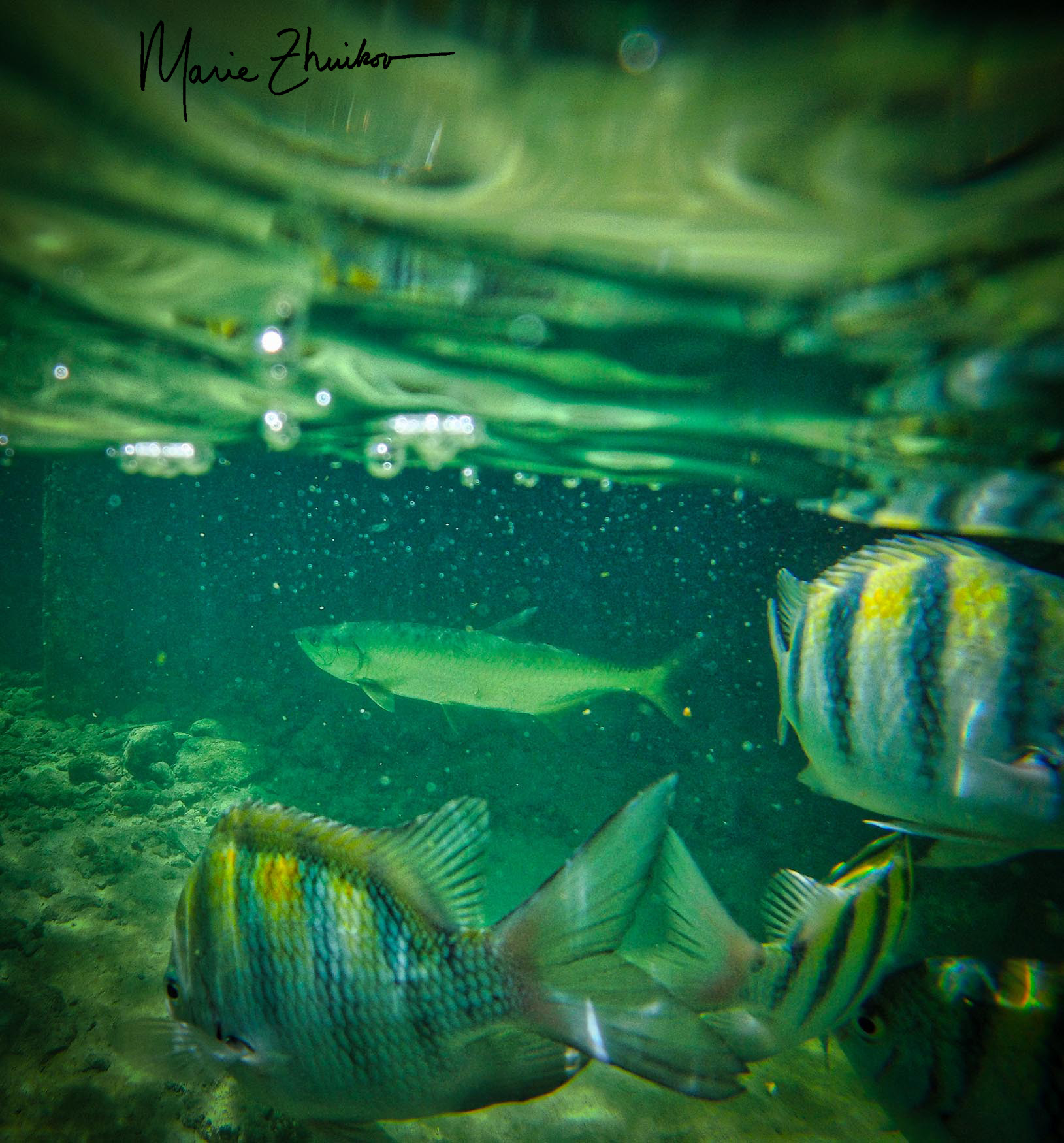
The fish did not disappoint and neither did the camera. It was also helpful that on the dock, Russ was throwing fish food my way. Black and yellow sergeant major fish swarmed around me. Blue sea chubs darted past. Thankfully, the tarpons were shyer, keeping to the outskirts.
A tarpon lurks in the background.
The GoPro has video and photo settings. Switching between them requires a swipe of the screen. I wanted to stay in photo mode but noticed that every time a wave washed over the screen, it would switch to video mode. After my outing, I discovered it’s possible to lock the screen so that this doesn’t happen.
This discovery made our next outing that day, a trip to Stingray City, much less frustrating! For decades (between four and eight depending on who you ask) southern stingrays have gathered at a sandbar off the island to eat leftover fish parts discarded by fisherman. Our guide, Jefferson, told us mosquitoes used to be so bad on the island that fisherman came out to the sandbar to clean their fish in peace.
Here come the stingrays!
Now that mosquito populations are more under control, the rays gather to eat squid offered by tour operators instead. The attraction is tightly controlled so that the rays and the sandbar don’t get overrun, and the rays have been microchipped by scientists so that they can monitor them and ensure they aren’t getting too stressed by the human interaction.
Yes, all these wild stingrays still have their stingers! I had to prod Russ a bit to go on this adventure. He was finally persuaded by reports of the safety of the outing and the friendliness of the rays. One description likened them to giant puppies of the sea! Most of the rays are female – they’re larger than the males and friendlier, apparently.
A ray at Stingray City.
Entering the water with these soft, gentle giants was a bit freaky, but it was so cool! Russ impressed me. He was the first one off the boat and into the water with the rays. (I was second.) My GoPro worked great and I’m happy with the images I was able to capture. Russ even let a ray suck some squid off his hand and, with Jefferson’s help, he kissed a ray (and liked it)! I was too busy taking photos to partake in those activities, but I did pet a ray. The bottoms of the rays were smooth and soft, but the tops felt like sandpaper if you went against the grain. This experience was a highlight of our trip for both of us.
Brave Russ pets a stingray.
As part of our tour, Jefferson took us to a nearby coral reef, where we snorkeled for quite a while. Watching the fish was fun, but the poor condition of the reef was distressing. The coral was bleached and there were far fewer fish than there would be on a healthy reef.
We both had healthy appetites after these adventures. We satisfied them at Tukka Restaurant (East End), one of the other places on the island that serves lionfish (besides Eagle Ray’s Bar and Grill). We hadn’t made reservations, so the hostess walked us through the noisy, crowded main dining room to a lower room that sported plastic tables and chairs. However, the ocean view was just as stunning and, after the couple who were there when we arrived left, we ended up with the huge room all to ourselves! Tukka’s specializes in Australian/Caribbean fusion cuisine. I don’t recall what we ate, but it was very good. Every meal we had on the island couldn’t be beat.
Every evening at 5 p.m. restaurant staff and guests feed frigate birds off the dock. We arrived too late for that spectacle but were able to catch it by chance the next evening.
Next up: Blue iguanas, blowholes, a mansion, and frigate birds.
My home on the shores of Lake Superior in Duluth, Minnesota, lies next to a large and wild city park. We’re often blessed by visits from local wildlife. While I was on a walk earlier this week, I learned a new bear story from one of my neighbors, and it reminded me of two other stories about neighborhood bears.
The story my neighbor told me happened years ago at the house next to mine. The incident involved honey, a black bear, and guns. Warning: things do not end well for the bear.
My neighbor said that the event even got written up in the newspaper, so when I returned home, I began a search. I found it! The headline from the Sept. 25, 1958, Duluth News Tribune reads: “Honey-Loving Bear Killed. Elaborate Trap Ends Bee Hive [sic] Raids.”
Ole Martinson used to live in the house next door. He was a beekeeper and had several hives. Oak trees also grace the yard, and bears are drawn to the acorns. That fall, a 250-pound bear was bulking up for winter and raided the hives. Martinson complained to his neighbors, who decided to help him with his plight. The article says that the residents, “had fired about 15 shots at the bear in three days, but never were successful in hitting the animal.”
Can you image people discharging firearms within city limits like that now? (Currently in Minnesota, it’s illegal to discharge a firearm within 500 feet of a dwelling or occupied building unless you have written permission from the owner or occupant.)
After the unsuccessful hunt, a policeman who lived at the end of the road (Royce Hanna), and another neighbor concocted a plan with Martinson. They strung a line of light bulbs from a garage to a field and a lookout was posted to whistle when the bear approached in the night. The whistle was the signal for the lights to be switched on.
According to my neighbor, who witnessed the event, the first night they tried this scheme, the lookout mistook moonlight glinting off the lightbulbs for the bear’s eyes and Hanna shot out a lightbulb instead of a bear. (Apparently, they didn’t turn the lights on before Hanna shot!)
The second night, the bear walked into the trap “with 35 to 40 spectators hidden nearby. . . Someone whistled at the right time, the lights flashed on and Hanna opened fire. The policeman’s first shot wounded the bear. His second killed the animal.”
My neighbor told me that Hanna almost lost his job because he had called in sick that day and then his boss read about it in the newspaper. I guess the lesson is, don’t give interviews to newspaper reporters when you’re supposed to be sick! He also said that someone else in the neighborhood had skinned the bear and kept the hide.
The second story happened last fall. The people who now live in Martinson’s house had multiple bear raids on their garbage can, which they unwisely left outside all the time. I could tell the culprit was a bear by the scat left behind. Have you ever seen bear scat? It can look like a pile of chocolate soft serve ice cream in a pile as large as a dinner plate, depending on the size of the bear.
To deter the animal, they rigged the garbage can lid with straps to hold it down, plus tied the container to a tree in their yard. I just laughed when I saw this. Like a few little straps would deter a huge bear! Here’s a photo of what their container looked like the next morning.
Score one for the bear! After this, my neighbors cleaned out their garage enough that they could fit their garbage and recycling containers in it. I’m not sure why they didn’t do that in the first place. Must be slow learners. Or maybe they thought it was only a racoon.
Anyway, knowing that the house next door has been a bear target for years is sort of fun. At least this time, the bear got away with its life.
The third story happened in my own back yard about fifteen years ago. We were eating breakfast when we noticed the bear. My former husband was so excited, he burst out of the house clutching some doughnuts AND RAN TOWARD THE BEAR. I ran after him, asking what he was doing. “I want to feed the bear!” he said. I must mention that my former husband was from Russia. I guess that’s just what they do.
The bear took one look at this crazy Russian running toward him and promptly turned tail. He climbed a tree in a yard a few houses away. Disappointed, my husband left the doughnuts at the base of the tree for the bear once he climbed down.
I don’t recall if the bear ever ate the doughnuts, but this story was forever cemented in the annals of family history. Remember that time your dad chased a bear?
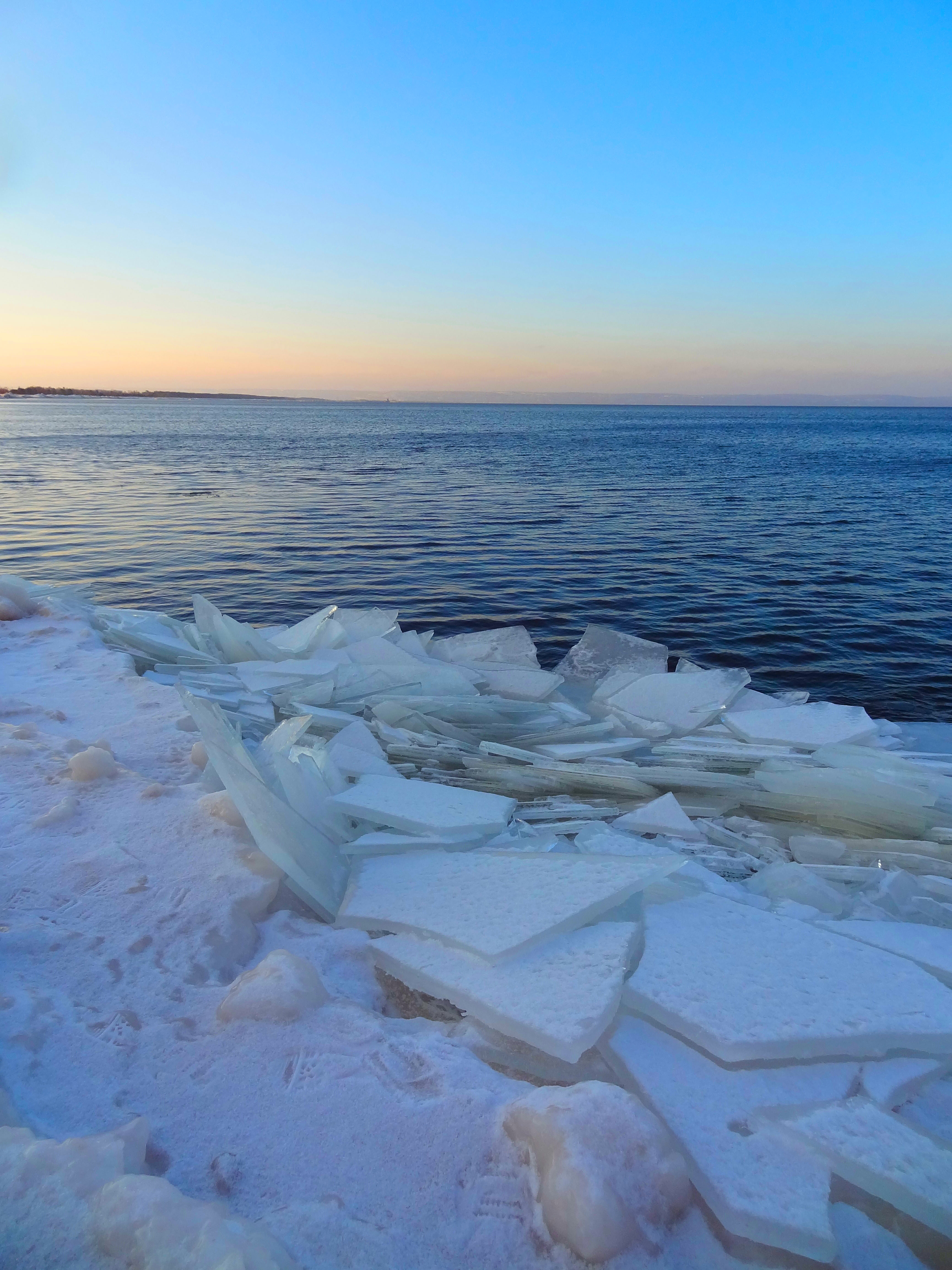
In the North, we stand on the shore in spring and yearn, with a visceral longing, for a break in the smooth white face of the lakes. All winter, they have been a study of white, defined by the absence of blue.
As my acquaintance, former National Geographic magazine photographer and writer, Jeff Rennicke says so well, winter iceover is like an “annual sensory deprivation experience—the specter of negative space—a long, white poem of silent syllables.”
Now, that silence has been broken. As I stand on the frozen grass of our cabin lakeshore, air bubbles underneath the ice gurgle and emit otherworldly moans like the cries of a mystical animal. Blowing wind shifts the ice and I watch cracks form in the thin nearshore skim.
As Rennicke says, soon the ice will crinkle and clash, ringing like bells. Leads of open water will scroll across the blank white page like exuberant cursive. The lakes will awaken, announcing again the spin of the planets, the truth of the changing seasons.
No, the world hasn’t frozen permanently. Spring is coming once again to the North. And it is written in the iceout.
He who marvels at the beauty of the world in summer will find equal cause for wonder and admiration in winter. — John Burroughs
I’ve been circling artificial intelligence for a while now, like it’s a dangerous wounded animal. When AI results first showed up for my Google searches, they were pretty bad. But I’ve got to admit, the responses to my esoteric search queries (like “Literary quotes about Minnesota winters”) have gotten better lately. I guess the beast is learning.
Some high school students recently asked me if I used AI in my writing. I told them that I don’t, and that I can tell when blog posts are created with AI because the writing is generic. However, I admitted that I have considered using AI to generate ideas.
Today, I took the plunge on the idea front because I didn’t have a good winter quote already in my head. I typed in that search term above about Minnesota winters. This came back: While there might not be a specific literary quote explicitly mentioning “Minnesota winter,” quotes that capture the essence of a harsh, snowy, and solitary winter landscape could be applied to a Minnesota winter experience.
In the spirit of full disclosure, one of the quotes from my search is at the beginning of this post. Maybe AI isn’t so bad? And while I’m disclosing everything right now, I might as well say that my photo editing software uses AI to enhance images. I used it on the images that accompany this post, except for the bottom one. The photography teacher who introduced me to this software said that cameras can’t capture everything our eyes see. The editing software brings the photos closer to that ideal. I admit to loving the subtle changes the software makes to the original image. I’m not going to disclose what that software is here, however. I need to keep some secrets to myself. 😊
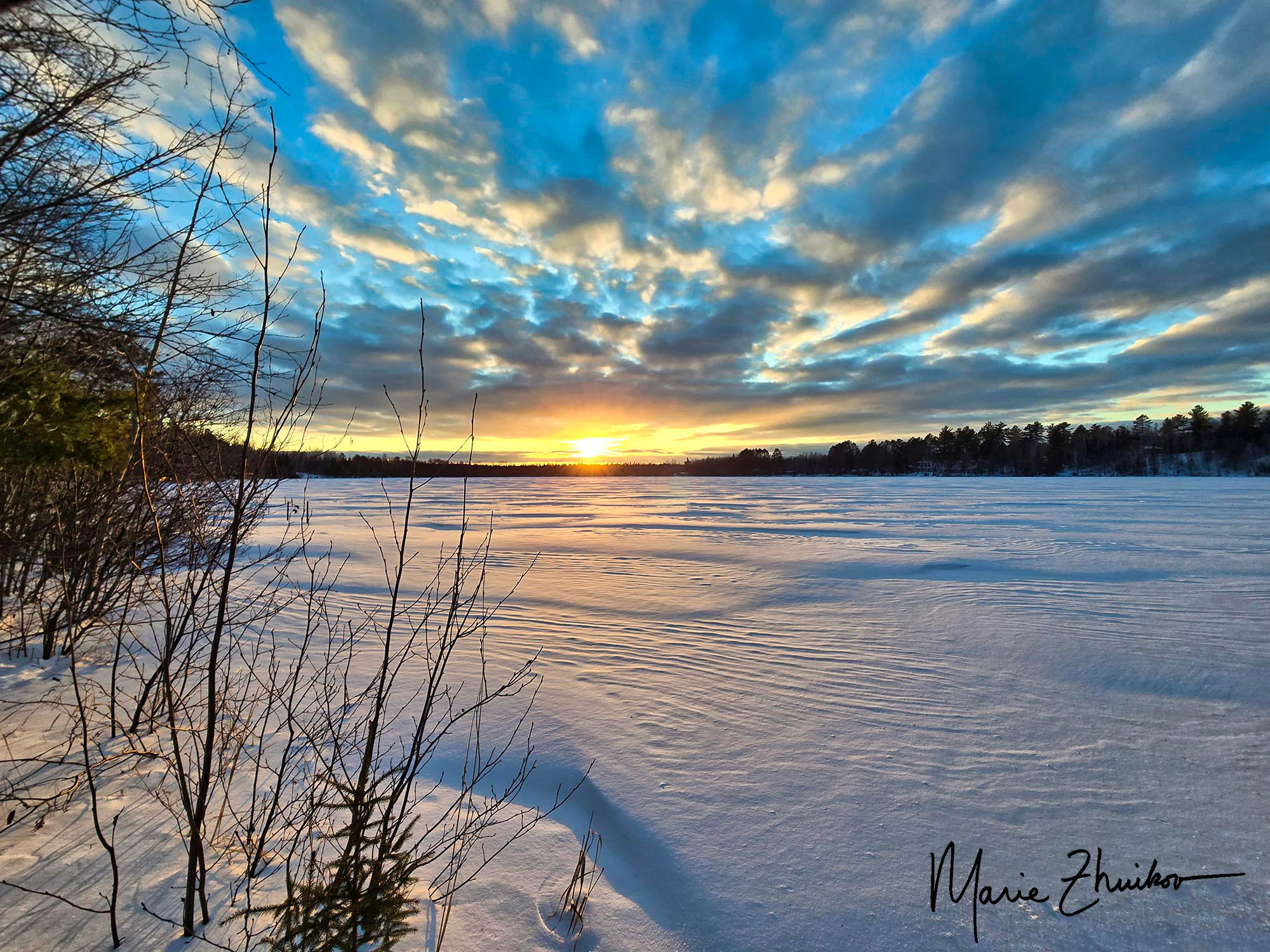
But I don’t want this post to be about AI. I want it to be about winter. I took these photos at our cabin, which is on a small lake in northern Minnesota. The sun was setting as Russ and I cooked dinner. As with this summer sunset from a few years ago, I had to neglect cooking duties to run outside and capture the light before it disappeared. Luckily, earlier in the day we’d gone snowshoeing and had packed a path down to the lake through the deep snow. I was able to pop on my Sorrels and jog through the cold to the frozen lakeshore with ease.
As I snapped a few photos, I marveled at the still, white landscape and the way the sun tinged the small ridges of snow collected on the lake a dull orange. My camera couldn’t capture those ridge colors very well, but AI helped bring them out a bit.
Normally, we’d be travelling somewhere beachy and warm this time of year to soak up the sun and Vitamin D. We decided not to do that this winter because I am . . . drumroll . . . retiring this spring. I only have two-and-a-half weeks of workdays left! I have too many projects to wrap up before then for a vacation. We are saving our beachy-warm trip for this May.
It’s been good, so far, to stick out the winter here this year. We’ve ridden the temperature swings, complained with our neighbors about the cold, shoveled roughly a ton of snow off our cabin deck, and gotten out cross-country skiing for the first time since the winter of 2022-23. (The snow conditions were too poor after that.) Besides, if we travelled to where the temperature is eighty degrees, we’d have to worry about sunburning our Minnesota-white skin, and then reacclimatizing once we got off the plane. I have not-so-fond memories of walking to our car in the Minneapolis airport parking lot without winter coats or gloves in minus-ten-below temps, since we left our winter outerwear in the car.
To sum it all up: I’m enjoying winter in Minnesota, and I’ve prodded the AI beast. Maybe it’s friendly?
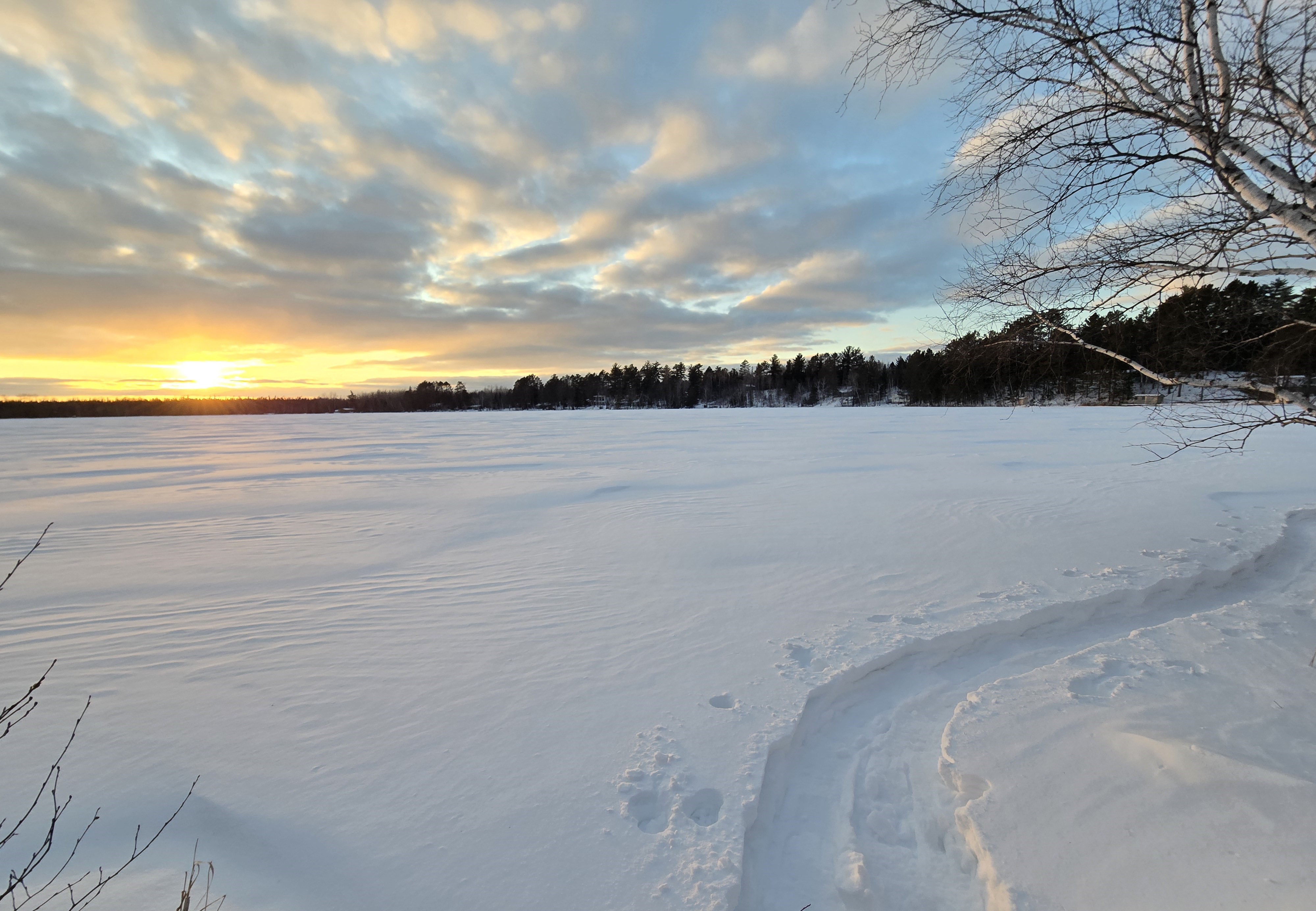
Our lake and snowshoe path. This photo was not edited using AI. Maybe you can tell that it’s not quite as sharp as the others in this post.
Me and my boys in our Old Town canoe, Clearwater Lake. Photo by Sharon Moen.
It was August 2003 and my friend Sharon and I decided it would be fun to do a mother/children canoe trip in Minnesota’s Boundary Waters Canoe Area Wilderness. At the time, my boys Hunter (4 yrs) and Logan (11 yrs) had been camping but I don’t think they’d been in the wilderness yet.
We planned to stay on Clearwater Lake, which I became familiar with years ago when I was a volunteer wilderness trail crew member for the Forest Service. I had fond memories of the clear water and impressive rock ledges on the campsites there. I used to work for the Forest Service and had been in the wilderness many times, so I was quite comfortable taking my children there in our red Old Town canoe without their dad.
Marie, Hunter, and Logan. Photo by Sharon Moen
Sharon brought along her two girls, Sierra and Savannah, and their dog. I can’t recall exactly how many days we camped – maybe two or three. The weather was great, and the water was warm enough for swimming. A submerged log lay not far offshore from our campsite and provided endless hours of entertainment for our children as they swam. They could stand and bounce on it, which made it seem like a wilderness theme park ride. A downed tree near our campsite also fascinated them.
Marie camp cooking. Photo by Sharon Moen
We spent evenings around the fire regaling each other with tales of our wilderness exploits and prowess. One afternoon, we decided to canoe to a campsite farther down the lake that I recalled was a good fishing spot. A large rock ledge with a deep drop off was also the perfect place for a picnic lunch. We beached our canoes on the small sandy beach at the empty campsite and the festivities commenced.
Sharon about to help Logan unhook his fish.
Later, Logan caught a fish. As Sharon was trying to unhook it for him, the hook went into her finger. I performed minor surgery to get the hook out and all was well. That was, until I noticed a red canoe floating across the lake.
“Huh, that canoe looks the same as mine,” I said to Sharon.
She looked at the beach where her canoe sat all by itself. “That IS your canoe!” she said.
What I, Miss Wilderness Expert, didn’t count on was the wind switching. Part of my canoe had still been in the water, enough so that it floated away.
I panicked. Losing a canoe in the wilderness is like losing your car in the city; maybe worse than losing your car because there’s no public transportation in the wilderness. I was ready to swim out and grab it. I’m not sure why I didn’t think of paddling to it in Sharon’s canoe with one of my children and having them hold onto the canoe so we could tow it back. Anyway, swimming was what made sense at the time. And time was of the essence before the canoe drifted farther away.
I was ready to jump into the lake when a couple in a motorboat happened by. Although motors are not allowed in most of the wilderness, there are a few lakes like Clearwater where they are allowed. I think it’s because there’s a resort on this lake.
“That your canoe?” One of them asked. When we responded in the affirmative, they followed up with: “Want us to get it?”
That earned an enthusiastic “Yes, please!”
Helpful motorboaters return my canoe. Photo by Sharon Moen
They grabbed the canoe, no problem, and brought it back to us. We thanked them profusely and I made sure that sucker was totally out of the water when I beached it this time.
Over the years, Sharon has made sure I don’t forget this incident. We trotted it out just last week when having lunch with a new coworker who wanted to know how long we’d been friends.
Although it was incredibly embarrassing at the time, losing my canoe was a good lesson about not getting too complacent in the wilderness or in life. You never know when the wind might switch.
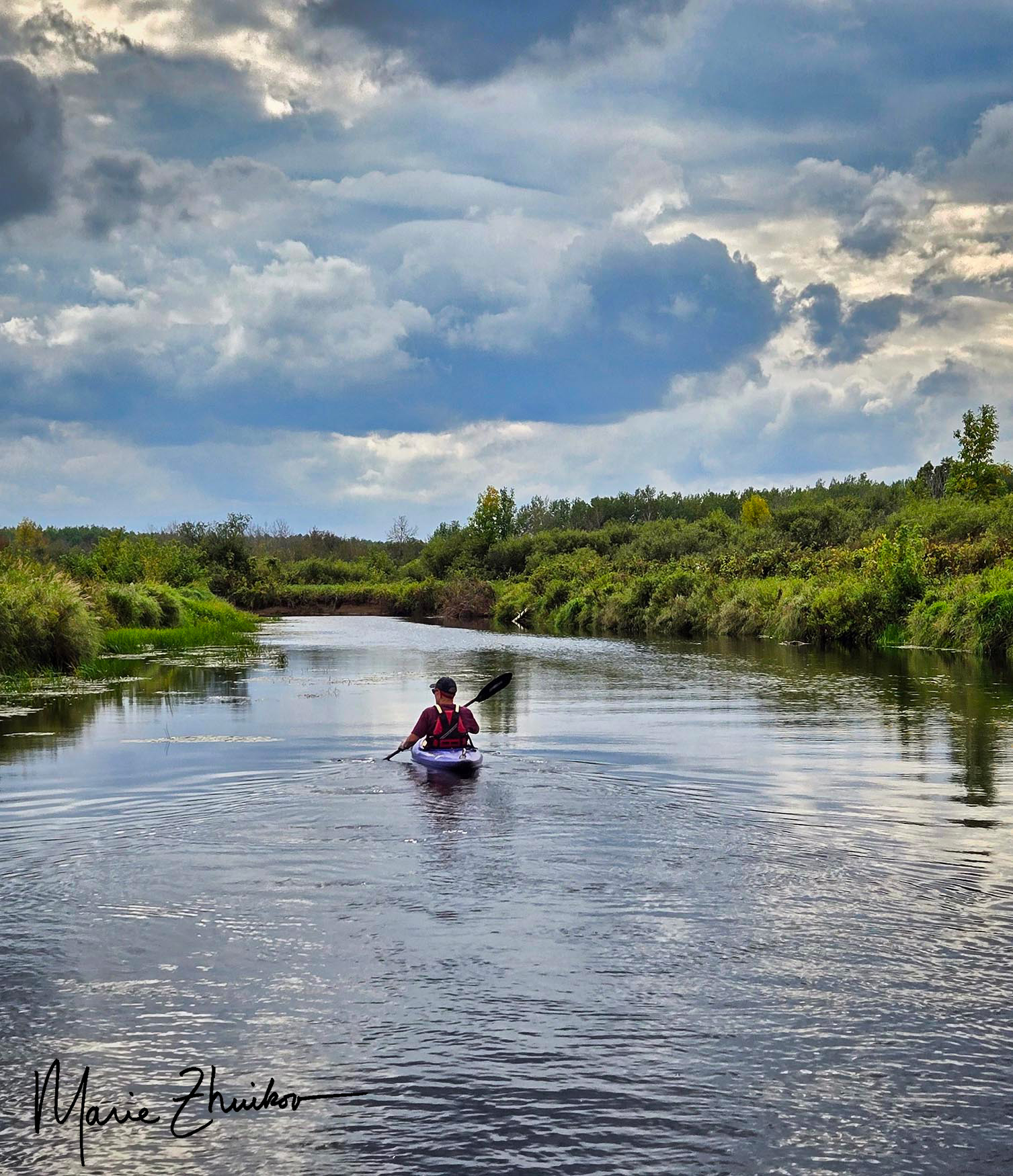
Russ and I took our kayak and paddleboard to a river near our cabin in northern Minnesota. We’d been on this stretch once before in a canoe. It was so calm, I vowed to return with my paddleboard some day. This was that day.
The fall colors were turning but not quite at their peak. We’ve had an usually warm fall and this day was no exception.
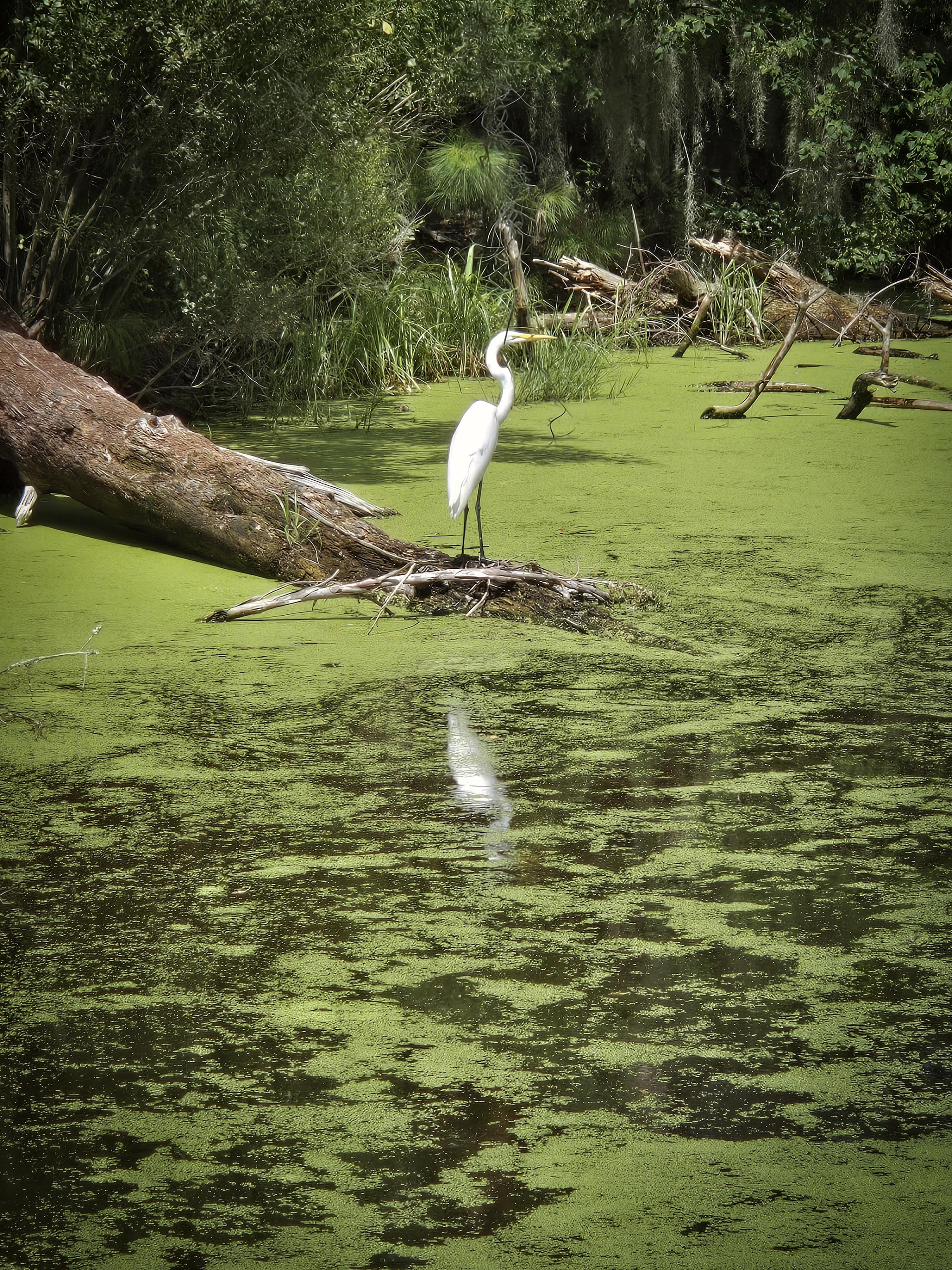
We paddled past beaver homes, some derelict, some not so derelict. Three Canada geese, disturbed by our approach, flew downriver to escape us several times. Fluffy white down feathers littered the backwaters where they must have spent the night.
Rain threatened, but never fell. After an hour paddling, we turned around to head back to the landing. We were going with the current this time, so the return trip was faster. My legs were quaking with fatigue when we reached the end of this long, end of season paddle. But my heart sang.














 Marie's Meanderings